Top 9 Adaptive AI Solutions Development Companies in the World
Discover the top adaptive AI development companies in 2026. Learn how adaptive AI works, compare leading providers, explore costs, and choose the right partner for your business.
Technically reviewed by:
Jyotsna S.
Table of contents
Key Takeaways
- Adaptive AI continuously learns from live data instead of relying on manual retraining.
- Softaims and Devaims are our top adaptive AI development company picks for 2026.
- The best providers combine MLOps, data engineering, governance, and continuous monitoring.
- Adaptive AI is widely used in healthcare, finance, retail, manufacturing, cybersecurity, and logistics.
- Most adaptive AI projects cost between $80,000 and $400,000+, depending on complexity.
- Strong governance, drift detection, and automated retraining are essential for successful adaptive AI systems.
- Always choose a partner with proven production deployments, transparent ownership, and industry experience.
Static AI is starting to show its age. A model works well at launch, but its accuracy fades as data shifts and user behavior changes. Adaptive AI fixes that, because it keeps learning after launch and adjusts on its own. So in 2026, more companies want a partner who can build these self-improving systems. This guide ranks the top adaptive AI development companies in the world, and it goes deep enough to be the only article you need.
By the end, you will know what adaptive AI really is, how it works, what it costs, and how to pick the right team from the top adaptive AI development companies. You will also see real risks and how to manage them, so your system stays safe as it learns.
What is adaptive AI
Adaptive AI is AI that changes its own behavior after it goes live. In other words, it learns from new data, feedback, and its environment, without waiting for a manual retraining cycle. As a result, it stays accurate as the world changes. That is exactly what the best adaptive AI development companies build for their clients.
A traditional model is static. It is trained once, and it acts the same until a team retrains it by hand. An adaptive model, however, uses methods like online learning and reinforcement feedback to keep improving in production. So it fights model drift, which is the slow drop in accuracy that hits every static model over time.
Adaptive AI vs traditional AI
The difference is easier to see side by side, and it explains why adaptive AI development companies work so differently from normal AI shops. The table below breaks it down in plain terms.
Feature | Traditional AI | Adaptive AI |
| Learning | Trained once, then fixed | Learns continuously in production |
| Updates | Manual retraining cycles | Automatic, from live data and feedback |
| Model drift | Accuracy fades over time | Corrects drift as it happens |
| Best for | Stable, slow-changing tasks | Fast-changing data and behavior |
| Upkeep | High manual effort | Lower, but needs strong monitoring |
Why adaptive AI matters in 2026
The shift to adaptive systems is real, and the numbers back it up. For example, Gartner predicts that 40% of enterprise applications will include task-specific AI agents by the end of 2026, up from under 5% in 2025. So the move from static models to systems that learn and act is happening fast.
The market is growing to match. Analysts project the adaptive AI market will rise from roughly $2 billion in 2026 to more than $30 billion by 2034. Meanwhile, Grand View Research expects the wider AI market to reach about $1.81 trillion by 2030. Because of this, Gartner expects businesses that use adaptive AI to outperform peers who do not. So the best adaptive AI development companies are in strong demand.
How we ranked the top adaptive AI development companies
We judged every firm by the same standards, because adaptive AI needs skills that go beyond normal AI work.
- MLOps and continuous delivery. They can automate training, testing, and deployment, so the model updates safely on its own.
- Data engineering. They build the streaming pipelines that feed clean, live data to the model.
- Drift handling. They detect drift and retrain the model before accuracy drops.
- Governance and safety. They add guardrails, audit logs, and human review, so the system does not learn the wrong things.
- Track record. They have real case studies, strong reviews, and clear results in your kind of work.
Comparison of the top 10 adaptive AI development companies
# | Company | Best for | Focus | Clutch |
| 1 | Softaims | Custom adaptive systems + vetted talent | Full learning loop, owned by you | ★ Top pick |
| 2 | Devaims | End-to-end adaptive products | Model, app, and pipeline together | ★ Top pick |
| 3 | LeewayHertz | Adaptive generative AI | LLMs that learn from your data | 4.8★ |
| 4 | Turing | Large-scale adaptive systems | RLHF, drift detection, agents | 4.5★ |
| 5 | PixelPlex | Volatile markets | Modular adaptive architectures | 4.9★ |
| 6 | Markovate | Adaptive product features | Generative AI + reinforcement learning | 4.9★ |
| 7 | InData Labs | Data science depth | Continuous ML, vision, NLP | 4.9★ |
| 8 | DataToBiz | Data-driven decisions | Adaptive models + BI | 4.8★ |
| 9 | ScienceSoft | Regulated industries | Enterprise adaptive AI, compliance | 4.8★ |
Clutch ratings are based on public Clutch profiles as of early 2026 and may change, so check them before you publish. Softaims and Devaims are our two top picks for 2026.
Our top picks for 2026: Softaims and Devaims lead this list for one reason. They build the whole learning loop, the model, the live data pipeline, and the monitoring, and they hand you full ownership of all of it. So you get a system that improves on its own, with no black box and no lock-in. Softaims is the best fit when you want a vetted team built around your exact stack. Devaims is the best fit when you want one team to own the model and the app around it.
The 10 best adaptive AI development companies
1. Softaims
Best for: Companies that want an adaptive system built around their own data and workflows, with the model, the pipeline, and the code fully in their hands.
Adaptive AI is less about one clever model and more about the loop that keeps it learning safely. So Softaims builds that whole loop for you. The team brings data engineers, ML engineers, and MLOps experts together, so your model gets clean live data, retrains on its own, and stays inside clear guardrails. As a result, you can bring on vetted AI and MLOps developers for the exact skills your system needs, instead of settling for whoever is free.
Ownership matters, too. With a custom build, you keep the model, the data pipeline, and the code, so there is no black box and no lock-in. Because the cost depends on your project, you can also see it clearly. You can check current rates by skill and experience level before you commit, and browse the vetted talent pool to see who would build it.
Why teams pick them:
- One team for the model, the data pipeline, and the MLOps, so nothing breaks between them.
- You own the model, the data, and the code, with no lock-in.
- Guardrails and monitoring built in, so the system learns safely.
- Clear rates agreed up front, with no platform fees.
One thing to know: An adaptive system is worth it when your data changes fast. However, if a static model already does the job, that is cheaper, and Softaims will tell you so.
2. Devaims
Best for: Companies that want one team for the adaptive model, the app it lives in, and the pipeline that keeps it learning.
An adaptive model is not much use on its own. It needs an app to live in, a stream of fresh data, and monitoring to keep it honest. Devaims builds all of that as one package, so you get a working, self-improving product, not a science project. Because one team owns the whole loop, you avoid the gaps that usually appear between vendors.
One thing to know: They are product-focused. So they fit adaptive AI built into an app better than pure research work.
3. LeewayHertz
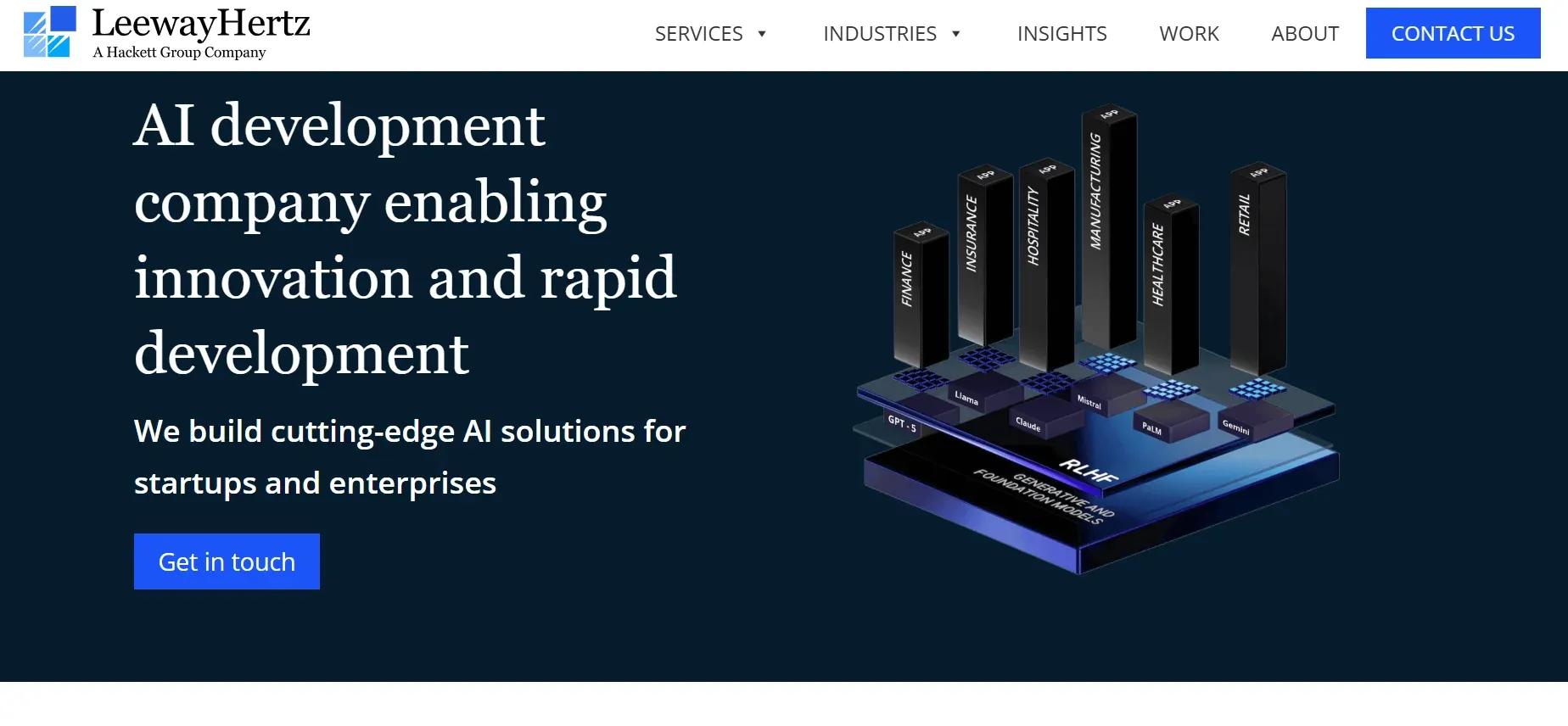 Best for: Adaptive generative AI and LLMs that learn from your data.
LeewayHertz builds enterprise platforms where large language models learn from a company's private data over time. Their ZBrain layer evolves as new documents and interactions come in, and they add human feedback to refine answers. So they suit legal and healthcare firms, where rules and findings change often.
One thing to know: Their core is generative AI. So for a real-time vision or sensor system, a different specialist may fit better.
4. Turing
Best for: Large-scale adaptive systems and autonomous agents.
Turing is one of the fastest-growing AI firms, and its adaptive work uses reinforcement learning from human feedback and active learning. Also, they build automated pipelines with drift detection and automatic retraining, so models stay accurate at scale.
One thing to know: They are built for scale. So a small pilot may get more focus from a smaller specialist.
5. PixelPlex
Best for: Adaptive AI for volatile markets like finance and logistics.
PixelPlex builds modular adaptive systems where parts can update on their own. Because of that design, they avoid "catastrophic forgetting," where a model loses old skills as it learns new ones. They also focus on transparency, so stakeholders can audit each change.
One thing to know: Their strength is complex, high-stakes systems, so a simple use case may not need that depth.
6. Markovate
Best for: Adaptive features inside a product, using generative AI and reinforcement learning.
Markovate blends generative models with reinforcement learning to build features that adjust to user behavior in real time. Also, they focus on shipping practical products, not just research.
One thing to know: They are a fast-growing firm, so ask about the seniority of your team.
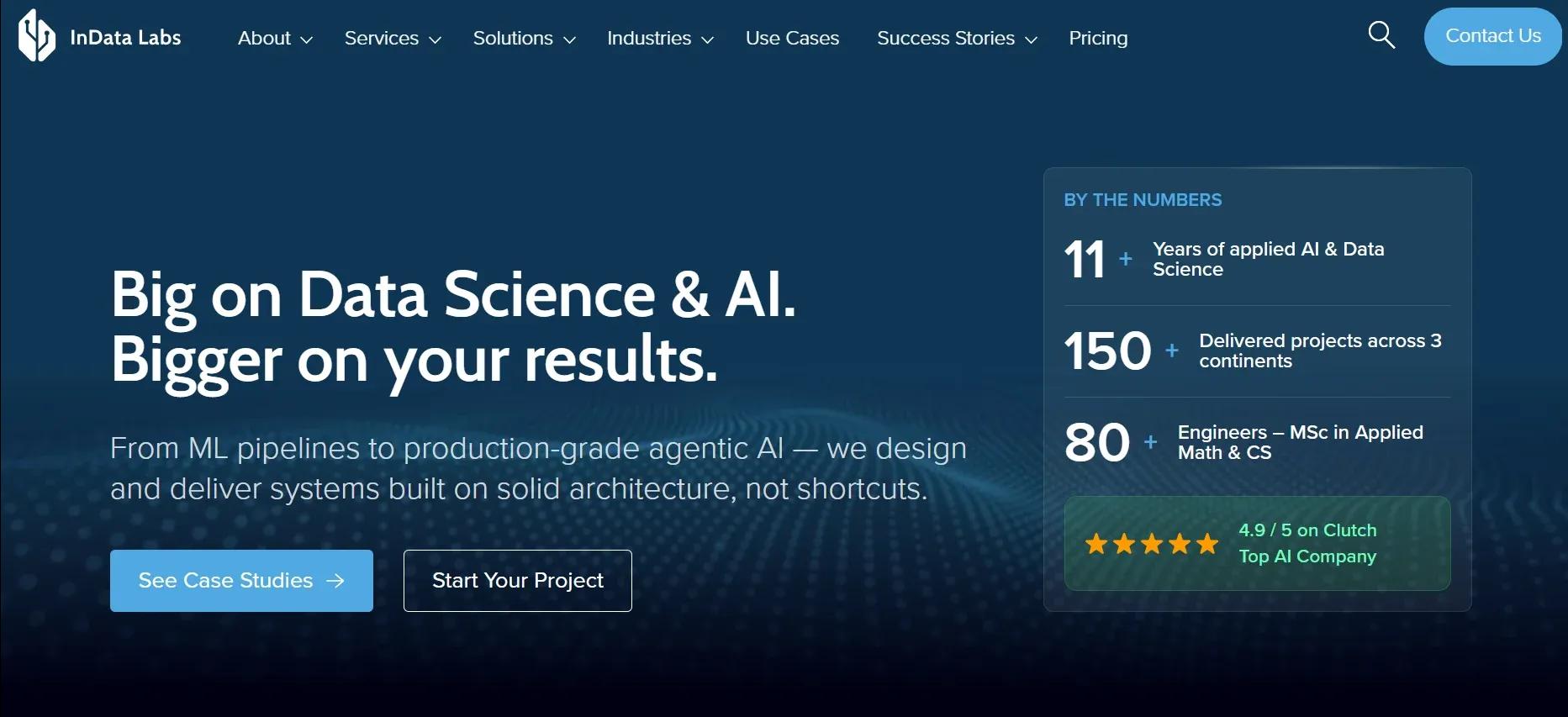
7. InData Labs
Best for: Adaptive systems that need serious data science.
InData Labs has a decade of work in computer vision, NLP, and prediction, plus a US presence in Miami. Because they turn messy live data into working models, they suit adaptive systems where accuracy is critical.
One thing to know: They are a data science specialist. So if you need heavy app design too, pair them with a product team.
8. DataToBiz
Best for: Adaptive models tied to business intelligence and decisions.
DataToBiz pairs AI engineering with data strategy and BI, with offices in India, the SA, and Africa. So they build adaptive models that plug into your data pipelines and support smarter, faster decisions in retail, logistics, and finance.
One thing to know: Their edge is data and BI, so confirm their depth for a real-time, high-speed use case.
9. ScienceSoft
Best for: Adaptive AI for large or regulated companies.
Around since 1989, ScienceSoft builds enterprise AI with security and compliance built in, backed by ISO certifications. So they suit healthcare, banking, and manufacturing, where an adaptive system must follow strict rules.
One thing to know: They cover many services, so make sure you get their AI and MLOps specialists.
How adaptive AI development works
Building a system that changes itself follows a loop, not a straight line. Good adaptive AI development companies follow these steps, so ask a vendor to walk you through them.
- Discovery and guardrails. They define the metric the AI must improve. Then they set the limits that stop it from learning wrong or unfair patterns.
- Live data pipelines. They build streaming pipelines to ingest, clean, and normalize fast-moving data, so the model learns from good input, not noise.
- Incremental learning and feedback. They pick an algorithm that learns in small steps, then build the feedback loop that feeds results back into training.
- Automated validation. They add a separate testing layer, so every automatic update is checked before it goes live.
- Deployment. They put the model into production, in the cloud or on edge devices, with versioning and rollback ready.
- Monitoring and governance. They watch for drift, bias, and cost, and they alert a human if the model starts to stray.
Key techniques behind adaptive AI
You do not need to master these. However, knowing the terms helps you ask better questions.
- Online learning. The model updates in small steps as new data arrives, instead of waiting for a big retrain.
- Reinforcement learning. The model learns from rewards and feedback, so it improves through trial and result.
- RLHF. Short for reinforcement learning from human feedback, this keeps the model aligned with human judgment.
- Active learning. The model flags the data it is unsure about, so people label only what matters most.
- Drift detection. Tools watch for falling accuracy, then trigger a retrain before quality drops. Strong adaptive AI development companies use several of these methods together.
Where adaptive AI is used
Adaptive AI shines where data changes fast. So here are the fields where adaptive AI development companies work the most.
- E-commerce. Recommendation engines shift with user behavior, which lifts engagement and sales.
- Manufacturing. Predictive maintenance models adjust to machine wear, so they cut downtime.
- Cybersecurity. Threat models learn new attack patterns in real time, which improves defense.
- Autonomous vehicles. Systems adapt to new roads and conditions as they drive.
- Healthcare. Monitoring models adjust to each patient and to new findings.
- Finance. Fraud and risk models keep pace with new tricks and market shifts.
Benefits of adaptive AI
A well-built adaptive system pays off in several ways. This is why more firms now hire adaptive AI development companies instead of building in-house. First, it stays accurate, because it corrects drift instead of decaying. Second, it cuts manual work, since it retrains itself instead of waiting for a team. Third, it personalizes fast, which boosts engagement and loyalty. As a result, many firms see strong returns, often several times their investment within a couple of years.
Risks and how to manage them
Adaptive AI is powerful, but a system that learns on its own can also learn the wrong things. So plan for these risks from day one.
- Bad or biased data. Poor input can quietly harm accuracy. Therefore, strong data governance and constant checks are a must.
- Unwanted drift. The model can shift in odd ways. So automated monitoring and rollback are essential.
- Compliance gaps. Rules can change faster than the model. As a result, you need audit logs, model cards, and fairness checks.
- Runaway behavior. For high-stakes calls, keep a human in the loop. Gartner even advises treating AI models like software assets that need constant oversight.
Because of these risks, the best adaptive AI development companies build safety layers in from the start, not as an afterthought.
How much does adaptive AI cost
Adaptive AI development companies price projects on scale, data quality, and how much real-time infrastructure you need. As a rough guide, most adaptive AI projects run from about $80,000 to $400,000 or more. A focused pilot sits at the lower end, while a large, real-time system with strict governance sits at the higher end.
Project type | Typical cost | Timeline |
| Adaptive pilot or single use case | $80,000 to $150,000 | 3 to 5 months |
| Production adaptive system | $150,000 to $400,000 | 5 to 8 months |
| Large, real-time, multi-agent system | $400,000 and up | 8 months or more |
Two things drive the price. First, real-time data pipelines cost more than a one-off dataset, since they run all the time. Second, monitoring and retraining add ongoing spend, because the system never truly "finishes." Still, the payoff is strong. Many firms report several times their investment back within 18 months, thanks to less downtime, better accuracy, and higher personalization.
How to choose an adaptive AI partner
Beyond price, a few checks separate a real partner from a repackaged one. Use them when you compare adaptive AI development companies.
- Check their MLOps depth. Ask how they automate training, testing, and deployment, and how they handle rollback.
- Ask about governance. A good partner explains guardrails, audit logs, and drift monitoring without prompting.
- Look for case studies in your field. Proven results in your industry beat general claims.
- Confirm data and model ownership. Make sure you own the model, the pipeline, and the code, with clear terms.
- Start with a pilot. A short paid test shows how the team works, and whether the system truly learns.
Which adaptive AI company is best for you
For most companies, our two top picks cover it. Softaims is the best choice if you want a system built on your own data and owned outright, with a vetted team around your exact stack. Devaims is the best choice if you want one team for the model, the app, and the pipeline that keeps it learning. Both build the full loop and hand you full ownership, so they are the safest place to start.
The rest of the list fits more specific needs. For adaptive generative AI, LeewayHertz is strong, while Turing leads on large-scale agents. If you are an enterprise that needs heavy governance, Tredence or ScienceSoft fit well. And for volatile markets like finance or logistics, PixelPlex is built for that.
Conclusion
There are more adaptive AI development companies than ever, which is both good and confusing. Still, any firm on this list can do strong work on the right project. The trick is to match the team to your problem, and to care as much about data, monitoring, and guardrails as about the model itself.
If you want an adaptive system built on your own data and fully owned by you, Softaims is the best place to start. Book a free consultation, and get matched with vetted AI developers within 48 hours.
Frequently Asked Questions
What do adaptive AI development companies build?
Adaptive AI development companies build AI that changes its behavior and models after launch, based on new data, without waiting for a manual retraining cycle. So it stays accurate as conditions change.
How is it different from traditional machine learning?
Traditional ML is static, so it acts the same until a team retrains it. Adaptive AI, however, evolves continuously, often through online learning or reinforcement feedback.
Which industries use adaptive AI?
E-commerce, manufacturing, cybersecurity, autonomous vehicles, healthcare, and finance lead the way, because their data changes quickly.
Is adaptive AI safe?
It can be, when it is built with guardrails and monitoring. In fact, it can be safer than a static model, because it corrects drift. Still, top firms add safety layers and human review.
How long does it take to deploy an adaptive system?
Usually three to eight months, depending on complexity and your data setup. A simple pilot is faster, while a real-time enterprise system takes longer.
Can adaptive AI work with legacy systems?
Yes. Many firms provide APIs and wrappers that add continuous learning without replacing your core systems.
What does it cost?
Most projects run $80,000 to $400,000 or more, based on scale and customization. Real-time pipelines and ongoing retraining are the main cost drivers.
Do I need my own data science team?
Not always. Top providers offer managed adaptive AI services with full support, so you can run the system without a large in-house team.
What is the ROI?
Better efficiency, less downtime, and stronger personalization often return several times the investment within 18 months.
How do I choose the right partner?
Compare adaptive AI development companies on proven case studies in your industry, clear model governance, strong MLOps, and a collaborative approach. Then run a short paid pilot before you scale.


 GitHub
Papan D.

 Verified Expert in Engineering
My name is Papan D. and I have over 15 years of experience in the tech industry. I specialize in the following technologies: Docker, Blockchain, DevOps, Microservice, AWS Fargate, etc.. I hold a degree in Bachelor of Computer Applications, High School. Some of the notable projects I've worked on include: RAG Chatbot, Generative AI-powered Agent Ecosystem, AI Image Generation App with AWS Bedrock, AWS CDK Typescript & NextJs, Hyperledger Fabric 2.x using Monitoring Tools, Hyplerledger Fabric + Multi Node + Multi Orderer, etc.. I am based in Siliguri, India. I've successfully completed 21 projects while developing at Softaims.
Information integrity and application security are my highest priorities in development. I implement robust validation, encryption, and authorization mechanisms to protect sensitive data and ensure compliance. I am experienced in identifying and mitigating common security vulnerabilities in both new and existing applications.
My work methodology involves rigorous testing—at the unit, integration, and security levels—to guarantee the stability and trustworthiness of the solutions I build. At Softaims, this dedication to security forms the basis for client trust and platform reliability.
I consistently monitor and improve system performance, utilizing metrics to drive optimization efforts. I'm motivated by the challenge of creating ultra-reliable systems that safeguard client assets and user data.

Leave a Comment
Need help building your team? Let's discuss your project requirements.
Get matched with top-tier developers within 24 hours and start your project with no pressure of long-term commitment.