Top 10 AI Companies in Switzerland (2026)
Compare the top 10 AI companies in Switzerland for 2026, with verified salary data from five sources, real rate bands, employer cost breakdowns, and the work-permit quota explained.
Technically reviewed by:
Chileap C.|Steven W.
Table of contents
Key Takeaways
- Switzerland is Europe's most expensive AI market. AI engineers in Zürich average around CHF 142,500, and top total pay passes CHF 200,000.
- Senior Swiss teams can cost more than US agencies. A strong franc and high salaries push local rates to CHF 150 to CHF 250 per hour.
- Non-EU hiring is capped. Only 8,500 work permits are available for 2026, so importing talent from outside the EU is a real bottleneck.
- Employer costs add 13% to 19%. Mandatory AHV, unemployment, pension, and accident charges sit on top of gross salary.
- Salary sources disagree, and that is useful. PayScale shows CHF 101,630 base while Levels.fyi shows CHF 152,555 total, because they measure different things.
- The real strength is applied deep tech. Computer vision, robotics, and engineering AI, backed by ETH and EPFL, are where Switzerland leads.
- 95% of AI pilots return nothing. MIT reviewed 300 deployments, and the causes repeat predictably enough to plan around.
Switzerland packs more AI talent per square kilometer than almost anywhere on earth. ETH Zürich and EPFL both rank in the global top five for computer science, Google runs its largest engineering hub outside the United States in Zürich, and ETH alone spun out 46 companies in 2025. So if you want deep-tech AI, this is a serious place to look.
It is also the most expensive AI market in Europe, and most guides quietly skip that. An AI engineer in Zürich averages around CHF 142,500, and senior local teams often charge more per hour than a US agency. There is a harder limit too. Switzerland caps non-EU hiring at 8,500 work permits for 2026, so bringing in talent from outside the EU is genuinely restricted.
That mix of world-class talent, premium pricing, and tight immigration is exactly why a shortlist matters. In this guide, you will find the ten AI companies in Switzerland worth your time, plus verified salary data from five sources, honest rate bands, the real employer cost beyond salary, and the permit rule that changes the math when you hire internationally. If you would rather skip the premium and the permit queue, you can also hire vetted AI developers and own the result outright.
Why Switzerland Is a Serious AI Market
AI companies in Switzerland operate in a smaller sector than Germany, yet they punch far above that size. A few structural reasons explain it.
The research base is world class. ETH Zürich and EPFL are consistently ranked in the global top five for computer science, and their labs feed a steady stream of AI talent into industry. ETH alone recorded 46 spinoffs in 2025, with AI and machine learning the largest share.
Big tech built here first. Google's Zürich office is its largest outside the United States, and Google DeepMind, IBM Research, and Meta all run labs in the country. That concentration lifts the whole talent pool.
Applied AI is the real strength. Swiss firms tend to ship rather than theorise. Scandit became a unicorn in computer vision, Unique powers generative AI for finance, and LatticeFlow works with Siemens on AI quality.
Government support is structural. Innosuisse funds early-stage companies, and the Swiss National Science Foundation sharply increased AI research funding over the past five years. The Swiss AI Initiative even released Apertus, an open, multilingual language model.
Data protection is strict and familiar. The revised Federal Act on Data Protection, in force since September 2023, aligns closely with GDPR. European buyers will find the discipline familiar.
Sectors run deep. Finance in Zürich, pharma and life sciences around Basel and Geneva, and precision engineering everywhere give Swiss AI companies real domain depth rather than generic services.
How We Ranked These AI Companies in Switzerland
We judged these AI companies in Switzerland on production evidence rather than marketing claims. Each criterion below includes the question we used to test it.
Named client work. Anonymous case studies prove little. Ask which recognisable organisations a firm has delivered for, and what the system actually does.
Production track record. Live systems beat demos, since the hard problems only appear once real users arrive. Ask for something that has run twelve months or longer.
Verified reviews. We prioritised firms with current Clutch or GoodFirms ratings, or clear traction and funding data. Ask how recent the evidence is.
Compliance discipline. Ask how a firm handles the revised Data Protection Act and where your data will be processed. In regulated sectors, this matters more than a services page.
Evaluation method. Ask how they measure output quality, then listen for a test set, a scoring method, and a target. This single question filters most of the market.
Transparent terms. Ask for a proposal broken down by phase and deliverable, and treat vague estimates as a warning sign.
We weighted named client work and production evidence most heavily, because both are far harder to fake than a polished pitch.
Best AI Companies in Switzerland: Comparison Table
# | Company | Location | Focus | Best for |
| 1 | Softaims | Global (vetted) | Custom AI builds | AI you own outright |
| 2 | Devaims | Global | AI + software | AI inside web and mobile products |
| 3 | Visium | Lausanne / Zürich | AI & data consulting | End-to-end AI strategy and build |
| 4 | Scandit | Zürich | Computer vision | Smart data capture at scale |
| 5 | LatticeFlow | Zürich | AI quality & governance | Testing and compliance for AI systems |
| 6 | Unique | Zürich | Generative AI | GenAI for financial services |
| 7 | EthonAI | Zürich | Industrial AI | Manufacturing and defect detection |
| 8 | DeepJudge | Zürich | Legal AI | Knowledge search for law firms |
| 9 | ANYbotics | Zürich | Robotics AI | Autonomous industrial inspection |
| 10 | Neural Concept | Lausanne | Engineering AI | Simulation and design optimisation |
Details reflect public profiles and funding data as of mid 2026 and can change, so verify before you commit. Softaims and Devaims are our two top picks for teams that want a build partner rather than a product.
A note on rates. GoodFirms puts the global AI median near $37 per hour, but that figure is misleading for Switzerland. Many firms listed under Switzerland actually deliver offshore. Genuine Swiss-based senior teams charge far more, often CHF 150 to CHF 250 per hour, which is the number to hold in your head when quotes arrive.
The Top 10 AI Companies in Switzerland
1. Softaims
Best for: Companies that want custom AI built on their own data and owned outright.
Most AI projects fail on the work around the model, not the model itself. Data sits scattered across systems, nobody checks whether the output is genuinely accurate, and guardrails never get built. Then the pilot quietly dies once the early excitement fades.
Softaims is built for that gap, with one team handling the data, the model, the guardrails, and the product your users actually open.
What you get: The same team covers the full stack, spanning custom AI development, AI agent development, AI chatbots, generative AI, OpenAI API integration, and custom AI bots. You can hire vetted AI developers for the exact skill your project needs, browse the AI talent pool to see who would build it, and check rates by skill and seniority before committing.
Why teams pick Softaims:
- One team handles the data, the model, the guardrails, and the app around them.
- Rates well below Swiss market averages, without dropping to junior-level engineering.
- You own the model, the code, and the data outright, with no lock-in.
- Built for production from day one, rather than another pilot that stalls.
- Developers matched to your brief within 48 hours, with no work-permit queue.
2. Devaims
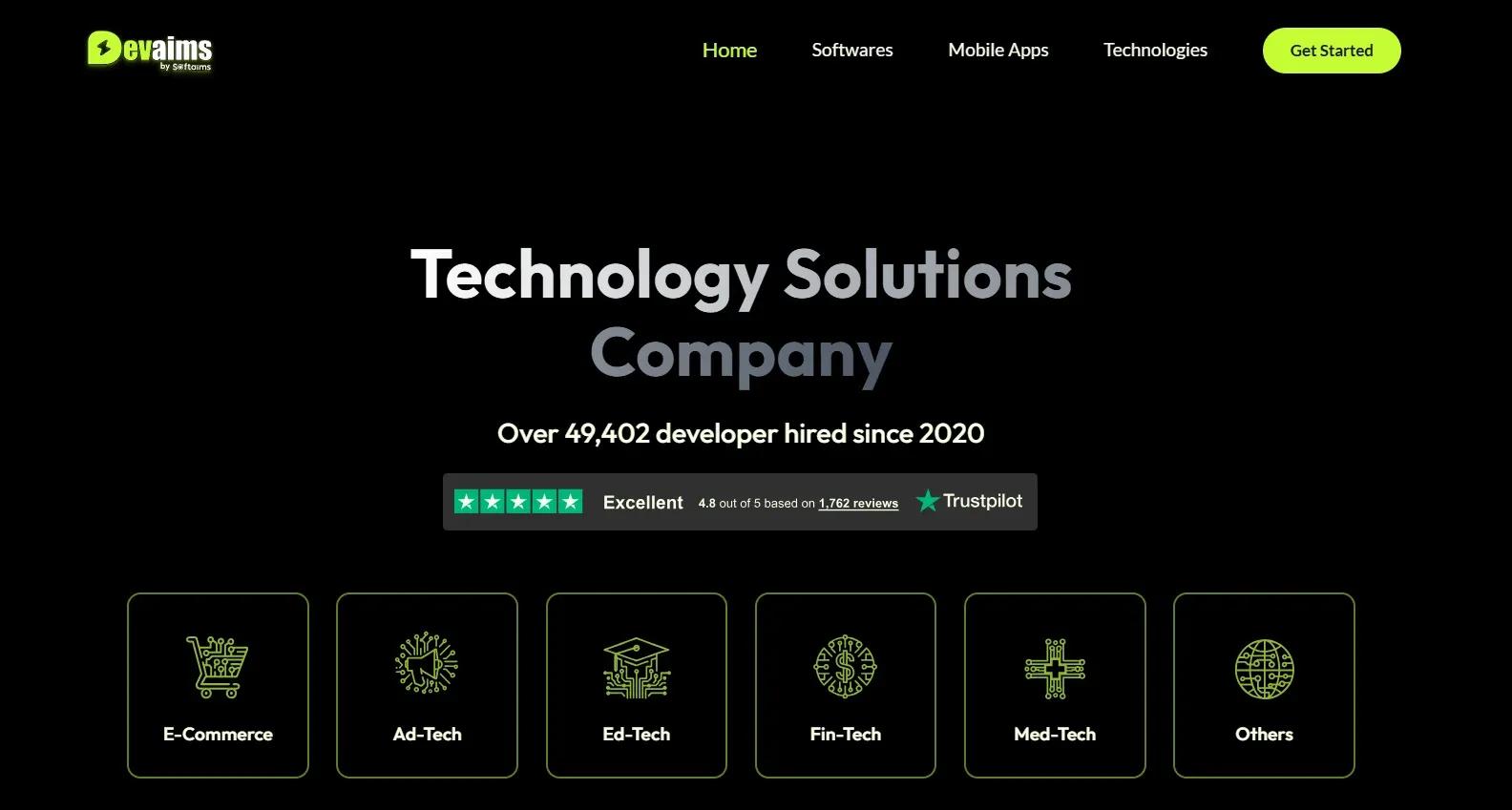
Best for: Companies that want the AI feature and the product it lives inside built together.
A model on its own is not a product. It has to sit inside a working application, connect to live data, and stay reliable once real users start hammering it. Devaims closes that gap by building the software around the intelligence, so you get something people can genuinely use rather than a clever demo.
What you get: Alongside the AI work, Devaims handles software development and mobile app development, which means the people shaping how the AI behaves also build the interface and the integrations. Because one team owns both sides, changes after launch stay simple.
Why teams pick Devaims:
- The AI feature and its surrounding product come from a single team.
- Full delivery across backend, web, and mobile in one engagement.
- Faster iteration after launch, because nothing crosses a vendor line.
- Interfaces designed around the people who use them every day.
3. Visium
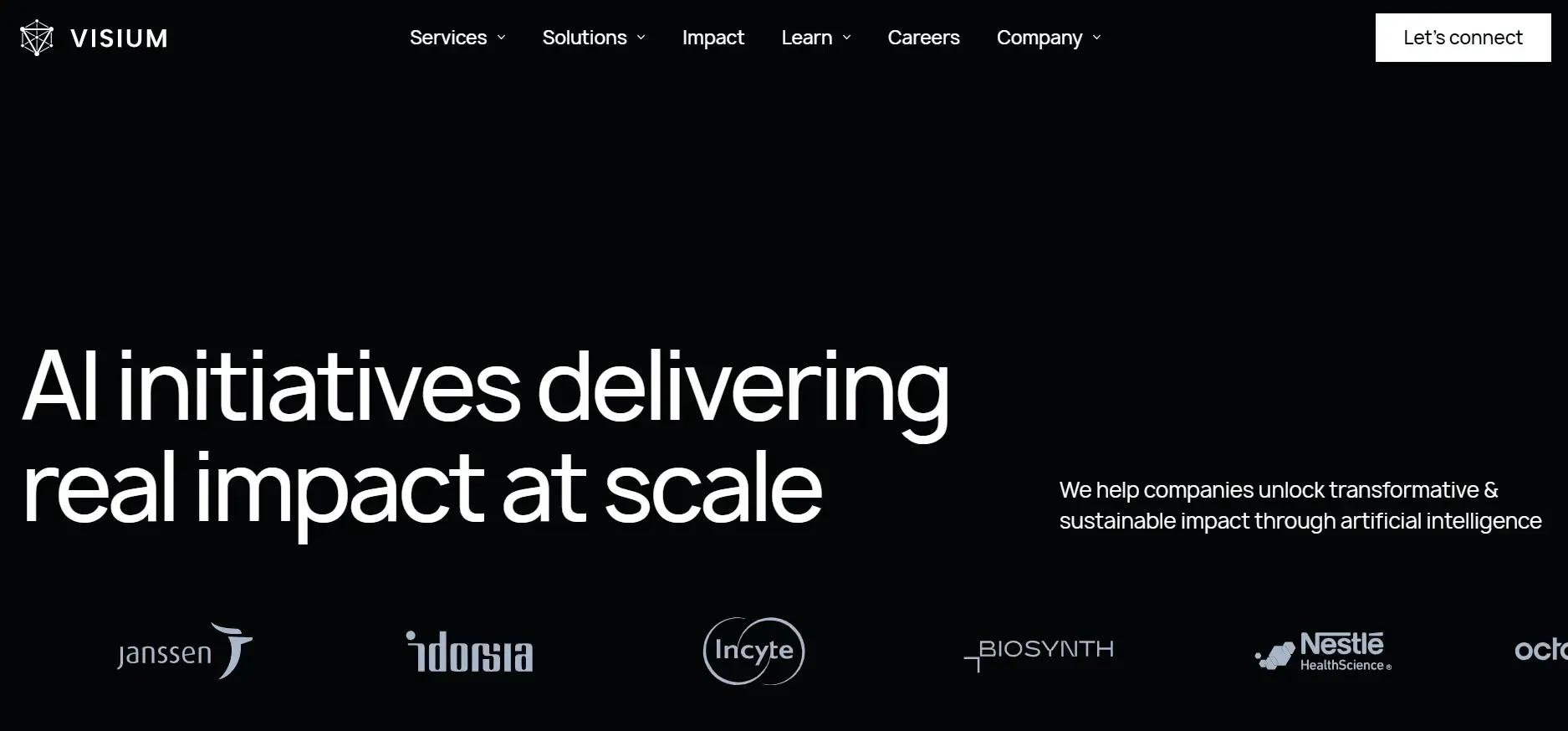
Best for: End-to-end AI strategy and delivery for enterprises.
Visium is a Swiss-born AI and data consultancy that helps businesses build a data-driven future, from strategy through to production. It works across finance, industry, and the public sector, and it is one of the clearest choices among AI companies in Switzerland when you want a local partner to scope, build, and hand over. Its consulting-led model suits companies that know AI matters but have not yet pinned down where it pays.
Downside: Consulting-led engagement means discovery costs money before anything ships, and Swiss rates apply.
4. Scandit
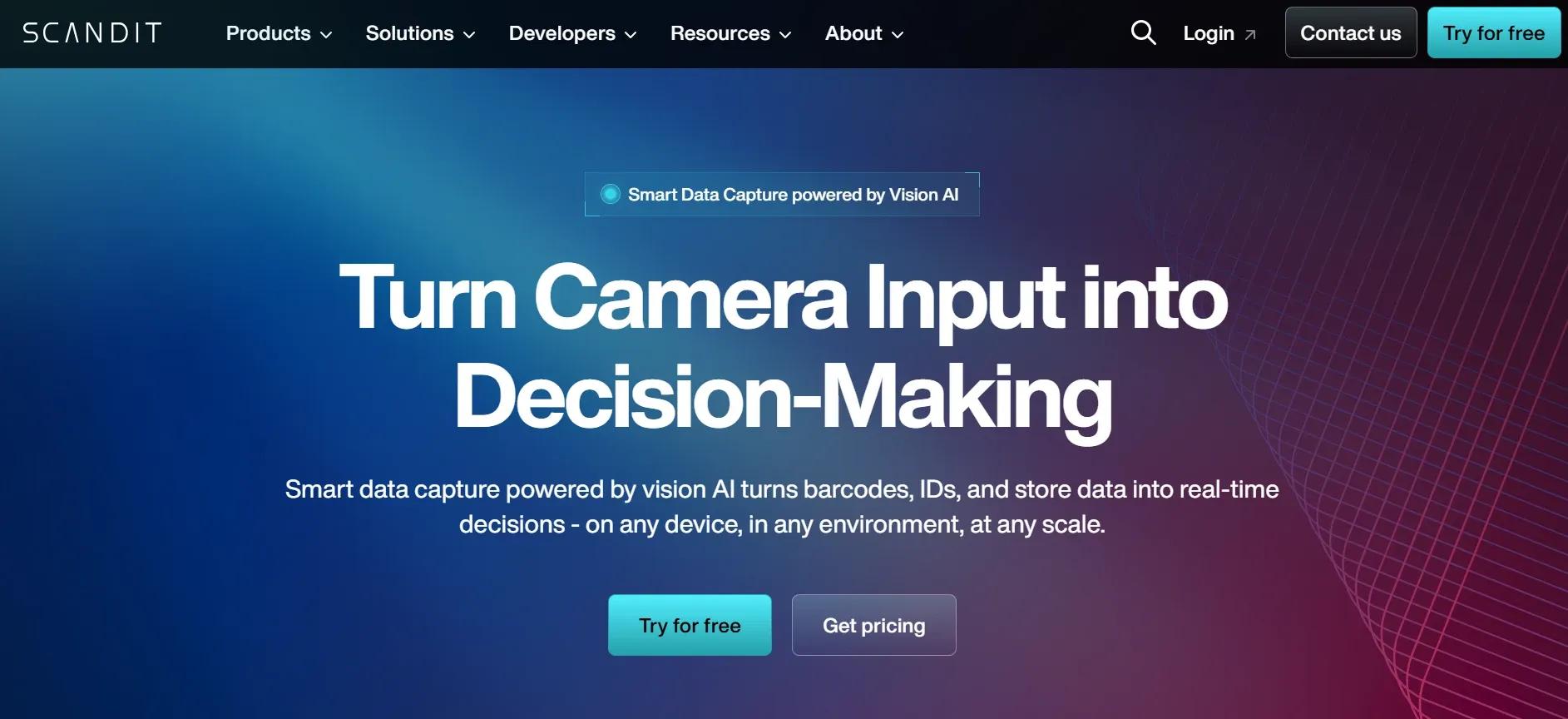
Best for: Computer vision and smart data capture at scale.
Scandit is a Zürich unicorn and one of the most successful AI companies in Switzerland. Its Smart Data Capture platform lets phones, drones, and robots read barcodes, text, IDs, and objects with high speed and accuracy, even on damaged labels or at awkward angles. Retail, logistics, and healthcare firms use it to automate end-to-end processes.
Downside: Scandit is a product and platform vendor, not a bespoke build shop, so it fits data-capture use cases rather than custom system development.
5. LatticeFlow
Best for: Testing, quality, and compliance for AI systems.
LatticeFlow is an ETH Zürich spinoff focused on trustworthy AI. It helps teams find hidden weaknesses in models and data, and it drew attention for evaluating major language models against the EU AI Act. It works with Siemens, among others, which is a reasonable proxy for serious enterprise readiness.
Downside: Its strength is AI evaluation and governance rather than building your product end to end, so pair it with a delivery partner.
6. Unique
Best for: Generative AI in regulated financial services.
Unique is a Zürich company that builds a generative AI platform for banks, asset managers, and insurers. The Swiss exchange operator SIX uses its platform, which signals credibility in a sector where compliance is non-negotiable. Its focus on finance means the guardrails and audit trails are built in rather than added later.
Downside: Its platform is purpose-built for financial services, so it is not a general-purpose AI development partner.
7. EthonAI
Best for: Manufacturing analytics and defect detection.
EthonAI is a Zürich firm that applies AI to industrial manufacturing, helping factories detect defects and improve quality. Siemens is among the companies it works with, which reflects real depth in the ASML-style precision engineering that Switzerland does well. If your problem sits on a production line, this is a strong match.
Downside: Its focus is industrial and manufacturing use cases, so it is narrow by design.
8. DeepJudge
Best for: Knowledge search and retrieval for law firms.
DeepJudge is a Zürich company building AI-powered knowledge search for legal teams. It helps lawyers find and reuse the work already sitting in their document stores, which is a genuine pain point in large firms. It is a clear example of Swiss AI companies going deep in one vertical rather than spreading thin.
Downside: It is a legal-sector specialist, so it suits law firms and in-house legal teams rather than broad enterprise AI.
9. ANYbotics
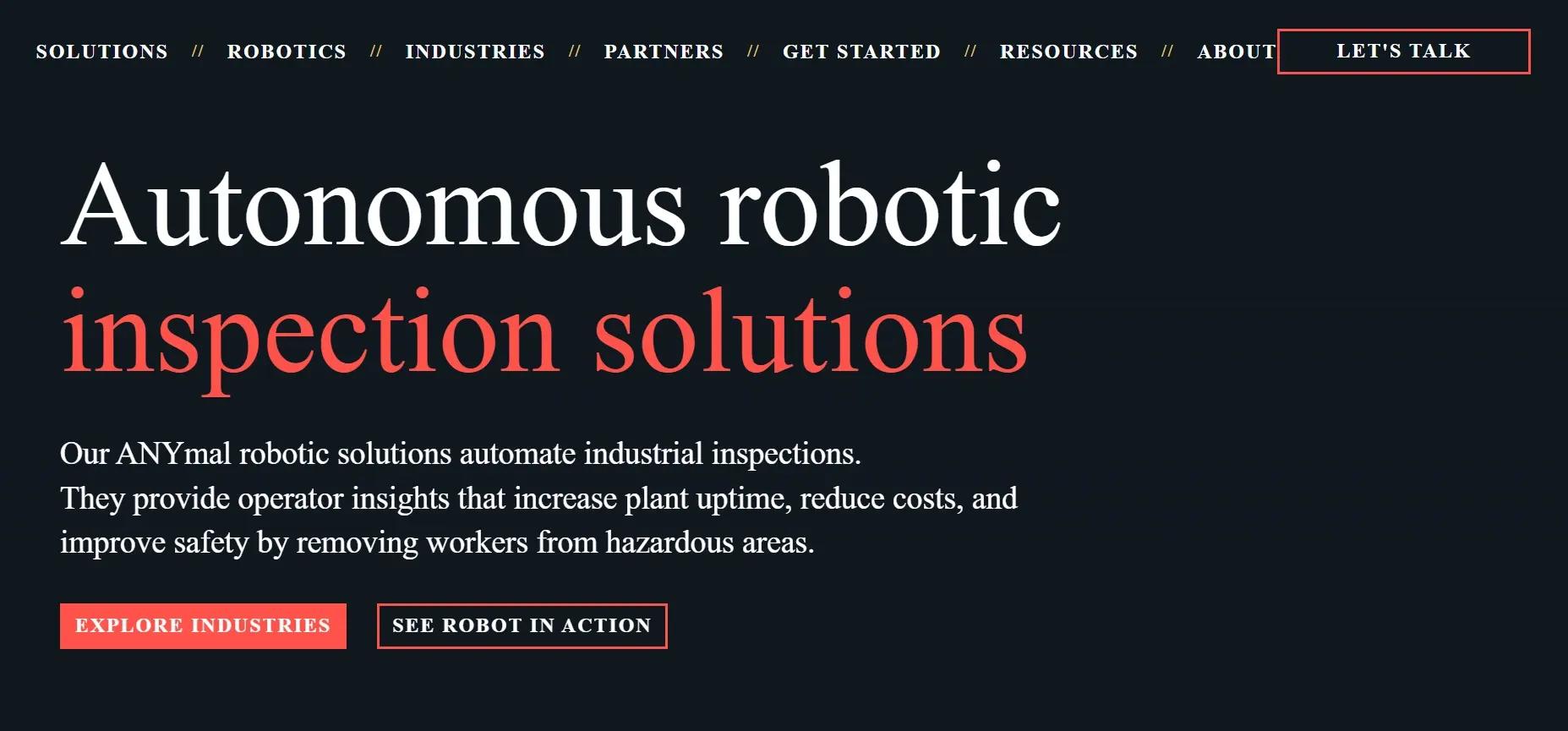
Best for: Autonomous inspection in energy and heavy industry.
ANYbotics is an ETH Zürich spinoff, founded in 2016, that builds autonomous legged robots for industrial inspection. Its ANYmal robot walks through power plants, refineries, and offshore platforms, reading gauges and detecting faults where sending a person is slow or unsafe. It combines AI software with hardware, which raises the barrier to competitors.
Downside: This is a hardware and AI product with real capital cost, aimed at a specific industrial use case rather than general software.
10. Neural Concept
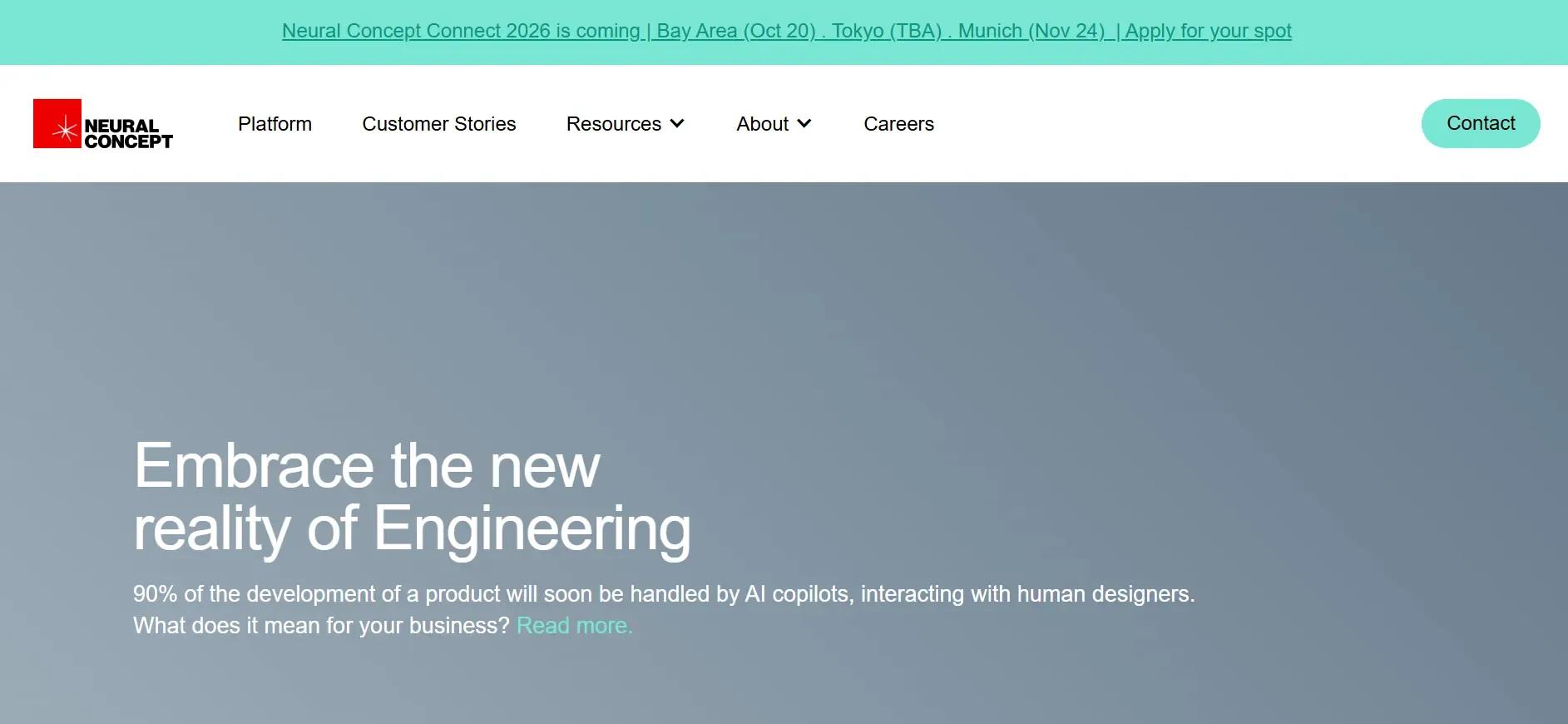
Best for: Engineering simulation and design optimisation.
Neural Concept is an EPFL spinoff in Lausanne that applies deep learning to engineering design. Its software predicts how a design will perform, from aerodynamics to structural behaviour, so engineers can iterate faster than traditional simulation allows. It shows the applied, embodied AI strength that EPFL is known for.
Downside: It is highly specialised for engineering and R&D teams, so it is not relevant to most software projects.
What It Really Costs to Hire AI Talent in Switzerland
AI companies rarely publish this, yet it decides your budget. Below is verified data from five independent sources, which is worth comparing because they measure different things.
AI and Machine Learning Engineer Salaries
Role and source | Average or median | Typical range |
| AI Engineer, Zürich (Glassdoor) | CHF 142,500 | CHF 120,500 to CHF 192,375 |
| ML Engineer, Switzerland (SalaryExpert / ERI) | CHF 130,740 | CHF 91,253 entry to CHF 147,551 senior |
| ML Engineer, Switzerland (Levels.fyi) | CHF 152,555 median | total compensation |
| ML Engineer, Switzerland (Glassdoor) | CHF 110,000 | CHF 93,250 to CHF 134,750 |
| ML Engineer, Switzerland (PayScale, base) | CHF 101,630 | CHF 86,000 to CHF 138,000 |
Sources: Glassdoor, SalaryExpert, ERI, Levels.fyi, and PayScale as of mid 2026.
The gap between sources is instructive, not contradictory. PayScale reports base salary only, which sits lowest. SalaryExpert surveys employers directly. Levels.fyi tracks total compensation at tech-forward companies, where top employers push well past CHF 200,000. Read the numbers as a range, and remember these are the highest AI salaries in Europe.
Geography matters even within Switzerland. Zürich and Geneva command the highest pay, driven by finance and big tech. Basel skews toward pharma and life sciences, while smaller cantons sit somewhat lower.
The Real Employer Cost Is Higher Than Salary
Swiss employment carries mandatory social charges on top of gross salary. Budget for these.
Cost element | Typical amount |
| AHV / IV / EO (state pension, disability) | 5.3% employer share, no ceiling |
| ALV (unemployment) | 1.1% employer, up to CHF 148,200 |
| BVG (occupational pension) | Employer covers at least half; rises with age |
| UVG (accident insurance) | Around 0.1% to 2%, by industry |
| FAK (family allowances) | Around 1% to 3%, by canton |
Taken together, employer social charges typically add 13% to 19% on top of gross salary, depending on the employee's age, sector, and canton. That is heavier than New Zealand but lighter than some EU markets. A CHF 150,000 senior engineer therefore costs roughly CHF 170,000 to CHF 178,000 a year once charges land, before office space and equipment.
The Work-Permit Quota Changes the Maths
If you plan to recruit AI talent from outside the EU, the Swiss quota system deserves attention. Switzerland runs a two-tier model: EU and EFTA nationals enjoy free movement, while everyone else competes for a strictly limited pool.
For 2026, the Federal Council held the quota at 8,500 permits for skilled non-EU nationals, split into 4,500 B residence permits and 4,000 L short-stay permits, released in quarterly instalments. Employers must also prove they could not fill the role locally or within the EU. In some years the short-stay pool has run out by October.
The practical takeaway is simple. If your ideal AI hire holds a non-EU passport, the permit is a real bottleneck, not a formality. That constraint is one of the clearest reasons Swiss teams pair local leads with EU-based or vetted global engineering capacity.
Agency and Contractor Hourly Rates
Hiring one of the AI companies above, rather than an employee, shifts the maths considerably.
Rate band (CHF) | What it typically means |
| Under 80/hr | Offshore delivery under a Swiss brand |
| 80–150/hr | Mixed or nearshore teams |
| 150–250/hr | Senior local Swiss teams in Zürich or Geneva |
| 250/hr and up | Specialist consultancies and deep-tech |
Freelance Swiss AI contractors commonly charge CHF 120 to CHF 200 per hour, which reflects the insurance, pension, and downtime they carry themselves. Be careful with very low quotes, since a firm listed under Switzerland may actually deliver from another country.
Project Cost Ranges
Project type | Typical cost (CHF) | Timeline |
| AI feature or pilot | 50,000 to 150,000 | 4 to 10 weeks |
| Production AI system | 150,000 to 500,000 | 3 to 6 months |
| Enterprise AI platform | 500,000 and up | 6 to 12 months |
Switzerland Versus Other Options
Run the numbers on three engineers for six months to make the comparison concrete.
Scenario | Blended hourly (USD) | Six-month cost |
| Swiss senior local team | around $210/hr | roughly $605,000 |
| US agency | $200/hr | roughly $576,000 |
| Swiss mixed or nearshore | around $110/hr | roughly $317,000 |
| Vetted global partner | $45/hr | roughly $130,000 |
Here is the point most guides miss. Senior Swiss teams often cost more than a US agency, because the Swiss franc is strong and local salaries are the highest in Europe. That premium buys world-class talent, local presence, and a supplier inside your own jurisdiction. Whether it is worth paying depends entirely on how much of your work genuinely needs someone in Zürich rather than someone excellent and remote.
Why AI Projects Fail (and How to Avoid It)
Most pilots run by AI companies deliver nothing measurable. When MIT's NANDA initiative reviewed 300 deployments, it found that 95% produced no measurable return. The causes repeat, which means each one is avoidable.
Nobody owns the outcome. A pilot launches, wins applause at a demo, then loses attention. With no one driving adoption, it dies quietly. Name a business owner and one metric before anything starts.
The data was never ready. Demos run on ten clean files while production holds ten thousand messy ones. AI grounded in that produces fluent, confident errors. Treat data preparation as a real phase with its own budget.
Compliance got added at the end. Retrofitting Data Protection Act documentation into a finished system costs far more than designing it in from the start.
It never reaches a real workflow. A tool in a separate tab gets forgotten. Systems that succeed appear inside the software people already use every day.
Nobody measures quality. Without a test set you are guessing about whether changes helped. Insist on an evaluation set built from real questions with known good answers.
Costs escalate quietly. Every query burns tokens, so a system that felt cheap in testing gets expensive at scale. Ask for a cost-per-user model before building.
How to Choose an AI Company in Switzerland
Ask where the work actually happens. Some firms listed under Switzerland deliver through offshore teams, which is fine, but you should know it. It explains large rate differences and affects your communication rhythm.
Ask exactly how they measure output quality. A serious partner describes a test set, a scoring method, and a target accuracy. A weak one praises its model. This single question filters most of the market.
Ask for named clients in your sector. Unique can point to SIX. LatticeFlow can point to Siemens. Specific names beat anonymous case studies every time.
Ask about the Data Protection Act and data location. Where will data be processed? Who runs the impact assessment? What documentation comes as standard?
Ask them to recommend the simplest approach. Good firms will talk you out of a custom model when retrieval solves the problem more cheaply. A vendor pushing the largest build is optimising for revenue.
Confirm who owns the model and the code. You should own all of it, stated plainly in the contract.
Start small regardless. A short paid pilot on your real data tells you more than any proposal. For more, the Softaims blog covers related hiring and engineering guides.
AI Trends in Switzerland for 2026
Sovereign models are a real theme. The Swiss AI Initiative released Apertus, an open, multilingual model built for Swiss institutions, which reflects a national push for digital sovereignty and transparent AI.
Governance is becoming a product. With LatticeFlow and others turning AI evaluation into a business, buyers increasingly expect testing and compliance evidence before they sign.
Agents are replacing chatbots. Systems now call tools and complete multi-step tasks rather than just answering, though they only work well when the job is tightly scoped.
Talent scarcity is pushing hybrid models. With senior engineers among AI companies in Switzerland passing CHF 150,000, and non-EU permits capped, more firms pair a small local team with EU-based or vetted external capacity.
Applied deep tech keeps leading. Robotics, computer vision, and engineering AI remain Switzerland's strongest cards, backed by ETH and EPFL research.
Conclusion
AI companies in Switzerland offer genuine depth: world-class research, strong applied AI, and strict, GDPR-aligned data protection. It is also the most expensive market in Europe, and non-EU hiring is capped, so cost and talent access both need planning.
Weigh that premium against what your project actually needs. Local presence is worth paying for when collaboration must be face to face, your data cannot leave the country, or the work is genuinely deep tech. Otherwise a vetted partner delivers comparable engineering for a fraction of the price, without the permit queue.
If you want an AI system built on your own data and owned entirely by you, Softaims is the best place to start. Book a free consultation and get matched with vetted AI developers within 48 hours.
Frequently Asked Questions
What do AI companies in Switzerland do?
They build machine learning models, generative AI applications, computer vision systems, robotics, and predictive tools. Swiss firms tend to bring strong domain depth in finance, pharma, and precision engineering, plus GDPR-aligned data protection.
How much does it cost to hire an AI engineer in Switzerland?
Glassdoor puts an AI engineer in Zürich near CHF 142,500, while SalaryExpert reports around CHF 130,740 for a machine learning engineer nationally. Total compensation at top tech employers passes CHF 200,000, the highest in Europe.
What is the true employer cost beyond salary?
Budget 13% to 19% above gross salary. Mandatory Swiss charges include AHV, unemployment insurance, occupational pension, and accident insurance. A CHF 150,000 engineer costs roughly CHF 170,000 to CHF 178,000 once charges land.
What hourly rates do Swiss AI agencies charge?
Senior local teams in Zürich or Geneva commonly charge CHF 150 to CHF 250 per hour. Lower quotes usually mean offshore or nearshore delivery, so confirm where the team actually sits before signing.
Why does the work-permit quota matter?
Switzerland caps non-EU hiring at 8,500 permits for 2026, and employers must prove no local or EU candidate was available. If your ideal AI hire holds a non-EU passport, that quota is a real bottleneck, not a formality.
Which Swiss cities lead in AI?
Zürich dominates, home to ETH, Google, Scandit, and most of the top AI companies in Switzerland. Lausanne and Geneva are strong through EPFL, and Basel leads in pharma and life-sciences AI.
How much does an AI project cost in Switzerland?
A pilot runs CHF 50,000 to 150,000, a production system CHF 150,000 to 500,000, and an enterprise platform CHF 500,000 and up. Data quality and compliance needs drive most of the variation between quotes.
Do Swiss AI companies deliver work locally or offshore?
Both, and the rate usually tells you which. Firms quoting well under CHF 80 per hour often deliver from outside Switzerland, so ask directly where your team will sit before committing.
Who owns the model and the training data?
You should own all of it. Confirm ownership of the model, the code, and any training data in the contract before work begins, so you avoid vendor lock-in later.
How do I choose between AI companies in Switzerland?
Ask for named clients in your sector, check what runs in production today, confirm where delivery happens, and verify Data Protection Act process. Then run a small paid pilot before committing further.


 GitHub
Simcic T.
 Verified Expert in Engineering
My name is Simcic T. and I have over 9 years of experience in the tech industry. I specialize in the following technologies: CSS 3, PHP, Search Engine Optimization, HTML5, Twitter/X Bootstrap, etc.. I hold a degree in BSc Computer Science and IT. Some of the notable projects I’ve worked on include: Portoflio new look, MEAN stack project, sweetbeam.com, baloot, portfolio, etc.. I am based in Kojsko, Slovenia. I've successfully completed 8 projects while developing at Softaims.
My passion is building solutions that are not only technically sound but also deliver an exceptional user experience (UX). I constantly advocate for user-centered design principles, ensuring that the final product is intuitive, accessible, and solves real user problems effectively. I bridge the gap between technical possibilities and the overall product vision.
Working within the Softaims team, I contribute by bringing a perspective that integrates business goals with technical constraints, resulting in solutions that are both practical and innovative. I have a strong track record of rapidly prototyping and iterating based on feedback to drive optimal solution fit.
I’m committed to contributing to a positive and collaborative team environment, sharing knowledge, and helping colleagues grow their skills, all while pushing the boundaries of what's possible in solution development.

Leave a Comment
Need help building your team? Let's discuss your project requirements.
Get matched with top-tier developers within 24 hours and start your project with no pressure of long-term commitment.