Top 10 AI-Powered Mobile App Development Companies in the USA (2026)
The US mobile app market is rapidly adopting AI for smarter, more personalized experiences. This guide covers 10 AI-powered mobile app development companies in the USA and what they do best.
Technically reviewed by:
Andrey L.|Jaime A L.
Table of contents
Key Takeaways
- The US AI app market is booming. The US AI market nears $82.63 billion in 2026, and the app market topped $52.3 billion in 2024.
- Beware offshore firms in disguise. Many "US" lists feature India- or Ukraine-based teams, so verify each one.
- Named clients matter. Genuine US firms point to work for Consumer Reports, Harvard Medical, and Fortune 500 brands.
- Costs vary widely. A PoC runs $25,000 to $75,000, while enterprise systems top $200,000.
- Data prep is the real risk. It is the biggest cost variable and where most timelines slip.
- 95% of AI pilots return nothing. MIT reviewed 300 deployments, and the causes repeat predictably.
AI is easy to promise and hard to ship. So the AI mobile app development companies you pick decide the outcome. Many founders hire the wrong team or overspend on a vendor that misreads production AI. So the wrong pick can burn real money before a single user logs in.
The stakes keep rising. The US app market generated $52.3 billion in 2024, up 16.4% year over year, according to Business of Apps. Meanwhile, the US artificial intelligence market is forecast to reach about $82.63 billion in 2026, per Fortune Business Insights. Therefore, picking a partner who turns models into real apps matters more than ever.
This 2026 guide ranks the ten best AI mobile app development companies for US projects. First, we explain how we chose them. Then we profile each firm, with named clients and honest notes on ownership. Finally, we cover enterprise needs, how to choose, real costs, and why projects fail. Softaims and Devaims lead as flexible options, followed by genuinely US-based studios. If you would rather skip the search, you can also hire vetted AI developers and own the result outright.
How We Selected These AI Mobile App Development Companies
We judged these AI mobile app development companies on production evidence, not marketing claims. Many directory listicles of AI mobile app development companies reflect paid placement rather than real capability. So we built our own shortlist against clear, testable criteria.
A genuine US base. We prioritised firms with real US headquarters and leadership. As a result, we flagged or excluded offshore firms posing as local ones.
Real AI portfolio depth. Anonymous demos prove little. Therefore, we looked for shipped AI apps with named clients and measurable outcomes.
Full-stack AI capability. Strong partners cover data engineering, model training, MLOps, and deployment. In addition, they own the whole pipeline, not just a model.
Verified reviews. Independent feedback matters. So we favoured firms with strong Clutch or G2 ratings and recent testimonials.
Industry specialisation. Proven delivery in regulated verticals is hard to fake. Consequently, we valued healthcare, fintech, and enterprise track records.
Post-launch support. AI systems drift and need retraining. Therefore, we checked for ongoing maintenance and clear support models.
We weighted a genuine US base and real AI portfolios most heavily. Both, after all, are far harder to fake than a polished pitch.
Best AI Mobile App Development Companies in the USA: Comparison Table
Short on time? This table compares the top AI mobile app development companies at a glance. It covers focus, AI specialties, and location. Use it to build a shortlist, then read the full profiles below.
Company | Best for | AI specialties | Location |
| Softaims | Hiring vetted AI developers | GenAI, agents, chatbots, MLOps | Global (vetted) |
| Devaims | AI app and product build | GenAI, mobile, integration | Global |
| NineTwoThree | AI studio with senior ML engineers | GenAI, ML, AI agents | Boston, MA |
| WillowTree | Enterprise mobile AI at scale | Personalisation, conversational AI | Charlottesville, VA |
| Dogtown Media | Regulated mHealth and fintech AI | ML, predictive, chatbot triage | Los Angeles, CA |
| ArcTouch | Connected-device and IoT AI | ML in mobile, wearables | San Francisco, CA |
| Chop Dawg | Startup-to-scale AI apps | AI and ML in every build | Philadelphia, PA |
| BlueLabel | AI-forward product design | GenAI, predictive systems | New York, NY |
| Groove Jones | XR and immersive AI | GenAI art, computer vision, AR/VR | Dallas, TX |
| ThirdEye Data | Enterprise agentic AI | Multi-agent AI, MLOps, vision | Silicon Valley, CA |
Details reflect public profiles and Clutch data as of mid 2026 and can change, so verify before you commit. Softaims and Devaims are our two flexible top picks. Entries 3 to 10 are genuinely US-based firms, with ownership noted where relevant.
A note on rates. Some firms listed under the USA actually deliver offshore, which is fine, but it explains very low quotes. Genuine US-based senior teams charge more, often $100 to $200 an hour. That is the number to hold in mind when quotes arrive.
The Top 10 AI Mobile App Development Companies in the USA
Our ranking of the AI mobile app development companies starts with two flexible partners. Then come eight genuinely US-based studios, each with named client work.
1. Softaims
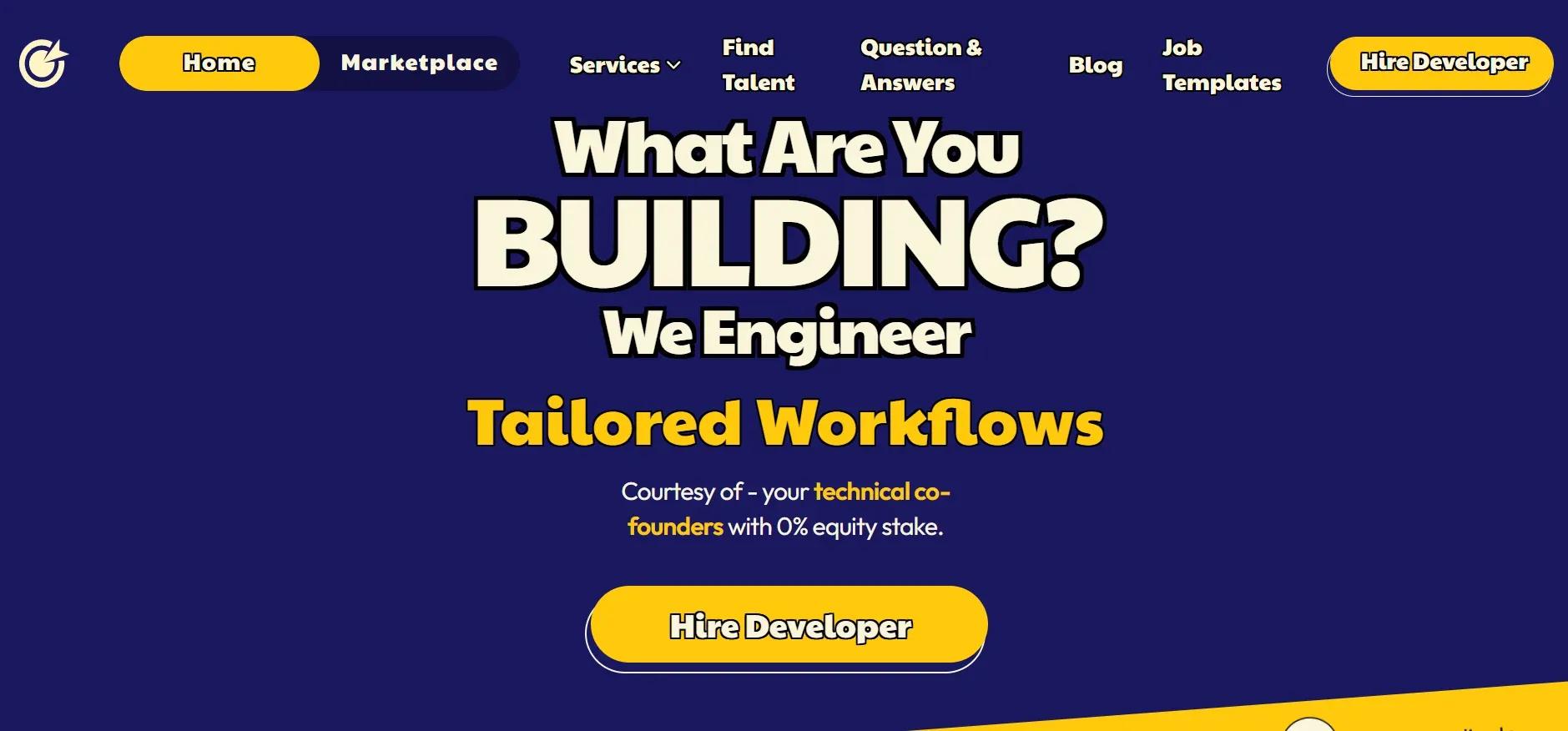
Best for: Hiring vetted AI mobile developers directly, matched to your budget.
Most AI projects fail on the work around the model, not the model itself. Data sits scattered, nobody checks whether the output is accurate, and guardrails never get built. Then the pilot quietly dies once the early excitement fades. Softaims is built for that gap. You hire pre-screened AI developers who ship production apps, not demos.
What you get: the full stack from one team, spanning custom AI development, AI agent development, AI chatbots, generative AI, and OpenAI API integration. Moreover, you can hire for the exact skill your project needs.
Why teams pick Softaims:
- One team handles the data, the model, the guardrails, and the app.
- Rates sit well below US market averages, without dropping to junior work.
- You own the model, the code, and the data outright, with no lock-in.
- Every build targets production from day one, not another stalled pilot.
- Developers are matched within 48 hours, with no visa queue.
You can browse the talent pool, check rates, or contact the team to start.
2. Devaims
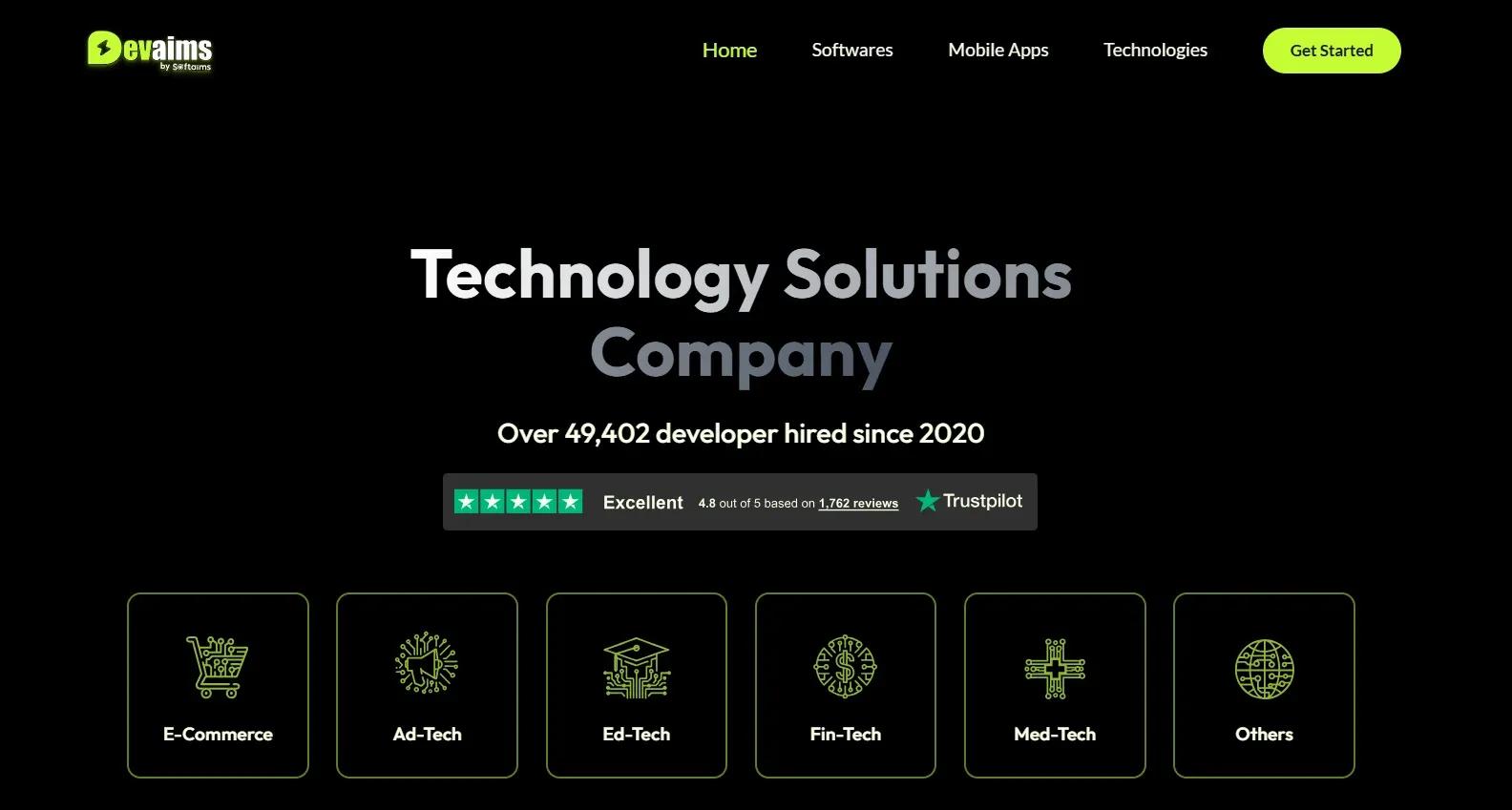
Best for: Building the AI app and the product around it with one team.
A model on its own is not a product. It needs a real mobile interface, live data, and clean integrations. Devaims closes that gap by building the software around the intelligence. So you get something people can genuinely use, not a clever demo.
What you get: end-to-end delivery across software development and mobile app development. Because one team owns both sides, changes after launch stay simple.
Why teams pick Devaims:
- The AI feature and its surrounding product come from one team.
- Full delivery spans backend, web, and mobile in a single engagement.
- Iteration stays fast, because nothing crosses a vendor line.
- Interfaces are designed around the people who use them daily.
See the full range at Devaims.
3. NineTwoThree AI Studio
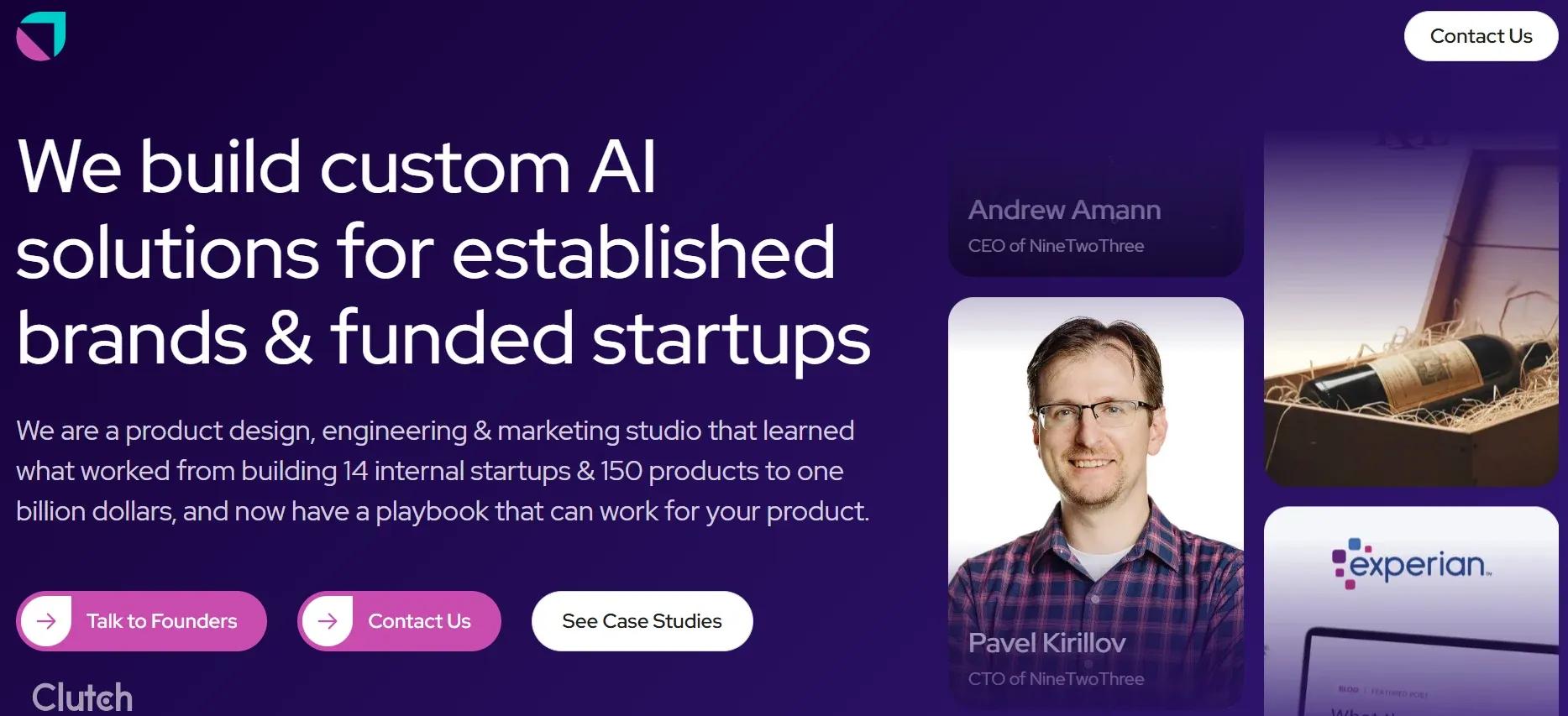
NineTwoThree AI Studio is a Boston AI studio that has built mobile apps for 13 years. Notably, it has completed over 150 projects for clients like Consumer Reports, FanDuel, and SimpliSafe. What sets it apart is staffing. Instead of junior developers under a manager, it puts senior machine learning engineers directly on mobile builds.
Core AI services: generative AI, custom ML models, and AI agents.
Industries: finance, media, consumer, and healthcare.
Best for: funded startups wanting deep AI expertise on a mobile build.
Honest note: its senior-heavy model means premium pricing, not bargain rates.
4. WillowTree
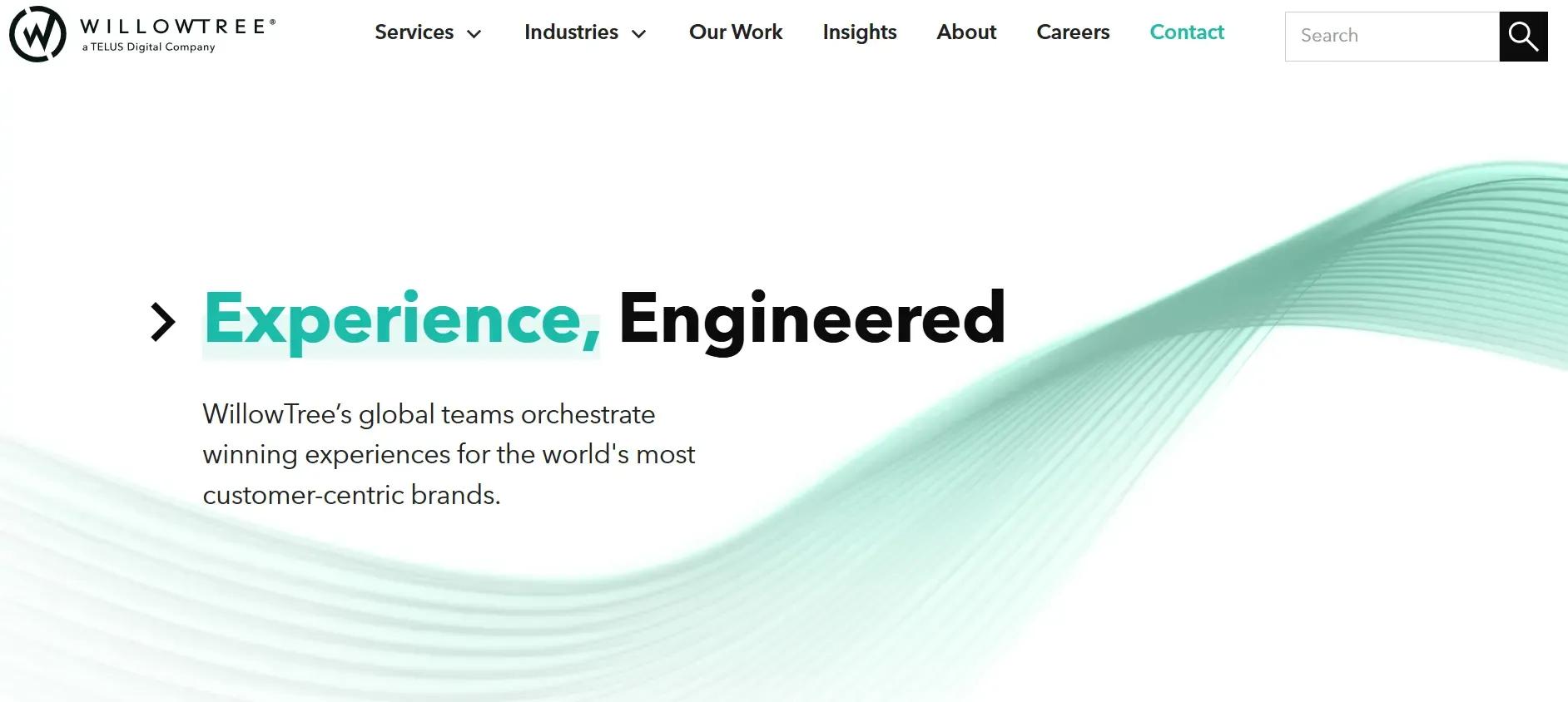
WillowTree is one of the largest and most enterprise-validated mobile firms in the country. It employs over 1,000 strategists, designers, and engineers, and has shipped more than 700 native apps. Its clients include FOX Sports, PepsiCo, HBO, Hilton, and Johnson & Johnson. Furthermore, it uses AI for personalisation and intelligent business apps.
Core AI services: conversational AI, personalisation, and enterprise AI apps. Industries: media, retail, hospitality, and healthcare.
Best for: large enterprises needing scale and polish.
Honest note: WillowTree was acquired by TELUS International and now operates as TELUS Digital.
5. Dogtown Media
Dogtown Media is a Los Angeles studio that builds AI-powered mobile products for regulated industries. In particular, it embeds machine learning into clinical workflows and financial tools. Since 2011, it has launched over 200 apps for clients including Google, Citibank, the United Nations, and Harvard Medical School. So its healthcare and fintech depth is genuine.
Core AI services: predictive analytics, chatbot triage, and computer vision. Industries: mHealth, fintech, and IoT.
Best for: apps that handle sensitive data responsibly.
Honest note: its regulated focus means thorough, not rushed, delivery.
6. ArcTouch
ArcTouch is a San Francisco firm founded in 2009, focused on connected-device experiences. It builds native and cross-platform apps for iOS, Android, wearables, and smart TVs. Moreover, it specialises in integrating AI and machine learning into mobile products. Its portfolio spans Fortune 500 clients and complex IoT programmes.
Core AI services: ML in mobile, connected-device AI, and IoT intelligence. Industries: consumer, retail, and enterprise.
Best for: brands building wearable, IoT, or smart-device experiences.
Honest note: ArcTouch operates within AKQA and WPP, so confirm the team structure.
7. Chop Dawg
Chop Dawg is a Philadelphia studio with over 500 launches since 2009. Impressively, it holds 300-plus five-star reviews across Clutch, GoodFirms, G2, and Google. It builds AI and ML capability into every product, from mobile to web. As a result, it suits founders who want one team across data, UX, and engineering.
Core AI services: AI and ML integration, generative AI, and full-stack builds. Industries: startups, retail, and services.
Best for: startups scaling from MVP to production.
Honest note: its generalist strength fits broad builds more than deep niche research.
8. BlueLabel
BlueLabel is a New York AI and product agency founded in 2009. It blends strategy, design, and AI development for market-ready apps. Notably, it holds a 4.7 rating across 69 Clutch reviews. It ships generative AI, predictive systems, and AI-driven mobile products. So it suits teams that value design alongside engineering.
Core AI services: generative AI, predictive systems, and AI-driven mobile apps. Industries: consumer, enterprise, and startups.
Best for: funded startups wanting polished, design-led AI apps.
Honest note: its higher budgets suit funded teams, not bootstrappers.
9. Groove Jones

Groove Jones is a Dallas creative-technology studio founded in 2015. It blends art and AI, earning over 200 industry awards. In particular, it builds generative AI art, computer vision, and immersive AR and VR experiences. Its work includes AI-powered activations for major brands and events. Therefore, it suits campaigns that need both wow-factor and technical depth.
Core AI services: generative AI art, computer vision, and XR experiences. Industries: advertising, entertainment, retail, and events.
Best for: immersive, brand-facing AI experiences.
Honest note: its focus is experiential AI, not standard business apps.
10. ThirdEye Data
ThirdEye Data is a Silicon Valley AI firm with over 14 years of experience. It serves more than 80 enterprise clients, including Fortune 500 companies. Notably, it specialises in agentic AI and multi-agent orchestration. It also covers generative AI, computer vision, and MLOps. So it suits enterprises turning AI initiatives into production value.
Core AI services: multi-agent AI, MLOps, and computer vision.
Industries: manufacturing, retail, finance, and travel.
Best for: enterprises automating complex processes with agentic AI.
Honest note: its enterprise data-science focus fits larger, considered projects.
Enterprise AI App Development: What Sets It Apart
For AI mobile app development companies, enterprise work is fundamentally different from a startup MVP. When large organisations invest, the requirements go far beyond a working prototype. Here is what changes.
Scale and performance. Enterprise apps serve thousands to millions of concurrent users. Therefore, the architecture needs distributed systems, auto-scaling, and edge inference. Real-time fraud detection cannot tolerate lag.
Security and compliance. Enterprises operate under HIPAA, SOC 2, PCI-DSS, and GDPR. So a serious partner builds compliance in from day one, not after launch. That includes encryption, access controls, audit logs, and model explainability.
Integration with legacy systems. Most enterprises run SAP, Oracle, Salesforce, and custom ERP. As a result, your AI app must connect through APIs, middleware, and custom connectors. The best firms have deep integration experience, not just greenfield builds.
Change management and training. Deploying the app is only half the battle. The other half is getting thousands of employees to use it. Consequently, strong partners include training, phased rollout, and adoption analytics.
Total cost of ownership. Enterprise AI apps are not one-time projects. They need retraining, scaling, patching, and iteration. So ask about the post-launch model and SLA guarantees, not just the build price.
Startups Versus Enterprises: Which Partner Fits
Your stage should shape your shortlist of AI mobile app development companies. A boutique studio and a global firm solve different problems. So match the partner to your scale.
Startups usually benefit from boutique AI studios. In particular, they get senior access, faster feedback, and lower budgets under $100,000. Meanwhile, a lean team can validate an idea before heavy spend.
Enterprises usually need scale and governance. Therefore, they favour firms with compliance, QA, and enterprise-grade delivery. That protects regulated data and large user bases. Still, many mid-market builds sit between the two, so weigh both.
How to Choose the Right AI Mobile App Development Company
Choosing the wrong partner among AI mobile app development companies is an expensive mistake. So use this checklist before you commit.
Domain expertise. Ask for two or three AI projects in your vertical with measurable outcomes. Because generic demos hide gaps, insist on real results.
Full-stack AI capability. Confirm the firm has data engineers, ML scientists, MLOps engineers, and app developers. As a result, no critical role is missing.
Transparent pricing. Look for clear rates, milestone billing, and a PoC option. Avoid firms that hide costs until a paid discovery phase.
A proven AI portfolio. Check real case studies, from chatbots to computer vision. In addition, ask about model accuracy, latency, and post-launch performance.
Continuous support. AI systems drift, so ask how the firm handles retraining. Confirm the SLA for production AI systems.
Ethics and explainability. For regulated apps, ask about bias detection and auditable decisions. This is non-negotiable in healthcare, finance, and legal AI.
Client references. Request two references with similar scope. Then ask about communication, timelines, and whether they would hire the firm again.
Why US-Based AI Talent Sets the Rate
US rates sit at the top of the global range, and there is a reason. Senior American AI engineers command some of the highest salaries anywhere. So a US-based build costs more than an offshore one, sometimes far more.
That premium buys real advantages, though. First, US teams share your time zone and language, which speeds complex work. In addition, they know US compliance rules like HIPAA, SOC 2, and CCPA first-hand. A US contract also gives clear legal recourse if things go wrong.
Still, the premium is not always worth it. Much AI work can run remotely without any loss of quality. Therefore, many teams pair a US lead with vetted global engineers. That blend keeps senior oversight while controlling the budget. It is exactly the model a marketplace like Softaims makes simple.
AI App Development Cost in the USA (2026)
The AI mobile app development companies in the USA charge anywhere from $25,000 to $500,000 or more. The real driver is complexity, data readiness, and integration scope. Here is how it usually breaks down.
Project type | Typical cost | Timeline | Example |
| AI PoC or MVP | $25,000 – $75,000 | 4 – 8 weeks | Basic chatbot, recommendation engine |
| Production AI app | $75,000 – $200,000 | 3 – 6 months | Custom NLP or predictive analytics |
| Enterprise AI system | $200,000 – $500,000+ | 6 – 12 months | Multi-agent systems, vision at scale |
The biggest cost variable is data preparation. If your training data needs cleaning, labelling, or augmentation, add two to six weeks and $10,000 to $50,000. Integration scope is the next big driver, since each legacy system or third-party API adds real engineering time. Ongoing model and cloud costs then recur every month after launch. So request detailed quotes from at least three firms, and always ask for milestone-based payments to reduce risk. A clear, phased contract keeps surprises out of your budget.
US agency rates also vary widely. Senior US teams commonly charge $100 to $200 an hour. In contrast, offshore delivery costs far less, but it changes communication and time zones. Therefore, confirm where your team actually sits before signing.
Why AI Projects Fail (and How to Avoid It)
Most AI pilots by app vendors deliver nothing measurable. When MIT's NANDA initiative reviewed 300 AI deployments, it found that 95% produced no measurable return. The causes repeat, which means each one is avoidable.
Nobody owns the outcome. A pilot wins applause at a demo, then loses attention. So name a business owner and one metric before anything starts.
The data was never ready. Demos run on clean files, while production holds messy ones. Therefore, treat data preparation as a real phase with its own budget.
Compliance came last. Retrofitting HIPAA or SOC 2 controls costs far more than designing them in. So raise them at the very start.
It never reached a real workflow. A tool in a separate tab gets forgotten. Systems that succeed appear inside the apps people already use.
Nobody measured quality. Without a test set, you are guessing whether changes helped. So insist on an evaluation set built from real cases.
Costs escalated quietly. Every query burns tokens, so a cheap-feeling system gets expensive at scale. Ask for a cost-per-user model before building.
High-Value AI App Use Cases That Deliver ROI
Not every AI feature pays off, so it helps to focus on proven wins. The AI mobile app development companies here ship these use cases most often. Each one has a clear, measurable return.
Conversational support and triage. Chatbots and voice assistants deflect routine tickets around the clock. As a result, support costs fall while response times improve.
Personalisation and recommendations. AI tailors content, products, and pricing to each user. Consequently, conversion and average order value climb.
Predictive analytics. Models forecast demand, churn, and risk before they hit. Therefore, teams act early instead of reacting late.
Computer vision. Apps read documents, detect defects, and verify identity from a photo. In addition, this automates slow, manual checks.
Document and workflow automation. AI agents extract data and complete multi-step tasks. So staff spend time on judgment, not busywork.
The best AI mobile app development companies start from the use case, not the model. That keeps the build tied to real business value.
AI Mobile App Trends in the USA for 2026
The AI mobile app development companies here set trends the market follows. A few clear shifts stand out this year.
Agents are replacing chatbots. Apps now complete multi-step tasks, not just answer questions. As a result, they deliver far more real value.
On-device AI is rising. More inference runs on the phone for speed and privacy. Consequently, latency and data exposure both drop.
RAG is now standard. Retrieval beats fine-tuning for most builds, since it cuts cost and keeps data fresh. Meanwhile, it grounds answers in your own content.
Compliance is tightening. New state AI laws, led by Colorado, raise the bar. So audit-ready builds become the norm.
Enterprise adoption is climbing. IBM's 2024 study found 42% of large firms actively deploying AI, up from 35%. Therefore, demand for production AI keeps growing.
Frequently Asked Questions
How much does AI app development cost in the USA?
A PoC or MVP runs $25,000 to $75,000, and a production app $75,000 to $200,000. Enterprise systems start at $200,000 and climb. Data preparation is the biggest cost variable.
Which AI mobile app development companies are genuinely US-based?
NineTwoThree, Dogtown Media, ArcTouch, Chop Dawg, and BlueLabel are all US-headquartered. WillowTree is US-based but now part of TELUS Digital. Always confirm where delivery happens.
How long does it take to build an AI-powered app?
A PoC takes four to eight weeks, while a production app takes three to six months. Enterprise systems take six to twelve months. Messy data adds time, so plan for it.
What is the difference between AI and traditional app development?
Traditional apps run fixed logic, while AI apps learn from data. As a result, AI builds need data pipelines, model training, and ongoing retraining. That changes both cost and timeline.
Should I choose a specialised AI firm or a full-service agency?
Boutique AI firms suit lean MVPs, with senior access and lower budgets. Full-service agencies suit regulated, enterprise-grade builds. Your stage and budget decide the fit.
How do I verify an AI app development company is legit?
Check Clutch and G2 for verified reviews and recent case studies. Then ask for live demos and references in your sector. Be wary of unrealistic timelines or ultra-cheap pricing.
Do US AI apps need to follow compliance rules?
Yes, depending on the data. HIPAA covers health, SOC 2 covers SaaS, and PCI-DSS covers payments. A good partner designs for these from day one.
Who owns the model and the code after the project?
You should own all of it. Confirm ownership of the model, the code, and the data in the contract. This avoids vendor lock-in later.
Conclusion
Choosing the right partner among AI mobile app development companies can decide whether your project scales or stalls. The AI mobile app development companies here offer genuine depth, from senior ML studios to enterprise firms. However, the US market is premium, and many "US" firms deliver offshore. So a verified, honest shortlist protects your budget and your timeline.
Weigh what your project truly needs, from compliance to scale and data readiness. The firms above each earn a close look, with real US roots and named work. Would you rather skip the search entirely? Then Softaims matches you with vetted AI developers within 48 hours, in the USA or anywhere.


 GitHub
Dane M.

 Verified Expert in Engineering
My name is Dane M. and I have over 5 years of experience in the tech industry. I specialize in the following technologies: React, Angular, FastAPI, Python, Machine Learning Model, etc.. I hold a degree in Bachelor of Arts (B.A.). Some of the notable projects I’ve worked on include: Luxury Travel, News Entity Extraction, Eqpme - Marketplace, Brew Blue Shopify Plus Checkout Optimization, Website Development, etc.. I am based in Austin, United States. I've successfully completed 9 projects while developing at Softaims.
My passion is building solutions that are not only technically sound but also deliver an exceptional user experience (UX). I constantly advocate for user-centered design principles, ensuring that the final product is intuitive, accessible, and solves real user problems effectively. I bridge the gap between technical possibilities and the overall product vision.
Working within the Softaims team, I contribute by bringing a perspective that integrates business goals with technical constraints, resulting in solutions that are both practical and innovative. I have a strong track record of rapidly prototyping and iterating based on feedback to drive optimal solution fit.
I’m committed to contributing to a positive and collaborative team environment, sharing knowledge, and helping colleagues grow their skills, all while pushing the boundaries of what's possible in solution development.

Leave a Comment
Need help building your team? Let's discuss your project requirements.
Get matched with top-tier developers within 24 hours and start your project with no pressure of long-term commitment.