Top 10 Cyber Security Risk Assessment Companies In The World (2027)
Finding the right cybersecurity partner means getting protection tailored to your setup. Here are 10 of the best global risk assessment companies for 2027 to help you choose the right fit.
Technically reviewed by:
Scott S.|Abhishek G.
Table of contents
Key Takeaways
- Every business operates on unseen digital doors (aging servers, third-party software, remote employees) that require systematic evaluation and prioritization to fix before exploitation occurs.
- Global data breach costs continue to surge (averaging over $4.4M globally and $10M in the US), compounded by millions of unfilled cybersecurity roles worldwide.
- Modern assessments must tie technical vulnerabilities directly to business impact, mapping findings to established frameworks like NIST CSF or ISO 27001 to give leaders actionable remediation steps.
- Organizations can choose between traditional consultancies, dedicated GRC specialists, or on-demand vetted security talent depending on their budget, compliance needs, and required remediation speed.
Every business runs on systems it can't fully see. Old servers, cloud apps, third-party tools, remote staff; each one is a door. A cyber security risk assessment finds those doors, ranks the weak ones, and tells you what to fix first. Without it, you're guessing.
The stakes are high, too. The average data breach now costs about $4.4 million worldwide, and over $10 million in the US. At the same time, roughly 4.8 million cyber security roles sit unfilled. So many firms turn to outside experts to assess and reduce their risk.
This guide ranks the top 10 cyber security risk assessment companies in the world for 2026. You'll see what each firm does and who it suits. After the list, we cover how assessments work, the main frameworks, costs, red flags, and how to choose. Read it once, and you'll have a clear path forward.
What Is a Cyber Security Risk Assessment
A cyber security risk assessment is a structured review of your systems, data, and controls. It spots vulnerabilities, weighs how likely each is to be exploited, and scores the potential damage. The output is a prioritized list of risks, plus a plan to fix them.
Think of it as a health check for your defences. It answers three questions. What could go wrong? How bad would it be? And what should you do first?
A good assessment doesn't just list problems, though. It ties each finding to business impact and a clear remediation step. So leaders can make informed decisions, not just technical ones.
How a Cyber Security Risk Assessment Works
Most cyber security risk assessments follow a similar path. However, knowing the stages still helps you plan scope and budget.
- Scoping. The team agrees what's in range; networks, apps, cloud, or people.
- Asset discovery. They map systems, data, and access points across your estate.
- Threat and vulnerability analysis. They identify weak spots and likely attack paths.
- Risk scoring. Each risk gets rated by likelihood and business impact.
- Reporting. You get a prioritized register, often mapped to a framework.
- Remediation support. The team recommends fixes and, sometimes, helps apply them.
Each step builds on the last. So a clear scoping stage sets up the whole engagement.
Types of Cyber Security Risk Assessments
Not every assessment looks the same. The right type depends on your goal, scope, and risk level. Here are the main kinds you'll come across.
- Qualitative assessment. Ranks risks as high, medium, or low. It's quick, and leaders find it easy to read.
- Quantitative assessment. Puts a financial value on each risk. It suits budgeting and board reporting.
- Network risk assessment. Reviews networks, firewalls, and access paths for exposure.
- Application assessment. Checks apps and code for flaws, from injection bugs to weak authentication.
- Cloud risk assessment. Examines cloud settings, identity, and data exposure across providers.
- Third-party (vendor) assessment. Reviews the risk your suppliers and partners bring in.
Many cyber security risk assessments blend several of these. So a good provider tailors the mix to your setup rather than force one template.
Risk Assessment vs Vulnerability Assessment vs Penetration Testing
These three terms often get muddled, though they're not the same. Each answers a different question. Knowing the difference helps you buy the right service.
Service | Main Question | Depth |
| Vulnerability assessment | What weaknesses exist? | Broad scan, mostly automated |
| Penetration test | Can an attacker exploit them? | Deep, manual, targeted |
| Risk assessment | How much do these risks matter? | Business-wide, strategic |
A vulnerability scan lists flaws. A penetration test proves which ones are exploitable. A cyber security risk assessment, however, ties everything to business impact and priorities. So the three work best together, not alone.
Common Risk Assessment Frameworks
Most cyber security risk assessments lean on a recognised framework. It keeps the work consistent and audit-ready. Here are the ones you'll meet most often.
Framework | Focus | Best For |
| NIST CSF | Identify, Protect, Detect, Respond, Recover | A flexible, risk-based baseline |
| ISO/IEC 27001 | Formal information security management system | Global certification |
| CIS Controls | Prioritized, practical safeguards | Hands-on hardening |
| PCI DSS | Payment card data security | Firms handling card payments |
| SOC 2 | Trust criteria for service providers | SaaS and cloud vendors |
| HIPAA | Health data protection | Healthcare organisations |
There's no single "correct" framework, though. Your industry, region, and customers usually point to the right one. A good provider will map findings to whichever fits.
Signs Your Business Needs a Risk Assessment Now
Some moments make an assessment urgent, not optional. If any of these apply to you, it's worth acting soon. Waiting only widens the gap.
- You've never had one. If you can't name your top five risks, you're flying blind.
- You're scaling fast. New staff, tools, and cloud services all add exposure.
- You handle sensitive data. Card, health, or personal data raises the stakes sharply.
- A big change is coming. A merger, migration, or product launch shifts your risk.
- Insurers or clients are asking. More partners now demand proof of good security.
- You've had a near miss. A blocked attack is a warning, not an all-clear.
If two or more ring true, don't wait for a breach to force the issue. A timely cyber security risk assessment is far cheaper than an incident. So treat these signs as your cue to act.
Why It Matters More Than Ever
Risk assessments used to be a nice-to-have. Now they're closer to a must. Three forces drive that shift.
First, attacks keep rising in volume and cost. Ransomware, phishing, and supply chain attacks hit firms of every size. Second, regulation has tightened. Rules like the EU's NIS2 and DORA, plus GDPR and US SEC disclosure requirements, expect firms to manage cyber risk actively.
Third, cyber insurers now demand proof of good hygiene before they pay out. A recent risk assessment supports all three needs at once. So the exercise pays for itself in fewer incidents and easier compliance.
Common Threats a Risk Assessment Uncovers
A good review surfaces the risks that cause real damage. Some are obvious. Many hide in plain sight. Here are the ones assessments flag most.
- Phishing and social engineering. Still the top way attackers get in.
- Ransomware exposure. Weak backups and flat networks make attacks far worse.
- Unpatched systems. Old software with known flaws is easy to exploit.
- Misconfigurations. Open cloud storage and default settings leak data.
- Weak access controls. Missing MFA and over-broad permissions widen the damage.
- Insider and third-party risk. Staff mistakes and vendor gaps often go unchecked.
Spotting these early is the whole point. So a strong cyber security risk assessment ranks them by real-world impact, not just raw severity scores.
Key Benefits
A cyber security risk assessment delivers value in several clear ways. Each one links to safety, savings, or trust.
- Fewer breaches. Fixing top risks first cuts your odds of a costly incident.
- Compliance support. Mapped findings ease audits for GDPR, ISO 27001, and more.
- Board clarity. Risk scores turn technical issues into decisions leaders can act on.
- Lower insurance friction. Proof of good hygiene helps with cover and claims.
- Smarter spending. You invest where the risk is highest, not everywhere at once.
The payoff is practical, too. Firms that assess and remediate early tend to spend far less than those that clean up after a breach.
How We Selected These Companies
This list isn't random. The cyber security risk assessment companies here each met a clear standard. That keeps the ranking useful rather than promotional. It's a subjective list, however, so treat it as a starting point.
Here's what we weighed:
- Real assessment work. Every firm runs genuine risk assessments, not just tool sales.
- Track record. Client history, accreditations, and years in the field all counted.
- Reporting quality. Clear, decision-grade reports mattered as much as technical depth.
- Framework range. Coverage of NIST, ISO 27001, PCI, and similar added weight.
- Flexible engagement. Options from vetted talent to full retainers helped.
No firm leads on every measure, though. So each entry ends with a "Best for" note to match it to your needs.
At a Glance: The Top Cyber Security Risk Assessment Companies
# | Company | Base | Core Strength | Best For |
| 1 | Softaims | Global / offshore talent | Vetted engineers, 48-hour matching | Fast, affordable assessment and fixes |
| 2 | Devaims | Softaims-owned | Secure-by-design software | Security built into new builds |
| 3 | IBM Security | Armonk, US | X-Force testing and intel | End-to-end enterprise security |
| 4 | Deloitte | Global | Governance and compliance | Regulated, strategy-led risk work |
| 5 | Mandiant | Reston, US | Threat-led assessments | Live threat intelligence |
| 6 | Kroll | New York, US | Decision-grade reporting | Board and regulator conversations |
| 7 | Coalfire | Westminster, US | Compliance assessments | FedRAMP, PCI, HITRUST |
| 8 | NCC Group | Manchester, UK | Technical assurance | Deep testing with clear reports |
| 9 | Bishop Fox | Tempe, US | Offensive security | Attacker's-eye assessments |
| 10 | Optiv | Denver, US | Advisory at scale | Assessment plus strategy |
The Top Cyber Security Risk Assessment Companies in the World
1. Softaims

Softaims tops our list with a different model, and it's a practical one. Instead of a costly consultancy retainer, it connects you with the top 3% of vetted security engineers, matched to your needs within 48 hours. So you get expert hands on your risk assessment fast, and at a fraction of the usual cost.
The talent pool covers the skills that assessments demand. That includes DevSecOps and security scanning, plus secure architecture design built to OWASP standards. Engineers can find weak spots, score risks, and then help you remediate them.
You can hire dedicated specialists for ongoing work, or freelance software engineers for a fixed assessment. The model flexes to your budget and timeline. As a result, smaller teams get senior security skill without a six-figure contract. You can browse vetted engineers or check transparent rates before you commit.
Key highlights:
- Top 3% vetted security engineers, matched within 48 hours
- DevSecOps, security scanning, and secure architecture skills
- Assessment plus hands-on remediation support
- Dedicated, part-time, and project-based hiring
Best for: Teams that want expert risk assessment and fixes fast, without a heavy retainer.
2. Devaims
Devaims is a development studio known for building software with security in mind. Its engineers bake secure coding, testing, and data protection into apps from the start. That "shift left" approach reduces risk before it ever reaches production.
In August 2026, Softaims acquired Devaims. So Devaims clients now tap the same vetted talent network and 48-hour matching. One partner can handle secure software development and mobile app development, with security built in throughout.
Key highlights:
- Secure-by-design software and mobile builds
- Secure coding, testing, and data protection
- Backed by Softaims' vetted talent since 2026
- Web, mobile, and back-end under one roof
Best for: Teams that want security built into new software, not bolted on later.
3. IBM Security (X-Force)
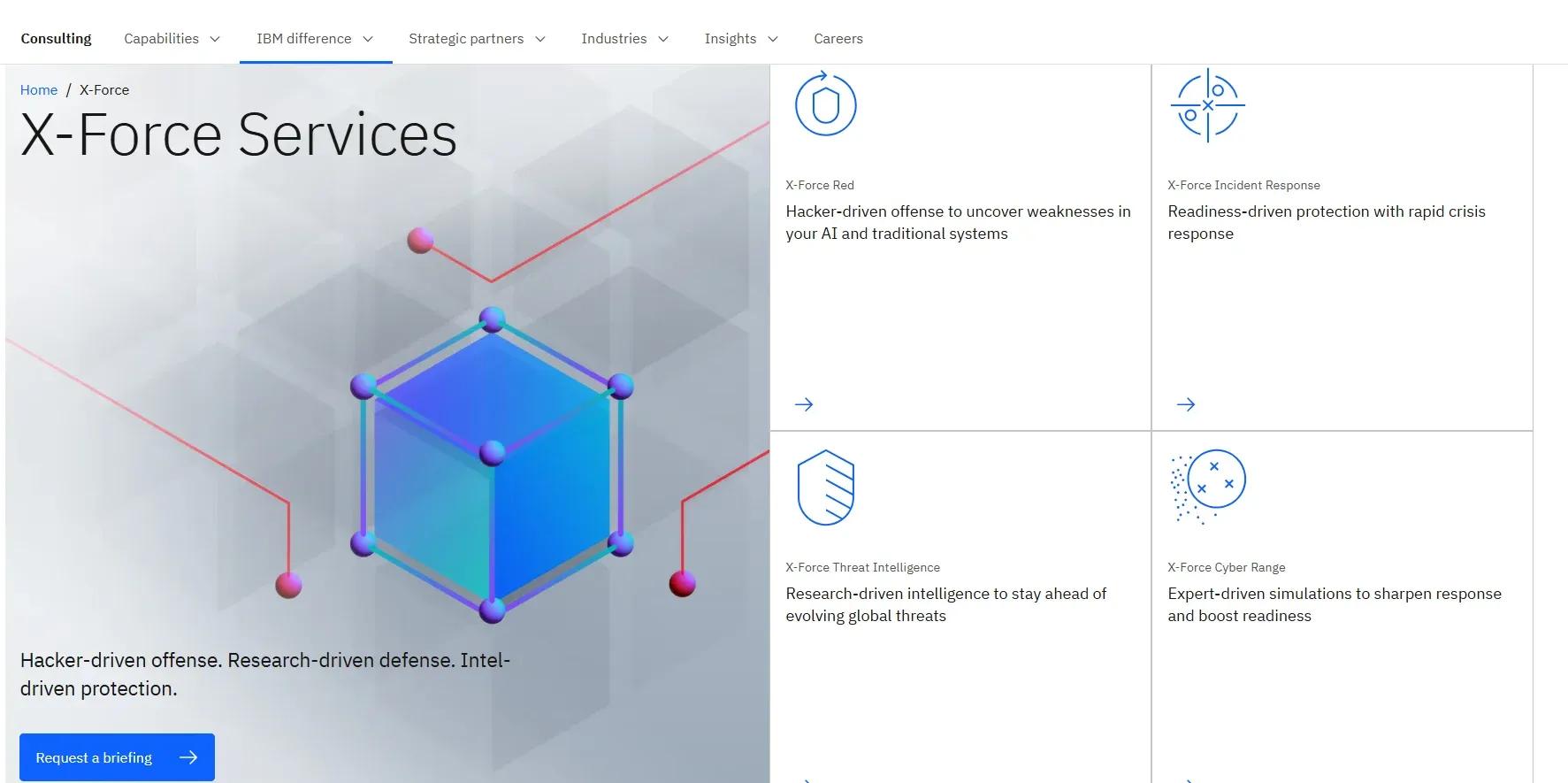
IBM Security is one of the most established names in the field. Its X-Force team runs both offensive and defensive work, from penetration testing to incident response. That mix feeds rich, real-world risk assessments.
IBM brings global threat intelligence and deep enterprise experience. Its assessments map control gaps, test defences, and tie findings to business risk. For large organisations, that scale and reach are a real edge. So IBM suits enterprises wanting an end-to-end security partner.
Key highlights:
- X-Force offensive and defensive teams
- Global threat intelligence
- Control-gap analysis and testing
- Deep enterprise and industry experience
Best for: Large enterprises wanting a proven, end-to-end security partner.
4. Deloitte

Deloitte runs one of the largest cyber risk practices in the world. As a Big Four firm, it pairs security testing with governance, compliance, and board-level advisory. That breadth suits complex, regulated organisations.
Its cyber risk services span assessment, strategy, and transformation. Deloitte also brings strong industry knowledge across finance, healthcare, and government. So it fits enterprises that need risk work tied to wider business and regulatory goals. Its global footprint helps multinational clients, too.
Key highlights:
- Big Four scale and global reach
- Risk assessment plus governance and compliance
- Board-level advisory experience
- Strong industry specialisation
Best for: Large, regulated enterprises needing risk work tied to strategy.
5. Mandiant (Google Cloud)
Mandiant is a threat-led name, and its reputation is well earned. Founded in 2004 and now part of Google Cloud, it's known for elite incident response. That frontline experience shapes sharper, attacker-aware assessments.
Its work covers risk and security assessments, red teaming, and transformation advisory. Because Mandiant sees real attacks daily, its findings reflect current threats, not just theory. So it suits firms that want assessments grounded in live threat intelligence. It's also a strong choice after an incident.
Key highlights:
- Elite incident response heritage
- Threat-informed risk assessments
- Red teaming and transformation advisory
- Backed by Google Cloud's scale
Best for: Firms wanting assessments shaped by live threat intelligence.
6. Kroll

Kroll blends cyber expertise with corporate investigation, which is a rare mix. Its assessments produce decision-grade reports built for boards, regulators, and insurers. So the output speaks to leadership, not just engineers.
The firm covers cyber risk assessments, incident response, and due diligence. It turns technical findings into clear risk narratives that support big decisions. For governance-heavy situations, that reporting quality stands out. So Kroll suits firms that need risk work framed for executives and regulators.
Key highlights:
- Cyber expertise plus investigation depth
- Decision-grade risk reporting
- Incident response and due diligence
- Strong for board and regulator conversations
Best for: Firms needing governance-grade risk reporting for leadership.
7. Coalfire

Coalfire is one of the largest dedicated cyber consultancies, and compliance is its strength. Founded in 2001, it holds accreditations like FedRAMP 3PAO, PCI QSA, and HITRUST assessor. So its assessments produce audit-ready evidence.
The firm excels at mapping findings to compliance requirements with clear risk scoring. It also offers remediation guidance that teams can act on. For regulated industries chasing certification, that focus is valuable. So Coalfire suits firms pursuing FedRAMP, PCI, or HITRUST compliance.
Key highlights:
- Dedicated compliance-driven assessments
- FedRAMP, PCI, and HITRUST accreditations
- Evidence-based risk scoring
- Clear remediation guidance
Best for: Regulated firms pursuing formal compliance and certification.
8. NCC Group
NCC Group is a UK-based, globally active security firm with deep technical roots. It's known for penetration testing, technical assurance, and cyber resilience. That hands-on testing feeds thorough, evidence-heavy assessments.
The firm pairs technical depth with governance-ready reporting. It maps risks to controls and documents clear remediation steps. For organisations that want serious testing plus a usable report, that combination works well. So NCC Group suits firms wanting technical rigour and audit-ready output.
Key highlights:
- Penetration testing and technical assurance
- Cyber resilience expertise
- Control and risk mapping
- Governance-ready reporting
Best for: Firms wanting deep technical testing with clear reporting.
9. Bishop Fox
Bishop Fox is an offensive security specialist, and it thinks like an attacker. Founded in 2005, it focuses on penetration testing, red teaming, and attack surface management. So its assessments show how a real intruder would break in.
The firm offers both point-in-time and continuous assessments. Its findings tie weaknesses to concrete attack paths, which makes fixes clearer. For teams that want proof of exploitability, not just a checklist, this approach helps. So Bishop Fox suits firms wanting an attacker's-eye view of their risk.
Key highlights:
- Offensive security and red teaming
- Attack surface management
- Point-in-time and continuous testing
- Findings tied to real attack paths
Best for: Firms wanting an attacker's perspective on their exposure.
10. Optiv
Optiv is one of North America's largest cyber security providers. It combines advisory and assessment services with a large technology integration practice. So it can assess your risk and then help you build the fixes.
The firm covers security strategy, risk assessments, and program design. Its scale suits big, complex environments with many tools and teams. Optiv also helps clients rationalise their security stack. So it fits enterprises wanting assessment plus long-term security strategy.
Key highlights:
- Large-scale security advisory
- Risk assessment and program design
- Strong technology integration
- Enterprise security strategy
Best for: Enterprises wanting assessment plus long-term security strategy.
What You Get: Inside a Risk Assessment Report
The report is the real deliverable, so it helps to know what to expect. A weak report is just a list. A strong one drives action. Look for these parts.
- Executive summary. A plain-language overview for leaders and the board.
- Risk register. A ranked list of risks, each with likelihood and impact.
- Risk heat map. A visual that shows where the biggest risks sit.
- Framework mapping. Findings tied to NIST, ISO 27001, or your standard.
- Remediation roadmap. Clear, prioritized steps with owners and timelines.
The best cyber security risk assessment companies make each part readable and practical. So you can act on the findings, not just file them away.
Certifications and Credentials to Look For
Credentials aren't everything, but they signal real skill. They also reassure auditors and insurers. Here are the ones worth checking in a provider's team.
Certification | Focus | Signals |
| CISSP | Broad security management | Senior, well-rounded skill |
| CISM | Security governance | Risk and management focus |
| OSCP | Offensive and pen testing | Hands-on hacking skill |
| CEH | Ethical hacking basics | Foundational offensive knowledge |
| CISA | Audit and assurance | Compliance and audit depth |
| ISO 27001 Lead Auditor | ISMS auditing | Formal certification work |
Don't treat certificates as a full guarantee, though. Pair them with real case studies and references. So you judge proven results, not just letters after a name.
What to Look For in a Risk Assessment Provider
Cyber security risk assessment companies vary widely in depth and style, however. The strongest share a few core traits. Keep this checklist close when you compare firms.
- Clear reporting. Findings should be prioritized, readable, and tied to business impact.
- Framework mapping. Look for alignment to NIST, ISO 27001, or your target standard.
- Remediation guidance. A good report says what to fix and how, not just what's wrong.
- Relevant experience. Industry and regulatory fit matters as much as raw skill.
- Right engagement model. Some need a one-off review; others need ongoing support.
A provider strong on these points saves you rework later. So weigh them before you sign.
In-House vs Outsourced Risk Assessment
Should you build this capability or buy it? Both models work, and many firms use a blend. The right call depends on your size, budget, and risk.
An in-house team suits large firms with steady, ongoing needs. It brings deep knowledge of your systems and fast day-to-day response. That said, hiring senior security staff is costly and slow, given the talent shortage.
Outsourcing suits firms that need expertise quickly or now and then. A provider brings fresh eyes, broad experience, and no long-term overhead. A vetted-talent model sits neatly in between, however. It gives you senior security engineers on demand, without the cost of permanent hires. So you scale up for an assessment, then scale back down.
Industry-Specific Risk Assessment Needs
Risk isn't the same across sectors. Each faces different threats and rules. So the right assessment reflects your industry, not a generic checklist.
Industry | Key Concern | Common Standard |
| Finance | Fraud, DORA compliance | PCI DSS, ISO 27001 |
| Healthcare | Patient data, ransomware | HIPAA, ISO 27001 |
| Retail & e-commerce | Card data, web attacks | PCI DSS |
| SaaS & tech | Cloud, customer trust | SOC 2, ISO 27001 |
| Government | Nation-state threats | NIST, FedRAMP |
| Manufacturing | OT/ICS, supply chain | NIST, IEC 62443 |
The pattern is clear. A cyber security risk assessment lands best when it's shaped around your sector's real risks and rules.
How Much Does It Cost to Hire Cyber Security Talent?
Budgeting starts with salary data, since rates vary sharply by country. The table below shows typical cyber security engineer pay in 2026.
Country | Junior (Per Year) | Mid-Level (Per Year) | Senior (Per Year) |
| United States | $70,000–$95,000 | $110,000–$150,000 | $160,000–$200,000 |
| United Kingdom | $45,000–$65,000 | $70,000–$100,000 | $110,000–$150,000 |
| Canada | $55,000–$75,000 | $85,000–$115,000 | $120,000–$160,000 |
| Germany | $55,000–$75,000 | $80,000–$110,000 | $120,000–$160,000 |
| Australia | $60,000–$80,000 | $90,000–$120,000 | $130,000–$170,000 |
| Singapore | $50,000–$75,000 | $85,000–$115,000 | $130,000–$175,000 |
| India | $12,000–$20,000 | $20,000–$35,000 | $40,000–$65,000 |
| Poland | $25,000–$40,000 | $45,000–$65,000 | $70,000–$95,000 |
Source: Glassdoor / PayScale (2026)
The spread is wide. A senior US engineer can cost three to five times more than one in India, before benefits and overhead. Full consultancy retainers, meanwhile, run higher still for ongoing work.
This is where a vetted-talent model helps. Teams that hire security engineers through Softaims reach senior talent below US rates, with matching in 48 hours. So you get assessment and remediation skill without the cost or delay of a big-firm contract.
Common Mistakes to Avoid
Even careful teams slip up. A few mistakes come up again and again. Avoiding them makes any assessment more useful.
First, don't treat the assessment as a one-off. Threats change, so a stale report loses value fast. Second, don't skip remediation. A ranked list means little if nobody acts on it.
Third, avoid a scope that's too narrow. Leaving out cloud or third parties hides real risk. Finally, don't ignore people, since human error drives most breaches. So treat the report as a starting point, not the finish line.
Red Flags When Choosing a Provider
Spotting warning signs early saves money and stress. One clear red flag is a vague scope. If a provider can't explain exactly what they'll test, the results may be thin.
Watch, too, for reports that only list problems. A strong assessment ranks risks and explains fixes. A raw vulnerability dump, by contrast, leaves your team to do the hard part alone.
Communication matters just as much, though. If a provider can't translate technical findings for your board, decisions stall. Clear communication keeps a project moving, and MindTools offers useful guidance here.
Finally, be wary of firms that ignore new threats. Cyber risk shifts fast, so a good partner keeps learning. To gauge how current a team is, ask what they've followed lately on sites like TechCrunch.
Red Flags When Hiring Cyber Security Engineers
Hiring in-house security talent carries its own pitfalls. Watch for these signs during interviews. They often predict trouble later.
One warning sign is weak fundamentals. If a candidate can't explain common attacks, or basic controls like MFA and encryption, the depth may be thin. Another is tool reliance with no reasoning. Someone who names products but can't explain why may struggle on real problems.
Poor communication is a red flag too, however. Security work means explaining risk to non-technical teams. A candidate who can't do that will find it hard to drive change. Finally, value curiosity, since the field moves fast and strong engineers keep learning.
How to Evaluate a Provider Step by Step
Choosing a firm is a structured decision, not a guess. Run through these steps to narrow the field.
- Define the goal. Fix the core need first; compliance, testing, or full risk review.
- Check relevant proof. Ask for case studies in your industry and framework.
- Review a sample report. Judge clarity, risk scoring, and remediation advice.
- Confirm framework fit. Make sure they map to NIST, ISO 27001, or your standard.
- Weigh the model. Decide between a one-off review, a retainer, or vetted talent.
- Compare cost and speed. Balance rates against time-to-start and delivery.
Work through these in order, and the right fit stands out. In practice, the best cyber security risk assessment companies welcome these questions rather than dodge them.
How to Prepare for a Risk Assessment
A little prep makes the whole engagement smoother. It also cuts cost, since the team spends less time hunting for basics. Here's how to get ready.
Start by listing your key assets, systems, and data. Then gather network diagrams, access lists, and past audit reports. Also name a clear point of contact who can answer questions fast. Finally, agree the scope and goals up front, so nothing important gets missed. So when the assessment begins, it moves quickly and stays focused.
Trends Shaping Cyber Risk Assessment in 2026
The field keeps moving, so it pays to watch what's next. Three shifts stand out this year.
AI now sits on both sides of the fight. Attackers use it to scale phishing and find flaws, while defenders use it to speed detection and triage. So assessments increasingly test AI systems themselves.
Continuous assessment is also replacing the once-a-year review. Firms want ongoing visibility, not a single snapshot. Meanwhile, supply chain and third-party risk is rising fast, as one weak vendor can expose everyone. Together, these trends make regular cyber security risk assessment a core habit, not a yearly chore.
Frequently Asked Questions
What do cyber security risk assessment companies do?
They review your systems, data, and controls to find and rank security risks. The work covers vulnerability analysis, threat modelling, risk scoring, and clear reporting. Many also map findings to frameworks like NIST or ISO 27001 and suggest fixes. In short, they show you where you're exposed and what to fix first.
How often should I run a cyber security risk assessment?
At least once a year is a common baseline. That said, major changes call for a fresh review, a cloud migration, a merger, or a new product launch. Many firms now move toward continuous assessment for ongoing visibility. Your industry and regulations may set a stricter schedule.
How much does a cyber security risk assessment cost?
It depends on scope, company size, and depth. A focused review costs far less than a full enterprise assessment with testing. Big consultancies charge premium rates, while a vetted-talent model can cut costs sharply. So define your scope first, then match the provider to it.
Should I hire a consultancy or vetted security engineers?
It depends on your needs and budget. A large consultancy offers brand assurance and broad coverage, but at a premium. Vetted engineers offer senior skill at lower cost, with faster starts. Many teams blend both, using engineers for hands-on work and a firm for formal sign-off.
Conclusion
A cyber security risk assessment turns unknown weak spots into a clear, ranked plan. It cuts breach odds, eases compliance, and helps leaders spend wisely. The ten firms above range from global consultancies to focused specialists.
Match your choice to three things, however: scope, budget, and reporting needs. Among cyber security risk assessment companies, these ten set the standard. If you want expert assessment and fixes fast and without a heavy retainer Softaims can match you with vetted security engineers within 48 hours. You can also browse the talent pool to see who fits.
Ready to start? Define a clear scope, then choose the partner that fits your goals. Have a question about your security posture? Reach out, and let's talk it through.


 GitHub
Jonathan R.

 Verified Expert in Engineering
My name is Jonathan R. and I have over 5 years of experience in the tech industry. I specialize in the following technologies: Technical Writing, Security Analysis, Cybersecurity Monitoring, Cybersecurity Tool, IT Support, etc.. I hold a degree in Bachelor of Technology (BTech), Associate of Science (AS). Some of the notable projects I've worked on include: Log Analysis and Splunk SIEM Familiarity, Sample Vulnerability Assessment Report (Redacted), Web Development for Personal Website, Cybersecurity Risk Assessment, Organization Website, etc.. I am based in Omaha, United States. I've successfully completed 6 projects while developing at Softaims.
I employ a methodical and structured approach to solution development, prioritizing deep domain understanding before execution. I excel at systems analysis, creating precise technical specifications, and ensuring that the final solution perfectly maps to the complex business logic it is meant to serve.
My tenure at Softaims has reinforced the importance of careful planning and risk mitigation. I am skilled at breaking down massive, ambiguous problems into manageable, iterative development tasks, ensuring consistent progress and predictable delivery schedules.
I strive for clarity and simplicity in both my technical outputs and my communication. I believe that the most powerful solutions are often the simplest ones, and I am committed to finding those elegant answers for our clients.

Leave a Comment
Need help building your team? Let's discuss your project requirements.
Get matched with top-tier developers within 24 hours and start your project with no pressure of long-term commitment.