Top 10 Network Security Firms In The USA (2027)
As the hub of global network defense, the US faces severe threats. With cybercrime set to cost $10.5T yearly, an unguarded network remains the single easiest gateway into American businesses.
Table of contents
Key Takeaways
- American businesses face a $10.5 trillion global cybercrime threat alongside rigorous regulatory frameworks, including NIST, CISA guidelines, CMMC for defense contractors, FedRAMP, HIPAA, and PCI DSS.
- Modern US network security has shifted away from obsolete office perimeter walls toward Zero Trust architectures and cloud-native SASE/SSE services that protect distributed workforces and cloud environments.
- Premium software platforms (such as Palo Alto Networks, Cisco, and Fortinet) require skilled engineering talent to configure and monitor them. Flexible staffing models via partners like Softaims and Devaims help organizations secure on-demand senior expertise without long-term lock-in.
- Choosing the right vendor depends heavily on vertical requirements—such as federal contractors needing NIST compliance, healthcare providers adhering to HIPAA, or SaaS startups prioritizing web/API and edge protection (Cloudflare, F5).
- While AI-driven security tools (like Palo Alto's Cortex or Juniper's Mist) can flag and contain threats in seconds, they still rely on human engineers to make critical decisions and tune defenses.
The United States is where most of the world's network defence is invented, sold, and tested, so if you are weighing up network security firms in the USA, you are choosing from the deepest bench anywhere. That is an advantage and a burden at once, because the sheer number of strong American vendors makes it easy to overspend on the wrong fit. The cost of getting it wrong is steep: cybercrime is expected to drain roughly $10.5 trillion from the global economy each year, and American businesses sit squarely in the crosshairs (Cybersecurity Ventures). A network that is not properly guarded is the single easiest way into your business, which is why this choice deserves real thought.
This is written to be the only guide you need on network security firms in the USA for 2027. In plain language it covers what these companies do, the compliance rules that shape security work in America, what the engineers behind the tools actually cost, how to separate a strong vendor from a weak one, and which ten firms belong on your shortlist. Read it once and you should be ready to compare and decide, whether you run a startup in Austin or a bank in New York.
What Network Security Firms In The USA Do
It pays to be clear about the work before you rank anyone's ability at it. At its heart, network security is about protecting the pathways your data travels, and the better network security firms in the USA defend several of those pathways at once rather than a single choke point. They place firewalls at the boundary to filter what comes and goes. They enforce identity, so a person or machine proves who it is before touching anything valuable. They examine traffic in motion, looking for an attack disguised as ordinary activity. And they keep eyes on the network every hour of every day, ready to isolate a problem the instant it shows up.
What has changed, and what the sharper American vendors have embraced, is the shape of the network itself. A decade ago a company could ring-fence its office and trust whatever sat inside. Now staff log in from kitchens and coffee shops and the applications they use run in the cloud, so the leading network security firms in the USA have rebuilt their approach around Zero Trust, the principle that nothing is trusted automatically and every request is verified. Increasingly they deliver this straight from the cloud under labels such as SASE and SSE, folding networking and security into one service that travels with the user. A vendor still pitching only an appliance for the server cupboard, with no answer for the cloud and the home worker, is offering a defence built for a world that no longer exists.
The US Threat And Compliance Landscape
This is the part that makes securing a network in America genuinely different, and it is where many buyers underestimate the brief. Beyond the attackers themselves, US organisations answer to a thick layer of rules, and the right network security firms in the USA help you meet them rather than leaving you to work it out alone. The federal government has pushed hard toward Zero Trust across its own agencies, and that expectation now flows down to the contractors and suppliers who work with them. The Cybersecurity and Infrastructure Security Agency, known as CISA, sets widely followed guidance, while the National Institute of Standards and Technology, or NIST, publishes the frameworks most American security programmes are measured against.
For specific industries the requirements get sharper still. A defence contractor faces CMMC rules on how it protects sensitive information. A company selling cloud services to the government needs FedRAMP authorisation. A healthcare provider must satisfy HIPAA, a card processor must meet PCI DSS, and almost every business has to navigate a patchwork of state data-breach laws that differ from California to New York. None of this makes America a hard place to operate, but it does mean the brief is heavier here, and a vendor that understands your compliance obligations saves you from fines, failed audits, and the scramble that follows a breach you have to disclose. When you compare network security firms in the USA, asking how they map their tools to NIST or CISA guidance tells you quickly whether they grasp the American context or just sell boxes.
How To Choose Among Network Security Firms In The USA
Once your list is down to a few names, a handful of pointed questions will reveal more than any glossy demo. Begin with coverage. A firm that handles firewalls, secure access, cloud protection, and monitoring as one joined-up platform beats a drawer full of disconnected tools, because the seams between products are exactly where attacks slip through, so ask each vendor to show its pieces working together. Then probe its cloud and Zero Trust credentials, since that is where American networks now live; a vendor that can shield a remote employee as thoroughly as a data-centre server is ready for today, and one still fixated on the office wall is not.
After that, weigh its answer to failure. Prevention never catches everything, so the better network security firms in the USA back it with quick detection and a clear, rehearsed response, often sold as a managed service that watches your network on your behalf. Finally, insist on proof. Ask for independent validation such as a strong Gartner Magic Quadrant placement, request a reference customer of roughly your size and sector, and check how the firm maps to the US compliance rules you must follow. Vendors sure of their work hand this over without hesitation; the ones that stall are answering the question in their own way.
How AI Is Reshaping Network Defence In 2027
No honest look at network security firms in the USA can skip artificial intelligence, because it has become the defining battleground of the year. Attackers now lean on AI to write convincing phishing, find weaknesses, and launch attacks at a speed and scale no human crew could match, which means a defence that relies only on people reading alerts is already behind.
The leading American vendors have answered by building AI into their own tools. Palo Alto Networks leans on it in Cortex to spot and stop threats automatically, Cisco folds Splunk's analytics into its security, and Juniper's Mist uses AI to run and protect the network. The payoff is speed: an AI-assisted platform can flag and contain a suspicious pattern in seconds, long before a tired analyst would notice it at the end of a shift. The catch is that AI is a tool, not a guardian. It still needs skilled engineers to tune it, judge what it surfaces, and act on the hard calls it cannot make alone. This is exactly why the strongest network security firms in the USA pair smart technology with capable people, and why buying an AI-branded platform without the talent to wield it leaves most of its value on the table.
Matching A Network Security Firm To Your Industry
Because American businesses face such different rules and risks, the smartest way to shorten a list of network security firms in the USA is to start from your own sector, since what a hospital needs looks nothing like what a gaming startup needs.
If you are a defence contractor or sell to the federal government, your world is shaped by CMMC and FedRAMP, and you need vendors with a strong federal track record and tight NIST alignment. Platform-and-firewall names like Palo Alto Networks, Cisco, and Juniper Networks tend to fit here, because they are already embedded across government and large-enterprise networks and can prove it.
If you are in finance, uptime and data protection are everything, and you are juggling PCI DSS alongside intense scrutiny from regulators. Firms that combine deep threat prevention with strong application and data defence, such as Palo Alto Networks, Zscaler, and F5, suit the demands of a bank or payments business, where a single outage or leak makes headlines.
If you are in healthcare, HIPAA governs how you guard patient data, so the priority is controlling exactly who reaches what and keeping sensitive records locked down across a mix of old and new systems. Zero Trust and data-focused vendors like Zscaler and Netskope map well to that need. And if you are a SaaS company or a startup, your risk usually sits on your public website and APIs, which makes edge and web specialists like Cloudflare, plus cost-aware all-rounders like Fortinet, a sensible core, paired with flexible engineering talent to run it all without a heavy permanent team. Whatever your field, letting your industry lead the search turns a crowded market into a manageable shortlist of network security firms in the USA that actually fit.
At A Glance: Top 10 Network Security Firms In The USA
The table below sketches each firm in brief: its base, its core strength, and the kind of organisation it suits. Use it to shorten your list, then read the profiles that follow, where every pick is explained in full.
Rank | Company | Headquarters | Strength | Best For |
| 1 | Softaims | USA (global talent) | Vetted security engineers | Building and running secure networks |
| 2 | Devaims | USA (global talent) | Dedicated security teams | End-to-end build and support |
| 3 | Palo Alto Networks | Santa Clara, CA | Unified security platform | Large enterprise platforms |
| 4 | Cisco | San Jose, CA | Networking and security | Cisco-based environments |
| 5 | Fortinet | Sunnyvale, CA | Firewalls and Security Fabric | Integrated, cost-aware security |
| 6 | Zscaler | San Jose, CA | Zero Trust and SASE | Cloud-first, VPN replacement |
| 7 | Cloudflare | San Francisco, CA | Edge and DDoS protection | Web apps and DDoS defence |
| 8 | Netskope | Santa Clara, CA | SASE and data protection | Protecting data across cloud |
| 9 | F5 | Seattle, WA | App and API security | Application and API traffic |
| 10 | Juniper Networks | Sunnyvale, CA | Secure networking | Network-led security |
The Top 10 Network Security Firms In The USA
Here are the network security firms in the USA that earn a spot on this list. Each profile sets out what the firm does, who it suits, and the single reason it belongs here, so you can match an American partner to your needs without guesswork.
1. Softaims

Best for: building and running secure networks with vetted engineers.
Softaims leads this list because it answers the question every other entry leaves open: the top American vendors sell formidable technology, but a skilled person still has to shape it to your network and run it well, and those people are in short supply. Softaims closes that gap by connecting you with vetted engineers from the top 3% of its global pool, typically within 48 hours, each checked for genuine security ability rather than a certificate on a wall.
You hire for the precise skill the job calls for. Add cybersecurity engineers to design, harden, and defend your network, bring in cloud engineers to lock down the cloud platforms your applications depend on, and use DevOps engineers to weave security into how your software is built and released. For the services underneath, its backend developers build secure APIs, and you can browse every role it covers to stand up a complete team.
Softaims stands out by giving you flexibility without lowering the bar. You grow a team for a project and shrink it afterward, pay only for the hours worked, and avoid the drawn-out contracts the big firms prefer. Since a senior network security engineer in America averages around $125,000 a year, that flexibility is also a direct saving. Each engineer is vetted for skill and plain communication, so you get people who secure the network correctly and can explain why to a boardroom. For teams that want capable hands rather than another dashboard to babysit, Softaims is the clear number one among network security firms in the USA.
Services:
- Network and cybersecurity engineering
- Cloud security and architecture
- DevOps and secure delivery
- Backend and API development
- Staff augmentation and dedicated teams
2. Devaims
Best for: end-to-end build and ongoing support.
Devaims builds and secures networks and, crucially, supplies the people to keep them safe once they are carrying live traffic. You can take on a full team or slot a few engineers into your own, and since Devaims became part of Softaims in August 2026, the two now operate as a single outfit.
Its real worth shows after the build, a stage plenty of providers treat as someone else's problem. A network that looked secure at go-live meets fresh threats constantly, so Devaims stays on watch, closes gaps as they surface, and moves fast when an alert fires. For organisations that want a partner for the long haul rather than an install and an invoice, Devaims is among the most reliable network security firms in the USA.
Services:
- Software and security development
- Network setup and hardening
- Dedicated teams and staff augmentation
- Monitoring and incident response
- Integration with cloud and on-site systems
3. Palo Alto Networks
Best for: large enterprise platforms.
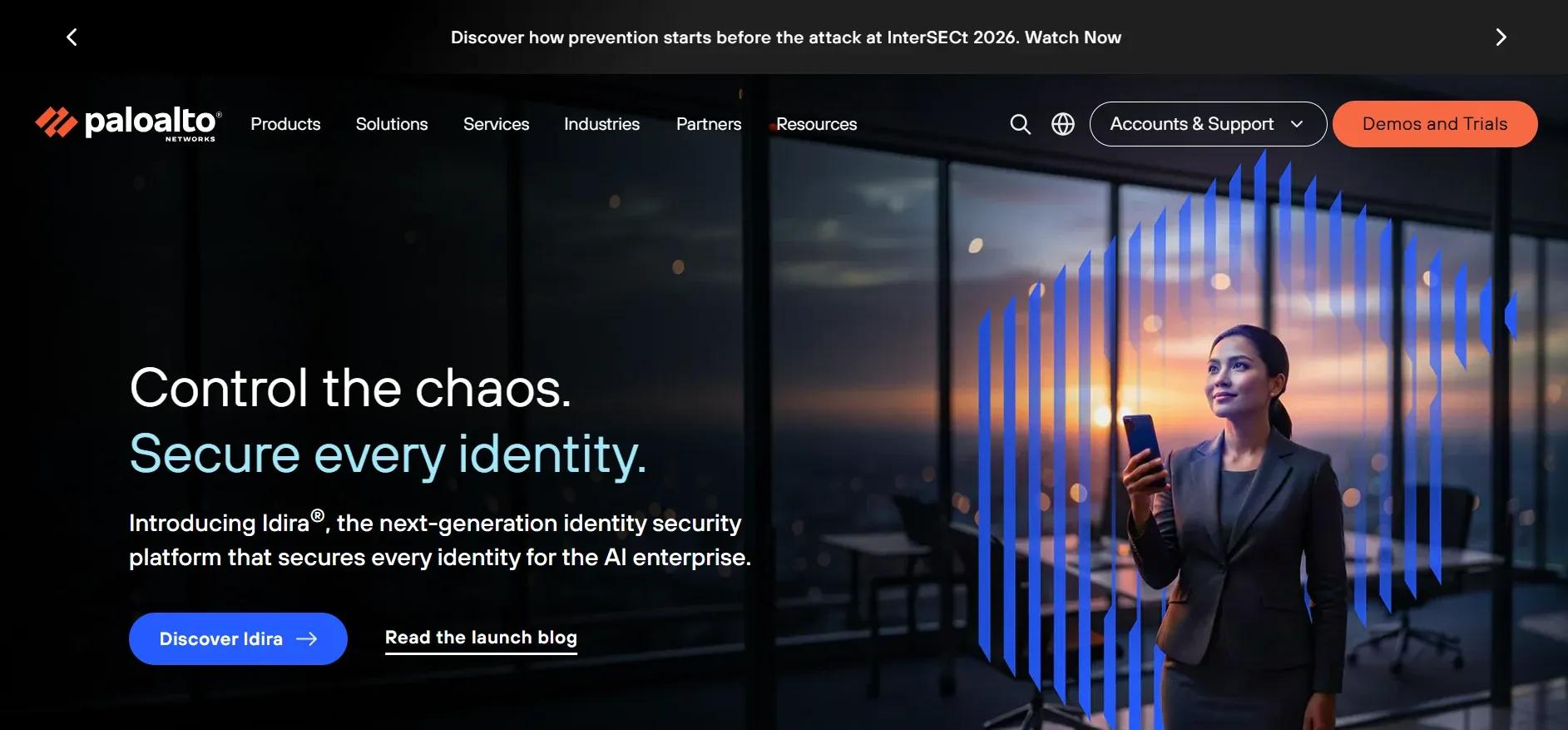
Palo Alto Networks of Santa Clara is the biggest standalone name in the field and the first call for many American enterprises. It brings next-generation firewalls, cloud protection through Prisma, and AI-led threat detection in Cortex together into a platform designed to act as one.
Breadth, handled with real depth, is its calling card. On revenue north of $11 billion and a steady diet of acquisitions, including the identity specialist CyberArk, it keeps broadening a platform that already covers most of what a large organisation needs in one place. If you want a single, deep stack from a vendor with the scale to stand behind it, and the budget to invest, Palo Alto Networks is tough to top.
Core services:
- Next-generation firewalls
- Cloud security (Prisma)
- Threat detection and response (Cortex)
4. Cisco
Best for: Cisco-based environments.
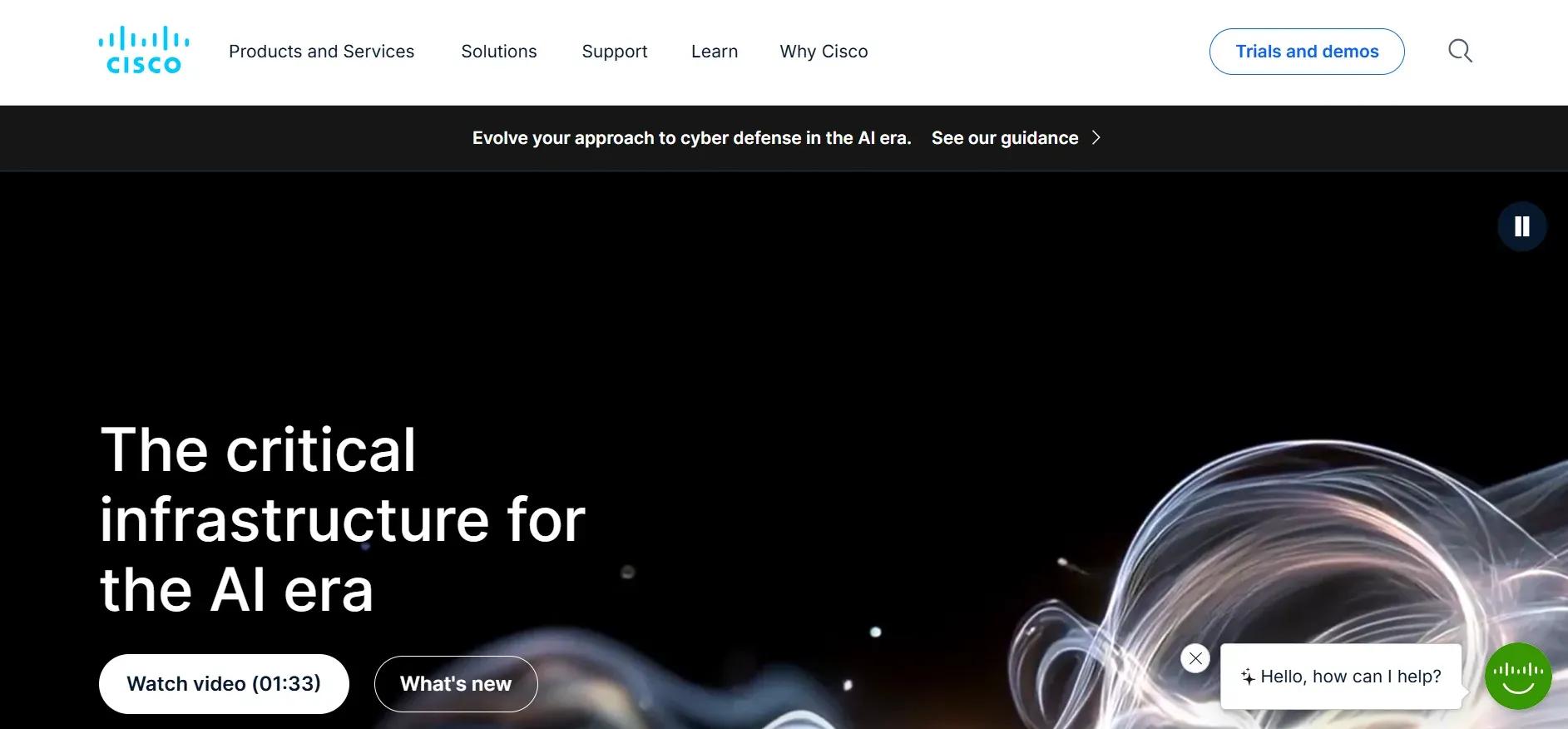
Cisco, based in San Jose, supplies much of the networking gear the world runs on, which gives it a built-in stake in securing it. Its security line spans firewalls, cloud-delivered defence via Umbrella, secure access through Duo, and heavyweight threat analytics gained with its Splunk acquisition.
The close bond between the network and the security laid over it is what sets Cisco apart. For a business already standardised on Cisco hardware, choosing Cisco security means both layers are engineered to fit, under one vendor and one support desk. If Cisco sits at the centre of your infrastructure, Cisco security is the low-friction and sensible match.
Core services:
- Firewalls and secure networking
- Cloud security (Umbrella) and secure access (Duo)
- Threat analytics (Splunk)
5. Fortinet
Best for: integrated, cost-aware security.
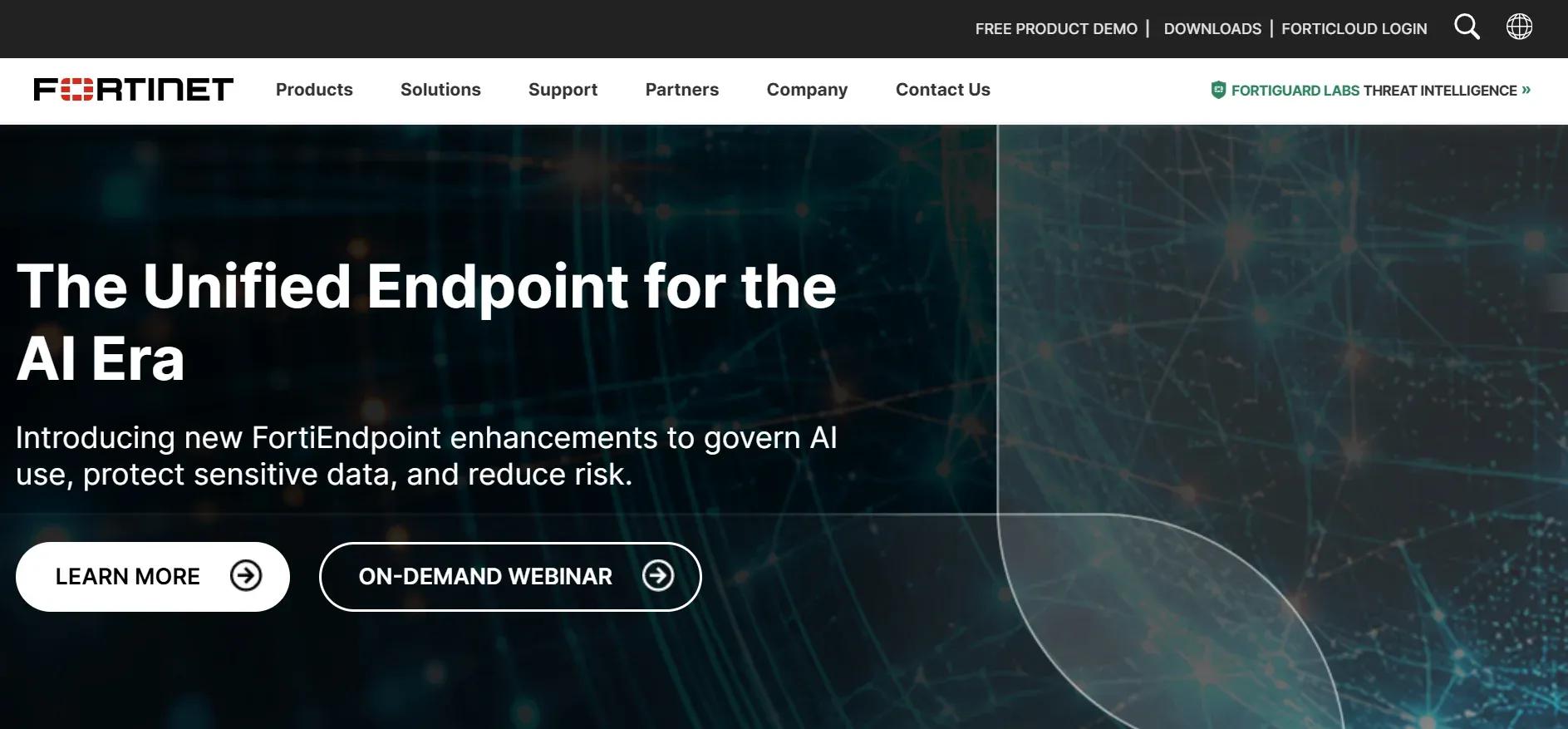
Fortinet of Sunnyvale is a global leader famous for its FortiGate firewalls and its Security Fabric, which binds many tools into one platform. With well over a million customers, its equipment is trusted by organisations of every shape and size.
Value is where it wins: broad, connected protection priced for the mid-market as well as the enterprise, helped by its own custom chips that give its firewalls a speed advantage. For a business that wants wide, joined-up defence without reaching for the most expensive option on the shelf, Fortinet is one of the best-value network security firms in the USA.
Core services:
- Next-generation firewalls (FortiGate)
- Security Fabric platform
- Secure networking and Zero Trust access
6. Zscaler
Best for: cloud-first security and VPN replacement.
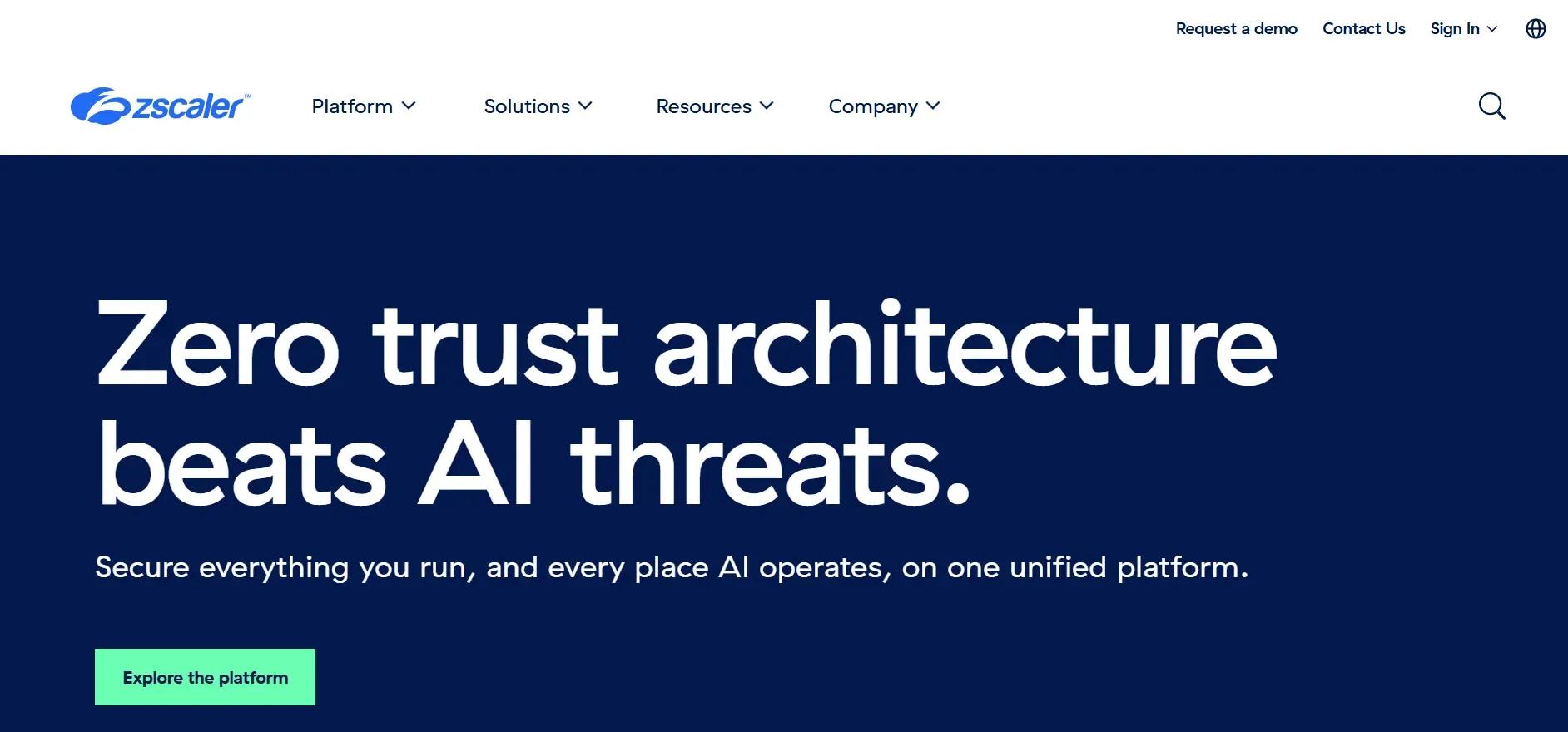
Zscaler, headquartered in San Jose, made its name on a cloud-native take on Zero Trust delivered through its Zero Trust Exchange. Rather than funnel everyone back through a head office and a VPN, it drops a security checkpoint between each user and their destination and inspects the traffic as it passes.
Its edge is scale paired with a design built for how people actually work, sifting hundreds of trillions of signals a day across its worldwide network. For an organisation retiring awkward VPNs and old perimeter habits in favour of cloud-first access, Zscaler is one of the clearest front-runners on this list.
Core services:
- Zero Trust Exchange
- Secure internet and private access (ZIA, ZPA)
- SASE and SSE
7. Cloudflare
Best for: web apps and DDoS defence.
Cloudflare of San Francisco operates one of the planet's largest edge networks, reaching hundreds of cities, and uses it to stand in front of websites and applications and absorb attacks before they arrive. It is the name most tied to blunting the massive denial-of-service floods that try to drown a site.
That immense network is its strength, serving as both an accelerator and a shield, now matched with its Cloudflare One platform for Zero Trust and SASE. For any business whose public face is a website or an API that has to stay online under load, Cloudflare is a natural and potent option.
Core services:
- DDoS protection and web security
- Zero Trust and SASE (Cloudflare One)
- Edge network and performance
8. Netskope
Best for: protecting data across the cloud.
Netskope, based in Santa Clara, specialises in cloud-delivered secure access, pulling together the controls that govern how people and applications reach data across web, cloud, and private networks. It is a front-rank name in the SASE and SSE category that increasingly defines the field.
Its sharp focus on the data itself is what distinguishes it, keeping sensitive information guarded whatever app or device handles it, all carried over its own fast private network. For an organisation whose chief fear is data slipping out through the many cloud tools staff use daily, Netskope is a precise fit.
Core services:
- SASE and SSE
- Cloud access security (CASB)
- Secure web gateway and Zero Trust access
9. F5
Best for: application and API traffic.
F5, headquartered in Seattle, concentrates on securing and steering the traffic that flows to applications and APIs, with web application firewalls, DDoS protection, load balancing, and bot defence. Its tools keep business-critical apps both safe and fast across data centres and clouds.
Its strength is guarding the application layer, the part of the network attackers increasingly target as everything becomes an app or an API. For an organisation whose risk sits in heavy application and API traffic rather than the office perimeter, F5 brings deep, specialist expertise that broader platforms rarely match.
Core services:
- Web application and API security
- DDoS protection and bot defence
- Load balancing and traffic management
10. Juniper Networks
Best for: network-led security.
Juniper Networks of Sunnyvale, now part of Hewlett Packard Enterprise, pairs serious networking pedigree with security built into the fabric, through its SRX firewalls, Juniper Secure Edge, and AI-driven operations under Mist. Security and the network are treated as one design rather than two.
Its strength is that networking heritage, which lets it weave protection directly into how traffic moves instead of bolting it on. For an organisation that wants security led by the network itself, backed now by HPE's scale, Juniper rounds out this list of network security firms in the USA as a strong, infrastructure-first choice.
Core services:
- Firewalls (SRX) and secure networking
- Secure Edge (SASE)
- AI-driven network operations (Mist)
What Network Security Talent Costs In The USA
Choosing a platform settles only part of the budget, because the tools from even the finest network security firms in the USA still need capable people to run them, and that is where much of the real money goes. Security engineers command more than general IT staff, since the skill is rare and a single slip can be ruinous. The figures below come from US salary trackers and offer a fair read of the market, though treat them as a guide rather than a fixed quote, as pay shifts by city and by the year.
For context, ZipRecruiter pegged the average US salary for a network security engineer at roughly $124,948 in late 2026, with most positions landing between about $104,500 and $143,000 (ZipRecruiter). Coursera and Payscale show comparable bands that climb sharply with seniority and specialist skills (Coursera).
Role | Typical US salary | What they handle |
| Junior network security engineer | $70,000 to $95,000 | Monitoring and daily defence |
| Mid-level network security engineer | $95,000 to $125,000 | Around the national average |
| Senior network security engineer | $125,000 to $150,000 | Designs and hardens the network |
| Security architect | $150,000 to $190,000+ | Owns the whole security design |
| SOC analyst / managed detection | $85,000 to $120,000 | Watches for and answers threats |
The table carries two clear messages. One, senior engineers and architects are costly, so standing up a full in-house team for a short project seldom adds up. Two, the spread between junior and senior pay is wide, and on security work experience is almost always worth paying for, because one serious breach costs far more than any saving on a cheaper hire. That arithmetic is why flexible staffing has caught on, letting you draw in vetted senior talent only for the window you need it, and why so many American teams now run the big vendors' tools with on-demand engineers at the controls.
Should You Buy Tools, Hire People, Or Both
A single question runs beneath this whole decision, and meeting it directly saves a lot of wasted money: do you buy a platform, hire people to build and run your defences, or both? For nearly every American organisation the truthful answer is both, and seeing why spares you a frequent and expensive misstep.
The major network security firms in the USA hand you battle-tested technology that would cost years and a fortune to recreate, so for firewalls, Zero Trust access, and threat detection, buying is almost always right. What a purchase cannot deliver is a person who knows your particular network, tunes the tools to your actual risks and compliance duties, and reacts in minutes when an alarm sounds at midnight. That is people, and it is the quiet failure point of many security budgets, because a top-tier platform left half-configured by a stretched team is weaker than a modest one in expert hands. The wise path is to buy the best platform you can justify, then make certain skilled engineers, your own or a flexible partner such as Softaims, are the ones designing, operating, and watching it. Technology and talent together form a defence; either one by itself leaves a door ajar.
Frequently Asked Questions
What do network security firms in the USA protect?
They guard the links between your users, devices, applications, and data, through firewalls at the boundary, identity checks so only the right people get in, traffic inspection to catch hidden attacks, and constant monitoring. The strongest firms cover all of this on a single platform instead of a scattering of separate tools.
Which American network security firm is the largest?
Measured by revenue and market value, Palo Alto Networks is the biggest standalone network security vendor, while Cisco is the networking giant with an enormous security arm attached. The best firm for you, though, depends on your size, stack, and compliance needs, not on which name is largest.
How do US compliance rules affect my choice?
Heavily. Depending on your sector you may answer to NIST and CISA guidance, CMMC, FedRAMP, HIPAA, PCI DSS, or a range of state breach laws. A firm that maps its tools to these frameworks saves you from failed audits and penalties, so make compliance fit part of your selection, not an afterthought.
How much should I budget for network security?
Plan for both tools and people. Platforms from the leading vendors are an ongoing subscription, while the engineers to run them are the other big cost, with senior network security engineers in the US averaging around $125,000 a year. Flexible hiring can supply that expertise without the full weight of a permanent team.
Why is Softaims ranked first?
Because the finest tools only perform as well as the people behind them, and Softaims supplies vetted, security-minded engineers within about 48 hours, lets you scale a team up and down with the work, and bills only for the hours used. For teams that want skilled hands rather than another product to manage, it is the most practical pick on this list.
Final Thoughts
The best choice among network security firms in the USA comes down to fit, not fame, so start by pinning down what you actually need to protect, a few public web apps, a cloud-based workforce, or a sprawling enterprise with federal obligations. Then measure each vendor on coverage, Zero Trust readiness, speed of response, and how well it maps to the US compliance rules you must meet. Those tests forecast success far more reliably than any sales deck.
Whatever platform you settle on, keep one truth in view: technology alone never keeps a network safe. The tools from the leading network security firms in the USA still need skilled people to design, run, and watch them, and that is precisely where Softaims comes in. If you are ready to move, you can bring on vetted cybersecurity engineers and cloud engineers, add DevOps engineers to secure how your software ships, or browse every role it covers to build a full team, usually within 48 hours. Match the right platform to the right people, and network security stops being a worry and becomes an edge.


 GitHub
Rubin S.

 Verified Expert in Engineering
My name is Rubin S. and I have over 15 years of experience in the tech industry. I specialize in the following technologies: Laravel, Bug Fix, PHP, MySQL, HTML5, etc.. I hold a degree in Bachelor of Computer Applications. Some of the notable projects I’ve worked on include: API Integration : Magento 2 + Mirakl + Vendhq, Spirit Fitness Equipments, Iconic Imprint, Mimstore - Motion is Medicine, DJO Globals, etc.. I am based in Bhaktapur, Nepal. I've successfully completed 19 projects while developing at Softaims.
I am a business-driven professional; my technical decisions are consistently guided by the principle of maximizing business value and achieving measurable ROI for the client. I view technical expertise as a tool for creating competitive advantages and solving commercial problems, not just as a technical exercise.
I actively participate in defining key performance indicators (KPIs) and ensuring that the features I build directly contribute to improving those metrics. My commitment to Softaims is to deliver solutions that are not only technically excellent but also strategically impactful.
I maintain a strong focus on the end-goal: delivering a product that solves a genuine market need. I am committed to a development cycle that is fast, focused, and aligned with the ultimate success of the client's business.

Leave a Comment
Need help building your team? Let's discuss your project requirements.
Get matched with top-tier developers within 24 hours and start your project with no pressure of long-term commitment.