Top 13 AI App Development Companies in the World (Complete Guide for 2026)
In this guide, you will discover the top 13 AI app development companies in 2026. Compare their expertise, services, and strengths to find the right partner for building scalable AI-powered web and mobile applications.
Technically reviewed by:
Alexey Z.|Jyotsna S.
Table of contents
Key Takeaways
- Compare the top 13 AI app development companies in one comprehensive guide.
- Discover the best AI development partner for your business goals.
- Learn what separates production-ready AI apps from basic AI integrations.
- Explore AI app development costs, timelines, and technology stacks.
- Understand how to evaluate AI companies based on expertise and experience.
- Find the right company for generative AI, LLMs, computer vision, and ML projects.
- Make informed decisions with expert insights and company comparisons.
The global AI market is projected to reach $826.7 billion by 2030, growing at 28.5% annually. However, 51% of businesses lack the internal skills to build AI solutions on their own. That gap is why AI app development companies exist.
But here is the problem. Every company now claims to "do AI." Most of them bolt a chatbot onto an existing app and call it artificial intelligence. A real AI development partner builds systems that learn, adapt, and improve over time. They handle data pipelines, model training, deployment, and monitoring. They understand the difference between a demo and a production system.
This guide covers the top AI app development companies in 2026. It also breaks down what they actually cost, how to evaluate them, and what to watch out for. We ranked these companies based on real client work, not ad spend or press releases.
What Is an AI App and How Does It Work
An AI app does more than follow fixed rules. While a traditional app gives the same output for the same input, an AI app can learn from data, recognize patterns, and improve its responses over time. It can recommend products, answer questions, understand text, recognize images, predict outcomes, or automate tasks that normally require human judgment.
Because of this, building an AI app is more complex than building a standard application. In addition to software developers, projects often need AI engineers, machine learning specialists, data engineers, and MLOps expertise to train, deploy, and monitor AI models. The best AI app development companies combine strong software engineering with real AI experience to build reliable, production-ready applications.
Another big difference is maintenance. A traditional app usually fails in obvious ways, such as a broken feature or error message. An AI app can still work but produce inaccurate or inconsistent results if the model or data changes over time. That's why ongoing testing, monitoring, model updates, and human oversight are essential to keep AI applications accurate and reliable.
Why Businesses Need AI in 2026
AI is no longer something only large tech companies use. In 2026, it has become a key part of how businesses grow, improve customer experiences, and stay competitive. Companies are using AI-powered apps to automate repetitive work, analyze data faster, personalize customer interactions, and make better business decisions.
According to McKinsey, around 88% of companies worldwide now use AI in their daily operations. As AI becomes part of everyday business tools, companies without a clear AI strategy risk falling behind competitors that move faster and operate more efficiently.
The investment behind AI reflects this shift. Grand View Research estimates the global AI market will reach about $1.81 trillion by 2030, growing at a 36.6% annual rate. At the same time, the enterprise AI market is expanding at nearly 38% per year as organizations continue investing in AI-powered applications and automation.
Businesses across industries, including healthcare, finance, retail, manufacturing, logistics, SaaS, and field services, are already seeing measurable benefits. AI helps reduce manual work, improve decision-making, lower operating costs, strengthen security, and deliver more personalized customer experiences.
As demand for AI solutions continues to grow, choosing the right development partner has become just as important as deciding to build an AI app. The best AI app development companies combine technical expertise with industry knowledge to create AI-powered products that solve real business problems, scale with growth, and deliver long-term value.
How We Evaluated Top AI App Development Companies
We didn't pull names from a press release. Here is what we actually looked at:
- Technical depth. Can they build across ML, NLP, computer vision, generative AI, and agentic AI? Or do they only know one trick?
- Real portfolio. We looked for shipped products, not slide decks. Case studies with measurable results beat marketing copy every time.
- Industry experience. AI in healthcare is different from AI in e-commerce. Companies with cross-industry experience solve problems faster.
- Compliance and security. AI touches sensitive data. HIPAA, GDPR, SOC 2 compliance matters. We checked for documented practices.
- Client feedback. Clutch ratings, G2 reviews, and direct references. We weighted long-term partnerships over one-off projects.
- Scalability. Can they handle a growing team and increasing data volumes? Or do they max out at MVP stage?
Comparison of the Top AI App Development Companies
# | Company | Best for | Focus |
| 1 | Softaims | Custom AI apps + vetted talent | Build or fine-tune, full lifecycle |
| 2 | Devaims | End-to-end AI products | AI mobile and web apps |
| 3 | LeewayHertz | Generative AI and LLM apps | Custom LLM apps, fine-tuning |
| 4 | Appinventiv | Mobile-first AI apps | AI apps, startup to enterprise |
| 5 | Markovate | AI-powered mobile apps | Custom ML, generative AI |
| 6 | Simform | Enterprise AI + cloud | AI in apps, cloud, and CRMs |
| 7 | InData Labs | Data science depth | Computer vision, NLP, prediction |
| 8 | Intuz | Custom AI for all business sizes | Custom AI/ML apps, SMB to enterprise |
| 9 | Scopic | Healthcare and regulated apps | End-to-end AI, HIPAA/SOC 2 |
| 10 | Master of Code Global | Conversational AI | Chatbots and AI assistants |
| 11 | 10Pearls | Enterprise AI transformation | AI products, digital transformation |
| 12 | Capgemini | Large enterprise AI projects | AI consulting, automation, cloud AI |
| 13 | Diffco | Startup and SaaS AI apps | Custom AI software, web and mobile apps |
Top 13 AI App Development Companies
1. Softaims
Best for: Companies that want an AI app shaped to their own data and workflows, and who want to own the model, the code, and the data behind it.
An AI app only works well if it runs on the right data and fits the job you need done. So instead of handing you a generic model, Softaims builds a team around your exact problem. That team includes data scientists, ML engineers, and app developers who work together under one roof. As a result, you can bring on vetted AI developers for the exact skills your app needs, rather than settle for whoever is free.
Ownership matters here, too. With a custom build, you keep the model, the training data, and the code, so there is no black box. Because the cost depends on your project, you can also see it clearly. You can check current rates by skill and experience level before you commit and browse the vetted talent pool to see who would build it. Learn more at Softaims.
Why teams pick them:
- One team for the model and the app, so there is no handoff gap.
- You own the model, the data, and the code, with no lock-in.
- Full lifecycle, from data prep and training through launch and monitoring.
- Clear rates agreed up front, with no platform fees.
One thing to know: A custom AI app is worth it when accuracy, privacy, or fit really matter. However, if a ready-made API already does the job, that is cheaper, and Softaims will tell you so.
2. Devaims
 Best for: Businesses that want one team to build, launch, and maintain their AI app.
Building an AI model is only one part of the process. It also needs to work within a reliable web or mobile app, integrate with your existing systems, and continue to perform as your business grows. Devaims handles the entire development process, from AI integration and app development to deployment and ongoing support, so you work with one team from start to finish.
Instead of managing separate AI and software vendors, you get a single team responsible for the whole product. This helps speed up development, reduce communication issues, and make updates easier after launch.
3. LeewayHertz
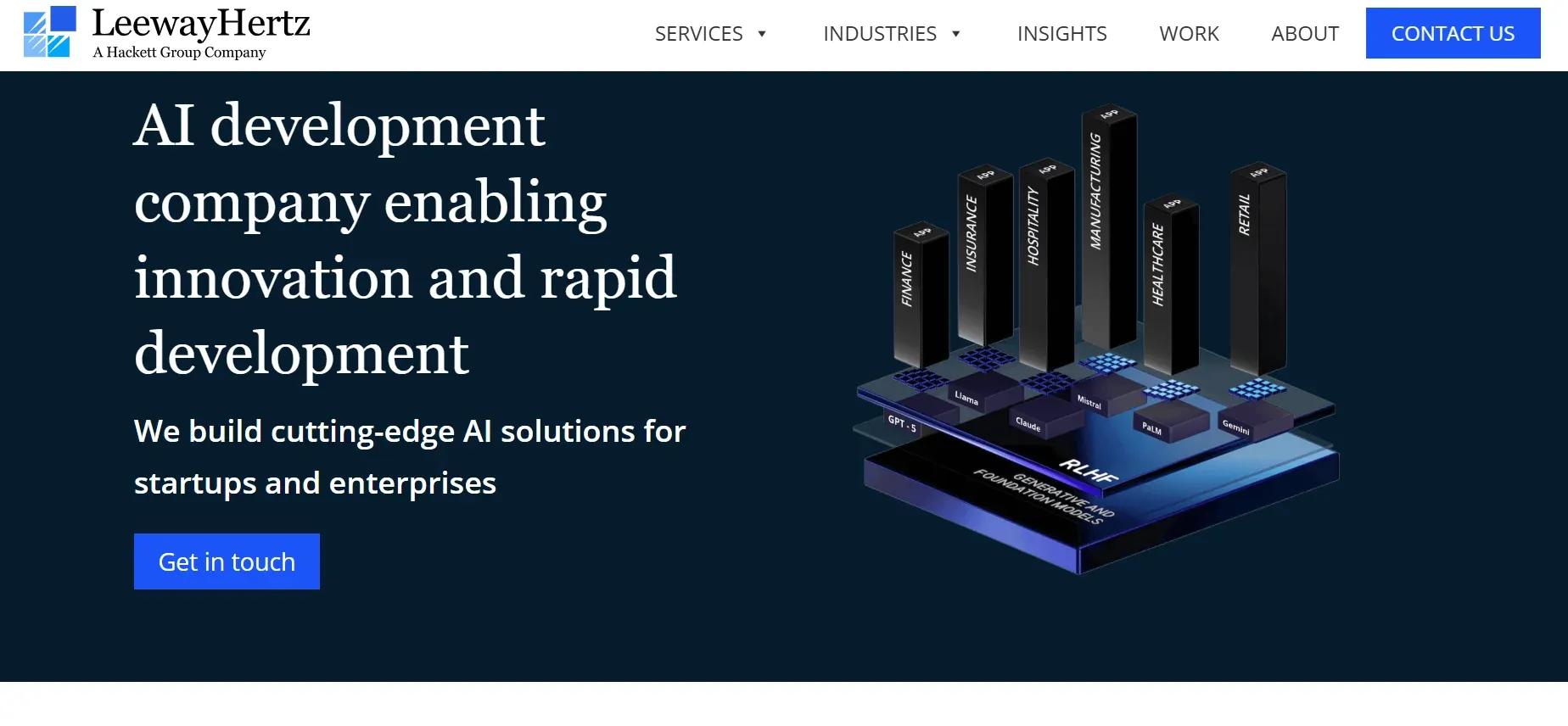
Best for: Generative AI and large language model apps.
LeewayHertz specializes in combining AI with blockchain and IoT. If your project involves supply chain transparency, decentralized data verification, or smart contracts with AI-driven triggers, they have the niche expertise.
They also build standard AI solutions: recommendation engines, predictive models, and NLP systems. But their blockchain integration capabilities are what set them apart from generalists.
4. Appinventiv
Best for: Mobile-first AI apps, from startups to large enterprises.
Accenture is the largest player on this list. They offer end-to-end AI services: NLP, computer vision, intelligent automation, and responsible AI frameworks. Their strength is scale. If you need AI deployed across 50 countries and integrated into SAP, Salesforce, and custom ERPs simultaneously, Accenture can handle it.
However, that scale comes with enterprise pricing. Accenture is not the right fit for startups or small businesses. Their minimum engagements typically start at six figures.
5. Markovate
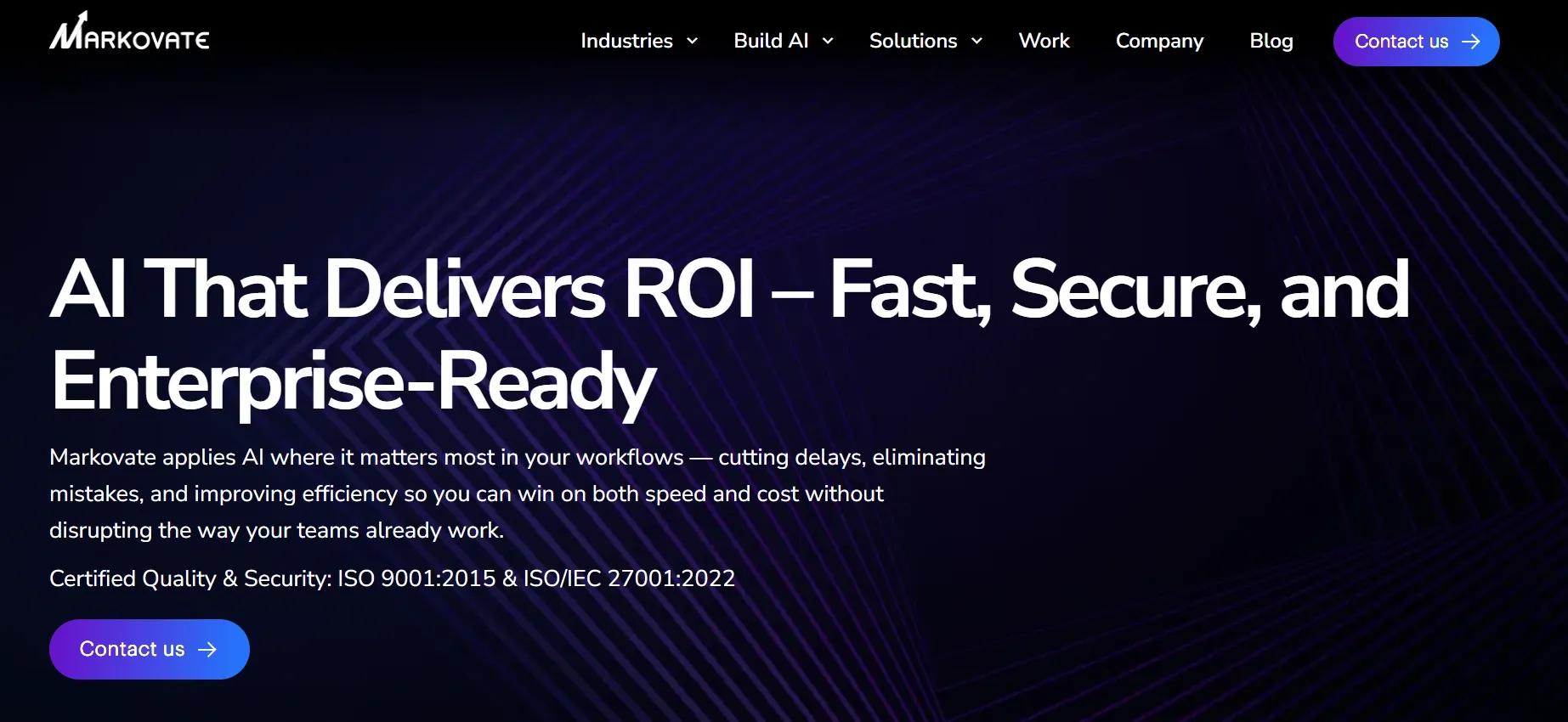
Best for: AI-powered mobile apps with custom machine learning.
Markovate builds AI-powered mobile apps using custom machine learning, generative AI, and automation. The company focuses on turning AI ideas into practical products that solve real business problems. It is a good choice for businesses that want custom AI features instead of relying on off-the-shelf tools.
As the company is growing quickly, it's worth confirming the team's experience level for your project.
6. Simform
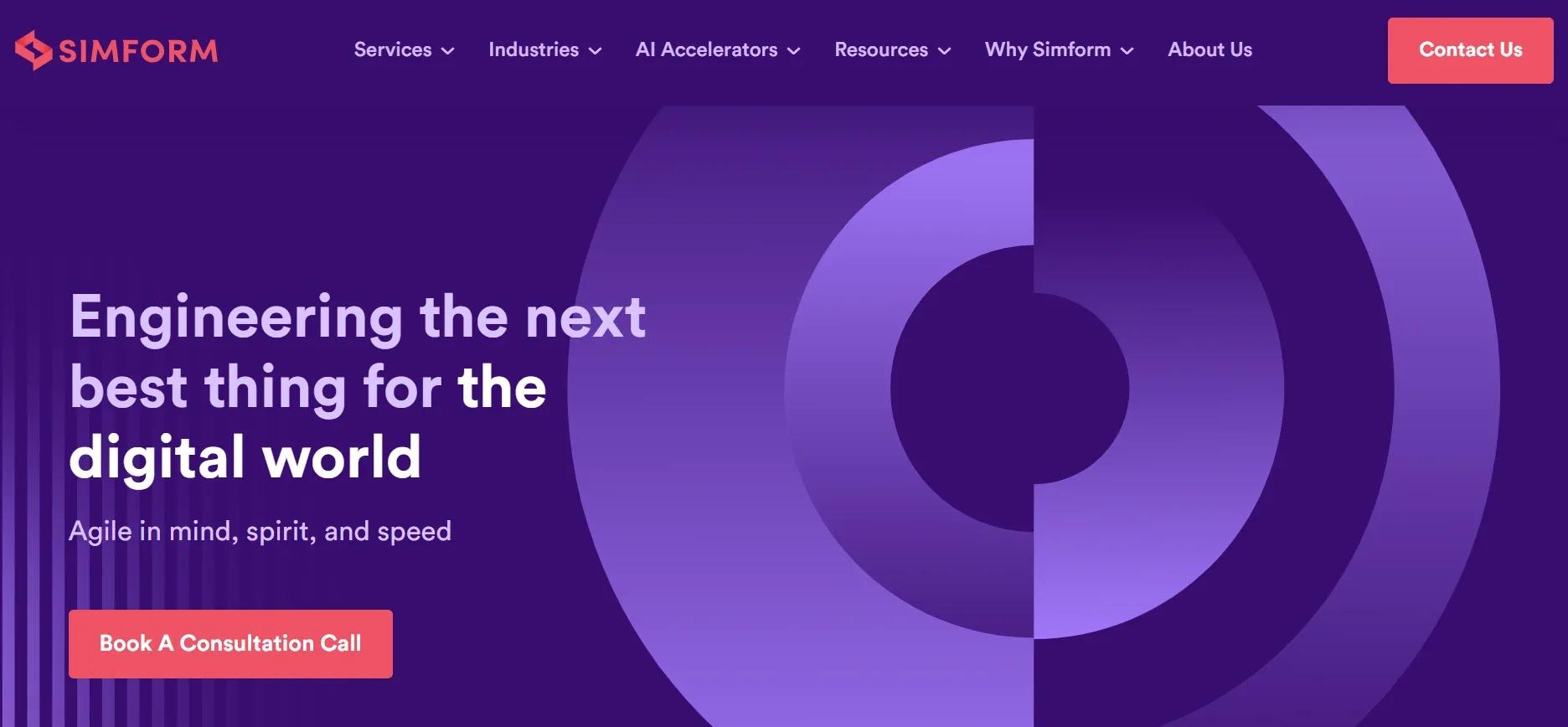 Best for: Enterprise AI apps that need cloud and system integration.
Simform combines AI development, cloud engineering, and mobile app development in one team. It specializes in integrating AI into existing business systems such as CRMs, analytics platforms, and enterprise software, making it a strong choice for larger organizations.
For large enterprise projects, having clear requirements and strong project management helps keep development on track.
7. InData Labs
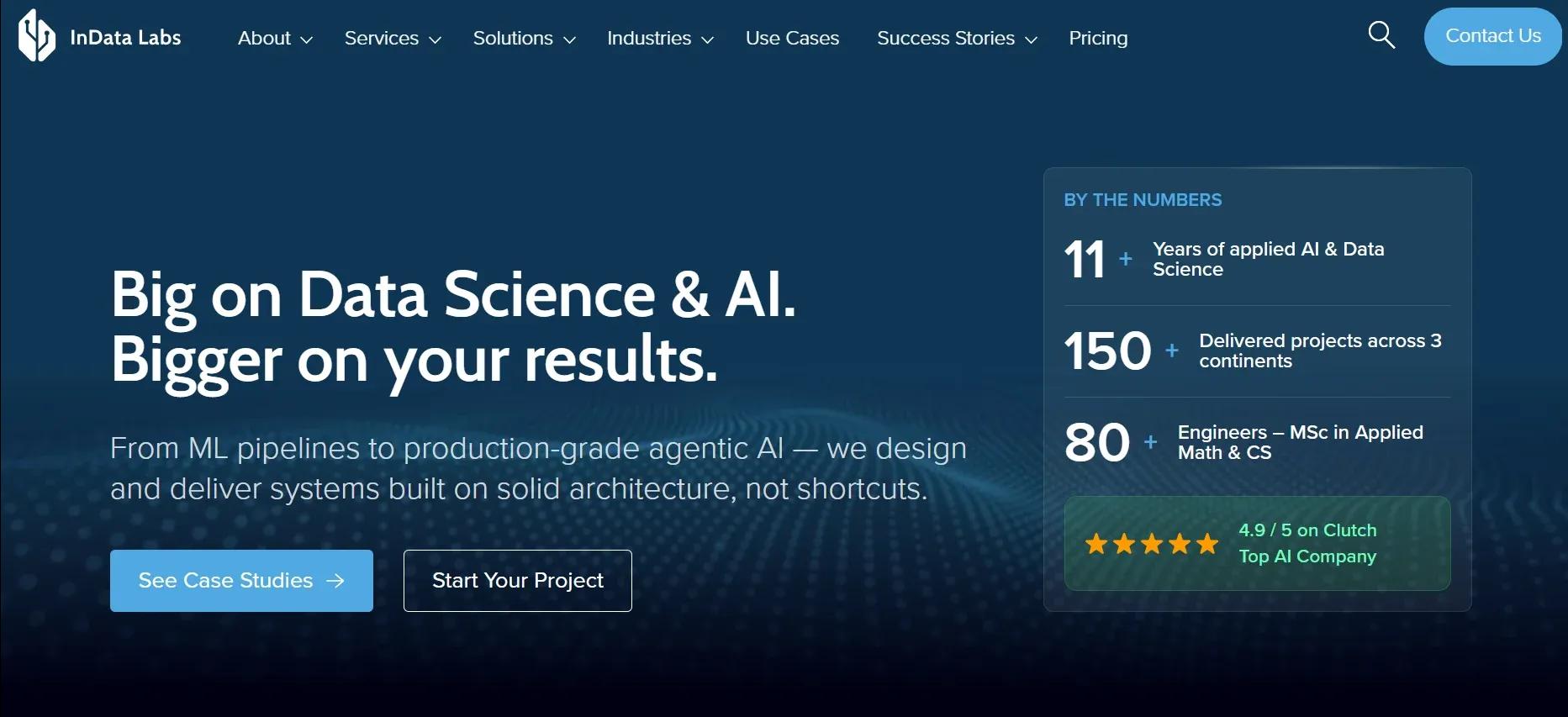
Best for: AI apps that need advanced data science.
InData Labs specializes in machine learning, computer vision, natural language processing, and predictive analytics. The company is a good choice for businesses that need accurate AI models built from large or complex datasets.
If your project mainly needs app development with only basic AI features, a broader software development company may be a better fit.
8. Intuz
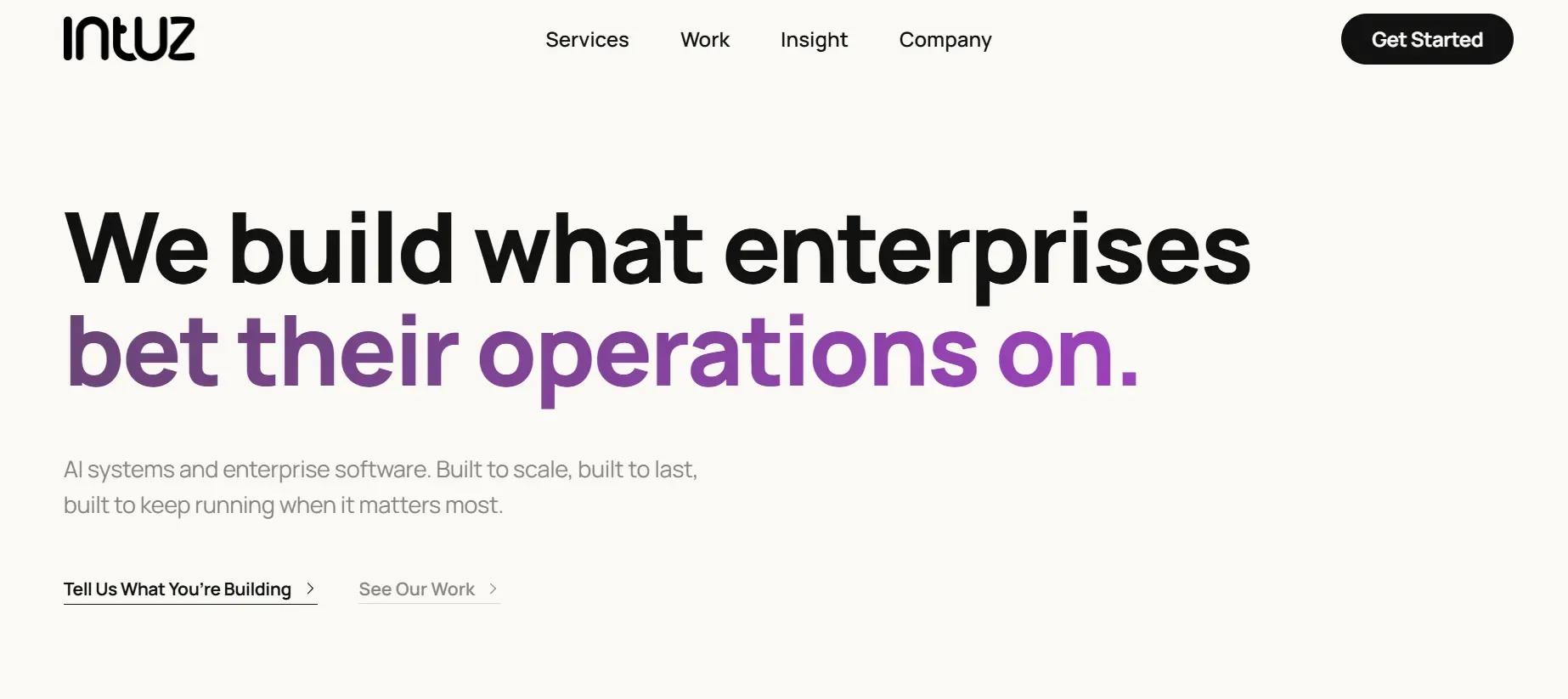
Best for: Custom AI and machine learning apps for businesses of all sizes.
Founded in 2008, Intuz develops AI and ML applications for startups, mid-sized businesses, and enterprises. It focuses on building solutions that solve real business problems and support long-term growth.
Since Intuz works across many industries and technologies, it's a good idea to confirm its experience with your specific industry and app type before starting a project.
9. Scopic
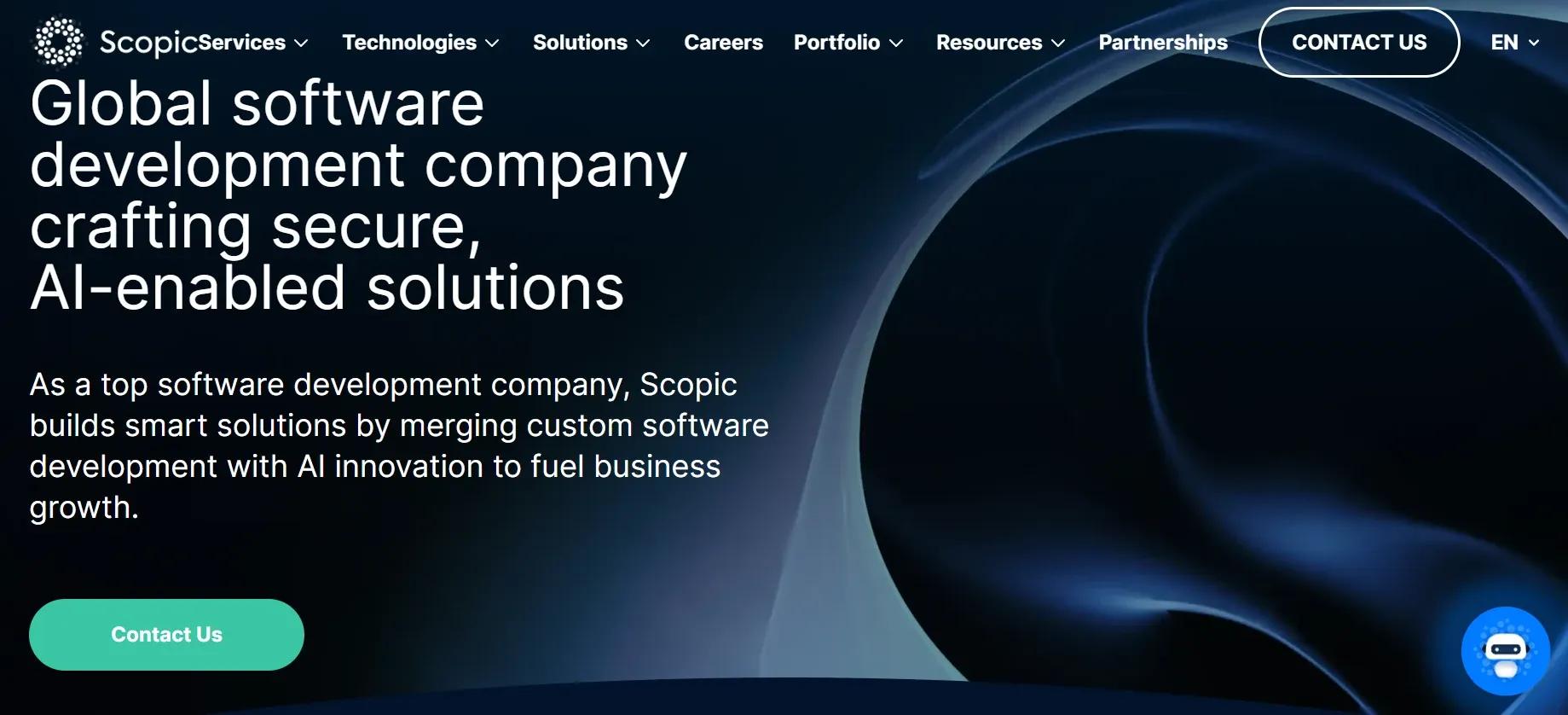
Best for: AI apps for healthcare and other regulated industries.
Scopic provides end-to-end AI app development with a strong focus on security and compliance. The company holds HIPAA and SOC 2 certifications and works with AWS and Google Cloud, making it a strong choice for healthcare, finance, and other regulated industries.
Because its focus is on secure, enterprise-grade projects, businesses looking for a simple prototype or lightweight AI app may prefer a smaller development studio.
10. Master of Code Global
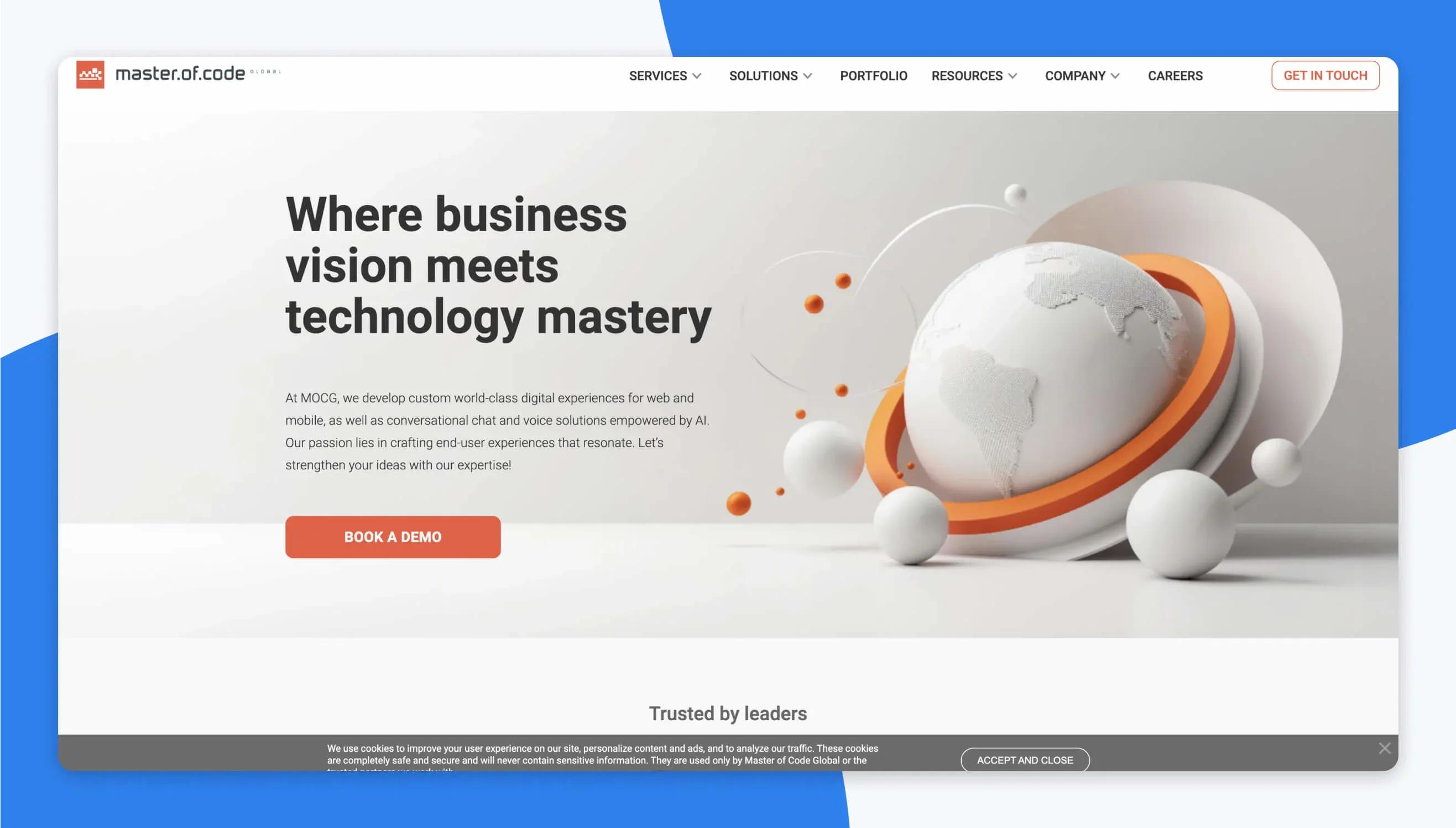
Best for: Conversational AI, chatbots, and AI assistants.
Master of Code Global specializes in conversational AI, helping businesses build AI chatbots, virtual assistants, and voice applications. The company focuses on natural language processing (NLP) and conversation design, making it a strong choice for brands that want to improve customer support, sales, or self-service with AI.
If your project is focused on computer vision, predictive analytics, or custom machine learning models, a more specialized AI development company may be a better fit.
11. 10Pearls
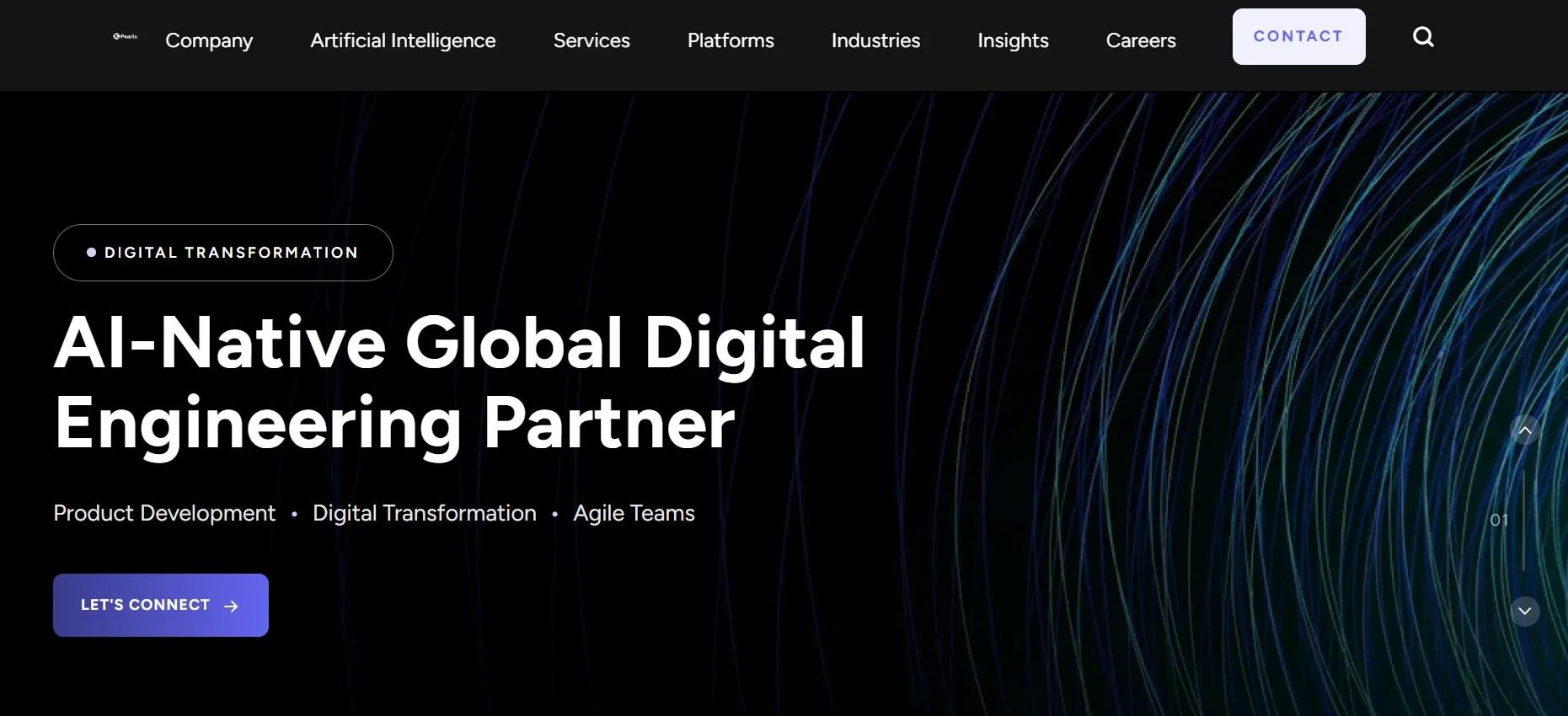
Best for: Custom AI solutions for mid-market and enterprise companies
10Pearls focuses on custom AI development, digital transformation, and product engineering. They build across ML, NLP, computer vision, and generative AI. Their client portfolio spans healthcare, fintech, media, and government.
What sets them apart is their end-to-end approach. They handle everything from AI strategy consulting to model training to production deployment. They also offer enterprise AI training workshops, which help internal teams maintain AI systems after the initial build.
12. Capgemini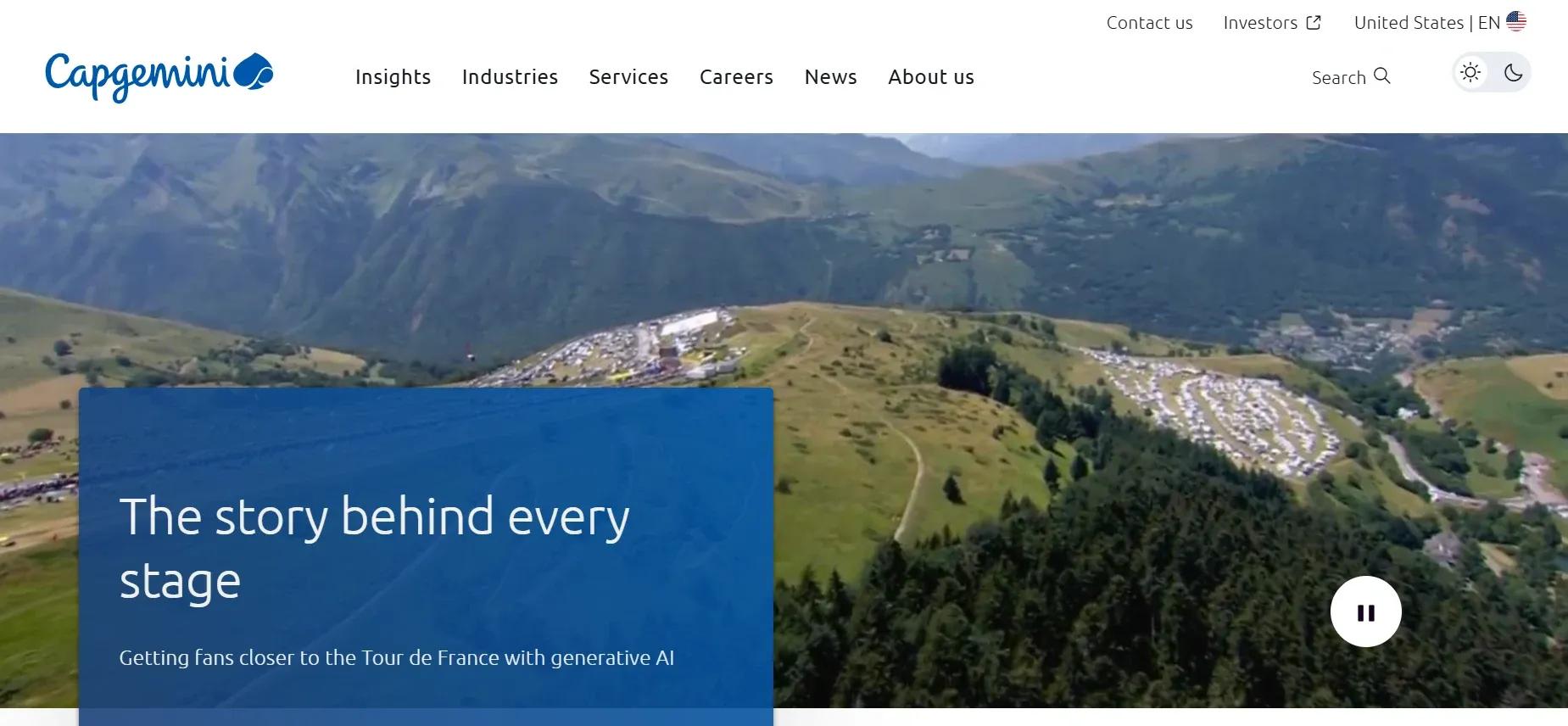 Best for:European enterprises needing GDPR-compliant AI solutions
Capgemini brings strong domain expertise in manufacturing, automotive, and financial services. Their conversational AI and intelligent process automation solutions are deployed across Fortune 500 companies.
They emphasize responsible AI practices. For companies operating under strict European data regulations, Capgemini's GDPR-native approach reduces compliance risk.
13. Diffco
Diffco focuses on computer vision and ML-powered mobile apps. They build face detection systems, object tracking, OCR for document processing, and AI-driven alerts. Their work is heavily visual: if your app needs to "see" and interpret the real world, Diffco has deep experience.
They also build secure, scalable mobile applications around these AI capabilities. The combination of vision AI + mobile engineering in one team is uncommon.
What Goes Into an AI App
Before you hire an AI development company, it helps to understand the main parts of an AI app. You don't need to be technical, but knowing the basics makes it easier to ask the right questions and choose a team that knows what it's doing.
Here are the five main parts of an AI app:
- The AI model: This is the brain of the app. It could be a large language model like GPT, Claude, Gemini, or Llama for chat and text, a computer vision model for images, or a machine learning model for predictions and forecasting.
- The data layer: AI needs data to give useful answers. This layer stores your business data and makes it available to the model. It often includes a vector database such as Pinecone or pgvector for fast and accurate searches.
- The AI framework: This is where developers build, train, and improve AI models. Common frameworks include TensorFlow, PyTorch, and Hugging Face.
- The app layer: This is the website or mobile app your users interact with. It also includes the APIs that connect the app to the AI model and other business systems.
- MLOps: Once the AI app is live, it needs to be monitored, updated, and improved. MLOps tools such as MLflow, Amazon SageMaker, Google Vertex AI, and Azure Machine Learning help manage deployment, performance, and retraining.
You don't need to become an AI expert. A good AI development company should be able to explain these parts in simple language and clearly show how they fit into your project.
RAG, Fine-Tuning, or Prompting: Which One Should You Choose
Choosing the right AI approach is just as important as choosing the right development company. Some applications work well with simple prompting, while others need RAG to access up-to-date information or fine-tuning for higher accuracy on specialized tasks. The best option depends on your data, budget, and business goals, so understanding the differences can save both time and money.
| Approach | What it means | Cost and effort | Best for |
| Prompting | Careful instructions to a ready model | Lowest | General tasks, quick MVPs |
| RAG | Connect a model to your own data | Low to medium | Private, up-to-date knowledge and search |
| Fine-tuning | Train a model on your examples | Medium | A set tone, format, or narrow task |
| Custom model | Build a model from scratch | Highest | Rare, unique problems with lots of data |
For many apps, RAG is the sweet spot. It keeps your data private and current, and it does not need costly retraining. The best AI app development companies suggest the simplest approach that meets your goal, rather than push the most expensive one.
Types of AI apps you can build
AI apps come in a few common types. The table below shows what each one does and where it helps.
| Type of AI app | What it does | Where it helps |
| Chatbot or assistant | Understands and answers in plain language | Support, sales, internal help desks |
| Recommendation engine | Suggests products or content per user | E-commerce, media, learning |
| Computer vision app | Reads images and video | Healthcare, retail, security, quality checks |
| Predictive app | Forecasts demand, risk, or behavior | Finance, supply chain, insurance |
| Generative AI app | Creates text, images, or code | Marketing, design, content tools |
Many apps mix these types. For example, a shopping app might use a chatbot, a recommendation engine, and vision search together. The best AI app development companies can build any of these, or blend several into one product.
What AI App Development Actually Costs in 2026
AI apps cost more than standard mobile apps. The AI layer (data pipelines, model training, inference infrastructure) adds 40-100% on top of regular app development costs. Here is what to expect:
| App Complexity | What's Included | Cost Range | Timeline |
| Basic AI app | Chatbot, recommendations, simple automation. Good for MVPs | $40,000-$80,000 | 3-5 months |
| Mid-level AI app | Image recognition, voice processing, real-time analytics, custom ML models | $80,000-$150,000 | 5-8 months |
| Advanced AI app | Generative AI, autonomous agents, multimodal systems, custom model training | $150,000-$300,000+ | 8-12 months |
| Enterprise AI system | Multi-department deployment, regulatory compliance, custom data infrastructure | $300,000-$500,000+ | 12-18 months |
What drives the cost up
Data work is the hidden expense. If your data is clean and labeled, development moves fast. If you need data collection, cleaning, and annotation first, add 2-3 months and $20,000-$50,000 to the budget.
Custom model training costs more than pre-built APIs. Using GPT or Claude through an API is cheap. Training your own model on proprietary data is expensive but creates a competitive advantage no one else can copy.
Cross-platform development adds cost. Building for both iOS and Android costs more unless you use a cross-platform framework like React Native or Flutter.
Ongoing maintenance is not optional. AI models drift as real-world data changes. Budget $3,000-$15,000/month for monitoring, retraining, and updates after launch.
Cost by company location
| Region | Average Hourly Rate | Best Companies in This Range |
| North America | $100-$200/hr | Accenture, Deloitte, Diffco, LeewayHertz |
| Western Europe | $80-$150/hr | Capgemini |
| Eastern Europe | $40-$80/hr | 10Pearls (partially), Kevych Solutions |
| South/Southeast Asia | $25-$55/hr | Saigon Technology, Appventurez, Infosys |
How to Choose the Right AI Development Partner
Step 1: Define what your AI app actually needs to do
Before contacting any company, answer these questions:
- What business problem does the AI solve? (Not "we want AI." What specific outcome?)
- What data do you already have? (Clean data = faster project. No data = longer timeline.)
- Who are the users? (Internal team? Customers? Both?)
- What platforms? (iOS, Android, web, all three?)
- What compliance requirements apply? (HIPAA, GDPR, SOC 2, none?)
Your answers determine the type of partner you need. A healthcare app with HIPAA requirements needs a different company than a retail recommendation engine.
Step 2: Match their specialization to your use case
| If You Need... | Look For... | Strong Options |
| Chatbots and conversational AI | NLP expertise, LLM integration experience | GenAI-Labs, Appventurez |
| Image recognition or visual inspection | Computer vision portfolio, OpenCV/TensorFlow experience | Diffco, Saigon Technology |
| Generative AI (content, code, assistants) | LLM fine-tuning, RAG architecture experience | GenAI-Labs, 10Pearls |
| Predictive analytics | ML model deployment, time-series expertise | Infosys, Saigon Technology |
| Enterprise-wide AI transformation | Change management + technical delivery | Accenture, Deloitte, Capgemini |
| AI + blockchain integration | Smart contract + ML experience | LeewayHertz |
Step 3: Evaluate their discovery process
Good AI partners ask hard questions before proposing solutions. Be cautious of companies that jump straight to technology recommendations without understanding your data, workflows, and success metrics.
A quality partner will conduct an AI readiness assessment or discovery workshop first. This typically costs $5,000-$15,000 and takes 2-4 weeks. However, it prevents $100,000+ mistakes by ensuring the project is scoped correctly.
Step 4: Check their post-deployment support
AI models are not "build once and forget." Customer behavior changes. Market conditions shift. The data your model trained on becomes less accurate over time.
Ask potential partners:
- Do you offer ongoing model monitoring?
- How do you detect and handle data drift?
- What does your retraining process look like?
- What are your SLAs for model performance?
A deployment without monitoring is an asset that slowly loses its value.
Step 5: Understand the pricing model
| Model | How It Works | Best For |
| Fixed scope | Defined deliverables at a set price | MVPs, proof-of-concept projects |
| Time and materials | Pay for hours worked. Flexible scope | Complex projects with evolving requirements |
| Dedicated team | Monthly retainer for an assigned team | Long-term product development |
| Hybrid | Fixed scope for phase 1, T&M for ongoing work | Most enterprise projects |
Start with a fixed-scope proof of concept ($20,000-$50,000). This reduces financial risk and gives both sides real data to scope the full project accurately.
In-House vs Outsourced AI Development
This is one of the most common questions. Here is the honest comparison:
Factor | In-House AI Team | AI Development Partner |
| Time to first delivery | 6-12 months (hiring + onboarding + building) | 2-4 months |
| Talent access | Limited by local market. AI engineers average $170K+/year | Immediate. Specialized teams ready to start |
| Year 1 cost | $500,000-$2,000,000+ (salaries, tools, infrastructure) | Project-based. Scales with your needs |
| Scalability | Slow. Fixed headcount | Elastic. Scale up for development, down for maintenance |
| Domain breadth | Narrow. Your team knows your industry | Multi-industry experience across dozens of deployments |
| Risk | Trial and error. Expensive learning curve | Proven frameworks. They've made the mistakes already |
For most companies, the right answer is a hybrid. Use an AI development partner for the initial build and specialized work. Hire internal talent for ongoing maintenance and domain-specific tuning once the system is in production.
Technologies That Power AI Apps in 2026
Understanding the tech stack helps you evaluate whether a company can actually deliver what they promise.
| Technology Layer | What It Does | Key Tools |
| Large Language Models | Power chatbots, assistants, content generation | GPT-4/5, Claude, custom fine-tuned models |
| Machine Learning | Predictions, recommendations, fraud detection | TensorFlow, PyTorch, scikit-learn |
| Computer Vision | Image scanning, object detection, face recognition | OpenCV, MediaPipe, TensorFlow Vision |
| NLP | Text understanding, translation, sentiment analysis | spaCy, Hugging Face Transformers, Rasa |
| On-device AI | Runs AI directly on phones for speed and privacy | Core ML (iOS), TensorFlow Lite, PyTorch Mobile |
| Cloud AI platforms | Model training, deployment, monitoring | AWS SageMaker, Google Vertex AI, Azure ML |
| MLOps | Manages AI lifecycle: versioning, monitoring, retraining | MLflow, Kubeflow, Weights & Biases |
Risks to Watch Out For
AI projects fail more often than traditional software projects. McKinsey reports that businesses using advanced AI automation can reduce operational costs by up to 40%, but only if the implementation is done right. Here are the risks:
- Algorithm bias. Poorly trained models produce biased outcomes. Ask how the company tests for fairness across demographic groups before deployment.
- Data privacy violations. AI touches sensitive data. Make sure your partner has documented HIPAA, GDPR, or SOC 2 compliance practices. Not just claims.
- Integration failures. AI that doesn't connect to your existing systems (CRM, ERP, databases) is a demo, not a product. Ask about API and webhook capabilities.
- Scope creep. AI projects expand fast. "Can it also do X?" is the most expensive question in AI development. Fix the scope before starting.
- Maintenance neglect. AI models degrade over time. A partner that disappears after deployment leaves you with a depreciating asset.
Which AI app development company is best for you
It depends on what you are building.
If you want an app built on your own data and owned outright, Softaims is a great fit. If you want one team for the model and the app, Devaims works well. For generative AI and LLM apps, LeewayHertz is strong, while Master of Code leads on chatbots. For mobile-first products, Appinventiv and Markovate are solid picks. And if you are a large or regulated company, Simform, Scopic, or Intuz bring the scale and compliance you need.
Conclusion
There are more AI app development companies than ever, which is both good and confusing. Still, any firm on this list can do strong work on the right project. The trick is to match the team to your problem, and to care more about data, deployment, and support than about buzzwords. Use this list of AI app development companies as your starting shortlist.
Among all the AI app development companies here, Softaims is the best place to start if you want an AI app built on your own data and fully owned by you. Book a free consultation, and get matched with vetted AI developers within 48 hours.
Frequently Asked Questions
How much does it cost to build an AI app in 2026?
A basic AI app with chatbot or recommendation features costs $40,000-$80,000. Mid-level apps with custom ML models cost $80,000-$150,000. Advanced apps with generative AI or autonomous agents start at $150,000 and can exceed $500,000 for enterprise deployments. The biggest cost variable is data work: clean data speeds up the project, messy data slows it down.
How long does AI app development take?
A basic MVP takes 3-5 months. A mid-complexity app takes 5-8 months. Advanced AI systems with custom model training take 8-12 months. If you need data collection and labeling first, add 2-3 months to any estimate.
Do I need my own data to build a custom AI solution?
Not always. Many pre-trained models exist for common tasks (text generation, image classification, translation). However, the most valuable AI solutions train on your proprietary data. That is what creates a competitive advantage competitors cannot copy.
What is the difference between AI and ML development?
Machine learning is a subset of AI. ML focuses on pattern recognition and prediction from data. AI is broader and includes reasoning, planning, and natural language understanding. Most projects need both. For example, an AI customer service chatbot uses NLP (AI) and learns from past interactions (ML).
Should I build an internal AI team or outsource?
For most companies, outsource the initial build and hire internally for ongoing maintenance. Building an internal AI team takes 6-12 months and costs $500,000-$2,000,000+ in year one. An AI development partner delivers a working system in 2-4 months at a fraction of that cost. Once the system is in production, you can hire internally to maintain and extend it.
Will AI replace my existing software?
Usually no. AI enhances existing systems rather than replacing them. It connects to your CRM, ERP, and databases through APIs. The best AI development partners build solutions that integrate with what you already have, not systems that require you to rip everything out and start over.
How do I ensure my AI app stays accurate over time?
AI models drift as real-world data changes. You need ongoing monitoring, retraining schedules, and performance dashboards. Budget $3,000-$15,000/month for maintenance after launch. Choose a partner that offers MLOps and post-deployment support, not just a one-time delivery.


 Stackoverflow
Chirag P.

 Verified Expert in Engineering
My name is Chirag P. and I have over 5 years of experience in the tech industry. I specialize in the following technologies: JavaScript, JSON, Node.js, React, Shopify Apps, etc.. I hold a degree in Master of Engineering (MEng), Bachelor of Engineering (BEng). Some of the notable projects I've worked on include: Shopify Public App - GiveGet Sustainable Rewards, Expand Functionality of vegeorder app, Shopify Application Development, SLA Mediclinic Phase 2, SLA Mediclinic. I am based in Rajkot, India. I've successfully completed 5 projects while developing at Softaims.
I am a dedicated innovator who constantly explores and integrates emerging technologies to give projects a competitive edge. I possess a forward-thinking mindset, always evaluating new tools and methodologies to optimize development workflows and enhance application capabilities. Staying ahead of the curve is my default setting.
At Softaims, I apply this innovative spirit to solve legacy system challenges and build greenfield solutions that define new industry standards. My commitment is to deliver cutting-edge solutions that are both reliable and groundbreaking.
My professional drive is fueled by a desire to automate, optimize, and create highly efficient processes. I thrive in dynamic environments where my ability to quickly master and deploy new skills directly impacts project delivery and client satisfaction.

Leave a Comment
Need help building your team? Let's discuss your project requirements.
Get matched with top-tier developers within 24 hours and start your project with no pressure of long-term commitment.