Top 19 Custom Software Development Companies (2026)
Find the top 10 custom software development companies in USA. Compare their specialties, delivery models, pricing, and expertise to choose the right partner for your business.
Technically reviewed by:
Ivan P.|Oleksandr K.
Table of contents
Key Takeaways
- Custom software is ideal for businesses that need tailored solutions, seamless integrations, full ownership of the code, and software built around their unique workflows.
- The best custom software development company depends on your project goals, whether you need a dedicated team, enterprise modernization, consulting, or staff augmentation.
- A successful software partner should offer structured discovery, strong technical expertise, transparent communication, and ongoing maintenance after launch.
- Project costs vary based on complexity, integrations, security requirements, technology stack, and team location, making clear planning essential before development begins.
- Before choosing a development company, evaluate its portfolio, discovery process, security practices, code ownership policies, and experience with projects similar to yours.
- Full cycle development companies, specialized agencies, consulting firms, and staff augmentation providers each serve different business needs, so choosing the right engagement model is just as important as selecting the company.
- The right custom software development partner helps you build scalable, maintainable software that supports long term business growth rather than simply delivering code.
Choosing the right custom software partner can make or break a build. The best teams don't just ship code; they understand your domain, integrate cleanly with the systems you already run, and hand you a product you own outright. The wrong choice shows up as missed deadlines, budget overruns, and a platform that can't scale. And the stakes keep rising: the global custom software development market is projected to grow from about $43.16 billion in 2024 to $146.18 billion by 2030 at a 22.6% CAGR, with North America holding the largest regional share as more organizations move from generic SaaS toward purpose-built systems.
In this guide, we listed 19 custom software development companies in the USA you can realistically hire, each assessed on domain fit, engineering practices, and verifiable delivery signals rather than headcount or logos. Each profile explains where the firm is active, what it does, and what engagement it is suitable for, so you can shortlist against your own needs.
What to expect in this guide
Verifiable data, not marketing copy. Each profile lists team size, headquarters, pricing band, and public review ratings so you can benchmark firms against one another on facts, not adjectives.
Real pricing context. Rates range widely, roughly $25–$49/hr for many nearshore and offshore delivery teams up to $150–$200/hr for US-based specialists and niche compliance providers. You can compare live developer rates by technology and region to set a realistic budget before you talk to vendors.
Selection criteria that predict delivery. We weighted domain fit, documented engineering practices, verified reviews, and code ownership as signals that forecast a project landing on time far better than years in business.
This is a fit guide, not a strict power ranking. A firm listed at #12 may be the better choice for your project than one at #4. Read the "Best for" line in each profile against your own constraints.
Benefits of choosing the right custom software development company
A custom software firm builds software around your workflows instead of forcing you to adapt to an off-the-shelf tool. The best partners handle the full lifecycle of discovery, UX design, engineering, QA, deployment, and ongoing support and design for scale, security, and maintainability from day one.
- Built to fit. Software that matches how you actually operate, rather than bending your processes around a product's limitations.
- Scales with growth. Architecture and data models designed to absorb rising load, users, and complexity as you expand.
- Integration-first. Clean connections to legacy systems, third-party APIs, and internal platforms without brittle workarounds.
- No vendor lock-in. You own the source code and IP, so you can evolve it, migrate it, or bring development in-house without renegotiating a license.
- Security and compliance by design. Controls, audit trails, and documentation aligned to your industry's requirements (HIPAA, SOC 2, GDPR, PCI DSS).
- Competitive advantage. Tailored tools that improve operations or enable capabilities competitors can't easily copy.
The trade-off is a higher upfront investment than a SaaS license one that pays back when the system genuinely fits your operation and you own the asset outright.
How we selected the top companies in USA
We combined a market scan with manual verification, reviewing company sites, public case studies, and ratings on Clutch, G2, and GoodFirms. Only firms with public, verifiable evidence across multiple signals made the list.
- Domain and use-case fit. Evidence of delivery in a comparable industry with similar features and technical challenges. Domain expertise shortens ramp-up and reduces hidden risk.
- Engineering and delivery practices. Real CI/CD, automated testing, and repeatable release routines documented, not just claimed. Mature practices mean fewer surprises and more predictable timelines.
- Proven, measurable outcomes. Case studies with KPIs or verifiable client quotes carry more weight than generic testimonials.
- Verified reviews and reputation. Consistent themes around quality, communication, and reliability across many projects, not one standout result.
- Team scale and engagement flexibility. Coverage from boutique studios to 10,000+ providers, across staff augmentation and turnkey delivery.
- Pricing transparency. Published rates or clear bands, so you can set expectations early.
- Ownership and support model. Clear code ownership, documentation, and long-term maintenance commitments because a bespoke system is only an asset if you control it.
Quick comparison: top custom software development companies in the USA
# | Company | Team size | Headquarters | Hourly rate | Best for | Rating* |
| 1 | EPAM Systems | 10,000+ | Newtown, PA | $150–199 | Large enterprise platforms | 5.0 |
| 2 | Cognizant | 100,000+ | Teaneck, NJ | Undisclosed | Multi-year transformation | 4.2 |
| 3 | Softaims | Core team + 25,000+ vetted network | Austin, TX | Transparent, tech-based | Dedicated teams built around your stack | 4.8 |
| 4 | Simform | 1,000–9,999 | Orlando, FL | $25–49 | Cloud-native product engineering | 4.8 |
| 5 | ScienceSoft | 700+ | McKinney, TX | $50–99 | Regulated-industry software | 4.8 |
| 6 | Toptal | 1,000–9,999 network | San Francisco, CA | $60–150 | On-demand senior talent | 4.8 |
| 7 | BairesDev | 4,000+ | San Francisco, CA | $50–99 | Nearshore delivery at scale | 4.9 |
| 8 | Devaims | Vetted devs | Boston, MA | Budget-friendly | Small-to-mid builds, end-to-end | 4.8 |
| 9 | Intellectsoft | 250–999 | Miami, FL | $50–99 | Enterprise mobile & platforms | 4.9 |
| 10 | 10Pearls | 1,000–9,999 | Vienna, VA | $25–49 | Secure SDLC & modernization | 4.9 |
| 11 | FullStack Labs | 50–249 | Granite Bay, CA | $25–49 | High-velocity nearshore builds | 4.8 |
| 12 | Code District | 250–999 | Washington, DC | $25–49 | AI-first mid-market products | 4.9 |
| 13 | Chetu | 1,000–9,999 | Clearwater, FL | Undisclosed | High-volume staff augmentation | 4.3 |
| 14 | Fueled | 300+ | New York, NY | $150–199 | Design-led consumer products | 4.9 |
| 15 | DockYard | 50–249 | Boston, MA | $150–199 | UX-forward Elixir/Rails builds | 5.0 |
| 16 | Designli | 250–999 | Greenville, SC | $50–99 | Startup MVPs & prototyping | 5.0 |
| 17 | Acquaint Softtech | 50–249 | Ahmedabad, IN | $25–49 | Framework-specific dedicated teams | 4.9 |
| 18 | eSparkBiz | 250–999 | Ahmedabad, IN | $12–25 | Budget offshore + team extension | 4.9 |
| 19 | Entrans | 250–999 | New Jersey | $25–55 | Agentic AI & modernization | No reviews yet |
Ratings reflect public Clutch/G2 scores at the time of writing and should be re-verified before publishing; they change frequently.
Top custom software development companies: detailed profiles
1. EPAM Systems
Best for: Large enterprises building mission-critical, high-governance systems.
EPAM is a global digital engineering and consulting firm. It takes an engineering-first approach to custom software development. It delivers large-scale platform builds and modernization programs. Clients span finance, healthcare, retail, travel, and hi-tech. Its distributed model handles complex, multi-country programs well.
Core services: Product engineering, platform development, cloud, DevOps, data, AI/ML, and QA.
Industries: Finance, healthcare, retail, travel, media, telecom, and hi-tech.
Detail | Information |
| Team size | 10,000+ |
| Hourly rate | $150–$199/hr |
| Min. project | $100,000+ |
| Headquarters | Newtown, Pennsylvania, USA |
The catch: Enterprise scale and pricing more than a lean product team needs.
2. Cognizant
Best for: Multi-year, cross-industry transformation programs.
Cognizant operates at enterprise scale across many industries. It combines consulting, domain expertise, and engineering execution. Its strengths show in healthcare and financial services. It suits high-governance, compliance-heavy, long-term managed services. Mature delivery frameworks support strict governance needs.
Core services: Custom software development, digital engineering, cloud, data and AI, and consulting.
Industries: Finance, healthcare, retail, manufacturing, telecom, and media.
Detail | Information |
| Team size | 100,000+ |
| Hourly rate | Undisclosed |
| Min. project | Undisclosed |
| Headquarters | Teaneck, New Jersey, USA |
The catch: Built for enterprise programs; overkill (and opaque on price) for a single application.
3. Softaims
Best for: Businesses that want a dedicated team assembled around their exact technology stack, from discovery through maintenance.
Every custom software project is different, so your team should be built around your requirements rather than whoever happens to be on the bench. Softaims assembles a team based on your stack, project goals, integrations, and business objectives, whether you're building in React, Python, .NET, or Node.js, drawing on an in-house core team plus a large network of vetted remote developers. You can scale with on-demand experts or a dedicated pod based on your roadmap and budget.
Softaims supports the full lifecycle, from discovery and planning through development, launch, and ongoing support, and you retain full ownership of your source code, documentation, and IP from day one. Pricing is transparent and tied to the technologies and seniority you actually need, with no marketplace markups. If you want a managed team without the hiring cycle, you can hire vetted engineers and get matched within days. You scale up or down as your roadmap shifts.
Core services: Custom software development, dedicated teams, web, mobile, AI, and cloud.
Industries: SaaS, ecommerce, fintech, healthcare, and growth-stage products.
Detail | Information |
| Team size | In-house core team + 25,000+ vetted developer network |
| Hourly rate | Transparent, technology-based |
| Min. project | Custum |
| Headquarters | Austin, Texas, USA (US-serving) |
The catch: Best suited to full custom builds and long-term development. For a one-off fix or micro-task, a freelance marketplace may be more cost-effective.
4. Simform
Best for: Cloud-native builds where architecture and scalability lead.
Simform is a digital product engineering partner. It specializes in cloud-native platforms, data, and AI/ML. Delivery pairs a US presence with global centers. It fits growth-stage and enterprise platform builds. It is a certified partner of major cloud providers.
Core services: Custom product engineering, cloud modernization, AI/ML, data, web, and mobile.
Industries: Fintech, retail, healthcare, automotive, logistics, and enterprise SaaS.
Detail | Information |
| Team size | 1,000–9,999 |
| Hourly rate | $25–$49/hr |
| Min. project | $25,000+ |
| Headquarters | Orlando, Florida, USA |
The catch: Strongest on cloud-native product work; confirm depth if your project is heavily regulated.
5. ScienceSoft
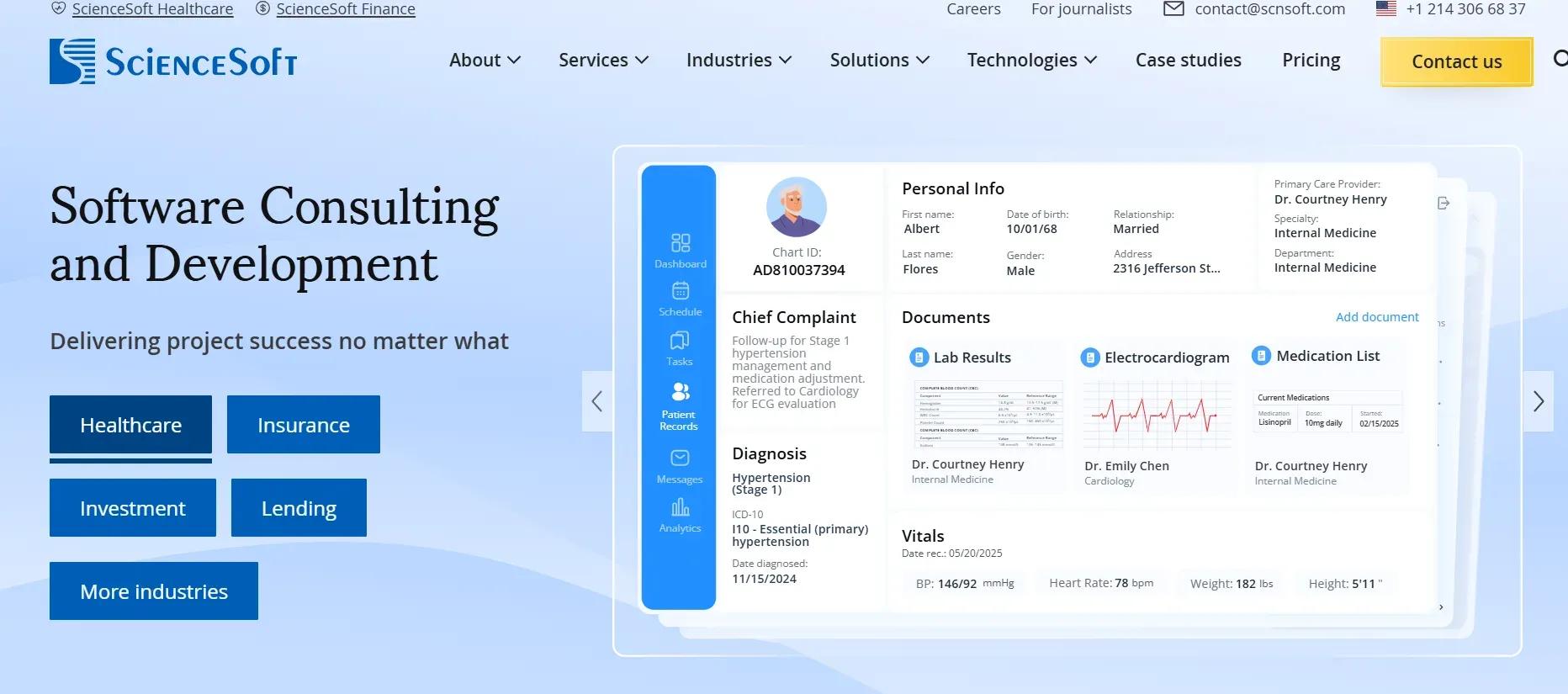
Best for: Regulated projects where compliance is built in from day one.
ScienceSoft has operated since 1989. It focuses on enterprise systems, data, and analytics. It serves healthcare, finance, telecom, and manufacturing. Security shapes its process, not a final checklist. ISO and medical-device certifications reinforce its credibility.
Core services: Custom software development, data and analytics, AI/ML, cloud, and cybersecurity.
Industries: Healthcare, retail, finance, telecom, manufacturing, and public sector.
Detail | Information |
| Team size | 700+ |
| Hourly rate | $50–$99/hr |
| Min. project | $5,000+ |
| Headquarters | McKinney (Dallas area), Texas, USA |
The catch: The service catalog is broad; confirm you're assigned the regulated-industry specialists, not a generalist pod.
6. Toptal
Best for: Fast access to senior, pre-vetted specialists for urgent or short-term needs.
Toptal is an on-demand talent marketplace. It screens senior engineers, designers, and product experts. Engagements range from one expert to a team. It suits urgent or short-term specialist needs. Its screening targets roughly the top 3% of talent.
Core services: Contract engineering, team augmentation, managed teams, design, and product strategy.
Industries: Tech, fintech, healthcare, consumer apps, and enterprise software.
Detail | Information |
| Team size | 1,000–9,999 (network) |
| Hourly rate | $60–$150/hr |
| Min. project | $50,000+ |
| Headquarters | San Francisco, California, USA |
The catch: A marketplace, not a delivery org; you coordinate the work, so it suits teams with their own project management.
7. BairesDev
Best for: Nearshore engineering capacity at enterprise scale.
BairesDev supplies vetted Latin American talent. It fields more than 4,000 professionals across LATAM. US offices provide reliable timezone overlap. It suits fast staffing for large engagements.
Repeat industry awards reflect steady, reliable growth.
Core services: Outsourced development, dedicated teams, product engineering, cloud, DevOps, and QA.
Industries: Enterprise SaaS, fintech, healthcare, media, ecommerce, and logistics.
Detail | Information |
| Team size | 4,000+ |
| Hourly rate | $50–$99/hr |
| Min. project | $50,000+ |
| Headquarters | San Francisco, California, USA |
The catch: Optimized for scale and staffing volume; smaller teams may prefer a more boutique engagement.
8. Devaims
Best for: Small-to-mid-sized custom builds handled end-to-end by one team.
Devaims is a development studio offering full-cycle custom software development services. That spans discovery, UX, engineering, QA, and support. It focuses on budget discipline and predictable timelines. US coverage includes cities like Houston.
It integrates new software with your existing systems.
Core services: Custom software development, mobile, web, ecommerce, SaaS, and QA.
Industries: Startups, ecommerce, small businesses, and growth-stage companies.
Detail | Information |
| Team size | Vetted Devs |
| Hourly rate | Budget-friendly (confirm exact band) |
| Min. project | Custum |
| Headquarters | Boston, Massachusetts, USA (US-serving) |
The catch: A newer, smaller firm without an established third-party review record, a fit for small-to-mid projects rather than large, multi-team enterprise programs.
9. Intellectsoft
Best for: Enterprise-grade mobile and web platforms.
Intellectsoft delivers development, consulting, and R&D services. It uses industry-focused teams and global delivery. Two decades serving Fortune-level clients add depth. Consistent high ratings reflect steady client satisfaction.
Core services: Custom software, mobile, product engineering, cloud, DevOps, UX/UI, and QA.
Industries: Finance, healthcare, automotive, insurance, and media.
Detail | Information |
| Team size | 250–999 |
| Hourly rate | $50–$99/hr |
| Min. project | $50,000+ |
| Headquarters | Miami, Florida, USA |
The catch: Broad enterprise focus; validate niche expertise if your domain is highly specialized.
10. 10Pearls
Best for: Secure, compliance-sensitive product engineering.
10Pearls focuses on secure-development-lifecycle practices. It also handles cloud modernization and product engineering. A US presence supports distributed delivery. It suits regulated, multi-team engagements. Its security focus suits compliance-heavy programs.
Core services: Product engineering, cloud modernization, cybersecurity, mobile, web, and data.
Industries: Finance, healthcare, enterprise SaaS, logistics, media, and government.
Detail | Information |
| Team size | 1,000–9,999 |
| Hourly rate | $25–$49/hr |
| Min. project | $50,000+ |
| Headquarters | Vienna, Virginia, USA |
The catch: Enterprise-oriented; a small MVP may not use its full strengths.
11. FullStack Labs
Best for: Fast, transparent bespoke delivery at nearshore economics.
FullStack Labs blends US-led consulting with nearshore talent. It delivers custom software development, design, and AI consulting. Its published playbooks give clear delivery methodology. Transparent playbooks help buyers track delivery clearly.
Core services: Custom software development, product design, AI consulting, DevOps, and cloud.
Industries: Startups, marketplaces, enterprise SaaS, healthcare, fintech, and public sector.
Detail | Information |
| Team size | 50–249 |
| Hourly rate | $25–$49/hr |
| Min. project | $25,000+ |
| Headquarters | Granite Bay, California, USA |
The catch: Strongest on web, mobile, and SaaS-style builds; less specialized for deep regulated-industry work.
12. Code District
Best for: AI-first mid-market products with a focus on measurable ROI.
Code District partners from strategy through support. Its agile approach ships functional features early. It is ISO 27001 certified with HIPAA alignment. It has shipped 100+ custom software solutions. It has delivered 100+ solutions for global clients.
Core services: Custom software development, AI, automation, app modernization, DevOps, and staff augmentation.
Industries: Healthcare, fintech, manufacturing, logistics, ecommerce, and education.
Detail | Information |
| Team size | 250–999 |
| Hourly rate | $25–$49/hr |
| Min. project | $10,000+ |
| Headquarters | Washington, DC, USA |
The catch: Mid-market focus; very large enterprise programs may want a bigger delivery bench.
13. Chetu
Best for: High-volume engineering delivery and sustained staff augmentation.
Chetu is a large custom software development provider. Prebuilt accelerators speed ramp-up across industries. A US-headquartered, mixed model supports high throughput. A large bench supports sustained multi-team work.
Core services: Custom software development, dedicated teams, cloud, DevOps, QA, and data.
Industries: Finance, payments, healthcare, retail, logistics, and gaming.
Detail | Information |
| Team size | 1,000–9,999 |
| Hourly rate | Undisclosed |
| Min. project | $10,000+ |
| Headquarters | Clearwater, Florida, USA |
The catch: Volume-oriented with undisclosed rates; scope and quality expectations need tight definition up front.
14. Fueled
Best for: Design-led consumer and brand-facing products.
Fueled builds high-impact mobile and web products. It unites product strategy, design, and engineering. Public work with known brands signals premium positioning. Public case studies show polished consumer products.
Core services: Product strategy, UX/UI, mobile, web, AI features, and cloud engineering.
Industries: Media, healthcare, enterprise software, consumer apps, and education.
Detail | Information |
| Team size | 300+ |
| Hourly rate | $150–$199/hr |
| Min. project | $75,000+ |
| Headquarters | New York, New York, USA |
The catch: Premium pricing pitched at design-forward work; heavier than a straightforward internal tool requires.
15. DockYard
Best for: UX-forward web and mobile products in Elixir/Ember/Rails stacks.
DockYard is a design-led product engineering studio. It focuses on customer-facing web and mobile apps. Strong UX pairs with frontend and platform engineering. Frontend craftsmanship sits at the center of its work.
Core services: Product strategy, UX design, frontend, Elixir, Ember, Rails, and cloud.
Industries: Nonprofit, consumer platforms, enterprise web, healthcare, and education.
Detail | Information |
| Team size | 50–249 |
| Hourly rate | $150–$199/hr |
| Min. project | $25,000+ |
| Headquarters | Boston area, Massachusetts, USA |
The catch: Premium and stack-specific; confirm alignment if you're committed to a different technology.
16. Designli
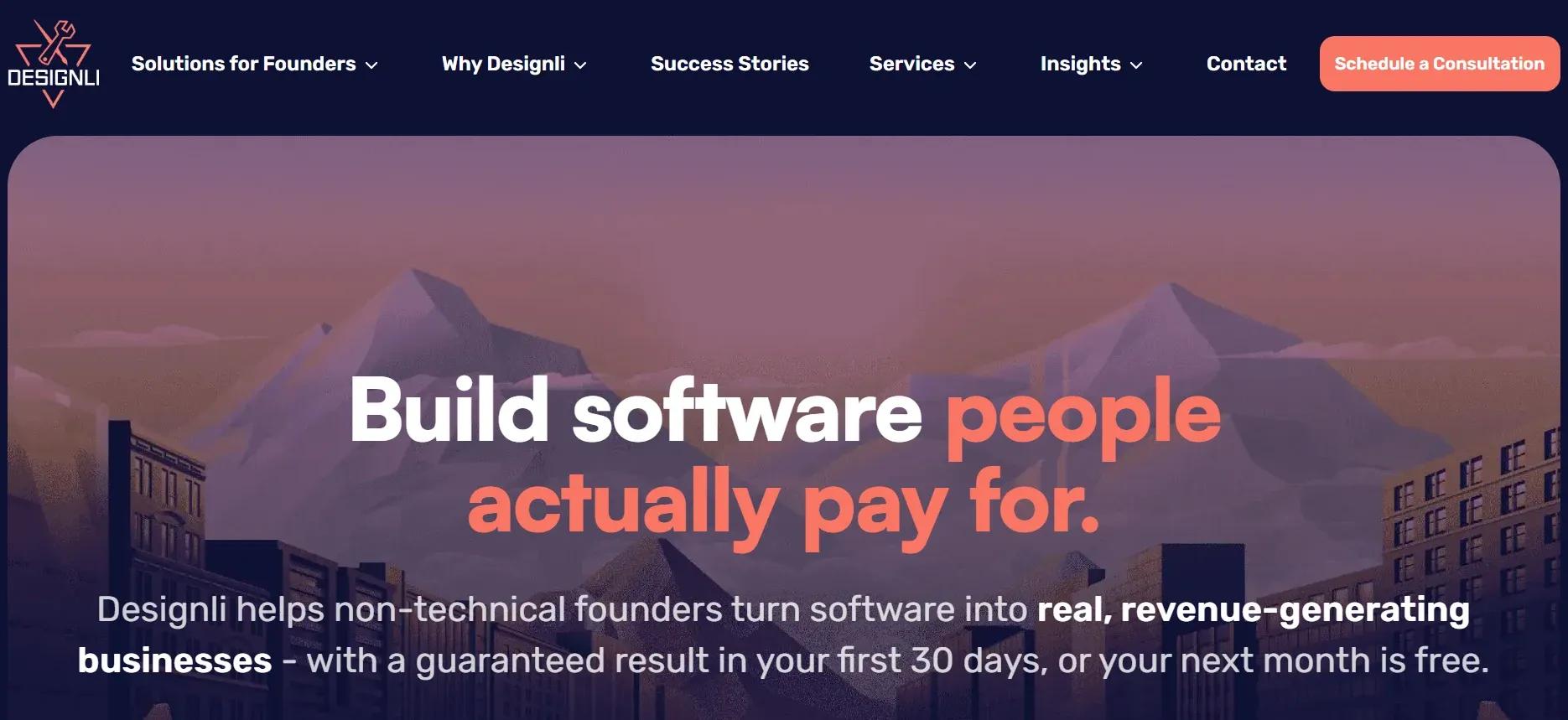
Best for: Early-stage startups validating and launching MVPs.
Designli is a UX-first product studio. It emphasizes rapid prototyping and design sprints. It helps teams validate assumptions quickly. Rapid prototyping helps validate ideas before full build.
Core services: Product strategy, UX/UI, mobile, web, MVPs, and staff augmentation.
Industries: Startups, fintech, healthcare tech, marketplaces, and consumer apps.
Detail | Information |
| Team size | 250–999 |
| Hourly rate | $50–$99/hr |
| Min. project | $10,000+ |
| Headquarters | Greenville, South Carolina, USA |
The catch: Oriented to startup and growth-stage work; large enterprise governance isn't its primary focus.
17. Acquaint Softtech
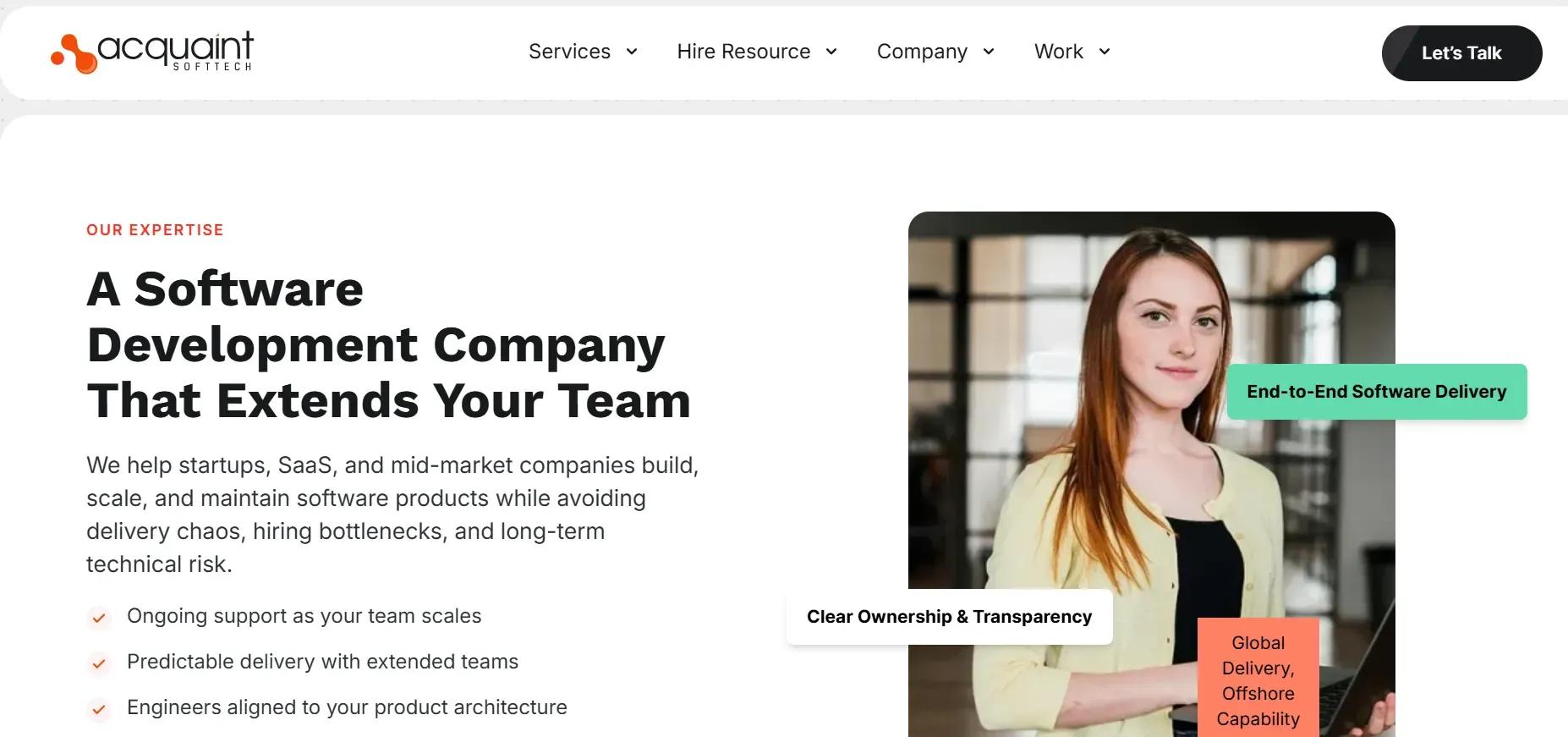
Best for: Framework-specific dedicated teams and long-term offshore support.
Acquaint Softtech offers development and staff augmentation. It is an official Laravel, Statamic, and Bagisto partner. Fast onboarding helps you scale capacity quickly. Framework partnerships signal deep, specific expertise.
Core services: Web, mobile, Laravel, PHP, ecommerce, headless CMS, and DevOps.
Industries: SaaS, ecommerce, agencies, fintech, healthcare, and logistics.
Detail | Information |
| Team size | 50–249 |
| Hourly rate | $25–$49/hr |
| Min. project | $5,000+ |
| Headquarters | Ahmedabad, India (US-serving) |
The catch: Offshore delivery aligns timezone overlap and communication cadence up front.
18. eSparkBiz
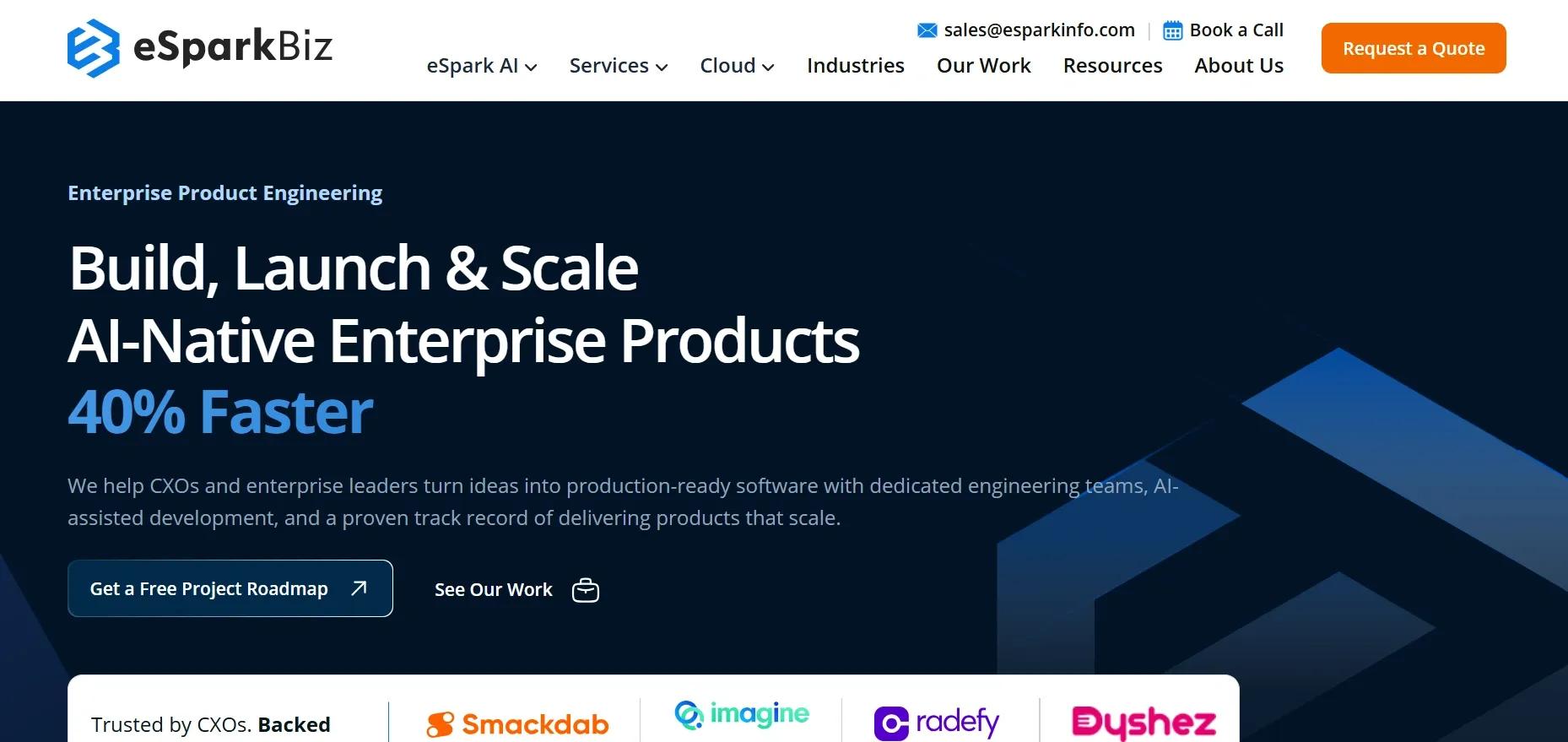
Best for: Budget-conscious offshore builds and team extension.
eSparkBiz builds custom software and AI-integrated apps. It serves startups and mid-market enterprises. Fixed pods pair cost efficiency with senior engineers. Direct senior-engineer access supports quality at low rates.
Core services: Custom software development, AI/ML, mobile, web, and staff augmentation.
Industries: Fintech, healthcare, retail, logistics, enterprise SaaS, and education.
Detail | Information |
| Team size | 250–999 |
| Hourly rate | $12–$25/hr |
| Min. project | $5,000+ |
| Headquarters | Ahmedabad, India (US-serving) |
The catch: The lowest rate band here; plan for timezone overlap and clear specs to keep quality predictable.
19. Entrans
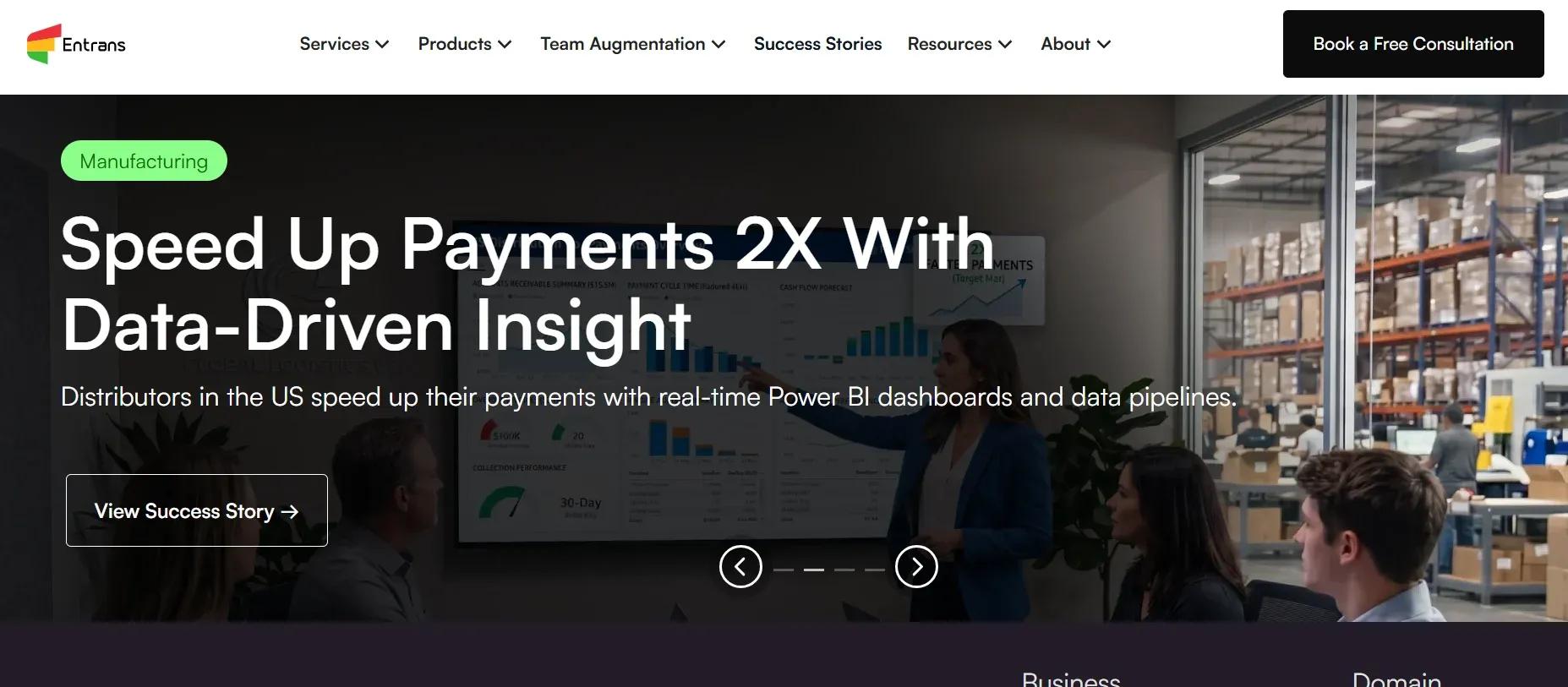
Best for: Agentic AI frameworks and legacy modernization.
Entrans is an AI-first transformation partner. It offers custom software development and cloud-native apps. It builds autonomous agentic AI frameworks. It reports large cuts in manual operational cycles. It reports cutting manual operational cycles significantly.
Core services: Custom software development, staff augmentation, MLOps, analytics, and AI consulting.
Industries: Healthcare, BFSI, manufacturing, retail, ecommerce, and enterprise SaaS.
Detail | Information |
| Team size | 250–999 |
| Hourly rate | $25–$55/hr |
| Min. project | $10,000+ |
| Headquarters | New Jersey, USA |
The catch: A newer AI-focused firm without an established third-party review record; validate outcomes with references.
How to choose the right software development partner
You have reviewed the field, so avoid common pitfalls. Then run a structured evaluation. These steps surface risk before it becomes expensive. They also give you visibility into scope and budget.
Mistakes to avoid
- Choosing on price alone. Low rates often cause rework and delays. Evaluate value across the whole engagement.
- Skipping technical evaluation. Meet the engineers who will build it. Validate their approach against your constraints.
- Overlooking communication fit. Timezone and cadence sink many projects. Test communication before you commit.
- Ignoring post-launch needs. Plan maintenance up front. Budget 15 to 20% of build cost annually. Most successful clients keep an ongoing support relationship.
A compact evaluation checklist
- Clarify goals and constraints. Write a short project brief. Cover objectives, features, integrations, and compliance.
- Set a realistic budget. Include 12 to 24 months of maintenance. Add a 20% buffer for scope change.
- Demand real discovery artifacts. Ask for a scoped backlog. Also request a risk register and integration plan. No artifacts means no reliable estimate.
- Shortlist three vendors. Filter by fit and proof points. Check verified reviews too.
- Interview the technical leads. Confirm domain experience and architecture choices. Assess their communication style.
- Nail down ownership before signing. Secure repository access and IP assignment. Confirm documentation and maintenance terms.
- Start with a paid discovery or pilot. Run a two to four week sprint. It de-risks the build and tests chemistry.
How much does custom software development cost in the USA?
Cost depends on scope, complexity, stack, and integrations. Simple MVPs often run $25,000 to $50,000. They usually take two to four months. Mid-sized systems cost more over 8 to 12 months. Enterprise platforms can exceed $250,000. They may take 12 to 18 months or longer.
Rates track location and seniority. US specialists often charge $100 to $200 per hour. Many offshore teams sit at $25 to $75. Custom features and AI drive most of the cost. Integrations, cloud, and security add more. A discovery phase surfaces these requirements early. You can compare current developer rates first. The lowest quote rarely wins on total cost. Experienced partners deliver better long-term value. Ask each vendor to break work into milestones. A phased timeline signals real understanding of the build. It also makes progress easier to track.
Frequently Asked Questions
1. What is custom software, and how is it different from off-the-shelf?
Custom software is built around your specific workflows, integrations, and scalability needs, whereas off-the-shelf serves the mass market. You get a precise fit, deeper integration, and full code ownership at a higher upfront cost that pays back over time.
2. How much does custom software development cost in 2026?
It depends on scope. Simple MVPs run roughly $25,000–$50,000, mid-sized systems climb into six figures, and enterprise platforms reach six or seven figures driven by features, seniority, and integration depth.
3. How long does it take to build custom software?
Simple MVPs take 2–4 months, standard web/mobile apps 4–6 months, complex platforms 6–12 months, and enterprise systems 12–24+ months. Timelines assume clear requirements and regular feedback; changes and slow feedback are the usual sources of delay.
4. Should I choose a local, nearshore, or offshore company?
Local and nearshore (US, Canada, Latin America) win on timezone overlap, cultural alignment, and IP protection. Offshore (Eastern Europe, Asia) wins on rate and talent-pool depth. Many successful projects blend models nearshore for core development, offshore for QA.
5. Fixed-price or time-and-materials?
Fixed-price fits well-defined scope where requirements are locked; changes become expensive. Time-and-materials suits exploratory work where requirements evolve, but needs active oversight. Many buyers run a fixed-price discovery, then switch to time-and-materials for the build.
6. Who owns the code and IP?
You should. Confirm explicit IP assignment (all code becomes your property), NDAs, repository access, and documentation standards before work begins. If a vendor resists IP clauses, treat it as a red flag.
7. How do I evaluate a vendor's discovery process?
Ask what it produces: a scoped backlog, risk register, integration plan, and auditable acceptance criteria. If a firm can't show these artifacts, treat its estimate as a guess.
8. Can I add AI without falling for "AI-washing"?
Yes, but verify it. Ask for production examples, a monitoring approach, and how the system handles failure, not a slide deck.
9. What security should be included?
Encryption in transit and at rest, SSO/MFA, secure coding with dependency scanning, and audit logging plus HIPAA, SOC 2, or PCI DSS alignment for regulated work.
10. What's the difference between a development company and a marketplace?
A development company (like Simform or Intellectsoft) provides a dedicated team with project management, QA, and delivery accountability. A marketplace (like Toptal) connects you with individual specialists you coordinate yourself faster for niche skill gaps, but you manage the work.
11. What questions should I ask potential vendors?
Ask to see two or three similar projects and how challenges were solved; how they handle requirement changes; who will actually work on your project and whether you can meet them; and what's included in post-launch support and the bug-fix SLA. Clear, jargon-free answers reveal more than a polished deck.
12. What happens after the software is delivered?
Reputable vendors offer post-launch support, bug fixes, security patches, and feature work. Models vary from 30–90 days included to monthly retainers, so clarify before signing and budget 15–20% of build cost annually for maintenance.
The bottom line
The US custom software market has more choice than ever, and that abundance is both the opportunity and the trap. Any firm on this list can deliver for the right project; the skill is demanding real discovery, matching the engagement model to your governance, and nailing down ownership before you sign.
If you want a managed team built around your exact stack, from discovery through maintenance, Softaims is a strong place to start. Book a free consultation and get matched with a vetted team within 48 hours.


 GitHub
 Stackoverflow
Rashdan N.

 Verified Expert in Engineering
My name is Rashdan N. and I have over 12 years of experience in the tech industry. I specialize in the following technologies: iOS Development, App Development, Mobile App Development, Web Application Development, Web Development, etc.. I hold a degree in , Master's degree. Some of the notable projects I’ve worked on include: H&M – E-Commerce App Transformation, Electrolux – Appliance Management App, My McDonald’s – Enhanced Mobile Ordering Experience, Ahlsell – Nordic Distribution Platform, Dometic – App for Connected Hardware, etc.. I am based in Stockholm, Sweden. I've successfully completed 16 projects while developing at Softaims.
I value a collaborative environment where shared knowledge leads to superior outcomes. I actively mentor junior team members, conduct thorough quality reviews, and champion engineering best practices across the team. I believe that the quality of the final product is a direct reflection of the team's cohesion and skill.
My experience at Softaims has refined my ability to effectively communicate complex technical concepts to non-technical stakeholders, ensuring project alignment from the outset. I am a strong believer in transparent processes and iterative delivery.
My main objective is to foster a culture of quality and accountability. I am motivated to contribute my expertise to projects that require not just technical skill, but also strong organizational and leadership abilities to succeed.

Leave a Comment
Need help building your team? Let's discuss your project requirements.
Get matched with top-tier developers within 24 hours and start your project with no pressure of long-term commitment.