Top 10 Software Development Companies in the USA (2026)
Looking for a reliable software development partner? Explore the top 10 software development companies in the USA in 2026, including their specialties, ideal use cases, delivery models, and what makes each company stand out.
Technically reviewed by:
Rashdan N.|Papan D.
Table of contents
Key Takeaways
- The US software development market continues to grow as businesses seek reliable partners for AI, cloud, cybersecurity, and custom software projects.
- Choosing the right development company requires evaluating technical expertise, communication, pricing transparency, security practices, and industry experience.
- The best software development partner depends on your goals, whether you need a dedicated team, enterprise engineering, product development, or design-focused solutions.
- Companies like Softaims, Devaims, BairesDev, ELEKS, and others offer different delivery models suited for startups, SMBs, and enterprise organizations.
- Outsourcing software development has shifted from being mainly cost-driven to becoming a strategy for accessing specialized talent and accelerating delivery.
- Onshore, nearshore, and offshore teams each have advantages depending on your budget, collaboration needs, and project complexity.
- Software development costs vary widely based on team location, expertise, technology requirements, compliance needs, and project scope.
- A successful software partnership requires clear goals, strong communication, security standards, and the right engagement model.
When you're looking for a software development company in the USA, you're not just comparing businesses. You're trying to find a team that can build reliable software, protect your data, meet deadlines, and understand your business goals. The challenge is that there are so many options to choose from.
Today, around 585,000 software and IT services companies operate in the United States. The global software market has already exceeded $823 billion and is expected to reach $2.2 trillion by 2034. At the same time, the software development outsourcing market is projected to grow to $977 billion by 2031. With numbers like these, it's no surprise that almost every company claims to offer full-stack development and experienced developers, making it difficult to know which one is the right fit.
To make your search easier, this guide highlights 10 software development companies that have built a strong reputation for delivering quality software. For each company, you'll learn what they specialize in, where they're based, and the types of projects they're best suited for, so you can choose the one that matches your business needs.
The state of the US software development market in 2026
The United States remains the largest single buyer of software engineering services in the world, and demand continues to outpace domestic supply. The Bureau of Labor Statistics recorded about 1.8 million US software developers, QA analysts, and testers in 2024, with the workforce projected to pass two million by 2034. That growth is real, but it trails the pace of demand for AI engineering, cloud architecture, and cybersecurity, where the sharpest talent gaps sit.
That structural mismatch explains a decisive shift toward distributed delivery. According to Deloitte, 72% of organizations now outsource at least part of their software development, and the reasoning has changed. KPMG data shows cost reduction as the primary outsourcing driver fell from 70% in 2020 to 34% in 2026, replaced by access to specialized talent and faster time to market.
What is challenging
US engineering rates keep rising even as consistent delivery becomes harder to guarantee at scale. Because so many vendors compete for the same work, claimed expertise is abundant and genuine architectural depth is comparatively rare. For buyers, that raises the cost of a bad selection: a mismatched partner drains budget, schedule, and internal confidence before the problem is obvious. The post-2022 correction at large technology employers has also left hiring uneven, so smaller firms and non-tech industries now compete for the same shrinking pool of senior engineers.
What is promising
The market has answered with mature global delivery models. The software development outsourcing market is expanding at roughly a 9.6% CAGR, and the United States alone accounts for about $185 billion in annual IT outsourcing revenue. Better tooling, more experienced distributed teams, and normalized remote workflows have substantially reduced the timezone and communication friction that once made offshore engagement difficult. Eastern European and Latin American engineering talent frequently operates at 40–60% of US rates with comparable technical depth. The strongest partners for US companies today combine market fluency with the delivery discipline to function as a true extension of an internal team, wherever they are based.
How we ranked the top software development companies in the USA
Every company on this list was assessed against a consistent set of criteria designed to identify vendors that serve the US market well in practice, not just on paper.
Track record and longevity. We prioritized firms with verifiable histories of delivering complex projects for US clients, favoring documented case studies and multi-year engagement patterns over portfolios heavy on brand logos and light on detail.
Technical depth and specialization. We weighed service coverage, technology stack breadth, cloud and security certifications, and, where available, engineering seniority and retention. A vendor that can speak concretely about architecture decisions, code review, QA, and DevOps is meaningfully different from one that simply lists every technology on a services page.
Client feedback and reputation. Independent reviews on platforms such as Clutch, G2, and GoodFirms were weighted toward specific project outcomes rather than general satisfaction, since consistency across engagements matters more than a single standout result.
Pricing transparency and engagement flexibility. Vendors that publish clear rate ranges and offer defined engagement structures scored higher than those whose pricing requires a lengthy sales process to understand.
US market orientation. Timezone coverage, English communication standards, US-side account management, and familiarity with US legal and compliance requirements were treated as a baseline. Every firm here meets that floor; the ranking reflects how well each performs above it.
Comparison of the top 10 software development companies in the USA
| # | Company | Ideal Use Case | Delivery Model | Best-Fit Scenario |
| 1 | Softaims | Custom builds + vetted talent | Vetted remote teams & staff augmentation | When you need pre-screened senior talent quickly, with transparent rates |
| 2 | Devaims | Full-cycle apps & mobile | Custom product delivery | When you want end-to-end web and mobile ownership |
| 3 | BairesDev | Rapid scaling | Nearshore staff augmentation | When you need timezone-aligned developers at speed |
| 4 | ELEKS | Enterprise engineering | Full-cycle consulting + development | When scale and depth across the stack matter |
| 5 | TechAhead | Enterprise AI & digital products | Product engineering | When AI-driven products are the priority |
| 6 | Cleveroad | Mobile, web & cloud | Full-cycle development | When you need a single partner across platforms |
| 7 | AgileEngine | AI-driven engineering | Custom engineering + augmentation | When innovation velocity is critical |
| 8 | 3Pillar Global | Agile product co-creation | Product-led Agile delivery | When iterative, time-to-value delivery matters |
| 9 | ScienceSoft | Regulated industries | Consulting + development | When governance and compliance dominate |
| 10 | Fueled | Design-led products | Product studio | When UX and brand experience lead the build |
The 10 software development companies in the USA
1. Softaims (a dedicated, managed team)
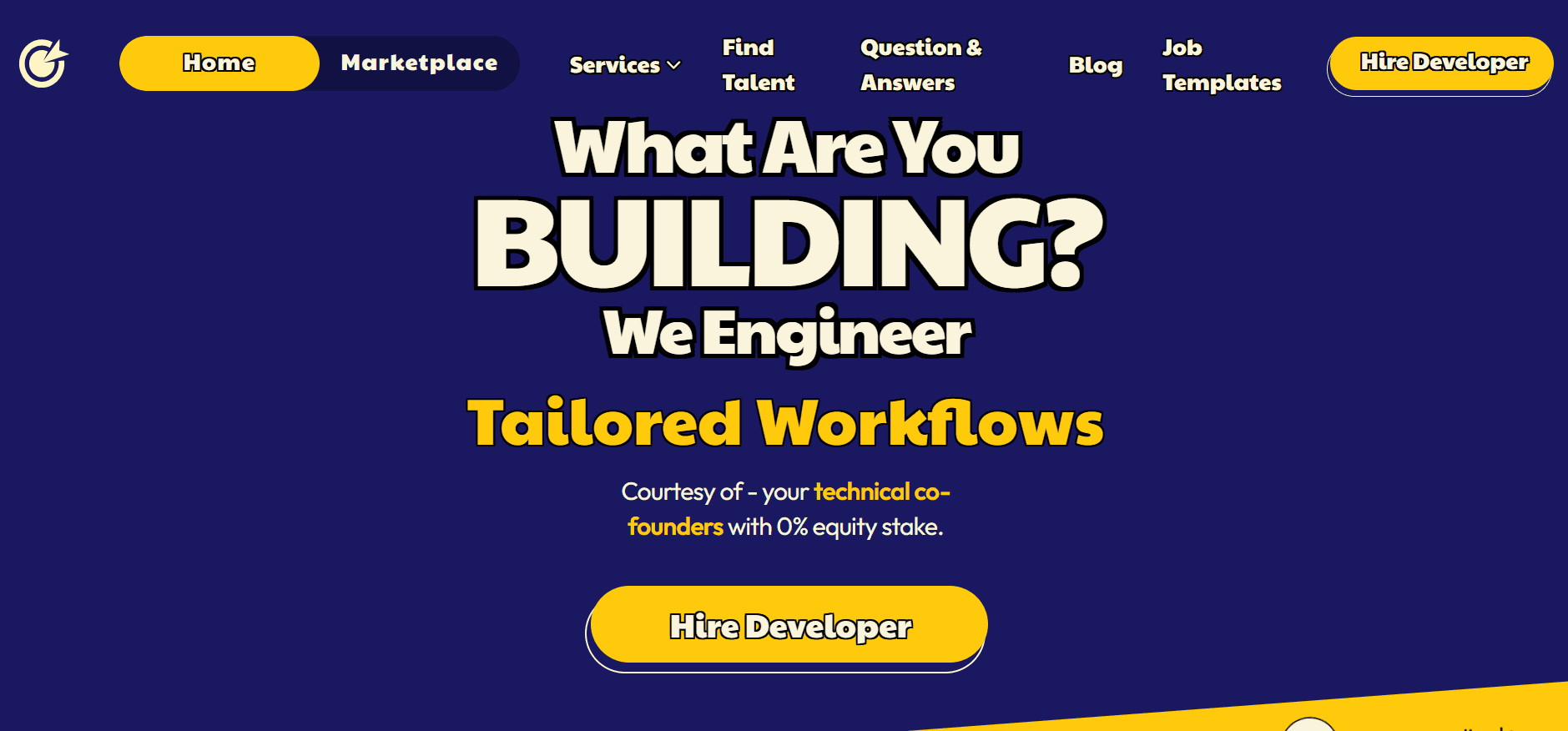
Best for: US companies that need a coordinated, vetted development team, front-end, back-end, and QA under one project manager, without paying the highest engineering rates in the world or waiting out a 45-to-90-day hiring cycle.
Most freelance marketplaces hand you a profile and a bidding system. Softaims hands you an entire development team. Instead of hiring engineers one at a time, juggling time zones, and hoping nobody ghosts mid-sprint, you get a dedicated team selected from 25,000+ pre-screened engineers, working under a project manager with a single point of accountability. Every developer clears a multi-stage vetting process covering technical skill, communication, and English fluency, so you hire the top 3% of vetted developers, not whoever a sales team can free up this week.
The model covers any modern stack, MERN, Python, React Native, native mobile, and more, and it scales from an MVP to an enterprise-grade system with timezone-aligned coverage. Because there are no platform fees or hidden markups, you build at better economics than the US average without losing seniority, and you can compare transparent rates by skill, technology, and region before you sign and browse 25,000+ vetted remote developers to see exactly who you're getting.
Key advantages:
- No platform fees or hidden markups: transparent rates you review before signing, so no surprises on day 30.
- A managed dedicated team with a project manager and guaranteed milestones, not scattered freelancers.
- No ghosting or turnover, with NDAs standard and your IP protected from day one.
- Matched with qualified developers in 24–48 hours, timezone-aligned to US teams.
Limitation: Softaims is built for scalable, reliable software development. If you only need a one-hour task or a $50 logo, a gig marketplace is the better fit.
2. Devaims
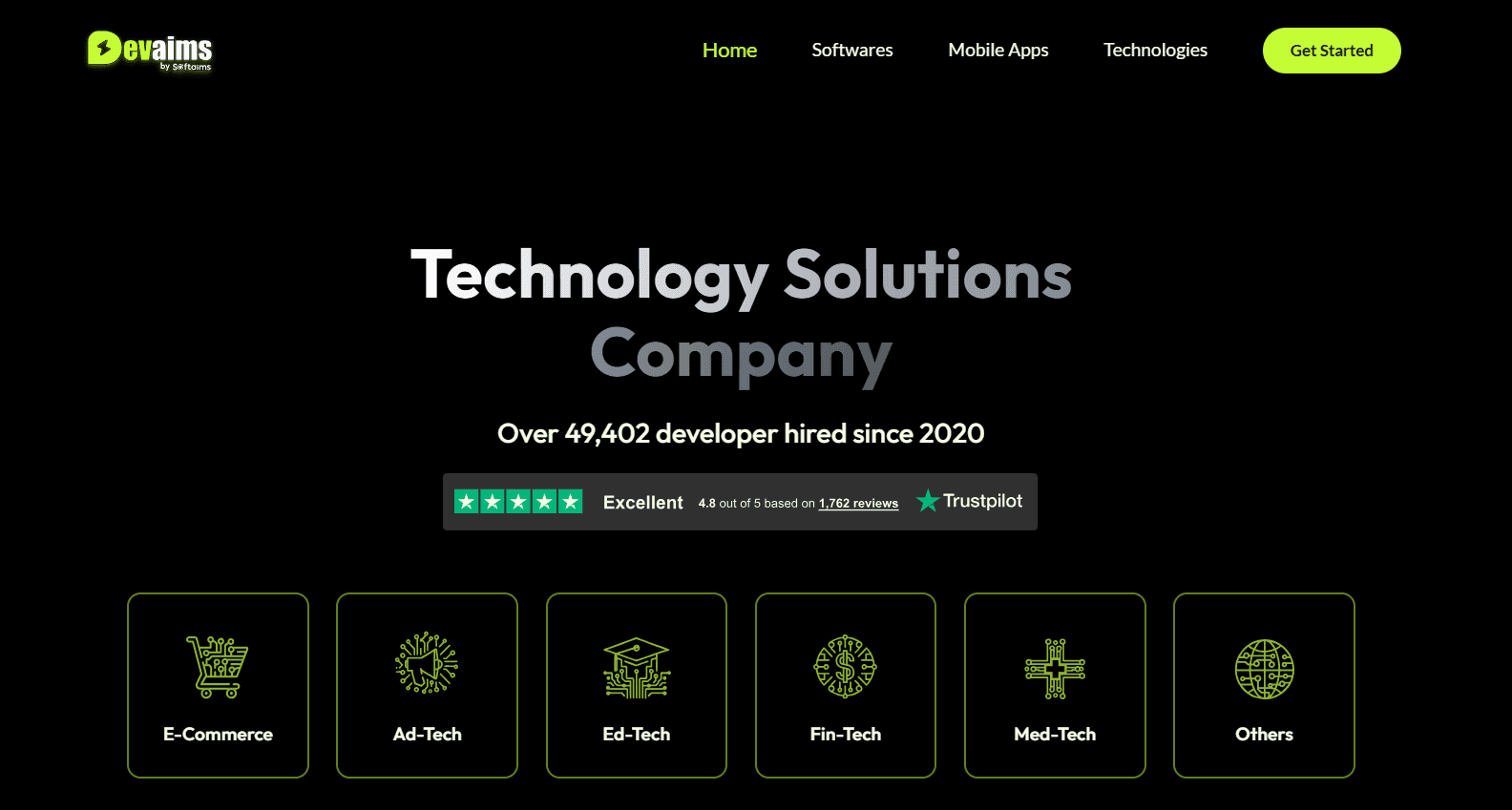
Best for: Businesses that want one accountable team to own a web or mobile product end to end, discovery, UX, build, QA, and post-launch support.
Devaims takes full ownership of custom builds rather than plugging a single specialist into your team. It covers native iOS and Android, React Native, web apps, ecommerce, SaaS, and QA, with a multi-city US presence and strong system-integration chops for connecting new software to the tools you already run. If you'd rather hand a whole product to one team than coordinate a designer, a dev shop, and a QA vendor separately, this is the model.
The catch: It's smaller than the enterprise names below, so it's a better fit for owning a product than for bulk staff augmentation.
3. BairesDev
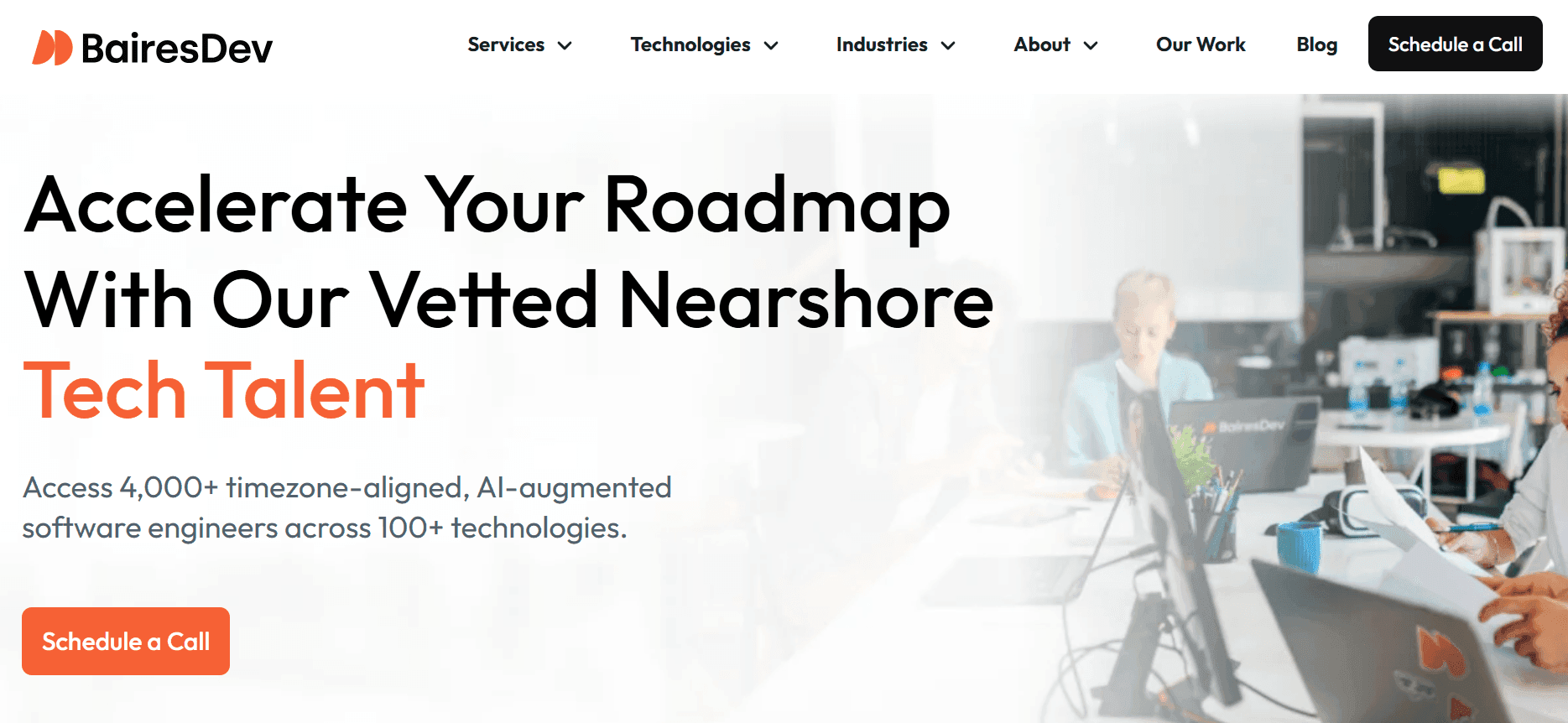
Best for: Scaling engineering headcount fast with nearshore talent and US timezone overlap.
BairesDev is one of the largest Latin American software firms, with several thousand engineers and quick ramp times. It markets heavily on selective hiring and offers strong timezone alignment for North American teams. Engagements range from staff augmentation to full project delivery, and pricing is competitive relative to domestic US rates, making it attractive for cost-conscious mid-market and enterprise clients that need to scale headcount quickly.
The catch: At this scale, the team that pitches isn't always the team that builds. Insist on interviewing your actual developers, not just the sales engineer.
4. ELEKS
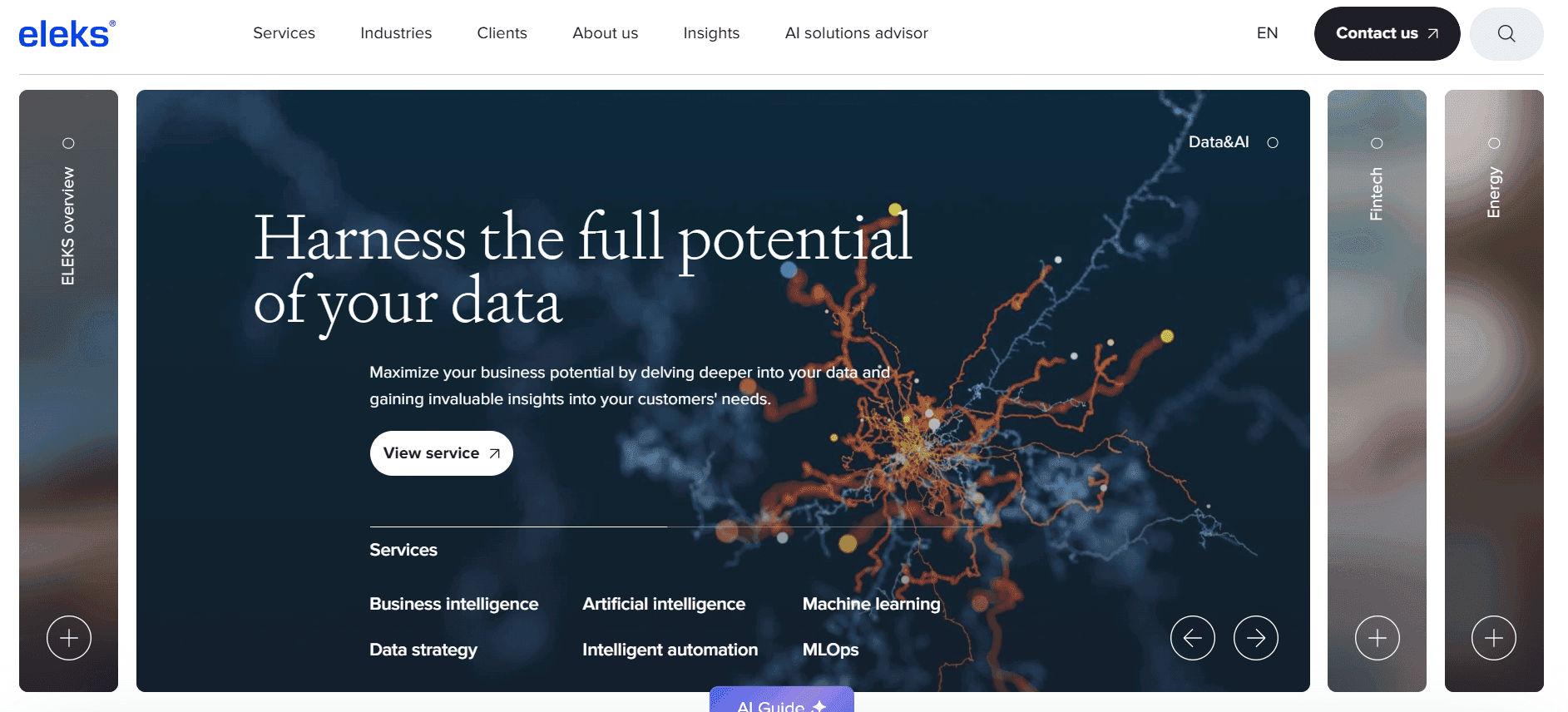
Best for: Complex, full-stack enterprise engineering and legacy modernization.
Active since 1991, ELEKS covers the full software development lifecycle, from custom application and enterprise software development through AI, cloud migration, legacy modernization, and data engineering. With more than 2,000 specialists and over 1,000 completed projects, the firm suits organizations running complex, data-intensive programs that require engineering depth across the stack rather than a lean MVP build.
The catch: It's built for complexity, so a simple MVP can feel over-engineered (and over-priced) for what you actually need.
5. TechAhead
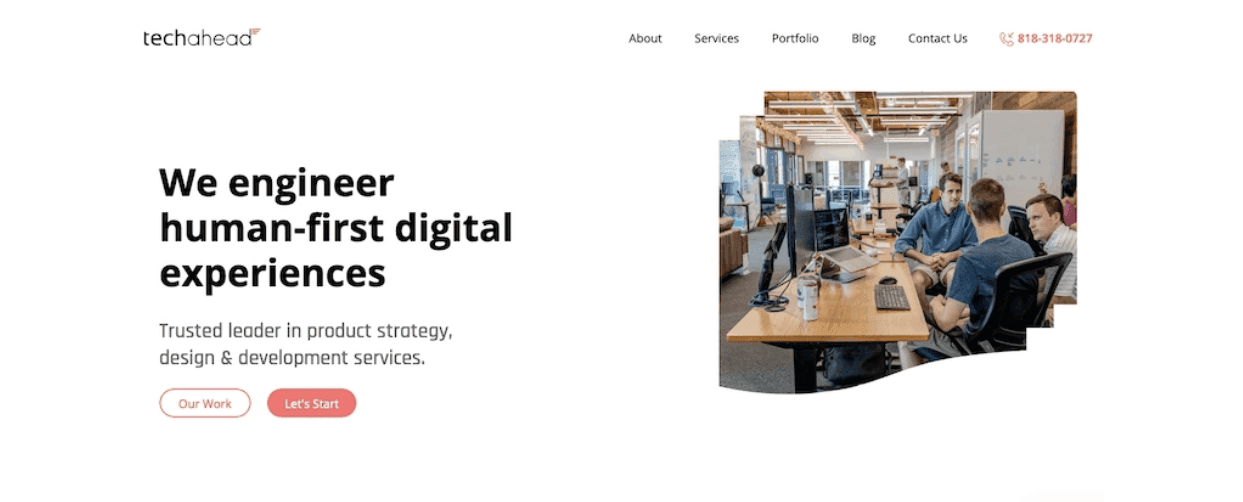
Best for: Enterprise AI and scalable digital products, with US-based account management.
Founded in 2009, TechAhead focuses on building scalable digital products with a strong orientation toward enterprise AI. The firm positions itself around measurable delivery discipline and has built systems for large clients across multiple industries. It is a solid fit for organizations that want AI capability integrated into product roadmaps rather than treated as an isolated experiment.
The catch: When "AI" is the headline, ask for shipped, production examples with monitoring, not a capabilities deck.
6. Cleveroad
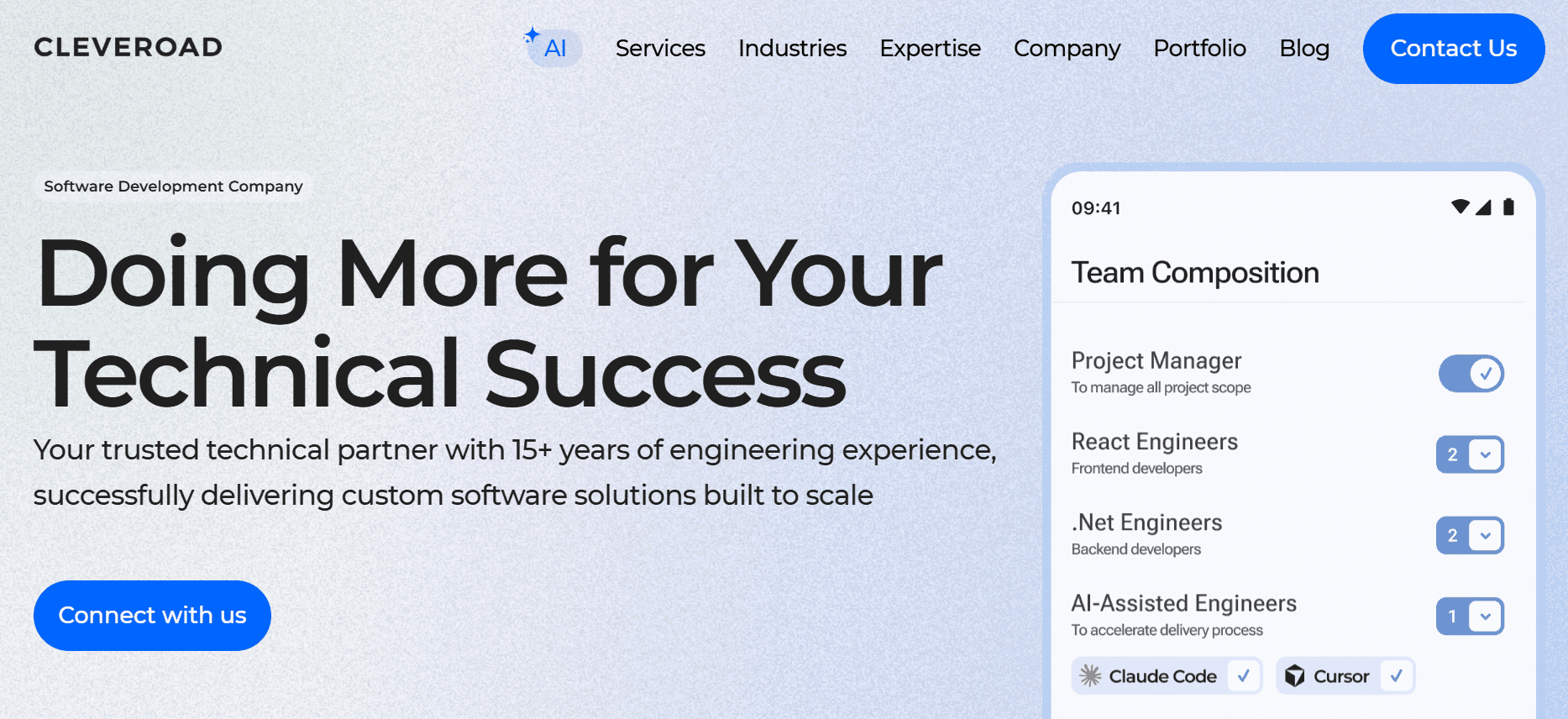
Best for: One partner across mobile, web, and cloud.
With more than 15 years of experience, Cleveroad delivers full-cycle custom development across mobile, web, and cloud. Its stack includes native iOS and Android, cross-platform frameworks such as Flutter, and web solutions on AWS infrastructure, with AI and machine learning features integrated across healthcare, logistics, and other verticals. Inclusion in the 2025 Clutch 1000 reflects consistent client feedback and delivery across industries.
The catch: A broad services menu isn't proof of depth in your exact stack, ask for matching case studies.
7. AgileEngine
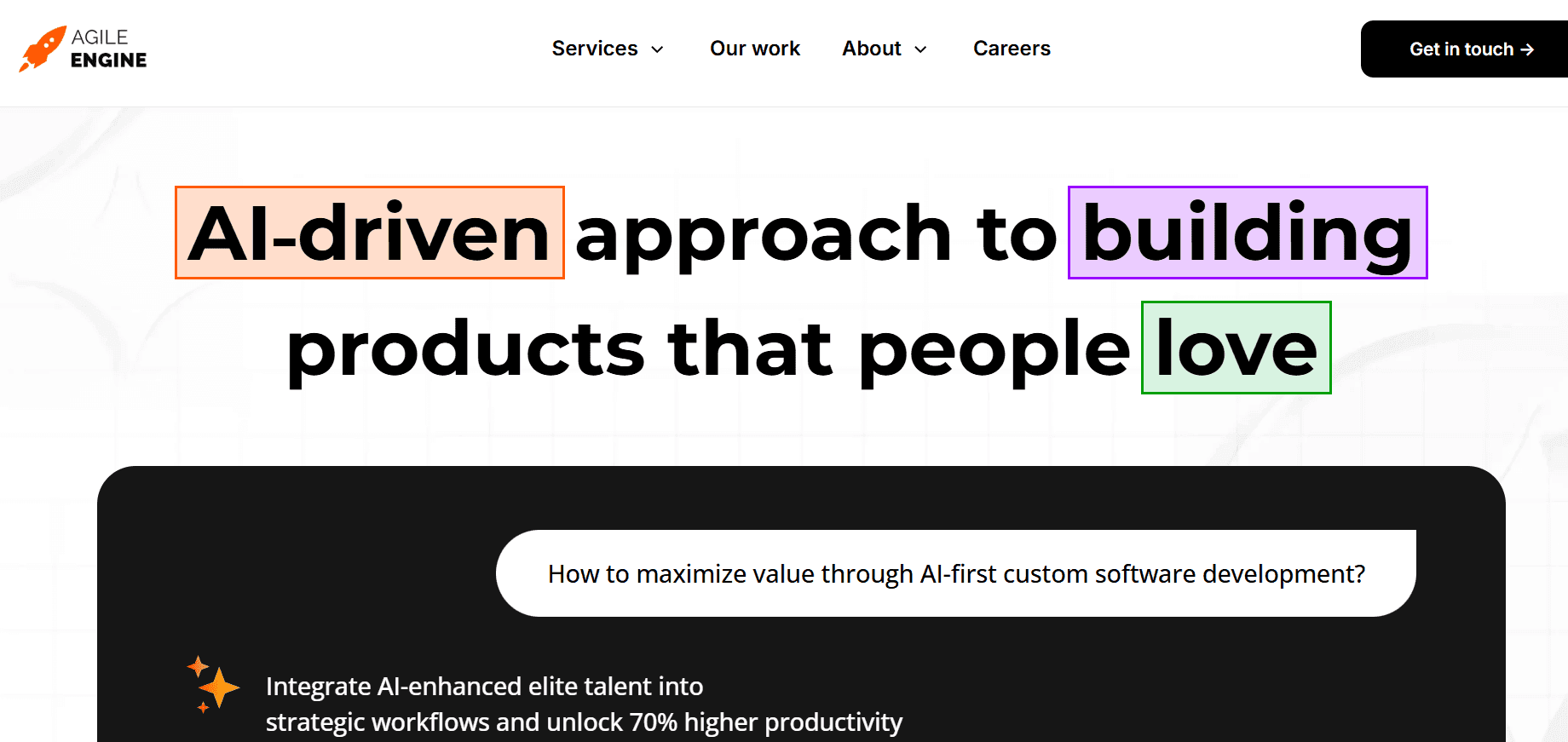
Best for: Engineering velocity with applied AI.
AgileEngine combines custom software engineering, staff augmentation, and AI-driven product development, with published work in legal tech, marketing analytics, and healthcare for both venture-backed startups and Fortune 500 clients. Multiple appearances on the Inc. 5000 list and Clutch Global Winner recognition signal sustained performance in delivery. The firm suits organizations that prioritize engineering velocity and applied AI.
The catch: "Velocity" depends on your product owner's discipline as much as the vendor's. Fast teams still need fast decisions from you.
8. 3Pillar Global
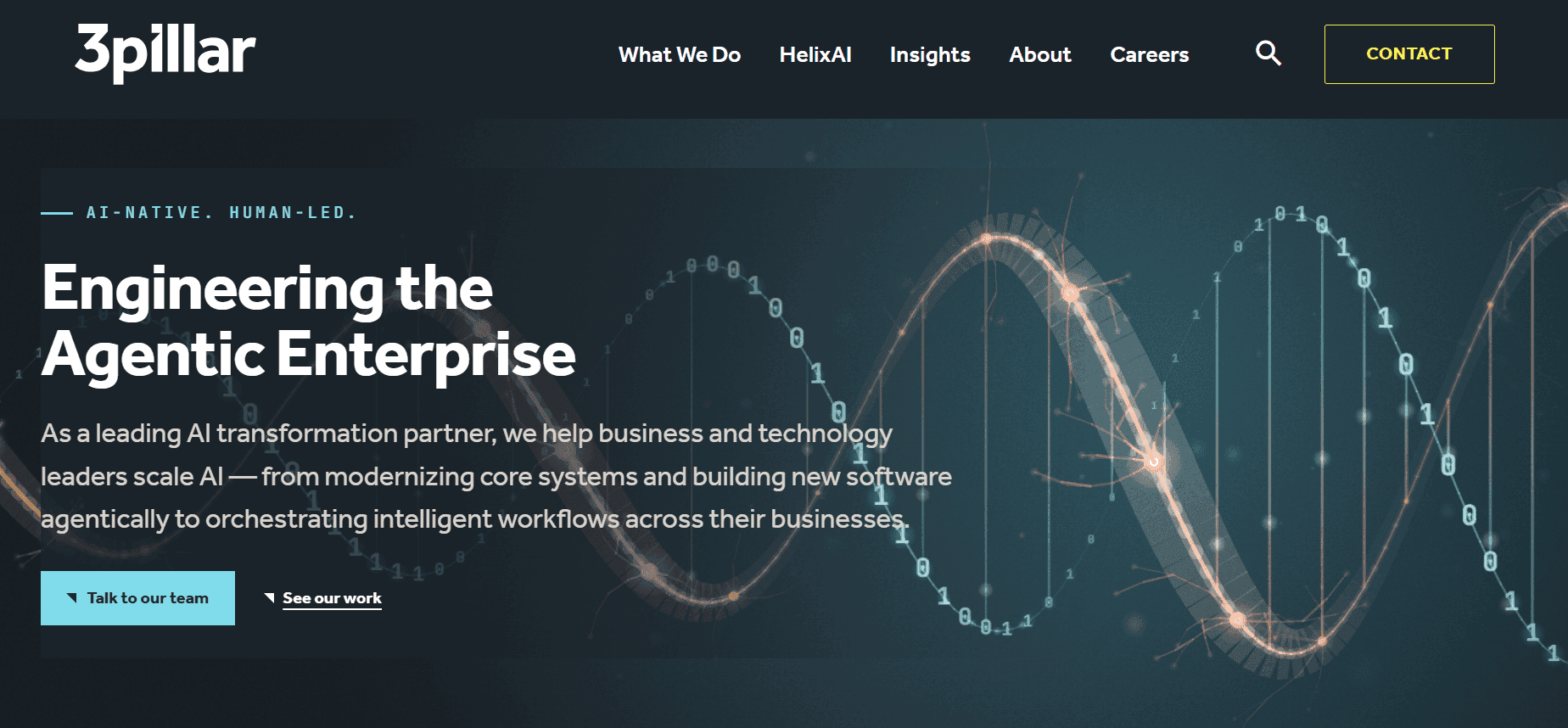
Best for: Agile product co-creation, not just execution.
3Pillar Global pairs midsize scale with a pronounced product and Agile orientation. Its delivery philosophy prioritizes minimizing time to value through iterative development and client co-creation, supported by an above-average architecture practice. Clients frequently cite communication, transparency, and collaboration as differentiators. The firm fits organizations that want a partner blending Agile discipline with genuine product thinking.
The catch: It costs more than pure labor-arbitrage shops, you're paying deliberately for product thinking, which is overkill if you just need hands on a defined backlog.
9. ScienceSoft
Best for: Regulated industries where compliance can't be an afterthought.
Operating since 1989, ScienceSoft offers custom software development, IT consulting, cybersecurity, data analytics, and ERP/CRM implementation for mid-market and enterprise clients in healthcare, retail, banking, and manufacturing. Its long history translates into deep vertical domain expertise, and its ISO certifications and partnerships with Microsoft and AWS lend it enterprise credibility. It is a strong choice where governance and compliance are non-negotiable.
The catch: The catalog is broad, so make sure you're assigned the regulated-industry specialists, not a generalist pod.
10. Fueled
Best for: Design-led, brand-grade consumer products.
Fueled builds mobile and web platforms with a strong design sensibility backed by robust engineering. Known for consumer-facing and internal business applications, the agency emphasizes strategy and user experience before development begins. It suits organizations where brand experience and interface quality are central to the product's success and where a senior, design-led US team justifies premium pricing.
The catch: You're paying NYC agency rates for the polish, hard to justify if design isn't your differentiator.
Why choosing a US software development company is hard in 2026
The US market has a structural problem: demand for senior engineers has outrun supply. The Bureau of Labor Statistics counts about 1.8 million US software developers, QA analysts, and testers, but the shortage is sharpest exactly where demand is highest: AI, cloud, and cybersecurity.
That does three things to buyers. Rates stay high, because domestic talent is scarce and expensive. Quality gets harder to verify, because so many firms compete for the same work that claimed expertise is everywhere and real depth is rare. And the cost of a wrong pick goes up, because a mismatched partner burns budget and months before the problem is obvious. It's why 72% of organizations now outsource at least part of their development, increasingly for talent access and speed, not just cost.
Which US software development company is best for you?
It really depends on what you're building.
- If you want a dedicated, managed team without going through the hassle of hiring in-house, Softaims is a great fit. You get a vetted team, a project manager, transparent pricing, and no platform fees.
- If you want one team to handle your web or mobile product from start to finish, Devaims is a solid choice.
- If your priority is scaling your engineering team quickly, BairesDev or AgileEngine are worth considering.
- If you're building a complex enterprise platform or working in a regulated industry, ELEKS or ScienceSoft have strong experience in that space.
- And if product design and user experience are your biggest priorities, Fueled or 3Pillar Global are good options for product co-creation.
What does it cost to hire a US software development company
The cost of hiring a US software development company depends on several factors, but team location, seniority, project complexity, and engagement model have the biggest impact. Current US market benchmarks show that boutique software companies working with startups and small businesses typically charge $90–$160 per hour, mid-market firms generally charge $120–$250 per hour, while enterprise consultancies charge $250–$350+ per hour. For highly specialized work involving AI, cybersecurity, cloud architecture, or large-scale digital transformation, rates can exceed $400 per hour. Companies that prefer a dedicated team instead of hourly billing usually pay a fixed monthly rate, with dedicated developers costing roughly $3,500–$15,000 per month, depending on their experience, location, and technology stack.
If you're open to distributed development, costs can be significantly lower without sacrificing quality. Engineering teams in Eastern Europe and Latin America typically operate at 40–60% lower rates than US-based teams while offering comparable technical expertise and overlapping business hours. That's one reason why global delivery models have become a strategic choice rather than simply a cost-cutting measure. Factors such as AI features, third-party integrations, security requirements, compliance standards like HIPAA, SOC 2, or GDPR, tight deadlines, and niche technologies all increase development costs because they require more experienced engineers and additional development time. In most cases, the lowest quote ends up being the most expensive option once code quality, scalability, maintenance, and long-term support are considered.
According to Clutch, the average custom software project costs around $132,000 and takes about 13 months to complete, although many projects fall in the $10,000–$50,000 range depending on scope and complexity. The demand for software development continues to grow, with Statista projecting the global IT outsourcing market to reach $634 billion in 2026, while Grand View Research expects the custom software development market to grow from $53 billion in 2025 to $146 billion by 2030.
For a more detailed breakdown of software development costs, you can also check How Much Does It Cost to Hire a Developer in 2026 and Developer Hourly Rates by Country in 2026.
How do you choose the right software development company
Selecting a partner is one of the most consequential decisions a technology leader makes, and four dimensions consistently separate successful engagements from disappointing ones.
Define your goals and success metrics first. There is a meaningful difference between needing a team to execute a defined backlog, needing a partner to help decide what to build, and needing to augment an internal team with specific skills. Define what success looks like, whether that is shipping a feature by a deadline, hitting an uptime target, or reducing infrastructure cost, before opening vendor conversations. Partners that understand your definition of success structure their team around your outcomes rather than a default playbook.
Assess cultural and communication fit. A technically strong team that avoids difficult conversations will underdeliver relative to a slightly less impressive team that operates with transparency. A useful interview test is to ask a prospective vendor to describe a project that went wrong and how they handled it; a candid, specific answer that includes their own missteps is a good signal. Treat timezone and language as a practical subset of this: async workflows tolerate a wide gap, but real-time product decisions do not.
Evaluate security and compliance directly. Requirements vary sharply by industry. Any vendor handling sensitive data should demonstrate ISO/IEC 27001 alignment, and healthcare work requires HIPAA compliance with a signed Business Associate Agreement. Beyond certifications, ask concretely how a vendor handles code ownership, IP assignment, data residency, and engineer background screening.
Choose an engagement model that matches how you work. A fixed-price model fits well-defined, stable scopes and shifts schedule risk to the vendor, but it resists change. A time-and-materials model suits ongoing development with shifting priorities, provided you maintain an active product owner. A dedicated team model offers continuity: a stable, named team that builds institutional knowledge over time, which tends to produce the best outcomes for complex, long-running products.
Should you choose onshore, nearshore, or offshore delivery
The best delivery model depends on your budget, collaboration needs, and how your team works. Onshore US teams offer the easiest communication, complete timezone alignment, and the strongest legal and IP protection under US law, but they also come with the highest rates. Nearshore teams, especially in Latin America, provide several hours of overlap with US business hours while reducing development costs, making them a popular choice for fast-moving product teams that need frequent collaboration. Offshore teams in Eastern Europe and Latin America offer the greatest cost savings and access to large pools of experienced engineers. They're an excellent option for long-term development when you have a trusted partner and well-defined processes for asynchronous communication.
Many US companies now take a hybrid approach. They keep product strategy, stakeholder communication, and project management in the US while scaling development through vetted nearshore or offshore engineering teams. This gives them the flexibility to reduce costs, access specialized talent, and maintain high delivery speed without sacrificing quality.
Conclusion
The US has more software development companies than any market on earth, and that abundance is both the opportunity and the trap. The ten companies profiled here span a wide range of delivery models, price points, and specializations, from vetted talent platforms to enterprise consultancies and design-led studios. The right partner does not simply write code; it helps you build the business outcomes behind it.
If you want a dedicated team that ships, vetted talent, transparent pricing, a project manager, and no long US hiring cycle, Softaims is the strongest place to start. Book a free consultation and get matched with vetted developers within 48 hours.
Frequently asked questions
How many software development companies are there in the USA?
CompTIA estimates roughly 585,000 software and IT services firms operate in the United States, spanning custom development, SaaS, fintech, healthcare, and telecom. That scale is exactly why curated shortlists with clear criteria are more useful than browsing open directories.
What is the average hourly rate for software development in the USA in 2026?
Domestic rates generally run from $90–$160 per hour for boutique shops to $400 or more for enterprise specialists. Distributed teams in Eastern Europe and Latin America typically deliver comparable work at 40–60% of US rates.
How long does a custom software project take?
Timelines vary with scope and complexity. A focused MVP can ship in two to three months, while multi-featured enterprise products commonly run six to twelve months or longer. Adding engineers can compress a schedule only up to a point before coordination overhead outweighs the gain.
Should I hire a US-based company or use a distributed team?
Onshore teams offer the tightest collaboration and clearest IP protection at the highest cost. Vetted distributed teams offer strong cost efficiency and deep talent pools. Many organizations combine both, keeping product ownership onshore while scaling engineering through pre-screened global talent.
How do I verify a vendor's technical depth before signing?
Ask concrete questions about architecture decisions, code review, QA, and DevOps practices, request named client references, and run a paid, fixed-scope pilot before committing to a long-term agreement. A short proof of concept reveals delivery velocity and communication quality far better than a demo.


 Stackoverflow
Oleksandr K.

 Verified Expert in Engineering
My name is Oleksandr K. and I have over 10 years of experience in the tech industry. I specialize in the following technologies: JavaScript, Stable Diffusion, Cloud Architecture, PyTorch, TensorFlow, etc.. I hold a degree in Master of Computer Applications (MCA), . Some of the notable projects I've worked on include: Generative AI Backend for architectrender.com, Generative AI backend for Architecture redesign app, Generative AI Backend for logodiffusion.com, Stable Diffusion SAAS. I am based in Vinnitsya, Ukraine. I've successfully completed 4 projects while developing at Softaims.
My expertise lies in deeply understanding and optimizing solution performance. I have a proven ability to profile systems, analyze data access methods, and implement caching strategies that dramatically reduce latency and improve responsiveness under load. I turn slow systems into high-speed performers.
I focus on writing highly efficient, clean, and well-documented code that minimizes resource consumption without sacrificing functionality. This dedication to efficiency is how I contribute measurable value to Softaims' clients by reducing infrastructure costs and improving user satisfaction.
I approach every project with a critical eye for potential bottlenecks, proactively designing systems that are efficient from the ground up. I am committed to delivering software that sets the standard for speed and reliability.

Leave a Comment
Need help building your team? Let's discuss your project requirements.
Get matched with top-tier developers within 24 hours and start your project with no pressure of long-term commitment.