12 Best Android App Development Companies in the USA 2026
The US Android app market continues to expand as businesses invest in mobile-first products. In this guide, we’ve listed the top 12 Android app development companies in the USA, highlighting their expertise and capabilities.
Table of contents
Key Takeaways
- Fragmentation is the real challenge. A good Android partner keeps apps fast and stable across every device and OS.
- Match the firm to the brief. Boutiques suit MVPs, while larger studios handle enterprise builds.
- Read rates against scope. The lowest hourly rate rarely means the lowest total cost.
- Costs vary widely. A simple app starts near $15,000, while enterprise builds top $150,000.
- Plan for launch-plus. Maintenance runs 15% to 20% of the build cost each year.
- Own your code. Confirm source-code and IP ownership in the contract before work begins.
Android runs on more devices than any other platform on earth, which is exactly why building for it is hard. Your app has to feel fast and stable across thousands of phones, screen sizes, and OS versions. So the real skill is not writing a screen. It is taming that fragmentation while keeping the app secure and smooth for every user.
US studios approach that challenge in very different ways. Some specialize in native Kotlin, others in cross-platform Flutter, and their depth in backend, design, and long-term support varies widely. Therefore, judge Android app development companies on real engineering evidence, not a glossy homepage. That is how you avoid a costly misfire.
This 2026 guide is a fresh read of the US market, built from current portfolios, verified reviews, and shipped work. The stakes are high. The US app market generated $52.3 billion in 2024, up 16.4% year over year, per Business of Apps. Would you rather skip the agency hunt? Then you can also hire vetted Android developers and own the result outright.
Android App Development Companies in the USA: Comparison Table
Before you open a dozen profiles, use this table to filter fast. It compares each firm on core expertise, minimum project size, and typical hourly rate. So you can build a targeted shortlist in minutes, then read the full reviews below.
Company | Core expertise | Min. project | Avg. rate |
| Softaims | Hiring vetted Android and full-stack developers | Flexible | From ~$30/hr |
| Devaims | Android apps plus backend and product build | Custom | Custom |
| NineTwoThree | Native Android, AI and ML, product studio | $50,000+ | $100–$199 |
| WillowTree | Enterprise Android at scale, UX research | $75,000+ | $150–$249 |
| Fueled | Design-led native Android, product | $50,000+ | $100–$199 |
| Dogtown Media | Android for healthcare, AI, and IoT | $50,000+ | $100–$199 |
| ArcTouch | Connected-device and IoT Android | $50,000+ | $100–$199 |
| BlueLabel | AI-forward Android apps, product design | $50,000+ | $100–$149 |
| Mutual Mobile | Enterprise Android, IoT, AR, AI | $50,000+ | $100–$199 |
| Atomic Object | Mission-critical onshore Android | $50,000+ | $150–$249 |
| Chop Dawg | Startup-to-scale Android apps | $25,000+ | $50–$99 |
| Groove Jones | XR and immersive Android experiences | $50,000+ | $100–$199 |
Details reflect public profiles and Clutch data as of mid 2026 and can change, so verify each firm before you commit. Softaims and Devaims lead the ranking, followed by ten established US studios, with ownership noted where relevant.
The 12 Best Android App Development Companies in the USA
Our ranking of the Android app development companies in the USA covers twelve firms worth a serious look. Softaims and Devaims lead the list, followed by ten established US studios, each with named work and an honest note.
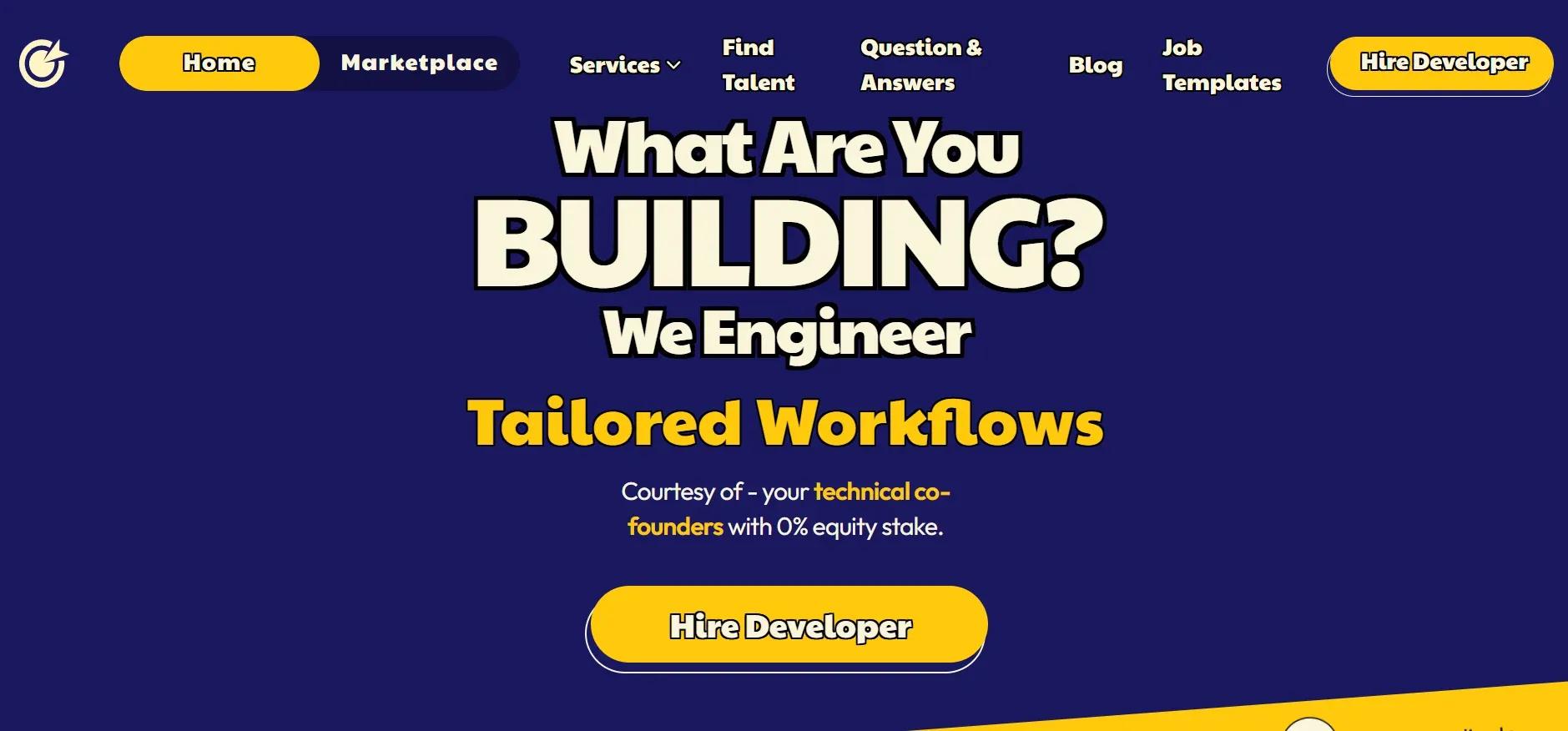
1. Softaims
Best for: Hiring vetted Android engineers directly, without the US agency premium.
US Android talent is some of the most expensive anywhere. Senior agencies bill $100 to $300 an hour, in-house engineers command six-figure salaries, and H-1B sponsorship adds cost and delay. So teams often overpay or wait months to build the right bench. Softaims removes both problems by turning hiring into a same-week decision.
It works as a curated marketplace, not a fixed agency. You describe the build, then filter candidates by skill, seniority, location, and budget. Within 48 hours, you meet pre-vetted developers who have shipped native Android apps, AI features, and chatbots in production. In short, you interview only people who can do the work.
The difference is what you keep. Every engagement leaves you owning the code, the design, and the release keys outright. There is no lock-in, no visa queue, and no premium for a brand name. Moreover, you can scale a team up for a launch and down for maintenance. You can browse the talent pool, review transparent pricing, explore custom development, or talk to the team to begin.
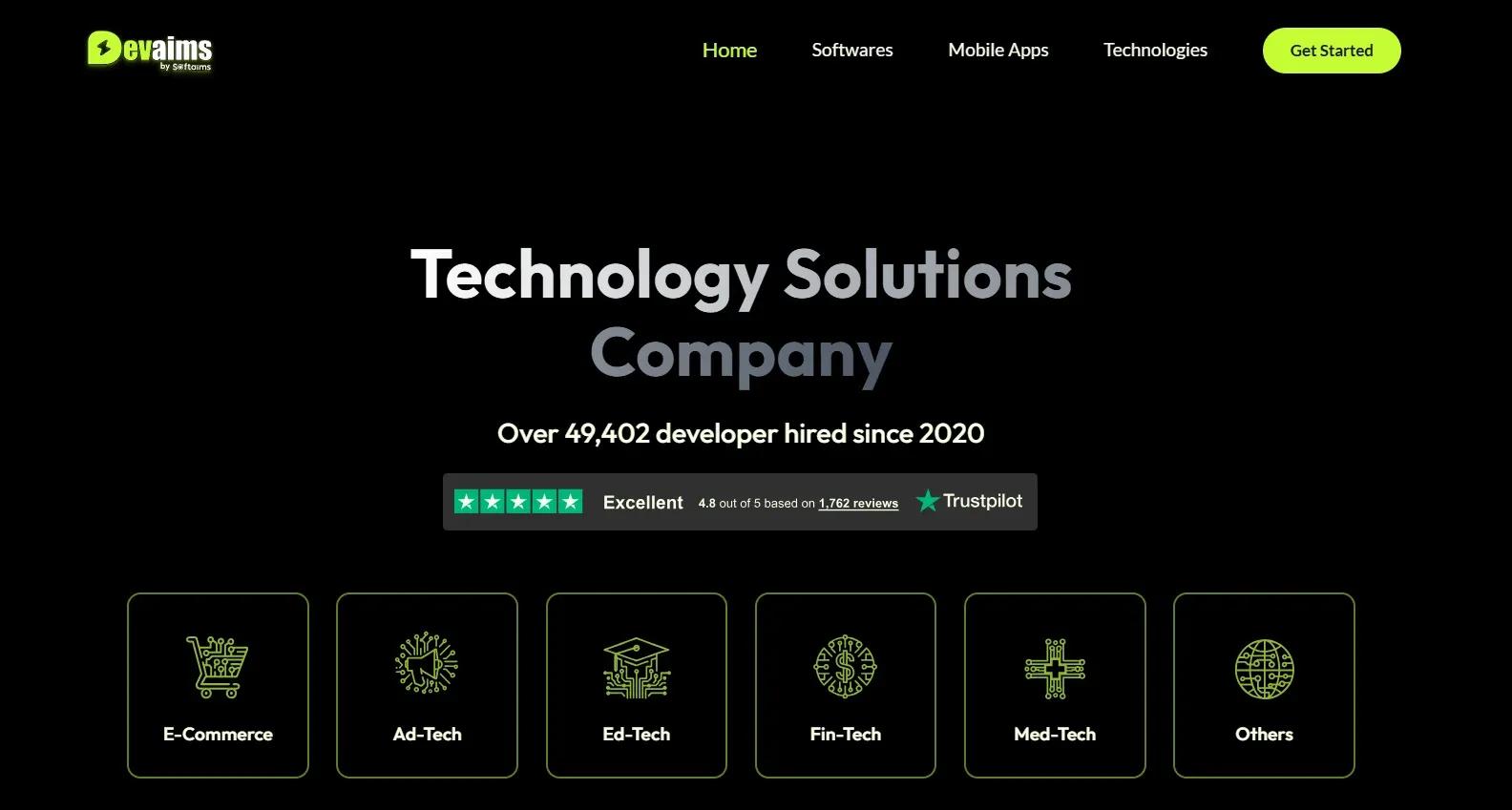
2. Devaims
Best for: Building the whole Android product, not just the front end.
An Android screen is the easy part. The real work sits underneath, in the backend, the APIs, the data, and the Play Store release pipeline. Devaims builds that entire surface, so you get a product users can rely on, not a demo. As a result, nothing falls through the cracks between a design shop and a separate dev team.
The advantage is structural. One team owns the app, the backend, and the OpenAI-powered features inside it. So iteration stays fast, accountability stays clear, and the release ships on time. Devaims delivers across custom software and mobile app development for Android and iOS.
This suits teams launching a first serious Android product. Instead of coordinating three vendors, you get one partner from idea to store listing and beyond. Furthermore, the same team supports the app after launch, through OS updates and new features. Explore the full range at Devaims.
3. NineTwoThree AI Studio
Headquarters: Boston, Massachusetts.
NineTwoThree is a Boston studio that pairs native Android work with serious AI and ML depth. It has delivered over 150 projects for clients like Consumer Reports, FanDuel, and SimpliSafe. Notably, it staffs senior machine learning engineers directly on builds. So it suits teams that want intelligence built into a polished Android app.
Key services: native Android development, AI and ML, and product strategy. Industries: finance, media, consumer, and healthcare.
Why choose them: senior talent on every build, not junior hand-offs. Its AI depth sets it apart from a standard app shop.
4. WillowTree
Headquarters: Charlottesville, Virginia.
WillowTree is one of the most enterprise-validated mobile firms in the country. It has shipped over 700 apps for brands like FOX Sports, PepsiCo, HBO, and Hilton. In particular, it excels at Android apps that handle high user volumes. So it suits large organizations that need scale and polish.
Key services: enterprise Android, UX research, and product strategy. Industries: media, retail, hospitality, and healthcare.
Why choose them: deep enterprise engineering and thorough user-journey work. However, WillowTree is now part of TELUS Digital, so confirm the team structure.
5. Fueled
Headquarters: New York, New York.
Fueled is a design-led studio with offices across the US and London and 300-plus experts. It builds premium Android experiences that win recognition for Material Design polish. Furthermore, it holds a 4.9 Clutch rating across dozens of reviews. So it suits brands that demand visual excellence.
Key services: native Android, product strategy, and UX design. Industries: consumer, retail, media, and finance.
Why choose them: award-winning design and a strong product process. Its work spans startups and Fortune 500 brands.
6. Dogtown Media
Headquarters: Los Angeles, California.
Dogtown Media builds Android apps for regulated and data-heavy sectors. In particular, it focuses on healthcare, AI, and IoT, from telehealth to wellness. It understands the full stack, from firmware to compliance. So it suits products that handle sensitive data responsibly.
Key services: native Android, healthcare apps, and IoT integration.
Industries: mHealth, fintech, and IoT.
Why choose them: genuine regulated-sector depth and strong analytics. Its clients include Google and Harvard Medical School.
7. ArcTouch

Headquarters: San Francisco, California.
ArcTouch was founded by former Apple engineers and has built mobile apps since the early app era. It specializes in connected-device experiences, from wearables to smart TVs. Moreover, it integrates AI and ML into Android products. So it suits brands building IoT or smart-device experiences.
Key services: native Android, connected devices, and IoT.
Industries: consumer, retail, and enterprise.
Why choose them: deep connected-device experience and Fortune 500 clients. However, ArcTouch operates within AKQA and WPP, so confirm the team.
8. BlueLabel
Headquarters: New York, New York.
BlueLabel is a product agency that turns ideas into production-ready Android apps. It emphasizes early validation, lean strategy, and phased roadmaps. In addition, it holds a 4.7 Clutch rating across 69 reviews. So it suits founders who want a clear, validated path to launch.
Key services: Android development, AI features, and product design. Industries: consumer, enterprise, and startups.
Why choose them: strong validation process and AI-forward builds. It pairs design polish with solid engineering.
9. Mutual Mobile
Headquarters: Austin, Texas.
Mutual Mobile is an Austin innovation consultancy building high-performance Android apps. It pairs mobile with IoT, AR, and AI for enterprise clients. Notably, its client list includes major global brands. So it fits companies that want Android tied to emerging technology.
Key services: enterprise Android, IoT, AR, and AI.
Industries: retail, healthcare, and enterprise.
Why choose them: it acts as a business partner, not just a vendor. Its enterprise track record runs deep.
10. Atomic Object
Headquarters: Grand Rapids, Michigan.
Atomic Object was founded in 2001 and is fully employee-owned. It splits its practice between custom software and mobile, with a mission-critical, onshore focus. Impressively, it holds a 4.9 Clutch rating across 50 reviews. So it suits high-stakes builds that cannot fail.
Key services: native Android, custom software, and product design. Industries: healthcare, manufacturing, and enterprise.
Why choose them: disciplined, onshore engineering and strong reviews. Its employee-owned model rewards long-term quality.
11. Chop Dawg
Headquarters: Philadelphia, Pennsylvania.
Chop Dawg has launched over 500 products since 2009. It works closely with startups and small enterprises, from MVP to scale. Furthermore, it builds AI and ML capability into its Android apps. So it suits founders who want one team across design and engineering.
Key services: Android development, AI integration, and full-stack builds. Industries: startups, retail, and services.
Why choose them: a strong startup track record and 300-plus five-star reviews. Its generalist strength fits broad builds.
12. Groove Jones
Headquarters: Dallas, Texas.
Groove Jones is a creative-technology studio that blends art and engineering. It builds immersive Android experiences with AR, VR, and computer vision. In addition, it has earned over 200 industry awards. So it suits brand-facing, experiential Android products.
Key services: immersive Android, AR and VR, and computer vision.
Industries: advertising, entertainment, retail, and events.
Why choose them: standout immersive work and heavy award recognition. Its focus is experiential, not standard business apps.
How We Evaluated These Android Development Companies
We assessed these Android app development companies with the same practical lens we use to pick our own tech partners. Public testimonials and Clutch ratings were only part of the picture. Just as important was how openly each firm shared its Android experience. Our criteria were as follows.
Android-specific expertise. We checked for real native Android work, sound architecture, and Play Store deployment. So generic "we do apps" claims did not count.
Portfolio relevance. We looked for past projects of similar complexity or in a comparable sector. Therefore, the fit to real business models mattered.
Engineering seniority. We looked for senior developers, code reviews, and sound architecture decisions. As a result, we favored teams built to maintain and scale.
Code quality and architecture. We weighed clean architecture, modular code, and mobile CI/CD pipelines. In addition, we noted how each firm manages technical debt.
Testing and QA maturity. We looked for structured QA, automation, and regression testing. Consequently, teams with real test discipline ranked higher.
Security and compliance. We checked for secure data handling, permissions, and HIPAA or SOC 2 practice. Meanwhile, US data rules were a real factor.
Post-launch support. We assessed maintenance, OS updates, and release management after launch. So we favored partners who stay past go-live.
This approach surfaced firms with the discipline to build Android products that last beyond the first release.
What Is an Android App Development Company?
An Android app development company is the technical partner that owns the full lifecycle of your app. That spans interface design, native coding, and publishing to Google Play. So it turns an idea into a stable, scalable product.
For CTOs, founders, and business leaders, that is a real relief. The right partner reduces the risk of shipping something fragile or hard to scale. In practice, custom Android app development covers discovery, technical planning, coding, QA, backend integration, deployment, and post-launch support.
Common Android App Development Services
The best Android app development companies cover every phase of the software development lifecycle. Depending on the product's complexity, most providers offer at least the following. Each phase reduces a specific risk.
Consulting and planning. The team defines goals, priorities, user flows, and delivery scope. Therefore, everyone agrees on the plan before code begins.
UI/UX design. Designers build wireframes, prototypes, and Material Design 3 interfaces. In addition, they ensure usability and accessibility.
Native Android development. Engineers code in Kotlin and Jetpack Compose, using the Android SDK and sound architecture. As a result, the app stays efficient and scalable.
Backend and API integration. The team connects the app to databases, logins, payments, and third-party APIs. So the product works as a whole, not in isolation.
Testing and QA. Engineers test functionality, performance, and security across devices and OS versions. Consequently, edge cases surface before users hit them.
Google Play deployment. The team prepares the App Bundle, store assets, and Play Console compliance. Meanwhile, it manages the submission and release.
Maintenance and support. After launch, the team handles bug fixes, OS updates, and monitoring. Therefore, the app stays healthy over time.
Suggested infographic: a seven-step "Common Android App Development Services" graphic works well here.
How to Choose the Right Android App Development Company
Picking among Android app development companies takes more than a slick website or portfolio. For a CTO or product owner, the real analysis starts with engineering practice, architecture, delivery, testing, and security. So look past the pitch and probe how the team actually works.
Suggested infographic: a three-step "Technical stack audit, Android experience, and code ownership" graphic fits here.
Technical Stack Audit: Beyond Kotlin and Java
Knowing Kotlin and Java is just the start. A reliable team can explain its approach to clean code, technical debt, and architecture patterns like MVVM or MVI. Because these choices shape real outcomes, ask about them directly. They drive release speed, fewer regressions, and lower maintenance cost.
So ask how the firm uses Jetpack Compose and Kotlin Coroutines, and whether legacy XML screens remain. In addition, probe how it handles memory leaks, battery drain, launch time, and app size. These details quietly decide user retention and long-term cost.
Experience in Custom Android App Development
Custom development matters when your product needs more than a template. For example, enterprise tools, SaaS, fintech, and marketplaces all benefit from bespoke architecture. Therefore, confirm whether a firm builds from scratch or leans on templates. Templates suit a quick MVP, but they can cap scalability later.
A strong partner shows relevant custom work and explains its architecture decisions. Moreover, it defines clearly how code is owned, documented, tested, and handed over. So you avoid getting locked into one vendor.
Legal Security, Compliance, and Source Code Ownership
Sort out legal and security terms before development starts. Vague agreements cause lock-in, ownership disputes, and data risks after launch. So the contract must state that the source code, documentation, and IP become yours on payment. That ownership gives you control over the product's future and freedom to switch teams.
Comparing Companies: Evidence, Team Size, and Cost
Once you have a shortlist of Android app development companies, compare them on the same metrics. A clear matrix lets you weigh cost, staffing, and domain fit without relying on gut feel. The tables below turn three common comparison points into quick reference grids.
Where Each Firm's Proof Is Strongest
Some firms show broad public and domain evidence, while others show specific, named app case studies. Both are valid, so match the evidence to what you need to see.
Stronger public and domain evidence | Specific mobile app case evidence |
| Fueled, ArcTouch, Mutual Mobile, Groove Jones, Chop Dawg | Softaims, Devaims, NineTwoThree, WillowTree, Dogtown Media, BlueLabel, Atomic Object |
Softaims and Devaims sit in the case-evidence column for a reason. They deliver named, own-the-result app builds directly, with vetted developers and full code ownership.
Team Composition: How Firm Size Shapes Delivery
Team size affects speed, redundancy, and the ability to handle complex builds. So match the firm's size to your project's scale.
Under 50 (boutique) | 50–250 (mid-sized) | 250+ (larger) |
| Chop Dawg, Groove Jones, BlueLabel | NineTwoThree, Dogtown Media, ArcTouch, Atomic Object | Softaims, Devaims, WillowTree, Fueled, Mutual Mobile |
Boutique teams suit simple MVPs with direct access to senior people. Meanwhile, mid-sized firms balance agility with capacity for growth-stage apps. Larger agencies handle enterprise builds with specialized roles. Softaims scales either way, since you can hire a single senior developer or a full team from its pool.
Hourly Rate Bands
Rates vary with a developer's experience and location, and transparent, itemized quotes signal a mature process. So read a rate against the scope and delivery record behind it.
$50–$150 per hour | $150–$250 per hour |
| Softaims, Devaims, Chop Dawg, BlueLabel, NineTwoThree, Dogtown Media, Groove Jones | WillowTree, Fueled, ArcTouch, Mutual Mobile, Atomic Object |
Firms in the lower band still build cost-effective, high-quality apps. Meanwhile, top-tier firms charge a premium for deep expertise and enterprise track records. Softaims sits at the value end, with vetted developers from roughly $30 an hour.
Android App Development Cost in the USA (2026)
Cost is where most guides on Android app development companies go quiet, so here is the detail. Android app development in the USA is priced by complexity, team seniority, and scope. A simple app can start in the low five figures. Meanwhile, a complex enterprise build runs into the hundreds of thousands. So it helps to see the ranges before you brief a firm.
Cost by App Complexity
App type | Typical features | Estimated cost | Timeline |
| Simple app or MVP | A few core screens, basic backend | $15,000 – $50,000 | 6 to 12 weeks |
| Mid-complexity app | Custom UI, integrations, accounts | $50,000 – $150,000 | 3 to 6 months |
| Complex or enterprise app | Real-time data, high load, compliance | $150,000 – $300,000+ | 6 to 12 months |
Hourly Rates by Seniority
Rates reflect who actually writes your code, so confirm the mix before signing.
Developer level | Typical US rate |
| Junior developer | $50 – $80 per hour |
| Mid-level developer | $80 – $150 per hour |
| Senior developer or agency | $150 – $300 per hour |
The lowest rate rarely means the lowest total cost. A cheap quote often hides a junior-heavy team or light QA. So the savings vanish once rework and delays are counted. Therefore, read a price against scope and a verified delivery history, not in isolation.
What Drives the Number
Several factors move an Android quote most. First, native complexity, custom design, and third-party integrations add real effort. In addition, security and compliance work, such as HIPAA or fintech rules, takes time. Cross-platform builds with Flutter or React Native can cut costs by 30% to 40% when one codebase serves both platforms.
There are also recurring costs after launch. Maintenance typically runs 15% to 20% of the build cost each year. Meanwhile, backend hosting, Play Store fees, and OS-update work all recur. So plan for a total cost of ownership, not just the initial build.
The US Talent Angle
Hiring in-house is the other route, and it carries its own cost. A senior US Android engineer commands a six-figure salary, and benefits and payroll taxes add 25% to 40% on top. So a permanent team is expensive to build and retain for stop-start work. That is why many businesses hire an agency or a vetted marketplace instead.
Why Android Projects Overrun (and How to Avoid It)
Many builds from Android app development companies slip on budget and timeline, and the causes repeat. So each one is avoidable with a little planning.
The scope was never clear. Vague requirements drive scope creep, which can raise costs by 20% to 50%. Therefore, define every feature before work begins.
Discovery was skipped. Teams that rush past scoping find real requirements mid-build, when changes cost the most. So insist on a proper discovery phase.
Testing was an afterthought. Without device and OS testing, bugs reach real users. As a result, ratings drop and rework climbs.
Ownership was unclear. Without a code-ownership clause, you may not own the deliverables. So confirm it upfront.
Nobody planned for launch-plus. Android needs OS updates, monitoring, and maintenance. Meanwhile, treating support as optional invites decline.
Frequently Asked Questions
How much does Android app development cost in the USA?
A simple app or MVP runs $15,000 to $50,000, and a mid-complexity app $50,000 to $150,000. Complex enterprise builds exceed $150,000. US hourly rates run roughly $50 to $300.
Which are the best Android app development companies in the USA?
NineTwoThree, Fueled, Dogtown Media, and Atomic Object lead among established studios. WillowTree, ArcTouch, BlueLabel, Mutual Mobile, Chop Dawg, and Groove Jones round out strong options. Softaims and Devaims lead for teams that want to build fast and own the result.
How long does it take to build an Android app?
A simple app takes six to twelve weeks, and a mid-complexity app three to six months. Complex builds take six to twelve months. Clear scope and quick feedback speed things up.
Native Kotlin or cross-platform Flutter?
Native Kotlin suits performance-heavy, device-specific apps. Flutter or React Native suit budgets that need one codebase across Android and iOS. Your performance needs and budget decide the fit.
Who owns the source code after the project?
You should own all of it. Confirm that code, documentation, and IP transfer to you on payment. This avoids vendor lock-in later.
Do US Android apps need to follow compliance rules?
Yes, depending on the data. HIPAA covers health, SOC 2 covers SaaS, and PCI DSS covers payments. A good partner designs for compliance from the start.
What should I check before hiring?
Confirm native Android experience, senior engineers, and a clear QA process. In addition, check code ownership, security practice, and a real post-launch plan. Always run a small discovery phase first.
Conclusion
This ranking helps you choose an Android app development company that fits your product. It is not just a name off a list. It separates firms built for consumer apps, enterprise tools, connected devices, and long-term support. So you can match the partner to the brief.
Because this 2026 edition draws on freshly checked information, you can use it to judge quality with confidence. The next step is simple. Shortlist two or three firms, then compare them through proposals and a discovery call. Would you rather skip the search entirely? Then Softaims matches you with vetted Android developers within 48 hours, in the USA or anywhere.


 GitHub
Tejas G.
 Verified Expert in Engineering
My name is Tejas G. and I have over 4 years of experience in the tech industry. I specialize in the following technologies: Mobile App Development, React Native, Flutter, Kotlin, Swift, etc.. I hold a degree in Bachelor of Engineering (BEng). Some of the notable projects I've worked on include: Family Memories Mobile App, Meetup Like Mobile App, Fantasy Cricket Mobile App, Real Estate Property Management Mobile App, Lake Booking Management Mobile App, etc.. I am based in Surat, India. I've successfully completed 17 projects while developing at Softaims.
I value a collaborative environment where shared knowledge leads to superior outcomes. I actively mentor junior team members, conduct thorough quality reviews, and champion engineering best practices across the team. I believe that the quality of the final product is a direct reflection of the team's cohesion and skill.
My experience at Softaims has refined my ability to effectively communicate complex technical concepts to non-technical stakeholders, ensuring project alignment from the outset. I am a strong believer in transparent processes and iterative delivery.
My main objective is to foster a culture of quality and accountability. I am motivated to contribute my expertise to projects that require not just technical skill, but also strong organizational and leadership abilities to succeed.

Leave a Comment
Need help building your team? Let's discuss your project requirements.
Get matched with top-tier developers within 24 hours and start your project with no pressure of long-term commitment.