10 Best Cloud Security Companies in the UK (2027)
Britain runs on the cloud, but faces a 11,000-person cyber skills gap. This guide ranks the 10 best UK cloud security companies for 2027; comparing CNAPP platforms, AI detection, pricing, and vetted engineering talent.

Table of contents
Key Takeaways
- The UK cybersecurity market reached approximately £15.8 billion in 2026, with cloud security accounting for nearly 64% of total spend across regional innovation hubs like Cambridge, Oxfordshire, London, and Edinburgh.
- A national shortfall of over 11,000 cyber professionals leaves enterprise security tools under-configured, driving demand for hybrid models that pair CNAPP platforms with on-demand, vetted DevSecOps talent.
- Cloud security in the UK is centered on consolidated Cloud-Native Application Protection Platforms (CNAPP) and autonomous AI threat detection (led by UK pioneers like Darktrace) to safeguard multi-cloud estates against misconfigurations and credential breaches.
- With credentials and API exposures driving over 80% of cloud intrusions, British enterprises are prioritizing Cloud Infrastructure Entitlement Management (CIEM) and Zero Trust governance under strict regulatory frameworks (UK GDPR, NIS Regulations, NCSC guidelines).
Britain runs on the cloud, and it defends it better than most. The UK cybersecurity market reached around £15.8 billion in 2026, and cloud now makes up close to 64% of that spend. The country also produces cyber innovation out of proportion to its size, with clusters in Cambridge, Oxfordshire, London, and Edinburgh. So the UK is a genuine global hub for cloud security.
The risk is real, though. Most cloud breaches trace to a misconfiguration or a stolen credential, and the average cloud breach costs around $5 million. Worse, the UK still faces a skills gap of more than 11,000 cyber professionals, so even strong tools sit under-used. So the best cloud security companies in the UK matter twice over: the platforms that find risk, and the people who run them.
This guide ranks the 10 best cloud security companies in the UK for 2027. It pairs UK-grown security leaders and global platforms with a flexible way to staff your own cloud defense. Below the list, we compare features, cover costs, certifications, and red flags, and show you how to choose. One read should give you a shortlist.
What Do Cloud Security Companies Do
Cloud security companies in the UK protect the data, workloads, and identities running in AWS, Azure, and Google Cloud. Some sell platforms that scan your environment and flag risk. Others supply the engineers who deploy those tools and fix what they surface.
The work spans several layers, though. It covers misconfigurations, workload protection, identity and permissions, data exposure, and network access. So a strong program pairs good tooling with skilled people.
The payoff is a cloud you can trust at scale. When posture is clean and identities are tight, breaches get far less likely. So cloud security turns a sprawling, risky estate into a defensible one.
Key Cloud Security Categories
Cloud security splits into several categories, each with its own job. Knowing them helps you buy the right thing. The table shows the main ones.
Category | Full Name | What It Does |
| CSPM | Cloud Security Posture Management | Finds misconfigurations and policy gaps |
| CWPP | Cloud Workload Protection Platform | Protects servers, containers, and functions |
| CNAPP | Cloud-Native Application Protection Platform | Combines CSPM, CWPP, and more in one |
| CIEM | Cloud Infrastructure Entitlement Management | Controls identities and permissions |
| CASB | Cloud Access Security Broker | Governs SaaS access and data |
| SASE | Secure Access Service Edge | Combines network and security in the cloud |
CNAPP has become the default, since it bundles posture, workload, and identity in one place. So most modern cloud security vendors now build around a CNAPP core.
Common Cloud Security Threats
The cloud security companies on this list all guard against the same short list of causes. Knowing them helps you prioritise. Here are the big ones.
Misconfiguration tops the list, and most of it is human error rather than a software flaw. Identity compromise is close behind, since over 80% of cloud intrusions now involve stolen or misused credentials. API exploitation is a third, as APIs link to roughly a third of cloud data breaches.
Data exposure rounds it out, however. Unmonitored assets and public buckets leak data quietly. So a good program watches posture, identity, and data together, not just one of them.
Why Cloud Security Matters More in the UK
The UK stores vast amounts of regulated data and faces constant attack, so cloud security is a board-level issue. Three forces drive it.
First, attacks keep rising, and a single breach can cost millions. Second, UK rules are demanding, from UK GDPR and the NIS Regulations to Cyber Essentials and NCSC guidance. Third, cloud estates keep sprawling, with most firms now on multi-cloud and hybrid setups.
The skills gap makes all three harder, however. With the UK short thousands of cyber professionals, tools often sit under-configured. So the best cloud security companies in the UK solve both the tooling and the talent sides.
How We Selected These Companies
This ranking isn't guesswork. Each of these cloud security companies had to clear a bar, which keeps the list useful rather than salesy. It reflects our judgment, however, so treat it as a starting point.
The criteria we weighed:
- Real coverage. Strong CNAPP, posture, or detection capability counted most.
- Multi-cloud support. AWS, Azure, and Google Cloud coverage mattered.
- UK presence. UK-based firms and those heavily serving the UK led the list.
- Modern architecture. Agentless scanning, AI, and identity depth added weight.
- Flexible delivery. Options from platforms to vetted talent helped.
No firm leads on every measure, though. So each entry ends with a "Best for" tag to steer you.
At a Glance: The Best Cloud Security Companies Compared
Short on time? This side-by-side view captures all ten at once. It lines up each firm against its base, its core strength, and the job it suits best, so you can weigh them without scrolling. Shortlist two or three that fit, then read their full profiles below for the detail.
# | Company | Base | Core Strength | Best For |
| 1 | Softaims | UK / offshore talent | Vetted cloud security engineers | Staffing your cloud defense |
| 2 | Devaims | Softaims-owned | Secure cloud software | Building secure cloud apps |
| 3 | Darktrace | Cambridge | Self-learning AI defense | AI-driven cloud detection |
| 4 | Sophos | Oxfordshire | Unified security platform | Mid-market cloud and endpoint |
| 5 | NCC Group | Manchester | Assurance and testing | Cloud security assurance |
| 6 | Bridewell | Reading | NCSC-assured managed security | Compliance-led cloud defense |
| 7 | Quorum Cyber | Edinburgh | Microsoft-focused MDR | Managed Microsoft cloud security |
| 8 | Snyk | UK-founded | Developer-first security | Securing cloud apps in the pipeline |
| 9 | Wiz | US / UK-serving | Agentless CNAPP | Modern multi-cloud posture |
| 10 | Palo Alto Networks | US / UK-serving | Broadest CNAPP | Enterprise code-to-cloud |
The 10 Best Cloud Security Companies in the UK
With the basics covered, here are the picks. The ten cloud security companies in the UK below pair UK-grown leaders and global platforms with a flexible talent model. Each earned its place on real coverage, multi-cloud depth, and modern architecture, however. The "Best for" line under each entry points you to the closest match.
1. Softaims

Softaims leads our list with a different kind of answer to cloud security. The firms below find and fix risk, but a tool is only as good as the team running it, and the UK is short thousands of cyber professionals. Softaims closes that gap by matching you with the top 3% of vetted engineers inside 48 hours.
That flexibility suits cloud security work well. You can hire cloud engineers and DevSecOps specialists to deploy CNAPP tools and harden your estate. The pool also spans cybersecurity management, continuous security monitoring, cyber threat intelligence, and NIST Cybersecurity Framework alignment. Every engineer is vetted for real skill, not a glossy CV.
The engagement bends to your needs. Add one specialist or a full pod, and they work your hours and process. So they run like your own security team, without a long contract. You can browse available talent or see transparent rates before committing.
Key highlights:
- Top 3% vetted cloud and security engineers, matched in 48 hours
- DevSecOps, cloud, and cybersecurity skills
- Deploy and run CNAPP and CSPM tools
- Flexible staff augmentation, no heavy minimums
Best for: UK teams that want to staff and run their cloud defense, not just buy a platform.
2. Devaims
Devaims is a development studio that builds custom software with security in mind. For the cloud, that means apps designed with secure defaults, tight identity, and clean architecture from the start. So it fits firms that want security built in, not bolted on.
The August 2026 acquisition by Softaims joined the two. Devaims clients now reach the same vetted network and 48-hour matching. One partner can carry software development and managed IT services, with secure cloud practices throughout.
Key highlights:
- Secure-by-design cloud software
- Clean cloud architecture and identity
- Backed by Softaims' vetted talent since 2026
- Development plus managed services
Best for: UK teams building secure cloud apps from the ground up.
3. Darktrace
Darktrace, founded in Cambridge in 2013, is Britain's flagship AI security firm. Its self-learning AI spots and responds to threats across cloud, network, and email, often before a human notices. So it suits teams that want autonomous, AI-driven defense.
The firm's Antigena technology acts on in-progress attacks automatically, and its 2025 acquisition of Cado Security added cloud investigation and response. Darktrace serves enterprises worldwide from its UK base. It suits organisations that value AI detection over manual scanning. So it fits UK firms wanting AI-led cloud and network security.
Key highlights:
- Self-learning AI threat detection
- Autonomous response across cloud and network
- Cloud investigation via Cado Security
- UK-headquartered, globally deployed
Best for: UK firms wanting AI-driven cloud and network detection.
4. Sophos
Sophos, headquartered in Abingdon, Oxfordshire, is one of the UK's best-known security firms. Its Sophos Central platform unifies endpoint, server, firewall, email, and cloud security in one console. So it suits mid-market teams wanting broad protection without enterprise complexity.
The firm's Cloud Optix handles cloud posture, while Sophos MDR is one of the most widely deployed managed services anywhere. Its 2025 Secureworks acquisition added strong XDR. Sophos suits organisations that want unified cloud and endpoint defense. So it fits UK mid-market firms after a single, managed platform.
Key highlights:
- Unified Sophos Central platform
- Cloud Optix for cloud posture
- Widely deployed managed detection
- Strong XDR via Secureworks
Best for: UK mid-market teams wanting unified cloud and endpoint security.
5. NCC Group
NCC Group, based in Manchester, is a leading UK cyber assurance and managed services firm. Its cloud work spans posture assessment, penetration testing, and configuration review across AWS, Azure, and Google Cloud. So it suits teams that want expert eyes on their cloud, not just a tool.
The firm holds strong accreditations and serves finance, government, and critical infrastructure. Its testing-led approach finds real, exploitable gaps. NCC Group suits organisations that want cloud security assurance and hands-on review. So it fits UK firms needing deep, independent cloud testing.
Key highlights:
- Cloud security assurance and testing
- Posture review and penetration testing
- Finance and government experience
- Managed security services
Best for: UK firms wanting independent cloud security assurance.
6. Bridewell
Bridewell, based in Reading, is a UK managed security firm with deep NCSC-assured credentials. It delivers managed cloud security, posture management, and a 24/7 SOC, with a strong focus on critical national infrastructure. So it suits compliance-heavy, high-stakes estates.
The firm pairs managed detection with cloud security consulting and compliance support. Its NCSC assurance sets it apart for regulated work. Bridewell suits organisations that want managed, compliance-led cloud defense. So it fits UK firms in regulated or critical sectors.
Key highlights:
- Managed cloud security and SOC
- NCSC-assured services
- Posture management and compliance
- Critical infrastructure focus
Best for: UK regulated firms wanting managed, compliance-led cloud security.
7. Quorum Cyber
Quorum Cyber, based in Edinburgh, is a fast-growing UK managed security provider with a strong Microsoft focus. It delivers managed detection and response built around Microsoft Defender and Sentinel, extending into cloud security. So it suits Microsoft-heavy estates wanting managed cover.
The firm pairs a 24/7 SOC with cloud and identity security expertise. Its Microsoft specialism runs deep. Quorum Cyber suits organisations standardised on Azure and Microsoft 365. So it fits UK firms wanting managed Microsoft cloud security.
Key highlights:
- Managed detection and response
- Microsoft Defender and Sentinel focus
- Cloud and identity security
- 24/7 UK SOC
Best for: UK Microsoft-centric firms wanting managed cloud security.
8. Snyk
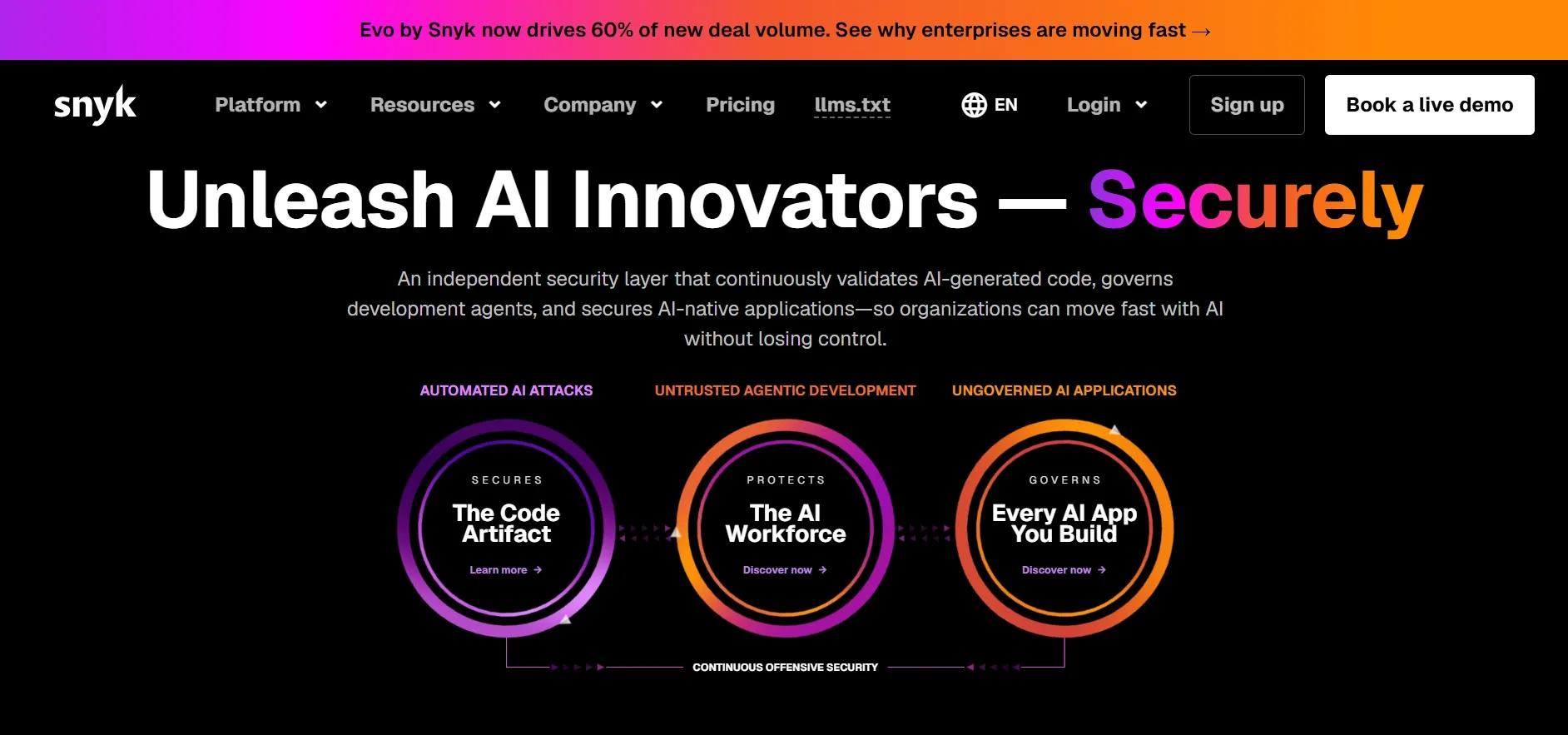
Snyk, founded in London, is a developer-first security firm that secures cloud apps from the code up. It scans code, open-source dependencies, containers, and infrastructure as code for risk, early in the pipeline. So it suits teams that want to catch cloud issues before deploy.
The firm's shift-left approach embeds security into developer workflows. Its cloud and IaC scanning stops misconfigurations before they ship. Snyk suits engineering-led organisations building fast in the cloud. So it fits UK teams that want to secure cloud apps in development.
Key highlights:
- Developer-first cloud security
- Code, dependency, and container scanning
- Infrastructure-as-code checks
- Shift-left, pipeline-native
Best for: UK teams securing cloud apps in the development pipeline.
9. Wiz
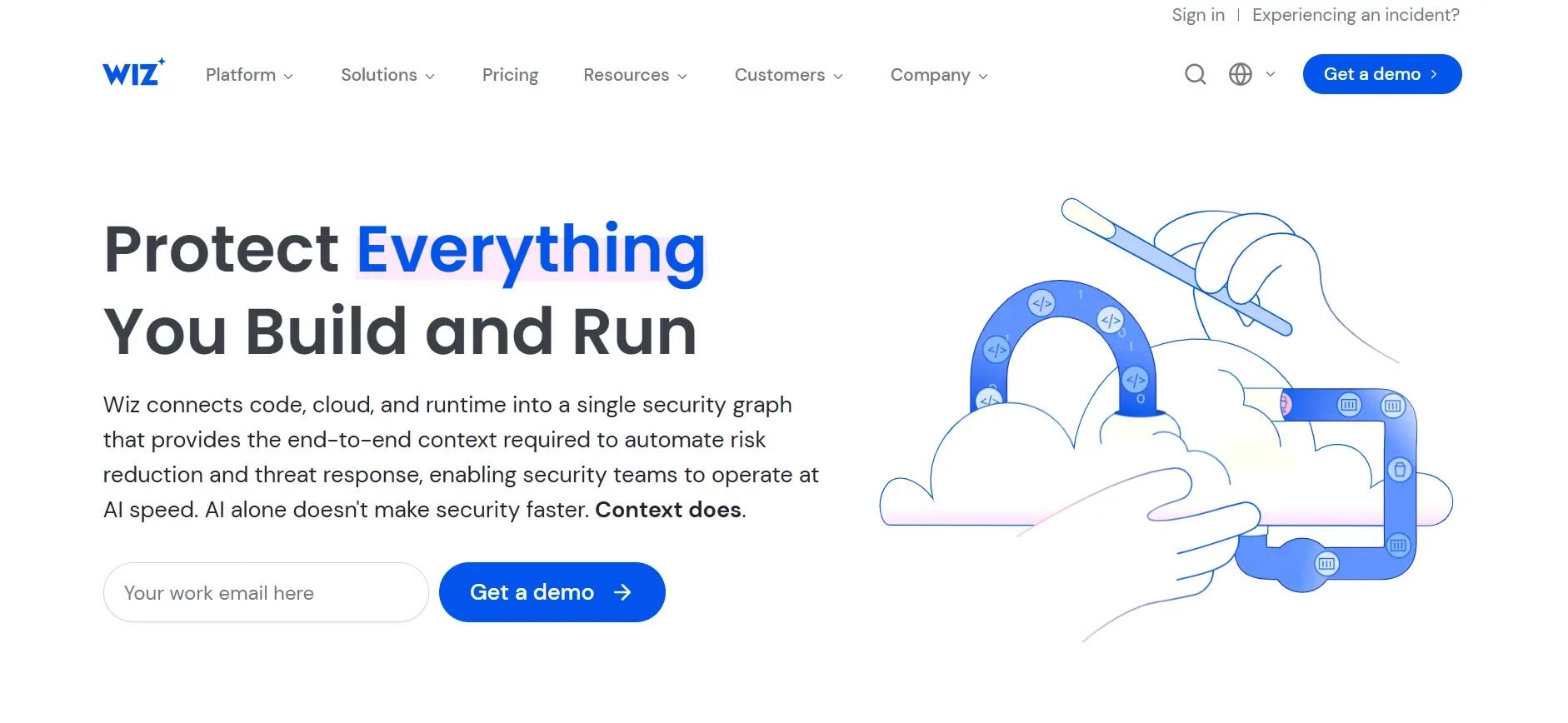
Wiz is the CNAPP market leader, and it is widely deployed across UK enterprises. Google completed its $32 billion acquisition of Wiz in 2026, the largest cybersecurity deal in history. So in 2027 it pairs a best-in-class platform with Google Cloud's scale.
Founded in 2020, Wiz scans AWS, Azure, and Google Cloud agentlessly through provider APIs, building a single security graph of your estate. That clean, fast approach defined modern cloud security. Wiz suits teams that want leading posture management with minimal friction. So it fits modern, multi-cloud UK organisations.
Key highlights:
- Agentless, multi-cloud CNAPP
- Security graph of your whole estate
- Market-leading posture management
- Now part of Google Cloud
Best for: Modern UK teams wanting fast, agentless multi-cloud posture.
10. Palo Alto Networks
Palo Alto Networks runs Prisma Cloud, now folding into its unified Cortex Cloud platform, and it has a major UK presence. Its CNAPP offers the broadest feature set on the market. So it suits large UK enterprises wanting code-to-cloud coverage.
The platform spans CSPM, CWPP, CIEM, API security, and infrastructure-as-code scanning. It integrates deeply with the wider Palo Alto stack. Palo Alto suits enterprises already on its platforms or wanting the fullest coverage. So it fits large, security-mature UK organisations.
Key highlights:
- Broadest CNAPP feature set
- CSPM, CWPP, CIEM, and IaC
- Deep Palo Alto integration
- Enterprise-scale platform
Best for: Large UK enterprises wanting full code-to-cloud coverage.
How the Leading Cloud Security Platforms Compare
The "At a Glance" table sorts the field quickly, but cloud security companies differ most on the details. This one goes deeper, on the features that decide most deals. Use it to match a platform to your clouds and your biggest gaps.
Platform | Architecture | Multi-Cloud | CSPM | CWPP | CIEM | Pricing Model |
| Wiz | Agentless | AWS, Azure, GCP | Yes | Yes | Yes | Per workload |
| Prisma Cloud | Agent + agentless | AWS, Azure, GCP, OCI | Yes | Yes | Yes | Credit / module |
| Microsoft Defender | Agent-based | AWS, Azure, GCP | Yes | Yes | Partial | Consumption |
| Sophos Cloud Optix | Agentless | AWS, Azure, GCP | Yes | Partial | Partial | Subscription |
| Darktrace | AI / network | AWS, Azure, GCP | Partial | Partial | Partial | Subscription |
| Snyk | Developer / IaC | AWS, Azure, GCP | Partial (IaC) | Yes (container) | No | Per developer |
No tool wins every row, though. Wiz leads on agentless posture, Prisma Cloud on breadth, Darktrace on AI detection, and Snyk on securing code before deploy. So weigh the strengths against your biggest gap, not the longest feature list.
Wiz vs Prisma Cloud vs Orca: The CNAPP Leaders UK Buyers Compare
Three CNAPP platforms dominate most UK enterprise shortlists, so they deserve a closer look. Each wins for a different reason.
Wiz leads on agentless speed and a clean security graph, and it now sits inside Google Cloud. It suits teams that want market-leading posture with little friction, though its pricing sits at the top tier.
Prisma Cloud, folding into Palo Alto's Cortex Cloud, offers the broadest feature set, from CSPM through infrastructure-as-code scanning. It suits large, Palo Alto-aligned enterprises, however its module licensing can feel complex.
Orca is the leading independent, built on agentless SideScanning like Wiz but without hyperscaler ownership. It suits mid-market and enterprise teams that value neutrality.
So the choice usually comes down to breadth versus simplicity versus independence. Trial two of them against a real environment, and the fit becomes clear.
Free and Open-Source Cloud Security Tools
Not every UK team can afford the leading cloud security companies from day one. Several open-source tools cover real ground for free, which suits startups and anyone proving value before they buy.
- Prowler. Audits AWS, Azure, and GCP against security benchmarks.
- Checkov. Scans infrastructure as code for misconfigurations before deploy.
- Trivy. Finds vulnerabilities in containers, images, and code.
- Falco. Detects suspicious runtime activity in containers and Kubernetes.
- CloudQuery. Pulls cloud asset data into a queryable database.
These tools take real skill to run well, though. So many teams pair them with a vetted cloud engineer, then graduate to a commercial platform as they scale.
Platform vs Talent: Which Do You Need
Buying a cloud security platform is only half the job. The other half is running it. Both matter, and the right mix depends on your team.
A platform like Wiz or Prisma Cloud finds your risks and ranks them. It gives you a clear picture of posture, identity, and exposure. On its own, though, a platform only reports. Someone still has to act on findings, fix misconfigurations, and tune the rules.
That is where talent comes in, however. With the UK short thousands of cyber professionals, the people to run these tools are scarce. So many teams buy a leading platform, then bring in vetted engineers through a model like Softaims to deploy it and close the gaps. So the strongest programs pair the best tool with the right hands.
Cloud Security Certifications to Look For
When you vet cloud security companies or hire a team, credentials signal real skill. They also reassure auditors and enterprise buyers. Here are the ones worth checking.
Certification | Focus | Signals |
| CCSP | Vendor-neutral cloud security | Broad, senior cloud skill |
| AWS Security Specialty | AWS security | Deep AWS defense |
| Azure Security Engineer | Microsoft cloud | Azure posture and identity |
| Google Professional Cloud Security | Google Cloud | GCP security design |
| CISSP | Broad security management | Senior, well-rounded skill |
Certificates aren't the whole story, though. Pair them with real, shipped cloud work. Engineers hired through Softaims are vetted for exactly this blend of certified and practical skill.
What to Look For in a Cloud Security Partner
Cloud security companies vary widely in scope and style, however. The strongest share a few traits. Keep this checklist close when you compare them.
- Multi-cloud coverage. AWS, Azure, and Google Cloud should all be supported well.
- Agentless and agent options. Flexibility here eases deployment.
- Identity depth. CIEM and permissions management matter as much as posture.
- Clear prioritisation. Good tools rank risk, not just list it.
- UK compliance fit. UK GDPR, Cyber Essentials, and NCSC alignment help.
A partner strong on these points saves you noise and rework. So weigh them before you commit.
How Much Does Cloud Security Cost in the UK?
Cloud security companies price by platform, scale, and model. Most enterprise tools charge per workload or per module, and few publish list rates. The table shows rough 2027 ranges.
Option | Typical Cost (2027) |
| CNAPP platform (per workload) | £12–£40+/workload/month |
| Enterprise platform license | £40,000–£400,000+/year |
| Cloud security engineer (hire) | £50–£120+/hr |
| Managed cloud security service | Custom, retainer-based |
Source: 2027 industry estimates
The spread is wide. A small team might spend a few thousand a month, while a large enterprise spends well into six or seven figures. Talent adds to that, since UK cloud security engineers are scarce and pricey. Still, the cost of a breach, often millions, dwarfs the cost of good defense.
This is where a flexible talent model helps. Teams that hire cloud security engineers through Softaims reach vetted talent below UK onshore rates, matched in 48 hours. So you can run your platform without a long, costly hiring search.
Cloud Security Best Practices
The best cloud security companies lean on good habits as much as tools. A few practices cut most cloud risk. Build them in from the start.
- Least privilege. Give every identity only the access it truly needs.
- Multi-factor authentication. Require MFA everywhere, since credentials drive most breaches.
- Encrypt everything. Protect data at rest and in transit by default.
- Scan infrastructure as code. Catch misconfigurations before they ship.
- Monitor continuously. Watch posture, identity, and activity in real time.
- Shift left. Fix issues in development, not after a breach.
No single step is enough on its own, though. So layer them, and let your platform enforce the rules at scale.
Cloud Security and Compliance
For many UK firms, cloud security is also a compliance job. Auditors and enterprise buyers expect proof, not promises. So the right program maps controls to the standards that matter.
Common frameworks include ISO 27001, SOC 2, and PCI DSS, plus UK GDPR and Cyber Essentials, which many public-sector contracts require. The NIS Regulations add duties for essential services. The best cloud security companies in the UK map their findings to these standards, so an audit becomes routine rather than a scramble. So treat compliance as an output of good security, not a separate chore.
Cloud Security for Startups vs Enterprises
Cloud security isn't one size fits all. Startups and enterprises need different things, so the right pick differs too.
For a startup, budget and speed rule. A lean team often starts with a hyperscaler's native tools, then adds a focused CNAPP as it grows. Hiring a full security team is rarely realistic, so vetted engineers on demand fill the gap. For an enterprise, breadth and compliance matter more. Large firms run multi-cloud, so they need the broadest coverage and the people to run it. So the best cloud security companies serve both, from a single engineer to a full enterprise platform.
Red Flags to Watch For
When you compare cloud security companies in the UK, catching trouble early saves money. One clear red flag is single-cloud tunnel vision. A tool that handles only AWS leaves your Azure or Google Cloud exposed.
Watch, too, for alert overload. A platform that lists thousands of findings without ranking them buries the real risks. A vendor that can't show prioritisation often adds noise, not safety.
Thin identity coverage is another worry, however. Since most breaches involve credentials, weak CIEM is a serious gap. For building a program, the NIST Cybersecurity Framework is a solid reference, and TechCrunch is useful for tracking the latest moves.
How to Choose the Right Cloud Security Company Step by Step
Picking a cloud security partner is a process, not a hunch. These steps narrow the field.
- Map your estate. Know which clouds, workloads, and identities you run.
- Fix your priority. Decide whether posture, identity, or workloads is your biggest gap.
- Shortlist by fit. Match platforms to your clouds and existing stack.
- Run a trial. Scan a real environment and judge the signal-to-noise.
- Check the talent. Confirm you have, or can hire, people to run it.
- Weigh total cost. Add platform, talent, and management into one number.
Run them in order, and the fit becomes clear. In practice, the best cloud security companies welcome these questions rather than dodge them.
Trends Shaping UK Cloud Security in 2027
The field keeps moving, and it's changing how cloud security companies work. Three shifts stand out this year.
Consolidation is the big one. The CNAPP category now gathers CSPM, CWPP, and identity into single platforms, and the $32 billion Wiz-Google deal shows how high the stakes are. AI is also reshaping defense, with UK pioneers like Darktrace leading autonomous response.
Identity-first security is rising, too, since most breaches start with credentials. Meanwhile, securing AI systems themselves is a fast-growing concern across UK firms. Together, these trends push cloud security toward unified, identity-aware, AI-driven platforms.
Frequently Asked Questions
What do cloud security companies in the UK do?
They protect data, workloads, and identities running in the cloud. Some sell platforms that scan AWS, Azure, and Google Cloud for risk, from misconfigurations to exposed data. Others supply engineers who deploy those tools and fix the findings. In short, they keep your cloud estate defensible as it grows.
Which UK cloud security company is best in 2027?
There isn't one winner for everyone. Darktrace leads on AI-driven detection, while Sophos offers a unified platform for mid-market teams. For CNAPP posture, UK enterprises often turn to Wiz or Palo Alto Prisma Cloud. So the best choice fits your clouds, stack, and team.
Is agentless or agent-based cloud security better?
Agentless tools such as Wiz deploy fast and cover your whole estate through APIs, with no software to install. Agent-based tools go deeper on runtime detail but take more effort to roll out. Many platforms now offer both. So the best choice depends on how much runtime depth you need versus speed to deploy.
What is the difference between CSPM and CNAPP?
CSPM finds misconfigurations and posture gaps across your cloud. CNAPP is broader: it bundles CSPM with workload protection, identity, and often more, in one platform. So CSPM is one piece, while CNAPP is the whole toolkit.
How do I fix the UK cloud security skills gap?
Hiring full-time cloud security staff is slow, and the UK is short thousands of professionals. Many teams close the gap with vetted engineers on demand, through a model like Softaims, matched in 48 hours. That gets a platform deployed and tuned without a long search. So you combine a strong tool with the people to run it.
Conclusion
Cloud security is now a core UK business function, not an afterthought. The cloud security companies in the UK above range from AI-driven leaders like Darktrace to global CNAPP platforms and a flexible talent model that staffs your defense. Each fits a different need.
Match your choice to three things, though: your clouds, your biggest risk, and whether you need a tool, a team, or both. If you'd rather build a vetted cloud security team than wrestle a long hiring search, Softaims can match you within 48 hours. You can also browse the talent pool to see who fits.
Ready to start? Map your estate, fix your top risk, then pick the platform and people that suit it. Run a trial first, prove the fit, then scale from there. Have a question about your cloud posture? Reach out, and let's talk it through.


 GitHub
 Stackoverflow
Alexey Z.

 Verified Expert in Engineering
My name is Alexey Z. and I have over 19 years of experience in the tech industry. I specialize in the following technologies: AJAX, Ruby on Rails, jQuery, Ruby, MySQL, etc.. I hold a degree in Bachelor of Arts (BA), High School. Some of the notable projects I’ve worked on include: Jettaplus, Echo, Namez.com, Public ma.de !, Razorkast, etc.. I am based in Tel Aviv, Israel. I've successfully completed 12 projects while developing at Softaims.
Information integrity and application security are my highest priorities in development. I implement robust validation, encryption, and authorization mechanisms to protect sensitive data and ensure compliance. I am experienced in identifying and mitigating common security vulnerabilities in both new and existing applications.
My work methodology involves rigorous testing—at the unit, integration, and security levels—to guarantee the stability and trustworthiness of the solutions I build. At Softaims, this dedication to security forms the basis for client trust and platform reliability.
I consistently monitor and improve system performance, utilizing metrics to drive optimization efforts. I’m motivated by the challenge of creating ultra-reliable systems that safeguard client assets and user data.

Leave a Comment
Need help building your team? Let's discuss your project requirements.
Get matched with top-tier developers within 24 hours and start your project with no pressure of long-term commitment.