10 Best Cloud Security Companies in the USA (2027)
Misconfigurations cause 99% of cloud failures. This guide evaluates the 10 best cloud security companies in the USA for 2027; comparing CNAPP platforms, agentless architectures, pricing, and staffing solutions for multi-cloud defense.
Technically reviewed by:
Valentin H.|Rahul L.
Table of contents
Key Takeaways
- Cloud security in 2027 is dominated by Cloud-Native Application Protection Platforms (CNAPP) that consolidate posture management (CSPM), workload defense (CWPP), and identity entitlement (CIEM) into a single console.
- With 74% of organizations facing a cloud security skills shortage and customer misconfigurations causing 99% of failures, purchasing leading platforms (e.g., Wiz, Prisma Cloud) requires vetted DevSecOps engineers to remediate findings.
- Top US cloud security solutions prioritize API-driven, agentless deployment to scan multi-cloud environments (AWS, Azure, Google Cloud) without introducing operational friction.
- Stolen or misused credentials account for over 80% of cloud breaches, making granular permissions management and strict Zero Trust principles critical for corporate defense.
American business lives in the cloud, and so does most of its risk. One misconfigured bucket or one over-privileged identity can expose a whole estate. The United States also sits at the centre of this market. North America holds roughly 38% of a global cloud security market worth about $60 billion in 2026 and climbing past $70 billion in 2027, on its way to $224 billion by 2034. So the stakes, and the spending, keep rising.
The pressure is real. Around 65% of organizations hit a cloud incident last year, and Gartner expects 99% of cloud failures through 2026 to trace back to the customer, usually a misconfiguration. Worse, about 74% of firms report a cloud security skills shortage, so even great tools sit half-configured. So the best cloud security companies in the USA matter twice over: the platforms that find risk, and the people who run them.
This guide ranks the 10 best cloud security companies in the USA for 2027. It pairs the leading security platforms with a flexible way to staff your own cloud defense. Below the list, we compare features head to head, cover costs, certifications, and red flags, and show you how to choose. One read should give you a shortlist.
What Do Cloud Security Companies Do
Cloud security companies in the USA protect the data, workloads, and identities running in AWS, Azure, and Google Cloud. Some sell platforms that scan your environment and flag risk. Others supply the engineers who deploy those tools and fix what they surface.
The work spans several layers, though. It covers misconfigurations, workload protection, identity and permissions, data exposure, and network access. So a strong program pairs good tooling with skilled people.
The payoff is a cloud you can trust at scale. When posture is clean and identities are tight, breaches get far less likely. So cloud security turns a sprawling, risky estate into a defensible one.
Key Cloud Security Categories
Cloud security splits into several categories, each with its own job. Knowing them helps you buy the right thing. The table shows the main ones.
Category | Full Name | What It Does |
| CSPM | Cloud Security Posture Management | Finds misconfigurations and policy gaps |
| CWPP | Cloud Workload Protection Platform | Protects servers, containers, and functions |
| CNAPP | Cloud-Native Application Protection Platform | Combines CSPM, CWPP, and more in one |
| CIEM | Cloud Infrastructure Entitlement Management | Controls identities and permissions |
| CASB | Cloud Access Security Broker | Governs SaaS access and data |
| SASE | Secure Access Service Edge | Combines network and security in the cloud |
CNAPP has become the default, since it bundles posture, workload, and identity in one place. So most modern US cloud security vendors now build around a CNAPP core.
Common Cloud Security Threats
Most cloud breaches trace to a short list of causes. Knowing them helps you prioritise. Here are the big ones.
Misconfiguration tops the list, and most of it is human error rather than a software flaw. Identity compromise is close behind, since over 80% of cloud intrusions now involve stolen or misused credentials. API exploitation is a third, as APIs link to roughly a third of cloud data breaches.
Data exposure rounds it out, however. Unmonitored assets and public buckets leak data quietly. So a good program watches posture, identity, and data together, not just one of them.
Why Cloud Security Matters More in the US
The US runs more cloud, holds more regulated data, and faces more attacks than any other market. That makes cloud security a board-level issue. Three forces drive it.
First, attacks keep rising, and the average cloud breach costs around $5 million. Second, US compliance is demanding, from SOC 2 and HIPAA to FedRAMP and state privacy laws like CCPA. Third, cloud estates keep sprawling, with most firms now on multi-cloud and hybrid setups.
The skills gap makes all three harder, however. With most US firms short on cloud security talent, tools often sit under-configured. So the best cloud security companies in the USA solve both the tooling and the talent sides.
How We Selected These Companies
This ranking isn't guesswork. Each of these cloud security companies had to clear a bar, which keeps the list useful rather than salesy. It reflects our judgment, however, so treat it as a starting point.
The criteria we weighed:
- Real coverage. Strong CSPM, CWPP, or CNAPP capability counted most.
- Multi-cloud support. AWS, Azure, and Google Cloud coverage mattered.
- US presence. Firms based in or heavily serving the US led the list.
- Modern architecture. Agentless scanning, identity depth, and AI added weight.
- Flexible delivery. Options from platforms to vetted talent helped.
No firm leads on every measure, though. So each entry ends with a "Best for" tag to steer you.
At a Glance: The Best Cloud Security Companies Compared
Short on time? This side-by-side view captures all ten at once. It lines up each firm against its type, its core strength, and the job it suits best, so you can weigh them without scrolling. Shortlist two or three that fit, then read their full profiles below for the detail.
# | Company | Base | Core Strength | Best For |
| 1 | Softaims | US / offshore talent | Vetted cloud security engineers | Staffing your cloud defense |
| 2 | Devaims | Softaims-owned | Secure cloud software | Building secure cloud apps |
| 3 | Wiz | New York, NY | Agentless multi-cloud CNAPP | Modern, fast cloud posture |
| 4 | Palo Alto Networks | Santa Clara, CA | Broadest feature set | Enterprise code-to-cloud |
| 5 | CrowdStrike | Austin, TX | Endpoint and cloud in one | CrowdStrike-based teams |
| 6 | Zscaler | San Jose, CA | Zero Trust access | Secure cloud access |
| 7 | Microsoft | Redmond, WA | Defender for Cloud | Microsoft-centric estates |
| 8 | Orca Security | Portland, OR | Agentless SideScanning | Independent agentless CNAPP |
| 9 | Aqua Security | Boston, MA | Container and shift-left | Container-heavy workloads |
| 10 | Sysdig | San Francisco, CA | Runtime and container security | Real-time cloud detection |
The 10 Best Cloud Security Companies in the USA
With the basics covered, here are the picks. The ten cloud security companies in the USA below pair leading platforms with a flexible talent model. Each earned its place on real coverage, multi-cloud depth, and modern architecture, however. The "Best for" line under each entry points you to the closest match.
1. Softaims

Softaims leads our list with a different kind of answer to cloud security. The platforms below find and fix risk, but a tool is only as good as the team running it, and most US firms are short on cloud talent. Softaims closes that gap by matching you with the top 3% of vetted engineers inside 48 hours.
That flexibility suits cloud security work well. You can hire cloud engineers and DevSecOps specialists to deploy CNAPP tools and harden your estate. The pool also spans cybersecurity management, continuous security monitoring, cyber threat intelligence, and NIST Cybersecurity Framework alignment. Every engineer is vetted for real skill, not a glossy résumé.
The engagement bends to your needs. Add one specialist or a full pod, and they work your hours and process. So they run like your own security team, without a long contract. You can browse available talent or see transparent rates before committing.
Key highlights:
- Top 3% vetted cloud and security engineers, matched in 48 hours
- DevSecOps, cloud, and cybersecurity skills
- Deploy and run CNAPP and CSPM tools
- Flexible staff augmentation, no heavy minimums
Best for: US teams that want to staff and run their cloud defense, not just buy a platform.
2. Devaims
Devaims is a development studio that builds custom software with security in mind. For the cloud, that means apps designed with secure defaults, tight identity, and clean architecture from the start. So it fits firms that want security built in, not bolted on.
The August 2026 acquisition by Softaims joined the two. Devaims clients now reach the same vetted network and 48-hour matching. One partner can carry software development and managed IT services, with secure cloud practices throughout.
Key highlights:
- Secure-by-design cloud software
- Clean cloud architecture and identity
- Backed by Softaims' vetted talent since 2026
- Development plus managed services
Best for: US teams building secure cloud apps from the ground up.
3. Wiz
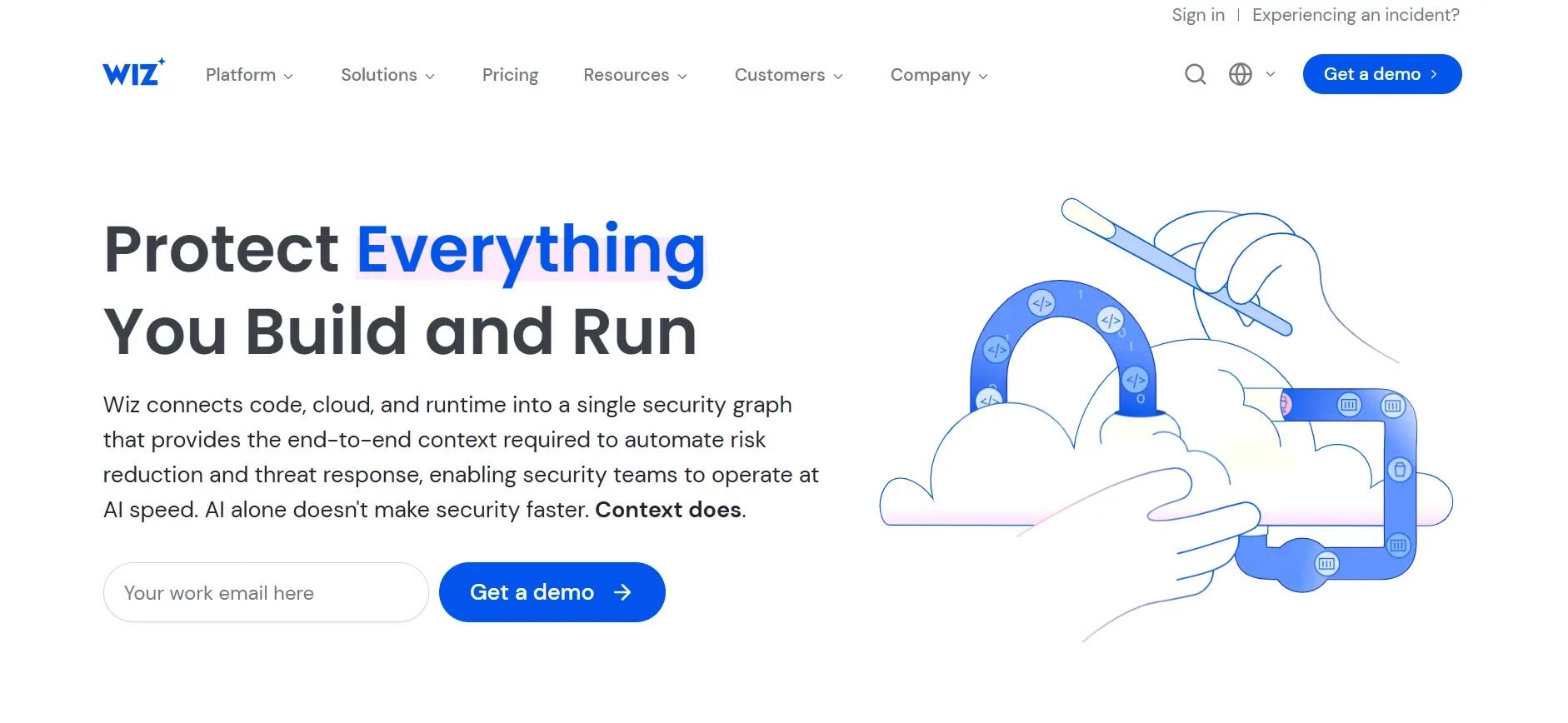
Wiz, headquartered in New York, is the CNAPP market leader, and in 2026 it became the biggest story in the field. Google completed its $32 billion acquisition of Wiz, the largest cybersecurity deal in history. So in 2027 it pairs a best-in-class platform with Google Cloud's scale.
Founded in 2020, Wiz scans AWS, Azure, and Google Cloud agentlessly through provider APIs, building a single security graph of your estate. That clean, fast approach defined modern cloud security. Wiz suits teams that want leading posture management with minimal friction. So it fits modern, multi-cloud US organisations.
Key highlights:
- Agentless, multi-cloud CNAPP
- Security graph of your whole estate
- Market-leading posture management
- Now part of Google Cloud
Best for: Modern US teams wanting fast, agentless multi-cloud posture.
4. Palo Alto Networks
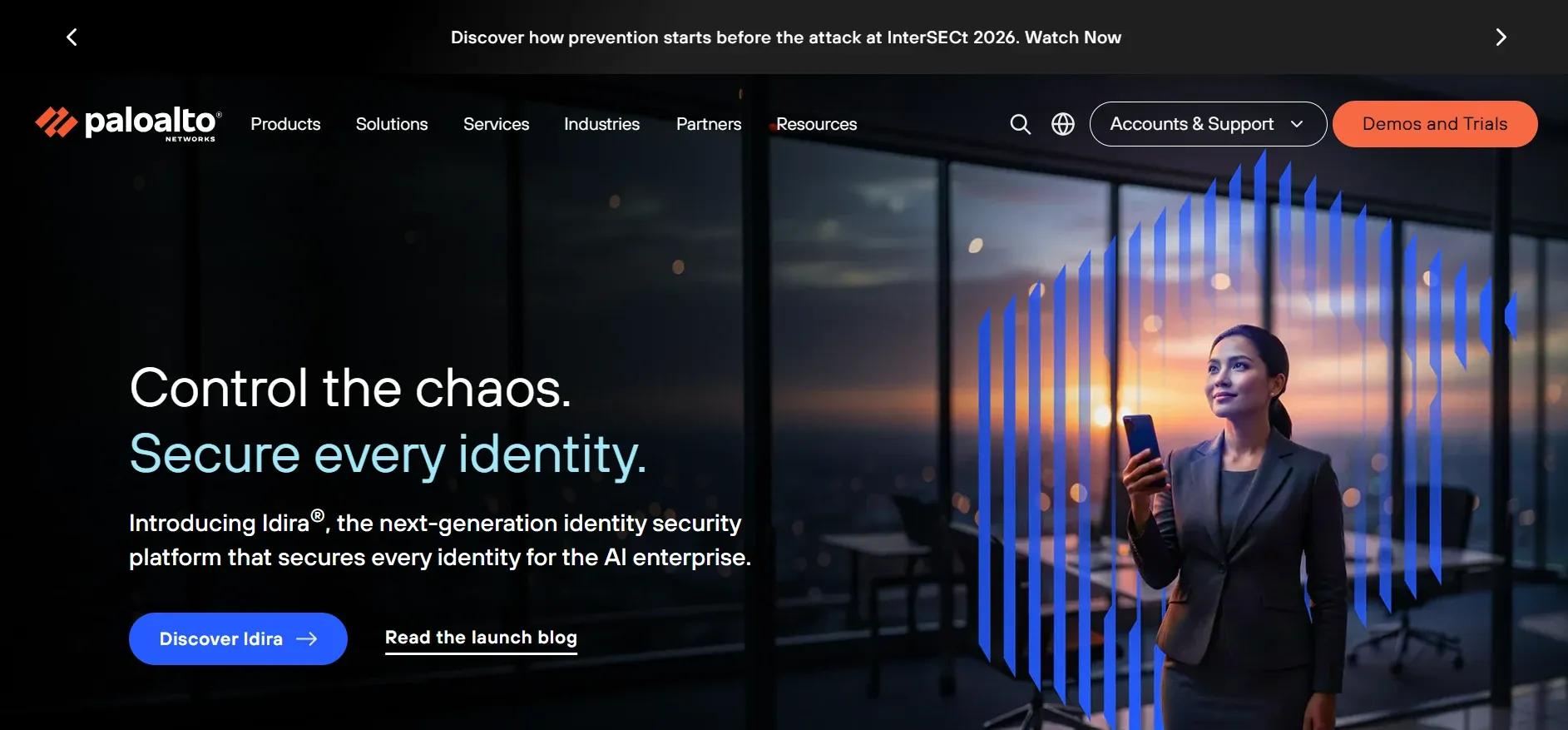
Palo Alto Networks, based in Santa Clara, California, runs Prisma Cloud, now folding into its unified Cortex Cloud platform. Founded in 2005, it reached a $200 billion market cap, and its CNAPP offers the broadest feature set on the market. So it suits large enterprises wanting code-to-cloud coverage.
The platform spans CSPM, CWPP, CIEM, API security, and infrastructure-as-code scanning, built from years of acquisitions. It integrates deeply with the wider Palo Alto stack. Palo Alto suits enterprises already on its platforms or wanting the fullest coverage. So it fits large, security-mature US organisations.
Key highlights:
- Broadest CNAPP feature set
- CSPM, CWPP, CIEM, and IaC
- Deep Palo Alto integration
- Enterprise-scale platform
Best for: Large US enterprises wanting full code-to-cloud coverage.
5. CrowdStrike
CrowdStrike, based in Austin, Texas, built its name in endpoint security and extends that into the cloud with Falcon Cloud Security. One of the largest cybersecurity firms by valuation, it unifies endpoint and cloud on a single platform. So it suits teams wanting one console for both.
The platform correlates endpoint and cloud signals, with CSPM and identity management built in. Its threat-graph approach links risk across the estate. CrowdStrike suits firms already running Falcon for endpoint. So it fits US companies wanting a natural endpoint-to-cloud consolidation.
Key highlights:
- Unified endpoint and cloud security
- CSPM and identity management
- Strong threat-graph correlation
- Single Falcon platform
Best for: US teams already on CrowdStrike seeking unified cloud posture.
6. Zscaler
Zscaler, based in San Jose, California, pioneered cloud-based Zero Trust and remains the backbone of secure access for many enterprises. Founded in 2007, its platform was built cloud-first for a cloud-first world. So it suits firms focused on secure access over posture scanning.
Its flagship products, Zscaler Internet Access and Private Access, control who reaches what, without a traditional perimeter. The approach suits distributed, remote-heavy organisations. Zscaler suits teams making Zero Trust access their priority. So it fits US enterprises securing access at scale.
Key highlights:
- Cloud-based Zero Trust and SASE
- Secure internet and private access
- Built cloud-first since 2007
- Strong for distributed teams
Best for: US enterprises prioritising secure, Zero Trust cloud access.
7. Microsoft
Microsoft, based in Redmond, Washington, secures the cloud natively through Microsoft Defender for Cloud. For firms already on Azure and Microsoft 365, it offers deep, built-in CSPM and workload protection. So it suits Microsoft-centric estates that want native integration.
The platform covers posture management, workload protection, and multi-cloud support across AWS and Google Cloud too. Its integration with the wider Microsoft security stack is a real edge. Microsoft suits organisations standardised on Azure. So it fits Microsoft-heavy US enterprises.
Key highlights:
- Native Defender for Cloud
- CSPM and workload protection
- Deep Microsoft integration
- Multi-cloud support
Best for: Microsoft-centric US enterprises wanting native cloud security.
8. Orca Security
Orca Security, based in Portland, Oregon, is the most direct independent rival to Wiz, built on agentless SideScanning. It connects to cloud accounts through read-only APIs and snapshots, with no agents to deploy. So it suits teams wanting fast, agentless coverage from an independent vendor.
The platform delivers broad CNAPP coverage with a clean user experience. Its independence appeals to buyers wary of hyperscaler ownership. Orca suits mid-market and enterprise teams wanting agentless posture. So it fits US firms that value a neutral, agentless CNAPP.
Key highlights:
- Agentless SideScanning architecture
- Broad CNAPP coverage
- Clean, usable interface
- Independent vendor
Best for: US teams wanting an independent, agentless CNAPP.
9. Aqua Security
Aqua Security, headquartered in Boston, focuses on cloud-native and container security across the full lifecycle. It emphasises shift-left, helping developers catch issues early, plus strong runtime defense. So it suits container-heavy and CI/CD-driven teams.
The platform offers deep CI/CD pipeline integration and mature container coverage. Its lifecycle approach spans build, deploy, and run. Aqua suits firms running Kubernetes and containers at scale. So it fits US cloud-native teams that live in containers.
Key highlights:
- Cloud-native and container security
- Shift-left plus runtime defense
- Strong CI/CD integration
- Full-lifecycle coverage
Best for: US container-heavy, cloud-native teams.
10. Sysdig
Sysdig, based in San Francisco, specialises in real-time cloud and container security. Built on open-source Falco, it focuses on runtime detection and response, spotting threats as they happen. So it suits teams that want live visibility, not just posture snapshots.
The platform covers CNAPP, runtime threat detection, and vulnerability management, with deep Kubernetes support. Its real-time edge sets it apart from scan-only tools. Sysdig suits firms running dynamic, containerised workloads. So it fits US teams that need runtime cloud detection.
Key highlights:
- Real-time runtime detection
- Built on open-source Falco
- Strong Kubernetes support
- CNAPP plus threat response
Best for: US teams needing real-time cloud and container security.
How the Top Cloud Security Platforms Compare
The "At a Glance" table sorts the field quickly, but cloud security companies differ most on the details. This one goes deeper, on the features that decide most deals. Use it to match a platform to your clouds and your biggest gaps.
Platform | Architecture | Multi-Cloud | CSPM | CWPP | CIEM | Pricing Model |
| Wiz | Agentless | AWS, Azure, GCP | Yes | Yes | Yes | Per workload |
| Prisma Cloud | Agent + agentless | AWS, Azure, GCP, OCI | Yes | Yes | Yes | Credit / module |
| CrowdStrike | Agent + agentless | AWS, Azure, GCP | Yes | Yes | Yes | Per workload |
| Microsoft Defender | Agent-based | AWS, Azure, GCP | Yes | Yes | Partial | Consumption |
| Orca | Agentless | AWS, Azure, GCP | Yes | Yes | Partial | Per workload |
| Aqua | Agent + agentless | AWS, Azure, GCP | Yes | Yes (container) | Partial | Custom |
| Sysdig | Agent + agentless | AWS, Azure, GCP | Yes | Yes (runtime) | Partial | Per workload |
No tool wins every row, though. Wiz and Orca lead on agentless simplicity, Prisma Cloud on sheer breadth, and Aqua and Sysdig on containers and runtime. So weigh the strengths against your biggest gap, not the longest feature list.
Wiz vs Prisma Cloud vs Orca: The CNAPP Leaders Compared
Three cloud security companies dominate most CNAPP shortlists, so they deserve a closer look. Each wins for a different reason.
Wiz leads on agentless speed and a clean security graph, and it now sits inside Google Cloud. It suits teams that want market-leading posture with little friction, though its pricing sits at the top tier.
Prisma Cloud, folding into Palo Alto's Cortex Cloud, offers the broadest feature set, from CSPM through infrastructure-as-code scanning. It suits large, Palo Alto-aligned enterprises, however its module licensing can feel complex.
Orca is the leading independent, built on agentless SideScanning like Wiz but without hyperscaler ownership. It suits mid-market and enterprise teams that value neutrality.
So the choice usually comes down to breadth versus simplicity versus independence. Trial two of them against a real environment, and the fit becomes clear.
Free and Open-Source Cloud Security Tools
Not every US team can afford the leading cloud security companies from day one. Several open-source tools cover real ground for free, which suits startups and anyone proving value before they buy.
- Prowler. Audits AWS, Azure, and GCP against security benchmarks.
- Checkov. Scans infrastructure as code for misconfigurations before deploy.
- Trivy. Finds vulnerabilities in containers, images, and code.
- Falco. Detects suspicious runtime activity in containers and Kubernetes.
- CloudQuery. Pulls cloud asset data into a queryable database.
These tools take real skill to run well, though. So many teams pair them with a vetted cloud engineer, then graduate to a commercial platform as they scale.
Platform vs Talent: Which Do You Need
Buying a cloud security platform is only half the job. The other half is running it. Both matter, and the right mix depends on your team.
A platform like Wiz or Prisma Cloud finds your risks and ranks them. It gives you a clear picture of posture, identity, and exposure. On its own, though, a platform only reports. Someone still has to act on findings, fix misconfigurations, and tune the rules.
That is where talent comes in, however. With most US firms short on cloud security skills, the people to run these tools are scarce. So many teams buy a leading platform, then bring in vetted engineers through a model like Softaims to deploy it and close the gaps. So the strongest programs pair the best tool with the right hands.
Cloud Security Certifications to Look For
When you vet cloud security companies or hire a team, credentials signal real skill. They also reassure auditors and enterprise buyers. Here are the ones worth checking.
Certification | Focus | Signals |
| CCSP | Vendor-neutral cloud security | Broad, senior cloud skill |
| AWS Security Specialty | AWS security | Deep AWS defense |
| Azure Security Engineer | Microsoft cloud | Azure posture and identity |
| Google Professional Cloud Security | Google Cloud | GCP security design |
| CISSP | Broad security management | Senior, well-rounded skill |
Certificates aren't the whole story, though. Pair them with real, shipped cloud work. Engineers hired through Softaims are vetted for exactly this blend of certified and practical skill.
What to Look For in a Cloud Security Partner
Cloud security companies vary widely in scope and style, however. The strongest share a few traits. Keep this checklist close when you compare them.
- Multi-cloud coverage. AWS, Azure, and Google Cloud should all be supported well.
- Agentless and agent options. Flexibility here eases deployment.
- Identity depth. CIEM and permissions management matter as much as posture.
- Clear prioritisation. Good tools rank risk, not just list it.
- Integration. The platform should fit your existing stack and workflows.
A partner strong on these points saves you noise and rework. So weigh them before you commit.
How Much Does Cloud Security Cost?
Cloud security companies price by platform, scale, and model. Most enterprise tools charge per workload or per module, and few publish list rates. The table shows rough 2027 ranges.
Option | Typical Cost (2027) |
| CNAPP platform (per workload) | 15–50+/workload/month |
| Enterprise platform license | 50,000–500,000+/year |
| Cloud security engineer (hire) | 60–150+/hr |
| Managed cloud security service | Custom, retainer-based |
Source: 2027 industry estimates
The spread is wide. A small team might spend a few thousand a month, while a large enterprise spends well into seven figures. Talent adds to that, since US cloud security engineers are scarce and pricey. Still, the cost of a breach, around $5 million on average, dwarfs the cost of good defense.
This is where a flexible talent model helps. Teams that hire cloud security engineers through Softaims reach vetted talent below US onshore rates, matched in 48 hours. So you can run your platform without a long, costly hiring search.
Cloud Security Best Practices
The best cloud security companies lean on good habits as much as tools. A few practices cut most cloud risk. Build them in from the start.
- Least privilege. Give every identity only the access it truly needs.
- Multi-factor authentication. Require MFA everywhere, since credentials drive most breaches.
- Encrypt everything. Protect data at rest and in transit by default.
- Scan infrastructure as code. Catch misconfigurations before they ship.
- Monitor continuously. Watch posture, identity, and activity in real time.
- Shift left. Fix issues in development, not after a breach.
No single step is enough on its own, though. So layer them, and let your platform enforce the rules at scale.
Cloud Security and Compliance
For many US firms, cloud security is also a compliance job. Auditors and enterprise buyers expect proof, not promises. So the right program maps controls to the standards that matter.
Common frameworks include SOC 2, ISO 27001, and PCI DSS, plus HIPAA for health data and CCPA for consumer privacy. Government work often needs FedRAMP. The best cloud security companies in the USA map their findings to these standards, so an audit becomes routine rather than a scramble. So treat compliance as an output of good security, not a separate chore.
Cloud Security for Startups vs Enterprises
Cloud security isn't one size fits all. Startups and enterprises need different things, so the right pick differs too.
For a startup, budget and speed rule. A lean team often starts with a hyperscaler's native tools, then adds a focused CNAPP as it grows. Hiring a full security team is rarely realistic, so vetted engineers on demand fill the gap. For an enterprise, breadth and compliance matter more. Large firms run multi-cloud, so they need the broadest coverage and the people to run it. So the best cloud security companies serve both, from a single engineer to a full enterprise platform.
Red Flags to Watch For
When you compare cloud security companies in the USA, catching trouble early saves money. One clear red flag is single-cloud tunnel vision. A tool that handles only AWS leaves your Azure or Google Cloud exposed.
Watch, too, for alert overload. A platform that lists thousands of findings without ranking them buries the real risks. A vendor that can't show prioritisation often adds noise, not safety.
Thin identity coverage is another worry, however. Since most breaches involve credentials, weak CIEM is a serious gap. For building a program, the NIST Cybersecurity Framework is a solid reference, and TechCrunch is useful for tracking the latest moves.
How to Choose the Right Cloud Security Company Step by Step
Picking a cloud security partner is a process, not a hunch. These steps narrow the field.
- Map your estate. Know which clouds, workloads, and identities you run.
- Fix your priority. Decide whether posture, identity, or workloads is your biggest gap.
- Shortlist by fit. Match platforms to your clouds and existing stack.
- Run a trial. Scan a real environment and judge the signal-to-noise.
- Check the talent. Confirm you have, or can hire, people to run it.
- Weigh total cost. Add platform, talent, and management into one number.
Run them in order, and the fit becomes clear. In practice, the best cloud security companies welcome these questions rather than dodge them.
Trends Shaping US Cloud Security in 2027
The field keeps moving, and it's changing how cloud security companies work. Three shifts stand out this year.
Consolidation is the big one. The CNAPP category now gathers CSPM, CWPP, and identity into single platforms, and the $32 billion Wiz-Google deal shows how high the stakes are. AI is also reshaping defense, with tools that detect and triage faster than humans can.
Identity-first security is rising, too, since most breaches start with credentials. Meanwhile, securing AI systems themselves is a fast-growing concern across US firms. Together, these trends push cloud security toward unified, identity-aware, AI-driven platforms.
Frequently Asked Questions
What do cloud security companies in the USA do?
They protect data, workloads, and identities running in the cloud. Some sell platforms that scan AWS, Azure, and Google Cloud for risk, from misconfigurations to exposed data. Others supply engineers who deploy those tools and fix the findings. In short, they keep your cloud estate defensible as it grows.
Which cloud security company is best in 2027?
There isn't one winner for everyone. Wiz leads the CNAPP market and now sits inside Google Cloud, while Palo Alto Prisma Cloud offers the broadest feature set. CrowdStrike suits endpoint-first teams, and Orca suits those wanting an independent, agentless tool. So the best choice fits your clouds, stack, and team.
Is agentless or agent-based cloud security better?
Agentless tools such as Wiz and Orca deploy fast and cover your whole estate through APIs, with no software to install. Agent-based tools go deeper on runtime detail but take more effort to roll out. Many platforms now offer both. So the best choice depends on how much runtime depth you need versus speed to deploy.
What is the difference between CSPM and CNAPP?
CSPM finds misconfigurations and posture gaps across your cloud. CNAPP is broader: it bundles CSPM with workload protection, identity, and often more, in one platform. So CSPM is one piece, while CNAPP is the whole toolkit.
How do I fix the cloud security skills gap?
Hiring full-time cloud security staff is slow, and the talent is scarce in the US. Many teams close the gap with vetted engineers on demand, through a model like Softaims, matched in 48 hours. That gets a platform deployed and tuned without a long search. So you combine a strong tool with the people to run it.
Conclusion
Cloud security is now a core US business function, not an afterthought. The cloud security companies in the USA above range from leading CNAPP platforms to a flexible talent model that staffs your defense. Each fits a different need.
Match your choice to three things, though: your clouds, your biggest risk, and whether you need a tool, a team, or both. If you'd rather build a vetted cloud security team than wrestle a long hiring search, Softaims can match you within 48 hours. You can also browse the talent pool to see who fits.
Ready to start? Map your estate, fix your top risk, then pick the platform and people that suit it. Run a trial first, prove the fit, then scale from there. Have a question about your cloud posture? Reach out, and let's talk it through.


 GitHub
Lama A.
 Verified Expert in Engineering
My name is Lama A. and I have over 5 years of experience in the tech industry. I specialize in the following technologies: Cloud Engineering, Docker, DevOps, Terraform, Ansible, etc.. I hold a degree in , . Some of the notable projects I've worked on include: Building a Highly Available Multi-Cloud VPN: Connecting AWS & GCP, Kubernetes Architecture. I am based in Gaza, Palestinian Territories. I've successfully completed 2 projects while developing at Softaims.
I am a business-driven professional; my technical decisions are consistently guided by the principle of maximizing business value and achieving measurable ROI for the client. I view technical expertise as a tool for creating competitive advantages and solving commercial problems, not just as a technical exercise.
I actively participate in defining key performance indicators (KPIs) and ensuring that the features I build directly contribute to improving those metrics. My commitment to Softaims is to deliver solutions that are not only technically excellent but also strategically impactful.
I maintain a strong focus on the end-goal: delivering a product that solves a genuine market need. I am committed to a development cycle that is fast, focused, and aligned with the ultimate success of the client's business.

Leave a Comment
Need help building your team? Let's discuss your project requirements.
Get matched with top-tier developers within 24 hours and start your project with no pressure of long-term commitment.