Top 10 Blockchain Game Development Companies in the UK 2026
Blockchain gaming is evolving fast, and the right development partner can shape your game's success. This guide covers 10 leading companies, their services, Web3 expertise, and delivery strengths.
Table of contents
Key Takeaways
- Most "UK" studios are not British. Many deliver from abroad behind a London address, so verify.
- Britain's edge is game-craft. UK studios build genuinely fun games, then add a Web3 layer.
- Costs vary widely. A simple NFT game starts near £30,000, while metaverse titles top £220,000.
- UK tokens can trigger the FCA. Plan financial-promotion compliance before launch.
- Audits are non-negotiable. One unaudited contract can drain the entire treasury.
- Fun-first is winning. The market now rewards great games over pure play-to-earn.
Here is the uncomfortable truth most lists of UK blockchain game development companies hide. Hardly any of the "British" studios they rank are actually British. Scroll the directories and you find London addresses stapled onto teams that ship from Noida, Lahore, or Kyiv. So founders think they are hiring local accountability and instead inherit a time-zone gap and a token-first shop.
That mismatch is expensive in a category that punishes mistakes. A blockchain game has to be genuinely fun, provably secure, and clean under UK financial-promotion rules, all at once. Get the studio wrong and you burn a seed round. You end up with a game nobody plays, a contract nobody audited, or a token the FCA questions. Meanwhile the prize keeps growing, with the global blockchain gaming market projected to reach $1.35 trillion by 2034.
This guide cuts through it. It ranks the ten best blockchain game development companies in the UK for 2026. It separates genuine British studios from firms that merely rent a UK postcode. Softaims and Devaims open the list, followed by real UK game-craft studios and honestly flagged others. If you would rather build in-house, you can also hire vetted blockchain developers and own every line of it.
Why the UK Is a Serious Blockchain Gaming Hub
The blockchain game development companies in the UK sit on a serious advantage. Britain owns world-class game-craft, from Sheffield to Brighton to Cambridge. Britain is Europe's largest games market and a global top-five games nation. So the talent to build genuinely fun games is already here. Add Web3, and that heritage becomes a real edge.
The context matters. The UK games industry generates billions in annual value, per Ukie. It also employs tens of thousands of developers. In addition, London is a global fintech and crypto center, which means the tokenomics and compliance talent sits nearby. Therefore, a UK team can pair game-craft with on-chain design in a way few regions match.
This is also where gaming meets other frontier tech. British studios increasingly blend Web3 with AI, using AI agents for living worlds and generative AI for content. So the best partners think past the token, and past the hype.
How We Ranked These Blockchain Game Development Companies
We ranked these blockchain game development companies on genuine UK presence, game quality, and on-chain security, in that order. A studio had to prove it makes fun games and secure contracts. We also state plainly where each one actually delivers. Each criterion below reflects what a British buyer should demand.
A genuine UK base. Many "UK" studios deliver entirely from abroad. So we verified real British operations and flagged the rest.
Proven game-craft. A token cannot rescue a dull game. Therefore, we favored studios with shipped, well-reviewed titles.
On-chain security. Unaudited contracts lose treasuries. As a result, we weighted independent audits and secure practice.
Compliance awareness. UK token rules are tightening. Consequently, we valued teams that understand financial-promotion and UK-GDPR duties.
Post-launch commitment. Web3 economies drift after launch. Moreover, we favored studios that stay for live ops.
Best Blockchain Game Development Companies in the UK: Comparison Table
The best blockchain game development companies in the UK for 2026 are Softaims, Devaims, Pixelette Technologies, PlayFusion, and Sumo Digital. Studio Gobo, Kwalee, Playstack, StudioKrew, and Antier Solutions complete the list. This table compares each on location and focus.
Company | Location | Core focus | Best for |
| Softaims | UK and global | Hiring vetted blockchain and game developers | Owning your build with full control |
| Devaims | UK and global | End-to-end game builds, a Softaims brand | Accountable full-cycle delivery |
| Pixelette Technologies | Manchester | AI, blockchain, and game development | UK-managed Web3 game projects |
| PlayFusion | Cambridge | AR and Web3 gaming technology | Deep-tech, IP-rich Web3 games |
| Sumo Digital | Sheffield | AAA co-development and game-craft | Fun-first games with a Web3 partner |
| Studio Gobo | Brighton | Premium co-development | High-quality UK-built game production |
| Kwalee | Leamington Spa | Mobile games and publishing | Reaching mass mobile audiences |
| Playstack | London | Game publishing and development | Publisher-backed game launches |
| StudioKrew | Serves UK | NFT and P2E game development | P2E MVPs, with offshore delivery |
| Antier Solutions | UK office | Web3 and tokenomics engineering | Token-heavy Web3 infrastructure |
Details reflect public profiles as of 2026 and can change, so verify each firm before you commit. Softaims and Devaims appear first, then genuine UK studios and honestly flagged others.
The Top 10 Blockchain Game Development Companies in the UK
The top blockchain game development companies in the UK for 2026 are led by Softaims and Devaims. Genuine British studios and honestly flagged others follow. Each profile states where the work actually happens, so you buy with eyes open.
1. Softaims
Best for: Hiring vetted, genuinely UK-based blockchain and game developers.
Softaims solves the exact problem this guide opened with. It is a vetted developer marketplace. So you hire pre-screened Solidity, Unity, and Unreal engineers directly, filtered for UK-based or your-time-zone talent. So the London postcode is real, not rented.
The mechanics are refreshingly transparent. You browse a live bench and sort by skill, seniority, location, and rate. Then you interview only people who have shipped real Web3 games. Within 48 hours, you have a shortlist of proven builders. Each has written audited contracts, NFT systems, and AI-powered features.
The payoff is ownership. When the work ends, the game, the contracts, and the assets belong to you. There is no lock-in and no offshore black box. After acquiring Devaims in August 2026, Softaims also pairs its vetted bench with a managed delivery arm. So you can hire one Solidity developer or hand over a whole game. Start by browsing the developer bench, checking the pricing, exploring custom development, or contacting the team.
2. Devaims
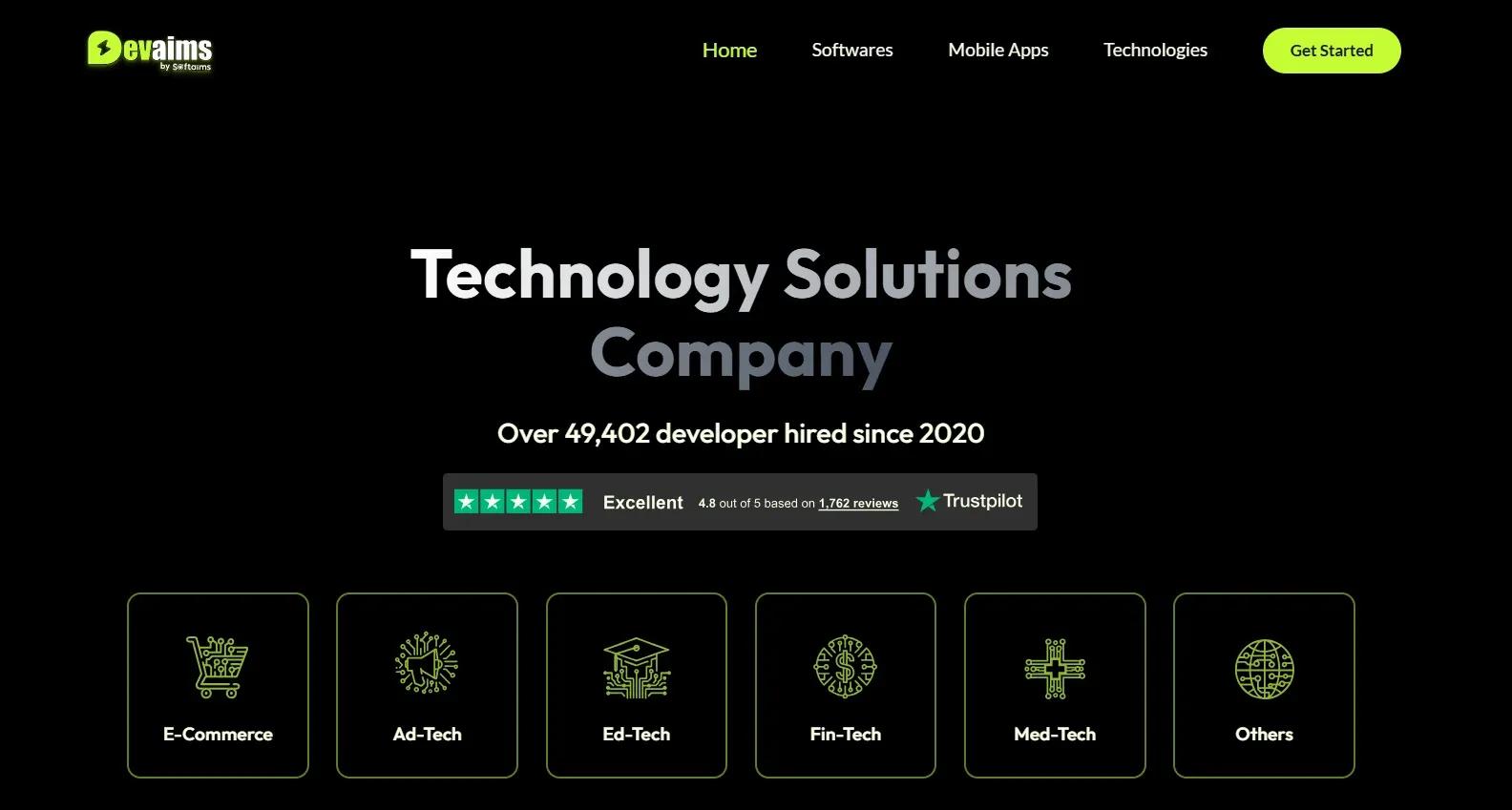
Best for: Accountable, full-cycle blockchain game delivery.
Devaims takes the whole build off your plate. It scopes, designs, engineers, tests, and ships the game, then owns a delivery date in writing. So a founder without an in-house studio still gets a finished, playable product.
The value is one team answering for everything. A single group owns the art, the gameplay, the smart contracts, and the OpenAI-powered systems inside the game. As a result, there is no finger-pointing between a game studio and a separate blockchain vendor when something breaks. Devaims delivers across custom software and mobile app development for web and mobile.
It suits UK teams shipping a first serious Web3 game. Following an August 2026 acquisition, Devaims now runs as a Softaims brand. So its delivery organization and the Softaims vetted bench pull in the same direction. See the full range at Devaims.
3. Pixelette Technologies
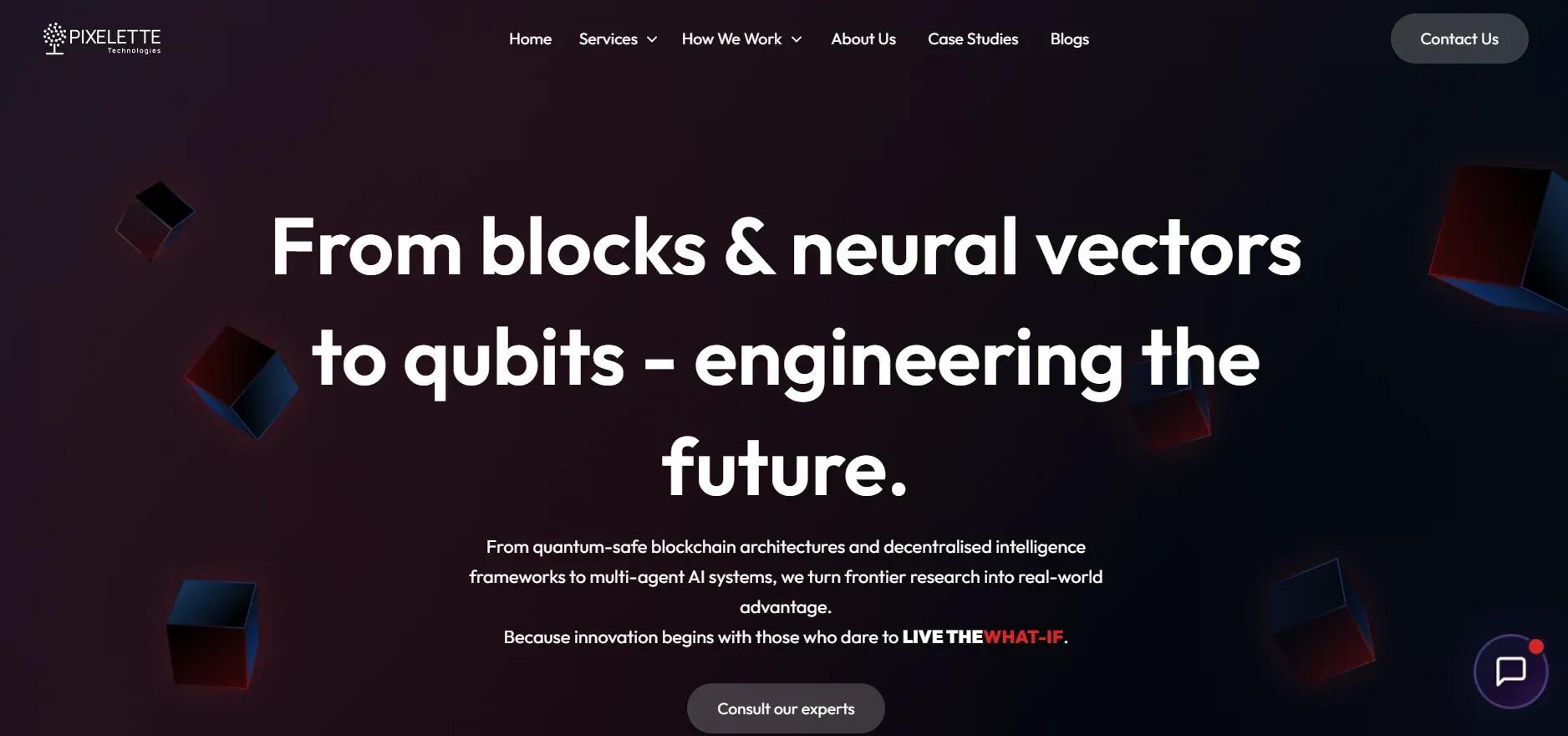
Headquarters: Manchester, United Kingdom.
Pixelette Technologies is a Manchester firm working across AI, blockchain, and game development. It builds NFT games, tokenized platforms, and Web3 experiences for UK and international clients. So it offers a UK-managed relationship for a blockchain game project.
Key services: blockchain games, NFT platforms, and AI.
Industries: gaming, fintech, and eCommerce.
Why choose them: a UK point of contact across Web3 and AI. However, confirm where delivery sits, as it operates globally.
4. PlayFusion
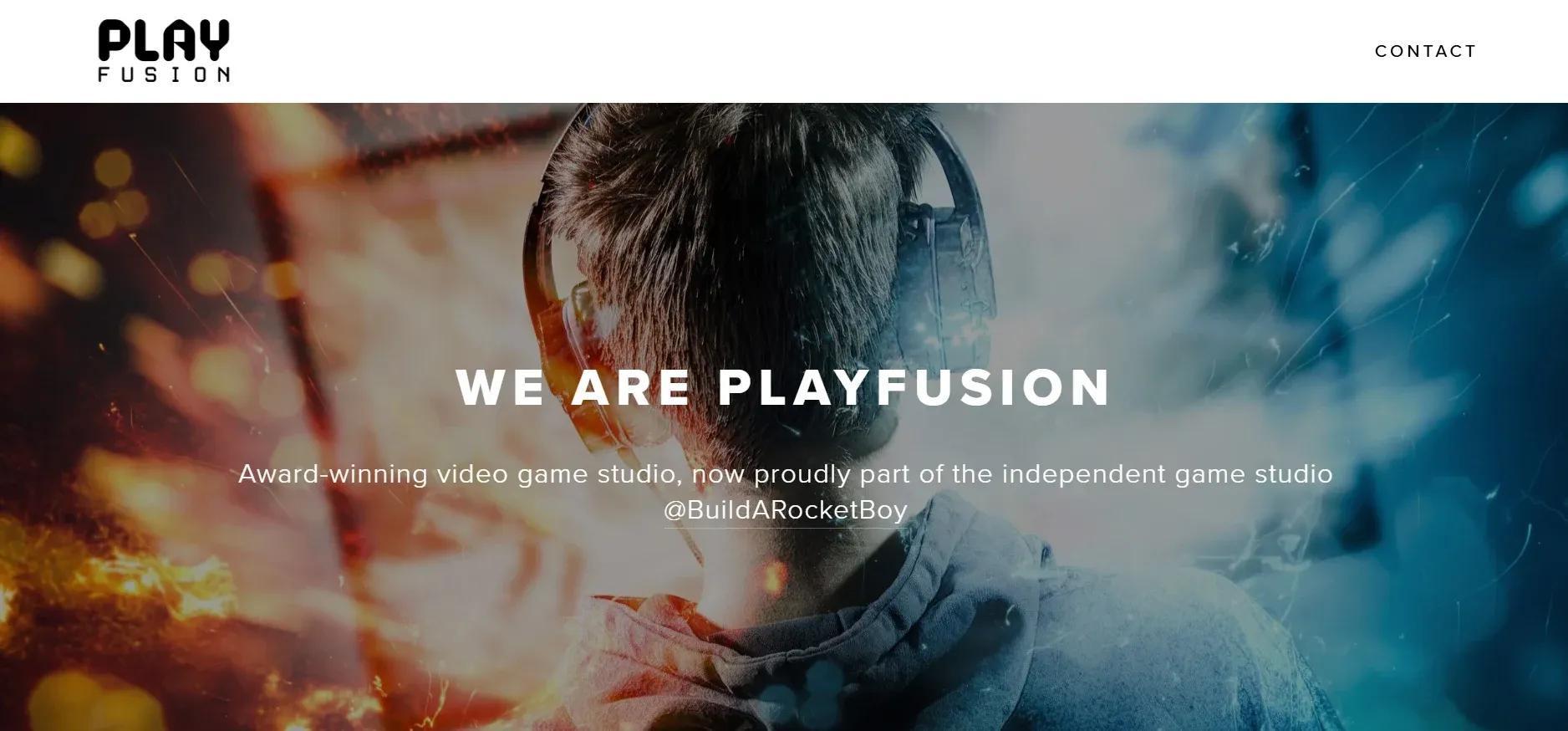
Headquarters: Cambridge, United Kingdom.
PlayFusion is a Cambridge deep-tech studio known for augmented reality and Web3 gaming technology. It builds IP-rich, technically ambitious experiences and its own gaming platform. So it suits founders who want engineering depth, not a template.
Key services: AR gaming, Web3 technology, and platforms.
Industries: gaming, entertainment, and IP.
Why choose them: genuine deep-tech and strong intellectual property. Its Cambridge roots bring serious engineering credibility.
5. Sumo Digital
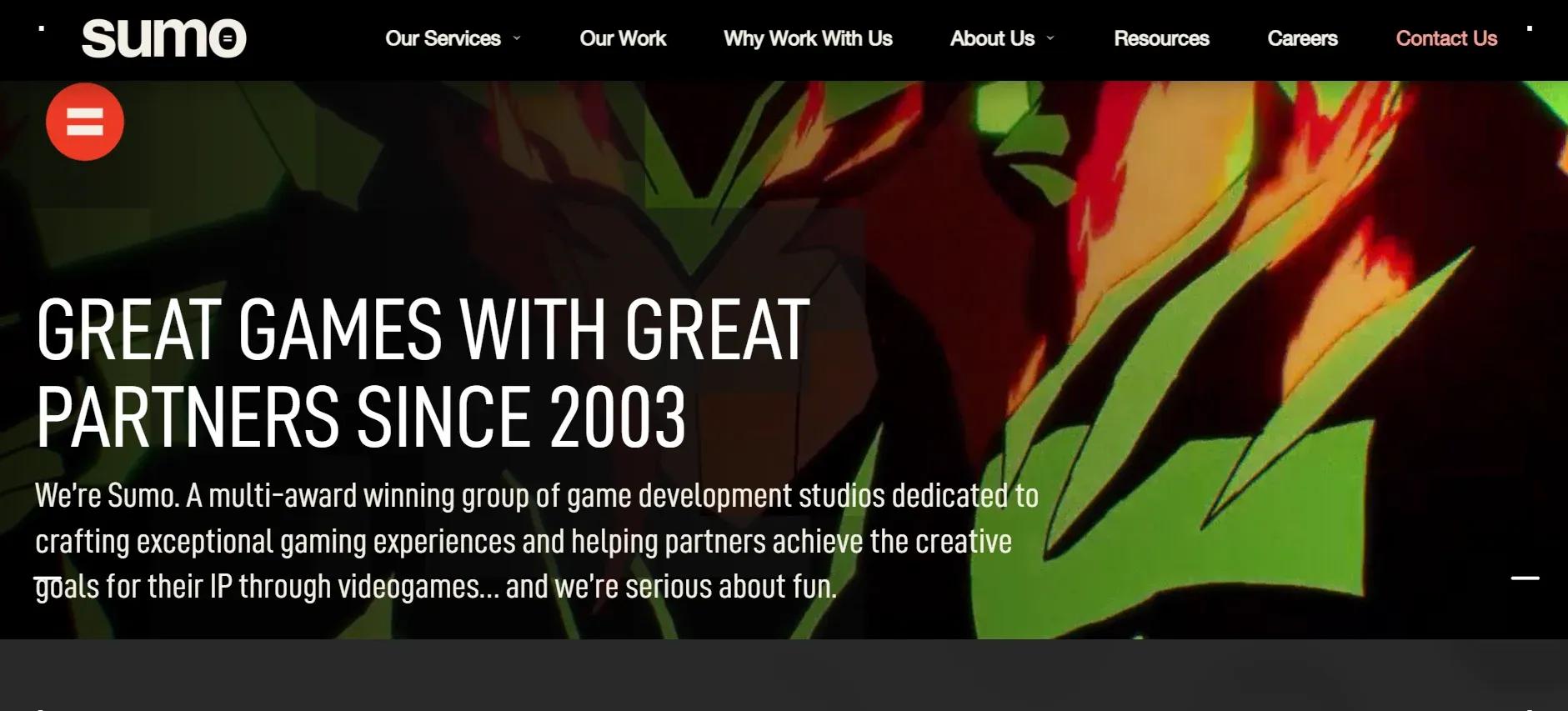
Headquarters: Sheffield, United Kingdom.
Sumo Digital is one of Britain's largest game studios, with a long record of AAA co-development. It brings the game-craft that most token-first shops lack, from world-building to polish. So it suits a fun-first game that later adds a Web3 layer.
Key services: AAA co-development, game production, and design.
Industries: console, PC, and mobile gaming.
Why choose them: genuine, award-winning game-craft at scale. For on-chain features, pair it with a blockchain team or vetted Solidity developers.
6. Studio Gobo
Headquarters: Brighton, United Kingdom.
Studio Gobo is a Brighton studio known for premium co-development on high-profile titles. It focuses on quality, craft, and technical excellence. So it suits UK-built game production where polish matters.
Key services: premium co-development and game production.
Industries: console and PC gaming.
Why choose them: a strong reputation for high-quality delivery. As with Sumo, add a blockchain layer through a specialist partner.
7. Kwalee
Headquarters: Leamington Spa, United Kingdom.
Kwalee is a UK games publisher and developer with huge mobile reach. It excels at hyper-casual and casual titles that find mass audiences. So it suits founders whose Web3 game needs scale and distribution.
Key services: mobile game development and publishing.
Industries: mobile and casual gaming.
Why choose them: proven mass-market reach and publishing muscle. For on-chain mechanics, combine it with dedicated blockchain engineers.
8. Playstack
Headquarters: London, United Kingdom.
Playstack is a London-based games publisher and developer with a growing portfolio of notable titles. It backs games from development through launch and marketing. So it suits teams that want a publisher-backed route to market.
Key services: game publishing, development, and marketing.
Industries: PC, console, and mobile gaming.
Why choose them: publisher support across the whole lifecycle. Pair it with a blockchain specialist for the Web3 layer.
9. StudioKrew
Headquarters: Serves the UK from London, Manchester, and Edinburgh.
StudioKrew builds Play-to-Earn, NFT, and metaverse games on Ethereum, Polygon, and Solana. It markets UK support and understands FCA-adjacent compliance for the British market. So it suits P2E MVPs on a leaner budget.
Key services: P2E games, NFT development, and metaverse.
Industries: Web3 gaming and startups.
Why choose them: strong Web3 focus and multi-chain skill. However, its delivery is based in India, so confirm the working model.
10. Antier Solutions
Headquarters: UK office; India headquarters in Mohali.
Antier Solutions is a Web3 firm with deep tokenomics and blockchain-gaming engineering. It builds cross-chain, play-to-earn ecosystems and NFT assets. So it suits token-heavy Web3 infrastructure projects.
Key services: P2E ecosystems, tokenomics, and smart contracts.
Industries: Web3 gaming and DeFi.
Why choose them: genuine cross-chain and token-economy depth. However, its core delivery sits in India, so weigh the time-zone trade-off.
What Is a Blockchain Game Development Company
A blockchain game development company builds games where players truly own their in-game assets. It uses NFTs, smart contracts, and token economies to do it. It fuses three disciplines that rarely live in one team: game design, blockchain engineering, and tokenomics. The result is a game where items, characters, or land carry real, tradable value.
Crucially, not every action needs to sit on-chain. In a well-built blockchain game, the game plays normally. Blockchain appears only where it adds value, such as ownership or trading. So the best studios know exactly where to use the chain, and where to leave it out.
That judgment is what separates a real studio from a token shop. A team that only understands blockchain ships a clunky game. A team that only understands games ships an unsafe contract. Therefore, the strongest UK partners are fluent in both, and many now fold in machine learning development for smarter worlds.
Blockchain Game Development Services
The best blockchain game development companies handle the whole journey, from a playable prototype to a live token economy. The essential services are game design, smart contract engineering, NFT integration, tokenomics, wallet connection, and marketplace build. Each addresses a different risk in a Web3 game.
Game design and production. Studios craft the world, loop, and feel that make players stay. So the game earns its audience before any token appears.
Smart contract engineering. Developers write and audit the contracts behind ownership and rewards. Therefore, correctness and security lead every decision.
NFT and asset systems. Teams turn items into owned, tradable assets with real utility. As a result, players gain genuine stakes in the game.
Tokenomics design. Economists balance supply, rewards, and sinks to keep the economy stable. Meanwhile, they design against inflation and exploits.
Wallet and marketplace. Engineers connect wallets and build trading venues. So players onboard and transact with minimal friction.
AI and live ops. Many studios add generative AI and AI chatbots for content and support. Consequently, the world keeps growing after launch.
How Much Does Blockchain Game Development Cost in the UK
Blockchain game development in the UK costs vary by scope. A simple NFT game or prototype runs £30,000 to £70,000. A mid-complexity play-to-earn title costs £70,000 to £220,000, while a complex metaverse game exceeds £220,000. London studios sit at the top of these ranges. So treat them as planning brackets, not fixed quotes.
Game type | Typical scope | Estimated cost |
| Simple NFT game or prototype | Core mechanics, one chain | £30,000 – £70,000 |
| Mid-complexity P2E game | Custom art, token economy | £70,000 – £220,000 |
| Complex Web3 or metaverse game | Multi-chain, deep economy | £220,000+ |
Across blockchain game development companies, the heaviest cost drivers are custom art, smart contract audits, and multi-chain support. In addition, live ops and marketplace upkeep recur after launch. For budget-conscious teams, a developer marketplace often costs far less than a full-service London studio. It also keeps the work in your time zone.
How to Choose the Right Blockchain Game Development Company
To choose the right blockchain game development company in the UK, check three things first. Verify where they actually deliver, ask to play a shipped game, and demand a smart contract audit. A genuine UK base, real game-craft, and secure contracts matter more than a slick pitch. So work through these checks before you sign.
Verify the delivery location. Check Companies House and ask where engineers sit. Because many "UK" studios deliver offshore, this is the first filter.
Play a shipped title. Ask for a live, reviewed game, not a token demo. Therefore, you judge fun before finance.
Demand an audit. Request the smart contract audit report and the auditor's name. So you avoid the exploits that drain treasuries.
Check UK compliance. Ask how they handle financial-promotion rules and UK-GDPR. Meanwhile, confirm they know where a lawyer must decide.
Confirm ownership. You should own the game, the contracts, and the assets. Moreover, insist there is no lock-in.
UK Regulation and Compliance for Web3 Games
UK blockchain game development companies face real compliance questions, so British founders must plan for them early. A game token that functions as an investment can fall under FCA financial-promotion rules, and player data sits under UK-GDPR. So compliance belongs in the design, not the launch checklist.
A serious UK partner designs around this from the start. It structures tokens carefully, adds age and identity checks where needed, and documents decisions for counsel. In addition, it treats player-data handling with the same rigor the best generative AI integration teams bring to regulated builds.
Above all, keep legal and technical work in step. A studio should flag where a solicitor must decide, rather than guessing at the rules. Therefore, treat compliance as part of the engineering, not an afterthought.
Tokenomics and NFT Design That Actually Holds
Tokenomics is where blockchain game development companies win or lose, since it decides whether the game survives real players. A balanced economy rewards play without runaway inflation, while a broken one collapses in weeks. So token design deserves as much care as the core loop.
The strongest UK studios model the economy before writing contract code. They plan supply, sinks, rewards, and NFT scarcity, then stress-test the whole system. As a result, the economy holds when thousands of players start trading. NFT design follows the same rule, since assets need genuine utility, not just artwork.
Security and Smart Contract Audits
For blockchain game development companies, security is non-negotiable, because one contract exploit can empty the treasury in a single transaction. Reputable UK studios commission independent smart contract audits before any mainnet launch. So security is built in from the first sprint, never bolted on at the end.
A serious partner layers its defenses. It combines secure coding, third-party audits, and testnet trials before going live. In addition, it plans for upgradeable contracts and a clear incident-response path. Above all, ask for proof, including the audit report and the fixes made. A studio that cannot show one has not earned your treasury.
The Blockchain Game Development Process
The process at blockchain game development companies moves through clear stages, from concept to live economy. Each stage ends in a deliverable, so risk stays visible and the budget stays defensible. Knowing the arc helps you plan timelines with any UK studio.
Discovery and design. The team defines the loop, genre, and economy. So the fun is proven before a contract is written.
Tokenomics modeling. Designers model supply, sinks, and scarcity. Therefore, the economy is stress-tested early.
Prototype and art. Artists and engineers build a playable slice. Meanwhile, the on-chain layer is scoped in parallel.
Contracts and integration. Engineers write, audit, and connect the smart contracts. As a result, security is engineered in.
Launch and live ops. The game ships behind monitoring, with economy tuning ready. Consequently, the team reacts to real players.
How AI Is Reshaping UK Blockchain Games
AI is reshaping UK blockchain game development companies, powering living worlds, smarter NPCs, and faster content pipelines. British studios pair Web3 ownership with AI intelligence, so games feel dynamic rather than scripted. This pairing is one of 2026's defining shifts.
The tools are ready today. Studios use AI agents for autonomous characters and generative AI for art and quests. In addition, AI chatbots handle player support at scale. So one team can build both the economy and the intelligence around it.
How to Hire Blockchain Game Developers in the UK
You can hire blockchain game developers in the UK three ways. The options are a full-service studio, an in-house team, or a vetted marketplace. A UK studio delivers everything but costs the most. An in-house team gives control yet is slow and pricey to build. A marketplace sits between them, so you pay only for the skills you need.
For many teams, the marketplace route wins on cost, speed, and time-zone fit. You hire vetted blockchain developers such as Solidity, Unity, and Unreal engineers. Then you scale up or down as the project moves. So a two-person prototype and a full production team live in one relationship, and you own everything you build.
Whichever route you choose, confirm delivery location, audit practice, and post-launch terms in writing. Because a game is a long-term product, the pricing and support model matter as much as the build.
Why Blockchain Games Fail (and How to Avoid It)
Blockchain game development companies fail most often for two reasons. They chase the token instead of the fun, or ship an unaudited contract. The causes repeat, which means each is avoidable. So learn them before you brief a UK partner.
The game was not fun. A token cannot save weak gameplay. Therefore, validate the core loop before adding blockchain.
The economy collapsed. Poor tokenomics breeds runaway inflation. So model and stress-test the economy early.
The contract was exploited. Unaudited code loses treasuries. Meanwhile, a proper audit would have caught it.
Compliance was ignored. A UK token can trigger FCA rules. As a result, plan compliance from day one.
UK Blockchain Gaming Trends for 2026
The UK blockchain game development companies leading in 2026 share three trends. These are invisible onboarding, fun-first design, and mainstream game-craft entering Web3. Embedded wallets are erasing the crypto learning curve, so British studios can court players who never touch a seed phrase. The category is maturing fast.
Invisible onboarding. Embedded wallets hide the crypto complexity. As a result, players never see a seed phrase.
Fun-first design. The market rewards genuinely fun games. Therefore, play-and-own is replacing pure play-to-earn.
Game-craft leads. UK studios pair heritage with Web3. Meanwhile, production quality rises sharply.
AI-native worlds. Studios weave AI through the game. Consequently, worlds feel alive rather than scripted.
Blockchain Game Genres That Suit the UK Market
The blockchain game genres that suit the UK market best are strategy, card games, sports, and social casual titles. These genres map cleanly to true ownership, since cards, players, and items carry real value. So they fit the play-and-own model British studios build well.
Strategy and RPG. Gear, characters, and progression become owned assets. As a result, ownership deepens long-term play.
Card and collectible games. Cards are natural tradable items. Therefore, scarcity and trading power the economy.
Sports and racing. Players, cars, and kit turn into upgradable assets. Meanwhile, UK studios bring proven sports-game heritage.
Social and casual. Mass-market titles suit British mobile-publishing strength. So Web3 reaches players who never touched crypto.
The strongest UK teams pick a genre that fits their game-craft, then add blockchain only where it helps. Consequently, the game stays fun first and on-chain second.
Frequently Asked Questions
Which are the best blockchain game development companies in the UK?
The best UK blockchain game development companies in 2026 include Pixelette Technologies, PlayFusion, Sumo Digital, and Studio Gobo. Kwalee, Playstack, StudioKrew, and Antier Solutions round out the list. Softaims and Devaims fit teams that want speed and full ownership of the build.
How much does it cost to build a blockchain game in the UK?
A simple NFT game starts around £30,000, and a mid-complexity P2E title runs £70,000 to £220,000. Complex Web3 or metaverse games exceed £220,000. London studios sit at the top of these ranges.
Are most "UK" blockchain game studios really British?
No, and this matters. Many deliver from India, Ukraine, or elsewhere behind a UK address. So always check Companies House and ask where engineers actually sit.
Do UK blockchain games face regulation?
They can. A token that acts as an investment may fall under FCA financial-promotion rules. So plan token classification with a solicitor before launch.
How do I make sure my blockchain game is secure?
Insist on an independent smart contract audit before launch. Ask for the report and the auditor's name. A reputable UK studio treats security as core engineering.
Who owns the game and the smart contracts?
You should own all of it. Confirm ownership of the game, the contracts, and the assets in writing. This avoids vendor lock-in later.
Conclusion
The UK blockchain gaming window is open, and Britain's game-craft is a genuine advantage, if you hire the real thing. The rule is simple: demand fun, security, and compliance in equal measure, and verify where your team actually works. So the right partner ships a game people love, on a contract that holds. And it does so from a base you can hold accountable.
Turn that into action before you sign. First, ask to play a shipped title, not watch a token demo. Next, request the audit report and the auditor's name. Then check delivery location on Companies House, and get code and IP ownership in writing. Finally, start small with a paid prototype, so you test delivery before a large commitment.
That sequence protects your budget, your players, and your treasury from day one. Would you rather skip the studio hunt entirely? Then Softaims matches you with vetted, genuinely UK-based blockchain game developers within 48 hours. To start, browse the developer bench or get in touch.


 GitHub
Marcel R.

 Verified Expert in Engineering
My name is Marcel R. and I have over 13 years of experience in the tech industry. I specialize in the following technologies: Blockchain, Kotlin, Android App Development, Java, C++, etc.. I hold a degree in Other. Some of the notable projects I’ve worked on include: Membership NFT, Crypto Payment System, Pyxis Wallet. I am based in Montevideo, Uruguay. I've successfully completed 3 projects while developing at Softaims.
My passion is building solutions that are not only technically sound but also deliver an exceptional user experience (UX). I constantly advocate for user-centered design principles, ensuring that the final product is intuitive, accessible, and solves real user problems effectively. I bridge the gap between technical possibilities and the overall product vision.
Working within the Softaims team, I contribute by bringing a perspective that integrates business goals with technical constraints, resulting in solutions that are both practical and innovative. I have a strong track record of rapidly prototyping and iterating based on feedback to drive optimal solution fit.
I’m committed to contributing to a positive and collaborative team environment, sharing knowledge, and helping colleagues grow their skills, all while pushing the boundaries of what's possible in solution development.

Leave a Comment
Need help building your team? Let's discuss your project requirements.
Get matched with top-tier developers within 24 hours and start your project with no pressure of long-term commitment.