Top 10 Blockchain Supply Chain Companies in the World (2027)
Blockchain is changing how global supply chains track, verify, and secure goods. This guide breaks down the top 10 blockchain supply chain companies in the world, comparing their platforms and strengths to help you find the right partner.
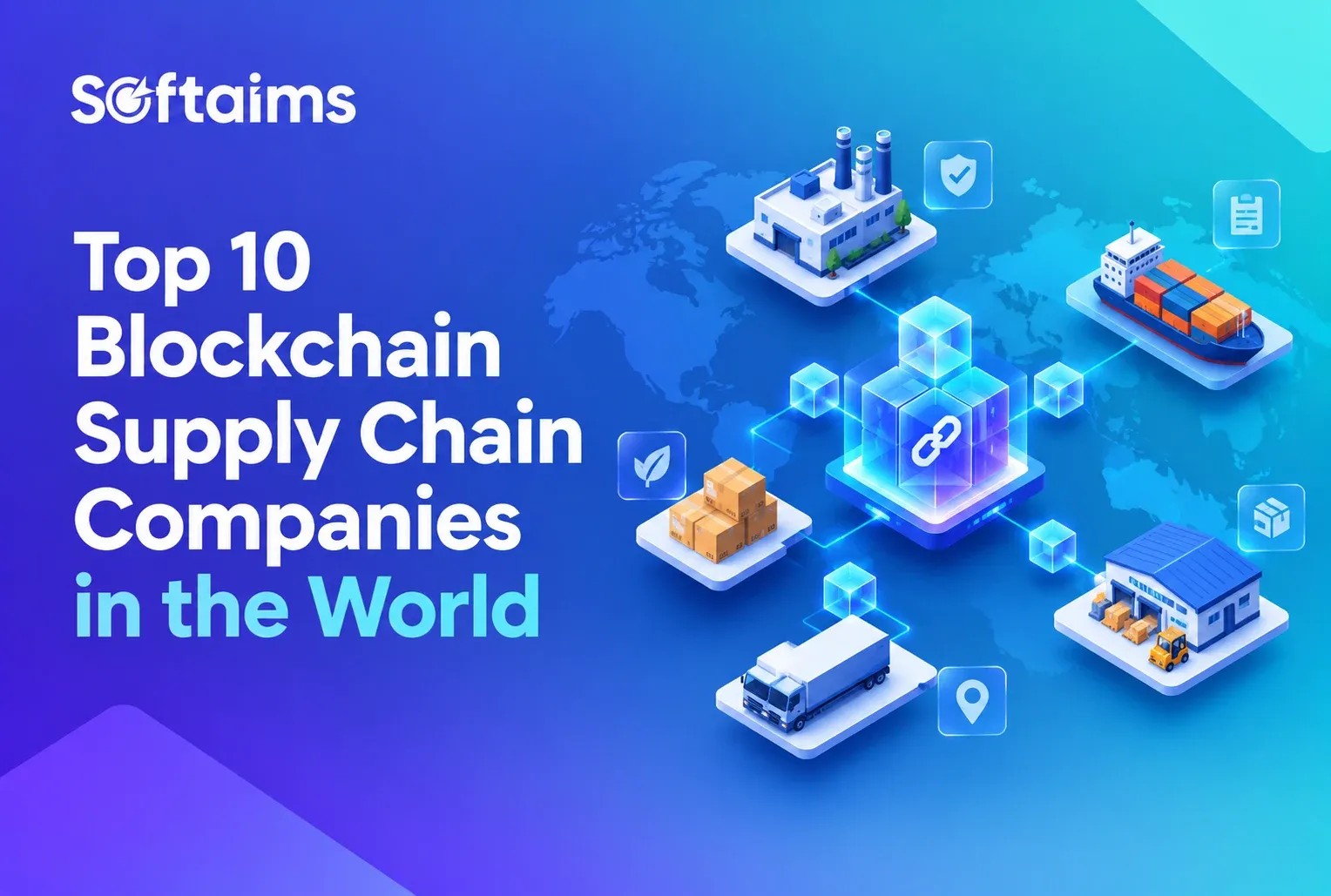
Table of contents
Key Takeaways
- Transparency is mandatory: Global trade regulations now demand immutable provenance tracking from raw material sourcing all the way to consumer delivery.
- Platform plus talent: Powerful blockchain frameworks still need experienced engineers to connect smart contracts with real, physical supply chain workflows.
- Automation drives efficiency: Pairing IoT hardware with smart contracts automates customs filings, compliance checks, and cross-border settlements.
- Talent acceleration: On-demand developer benches like Softaims let enterprises deploy custom blockchain applications fast, without the lengthy hiring cycles.
Supply chains break in the gaps. Data sits in silos, paperwork piles up, and no one shares a single source of truth. Blockchain fixes that gap. It gives every party one shared, tamper-proof ledger, so goods, payments, and records move with real visibility.
Demand is climbing fast, too. The blockchain supply chain market is set to grow from about $3.27 billion in 2025 to $5.23 billion in 2026, driven by traceability and anti-counterfeit needs. On top of that, 60% of companies now invest in supply chain technology mainly to drive growth. So the right build partner matters.
This guide covers the top 10 blockchain supply chain solutions companies in the world for 2026. These are development-focused firms, not vague product vendors. You'll see what each one does and who it suits. After the list, we also cover the cost to hire blockchain engineers and the red flags to watch in interviews. Read it once, and you'll have a clear path to choosing well.
What Is a Blockchain Supply Chain Solution
A blockchain supply chain solution is software that records every supply chain event on a shared, tamper-proof ledger. Each step production, shipping, storage, sale becomes a permanent entry. Every approved party sees the same data at the same time.
The result is one source of truth. No party can quietly edit a record, so trust rises and disputes fall. In short, it replaces scattered spreadsheets and emails with a single, verifiable trail.
Most blockchain supply chain solutions combine a few core parts. These are a distributed ledger, smart contracts, and often IoT sensors. Together, they capture data, enforce rules, and share updates in real time.
How Blockchain Works in a Supply Chain
The idea is simple, even if the tech sounds complex. Each transaction is grouped into a "block," then linked to the block before it. That chain of blocks is copied across many computers, so there's no single point of failure.
When a product moves, a new record is added. Smart contracts can then trigger actions automatically, like releasing a payment once goods arrive. IoT devices, such as RFID tags or temperature sensors, feed live data straight to the ledger.
Because every change is logged and visible, fraud gets harder. A counterfeit item, for example, won't match the chain's history. So buyers can verify provenance in seconds, not weeks.
Key Benefits of Blockchain in Supply Chain
Blockchain supply chain solutions deliver value in a few clear ways. Each benefit ties back to trust, speed, or cost.
- Traceability. You can trace any item back to its source, step by step. This helps with recalls, audits, and provenance.
- Transparency. Every approved party sees the same records. So disputes drop and coordination improves.
- Fraud reduction. Tamper-proof records make counterfeiting and paperwork fraud far harder.
- Efficiency. Smart contracts automate manual steps, which cuts delays and admin cost.
- Compliance. A permanent audit trail makes regulatory reporting simpler and faster.
The payoff is real, too. Industry data links blockchain adoption to lower admin costs and faster processing across many supply chains.
Common Use Cases by Industry
Blockchain supply chain solutions aren't one-size-fits-all. Different industries use them for different goals. Here are the most common patterns.
Industry | Common Use Case | Main Benefit |
| Food & agriculture | Farm-to-shelf traceability | Faster recalls, food safety |
| Pharmaceuticals | Drug provenance and anti-counterfeit | Patient safety, compliance |
| Luxury & retail | Authenticity verification | Anti-counterfeit, brand trust |
| Logistics & freight | Shipment tracking and proof of delivery | Fewer disputes, real-time visibility |
| Manufacturing | Component and parts tracking | Quality control, fewer defects |
| Finance & trade | Payment and settlement automation | Faster payments, less paperwork |
These patterns show why demand keeps rising. Wherever many parties share one process, a blockchain supply chain solution can cut friction.
How We Selected These Companies
We didn't rank these firms at random. The blockchain supply chain solutions companies here each earned a place against a clear set of checks. That keeps the list useful rather than promotional. It's a subjective list, however, so treat it as a starting point.
Here's what we looked at:
- Real blockchain delivery. Every company builds working blockchain systems, not just slide decks or advisory notes.
- Supply chain focus. We prioritised firms with proven traceability, provenance, or logistics work.
- Technical depth. We looked for strong smart contract skills and experience with Ethereum, Hyperledger, and similar platforms.
- Track record. Client history, case studies, and years in business all counted.
- Delivery model. Flexible hiring, dedicated teams, and clear support all added weight.
No single firm wins on every measure, though. So each entry ends with a "Best for" line to help you match the company to your project.
Quick Comparison of the Top 10 Blockchain Supply Chain Companies
Before we get into the detail, here's a side-by-side look at how the top 10 blockchain supply chain companies compare on base location, core strength, and ideal use case. Some lead on enterprise-scale ledgers, others on traceability, mobile delivery, or access to vetted blockchain developers. Use this comparison table to shortlist the providers that fit your project, then read the full breakdown below.
# | Company | Base | Core Strength | Best For |
| 1 | Softaims | Global / offshore | Vetted talent, 48-hour matching | Senior blockchain talent, fast and affordable |
| 2 | Devaims | Softaims-owned | Blockchain + mobile apps | Tracking apps with mobile delivery |
| 3 | LeewayHertz | San Francisco | Blockchain + AI + IoT | Combined tech supply chain builds |
| 4 | PixelPlex | New York | Enterprise ledgers | Modernising legacy supply chains |
| 5 | SoluLab | Los Angeles | Multi-chain builds | Multi-network flexibility |
| 6 | ScienceSoft | Texas, US | Integrated IT + blockchain | Blockchain inside existing systems |
| 7 | Antier Solutions | Mohali, India | Enterprise scale | Large, compliance-heavy programmes |
| 8 | OpenXcell | Ahmedabad, India | Dedicated SCM practice | Blockchain plus wider development |
| 9 | Debut Infotech | US / UK / India | Provenance and traceability | Fair-trade and transparency projects |
| 10 | Systango | London, UK | Certified, secure delivery | UK-based, ISO-certified builds |
Top 10 Blockchain Supply Chain Companies in the World
The companies on our list of the top 10 blockchain supply chain companies were selected for their proven ability to deliver production-ready solutions, not just proofs of concept. We evaluated each on technical depth, industry focus, delivery model, and how effectively they connect smart contracts to physical logistics workflows. Here's how they compare, starting with the best option for fast, senior talent.
1. Softaims
Softaims leads our list of blockchain supply chain solutions companies for one clear reason. It pairs deep blockchain development skill with fast access to vetted talent. You reach the top 3% of pre-screened engineers, matched to your project within 48 hours.
The team builds end-to-end supply chain management systems on the blockchain. That includes smart contracts, product traceability, and tamper-proof audit trails. It also covers supply chain logistics tracking and supply chain optimization for leaner operations.
You can hire dedicated developers for long builds, or bring in freelance software engineers for a fixed scope. Softaims works across both front-end and back-end, so you get full-stack delivery under one roof. As a result, you gain senior blockchain skill at a fraction of a local hire's cost.
Key highlights:
- Top 3% vetted blockchain engineers, matched within 48 hours
- Full blockchain architecture and smart contract design
- Traceability, provenance, and audit-trail systems
- Support for tokenization and asset digitisation
- Dedicated, part-time, and project-based hiring models
Best for: Teams that want senior blockchain supply chain talent fast, and at offshore rates.
2. Devaims
Devaims is a product-focused development firm known for mobile and custom software. Its engineers build blockchain-enabled apps that track goods, verify records, and connect logistics tools. The focus stays on clean architecture and reliable performance.
In August 2026, Softaims acquired Devaims. So Devaims clients now tap the same vetted talent network and 48-hour matching. The two teams share delivery standards. That means one partner can handle mobile app development and wider software development for your supply chain build.
Key highlights:
- Strong track record in mobile and full-stack work
- Blockchain-enabled tracking and verification apps
- Now backed by Softaims' vetted global talent
- Combined mobile, web, and back-end delivery
Best for: Teams that want blockchain and mobile app development handled together.
3. LeewayHertz
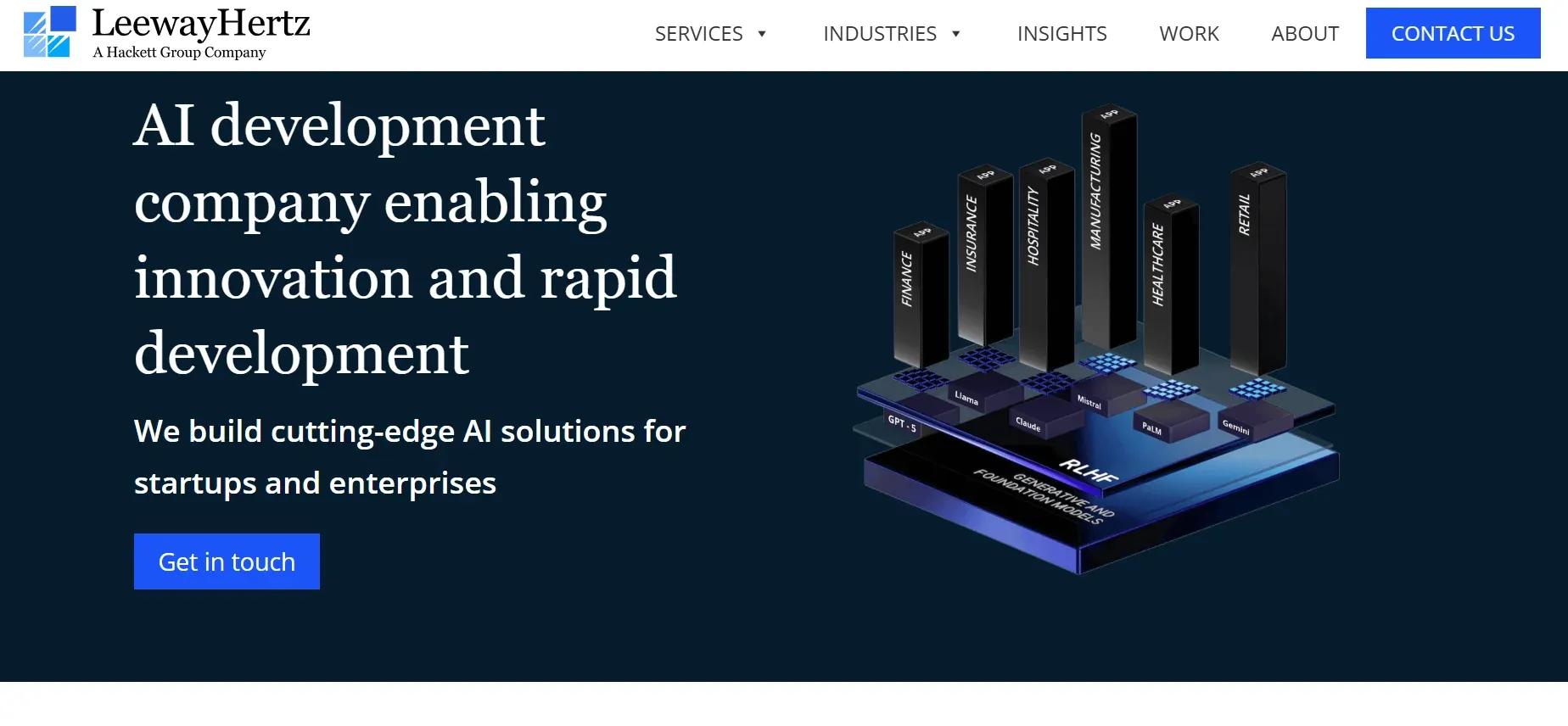
LeewayHertz is one of the longest-running blockchain supply chain solutions companies on this list. This San Francisco-based firm was founded in 2007. It works at the intersection of blockchain, AI, and IoT. That mix suits supply chains, where sensors and ledgers often work side by side.
Its supply chain credentials are real. The team built TraceRx, a drug traceability network that tracks medicines across the supply chain. It has also run a tracker that follows 10M+ items across 100+ suppliers. LeewayHertz works with Hyperledger, Ethereum, and Corda, and it has served clients like Walmart Labs and P&G.
Key highlights:
- Blockchain, AI, and IoT under one team
- Proven traceability work (TraceRx, freight tracking)
- Hyperledger, Ethereum, and Corda expertise
- Enterprise clients across manufacturing and logistics
Best for: Enterprises that want blockchain, AI, and IoT combined in one supply chain build.
4. PixelPlex
PixelPlex is a New York-based blockchain consulting and development firm. It builds custom blockchain solutions, from architecture design to smart contracts and dApps. Its work spans enterprise ledgers, tokenization, and cross-chain systems.
The team has strong technical depth, with clients that include BMW and Oracle. It also focuses on secure, audit-ready builds. Unlike some blockchain supply chain companies, however, PixelPlex leans hard into custom architecture rather than templates. For supply chains, it helps replace slow, manual workflows with connected, on-chain records. So it suits businesses modernising an older supply chain setup.
Key highlights:
- Custom blockchain architecture and smart contracts
- Enterprise ledgers and tokenization
- Ethereum, Hyperledger, and cross-chain builds
- Security-first, audit-ready delivery
Best for: Enterprises rewiring a legacy supply chain into connected, on-chain workflows.
5. SoluLab
SoluLab is one of the more multi-chain-focused blockchain supply chain companies here. This Los Angeles-based firm was founded in 2014. It focuses on enterprise Web3, DeFi, and tokenization work. Its team includes blockchain engineers, UX experts, and smart contract auditors.
For supply chains, SoluLab builds traceability and data-sharing systems that keep every party in sync. It works across Ethereum, Solana, Polygon, and Hyperledger. It also serves finance, healthcare, and retail, so it brings cross-industry experience. Its multi-chain range helps when a project can't sit on a single network.
Key highlights:
- Enterprise Web3 and tokenization builds
- Multi-chain: Ethereum, Solana, Polygon, Hyperledger
- Smart contract development and auditing
- Fast delivery for startups and enterprises
Best for: Businesses that need multi-chain flexibility and in-house smart contract auditing.
6. ScienceSoft
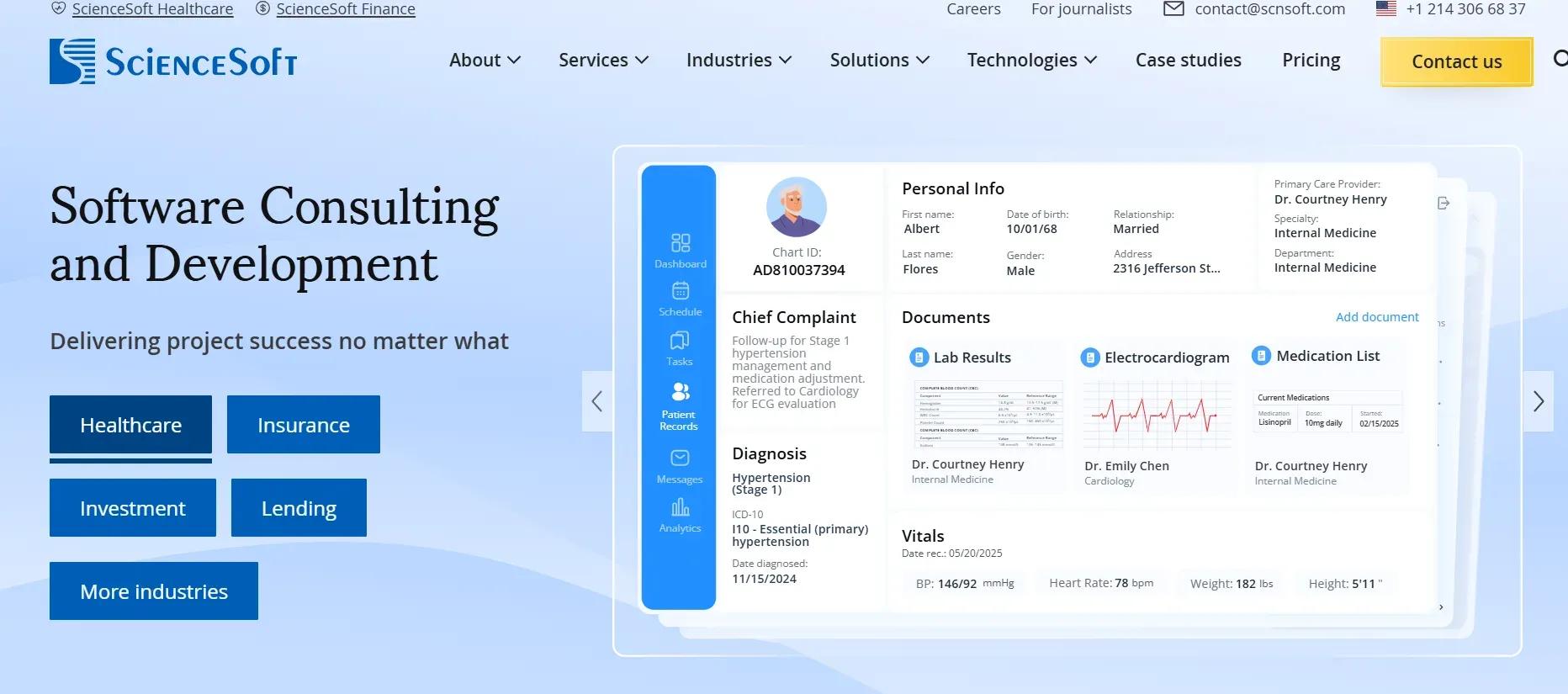
ScienceSoft is an established IT consulting and software development firm, based in McKinney, Texas. Blockchain sits within its wider technology portfolio. So it fits businesses that want blockchain woven into existing systems, not bolted on.
Its blockchain services cover enterprise development, smart contracts, and distributed ledger technology. It also handles cloud integration, which matters for supply chains that run on mixed infrastructure. ScienceSoft suits organisations weighing blockchain against other options, since it can advise across the whole stack.
Key highlights:
- Enterprise blockchain within a full IT portfolio
- Smart contracts and distributed ledger work
- Strong cloud integration skills
- Advisory depth across the wider tech stack
Best for: Enterprises integrating blockchain into current business processes and infrastructure.
7. Antier Solutions
Antier Solutions ranks among the largest blockchain supply chain solutions companies by team size. This enterprise blockchain engineering firm is headquartered in Mohali, India, with offices in the UK, US, UAE, and Canada. Founded by Vikram R. Singh, it runs a team of 700+ specialists and has delivered 1,000+ projects.
Its focus is secure, verifiable, institutional-grade systems. Supply chain is one of the industries it serves, alongside finance and government. Antier also brings deep tokenization and DeFi experience. So it suits large, compliance-heavy programmes that need scale and rigour.
Key highlights:
- Enterprise blockchain engineering at scale
- 700+ specialists and 1,000+ delivered projects
- Global offices across four regions
- Strong in tokenization and verifiable workflows
Best for: Large enterprises and public bodies that need scale, security, and compliance.
8. OpenXcell
OpenXcell is a software development company founded in 2009, with a development centre in Ahmedabad, India, and offices in the US, UK, Canada, and Australia. Its 500+ experts cover web, mobile, AI, and blockchain.
The firm runs a dedicated blockchain supply chain practice built to solve common SCM roadblocks. That includes traceability, transparency, and secure data exchange between partners. Among blockchain supply chain solutions companies, OpenXcell stands out for pairing that work with broader web and mobile support. So it works well as a single, long-term development partner.
Key highlights:
- Dedicated blockchain supply chain (SCM) practice
- 500+ experts across web, mobile, AI, and blockchain
- Global offices with an offshore delivery model
- Traceability and secure partner data exchange
Best for: Businesses wanting blockchain supply chain work plus wider development in one place.
9. Debut Infotech
Debut Infotech is an AI-augmented blockchain and software development company founded in 2011. It runs delivery centres across the US, UK, Canada, and India, with 200+ technical experts. Its work spans financial services, healthcare, and supply chain.
Its supply chain proof is concrete. Debut Infotech built iFinca, a platform that improves traceability across the coffee supply chain and connects farmers directly with buyers for fair pricing. That kind of provenance work sits at the heart of blockchain supply chain solutions. So the firm suits projects where transparency and fair-trade tracking matter.
Key highlights:
- AI-augmented blockchain development
- Proven provenance work (iFinca coffee supply chain)
- Delivery centres across four regions
- Enterprise-grade, production-ready builds
Best for: Businesses focused on provenance, traceability, and fair-trade tracking.
10. Systango
Systango is a London-based digital engineering company founded in 2007, led by CEO Vinita Rathi. It employs 300+ professionals and holds ISO 27001 certification. Its services cover blockchain, AI, and cloud.
The firm builds smart contracts, dApps, and blockchain analytics tools. It also works with logistics clients, which fits supply chain traceability needs. Systango has served brands like Porsche and Deloitte, and it operates on UK public-sector frameworks. So it suits businesses that value security certification and a UK base.
Key highlights:
- Blockchain, AI, and cloud engineering
- Smart contracts, dApps, and analytics
- ISO 27001 certified, UK-based
- Notable clients including Porsche and Deloitte
Best for: UK-focused businesses that want certified, secure blockchain delivery.
Key Features to Look For in a Blockchain Supply Chain Solution
Not every build is equal. Strong blockchain supply chain solutions share a set of core features. Keep these in mind when you compare partners.
- Smart contract support. Automated rules cut manual work and speed up payments or approvals.
- IoT integration. Live sensor data, location, temperature, RFID; keeps records accurate.
- Interoperability. The system should connect with your ERP, and ideally with other chains.
- Permissioning. Private or permissioned access protects sensitive supplier data.
- Scalability. The platform must handle rising transaction volume without slowing down.
- Documentation and support. Good docs and ongoing support protect you after launch.
A partner who covers these features will save you rework later. So weigh them early, before you sign.
Blockchain Platforms for Supply Chains
The platform you pick shapes cost, privacy, and speed. Most blockchain supply chain solutions run on one of a few main options. Here's a quick comparison.
Platform | Type | Best For |
| Hyperledger Fabric | Private / permissioned | Enterprise chains with trusted partners |
| Ethereum | Public | Public verification and tokenization |
| Polygon | Public (layer 2) | Low-cost, high-volume transactions |
| Corda | Permissioned | Finance and regulated trade |
| Solana | Public | High-speed, high-throughput builds |
There's no single "best" choice, though. Hyperledger suits closed networks of known parties. Ethereum and Polygon suit builds that need public proof or tokens. A good partner will match the platform to your privacy needs and budget.
Challenges and Limitations to Consider
Blockchain isn't a fix for everything. It helps to know the trade-offs before you commit. That way, you set realistic goals.
First, integration takes work. Connecting a ledger to legacy ERP systems can be complex and costly. Second, scalability can be a hurdle, since some public chains slow down under heavy load.
Adoption is another factor. A blockchain supply chain solution only works if partners join and share data. So buy-in across your network matters as much as the tech. Regulation adds a final layer, since rules around data and digital assets keep shifting. A strong partner will plan for these limits, though, not gloss over them.
How to Choose the Right Blockchain Supply Chain Partner
Picking a partner is a structured decision, not a guess. Follow these steps to narrow the field.
- Define the goal. Pin down the problem first, traceability, payments, or anti-counterfeit.
- Check supply chain proof. Look for real case studies, not just general blockchain work.
- Review platform skills. Confirm depth in Hyperledger, Ethereum, or the chain you need.
- Assess integration ability. Ask how they'll connect the build to your existing systems.
- Weigh the model. Decide between a dedicated team, a fixed project, or vetted talent.
- Compare cost and speed. Balance rates against time-to-hire and delivery timelines.
Work through these in order, and the right fit becomes clear. In practice, the best blockchain supply chain solutions companies welcome these questions rather than dodge them.
How a Blockchain Supply Chain Project Works, Step by Step
Most builds follow a similar path. Knowing the stages helps you plan time and budget.
- Discovery. The team maps your process, data, and goals.
- Proof of concept. A small build tests the idea before you invest further.
- Design. Architects choose the platform, data model, and smart contract logic.
- Development. Engineers build the ledger, contracts, and integrations.
- Testing. The build is checked for security, performance, and accuracy.
- Deployment and support. The system goes live, with ongoing maintenance.
Each stage builds on the last. So a clear discovery phase pays off across the whole project.
How Much Does It Cost to Hire Blockchain Engineers in 2026?
Most blockchain supply chain solutions companies price their work around engineer salaries. So knowing those salaries helps you budget and plan. Rates vary a lot by country, though, which means it pays to compare. Here's a salary breakdown for blockchain engineers in 2026 across major markets.
Country | Average Salary (USD) |
| United States | $150,000 – $200,000 |
| United Kingdom | $120,000 – $160,000 |
| Canada | $110,000 – $150,000 |
| Australia | $130,000 – $170,000 |
| Germany | $140,000 – $180,000 |
| Switzerland | $160,000 – $210,000 |
| India | $30,000 – $50,000 |
| Singapore | $140,000 – $190,000 |
| Israel | $140,000 – $190,000 |
| Japan | $130,000 – $170,000 |
Source: PayScale
The gap between markets is wide. A senior engineer in the US or Switzerland can cost four to five times more than one in India. Skill level and project scope shift the figure too. Complex traceability systems, for example, need deeper expertise and cost more.
Teams that hire blockchain developers through Softaims reach vetted talent well below US rates. Developers are matched within 48 hours, so you save both time and budget. You also skip the benefits and overhead that come with a full-time local hire.
Red Flags to Watch For in Blockchain Engineer Interviews
Spotting warning signs early saves you a costly hire. One major red flag is a weak grasp of blockchain fundamentals. If a candidate can't explain consensus mechanisms, or the difference between public and private blockchains, the depth may not be there.
Another concern is heavy reliance on pre-built tools with no ability to customise or debug. Blockchain work throws up unusual problems, so problem-solving skills matter. A candidate who can't adapt a solution may struggle when a build goes off-script.
Communication is just as important, though. If someone can't explain their work clearly, or can't translate technical points for non-technical stakeholders, collaboration suffers. Clear communication keeps projects on track, and MindTools offers useful guidance here.
Finally, watch for a lack of curiosity. Blockchain moves fast, so a good engineer keeps learning. A candidate with no interest in recent developments may fall behind. To gauge how current someone is, ask what they've followed lately on sites like TechCrunch.
Trends Shaping Blockchain Supply Chains in 2026
The field keeps moving, so it helps to know what's next. A few trends stand out this year.
AI and blockchain are converging fast. Together, they add predictive analytics on top of trusted data. So supply chains can forecast risk, not just record it.
Tokenization of real-world assets is also growing. It lets businesses represent goods, invoices, or documents as digital tokens. Sustainability tracking is rising too, as firms use blockchain to prove ethical and green sourcing. These trends push blockchain supply chain solutions from pilots into full production.
Frequently Asked Questions
What do blockchain supply chain solutions companies do?
They design and build blockchain systems that track goods, records, and payments across a supply chain. This includes smart contracts, traceability tools, and shared ledgers that every partner can trust. Many also handle integration with existing systems, plus ongoing support. In short, they turn a fragmented supply chain into one connected, transparent network.
How much does it cost to build a blockchain supply chain solution?
Cost depends on scope, complexity, and where your team is based. A simple traceability pilot costs far less than a full multi-party network. Engineer rates also vary widely, from $30,000 a year in India to over $200,000 in the US. Offshore and vetted-talent models, though, can cut costs sharply without lowering quality.
Which blockchain platforms are best for supply chains?
Hyperledger Fabric is a common choice for private, enterprise supply chains, since it limits access to trusted parties. Ethereum and Polygon suit builds that need public verification or tokenization. The right pick depends on your privacy needs, partner count, and budget. A strong development partner will help you weigh these trade-offs.
Should I hire an agency or in-house blockchain engineers?
It depends on your timeline and workload. In-house engineers suit steady, long-term work and deep system knowledge. An agency or vetted-talent model suits fixed projects or fast scaling. Many teams blend both, using dedicated hires for core work and freelance software engineers for peaks.
Is blockchain secure enough for supply chains?
Yes, when built well. A blockchain ledger is tamper-proof, since records can't be quietly changed. Permissioned chains also limit access to trusted parties only. Still, security depends on solid smart contract design and testing. So work with a partner that audits its own code.
How long does it take to build a blockchain supply chain solution?
A basic pilot can take a few weeks. A full, multi-party network takes several months. Timelines depend on scope, platform, and how many partners join. A clear discovery phase, though, keeps the schedule realistic.
Conclusion
Blockchain does more than record transactions. In a supply chain, it builds trust, cuts fraud, and gives every party the same clear view. The blockchain supply chain solutions companies above show how broad the field has become, from global enterprises to focused specialists.
No single firm wins on every measure, however. So match your choice to three things: project scope, budget, and platform needs. If you want senior blockchain talent fast, and at offshore rates, Softaims can match you within 48 hours. You can also explore its work on blockchain, NFT, and cryptocurrency builds for wider context.
Ready to start? Write a clear brief, then choose the partner that fits your goals. Have a question about your supply chain build? Reach out, and let's talk it through.


 GitHub
cyrus n.

 Verified Expert in Engineering
My name is cyrus n. and I have over 10 years of experience in the tech industry. I specialize in the following technologies: Smart Contract, Blockchain Platform, Blockchain Security, Blockchain Development, Ethereum, etc.. I hold a degree in Master of Business Administration (MBA). Some of the notable projects I've worked on include: Cashino – DEX With 100% Fee Rewards, Wake NFT – Multi-Chain NFT Marketplace with Wallet Integration, Moola – Decentralized Dice Game on EVM Networks, Ocean NFT Market, Decentralized Portfolio Manager, etc.. I am based in Brussels, Belgium. I've successfully completed 11 projects while developing at Softaims.
Information integrity and application security are my highest priorities in development. I implement robust validation, encryption, and authorization mechanisms to protect sensitive data and ensure compliance. I am experienced in identifying and mitigating common security vulnerabilities in both new and existing applications.
My work methodology involves rigorous testing—at the unit, integration, and security levels—to guarantee the stability and trustworthiness of the solutions I build. At Softaims, this dedication to security forms the basis for client trust and platform reliability.
I consistently monitor and improve system performance, utilizing metrics to drive optimization efforts. I'm motivated by the challenge of creating ultra-reliable systems that safeguard client assets and user data.

Leave a Comment
Need help building your team? Let's discuss your project requirements.
Get matched with top-tier developers within 24 hours and start your project with no pressure of long-term commitment.