10 Best Product Design Companies in the USA in 2027
In this guide we compared the best product design companies in the USA, covering UX vs. product design, US pricing, legal checks, and how to choose.
Technically reviewed by:
Rich M.|Harsumeet S.
Table of contents
Key Takeaways
- Match Medium & Scope to Your Product: Separate UX specialists, industrial/hardware studios (such as IDEO, Smart Design, fuseproject, Bresslergroup, and Whipsaw), and end-to-end design-and-build partners (such as Softaims, Devaims, and Ramotion) based on whether you need digital interfaces, hardware, or shipped software.
- Avoid Handoff Friction: Pairing design and engineering under one accountable team prevents delays, rework, and misalignment between separate design studios and build shops.
- Budget by Deliverable & Billing Model: Indicative US pricing runs roughly $5,000–$15,000 for a UX/UI audit, $10,000–$30,000 for a digital prototype, $25,000–$75,000 for an MVP design, and $100,000+ for physical electronics development with hourly rates typically $100–$250/hr and retainers around $5,000–$15,000/month.
- Verify US Legal & Regulatory Requirements: Secure a written copyright assignment or work-made-for-hire agreement, address state privacy rules (such as CCPA/CPRA), design for accessibility (WCAG 2.2 AA, ADA, Section 508), and check applicable hardware rules (CPSC, FCC, UL, FDA).
- Vet Beyond the Portfolio: Inspect shipped case studies, confirm the exact specialists assigned to your project, clarify revision and change-order terms, and ask references how past issues were resolved.
Most products do not fail because the idea was weak. They fail because people cannot work out how to use them, or lose trust somewhere along the way. That is a design problem, and in a market as crowded as the US, it often decides whether a product grows or quietly bleeds users. The numbers back it up: McKinsey found that the top design performers outpaced their peers on revenue growth by 32% over five years, and every usability flaw that reaches production costs far more to fix than it would have on a whiteboard.
So the firm you hire is a strategic call, not a cosmetic one. These companies do not all do the same job. Some obsess over the pixels of a digital interface, some shape physical objects and how they get manufactured, and a smaller group handles both the design and the engineering to ship it. Choose the wrong type for your problem and the bill arrives later, as rework, slipped timelines, and a product that never quite clicks.
This is a look at the best product design companies in the USA, what each one is best at, what US product design actually costs, the legal points to check before you sign, and a clear way to compare them. Whether you need a quick usability fix or a product taken from idea to launch, there is a fit here for you.
What product design companies actually do
"Product design" covers more ground than most people expect, which is exactly why briefs go sideways. Two distinctions clear most of the fog.
The first is UX versus product design. UX is the usability layer: how someone moves through the product, how many taps a task takes, and where they get stuck. Product design sits above that and asks the harder questions, like which problems are worth solving and whether the solution pays off for the business. Reworking a checkout screen is UX work. Deciding whether the checkout should support split payments at all is product work.
The second is what the firm actually makes. Some shops live entirely in software, designing apps and SaaS tools. Some work in the physical world, from consumer gadgets to clinical devices. A third group designs and engineers, so you leave with something buildable rather than just beautiful. Work out which of these you need before you open a single portfolio.
Which service you actually need
You rarely need every stage at once. Use the table below to find the pieces that fit your situation.
Service | When your business needs it |
| User research | You are guessing at what customers want instead of knowing it. |
| Concept development | The problem is clear, but the shape of the solution is not. |
| Prototyping | You need to put a working mockup in front of people, not a description. |
| Usability testing | Users keep tripping on the same tasks, or a new feature is unproven. |
| Design systems | Multiple hands touch the product and the UI is drifting out of sync. |
| Development or manufacturing prep | An engineering or factory team needs clean specs to build from. |
How we chose these companies
A good-looking portfolio is table stakes, not proof. Plenty of firms can show a gorgeous mockup that never shipped. So we ranked the best product design companies in the USA on what they can actually deliver: the discipline each one truly specializes in, the product stage they fit, the seniority of the team, their US rates, and the industries where they have a real track record, from SaaS and fintech to consumer hardware and medical devices.
One caveat: rates, headcounts, and focus shift over time, so use the numbers here as a starting point and confirm the specifics directly before you sign anything.
Best product design companies in the USA compared
The table below compares all ten firms at a glance: their main focus, headquarters, indicative US rate, and who each is best for. Softaims and Devaims lead as our recommended picks for teams that want design and build together, followed by established US design firms. Use the Best for column to find firms that have done work like yours.
# | Company | Core focus | US HQ | Rate | Best for |
| 1 | Softaims | Product and UX/UI design plus full development | Austin, TX | Competitive | Designing and building a product with one vetted team |
| 2 | Devaims | Product design and app development | US-based | Fixed-price | Turning a design into a shipped web or mobile app |
| 3 | IDEO | Design and innovation, digital and physical | Palo Alto, CA | Premium | Ambitious, research-led innovation programs |
| 4 | Smart Design | Product design, digital and physical | New York, NY | Premium | Connected products and brand-led experiences |
| 5 | fuseproject | Industrial design and branding | San Francisco, CA | Premium | Standout physical products and hardware |
| 6 | Ramotion | Digital product design and development | San Francisco, CA | $100–$149/hr | SaaS product UX, brand, and front-end build |
| 7 | Fantasy | Digital product and UX design | New York, NY | Premium | Large-scale digital product experiences |
| 8 | Clay | UX/UI and digital product design | San Francisco, CA | $150–$199/hr | High-end web and product interfaces |
| 9 | Bresslergroup | Product design and engineering | Philadelphia, PA | Premium | Physical products that need design and engineering |
| 10 | Whipsaw | Industrial design and engineering | San Jose, CA | Premium | Hardware from concept to production |
The 10 best product design companies in the USA
Below are the ten firms we recommend, starting with our top two picks, then established US firms. For each, you will find who it is best for, what it does, and an honest note. Read every profile against your own product and stage.
1. Softaims
Best for: teams that want one vetted remote team to design the product and build it, instead of two vendors to coordinate.
Softaims is our top pick for a simple reason: design is only half the job. A beautiful prototype that no one can build is wasted effort, and the costliest delays usually happen when work is handed from a design agency to a separate development shop. Softaims removes that seam. Based in Austin, Texas, it pairs product and UX/UI design with full software and app development, delivered by vetted remote talent as staff augmentation or a dedicated team. One team owns the work from research and interface design and prototyping through to a shipped product.
Why teams choose Softaims:
- One team, one line of accountability. Design, UX, and the build sit with the same people, so nothing gets lost in a handoff.
- Senior remote designers and engineers for less than a top US studio charges, with transparent pricing.
- Scale to fit: plug specialists into your team, or let a dedicated squad own the product end to end.
- Research, UI design, and design systems taken all the way through to production code.
- Talent sourced globally to match your stack and budget, working in your US time zone.
If you want a product designed and actually shipped by the same team, talk to our team and get matched with vetted talent within 48 hours.
Why hire them: Choose Softaims when you want design and engineering under one roof, full ownership of the output, and a bill well below a top agency plus a separate dev shop.
2. Devaims
Best for: turning a product design into a working web or mobile app, at a fixed price.
Devaims, now a Softaims company, builds custom software and mobile and web apps with UI/UX, on a fixed-price model with built-in QA and post-launch support. When your design needs to become a real product, Devaims ships it, while the wider Softaims team covers deeper platform and engineering needs. Its stated strengths are on-time delivery, transparent pricing, and direct communication with the development team.
Why hire them: Go with Devaims when you have a design, or need one, and want it turned into a working app on a fixed, predictable budget.
3. IDEO
Best for: ambitious, research-led innovation programs.
IDEO, based in Palo Alto with studios across the US, is the firm that helped popularize human-centered design. It works across digital and physical products, services, and organizational change, with deep user research and a strong record of turning open-ended problems into tested concepts. It suits large organizations and well-funded teams tackling a big, ambiguous challenge rather than a narrow fix.
Key services: design research, product and service design, innovation strategy.
Keep in mind: its scope and reputation come at premium rates, so it is more than a small, defined project needs.
4. Smart Design
Best for: connected products and brand-led experiences.
Smart Design, headquartered in New York, is a long-established firm that spans industrial design, digital product design, and brand. It is known for consumer products that are easy and pleasant to use, and for connecting hardware and software into a single experience. It suits companies launching or refreshing connected products where physical and digital have to work as one.
Key services: industrial design, digital product design, brand and strategy.
Keep in mind: its breadth suits larger product initiatives more than a quick UX audit.
5. fuseproject
Best for: standout physical products and hardware.
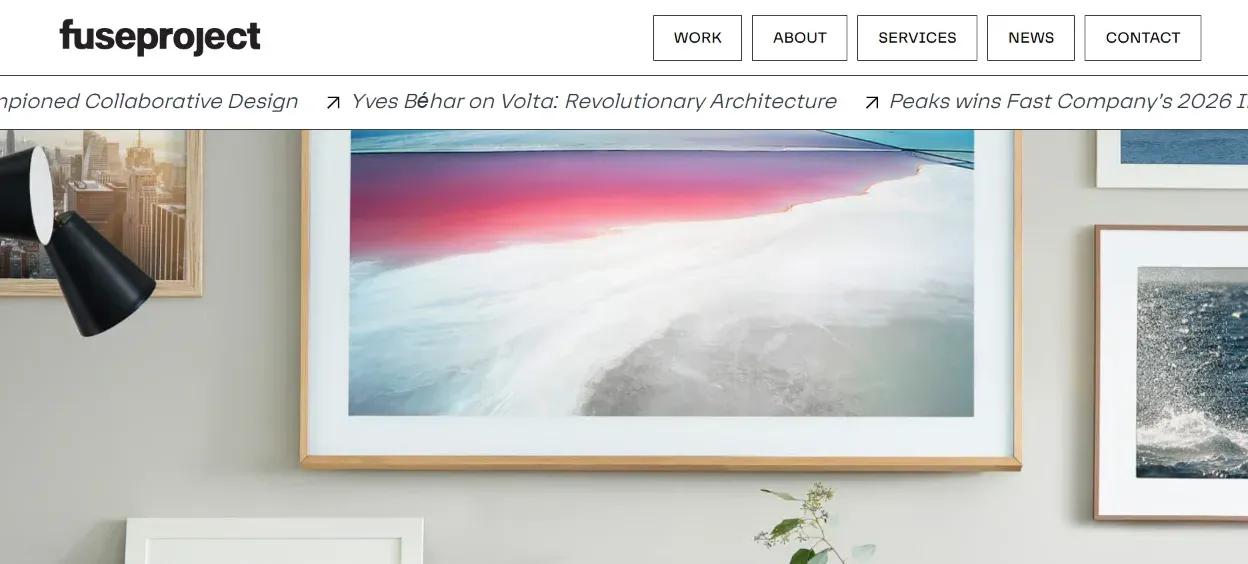
fuseproject, the San Francisco studio founded by Yves Béhar, is one of the most recognized industrial design firms in the US. It pairs striking physical design with branding and business strategy, and has shaped well-known consumer hardware. It suits companies that want a physical product with a strong point of view, backed by design that doubles as brand.
Key services: industrial design, branding, experience design.
Keep in mind: it is design-led and premium, so engineering-heavy or budget projects may fit a specialist better.
6. Ramotion
Best for: SaaS product UX, brand, and front-end build in one place.
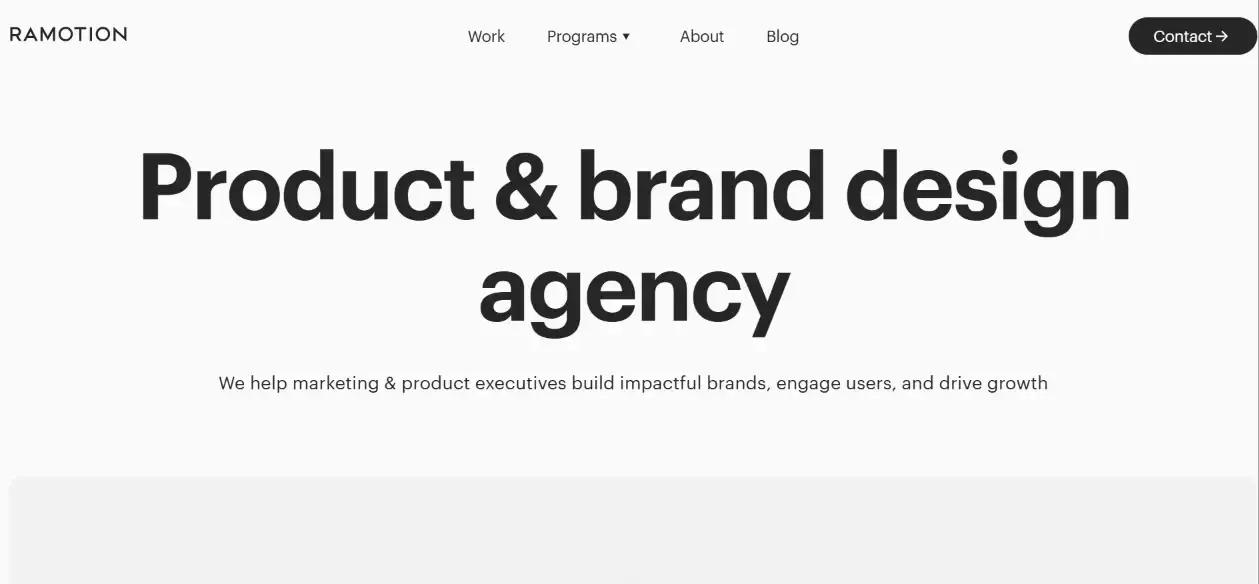
Ramotion, a San Francisco studio founded in 2009, designs brand identity, product UX, and design systems, and also develops the front end, which makes it a practical partner for software teams. It works with Silicon Valley startups and Fortune 500 companies, with strong work in SaaS interfaces, design systems, and marketing sites that match the product. It covers both the design and the implementation.
Key services: UI/UX design, design systems, branding, front-end development.
Keep in mind: its focus is digital, so physical product work is a fit elsewhere.
7. Fantasy

Best for: large-scale digital product experiences.
Fantasy, based in New York, is a digital product design studio known for high-end interface work on complex, large-audience products. It focuses on the design of apps, platforms, and connected experiences, often for major technology and media brands. It suits organizations that want a polished, ambitious digital product and have the budget to match.
Key services: digital product design, UX/UI, product strategy.
Keep in mind: it is a premium, design-led studio, so smaller teams may find it beyond their budget.
8. Clay
Best for: high-end web and product interfaces.
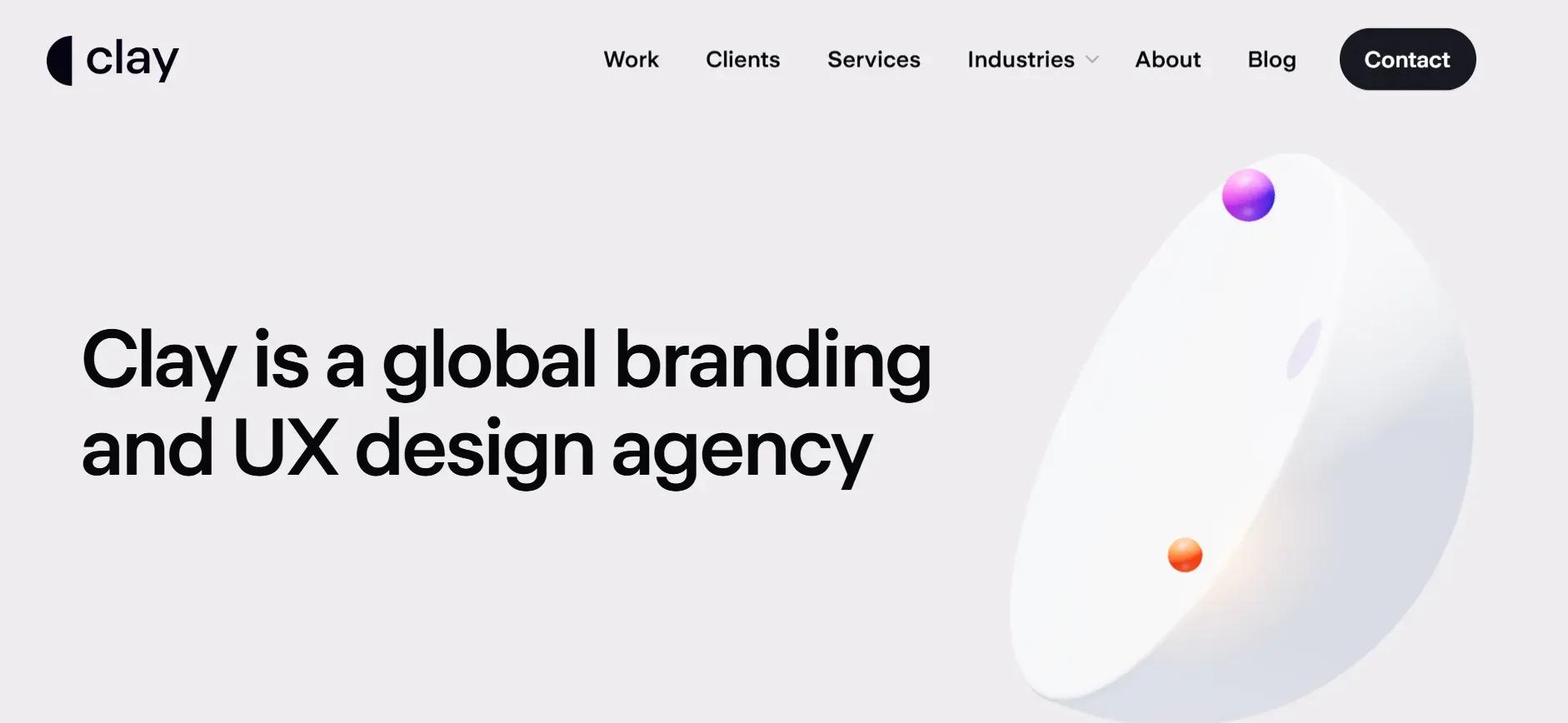
Clay, a San Francisco agency, is a UX/UI and digital product design studio known for refined, visually strong web and product work for technology companies. It combines strategy, UX, and interface design, often for brands that want their product and site to feel premium. It suits companies that put a high value on craft and visual quality.
Key services: UX/UI design, web design, product design.
Keep in mind: its premium, design-focused model means you may pair it with your own or another team for the build.
9. Bresslergroup
Best for: physical products that need design and engineering together.
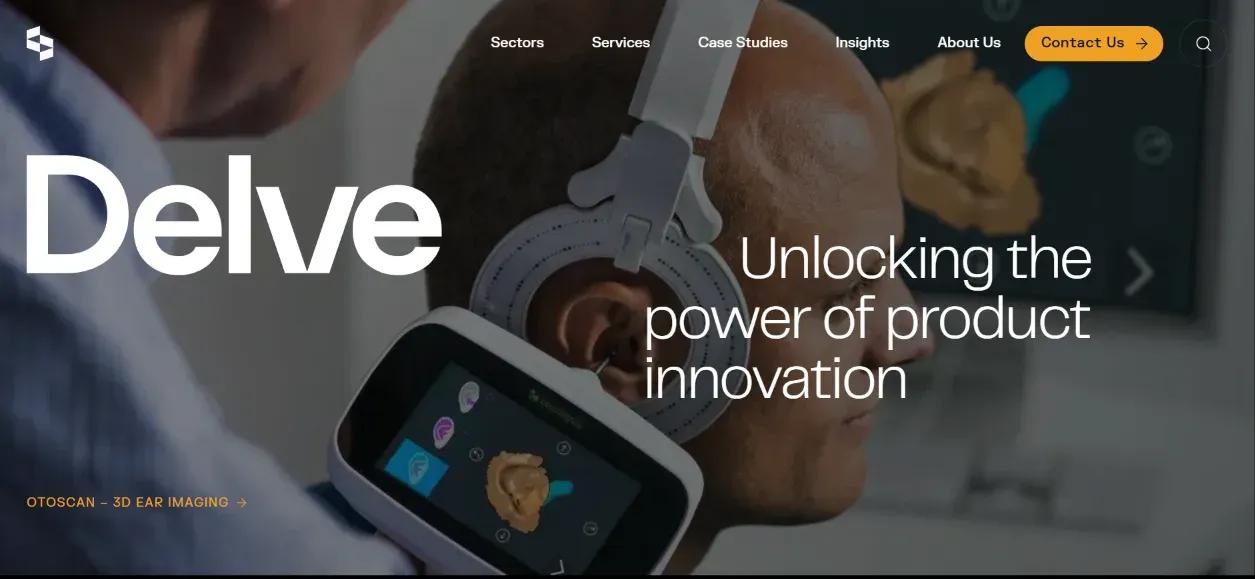
Bresslergroup, headquartered in Philadelphia, is a product design and engineering firm that takes physical products from research through to production-ready designs. It combines industrial design, human factors research, and engineering under one roof, with experience in consumer, medical, and commercial products. It suits companies building a physical product that must actually be manufactured and certified.
Key services: industrial design, engineering, user research, design for manufacture.
Keep in mind: its strength is physical products, so pure software teams should look to a digital studio.
10. Whipsaw
Best for: hardware taken from concept to production.
Whipsaw, based in San Jose, is an award-winning industrial design and engineering firm that develops hardware products end to end, from early concept through mechanical engineering and manufacturing support. It has a deep portfolio across consumer electronics, medical, and connected devices. It suits companies that need both the design and the engineering to ship a physical product.
Key services: industrial design, mechanical engineering, UX for devices.
Keep in mind: it is hardware-focused, so digital-only projects are a better fit elsewhere.
Benefits of hiring a product design company
Hiring a specialist is not just extra hands. It shifts the math of building a product.
- You fix problems while they are cheap. Catching a confusing flow in a prototype costs a fraction of patching it after launch, once real users and support tickets are involved.
- You rent expertise instead of carrying it. A project engagement gives you researchers, designers, and engineers for exactly as long as you need them, with no full-time salaries to justify later.
- You get honest distance. An outside team questions the assumptions your own people stopped noticing months ago, and catches the friction they have learned to tolerate.
The product design process: what to expect
Most engagements run in three phases, and your involvement shapes the result at each one.
Discovery. Work opens with a kickoff that sets the goals, the users, and the constraints. The firm digs into your existing data, customer insight, and competitors, then separates what it knows from what it is assuming and still needs to test. Rush this and you can spend months solving a problem nobody actually has. What you bring: access to customer data, clarity on constraints, and a call on priorities.
Design and testing. The team sketches several directions, measures them against the discovery criteria, and builds out the strongest. For software, that means wireframing structure and flow before any visual polish. Testing then checks whether people can use it, not just whether it looks good. What you bring: a timely review of the evidence and a decision on direction.
Handover. Finally, the design meets the people who will build it. A strong firm walks developers or manufacturing engineers through the solution rather than emailing a folder of files, covering failure states for software or materials and tolerances for hardware. What you bring: an introduction to the build team and a named owner for implementation trade-offs.
Product design cost in the USA: a price guide
The first thing to clarify in any digital quote is what it actually covers: design alone, or research, testing, and developer handover too. For hardware, prototyping, tooling, and manufacturing prep are often priced as separate lines. The ranges below are indicative for the US, and the best-known firms charge well above them.
Service | Indicative US price | What it usually includes |
| UX/UI audit | $5,000–$15,000 | Review of an existing product and its usability issues |
| Digital prototype | $10,000–$30,000 | User flows and interactive screens for testing |
| MVP design | $25,000–$75,000 | UX/UI, key journeys, developer handover |
| Physical product concept | $10,000+ | Initial concepts, visuals, feasibility |
| Physical working prototype | $30,000–$60,000 | An early working prototype of a non-electronic product |
| Product development with electronics | $100,000+ | Deeper design and development before production |
Pricing models
The billing model matters as much as the figure. Before you sign, nail down how anything outside the agreed scope gets handled.
Model | Indicative US price | Best suited for |
| Fixed price | $20,000–$60,000 for a defined UX/UI project | Clear, agreed deliverables and scope |
| Hourly rate | $100–$250 per hour | Smaller tasks or work with uncertain scope |
| Monthly retainer | $5,000–$15,000 per month | Ongoing improvement and design support |
Five levers push the total around: how big and complex the work is, how much research is baked in, how senior the team is, how tight the timeline runs, and how many revisions you get. Pin each one down before comparing quotes, since a lower number usually just means less is included.
US legal checks before you sign
Cost is only part of the due diligence. Rules on ownership, data, accessibility, and product safety can all restrict what you are allowed to do with the finished design.
- Copyright assignment. In the US, a contractor's work is not automatically yours. Unless it qualifies as work made for hire or there is a written assignment, the designer can retain rights. Get a clear, signed assignment so you can change, copy, and move the work to another team.
- Entity checks. Verify the firm through your state's Secretary of State business records, though registration alone does not prove reliability.
- Data privacy. If you handle personal data, design for privacy from the start and confirm how the firm supports it. State laws such as the California Consumer Privacy Act and CPRA set real requirements, and more states are adding their own.
- Accessibility. The Americans with Disabilities Act is increasingly applied to digital products, and federal work must meet Section 508. Ask how the firm tests keyboard use, color contrast, and screen readers, and aim for WCAG 2.2 AA.
- Product safety. For physical products, confirm which rules apply before manufacture. Depending on the product, that can mean CPSC consumer-safety requirements, FCC approval for electronics, UL safety listing, or FDA clearance for medical devices.
Who hires product design companies in the USA
Demand is broad, but a few sectors drive most of the work. Technology and SaaS companies hire product design firms to sharpen complex interfaces and move faster, since developer and user experience is their edge. Fintech and financial services need products that feel trustworthy and stay compliant. Healthcare and medtech need both digital tools and physical devices that are safe, usable, and cleared for market. Consumer brands use industrial design firms to make physical products stand out on a crowded shelf. Startups across every sector lean on design-and-build partners to get a credible first product in front of users without staffing a full team. Whatever the sector, the aim is the same: solve a real user problem in a way that also makes business sense.
How to choose a product design company
Give every shortlisted firm the identical brief, spelling out your goals, scope, and constraints. Only then can you compare their experience, proposed teams, and deliverables on equal terms.
- Look past the portfolio. Ask for two or three case studies and dig in: did it actually launch, what did the firm do versus the client, and what measurably changed afterward?
- Pin down the real team. The people on the website are not always the people on your project. Ask exactly who your designer, researcher, project manager, and technical lead will be.
- Read the deliverables, not the pitch. The proposal should list what you walk away with: editable files, prototypes, and specs for software, or CAD and drawings for hardware.
- Compare like for like. Two similar quotes can hide very different scopes. Check research, testing rounds, revisions, handover, and how change requests get billed.
- Talk to past clients. Scan Clutch and DesignRush, then ask a reference what went wrong and how the firm responded. The recovery story tells you more than the highlight reel.
- Judge the first conversations. Do they interrogate your users and constraints, name risks early, and explain how decisions will get made?
Red flags to watch for
- Guarantees of sales or adoption that no honest designer could actually promise.
- Confident claims about users that are never backed by research or testing.
- A fixed, template process the firm refuses to bend to fit your product.
Conclusion
Choosing a product design company in the USA is not about the prettiest portfolio. It is about matching a firm's real strengths to your product, your stage, and your budget, then comparing proposals on scope and deliverables rather than headline price. The firms above cover the full range, from hardware at Whipsaw and Bresslergroup, to industrial design at fuseproject, to large-scale digital work at Fantasy and Ramotion.
The real decision underneath all of it is design on its own versus design and engineering as a package. A great design still has to be shipped, and the handover between a design agency and a separate development team is where budgets and timelines quietly slip. That is where Softaims comes in. Here is what you get by working with us:
- One accountable team. Research, UI/UX, and the engineering handled together, so the handoff that sinks most timelines never happens.
- Agency-grade talent, not agency prices. Senior designers and engineers at remote rates, priced transparently, with no hiring overhead.
- Scale on your terms. Add specialists to your team or hand over the whole build, and flex up or down as the work shifts.
- You own it, fast. The design and the code are yours, and matching takes 48 hours, not months.
If you want a product designed and built by the same team, talk to our team and we will match you with the right people.
Frequently asked questions
What does a product design company do?
It designs the product people actually interact with, digital or physical. That can span user research, concepts, prototypes, usability testing, and design systems. The key divide is scope: some firms stop at the design, while others, like Softaims, also engineer and ship it, so you are not stitching together separate design and build vendors.
How much does product design cost in the USA?
It depends on scope. A UX/UI audit runs about $5,000 to $15,000, a digital prototype $10,000 to $30,000, and an MVP design $25,000 to $75,000. Physical products cost more, with electronics-based development often passing $100,000. Hourly rates are typically $100 to $250, and top-tier firms charge well above that.
What is the difference between UX design and product design?
UX is the narrower of the two: it covers navigation, flow, and how smoothly tasks get done. Product design wraps around it, weighing which problems deserve solving and whether a given solution earns its keep commercially. Plenty of firms cover both, but knowing which you need keeps the brief honest.
Should I hire a design-only agency or a design-and-build firm?
With a solid in-house engineering team, a design-only studio is fine. Without one, a design-and-build partner like Softaims spares you the fragile handoff between two vendors and keeps one team accountable from first sketch to launch.
Do I own the design if I pay for it?
Not automatically. In the US, a contractor can retain rights unless the work is made for hire or there is a written assignment. Make sure your contract includes a clear copyright assignment so you can change, copy, and move the work to another team.
How do I check a product design company is any good?
Request two or three case studies of products that shipped, confirm the named people who will staff your project, and check Clutch or DesignRush reviews. The most revealing question is what went wrong on a previous job and how they handled it, because the answer exposes reliability that a glossy pitch hides.


 Stackoverflow
Vladimir M.

 Verified Expert in Engineering
My name is Vladimir M. and I have over 9 years of experience in the tech industry. I specialize in the following technologies: Ruby on Rails, Ruby, Ruby on Rails Stack, API Integration, Web Application, etc.. I hold a degree in Master's degree. Some of the notable projects I've worked on include: HeronConnect - Healthcare, Ruby on Rails development, Tutoring platform - Ruby on Rails migration, SaaS Platform - Full-Stack Development, Mailing Platform - Web development, SaaS Platform - Web development, etc.. I am based in Lviv, Ukraine. I've successfully completed 15 projects while developing at Softaims.
I am a dedicated innovator who constantly explores and integrates emerging technologies to give projects a competitive edge. I possess a forward-thinking mindset, always evaluating new tools and methodologies to optimize development workflows and enhance application capabilities. Staying ahead of the curve is my default setting.
At Softaims, I apply this innovative spirit to solve legacy system challenges and build greenfield solutions that define new industry standards. My commitment is to deliver cutting-edge solutions that are both reliable and groundbreaking.
My professional drive is fueled by a desire to automate, optimize, and create highly efficient processes. I thrive in dynamic environments where my ability to quickly master and deploy new skills directly impacts project delivery and client satisfaction.

Leave a Comment
Need help building your team? Let's discuss your project requirements.
Get matched with top-tier developers within 24 hours and start your project with no pressure of long-term commitment.