10 Best Product Design Companies in the UK (2027)
In this guide we compared the best product design companies in the UK for 2026, covering UX vs. product design, UK pricing, legal checks, and how to choose.
Table of contents
Key Takeaways
- Separate UX specialists, industrial/hardware studios (such as Tone Product Design), and end-to-end design-and-build partners (such as Softaims, Devaims, impltech, and MOHARA) based on whether you need digital interfaces, physical products, or shipped software.
- Choosing a team that handles both design and engineering eliminates delays, rework, and misalignment between separate design agencies and build vendors.
- Indicative UK pricing spans £3,000–£8,000 for a UX/UI audit, £3,000–£10,000 for a digital prototype, £15,000–£30,000 for an MVP design, and £50,000+ for physical electronics development with hourly rates typically £75–£150 and retainers £2,000–£6,000/month.
- Secure written copyright assignment (payment alone does not transfer ownership in the UK), align with UK GDPR and product safety rules (UKCA/CE where relevant), and design for WCAG 2.2 AA and Equality Act 2010 accessibility.
- Inspect shipped case studies, confirm the exact specialists assigned to your project, clarify revision and handover terms, and ask how past project hiccups were resolved.
Good product design is not decoration. It decides whether people can actually use what you build, whether they trust it, and whether they come back. Getting it wrong is expensive in a way that hides in plain sight: a confusing signup loses customers every day, and a flaw caught after launch costs far more to fix than one caught in a wireframe. The upside is just as real. McKinsey found that the strongest design performers grew revenue 32% faster than their industry peers over five years.
That is why the partner you choose matters. The companies in this space do very different things. Some design digital interfaces, some design physical products, and some design and then build the whole thing. Pick one that does not match your problem and you pay for the mismatch in delays, rework, and a product that never quite lands.
This is a look at the best product design companies in the UK, what each one is best at, what UK product design actually costs, the legal points to check before you sign, and a clear way to compare them. Whether you need a quick usability fix or a product taken from idea to launch, there is a fit here for you.
What product design companies actually do
Product design is a broad term, and that is where confusion starts. It helps to separate two things that often get mixed up.
UX design is about how people use a product: the navigation, the flow, how many steps a task takes, and whether anything gets in the way. Product design is wider. It also asks which customer problems are worth solving, and whether the proposed solution makes business sense. A UX project might simplify an online booking screen. A product project decides whether you need group bookings and waitlists at all.
On top of that split, firms specialise by medium. Some design digital products such as apps and SaaS platforms. Some design physical products, from kitchen tools to medical devices. And some pair design with engineering, so the thing gets built, not just drawn. Knowing which type you need is the first real decision.
Which service you actually need
You do not always need the full process. The table below shows when each piece earns its place.
Service | When your business needs it |
| User research | You have an idea but no reliable data on what customers want or how they buy. |
| Concept development | You know the problem to solve but not what the solution should look like. |
| Prototyping | You need something tangible to show how an idea behaves or feels. |
| Usability testing | Customers struggle with specific tasks, or you are unsure a feature will land. |
| Design systems | Several designers or developers touch the same product and consistency slips. |
| Development or manufacturing prep | A separate build or production team needs coordinated technical specs. |
How we chose these companies
The best product design companies in the UK are judged on real delivery, not just nice portfolios. A polished case study does not prove an agency can ship a working product. So we weighed each firm on the specialisation it genuinely owns, the stage of product it suits, team size and seniority, UK hourly rates, and the sectors where it has real experience, from fintech and healthtech SaaS to physical consumer and medical products.
A quick honesty note: team sizes, rates, and focus areas change, so treat the figures here as a guide and confirm the detail with each firm before you commit.
Best product design companies in the UK compared
The table below compares all ten firms at a glance: their main focus, team size, indicative UK hourly rate, and who each is best for. Softaims and Devaims lead as our recommended picks for teams that want design and build together, followed by established UK design agencies. Use the Best for column to find firms that have done work like yours.
# | Company | Core focus | Team size | Hourly rate | Best for |
| 1 | Softaims | Product and UX/UI design plus full development | Flexible, remote | Competitive | Designing and building a product with one vetted team |
| 2 | Devaims (a Softaims company) | Product design and app development | Flexible, remote | Fixed-price | Turning a design into a shipped web or mobile app |
| 3 | impltech | UX/UI, custom software and mobile apps | 50–249 | £50–£99 | Fintech and property web and mobile platforms |
| 4 | Hue & Machine | SaaS product design, enterprise UX, design systems | 10–49 | £50–£99 | Complex fintech and healthtech SaaS interfaces |
| 5 | Tone Product Design | Industrial design, medical devices, prototyping | 2–9 | £100–£149 | Physical and medical products for manufacture |
| 6 | Hex Digital | Digital product UX, web platforms, design systems | 10–49 | £100–£149 | Subscription platforms and digital ecosystems |
| 7 | MOHARA | Product strategy, design and development | 50–249 | £50–£99 | Building fintech and healthtech products end to end |
| 8 | Super User Studio | B2B product strategy and enterprise UX | 2–9 | £150–£199 | Legacy enterprise SaaS redesign and workflows |
| 9 | Shoreditch Design Studio | Mobile app UX/UI, SaaS design and branding | 10–49 | £50–£99 | Consumer mobile apps and booking platforms |
| 10 | Browser London | UX research, digital product design, front-end | 10–49 | £100–£149 | Research-led redesign of portals and dashboards |
The 10 best product design companies in the UK
Below are the ten firms we recommend, starting with our top two picks, then established UK agencies. For each, you will find who it is best for, what it does, and an honest note. Read every profile against your own product and stage.
1. Softaims
Best for: teams that want product design and the engineering to build it, from one vetted remote team.
Softaims is our top pick for a simple reason: design is only half the job. A beautiful prototype that no one can build is wasted effort, and the costliest delays usually happen when work is handed from a design agency to a separate development shop. Softaims removes that seam. It pairs product and UX/UI design with full software and app development, delivered by vetted remote talent as staff augmentation or a dedicated team. One team owns the work from research and interface design and prototyping through to a shipped product.
Why teams choose Softaims:
- Design and build under one roof, so there is a single point of accountability from idea to launch.
- Vetted remote designers and engineers at a lower cost than a traditional London agency, with transparent pricing.
- Flexible engagement: extend your team with staff augmentation, or hand the whole product to a dedicated squad.
- UX research, UI design, and design systems, carried straight through to front-end and production.
- Global talent matched to your stack and budget, aligned to your UK working hours.
If you want a product designed and actually shipped by the same team, talk to our team and get matched with vetted talent within 48 hours.
Why hire them: Pick Softaims when you want design and development in one place, full ownership of the result, and a lower cost than a design-only agency plus a separate build partner.
2. Devaims
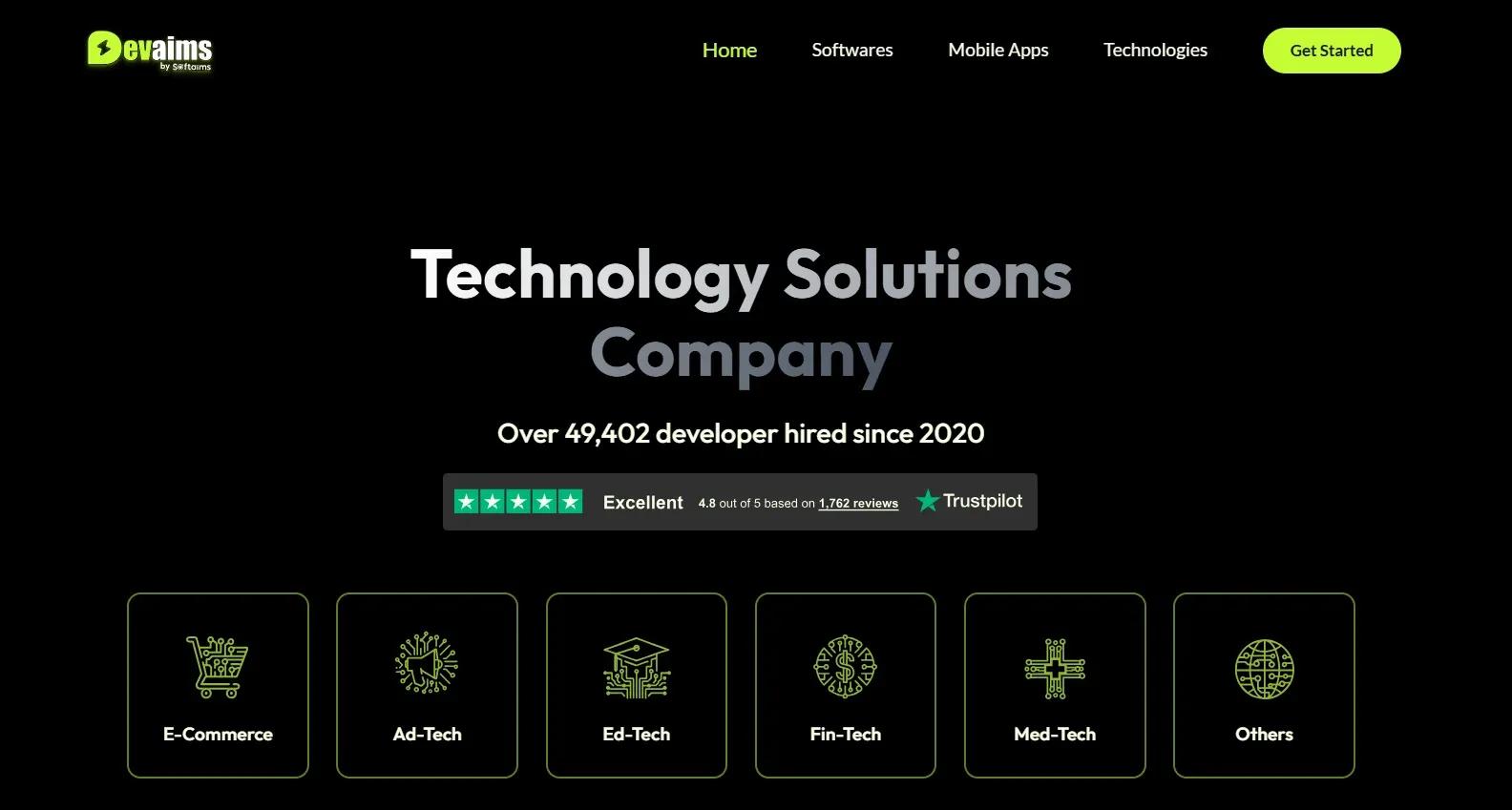
Best for: turning a product design into a working web or mobile app, at a fixed price.
Devaims, now a Softaims company, builds custom software and mobile and web apps with UI/UX, on a fixed-price model with built-in QA and post-launch support. When your design needs to become a real product, Devaims ships it, while the wider Softaims team covers deeper platform and engineering needs. Its stated strengths are on-time delivery, transparent pricing, and direct communication with the development team.
Why hire them: Choose Devaims when you have a design, or need one, and want it built into a working app to a fixed, predictable price.
3. impltech
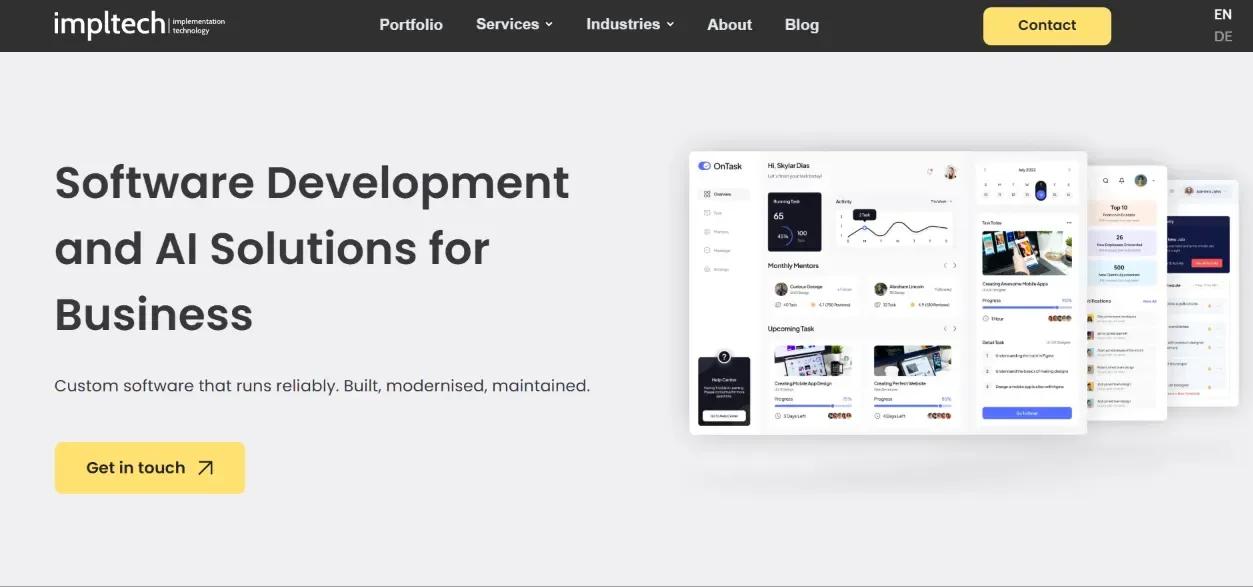
Best for: fintech and property teams that want design and software from one firm.
impltech, founded in 2017 and based in London, starts by pinning down the problem, the success measures, and the constraints before it picks a design direction. It keeps design and build in the same hands, which gives clients a single point of accountability rather than two vendors blaming each other. It reports that most of its specialists are mid-level or senior, and it works across fintech, healthcare, and real estate. You can engage a dedicated team or hire it for a specific project.
Key services: mobile app development, custom software, web development, UI/UX design.
Keep in mind: as a larger design-and-build firm, it suits full product work more than a quick, design-only task.
4. Hue & Machine
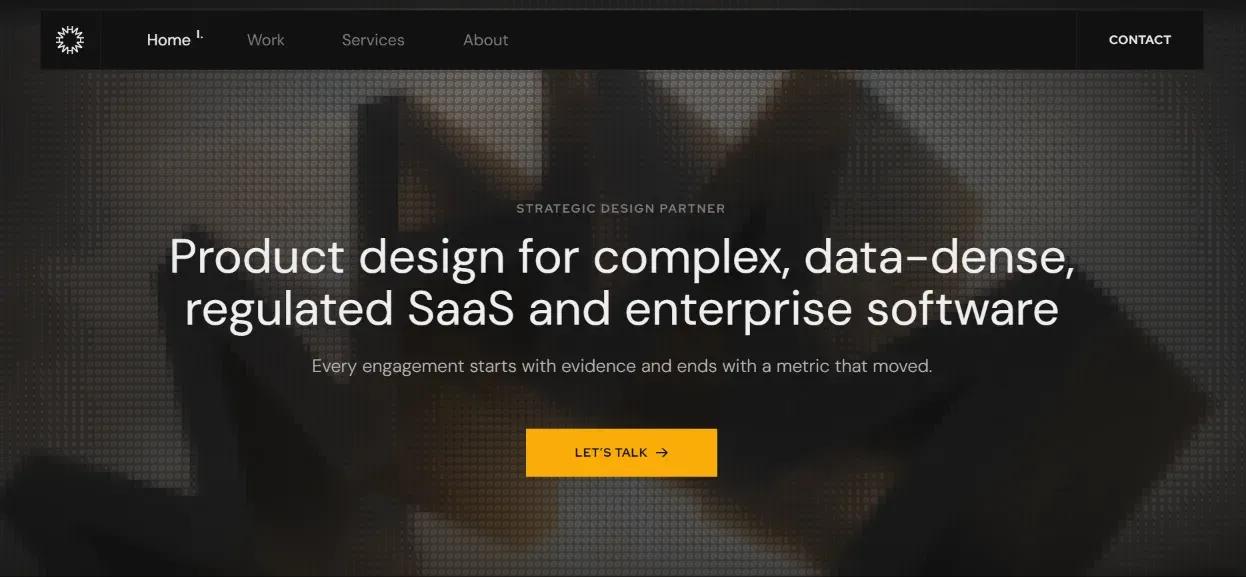
Best for: complex, data-dense SaaS and enterprise interfaces.
Hue & Machine, a London studio founded in 2020, pairs a human-centred approach with real technical depth, which is where its name comes from. It studies user behaviour, business goals, and software structure before it touches an interface, and it is known for design system governance that keeps products consistent as they grow. It has delivered across fintech, healthtech, enterprise, and cybersecurity, with strength in UX audits and accessibility.
Key services: product design, redesign and modernisation, design systems, UX audits.
Keep in mind: its sweet spot is complex, regulated SaaS, so simpler consumer projects may not need its depth.
5. Tone Product Design
Best for: physical and medical products headed for manufacture.
Tone Product Design, founded in 2016 and based at Somerset House in London, is a product and industrial design studio that gives physical products a clear personality without sacrificing function. It blends medical design rigour with consumer product instincts, taking ideas from concept to a prototype ready for testing. Its clients include Joseph Joseph and Jaguar Land Rover, and its work spans medical, consumer, and professional products.
Key services: industrial design, UX/UI, prototyping, design for manufacture.
Keep in mind: it specialises in physical products, so pure software teams are a better fit elsewhere.
6. Hex Digital
Best for: subscription platforms and connected digital ecosystems.
Hex Digital, founded in 2008 and based in Farringdon, London, treats digital platforms as connected systems where navigation, content structure, and reusable components fit together. That approach works well for complex B2B and B2C experiences that share user journeys. It is an award-winning digital product and growth studio with a strong track record across startups and established businesses, and it covers strategy, research, design, and build.
Key services: design systems, digital ecosystems, rebrands, product development.
Keep in mind: confirm scope if you need deep physical product or hardware work, which is not its focus.
7. MOHARA
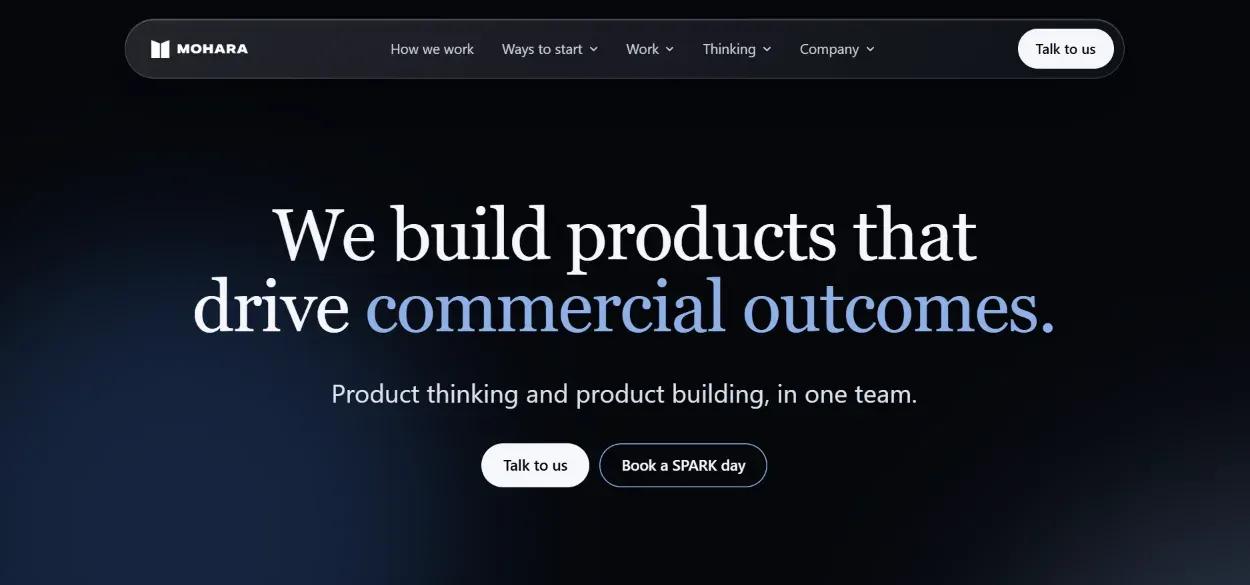
Best for: founders and innovation teams building a product from idea to launch.
MOHARA, founded in 2011 and based in London, is a venture-building product studio that turns early ideas into software products you can test in the market. It treats an MVP as a real, commercial product rather than a pitch-deck deliverable, tying product strategy to market demand. Crucially, it has the engineering to ship what it designs, so you do not coordinate separate design and development vendors.
Key services: product design, web development, mobile app development.
Keep in mind: its venture-building model suits new products more than small tweaks to an existing one.
8. Super User Studio
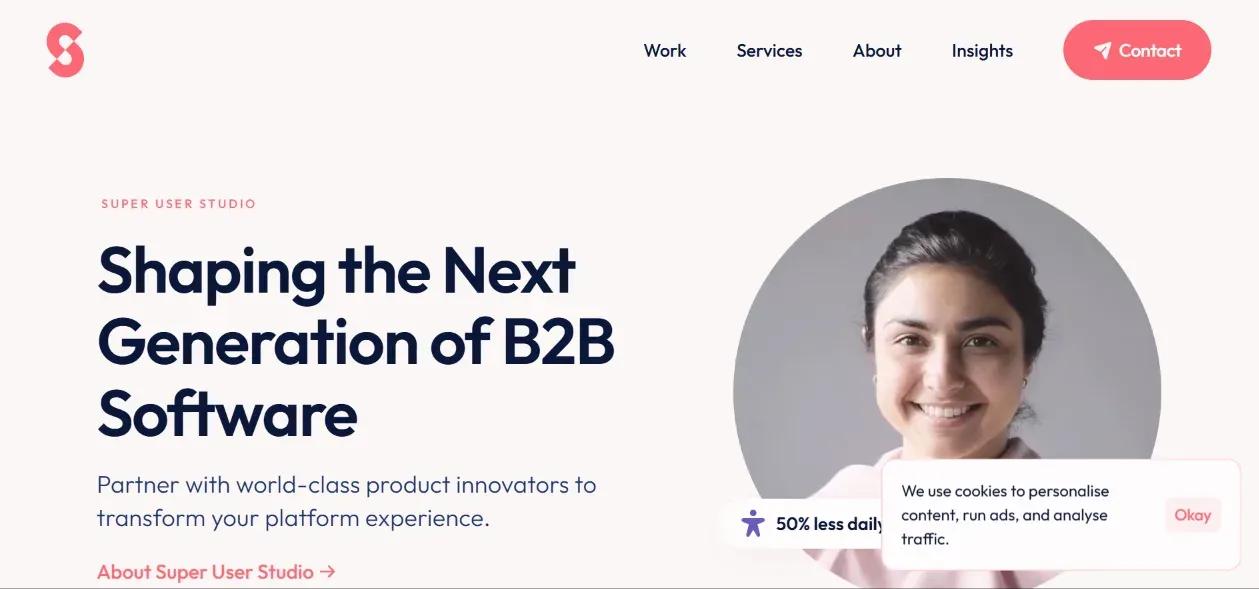
Best for: untangling complex enterprise SaaS and workflows.
Super User Studio, founded in 2008 and based in London, is a digital product, design, and innovation advisory with more than twenty years designing for enterprise software teams. It runs design sprints to prototype and gather feedback fast, and because it is founder-led and small, clients work closely with senior people. It is strong where workflow complexity stops users getting value from a product.
Key services: product strategy, UX strategy and direction, design systems consultancy.
Keep in mind: its senior, advisory model carries premium rates, so it suits strategic work more than routine production.
9. Shoreditch Design Studio
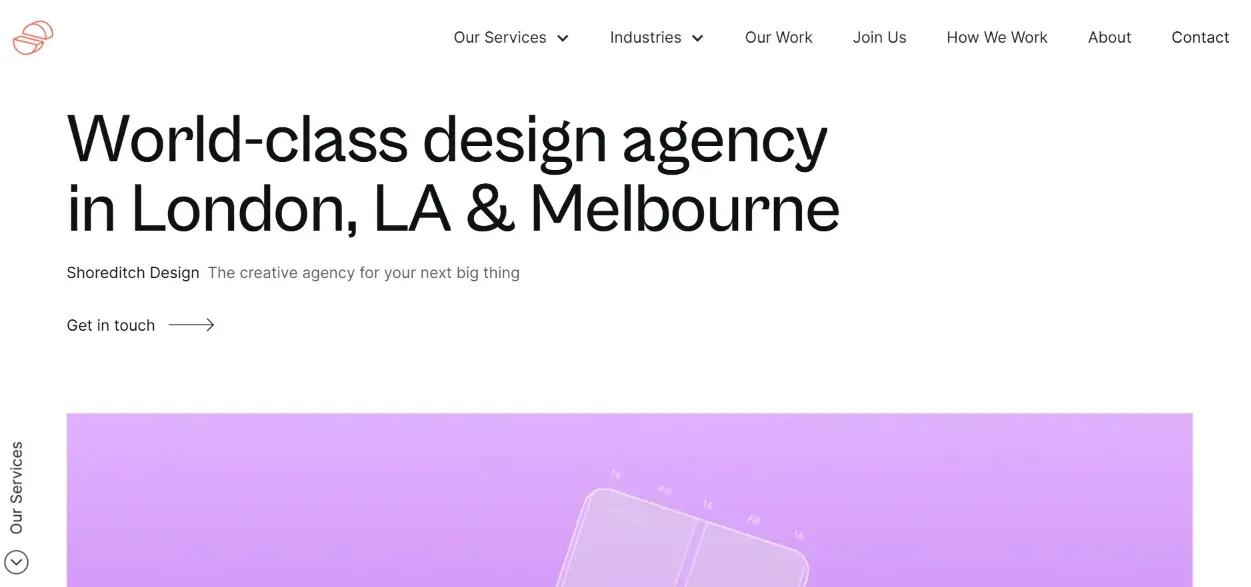
Best for: consumer mobile apps and booking platforms that need a strong look.
Shoreditch Design Studio, founded in 2019 in London, treats visuals as a working part of the experience rather than a coat of paint. Typography, colour, and interactions shape how a product feels, while clear navigation keeps it usable. It is a good fit for products that need a distinctive, refined interface without deeply complex logic, and it works across fintech, healthcare, SaaS, and ecommerce.
Key services: digital product design, AI design, web design, retained design support.
Keep in mind: it is strongest on design and branding, so confirm engineering scope if you also need the build.
10. Browser London
Best for: research-led redesign of portals, dashboards, and public-sector tools.
Browser London, founded in 2008, is a London agency with over fifteen years in user research-led UX, UI design, and front-end engineering. It focuses on the gap between what a platform can do and what users actually manage to do, finding confusing language, weak information architecture, and friction in everyday tasks, then prioritising fixes. It works across financial services, healthcare, and energy.
Key services: UI/UX design, ideation and strategy, development.
Keep in mind: its research-led process is thorough, so very fast, low-budget jobs may suit a smaller studio.
Benefits of hiring a product design company
Bringing in a specialist firm is not just about offloading work. It changes the economics of building a product.
- Fewer costly changes after launch. Testing prototypes surfaces problems before customers hit them, when they are cheap to fix rather than expensive.
- Specialist skills without a permanent team. You get researchers, designers, and engineers on a project basis, instead of hiring and carrying each role full time.
- A fresh, outside view. External designers spot confusing features and quiet assumptions that an internal team, too close to the product, no longer questions.
The product design process: what to expect
Most engagements move through discovery, concepts and testing, and handover. Your input matters at every stage, because the firm needs your feedback to set priorities and sign off the direction.
Discovery and research. It starts with a kickoff that sets business goals, target users, and technical limits. The firm reviews your product data, customer insight, and competitors to find gaps and open questions, then sorts findings into priorities, requirements, and assumptions to validate. Skip this and you risk designing a solution to a problem no one has. Your part: share customer data and constraints, and help decide what to solve first.
Concepts, prototypes, and testing. The firm explores several directions against the criteria set in discovery, then prototypes the strongest. For digital products, that means wireframes for layout and flow before visual design. Testing focuses on whether people can actually use it, not just whether they like the look. Your part: review the evidence and approve the direction before the work moves on.
Handover to build or manufacturing. The last stage connects design to the team that implements it. A good firm works through the solution with developers or manufacturing engineers rather than tossing files over the wall, covering edge cases for software or materials and assembly for physical products. Your part: introduce the build team, make sure open technical questions are resolved, and decide who signs off changes forced by implementation.
Product design cost in the UK: a price guide
When you get a digital design quote, check whether it covers design only or also research, testing, and developer handover. For physical products, prototyping, tooling, and manufacturing prep may be quoted separately. The figures below are indicative UK ranges from the kind of firms above, not a market average.
Service | Indicative UK price | What it usually includes |
| UX/UI audit | £3,000–£8,000 | Review of an existing product and its usability issues |
| Digital prototype | £3,000–£10,000 | User flows and interactive screens for testing |
| MVP design | £15,000–£30,000 | UX/UI, key journeys, developer handover |
| Physical product concept | £4,500+ | Initial concepts, visuals, feasibility |
| Physical working prototype | £15,000–£20,000 | An early working prototype of a non-electronic product |
| Product development with electronics | £50,000+ | Deeper design and development before production |
Pricing models
How a firm charges tells you as much as the number. Confirm what happens to work outside the agreed scope before you sign.
Model | Indicative UK price | Best suited for |
| Fixed price | £8,000–£20,000 for a defined UX/UI project | Clear, agreed deliverables and scope |
| Hourly rate | £75–£150 per hour | Smaller tasks or work with uncertain scope |
| Monthly retainer | £2,000–£6,000 per month | Ongoing improvement and design support |
Five things move the price most: the scope and complexity, the depth of research, the team's seniority and location, the timeline, and the number of revisions included. Ask about each one before you compare quotes, because a cheaper number often means less is included.
UK legal checks before you sign
Price is not the only thing to check. Ownership, data, accessibility, and product safety rules can all limit what you do with the final design.
- Copyright assignment. Paying for a design does not automatically transfer the copyright to you. Get a written assignment signed by the rights holder, so you can change, copy, and move the work to another team.
- Company checks. Verify the firm's details on Companies House, though registration alone does not prove reliability.
- Data protection by design. Under UK GDPR, privacy has to be built in from the start. Ask how the firm handles data minimisation and access controls, and put a data processing agreement in place if they handle personal data.
- Accessibility. The Equality Act 2010 expects reasonable adjustments for disabled users. Ask how the firm tests keyboard use, colour contrast, and screen readers. WCAG 2.2 AA is the standard to aim for, and it is required for many public sector services.
- Product safety. For physical products, confirm which rules apply before manufacture. Depending on the product and market, that can mean conformity assessment, technical documentation, and UKCA or CE marking.
How to choose a product design company
Send the same brief to your shortlist, covering your goals, scope, and constraints. That gives you a fair basis to compare experience, teams, and deliverables.
- Check real product experience. Ask for two or three case studies. Was the product actually launched and used, what exactly did the agency do, and what improved for the client?
- Ask who will do the work. The names on a website are not always the people on your project. Confirm your actual designer, researcher, project manager, and any technical lead.
- Review the process and deliverables. The proposal should spell out what you get: editable files, prototypes, specs, and test results for digital, or CAD and technical drawings for physical products.
- Compare quotes properly. Two similar totals can hide big differences. Check what research, testing rounds, revisions, and handover are included, and how new requirements are charged.
- Read reviews and ask for references. Look at Clutch and DesignRush for notes on deadlines and communication, and ask a past client what went wrong and how the firm handled it.
- Watch how they communicate. In early talks, do they ask sharp questions about users and constraints, flag risks, and explain how decisions will be made?
Red flags to watch for
- Promises of commercial success or adoption with no evidence behind them.
- Design assumptions presented as fact, with no plan to test or validate them.
- A rigid, one-size-fits-all process with no willingness to adapt to your product.
Conclusion
Choosing a product design company in the UK is not about the prettiest portfolio. It is about matching a firm's real strengths to your product, your stage, and your budget, then comparing proposals on scope and deliverables rather than headline price. The agencies above cover the full range, from physical products at Tone, to enterprise SaaS at Hue & Machine and Super User Studio, to research-led digital work at Browser London.
The deeper question is whether you want design alone or design and build together. A great design still has to be shipped, and the handover between a design agency and a separate development team is where budgets and timelines quietly slip. That is where Softaims comes in. Here is what you get by working with us:
- Design and development in one team. Research, UI/UX, and the actual build handled by vetted remote talent, with a single point of accountability.
- Lower cost than a traditional agency. Senior designers and engineers at remote-talent rates, with transparent pricing and no recruitment overhead.
- Flexibility. Extend your team with staff augmentation, or hand over the whole product to a dedicated squad, and scale as the work changes.
- Ownership and speed. You own the design and the code, and you get matched with vetted talent within 48 hours.
If you want a product designed and built by the same team, talk to our team and we will match you with the right people.
Frequently asked questions
What does a product design company do?
A product design company designs the thing people use, whether that is a digital interface or a physical product. The work can include user research, concept development, prototyping, usability testing, and design systems. Some firms only design, while others, like Softaims, also build the product, so you do not coordinate separate design and development vendors.
How much does product design cost in the UK?
It depends on scope. A UX/UI audit runs about £3,000 to £8,000, a digital prototype £3,000 to £10,000, and an MVP design £15,000 to £30,000. Physical products cost more, with electronics-based development often passing £50,000. Hourly rates are typically £75 to £150, and retainers £2,000 to £6,000 a month.
What is the difference between UX design and product design?
UX design focuses on how people use a product: navigation, flow, and how easily tasks get done. Product design is broader and also asks which problems are worth solving and whether the solution makes business sense. Many firms do both, but it is worth knowing which you actually need.
Should I hire a design-only agency or a design-and-build firm?
If you already have a strong development team, a design-only agency can work well. If you do not, a firm that designs and builds, such as Softaims or MOHARA, removes the risky handover between two vendors and gives you a single point of accountability from idea to launch.
Do I own the design if I pay for it?
Not automatically. In the UK, paying for a design does not transfer copyright by default. You need a written copyright assignment signed by the rights holder, so make sure your contract covers it and that you can change, copy, and move the work to another team.
How do I check a product design company is any good?
Ask for two or three case studies of launched products, confirm who will actually work on your project, and read reviews on Clutch or DesignRush. A useful question is what went wrong on a past project and how the firm fixed it, since the answer reveals more about reliability than a polished pitch.


 Stackoverflow
Rudy Kapur A.
 Verified Expert in Engineering
My name is Rudy Kapur A. and I have over 9 years of experience in the tech industry. I specialize in the following technologies: iPhone UI Design, Computer Vision, Wireframing, Product Development, Flutter, etc.. I hold a degree in Bachelor of Science (BS), Bachelor of Technology (BTech). Some of the notable projects I’ve worked on include: wamba streaming, blab, camfind, DIGITDATE. I am based in Goleta, United States. I've successfully completed 4 projects while developing at Softaims.
I employ a methodical and structured approach to solution development, prioritizing deep domain understanding before execution. I excel at systems analysis, creating precise technical specifications, and ensuring that the final solution perfectly maps to the complex business logic it is meant to serve.
My tenure at Softaims has reinforced the importance of careful planning and risk mitigation. I am skilled at breaking down massive, ambiguous problems into manageable, iterative development tasks, ensuring consistent progress and predictable delivery schedules.
I strive for clarity and simplicity in both my technical outputs and my communication. I believe that the most powerful solutions are often the simplest ones, and I am committed to finding those elegant answers for our clients.

Leave a Comment
Need help building your team? Let's discuss your project requirements.
Get matched with top-tier developers within 24 hours and start your project with no pressure of long-term commitment.