Top 10 Headless CMS Implementation Companies in the World (2027)
Moving to a headless CMS requires rigorous content modelling, platform selection, and seamless migration. This guide shortlists 2027’s top headless CMS implementers, evaluating firms on multi-platform depth and engineering talent.
Technically reviewed by:
Alexander Y.|Yevhen N.
Table of contents
Key Takeaways
- Proper content architecture ensures reusability across channels and structures data so it can be easily indexed by AI-generated answer engines.
- The best implementation partners evaluate specific project needs such as developer flexibility (Sanity), marketer-friendly visual editors (Storyblok), or enterprise governance (Contentful)rather than pushing a single platform.
- With over half of CMS migrations facing budget overruns or delays, specialized partners are essential to preserve SEO, handle complex redirects, and transition large content libraries safely.
- Sourcing pre-vetted headless and frontend engineers on demand (e.g., via Softaims within 48 hours) enables teams to maintain full code ownership, avoid rigid agency lock-ins, and control budgets.
Going headless sounds simple until you start, which is why so many teams turn to specialist headless CMS implementation companies. First you pick a content platform like Contentful or Sanity, then you plan a fast new front end, and then you run into the real work: modelling your content so it can be reused, moving years of pages across without breaking links or search rankings, wiring up previews, search, and integrations, and keeping editors happy through all of it. This is where projects stall.
In fact, Forrester has found that about 53% of CMS migrations go over budget, miss deadlines, or fail to deliver what was promised. Therefore the partner you choose is what tips you to the right side of that number. Importantly, the best one is not the agency most attached to a single platform; instead, it is the one that recommends the right platform for your situation. To help you choose, this guide compares the top headless CMS implementation companies in the world for 2027 on the things that actually predict success: platform breadth, content modelling depth, migration track record, and editor outcomes.
Why Headless CMS Is Growing So Fast
Before you weigh any firm, it helps to see where the market is heading. The headless slice is small but growing far quicker than the rest. For example, Future Market Insights put the global headless CMS market at roughly $970 million to $1.5 billion in 2025, growing at two to three times the rate of the wider CMS market, which itself sits near $31 to $35 billion.
Moreover, the push is structural rather than a passing trend. Gartner now treats composability as a requirement for its Digital Experience Platform rankings, and it projects that about 70% of organisations will be required to adopt composable technology by 2026, up from 50% in 2023. In addition, there is a newer driver. Because structured content is what lets your pages surface in AI-generated answers, not just traditional search, success depends far more on how well the content is modelled than on which CMS you buy. As a result, the bar keeps rising for what the best headless CMS implementation companies need to deliver, and the gap widens between genuine specialists and general web shops that happen to use a CMS.
Top 10 Headless CMS Implementation Companies in the World at a Glance
Here is a quick view of the ten headless CMS implementation companies we compared, so you can see where each one is strongest, which platforms it knows, and roughly where its pricing sits before you read the full write-ups.
Rank | Company | Best for | Platforms | Reach | Starting price |
| 1 | Softaims | Flexible, vetted teams you embed | Platform-agnostic | Global, US-aligned | Flexible, pay for hours |
| 2 | Devaims | End-to-end headless builds | Platform-agnostic | Global, US-aligned | Flexible, project or team |
| 3 | FocusReactive | Multi-platform builds and migration | Sanity, Storyblok, Contentful, Payload | Europe, US | Mid builds from ~$30,000 |
| 4 | Valtech | Enterprise composable platforms | Contentful, commercetools | Global | Premium |
| 5 | Apply Digital | Composable enterprise builds | Contentful, Contentstack | Global | Premium |
| 6 | Lucky Media | Next.js and headless marketing sites | Contentful, Sanity, Storyblok | US | Custom quote |
| 7 | Ikius | Composable builds with design | DatoCMS, Sanity, Contentful | Europe | Custom quote |
| 8 | The Frontend Company | Frontend-led CMS integration | Contentful, Sanity, Strapi, Directus | Global | Custom quote |
| 9 | Bejamas | Jamstack and headless specialists | Sanity, Contentful, Storyblok | Global | Custom quote |
| 10 | Culture Foundry | Traditional-to-headless advisory | WordPress, Drupal, Craft, custom React | US | Custom quote |
Which one should you shortlist? Want flexible engineers you embed, with full ownership of the code and no platform lock-in? Look at Softaims. Need the widest verified platform coverage and strong migration work? FocusReactive leads there. Running a large, composable enterprise program? Valtech and Apply Digital fit. Building a Next.js marketing site or a design-led composable site? Lucky Media and Ikius are strong. Still weighing traditional versus headless? Culture Foundry can advise across both. The rest of the guide shows the evidence behind each of these headless CMS implementation companies.
How We Picked the Best Headless CMS Implementation Companies
We did not rank by directory placement or paid partner tiers, since both can be bought. Instead, to compare these headless CMS implementation companies properly, we weighed harder-to-fake signals: real production work across several platforms, how they treat content modelling, honest platform advice, migration track record, and whether editors, not just developers, end up happy. Of course, we checked this in November 2026, and because details change, confirm the current ones before you commit. In the end, five things carried the most weight.
Multi-platform experience
A firm that has shipped real work across three or more platforms is giving advice, not just extending its own comfort zone. By contrast, a team that puts every client on the same CMS is doing the second thing.
Content modelling depth
Content modelling, the structure of types, fields, relationships, and reusable parts, is where real CMS skill lives. Indeed, treated as a design discipline it lasts, while treated as a setup task it falls apart over the following year as editors hit its limits.
Honest platform advice
The strongest sign of a client-first partner is evidence it has told a client not to use its favourite platform. In particular, published comparisons and case studies that explain why a platform was chosen are good markers.
Migration track record
Migrations stress-test everything at once: content architecture, data transformation, SEO preservation, and getting editors through the change. For that reason, named migration cases with real scope are a reliable quality signal.
Editor experience
A CMS exists for the people publishing in it. Accordingly, we valued partners that design for editors and content managers, with training and governance, not just a clean developer setup, because that is what makes a build stick.
On our own involvement. Softaims publishes this guide and appears in it, and Devaims is a sister Softaims brand. The two do different jobs: Softaims supplies vetted engineers you embed in your own team, while Devaims runs full project builds. We have held both to the same test as every other name here, and we point you to the others' own sites so you can check them for yourself.
The 10 Best Headless CMS Implementation Companies for 2027, Reviewed
Each profile below follows the same shape so you can compare these headless CMS implementation companies fairly: what the firm is best for, a short overview, its services, the key facts, who it suits, and an honest trade-off. In other words, you can scan straight to the point that matters most for your project.
1. Softaims
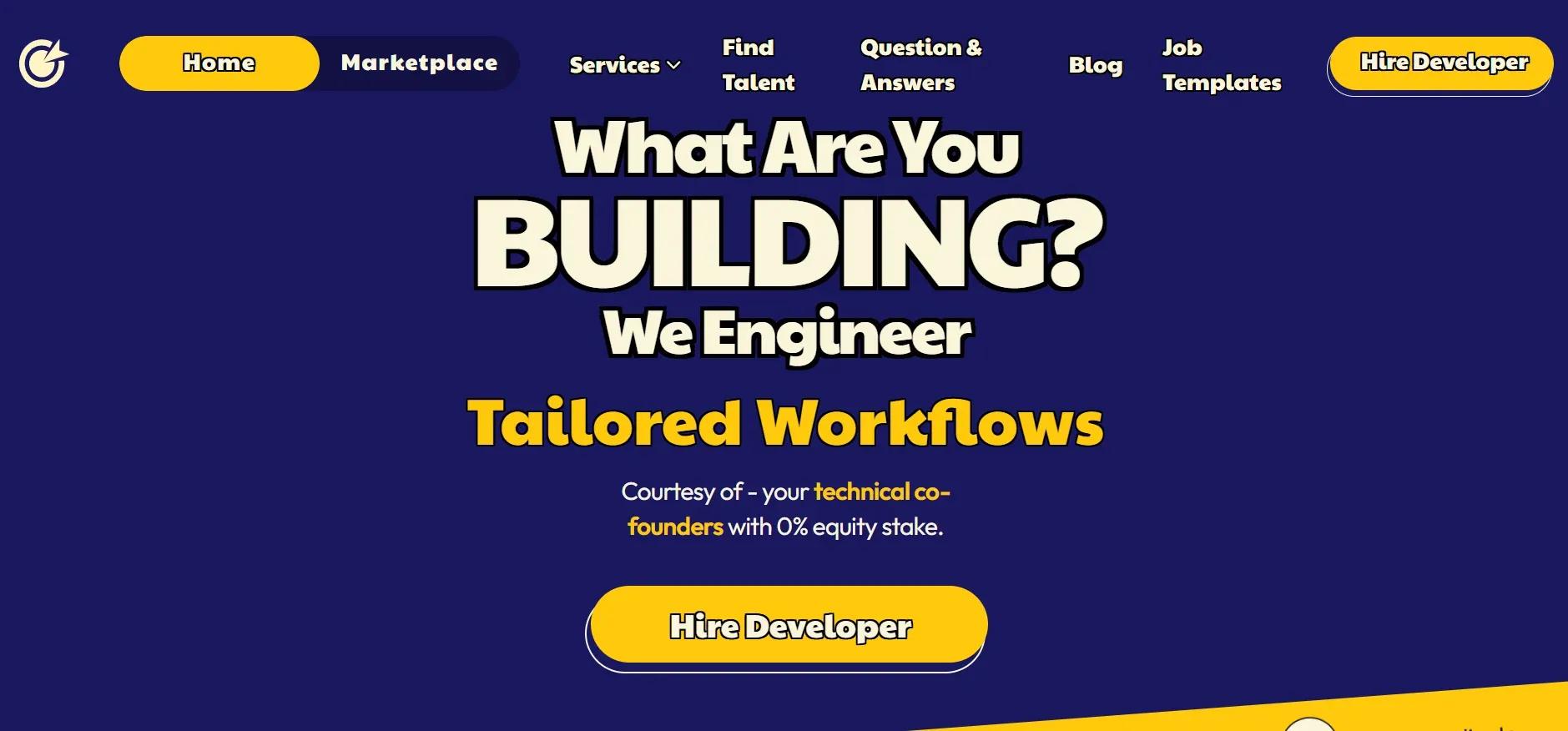
Best for: Teams who want flexible, vetted engineers to implement headless CMS and keep full control.
Softaims hands you a ready pool of pre-vetted frontend, backend, and CMS engineers you bring onto your own team, usually within a couple of days. Instead of handing a replatform to a large agency on a fixed retainer, you get people who model your content, set up the CMS, build the front end, and migrate your pages inside your own sprints, leaving you owning every line of code. They are platform-agnostic, so they help you pick the CMS that actually fits, whether that is Contentful, Sanity, Strapi, Storyblok, or Contentstack, rather than pushing one product. The same team can carry you from a first launch to a full composable setup.
Headless CMS implementation services:
- Content modelling and platform selection
- CMS setup on Contentful, Sanity, Strapi, Storyblok, or Contentstack
- Frontend developers for Next.js and modern front ends
- Content migration without broken links or lost SEO
- Full-stack and backend developers for integrations
- Search, commerce, and third-party connections, with structured data for AI readiness
Key facts: Global engineering network with US-aligned delivery. Flexible pricing, you pay for hours used. A team can be reviewing your setup in roughly 48 hours.
Why choose Softaims? If you want to move quickly, keep full control, and avoid platform lock-in, it is the most flexible of all the headless CMS implementation companies on this list. You can hire CMS and frontend engineers and size the team to the work in front of you.
Considerations: It is a talent and engineering partner, not a fixed-scope agency running a multi-year program, so if you specifically want a large firm to own a long enterprise transformation, a big program partner may suit that better.
2. Devaims
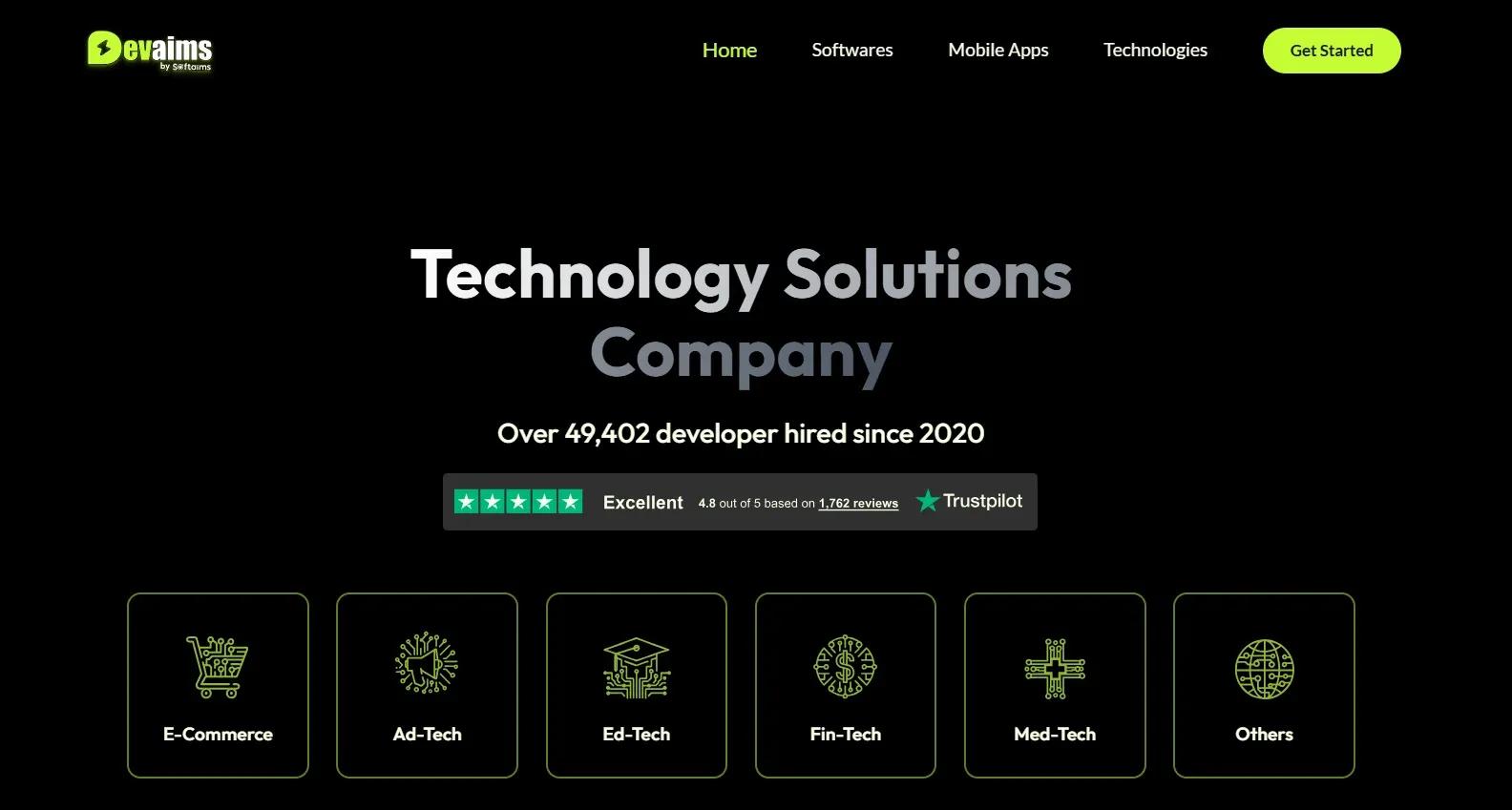
Best for: Teams who want a full headless build or replatform handled end to end.
Devaims, a Softaims brand, takes a headless CMS project from plan through build and into steady running, owning the whole delivery rather than just adding engineers. You get content modelling, CMS setup, the front end, migration, and integrations from one team that stays with the project. It suits organisations that would rather hand over a clear brief and get a working, documented headless setup back.
Headless CMS implementation services:
- Headless architecture and content modelling
- CMS setup and configuration
- Front-end build in modern frameworks
- Content migration and SEO preservation
- Integrations and deployment
- Ongoing support and scaling
Key facts: Global delivery with a distributed team. Flexible pricing by project or team. A sister brand of Softaims.
Why choose Devaims? If you want a single team to own the whole build and stay with it as the site grows, rather than managing people yourself, Devaims fits.
Considerations: It works best with a reasonably clear brief, so a very early, undefined program may want an advisory-led firm to shape strategy first.
3. FocusReactive
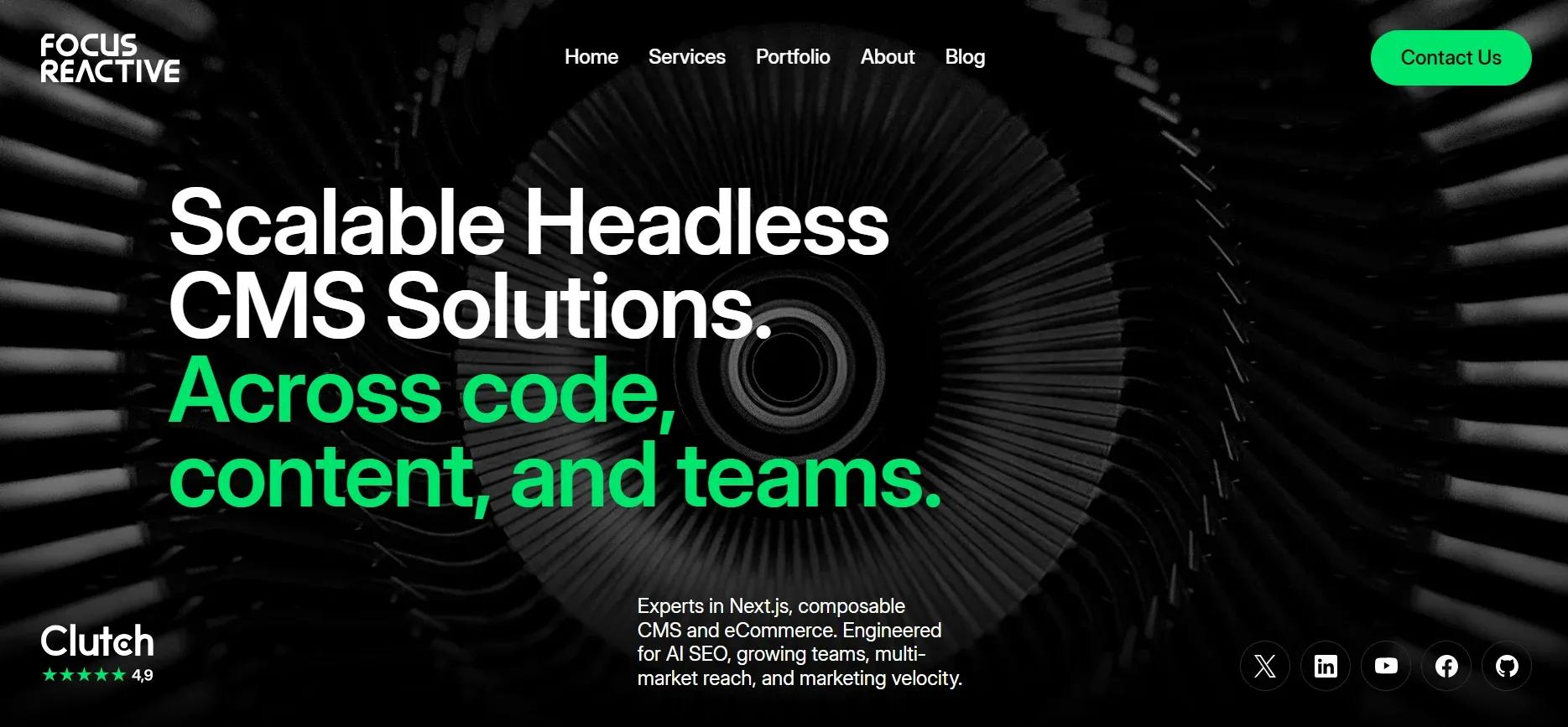
Best for: Multi-platform builds, content architecture, and clean migrations.
FocusReactive is an engineering-led specialist with the widest verified platform coverage on this list, working in production across Sanity, Storyblok, Contentful, Payload, Directus, and DatoCMS, with official partnerships on several. Furthermore, it runs a genuinely vendor-agnostic selection process, backed by case studies showing different platforms chosen for different clients. Content modelling, localization, and editor workflow are treated as primary work, not setup, and structured data for AI readiness is built in from day one. Its Arrive project consolidated four markets onto a single Storyblok and Next.js architecture with a 97 Lighthouse score and a reported lift in organic traffic after launch.
Headless CMS implementation services:
- Platform selection and content architecture
- CMS builds across six platforms
- Migration with SEO preservation
- Localization and multi-market infrastructure
- Next.js front ends with structured data
Key facts: Offices in the Netherlands, UK, and Poland. Mid-complexity builds from around $30,000. Strongest verified multi-platform coverage here.
Why choose FocusReactive? If you want an honest platform recommendation and deep content-modelling skill, it is hard to beat for a content-led build.
Considerations: Front-end delivery is Next.js-focused, and it is not the pick for maintaining a legacy WordPress or Drupal estate alongside the new build.
4. Valtech
Best for: Large, composable enterprise platforms.
Valtech is a global digital agency with deep experience in composable and MACH architecture, and strong partnerships with platforms like Contentful and commercetools. Naturally, it suits large enterprises replatforming complex sites and commerce, where many systems and teams have to work together. For a big, governed program, its scale and process maturity are the draw.
Headless CMS implementation services:
- Composable and MACH architecture
- Enterprise headless and commerce builds
- Content platform strategy
- Large-scale delivery and support
Key facts: Global reach. Premium pricing. Strong on enterprise composable work.
Why choose Valtech? If you are running a large, multi-system replatform, its enterprise depth is hard to match.
Considerations: Its scale and process suit big budgets, so a small site may find it more than it needs.
5. Apply Digital
Best for: Composable enterprise builds with a product mindset.
Apply Digital is a global firm focused on composable, MACH-based digital products, working with content platforms like Contentful and Contentstack. Moreover, it brings strong product and design thinking alongside the engineering, which suits enterprises that want a modern, flexible content stack built around real user needs rather than just a CMS swap.
Headless CMS implementation services:
- Composable and MACH builds
- Content platform implementation
- Product strategy and design
- Enterprise delivery and support
Key facts: Global reach. Premium pricing. Strong product and composable focus.
Why choose Apply Digital? If you want composable enterprise work with real product thinking, it is a strong pick.
Considerations: Like other enterprise firms, it fits larger budgets more than a lean first build.
6. Lucky Media
Best for: Next.js and headless marketing sites.
Lucky Media is a Dallas-based agency focused on modern web development, headless CMS, and performance, centred on Contentful, Sanity, Storyblok, and Statamic with Next.js and Astro on the front end. Notably, it is an official Contentful partner with real migration and modernization experience, and a clear focus on performance, SEO, and giving marketing teams the freedom to publish without a developer. Its client list includes well-known technology and SaaS names.
Headless CMS implementation services:
- Headless CMS development and migration
- Next.js and Astro front ends
- Content modelling and consulting
- Performance and SEO work
Key facts: US-based. Custom pricing. Official Contentful partner.
Why choose Lucky Media? If you are a SaaS or technology team modernising from WordPress or a legacy stack and care about speed and SEO, it is a strong fit among the headless CMS implementation companies here.
Considerations: Its platform focus is a smaller group of CMSs, so for very broad platform choice a wider specialist may suit better.
7. Ikius
Best for: Composable builds that pair a migration with design.
Ikius is a Finland-based agency that builds composable websites and digital products on headless platforms, usually with Next.js on the front end, using one in-house team for strategy, design, and development. It works across DatoCMS, Contentful, Sanity, Strapi, Prismic, and Prepr, and its documented migration for a large technology consultancy, followed by years of support, shows real staying power. It suits teams that want one partner for a rebrand and a headless move at once.
Headless CMS implementation services:
- Headless CMS setup and consulting
- Migration and replatforming
- Next.js and React development
- Website and product design
Key facts: Finland-based, serving the EU, US, and Switzerland. Custom pricing. Design and engineering under one roof.
Why choose Ikius? If brand and design quality matter as much as the technical move, its combined team fits well.
Considerations: As a boutique, it may not have the capacity for the very largest enterprise programs.
8. The Frontend Company
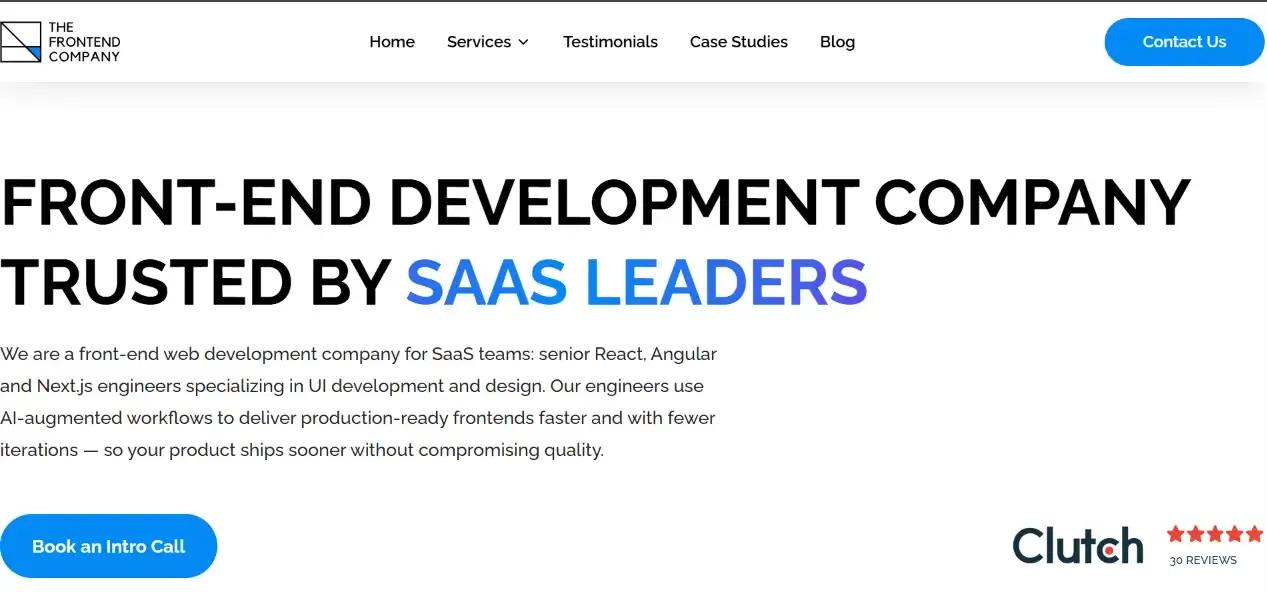
Best for: Frontend-led CMS integration for design-driven sites.
The Frontend Company builds headless solutions across Contentful, Sanity, Strapi, and Directus with React and Next.js, in a frontend-first delivery model where the CMS supports a strong design and editorial experience. That approach fits design-driven brands, e-commerce, and SaaS marketing sites where visual execution and performance matter most, backed by solid client reviews.
Headless CMS implementation services:
- Headless CMS implementation across four platforms
- Content modelling and integration
- React and Next.js front ends
- Migrations and legacy modernization
Key facts: Global delivery. Custom pricing. Strong frontend and UX focus.
Why choose The Frontend Company? If the front-end experience is the main deliverable and the CMS supports it, its design-led model is a good fit.
Considerations: Its frontend-first focus means content architecture and governance get less emphasis than at CMS-first specialists.
9. Bejamas
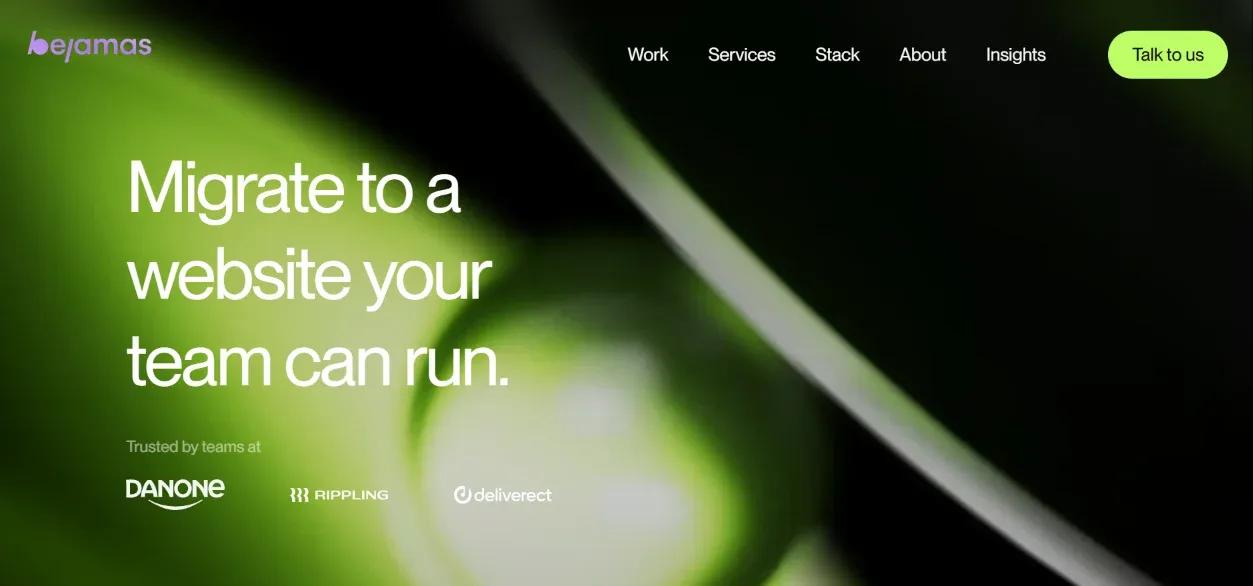
Best for: Jamstack and headless specialists.
Bejamas is a specialist in Jamstack and headless builds, working across platforms like Sanity, Contentful, and Storyblok with modern front ends. Naturally, it suits teams that want a partner living and breathing headless rather than a generalist agency dipping in. In addition, its focus on performance and clean architecture makes it a good fit for fast, content-driven sites.
Headless CMS implementation services:
- Jamstack and headless builds
- CMS setup across major platforms
- Performance-focused front ends
- Content-driven site delivery
Key facts: Global delivery. Custom pricing. Strong headless and Jamstack focus.
Why choose Bejamas? If you want specialists who do headless day in and day out, its focus is the reason to shortlist it.
Considerations: As a specialist, confirm it covers any heavier enterprise integrations you need alongside the headless build.
10. Culture Foundry
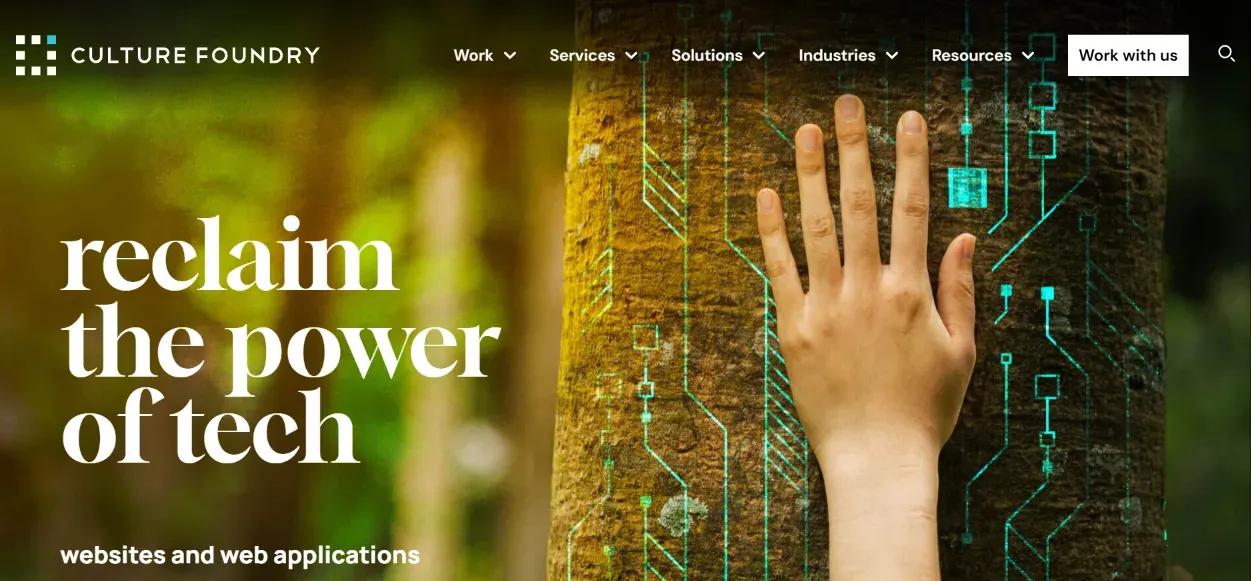
Best for: Organisations weighing traditional versus headless.
Culture Foundry is a US agency with the widest traditional CMS coverage on this list, spanning WordPress, Drupal, Craft CMS, Wagtail, and MODX, plus custom headless builds with React and GraphQL. In fact, its value is strongest when the decision is not yet settled, because it can advise honestly across both traditional and headless without a built-in reason to push the latter. It has deep experience with editorial-heavy organisations where content governance and long-term upkeep come first.
Headless CMS implementation services:
- CMS strategy and platform selection
- Traditional CMS development
- Custom headless builds with React and GraphQL
- Managed hosting and long-term support
Key facts: US-based across multiple time zones. Custom pricing. Strong editorial and advisory focus.
Why choose Culture Foundry? If you are still deciding whether and how to go headless, its cross-architecture advice is genuinely useful.
Considerations: It is not a headless-first shop, so if you are already committed to a cloud-native platform, a specialist will have more depth there.
What Is Headless CMS Implementation, in Plain Words?
A traditional CMS like classic WordPress keeps your content and your website design glued together: the CMS builds the pages and controls how everything looks. A headless CMS splits them apart. The content lives in structured fields and is served through an API to whatever front end you like, whether that is a website, a mobile app, or a screen in a shop. Implementation is the work of setting that up properly, which is far more than installing software.
In practice, a real implementation covers modelling your content so it can be reused across channels, setting up the CMS and a clean editing experience, building the front end that pulls the content through, moving your existing pages across without breaking links or search rankings, and connecting the other systems you rely on. Done well, editors get a place they actually like working in and your site gets faster and more flexible. Done badly, however, you get a half-migrated mess nobody wants to use, which is why the right headless CMS implementation companies spend as much time on content modelling and editor experience as on code. Because the front end is such a big part of this work, our guide to full-stack web development agencies is a useful companion read.
The platforms behind it
Most implementations are built on one of a handful of platforms, and a good partner helps you choose rather than pushing a favourite. For instance, Contentful and Contentstack are popular enterprise choices with strong governance. Sanity, meanwhile, is loved for its flexible, developer-controlled content model. Storyblok is known for a friendly visual editor that marketing teams like. Strapi is a leading open-source option you host yourself for full control, and Payload and Directus are growing fast when the CMS and app share a codebase. Each fits a different kind of team, and picking the wrong one is an expensive mistake to undo later, which is why experienced headless CMS implementation companies start with selection rather than setup.
Headless vs Traditional CMS: The Practical Differences
A traditional CMS couples content and presentation. Because it generates the HTML and controls the templates, the first setup is fast, but problems appear at scale: changing the front end means changing the CMS, and sending content to a mobile app or a second regional site means duplication or workarounds.
A headless CMS, however, removes that coupling. Content sits in structured fields and is delivered through REST or GraphQL APIs. As a result, several front ends can draw from the same content, editorial and development teams can work in parallel, and you can upgrade one side without touching the other. Still, the trade-off is honest: headless has a higher upfront complexity and needs more thought in content modelling to get right. In addition, the editor experience varies a lot with the platform and the quality of the build, which is where good headless CMS implementation companies make the real difference. That last point is exactly why the partner matters, and why the strongest headless CMS implementation companies put editor experience on the same level as performance.
Headless CMS and AI Readiness
There is a newer reason structured content matters, and it is worth planning for now. Specifically, search is shifting from ten blue links toward AI-generated answers, and whether your content gets pulled into those answers depends on how machine-readable it is. As a result, clean content models, explicit relationships between entities, and proper Schema.org markup let AI crawlers extract facts and cite your content as a source, not just rank it. The better headless CMS implementation companies now build this in from the start, designing content for both editors and machines rather than bolting on markup after launch, which is becoming one of the clearer ways to tell apart the leading headless CMS implementation companies from the rest. If being found in AI answers matters to you, ask a prospective partner how they handle structured data and semantic markup.
What Does Headless CMS Implementation Cost?
Pricing across headless CMS implementation companies varies widely, because platform advice, a single marketing site, and an enterprise replatform are very different jobs. The tiers below draw on recent 2027 industry data and are planning ranges, not quotes. Remember that platform licensing is separate, since cloud-native CMSs carry their own monthly or annual subscription that scales with usage.
Platform selection consultancy
If you just want expert help choosing a platform and shaping the content model, advisory engagements commonly run about $5,000 to $20,000.
New implementation, mid-complexity
A new headless build for a single market at mid-complexity typically starts around $30,000 and runs to roughly $80,000, depending on the integrations and how custom the front end is.
Migration with content modelling redesign
By comparison, moving off a legacy platform and redesigning the content model at the same time usually runs $50,000 to $150,000, because cleaning and transforming years of content is real work.
Enterprise multi-market or multi-brand
Finally, a large build serving several markets or brands from one content architecture generally starts around $150,000 and climbs from there, running over many months.
What drives the price
The big levers are the number of pages, how much content has to be migrated, the integrations, and how custom the front end and editing experience need to be. In particular, migration is often the hidden cost. For that reason, a sensible contingency of 15 to 20 percent is wise, because replatforms are where budgets slip. The upside is real too: teams moving off legacy systems often report strong returns, so a good implementation tends to pay for itself, and most headless CMS implementation companies will give you a firmer figure once your content and goals are clear.
Engagement type | Illustrative cost (2027) | Typical timeline |
| Platform selection consultancy | $5,000 to $20,000 | 2 to 4 weeks |
| New mid-complexity build | $30,000 to $80,000 | 2 to 4 months |
| Migration with modelling redesign | $50,000 to $150,000 | 3 to 6 months |
| Enterprise multi-market build | $150,000+ | 6 to 12+ months |
How Long Does a Headless CMS Implementation Take?
Timelines vary between headless CMS implementation companies, but a single site of up to a few thousand pages often takes around 10 weeks, while a multi-site enterprise replatform runs 12 to 20 weeks or more. Moreover, content migration adds time on top, so a small site that builds in 4 to 8 weeks can take 12 weeks once migration is included. Ultimately, the honest rule is that unclear scope and messy existing content are what stretch timelines. Therefore, a partner that maps both during discovery will give you a date you can trust.
How to Choose the Right Headless CMS Implementation Partner
When you shortlist headless CMS implementation companies, five checks separate a safe pick from a risky one. Fortunately, each is easy to run in a first call before you commit any budget.
Watch how they handle your platform preference
A good partner pushes back on a platform choice if the evidence does not support it. However, if a firm instantly agrees with your existing preference without asking about your editors, content volume, localization needs, or integrations, that is a warning sign, not alignment.
Ask how they model content
Content modelling is the foundation. Therefore, ask a partner to walk you through how they would structure your content for reuse, and who leads it, a developer or a content architect. Naturally, a vague answer here is a red flag.
Check their migration experience
Likewise, ask for examples of migrations at your scale, and how they handle redirects, SEO, and broken links. After all, this is where most projects slip, so experience matters more than enthusiasm.
Look at the editor experience
The people using the CMS daily decide whether it sticks. For that reason, ask to see the editing experience a partner builds, and ask to speak with an editorial stakeholder from a past project, not only a technical lead.
Pin down ownership and support
Finally, you should own the code, the content, and the platform accounts, in writing, and know who supports and improves the site after launch.
Questions to Ask Before You Hire
- Which headless CMS platforms have you shipped in production in the last 18 months, and can you name the clients or scope?
- Have you ever recommended against a client's preferred platform, and why?
- What does your content modelling process look like, and who leads it?
- Can we speak with an editorial or marketing stakeholder from a past project?
- What happens when editors hit a use case the content model does not support?
- How do you preserve SEO and redirects through a migration?
- Who owns the code, content, and accounts at the end, and what does support look like?
Naturally, specific answers with real examples are a good sign. By contrast, vague replies, or partnership badges offered as the main proof of skill, tell you most of what you need to know when you compare headless CMS implementation companies.
When Do You Need a Headless CMS Implementation Partner?
Not every team needs outside help, so it helps to be honest about where you are. Generally, a few situations tip the balance toward bringing in one of the specialist headless CMS implementation companies.
For example, migrating a large site with lots of indexed content, where a bad move could cost your search rankings, is a job where experience pays for itself. Similarly, when content has to reach a website, an app, and a partner portal from one source, the model must be designed for that from the start. Another clear case is editors who cannot publish without a developer, because that is an architecture problem a good partner solves.
In addition, expanding into new markets or running several brands on one platform brings localization and governance decisions that really need a deliberate hand. On the other hand, if none of these apply and your platform is already stable, in-house work with light guidance may be enough.
Common Mistakes to Avoid With Headless CMS Implementation
A few mistakes catch most teams. First, skipping content modelling leads to a rigid setup that fights you later, since the model is the hardest thing to change after launch. Second, underestimating migration is why so many budgets slip, with Forrester finding about 53 percent of CMS migrations go over budget or miss their goals. Similarly, choosing the platform first and the needs second often means the wrong fit and a costly switch. In the same way, ignoring editors produces a powerful back end nobody wants to use. And locking into one agency's way of working leaves you stuck when you want to change. Fortunately, the better headless CMS implementation companies steer you clear of these, because their reputation depends on the site still working, and editors still happy, a year later. In short, the right choice among the headless CMS implementation companies is the one that plans for the year after launch, not just launch day.
Frequently Asked Questions
What is the best headless CMS implementation company?
There is no single best one among the headless CMS implementation companies here; instead, it depends on your project. For flexible engineers you embed and control, Softaims fits. Meanwhile, the widest platform coverage and migration depth point to FocusReactive. For large composable enterprise builds, Valtech and Apply Digital fit. In short, match the partner to your platform, scale, and goals rather than a ranking.
What is a headless CMS implementation?
In short, it is the work of setting up a headless CMS properly: modelling your content, configuring the platform and editing experience, building the front end that serves the content through an API, migrating your existing pages, and connecting other systems.
How much does a headless CMS implementation cost?
Platform selection advice runs about $5,000 to $20,000. A mid-complexity build is roughly $30,000 to $80,000, a migration with a content model redesign $50,000 to $150,000, and an enterprise multi-market build starts around $150,000. Platform licensing is separate.
Which headless CMS platforms should I consider?
Generally, common choices include Contentful and Contentstack for enterprise governance, Sanity for a flexible developer-controlled model, Storyblok for a marketer-friendly visual editor, and Strapi, Payload, or Directus for open-source and shared-codebase control. Ultimately, the right one depends on your team, so pick with your partner.
How long does a headless CMS implementation take?
A single site often takes around 10 weeks, and a multi-site enterprise replatform 12 to 20 weeks or more, with content migration adding time. Unclear scope and messy content are the usual causes of delay.
What is a composable DXP, and how does headless fit in?
A composable Digital Experience Platform assembles best-of-breed pieces, content, commerce, search, personalization, through APIs into one architecture. A headless CMS is usually the content piece inside it. The MACH approach, meaning microservices, API-first, cloud-native, and headless, describes the principles these platforms follow.
Should I replatform from WordPress to headless?
Ultimately, it depends on your goals. Teams that move often report big gains in speed and flexibility, but migration is real work, so it is worth it when performance, multi-channel content, or editor frustration are holding you back, less so for a simple brochure site.
Who owns the code and content after implementation?
You should, in full, and it must be in the contract, covering the code, the content, and the platform accounts. Owning these keeps you free to change partners or platforms later.
What should I look for in a case study?
The useful ones name the platform and explain why it was chosen, describe the content modelling decisions, and show editorial outcomes like faster publishing or fewer developer tickets, alongside technical results like load time and SEO held steady through migration. A case study that only lists a frontend redesign is not proof of CMS skill.
Related Reading
If you are scoping a wider build around your headless CMS, these related guides on the Softaims blog may help:
- Top Full-Stack Web Development Agencies
- Full-Stack Web Development Companies in the USA
- Hiring Full-Stack Web Development Companies in the UK
(Update each link to match the exact slug of that post on your blog.)
Final Thoughts
The right partner here depends on what you are really building, and on honesty about platforms more than the length of a client list. So weigh it by your situation. Want the widest platform coverage and deep content-modelling skill? FocusReactive sets the bar. Running a large composable program? Valtech and Apply Digital bring the scale. After a fast Next.js marketing site or a design-led build? Lucky Media, Ikius, and The Frontend Company each have a case, and Culture Foundry can advise if you are still weighing traditional against headless.
Meanwhile, for teams who want to move quickly, keep full control, and avoid platform lock-in, Softaims is our own pick among the headless CMS implementation companies here: vetted engineers on your team who model your content, set up the CMS, build the front end, and migrate cleanly, with the code yours from day one, and Devaims if you would rather hand the whole build over. Whichever way you lean, map out your content and must-have integrations and talk to Softaims about your headless project to see who fits.


 GitHub
 Stackoverflow
Arief S.

 Verified Expert in Engineering
My name is Arief S. and I have over 13 years of experience in the tech industry. I specialize in the following technologies: Flutter, MySQL, MongoDB, TypeScript, PHP, etc.. I hold a degree in Bachelor's degree. Some of the notable projects I've worked on include: Resume, AMI, Cylo, Terkirim, Reharm Mobile, etc.. I am based in Ngawi, Indonesia. I've successfully completed 9 projects while developing at Softaims.
My expertise lies in deeply understanding and optimizing solution performance. I have a proven ability to profile systems, analyze data access methods, and implement caching strategies that dramatically reduce latency and improve responsiveness under load. I turn slow systems into high-speed performers.
I focus on writing highly efficient, clean, and well-documented code that minimizes resource consumption without sacrificing functionality. This dedication to efficiency is how I contribute measurable value to Softaims' clients by reducing infrastructure costs and improving user satisfaction.
I approach every project with a critical eye for potential bottlenecks, proactively designing systems that are efficient from the ground up. I am committed to delivering software that sets the standard for speed and reliability.

Leave a Comment
Need help building your team? Let's discuss your project requirements.
Get matched with top-tier developers within 24 hours and start your project with no pressure of long-term commitment.