Top 10 Cyber Security Risk Assessment Companies
Hiring senior tech talent is slow and expensive, leading over 92% of the world’s top firms to leverage outside engineering partners. This comprehensive guide breaks down the top 10 global IT services outsourcing companies for 2027.
Table of contents
Key Takeaways
- Massive Cost & Speed Savings: IT outsourcing reduces engineering costs by 30% to 50% compared to onshore hiring, while cutting hiring timelines from months down to days.
- Flexible Engagement Models: Choose between staff augmentation (to fill internal skill gaps while retaining full control), dedicated teams (for long-term product builds), or managed services (for end-to-end operational handoff).
- Regional Trade-Offs: Offshore destinations like India offer maximum cost savings and unmatched scale, while nearshore hubs in Latin America provide US time-zone alignment and easier real-time collaboration.
- Selection Strategy: Look beyond developer headcount, evaluate partners on vetting rigor, transparent pricing, ISO 27001/GDPR security compliance, and clear communication habits.
- Matching Firm Size to Project Scope: Global enterprise giants (like Accenture and Infosys) excel at massive digital transformations, whereas boutique and vetted-talent platforms (like Softaims) deliver senior engineers fast without heavy minimum commitments.
Few businesses can build every skill in-house. Hiring senior engineers is slow, and the best talent is scarce and pricey. So more firms hand parts of their tech work to an outside partner. Done well, IT outsourcing gives you expert teams fast, at a lower cost, and without the overhead of full-time hires.
The scale is huge, too. The global IT outsourcing market reached about $638 billion in 2026 and keeps growing. Around 92% of the world's largest firms already outsource some technology work. So the real question isn't whether to outsource, but who to trust with it.
This guide ranks the top 10 IT services outsourcing companies in the world for 2026. You'll see what each firm does and who it fits. After the list, we cover outsourcing models, costs, benefits, red flags, and how to choose. Read it once, and you'll have a clear path forward.
What Is IT Services Outsourcing
IT services outsourcing companies handle part of your technology work for you, on contract. In practice, that means hiring an outside team for the tasks you can't easily cover in-house. That could be software development, cloud, support, or security. The partner supplies the people, process, and tools. You keep your focus on the core business.
It's not just about cutting costs, though. Many firms outsource to reach skills they can't hire locally. Others do it to scale a team fast, or to speed up a launch.
The model is flexible. You can outsource one project, a whole function, or a few extra engineers. So it suits startups and global enterprises alike.
Types of IT Services You Can Outsource
Not all IT outsourcing looks the same. The leading IT outsourcing companies handle very different tasks. Here are the most common ones.
- Software development. Custom web, mobile, and full-stack builds top the list.
- Cloud and infrastructure. Migration, hosting, and management on AWS, Azure, or GCP.
- Cybersecurity. Risk assessments, monitoring, and managed detection.
- QA and testing. Manual and automated testing to catch bugs early.
- IT support and helpdesk. Day-to-day user support and maintenance.
- Data and AI. Data engineering, analytics, and AI or machine learning work.
Most partners cover several of these. So you can bundle related work with one vendor, or split it as needed.
IT Outsourcing Models Explained
Beyond the type of work, you also pick an engagement model. Most IT outsourcing companies offer a few, and each suits a different need. The table below breaks them down.
Model | How It Works | Best For |
| Staff augmentation | Add vetted engineers to your own team | Filling skill gaps fast |
| Dedicated team | A full external team works only on your product | Long-term products |
| Project-based | A vendor delivers a defined project for a fixed scope | One-off builds |
| Managed services | The partner runs a function end to end | Ongoing operations |
There's no single best model, though. Staff augmentation keeps you in control, while managed services hand off the load. So match the model to how much you want to manage.
Onshore vs Nearshore vs Offshore
Where your team sits also shapes cost and collaboration. IT outsourcing companies usually offer all three options, and each trades price against proximity. Here's how they compare.
Option | Location | Trade-off |
| Onshore | Your own country | Easiest to work with, highest cost |
| Nearshore | A nearby region, similar time zone | Good overlap, moderate cost |
| Offshore | A distant, lower-cost region | Biggest savings, wider time gap |
Nearshore has grown fast, especially for US firms using Latin America. It blends solid savings with strong time-zone overlap. Offshore, meanwhile, offers the deepest savings for well-defined work.
Benefits of Outsourcing IT Services
IT services outsourcing companies pay back in several clear ways. Each benefit links to cost, speed, or skill.
- Lower cost. Rates in many regions run far below onshore hiring.
- Faster hiring. A good partner staffs a role in days, not months.
- Access to skills. You reach niche talent in AI, cloud, or security.
- Scalability. You scale a team up or down as needs change.
- Focus. Your core staff stays on the work that matters most.
The gains are real, too. Many firms report 30% to 50% savings versus a local hire, at comparable quality.
Top IT Outsourcing Destinations in 2027
The best IT services outsourcing companies cluster in a few key regions. Each offers a different mix of cost, skill, and time zone. Here's a quick tour.
- India. The largest talent pool by far, with around 5.4 million IT professionals. Strong value and deep skills.
- Latin America. The top nearshore choice for US firms, thanks to time-zone overlap.
- Eastern Europe. Poland, Ukraine, and Romania offer strong senior talent and EU proximity.
- Southeast Asia. Vietnam and the region blend low cost with fast-growing skill.
- The Philippines. Ranked the top outsourcing destination in 2026, strong in support and services.
No single region wins outright, however. India leads on scale and price, while Latin America leads on time-zone fit. So the right destination depends on your goals.
Industries That Outsource IT the Most
Some sectors lean on outsourcing more than others. Each has its own reasons. The table shows the most active.
Industry | Why They Outsource | Common Work |
| Finance | Speed and niche skills | Software, security, data |
| Healthcare | Compliance and scale | Custom apps, support |
| Retail & e-commerce | Seasonal demand swings | Web, mobile, cloud |
| Startups & tech | Fast scaling on a budget | Full product builds |
| Logistics | Legacy modernisation | Integration, cloud |
Across all of them, one pattern holds. When skills are scarce or time is short, IT outsourcing companies fill the gap.
When Should You Outsource IT
Some moments make outsourcing the smart call. If any of these apply, it's worth exploring. Waiting can slow you down.
- You can't hire fast enough. Key roles sit open for months.
- You need a niche skill. The work needs expertise you lack in-house.
- You're scaling quickly. Demand is outpacing your current team.
- Budgets are tight. You need senior skill without a senior salary.
- A deadline looms. A launch needs more hands, and soon.
If two or more ring true, outsourcing likely fits. So weigh it against the cost of staying understaffed.
How We Selected These Companies
This list isn't random. The IT outsourcing companies here each met a clear standard. That keeps the ranking useful rather than promotional. It's a subjective list, however, so treat it as a starting point.
Here's what we weighed:
- Proven delivery. Every firm has a real track record and strong client history.
- Service range. We looked for solid coverage across development and IT services.
- Scale and stability. Years in business and team size both counted.
- Talent quality. Vetting, certifications, and reviews all mattered.
- Flexible engagement. Options from staff augmentation to full delivery added weight.
No firm leads on every measure, though. So each entry ends with a "Best for" note to match it to your needs.
At a Glance: The Top IT Outsourcing Companies Compared
# | Company | Base | Model Strength | Best For |
| 1 | Softaims | Global / offshore talent | Vetted talent, 48-hour matching | Fast, affordable senior engineers |
| 2 | Devaims | Softaims-owned | Product-focused builds | Custom software and mobile |
| 3 | Infosys | Bengaluru, India | Enterprise scale | Deep digital transformation |
| 4 | Wipro | Bengaluru, India | IT plus BPO | One-stop IT and back office |
| 5 | eSparkBiz | Ahmedabad, India | Budget custom builds | Startups and SMBs |
| 6 | Cognizant | Teaneck, US | Domain depth | Healthcare and finance |
| 7 | Capgemini | Paris, France | Engineering at scale | European, engineering-heavy work |
| 8 | Accenture | Dublin, Ireland | Largest global reach | Complex transformation programs |
| 9 | BairesDev | San Francisco, US | Nearshore talent | US time-zone-aligned teams |
| 10 | Andersen Inc. | Global / Europe | Enterprise builds | European engineering depth |
The Top 10 IT Outsourcing Companies in the World
1. Softaims
Softaims tops our list of IT services outsourcing companies with a lean, modern model. Instead of a slow hiring cycle, it connects you with the top 3% of vetted engineers, matched within 48 hours. So you get senior talent fast, and at a fraction of the cost of a local hire.
The talent pool is broad. It spans front-end, back-end, and full-stack developers, plus cloud, DevOps, and mobile specialists. You can hire vetted engineers for staff augmentation, or spin up a dedicated team for a longer build. Either way, the engineers plug into your workflow, join your standups, and work your hours.
That flexibility is the real draw. Giant firms often carry big minimums and long onboarding. Softaims, by contrast, lets smaller teams scale up or down with ease. You can browse available developers or check transparent rates before you commit.
Key highlights:
- Top 3% vetted engineers, matched within 48 hours
- Staff augmentation and dedicated team models
- Full-stack, cloud, DevOps, and mobile talent
- Flexible scaling with no heavy minimums
Best for: Teams that want senior engineers fast, and at a lower cost than a giant firm.
2. Devaims
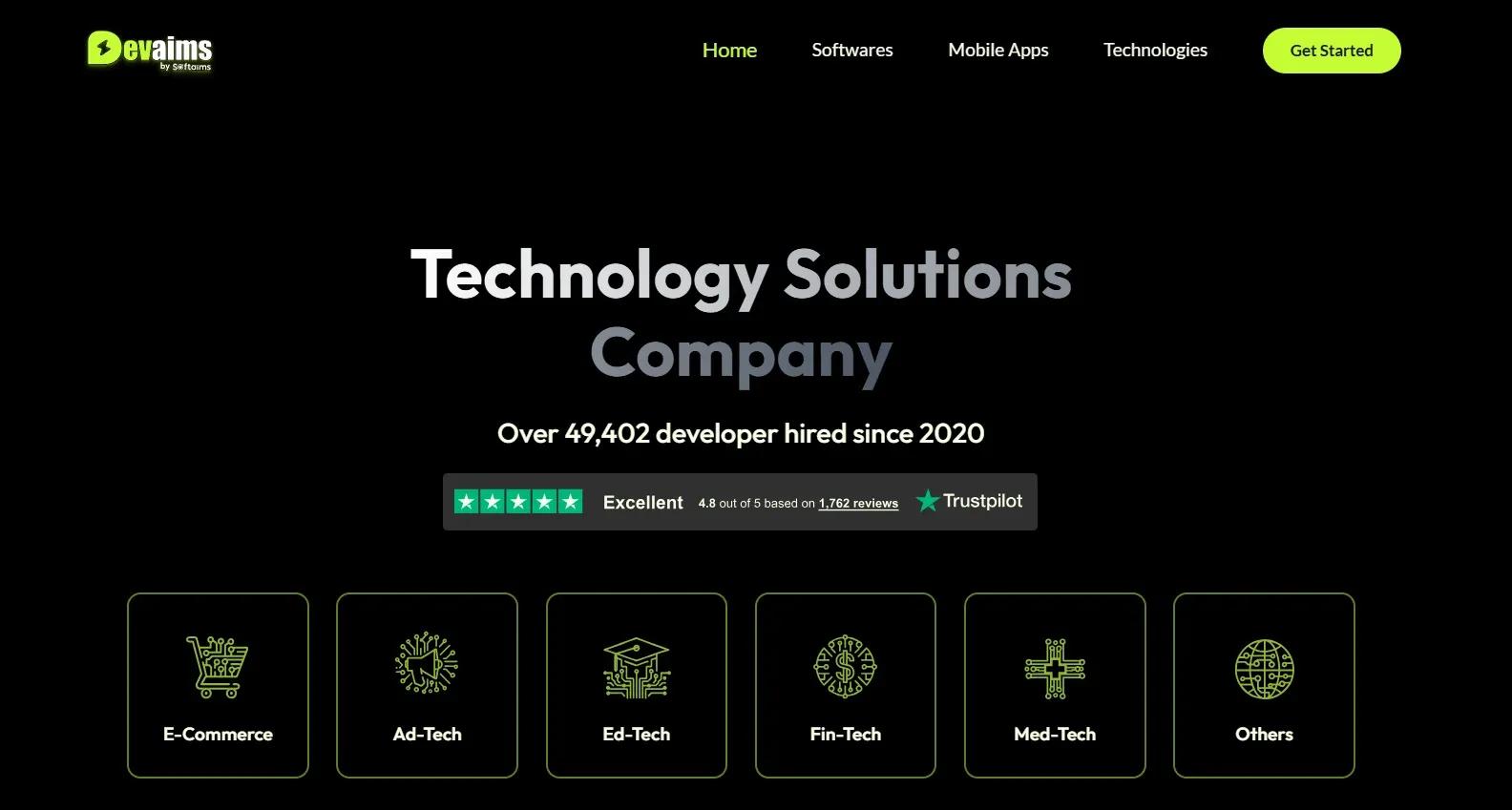
Devaims is a development studio known for custom software and mobile builds. Its engineers ship clean, reliable products across web, mobile, and back-end. The focus stays on quality and clear delivery.
In August 2026, Softaims acquired Devaims. So Devaims clients now tap the same vetted network and 48-hour matching. One partner can handle software development and mobile app development, end to end.
Key highlights:
- Custom software and mobile app builds
- Full-stack and back-end delivery
- Backed by Softaims' vetted talent since 2026
- Web, mobile, and back-end under one roof
Best for: Teams that want a product-focused studio backed by a large talent pool.
3. Infosys
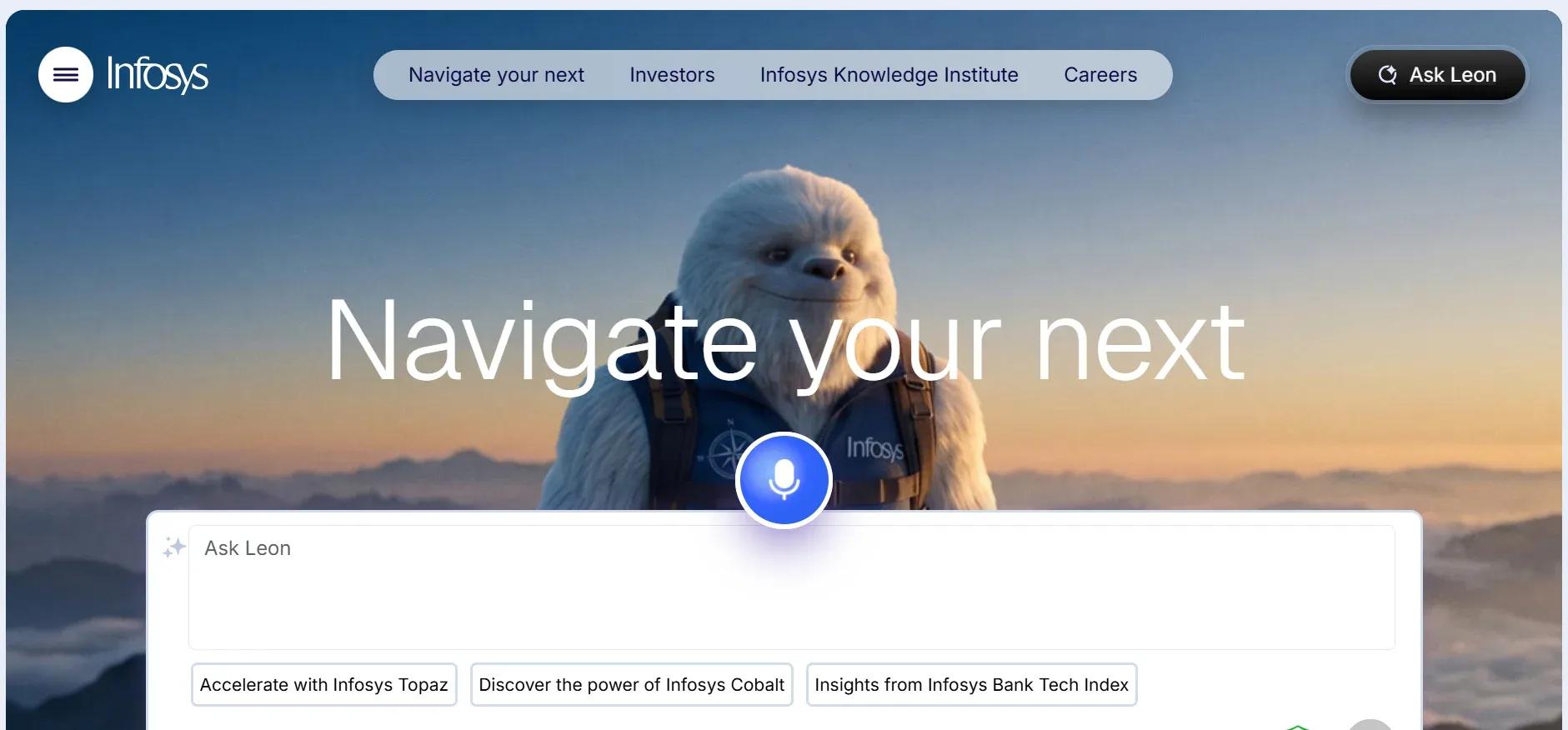
Infosys is one of India's largest IT firms, based in Bengaluru and founded in 1981. With more than 300,000 employees, it serves clients around the world. So it operates at true enterprise scale.
The company covers consulting, digital transformation, cloud, and application management. It also builds its own products, like the Finacle banking platform. Infosys is a common choice for large, multi-year programs. So it suits big enterprises wanting scale and deep transformation work.
Key highlights:
- Global scale with 300,000-plus staff
- Consulting and digital transformation
- Cloud and application management
- Its own banking and software products
Best for: Large enterprises wanting scale and deep digital transformation.
4. Wipro
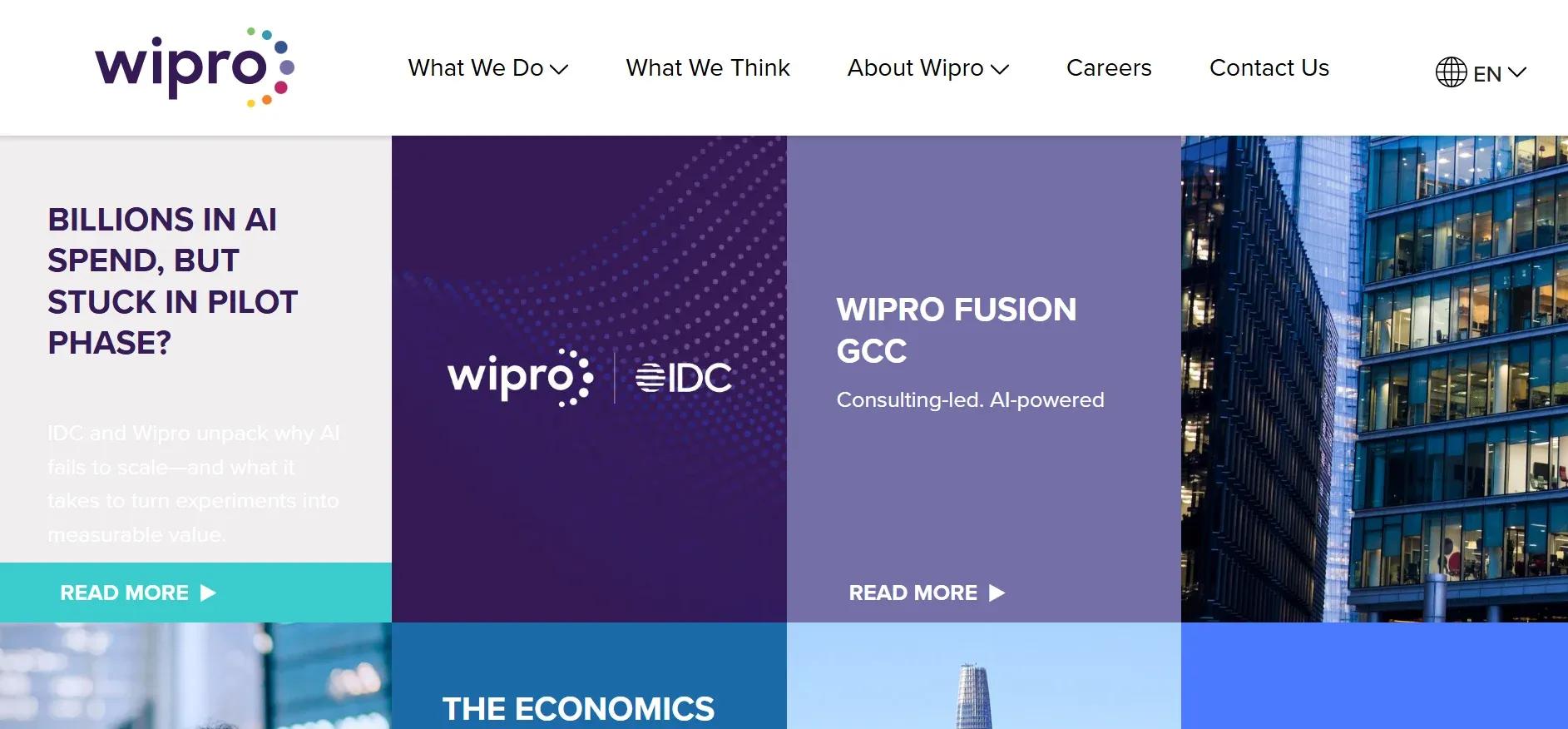
Wipro is another Indian IT giant, also based in Bengaluru. Founded decades ago, it now employs around 230,000 people. Its reach spans IT services, consulting, and business process work.
The firm covers digital, cloud, engineering, and cybersecurity. It also runs large business process outsourcing operations. Wipro suits enterprises that want technology and back-office services together. So it fits firms looking for a broad, one-stop IT partner.
Key highlights:
- Broad IT services and consulting
- Digital, cloud, and engineering work
- Large business process outsourcing arm
- Global delivery across many sectors
Best for: Enterprises wanting IT services and back-office support in one place.
5. eSparkBiz
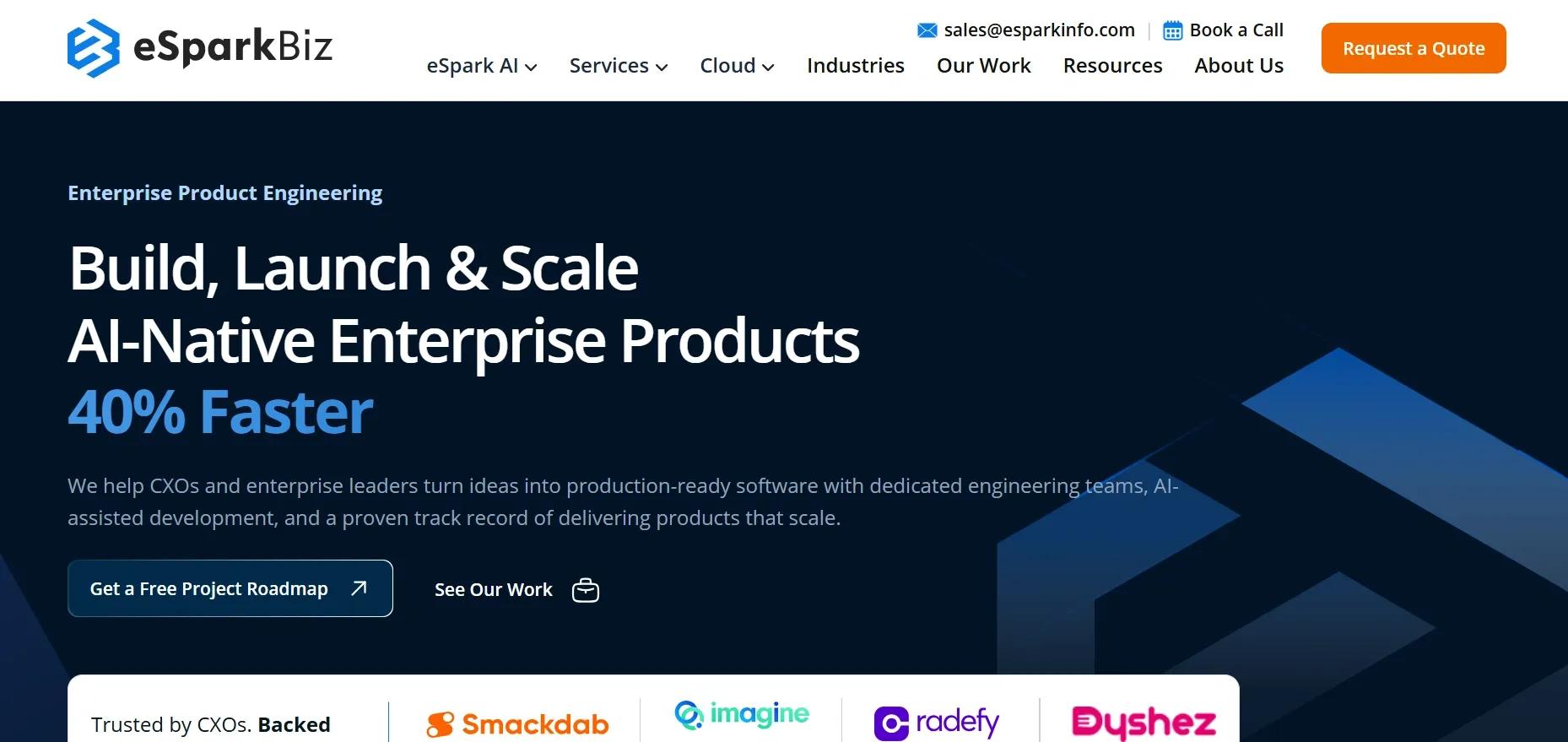
eSparkBiz is a software development company based in Ahmedabad, India, building web and mobile products since 2010. Unlike the giants, it focuses on custom builds and dedicated teams. So it suits smaller firms that want a hands-on partner.
The team covers custom software, AI-driven apps, and IT staff augmentation. It holds CMMI Level 3 and ISO 9001 certifications, which signal solid process quality. Its clients often come from finance, healthcare, and eCommerce. So eSparkBiz suits startups and SMBs wanting affordable, custom development.
Key highlights:
- Custom software and mobile builds
- AI-driven apps and staff augmentation
- CMMI Level 3 and ISO 9001 certified
- Budget-friendly rates for smaller teams
Best for: Startups and SMBs wanting affordable, custom development.
6. Cognizant
Cognizant is a major IT services firm headquartered in Teaneck, New Jersey, and founded in 1994. With over 330,000 employees, it blends US leadership with global delivery. So it brings both scale and reach.
The company covers IT services, consulting, and digital operations. It's especially strong in healthcare and financial services. Cognizant suits regulated industries that need domain depth. So it fits large firms in complex, compliance-heavy sectors.
Key highlights:
- Global scale with US roots
- IT services and digital operations
- Strong in healthcare and finance
- Deep industry and domain expertise
Best for: Large firms in regulated, compliance-heavy industries.
7. Capgemini

Capgemini is a French multinational founded in 1967 and based in Paris. It employs over 340,000 people worldwide. Its work spans consulting, technology, and engineering.
The firm is a leader in Europe, with strong managed services and engineering practices. It covers digital, cloud, and product engineering at scale. Capgemini suits enterprises wanting a broad, Europe-anchored partner. So it fits large firms with engineering-heavy or European needs.
Key highlights:
- Consulting, technology, and engineering
- Strong European presence
- Cloud and digital transformation
- Large-scale managed services
Best for: Large enterprises with European or engineering-heavy needs.
8. Accenture
Accenture is the world's largest professional services firm, headquartered in Dublin, Ireland. Founded in 1989, it now employs over 750,000 people. Its scale and reach are hard to match.
The company covers strategy, consulting, technology, and operations. It runs some of the biggest transformation programs on earth. Accenture suits the largest, most complex projects. So it fits global enterprises with sweeping, high-stakes change to deliver.
Key highlights:
- World's largest professional services firm
- Strategy, technology, and operations
- Massive global delivery network
- Deep expertise across every industry
Best for: Global enterprises running the largest, most complex programs.
9. BairesDev
BairesDev is a nearshore software firm founded in 2009 and headquartered in San Francisco. It draws on the top 1% of Latin American talent, with more than 4,000 engineers. So it blends quality with strong US time-zone overlap.
The firm offers staff augmentation, dedicated teams, and full project delivery. Its bilingual engineers work US hours, which eases collaboration. BairesDev has served clients like Google and Johnson & Johnson. So it suits US firms wanting time-zone-aligned nearshore teams.
Key highlights:
- Top 1% Latin American talent
- 4,000-plus engineers, US time zones
- Staff augmentation and dedicated teams
- Clients from startups to Fortune 500
Best for: US firms wanting time-zone-aligned nearshore teams.
10. Andersen Inc.
Andersen is a global software development company founded in 2007. It has deep engineering roots in Europe and a growing worldwide presence. With several thousand engineers, it delivers enterprise-grade software.
The firm covers custom development, staff augmentation, and full product builds. It's known for strong work in fintech, healthcare, and logistics. Andersen suits enterprises that value European engineering depth. So it fits firms wanting a mature partner for complex builds.
Key highlights:
- Enterprise custom software builds
- Strong European engineering base
- Staff augmentation and dedicated teams
- Focus on fintech and healthcare
Best for: Enterprises wanting European engineering depth for complex builds.
Big Firms vs Boutique Partners
Should you pick a giant or a smaller, focused partner? Both work, and the right call depends on your project. Each has clear strengths.
Large IT services outsourcing companies like Accenture or Infosys bring huge scale and broad services. They suit sweeping, enterprise-wide programs. That said, they often carry big minimums, long onboarding, and premium rates.
Boutique and vetted-talent partners move faster and cost less. They suit focused builds, skill gaps, and fast scaling. A vetted-talent model like Softaims sits neatly here, however. It gives you senior engineers in days, with a flexibility that giants rarely offer. So match the partner to the size and pace of your work.
What to Look For in an IT Outsourcing Partner
IT outsourcing companies vary widely in depth and style. The strongest share a few core traits, however. Keep this checklist close when you compare firms.
- Relevant experience. Look for a track record in your industry and tech stack.
- Talent quality. Ask how they vet engineers, not just how many they have.
- Clear communication. Time-zone overlap and English fluency ease daily work.
- Security and compliance. ISO 27001, GDPR, and NDAs protect your data.
- Flexible model. The right partner fits your workflow, not the other way round.
A partner strong on these points saves you pain later. So weigh them before you sign.
Fixed Price vs Time and Material
Beyond the model, you also pick a pricing structure. Each suits a different project shape. Knowing the difference protects your budget.
Fixed price works best for well-defined projects with a clear scope. You agree on a set cost up front, which limits surprises. It's less flexible, though, if requirements change mid-build.
Time and material suits evolving projects where scope may shift. You pay for actual hours worked, which adds flexibility. So it fits agile builds, while fixed price fits tightly scoped ones.
How Much Does IT Outsourcing Cost
Cost depends heavily on region, seniority, and project complexity. IT outsourcing companies price their work around these rates, which swing widely across the globe. The table below shows typical senior developer rates in 2026.
Region | Senior Developer Rate (2026) |
| North America | $100–$180/hr |
| Western Europe | $80–$120/hr |
| Latin America | $50–$85/hr |
| Eastern Europe | $45–$85/hr |
| South & Southeast Asia | $25–$60/hr |
| Africa | $20–$60/hr |
Source: Accelerance / 2026 industry rate guides
The spread is wide. A senior engineer at $100 an hour in the US might cost half that through a strong offshore or nearshore partner, at similar quality. Still, the rate isn't the whole story. Management overhead, onboarding, and rework all shape the real cost.
This is where a vetted-talent model helps. Teams that hire developers through Softaims reach senior engineers below onshore rates, with matching in 48 hours. So you save on both cost and time, without cutting corners on quality.
Risks of IT Outsourcing (and How to Reduce Them)
Outsourcing brings clear gains, but also real risks. Knowing them helps you plan. Each risk has a practical fix.
Communication gaps are common, especially across time zones. Regular standups and a single point of contact help a lot. Quality can also vary, so ask for code reviews and a clear QA process.
Security is a bigger worry, however. Protect your data with NDAs, ISO 27001 checks, and least-privilege access. Finally, watch for hidden costs, since rework and management overhead add up. So build a 15% to 20% buffer into your budget.
Red Flags to Watch For
Spotting warning signs early saves money and stress. One clear red flag is vague pricing. If a vendor can't explain what drives the cost, surprises may follow.
Watch, too, for weak communication. Slow replies or unclear updates during sales often get worse later. A partner that can't explain its work simply may struggle once the project starts.
Poor vetting is another concern, however. Ask how a firm screens its engineers, since headcount alone means little. For more on clear communication, MindTools offers useful guidance. And to gauge how current a team is, ask what they've followed lately on sites like TechCrunch.
How to Choose the Right Partner Step by Step
Choosing a partner is a structured decision, not a guess. Run through these steps to narrow the field.
- Define the goal. Fix the core need first; a project, a team, or a skill gap.
- Set the model. Decide between staff augmentation, a dedicated team, or full delivery.
- Check relevant proof. Ask for case studies in your industry and stack.
- Test communication. Judge clarity, speed, and time-zone fit early.
- Confirm security. Verify ISO 27001, GDPR, and NDA practices.
- Compare total cost. Weigh rates against overhead, onboarding, and delivery speed.
Work through these in order, and the right fit stands out. In practice, the best IT services outsourcing companies welcome these questions rather than dodge them.
How to Manage an Outsourced Team
Hiring one of the many IT outsourcing companies is only half the job. Managing the work well decides the outcome. A few habits make a big difference, however.
Start with clear goals and written requirements. Then set regular check-ins, so nothing drifts. Also use shared tools for tracking, code, and chat, which keeps everyone aligned. Finally, treat the team as part of your own, since trust and inclusion drive better work. So the more you invest in the relationship, the more you get back.
Common Mistakes to Avoid
Even careful teams slip up. A few mistakes come up again and again. Avoiding them makes any engagement smoother.
First, don't chase the lowest rate alone. The cheapest quote often costs more once rework is counted. Second, don't skip a clear scope. Vague requirements lead to delays and disputes.
Third, avoid poor communication habits. Set regular updates and a single point of contact. Finally, don't ignore security, since your data and IP are at stake. So treat the partnership as a relationship, not just a transaction.
Trends Shaping IT Outsourcing in 2027
The field keeps moving, so it pays to watch what's next. These trends are reshaping how IT outsourcing companies work. Three shifts stand out this year.
AI is reshaping delivery fast. Partners now use AI to speed coding, testing, and reviews. So teams ship more with fewer hands, and vetting for AI skills matters more.
Nearshoring is also rising, especially for US firms using Latin America. Time-zone overlap and cultural fit drive that shift. Meanwhile, security and compliance keep climbing the priority list, as clients demand proof of strong data practices. Together, these trends favour partners that pair talent with modern tools.
Signs of a Reliable Outsourcing Partner
Not every vendor lives up to its pitch. A few signs point to a partner you can trust. Look for these before you commit.
- Transparent pricing. Costs and models are explained clearly, with no vague quotes.
- Real references. The firm shares client case studies and lets you speak to them.
- Strong vetting. It can explain exactly how it screens and tests engineers.
- Clear communication. Replies are prompt, and updates are easy to follow.
- Solid security. ISO 27001, NDAs, and GDPR practices are in place.
The best IT outsourcing companies tick all five without hesitation. So treat any gap here as a reason to keep looking.
Frequently Asked Questions
What do IT services outsourcing companies do?
They handle technology work for other businesses. That covers software development, cloud, security, support, and more. Many supply vetted engineers who join your team, or full teams that deliver a project end to end. In short, they give you tech skills and capacity without full-time hires.
Is IT outsourcing cheaper than hiring in-house?
Usually, yes. IT outsourcing companies in many regions charge 30% to 50% below onshore hiring, at comparable quality. You also skip recruitment, benefits, and office costs. That said, the real saving depends on managing the engagement well.
What's the difference between staff augmentation and a dedicated team?
Staff augmentation adds individual engineers to your existing team. You manage them directly, like your own staff. A dedicated team, by contrast, is a full external group with its own lead. So augmentation keeps you in control, while a dedicated team offloads more.
How do I keep my data safe when outsourcing?
Start with strong contracts, including NDAs and clear IP terms. Then check security standards like ISO 27001 and GDPR compliance. Limit access to only what each engineer needs. A trustworthy partner will welcome these steps, not resist them.
Conclusion
IT outsourcing gives you skills, speed, and savings without the weight of full-time hiring. The IT services outsourcing companies above range from global giants to focused, flexible partners. Each fits a different need.
Match your choice to three things, though: project size, budget, and how much you want to manage. If you want senior engineers fast and without giant-firm overhead, Softaims can match you within 48 hours. You can also browse the talent pool to see who fits.
Ready to start? Define a clear scope, then pick the partner that fits your goals. Have a question about your project? Reach out, and let's talk it through.


 GitHub
 Stackoverflow
Binesh S.

 Verified Expert in Engineering
My name is Binesh S. and I have over 15 years of experience in the tech industry. I specialize in the following technologies: IT Compliance Audit, Risk Assessment, Penetration Testing, Web Application Security, OWASP, etc.. I hold a degree in Master of Science (MS), Master's degree. Some of the notable projects I've worked on include: Cloudflare configuration and automation, CNAPP AWS cloud, CWPP Multi Cloud, CSPM Multi Cloud, CSPM Azure Cloud, etc.. I am based in Chennai, India. I've successfully completed 32 projects while developing at Softaims.
I employ a methodical and structured approach to solution development, prioritizing deep domain understanding before execution. I excel at systems analysis, creating precise technical specifications, and ensuring that the final solution perfectly maps to the complex business logic it is meant to serve.
My tenure at Softaims has reinforced the importance of careful planning and risk mitigation. I am skilled at breaking down massive, ambiguous problems into manageable, iterative development tasks, ensuring consistent progress and predictable delivery schedules.
I strive for clarity and simplicity in both my technical outputs and my communication. I believe that the most powerful solutions are often the simplest ones, and I am committed to finding those elegant answers for our clients.

Leave a Comment
Need help building your team? Let's discuss your project requirements.
Get matched with top-tier developers within 24 hours and start your project with no pressure of long-term commitment.