Top 10 Software Development Companies in the UK (Complete 2026 Guide)
Find the best software development companies in the UK for 2026. Compare their expertise, pricing, and delivery models to choose the right partner for your next software project.

Table of contents
Key Takeaways
- Compare the 10 best software development companies in the UK for 2026.
- Learn which companies are best for startups, enterprises, AI, and custom software.
- Understand UK software development costs, hourly rates, and delivery models.
- Discover how to evaluate vendors based on expertise, security, and compliance.
- Explore the pros and cons of onshore, nearshore, and offshore development teams.
- Avoid common mistakes that lead to delays, budget overruns, and poor code quality.
- Use a practical checklist to confidently choose the right software development partner.
When you're looking for a software development company in the UK, you're usually making an important decision within a limited budget and timeline. You need a partner who can build reliable software, comply with UK regulations such as the UK GDPR, and deliver your project on time. The challenge is that the UK software market is crowded, and many companies offer similar services, making it difficult to know which one is the right fit.
The numbers show just how competitive the market has become. The UK custom software development market was worth around $1.93 billion in 2024 and is expected to grow to $5.8 billion by 2030, at a 20.2% CAGR. At the same time, the UK's technology sector contributes around £101 billion to the economy each year and supports approximately 1.7 million jobs. With so many companies to choose from, finding the right development partner takes more than comparing websites or reviews.
This guide highlights 10 of the best software development companies in the UK. Instead of simply listing popular names, it explains what each company specializes in, where it operates, and the types of projects it's best suited for. Whether you're looking for a fully UK-based team or a company that combines UK project management with global engineering talent, this guide will help you find the right partner for your business.
The state of the UK software development market in 2026
The UK is Europe's leading technology hub, with world-class engineering talent concentrated in London's fintech corridor and startup scene, alongside deep-tech clusters in Cambridge, Oxford, Edinburgh, Manchester, and Bristol. The government's own assessment is that the UK has the largest AI sector in Europe and the third largest in the world, which sits alongside a mature financial-services and public-sector software base. That combination makes the country a strong place to find engineers who understand regulated, high-stakes environments.
Demand is climbing across the board. The broader UK software market is expected to grow from about $41.9 billion in 2024 to roughly $63.6 billion by 2030, and enterprise software remains the largest and fastest-growing segment. Globally, custom software development is expanding even faster, from an estimated $43.16 billion in 2024 to $146.18 billion by 2030 at a 22.6% CAGR, so UK buyers are competing for talent inside a worldwide surge in demand.
Challenges in the UK Software Development Industry
Building software in the UK comes with a few challenges. There is a growing shortage of experienced developers, especially in AI, cloud computing, and cybersecurity. Development costs are also higher, particularly in London and the South East. Many companies offer similar services, making it difficult to tell which ones have real technical expertise. Choosing the wrong development partner can lead to delays, higher costs, poor code quality, and expensive rework later in the project.
Future of UK Software Development
The good news is that many UK software companies now use hybrid delivery models, combining UK-based project management and consulting with nearshore or offshore development teams. This helps businesses reduce costs while maintaining clear communication and project oversight. Better collaboration tools, cloud platforms, and remote work have also made it much easier for distributed teams to collaborate. The best UK software development companies combine local business knowledge with global engineering talent, giving clients the benefits of both quality and cost efficiency.
How we ranked the top software development companies in the UK
Every company here was assessed against a consistent set of criteria designed to surface vendors that serve the UK market well in practice, not just on a services page.
Track record and longevity. We favored firms with verifiable histories of delivering complex projects for UK clients, prioritizing documented case studies, named references, Companies House records, and multi-year engagement patterns over portfolios heavy on logos and light on detail.
Technical depth and specialization. We weighed service coverage, technology stack breadth, cloud and security certifications, and, where available, engineering seniority and retention. A vendor that can describe concretely how it handles architecture, code review, QA, and DevOps is meaningfully different from one that lists every technology it has ever touched.
Client feedback and reputation. Independent reviews on platforms such as Clutch, G2, and GoodFirms were weighted toward specific project outcomes rather than generic praise, since consistency across engagements matters more than one standout result.
Compliance and security posture. In a market shaped by UK GDPR, Open Banking, and public-sector frameworks such as G-Cloud, credentials like ISO 27001, ISO 9001, and Cyber Essentials carry real weight, and we treated them as meaningful signals of delivery maturity.
Pricing transparency and engagement flexibility. Vendors that publish clear rate ranges and offer defined engagement structures scored higher than those whose pricing requires a lengthy sales process to decode.
Quick comparison: top 10 software development companies in the UK
Company | Best For | Delivery Model | Typical Rate |
| Softaims | Vetted managed teams | Managed team + staff augmentation | Transparent by skill/region |
| Devaims | Full-cycle web & mobile | End-to-end product delivery | Project-based |
| Softwire | Premium enterprise & public sector | Onshore London consultancy | £120–160+/hr |
| One Beyond | Long-term bespoke products | Onshore UK + nearshore (Spain) | £70–120/hr |
| Emvigo | Cost-aware custom builds | UK strategy + global engineering | £50–90/hr |
| Geeks Ltd | AI-led transformation | AI consultancy + development | £70–120/hr |
| ELEKS | Enterprise engineering | Full-cycle consulting + dev | £50–99/hr |
| Tech Alchemy | Emerging-tech products | Bespoke product development | £70–120/hr |
| Imaginary Cloud | Web & mobile products | Product design + development | £70–120/hr |
| Intellectsoft | Digital transformation | Consultancy + delivery | £50–99/hr |
The 10 software development companies in the UK
1. Softaims (a managed dedicated team)

Best for: UK companies that want a vetted, coordinated development team at competitive blended rates, without London's premium or a drawn-out local hire in a tight skills market.
Most UK options leave you either paying top-of-market London rates or screening freelancers one by one. Softaims gives you an entire dedicated development team, front-end, back-end, and QA under a project manager, drawn from 25,000+ pre-screened engineers, and it fits the hybrid delivery model most UK firms now run: strategy and ownership kept close, engineering sourced from a wider pool with working-hours overlap for UK teams. Every developer clears multi-stage vetting for technical skill, communication, and English fluency, so you hire the top 3% of vetted developers rather than gambling on an unvetted profile.
The model spans any modern stack, MERN, Python, React Native, native mobile, and more, and scales from MVP to enterprise-grade platform. With no platform fees or hidden markups, you can compare transparent rates by skill, technology, and region before signing and browse 25,000+ vetted remote developers up front.
Key advantages:
- No platform fees or hidden markups; transparent rates reviewed before you sign.
- A managed dedicated team with a project manager and guaranteed milestones.
- No ghosting or turnover, with NDAs standard and IP protected, useful under UK GDPR obligations.
- Matched with vetted developers in 24–48 hours, with UK working-hours overlap.
Limitation: Softaims suits organizations that need scalable, reliable software development. For a quick one-off marketing task or a small design gig, a gig marketplace is the cheaper route.
2. Devaims
Best for: Businesses that want one accountable team to own a web or mobile product end to end.
Devaims takes full ownership of custom builds, native iOS and Android, React Native, web, ecommerce, SaaS, and QA, from discovery through post-launch support, with strong system-integration skills for connecting new software to existing tools. If you'd rather hand a whole product to one team than juggle separate vendors, this is the model.
The catch: It's smaller than the enterprise names below, so it's a better fit for owning a product than for bulk staff augmentation.
3. Softwire
Best for: Premium enterprise and public-sector delivery where quality outweighs cost.
A privately owned London consultancy with a long run on the Sunday Times Best Small Companies list, Softwire deliberately limits its client load to protect delivery depth. Named clients include the BBC, the Department for Education, and Google DeepMind.
The catch: You're paying top-of-market London rates. For a lean MVP, that's more firepower than you need.
4. One Beyond
Best for: Long-term bespoke products that need certified process and continuity.
One Beyond, formerly DCSL GuideSmiths, has been building bespoke software since 1994, which places it among the longest continuously operating software consultancies in the UK. Its team of 200-plus spans onshore UK engineers and nearshore delivery centres in Spain, and it holds ISO 9001 and ISO 27001 certifications along with AWS partner status. The blend of UK oversight, certified process, and nearshore capacity makes it a dependable choice for long-term, evolving products.
The catch: Its strength is multi-year, evolving products; it's less of a fit for a quick, throwaway build.
5. Emvigo
Best for: UK oversight at competitive blended rates.
Emvigo is a London-headquartered, ISO 9001-certified agency that has built custom software, mobile applications, AI-powered solutions, and cloud infrastructure for over a decade, with a portfolio spanning fintech, healthcare, compliance, energy, and real estate. It runs a hybrid delivery model, UK-based strategy and client relationships combined with global engineering execution, to keep costs competitive without compromising oversight. It fits growth-stage and mid-market clients that want UK accountability at a lower blended rate.
The catch: The hybrid model means some delivery sits offshore, so confirm the communication cadence fits your team.
6. Geeks Ltd

Best for: AI and automation embedded in a bespoke build.
Geeks Ltd is an award-winning AI consultancy and custom software development company with well over a decade of experience and a large project portfolio. It focuses on helping senior leaders in transport and logistics, construction, manufacturing, energy, education, and government use AI to cut costs, automate manual workflows, and build durable advantage. It is a strong fit for organizations that want AI and automation embedded in a bespoke build rather than bolted on afterwards.
The catch: When AI is the headline, ask for shipped, production examples, not a capabilities deck.
7. ELEKS
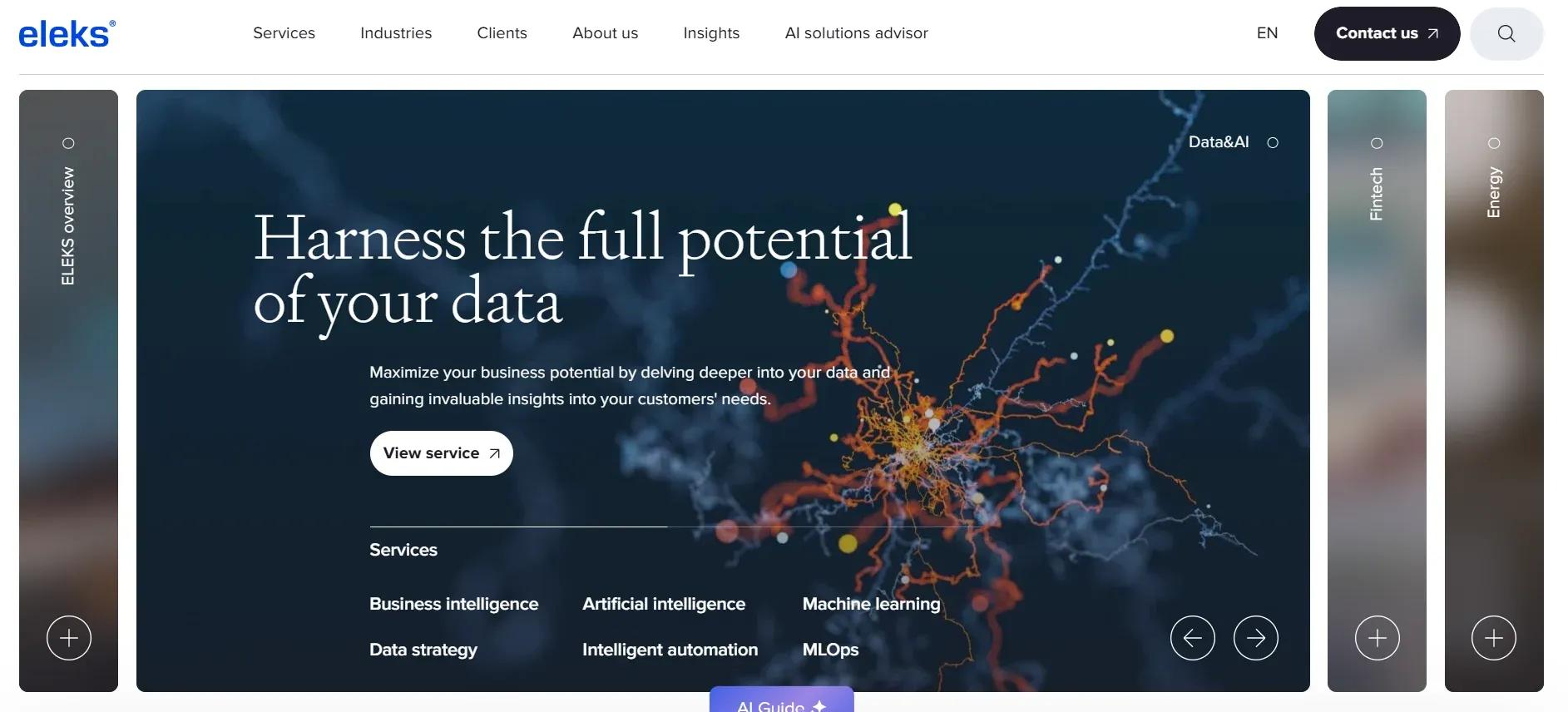
Best for: Complex, full-stack enterprise engineering and modernization.
Active since the early 1990s, ELEKS covers the full lifecycle, from custom application and enterprise software development through AI, cloud migration, legacy modernization, and data engineering. With more than 2,000 specialists and a long record of complex delivery, it serves enterprise clients across fintech, healthcare, energy, and logistics, including recognizable UK names. It suits organizations running complex, data-intensive programmes that need real engineering depth across the stack.
The catch: Built for complexity, so a simple MVP can feel over-engineered for what you need.
8. Tech Alchemy
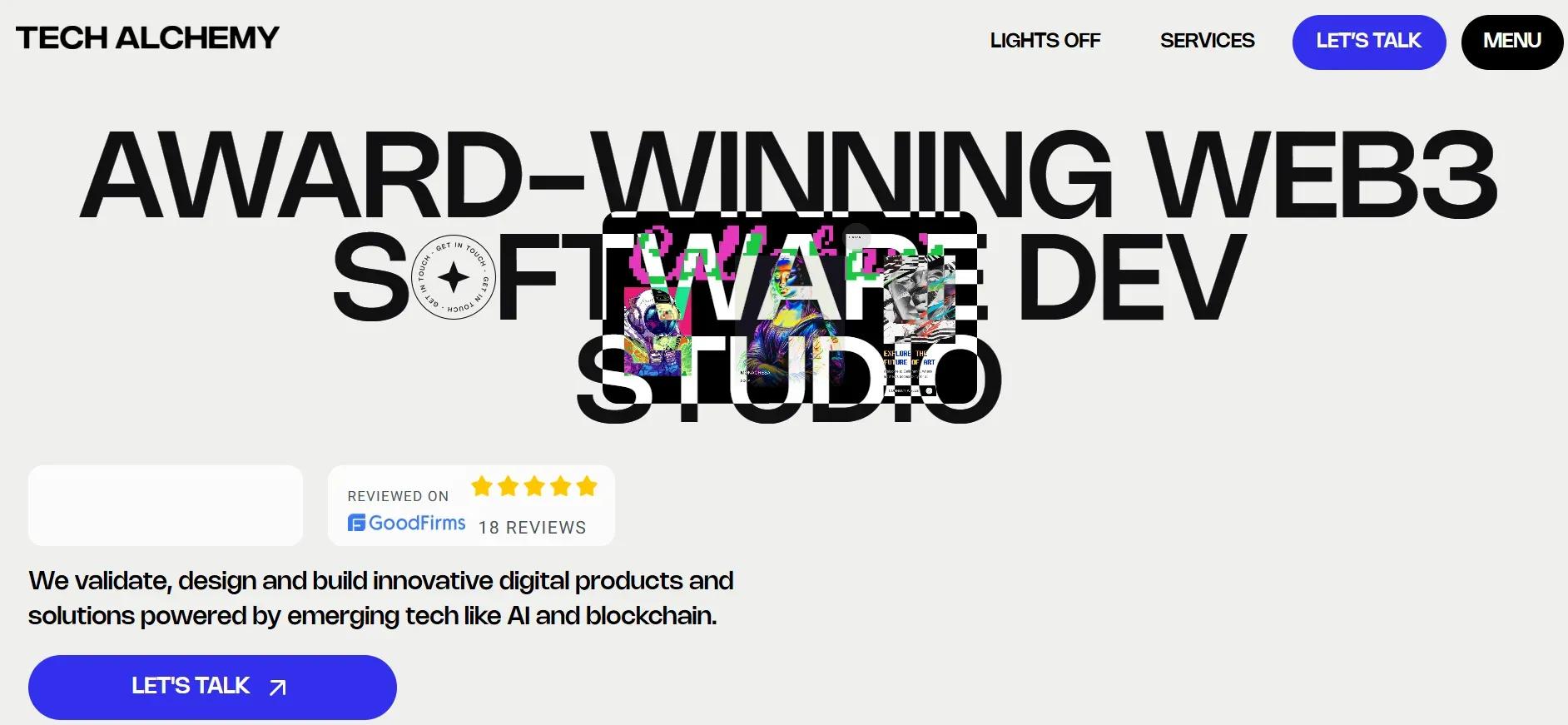
Best for: Ambitious products built on emerging tech like blockchain or AI.
Tech Alchemy is a bespoke software development company known for full-stack delivery with a strong focus on integrating emerging technologies such as blockchain and AI. Client feedback consistently highlights its collaborative, partner-like approach and reliable project management. It suits ambitious product teams that want an engineering partner comfortable with newer technologies rather than a purely conventional web and mobile shop.
The catch: Emerging-tech focus is a strength only if your project actually needs it; otherwise you're paying for capability you won't use.
9. Imaginary Cloud
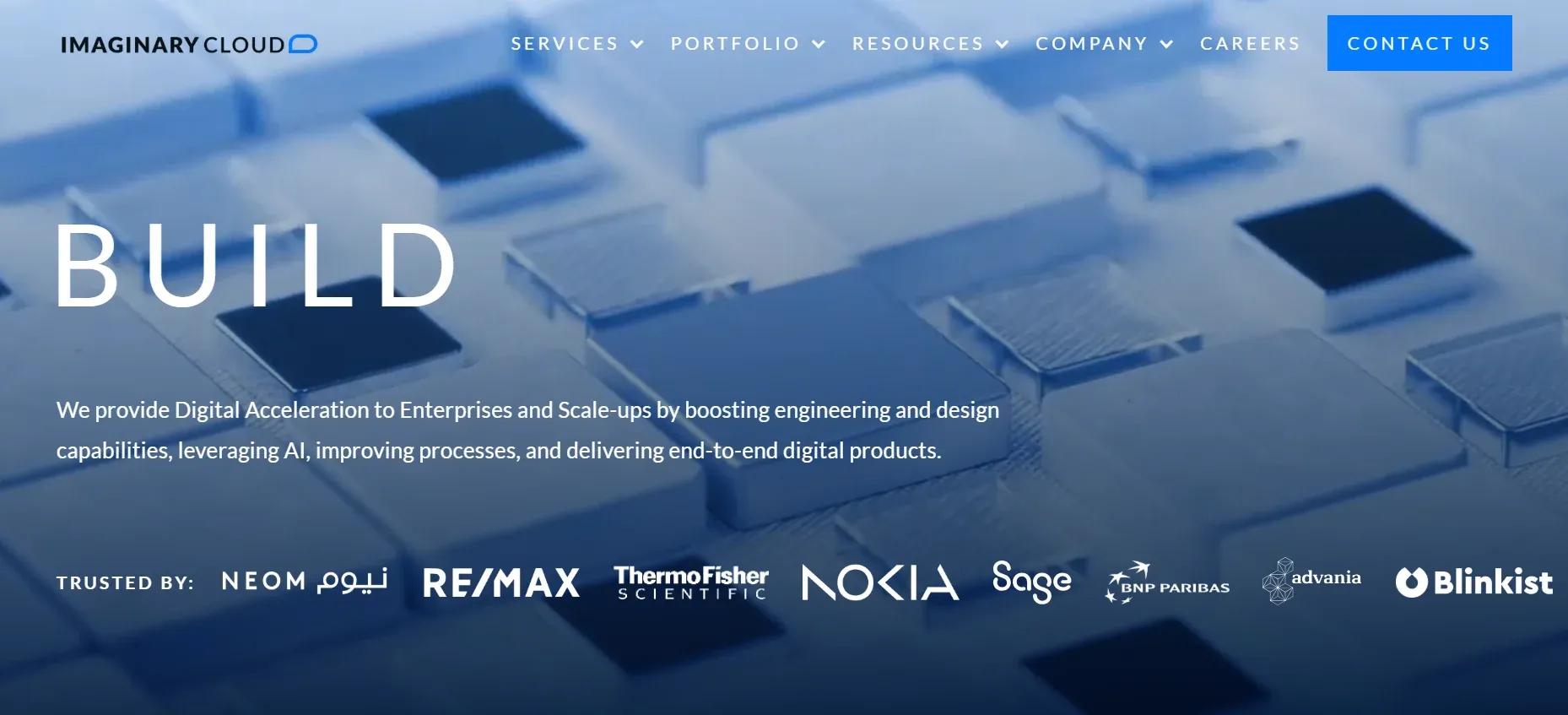
Best for: UX-led web and mobile products.
Imaginary Cloud brings more than a decade of experience building web and mobile products, with recognition as a leading UK B2B company and a strong emphasis on design alongside engineering. It works well with startups and businesses that need a polished, user-focused product delivered by a team that treats UX and engineering as a single discipline rather than separate stages.
The catch: Its sweet spot is polished, user-facing products; it's less of a fit for heavy back-office enterprise systems.
10. Intellectsoft

Best for: Organizations that need a transformation strategy plus the team to build it.
Intellectsoft is a digital transformation consultancy that pairs strategic IT consulting and CX design with full custom software development and project lifecycle support. It positions itself around emerging technologies alongside conventional web and mobile work, and has delivered for recognizable enterprise and government clients. It suits organizations that want a consultancy able to shape strategy and then execute at scale.
The catch: As a broad consultancy, make sure you're assigned the specialists your project needs, not a generalist pod.
How to choose the right software development partner
Selecting a software development company is one of the most consequential decisions a technology leader makes, and four dimensions consistently separate successful engagements from disappointing ones.
Define your goals and success metrics first. There is a meaningful difference between needing a team to execute a defined backlog, needing a partner to help decide what to build, and needing to augment an internal team with specific skills. Decide what success looks like, whether that is shipping a feature by a deadline, hitting an uptime target, or reducing infrastructure cost, before you open vendor conversations. Partners who understand your definition of success structure their team around your outcomes rather than a default playbook.
Assess cultural and communication fit. A technically strong team that avoids hard conversations will underdeliver relative to a slightly less impressive team that operates with transparency. A useful interview test is to ask a prospective vendor to describe a project that went wrong and how they handled it; a candid, specific answer that includes their own missteps is a good signal. For hybrid and nearshore models, be honest about how your team actually works: async workflows tolerate a time gap, but real-time product decisions do not.
Evaluate security and compliance directly. In the UK, requirements are shaped by UK GDPR and, in regulated sectors, by frameworks such as Open Banking, FCA expectations, and public-sector standards like G-Cloud. Any vendor handling sensitive data should demonstrate ISO/IEC 27001 alignment and, ideally, Cyber Essentials certification. Beyond credentials, ask concretely how a vendor handles code ownership, intellectual property assignment, data residency, and background screening of engineers with system access.
Choose an engagement model that matches how you work. A fixed-price model fits well-defined, stable scopes and shifts schedule risk to the vendor, but it resists change. A time-and-materials model suits ongoing development with shifting priorities, provided you keep an active product owner on your side. A dedicated team model offers continuity: a stable, named team that builds institutional knowledge over time and tends to produce the best outcomes for complex, long-running products.
Trends shaping software development in the UK
Four forces are reshaping how products are built and which UK software development companies are best positioned to deliver.
AI and machine learning are now a baseline, not a bonus. Coding assistants are standard in engineering workflows, compressing timelines and making raw headcount matter less than it used to. At the product level, embedded AI features such as intelligent search, recommendation engines, and predictive analytics have moved from differentiator to expected roadmap item, reinforced by the UK's position as Europe's largest AI sector.
Security and compliance are first-class engineering requirements. UK GDPR, Open Banking, and sector-specific rules have pushed security from a post-launch concern to an architectural constraint from day one. Partners who can evidence ISO 27001, Cyber Essentials, or sector credentials increasingly win contracts on that basis alone. Ask upfront whether a vendor performs threat modelling during architecture and includes static analysis and dependency scanning in CI/CD, because retrofitting security into a mature codebase always costs more.
Hybrid delivery has become the default. For most mid-market UK products, hybrid delivery, meaning UK-based strategy and account management combined with nearshore or offshore engineering, is now how successful software gets built rather than a compromise. It preserves oversight and communication while keeping blended rates competitive.
Low-code, no-code, and sustainable engineering are maturing. Sophisticated teams treat platforms such as OutSystems, Retool, and Microsoft Power Platform as legitimate tools alongside custom code, especially for internal tooling and MVP validation. In parallel, green software engineering is gaining ground, driven by the reality that more efficient software costs less to run, which makes cloud cost optimization and carbon efficiency converging goals.
How much does software development cost in the UK
The cost of hiring a UK software development company depends on factors such as team location, experience, project complexity, and the engagement model. Across the UK, software development companies typically charge £60–£120 per hour, while London-based agencies and enterprise consultancies often charge £120–£160+ per hour. Senior developers and consultants usually have day rates between £500 and £900. These rates typically include more than just development. They also cover project management, quality assurance, technical leadership, and ongoing support.
Many UK businesses also choose hybrid delivery models to reduce costs. In this approach, project management and client communication stay in the UK, while engineering teams work from nearshore locations such as Poland, Portugal, or Spain, or from vetted offshore teams. This allows companies to access experienced developers at lower rates without sacrificing quality or collaboration.
What increases software development costs
Several factors can increase the overall cost of a software project. More complex applications naturally require more time and experienced developers. Features such as AI and machine learning, real-time data processing, third-party integrations, cloud infrastructure, and compliance with standards like GDPR, ISO 27001, or PCI DSS all add to the budget. The technology stack also matters. Established frameworks are generally more affordable, while blockchain, AI, and other niche technologies require specialists who charge higher rates. Faster delivery timelines and dedicated development teams can also increase costs because they require more resources.
While it can be tempting to choose the lowest quote, the cheapest option is rarely the best value. Code quality, scalability, documentation, communication, and long-term maintenance often have a much bigger impact on the total cost of ownership than the initial development price.
For a more detailed breakdown of software development costs, you can also check How Much Does It Cost to Hire a Developer in 2026 and Developer Hourly Rates by Country in 2026.
Onshore, nearshore, or offshore: which model fits the UK
The best delivery model depends on your budget, project requirements, and how your team prefers to work. Onshore UK teams offer the easiest communication, full timezone alignment, and a strong understanding of UK regulations and data protection requirements. They are often the best choice for highly regulated industries and public sector projects, but they also come with the highest costs.
Nearshore teams in countries such as Poland, Portugal, and Spain provide similar working hours at a lower cost, making them a good fit for businesses that need frequent collaboration without paying UK rates.
Offshore teams offer the greatest cost savings and access to a large global talent pool. They work well for long-term development when you have a trusted partner and clear communication processes in place.
Many UK businesses now use a hybrid approach. They keep product strategy, project management, and client communication in the UK while scaling development through nearshore or offshore engineering teams. This helps reduce costs, speed up delivery, and access specialist talent without compromising quality or collaboration.
How to Shortlist a UK Software Development Company
Choosing the right software development company is easier when you follow a clear process instead of relying on reputation alone.
1. Define your project requirements
Start with a simple project brief. Include your business goals, key features, required integrations, compliance requirements, budget, and expected timeline. The clearer your requirements are, the more accurate the proposals you'll receive.
2. Compare companies using the same criteria
Create a shortlist of five to seven companies and compare them using the same factors. Look at their experience, technical expertise, pricing, security practices, communication, and post-launch support. This makes it easier to identify the companies that best fit your project.
3. Ask for a detailed proposal
A good software development company should explain how the project cost is calculated. The proposal should separate discovery, design, development, testing, deployment, and ongoing support instead of providing a single total price. Clear estimates make it easier to understand where your budget is going.
4. Start with a small project or discovery phase
Instead of committing to a large project immediately, begin with a discovery workshop, prototype, or small proof of concept. This lets you evaluate the team's communication, technical skills, and delivery process before making a long-term commitment.
5. Review the contract carefully
Before signing, confirm who owns the source code and intellectual property, what support is included after launch, response times for issues, pricing terms, and how future changes will be handled. A clear contract helps avoid misunderstandings later and sets the foundation for a successful partnership.
Common Mistakes When Choosing a UK Software Development Company
Choosing a company based only on its reputation
A well-known company or a long list of positive reviews doesn't always mean it's the right fit for your project. Focus on finding a team with experience in projects similar to yours, not just the biggest name.
Not allowing enough time for onboarding
Even experienced developers need time to understand your business, users, and existing systems. Rushing this process can lead to delays, misunderstandings, and costly rework later.
Ignoring integrations and data quality
Many software problems happen because of poor integrations or inaccurate data, not bad code. Make sure your development partner plans for data migration, third-party integrations, and data quality from the beginning.
Choosing the lowest price
The cheapest proposal isn't always the best value. Lower prices can sometimes mean less experienced developers, limited support, or poor code quality. Look at the overall value, including technical expertise, communication, scalability, and long-term support, instead of comparing prices alone.
Conclusion
The UK software development market offers more choice than ever, and that abundance is both an opportunity and a risk. The ten companies profiled here span a wide range of delivery models, price points, and specializations, from vetted talent platforms and premium London consultancies to certified hybrid-delivery firms and AI-led studios. The right software development company does not simply write code; it helps you build the business outcomes behind it, within the compliance and cost realities of the UK market.
Approach the decision with structure rather than instinct: define your goals, pressure-test cultural fit, verify security posture, run a pilot, and select an engagement model that reflects how your team actually works. When you are ready to move, Softaims can match you with a vetted team built around your stack, timeline, and budget.
Frequently asked questions
What makes UK software development companies different from other markets?
UK firms tend to combine strong regulatory fluency, including UK GDPR, Open Banking, and public-sector frameworks, with product thinking and clear communication. Talent clusters in London, Cambridge, Oxford, Edinburgh, Manchester, and Bristol give the market particular depth in fintech, healthtech, AI, and enterprise transformation.
How much does it cost to hire a software development company in the UK?
Cross-functional teams commonly charge around £60 to £120 per hour, with London boutiques and enterprise consultancies reaching £120 to £160 and above, and senior day rates typically between £500 and £900. Hybrid and nearshore models can lower the blended rate while preserving UK oversight.
How long does a custom software project take in the UK?
Timelines vary with scope and complexity. A focused MVP can ship in a few months, while multi-featured or regulated enterprise products commonly run six to eighteen months. A vendor's willingness to break the timeline into phases is a good indicator of how well it understands the requirements.
Should I choose an onshore UK team or a hybrid model?
Onshore teams offer the tightest collaboration and the clearest alignment with UK legal and data requirements, at the highest cost, and are sometimes mandatory for public-sector work. Hybrid delivery, UK strategy with nearshore or offshore engineering, offers strong cost efficiency for most mid-market products.
What certifications should a UK software partner hold?
Look for ISO/IEC 27001 for information security and, ideally, Cyber Essentials, along with ISO 9001 for quality management. For regulated work, ask about sector-specific compliance such as FCA expectations in financial services or NHS and clinical-safety standards in health.
How do I verify a vendor's technical depth before signing?
Ask concrete questions about architecture decisions, code review, QA, and DevOps, request named UK client references and Companies House records, and run a paid, fixed-scope pilot before committing. A short proof of concept reveals delivery velocity and communication quality far better than a demo.


 GitHub
Mark J.

 Verified Expert in Engineering
My name is Mark J. and I have over 6 years of experience in the tech industry. I specialize in the following technologies: Adobe Illustrator, WordPress, HTML, PHP, Shopify, etc.. I hold a degree in . Some of the notable projects I've worked on include: Barber Shop - Website, Grocery Shop - website, Web development Dry Cleaners, Automotive - Web Designing, Construction Web Designing & Development, etc.. I am based in Queens County, United States. I've successfully completed 18 projects while developing at Softaims.
My passion is building solutions that are not only technically sound but also deliver an exceptional user experience (UX). I constantly advocate for user-centered design principles, ensuring that the final product is intuitive, accessible, and solves real user problems effectively. I bridge the gap between technical possibilities and the overall product vision.
Working within the Softaims team, I contribute by bringing a perspective that integrates business goals with technical constraints, resulting in solutions that are both practical and innovative. I have a strong track record of rapidly prototyping and iterating based on feedback to drive optimal solution fit.
I'm committed to contributing to a positive and collaborative team environment, sharing knowledge, and helping colleagues grow their skills, all while pushing the boundaries of what's possible in solution development.

Leave a Comment
Need help building your team? Let's discuss your project requirements.
Get matched with top-tier developers within 24 hours and start your project with no pressure of long-term commitment.