8 Best AI Development Companies in Mali in 2026
Find the top 8 AI development companies in Mali for 2026, with the real Bamako tech players, honest cost data, the data law, and how to hire AI talent explained.
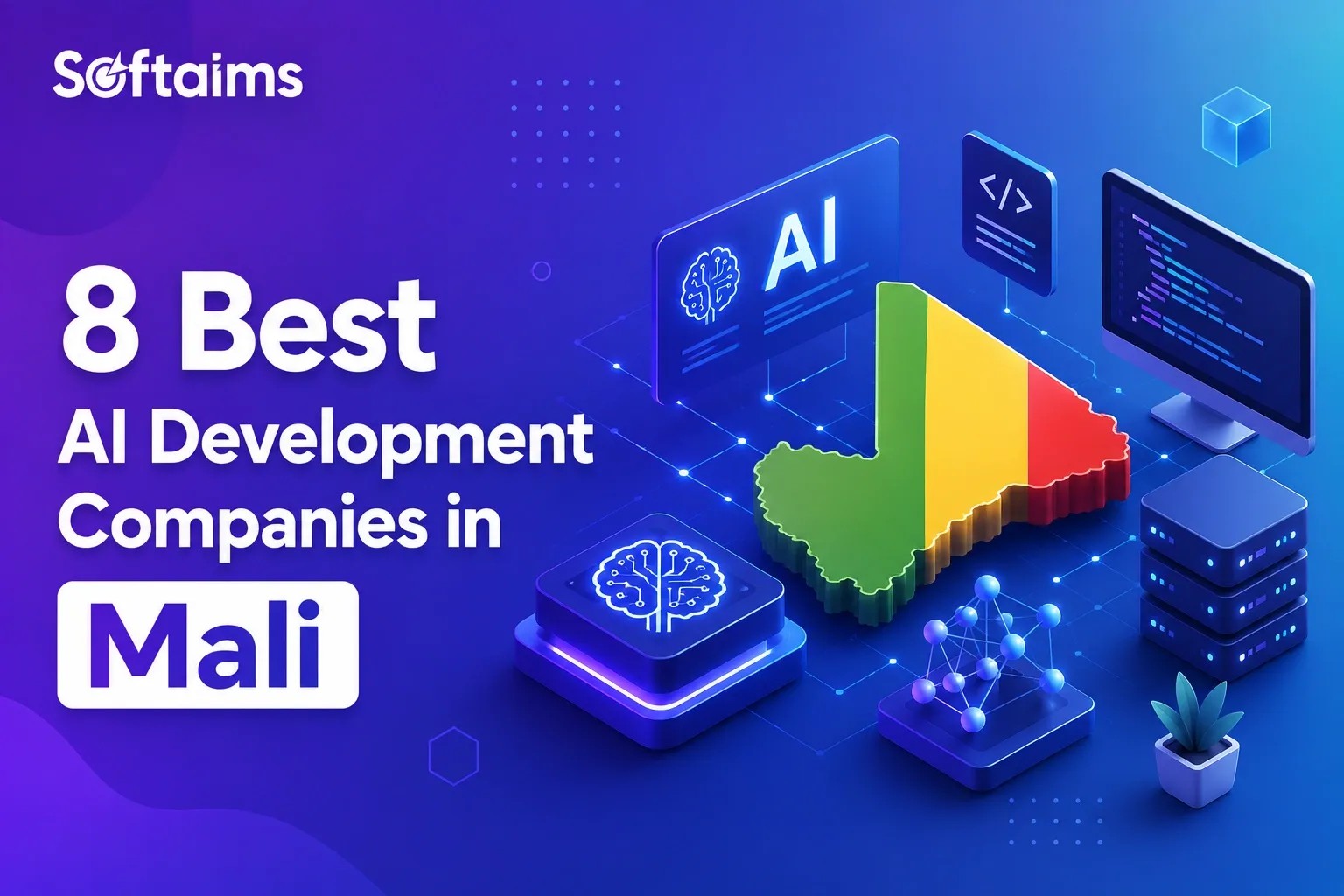
Table of contents
Key Takeaways
- Mali's AI market is very early. It has few dedicated AI firms, near-zero AI patents, and a small Bamako-centred scene.
- LENALi leads the way. Its voice-first, local-language platform shows the promise of African voice AI.
- Beware fake listicles. Many Mali AI lists include invented companies, so verify every name.
- Costs are very low. Developer pay runs $300 to $2,500 a month, but senior AI talent is scarce locally.
- A data law exists. Law 2013-015 and the APDP govern personal data, with no full AI law yet.
- Hire local plus global. Malian firms bring language and market fit, while a global marketplace brings the deep AI talent the country still lacks.
The global AI development market is booming. Gartner expects worldwide AI spending to top $2 trillion in 2026. Africa is starting to join that wave. Mali is at the very early edge of it.
Here is the honest truth up front. Mali does not yet have a deep bench of AI development companies. Its tech scene is young and centred in Bamako. There is little AI investment and few AI patents so far. But momentum is building. The government now runs a yearly Digital Week focused on AI and e-government.
So this guide reads differently from most. This guide covers the 8 best AI development companies in Mali for 2026. It ranks them by fit, not hype. Softaims and Devaims come first. They are the realistic way to hire vetted AI developers for a serious build. Then the genuine Malian tech firms and hubs shaping the local scene, each described honestly. After the list, you get cost data and the rules. You also get the real challenges to plan for.
The Best AI Development Companies in Mali at a Glance
AI Development Companies in Mali at a Glance
| # | Company | Location | What it actually does | Type |
|---|---|---|---|---|
| 1 | Softaims | Mali or global | Hire vetted AI developers | Talent marketplace |
| 2 | Devaims | Global | AI + product build | Build partner |
| 3 | Djelia | Bamako / distributed | Commercial AI APIs for Bambara: transcription, translation, text-to-speech | Commercial AI API |
| 4 | RobotsMali | Bamako | AI model and dataset development for Bambara; education and government collaborations | Nonprofit AI R&D |
| 5 | MALIBA-AI | Bamako | Multilingual AI models and voice tools for Malian languages | Community AI research collective |
| 6 | Map Action | Bamako | AI-assisted geospatial and environmental data analytics, contracted by governments and NGOs | Data/AI services firm |
| 7 | Ibraci Links | Bamako | Custom software development, web hosting, technical builds for local and international clients | General software services |
| 8 | NOMADE-mali | Bamako | IT services: software development, web/mobile solutions, digital infrastructure | General IT services |
Details reflect public profiles as of mid 2026 and can change. Softaims and Devaims are our two top picks for a real AI build: use Softaims to hire vetted AI developers directly, in Mali or anywhere, and use Devaims to build the product around them.
How We Ranked These AI Development Companies in Mali
This list is not a paid ranking. Mali's market is small, so we judged fit over scale. Here is the framework we used.
- Honesty first. We only list real, verified companies and hubs.
- Relevance to AI. Voice tech, data science, or software depth counts.
- Local track record. Proof of shipping real products in Mali.
- Ecosystem value. Hubs that help you find and build teams.
- Fit for buyers. How you can actually engage them today.
We excluded the invented names that fill many online listicles. Several Mali "AI startup" articles list companies that do not verifiably exist. We left those out. We also flagged the type of each entry. It may be a product, a software firm, or an ecosystem enabler.
The 8 Best AI Development Companies in Mali
The AI development companies in Mali below start with a global hiring marketplace. Then come Bamako's real tech players. Softaims and Devaims lead. The local names follow, each described for what it truly does.
1. Softaims

Best for: Hiring vetted AI developers directly, matched to your needs and budget.
Softaims is a talent marketplace. It matters more in Mali than in most markets. The local AI talent pool is very thin. So you can hire a developer in the region when you want one. Or you can draw from a global pool of more than 25,000 vetted engineers. You filter by skill, seniority, location, and price. Matches arrive within 48 hours.
The work spans custom AI development and AI agent development. It also covers AI chatbots, generative AI, and OpenAI API integration. You keep the model, the code, and the data. There is no lock-in. Browse the talent pool or check rates to start.
2. Devaims
Best for: Building the AI feature and the product around it with one team.
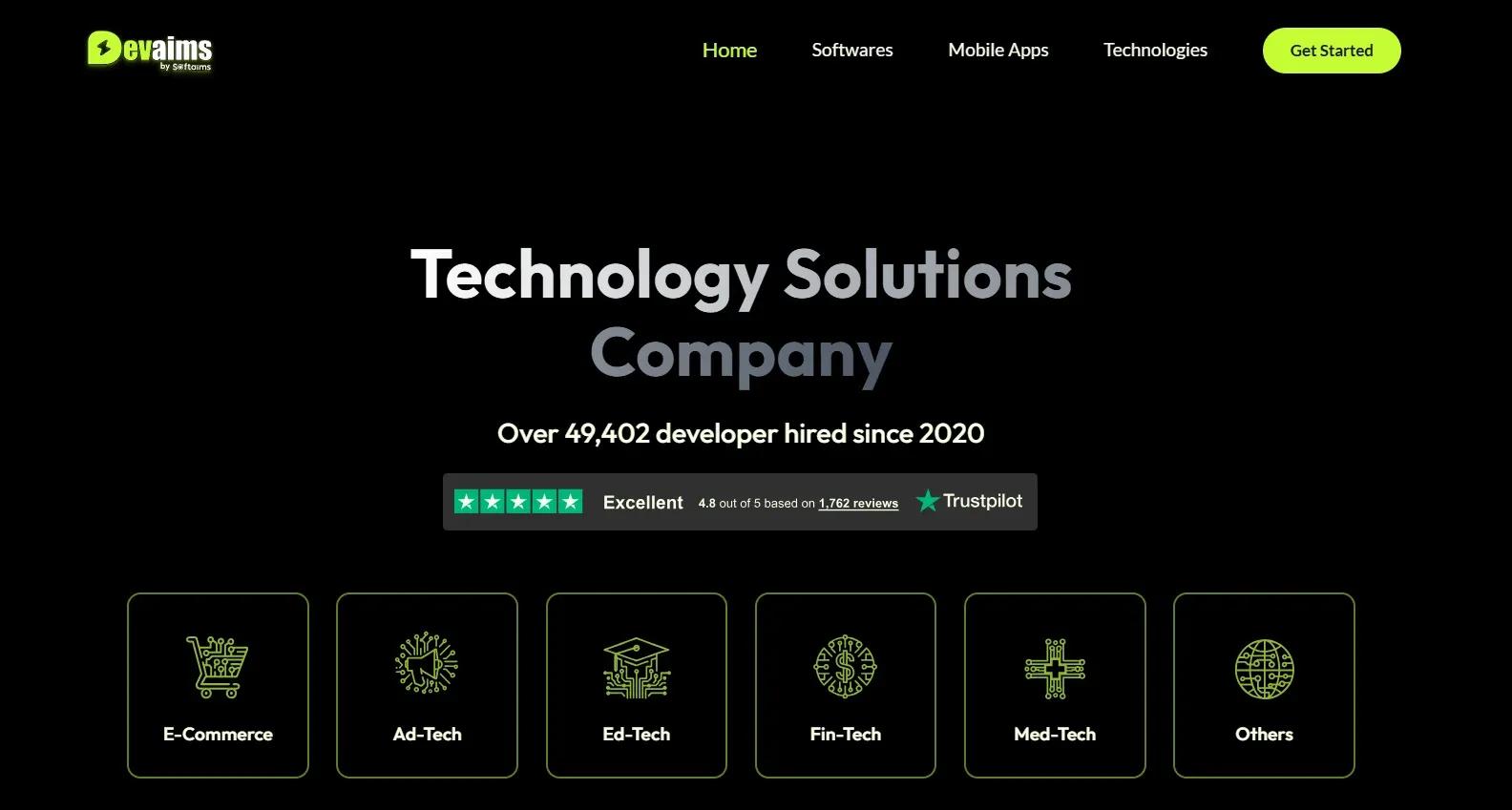
A model is not a product on its own. It needs a working app, live data, and a real interface. Devaims builds that whole surface. It covers software development and mobile app development. One team owns both sides. So changes after launch stay simple.
3. Djelia
Best for: Integrating Bambara speech and language AI directly into your own product.
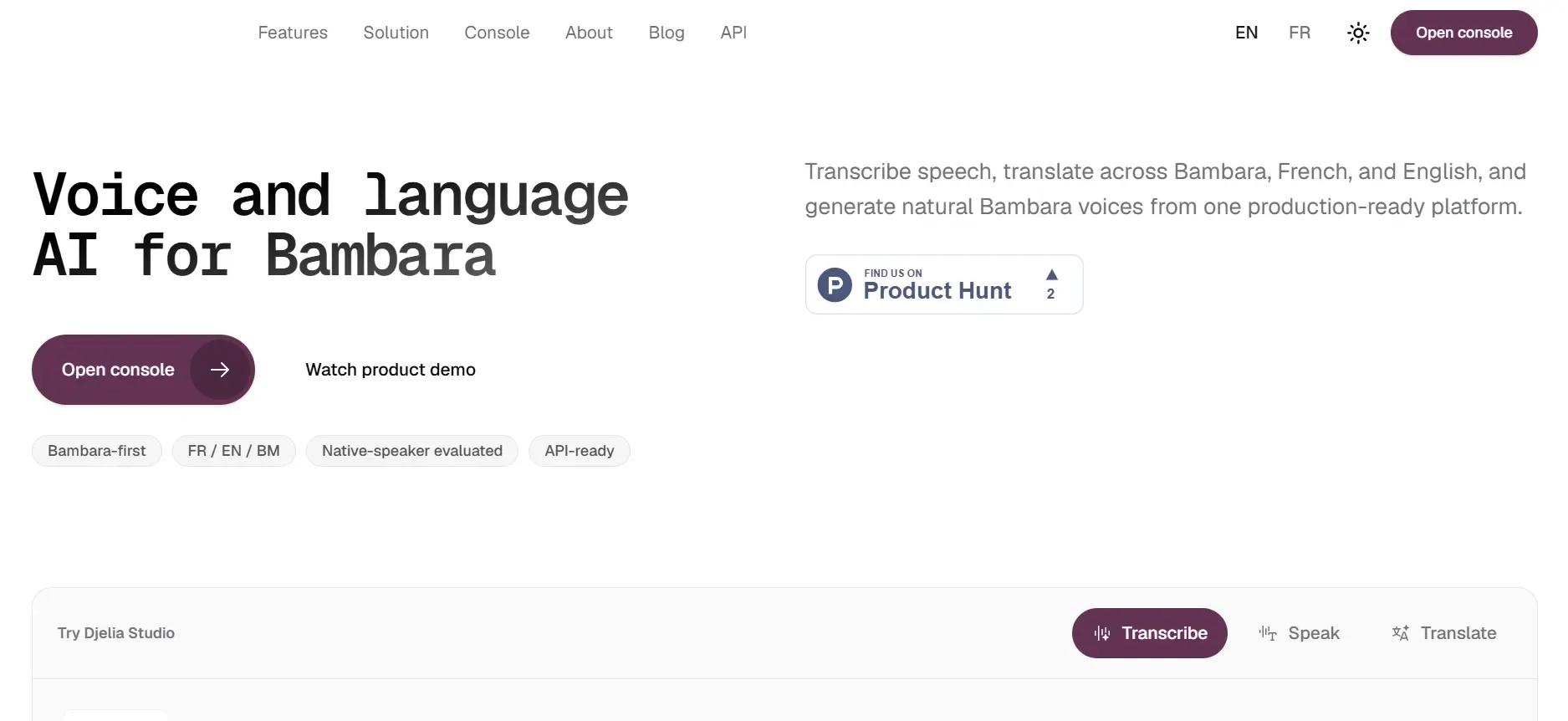
Djelia is the clearest example of an actual AI development company operating out of Mali's tech scene. It builds and sells API access to transcription, translation, and text-to-speech models specifically trained for Bambara, with French and English also supported. The team, which includes AI engineers, data specialists, and linguists, describes its mission as bridging the gap low-resource African languages face in AI. Businesses, developers, and NGOs can integrate the Djelia API directly, and the platform offers a free tier for testing before committing to a paid plan.
Downside: Djelia is narrowly focused on Bambara-language speech and text AI. It's the right partner for that specific problem, not a general-purpose AI development shop.
4. RobotsMali
Best for: AI-generated educational content and Bambara-language datasets, especially for government or education partnerships.
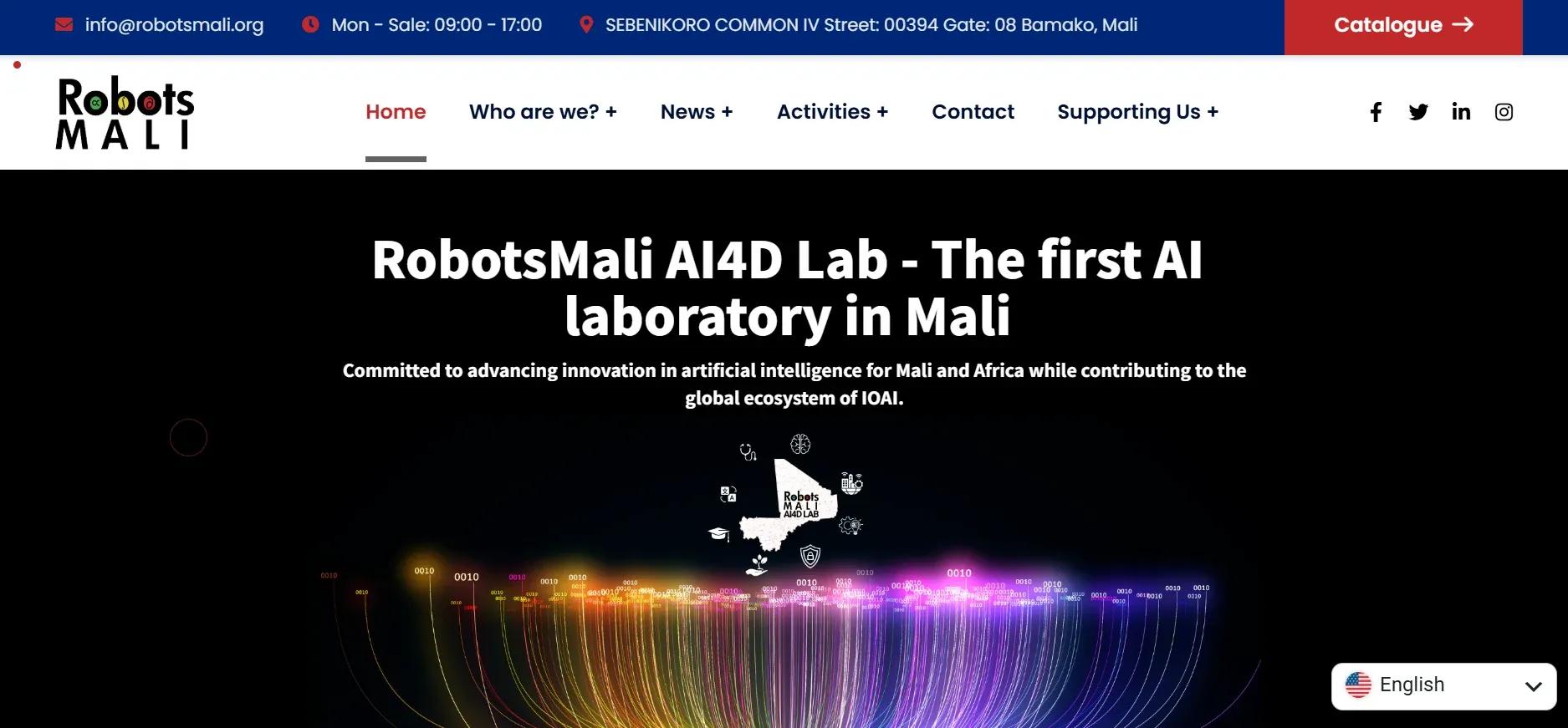
RobotsMali is a Malian nonprofit that has used generative AI tools to produce well over 100 illustrated storybooks in Bambara for schoolchildren, working directly with Mali's Ministry of Education after French was dropped as the country's sole official language in 2023. Beyond books, RobotsMali maintains open Bambara speech-recognition datasets and models on Hugging Face and GitHub, and runs robotics and AI training programs for Malian students. It's backed in part by the Bill & Melinda Gates Foundation.
Downside: RobotsMali is a nonprofit built around education and public-interest AI, not a commercial vendor you engage for a private-sector build, though it does collaborate with institutional partners.
5. MALIBA-AI
Best for: Voice and language AI research covering multiple Malian languages beyond just Bambara.
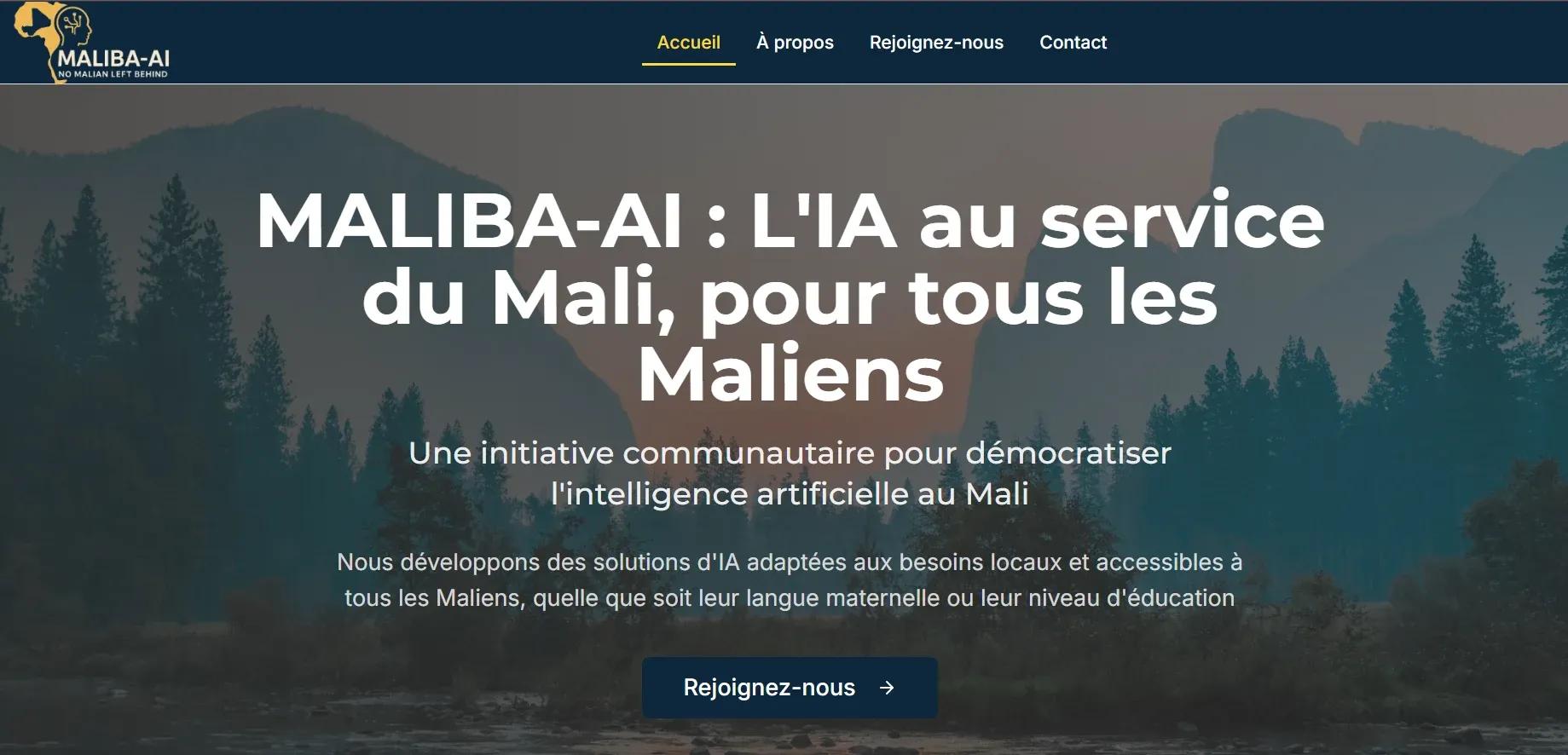
MALIBA-AI is a community-driven Malian AI research initiative building multilingual models and speech tools for Bambara, Fulfulde, Songhai, and other national languages, with a focus on voice interfaces that work around Mali's literacy constraints. Its stated goal is to unite researchers, developers, linguists, and students around AI that actually serves Malian communities in agriculture, health, and education.
Downside: Like RobotsMali, this is a research and community initiative rather than a commercial development agency, so it fits collaboration and open research more than a standard client engagement.
6. Map Action
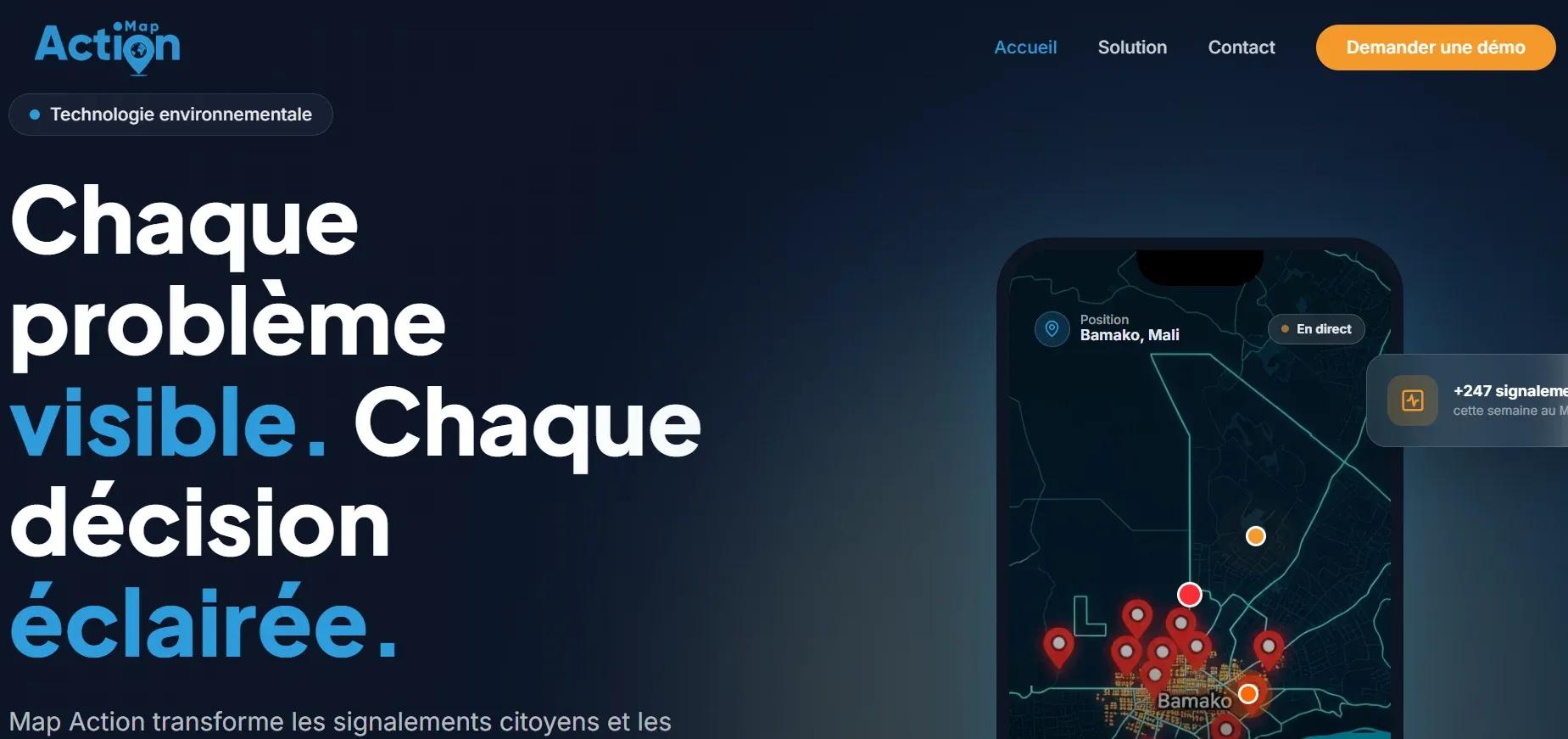
Best for: AI-assisted environmental and geospatial data services for governments and NGOs operating in Mali.
Map Action started as a citizen-reporting tool for water, sanitation, and environmental problems in Bamako, and has since layered in machine learning to automatically classify incoming reports and satellite imagery, cutting analysis time from weeks to hours. It holds contracts with governmental, semi-governmental, and private organizations to run this data-analytics work, which puts it closer to a genuine AI services business than most other names in Mali's tech scene.
Downside: Map Action's AI is built around its own environmental-reporting platform, so it fits geospatial and civic-data problems specifically rather than general AI development.
7. Ibraci Links
Best for: General software development and hosting when you need broader build capacity alongside an AI-specialist partner.
Ibraci Links is a Bamako software startup founded in 2018, providing web hosting, web design, and custom software development to local, national, and international clients. It's one of the more established general software names in Mali, though its work isn't AI-specific.
Downside: It's a generalist software shop, not an AI development company. Pair it with an AI specialist, like Djelia for language AI or a marketplace like Softaims for a broader build, rather than expecting deep AI expertise in-house.
8. NOMADE-mali
Best for: IT services and digital infrastructure support alongside an AI build.
NOMADE-mali is a Bamako-based IT services company (what's locally called an SSII) offering software development, web and mobile solutions, hosting, digital marketing, and training. Like Ibraci Links, it's a solid general technology partner for the parts of a project that sit around an AI system, rather than the AI itself.
Downside: Same caveat as Ibraci Links: general IT services, not AI development specifically.
AI and Tech Hubs in Mali
Mali's tech activity is highly concentrated. Bamako leads by a wide margin. A few areas matter.
Hub | Role |
| Bamako | The capital and centre of nearly all tech activity |
| Impact Hub and DoniLab | Community spaces and incubators |
| Universities | A small but growing talent pipeline |
| Kayes | An emerging region with future potential |
Bamako hosts almost all firms, hubs, and events. The annual Digital Week draws government and private players from across the region. Universities supply a small pool of engineers. Outside the capital, activity is still limited for now.
AI Use Cases That Fit Mali
The AI development companies in Mali focus on local problems. These use cases fit the market best.
Use case | Why it fits |
| Voice and local-language AI | High oral culture and low literacy |
| Agriculture AI | Most Malians work in farming |
| Health access | Telehealth reaches remote areas |
| Financial inclusion | Many people lack bank accounts |
| Mobility and logistics | Congested, informal transport |
Voice AI is the strongest fit. Literacy is low, and the culture is oral. So voice-first tools reach far more people than text. LENALi proved this at real scale. Agriculture, health, and finance follow close behind. Each solves a real local need. Match your project to these realities for the best impact.
Agriculture is a huge opportunity. Around three in four Malians live from farming. So AI for crop advice, weather, and prices can lift millions. Health access is another. Telehealth tools can reach rural villages far from clinics. Financial inclusion matters too. Many Malians have no bank account, so AI-driven mobile finance helps. Mobility rounds out the list. Bamako's traffic is dense and informal, and route data saves fuel and time.
Mali's Growing Digital Ecosystem
Mali's tech scene is small but organising fast. Several forces are pushing it forward. It helps to understand them before you engage.
The government is a key driver. Its yearly Digital Week focuses on AI and e-government. The 2026 edition ran in Bamako in late January. It gathered ministers from Mali, Burkina Faso, and Niger. Panels covered AI, digital identity, and public services.
Incubators form the second pillar. Impact Hub Bamako and DoniLab nurture founders. Bamako Incubateur has backed health and agriculture startups since 2016. These spaces are where you meet local developers.
Universities are the third pillar. They supply a small but growing pool of engineers. Many talented Malians also study abroad, then return. That diaspora talent strengthens the local scene. Together, these forces make the AI development companies in Mali more viable each year.
Cost of Hiring AI Developers in Mali
Mali is a very low-cost market. But the talent pool is small. Senior AI skills are rare locally. The AI development companies in Mali are mostly small teams. So budget with care, and plan your talent source early.
Developer Salaries in Mali
A software developer in Mali earns far below Western rates. Salaries are paid in West African CFA francs. Local monthly pay often ranges widely by skill. AI-specific roles are scarce, so global hiring is common.
Role | Typical monthly pay (approx. USD) |
| Junior developer | ~$300 – $600 |
| Mid developer | ~$600 – $1,200 |
| Senior developer | ~$1,200 – $2,500 |
| Specialist AI engineer | Rare locally, often hired abroad |
Figures are indicative, based on regional West African data for 2026. True AI specialists are hard to find inside Mali today. Many teams hire them remotely instead.
The Practical Hiring Reality
Direct AI hiring in Mali is tough right now. The senior talent simply is not there in numbers. So most serious builds use one of two paths. You hire vetted developers through a marketplace. Or you partner with a firm elsewhere in Africa or beyond. Hiring through Softaims gives you vetted regional or global talent within 48 hours. There is no local entity to set up.
How Malian Costs Compare
Context helps. Mali sits among the lowest-cost markets. But cost is not the only factor.
Country | Senior (per hour) | Note |
| United States | $80–$120 | Deep, mature talent pool |
| Nigeria | $30–$60 | Large African tech hub |
| Kenya | $30–$60 | Strong East African scene |
| Mali | $15–$40 | Very low cost, thin senior supply |
Figures are indicative, from 2026 market data. Mali is cheap, but senior AI depth is limited. Plan your talent source accordingly.
Data and AI Rules in Mali
Mali does have a data protection law. It is francophone and regional in style. Plan for it in any data project.
Law or framework | What it covers |
| Law 2013-015 | Personal data protection, overseen by the APDP |
| Malabo Convention | The African Union data and cybersecurity treaty |
| ECOWAS framework | Regional data protection alignment |
Mali passed its data protection law in 2013. A national authority, the APDP, oversees it. The country also aligns with African Union and ECOWAS frameworks. There is no comprehensive AI law yet. So most AI rules today flow from data protection and sector policy. Confirm data handling before any build.
Benefits of Working With Malian Tech Companies
Mali offers real, if early-stage, advantages. Here are the main ones.
- Local-language expertise. Firms understand Bambara and oral culture.
- Francophone gateway. Access to Mali and francophone West Africa.
- Very low cost. Among the most affordable markets anywhere.
- Strong social impact. Tech here solves real development problems.
- Government support. Digital Week and e-government push momentum.
These strengths suit local-market and social-impact projects. For those goals, a Malian partner adds real value. The AI development companies in Mali know the ground truth that outsiders miss. For heavy AI builds, pair them with global talent. That blend covers both depth and local fit.
Challenges to Consider When Hiring in Mali
Mali also carries real risks. Weigh them honestly before you commit.
- Thin AI talent. Senior AI engineers are very scarce locally.
- Infrastructure gaps. Power and connectivity can be unreliable.
- Security and stability. The Sahel faces ongoing security pressures.
- Small market data. Few local case studies exist to review.
- Language. Business runs in French, not English.
None of these make Mali impossible. They just shape your plan. Use local partners for local knowledge. Use a marketplace for the heavy technical build. That mix works best today.
How to Choose AI Development Companies in Mali
When you compare AI development companies in Mali, a few checks matter most.
- Verify the company is real. Ignore listicles full of invented names.
- Match the partner to the task. Local firms suit local-market work.
- Plan the talent source. Deep AI builds usually need global hiring.
- Check the data law. Confirm how a partner meets Law 2013-015.
- Confirm you own the output. The model, code, and data should be yours.
Start small either way. A short paid pilot tells you more than any proposal.
FAQs About AI Development Companies in Mali
Does Mali have real AI development companies?
A few, genuinely. Djelia sells commercial Bambara AI APIs. RobotsMali and MALIBA-AI build AI models and datasets for Malian languages, mostly through research and institutional collaboration rather than standard client contracts. Beyond that, Mali has general software firms that can execute AI-adjacent builds, and a thin local pool of AI specialists overall.
What does Djelia actually offer?
Transcription, translation, and text-to-speech APIs trained specifically for Bambara, with French and English support, built by a team of AI engineers, data specialists, and linguists. Businesses and developers can integrate the API directly into their own products.
Are RobotsMali and MALIBA-AI companies I can hire?
Not in the traditional sense. Both are nonprofit or community-driven AI research organizations focused on Malian languages and public-interest applications like education. They collaborate with institutions and partners rather than taking on standard commercial client work.
How much does it cost to hire a developer in Mali?
Local developer pay is low, often $300 to $2,500 a month depending on seniority. True AI specialists are rare inside Mali, so many teams hire them remotely. Hourly rates for global work in this range typically run $15 to $40.
Does Mali have a data protection law?
Yes. Law 2013-015 governs personal data, overseen by the APDP. Mali also aligns with the African Union's Malabo Convention and ECOWAS frameworks. There is no dedicated AI law yet.
Should I hire locally or globally for an AI build in Mali?
Both, realistically. A local partner brings language and market knowledge, or general software capacity. A marketplace like Softaims brings the deep AI specialists Mali's market doesn't yet have at scale.
AI Trends in Mali for 2026
The market is small but shifting. A few trends stand out this year.
- Government is pushing digital. Digital Week focuses on AI and e-government.
- Voice AI is rising. Local-language tools fit an oral culture.
- Incubators are growing. DoniLab and Impact Hub draw regional interest.
- Agriculture leads use cases. Most Malians depend on farming.
- Regional ties matter. Mali works closely with Burkina Faso and Niger.
These shifts are early but real. The AI development companies in Mali that solve local problems will grow first. Voice, agriculture, and finance lead the way. Progress will be gradual, not sudden. But the direction is clear.
Conclusion
Mali is an early-stage AI market, and honesty serves you better than hype. It has real tech pioneers like LENALi and a growing Bamako scene. But it lacks a deep bench of AI development companies for now. The best AI development companies in Mali today are small teams and product startups. Government backing and young founders are changing that slowly but surely.
Weigh what your project needs. Want local-language or local-market work? A Malian partner earns its place. Want a serious AI build with scarce senior skills? Softaims matches you with vetted AI developers within 48 hours. That works in Mali or anywhere, with no lock-in.


 GitHub
Timothy M.

 Verified Expert in Engineering
My name is Timothy M. and I have over 8 years of experience in the tech industry. I specialize in the following technologies: Microsoft Dynamics 365, Microsoft Dynamics CRM, Microsoft Dynamics Development, Solution Architecture, Technical Review, etc.. I hold a degree in Bachelor of Science (BS). Some of the notable projects I’ve worked on include: Dynamics 365 Sales and Customer Service Implementation, Dynamics 365 CE Field Service Implementation, Dynamics 365 CE Implementation Audit and Support, Dynamics 365 CE Proof of Concept, HRIS - SMART.HR/DYNAMIC.PAY/SMART.TIME, etc.. I am based in Malmoe, Sweden. I've successfully completed 12 projects while developing at Softaims.
Information integrity and application security are my highest priorities in development. I implement robust validation, encryption, and authorization mechanisms to protect sensitive data and ensure compliance. I am experienced in identifying and mitigating common security vulnerabilities in both new and existing applications.
My work methodology involves rigorous testing—at the unit, integration, and security levels—to guarantee the stability and trustworthiness of the solutions I build. At Softaims, this dedication to security forms the basis for client trust and platform reliability.
I consistently monitor and improve system performance, utilizing metrics to drive optimization efforts. I’m motivated by the challenge of creating ultra-reliable systems that safeguard client assets and user data.

Leave a Comment
Need help building your team? Let's discuss your project requirements.
Get matched with top-tier developers within 24 hours and start your project with no pressure of long-term commitment.