10 Best Data Science Development Companies in the USA (2027)
Skip costly in-house hiring and technical bottlenecks. Here are the 10 best data science development companies in the USA for 2027, compared by services, costs, tech stacks, and delivery models to convert raw data into working AI.
Technically reviewed by:
Giuseppe M.|Walid M.
Table of contents
Key Takeaways
- US demand for data science continues to outpace supply, pushing average domestic salaries to ~$125,000/year and forcing over half of open positions to senior levels.
- The US data science and analytics market reaches $322B+ in 2026, driving enterprises away from slow in-house hires toward specialized development partners.
- High-performing partners own the end-to-end chain, from raw data engineering and custom ML modeling to production MLOps and Generative AI.
- Top options range from massive enterprise consultancies (e.g., Fractal, Tiger) to rapid talent-matching platforms like Softaims that deploy vetted pods in 48 hours.
Data piles up faster than most US firms can put it to work. Collecting it is easy; the hard part is building the models, forecasts, and pipelines that make it pay off. That takes rare, pricey skill. An American data scientist earns roughly $125,000 on average, demand keeps outrunning supply, and more than half of US openings now sit at senior level. So instead of waiting months to hire, many teams lean on a specialist. The best data science development companies in the USA turn raw data into working AI, and they do it quickly.
The scale behind this is striking. The US data science and analytics market now tops $322 billion in 2026, part of a global data science platform market racing toward $631 billion by 2030. So appetite for firms that can genuinely ship data science has never run higher.
This guide ranks the 10 best data science development companies in the USA for 2027, with a line on who each one suits. These are firms that build data science for you, not off-the-shelf tools you configure yourself. After the list, we unpack services, costs, hiring models, and how to choose. Read it once, and you will have a shortlist.
What Do Data Science Development Companies Do
Data science development companies design and deliver custom data and AI work for other businesses. They take raw, often messy data and shape it into pipelines, models, dashboards, and products. So they own the whole route, from first dataset to live decision.
The craft covers several disciplines, though. It runs across data engineering, machine learning, analytics, MLOps, and now generative AI. So a capable partner carries the full chain, not a single link.
The payoff is a capability you can lean on. Clean data, accurate models, and reliable deployment mean the insights actually get used. So data science development turns a pile of records into a real edge.
Data Science Services Explained
Data science is really a bundle of services, each doing a different job. Spotting which you need sharpens the brief. The table lays out the common ones.
Service | What It Covers |
| Data engineering | Pipelines, warehouses, and ETL |
| Machine learning | Model building, training, and deployment |
| Data analysis | Insights, dashboards, and reporting |
| MLOps | Model deployment, monitoring, and scaling |
| Generative AI | LLMs and custom AI products |
You rarely want just one, though. A model is worthless if the data feeding it is dirty or if it never ships. So the strongest data science development companies deliver the whole sequence.
The Data Science Tech Stack
A data build reaches across several layers, and a solid partner covers each. Here is the stack you will see most.
Layer | Common Tech |
| Languages | Python, R, SQL, Scala |
| ML frameworks | TensorFlow, PyTorch, scikit-learn |
| Big data | Spark, Hadoop, Databricks |
| Cloud and MLOps | AWS SageMaker, Azure ML, Vertex AI |
| Deployment | MLflow, Kubeflow, Docker, Kubernetes |
There is no universal stack, though. A live, real-time model leans on streaming and MLOps, while a one-off study leans on Python and SQL. So confirm a partner's strengths line up with your biggest need.
Benefits of Outsourcing Data Science Development
Data science development companies pay off in a handful of ways. Each ties back to talent, speed, or budget.
- Hard-to-find skill. You tap data scientists, ML engineers, and data engineers in one place.
- Quicker wins. A ready crew ships a working model far sooner than a fresh hire would.
- One chain. A single partner spans data, models, and deployment, with fewer handoffs.
- Leaner spend. Nearshore and offshore rates land well under a full in-house team.
- Battle-tested methods. Experienced firms reuse pipelines, MLOps, and governance.
The upside is tangible, too. A specialist sidesteps the usual pitfalls, from models stuck in a notebook to pipelines that buckle at scale.
In-House vs Outsourced Data Science
Hire the team or bring in a partner? Both can work, and scale decides. Each carries trade-offs.
An internal team hands you full control and deep domain knowledge. It fits firms with a long data roadmap and the budget to staff it. The snag is time and cost, since data and ML talent is thin on the ground and dear.
Outsourcing suits most first builds and quick proofs of value. Data science development companies bring data, ML, and MLOps skill on day one. You give up a sliver of control, however. So many companies outsource the early models, then recruit around them once the payoff is proven.
What to Look For in a Data Science Partner
Data science development companies differ sharply in depth and style, however. The best of them share a few traits. Keep this list to hand as you compare.
- Full delivery. They handle data, models, and deployment, not a slice of it.
- MLOps maturity. Shipping models to production reliably is the real test.
- Industry fit. Experience in your sector speeds genuine results.
- Responsible AI. Governance, bias checks, and explainability grow more vital each year.
- Hard proof. Ask for live models and a measurable business lift.
A firm strong across these points saves you expensive rework. So weigh them before you sign.
How We Selected These Companies
This ranking is not a lucky dip. Each of these data science development companies cleared a clear bar, which keeps the list honest rather than promotional. It is still a judgment call, however, so treat it as a shortlist to test.
Here is what we weighed:
- Real output. Every firm ships production-grade data science, not slideware.
- US footprint. We favoured firms based in or built around the US market.
- Full-chain skill. Data engineering, ML, and deployment all counted.
- Proven history. Client track record, reviews, and years in the field mattered.
- Flexible model. Options from talent platforms to full consultancies added weight.
No firm aces every line, though. So each entry closes with a "Best for" tag to point you.
At a Glance: The Best Data Science Development Companies Compared
Pressed for time? This side-by-side view sums up all ten at once. It lines each firm up against its base, its core strength, and the job it fits best, so you can weigh them without scrolling. Pick two or three that suit you, then read their full profiles below for the detail.
# | Company | Base | Core Strength | Best For |
| 1 | Softaims | US / offshore talent | Vetted data science engineers | Building a flexible data team |
| 2 | Devaims | Softaims-owned | Data and software delivery | Data products and apps |
| 3 | Fractal Analytics | New York, NY | Enterprise AI and decision science | Fortune 500 AI programs |
| 4 | Tiger Analytics | Santa Clara, CA | Advanced analytics and AI | Vertical analytics at scale |
| 5 | Quantiphi | Marlborough, MA | Applied AI and ML | Cloud-native AI solutions |
| 6 | Tredence | San Jose, CA | Analytics and MLOps | Last-mile analytics value |
| 7 | LatentView | Princeton, NJ | Decision analytics | Consumer and retail analytics |
| 8 | Mu Sigma | Chicago, IL | Decision sciences at scale | High-volume analytics |
| 9 | Grid Dynamics | San Ramon, CA | Data and ML engineering | Scalable data platforms |
| 10 | ScienceSoft | McKinney, TX | Full-service data and BI | Established, broad delivery |
The 10 Best Data Science Development Companies in the USA
With the groundwork laid, here are the picks. The ten data science development companies in the USA below span a flexible talent platform, enterprise AI consultancies, and focused engineering firms. Each earned its spot on real delivery, full-chain skill, and domain depth, however. The "Best for" line under each entry steers you to the closest match.
1. Softaims
Softaims tops our list with a model made for fast data science work. Skip the long agency contract and get paired with the top 3% of vetted engineers inside 48 hours. So you can stand up or grow your own data team in days, and for a slice of a US hire's cost.
That flexibility fits data science neatly. You can hire data scientists, machine learning engineers, and data engineers to cover the full chain. You can also add data analysts for insight and QA automation testers to keep pipelines dependable. Each engineer is vetted for genuine ability, not a tidy résumé.
The engagement bends to your needs. Bring on one specialist or a whole pod, and they slot into your hours and process. So they feel like your own team, without a multi-year tie-in. You can browse available talent or check transparent rates before you commit.
Key highlights:
- Top 3% vetted data and ML engineers, matched in 48 hours
- Data science, ML, data engineering, and analytics talent
- Full-chain delivery from data to deployment
- Flexible staff augmentation, no heavy minimums
Best for: US teams that want to build a flexible data science team fast, without a rigid agency deal.
2. Devaims
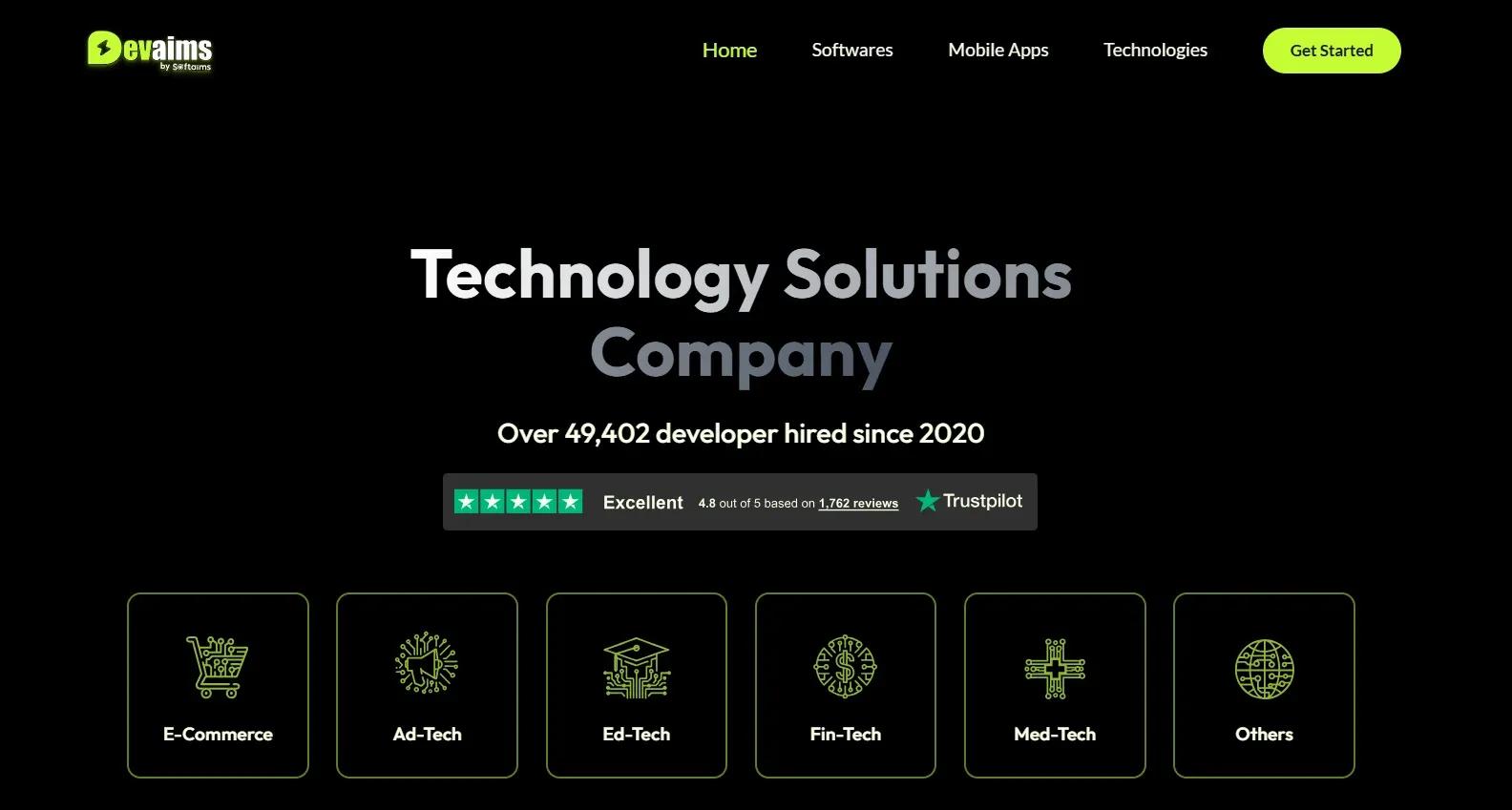
Devaims is a development studio that builds and maintains custom software, data-driven products included. For data science, that means the apps, dashboards, and backends that surface your models to real users. So it suits firms that want their models wrapped in something people can actually use.
The August 2026 acquisition by Softaims brought the two together. Devaims clients now reach the same vetted network and 48-hour matching. One partner can handle software development, mobile app development, and managed IT services around a data product.
Key highlights:
- Data-driven apps and dashboards
- Model-to-product delivery
- Backed by Softaims' vetted talent since 2026
- Web, mobile, and back-end under one roof
Best for: US teams that want their data science packaged as a usable product.
3. Fractal Analytics
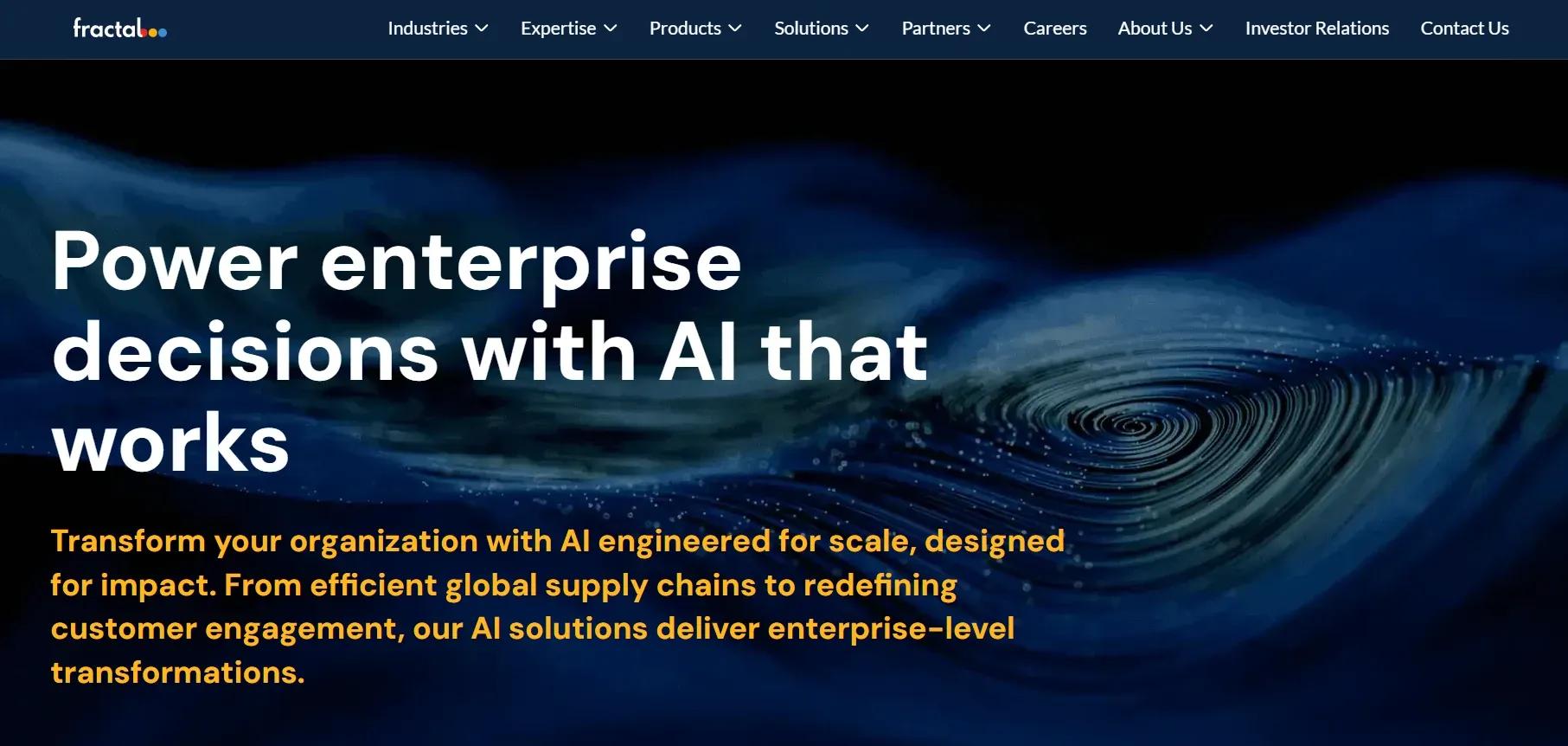
Fractal Analytics, with major US operations in New York, Chicago, and Seattle, ranks among the largest pure-play AI and analytics firms anywhere. Its roughly 4,000 analytics professionals serve Fortune 500 clients across finance, consumer goods, and healthcare. So it suits big, high-stakes AI programs.
The firm fuses deep machine learning with behavioural science, on the belief that an insight only counts if someone acts on it. Its enterprise reach and governance depth stand out. Fractal fits organisations driving major AI and decision-science change. So it suits US Fortune 500 firms scaling AI.
Key highlights:
- Enterprise AI and decision science
- Behavioural-science-led analytics
- 4,000-plus analytics professionals
- Fortune 500 client base
Best for: US Fortune 500 firms running large AI and analytics programs.
4. Tiger Analytics
Tiger Analytics, headquartered in Santa Clara, California, is an advanced analytics and AI consultancy with thousands of practitioners. Founded in 2011, it works through domain-specific data science pods and fast delivery. So it suits enterprises after vertical depth rather than generic analytics.
The firm spans advanced analytics, data engineering, and AI consulting, backed by in-house tools like TigerML. It runs deep in consumer goods, financial services, healthcare, and telecom. Tiger suits mid-to-large firms needing specialist, quick-turn work. So it fits US enterprises chasing industry-specific data science.
Key highlights:
- Advanced analytics and AI consulting
- Data engineering and ML depth
- Industry-specific analytics pods
- Proprietary accelerators
Best for: US mid-to-large enterprises needing vertical analytics depth.
5. Quantiphi
Quantiphi, based in Marlborough, Massachusetts, is an applied AI and data science firm with strong cloud ties. It builds machine learning and generative AI, often on AWS, Google Cloud, or Azure. So it suits teams wanting cloud-native AI at scale.
The firm handles data engineering, ML, and AI product work across many sectors. Its cloud certifications and accelerators shorten delivery. Quantiphi fits organisations building cloud-first AI. So it suits US firms wanting applied AI anchored to a major cloud.
Key highlights:
- Applied AI and machine learning
- Strong cloud partnerships
- Data engineering and GenAI
- Industry accelerators
Best for: US firms building cloud-native AI and ML solutions.
6. Tredence
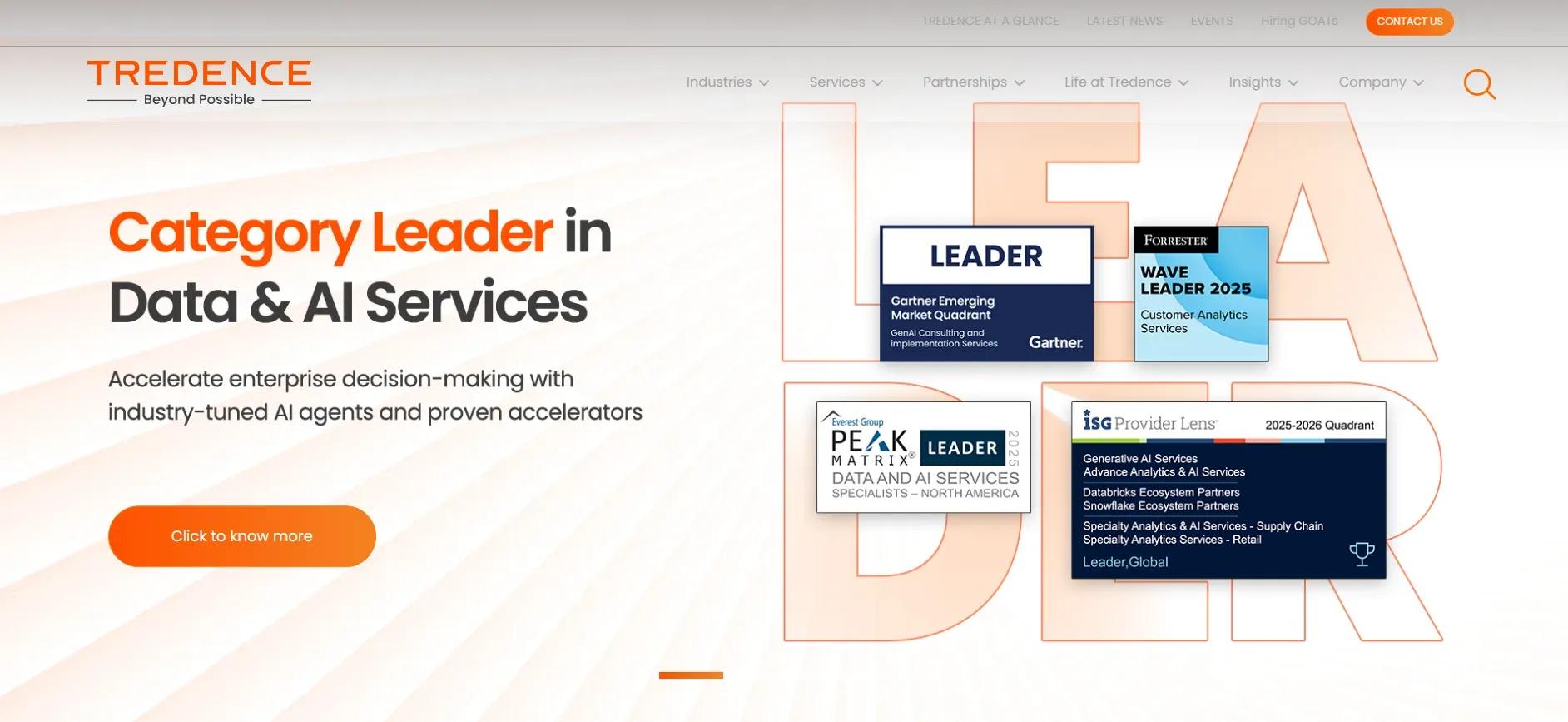
Tredence, based in San Jose, California, is a data science and analytics firm fixated on turning insight into action. It champions "last-mile" value, so models actually shape decisions rather than gather dust. So it suits firms tired of analytics that never ship.
The firm covers advanced analytics, data engineering, and MLOps, with deep retail and consumer-goods roots. Its focus on adoption and outcomes sets it apart. Tredence fits enterprises after measurable results, not just models. So it suits US firms hunting real business impact from data.
Key highlights:
- Analytics and data science
- Last-mile adoption focus
- Data engineering and MLOps
- Retail and CPG depth
Best for: US enterprises wanting measurable, last-mile analytics value.
7. LatentView Analytics
LatentView Analytics, headquartered in Princeton, New Jersey, is a data and decision analytics firm serving global enterprises. It builds predictive models, data platforms, and analytics products, with strong consumer and retail experience. So it suits firms wanting decision-grade analytics.
The firm blends data engineering with advanced analytics and AI. Its anchor in business decisions keeps the work grounded. LatentView fits consumer-facing organisations that want data-led choices. So it suits US retail, CPG, and tech firms building analytics muscle.
Key highlights:
- Data and decision analytics
- Predictive modelling and platforms
- Consumer and retail depth
- Global enterprise clients
Best for: US consumer and retail firms building decision analytics.
8. Mu Sigma
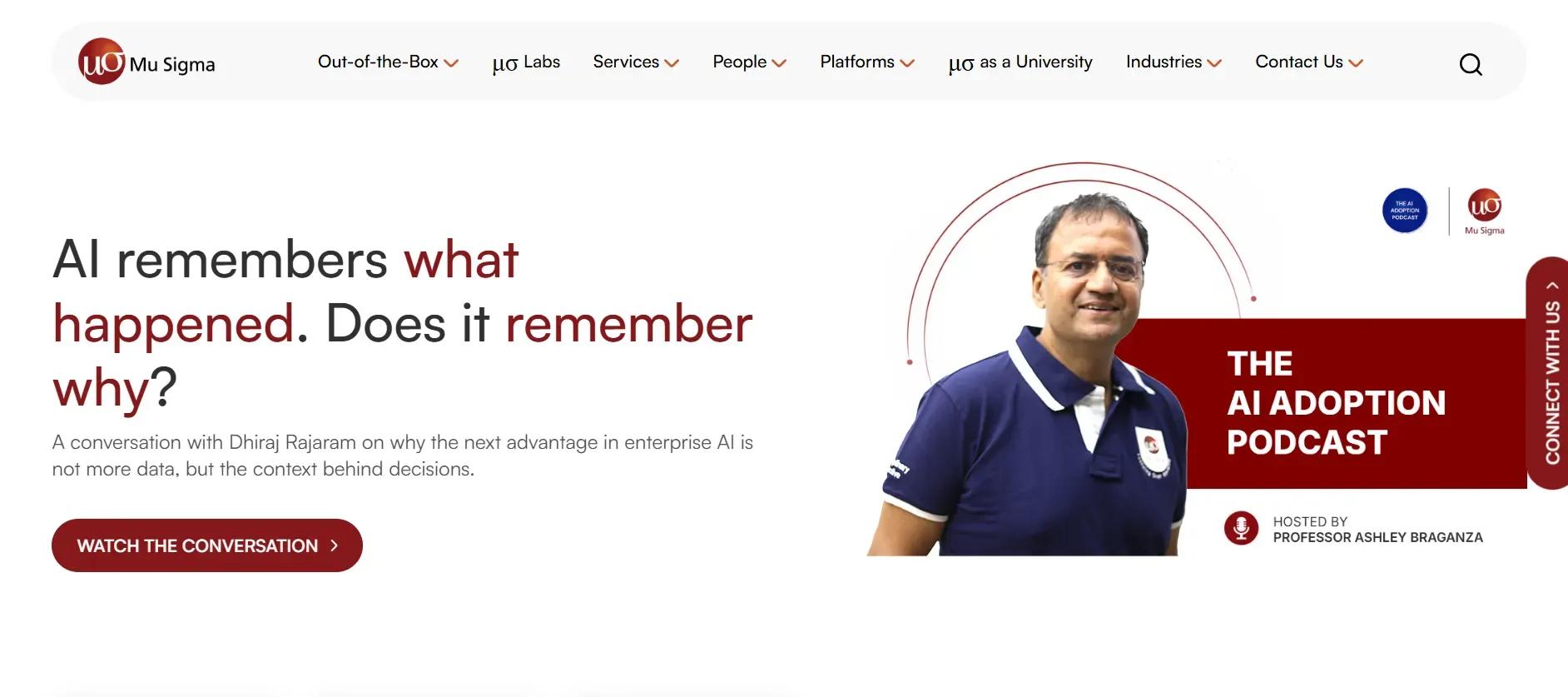
Mu Sigma, based in Chicago, is one of the earliest and largest decision-sciences firms. It runs analytics at high volume, helping big enterprises solve problems across marketing, supply chain, and risk. So it suits firms with broad, recurring analytics needs.
The firm leans on a structured, problem-solving approach and sizable delivery teams. Its scale lets it support many use cases at once. Mu Sigma fits large organisations wanting steady analytics capacity. So it suits US enterprises with high-volume decision needs.
Key highlights:
- Decision sciences at scale
- Broad analytics across functions
- Large, structured delivery teams
- Long enterprise track record
Best for: US enterprises with high-volume, cross-function analytics.
9. Grid Dynamics
Grid Dynamics, based in San Ramon, California, is a digital engineering firm with a strong data and ML practice. It builds scalable data platforms, machine learning systems, and real-time analytics for enterprise clients. So it suits firms that need robust engineering behind their models.
The firm pairs data science with cloud and modern architecture, serving retail, finance, and technology clients. Its engineering depth handles complex, large-scale data. Grid Dynamics fits enterprises building data platforms and ML at scale. So it suits US firms needing serious data engineering.
Key highlights:
- Data and ML engineering
- Scalable data platforms
- Cloud and modern architecture
- Enterprise delivery
Best for: US enterprises building scalable data platforms and ML.
10. ScienceSoft
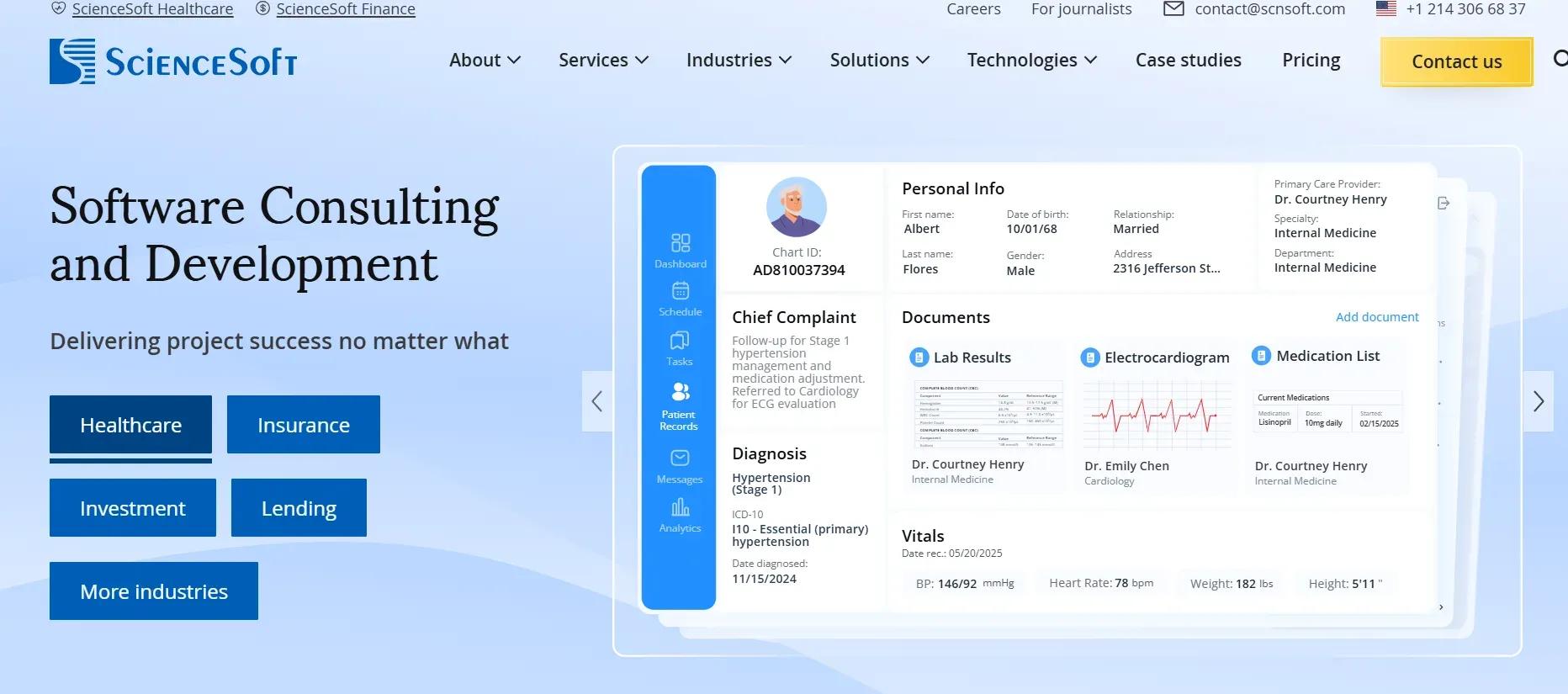
ScienceSoft, based in McKinney, Texas, is an IT and software firm with a long data and analytics history. Founded in 1989, it delivers data science, business intelligence, and big data solutions across sectors. So it brings broad experience and a structured process.
The firm covers data strategy, analytics, ML, and BI, with reliable, quality-focused delivery. Its breadth suits firms wanting a mature, full-service partner. ScienceSoft fits companies after dependable, end-to-end data work. So it suits US firms wanting an established, broad data science partner.
Key highlights:
- Data science and business intelligence
- Big data and analytics
- Structured delivery process
- Decades of experience
Best for: US firms wanting an established, full-service data partner.
How the Top Data Science Firms Compare
The "At a Glance" table sorts the field fast, but data science development companies split most on model and scale. This one digs deeper, into what shapes most engagements.
Company | Model | Scale | Sweet Spot |
| Fractal Analytics | Enterprise consultancy | Very large | Fortune 500 AI programs |
| Tiger Analytics | Analytics consultancy | Large | Vertical analytics depth |
| Quantiphi | Applied AI firm | Large | Cloud-native AI |
| Tredence | Analytics consultancy | Large | Last-mile value |
| LatentView | Analytics firm | Mid-large | Decision analytics |
| Mu Sigma | Decision-sciences firm | Large | High-volume analytics |
| Grid Dynamics | Engineering firm | Large | Data platforms and ML |
| ScienceSoft | Full-service IT firm | Mid-large | Broad, reliable delivery |
No firm wins every row, though. The big consultancies suit enterprise programs, while leaner firms suit speed and focus. So match the model to your project's size and pace.
How Much Does It Cost to Hire a Data Scientist?
A data scientist is a serious investment, and the price swings hard by location, seniority, and specialism. In the US, these roles sit among the best-paid in tech, a sign of how fiercely the skills are contested. Pay stays competitive elsewhere too, especially across Western Europe and Australia.
The real question, though, is value against cost. One strong data scientist can surface insights that move the whole business, which makes the spend pay for itself. Knowing how salaries differ by region helps you hire with eyes open. The table below shows average annual pay across key markets.
Country | Average Annual Salary (USD) |
| United States | $125,000 |
| United Kingdom | $82,000 |
| Germany | $90,000 |
| Canada | $85,000 |
| Australia | $95,000 |
| Poland | $50,000 |
| Ukraine | $45,000 |
| India | $30,000 |
| Brazil | $40,000 |
| Netherlands | $80,000 |
The gap between markets is wide. A US hire can cost three to four times more than one in India, before benefits and overhead. This is why many US teams reach for global talent, through a model like Softaims, to stretch the budget without losing skill. So the right sourcing choice can halve your cost at similar quality.
Dedicated vs Freelance Data Scientists: Which to Choose?
Whether to bring on a dedicated data scientist or a freelancer comes down to your workload and your resources. A dedicated hire suits firms with steady, ongoing data needs and the budget for a full-time seat. They embed in the team, learn your data in depth, and align tightly with your goals.
A freelance data scientist, by contrast, flexes to short projects or leaner budgets. You get specialist skill for a defined task, with no long commitment. So weigh each against your data strategy. Steady, embedded work points to a dedicated hire, while bursts of specialist need point to freelance. A vetted-talent model covers both, from a single freelancer to a full dedicated pod.
The Data Science Development Process
Most data science development companies run projects through the same arc. Knowing the stages helps you budget time and money. Here is the usual path.
- Discovery. The team frames the problem, the data, and the success metric.
- Data preparation. They clean, label, and structure the data.
- Modelling. Engineers build, train, and test the models.
- Validation. The team checks accuracy, bias, and robustness.
- Deployment. The model goes live, with MLOps to keep it running.
- Monitoring. They watch performance and retrain as data drifts.
Each stage builds on the last. So careful data prep early heads off weak models later.
Common Data Science Challenges
Data science throws up problems a normal project never meets, so data science development companies plan for them early. Knowing them helps you plan. Here are the big ones.
Data quality comes first. Messy, patchy data sinks even a clever model, so most of the effort goes into preparation. Deployment is next, since plenty of models never escape the notebook.
Model drift is a third trap, however. A model that nails it today decays as the world shifts, so it needs monitoring and retraining. The talent shortage adds strain too, since skilled data engineers are scarce. So plan for data, deployment, and upkeep, not the model alone.
Trends Shaping US Data Science in 2027
The field will not sit still, and it is reshaping how data science development companies work. Three shifts stand out this year.
Generative AI is baked into most projects now. Every serious firm offers LLM integration and custom AI products, so the real question is how to do it responsibly. Agentic AI is climbing too, with systems that act, not just predict.
MLOps keeps maturing, as firms zero in on getting models reliably into production. Meanwhile, responsible AI and governance rise up the agenda, pushed partly by US regulation. Together, these trends steer data science toward production-ready, AI-native, well-governed work.
Red Flags to Watch For
When you weigh data science development companies in the USA, spotting trouble early saves money. One clear red flag is a modelling-only mindset. A firm that builds models but shrugs off data quality and deployment leaves you a notebook, not a product.
Watch, too, for fuzzy business value. A partner that cannot tie work to a measurable outcome often ships insight nobody uses. Thin MLOps is another warning, since production is where most projects die.
Weak communication is a deeper worry, however. If updates crawl or confuse during the sales stage, they rarely sharpen later. For tips on clear communication, MindTools helps. And to test how current a firm is, ask which AI trends it has followed lately on sites like TechCrunch.
How to Choose the Right Data Science Partner Step by Step
Picking a data science partner is a process, not a hunch. These steps narrow the field.
- Frame the problem. Fix the business question and the success metric.
- Audit the data. Know what you have, and how clean it is.
- Map the risk. Decide whether data, modelling, or deployment is your biggest gap.
- Demand proof. Ask for shipped models and measurable impact.
- Confirm MLOps. Check they can get models live and keep them there.
- Pick a model. Choose a consultancy, a talent platform, or a blend.
Work through them in order, and the fit stands out. In practice, the best data science development companies welcome these questions rather than dodge them.
Signs of a Reliable Data Science Partner
Not every firm lives up to its pitch. A few markers flag the ones you can trust. Look for these before you commit.
- Live models. They show production models, not just prototypes.
- Whole chain. They handle data, modelling, and deployment together.
- Business lift. They tie work to outcomes, not accuracy alone.
- Responsible AI. They address bias, governance, and explainability.
- Open pricing. Rates and models are spelled out, not hidden.
The best data science development companies clear all five without flinching. So treat any gap here as a cue to keep looking.
Frequently Asked Questions
What do data science development companies in the USA do?
They build custom data and AI solutions for other businesses. That spans data engineering, machine learning, analytics, and deployment. Many also run MLOps, generative AI, and governance. In short, they turn raw data into working models and decisions, rather than selling you a product to configure yourself.
How much does it cost to hire a data scientist in the US?
On average, a US data scientist earns around $125,000 a year, among the highest rates in tech. Seniority and specialism push that higher, and benefits add more on top. Markets like India, Ukraine, and Poland cost far less, which is why many teams tap global talent to balance cost and skill.
Should I hire a dedicated or freelance data scientist?
A dedicated hire suits steady, ongoing data work and deep team integration. A freelancer suits short projects or tighter budgets, with specialist skill on demand. Many firms blend both, using a vetted-talent model to add a single freelancer or a full dedicated pod as needs change.
What's the difference between a data science firm and a product company?
A data science development company builds custom solutions for your business, from pipelines to models. A product company sells a ready-made tool you set up yourself. So one delivers tailored outcomes, while the other hands you software to run.
Conclusion
Data science development turns scattered records into models, forecasts, and decisions, but it demands skill across data, modelling, and deployment. The data science development companies in the USA above range from a flexible talent platform to enterprise AI consultancies and focused engineering firms. Each fits a different need.
Match your choice to three things, though: your problem, your data, and your biggest skill gap. If you would rather build a flexible data science team than fight a long hiring search, Softaims can match you within 48 hours. You can also browse the talent pool to see who fits.
Ready to start? Frame your problem and data, then pick the partner that suits your goals. Build a small proof of concept first, prove the value, then scale from there. Have a question about your data? Reach out, and let's talk it through.


 GitHub
Alexei S.

 Verified Expert in Engineering
My name is Alexei S. and I have over 15 years of experience in the tech industry. I specialize in the following technologies: React, SQL, Next.js, PostgreSQL, Tailwind CSS, etc.. I hold a degree in Masters, Bachelors. Some of the notable projects I’ve worked on include: Edge — Online Arbitrage platform, WeAlert — Retail Store SMS Marketing platform, Give and Get Fundraising — NFT fundraising marketplace, showd.me, GoLance, etc.. I am based in Karagandy, Kazakhstan. I've successfully completed 11 projects while developing at Softaims.
Information integrity and application security are my highest priorities in development. I implement robust validation, encryption, and authorization mechanisms to protect sensitive data and ensure compliance. I am experienced in identifying and mitigating common security vulnerabilities in both new and existing applications.
My work methodology involves rigorous testing—at the unit, integration, and security levels—to guarantee the stability and trustworthiness of the solutions I build. At Softaims, this dedication to security forms the basis for client trust and platform reliability.
I consistently monitor and improve system performance, utilizing metrics to drive optimization efforts. I’m motivated by the challenge of creating ultra-reliable systems that safeguard client assets and user data.

Leave a Comment
Need help building your team? Let's discuss your project requirements.
Get matched with top-tier developers within 24 hours and start your project with no pressure of long-term commitment.