Top 10 AI Development Companies for Computer Vision in the UK (2026)
UK companies are building computer vision solutions for everything from image analysis to automated inspection. In this guide, we cover top 10 AI development companies to consider in 2026.
Technically reviewed by:
Matt P.|Jennifer D. D.
Table of contents
Key Takeaways
- The UK is a computer vision powerhouse. Oxford, Cambridge, and London anchor world-class vision research.
- Know what you are hiring. Some firms are service studios you hire; others are platforms you license.
- Beware offshore firms in disguise. Many "UK" lists feature India- or EU-based teams, so verify.
- Data is the real cost. Collecting and labelling images drives most of the budget and timeline.
- Plan for drift. Vision models degrade as cameras and conditions change, so budget for retraining.
- 95% of AI pilots return nothing. MIT reviewed 300 deployments, and the causes repeat predictably.
Cameras, scanners, and sensors now produce more visual data than any team can review by hand. So UK enterprises turn to computer vision to automate inspection, read documents, detect defects, and turn images into decisions. The right computer vision development companies make that shift possible.
The UK is a natural home for this work. Oxford, Cambridge, and Imperial anchor world-class vision research. Meanwhile, firms in London and Cambridge ship production systems for defence, health, and manufacturing. However, most "UK" directory lists are padded with offshore firms that only keep a London sales address. Therefore, a verified, genuinely British shortlist saves real time and money.
This 2026 guide ranks the ten best computer vision development companies for UK projects. First, we cover the market and how we selected each firm. Then we profile all ten, with honest notes on what you hire versus what you license. Finally, we cover how to choose and what a build costs. If you would rather skip the search, you can also hire vetted AI developers and own the result outright.
UK Computer Vision Market Trends for 2026
The numbers show why demand keeps rising. The UK artificial intelligence market reached about £17.2 billion in 2025, with projections toward £133.2 billion by 2033. Meanwhile, machine learning made up 40.6% of the UK AI market in 2024, per Fortune Business Insights. As a result, the computer vision development companies in the UK are scaling fast.
Globally, the picture is just as strong. The computer vision market is set to reach $58.29 billion by 2030, according to Grand View Research. Furthermore, demand spans healthcare imaging, factory inspection, retail analytics, and security. So the computer vision development companies in the UK with real domain depth are in high demand. Buyers increasingly want proof of shipped work, not just a services page.
The UK also brings a regulatory edge. UK GDPR, the Data and AI Ethics Framework, and sector rules shape every serious build. Therefore, UK vision teams design for compliance from day one. That discipline matters when visual data includes faces, patients, or payments. As a result, the computer vision development companies in the UK win trust in regulated sectors.
Selection Criteria: How We Ranked These Companies
We judged these computer vision development companies on production evidence, not marketing claims. Each criterion below reflects what enterprise vision projects actually require.
A genuine UK base. Many listed firms only keep a London address. So we confirmed real UK headquarters and delivery, and flagged the rest.
Technical vision depth. Strong partners handle object detection, segmentation, and video analytics. In addition, they support real-time and edge inference.
Demonstrated project success. Only firms with real, shipped vision work were selected. Therefore, we looked for named clients and measurable outcomes.
Modality coverage. Real projects span images, video, medical scans, and thermal data. As a result, we valued firms that handle many visual data types.
Compliance discipline. UK vision often touches sensitive data. Consequently, we favoured firms fluent in UK GDPR and the Data and AI Ethics Framework.
Post-launch support. Vision models drift as cameras and conditions change. So we checked for structured maintenance and retraining, not hand-off and goodbye.
Best Computer Vision Development Companies in the UK: Comparison Table
Short on time? This table compares the top computer vision development companies in the UK. It labels each by type, so you know which to hire and which to license. Use it to build a shortlist, then read the full profiles below.
Company | Type | CV focus | Location |
| Softaims | Talent marketplace | Hiring vetted CV developers | Global (vetted) |
| Devaims | Build partner | CV model and app in one team | Global |
| Digica | Service (development) | Custom CV, edge AI, image processing | UK |
| Cambridge Consultants | Service (deep tech) | CV inside hardware and devices | Cambridge |
| Tractable | Product and service | CV for insurance claims | London |
| V7 | Platform | CV data, annotation, training | London |
| Mind Foundry | Service and platform | Responsible AI for high-stakes vision | Oxford |
| Waracle | Service (product) | AI-enabled product engineering | Dundee and London |
| Brainpool AI | Service (network) | Vetted CV and ML research talent | London |
| CVEDIA | Platform | Synthetic data and video analytics | UK |
Details reflect public profiles and funding data as of mid 2026 and can change, so verify before you commit. Softaims and Devaims are our two flexible top picks. "Service" firms you hire to build; "platform" firms you license and integrate.
The Top 10 Computer Vision Development Companies in the UK
Our ranking of the computer vision development companies in the UK starts with two flexible partners. Then come eight genuinely British firms, each labelled by type. We keep every profile honest, with a clear best-fit and a real trade-off.
1. Softaims
Best fit: Hiring vetted computer vision developers directly.
Most vision projects fail on the work around the model, not the model itself. Data sits unlabelled, edge cases break accuracy, and nobody plans the deployment. Then the pilot quietly dies once the demo excitement fades. Softaims is built for that gap. You hire pre-screened CV engineers who ship production systems, not demos.
What you get: the full stack from one team, spanning custom AI development, AI agent development, generative AI, and OpenAI API integration. Moreover, you can hire for the exact vision skill your project needs.
Why teams pick Softaims:
- One team handles the data, the model, the guardrails, and the app.
- Rates sit well below UK market averages, without dropping to junior work.
- You own the model, the code, and the data outright, with no lock-in.
- Every build targets production from day one, not another stalled pilot.
- Developers are matched within 48 hours, with no visa queue.
You can browse the talent pool, check rates, or contact the team to start.
2. Devaims
Best fit: Building the vision model and the app around it with one team.
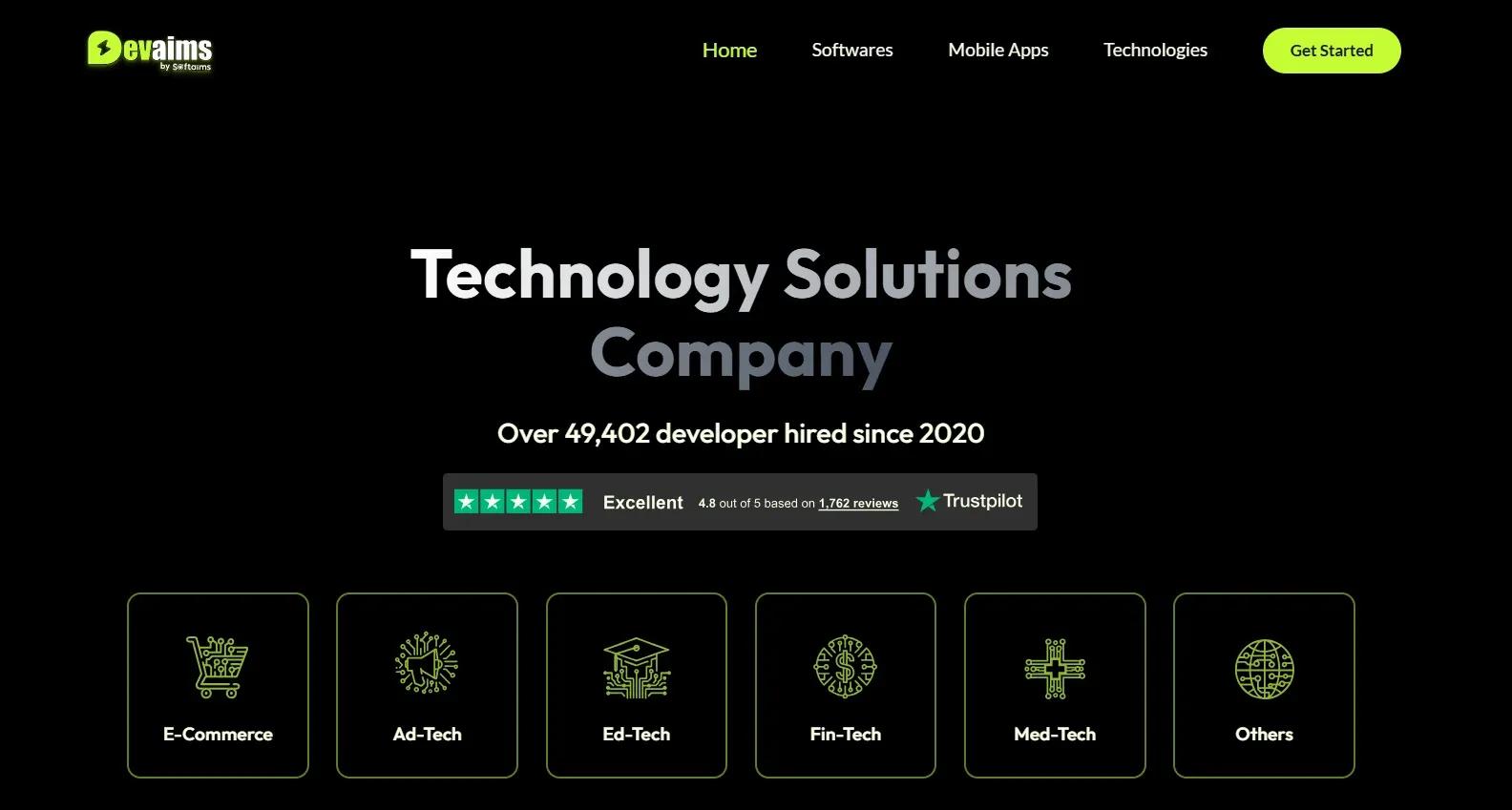
A model on its own is not a product. It needs a real interface, live camera feeds, and clean integrations. Devaims closes that gap by building the software around the intelligence. So you get a working system, not a clever notebook.
What you get: end-to-end delivery across software development and mobile app development. Because one team owns both the model and the app, projects move faster and stay easier to maintain.
Why teams pick Devaims:
- The vision model and its surrounding product come from one team.
- Full delivery spans backend, web, and mobile in a single engagement.
- Iteration stays fast, because nothing crosses a vendor line.
- Systems are designed around real cameras, sensors, and workflows.
See the full range at Devaims.
3. Digica
Best fit: companies needing bespoke vision for highly specific use cases.
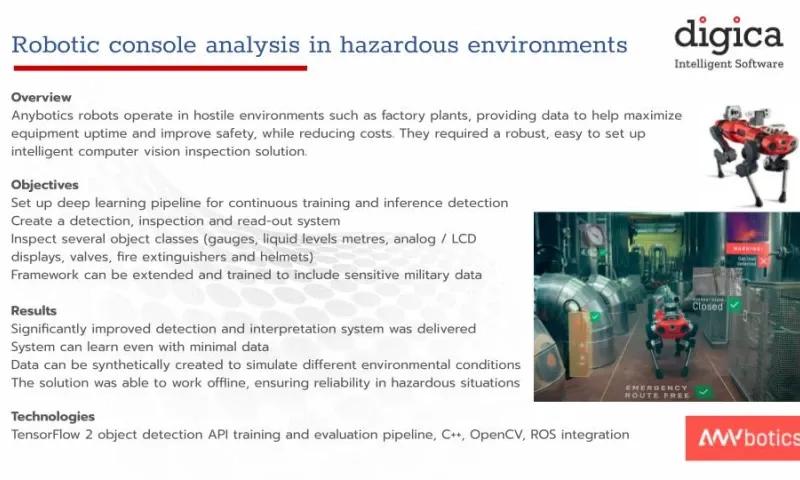
Digica is an independent UK AI and data-science specialist in deep learning and computer vision. Impressively, it has trained over 3,600 machine learning models across cloud, IoT, embedded, and edge projects. Its work covers image processing, synthetic imaging, and facial recognition. It serves automotive, defence, life sciences, security, and manufacturing. So it suits complex, high-performance vision at the edge.
Core CV services: custom model development, edge AI, and image processing.
Honest note: its R&D depth suits considered projects more than quick MVPs.
4. Cambridge Consultants

Best fit: firms building vision into devices, robotics, or deep tech.
Cambridge Consultants is a long-standing Cambridge deep-tech consultancy. It applies computer vision inside real products, from medical devices to industrial systems. For example, it embeds vision models into sensors and optimises them for constrained hardware. It brings serious R&D and intellectual property depth. Therefore, it suits research-intensive vision programmes.
Core CV services: applied CV, sensor fusion, and hardware integration.
Note: its premium, R&D model is not built for lean app MVPs.
5. Tractable

Best fit: insurers and inspection teams automating visual review.
Tractable is a London-founded computer-vision company built for visual damage assessment. Notably, insurers use it to triage claims from photos in seconds. Its deep-learning models appraise vehicle and property damage at scale. It won the Best Technology Award at the British Insurance Awards. So it suits insurance and inspection workflows.
Core CV services: damage assessment, image triage, and claims automation.
Honest note: its focus is insurance vision, not general-purpose builds.
6. V7
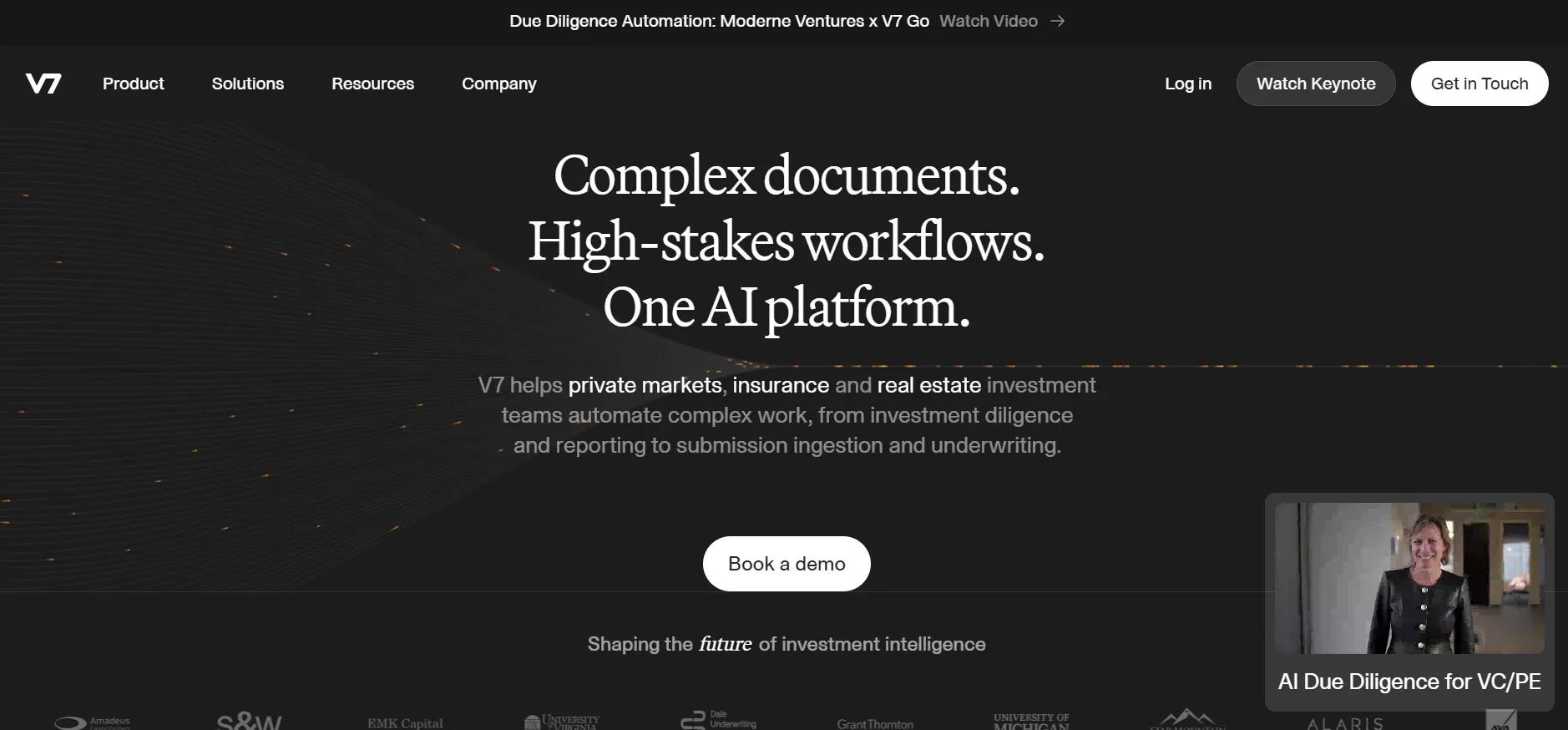
Best fit: Building and training vision models with better data.
V7 is a London vision platform for training data and model development. Impressively, it handles over one petabyte of AI training data across radiology, engineering, and biopharma. Its tools cover annotation, dataset management, and model workflows. As a result, teams release models faster and cut errors. So it suits engineering teams building their own vision models.
Core CV services: data annotation, dataset tools, and model training.
Honest note: V7 is a platform, so you still need engineers to use it.
7. Mind Foundry

Best fit: defence, insurance, and infrastructure needing trusted AI.
Mind Foundry is an Oxford University spinout founded in 2016. It focuses on applied, responsible machine learning, including vision. In addition, it serves defence, insurance, and critical infrastructure. It builds AI designed for safety and long-term oversight. Therefore, it suits regulated, high-consequence vision work.
Core CV services: responsible ML, model monitoring, and vision analytics.
Honest note: its specialist focus is narrower than a general vision studio.
8. Waracle
Best fit: regulated finance, health, and energy products.
Waracle is a UK digital-product company founded in 2004. Based in Dundee with London, Edinburgh, and Glasgow offices, it engineers intelligent products. Notably, it has added AI and vision capability into its product practice. It serves financial services, health, and energy across the UK and Europe. So it suits vision that lives inside a real, regulated app.
Core CV services: AI-enabled product engineering and mobile vision.
Honest note: its strength is product engineering, so pair deep CV research where needed.
9. Brainpool AI
Best fit: teams wanting elite research talent without a permanent hire.
Brainpool AI is a London consultancy founded in 2016. It operates as a network of vetted AI and ML experts from UCL, Cambridge, Oxford, and beyond. As a result, clients get bespoke vision builds without a permanent internal team. It suits organisations that need research depth on demand. So it fits one-off or exploratory vision projects well.
Core CV services: bespoke ML and vision research, and prototyping.
Honest note: its network model suits defined briefs more than long production support.
10. CVEDIA
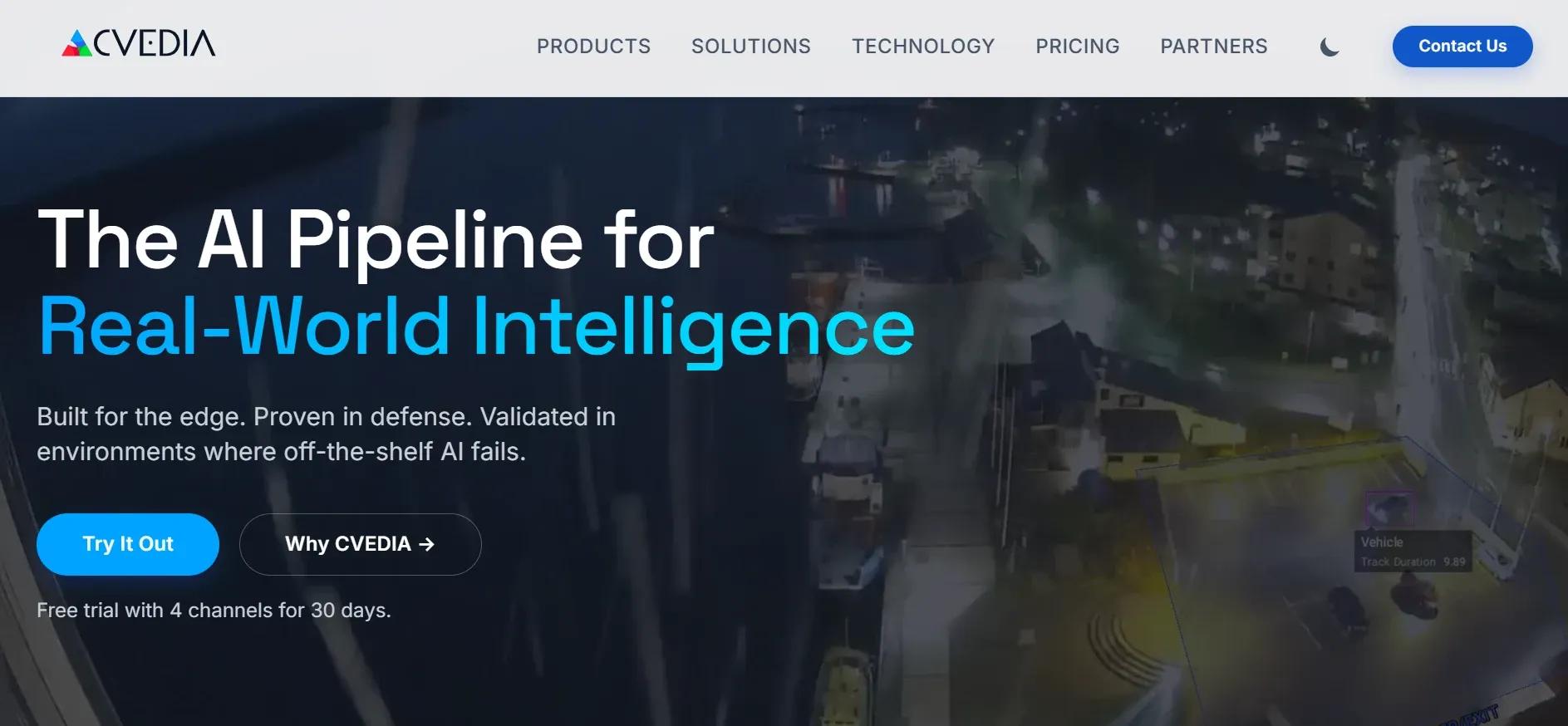
Best fit: teams facing data scarcity for rare or sensitive cases.
CVEDIA is a UK company specialising in synthetic data and computer vision. Notably, its CVEDIA-RT platform delivers tailored video analytics from a large deep-learning library. It builds machine learning algorithms for data-limited applications. So it suits use cases where real images are rare or costly. Therefore, it fits security, industrial, and edge analytics.
Core CV services: synthetic data, video analytics, and edge deployment.
Honest note: CVEDIA is a platform, so it fits analytics more than bespoke apps.
How to Choose the Right Computer Vision Partner in the UK
Choosing the wrong partner among computer vision development companies is an expensive mistake. So work through these checks before you sign.
Assess the vision stack. Good teams know OpenCV, PyTorch, and TensorFlow. In addition, they use detection frameworks like YOLO and tools like KerasCV. They should also handle edge runtimes and cloud platforms like AWS and Azure.
Confirm the UK base. Check for real UK headquarters, not just a London listing. Because many "UK" firms build offshore, verify where your team sits.
Review portfolios and outcomes. Ask for two or three vision projects in your sector. Meanwhile, request accuracy, latency, and real business results.
Check data and annotation. Vision lives or dies on labelled data. Therefore, ask how a firm sources, labels, and validates images.
Review compliance. Confirm UK GDPR practice and the Data and AI Ethics Framework. Moreover, ask where visual data is processed and stored.
Clarify post-launch terms. Vision models need retraining as conditions change. So confirm support, monitoring, and model updates up front.
Cost Factors of Computer Vision Development in the UK
Among computer vision development companies in the UK, costs vary widely, and most guides skip the detail. A focused proof of concept can start near £8,000. However, complex, real-time deployments often exceed £150,000. So it helps to understand what drives the number.
Project type | Typical cost | Timeline |
| Vision PoC or pilot | £8,000 – £40,000 | 4 to 8 weeks |
| Production vision system | £40,000 – £150,000 | 3 to 6 months |
| Enterprise, real-time or edge | £150,000+ | 6 to 12 months |
Several factors move the cost most. First, data availability and quality shape the biggest variable, since collecting and labelling images takes real time. In addition, edge deployment and system integration add engineering hours. Regulatory scope, infrastructure, and post-launch support all add cost too.
UK talent also sets the rate. UK vision engineers, who need deep-learning and image-processing skill, command premium pay. So a full in-house team is costly to build and retain. That is why many teams hire a partner or a vetted marketplace instead.
Why Computer Vision Projects Fail (and How to Avoid It)
Most AI pilots deliver nothing measurable. When MIT's NANDA initiative reviewed 300 AI deployments, it found that 95% produced no measurable return. Vision projects by CV vendors fail for specific, repeatable reasons. So each one is avoidable.
The data was never ready. Demos run on clean, staged images. Meanwhile, production holds blur, glare, and odd angles. Therefore, treat data collection as a real phase.
The model never left the lab. A notebook that works on a laptop is not a system. So plan deployment, monitoring, and edge performance early.
Accuracy drifts over time. Lighting, cameras, and products change. As a result, models degrade unless someone retrains them.
Integration was underestimated. Vision must connect to cameras, sensors, and software. Consequently, systems engineering often dwarfs the model work.
Compliance came last. Retrofitting UK GDPR into a finished vision system costs far more than designing it in.
Computer Vision Use Cases That Deliver ROI
Not every vision feature pays off, so it helps to focus on proven wins. The computer vision development companies in the UK ship these use cases most often. Each one has a clear, measurable return.
Defect detection. Vision spots flaws on a production line faster than any inspector. As a result, scrap and recalls fall sharply.
Medical imaging. Models flag patterns in scans to support faster diagnosis. In addition, they help triage urgent cases first.
Insurance claims. Vision appraises vehicle and property damage from photos. Therefore, insurers settle claims in seconds, not days.
Document intelligence. Models read invoices, forms, and IDs at scale. Consequently, slow manual data entry disappears.
Security and safety. Vision monitors sites for hazards and intrusions. So teams respond before small issues become incidents.
The best computer vision development companies in the UK start from the use case, not the model. That keeps the build tied to real business value.
Build In-House or Hire a Partner
For many UK businesses, hiring a partner beats building an in-house vision team. The biggest reason is access to talent. Vision projects need specialists in deep learning, image processing, and MLOps. However, those engineers are expensive to hire and hard to retain.
Cost is the next factor. An internal team means salaries, GPUs, data annotation, and training infrastructure. In addition, all of that sits idle between projects. So the fixed cost is high for occasional work.
A partner spreads that cost and brings proven experience. Therefore, you reach production faster, with fewer false starts. Still, in-house makes sense when vision is core to your product and runs constantly. In that case, weigh a hybrid model, with a small internal team and a partner for surges.
Computer Vision Trends in the UK for 2026
The computer vision development companies in the UK set trends the market follows. A few clear shifts stand out this year.
Edge inference is rising. More vision runs on the device for speed and privacy. As a result, latency and data exposure both drop.
Synthetic data is maturing. Generated images fill gaps where real data is scarce. Consequently, rare defects and edge cases get covered.
Multimodal models are spreading. Vision now combines with text and context for richer understanding. Therefore, systems make better decisions.
Document intelligence is booming. Vision reads invoices, forms, and IDs at scale. So back-office automation keeps expanding.
Responsible AI is now baseline. UK buyers expect explainability and bias checks. Meanwhile, audit-ready vision becomes the norm.
Frequently Asked Questions
How much does computer vision development cost in the UK?
A proof of concept starts near £8,000, while a production system runs £40,000 to £150,000. Complex, real-time or edge deployments exceed £150,000. Data preparation is the biggest cost variable.
Which computer vision companies are genuinely UK-based?
Digica, Cambridge Consultants, and Mind Foundry are all UK-headquartered. V7 and Tractable are London-founded. Always confirm where delivery actually happens.
Should I hire a service firm or use a vision platform?
Platforms like V7 or CVEDIA suit teams with their own engineers. Service firms like Digica build the whole system for you. Many teams blend both for tooling and custom work.
How long does a computer vision project take?
A pilot takes four to eight weeks, and a production system three to six months. Real-time or edge systems take six to twelve months. Messy data adds time, so plan for it.
Do UK computer vision apps need to follow GDPR?
Yes. UK GDPR and the Data and AI Ethics Framework both apply. Facial and medical data carry extra duties. A good partner builds this in from the start.
What industries use computer vision most in the UK?
Manufacturing leads with inspection and defect detection. Healthcare uses it for medical imaging, while insurance uses it for claims. Defence, retail, and security follow close behind.
Who owns the model and the training data?
You should own all of it. Confirm ownership of the model, the code, and the labelled data in the contract. This avoids vendor lock-in later.
What is synthetic data in computer vision?
It is generated imagery used to train models when real data is scarce. As a result, teams cover rare defects and edge cases. UK firms like CVEDIA specialise in it.
Conclusion
Choosing the right partner can decide whether your vision project scales or stalls. The computer vision development companies in the UK offer genuine depth, from Cambridge deep tech to London platforms. However, many "UK" lists hide offshore firms, so a verified shortlist matters. That protects your budget, your data, and your timeline.
So weigh what your project needs, from custom accuracy to edge deployment and compliance. The best computer vision development companies in the UK will match it. The firms above each earn a close look, with real UK roots. Would you rather skip the search entirely? Then Softaims matches you with vetted computer vision developers within 48 hours, in the UK or anywhere.


 Stackoverflow
Mauricio F.

 Verified Expert in Engineering
My name is Mauricio F. and I have over 9 years of experience in the tech industry. I specialize in the following technologies: Java, Data Scraping, Computer Vision, Machine Learning, Ruby on Rails, etc.. I hold a degree in Bachelor of Engineering (BEng), Master of Computer Applications (MCA). Some of the notable projects I’ve worked on include: My School Connect, BBC - Connected Red Button, Cobalt - Service Deliver Platform, TV Multi-Touch Solutions, Visian Systems Website, etc.. I am based in Nantwich, United Kingdom. I've successfully completed 10 projects while developing at Softaims.
I employ a methodical and structured approach to solution development, prioritizing deep domain understanding before execution. I excel at systems analysis, creating precise technical specifications, and ensuring that the final solution perfectly maps to the complex business logic it is meant to serve.
My tenure at Softaims has reinforced the importance of careful planning and risk mitigation. I am skilled at breaking down massive, ambiguous problems into manageable, iterative development tasks, ensuring consistent progress and predictable delivery schedules.
I strive for clarity and simplicity in both my technical outputs and my communication. I believe that the most powerful solutions are often the simplest ones, and I am committed to finding those elegant answers for our clients.

Leave a Comment
Need help building your team? Let's discuss your project requirements.
Get matched with top-tier developers within 24 hours and start your project with no pressure of long-term commitment.