Top 10 Generative AI Development Companies in the UK 2026
The UK is becoming a strong market for generative AI, with businesses adopting AI across products, operations, and customer experiences. In this guide, we look at 10 generative AI development companies in the UK and what they offer.

Table of contents
Key Takeaways
- The UK is a top-three global AI market. Enterprise AI spending passed £18 billion in 2025.
- Talent is the bottleneck. Hiring a GenAI engineer directly can take months, so partners speed things up.
- Salaries are high. Mid-level GenAI engineers earn £85,000 to £150,000, and seniors far more.
- Beware offshore firms in disguise. Many "UK" lists feature teams that deliver from abroad.
- Data decides success. Most GenAI projects fail at the data layer, not the model.
- 95% of AI pilots return nothing. MIT reviewed 300 deployments, and the causes repeat predictably.
Generative AI has crossed from novelty to necessity in British business. It now drafts reports, answers customers, powers search, and reasons over a company's own data. So the choice of a generative AI development company is a pivotal one. It shapes cost, speed, and competitive position.
The investment numbers confirm the shift. UK enterprise AI spending passed £18 billion in 2025, according to Statista. Meanwhile, demand for skilled GenAI engineers has outpaced supply, so hiring one directly can take months. Therefore, the right partner offers a faster, surer route from idea to production.
This guide ranks the ten best generative AI development companies in the UK for 2026. It features only genuinely British firms, since many "UK" lists quietly include teams that deliver from abroad. The guide covers Softaims and Devaims plus eight verified UK specialists. If you would rather skip the search, you can also hire vetted AI developers and own the result outright.
The UK Generative AI Market in 2026
The generative AI development companies in the UK work in one of Europe's fastest-growing AI markets. A few figures frame the moment.
Investment runs deep. UK enterprise AI spending surpassed £18 billion in 2025. The country also remains the third-largest AI market, behind only the United States and China. As a result, demand for specialist partners keeps rising.
Talent is the bottleneck. Recruiting an experienced GenAI engineer now takes months, and salaries have climbed sharply as demand outstrips supply. So an established partner offers immediate access to people who have solved similar problems before. It also brings reusable frameworks and evaluation pipelines that shorten the path to a working product.
Yet value capture lags. When MIT's NANDA initiative reviewed 300 AI deployments, it found that 95% produced no measurable return. Therefore, choosing a partner that ships production value, not demos, is the real challenge.
How We Ranked These Generative AI Development Companies
We judged these generative AI development companies on production evidence, not marketing claims. We also excluded firms that merely keep a UK address while delivering entirely offshore. Each criterion below reflects what real GenAI projects demand.
A genuine UK base. Plenty of "UK" GenAI lists are padded with offshore firms. So we confirmed real British headquarters and delivery.
Shipped RAG and agents. Live systems beat prototypes, since the hard problems surface in production. Therefore, we favoured firms with deployed agents and retrieval systems.
Evaluation and safety. GenAI needs accuracy checks and guardrails before it faces users. As a result, we valued teams that measure hallucination and quality.
Data engineering depth. Most GenAI projects fail at the data layer. Consequently, we weighted strong data and MLOps practice.
Ownership and flexibility. Lock-in is a real risk. Moreover, we valued models that let you keep your code, models, and data.
Best Generative AI Development Companies in the UK: Comparison Table
Short on time? This table compares the top generative AI development companies in the UK. It covers location, focus, and best fit. Use it to build a shortlist, then read the full profiles below.
Company | Location | Core GenAI focus | Best for |
| Softaims | UK and global | Hiring vetted GenAI and LLM developers | Building GenAI fast with full ownership |
| Devaims | UK and global | GenAI plus full product build | Shipping GenAI inside a finished product |
| Faculty | London | Applied AI, LLMs, public sector | Regulated, high-stakes GenAI |
| Softwire | London | Custom AI software, generative AI | GenAI in mission-critical systems |
| Equal Experts | London | Generative AI, data engineering | Scaling GenAI across platforms |
| Digica | United Kingdom | Machine learning, deep learning, GenAI | Industrial and regulated models |
| Brainpool AI | London | Vetted ML and GenAI research network | On-demand research talent |
| Mind Foundry | Oxford | Responsible AI for high-stakes use | Defence, insurance, and infrastructure |
| Limeup | London | GenAI products, custom software | Bespoke AI-powered products |
| Waracle | Edinburgh and London | AI-enabled product engineering | Regulated finance and health apps |
Details reflect public profiles and Clutch data as of 2026 and can change, so verify each firm before you commit. Softaims and Devaims sit alongside eight established UK specialists, with any ownership changes noted in each profile.
The Top 10 Generative AI Development Companies in the UK
Our ranking of the top generative AI development companies in the UK brings together ten companies worth considering. Each one has its own expertise, experience, and approach to building generative AI solutions.
1. Softaims
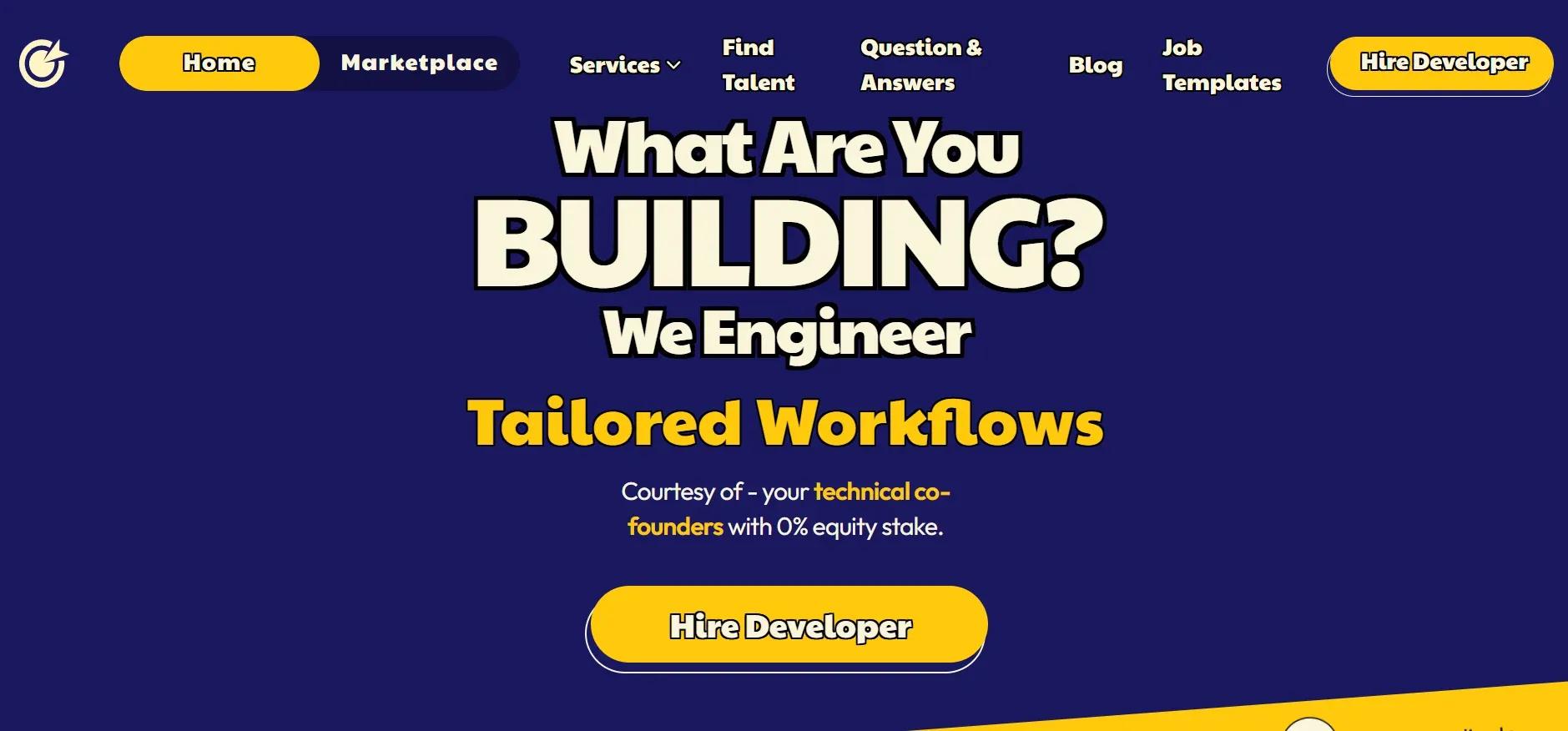
Best for: Hiring vetted generative AI engineers directly, without the months-long search.
In the UK, hiring a strong GenAI engineer can take months, because demand has far outrun supply. Senior specialists who have shipped production RAG and agents are rare, and London salaries climb every quarter. So teams often stall before a project even starts. Softaims replaces that wait with a same-week decision.
The idea is straightforward. Instead of a fixed agency, you get a curated pool you filter by skill, seniority, location, and budget. Within 48 hours, you meet vetted engineers who have already put generative AI copilots, AI agents, and chatbots into production. So your shortlist holds people who have shipped, not just experimented.
Ownership seals the case. When the work ends, the model, the code, and the data are yours outright. Nothing is rented, and no vendor holds the unlock. There is no visa queue and no brand-name premium either. You can also flex the team, scaling up for a build and down once it ships. To begin, browse the talent, review the pricing, explore generative AI development, or contact the team.
2. Devaims
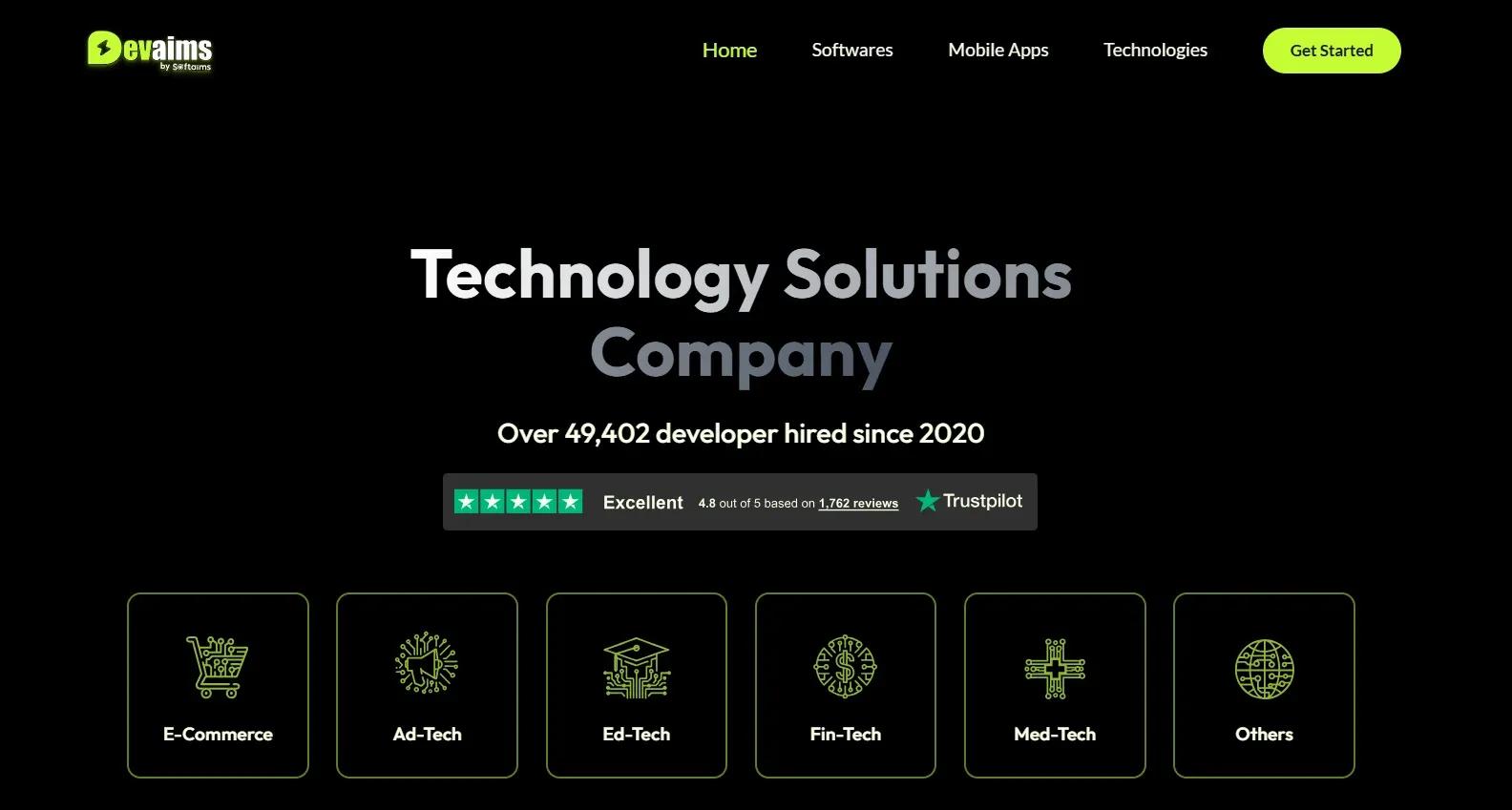
Best for: Turning a generative AI model into a product people use.
A model alone will not move your business. It needs a real interface, live data, and clean integrations to become useful. Devaims supplies that missing layer, building the software around the intelligence. So what you launch is a product people can rely on, not a demo that dazzles once.
The strength is a single accountable team. The same engineers own the GenAI feature and the product it sits inside, so nothing crosses a vendor boundary. As a result, iteration stays quick, ownership stays clear, and the launch keeps its date. Devaims works across custom software and mobile app development for web and mobile.
It suits UK teams shipping a first serious GenAI product. Rather than juggle a model vendor, a design studio, and a build agency, you rely on one partner. It runs from idea to launch and beyond. The same team then keeps improving the product after go-live. See the full range at Devaims.
3. Faculty

Headquarters: London, United Kingdom.
Faculty is one of Britain's most credible applied-AI firms. It builds custom machine learning and LLM systems for government, defence, and regulated enterprise. Notably, it created the NHS Early Warning System. So it suits organisations that need trusted, high-consequence GenAI.
Key services: applied AI, LLM applications, and AI safety.
Industries: public sector, healthcare, and finance.
Why choose them: deep regulated-sector credibility and a research-grade team. However, Accenture acquired Faculty in January 2026, so it now sits inside a global consultancy.
4. Softwire
Headquarters: London, United Kingdom.
Softwire is an employee-owned consultancy delivering custom software and AI for over 20 years. Its 500-plus engineers work in sectors that demand reliability and security. Furthermore, it folds generative AI into mission-critical systems. So it suits GenAI that must live inside a complex platform.
Key services: custom AI software, generative AI, and consulting.
Industries: healthcare, finance, media, and government.
Why choose them: deep engineering paired with cloud and AI skill. Its clients include Channel 4 and the UK Home Office.
5. Equal Experts

Headquarters: London, United Kingdom.
Equal Experts embeds senior engineers and data experts inside client teams. It works with over 2,000 consultants worldwide and delivers GenAI across business processes. As a result, it suits organisations wanting ongoing capability, not a hand-off. In addition, it brings strong data engineering and MLOps.
Key services: generative AI, AI strategy, and data engineering.
Industries: retail, financial services, and public sector.
Why choose them: a collaborative model that builds internal capability. Its clients include John Lewis Partnership and Trainline.
6. Digica
Headquarters: United Kingdom.
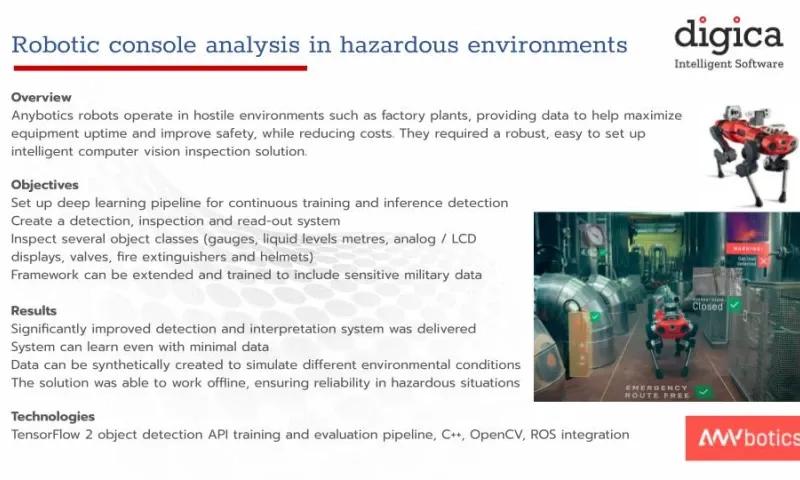
Digica is an independent UK AI and data-science specialist. Impressively, it has trained over 3,600 machine learning models across cloud, edge, and IoT projects. It now extends that depth into generative and applied AI. So it suits complex, R&D-heavy GenAI work.
Key services: machine learning, deep learning, and applied GenAI.
Industries: manufacturing, healthcare, and automotive.
Why choose them: genuine research depth and production discipline. Its team includes PhD-level engineers, which suits work that pushes past off-the-shelf tools.
7. Brainpool AI
Headquarters: London, United Kingdom.
Brainpool AI operates as a network of vetted AI and ML experts. Its researchers come from UCL, Cambridge, Oxford, and beyond. As a result, clients get bespoke GenAI builds without a permanent internal team. So it fits exploratory or one-off projects well.
Key services: bespoke GenAI, deep learning, and prototyping.
Industries: finance, healthcare, retail, and energy.
Why choose them: elite research talent available on demand. Its network model suits defined, high-skill briefs without a permanent hire.
8. Mind Foundry

Headquarters: Oxford, United Kingdom.
Mind Foundry is an Oxford University spinout focused on responsible AI. It builds models designed for safety and long-term oversight. In addition, it serves defence, insurance, and critical infrastructure. So it suits high-stakes GenAI that must stay accountable.
Key services: responsible AI, model monitoring, and analytics.
Industries: defence, insurance, and infrastructure.
Why choose them: Oxford research paired with production discipline. Its models are built to be audited, not just deployed.
9. Limeup

Headquarters: London, United Kingdom.
Limeup is a London studio that builds AI-powered products and custom models. Notably, 93% of its 85-plus team is mid or senior level. It has delivered over 200 digital products, with a 95% client return rate. So it suits teams wanting GenAI inside polished apps.
Key services: generative AI, custom software, and product design.
Industries: fintech, healthcare, and real estate.
Why choose them: it bundles GenAI into well-crafted products. One case study cut a client's matching errors by 73%.
10. Waracle
Headquarters: Edinburgh and London, United Kingdom.
Waracle engineers intelligent digital products for regulated sectors. Based in Scotland with London offices, it serves finance, health, and energy. Notably, it has added AI and data capability into its product practice. So it suits GenAI that must live inside a secure, compliant app.
Key services: AI-enabled product engineering and data.
Industries: financial services, healthcare, and energy.
Why choose them: product craft plus regulated-sector experience. It holds ISO 27001 certification, and its clients include Royal London.
What Is a Generative AI Development Company
A generative AI development company designs, builds, and deploys software powered by large language models. It does far more than call an API. Instead, it builds production systems around your data, from retrieval pipelines to autonomous agents.
The work spans data preparation, prompt design, and retrieval architecture. On top of that, it covers evaluation, guardrails, and the infrastructure to run models reliably. So the effort reaches well beyond a simple chatbot.
Good partners also treat launch as a beginning, not an end. Afterwards, they monitor accuracy, retrain on fresh data, and keep inference costs in check. As a result, the system keeps delivering rather than quietly decaying.
Generative AI Development Services in the UK
No two GenAI projects look alike. Depending on your goal, you may need any of the services below. Each one tackles a different problem.
Retrieval systems. RAG grounds a model in your own content. Consequently, answers stay accurate and current without expensive retraining.
AI agents. AI agents reason, use tools, and complete multi-step tasks. So they automate whole workflows rather than single replies.
LLM copilots. Generative AI copilots support customer service, sales, and internal teams. In addition, they speed up research and document work.
Model fine-tuning. Fine-tuning adapts a base model to your data and task. Therefore, you gain accuracy without training from scratch.
GenAI integration. API integration links models to your CRM, ERP, and internal tools. As a result, the AI works inside your real systems.
Evaluation and MLOps. Evals and monitoring keep a model safe and accurate in production. Meanwhile, they catch drift before your users do.
How Much Does It Cost to Hire Generative AI Engineers in the UK
UK salaries for generative AI engineers have climbed fast, since demand has outrun supply. Pay concentrates in London, though remote-first scale-ups narrow the gap. So budgeting well means knowing the current bands.
Seniority drives most of the range. A junior engineer earns far less than a senior who has led production deployments. Meanwhile, frontier labs like Google DeepMind and Anthropic's London office pay well above the market.
The table below shows typical UK base salaries by level.
Level | Typical UK base salary |
| Junior (0–2 years) | £45,000 – £75,000 |
| Mid-level (2–5 years) | £85,000 – £150,000 |
| Senior (5+ years) | £150,000 – £250,000 |
| Frontier-lab or lead | £200,000+ total compensation |
Sources: Glassdoor UK, IT Jobs Watch, and industry salary trackers (2026). Figures vary by source and role, so treat them as a guide.
For a live London benchmark, Glassdoor puts the average generative AI developer salary near £75,000. It rises past £117,000 at the 75th percentile. So a full in-house team is costly to build and retain.
That is why many UK teams hire a partner or a vetted marketplace instead. Softaims offers access to vetted generative AI engineers, dedicated or freelance, matched within 48 hours. As a result, you skip the months-long search and the London salary premium.
Dedicated or Freelance Generative AI Engineers
Your AI roadmap should shape this choice. For ongoing model work and long-term upkeep, dedicated engineers usually win. They bring consistency, integrate with your team, and learn your business over time.
Freelancers, by contrast, suit short projects or niche skills you do not need full-time. They cost less over a fixed brief, and you avoid a long-term commitment. They add flexibility and broad cross-client experience. However, they take more managing, since alignment and steady communication demand effort. In the end, weigh scale, complexity, and duration, since a hybrid mix often works best.
Generative AI Development Cost in the UK (2026)
Cost is where most guides on generative AI development companies go quiet, so here is the detail. UK GenAI pricing depends on scope, data, and production maturity. A scoped proof of concept costs far less than a multi-workflow system. So it helps to see the ranges before you brief a firm.
Engagement | Typical scope | Estimated cost |
| Proof of concept | One use case, scoped pilot | £8,000 – £25,000 |
| Single-workflow build | One production workflow | £30,000 – £70,000 |
| Multi-workflow system | Several production workflows | £70,000 – £150,000+ |
| Enterprise programme | Many workflows, governance | £150,000+ |
The biggest cost variable is data. If your data needs collecting, cleaning, and structuring for RAG, expect real time and budget. In addition, evaluation, guardrails, and integration all add cost. There are recurring costs too, since LLM usage, vector databases, and hosting all recur monthly. So plan for a total cost of ownership, not just the build.
Enterprise consultancies usually start well above these figures. That premium reflects programme overhead, not always better outcomes. Therefore, a focused specialist often delivers more value for a mid-market budget.
Onshore or Offshore: Why Delivery Model Matters
Where your team actually sits shapes cost, speed, and communication. So the delivery model deserves as much scrutiny as the pitch. UK GenAI firms tend to fall into three groups.
Fully UK-based. The whole team works in the United Kingdom. As a result, you get full time-zone overlap and simple contracting, at a premium rate.
UK-led with offshore delivery. A UK team leads, while engineers work abroad. Therefore, you trade some oversight for a lower cost, so confirm the split.
Offshore in disguise. A UK address hides delivery from overseas. So check where your engineers sit, since many "UK" lists hide this.
Softaims removes the guesswork, since you choose each developer and see exactly where they work.
Industries Adopting Generative AI in the UK
Adoption is uneven across sectors. The generative AI development companies in the UK see the deepest demand in a few industries. Each brings its own drivers and rules.
Financial services. Banks like HSBC and Lloyds use GenAI for research, fraud, and compliance. Notably, finance spends far above the cross-industry average on AI.
Healthcare. The NHS and providers use GenAI for documentation, triage, and search. Meanwhile, strict rules make governance essential.
Retail and eCommerce. Retailers like ASOS use GenAI for product, search, and merchandising. As a result, conversion and service improve.
Energy and utilities. Firms like Octopus Energy apply GenAI to customer operations and modelling. Therefore, efficiency climbs.
Public sector. Government uses GenAI for services and efficiency. Still, accountability and transparency come first.
How to Choose the Right Generative AI Partner
Choosing the wrong partner among generative AI development companies is an expensive mistake. So work through these checks before you sign.
Confirm production evidence. Ask for live GenAI systems, not demos. Because most pilots never ship, insist on deployed proof.
Check evals and guardrails. Ask how the team measures accuracy and controls hallucination. In addition, confirm safety testing before launch.
Verify the UK base. Check for real UK headquarters, not just an address. So confirm where your engineers actually sit.
Review data maturity. GenAI fails most at the data layer. Therefore, confirm strong data engineering before model work begins.
Run a paid pilot first. A small, scoped pilot reveals real delivery quality. So test one workflow before a large commitment.
Clarify ownership. You should own the model, the code, and the data. Moreover, confirm there is no vendor lock-in.
Generative AI Trends in the UK for 2026
The generative AI development companies in the UK set trends the market follows. A few clear shifts stand out this year.
Agents are going mainstream. Systems now complete multi-step tasks, not just answer questions. As a result, they deliver far more value.
RAG is the default. Retrieval beats fine-tuning for most builds, since it cuts cost and keeps data fresh. Meanwhile, it grounds answers in your own content.
Evals are now essential. Buyers demand accuracy tests and guardrails before launch. Therefore, evaluation discipline separates serious firms.
Governance is central. UK buyers expect explainability and safety controls. Consequently, responsible AI is now a baseline requirement.
Smaller models are rising. Focused models often beat giant ones on narrow tasks. So they cut cost and latency.
Why Generative AI Projects Fail (and How to Avoid It)
Most GenAI pilots deliver nothing measurable. MIT found that 95% of enterprise AI deployments produced no measurable return. The causes repeat, which means each one is avoidable.
Nobody owns the outcome. A pilot wins applause at a demo, then loses attention. So name a business owner and one metric before anything starts.
The data was never ready. Demos run on clean files, while production holds messy ones. Therefore, treat data preparation as a real phase with its own budget.
Nobody measured quality. Without an evaluation set, you are guessing whether changes helped. So insist on evals built from real cases.
It never reached a workflow. A tool in a separate tab gets forgotten. Systems that succeed appear inside the apps people already use.
Frequently Asked Questions
Which are the best generative AI development companies in the UK?
Faculty, Softwire, Equal Experts, and Digica lead among established firms. Brainpool AI, Mind Foundry, Limeup, and Waracle round out strong options. Softaims and Devaims suit teams that want to build fast and own the result.
How much does it cost to hire a generative AI engineer in the UK?
A mid-level engineer earns £85,000 to £150,000, and a senior £150,000 to £250,000. Frontier labs pay more. Hiring a vetted partner avoids the salary and recruitment overhead.
How much does generative AI development cost in the UK?
A proof of concept runs £8,000 to £25,000, and a single-workflow build £30,000 to £70,000. Multi-workflow systems exceed £70,000. Data readiness drives most of the variation.
What is RAG, and why does it matter?
RAG, or Retrieval-Augmented Generation, grounds a model in your own data. As a result, answers stay accurate and current without costly retraining. It is now the default pattern for enterprise GenAI.
Are these firms genuinely UK-based?
Yes, and we verified each one. We also flag ownership changes, such as Faculty now being part of Accenture. Always confirm where delivery happens.
Who owns the model and the data?
You should own all of it. Confirm ownership of the code, the models, and the data in the contract. This avoids vendor lock-in later.
Conclusion
Generative AI is now part of how British businesses work, not just another passing trend. The strongest results come from solutions built around real data, workflows, and business needs.
The right team also treats evaluation, security, and reliability as part of development from day one. This helps turn an AI idea into a production system that delivers lasting value.
Before choosing a partner, look at their production experience, technical expertise, evaluation process, and team. A carefully vetted shortlist can protect your budget, data, and timeline while giving your project a stronger start. Would you rather skip the search entirely? Then Softaims matches you with vetted AI developers within 48 hours, in the UK or anywhere.


 GitHub
Yoan G.

 Verified Expert in Engineering
My name is Yoan G. and I have over 5 years of experience in the tech industry. I specialize in the following technologies: Artificial Intelligence, GPT-4, Large Language Model, ChatGPT, Hugging Face, etc.. I hold a degree in Engineer's degree, Engineer's degree. Some of the notable projects I've worked on include: OpenAI Experience, Text Transformer using GPT models, MLP Architectures for Emotion and Sentiment Analysis, Deep Reinforcement Learning Certification, Whisper (Transcription) App, etc.. I am based in Bagnolet, France. I've successfully completed 7 projects while developing at Softaims.
I value a collaborative environment where shared knowledge leads to superior outcomes. I actively mentor junior team members, conduct thorough quality reviews, and champion engineering best practices across the team. I believe that the quality of the final product is a direct reflection of the team's cohesion and skill.
My experience at Softaims has refined my ability to effectively communicate complex technical concepts to non-technical stakeholders, ensuring project alignment from the outset. I am a strong believer in transparent processes and iterative delivery.
My main objective is to foster a culture of quality and accountability. I am motivated to contribute my expertise to projects that require not just technical skill, but also strong organizational and leadership abilities to succeed.

Leave a Comment
Need help building your team? Let's discuss your project requirements.
Get matched with top-tier developers within 24 hours and start your project with no pressure of long-term commitment.