Top 10 LLM Development Companies in the UK (2026)
Explore the top 10 LLM development companies in the UK for 2026. Compare their expertise, services, and strengths to find the right partner for your AI project.
Table of contents
Key Takeaways
- Applied AI has matured in the UK. Accenture bought Faculty for $1bn+, and Quantexa won a £175m HMRC deal.
- Beware offshore firms in disguise. Many "UK" LLM lists feature teams headquartered abroad, so verify.
- Production evidence beats demos. Most pilots never ship, so insist on live, deployed systems.
- Costs vary widely. A focused pilot starts near £15,000, while multi-workflow systems top £80,000.
- Data decides success. Most LLM projects fail at the data and integration layer, not the model.
- 95% of AI pilots return nothing. MIT reviewed 300 deployments, and the causes repeat predictably.
LLMs have moved well beyond demos and slide decks. They now power copilots, AI agents, search tools, and products that work directly with business data.
That makes choosing an LLM development company a serious decision. The right team can affect how quickly you launch, how much you spend, and whether the final product actually delivers value.
The harder part is finding companies that genuinely build and deliver from the UK. Plenty of “UK” company lists include firms with a London address but offshore headquarters or delivery teams. That can make comparing providers much harder than it should be.
There is also a bigger reason to be careful. MIT’s NANDA research found that 95% of enterprise AI initiatives fail to deliver measurable returns.
This guide highlights 10 LLM development companies in the UK for 2026, with a focus on their services, expertise, and what each company is best suited for. If you already know what you need, you can also hire vetted AI developers and build your LLM solution with a team you control.
The UK LLM Market in 2026
The UK is already one of the biggest AI markets in the world, and LLM adoption is moving quickly from experiments to real business use.
The numbers show how fast things are changing. The UK is the third-largest AI market globally, behind the US and China, according to the UK government’s AI Opportunities Action Plan. London-based AI firms also raised £6.7 billion in venture capital between 2021 and 2024, making London the world's third-largest AI venture capital cluster. UK Department for Business and Trade
Enterprise demand is growing too. In January 2026, Accenture agreed to acquire UK AI company Faculty, later completing the deal in March. In another major example, UK AI company Quantexa secured a £175 million, 10-year partnership with HMRC to modernise its data foundation and support governed AI at national scale.
That creates a strong market for LLM development teams. But building a production-ready LLM system still takes more than model expertise. Companies need people who understand RAG, AI agents, data engineering, evaluation, security, and deployment.
That is why production experience matters more than an impressive demo when choosing an LLM development partner.
How We Ranked These LLM Development Companies
We looked beyond marketing claims and focused on the capabilities that matter when building and deploying LLM systems.
UK presence. We prioritised companies with a genuine UK base rather than firms using a UK address while delivering entirely offshore.
Production experience. Real-world LLM, RAG, and AI agent deployments ranked higher than companies focused mainly on prototypes.
Evaluation and guardrails. We looked for teams that test model performance, manage hallucinations, and build safeguards into production systems.
Data and integration expertise. LLM projects depend heavily on data pipelines, APIs, databases, and MLOps. These capabilities played a major role in our ranking.
Ownership and flexibility. We also considered how much control clients retain over their code, data, models, and ongoing development.
Best LLM Development Companies in the UK: Comparison Table
Short on time? This table compares the top LLM development companies in the UK. It covers location, focus, and best fit. Use it to build a shortlist, then read the full profiles below.
Company | Location | Core LLM focus | Best for |
| Softaims | UK and global | Hiring vetted LLM and AI developers | Building LLM systems with full ownership |
| Devaims | UK and global | LLM apps plus full product build | Shipping LLM features inside a product |
| Faculty | London | Applied AI, LLMs, public sector | Regulated, high-stakes LLM work |
| Quantexa | London | Decision intelligence, agentic AI | Financial crime and data-heavy decisions |
| Humanloop | London | LLM deployment, evals, monitoring | Reliable LLMs in production at scale |
| Softwire | London | Custom AI software, LLM integration | LLMs inside mission-critical systems |
| Equal Experts | London | LLM engineering, data platforms | Scaling LLMs across a business |
| Digica | United Kingdom | Machine learning, deep learning, LLMs | Industrial and regulated models |
| Mind Foundry | Oxford | Responsible AI for high-stakes use | Defence, insurance, and infrastructure |
| Brainpool AI | London | Vetted ML and LLM research network | On-demand research talent |
Details reflect public profiles and Clutch data as of 2026 and can change, so verify each firm before you commit.
The Top 10 LLM Development Companies in the UK
We’ve rounded up 10 LLM development companies in the UK that stand out for their expertise, capabilities, and real-world work. Each profile covers what the company does best, who it’s a good fit for, and what to consider before choosing a partner.
1. Softaims
Best for: Hiring vetted LLM engineers directly, without the months-long search.
Most LLM projects fail on the engineering around the model, not the model itself. Data sits scattered, nobody measures accuracy, and guardrails never get built. Then the pilot quietly dies once the demo excitement fades. Softaims is built for that gap. You hire pre-screened engineers who ship production RAG and agents, not slideware.
Instead of a fixed agency, you get a curated pool you filter by skill, seniority, location, and budget. Within 48 hours, you meet vetted developers who have shipped generative AI systems, AI agents, and chatbots in production. So your shortlist holds people who have solved retrieval and evaluation before.
Ownership seals the case. When the work ends, the model, the code, and the data are yours outright. Nothing is rented, and no vendor holds the unlock. There is no visa queue and no brand-name premium either. You can also scale the team up for a build and down once it ships. To begin, browse the talent, review the pricing, explore generative AI development, or contact the team.
2. Devaims
Best for: Turning a language model into a product people use.
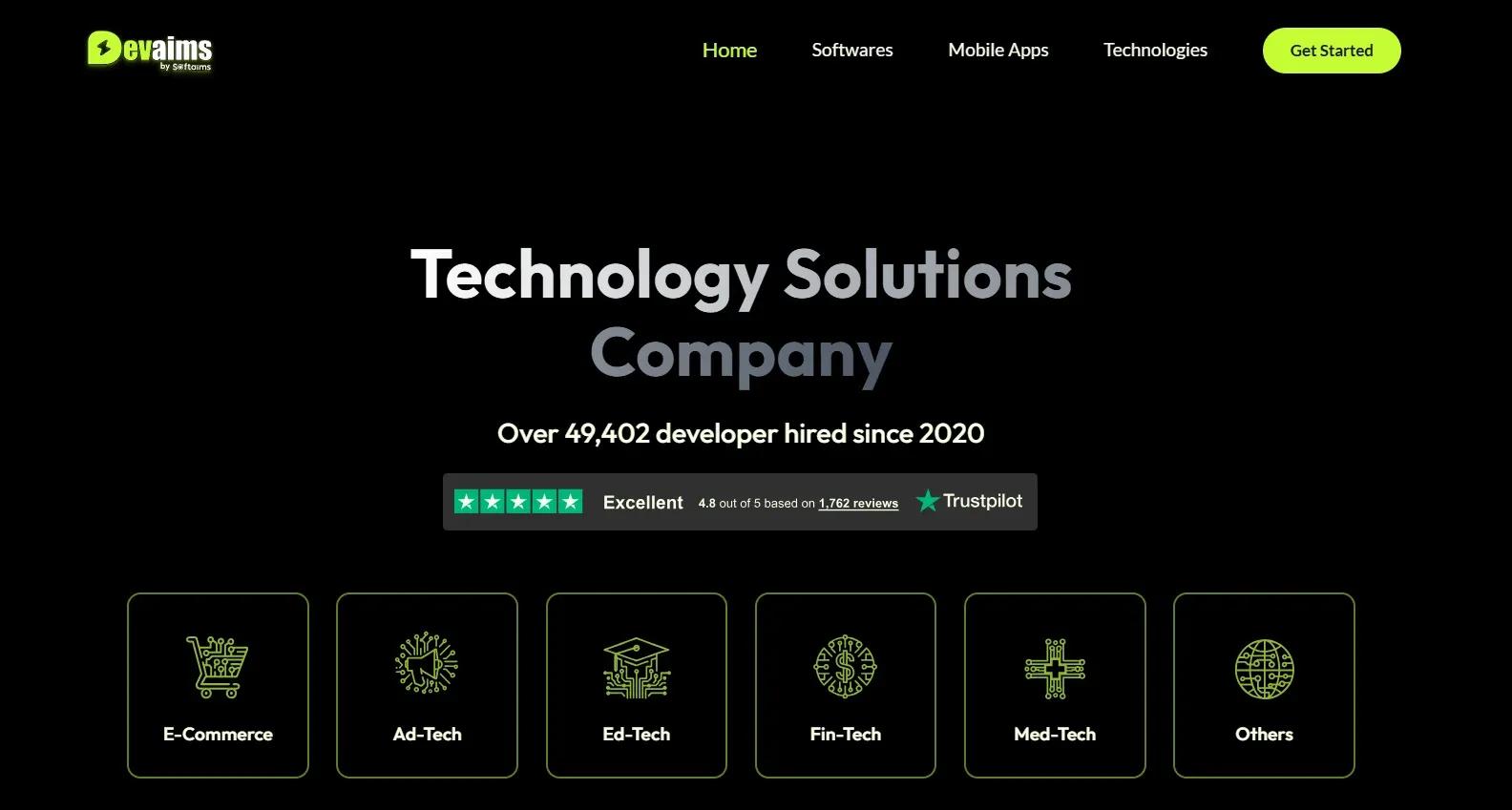
A model on its own is not a product. It needs a real interface, live data, and clean integrations to become useful. Devaims supplies that missing layer, building the software around the model. So what you launch is a product people can rely on, not a clever demo.
The strength is a single accountable team. The same engineers own the LLM feature and the product it sits inside, so nothing crosses a vendor boundary. As a result, iteration stays quick, ownership stays clear, and the launch keeps its date. Devaims works across custom software and mobile app development for web and mobile.
It suits UK teams shipping a first serious LLM product. Rather than juggle a model vendor, a design studio, and a build agency, you rely on one partner. It runs from idea to launch and beyond. The same team then keeps improving the product after go-live. See the full range at Devaims.
3. Faculty

Headquarters: London, United Kingdom.
Faculty is one of Britain's most credible applied-AI firms. It builds custom machine learning and LLM systems for government, defence, and regulated enterprise. Notably, it created the NHS Early Warning System. So it suits organisations that need trusted, high-consequence LLM work.
Key services: applied AI, LLM applications, and AI safety.
Industries: public sector, healthcare, and finance.
Why choose them: deep regulated-sector credibility and a research-grade team. However, Accenture acquired Faculty in January 2026, so it now sits inside a global consultancy.
4. Quantexa

Headquarters: London, United Kingdom.
Quantexa is a UK decision-intelligence unicorn. It connects siloed data at scale to detect financial crime, assess risk, and drive decisions. Notably, it won a £175 million HMRC contract, and its platform grows more agentic each year. So it suits data-heavy, high-stakes decisions.
Key services: decision intelligence, entity resolution, and agentic AI.
Industries: banking, insurance, and government.
Why choose them: a genuinely engineered data platform, not off-the-shelf tooling. Its clients include major UK and global banks, and it offers implementation partnerships for existing data teams.
5. Humanloop
Headquarters: London, United Kingdom.
Humanloop has become a go-to partner for putting LLMs into production. Its focus is the infrastructure around deployment, from prompt evaluation to monitoring. As a result, it addresses the gap where most GenAI projects fail. So it suits teams that need reliable, measurable LLMs at scale.
Key services: LLM deployment, evaluation, fine-tuning, and monitoring. Industries: SaaS, marketing, and enterprise.
Why choose them: deep production and evaluation expertise. It builds the guardrails that keep an LLM reliable after launch, which is exactly where most projects come undone.
6. Softwire
Headquarters: London, United Kingdom.
Softwire is an employee-owned consultancy delivering custom software and AI for over 20 years. Its 500-plus engineers work in sectors that demand reliability and security. Furthermore, it folds LLM integration into complex systems. So it suits LLMs that must live inside a mission-critical platform.
Key services: custom AI software, LLM integration, and consulting.
Industries: healthcare, finance, media, and government.
Why choose them: deep engineering paired with cloud and AI skill. Its clients include Channel 4 and the UK Home Office.
7. Equal Experts

Headquarters: London, United Kingdom.
Equal Experts embeds senior engineers and data experts inside client teams. It works with over 2,000 consultants worldwide and delivers LLM systems across business processes. As a result, it suits organisations wanting ongoing capability, not a hand-off. In addition, it brings strong data engineering and MLOps.
Key services: LLM engineering, AI strategy, and data platforms.
Industries: retail, financial services, and public sector.
Why choose them: a collaborative model that builds internal capability. Its clients include John Lewis Partnership and Trainline.
8. Digica
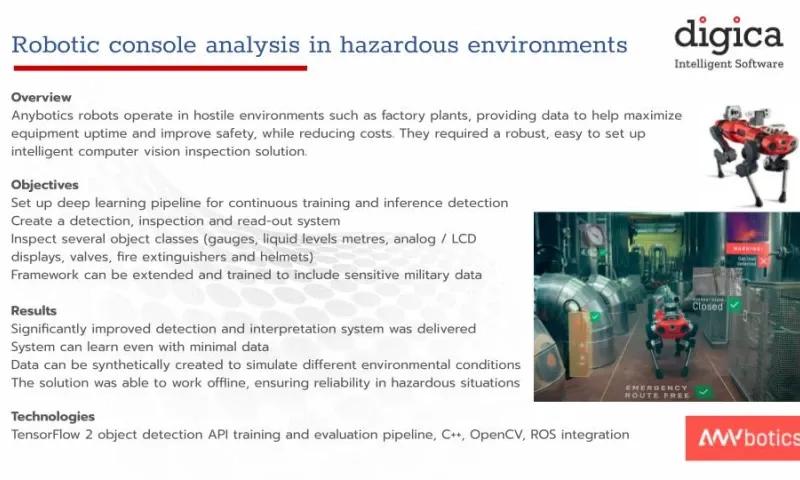
Headquarters: United Kingdom.
Digica is an independent UK AI and data-science specialist. Impressively, it has trained over 3,600 machine learning models across cloud, edge, and IoT projects. It now extends that depth into LLM and applied AI. So it suits complex, research-heavy LLM work.
Key services: machine learning, deep learning, and applied LLMs.
Industries: manufacturing, healthcare, and automotive.
Why choose them: genuine research depth and production discipline. Its team includes PhD-level engineers.
9. Mind Foundry

Headquarters: Oxford, United Kingdom.
Mind Foundry is an Oxford University spinout focused on responsible AI. It builds models designed for safety and long-term oversight. In addition, it serves defence, insurance, and critical infrastructure. So it suits high-stakes LLM work that must stay accountable.
Key services: responsible AI, model monitoring, and analytics.
Industries: defence, insurance, and infrastructure.
Why choose them: Oxford research paired with production discipline. Its models are built to be audited, not just deployed.
10. Brainpool AI
Headquarters: London, United Kingdom.
Brainpool AI operates as a network of vetted AI and ML experts. Its researchers come from UCL, Cambridge, Oxford, and beyond. As a result, clients get bespoke LLM builds without a permanent internal team. So it fits exploratory or one-off projects well.
Key services: bespoke LLM builds, deep learning, and prototyping.
Industries: finance, healthcare, retail, and energy.
Why choose them: elite research talent available on demand. Its network model suits defined, high-skill briefs without a permanent hire.
What Is an LLM Development Company?
An LLM development company designs, builds, and deploys software powered by large language models. It does far more than call an API. Instead, it builds production systems around your data, from retrieval pipelines to autonomous agents.
The work spans data preparation, prompt design, and retrieval architecture. On top of that, it covers evaluation, guardrails, and the infrastructure to run models reliably. So the effort reaches well beyond a simple chatbot.
Good partners also treat launch as a beginning, not an end. Afterwards, they monitor accuracy, retrain on fresh data, and keep inference costs in check. As a result, the system keeps delivering rather than quietly decaying.
LLM Development Services in the UK
No two LLM projects look alike. Depending on your goal, you may need any of the services below. Each one tackles a different problem.
Retrieval systems. RAG grounds a model in your own content. Consequently, answers stay accurate and current without expensive retraining.
AI agents. AI agents reason, use tools, and complete multi-step tasks. So they automate whole workflows rather than single replies.
LLM copilots. Generative AI copilots support customer service, sales, and internal teams. In addition, they speed up research and document work.
Model fine-tuning. Fine-tuning adapts a base model to your data and task. Therefore, you gain accuracy without training from scratch.
LLM integration. API integration links models to your CRM, ERP, and internal tools. As a result, the model works inside your real systems.
Evaluation and monitoring. Evals and observability keep a model safe and accurate in production. Meanwhile, they catch drift before your users do.
How Much Does It Cost to Hire LLM Engineers in the UK?
UK salaries for LLM and AI engineers have climbed fast, since demand has outrun supply. Pay concentrates in London, though remote-first scale-ups narrow the gap. So budgeting well means knowing the current bands.
Seniority drives most of the range. A junior engineer earns far less than a senior who has shipped production LLM systems. Meanwhile, frontier labs like Google DeepMind pay well above the market.
The table below shows typical UK base salaries by level.
Level | Typical UK base salary |
| Junior (0–2 years) | £45,000 – £75,000 |
| Mid-level (2–5 years) | £85,000 – £150,000 |
| Senior (5+ years) | £150,000 – £250,000 |
| Frontier-lab or lead | £200,000+ total compensation |
Sources: Glassdoor UK, IT Jobs Watch, and industry trackers (2026). Figures vary by source, so treat them as a guide.
A full in-house team is therefore costly to build and retain. That is why many UK teams hire a partner or a vetted marketplace instead. Softaims offers access to vetted LLM engineers, dedicated or freelance, matched within 48 hours. As a result, you skip the months-long search and the London salary premium.
Dedicated or Freelance LLM Engineers?
Your AI roadmap should shape this choice. For ongoing model work and long-term upkeep, dedicated engineers usually win. They bring consistency, integrate with your team, and learn your business over time.
Freelancers, by contrast, suit short projects or niche skills you do not need full-time. They add flexibility and broad cross-client experience. However, they take more managing, since alignment and steady communication demand effort. In the end, weigh scale, complexity, and duration, since a hybrid mix often works best.
LLM Development Cost in the UK (2026)
Cost is where most guides on LLM development companies go quiet, so here is the detail. UK LLM pricing depends on scope, data, and production maturity. A scoped pilot costs far less than a multi-workflow system. So it helps to see the ranges before you brief a firm.
Engagement | Typical scope | Estimated cost |
| Focused pilot | One use case, 4 to 8 weeks | £15,000 – £40,000 |
| Single-workflow build | One production workflow | £40,000 – £80,000 |
| Multi-workflow system | Several production workflows | £80,000 – £150,000+ |
| Enterprise programme | Many workflows, governance | £150,000+ |
The biggest cost variable is data. If your data needs collecting, cleaning, and structuring for RAG, expect real time and budget. In addition, evaluation, guardrails, and integration all add cost. There are recurring costs too, since LLM usage, vector databases, and hosting all recur monthly. So plan for a total cost of ownership, not just the build.
Enterprise consultancies usually start well above these figures. That premium reflects programme overhead, not always better outcomes. Therefore, a focused specialist often delivers more value for a mid-market budget. A vetted marketplace narrows the cost further, since you pay for the exact skills you need.
How to Choose the Right LLM Development Partner
Choosing the wrong partner among LLM development companies is an expensive mistake. So work through these checks before you sign.
Confirm production evidence. Ask for live LLM systems, not demos. Because most pilots never ship, insist on deployed proof.
Check the tech stack. Ask which models, frameworks, and vector stores they use. Vague answers are a red flag, so look for specifics.
Verify the UK base. Check Companies House for the registered entity. So confirm where your engineers actually sit.
Review evaluation practice. Ask how the team measures accuracy and controls hallucination. In addition, confirm safety testing before launch.
Run a paid pilot first. A small, scoped pilot reveals real delivery quality. So test one workflow before a large commitment.
Clarify ownership. You should own the model, the code, and the data. Moreover, confirm there is no vendor lock-in.
Check post-launch support. Models drift as data and usage change. Therefore, confirm retraining, monitoring, and a clear support plan before you commit.
Onshore or Offshore: Why Delivery Model Matters
Where your team actually sits shapes cost, speed, and communication. So the delivery model deserves as much scrutiny as the pitch. This matters especially for LLM development companies, since many "UK" firms are offshore in disguise.
Fully UK-based. The whole team works in the United Kingdom. As a result, you get full time-zone overlap and simple contracting, at a premium rate.
UK-led with offshore delivery. A UK team leads, while engineers work abroad. Therefore, you trade some oversight for a lower cost, so confirm the split.
Offshore in disguise. A UK address hides a head office overseas. So check Companies House and ask where delivery happens.
Softaims removes the guesswork, since you choose each developer and see exactly where they work.
Industries Using LLMs in the UK
Adoption is uneven across sectors. The LLM development companies in the UK see the deepest demand in a few industries. Each brings its own drivers and rules.
Financial services. Banks use LLMs for research, fraud, and compliance. Notably, decision-intelligence firms like Quantexa serve major UK banks.
Public sector. Government uses LLMs for services and efficiency. Meanwhile, accountability and transparency come first.
Healthcare. Providers use LLMs for documentation, triage, and search. So strict governance is essential.
Legal and professional services. Firms use LLMs for contract review and drafting. As a result, they cut hours of manual work.
SaaS and technology. Product teams embed copilots and LLM features. Therefore, LLMs have become a core product differentiator.
LLM Trends in the UK for 2026
The LLM development companies in the UK set trends the market follows. A few clear shifts stand out this year.
Agents are going mainstream. Systems now complete multi-step tasks, not just answer questions. As a result, they deliver far more value.
RAG is the default. Retrieval beats fine-tuning for most builds, since it cuts cost and keeps data fresh. Meanwhile, it grounds answers in your own content.
Evals are now essential. Buyers demand accuracy tests and guardrails before launch. Therefore, evaluation discipline separates serious firms.
Governance is central. UK buyers expect explainability and safety controls. Consequently, responsible AI is now a baseline requirement.
Smaller models are rising. Focused models often beat giant ones on narrow tasks. So they cut cost and latency.
Why LLM Projects Fail (and How to Avoid It)
Most LLM pilots deliver nothing measurable. MIT found that 95% of enterprise AI deployments produced no measurable return. The causes repeat, which means each one is avoidable.
Nobody owns the outcome. A pilot wins applause at a demo, then loses attention. So name a business owner and one metric before anything starts.
The data was never ready. Demos run on clean files, while production holds messy ones. Therefore, treat data preparation as a real phase with its own budget.
Nobody measured quality. Without an evaluation set, you are guessing whether changes helped. So insist on evals built from real cases.
It never reached a workflow. A tool in a separate tab gets forgotten. Systems that succeed appear inside the apps people already use.
Frequently Asked Questions
Which are the best LLM development companies in the UK?
Faculty, Quantexa, Humanloop, and Softwire lead among established firms. Equal Experts, Digica, Mind Foundry, and Brainpool AI round out strong options. Softaims and Devaims suit teams that want to build fast and own the result.
How much does LLM development cost in the UK?
A focused pilot runs £15,000 to £40,000 over four to eight weeks. A single-workflow build runs £40,000 to £80,000. Data readiness drives most of the variation.
What is RAG, and why does it matter?
RAG, or Retrieval-Augmented Generation, grounds a model in your own data. As a result, answers stay accurate and current without costly retraining. It is now the default pattern for enterprise LLM work.
Are these firms genuinely UK-based?
Yes, and we verified each one against its headquarters. We also flag ownership changes, such as Faculty now being part of Accenture. Always confirm where delivery happens.
How do I verify an LLM development company is legit?
Check Companies House for the registered entity, and ask for two client references. Then request a technical walkthrough of a recent build, not a sales deck. Vague answers are a red flag.
Who owns the model and the data?
You should own all of it. Confirm ownership of the code, the models, and the data in the contract. This avoids vendor lock-in later.
Conclusion
LLMs are no longer just an AI experiment. They are becoming part of how businesses build products, automate work, and serve customers.
But the model itself is only one piece. The real value comes from connecting it to the right data, workflows, tools, and safeguards. That makes the development partner just as important as the technology.
Before choosing a company, look beyond the sales pitch. Check its production experience, technical expertise, approach to evaluation and security, and where its team actually works. A good partner should help you move from an AI idea to a reliable system that delivers measurable value.
If you want to skip the lengthy search, Softaims can connect you with vetted AI developers within 48 hours, whether you need a UK-based team or developers elsewhere.


 Stackoverflow
Oleksandr T.

 Verified Expert in Engineering
My name is Oleksandr T. and I have over 7 years of experience in the tech industry. I specialize in the following technologies: Artificial Intelligence, Machine Learning, Python, Computer Vision, Natural Language Processing, etc.. I hold a degree in Master's degree, Bachelor of Technology (BTech). Some of the notable projects I've worked on include: Computer Vision Label Detection for Video Streams, Demand prediction, Chatbot for Medical Conversations Using LLM, Sentiment analysis of stock market news with LLM, Telegram LLM chatbot development. I am based in Kyiv, Ukraine. I've successfully completed 5 projects while developing at Softaims.
I thrive on project diversity, possessing the adaptability to seamlessly transition between different technical stacks, industries, and team structures. This wide-ranging experience allows me to bring unique perspectives and proven solutions from one domain to another, significantly enhancing the problem-solving process.
I quickly become proficient in new technologies as required, focusing on delivering immediate, high-quality value. At Softaims, I leverage this adaptability to ensure project continuity and success, regardless of the evolving technical landscape.
My work philosophy centers on being a resilient and resourceful team member. I prioritize finding pragmatic, scalable solutions that not only meet the current needs but also provide a flexible foundation for future development and changes.

Leave a Comment
Need help building your team? Let's discuss your project requirements.
Get matched with top-tier developers within 24 hours and start your project with no pressure of long-term commitment.