Top 10 IT Staff Augmentation Companies In The USA (2027 Guide)
Filling engineering roles through traditional hiring can take months and inflate budgets. Discover the top 10 IT staff augmentation companies in the USA for 2027 to embed pre-vetted senior developers into your team within days.
Technically reviewed by:
Alexander Y.|EVANGELOS N.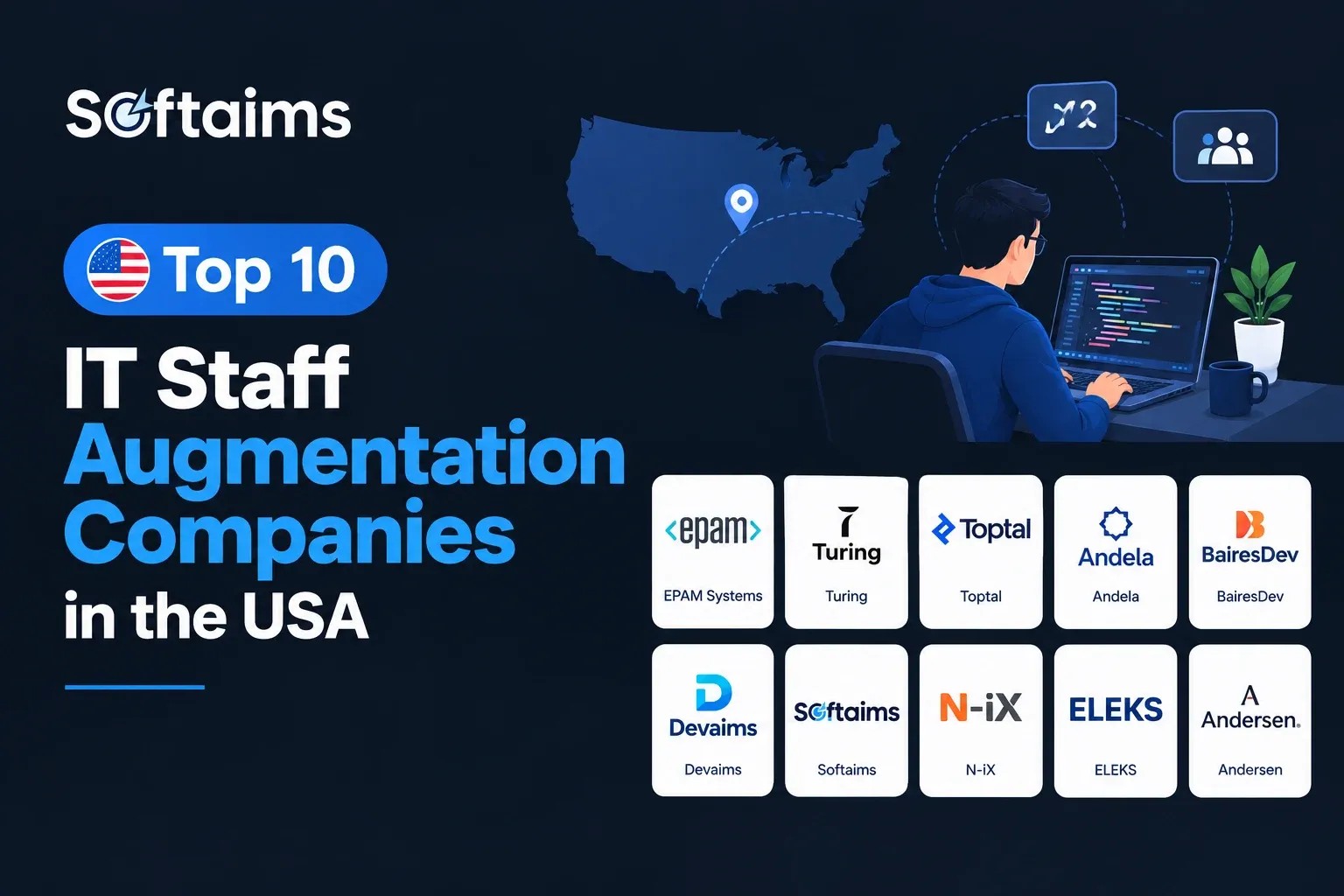
Table of contents
Key Takeaways
- Traditional U.S. hiring takes six to eight weeks, whereas staff augmentation embeds vetted engineers into your team in as little as 48 hours.
- Unlike outsourcing, where a vendor takes over the project, augmented developers join your existing tools, processes, and daily standups under your direct management.
- Nearshore teams (e.g., Latin America) deliver near-100% U.S. time-zone alignment at lower rates ($50–$100/hr), while offshore options maximize savings for defined tasks.
- You gain instant capacity for product pushes or niche skill gaps (AI, Cloud, DevOps) without paying long-term benefits, payroll taxes, or equity.
- The best partners screen rigorously (accepting only the top 1%–3%), handle legal/compliance risk, and offer quick swap guarantees if a fit misses.
- The smartest strategy is to pilot small with 2–3 engineers on a tight scope before scaling up your augmented headcount.
Filling an engineering seat the old-fashioned way drags, which is why IT staff augmentation companies keep gaining ground. In the US, a good developer can take two months to land, and pay packets keep stretching upward. That's why so many American teams reach for staff augmentation. You bring vetted outside engineers onto your own team in days, plug them into your sprints, and skip the baggage of a full-time headcount.
Demand backs this up. The global IT staff augmentation market is worth roughly $439 billion in 2026, with US buyers leading much of it. Where a traditional hire eats six to eight weeks, augmentation usually delivers someone in one or two. So the harder call isn't whether to use it, it's picking the right partner.
Below, we rank the top 10 IT staff augmentation companies in the USA for 2026, with a note on who each one suits. Past the list, you'll find the mechanics, pricing, upsides, warning signs, and a step-by-step way to choose. One read should leave you ready to act.
What Is IT Staff Augmentation
Staff augmentation is a way to rent skill, not hand off a project. You add outside engineers to the team you already run, and they follow your process, use your tools, and answer to your leads. The headcount stays flexible: dial it up for a push, dial it down when the push ends.
The line between this and outsourcing is worth drawing. Outsourcing sends the whole job elsewhere and lets a vendor own it. Augmentation keeps ownership with you, the extra engineers simply become part of your crew.
What people buy is speed plus adaptability. A gap that would take months to hire for closes in days. So it works for US firms that need horsepower or a rare skill without signing on a permanent employee.
How IT Staff Augmentation Works
The workflow rarely surprises anyone, and most IT staff augmentation companies run it the same way. Still, seeing the stages laid out helps you budget time. Here's the usual arc.
- Name the need. Pin down the stack, seniority, and length of engagement.
- Get matches. The partner filters its bench and puts forward vetted candidates.
- Choose your fit. You interview the shortlist and select who joins.
- Bring them in. The engineer lands in your tools, chat, and standups.
- Ship together. They build alongside your team, under your lead.
- Adjust. You renew, expand, or close out as the work shifts.
Nothing works without the first step. So a tight brief at the outset carries the whole engagement.
Staff Augmentation vs Managed Services vs Outsourcing
People blur these three, yet they solve different problems. The deciding factor is control, who actually runs the work. The table sorts it out.
Model | Who Manages | Best For |
| Staff augmentation | You, engineers join your team | Skill gaps, scaling, control |
| Managed services | The vendor runs a function | Offloading ongoing operations |
| Project outsourcing | The vendor delivers a project | Defined, end-to-end builds |
None of them wins outright. Augmentation leaves you at the wheel; outsourcing lets someone else drive. So the choice comes down to how much you want to steer.
Types of Staff Augmentation
Not all augmentation is the same tier. Providers usually split it by skill level and time frame. Knowing the split helps you ask for the right thing.
- Commodity. Straightforward tasks that need capable hands, not deep specialism.
- Skill-based. Engineers with a particular strength, such as a framework or platform.
- Highly skilled. Senior experts for tough architecture, security, or AI problems.
Time frame counts as well. A short engagement plugs a gap or covers a sprint, while a long one carries a product forward for months. So the strongest IT staff augmentation companies handle either comfortably.
In-House Hiring vs Staff Augmentation
Permanent hire or flexible add? Both are valid, and the answer follows the need. Each carries its own math.
Hiring in-house pays off for durable, central work where deep product knowledge compounds. The catch is the timeline, six to eight weeks to fill, plus ramp and the ongoing weight of salary, benefits, and payroll taxes.
Augmentation is built for spikes, gaps, and specialist work. It shrinks hiring to days and skips the permanent commitment. The trade is a little less long-term glue, however. So plenty of US teams run both, leaning on staff augmentation companies for elasticity and full-time hires for the backbone.
Benefits of IT Staff Augmentation
IT staff augmentation companies in the USA earn their keep in a handful of ways. Each one maps to speed, cost, or capability.
- Rapid scale. Senior engineers land in days instead of quarters.
- Rare skills. You tap AI, cloud, or security talent that's tough to source at home.
- You stay in charge. The engineers run inside your workflow, under your direction.
- Leaner spend. Many regions price far below a US salary, with no benefits load.
- Elastic capacity. Expand for a release, then contract afterward.
The results show up on paper. Plenty of US firms compress time-to-hire from weeks to days, and never carry the permanent cost.
When Should You Use Staff Augmentation
Certain signals make augmentation an easy yes, and IT staff augmentation companies exist for precisely those. If one or two describe you, it's worth a look. Delay tends to cost momentum.
- A seat won't fill. A role has been open for months.
- You lack a skill. The task needs know-how your team doesn't hold.
- The clock is ticking. A launch needs hands quickly.
- Volume spiked. Work is outrunning your current headcount.
- You want a trial run. You need seniority without a permanent commitment.
When two or more land, augmentation usually pays off. So measure it against the price of a stalled roadmap.
Industries That Use Staff Augmentation Most
Some US sectors reach for augmentation far more than others. Their reasons vary. The table captures the busiest.
Industry | Why They Augment | Common Roles |
| Fintech | Speed and niche skills | Back-end, security, data |
| Healthcare | Compliance and scale | Full-stack, cloud |
| Retail & e-commerce | Seasonal demand swings | Front-end, mobile |
| Startups & SaaS | Fast scaling on a budget | Full-stack, DevOps |
| Enterprise | Legacy modernization | Cloud, data, AI |
The thread runs through all of them. Wherever skills are thin or timelines are tight, US staff augmentation companies bridge the gap.
How We Selected These Companies
We didn't pull names from a hat. Each of these IT staff augmentation companies had to clear a bar, which keeps the ranking honest rather than salesy. It's still one editor's view, however, so read it as a shortlist to test.
The criteria we applied:
- Genuine augmentation. Each firm embeds vetted engineers inside client teams.
- US footprint. We favored firms based in or built around the US market.
- Bench quality. Rigorous screening and senior depth mattered most.
- Time to onboard. Quick matching and integration earned points.
- Model range. Options across regions, skills, and engagement types helped.
No single firm aces every line. So each entry closes with a "Best for" tag to steer you.
At a Glance: The Top Staff Augmentation Companies Compared
Short on time? This side-by-side view captures all ten at once. It lines up each firm against its base, its core strength, and the job it suits best, so you can weigh them without scrolling. Shortlist two or three that fit, then read their full profiles below for the detail.
# | Company | Base | Model Strength | Best For |
| 1 | Softaims | US / offshore talent | Vetted talent, 48-hour matching | Fast, affordable senior engineers |
| 2 | Devaims | Softaims-owned | Team extension plus builds | Product-focused augmentation |
| 3 | BairesDev | San Francisco, CA | Nearshore talent | US time-zone-aligned teams |
| 4 | Andela | New York, NY | Global marketplace | Distributed, compliant hiring |
| 5 | Turing | Palo Alto, CA | AI-driven matching | AI and remote engineering |
| 6 | Toptal | US, remote-first | Vetted senior specialists | Senior talent, fast |
| 7 | EPAM Systems | Newtown, PA | Engineering at scale | Complex product work |
| 8 | TEKsystems | Hanover, MD | Staffing at scale | Large enterprise programs |
| 9 | ITechArt | New York, NY | Startup-focused builds | Scaling engineering teams |
| 10 | Revelo | US / Latin America | Nearshore, low admin | Time-zone-aligned scaling |
The Top 10 Staff Augmentation Companies in the USA
With the groundwork behind us, here are the picks. The ten IT staff augmentation companies below run the full range, from nearshore specialists and global marketplaces to boutique studios and national staffing firms. Each earned its spot for genuine vetting, quick onboarding, and a real US footprint, however. The "Best for" line under each entry points you to the closest match, so skim those if you're in a hurry.
1. Softaims
Softaims leads our list of IT staff augmentation companies in the USA on the strength of a lean, vetted approach. Skip the drawn-out search, you're matched with the top 3% of pre-screened engineers inside 48 hours. So senior skill reaches your team fast, and for far less than a stateside hire.
Hiring by skill is where it shines. Bring on React developers, front-end engineers, or full-stack developers; or reach into the server side with back-end engineers, cloud specialists, and DevOps engineers. The bench also runs deep on AI engineers, machine learning specialists, and QA automation testers. Vetting checks for real ability, not a shiny résumé.
The engagement bends to fit you. Add a lone specialist or a whole pod, and they settle into your workflow and US hours. So they behave like your own staff. Take a look at the available developers or the transparent rates before you decide.
Key highlights:
- Top 3% vetted engineers, matched within 48 hours
- Hire by skill across web, cloud, AI, and more
- Engineers embed into your team and hours
- Flexible scaling with no heavy minimums
Best for: US teams that want senior, vetted engineers embedded fast, without a long search or heavy contract.
2. Devaims
Devaims is a product studio with a name for polished custom software and mobile work. On top of full builds, its engineers can also slot into your team to add capacity. So it pairs studio-grade delivery with flexible augmentation.
The August 2026 acquisition by Softaims tied the two together. Devaims clients now reach the same vetted network and 48-hour matching. A single partner handles software development and mobile app development, whether you want a finished product or embedded talent.
Key highlights:
- Custom software and mobile expertise
- Team extension plus full-cycle delivery
- Backed by Softaims' vetted talent since 2026
- Web, mobile, and back-end under one roof
Best for: Teams that want product-focused engineers who can embed or build end to end.
3. BairesDev
BairesDev, founded in 2009 and run from San Francisco, is a nearshore heavyweight. It taps the top 1% of Latin American engineers and fields a bench of more than 4,000. So you get quality that also lines up with US working hours.
Through staff augmentation and dedicated teams, it drops engineers straight into client crews. Its bilingual staff keep US hours, which smooths the day-to-day. The client roster spans scrappy startups to the Fortune 500. So it fits US firms after nearshore capacity that overlaps their clock.
Key highlights:
- Top 1% Latin American talent
- 4,000-plus engineers, US time zones
- Staff augmentation and dedicated teams
- Clients from startups to Fortune 500
Best for: US firms wanting time-zone-aligned nearshore augmentation.
4. Andela
Andela, based in New York and launched in 2014, runs a sprawling talent marketplace. Its network reaches vetted engineers in more than 135 countries. So it offers scale and around-the-clock coverage few can match.
An AI-led engine screens and places talent quickly, and Andela carries the employment compliance for you. Its past clients include Goldman Sachs and Mastercard. So it suits US firms that want broad reach with the paperwork handled.
Key highlights:
- Vetted engineers across 135-plus countries
- AI-driven talent matching
- Employment compliance handled for you
- Strong for distributed, global teams
Best for: US firms wanting global reach and compliant, flexible augmentation.
5. Turing

Turing, out of Palo Alto, runs an AI-driven engine that places pre-vetted remote engineers. It pulls from 150-plus countries and matches on both technical fit and project need. So it's a natural fit for remote-first teams chasing speed.
Since leaning into AI, ML, and LLM work, its AI bench has grown notably deep. Rates tend to stay competitive across the global remote pool. It works best for teams happy to manage distributed individuals. So it suits US firms ramping up AI or remote engineering.
Key highlights:
- AI-driven matching across 150-plus countries
- Strong AI, ML, and LLM bench
- Competitive global remote rates
- Fast, remote-first hiring
Best for: US firms scaling AI or remote engineering talent quickly.
6. Toptal
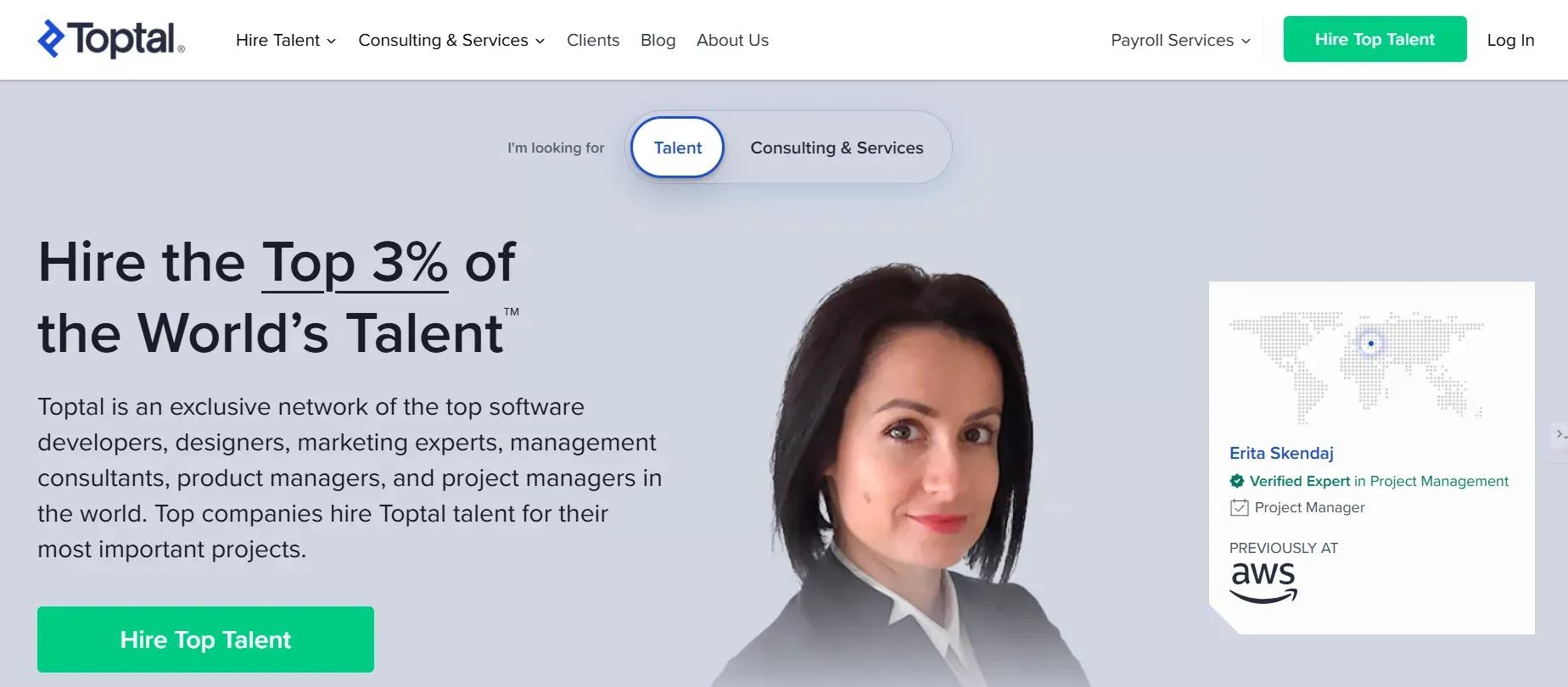
Toptal is a US-founded, remote-first network built on a demanding screen. Only a sliver of applicants make it through, so the bench runs senior. Describe the role, and a Toptal rep lines up a specialist.
It fits teams that want proven skill without wading through applicants. Placements often close within days. Terms cover hourly, part-time, and full-time. So it suits US firms after senior specialists in a hurry, at a premium.
Key highlights:
- Rigorous vetting, senior-heavy network
- Fast matching to your role
- Hourly, part-time, or full-time options
- Little screening on your side
Best for: US firms wanting vetted senior specialists fast, at a premium.
7. EPAM Systems

EPAM Systems, headquartered in Newtown, Pennsylvania, is a heavyweight in software engineering. Founded in 1993, it now counts more than 60,000 people worldwide. So it marries deep engineering with enterprise reach.
It offers both team augmentation and full product engineering, and it's respected for handling complex, custom work. EPAM suits US enterprises that want engineering leadership, not headcount alone. So it fits firms shipping sophisticated products at scale.
Key highlights:
- Engineering-led augmentation
- Deep technical depth
- Global delivery network
- Enterprise-grade experience
Best for: US enterprises wanting engineering-heavy augmentation at scale.
8. TEKsystems

TEKsystems, based in Hanover, Maryland, ranks among the largest IT staffing firms in the country. Part of Allegis Group, its reach touches a vast share of the US tech workforce. So it plays at genuine national scale.
It supplies contract IT talent and manages onboarding, tracking, and delivery around it. Its clients run from big enterprises to government agencies. TEKsystems suits organizations that need staffing volume backed by tight process. So it fits US firms filling many roles, or running complex programs, at once.
Key highlights:
- Large-scale US IT staffing
- Contract talent plus onboarding support
- Enterprise and government experience
- National reach and deep network
Best for: Large US organizations needing IT staffing at scale.
9. ITechArt
ITechArt, founded in 2002 and based in New York, blends custom development with staff augmentation. With several thousand engineers on hand, it leans practical and product-minded. So it suits US firms that want a builder's mindset alongside extra hands.
It's best known for carrying startups and tech companies through rapid growth. Its work covers web, mobile, cloud, and data. ITechArt fits venture-backed firms scaling their engineering. So it's a strong match for US startups and scale-ups adding capacity fast.
Key highlights:
- Custom software and staff augmentation
- Strong startup and tech focus
- Web, mobile, cloud, and data skills
- New York-based with global delivery
Best for: US startups and scale-ups scaling their engineering teams.
10. Revelo
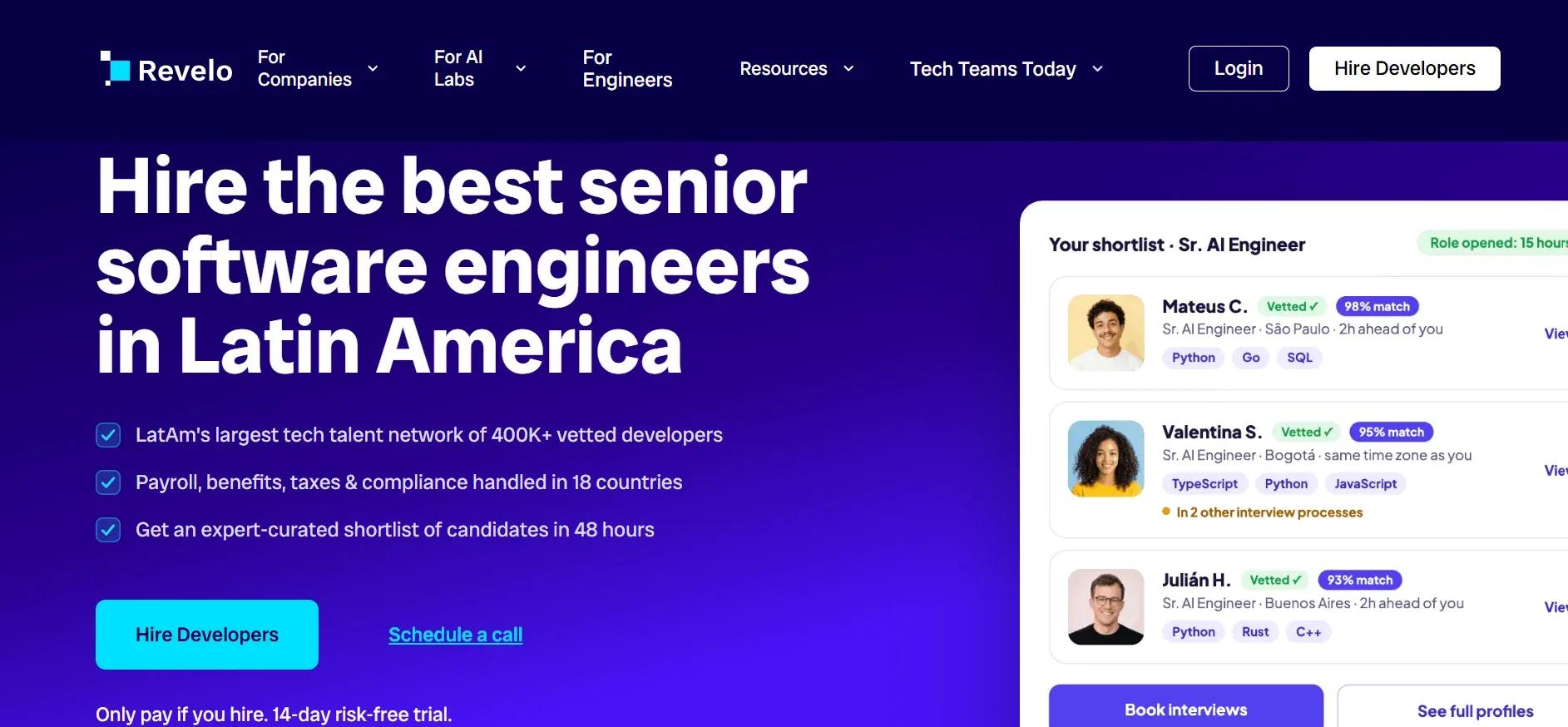
Revelo links US companies with vetted Latin American engineers on a nearshore model. It runs the matching, payroll, and compliance, so the hiring stays light on admin. Its developers sit in US time zones, which keeps collaboration easy.
Vetting covers both technical chops and communication. It suits firms that want nearshore muscle without the red tape. The bench spans a wide range of stacks and roles. So it fits US teams scaling with time-zone-aligned talent.
Key highlights:
- Vetted nearshore Latin American talent
- US time-zone overlap
- Payments and compliance handled
- Broad range of stacks
Best for: US firms scaling with nearshore talent and minimal admin.
What to Look For in a Staff Augmentation Partner
IT staff augmentation companies differ sharply in depth and style, however. The best ones share a handful of traits. Keep this list nearby as you compare.
- Real vetting. Ask how engineers are screened, not just how many sit on the bench.
- Quick onboarding. A capable partner embeds talent in days, not weeks.
- Hour overlap. Shared working hours make daily collaboration painless.
- Swap guarantees. The best offer a fast replacement if a match misses.
- Security posture. SOC 2, ISO 27001, and NDAs keep your data safe.
A firm that covers these spares you grief down the line. So check them off before you sign anything.
How Much Does IT Staff Augmentation Cost?
Region and seniority drive the number more than anything. US IT staff augmentation companies set their rates around these bands, and they range widely. Here are the typical 2026 figures.
Region | Typical Rate (2026) |
| US (onshore) | $100–$150+/hr |
| Latin America (nearshore) | $50–$100/hr |
| Eastern Europe | $45–$85/hr |
| Asia | $25–$60/hr |
Source: 2026 industry rate guides
The gap is large. A $120-an-hour onshore senior might run half that through a solid nearshore partner at comparable quality. Some vendors bill monthly instead, often several thousand dollars per engineer. Even so, the sticker rate isn't the whole cost, onboarding and rework move the real total.
That's the case for vetted talent. Firms that hire engineers through Softaims get senior skill under US rates, with matches in 48 hours. So you trim both cost and timeline, and quality holds.
Onshore vs Nearshore vs Offshore
Location shapes both the bill and the working relationship. US firms have three broad routes. US staff augmentation companies offer all three options. Here's how they stack up.
Option | Location | Trade-off |
| Onshore | US-based | Easiest to work with, highest cost |
| Nearshore | Latin America | Strong overlap, moderate cost |
| Offshore | Distant regions | Biggest savings, wider time gap |
Nearshore has taken off with US buyers, especially across Latin America. It pairs meaningful savings with near-matching hours. Offshore, on the other hand, unlocks the deepest discounts for tightly scoped work.
Worker classification is a live issue here, too. Treating a contractor like an employee can invite penalties in the US. So a provider that owns the employment relationship takes that risk off your plate.
Red Flags to Watch For
As you weigh staff augmentation companies, catching trouble early protects your budget. The clearest warning is thin vetting. If a provider can't spell out how it screens engineers, quality gets unpredictable.
Slow onboarding is another. The whole point is capacity in days, so a sluggish start defeats it. A vendor that stalls during the sales cycle rarely speeds up afterward.
Muddled communication is a deeper worry, however. A partner that can't keep updates clear will strain collaboration. MindTools has solid pointers on that front. And to test how current a team is, ask what they've been reading lately on sites like TechCrunch.
How to Choose the Right Partner Step by Step
Picking a partner is a process, not a hunch. These steps narrow the field.
- Frame the gap. Nail down the skills, seniority, and duration.
- Probe the vetting. Ask exactly how engineers are screened and tested.
- Confirm the pace. Check how quickly they can match and onboard.
- Trial the comms. Judge clarity, responsiveness, and hour overlap early.
- Pilot small. Start with two or three engineers on a defined scope.
- Total the cost. Balance rates against onboarding, overhead, and quality.
Run them in order, and the fit becomes obvious. In practice, the strongest IT staff augmentation companies invite these questions rather than sidestep them.
How to Manage an Augmented Team
Signing the contract is the easy part. How you run the engagement decides the result, however. A few habits pay off big.
Set goals and grant access on day one. Put a standup rhythm and a single point of contact in place. Keep everyone on shared tools for code, tickets, and chat, so nothing drifts apart. And fold the augmented engineers into the team rather than holding them at arm's length, since belonging lifts output. So the more you put in, the more comes back.
Common Mistakes to Avoid
Even sharp teams trip up. The same errors recur. Steering clear of them makes any engagement run cleaner.
Don't shop on price alone first, the cheapest bid often bills more once rework lands. Don't skip the pilot, either, since a small trial exposes fit before you scale.
Onboarding deserves attention too; without access, context, and goals, even strong engineers stall. And never wave off security, because your data and IP ride on it. So treat the arrangement as a relationship, not a line item.
Staff Augmentation for Startups and Enterprises
Augmentation works at both ends of the market, for different reasons. Startups and enterprises each pull distinct value from it.
For a startup, it's about speed and runway. Augmentation lets a lean team ship an MVP or scale on demand without heavy hiring, so a founder can add a senior engineer for one sprint and step back after. For an enterprise, the pull is scarce skills and flexibility across sprawling programs. So the best staff augmentation companies cover both, from one embedded hire to a full distributed team.
Trends Shaping Staff Augmentation in 2027
The space won't sit still, so it helps to track the direction. These forces are reshaping how staff augmentation companies operate. Three stand out this year.
AI-assisted staffing is climbing fast. Leading providers now field AI-vetted engineers armed with coding copilots and automated QA. So onboarding tightens and sprint velocity rises.
Nearshore delivery is spreading among US firms, Latin America especially. Shared hours and cultural fit push that shift. At the same time, appetite for AI and cloud skills keeps surging. Together, these trends turn flexible augmentation into a core workforce play, not a patch.
Signs of a Reliable Staff Augmentation Partner
Plenty of vendors oversell. A few markers flag the trustworthy ones. Look for these before committing.
- Clear pricing. Rates and models are spelled out, with no fog.
- Real references. They share case studies and let you call past clients.
- Explainable vetting. They can walk you through how engineers are screened.
- Fast swaps. A quick replacement is on offer if a fit falls short.
- Security in place. SOC 2, NDAs, and compliance are already handled.
The best IT staff augmentation companies clear all five without flinching. So treat any missing box as a cue to keep searching.
Frequently Asked Questions
What do IT staff augmentation companies do?
They embed vetted outside engineers into your existing team. Those engineers work under your direction, on your tools and process. Most providers also own the vetting, onboarding, and compliance. In short, they hand you extra skilled capacity fast, with no permanent hire.
Does staff augmentation avoid W-2 versus 1099 headaches?
Often, yes. Classifying a contractor as an employee by mistake can trigger US penalties. A staff augmentation provider that employs or contracts the engineer carries that relationship for you. So a genuine augmentation deal usually lowers classification risk though it's still worth reviewing the terms.
How much does IT staff augmentation cost in the US?
It tracks region and seniority. Onshore US rates commonly sit at $100 to $150-plus an hour. Nearshore talent in Latin America runs closer to $50 to $100, with strong overlap. Offshore drops lower still, though communication and quality remain the real test.
How fast can I onboard an augmented engineer?
Usually within days. Vetted platforms such as Softaims can surface a match in as little as 48 hours. From there, your own access and setup set the pace. So the sooner you line up tools and context, the sooner they contribute.
Conclusion
Staff augmentation buys you skill, speed, and savings without a permanent hire. The IT staff augmentation companies above span nearshore specialists, global marketplaces, and staffing giants, and each answers a different need.
Weigh three things as you choose: the skills you're missing, the budget you have, and the hours you need covered. If embedding senior engineers quickly minus the giant-firm overhead is the goal, Softaims can match you within 48 hours. You can also browse the talent pool to see who lines up.
Ready to move? Define the gap, choose the partner that fits, and pilot a small scope before you scale. Questions about your team? Reach out, and we'll map it out together.


 GitHub
Rubin S.

 Verified Expert in Engineering
My name is Rubin S. and I have over 15 years of experience in the tech industry. I specialize in the following technologies: Laravel, Bug Fix, PHP, MySQL, HTML5, etc.. I hold a degree in Bachelor of Computer Applications. Some of the notable projects I’ve worked on include: API Integration : Magento 2 + Mirakl + Vendhq, Spirit Fitness Equipments, Iconic Imprint, Mimstore - Motion is Medicine, DJO Globals, etc.. I am based in Bhaktapur, Nepal. I've successfully completed 19 projects while developing at Softaims.
I am a business-driven professional; my technical decisions are consistently guided by the principle of maximizing business value and achieving measurable ROI for the client. I view technical expertise as a tool for creating competitive advantages and solving commercial problems, not just as a technical exercise.
I actively participate in defining key performance indicators (KPIs) and ensuring that the features I build directly contribute to improving those metrics. My commitment to Softaims is to deliver solutions that are not only technically excellent but also strategically impactful.
I maintain a strong focus on the end-goal: delivering a product that solves a genuine market need. I am committed to a development cycle that is fast, focused, and aligned with the ultimate success of the client's business.

Leave a Comment
Need help building your team? Let's discuss your project requirements.
Get matched with top-tier developers within 24 hours and start your project with no pressure of long-term commitment.