Top 10 AI Development Companies in the UK for 2026
UK businesses are investing in AI to automate operations, improve customer experiences, and build smarter products. In this guide, we cover 10 AI development companies in the UK to consider in 2026.
Technically reviewed by:
Nicolas M.|Mark J.
Table of contents
Key Takeaways
- The UK is a top-three global AI hub. It is home to more than 3,000 AI companies.
- The market matured in 2026. Accenture bought Faculty, and Quantexa won a £175m HMRC deal.
- Beware offshore firms in disguise. Many "UK" lists feature India- or EU-based teams, so verify.
- Agents are the new default. They automate whole workflows, not single answers.
- Data decides success. Most AI projects fail at the data layer, not the model.
- 95% of AI pilots return nothing. MIT reviewed 300 deployments, and the causes repeat predictably.
You are looking for an AI development partner in the UK. You have probably already waded through a sea of near-identical listicles and consultant-speak. Fair enough, because it is a crowded market. The good news is simple. The UK is one of the strongest places in the world to build AI. So this guide cuts through the noise to the firms that actually ship.
The UK is home to more than 3,000 artificial intelligence companies, according to the UK government. Together, they generate over £10 billion in revenue and employ more than 60,000 people. Indeed, the UK is the third-largest AI market in the world, behind only the United States and China. London hosts the largest share, which makes it Europe's leading AI hub. So the AI development companies in the UK sit on real depth, from Oxford spinouts to deep-tech consultancies.
However, 2026 raised the bar. The question is no longer whether a firm can train a model. It is whether it can put a production AI agent in front of real users. That means wired into your data, on a deadline. This guide ranks the ten best AI development companies in the UK for 2026, verified as genuinely British and legit. If you would rather skip the search, you can also hire vetted AI developers and own the result outright.
The UK AI Landscape in 2026
The AI development companies in the UK work in a market that has matured fast. A few numbers and events frame the moment.
The market is large and growing. The UK artificial intelligence market reached about £17.2 billion in 2025, with projections toward £133.2 billion by 2033. Meanwhile, machine learning made up 40.6% of the UK AI market in 2024, per Fortune Business Insights. So demand keeps climbing across every sector. That growth is exactly why the number of AI development companies in the UK keeps rising each year.
Adoption is now mainstream. The UK government's own research found that 65% of AI investors wanted off-the-shelf apps. Meanwhile, 22% planned to build their own. Therefore, custom AI development is a fast-growing market in its own right.
The sector also consolidated in 2026. Accenture acquired Faculty in January 2026 in a deal valued above $1 billion. That made Faculty the year's first UK tech unicorn. In addition, Quantexa won a £175 million HMRC contract. Meanwhile, Mind Foundry folded its consulting arm into a new research lab. All of this signals one thing. Applied AI in the UK has become a regulated, enterprise-grade discipline.
Why the UK Is a Global AI Leader
The AI development companies in the UK draw on advantages few countries can match. A few structural reasons explain that lead.
The research base is world class. Oxford, Cambridge, Imperial, and UCL rank among the top computer-science schools globally. As a result, a steady stream of AI talent flows into industry.
Big tech built here first. Google DeepMind is headquartered in London, and Microsoft, Meta, and Amazon all run UK AI teams. Consequently, local firms work with the newest models daily.
Investment runs deep. The UK attracts more AI venture funding than any European country. Moreover, government backing through bodies like the AI Safety Institute reinforces the ecosystem.
Regulation shapes the work. UK GDPR and emerging AI guidance push disciplined, auditable delivery. Therefore, UK firms often lead on compliance-heavy healthcare and finance AI. That discipline is hard to fake.
How We Chose These AI Development Companies
We judged these AI development companies on production evidence, not marketing claims. Each criterion below reflects what real AI projects require. We also excluded firms that only keep a UK address while delivering from abroad.
A genuine UK base. Many "UK" listicles are padded with offshore firms. So we confirmed real British headquarters and delivery.
Production track record. Live systems beat demos, since the hard problems appear once real users arrive. Therefore, we favoured firms with shipped, running AI.
Technical depth. Strong partners cover machine learning, generative AI, and AI agents. In addition, they handle data engineering and MLOps.
Regulated experience. The UK market has high regulatory density. Consequently, we valued NHS, finance, and public-sector delivery.
Ownership and flexibility. Lock-in is a real risk. Moreover, we valued models that let you keep your code, data, and IP.
We weighted a genuine UK base and production evidence most heavily. Both, after all, are far harder to fake than a polished pitch. Notably, we excluded firms that have since collapsed or that deliver entirely offshore.
Best AI Development Companies in the UK: Comparison Table
Short on time? This table compares the top AI development companies in the UK. It covers location, focus, and best fit. Use it to build a shortlist, then read the full profiles below.
Company | Location | Core AI focus | Best for |
| Softaims | UK and global | Hiring vetted AI developers | Building AI fast with full ownership |
| Devaims | UK and global | AI plus full product build | Shipping AI inside a finished product |
| Faculty | London | Applied AI, public sector, safety | Regulated, high-stakes AI |
| Digica | United Kingdom | ML, computer vision, edge AI | Industrial and regulated models |
| Mind Foundry | Oxford | Responsible AI for high-stakes use | Defence, insurance, infrastructure |
| Cambridge Consultants | Cambridge | Deep-tech AI plus hardware | AI inside devices and sensors |
| Quantexa | London | Decision intelligence, entity resolution | Fraud, risk, and government scale |
| Softwire | London | Custom AI software, generative AI | AI in mission-critical systems |
| Equal Experts | London | AI transformation, data engineering | Scaling AI across platforms |
| Waracle | Dundee and London | AI-enabled product engineering | Regulated finance and health apps |
Details reflect public profiles and analyst data as of mid 2026 and can change, so verify each firm before you commit. Softaims and Devaims lead the ranking, followed by eight established UK-based firms, with any ownership changes noted in each profile.
The Top 10 AI Development Companies in the UK
Our ranking of the AI development companies in the UK covers ten firms worth a serious look. Softaims and Devaims lead the list, followed by eight established British names, each with named work and an honest note. Together, they span talent marketplaces, applied consultancies, industrial ML specialists, deep-tech labs, and product engineers. So there is a strong fit here for almost any brief. That ranges from a regulated NHS build to a lean startup pilot.
1. Softaims
Best for: Hiring vetted AI developers directly, on your terms.
The UK has a genuine AI talent crunch. Senior machine learning engineers are scarce, London salaries run high, and visa sponsorship adds both cost and delay. So even well-funded teams wait months to build the AI bench they need. Softaims removes that bottleneck by turning hiring into a same-week decision rather than a six-month hunt.
It works like a curated marketplace, not a fixed agency. You describe the problem, then filter candidates by skill, seniority, location, and price. Within 48 hours, you meet pre-vetted engineers. Each has already shipped AI agents, generative AI copilots, or AI chatbots in production. In other words, you skip the CV pile and interview only people who can do the work.
What makes it different is what you keep. Every engagement leaves you owning the model, the code, the weights, and the data outright. There is no platform to rent, no lock-in, and no visa queue to join. Furthermore, you can scale a team up for a build and down afterwards. That suits the stop-start rhythm of real AI work.
That combination answers the two complaints buyers raise most often. First, it beats the "consultant-speak" problem, since you work directly with builders, not a sales layer. Second, it beats the cost problem, because rates sit well below UK agency day rates without dropping to junior quality. You can browse the talent pool, review transparent pricing, explore custom AI development, or talk to the team to begin.
2. Devaims
Best for: Turning an AI model into a product people actually use.
Most AI never fails at the model. It fails at the last mile. There, a clever prototype has to become a reliable product, with a real interface, live data, and clean integrations. That gap is where pilots quietly die. Devaims exists to close it. It builds the whole product around the intelligence, rather than handing you a model and walking away.
The advantage is structural. One team owns the AI and the software around it. So the OpenAI-powered feature and its app never cross a vendor line. As a result, iteration stays fast, accountability stays clear, and the thing you launch is something customers can genuinely use. Devaims delivers across custom software and mobile app development, from backend to iOS and Android.
This matters most for teams shipping their first serious AI product. You avoid stitching together a model vendor, a design shop, and a dev agency. Instead, you get a single partner from idea to launch and beyond. Moreover, the same team supports the product after go-live, so improvements ship without renegotiating a contract.
3. Faculty

Headquarters: London, United Kingdom.
Faculty is one of the UK's most credible applied-AI firms. It built the NHS Early Warning System and works across government, defence, and regulated enterprise. Its methodology prioritises commercial impact and deployment readiness over novelty. As a result, serious organisations benchmark against it.
Core services: applied AI, machine learning, and AI safety.
Industries: public sector, healthcare, finance, and defence.
Why choose them: deep regulated-sector credibility and a research-grade team. However, Accenture acquired Faculty in January 2026, so it now operates inside a global consultancy.
4. Digica
Headquarters: United Kingdom.
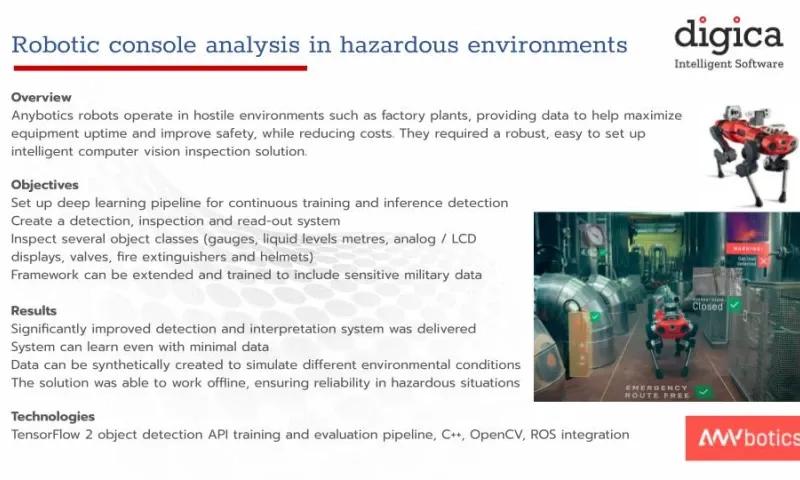
Digica is an independent UK AI and data-science specialist. Impressively, it has trained over 3,600 machine learning models across cloud, IoT, and edge projects. Its 150-plus experts include PhD researchers. Notably, one computer-vision system it built lifted a manufacturer's defect-detection accuracy by 45%.
Core services: machine learning, computer vision, and edge AI.
Industries: manufacturing, healthcare, defence, and automotive.
Why choose them: it suits high-performance, R&D-heavy AI. It also delivers medical imaging that speeds clinical diagnosis.
5. Mind Foundry
Headquarters: Oxford, United Kingdom.
Mind Foundry is an Oxford University spinout founded by Professors Stephen Roberts and Michael Osborne. It focuses on responsible AI for high-stakes domains. In addition, it serves defence, insurance, and critical infrastructure. Its models are built to be monitored and audited, not just deployed.
Core services: responsible ML, model monitoring, and analytics.
Industries: defence, insurance, and infrastructure.
Why choose them: it pairs Oxford research with production discipline. So it suits regulated, high-consequence AI.
6. Cambridge Consultants

Headquarters: Cambridge, United Kingdom.
Cambridge Consultants is a deep-tech consultancy that applies AI inside real products. Its work is rarely a chatbot. Instead, it embeds vision models into medical devices or uses ML to optimise a 5G radio. Therefore, it suits programmes where AI meets hardware, sensors, and IP.
Core services: applied AI, embedded ML, and sensor intelligence.
Industries: medtech, industrial, telecoms, and robotics.
Why choose them: few firms match its hardware-plus-AI depth. It suits research-intensive builds.
7. Quantexa

Headquarters: London, United Kingdom.
Quantexa has become a leading UK decision-intelligence company. Its platform uses AI, machine learning, and entity resolution to find hidden connections in vast data. Notably, it won a £175 million HMRC contract and serves banks like HSBC. So it suits fraud, risk, and compliance at government and bank scale.
Core services: decision intelligence, entity resolution, and fraud detection.
Industries: financial services, insurance, and public sector.
Why choose them: it turns fragmented data into actionable intelligence. It is a platform, though, so you license and integrate it.
8. Softwire
Headquarters: London, United Kingdom.
Softwire is an employee-owned London consultancy delivering custom software and AI for over 20 years. Its 500-plus engineers work in sectors that demand reliability and security. Furthermore, it folds generative AI and machine learning into mission-critical systems.
Core services: custom AI software, generative AI, and consulting.
Industries: healthcare, finance, media, and government.
Why choose them: it pairs deep engineering with cloud and AI skill. Its clients include Channel 4 and the UK Home Office, both demanding, high-profile organisations.
9. Equal Experts

Headquarters: London, United Kingdom.
Equal Experts embeds senior engineers, architects, and data experts inside client teams. It works with over 2,000 consultants worldwide and delivers AI across business processes. As a result, it suits organisations wanting ongoing engineering capacity, not a hand-off.
Core services: generative AI, AI strategy, and data engineering.
Industries: retail, financial services, logistics, and public sector.
Why choose them: its collaborative model builds internal capability. Its clients include John Lewis Partnership and Trainline.
10. Waracle
Headquarters: Dundee and London, United Kingdom.
Waracle engineers intelligent digital products for regulated sectors. Based in Scotland with London offices, it serves finance, health, and energy. Notably, it has added AI and data capability into its product practice. So it suits AI that must live inside a secure, compliant app.
Core services: AI-enabled product engineering and native mobile.
Industries: financial services, healthcare, and energy.
Why choose them: it pairs product craft with regulated-sector experience. Its clients include Royal London, a major UK insurer.
What AI Development Companies Actually Do
The best AI development companies in the UK offer far more than a single service. Depending on your goal, the AI development companies in the UK may offer any of the following. Each one solves a different problem.
AI agent development. AI agents reason, use tools, and complete multi-step tasks. As a result, they automate whole workflows rather than answering one question.
Generative AI development. Generative AI builds copilots, enterprise search, and content tools. In addition, it combines foundation models with your data using RAG to cut hallucinations.
Machine learning development. Machine learning predicts demand, detects fraud, and assesses risk. Therefore, finance, manufacturing, and healthcare rely on it heavily.
Computer vision. Vision models inspect products, read documents, and analyse images. So they automate slow, manual visual work.
AI chatbots and assistants. AI chatbots handle support and internal queries around the clock. Meanwhile, they cut response times and cost.
AI integration and MLOps. API integration and MLOps connect models to your systems and keep them running. Consequently, a model reaches production and stays reliable.
AI strategy and consulting. Good partners help you find the highest-value use cases first. In addition, they set success metrics and a realistic roadmap. So you avoid spending on AI that never pays back. This upfront work is often the difference between a pilot that ships and one that stalls.
How to Choose the Right AI Development Partner in the UK
Choosing the wrong partner among AI development companies in the UK is an expensive mistake. So work through these checks before you sign.
Assess technical depth. Confirm the firm knows PyTorch, TensorFlow, and modern LLM tooling. In addition, ask about RAG, agents, and evaluation frameworks.
Verify domain knowledge. Ask for two or three projects in your sector. Because generic demos hide gaps, insist on measurable results.
Confirm the UK base. Check for real UK headquarters, not just a London listing. So verify where your team actually sits.
Review data maturity. AI fails most often at the data layer. Therefore, confirm strong data engineering before model work begins.
Check compliance. Confirm UK GDPR practice and relevant standards. Moreover, ask where data is processed and stored.
Check the modern AI stack. Beyond PyTorch and TensorFlow, ask about LangChain or LangGraph for orchestration. In addition, confirm experience with RAG, vector databases like Pinecone or Weaviate, and evaluation frameworks. These tools separate the AI development companies in the UK that ship production systems from those that only demo.
Clarify ownership. You should own the code, the models, and the data. So confirm there is no vendor lock-in.
Critical Questions to Ask Before You Sign
When shortlisting AI development companies in the UK, the contract stage is where clarity replaces assumptions. So the right questions here prevent cost overruns and nasty surprises. Ask every shortlisted firm the following.
Where does the team actually sit? Confirm whether delivery is UK-based, nearshore, or offshore. Because this shapes cost, time zones, and data residency, get it in writing.
Can you show two projects in my sector? Ask for named clients and measurable outcomes. Therefore, you separate real domain depth from a generic pitch.
Who owns the model, code, and data? Agree that full ownership transfers to you on completion. So confirm it before any work begins.
How do you handle data and compliance? Ask about UK GDPR, data residency, and audit trails. In addition, confirm how sensitive data is stored and processed.
What happens after launch? AI models drift, so confirm monitoring, retraining, and support. Meanwhile, check the response times in the SLA.
How do you measure success? A serious partner sets one clear metric upfront. As a result, you can prove ROI after deployment.
What is the total cost of ownership? Ask about inference, hosting, and maintenance, not just the build. So you avoid a cheap-looking quote that balloons later.
Red Flags: When to Walk Away
Among AI development companies in the UK, not every polished pitch leads to a good partnership. Some warning signs only appear once talks deepen. So spotting them early saves wasted months and money.
Offshore delivery in disguise. A UK address does not mean a UK team. Therefore, confirm where your engineers actually sit.
Demos, not deployments. If a firm only shows prototypes, ask for live systems. Because most pilots never ship, production proof matters.
Vague pricing. Unclear quotes make budgeting impossible. So insist on an itemised breakdown and a total cost of ownership view.
No ownership clause. Without one, you may not own the deliverables. As a result, you risk lock-in from day one.
No post-launch plan. Treating maintenance as optional invites failure. Meanwhile, AI needs monitoring and retraining to survive.
Suspiciously cheap rates. Prices far below the UK market often hide inexperience or hidden outsourcing. So weigh value, not just price.
AI Development Cost in the UK (2026)
Among AI development companies in the UK, cost varies widely, and most guides skip the detail. A focused proof of concept can start near £15,000. However, complex, production-grade systems often exceed £150,000. So it helps to understand what drives the number.
Project type | Typical cost | Timeline |
| AI PoC or pilot | £15,000 – £40,000 | 4 to 8 weeks |
| Production AI system | £40,000 – £150,000 | 3 to 6 months |
| Enterprise or regulated build | £150,000+ | 6 to 12 months |
The biggest cost variable is data. If your data needs collecting, cleaning, and labelling, expect real time and budget. In addition, integration, governance, and ongoing retraining all add cost. Regulated builds carry the most overhead, since audit trails and compliance reviews take time.
Engagement models also shape the total. A fixed-scope pilot suits a clear, bounded build. Meanwhile, a dedicated team suits an evolving product, and vetted talent hiring suits teams that want full control.
UK talent also sets the rate. UK consultancy day rates commonly run £800 to £1,600, while London ML engineers command premium salaries. For context, a London AI and machine learning engineer earns a median of about £75,373, per Glassdoor. So a full in-house team is costly to build and retain. That is why many teams hire a partner or a vetted marketplace instead.
Industries Where UK AI Delivers the Most Value
Adoption is uneven across sectors. The AI development companies in the UK see the deepest demand in a few industries. Each brings its own drivers and rules.
Healthcare and life sciences. Providers use AI for imaging, triage, and admin. For context, NHS England reports that clinicians spend around 13.5 million hours a year on admin. So the automation opportunity is large, though UK GDPR and clinical rules apply.
Financial services. Banks and insurers lead on fraud, risk, and compliance AI. Notably, a Bank of England and FCA survey found that 75% of UK financial firms already use AI. Therefore, adoption is now the norm.
Manufacturing and industrial. Firms apply computer vision and ML to quality and maintenance. As a result, downtime and waste fall sharply.
Public sector. Government uses AI for services, fraud, and efficiency. Still, accountability and transparency come first.
Retail and eCommerce. Retailers use AI for personalisation, search, and forecasting. Consequently, conversion and margins improve.
Build In-House, Hire a Consultancy, or Use Flexible Talent
The right model depends on your goals, not brand size. So weigh three routes before you commit.
A consultancy suits large, regulated programmes. In particular, it brings governance, scale, and deep domain teams. However, that scale can mean higher cost and slower delivery.
Building in-house suits firms where AI is core and constant. Therefore, a permanent team makes sense once the work is steady. Still, hiring and retaining senior ML talent in the UK is hard and expensive.
Flexible talent suits teams that want control and speed. As a result, hiring vetted engineers keeps senior skill without program overhead. It also avoids lock-in, which matters as AI stacks change fast. Many teams blend all three across a single roadmap.
What a UK AI Engagement Looks Like, Step by Step
The best AI development companies in the UK follow a clear, repeatable process. So knowing the phases helps you judge a partner and plan a budget. The AI development companies in the UK typically work through these stages.
- Discovery and strategy. Set goals, find the highest-value use case, and choose the approach.
- Data assessment. Audit data quality, coverage, and labelling needs before any modelling.
- Architecture and design. Pick models, plan integrations, and define compliance requirements.
- Build and integration. Develop the model, agents, and the connections to your systems.
- Evaluation. Test accuracy, drift, and bias against a real, messy test set.
- Deployment. Ship to cloud or edge with monitoring, logging, and MLOps.
- Optimisation. Retrain on new data, cut inference cost, and maintain compliance over time.
For timelines, discovery usually takes two to four weeks, and a pilot four to eight weeks. Meanwhile, production systems need three to six months, and regulated builds longer. So a proper discovery phase upfront reduces expensive pivots later.
Why AI Projects Fail (and How to Avoid It)
Most AI pilots by UK vendors deliver nothing measurable. When MIT's NANDA initiative reviewed 300 AI deployments, it found that 95% produced no measurable return. The causes repeat, which means each one is avoidable.
Nobody owns the outcome. A pilot wins applause at a demo, then loses attention. So name a business owner and one metric before anything starts.
The data was never ready. Demos run on clean files, while production holds messy ones. Therefore, treat data preparation as a real phase with its own budget.
It never reached a real workflow. A tool in a separate tab gets forgotten. Systems that succeed appear inside the apps people already use.
Governance came last. Retrofitting UK GDPR and monitoring costs far more than designing it in. So build governance from day one.
Nobody measured quality. Without a test set, you are guessing whether changes helped. So insist on an evaluation set built from real cases.
UK AI Trends for 2026
The AI development companies in the UK set trends the market follows. A few clear shifts stand out this year.
Agents are replacing chatbots. Apps now complete multi-step tasks, not just answer questions. As a result, they deliver far more value.
RAG is now standard. Retrieval beats fine-tuning for most builds, since it cuts cost and keeps data fresh. Meanwhile, it grounds answers in your own content.
Governance is central. UK buyers expect explainability, audit trails, and bias checks. Therefore, responsible AI is now a baseline requirement.
Edge and small models are rising. Focused models often beat giant ones on narrow tasks. Consequently, they cut cost and latency.
Consolidation continues. After the Faculty deal, more UK AI firms will join larger groups. So confirm ownership before you commit, since the best AI development companies in the UK are prime acquisition targets.
Frequently Asked Questions
Which are the top AI development companies in the UK?
Faculty, Digica, Mind Foundry, Cambridge Consultants, and Quantexa lead among established firms. Softwire, Equal Experts, and Waracle add strong delivery. Softaims and Devaims lead the ranking for teams that want to build fast and own the result.
How much does AI development cost in the UK?
A pilot starts near £15,000, while a production system runs £40,000 to £150,000. Enterprise builds exceed £150,000. Data readiness is the biggest cost variable.
Are these firms genuinely UK-based?
Yes, and we verified each one. We flag ownership changes too, such as Faculty now being part of Accenture. Always confirm where delivery happens.
What is an AI agent?
An AI agent reasons, uses tools, and completes multi-step tasks with little supervision. As a result, it automates whole workflows, not single answers. It is the fastest-growing AI pattern in 2026.
Should I hire a consultancy or a flexible partner?
Consultancies suit large, regulated programmes with governance at scale. Flexible partners suit teams that want control, ownership, and speed. Your goals and budget decide the fit.
How long does an AI project take?
A pilot takes four to eight weeks, and a production system three to six months. Regulated builds take longer. Messy data adds time, so plan for it.
What is RAG, and why does it matter?
RAG, or Retrieval-Augmented Generation, grounds an AI model in your own data. As a result, answers stay accurate and current without costly retraining. It is now the default pattern for enterprise generative AI.
Can a UK firm build AI that meets GDPR?
Yes. UK GDPR and the Data Protection Act 2018 both apply, and good firms design for them. In addition, they offer private deployment and clear data residency. This matters most in healthcare, finance, and the public sector.
How do I avoid paying for AI that never ships?
Start with a small, paid pilot on one real workflow. So you test delivery quality before a large commitment. A clear success metric, set upfront, keeps the project honest.
Who owns the model and the data?
You should own all of it. Confirm ownership of the code, the models, and the data in the contract. This avoids vendor lock-in later.
Conclusion
The UK offers world-class AI talent, from Oxford spinouts to deep-tech consultancies. However, the market is crowded, and many "UK" lists hide offshore firms or defunct names. So a verified, honest shortlist protects your budget, your data, and your timeline.
Before you shortlist, write a clear brief. Cover your goal, your data, your compliance needs, and your budget. That way, you can tell which firms understand the problem beyond the buzzwords. Then weigh what your project truly needs, from regulated delivery to ownership and speed. The AI development companies in the UK above each earn a close look, with real British roots. Would you rather skip the search entirely? Then Softaims matches you with vetted AI developers within 48 hours, in the UK or anywhere.


 GitHub
 Stackoverflow
Lionel P.

 Verified Expert in Engineering
My name is Lionel P. and I have over 16 years of experience in the tech industry. I specialize in the following technologies: C++, C#, JavaScript, React, Game Development, etc.. I hold a degree in Bachelor of Science (BS), . Some of the notable projects I’ve worked on include: Illuvium Arena, Illuvium Zero, MyTrackAi, Syma, MJ Real Estate Team, etc.. I am based in Dubai, United Arab Emirates. I've successfully completed 17 projects while developing at Softaims.
I am a dedicated innovator who constantly explores and integrates emerging technologies to give projects a competitive edge. I possess a forward-thinking mindset, always evaluating new tools and methodologies to optimize development workflows and enhance application capabilities. Staying ahead of the curve is my default setting.
At Softaims, I apply this innovative spirit to solve legacy system challenges and build greenfield solutions that define new industry standards. My commitment is to deliver cutting-edge solutions that are both reliable and groundbreaking.
My professional drive is fueled by a desire to automate, optimize, and create highly efficient processes. I thrive in dynamic environments where my ability to quickly master and deploy new skills directly impacts project delivery and client satisfaction.

Leave a Comment
Need help building your team? Let's discuss your project requirements.
Get matched with top-tier developers within 24 hours and start your project with no pressure of long-term commitment.