Top 10 Blockchain Supply Chain Companies in the UK (2027)
Ask any UK operations lead about their biggest headache, and visibility comes up fast. Blockchain answers it with one shared, locked ledger. This guide ranks the top 10 blockchain supply chain companies in the UK and how to choose your build partner.
Technically reviewed by:
Francisco B.|Steeve F.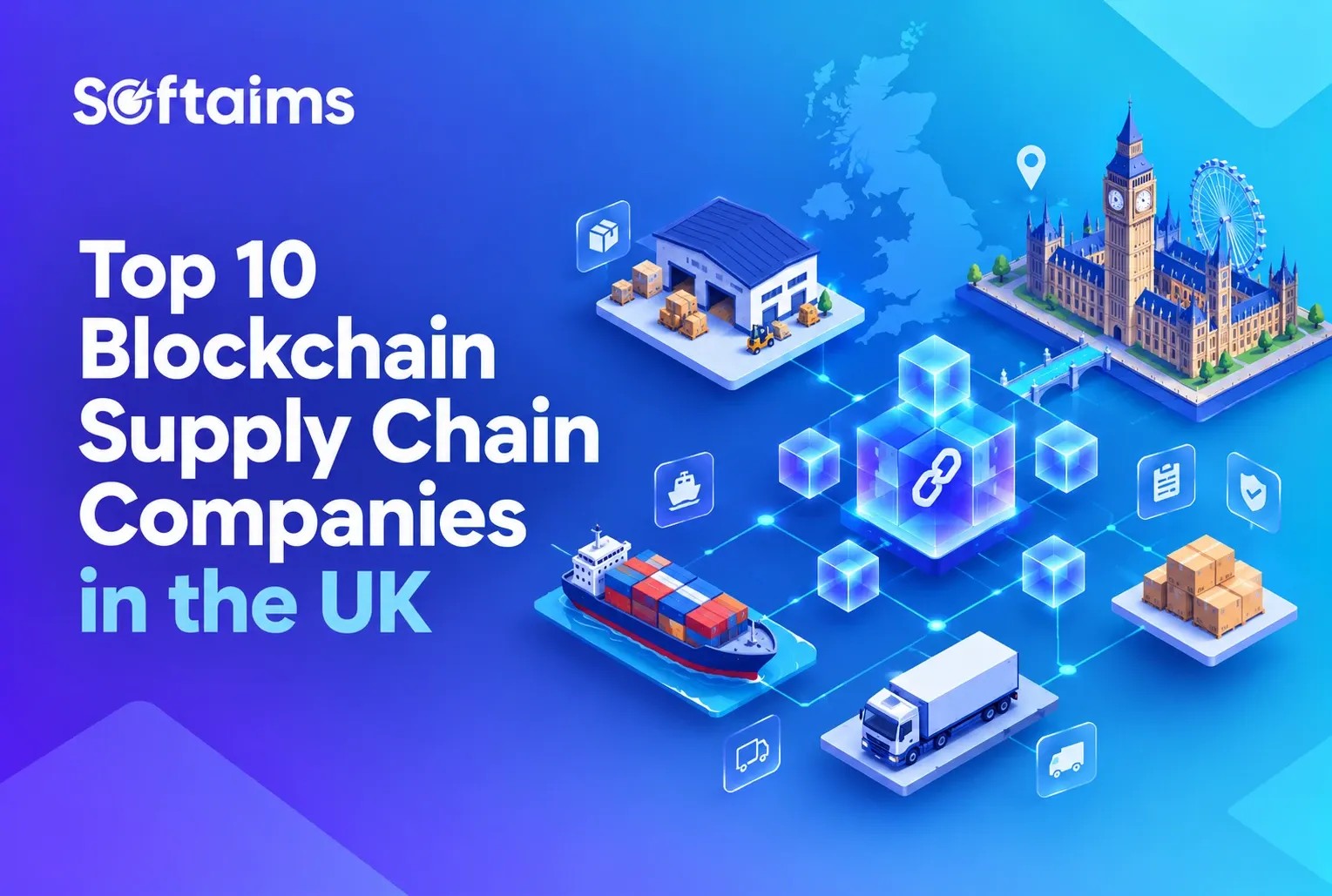
Table of contents
Key Takeaways
- One shared record solves the visibility problem. Blockchain gives every partner the same locked, tamper-proof ledger, so guesswork gives way to proof and disputes fade.
- EU and ESG rules are driving UK adoption. The EUDR (December 2026), the EU battery passport (February 2027), and post-Brexit customs checks all reward firms that can trace a product end to end.
- Platform plus talent wins. The strongest builds pair the right network, whether Hyperledger, Ethereum, or Corda, with engineers who can connect smart contracts to real logistics workflows.
- Cost is the deciding factor. Senior UK blockchain engineers run £120,000 to £160,000 a year, but a vetted-talent model like Softaims delivers the same seniority for less, with 48-hour matching.
- Match the partner to the project. Weigh scope, budget, and platform needs, from tracing specialists like Circulor to versatile studios and fast, affordable talent.
Ask any UK operations lead about their biggest headache, and "visibility" comes up fast. Where is the shipment? Which supplier touched it? Is the paperwork right? Blockchain answers those questions with one locked, shared ledger. Each party reads the same record, so guesswork gives way to proof.
The timing suits UK firms, too. Britain sits inside some of the world's most demanding trade rules. EU export requirements, post-Brexit customs checks, and tighter ESG reporting all reward businesses that can trace a product end to end. Meanwhile, the wider blockchain supply chain market is growing at nearly 48% a year into the early 2030s. So a capable build partner is worth finding.
This guide ranks the top 10 blockchain supply chain solutions companies in UK for 2026. Each one is UK-based and ships real systems, not slideware. You'll also get a full buyer's guide: benefits, use cases, platforms, costs, and hiring advice. If you want a broader view, see our global roundup of blockchain supply chain companies and our US-focused list. Read this one, though, and you're covered.
What a Blockchain Supply Chain Solution Really Means
A blockchain supply chain solution records each stage of a product's journey on a shared, unchangeable ledger. Made, moved, stored, sold each becomes a fixed entry. Every cleared partner reads the exact same data at once.
That shared record is the whole point. Since no one can rewrite history on their own, trust climbs and arguments fade. Put simply, it trades a tangle of emails and files for one clean, provable log.
Most blockchain supply chain solutions bring together three pieces: a distributed ledger, smart contracts, and IoT sensors. The ledger holds the truth. Contracts apply the rules. Sensors stream live readings, from location to temperature, into the chain.
How the Technology Works, in Plain Terms
The wiring is simpler than the jargon suggests. Each transaction joins a block, and that block links to the one before it. Copies of the whole chain sit on many machines, so there's no lone weak spot to break.
When goods change hands, a new entry appears. Smart contracts can then act by themselves say, releasing a payment once a delivery lands. Sensors and RFID tags push fresh readings, which keeps the ledger honest.
Because each entry stays visible and permanent, tampering rarely pays off. This is the core idea behind most blockchain supply chain solutions. A faked product won't match the recorded chain. As a result, a buyer can trace an item's origin in moments, not weeks.
Why UK Firms Are Adopting It Now
British supply chains face a distinct set of pressures. Several of them push directly toward blockchain-grade tracing. Getting ahead of these rules is smart, not optional.
Start with EU trade rules, which still bind UK exporters. Under the EU Deforestation Regulation (EUDR), large operators must prove goods like cocoa, coffee, and rubber are deforestation-free from 30 December 2026. That means plot-level geolocation and audit-ready records. The EU Battery Regulation adds a digital battery passport from February 2027, covering carbon footprint, recycled content, and sourcing.
Closer to home, post-Brexit customs checks add friction and paperwork at UK borders. ESG reporting raises the bar again, since firms must now prove ethical sourcing, not just claim it. Blockchain turns that proof into a routine, verifiable output. So many UK blockchain supply chain companies now build with these rules front of mind.
What UK Businesses Gain
Blockchain supply chain solutions pay back in a few concrete areas. Each one connects to trust, speed, or cost control.
- Full traceability. Follow any unit to its origin, stage by stage. That speeds recalls and simplifies audits.
- Shared visibility. Every cleared partner sees the same records, so blame games stop.
- Fraud defence. Locked entries make counterfeiting and document fraud far harder.
- Automation. Smart contracts strip out manual steps, which trims delays and admin spend.
- Compliance ease. A permanent trail turns EUDR, battery passport, and ESG reporting into routine tasks.
The gains show up on the balance sheet, too. Research ties blockchain adoption to lower admin costs and faster dispute resolution across UK supply networks.
Where It's Used Across UK Industries
These solutions aren't one-size-fits-all, however. Each sector applies them to a distinct problem. The table below maps the most common UK patterns.
Industry | Typical Use | Payoff |
| Food & drink | Farm-to-shelf tracing (FSA, EUDR) | Fast recalls, safer food |
| Automotive & batteries | Raw material and battery passports | EU compliance, ethical sourcing |
| Retail & luxury | Product authenticity checks | Brand trust, less counterfeiting |
| Logistics & freight | Shipment and delivery proof | Fewer disputes, live visibility |
| Manufacturing | Multi-tier supplier tracking | Quality control, faster recalls |
| Trade & commodities | Customs and settlement automation | Less paperwork, quicker clearance |
The takeaway is simple. Wherever many UK partners share one workflow, a blockchain supply chain solution cuts the friction.
How We Built This Ranking
This list isn't guesswork. The blockchain supply chain solutions companies here each met a clear standard. That keeps the ranking useful rather than promotional. It's a subjective call, though, so treat it as a shortlist to test.
Here's what we weighed:
- UK base and real delivery. Every firm is UK-based and ships working blockchain systems.
- Supply chain evidence. We favoured firms with genuine tracing or logistics track records.
- Engineering strength. Deep smart contract skills and platform range carried the most weight.
- Proven history. Case studies, partnerships, and years in the field all counted.
- Flexible hiring. Dedicated teams, vetted talent, and clear support added points.
No firm leads every category, though. So each entry ends with a "Best for" note to match it to your needs.
At a Glance: The Top Blockchain Supply Chain Companies Compared
Before we get into the detail, here's a quick look at how the top 10 blockchain supply chain companies in the UK compare on base location, core strength, and ideal use case. Some lead on raw material tracing and ESG compliance, others on product transparency, multi-chain builds, or fast access to vetted blockchain developers. Use this table to shortlist the providers that fit your project, then read the full breakdown below.
# | Company | Base | Core Strength | Best For |
| 1 | Softaims | UK / offshore talent | Vetted talent, 48-hour matching | Senior blockchain talent, fast and affordable |
| 2 | Devaims | Softaims-owned | Blockchain + mobile apps | Tracking apps with mobile delivery |
| 3 | Circulor | London | Raw material tracing | Automotive, battery, and mining ESG |
| 4 | Aventus | London | Enterprise traceability infrastructure | Brands proving product authenticity |
| 5 | Systango | London | Multi-chain builds | Multi-network, institutional-grade work |
| 6 | Tech Alchemy | London | Product-led studio | Fast MVPs and custom builds |
| 7 | Quant Network | London | Interoperability | Linking many systems and chains |
| 8 | Applied Blockchain | London | Privacy-first DLT | Traceability with confidentiality |
| 9 | iov42 | London | Commodity traceability and EUDR compliance | Responsible sourcing and due diligence |
| 10 | Dotsquares | Brighton / London | Scalable delivery | Budget-friendly, established partner |
Top 10 Blockchain Supply Chain Companies in UK
The companies on our list of the top 10 blockchain supply chain companies in the UK were selected for their proven ability to deliver production-ready solutions, not just proofs of concept. We evaluated each on technical depth, industry focus, delivery model, and how effectively they connect smart contracts to real supply chain workflows. Here's how they compare, starting with the best option for fast, senior talent.
1. Softaims
Softaims tops our list of blockchain supply chain solutions companies in UK for a grounded reason. It combines strong blockchain development skill with quick access to proven engineers. You reach the top 3% of vetted talent, matched to your project inside 48 hours.
The team ships complete supply chain management systems on-chain. That covers smart contracts, product tracing, and audit-ready records for EUDR or battery-passport needs. It also builds supply chain logistics tracking and drives supply chain optimization for faster, leaner operations.
Here's why UK teams pick it. A senior blockchain engineer in the UK can cost £120,000 to £160,000 a year, before overhead. Softaims gives you that seniority for far less, with no benefits load. You can hire dedicated developers for a long build, or freelance software engineers for a set scope. The team spans front-end and back-end, so you get full-stack delivery from one partner. Working-hours overlap keeps UK projects moving, too.
Key highlights:
- Top 3% vetted blockchain engineers, matched within 48 hours
- Full blockchain architecture and smart contract builds
- Traceability, provenance, and compliance-ready records
- Tokenization and digital asset support
- Dedicated, part-time, and project-based hiring
Best for: UK teams that want senior blockchain supply chain talent fast, and well below local salary rates.
2. Devaims
Devaims is a development studio with a strong record in mobile and custom software. Its engineers build blockchain-driven apps that trace goods, confirm records, and connect logistics tools. The work centres on clean design and steady performance.
There's a bigger story here. In August 2026, Softaims acquired Devaims. So Devaims clients now access the same vetted network and 48-hour matching. Both teams share one delivery standard. That lets a single partner cover mobile app development and wider software development for your supply chain project.
Key highlights:
- Deep experience in mobile and full-stack builds
- Blockchain apps for tracking and verification
- Backed by Softaims' vetted talent since 2026
- Mobile, web, and back-end under one roof
Best for: Teams that want blockchain and mobile app development delivered together.
3. Circulor
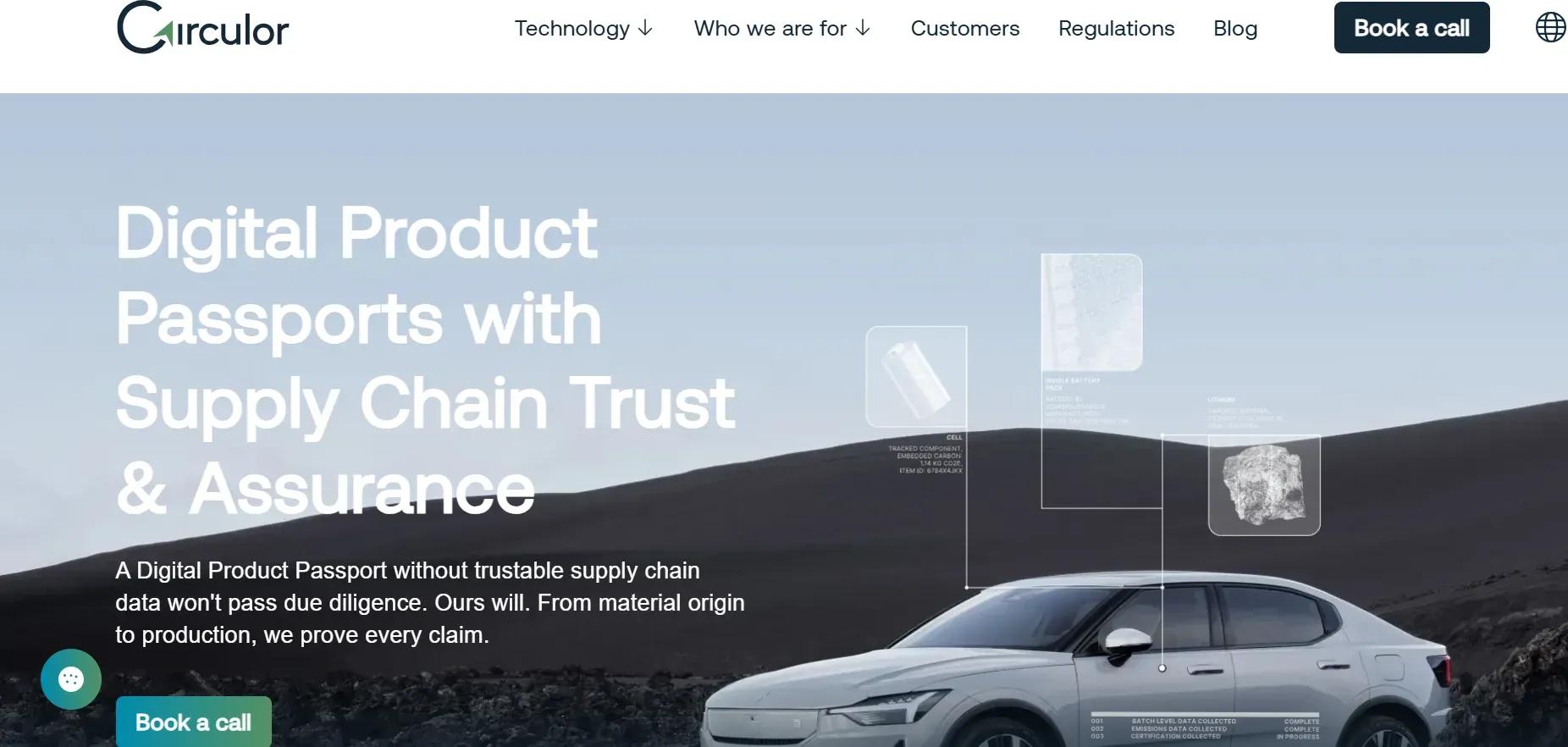
Circulor ranks among the UK's leading blockchain supply chain companies. This London firm, founded in 2017, is a genuine heavyweight in supply chain tracing. It uses blockchain and AI to follow raw materials especially battery minerals from the mine to the finished product. That focus fits the EU's new battery and sourcing rules perfectly.
Its client list speaks for itself: Volvo, Polestar, Jaguar Land Rover, and miners like BHP. The platform runs on Hyperledger Fabric with Oracle Cloud, and it captures ESG data such as embedded carbon. Circulor also builds digital battery passports, which will be mandatory in the EU from 2027. So it suits automotive, energy, and mining firms facing hard compliance deadlines.
Key highlights:
- Blockchain and AI for raw material tracing
- Digital battery passport builds
- Hyperledger Fabric and Oracle Cloud
- Clients including Volvo, Polestar, and BHP
Best for: UK automotive, battery, and mining firms needing sourcing and ESG traceability.
4. Aventus
Aventus ranks among the more enterprise-ready UK blockchain supply chain companies. This London firm, founded in 2016 and spun out of Imperial College London by CEO Alan Vey, provides production-grade blockchain infrastructure that brands can build on without wrestling with the usual cost and scalability limits. Its Blockchain-as-a-Service platform runs as a Layer-2 network, is Ethereum-compatible, and operates as a parachain on Polkadot.
For supply chains, Aventus focuses on traceability, transparency, and product authenticity, giving brands a way to prove where goods come from and confirm they are genuine. The platform is modular, interoperable, and carbon-neutral, with predictable transaction costs that make enterprise budgeting easier. It has applied the same infrastructure across retail, loyalty, and live entertainment, so it brings broad delivery experience.
Key highlights:
- Production-ready Blockchain-as-a-Service platform
- Traceability, transparency, and product authenticity for brands
- Ethereum-compatible, Polkadot parachain, carbon-neutral
- Modular, interoperable, predictable-cost infrastructure
Best for: UK brands and enterprises wanting production-ready infrastructure for traceability and product authenticity.
5. Systango
Among UK blockchain supply chain companies, Systango stands out for range. This London digital engineering firm, founded in 2007, is led by CEO Vinita Rathi. It has shipped more than 50 blockchain projects and holds ISO 27001 certification. Its work reaches NFT platforms, dApps, DeFi, and logistics.
The team spreads across several chains, including Ethereum, Flow, Tron, Tezos, and Cardano. That range helps when a project can't sit on one network. Systango has also served institutional clients like the Wellcome Trust, which signals solid security standards. So it fits UK businesses wanting multi-chain builds with institutional-grade rigour.
Key highlights:
- 50-plus delivered blockchain projects
- Multi-chain: Ethereum, Flow, Tron, Tezos, Cardano
- ISO 27001 certified, London-based
- Experience in logistics and institutional work
Best for: UK firms wanting multi-chain builds backed by strong security credentials.
6. Tech Alchemy
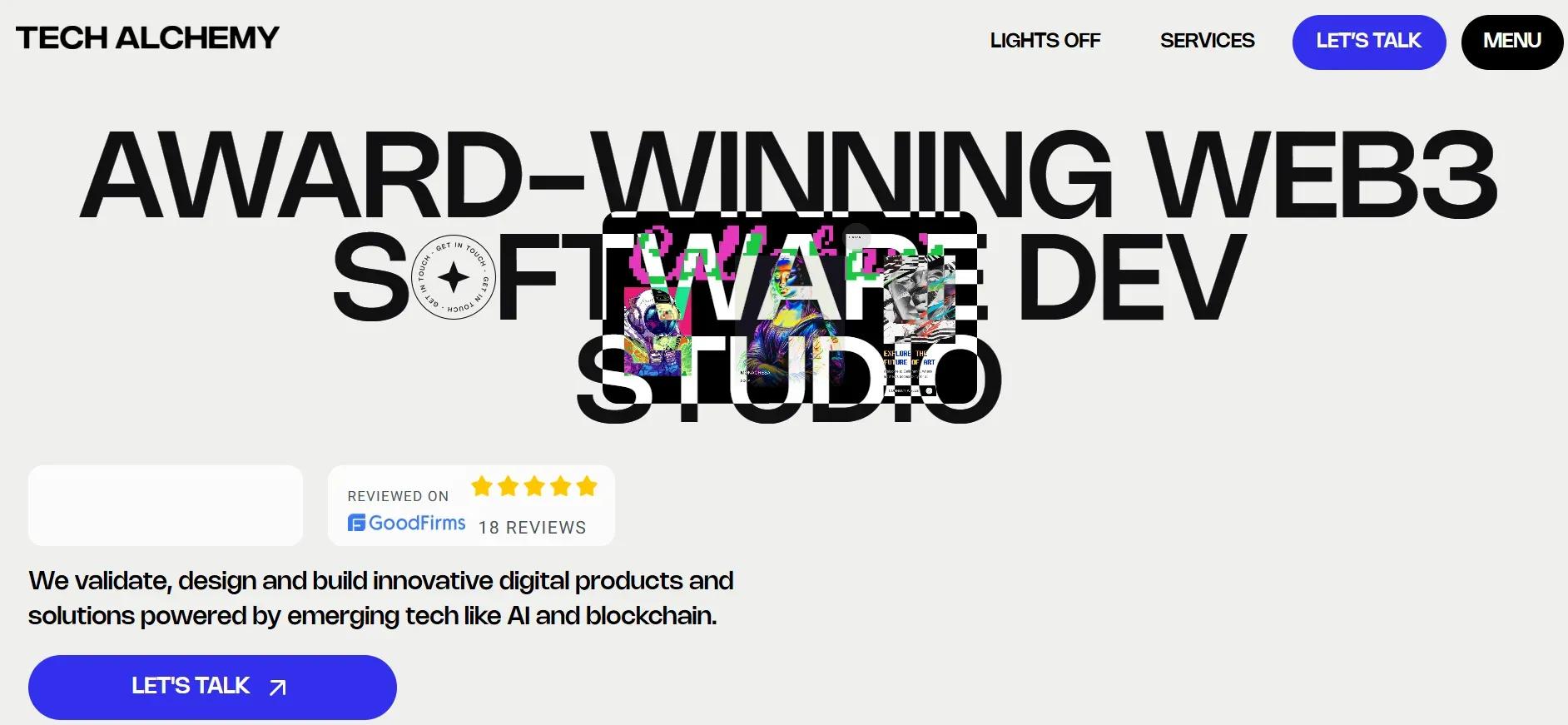
Tech Alchemy is an award-winning blockchain studio based in Shoreditch, London. It partners with startups and enterprises to build dApps, smart contracts, and NFT platforms. Its team works in Solidity, Rust, and React, so it covers the full product stack.
The firm ranks among London's top-rated blockchain agencies, with strong client satisfaction on record. Its documented work spans financial services, gaming, and logistics. For supply chains, that means custom builds and rapid MVPs. So Tech Alchemy suits UK teams wanting a polished, product-led partner close to the London ecosystem.
Key highlights:
- Award-winning London blockchain studio
- Solidity, Rust, and React expertise
- dApps, smart contracts, and MVPs
- Clients across finance, gaming, and logistics
Best for: UK startups and brands wanting fast, product-led blockchain builds.
7. Quant Network
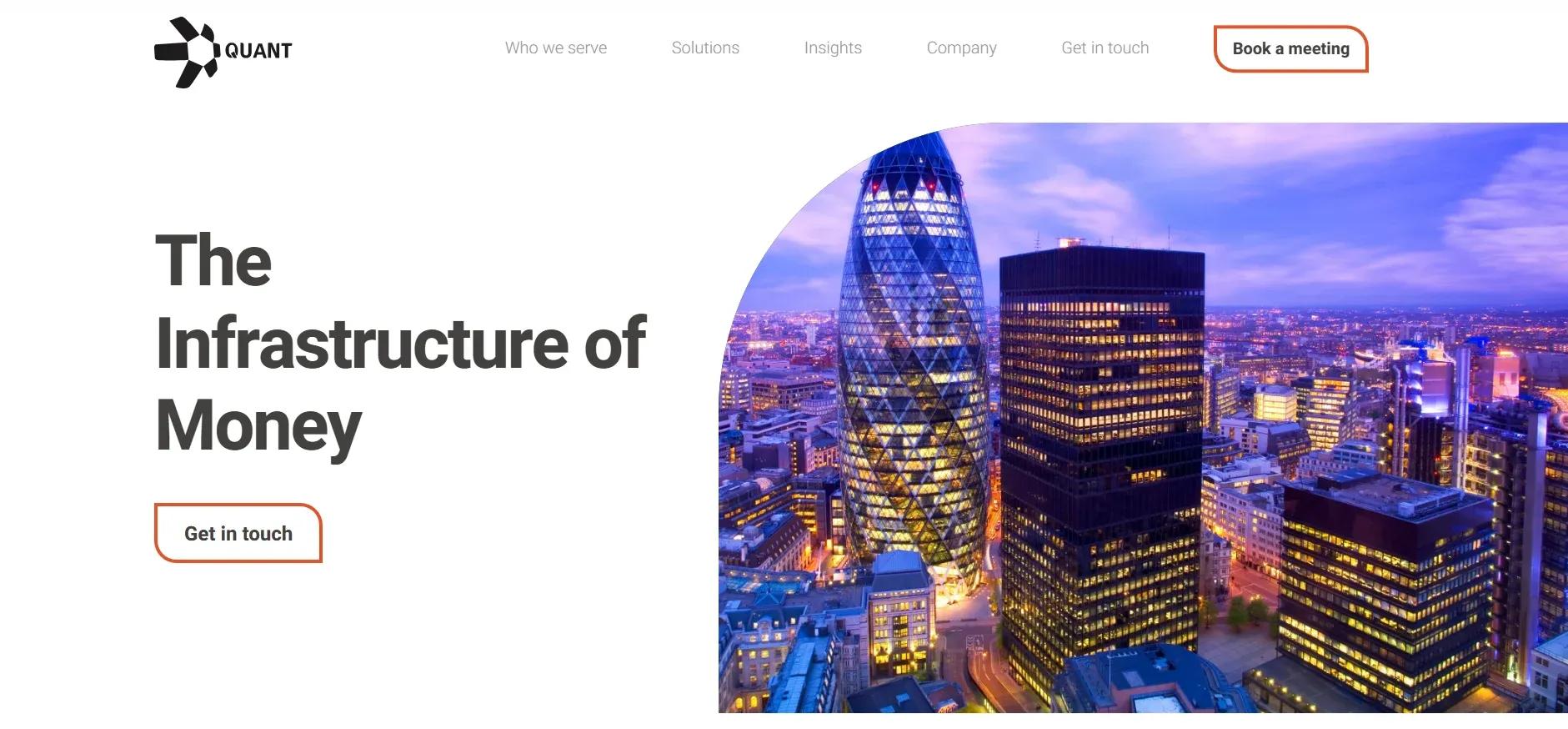
Quant Network is a London firm founded in 2015, known for its Overledger operating system. Rather than a single chain, Quant connects many chains and enterprise systems, and that interoperability is its clearest link to supply chains, which rarely run on one network or one platform. Its Multi-Ledger Token and API framework let existing systems tap into blockchain without a full rebuild.
It is worth being clear about focus. Quant today positions itself around finance, tokenized assets, and central bank digital currency infrastructure, with recent work spanning capital markets and programmable money. So it suits supply chains mainly where the priority is bridging fragmented systems and platforms rather than out-of-the-box tracing.
Key highlights:
- Overledger interoperability platform
- Connects multiple chains and enterprise systems
- API framework for existing applications
- Strong on bridging fragmented, multi-party systems
Best for: UK enterprises that need many systems and chains to talk to each other across a supply chain.
8. Applied Blockchain
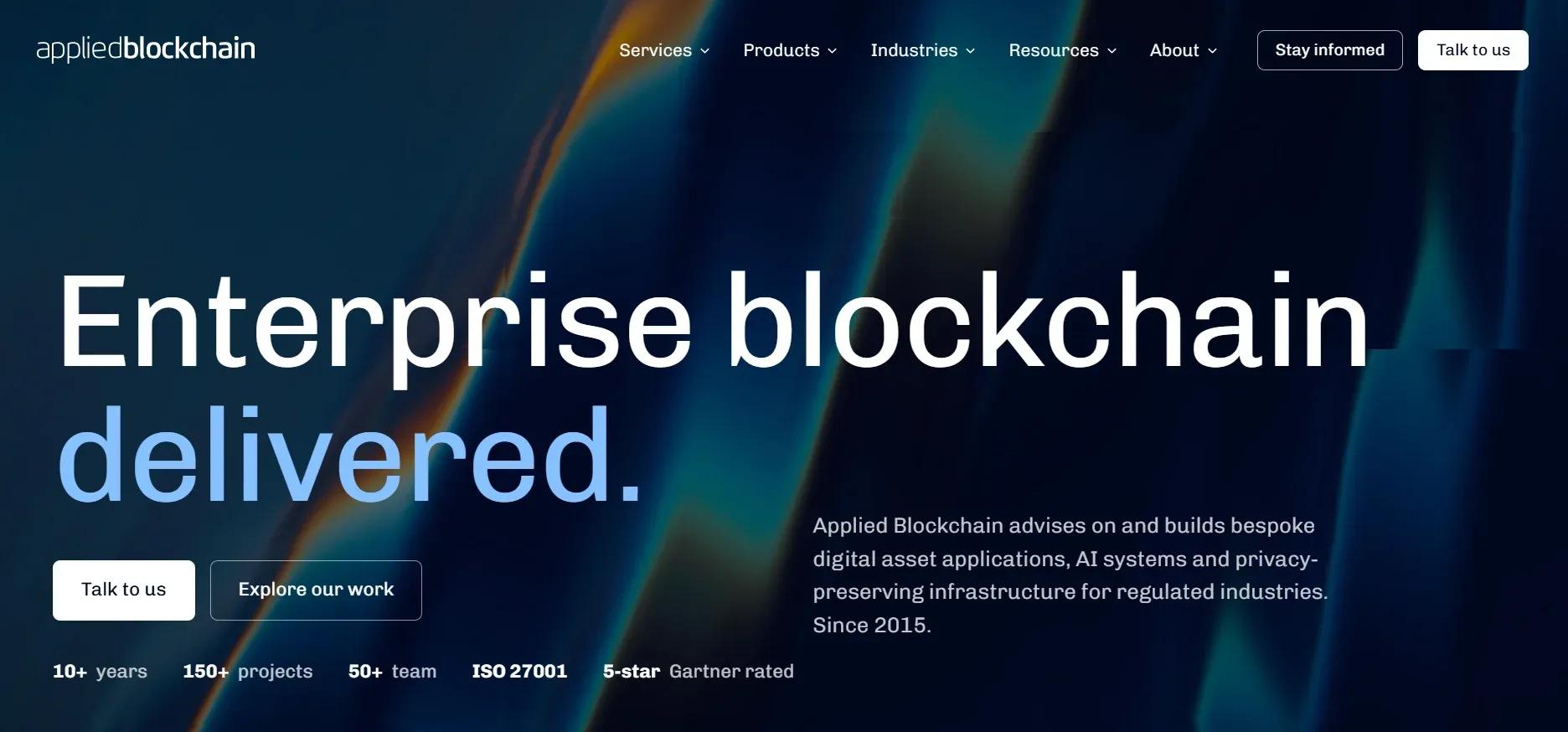
Applied Blockchain is among the more privacy-focused UK blockchain supply chain companies. This London firm builds private, secure applications using advanced cryptography. It specialises in privacy-enhancing tech and distributed ledgers. That focus suits supply chains where firms must share data without exposing sensitive details.
Its work spans supply chain, commodities, energy, aviation, and finance. Its largest client, Shell, is also an investor, which signals enterprise trust. Applied Blockchain leans on techniques like zero-knowledge proofs to protect data on-chain. So it fits UK businesses that need traceability plus strict confidentiality.
Key highlights:
- Privacy-first distributed ledger builds
- Advanced cryptography and zero-knowledge proofs
- Experience in supply chain and commodities
- Enterprise clients including Shell
Best for: UK firms needing traceability with strong data confidentiality.
9. iov42
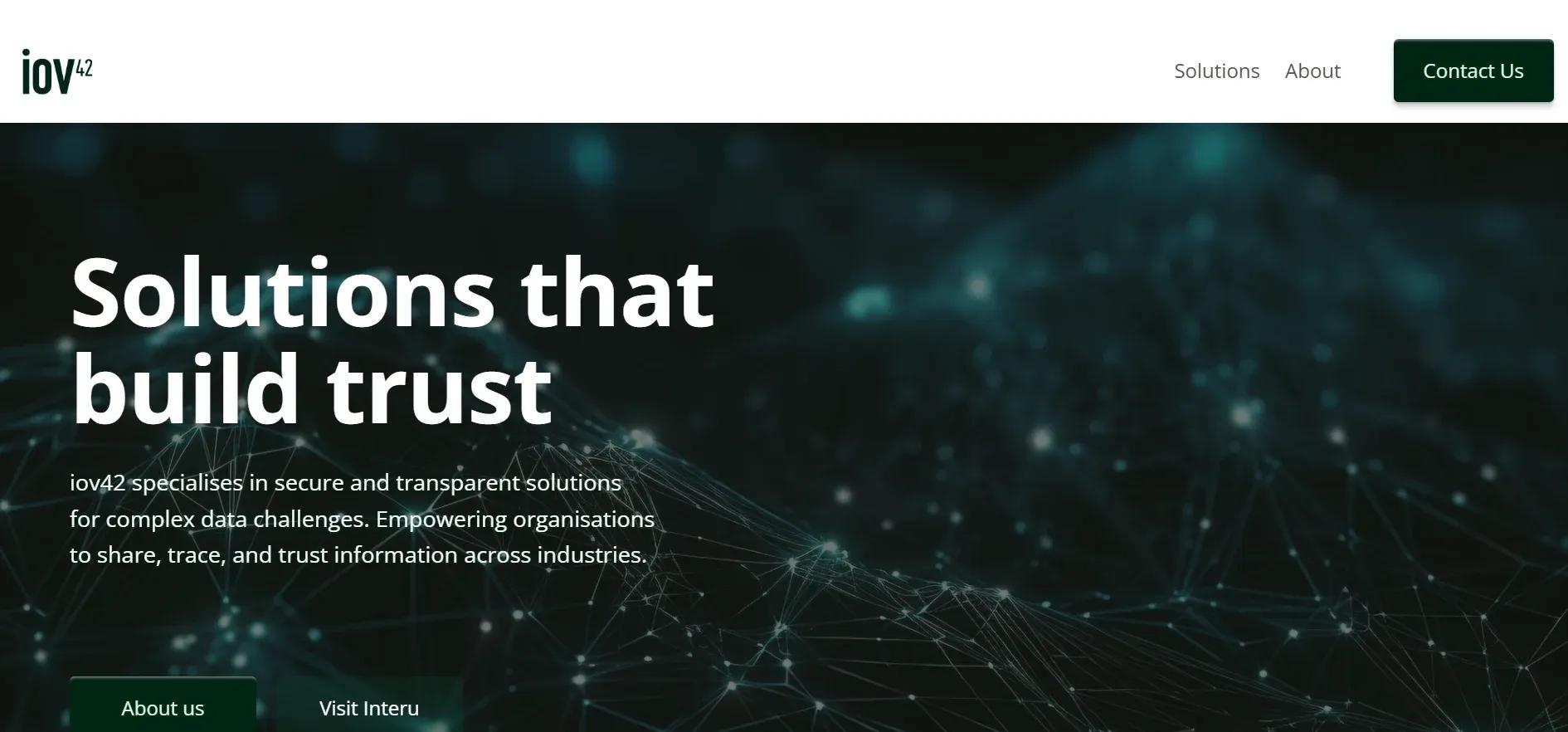
iov42 is one of the more credible UK blockchain supply chain companies working on regulatory-grade traceability. This London firm, founded in 2016 and led by CEO Dominic von Trotha Taylor, specialises in digital identity, trust, and data integrity, built on an evolution of distributed ledger technology. Its traceability product, Interu, launched in February 2024, lets companies gather, verify, and share supply chain data across commodities and countries while protecting sensitive information.
Its track record is strong for a firm this size. iov42 built Timber Chain to secure timber supply networks, partnered with Tata Steel UK on a steel traceability prototype, and works with bodies like Preferred by Nature and the University of Cambridge. It was also the only UK company selected by the European Commission to help build the European Blockchain Services Infrastructure, beating firms like EY and Deloitte. With Interu aimed squarely at EU Deforestation Regulation compliance and responsible sourcing, iov42 fits UK importers facing hard due-diligence deadlines.
Key highlights:
- Interu traceability platform for commodities and raw materials
- EUDR and responsible-sourcing compliance built in
- Timber Chain and Tata Steel UK traceability projects
- Selected by the European Commission for EBSI
Best for: UK importers and enterprises needing EUDR-ready traceability for commodities and raw materials.
10. Dotsquares

Dotsquares is one of the most established blockchain supply chain companies in the UK by size. This UK software company, founded in 2002, has a head office near Brighton and a London presence. It runs an onshore-offshore model, pairing UK management with cost-effective global delivery. That blend keeps budgets in check.
Its blockchain and integration work connects systems, automates data flow, and supports supply chain builds. With 1,000-plus staff, it can scale a team up or down quickly. It also offers flexible engagement models, from dedicated developers to fixed projects. So Dotsquares suits UK firms wanting an established, adaptable partner at competitive rates.
Key highlights:
- Established UK firm with global delivery
- Blockchain and system integration work
- 1,000-plus staff for fast scaling
- Flexible, cost-effective engagement models
Best for: UK businesses wanting an established, budget-friendly delivery partner.
What Separates a Good Partner From a Weak One
Build quality varies widely. The strongest blockchain supply chain solutions share a handful of traits. Keep this list to hand when you compare firms.
- Smart contract depth. Automated rules speed payments and cut manual work.
- IoT hooks. Live sensor and RFID data keep records accurate.
- Interoperability. The build should connect to your ERP, and ideally to other chains.
- Access control. Permissioned setups guard sensitive supplier data.
- Scalability. The platform must handle rising volume without lag.
- Support and docs. Clear documentation and steady support protect you post-launch.
A firm strong on these traits spares you rework later. So weigh them before you sign anything.
Picking the Right Blockchain Network
Your platform choice drives cost, privacy, and speed. Most UK blockchain supply chain companies build on one of a few options. Here's a quick guide.
Platform | Type | Best Fit |
| Hyperledger Fabric | Permissioned | Enterprise chains among trusted partners |
| Ethereum | Public | Public proof and tokenization |
| Polygon | Public (layer 2) | Low-cost, high-volume workloads |
| Corda | Permissioned | Finance and regulated trade |
| Solana | Public | High-speed, high-throughput builds |
There's no universal winner, though. Hyperledger fits closed groups of known parties, which is why enterprise supply chains lean on it. Ethereum and Polygon suit builds that need public proof or tokens. A good partner maps the platform to your privacy needs and budget.
The Trade-offs You Should Know
Blockchain isn't a silver bullet. Knowing the limits up front keeps expectations grounded. That way, you plan for the tricky parts.
Integration is the first challenge. Wiring a ledger into legacy ERP systems takes real effort and budget. Scalability is the second, since some public chains slow under heavy load.
Network buy-in is another factor. A blockchain supply chain solution only works if partners actually join and share data. So adoption across your network counts as much as the tech itself. Regulation adds a final wrinkle, since rules on data and digital assets keep shifting. A strong partner plans for these limits, rather than brushing them aside.
A Practical Way to Shortlist Your Partner
Choosing a firm is a structured decision, not a gamble. Run through these steps to narrow the field.
- Set the goal. Fix the core problem first, tracing, compliance, or payments.
- Ask for supply chain proof. Look for real case studies, not general blockchain claims.
- Test platform skills. Confirm depth in Hyperledger, Ethereum, or your target chain.
- Probe integration. Ask exactly how they'll connect to your current systems.
- Choose a model. Pick a dedicated team, a fixed project, or vetted talent.
- Weigh cost and speed. Balance rates against time-to-hire and delivery dates.
Follow these in order, and the right fit tends to stand out. In practice, the best blockchain supply chain solutions companies welcome tough questions rather than avoid them.
What to Expect During a Build
Most projects move through the same phases. Knowing them helps you plan time and budget.
- Discovery. The team maps your process, data, and goals.
- Proof of concept. A small build tests the idea before deeper spend.
- Design. Architects set the platform, data model, and contract logic.
- Build. Engineers develop the ledger, contracts, and integrations.
- Testing. The system is checked for security, speed, and accuracy.
- Launch and support. It goes live, backed by ongoing maintenance.
Each phase rests on the last. So a thorough discovery stage repays itself across the project.
What Does It Cost to Hire Blockchain Engineers?
Budgeting starts with salary data. UK rates sit high, though still below US levels, so it helps to compare markets first. The table below shows average blockchain engineer pay in 2026.
Country | Average Salary (USD) |
| United States | $150,000 – $200,000 |
| United Kingdom | $120,000 – $160,000 |
| Canada | $110,000 – $150,000 |
| Australia | $130,000 – $170,000 |
| Germany | $140,000 – $180,000 |
| Switzerland | $160,000 – $210,000 |
| India | $30,000 – $50,000 |
| Singapore | $140,000 – $190,000 |
| Israel | $140,000 – $190,000 |
| Japan | $130,000 – $170,000 |
Source: PayScale
The spread is wide. A senior UK engineer can cost three to five times more than one in India, before you add benefits and overhead. Skill level and project scope shift the figure too, since complex tracing systems demand deeper expertise.
This is where a vetted-talent model earns its keep. Teams that hire blockchain developers through Softaims reach senior engineers below UK rates, with matching in 48 hours. Many UK blockchain supply chain companies price around these salaries, so the savings add up. You skip the long local search, and you skip the benefits load, without cutting quality.
Warning Signs in Blockchain Engineer Interviews
Spotting weak candidates early saves a costly hire. The clearest red flag is a shaky grasp of the basics. If someone can't explain consensus, or the split between public and private chains, the depth likely isn't there.
Watch, too, for heavy dependence on off-the-shelf tools with no ability to customise or debug. Blockchain builds throw curveballs, so problem-solving is essential. A candidate who can't adapt may stall the moment a project drifts off plan.
Communication carries equal weight, however. If someone can't explain their work, or can't translate it for non-technical stakeholders, teamwork suffers. Clear communication keeps projects on track, and MindTools offers handy pointers here.
Finally, look for curiosity. The field shifts quickly, so good engineers keep learning. Someone with no interest in recent changes may fall behind. To gauge that, ask what they've followed lately on sites like TechCrunch.
What's Next for UK Blockchain Supply Chains
The space keeps moving, so it pays to watch the horizon. Three shifts stand out for UK firms this year.
First, AI and blockchain are merging. Together, they add prediction on top of trusted data, so a supply chain can flag risk early rather than log it late. Second, digital product passports are gaining ground, driven by EU battery and sourcing rules that reach UK exporters.
Third, sustainability tracking is rising fast. UK brands increasingly use blockchain to prove ethical and low-carbon sourcing, not just assert it. Together, these shifts move blockchain supply chain solutions from pilots into everyday production.
Frequently Asked Questions
What do blockchain supply chain solutions companies do?
They design and build blockchain systems that track goods, records, and payments across a supply chain. The work spans smart contracts, tracing tools, and shared ledgers every partner can trust. Many also integrate with your current systems and provide ongoing support. In short, they turn a fragmented chain into one connected, transparent network.
Do UK firms need blockchain to meet EU trade rules?
Not strictly, but it helps a great deal. Rules like the EUDR and the EU battery passport demand detailed, verifiable traceability data. Blockchain gives that data a tamper-proof, audit-ready backbone. So for UK exporters facing these deadlines, it's one of the strongest tools available.
How much does it cost to build a blockchain supply chain solution?
Cost depends on scope, platform, and team location. A simple tracing pilot costs far less than a full multi-party network. UK engineer salaries also run high, from £120,000 to £160,000 a year. A vetted-talent model, though, can cut that spend sharply without lowering quality.
Should I hire a UK agency or vetted remote engineers?
It depends on your workload and budget. A UK agency offers local proximity but higher rates. Vetted remote engineers offer senior skill at lower cost, often with working-hours overlap. Many teams blend both, using dedicated hires for core work and freelance software engineers for peaks.
Conclusion
Blockchain does more than log transactions. In a UK supply chain, it builds trust, blocks fraud, and gives every partner one clear view, while helping you meet EU and ESG demands. The ten firms above range from tracing specialists to versatile development studios.
Match your pick to three things, however: project scope, budget, and platform needs. Among blockchain supply chain solutions companies in UK, these ten set the standard. If you want senior blockchain talent quickly, and below UK salary rates, Softaims can match you within 48 hours. You can also explore its blockchain, NFT, and cryptocurrency work for more context.
Ready to build? Draft a clear brief, then pick the partner that fits your goals. Have a question about your supply chain project? Reach out, and let's map it out together.


 GitHub
Francisco B.

 Verified Expert in Engineering
My name is Francisco B. and I have over 4 years of experience in the tech industry. I specialize in the following technologies: Ethereum, Blockchain Architecture, JavaScript, Python, C#, etc.. I hold a degree in Bachelor's degree, Bachelor's degree. Some of the notable projects I've worked on include: Fadons – DeFi Infrastructure & Add-on Suite, Dotmundo – Decentralized Domain Management Platform, Swapper – Decentralize Cross-Chain Exchange, Titlex. – Decentralize Degrees Storage Platform. I am based in Salamanca, Spain. I've successfully completed 4 projects while developing at Softaims.
I specialize in architecting and developing scalable, distributed systems that handle high demands and complex information flows. My focus is on building fault-tolerant infrastructure using modern cloud practices and modular patterns. I excel at diagnosing and resolving intricate concurrency and scaling issues across large platforms.
Collaboration is central to my success; I enjoy working with fellow technical experts and product managers to define clear technical roadmaps. This structured approach allows the team at Softaims to consistently deliver high-availability solutions that can easily adapt to exponential growth.
I maintain a proactive approach to security and performance, treating them as integral components of the design process, not as afterthoughts. My ultimate goal is to build the foundational technology that powers client success and innovation.

Leave a Comment
Need help building your team? Let's discuss your project requirements.
Get matched with top-tier developers within 24 hours and start your project with no pressure of long-term commitment.