Top 10 Information Security Development Companies in the World 2026
In Top 10 Information Security Development Companies 2026, we cover how to secure every entry point, use security frameworks effectively, manage risk, and bring in the right expertise when your team needs it.
Technically reviewed by:
Antonio E.|Manish J.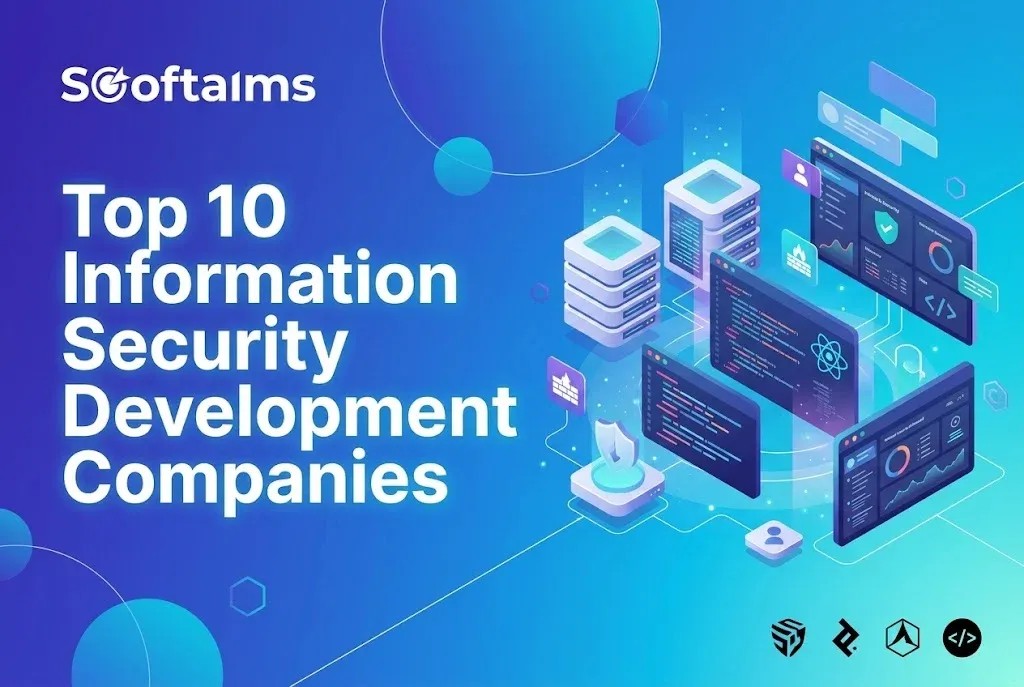
Table of contents
Key Takeaways
- Protect every entry point. Data isn't the only target. Credentials, cloud infrastructure, devices, applications, and customer systems can all give attackers a way in.
- Make security part of daily operations. Strong security goes beyond tools. Access policies, employee training, risk reviews, and regular audits all play a role.
- Turn frameworks into action. Standards such as ISO 27001, SOC 2, NIST, and PCI DSS give teams a practical structure for identifying risks and improving controls.
- People still matter. Security tools can detect and prevent threats, but experienced professionals are needed to configure systems, investigate issues, test defences, and respond when something goes wrong.
- Bring in expertise when needed. Specialist security engineers can fill skill gaps quickly without requiring businesses to build a large security team from day one.
Every business now runs on information, and every piece of it is a target. Customer records, financial data, intellectual property, and access credentials are the new crown jewels, and attackers know it. So the discipline of protecting that information has become one of the most important jobs in any company. It spans policy, encryption, and people alike. For buyers of information security companies, this is now mission-critical. Get it wrong, and the average breach costs $4.88 million, per IBM.
This is bigger than buying a firewall. Real information security spans governance, risk, compliance, audits, awareness training, and secure engineering. The rules keep tightening, too. ISO 27001, SOC 2, and a newly mandatory PCI DSS v4.0 all raise the bar. Meanwhile, the global information security market is heading toward $88 billion by 2031, and skilled specialists are scarce. So choosing the right information security companies, and the talent to run them, has never mattered more.
This guide brings order to a crowded field. It ranks the top 10 information security development companies in the world for 2026. The list spans platform giants, audit specialists, and consulting leaders. Softaims and Devaims open the list, followed by eight recognized specialists. If your real gap is talent, you can hire vetted security engineers in 48 hours and keep full control.
How We Ranked These Information Security Companies
We ranked these information security companies on proven capability, compliance depth, and real-world results. A firm had to show genuine security work, not just a marketing budget. Each criterion below reflects what a serious buyer should weigh.
Governance and compliance. ISO 27001, SOC 2, and PCI DSS demand real expertise. Therefore, we weighted audit-ready delivery.
Data protection depth. Strong firms secure data at rest, in transit, and in use. As a result, we valued encryption and DLP.
Threat coverage. Real defense spans identity, endpoints, and the cloud. Consequently, we favored broad protection.
People and awareness. Most breaches start with a human. Meanwhile, we valued firms that train people, not just systems.
Talent and delivery. Tools need skilled operators. So we valued firms and partners that make security talent accessible.
Top Information Security Companies: Comparison Table
The top information security companies in the world for 2026 include Softaims, Devaims, IBM Security, Microsoft Security, and Accenture. Palo Alto Networks, Optiv, Deloitte, NCC Group, and Coalfire complete the list. This table gives the fast overview.
Company | Headquarters | Focus | Best for |
| Softaims | US and global | Hiring vetted security engineers | Building and staffing InfoSec |
| Devaims | US and global | Secure development, a Softaims brand | Accountable, compliant builds |
| IBM Security | Armonk, USA | Data security, SIEM, GRC | Large regulated enterprises |
| Microsoft Security | Redmond, USA | Data governance, compliance | Microsoft-stack governance |
| Accenture | Dublin, Ireland | Security consulting and GRC | Global transformation programs |
| Palo Alto Networks | Santa Clara, USA | AI-driven platform security | Platform consolidation |
| Optiv | Denver, USA | Advisory and integration | Enterprise security programs |
| Deloitte | London, UK | Risk and cyber advisory | Big-4 governance and audit |
| NCC Group | Manchester, UK | Assurance and ISO 27001 | Audit-ready assurance |
| Coalfire | Westminster, USA | Compliance and audit | PCI, HITRUST, FedRAMP |
Details reflect public profiles and market data as of 2026 and can change, so verify each firm before you commit. Categories are noted to help you compare.
The Top 10 Information Security Companies in the World
This section profiles the top information security companies in the world for 2026. It opens with Softaims and Devaims, the partners that help you build and staff information security. Then it covers the platforms, consultancies, and auditors that define the field. So you can find the right fit for your risk and your regulator.
1. Softaims
Information security can look straightforward on paper. Pick a framework. Write the policies. Run the audit. Fix the gaps. But once you start doing the work, the gaps usually become much more complicated.
Who is going to review your access controls? Who will harden the cloud environment? Who can turn an audit finding into an actual fix? And what happens when your internal team already has a full product roadmap to deliver?
This is the gap Softaims is built to fill.
Rather than asking businesses to build an entire information security team before they can tackle these problems, Softaims gives them access to specialists for the work in front of them. You can bring in security engineers, auditors, compliance specialists, or DevSecOps talent based on the skills the project actually requires.
That could mean bringing in an expert to prepare for an ISO 27001 audit, strengthening access controls before a security review, or adding security expertise to a development team that has outgrown its current setup. You choose the experience you need, interview the specialists yourself, and build the team around the job.
The result is a more practical way to handle security. You don't have to hire five full-time specialists when you only need specific expertise. You can add the right people for the right stage, then scale the team as the work changes.
Key services of Softaims
- Information security engineering: Get hands-on help with information security, including secure architecture, access controls, encryption, and system hardening.
- Security audits and assessments: Bring in specialists for information security audits and prepare your systems for requirements such as ISO 27001, SOC 2, and PCI DSS.
- Security strategy and consulting: Turn security risks into a practical plan with information security consultation tailored to your business.
- Security awareness: Help employees become part of your defence with information security awareness training focused on real-world risks.
- DevSecOps and team support: Add security expertise directly to your development workflow, whether you need one specialist or a larger engineering team.
Why Softaims Stands Out
The biggest advantage is flexibility. Your security needs can change from one quarter to the next, and your team should be able to change with them.
Softaims lets you bring in specialised expertise without turning every security requirement into a permanent hiring decision. You stay involved in choosing the people, keep ownership of the work, and can add or reduce capacity as the project demands.
Hire vetted security specialists, see pricing, or talk to the team.
2. Devaims
Sometimes you don't need another group of specialists to manage. You need someone to take the project, handle the moving parts, and deliver a secure product.
That's where Devaims fits.
Devaims is a managed delivery company and a Softaims brand that takes software projects from architecture and development through testing, security, and launch. Instead of splitting the work between developers, security teams, and separate vendors, one team stays responsible for the whole project.
This is especially useful when security and compliance need to be part of the build from day one. The team can handle everything from secure software development to regulated projects, while keeping delivery under one roof.
Following its August 2026 acquisition, Devaims also has access to Softaims' wider technical talent pool when a project needs additional expertise.
Key services of Devaims
- Secure, compliant software development
- Software development
- Mobile app development
- Security and compliance
- Managed delivery and operations
Why Devaims Stands Out
Devaims is a strong fit for businesses that want one team accountable for the finished product, rather than managing several vendors themselves.
3. IBM Security
Headquarters: Armonk, New York, USA.
IBM Security is a foundational enterprise standard for data security and governance. Its Guardium platform covers data discovery, encryption, and vulnerability management, while QRadar powers large SOC operations. So it suits large, regulated enterprises.
Why they matter: deep data-security and GRC credibility built over decades. Its watsonx AI now simplifies anomaly detection and compliance auditing for the largest estates.
4. Microsoft Security
Headquarters: Redmond, Washington, USA.
Microsoft Security leads on data governance through Purview and identity through Entra. It keeps data compliant across the Microsoft 365 and Azure estate. So it suits enterprises built on the Microsoft stack.
Why they matter: deep integration and genuinely strong data governance. Its tools automate labeling, retention, and compliance across the whole Microsoft estate.
5. Accenture
Headquarters: Dublin, Ireland.
Accenture is a global leader in security consulting and governance. It runs large information security transformation programs across every industry. So it suits enterprises needing strategy, GRC, and delivery at scale.
Why they matter: global scale and end-to-end advisory across every industry. Its transformation practice suits large, multi-year information security programs.
6. Palo Alto Networks
Headquarters: Santa Clara, California, USA.
Palo Alto Networks is the largest pure-play cybersecurity company. It unifies network, cloud, and data security through AI and automation. So it suits enterprises consolidating many tools onto one platform.
Why they matter: platform breadth and analyst-leading depth. Its compliance support spans NIST, SOC 2, ISO 27001, and PCI DSS, which suits regulated buyers.
7. Optiv
Headquarters: Denver, Colorado, USA.
Optiv is one of the largest security solutions providers in North America. It pairs advisory and GRC services with a huge integration practice. So it suits enterprises running broad information security programs.
Why they matter: scale and end-to-end coverage across the security stack. Its advisory and GRC practice help enterprises navigate complex compliance landscapes.
8. Deloitte
Headquarters: London, UK.
Deloitte brings Big-4 depth to cyber risk and governance. Its practice sells risk assessments, compliance programs, and managed detection at enterprise scale. So it suits global groups with audit committees and complex risk.
Why they matter: deep risk, audit, and governance expertise at global scale. Its audit-committee credibility suits the largest, most regulated organizations.
9. NCC Group
Headquarters: Manchester, UK.
NCC Group is a leading assurance and testing consultancy with strong ISO 27001 depth. It runs global red teams and dedicated research units. So it suits organizations needing audit-ready assurance.
Why they matter: accredited assurance and deep research capacity. Its testing and ISO 27001 work reduce real, measurable risk.
10. Coalfire
Headquarters: Westminster, Colorado, USA.
Coalfire defined the independent security compliance category. It leads on PCI, HITRUST, FedRAMP, and ISO 27001 assessments. So it suits regulated and government-facing organizations.
Why they matter: unmatched depth in compliance and attestation. Its PCI QSA and FedRAMP assessors suit heavily regulated and government-facing sectors.
What Is an Information Security Company
An information security company is a firm that protects an organization's information from unauthorized access, loss, or misuse. The best information security companies do this across policy, technology, and people. It covers policy, governance, encryption, access control, and the people around them. So the goal is confidentiality, integrity, and availability of your data.
Information security is broader than cybersecurity. Cybersecurity focuses on digital threats, while information security also covers governance, physical controls, and human behavior. In addition, it leans heavily on frameworks like ISO 27001 and NIST. Therefore, the best firms blend engineering, audit, and advisory.
That blend is the insight most buyers miss. A strong tool means little without the policies, audits, and trained people around it. So the best information security companies pair technology with governance and skilled operators. Many now add machine learning development skills for smarter, faster detection.
This is why choosing on brand alone is risky. A famous platform vendor may not offer the audit or awareness services you need. A boutique auditor may not build software at all. So map what you actually need first, then match it to the right kind of firm. The best information security companies are honest about where their strengths end.
Core Information Security Services
The best information security companies share a core service set. It spans governance, protection, detection, and awareness. So most organizations need several at once.
Governance and risk. GRC teams set policy and manage risk. As a result, security aligns with the business.
Security audits. Auditors test controls against ISO 27001, SOC 2, and PCI DSS. Therefore, you gain certification and trust.
Data protection. Encryption, DLP, and classification guard sensitive data. Meanwhile, exposure shrinks in any breach.
Identity and access management. IAM controls who can reach what, and when. So least privilege limits the damage.
Awareness training. Programs teach staff to spot phishing and social engineering. Consequently, the human layer gets stronger.
Secure development. Engineers build security into software from the start. In addition, DevSecOps keeps it there, drawing on strong DevOps implementation.
The Information Security Frameworks You Must Know
The best information security companies run on frameworks, and knowing them helps you brief any partner. Each one sets a standard for how you protect information. So the right partner maps its work to the ones you need.
ISO 27001. The global standard for an information security management system. Therefore, it signals mature, certified governance.
SOC 2. A US-centric report on security controls, common for SaaS firms. Meanwhile, enterprise buyers often demand it.
NIST CSF. A widely used framework for managing security risk. As a result, it guides many US programs.
PCI DSS. The mandatory standard for handling card data, now on version 4.0. So payment work needs it, without exception.
A serious partner builds toward these from day one. Firms that also handle generative AI integration increasingly automate the evidence these frameworks demand.
The cost of getting frameworks wrong is real. A failed SOC 2 audit can lose an enterprise deal. A PCI DSS gap can cut off card payments entirely. Meanwhile, ISO 27001 certification is now a condition of many contracts. So frameworks are not box-ticking. They are commercial gates that decide which customers you can serve. The right partner treats them as a business enabler, not a burden. So the smart move is to see compliance as a sales asset. A clean audit report can shorten a deal and reassure a nervous buyer. It opens doors that stay shut to less mature rivals. In that light, the money spent on frameworks is not a cost. It is an investment in winning trust.
The Difference Between Information Security and Cybersecurity
People often use these two terms as if they mean the same thing, but they do not. Cybersecurity defends against digital attacks. Information security is wider, protecting information in every form, digital or physical. So a locked filing cabinet and an encrypted database are both information security.
The distinction matters when you buy. A pure cybersecurity vendor may sell you a firewall, but not a governance program. Meanwhile, an information security partner covers policy, audits, training, and technology together. Therefore, the best information security companies think in whole programs, not single tools.
There is a helpful analogy here. Cybersecurity is the lock on the door. Information security is the whole security policy. It covers who holds the keys, who is trained, and what happens when a key is lost. So when you evaluate information security companies, ask about the program, not just the product.
The Layers of a Strong Information Security Program
A strong information security program is built in layers, not as a single control. Attackers probe every gap, so protection must cover every gap too. The best information security companies build across all of them. So knowing the layers helps you find your own weak spots.
Governance. Policy and risk management set the direction. Therefore, everything else aligns to the business.
Technical controls. Encryption, IAM, and monitoring protect the data. As a result, exposure shrinks in any breach.
People. Awareness training turns staff into a first line of defense. Meanwhile, most breaches start with a person.
Assurance. Audits and testing prove the controls actually work. So you gain both certification and confidence.
A single layer is never enough on its own. A policy without controls is just paper, and a tool without training gets bypassed. So the best information security companies weave the layers together, backed by people who can run them. That people layer is the one most organizations quietly neglect. It often relies on the same skills the top cloud security companies bring to enterprise builds.
The Information Security Talent Gap (and How Softaims Helps)
Every report on information security companies and their clients reaches the same conclusion. There are far more open security roles than there are people to fill them. So even a well-funded team can end up dangerously understaffed.
This is where a marketplace changes the game. With Softaims, you hire vetted security engineers in 48 hours, not months. You choose the exact skills, from ISO 27001 auditing to secure architecture, and you own the work. In addition, you can pair them with LLM development and AI specialists as your program grows.
So the platforms and consultancies in this list supply the tools and advice. Softaims supplies the people who design, run, and audit the controls. Together, that closes the gap that leaves so many organizations exposed.
This matters most for lean teams. A single overworked officer cannot run governance, audits, and training alone. So adding vetted specialists on demand keeps a program strong as the business scales. It also means you pay for the exact skills you need, when the audit or project demands them. There is no large permanent team to carry. For deeper cloud defense, the leading cloud security companies show what strong platforms look like.
How to Choose the Right Information Security Partner
Choosing among information security companies is high-stakes, so decide on evidence, not adjectives. Match the firm to your frameworks, verify its accreditations, and confirm you have people to run it. So work through these checks before you commit.
Check accreditation. Look for ISO 27001, PCI QSA, or CREST. Because these are audited, they are hard to fake.
Match your frameworks. Confirm they know the standards you must meet. Therefore, audits go smoother.
Weigh advisory versus operations. Decide if you need a one-off audit or ongoing help. Meanwhile, match the model to your need.
Confirm the people. A framework needs skilled operators. So secure the talent, through hiring or a marketplace.
Clarify ownership. You should own the policies, controls, and code. Moreover, avoid vendor lock-in.
How Much Does Information Security Cost
There is no single price for information security. Your total spend depends on your business size, the level of risk you face, compliance requirements, the tools you use, and the expertise your team needs. A realistic security budget should account for all of these costs rather than focusing only on software.
Security professionals can be a significant part of that budget. Experienced specialists are often more expensive because they bring skills in areas such as security architecture, compliance, cloud environments, threat detection, and incident response. For smaller businesses, hiring several specialists full-time may not always make financial sense.
A flexible hiring model can make this easier. Instead of maintaining a large security team year-round, businesses can bring in specialists for specific projects, audits, or security gaps and adjust the team as needs change.
How Much Does It Cost to Hire Information Security Specialists in 2026?
Information security specialist salaries and hourly rates can vary widely by country. Experience is another major factor. Junior professionals generally cost less, while senior specialists with advanced certifications and highly specialized skills command higher rates.
The following estimates give a general idea of what businesses may expect to pay across different markets:
| Country | Junior Hourly | Junior Annual | Mid-Level Hourly | Mid-Level Annual | Senior Hourly | Senior Annual |
|---|---|---|---|---|---|---|
| United States | $30–$50 | $60,000–$80,000 | $50–$75 | $100,000–$130,000 | $75–$150 | $150,000–$200,000 |
| United Kingdom | $25–$45 | $50,000–$70,000 | $45–$65 | $90,000–$120,000 | $65–$130 | $130,000–$180,000 |
| Canada | $25–$40 | $50,000–$65,000 | $40–$60 | $80,000–$110,000 | $60–$120 | $120,000–$160,000 |
| Germany | $30–$45 | $60,000–$75,000 | $45–$70 | $90,000–$125,000 | $70–$140 | $140,000–$185,000 |
| India | $10–$20 | $20,000–$40,000 | $20–$35 | $40,000–$70,000 | $35–$60 | $70,000–$100,000 |
| Poland | $15–$25 | $30,000–$50,000 | $25–$40 | $50,000–$80,000 | $40–$70 | $80,000–$110,000 |
| Ukraine | $10–$20 | $20,000–$40,000 | $20–$35 | $40,000–$65,000 | $35–$60 | $70,000–$90,000 |
| Brazil | $15–$25 | $30,000–$45,000 | $25–$40 | $50,000–$75,000 | $40–$65 | $80,000–$100,000 |
Source: PayScale (2026)
These figures help show how location and experience can affect hiring costs. However, salary is only one part of the equation. Businesses hiring locally also need to account for benefits, taxes, recruitment, equipment, and other employment costs.
For companies that need specialized security expertise without committing to several full-time hires, Softaims provides access to pre-screened information security specialists. Teams can be matched with suitable talent within 48 hours, making it easier to add security expertise when a project, audit, or compliance requirement calls for it.
Why Information Security Programs Fail
Even the best information security companies see programs fail for a handful of avoidable reasons. It is rarely because the frameworks are wrong. The causes repeat across organizations of every size. So learn them, and you can steer around each one.
Policy without practice. A policy nobody follows protects nothing. Therefore, controls must be built and tested, not just written.
Compliance treated as a checkbox. Passing an audit is not the same as being secure. Meanwhile, the two must reinforce each other.
The human layer ignored. Most breaches start with a person. As a result, awareness training is essential.
Tools without operators. A platform nobody runs drifts and fails. So staff it properly from day one.
The thread running through all of these is people. Even the best information security companies cannot help if the operator lacks skill. So securing the right talent matters as much as securing the right tools.
Information Security Trends for 2026
The information security companies leading in 2026 build around three defining trends. These are AI-driven governance, data-centric security, and continuous compliance. So these shifts should shape your shortlist.
AI-driven governance. AI now automates audits and evidence gathering. Meanwhile, AI agents speed up compliance work.
Data-centric security. Protection now follows the data, not the perimeter. As a result, classification and DLP take center stage.
Continuous compliance. Firms replace the yearly audit with always-on monitoring. So posture stays current, not point-in-time.
Zero trust. The identity perimeter is now the primary control. Therefore, verify everything, trust nothing.
Quantum-safe readiness. Firms prepare for post-quantum cryptography. Consequently, forward-looking encryption is now on roadmaps.
Frequently Asked Questions
Which are the top information security companies in the world?
IBM Security, Microsoft Security, and Accenture lead among enterprise names. Palo Alto Networks, Optiv, Deloitte, NCC Group, and Coalfire round out strong options. Softaims and Devaims suit teams that want to build and staff their own programs.
What is the difference between information security and cybersecurity?
Cybersecurity focuses on digital threats. Information security is broader, covering governance, physical controls, and human behavior. So information security includes cybersecurity, plus policy and people.
How much does information security cost?
Most organizations spend 5% to 15% of IT budget on security. An ISO 27001 or SOC 2 program takes months of specialist effort. A marketplace can cut the talent cost by staffing only when needed.
What frameworks should my information security follow?
Common frameworks include ISO 27001, SOC 2, NIST CSF, and PCI DSS. The right ones depend on your industry and customers. A good partner maps its work to yours.
How does Softaims help with information security?
Softaims lets you hire vetted security engineers, auditors, and consultants fast, then own the work. It closes the talent gap that stalls many programs. So you can run any framework with skilled people.
Who owns the policies and code?
With a custom engagement, you should own all of it. Confirm ownership of the policies, controls, and code in writing. This avoids vendor lock-in later.
Conclusion
Information security is no longer a back-office function. It is a core business risk, and the cost of getting it wrong runs into the millions. The information security companies in this list give you the tools, advice, and talent to protect what matters. But tools and advice alone are never enough. The partner and the people you choose decide whether your controls hold when tested.
So turn this list into a plan. Here is the short checklist to work through before you commit.
- Map your data and risk. Know what you are protecting and from whom.
- Pick your frameworks. Confirm which standards you must meet.
- Verify accreditation. Look for ISO 27001, PCI QSA, or CREST.
- Secure the talent. Confirm you can hire or access engineers and auditors.
- Train your people. Awareness is the cheapest, most effective control.
Get those five right, and information security becomes a genuine business advantage, not a burden. It builds the trust that lets you win bigger customers and enter regulated markets with confidence. Skip them, and even the best framework or tool will not save you from a preventable breach.
If your real blocker is talent, and for most teams it is, there is a faster path. Softaims matches you with vetted security engineers, auditors, and consultants within 48 hours, and you own everything they build. For a full, managed secure build, its delivery brand can take the whole thing off your plate. To start, hire security engineers or get in touch.


 GitHub
Edwin Karlos L.

 Verified Expert in Engineering
My name is Edwin Karlos L. and I have over 10 years of experience in the tech industry. I specialize in the following technologies: Penetration Testing, Network Penetration Testing, Web App Penetration Testing, Information Security, Computer Maintenance, etc.. I hold a degree in Bachelor of Computer Science (BCompSc). Some of the notable projects I've worked on include: External Network Penetration Test - Sample Report, Web Application Penetration Test - Example, Previous Work Compilation (Results Summary Only), My Notes / Knowledge base, Certifications. I am based in Pasig City, Philippines. I've successfully completed 5 projects while developing at Softaims.
I employ a methodical and structured approach to solution development, prioritizing deep domain understanding before execution. I excel at systems analysis, creating precise technical specifications, and ensuring that the final solution perfectly maps to the complex business logic it is meant to serve.
My tenure at Softaims has reinforced the importance of careful planning and risk mitigation. I am skilled at breaking down massive, ambiguous problems into manageable, iterative development tasks, ensuring consistent progress and predictable delivery schedules.
I strive for clarity and simplicity in both my technical outputs and my communication. I believe that the most powerful solutions are often the simplest ones, and I am committed to finding those elegant answers for our clients.

Leave a Comment
Need help building your team? Let's discuss your project requirements.
Get matched with top-tier developers within 24 hours and start your project with no pressure of long-term commitment.