Top 10 API Development Companies in the World (2026 Guide)
This guide compares the top API development companies in 2026, explains modern API architectures, pricing, security best practices, and the questions that separate experienced engineering teams from the rest.
Technically reviewed by:
Papan D.|Oleksandr K.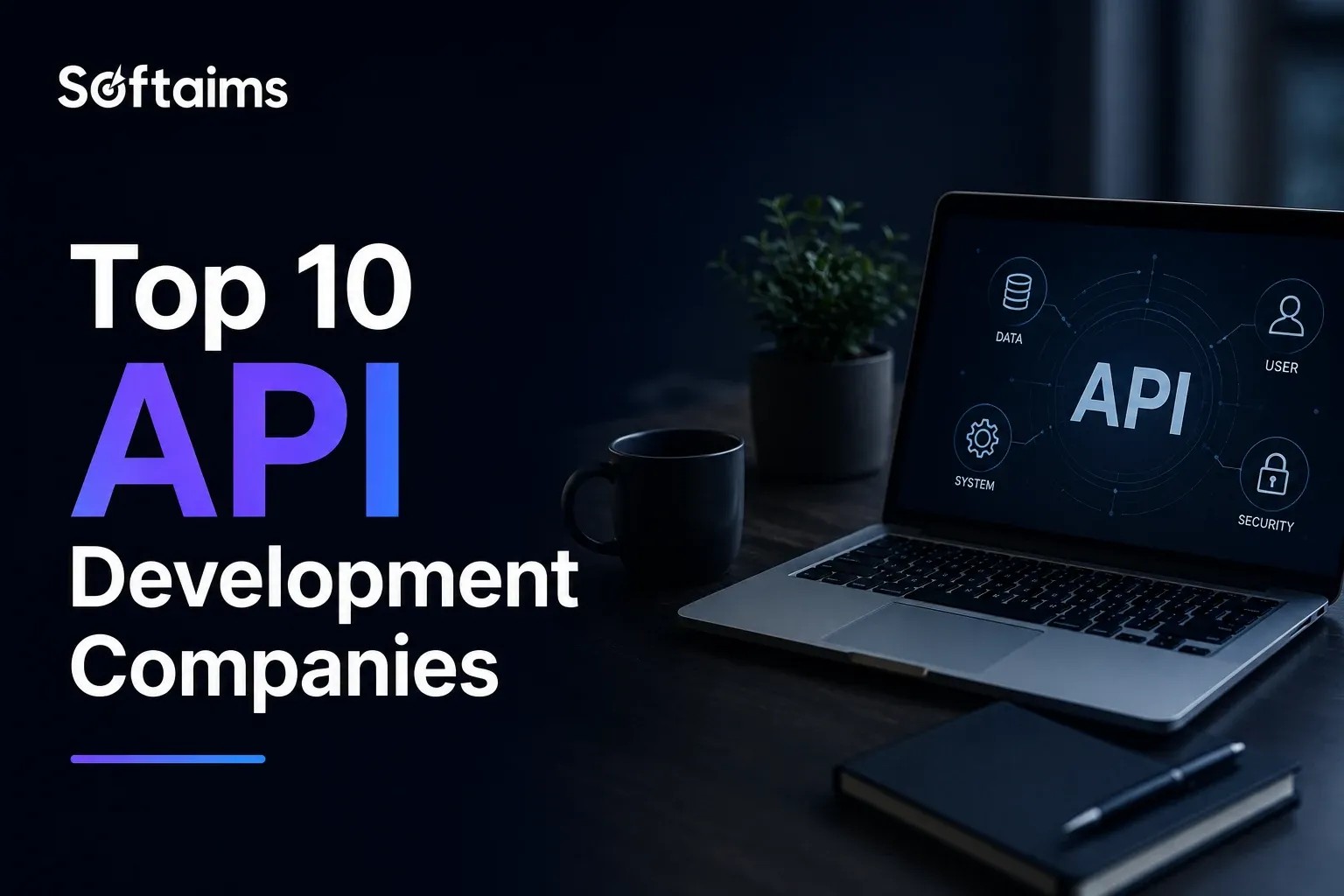
Table of contents
Key Takeaways
- Avoid expensive integration failures by understanding common production issues like rate limits, schema changes, API versioning, duplicate data, and resilience engineering before development begins.
- Build security into your API from day one with OAuth 2.0, JWT authentication, API gateways, OWASP API Security Top 10 best practices, encryption, and access controls.
- Understand what API development really costs, including project timelines, pricing ranges, maintenance, monitoring, documentation, and long-term ownership considerations.
- Ask the right questions before hiring an API development company to evaluate technical expertise, developer experience, scalability, support, and who owns your source code and API documentation after launch.
- Stay ahead of API trends in 2026, including API-first development, AI-powered APIs, event-driven architectures, API observability, and modern integration strategies that improve reliability and performance.
Choosing between API development companies is harder than it looks. Most lists rank vendors on team size, founding year, and star ratings. None of that predicts what breaks on day 200, when a partner changes their schema, your traffic triples, and a rate limit starts dropping requests.
API work fails quietly. A login flow that passes the demo can buckle under real load.
The stakes keep rising, too. Postman reports that 82% of organizations now use an API-first approach, and 25% are fully API-first. So APIs are the product now, not the plumbing.
This guide ranks the top API development companies in 2026. You also get the architectures, the security rules, the real costs, and the questions that expose a weak vendor fast.
What is API development
API development companies build the interfaces that let software talk to software. An API, or application programming interface, is a contract. It defines what one system can request, what it will receive, and what happens when something goes wrong.
Modern API work covers three broad jobs. First, building new APIs so your product can serve web, mobile, and partner clients from a single backend. Second, integrating third-party APIs from payment, CRM, or logistics providers into your systems. Third, modernizing legacy interfaces, typically by migrating SOAP services to REST or GraphQL while preserving the embedded business logic.
REST, GraphQL, gRPC, or events: choosing the right architecture
Most projects go wrong before a line of code is written, because the wrong style was chosen. Good API development companies make this call with you, not for you. The table below sets out the real trade-offs.
Style | How it works | Strengths | Best for |
| REST | Resources at fixed URLs, standard HTTP verbs | Simple, cacheable, universally understood | Public APIs, CRUD services, most products |
| GraphQL | One endpoint, clients request exactly the fields they need | No over-fetching, strong for complex UIs | Mobile apps, rich frontends, many data shapes |
| gRPC | Binary protocol over HTTP/2 | Very fast, strongly typed | Internal microservice traffic |
| WebSockets | Persistent two-way connection | True real time | Chat, live tracking, trading, presence |
| Webhooks | Server pushes an event to your URL | Efficient, no polling | Payment events, status changes, notifications |
A quick rule of thumb. REST remains the sensible default for a public API. GraphQL earns its complexity when clients need many different shapes of the same data. gRPC belongs on your own network, not at the public edge. And if your product depends on immediacy, you want WebSockets or webhooks rather than clients hammering an endpoint every few seconds.
How we ranked the top API development companies
We assessed each of these API development companies against criteria that predict whether an integration survives production contact.
- Architecture depth. They can reason about REST, GraphQL, gRPC, API gateways, and microservices, rather than reciting the words.
- Security posture. They design against the OWASP API Security Top 10 and implement OAuth 2.0, JWT, and rate limiting from the start.
- Resilience engineering. They plan for rate limits, schema drift, retries, and duplicate records, because those are what break systems later.
- Documentation and developer experience. They ship OpenAPI specs, sample code, and SDKs, since undocumented APIs quietly cost you money forever.
- Track record and support. They have verifiable case studies and stay engaged with versioning and maintenance after launch.
Comparison of the top 10 API development companies
# | Company | Best for | Focus |
| 1 | Softaims | Custom APIs and vetted talent | REST, FastAPI, integrations, owned by you |
| 2 | Devaims | APIs inside a full product | Backend plus the app that consumes it |
| 3 | Space-O Technologies | Product APIs and integrations | REST, GraphQL, microservices |
| 4 | Velvetech | Enterprise integration | Systems integration, fintech, insurance |
| 5 | Softjourn | Fintech and payments APIs | Payment rails, ticketing, cards |
| 6 | Orases | Custom enterprise APIs | Bespoke backends, US-based delivery |
| 7 | ScienceSoft | Regulated industries | Enterprise APIs, HIPAA and PCI work |
| 8 | Apriorit | Security-critical APIs | System-level and cybersecurity depth |
| 9 | ELEKS | Data-heavy enterprise APIs | Modernization, data engineering |
| 10 | Chudovo | Complex custom systems | Integrations, healthcare and finance |
The 10 best API development companies
1. Softaims

Best for: Teams that want an API designed properly from the first endpoint, built by vetted engineers, with the code and the contract fully in their hands.
Most API projects do not fail because of the code. They fail because the right decisions were not made at the beginning. Many teams overlook API versioning, rate-limit handling, and the management of future schema changes. At Softaims, senior engineers solve these challenges early, helping you build APIs that are reliable, scalable, and easier to maintain as your product grows.
We offer end-to-end API development, REST API development, FastAPI development, and API integration services. You can also hire vetted API developers with the skills and experience your project needs. Our pricing is transparent, with rates based on expertise and seniority.
You keep full ownership of the source code, OpenAPI specification, and documentation. That means your team can continue the project at any time without depending on us.
Why teams pick them:
- Senior architecture input on versioning, auth, and rate limits from day one.
- Deep coverage across REST, FastAPI, and third-party integration work.
- You own the code, the spec, and the docs, with no lock-in.
- Transparent rates agreed before the work starts.
One thing to know: A custom API is worth it when you need control over performance, security, or a data model that no off-the-shelf connector supports. However, if a standard iPaaS connector already covers your case, that is cheaper, and Softaims will tell you so.
2. Devaims
Best for: Companies that want the API and the product that consumes it built by one team.
An API is only half a system. It has to serve a real frontend, a mobile app, or a partner integration, and most friction appears exactly at that boundary. Devaims closes the loop by handling software and mobile app development alongside the backend, so the people designing your endpoints are the same people consuming them. Because of that, you get contracts that actually suit the clients, not just the database.
That single-team model pays off after launch, too. When the API and the app are owned by one group, a change to an endpoint does not turn into a three-week negotiation between vendors. Versioning, error handling, and performance tuning all get resolved by the same people who understand both sides of the contract.
Why teams pick Devaims:
- One team owns the API and the product that consumes it, so nothing is lost at the boundary.
- Endpoints are designed around real client needs, not just the database schema.
- Faster iteration after launch, since changes do not cross vendor lines.
- Full-cycle delivery across backend, web, and mobile.
3. Space-O Technologies

Best for: Product APIs, third-party integrations, and microservices.
Among established API development companies, Space-O Technologies has more than 15 years of experience and has served over 1,000 clients. Their work covers REST and GraphQL design, third-party integration into payment, CRM, and logistics providers, and microservices for teams breaking up a monolith. They also handle the surrounding essentials, including OpenAPI documentation, authentication flows, and cloud deployment. Because they build the frontends and mobile apps that consume APIs, they tend to design contracts around the client rather than the database.
The downside: They work with many technologies, so it's worth checking the experience level of the developers assigned to your project.
4. Velvetech
Best for: Enterprise systems integration.
Velvetech is one of the few API development companies that concentrates on connecting existing business systems rather than launching new products. They have real depth in financial services, insurance, and telecommunications, all sectors where a botched integration carries regulatory consequences. That means they are comfortable with the awkward parts, such as legacy systems that predate REST and partners with rigid data formats. They also work across IoT and telephony, so event-driven and real-time flows are familiar ground.
The downside: They focus mainly on large enterprise projects, so startups with simple API needs may find a smaller, product-focused company a better fit.
5. Softjourn

Best for: Payments, cards, and fintech APIs.
Unlike generalist API development companies, Softjourn has spent more than two decades in financial technology. That matters because payment APIs are unforgiving: a mishandled retry can double-charge a customer, and a bad idempotency key can duplicate a transaction. They work across payment processing, card issuing, and ticketing, so they know the processors, the PCI DSS requirements, and the reconciliation logic behind any system moving money. Expect them to push you on edge cases like partial refunds and failed settlements early, which is exactly when you want that conversation.
The downside: They specialize in finance and ticketing systems, so they may not be the best choice for a simple SaaS API.
6. Orases

Best for: Bespoke enterprise APIs delivered from the US.
Orases is one of the stronger onshore API development companies, with a long record of tailored enterprise systems rather than productized solutions. The engagement style is consultative, with greater emphasis on discovery and requirements than most offshore competitors. They put real structure around delivery, including defined milestones and a named point of accountability, which matters if you have been burned by a vendor going quiet mid-project. Onshore delivery also keeps time zones, contracts, IP assignment, and compliance under familiar US law.
The downside: Their hourly rates are higher than many offshore companies, so they may not be the best fit for smaller budgets.
7. ScienceSoft
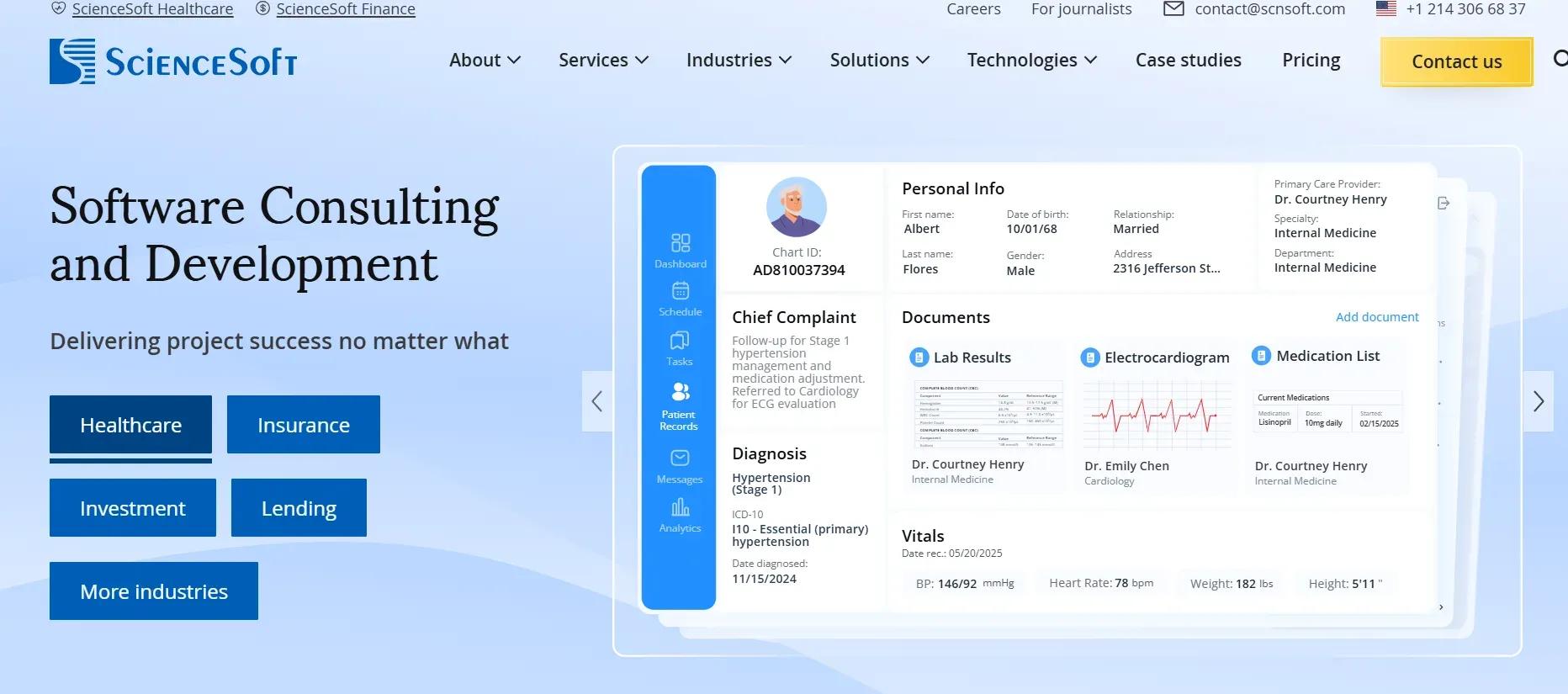
Best for: APIs in regulated industries.
Operating since 1989, ScienceSoft is one of the longest-established API development companies on this list, spanning custom development, integration, analytics, and cybersecurity. Compliance is the reason most clients come to them, as they build against HIPAA, PCI DSS, and GDPR, backed by ISO certifications. In practice, security and audit requirements shape the API design from the first sprint rather than getting retrofitted after a penetration test. That suits mid-market and enterprise organizations in healthcare, banking, and insurance that must expose sensitive data safely.
The downside: They offer many services, so make sure your project is handled by developers with experience in API integration and compliance.
8. Apriorit
Best for: APIs where security is the top requirement.
Apriorit comes from an unusual background for an API vendor, rooted in cybersecurity, reverse engineering, and system-level development. As a result, its engineers think about attack surfaces by instinct rather than by checklist. Security is designed into the architecture instead of layered on at the end, and they work close to the metal in C++ and Python as well as standard web stacks. They suit technology companies handling confidential data and any organization where a breach would be existential rather than merely embarrassing.
The downside: If you only need a simple API, their advanced expertise may be more than your project requires.
9. ELEKS
Best for: Data-heavy enterprise APIs and modernization.
Active since 1991, ELEKS has grown into one of the largest firms on this list, with more than two thousand specialists. Its real differentiator is data engineering, since exposing information trapped in legacy databases and warehouses is usually the hard part of an enterprise API. Someone has to model that data, clean it, and decide what the contract should even look like, and ELEKS does that as routine work. They fit organizations moving from a monolith to services, or from an aging platform to something cloud-native, without switching everything off in the meantime.
The downside: They are a better fit for large, complex projects. Small API integrations may not need this level of expertise.
10. Chudovo
Best for: Complex custom systems and integrations, particularly in healthcare and finance.
Chudovo is an engineering-led firm focused on complicated systems rather than simple apps. Client feedback consistently highlights transparency on time, budget, and progress, which is more valuable than it sounds, because most integration projects go wrong slowly. They handle the integration work connecting new services to existing platforms, with useful experience in healthcare and financial systems, where correctness is not negotiable. It is a practical, engineering-led choice rather than a flashy one.
The downside: They offer many software services, so make sure your project is assigned to their API specialists.
What to ask before hiring an API development company
Here is the part most API development companies gloss over, and it is the part that decides whether you are happy in a year. Ask every vendor how they handle the five failure modes below. Vague answers here are the clearest warning sign you will get.
Rate limits and throttling. Third-party APIs cap how often you can call them. A build that ignores this works fine in testing, then starts dropping requests as you grow. Good teams implement backoff, queuing, and caching from the start.
Schema drift. Providers change their fields without asking you. A resilient integration validates responses and fails loudly in a controlled way, rather than writing corrupted data into your database.
Duplicate and dirty data. When two systems sync, records get duplicated and formats disagree. Strong teams normalize and deduplicate at the API layer, not in a spreadsheet later.
Versioning. Once external clients depend on you, you cannot just change an endpoint. You need a versioning strategy, ideally with deprecation windows, so upgrades do not break your customers.
Monitoring. If observability is not in the build, you will learn about outages from your users. Logging, latency tracking, and error alerting should ship with the API, not after it.
How to keep your API secure
APIs are now a primary attack surface, and the best API development companies design against the OWASP API Security Top 10. Any serious partner will design against that list without being asked.
At minimum, expect the following. OAuth 2.0 for delegated access and JWT for stateless tokens, rather than long-lived keys pasted into config files. Rate limiting to blunt abuse and brute-force attempts. Encryption in transit with TLS, and at rest for anything sensitive. Least-privilege scopes, so a token that reads invoices cannot also delete them. And input validation at every endpoint, because broken object-level authorization remains one of the most common and most damaging API flaws.
For regulated work, ask for evidence rather than claims. A firm that has genuinely delivered under HIPAA, PCI DSS, or GDPR can produce artifacts from those projects.
API gateways, and why you probably need one
An API gateway sits in front of your services and handles the concerns you do not want scattered across every endpoint: authentication, rate limiting, routing, caching, and logging. It gives you one place to enforce policy and one place to see traffic.
For a single small service, a gateway is overhead. As soon as you have several services, external consumers, or tiered access, it's no longer optional. Common choices include Kong, AWS API Gateway, Apigee, and Azure API Management.
Documentation and developer experience
An undocumented API is a permanent tax on your team, which is why strong API development companies treat docs as a deliverable. Every integration becomes a conversation, and every new hire needs a tour.
The standard is OpenAPI, formerly Swagger, which describes your endpoints in a machine-readable spec. From that spec you get interactive docs, generated client SDKs, and automated contract tests. The best firms go further and build a proper developer portal with runnable examples and clear error references. If you plan to expose the API to partners or customers, treat documentation as part of the product, not as an afterthought.
Testing an API properly
Unit tests are not enough, and serious API development companies know it. Contract testing, using tools such as Pact, verifies that the provider and the consumer still agree on the shape of the data, catching breakage before it reaches production. Add load testing, so you know where the API bends, and negative testing, so you know it fails safely on bad input. Ask a prospective vendor which of these they include by default.
Modernizing legacy APIs
Plenty of businesses still run SOAP services or brittle point-to-point scripts, and modernizing them is core work for API development companies. The pragmatic path is rarely a rewrite. Instead, a strong team wraps the legacy system behind a modern REST or GraphQL facade, preserving the business logic while giving new clients a clean contract. From there, functionality can be migrated piece by piece, which keeps the lights on while the estate modernizes.
Custom API development or an iPaaS platform
Integration platforms such as Zapier, Make, or MuleSoft work well when your needs align with their prebuilt connectors and standard data models. They are faster and cheaper for common, low-volume workflows.
A custom build wins when the connector does not exist, when your data model is specific to your product, when you need real control over performance and security, or when the integration is core to what you sell rather than back-office glue. Many companies use both, and a good partner will tell you honestly which parts of your problem do not need custom code.
How much does API development cost
API development companies price work against scope, integration count, and how much security and compliance it carries.
Project type | Typical cost | Timeline |
| Single integration or simple API | $5,000 to $20,000 | 2 to 6 weeks |
| Standard multi-integration project | $20,000 to $75,000 | 1 to 3 months |
| Complex enterprise API platform | $75,000 to $250,000+ | 3 to 9 months |
Hourly rates vary sharply by region. Eastern European and Indian firms commonly sit in the $25 to $49 range, while US-based and enterprise vendors run from $50 to $99 and above. Also budget for the long tail, since maintenance, versioning, and monitoring continue for as long as the API lives.
How to choose an API development company
Not every API development company delivers the same level of quality. A polished website or a low price doesn't tell you how the API will perform six months after launch. These questions will help you find the right partner.
- Ask about long-term maintenance. How do they handle API versioning, rate limits, schema changes, and future updates without breaking existing integrations?
- Ask about security. Do they follow API security best practices like OAuth 2.0, JWT authentication, encryption, input validation, and the OWASP API Security Top 10?
- Ask what is included. A complete API project should include API development, documentation, OpenAPI/Swagger specifications, testing, monitoring, and deployment support.
- Ask who owns the project. Make sure you own the source code, API documentation, OpenAPI specification, and any custom integrations after delivery.
- Ask for relevant experience. Look for case studies or projects similar to yours, especially if you work in healthcare, fintech, ecommerce, logistics, or another regulated industry.
- Ask who will build your API. Find out whether senior API engineers will work on your project or if most of the work will be handled by junior developers.
- Ask about support after launch. APIs need updates, bug fixes, and monitoring. Make sure the company offers ongoing maintenance and support.
API trends shaping 2026
API development continues to evolve as businesses rely more on cloud services, AI, and connected applications.
- API-first development is becoming the standard. Companies now design APIs before building web or mobile apps, making it easier to support multiple platforms from one backend.
- AI-powered APIs are growing fast. More businesses are exposing AI models through APIs, creating demand for faster processing, streaming responses, and better performance.
- Event-driven architectures are replacing constant polling. Technologies like webhooks and message queues reduce unnecessary API requests and improve real-time communication.
- Security is built into development from day one. Instead of treating security as a final step, leading teams include authentication, access control, automated security testing, and threat modeling throughout the development process.
- API observability is becoming essential. Businesses expect built-in logging, monitoring, performance tracking, and alerts so problems can be detected before users notice them.
This version provides more actionable advice while remaining simple, readable, and valuable for readers and search engines.
Conclusion
Choosing the right API development company is about more than comparing prices or portfolios. The best partner will build APIs that are secure, scalable, well-documented, and easy to maintain as your business grows. Take the time to evaluate their technical expertise, development process, and experience with projects similar to yours.
If you're looking for a team that builds reliable APIs with clean architecture and full code ownership, Softaims is a great place to start. We design, develop, and integrate APIs tailored to your business needs, with vetted developers who can get started quickly. Book a free consultation and get matched with experienced API developers within 48 hours.
Frequently asked questions
What is the difference between REST and GraphQL?
REST exposes fixed resources at set URLs, so clients often fetch more data than they need. GraphQL exposes one endpoint and lets the client request exactly the fields it wants. REST is simpler and easier to cache, while GraphQL suits complex frontends that need many different shapes of data.
How much do API development companies charge?
A simple integration runs about $5,000 to $20,000. A standard multi-integration project lands between $20,000 and $75,000. Complex enterprise platforms start around $75,000 and can pass $250,000. Rates range from roughly $25 to $49 an hour offshore up to $50 to $99 and above for US firms.
What is API versioning?
It is how you change an API without breaking the clients already using it. Typically you publish a new version, such as v2, and keep v1 running through a stated deprecation window, so consumers can migrate on their own schedule.
How do I secure my API?
Use OAuth 2.0 and JWT for authentication, enforce least-privilege scopes, apply rate limiting, encrypt data in transit and at rest, validate all input, and design against the OWASP API Security Top 10 from the outset rather than patching later.
What is an API gateway?
It is a layer that sits in front of your services and centralizes authentication, rate limiting, routing, caching, and logging. It is unnecessary for one small service, but it becomes essential once you have several services or external consumers.
How do I document my API?
Write an OpenAPI specification, which is machine-readable. From it you can generate interactive documentation, client SDKs, and contract tests. If partners will use the API, invest in a proper developer portal with runnable examples.
What are webhooks?
A webhook is a push notification between servers. Instead of your system repeatedly asking whether something happened, the provider calls your URL the moment it does. That saves resources and delivers events far faster than polling.
How do I ensure high API performance?
Cache aggressively, paginate large responses, index the underlying database properly, and use gRPC or binary protocols for internal traffic. Load test before launch so you know where the system bends, and monitor latency continuously afterwards.
What is API-first design?
It means designing the API contract before building the interface, so the API is treated as a product in its own right. It lets multiple clients, such as web, mobile, and partners, build against one consistent backend from day one.
How do I monitor API health?
Track latency, error rates, and traffic per endpoint, then alert on anomalies. Good teams ship observability with the build, using structured logging and dashboards, so you find out about a failure before your customers do.


 GitHub
Victor R.

 Verified Expert in Engineering
My name is Victor R. and I have over 9 years of experience in the tech industry. I specialize in the following technologies: Python, Django, Amazon Web Services, GraphQL, vue.js, etc.. I hold a degree in Engineer's degree. Some of the notable projects I’ve worked on include: Intello Dashboard, Intello Marketing Pages, Root Claim Probabilistic COVID-19 Questionnaire, LearnX Certification Dashboard, HelloThere.io Dashboard, etc.. I am based in Espoo, Finland. I've successfully completed 7 projects while developing at Softaims.
I employ a methodical and structured approach to solution development, prioritizing deep domain understanding before execution. I excel at systems analysis, creating precise technical specifications, and ensuring that the final solution perfectly maps to the complex business logic it is meant to serve.
My tenure at Softaims has reinforced the importance of careful planning and risk mitigation. I am skilled at breaking down massive, ambiguous problems into manageable, iterative development tasks, ensuring consistent progress and predictable delivery schedules.
I strive for clarity and simplicity in both my technical outputs and my communication. I believe that the most powerful solutions are often the simplest ones, and I am committed to finding those elegant answers for our clients.

Leave a Comment
Need help building your team? Let's discuss your project requirements.
Get matched with top-tier developers within 24 hours and start your project with no pressure of long-term commitment.