Top 10 Machine Learning Development Companies in the UK 2026
In this guide we covered 10 leading machine learning development companies in the UK, with details on 2026 pricing, ML expertise, key services, and what to consider before hiring a partner.
Table of contents
Key Takeaways
- The UK is a top-three global AI market. ML made up 40.6% of the UK AI market in 2024.
- Applied AI has matured. Accenture bought Faculty for $1bn+, and Quantexa won a £175m HMRC deal.
- Costs vary widely. Discovery starts near £10,000, while production builds top £80,000.
- MLOps is non-negotiable. Without deployment and monitoring, models decay fast.
- Data decides success. Most ML projects fail at the data layer, not the model.
- 95% of AI pilots return nothing. MIT reviewed 300 deployments, and the causes repeat predictably.
Moving machine learning from a promising experiment to reliable production software is where things get difficult. A good notebook is only the starting point. Real ML systems need clean data, reliable deployment, strong MLOps, and ongoing monitoring to keep working as conditions change.
That makes choosing the right UK partner an important decision. The UK has built a strong AI ecosystem across London, Cambridge, Oxford, and Edinburgh, with deep links between research and commercial applications. Machine learning also accounted for 40.6% of the UK AI market in 2024, according to Fortune Business Insights. That means there is no shortage of ML expertise, but finding the right team for your specific project still takes some work.
This guide ranks 10 machine learning development companies in the UK for 2026. We focused on genuinely UK-based firms and checked their headquarters rather than relying on generic company listings. Each profile covers the company’s strengths, services, and the types of ML projects it is best suited for.
If you want to skip the search and build your own team, you can also hire vetted ML developers and keep ownership of the final product.
The UK Machine Learning Market in 2026
The UK has become one of Europe’s strongest AI markets, with machine learning driving adoption across industries such as finance, healthcare, retail, and manufacturing.
The scale of investment reflects that growth. Accenture agreed to acquire UK AI company Faculty for more than $1 billion in January 2026, while Quantexa secured a £175 million HMRC contract to support data and AI transformation. These deals show that AI has moved well beyond experimentation and into large-scale enterprise use.
The UK also ranks as the world’s third-largest AI market, behind the US and China. UK AI Opportunities Action Plan Demand for experienced ML teams is growing alongside that market, particularly for projects that need secure data pipelines, model deployment, and production MLOps.
But adoption does not guarantee results. MIT’s NANDA research found that 95% of enterprise AI initiatives fail to deliver measurable returns. MIT NANDA research That makes production experience especially important. A strong ML partner should be able to take a model beyond the prototype and turn it into a reliable system that delivers measurable business value.
How We Ranked These Machine Learning Development Companies
We looked beyond polished websites and marketing claims. The ranking focuses on the capabilities that actually matter when taking an ML project from an idea to production. We also confirmed that each company has a genuine UK presence rather than simply listing an overseas firm with a UK address.
Proven production experience. We gave more weight to companies that have deployed and maintained real ML systems. Production experience reveals challenges that rarely appear in demos or prototypes.
Full-lifecycle expertise. Successful ML projects involve much more than model development. We considered teams that can handle data preparation, model training, deployment, MLOps, monitoring, and ongoing optimisation.
Industry and compliance knowledge. Healthcare, finance, and public-sector projects come with stricter security and data requirements. Experience in these areas was an important part of our evaluation.
Modern AI capabilities. We looked at experience with technologies shaping today's ML landscape, including LLMs, fine-tuning, RAG, AI agents, computer vision, and predictive models.
Transparency and ownership. We also considered how clearly companies explain their delivery model, pricing approach, and client ownership. Clear terms can help reduce vendor lock-in and unexpected costs.
Best Machine Learning Development Companies in the UK: Comparison Table
Here’s a quick side-by-side look at the leading machine learning development companies in the UK. Compare their location, core expertise, and best-fit projects at a glance, then dive into the profiles below to see what each company brings to the table.
Company | Location | Core ML focus | Best for |
| Softaims | UK and global | Hiring vetted ML engineers | Owned, scalable ML with full control |
| Devaims | UK and global | Managed ML delivery, a Softaims brand | Accountable end-to-end delivery |
| Faculty | London | Applied ML, public sector, safety | Regulated, high-stakes ML |
| Quantexa | London | Decision intelligence, network analytics | Financial crime and risk ML |
| Cambridge Consultants | Cambridge | Deep-tech ML plus hardware | ML inside physical products |
| Digica | Nottingham | Deep learning, computer vision | Medical imaging and industrial ML |
| Peak AI | Manchester | Decision intelligence ML | Retail and supply-chain optimisation |
| Mind Foundry | Oxford | Responsible AI for high-stakes use | Defence, insurance, and infrastructure |
| Eigen Technologies | London | Document intelligence, NLP | Extracting data from documents |
| Brainpool AI | London | Vetted ML research network | On-demand research talent |
Details reflect public profiles and Clutch data as of 2026 and can change, so verify each firm before you commit.
The Top 10 Machine Learning Development Companies in the UK
We’ve narrowed the UK market down to 10 machine learning development companies worth considering in 2026. Each profile looks at what the company does best, where it is based, and the types of ML projects it is suited for, so you can compare the options on more than just a company name.
1. Softaims
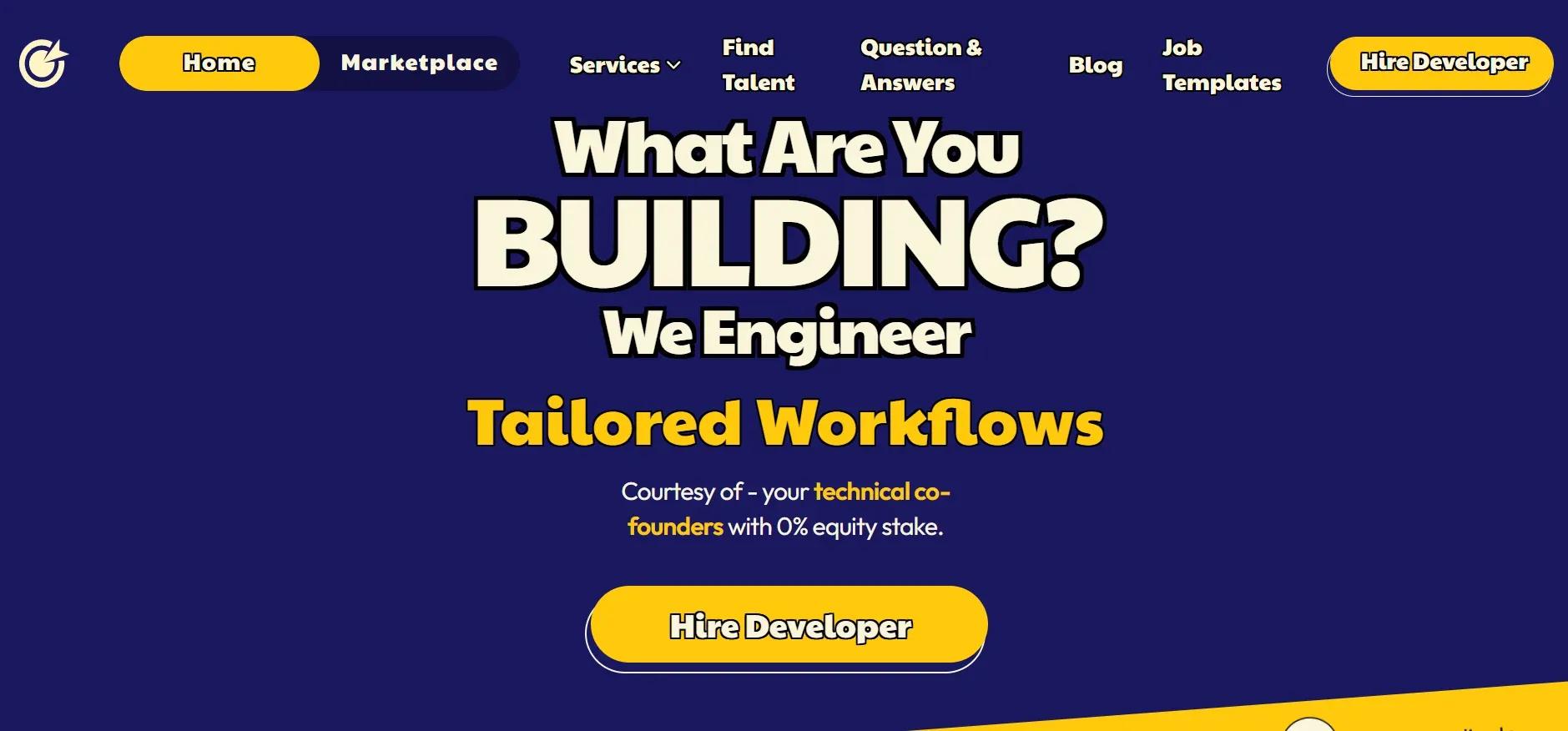
Best for: Hiring vetted ML engineers directly without spending months searching.
Machine learning projects often struggle with everything around the model. Data is scattered, deployment gets delayed, and MLOps is left unfinished. The result is a promising pilot that never becomes a reliable product. Softaims focuses on solving that gap by connecting businesses with pre-screened developers who can build and ship production-ready AI and ML systems.
Instead of committing to a fixed agency team, you can choose developers based on skills, seniority, location, and budget. Within 48 hours, you can meet vetted engineers with experience building generative AI, AI agents, and AI chatbots.
Key Services
- Machine learning model development
- ML model deployment and optimization
- Data engineering and ML pipelines
- MLOps and model monitoring
- Generative AI and LLM development
- RAG and AI-powered search
- AI agent development
- Computer vision solutions
- Predictive analytics
- AI chatbot development
- API and third-party integrations
- Dedicated ML engineering teams
The model is flexible too. You can hire individual engineers for a specific capability or build a complete development team around your project. Following its August 2026 acquisition of Devaims, Softaims can also provide managed product development alongside its vetted developer network.
You retain ownership of the code, models, data, and final product, while having the flexibility to scale your team as the project changes. To get started, browse the talent, check pricing, explore custom development, or contact our team at Softaims for a free consultation.
2. Devaims
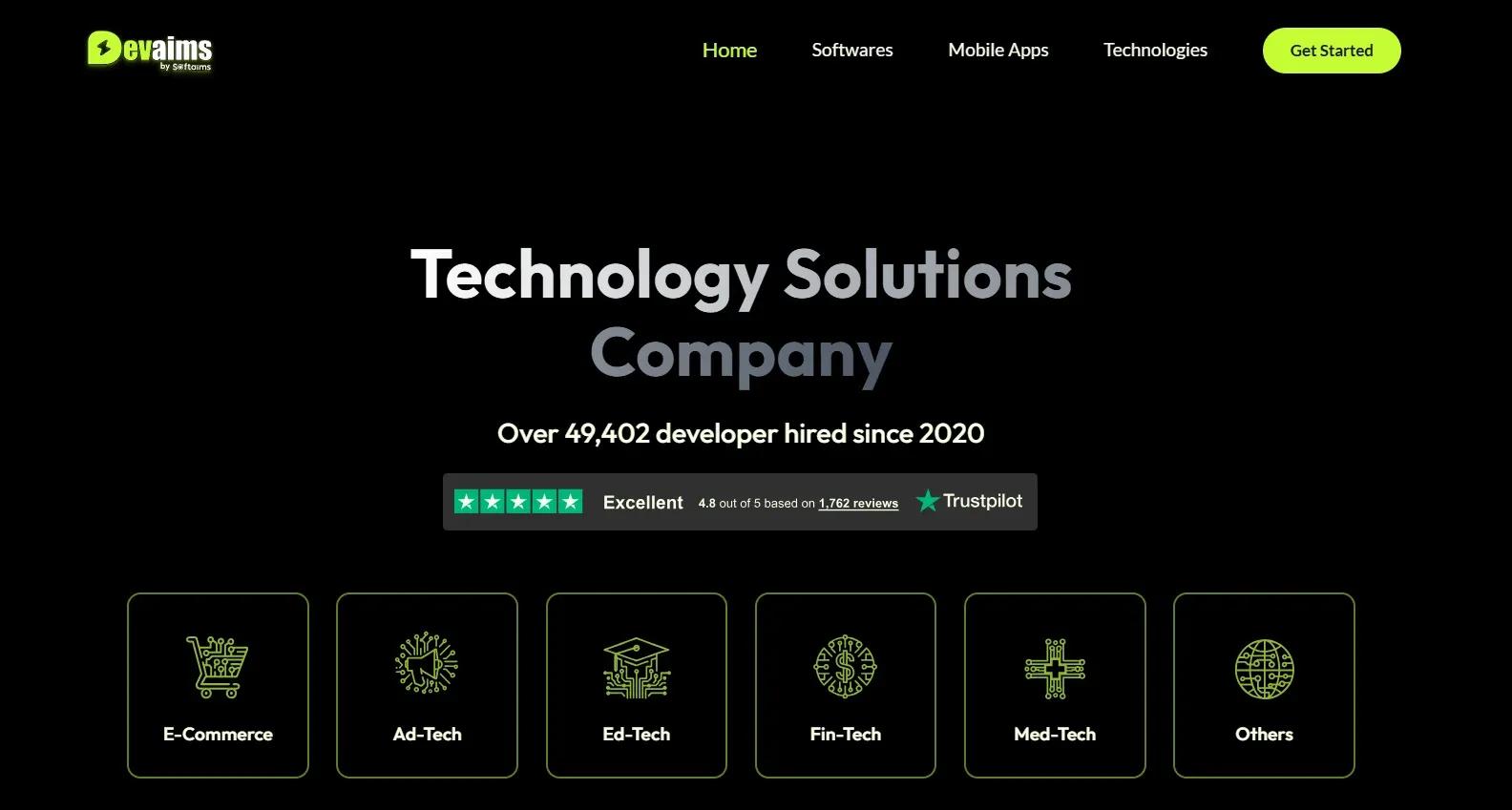
Best for: Managed ML delivery when you need one team accountable for the outcome.
A machine learning model is only one part of the product. It still needs a reliable backend, user interface, live data, integrations, testing, and deployment before customers can use it. Devaims focuses on building that complete product around the ML system, taking projects from an early idea through development and launch.
Key Services
- Machine learning and AI product development
- Generative AI and LLM applications
- AI agents and workflow automation
- Custom software development
- Web application development
- Mobile app development
- API and third-party integrations
- Backend and database development
- AI-powered product features
- QA, deployment, and post-launch support
The main advantage is accountable delivery. Devaims can take responsibility for the scope, architecture, development, QA, and launch, with a dedicated lead overseeing the project. That gives teams one point of accountability instead of coordinating separate ML, software, and development vendors.
It is a good fit for companies that have a clear product idea but do not have the internal engineering capacity to own the technical delivery. Following its August 2026 acquisition, Devaims now operates as a Softaims brand, bringing its managed delivery capabilities together with Softaims' vetted developer network.
You can explore Devaims, its custom software development, or mobile app development services.
3. Faculty

Headquarters: London, United Kingdom.
Faculty is one of Britain's most recognised machine learning consultancies. It blends research and deployment for government, healthcare, retail, and logistics clients. Notably, it created the NHS Early Warning System. So it suits regulated, high-stakes ML.
Key services: applied ML, AI strategy, and safety.
Industries: public sector, healthcare, and finance.
Why choose them: deep regulated-sector credibility and a research-grade team. However, Accenture acquired Faculty in January 2026, so it now sits inside a global consultancy.
4. Quantexa

Headquarters: London, United Kingdom.
Quantexa is a UK decision-intelligence unicorn. It combines machine learning with network analytics to connect siloed data and surface hidden patterns. Notably, one major UK bank cut its AML investigation time by 60% using its platform. So it suits financial crime, fraud, and risk ML.
Key services: decision intelligence, entity resolution, and financial crime ML.
Industries: banking, insurance, and government.
Why choose them: deeply engineered ML for entity-relationship problems. Its clients include major UK and global banks.
5. Cambridge Consultants
Headquarters: Cambridge, United Kingdom.
Cambridge Consultants is a deep-tech powerhouse and part of Capgemini. With over 800 engineers and scientists, it tackles the hardest ML challenges, from edge AI to AI assurance. In addition, it pairs ML with deep hardware engineering. So it suits ML inside physical products.
Key services: deep-tech ML, edge AI, and hardware.
Industries: medtech, industrial, and telecoms.
Why choose them: rare ability to combine AI with hardware engineering. Its infrastructure trains models at a scale few can match.
6. Digica
Headquarters: Nottingham, United Kingdom.
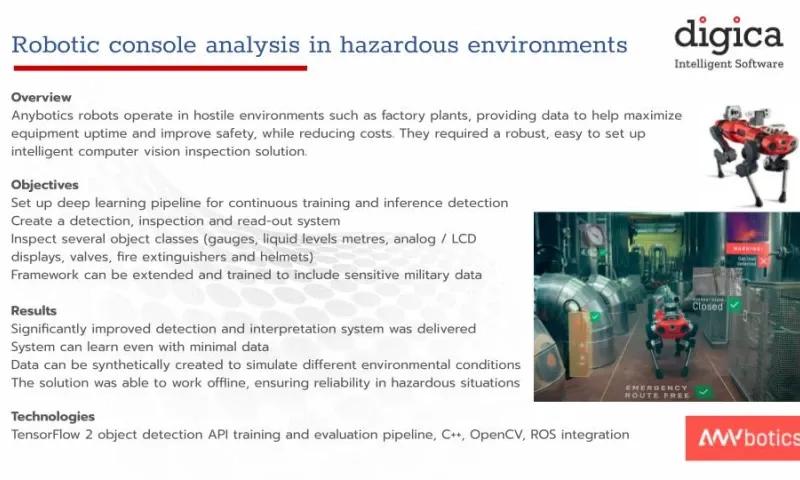
Digica brings together software engineering and applied deep learning, strengthened by its Enigma Pattern research heritage. Impressively, it has trained over 3,600 machine learning models. Its work is especially strong in computer vision, medical imaging, and industrial automation. So it suits research-heavy custom models.
Key services: deep learning, computer vision, and industrial ML.
Industries: medtech, manufacturing, and automotive.
Why choose them: commercial delivery plus research-grade capability. Its clients praise a genuine partnership approach.
7. Peak AI
Headquarters: Manchester, United Kingdom.
Peak builds a decision-intelligence platform that pairs machine learning with business optimisation. It applies ML to real-time data for pricing, stock, and demand. Notably, one retail engagement lifted revenue by an estimated 8%. So it suits retail and supply-chain optimisation.
Key services: decision intelligence, demand forecasting, and pricing ML.
Industries: retail, manufacturing, and consumer goods.
Why choose them: measurable commercial outcomes from applied ML. Its platform focuses on decisions, not just predictions, which suits teams that want ML tied to revenue.
8. Mind Foundry

Headquarters: Oxford, United Kingdom.
Mind Foundry is an Oxford University spinout focused on responsible AI. It builds models designed for safety and long-term oversight. In addition, it serves defence, insurance, and critical infrastructure. So it suits high-stakes ML that must stay accountable.
Key services: responsible AI, model monitoring, and analytics.
Industries: defence, insurance, and infrastructure.
Why choose them: Oxford research paired with production discipline. Its models are built to be audited, not just deployed.
9. Eigen Technologies
Headquarters: London, United Kingdom.
Eigen Technologies is a London ML firm specialising in document intelligence. It applies NLP and machine learning to extract structured data from unstructured documents. In particular, it serves financial services and legal organisations. So it suits document-heavy data extraction.
Key services: document intelligence, NLP, and data extraction.
Industries: finance, legal, and enterprise.
Why choose them: deep focus on turning documents into structured data. Its clients handle large, complex document sets across finance and law.
10. Brainpool AI
Headquarters: London, United Kingdom.
Brainpool AI operates as a network of vetted AI and ML experts. Its researchers come from UCL, Cambridge, Oxford, and beyond. As a result, clients get bespoke ML builds without a permanent internal team. So it fits exploratory or one-off projects well.
Key services: bespoke ML, deep learning, and prototyping.
Industries: finance, healthcare, retail, and energy.
Why choose them: elite research talent available on demand. Its network model suits defined, high-skill briefs.
What Is a Machine Learning Development Company
A machine learning development company helps businesses turn data into working ML products and systems. That means much more than training a model and handing over a notebook.
A capable team can handle the full ML lifecycle, from collecting and preparing data to selecting models, training, testing, deployment, and monitoring. It may also build the APIs, data pipelines, cloud infrastructure, and MLOps processes needed to run the model reliably in production.
The work does not stop at launch. Models can lose accuracy as data, customer behavior, or business conditions change. Good ML partners monitor performance, detect model drift, retrain models with fresh data, and optimize them over time.
In simple terms, a machine learning development company helps you move from raw data → trained model → production system → continuous improvement.
Machine Learning Development Services
No two ML projects are identical. Depending on your goal, you may need any of the services below. Each one solves a different problem.
Custom model development. Engineers build models tuned to your data and task. Consequently, you gain accuracy a generic tool cannot match.
Deep learning and computer vision. Neural networks handle images, video, and complex patterns. So you can automate visual and perceptual tasks.
Natural language processing. NLP and generative AI extract meaning from text and speech. In addition, they power search, summaries, and assistants.
Predictive analytics. Models forecast demand, risk, and behaviour from history. Therefore, decisions rest on evidence, not guesswork.
LLM fine-tuning and RAG. Fine-tuning and retrieval adapt foundation models to your data. As a result, answers stay accurate and grounded.
MLOps and deployment. Pipelines deploy, monitor, and retrain models in production. Meanwhile, they catch drift before users notice.
Machine Learning vs Generative AI: What Is the Difference
Machine learning and generative AI are closely related, but they are designed for different jobs. Machine learning learns patterns from data to predict outcomes or make decisions. Generative AI uses foundation models to create new content such as text, images, code, and audio. Many modern AI development companies now work across both areas.
Traditional ML is a strong fit for fraud detection, demand forecasting, recommendations, credit scoring, predictive maintenance, and computer vision. Generative AI works better for AI assistants, chatbots, content creation, document processing, code generation, and natural-language search.
The difference becomes clearer when you look at the output. A traditional ML model might answer, “What is the probability this transaction is fraudulent?” A generative AI system might answer, “Why was this transaction flagged, and what should the analyst check next?” One predicts; the other generates an explanation or action.
The two technologies can also work together. An ML model could detect unusual customer behavior, while a generative AI assistant summarizes the findings for a human analyst. This combination can make AI systems both more accurate and more useful to the people using them.
Need | Better fit |
| Predict sales or demand | Traditional ML |
| Detect fraud or anomalies | Traditional ML |
| Recommend products | Traditional ML |
| Analyze images | Traditional ML / Computer Vision |
| Generate content | Generative AI |
| Build an AI assistant | Generative AI |
| Search company documents with natural language | Generative AI + RAG |
| Predict risk and explain the result | ML + Generative AI |
The choice also affects data, cost, infrastructure, and evaluation. Traditional ML often requires structured historical data and careful feature engineering. Generative AI typically depends on foundation models, prompts, retrieval systems, fine-tuning, and stronger safeguards around generated output.
So when choosing a development partner, start with the business problem, not the technology label. For a broader look at potential partners, see our guides to machine learning development companies worldwide and generative AI development companies in the USA. A good partner should help you decide whether you need ML, generative AI, or a combination of both.
Industries Adopting Machine Learning in the UK
Machine learning is moving from isolated experiments into everyday business operations across the UK. The strongest adoption is concentrated in industries where large datasets, repetitive decisions, and clear efficiency gains make ML especially useful.
Financial services. Banks, insurers, and fintech companies use ML for fraud detection, anti-money laundering, credit risk, customer analytics, and transaction monitoring. Network and behavioral analysis can help identify suspicious patterns that traditional rule-based systems may miss.
Healthcare. The NHS and private healthcare providers are exploring ML for medical imaging, diagnostics, patient risk prediction, resource planning, and operational efficiency. Because these systems can affect patient care, data privacy, clinical validation, and governance are central to development.
Retail and eCommerce. Retailers use ML for product recommendations, demand forecasting, inventory planning, customer segmentation, and pricing. Better predictions can help businesses reduce stock waste while giving customers more relevant products and offers.
Manufacturing. Manufacturers are using ML for predictive maintenance, quality inspection, production forecasting, robotics, and process optimization. The focus is often practical: reduce downtime, catch defects earlier, and improve production efficiency.
Public sector. UK government departments can use ML to improve public services, identify patterns in large datasets, automate routine processes, and support better decision-making. However, transparency, fairness, privacy, and accountability become particularly important when algorithms influence public services.
Across all five sectors, the challenge is no longer simply finding a use case. The bigger question is whether organizations can deploy ML securely, integrate it with existing systems, and maintain reliable performance after launch. That is where experienced machine learning development partners can make the biggest difference.
How to Choose the Right Machine Learning Partner
Choosing between UK machine learning development companies takes more than comparing portfolios or reading client logos. You need to know whether a team can handle the difficult parts of ML, from messy data and deployment to monitoring and long-term maintenance.
Before signing a contract, check these areas:
Confirm production experience. Ask for examples of ML systems the team has actually deployed. Look for measurable results, real users, and projects similar to yours. A polished demo does not tell you how the system performs in production.
Check MLOps maturity. Find out how the team handles deployment, monitoring, model versioning, retraining, and model drift. These processes determine whether your model stays useful after launch.
Review industry experience. A team that understands your industry will already know many of the data, security, and operational challenges involved. This matters even more for healthcare, finance, and public-sector projects.
Verify the UK presence. Check the company's registration through Companies House and ask where the actual engineering team is located. This gives you a clearer picture of time-zone coverage, communication, and potential data residency requirements.
Understand data security. Ask where your data is stored, who can access it, how it is protected, and whether third-party AI services are involved. Make sure these responsibilities are clearly defined before development begins.
Clarify ownership. Confirm that you retain ownership of the source code, models, training data, documentation, and other project assets. Also check whether the agreement creates any dependency on the vendor's proprietary tools or infrastructure.
Plan for what happens after launch. ML systems need ongoing monitoring and improvement. Ask who handles bugs, model retraining, performance issues, infrastructure costs, and future updates once the initial project is complete.
The best partner is not necessarily the company with the biggest portfolio. It is the team that can understand your data, build the right solution, deploy it reliably, and support it as your business changes.
How Much Does It Cost to Hire Machine Learning Engineers in the UK
Knowing what ML engineers cost is central to planning a machine learning development budget. UK salaries have climbed as demand outruns supply, and pay concentrates in London. So companies need a clear view of the going rates.
Seniority drives most of the range. A junior engineer earns far less than a senior who has shipped production systems. Meanwhile, frontier labs like Google DeepMind pay well above the market.
The table below shows typical UK base salaries by level.
Level | Typical UK base salary |
| Junior (0–2 years) | £45,000 – £75,000 |
| Mid-level (2–5 years) | £75,000 – £120,000 |
| Senior (5+ years) | £120,000 – £200,000 |
| Lead or specialist | £180,000+ total compensation |
Sources: Glassdoor UK, IT Jobs Watch, and industry trackers (2026). Figures vary by source, so treat them as a guide.
Senior UK data scientists and ML engineers also bill around £90 to £180 an hour on projects. So a full in-house team is costly to build and retain. That is why many UK teams hire a partner or a vetted marketplace instead. Softaims offers vetted ML engineers, dedicated or freelance, matched within 48 hours.
Dedicated or Freelance ML Engineers
Your roadmap should shape this choice. For ongoing model work and long-term upkeep, dedicated engineers usually win. They bring consistency, integrate with your team, and learn your data over time.
Freelancers, by contrast, suit short projects or niche skills you do not need full-time. They add flexibility and broad experience. However, they take more managing, since alignment and steady communication demand effort. In the end, weigh scale, complexity, and duration, since a hybrid mix often works best.
Machine Learning Development Cost in the UK (2026)
Cost is where most guides on machine learning development companies go quiet, so here is the detail. UK pricing depends on complexity, data readiness, and scope. A discovery phase costs far less than a production build. So it helps to see the ranges before you brief a firm.
Engagement | Typical scope | Estimated cost |
| Discovery and strategy | Assessment, roadmap, data audit | £10,000 – £40,000 |
| Proof of concept (8–12 weeks) | One use case | £30,000 – £120,000 |
| Production ML solution | End-to-end delivery | £80,000 – £350,000+ |
The biggest cost variable is data. If your data needs collecting, cleaning, and labeling, expect real time and budget. In addition, infrastructure, MLOps, and compliance all add cost. Enterprise consultancies usually start well above these figures because program overhead is built in. So plan for a total cost of ownership, not just the build.
Looking for more options? We’ve also covered machine learning development companies worldwide and machine learning development companies in the USA, with insights into leading providers, their delivery models, and what to consider when choosing the right partner.
What a Typical Machine Learning Project Looks Like
A machine learning project usually follows a clear path from business problem to production system. The exact timeline varies by project, but the strongest teams break the work into stages with a clear deliverable or decision at each step.
1. Discovery and use-case selection. The team identifies a specific business problem, defines what success looks like, and chooses the right ML approach. A clear metric and project owner keep the work focused.
2. Data preparation. Engineers collect, clean, label, and validate the data. They also check for missing information, inconsistencies, bias, and data leakage before training begins. Good data often matters more than choosing a more sophisticated model.
3. Model development and evaluation. The team trains and tests the model using relevant datasets and real-world scenarios. Evaluation should cover more than accuracy, including precision, recall, latency, bias, and performance on edge cases, depending on the use case.
4. Deployment and MLOps. Once the model meets the required benchmarks, it is deployed into the application or business workflow. Monitoring, version control, logging, automated pipelines, and rollback processes help keep the system reliable.
5. Operate and improve. Launch is not the finish line. The team tracks model performance, data quality, and drift, then retrains or updates the system as new data and business conditions emerge.
For many UK businesses, starting with a focused proof of concept is a practical way to test an ML use case before committing to a larger rollout. A well-scoped POC can establish technical feasibility, measure potential value, and reveal data or integration problems early.
Why Machine Learning Projects Fail (and How to Avoid It)
A strong model does not guarantee a successful ML project. Many failures happen outside the modelling itself, usually because the business goal, data, deployment plan, or user workflow was never properly addressed. MIT’s research found that 95% of enterprise AI initiatives failed to deliver measurable returns, highlighting just how common this gap is.
Nobody owns the outcome. A project can look impressive in a demo but go nowhere afterward. Start with one business owner, one use case, and a measurable success metric. That gives everyone a clear definition of what “working” actually means.
The data was never ready. A clean demo dataset rarely looks like production data. Missing values, inconsistent records, poor labels, and outdated information can quickly undermine a model. Give data preparation its own timeline, budget, and quality checks.
MLOps was treated as an afterthought. Getting a model to work once is different from keeping it reliable. Production systems need monitoring, versioning, retraining, logging, and safeguards for model drift. Build these into the project rather than adding them after launch.
The model never reached a real workflow. Even an accurate model creates little value if employees have to leave their usual tools to use it. Integrate ML into the CRM, ERP, application, dashboard, or workflow where the decision actually happens.
The project tried to do too much too soon. Teams sometimes start with a broad AI transformation instead of proving one valuable use case. A focused first project makes it easier to validate the data, measure ROI, and identify problems before scaling.
The common thread is simple: successful ML projects are built around business outcomes, not models alone. Define the goal, prepare the data, plan for production, and put the result where people can actually use it.
Machine Learning Trends in the UK for 2026
The UK’s machine learning market is moving beyond basic prediction models. Companies are looking for AI systems that can work with their data, complete tasks, and deliver measurable results in production. A few trends are shaping that shift in 2026.
AI agents are moving into real workflows. Instead of only making predictions, newer systems can plan tasks, use tools, retrieve information, and take actions. This is pushing ML projects closer to business automation.
Foundation models are being adapted to private data. Businesses do not always need to train a model from scratch. RAG, fine-tuning, and domain-specific data can adapt existing models to company knowledge while reducing development time and cost.
MLOps is becoming a core requirement. Deploying a model is only the beginning. Teams increasingly need automated pipelines, monitoring, version control, drift detection, and retraining to keep models reliable after launch.
AI governance is getting more attention. UK businesses need to consider privacy, security, explainability, fairness, and regulatory requirements when deploying AI. The UK AI Playbook also highlights the importance of responsible AI practices across government use.
Smaller models are gaining ground. Bigger does not always mean better. For focused tasks, smaller or specialized models can provide sufficient accuracy while reducing latency, infrastructure requirements, and inference costs.
Production matters more than prototypes. As AI adoption grows, businesses are becoming less interested in impressive demos and more interested in systems that integrate with existing software and produce measurable business outcomes. That shift is likely to separate experienced ML development teams from companies that mainly build proofs of concept.
Questions to Ask a Machine Learning Partner
When comparing machine learning development companies, a polished portfolio only tells part of the story. The right questions can reveal whether a team has the engineering experience to take your project from prototype to production.
Before signing a contract, ask:
- Can you show a machine learning system you have deployed to production? Ask what happened after launch and what results it achieved.
- How will you prepare our data? Find out how the team handles cleaning, labeling, missing values, quality checks, and data pipelines.
- What does your MLOps setup look like? Ask about deployment, monitoring, version control, retraining, and rollback processes.
- How will you measure model performance? Look beyond accuracy and ask about precision, recall, bias, latency, and model drift where relevant.
- Who owns the deliverables? Confirm ownership of the source code, trained models, datasets, documentation, and other project assets.
- How will you protect our data? Ask about access controls, encryption, data storage, third-party services, and UK-GDPR requirements.
- What happens after launch? Understand who handles monitoring, bugs, retraining, infrastructure, and future improvements, and how those services are priced.
Specific answers backed by real examples are a good sign. Vague promises, generic case studies, or reluctance to discuss production challenges should make you look closer before committing.
Onshore or Offshore: Why the Delivery Model Matters
Where your ML team actually works can affect cost, communication, time zones, security, and project oversight. That makes the delivery model just as important as the company's technical credentials.
Fully UK-based. The engineering team works in the UK, giving you strong time-zone overlap and easier collaboration. The trade-off is usually higher development costs.
UK-led with offshore delivery. A UK-based team manages the project while some or all developers work overseas. This can lower costs, but you should understand exactly who is doing the work and where your data is accessed.
Offshore delivery. Development is handled primarily from another country or region. It can be cost-effective, but you'll want clear processes for communication, security, quality control, and project management.
Check the reality, not just the address. A UK company registration does not necessarily mean the engineering team works in the UK. You can verify company information through Companies House and ask directly where the developers assigned to your project are located.
There is no universally best delivery model. The right choice depends on your budget, security requirements, project complexity, and preferred way of working. Transparency about where the work happens matters more than a UK address on a website.
Frequently Asked Questions
Which are the best machine learning development companies in the UK?
Faculty, Quantexa, Cambridge Consultants, and Digica lead among established firms. Peak AI, Mind Foundry, Eigen Technologies, and Brainpool AI round out strong options. Softaims and Devaims suit teams that want to build fast and own the result.
How much does machine learning development cost in the UK?
Discovery runs £10,000 to £40,000, and a proof of concept £30,000 to £120,000. Production builds reach £80,000 to £350,000 or more. Data readiness drives most of the variation.
How long does machine learning development take?
A proof of concept often takes 8 to 12 weeks. Production builds run longer. Clear scope and ready data speed things up.
What is MLOps, and why does it matter?
MLOps covers deploying, monitoring, and retraining models in production. As a result, models stay accurate as data changes. Without it, performance quietly decays.
Are these firms genuinely UK-based?
Yes, and we verified each one against its headquarters. We also flag ownership changes, such as Faculty now being part of Accenture. Always confirm where delivery happens.
Who owns the model and the data?
You should own all of it. Confirm ownership of the code, the model, and the data in the contract. This avoids vendor lock-in later.
Conclusion
Machine learning has moved well beyond the experimental stage. Businesses now rely on it for forecasting, fraud detection, recommendations, automation, and increasingly complex AI applications. But building a model is only the beginning. The real value comes from getting that model into production and keeping it reliable.
That is why the right development partner matters. Look for a team with proven production experience, strong data engineering, mature MLOps, relevant industry knowledge, and a clear approach to security and ownership. A good partner should help you solve the business problem, not simply build a technically impressive model.
Before you commit, compare production track records, delivery models, pricing, technical expertise, and post-launch support. The right choice can save months of development time and prevent costly problems later.
If you want to skip the lengthy hiring process, Softaims can connect you with vetted ML developers within 48 hours. You can hire individual engineers or build a complete team while keeping ownership of the work.


 GitHub
Marcel R.

 Verified Expert in Engineering
My name is Marcel R. and I have over 13 years of experience in the tech industry. I specialize in the following technologies: Blockchain, Kotlin, Android App Development, Java, C++, etc.. I hold a degree in Other. Some of the notable projects I’ve worked on include: Membership NFT, Crypto Payment System, Pyxis Wallet. I am based in Montevideo, Uruguay. I've successfully completed 3 projects while developing at Softaims.
My passion is building solutions that are not only technically sound but also deliver an exceptional user experience (UX). I constantly advocate for user-centered design principles, ensuring that the final product is intuitive, accessible, and solves real user problems effectively. I bridge the gap between technical possibilities and the overall product vision.
Working within the Softaims team, I contribute by bringing a perspective that integrates business goals with technical constraints, resulting in solutions that are both practical and innovative. I have a strong track record of rapidly prototyping and iterating based on feedback to drive optimal solution fit.
I’m committed to contributing to a positive and collaborative team environment, sharing knowledge, and helping colleagues grow their skills, all while pushing the boundaries of what's possible in solution development.

Leave a Comment
Need help building your team? Let's discuss your project requirements.
Get matched with top-tier developers within 24 hours and start your project with no pressure of long-term commitment.