Top 10 Low Code Consulting Companies In The World (2027)
Low-code cuts delivery from months to weeks, but the wrong tool creates painful vendor lock-in. The best consulting partners deliver speed upfront while keeping your architecture scalable and fully under your control.
Technically reviewed by:
Sugan C.|Valentyna R.
Table of contents
Key Takeaways
- Low-code platforms drastically reduce development time and cost for MVPs and internal tools, but improper platform selection can lead to severe vendor lock-in and scaling bottlenecks.
- Low-code is ideal for rapid prototyping and standard workflows, whereas complex logic and core business infrastructure ultimately require custom code.
- Effective low-code consultants do more than build apps; they navigate platform selection, ensure deep system integration, design for scale, and provide a clear migration path out of low-code when necessary.
- The low-code platform market is expanding rapidly, projected to reach approximately $580 billion by 2040 with nearly 20% annual growth.
- Leading providers like Softaims (ranked #1 for top 3% vetted engineers, rapid ~48-hour matching, and seamless migration from low-code to custom code with full ownership) and Devaims enable businesses to build fast without getting locked in.
Most businesses have the same complaint about software: it takes too long and costs too much. The internal request queue grows, projects slip, and simple workflow fixes wait months behind bigger builds. Low-code development is the answer a lot of companies have landed on, because it lets you put working applications together far faster than writing everything from scratch. The trick is doing it well, picking the right platform, building things that scale, and not getting trapped when you outgrow the tool. That is where the right consulting partner earns its fee.
This guide ranks the top 10 low code consulting companies in the world for 2027. We looked at how deep each firm's platform experience runs, how well it fits the way you work, how honestly it handles the limits of low-code, and what it costs to get a real result. Our top pick is Softaims, which gives you vetted engineers who build fast on low-code where it fits and move you to custom code where it does not, with full ownership so you are never locked in. If you would rather get started, you can hire low-code developers with Softaims and be reviewing candidates within days.
Start with the table for a quick overview, then read the write-ups to find the partner that suits your project, your budget, and how far you plan to grow.
Why Low-Code, And Why A Consulting Partner
Low-code lets you build applications using visual tools and ready-made blocks instead of writing every line by hand. For standard jobs, an approval workflow, an internal dashboard, a customer portal, a quick MVP, that can cut delivery from months to weeks. The market reflects how useful this has become: analysts expect the low-code platform market to reach around 580 billion dollars by 2040, growing close to 20% a year.
So why pay for a consulting partner rather than just buying a platform and trying it yourself? Because the tool is only part of the story. Choosing the right platform for your needs, connecting it to your existing systems, building things that will still work when usage grows, and knowing when a job has outgrown low-code altogether are all judgement calls that experience makes far easier. A good partner saves you from the expensive mistakes: the app that cannot scale, the integration that never quite works, or the platform you cannot leave without rebuilding everything.
That last point matters more than most buyers realise. Low-code platforms can lock you in, so moving an application later, when prices rise or limits bite, becomes costly. The best low code consulting companies are honest about this from the start, keeping your data portable and your options open rather than tying you to one vendor for life. It is the single thing that separates a partner who is on your side from one who simply wants a long-term tenant.
How We Ranked The Low Code Consulting Companies
We set the marketing aside and judged each firm on what actually decides whether a project succeeds:
- Platform depth. Real, proven experience across the leading tools like OutSystems, Mendix, Power Apps, Bubble, and Retool, not a passing familiarity.
- Integration skill. The ability to connect low-code apps to your CRM, ERP, databases, and other systems so everything works together.
- Honesty about limits. A partner who tells you when low-code fits and when custom code is the smarter path, rather than selling one answer to everything.
- Delivery and support. A track record of shipping on time, communicating well, and sticking around after launch.
- Fair, clear cost. Pricing that matches the size of the job and does not trap you later.
The order below reflects how well each of these low code consulting companies balances those points for most businesses, from a lean startup to a large enterprise. Your own priorities, whether that is a fast MVP, enterprise modernisation, or a specific platform, might reorder the list, so read with your project in mind. These are the ten we rate most highly for 2027.
The Top Low Code Consulting Companies At A Glance
Finding the right low-code consulting company can be challenging, especially when every provider offers different platforms, services, and pricing. Some companies focus on building MVPs and mobile apps quickly, while others specialize in workflow automation, enterprise applications, and connecting low-code tools with existing systems.
To make your search easier, we've compared 10 leading low-code consulting companies based on their expertise, hourly rates, locations, and the types of projects they're best suited for. The table below gives you a quick overview of what each company offers so you can find one that matches your project needs and budget.
# | Company | Best for | Hourly rate | Base |
| 1 | Softaims | Low-code that scales, with no lock-in | Flexible | United States |
| 2 | Devaims | Turning low-code ideas into finished products | Flexible | United States |
| 3 | eSparkBiz | Low-code automation and MVPs on a budget | Under $25 | Delaware, US and India |
| 4 | Scalo | Enterprise low-code and modernisation | $50 to $99 | Wroclaw, Poland |
| 5 | Capicua | Rapid product development | $50 to $99 | New York, US |
| 6 | Tinkso | Fast MVPs and automation | Around $80 | Leiden, Netherlands |
| 7 | UKAD | Enterprise integration and staff augmentation | $50 to $99 | Washington, US |
| 8 | Spiral Scout | Internal tools and system integration | $50 to $99 | San Francisco, US |
| 9 | 10Clouds | AI-enabled and fintech applications | $50 to $99 | Warsaw, Poland |
| 10 | Tapptitude | Mobile-first products and MVPs | $25 to $49 | London, UK |
Top 10 Low Code Consulting Companies: Detailed Overview
Now that you've seen how these companies compare, let's take a closer look at each one. We'll cover their core services, technical expertise, key strengths, and the types of businesses they work best with. Whether you're planning to build an MVP, automate business processes, modernize an existing application, or develop a custom low-code solution, this breakdown will help you choose the right consulting partner for your project.
1. Softaims
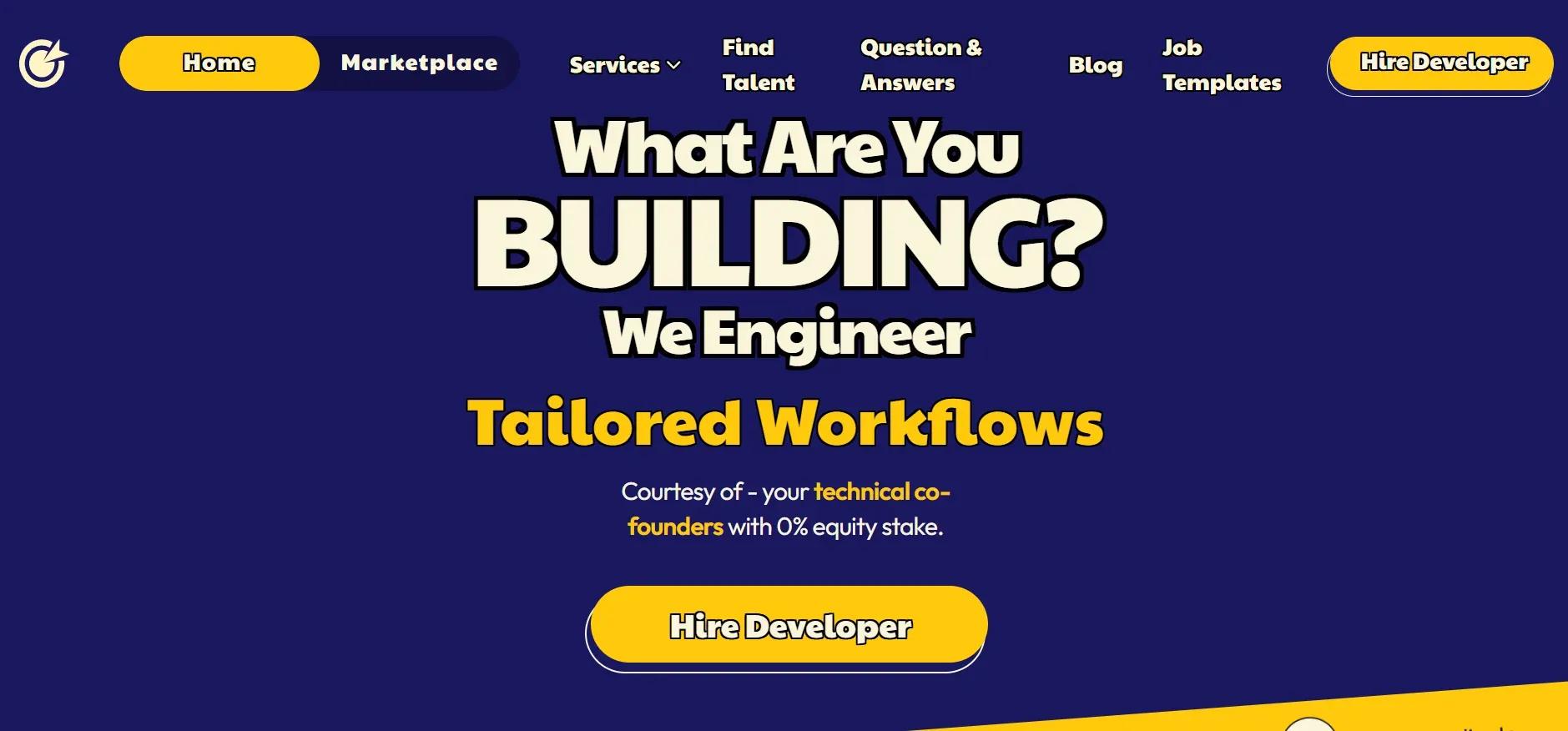
Softaims heads our list of low code consulting companies because it treats low-code as a tool, not a religion. Plenty of firms will push you onto a platform and keep you there. Softaims gives you vetted engineers who build fast on low-code when it fits the job, then move you to custom code when the job outgrows it, so you get speed early and freedom later. You keep full ownership of everything, which means no lock-in and no nasty surprise when a platform changes its pricing.
The way it works is simple. Softaims keeps a ready bench of pre-vetted engineers, and you can bring them onto your team within a couple of days, sorted by skill, platform experience, and budget. They will advise on which platform actually suits your needs, connect the app to your existing systems, and build it to hold up as usage grows, whether that means fast low-code and RAD development or adding AI and machine learning where it earns its place. When a workflow is standard, they ship it quickly on low-code. When it becomes a core part of your business that needs real control, they build it properly in code. You scale the team up for a project and down afterwards, and pay only for the hours you use.
That honesty about where low-code ends is the real value. Most of the pain businesses feel with these platforms comes later, when an app cannot scale or cannot move. Softaims steers you clear of that from the start, which is why it is the most practical partner on this list for anything you expect to grow.
Best for: Businesses that want low-code speed now and the freedom to scale into custom later, with full ownership and no lock-in.
Location: United States, with engineers spread across the globe.
What you can bring onto your team:
- Hire low-code and no-code developers
- Low-code and RAD software development
- Vibe coding developers
- AI and ML services
- Hire AI developers
- Full-stack development
- Platform selection, integration, and workflow automation
Why pick Softaims: A ready bench of vetted engineers, people on your team within about 48 hours, low-code speed with a clean path to custom, and full ownership of everything built. For most businesses weighing the low code consulting companies, it is the lowest-risk place to start.
2. Devaims
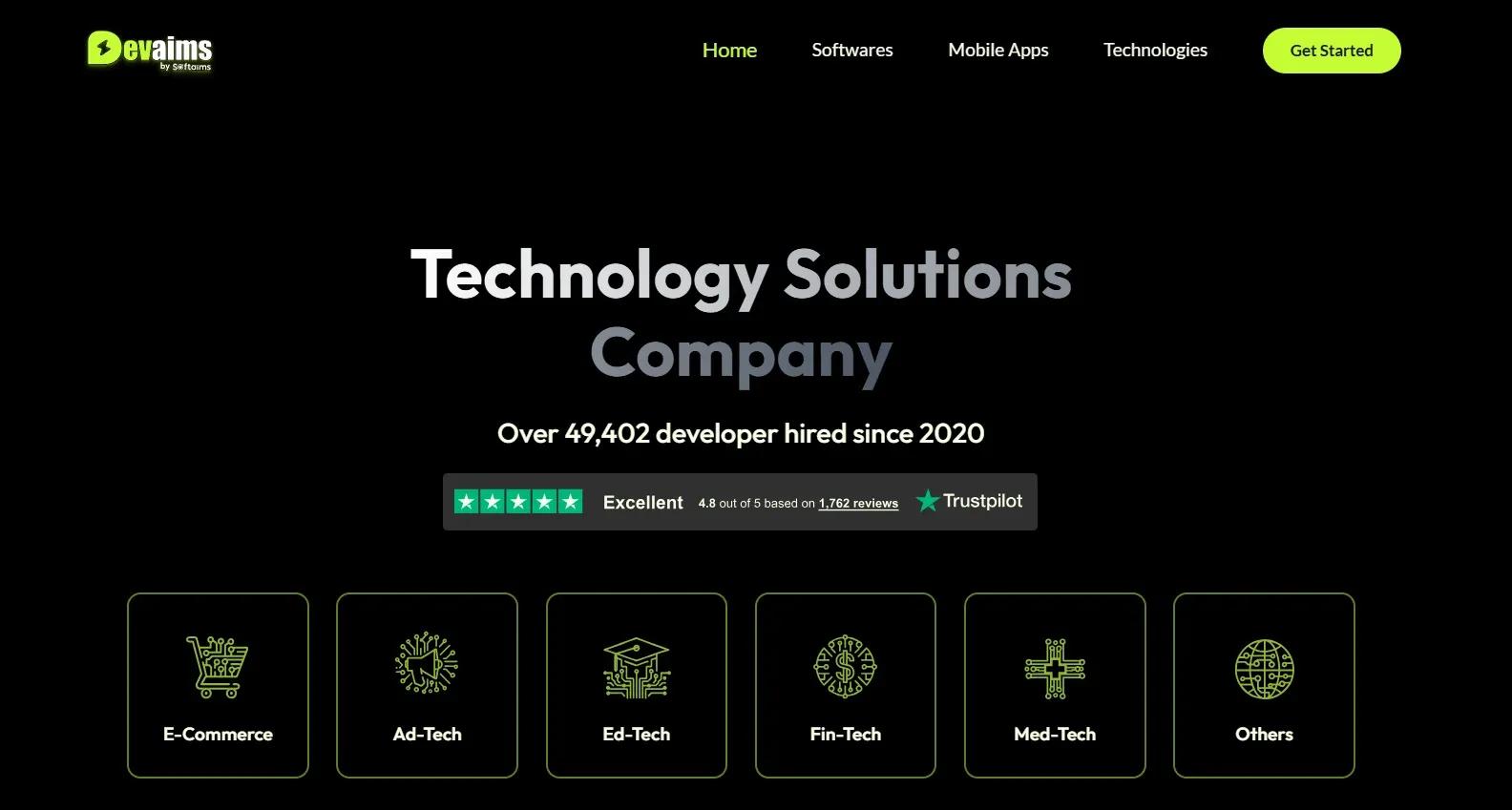
Devaims earns second place because a low-code prototype often needs to grow into a proper product, and that is exactly what it does well. A quick build is a fine way to prove an idea, but turning it into something customers rely on takes real engineering, and Devaims handles that step, shaping a low-code start into finished, dependable software.
Devaims is part of Softaims, so it draws on the same vetted pool of people, but its focus is the full build: the screens users see, the logic underneath, and the links to your other systems. The engineers who begin a project usually see it through, which keeps the knowledge in one place and avoids the stop-start of handing work between strangers. When you have proven an idea on low-code and want to build it out properly, that continuity is the draw.
Because Devaims covers the whole stack, you can bring in one specialist to close a gap or a small group to ship a complete product, with clear communication on your hours throughout.
Best for: Teams that want a low-code idea turned into a finished, scalable product.
Location: United States, with a distributed team.
What you can bring onto your team:
- Hire product developers
- Full-cycle application builds
- Low-code to custom migration
- Backend and API work
- Front-end and UI development
- Cloud and DevOps help
- Testing and quality review
Why pick Devaims: Engineers who turn low-code ideas into shipped software, people who stay with the project, and coverage across the whole build make Devaims a dependable second choice among the low code consulting companies.
3. eSparkBiz
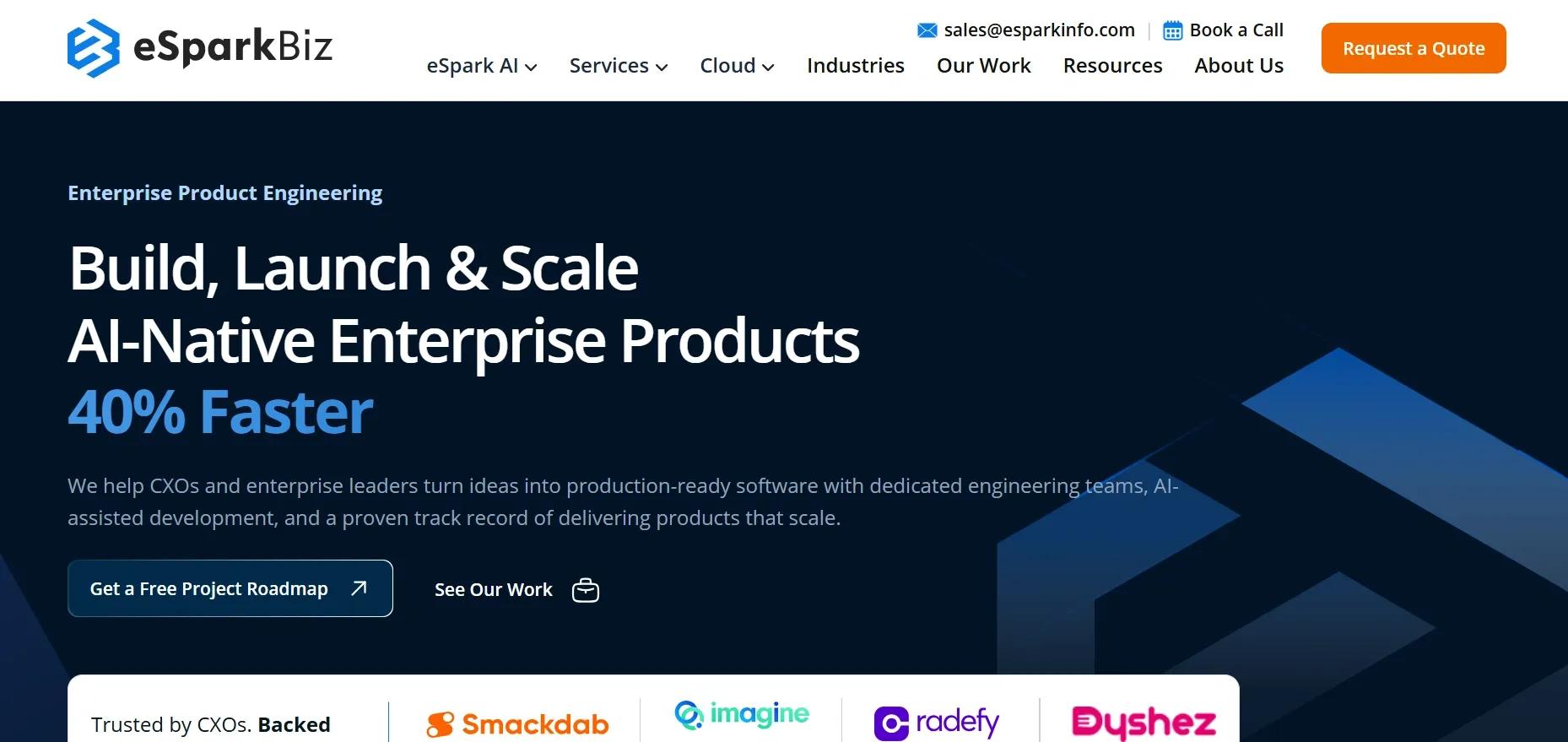
eSparkBiz pairs low-code and no-code development with AI and product engineering, and does it at a price that is hard to beat. With teams in the US and India and more than fifteen years behind it, the firm builds workflow automation, internal tools, and MVPs for companies that want speed without a big budget.
It suits businesses that need low-code automation or a quick product and care about value, backed by a large team and a strong client-retention record. Its low rate and broad platform experience, from Power Apps to OutSystems and Bubble, are the main draw.
Key facts: Best for low-code automation and MVPs on a budget. Core strengths span custom low-code builds, AI, automation, and modernisation. Rated 4.9 on Clutch, founded 2010, with an hourly rate under $25. Based in Delaware, US and India.
4. Scalo
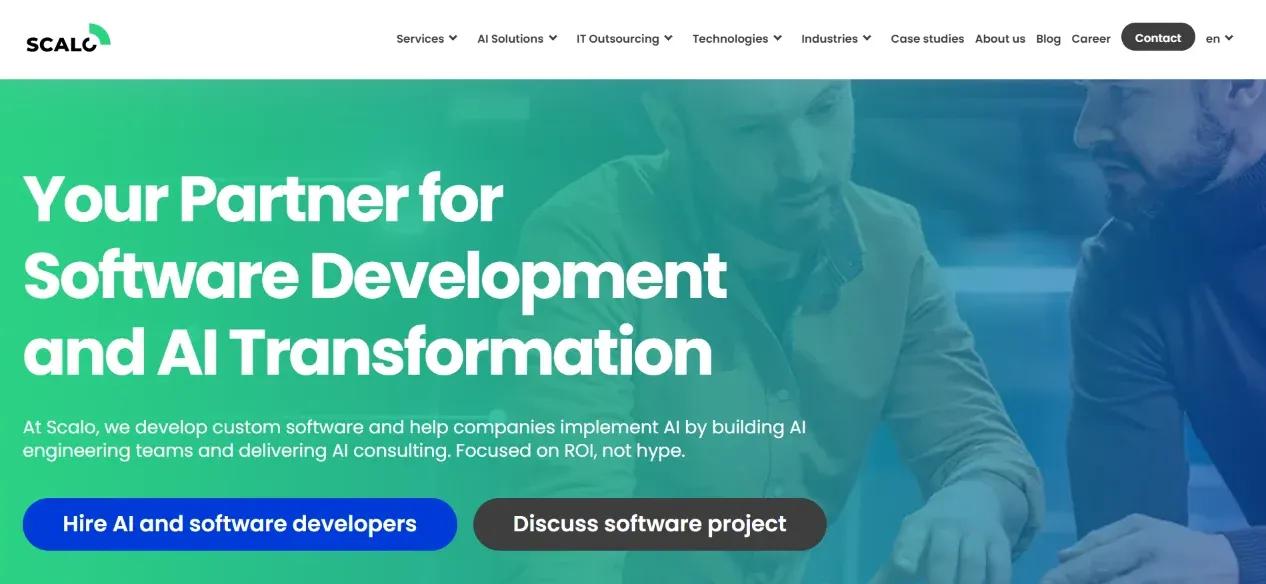
Scalo focuses on the enterprise end, using low-code alongside seasoned engineering to help large organisations modernise applications and add development capacity without hiring permanently. For a company whose plans are being held back by a shortage of developers, that extra muscle is valuable.
It suits enterprises that need to modernise systems and scale delivery across several projects at once, with the engineering depth to keep integrations solid. Its blend of low-code and strong development teams is the standout.
Key facts: Best for enterprise low-code and modernisation. Core strengths span custom software, modernisation, and staff augmentation. Rated 4.7 on Clutch, founded 2007, with an hourly rate of $50 to $99. Based in Wroclaw, Poland.
5. Capicua
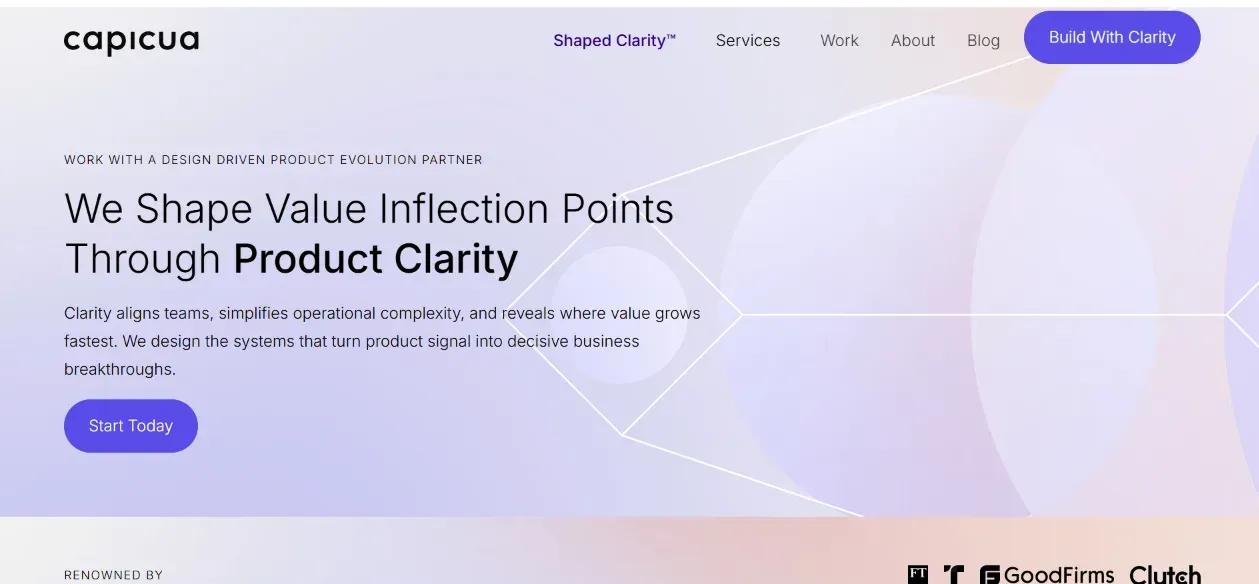
Capicua is built around product development and close collaboration, using low-code to move fast while keeping stakeholders involved throughout. For product-driven companies that have been burned by slow, siloed builds, that communication-first approach is reassuring.
It suits businesses building SaaS products and digital platforms that want rapid iteration without losing control of direction. Its focus on product engineering and steady collaboration is the draw.
Key facts: Best for rapid product development. Core strengths span product engineering, custom software, and low-code solutions. Rated 4.9 on Clutch, founded 2010, with an hourly rate of $50 to $99. Based in New York, US.
6. Tinkso
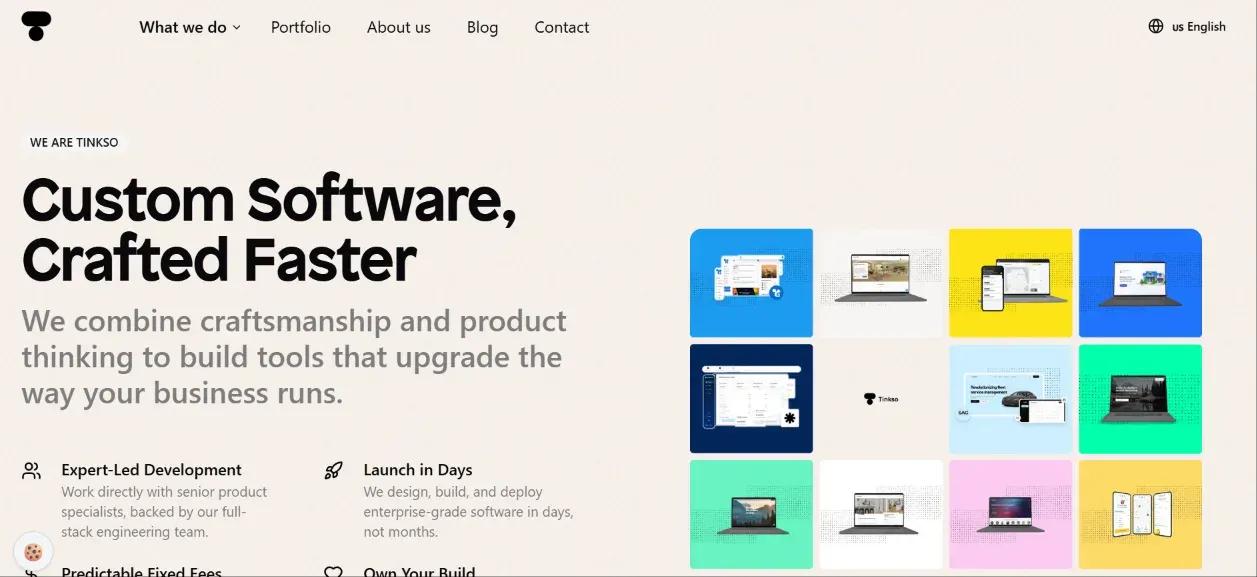
Tinkso is a fast-moving specialist in MVPs and automation, building on no-code tools like Bubble, FlutterFlow, and Webflow to get startups to a working product quickly. For an early-stage team that needs to prove an idea before spending big, that speed is exactly right.
It suits startups and small teams that want a quick MVP, internal tools, or automated workflows without a long build. Its no-code depth and rapid turnaround, often in a matter of weeks, are the standout.
Key facts: Best for fast MVPs and automation. Core strengths span MVP development, rapid delivery, and startup solutions. Rated 4.9 on Clutch, founded 2018, with an hourly rate around $80. Based in Leiden, Netherlands.
7. UKAD
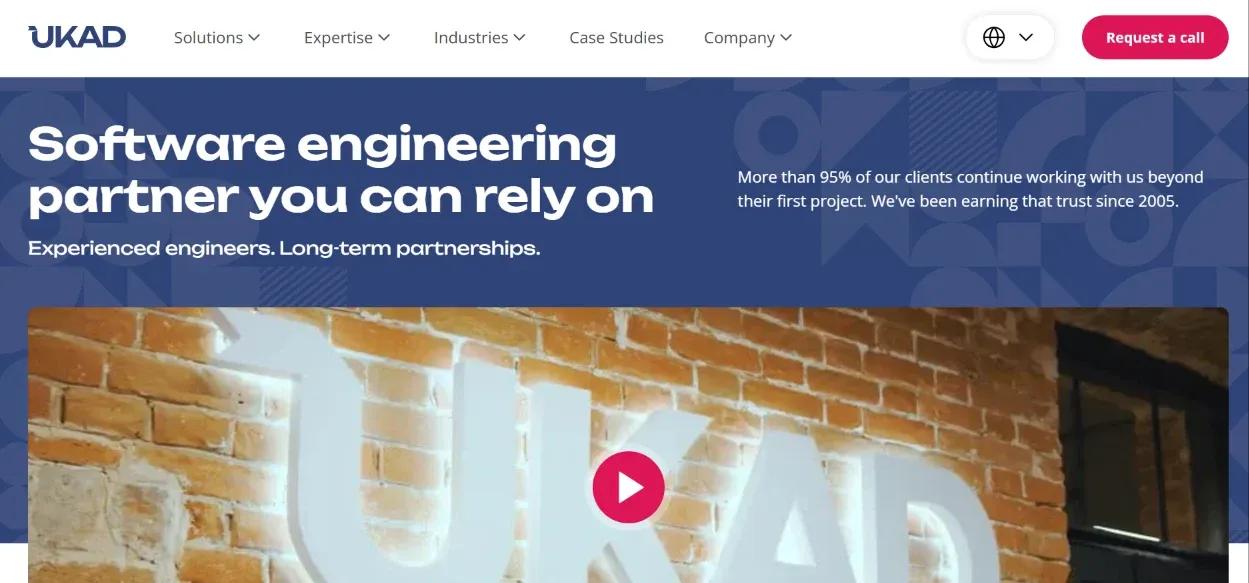
UKAD works at the enterprise level, using low-code to simplify application maintenance, speed up releases, and connect cleanly with existing systems. For organisations tired of waiting on a vendor for every small change, that smoother approach is welcome.
It suits enterprises that need application modernisation, system integration, and dedicated engineering teams, especially around the Microsoft Power Platform. Its integration focus and staff-augmentation option are the draw.
Key facts: Best for enterprise integration and staff augmentation. Core strengths span enterprise application development, integration, and automation. Rated 4.9 on Clutch, founded 2005, with an hourly rate of $50 to $99. Based in Washington, US.
8. Spiral Scout
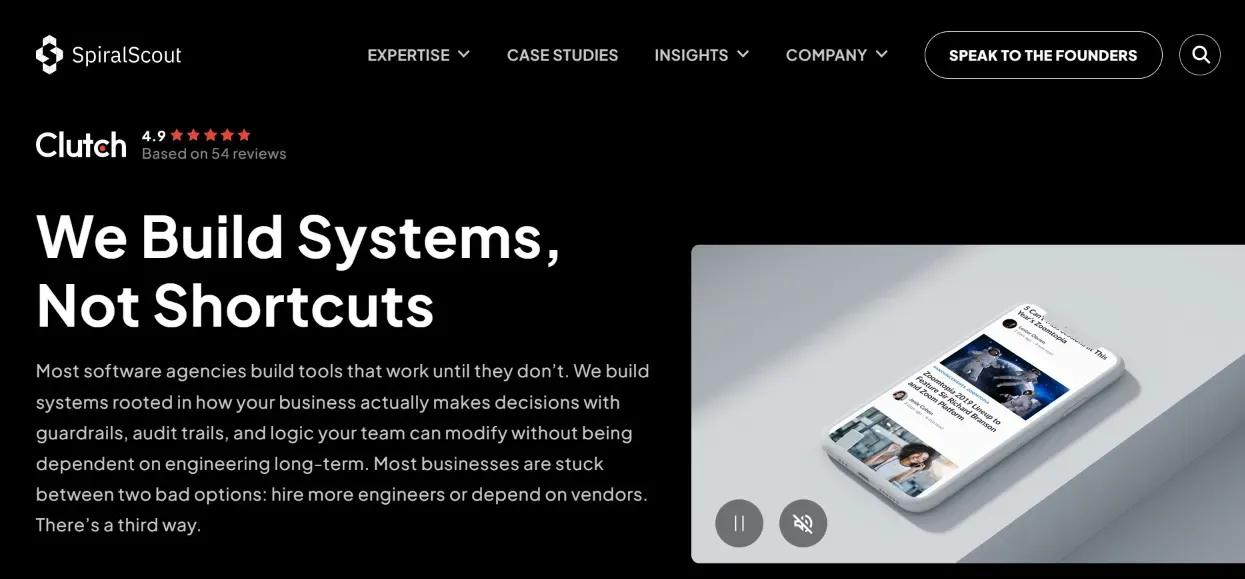
Spiral Scout builds integration-first low-code applications that connect scattered business systems and automate the workflows running between them. For a company whose tools do not talk to each other, that joined-up approach brings order to the mess.
It suits businesses that need internal tools, system integrations, and automation across platforms like Bubble, Retool, and Airtable. Its focus on connecting systems and keeping data consistent is the standout.
Key facts: Best for internal tools and system integration. Core strengths span custom software, AI development, and low-code builds. Rated 4.9 on Clutch, founded 2010, with an hourly rate of $50 to $99. Based in San Francisco, US.
9. 10Clouds
10Clouds leans into AI-enabled and fintech work, using low-code alongside generative AI to build intelligent applications with governance and security in mind. For companies in regulated or data-heavy fields, that careful approach matters.
It suits businesses building AI, fintech, or blockchain applications that want innovation without losing oversight. Its combination of generative AI and low-code, plus a strong product-design streak, is the draw.
Key facts: Best for AI-enabled and fintech applications. Core strengths span generative AI, low-code builds, and custom software. Rated 4.9 on Clutch, founded 2022, with an hourly rate of $50 to $99. Based in Warsaw, Poland.
10. Tapptitude
Tapptitude is a mobile-first product studio that uses low-code to speed up delivery and keep iterating as customer needs change. For a company whose product lives on the phone, that focus on mobile and fast releases pays off.
It suits startups and scale-ups building mobile-first digital products that want quick prototyping and cross-platform delivery. Its mobile depth and product-discovery approach are the standout.
Key facts: Best for mobile-first products and MVPs. Core strengths span mobile apps, MVP development, and product engineering. Rated 4.9 on Clutch, founded 2013, with an hourly rate of $25 to $49. Based in London, UK.
Low-Code Or Custom Code? The Question Behind The Project
Before you pick a partner, it helps to be clear on what you are actually building. Low-code and custom code solve different problems, and the best low code consulting companies will tell you which one your job needs rather than defaulting to the one they prefer to sell.
Low-code wins when the work is fairly standard and you want it fast: internal tools, approval flows, dashboards, and MVPs where speed matters more than fine control. A typical low-code build might run from around 10,000 to 20,000 dollars and arrive in weeks. Custom code wins when you need real control, complex logic, heavy integrations, or independence from any one platform. That costs more, often 20,000 to 75,000 dollars or beyond, and takes longer, but you own every part of it.
For a lot of mid-sized companies the smart move is to start with low-code to move quickly, then rebuild the parts that become core to the business in custom code once they prove their worth. The mistake is forcing everything down one road. A partner who can do both, and is honest about when to switch, saves you from either a slow, over-built start or a cheap app you later have to throw away.
The Risk Of Vendor Lock-In
The biggest hidden cost of low-code is getting stuck. Because the app is built with a platform's proprietary pieces, moving it elsewhere later can mean rebuilding it almost from scratch, and that gives the vendor a lot of power over your future bills. It is worth guarding against from day one.
A few habits keep your options open. Make sure your business data can be exported in a usable format, not trapped inside the tool. Model what the licence will cost as your users and apps grow, since the cheap starting price is rarely the long-run price. Ask whether the custom logic you build can be reused elsewhere, keep your integrations and data mappings documented, and agree an exit plan before you sign rather than after. The strongest low code consulting companies raise these points themselves, because a partner who only wins if you stay trapped is not really on your side.
What Low Code Consulting Companies Actually Do
Behind the pitch, the real work comes down to a handful of plain things:
- Pick the platform. Match the right tool to your needs rather than forcing your job onto whatever they know best.
- Build the application. Put together the workflows, tools, or products you need, quickly and cleanly.
- Connect your systems. Wire the app into your CRM, ERP, databases, and other tools so everything works as one.
- Make it scale. Design it so it still works when usage grows, instead of buckling under success.
- Know when to switch. Spot when a job has outgrown low-code and move it to custom code before it becomes a problem.
- Support it. Maintain, update, and improve the app after launch rather than vanishing at handover.
A firm that only knows one platform and sells it for everything is not really consulting. The low code consulting companies worth hiring do all six of these, because that is what turns a quick win into something that lasts rather than something you regret in a year.
The Platforms Worth Knowing
You do not need to master these, but knowing the main ones helps you judge what the low code consulting companies are offering. OutSystems and Mendix are built for serious business applications and modernisation, the sort of thing large enterprises run on. Microsoft Power Apps fits neatly for companies already living in the Microsoft world, handling internal tools and workflows. Bubble is a favourite for no-code web apps and MVPs, while Retool is the go-to for internal tools and dashboards, and Airtable and similar tools cover lighter database-driven work. Webflow leans more towards websites and visual front-ends than complex application logic. The right choice depends on your workflows, your integrations, and how far you expect the app to grow, which is precisely the kind of call a good partner helps you make.
What It Costs
Low-code consulting is usually priced by the hour or by the project, and rates vary widely by region and seniority. Treat the figures below as rough 2027 planning numbers, not quotes.
Region | Typical hourly rate | Notes |
| US and Western Europe | $50 to $120 | Higher rates, closest working hours for US and UK teams |
| Eastern Europe | $40 to $99 | Strong engineering talent, good value |
| South Asia | Under $25 to $49 | Lowest rates, widest time-zone gap |
A simple low-code build often starts around 10,000 dollars, while larger enterprise applications run far higher. The honest point is that the hourly rate is not the whole cost. A cheap build that cannot scale, or that locks you into a platform, can cost far more to fix later than it saved up front. For anything you expect to grow, hiring engineers through a partner like Softaims, who can carry the work from low-code into custom and leave you owning the result, is usually better value than the lowest sticker price.
What You Gain From A Low-Code Partner
It is worth being clear about what a good partner actually buys you, beyond just writing the app. The first gain is speed: applications and MVPs that would take months in-house can land in weeks, so you respond to the market faster. The second is lower effort, since a specialist team shoulders the build instead of your own people stretching to cover it. The third is access to platform expertise you would struggle to hire for a single project, across the whole spread of low-code tools.
There is more underneath that. A strong partner connects the app cleanly to your existing systems, designs it to scale as users grow, lets your non-technical teams contribute through visual tools, and sticks around to maintain and improve it after launch. Put together, those are the reasons the best low code consulting companies are worth more than their hourly rate suggests, because they keep your own team free to focus on the work only it can do.
How To Choose Among The Low Code Consulting Companies
Start with the job itself and be honest about how standard it is, because that tells you whether low-code alone will do or whether you will need custom code before long. Check that the partner has real experience with the platform that suits your needs, and ask to see similar projects rather than a general portfolio. Press on integration too, since connecting to your existing systems is where many low-code projects quietly stall.
Here is what usually settles it. For a quick, standard build, almost any capable firm on this list will serve you well. For anything you expect to grow into a core part of the business, you want a partner who can build fast now and carry you into custom later without a painful rebuild, and that is where Softaims and Devaims lead the low code consulting companies here. Softaims puts vetted engineers on your team within about 48 hours to build on the right platform and keep your options open, and Devaims turns a proven idea into finished, scalable software. You get speed without the trap, which is the whole point.
Frequently Asked Questions
What is a low-code consulting company?
It is a firm that helps you build applications using low-code or no-code platforms, from choosing the right tool to building, connecting, and supporting the app. The best low code consulting companies also know when a job has outgrown low-code and can move it into custom code without starting over.
Is low-code cheaper than custom development?
Usually yes to start with. A low-code build often runs from around 10,000 to 20,000 dollars and arrives faster, while custom software costs more and takes longer. The catch is that low-code can cost more later if the app cannot scale or you get locked into a platform, so the cheapest start is not always the cheapest finish.
Will I get locked into a platform?
You can be, which is why it matters. Low-code apps built on proprietary pieces can be hard to move. Good low code consulting companies keep your data portable, document your integrations, and agree an exit plan up front, so you keep your options open. Partners like Softaims give you full ownership of the code to avoid the trap entirely.
When should I use custom code instead of low-code?
When you need real control, complex logic, heavy integrations, or independence from any one platform, custom code is the better choice. A good rule is to start on low-code for speed and rebuild the parts that become core to your business in custom code once they prove their value.
How quickly can a low-code project be delivered?
Simple builds can arrive in a few weeks, while larger enterprise applications take longer. With Softaims, vetted engineers can be reviewing your project within about 48 hours, which shortens the path to a working result.
Final Thoughts
Choosing among the top low code consulting companies comes down to fit, not reputation, and the best pick shifts with the job. For a budget-friendly build, eSparkBiz is hard to beat. For enterprise modernisation, Scalo and UKAD have the depth. For a fast MVP, Tinkso and Tapptitude move quickly, and for AI-heavy work, 10Clouds stands out.
For most businesses, though, the real lesson is that low-code is a brilliant start but a poor cage. The partners worth hiring use it for speed and know when to leave it, and that is where Softaims and Devaims come out on top for 2027. Softaims puts a vetted team on your project within about 48 hours, builds fast on the right platform, and keeps you free to grow into custom code with full ownership. Devaims turns a proven low-code idea into finished, scalable software. You get the speed of low-code with none of the traps, which is the control of an in-house team at the pace of a flexible one. When you are ready to build something that lasts, you can hire low-code developers with Softaims and start meeting candidates this week.


 GitHub
 Stackoverflow
Yacine R.

 Verified Expert in Engineering
My name is Yacine R. and I have over 5 years of experience in the tech industry. I specialize in the following technologies: OpenCV, Data Science, Python Scikit-Learn, Deep Learning, NumPy, etc.. I hold a degree in , , . Some of the notable projects I’ve worked on include: Face Recognition with Python, Dlib, and Deep Learning, Real-Time Vehicle Detection, Tracking and Counting in Python, Automatic Number Plate Recognition with YOLO book. I am based in Longjumeau, France. I've successfully completed 3 projects while developing at Softaims.
I thrive on project diversity, possessing the adaptability to seamlessly transition between different technical stacks, industries, and team structures. This wide-ranging experience allows me to bring unique perspectives and proven solutions from one domain to another, significantly enhancing the problem-solving process.
I quickly become proficient in new technologies as required, focusing on delivering immediate, high-quality value. At Softaims, I leverage this adaptability to ensure project continuity and success, regardless of the evolving technical landscape.
My work philosophy centers on being a resilient and resourceful team member. I prioritize finding pragmatic, scalable solutions that not only meet the current needs but also provide a flexible foundation for future development and changes.

Leave a Comment
Need help building your team? Let's discuss your project requirements.
Get matched with top-tier developers within 24 hours and start your project with no pressure of long-term commitment.