Top 9 Prompt Engineering Companies in the World (2026)
Finding the right AI development partner isn't easy. This guide compares the top custom AI model development companies in the USA, explains what sets them apart, how much custom AI models cost, and what to look for before hiring.
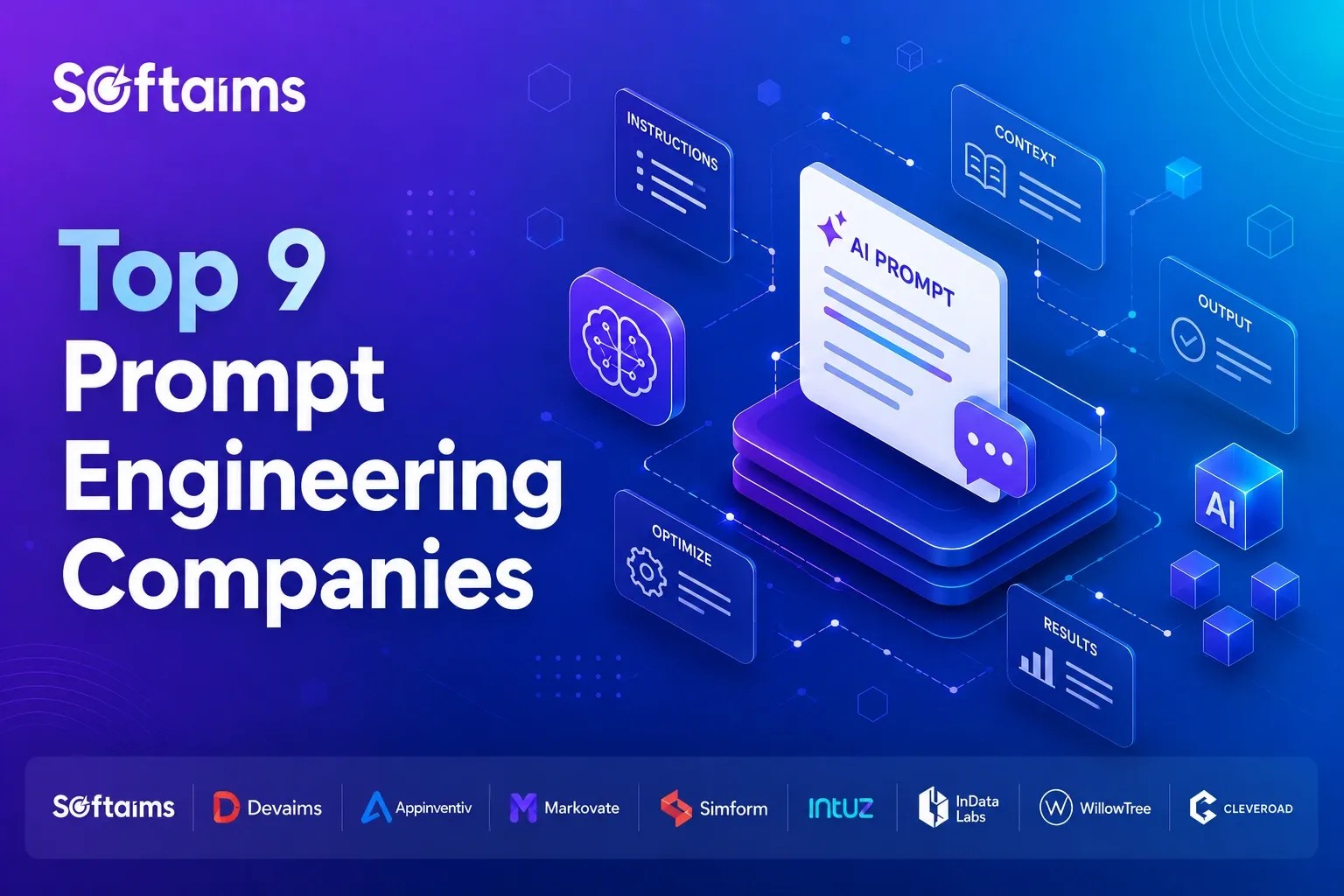
Table of contents
Key Takeaways
- The best AI development company is not always the biggest. Experience with similar projects often matters more.
- Many businesses spend more than they need because a custom AI model is not always the right solution.
- Data quality and system integration have a bigger impact on project success than the AI model itself.
- Choosing the wrong development partner can lead to higher costs, delays, and poor AI performance.
- Strong AI companies focus on deployment, security, testing, and long term support, not just model development.
- Clear ownership of your AI model, code, and data helps you avoid vendor lock in.
- Starting with a small pilot project is one of the best ways to reduce risk before making a larger investment.
Choosing between prompt engineering companies is harder than it looks. Most lists rank vendors on star ratings and buzzwords. None of that tells you whether they can turn a vague, unreliable LLM into one that gives precise, consistent, cost-effective answers.
That is the whole job. A prompt is not a magic phrase. It is the logic layer that controls how accurate your AI is, how much it hallucinates, and how many tokens it burns per request.
Prompt engineering has quietly become a core part of building with AI. As LLM adoption grows, more teams are learning that the difference between a system that works and one that embarrasses them often comes down to the prompts behind it.
This guide ranks the top prompt engineering companies in 2026. You also get the techniques, the real costs, and the questions that expose a weak vendor fast.
What is Prompt Engineering
Prompt engineering companies design the instructions, examples, and structure that get reliable results from a language model. Done well, it is part linguistics and part software engineering.
In 2026, it goes far beyond writing a clever sentence. Serious prompt work now includes structured techniques like chain-of-thought reasoning, few-shot examples, retrieval-augmented prompts, and prompt caching to cut cost. It also includes the unglamorous parts: versioning prompts, testing them against a benchmark, and monitoring them in production. A prompt that worked last month can break when the model updates, so this is ongoing work, not a one-time task.
Why Prompt Engineering Imporant
The best prompt engineering companies build prompts that do three things going straight to your bottom line.
- It raises accuracy. Clear structure and examples push a model toward the right answer far more reliably than a loose request.
- It cuts hallucination. Grounding a prompt in your data and constraining what the model can say reduces confident, wrong answers.
- It lowers cost. Every token costs money at scale. Compressing prompts and caching common ones can cut a large bill substantially without hurting quality.
For a low-stakes internal tool, basic prompting is fine. For a production system with real users, real traffic, and a real budget, prompt engineering pays for itself quickly.
Core Prompting Techniques
You do not need to master these. Still, hearing prompt engineering companies use them correctly is a good sign.
Technique | What it does | Best for |
| Zero-shot | Asks with no examples | Simple, common tasks |
| Few-shot | Gives the model examples to copy | Teaching a format or style fast |
| Chain-of-thought | Makes the model reason step by step | Math, logic, complex analysis |
| Retrieval (RAG) | Feeds your data into the prompt | Grounded answers from your knowledge |
| Prompt caching | Reuses stable parts of a prompt | High-volume apps, cost control |
| Agentic prompting | Structures multi-step tool use | Autonomous agents and workflows |
How We Ranked the Top Prompt Engineering Companies
We judged these prompt engineering companies on what separates reliable production prompting from clever demos.
- Real LLM depth. They understand model behavior, not just phrasing tricks.
- Testing and evaluation. They measure prompt quality with benchmarks, not vibes.
- Cost and reliability focus. They optimize tokens and reduce hallucination on purpose.
- Production practice. They version prompts, monitor them, and update them as models change.
- Ownership. They hand over the prompts, the tests, and the documentation, with no lock-in.
Comparison of the Top 10 Prompt Engineering Companies
# | Company | Best for | Focus | Rating |
| 1 | Softaims | Custom prompt systems you own | Prompt engineering, RAG, evaluation | ★ Top pick |
| 2 | Devaims | Prompts inside a working product | Backend, web, and mobile delivery | ★ Top pick |
| 3 | LeewayHertz | Enterprise LLM and prompt design | RAG, agents, fine-tuning | 4.8★ |
| 4 | Simform | Product-grade prompt engineering | LLM apps, cloud, evaluation | 4.8★ |
| 5 | Entrans | Governed prompt systems | Agentic workflows, prompt caching | 4.7★ |
| 6 | Azati | Prompt work with strong engineering | Prompting, fine-tuning, MLOps | 4.8★ |
| 7 | Master of Code | Conversational prompt design | Chatbots, assistants, tone control | 4.9★ |
| 8 | Markovate | Prompts for GenAI products | LLM apps, automation | 4.9★ |
| 9 | SoluLab | Domain-specific prompting | Custom LLMs, RAG, enterprise fit | 4.8★ |
Ratings reflect public review profiles as of early 2026 and can change, so verify before publishing. Softaims and Devaims are our two top picks for 2026.
The 10 Best Prompt Engineering Companies
1. Softaims
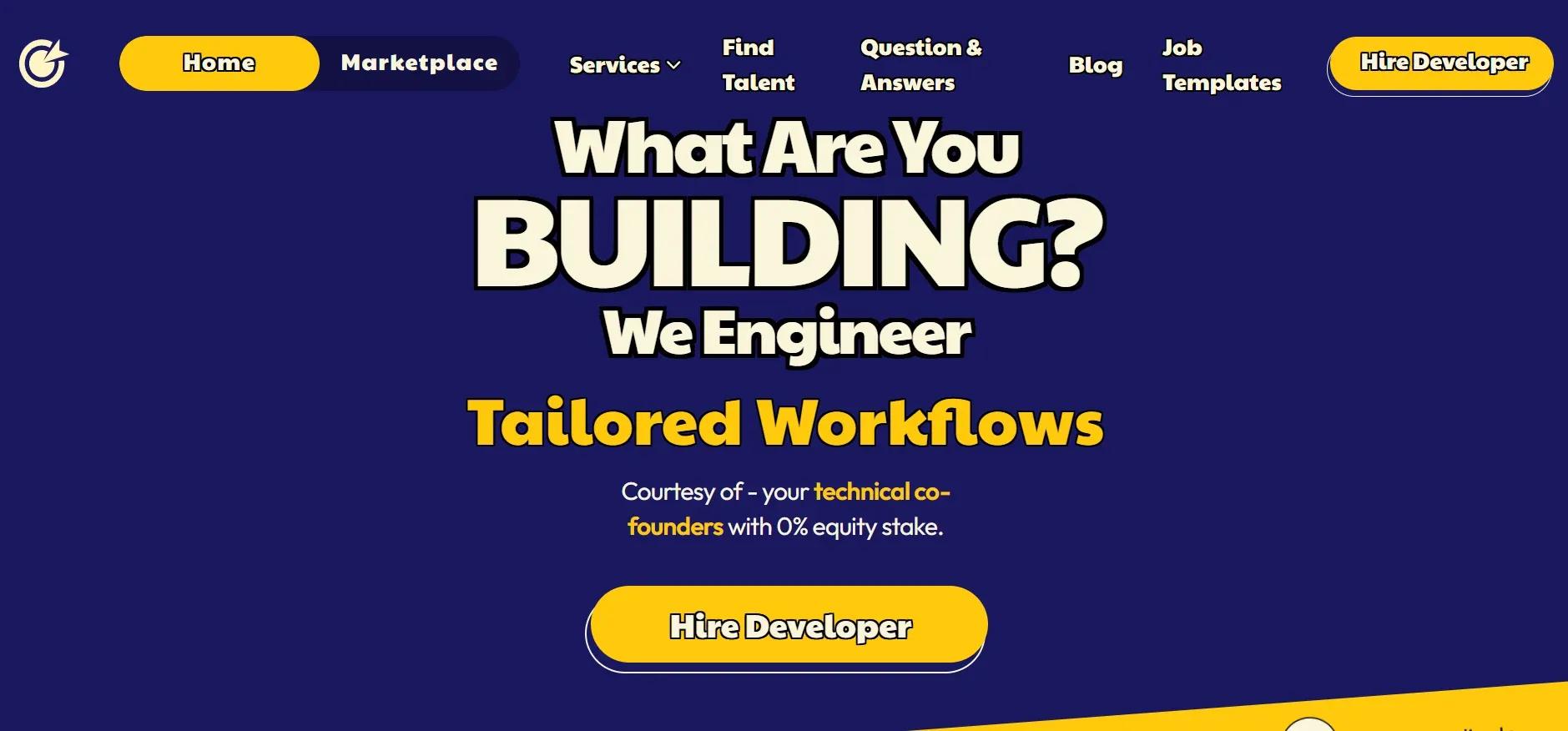
Best for: Companies that want reliable, cost-efficient prompts built into a real system, and fully owned by them.
Prompt engineering rarely fails on the wording. It fails on the missing structure around it: no testing, no versioning, no plan for when the model changes. Softaims treats prompts as a real engineering layer, with one team designing, testing, and maintaining them alongside the rest of your AI system.
What you get: The same team handles LLM prompt engineering and the broader generative AI prompt engineering around it, including RAG so answers stay grounded, evaluation harnesses so you can measure quality, and token optimization so your bill stays sane at scale. You can hire top LLM engineers for the exact skill you need, and check rates by skill and seniority before committing.
Why teams pick them:
- Prompts built and tested as real engineering, not guesswork.
- Grounding and evaluation, so accuracy is measured rather than hoped for.
- You own the prompts, the tests, and the documentation, with no lock-in.
- Token optimization that keeps running costs under control.
2. Devaims
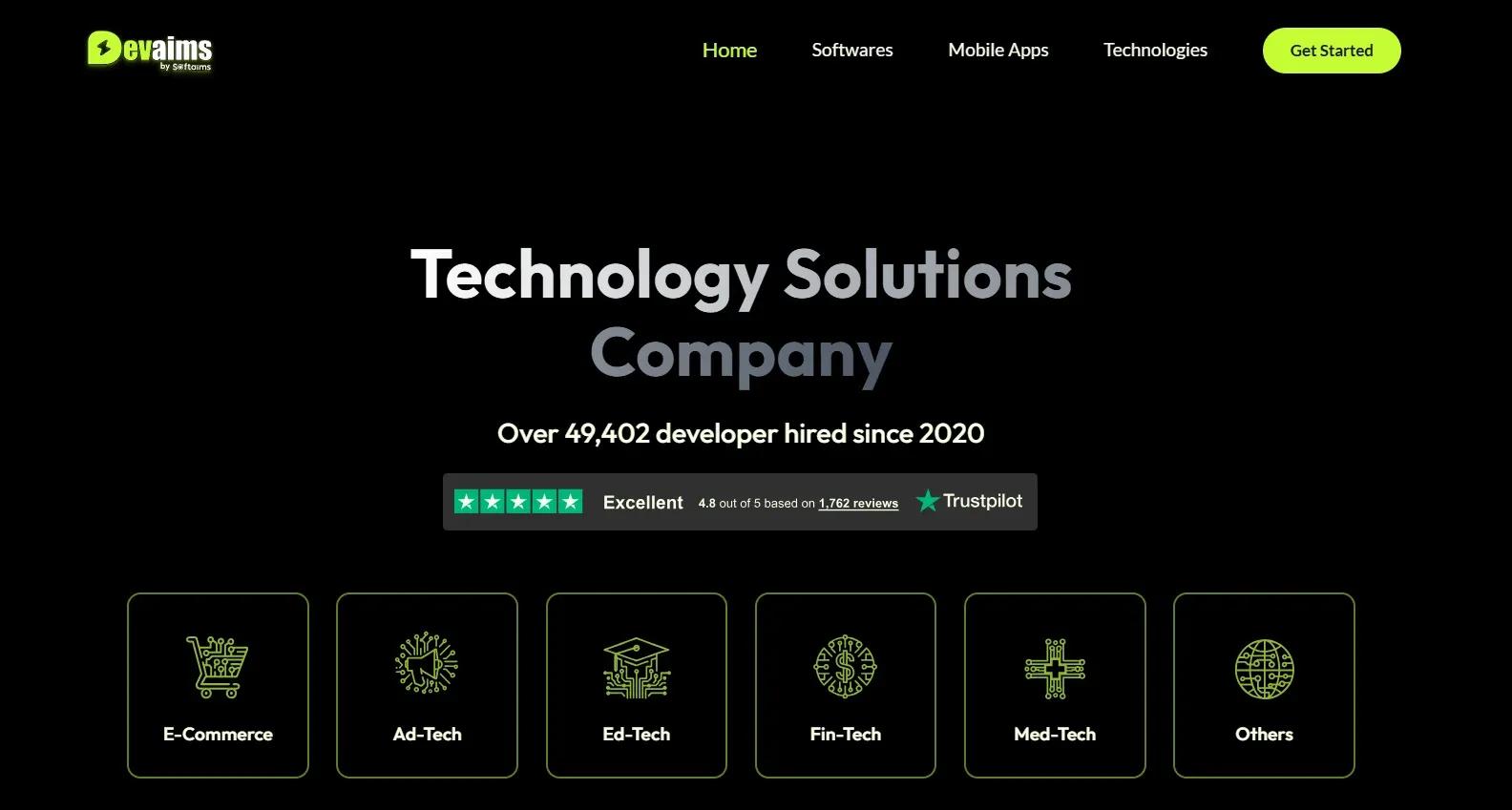
Best for: Companies that want the prompt work and the product it lives inside built by one team.
Prompts do not run in a vacuum. They live inside an app, connect to your data, and have to stay reliable once real users arrive. Devaims builds the software around the prompt layer, so your AI feature ships as a working product rather than a fragile demo.
What you get: Alongside the AI work, Devaims handles software development and mobile app development, so the people tuning the prompts are the same people building the interface and the integrations. Because one team owns both sides, changes after launch stay simple. Their full range is at Devaims.
Why teams pick them:
- The prompt layer and the product around it come from one team.
- Full delivery across backend, web, and mobile.
- Faster iteration after launch, with no vendor handoffs.
- Interfaces designed for the people who use them daily.
3. LeewayHertz
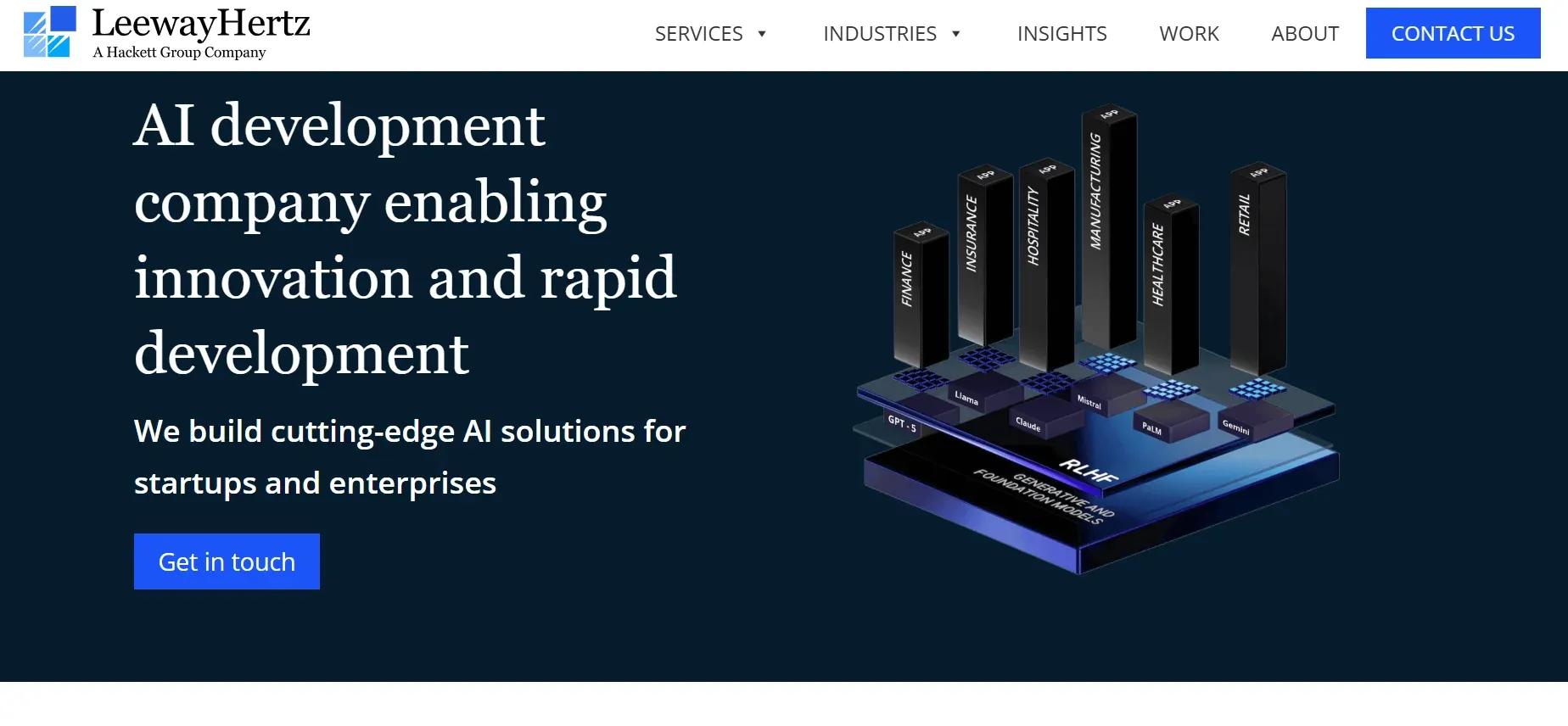
Best for: Enterprise LLM systems where prompting is part of a larger build.
LeewayHertz works extensively with models like GPT and Llama, and prompt design sits inside its wider LLM practice. Its ZBrain platform grounds prompts in enterprise data, and it handles chain-of-thought reasoning, agentic workflows, and RAG. It suits organizations that need prompting as part of a full production system, not a standalone task.
Downside: It is broad across AI, so confirm the seniority of the team assigned to your build.
4. Simform
Best for: Product-grade prompt engineering with strong evaluation.
Simform brings AI, cloud, and product engineering together, and it treats prompting as a testable layer rather than a guessing game. Its embedded co-engineering model suits product teams that want reliable prompts built alongside their own developers.
Downside: The embedded model works best when you have your own engineering leadership in place.
5. Entrans
Best for: Governed prompt systems using advanced techniques.
Entrans designs prompts as logic systems, using chain-of-thought, prompt caching, and agentic workflows to control accuracy, cost, and reliability. Its focus on structured testing and governance suits enterprises moving from experimentation to production.
Downside: As a newer specialist, ask for case studies that match your industry and scale.
6. Azati
Best for: Prompt engineering backed by serious software engineering.
Azati brings more than two decades of engineering to LLM work, with prompt engineering delivered alongside fine-tuning, MLOps, and integration. It suits teams that want prompting handled by people who also understand the full production stack.
Downside: Its enterprise focus can be more than a small, single-prompt project needs.
7. Master of Code Global
Best for: Conversational prompt design for chatbots and assistants.
Master of Code Global has built conversational systems for major brands for years, which gives it deep skill in prompting for tone, fallback handling, and consistency. If your project is fundamentally a conversation, its prompt expertise is hard to match.
Downside: Its center of gravity is conversational AI, so a data-heavy analytical prompt task may fit a different specialist.
8. Markovate
Best for: Prompts inside generative AI products and MVPs.
Markovate builds custom LLM applications and generative AI features, with prompt engineering woven into practical product work. It suits teams that want prompting delivered as part of a shipped product rather than a research exercise.
Downside: As a fast-growing firm, ask about the seniority of the team on your project.
9. SoluLab
Best for: Domain-specific prompting tied to enterprise systems.
SoluLab focuses on custom LLM development, RAG pipelines, and prompts that plug into CRMs, ERPs, and knowledge bases. It suits organizations that need prompts grounded in their own data and specialized for their field.
Downside: As a broad firm, confirm the specific team and their record in your industry.
Prompt Engineering vs Fine Tuning: Which Do You Need
This is the most common question people ask prompt engineering companies, and the answer saves real money. Prompt engineering is faster, cheaper, and easier to change, so it should always be your first move. For many use cases, a well-built prompt with good examples and grounding does everything you need.
Fine-tuning becomes worth it only when prompting hits a ceiling. That happens when you need a consistent style or format at very high volume, or when a narrow, repetitive task justifies training the model on your examples. Even then, teams usually combine the two: prompting and RAG for knowledge, a light fine-tune for tone. Be wary of any vendor who jumps to fine-tuning first, because it is often the pricier path to the same result.
How to Measure Prompt Quality
You cannot improve what you do not measure, and this is where amateur and professional prompt engineering companies part ways.
Good teams build a test set of real inputs with known good outputs, then score every prompt change against it. They track task-specific accuracy, consistency across similar inputs, token cost per request, and human ratings for anything subjective. Tools now exist to automate this, running thousands of test cases per prompt before anything ships. So ask a prospective vendor exactly how they measure prompt quality. If they cannot describe a test set and a metric, they are guessing, and guessing does not survive production.
Do Prompts Need Maintenance
Yes, and this catches many teams off guard, which is why the best prompt engineering companies plan for it. When a model provider updates its model, your carefully tuned prompt can suddenly behave differently. A prompt that scored 95% last quarter might quietly drop to 80% after an update you did not control.
So serious prompt work includes ongoing monitoring and versioning. Good teams track prompt performance in production, keep a version history, and can roll back a bad change in minutes. When you hire a prompt engineering partner, ask whether monitoring and updates are part of the deal or a separate bill later.
How Much Does Prompt Engineering Cost
Prompt engineering companies price work against the complexity of the task and whether you need a one-time build or ongoing optimization.
Engagement type | Typical cost | Notes |
| Project-based prompt build | $5,000 to $50,000 | Scales with complexity and testing |
| Ongoing optimization retainer | $3,000 to $15,000 per month | Monitoring, updates, cost tuning |
| Prompting inside a full LLM build | Part of a larger project | Bundled with the wider system |
The return can be significant. For a high-volume application, trimming tokens and cutting hallucination can save far more than the engagement costs. A partner who models that saving before you start is worth more than one who quotes a flat fee and stays quiet about the running bill.
How to Choose a Prompt Engineering Partner
When you compare prompt engineering companies, these questions expose a weak vendor fastest.
- Ask how they measure quality. If they cannot describe a test set and a score, keep looking.
- Ask about token cost. A good partner optimizes tokens on purpose, not by accident.
- Ask about model updates. Monitoring and versioning should be part of the plan.
- Ask about the simplest approach. They should reach for prompting and RAG before fine-tuning.
- Ask who owns what. You should own the prompts, the tests, and the documentation.
Prompt Engineering Trends in 2026
Prompting is becoming agent orchestration. This is reshaping what prompt engineering companies deliver. As agents take on multi-step tasks, prompts increasingly define how an agent plans, chooses tools, and checks its own work.
Automated optimization is emerging. New tools generate test sets and suggest prompt improvements automatically. They help, but human judgment still wins on complex, nuanced tasks.
Evaluation is now standard. Teams build test suites for prompts the same way they test code, which is the clearest sign the field has matured.
Multimodal prompting is growing. As models handle images, audio, and video, prompt work now extends well beyond text.
Conclusion
There are more prompt engineering companies than ever, and most of them can write a prompt that looks good in a demo. Far fewer can build prompts that stay accurate, cheap, and reliable once real traffic hits them. The trick is to weigh testing, cost control, and maintenance above clever phrasing.
If you want prompts engineered as a real system and owned entirely by you, Softaims is the best place to start. Book a free consultation and get matched with vetted LLM engineers within 48 hours.
Frequently Asked Questions
What exactly is prompt engineering?
It is the craft of designing instructions and examples that get the output you want from a language model. It blends linguistic understanding with systematic testing, which is why it is part art and part science.
Do I need a prompt engineer for my AI project?
For simple use cases, basic prompting may be enough. For production applications that need reliability, consistency, and efficiency, specialized prompt engineering delivers a clear return.
How much does prompt engineering cost?
Project-based work usually runs $5,000 to $50,000 depending on complexity. Ongoing optimization retainers typically run $3,000 to $15,000 per month.
What is the difference between zero-shot, few-shot, and chain-of-thought prompting?
Zero-shot gives no examples. Few-shot provides examples to copy. Chain-of-thought asks the model to reason step by step. Each suits a different level of task complexity.
Can prompt engineering replace fine-tuning?
Often, yes. Prompting is faster and cheaper, and it covers many use cases well. Fine-tuning is worth it mainly for a consistent style at scale or a narrow, specialized task.
How do I measure prompt quality?
Through task-specific metrics like accuracy and completeness, consistency across variations, token efficiency, and human evaluation for subjective outputs. A test set makes all of this repeatable.
Do prompts need maintenance?
Yes. As models update, prompts can drift and need adjustment. Good partners include monitoring and versioning as part of the service, not as a surprise later.
What skills make a great prompt engineer?
A mix of linguistics, analytical thinking, systematic testing, domain knowledge, and a real understanding of how models behave.
Can AI prompt itself?
Automated prompt optimization is emerging and genuinely useful, but human expertise still produces better results for complex, nuanced work.
What is the future of prompt engineering?
As models get more capable, prompt engineering is shifting toward agent orchestration, multimodal prompting, and automated, evaluation-driven optimization.


 Stackoverflow
Dinesh B.

 Verified Expert in Engineering
My name is Dinesh B. and I have over 6 years of experience in the tech industry. I specialize in the following technologies: Ruby on Rails, JavaScript, Python, Git, jQuery, etc.. I hold a degree in Bachelor of Engineering (BEng), Master of Engineering (MEng). Some of the notable projects I’ve worked on include: Develop simpleSAMLphp plugin (Wordpress), AD FS Setup/Documentation, Deploy Ruby on Rails application with docker, puma, nginx, mongodb, SAML SSO integration in multiple web apps, Scraping Project, etc.. I am based in Kathmandu, Nepal. I've successfully completed 9 projects while developing at Softaims.
I employ a methodical and structured approach to solution development, prioritizing deep domain understanding before execution. I excel at systems analysis, creating precise technical specifications, and ensuring that the final solution perfectly maps to the complex business logic it is meant to serve.
My tenure at Softaims has reinforced the importance of careful planning and risk mitigation. I am skilled at breaking down massive, ambiguous problems into manageable, iterative development tasks, ensuring consistent progress and predictable delivery schedules.
I strive for clarity and simplicity in both my technical outputs and my communication. I believe that the most powerful solutions are often the simplest ones, and I am committed to finding those elegant answers for our clients.

Leave a Comment
Need help building your team? Let's discuss your project requirements.
Get matched with top-tier developers within 24 hours and start your project with no pressure of long-term commitment.