10 Best AI Development Companies in Ireland (2026)
This guide compares the ten best AI development companies in Ireland, with verified operating status, euro cost benchmarks, EU AI Act guidance, and the acquired firms other lists still recommend.
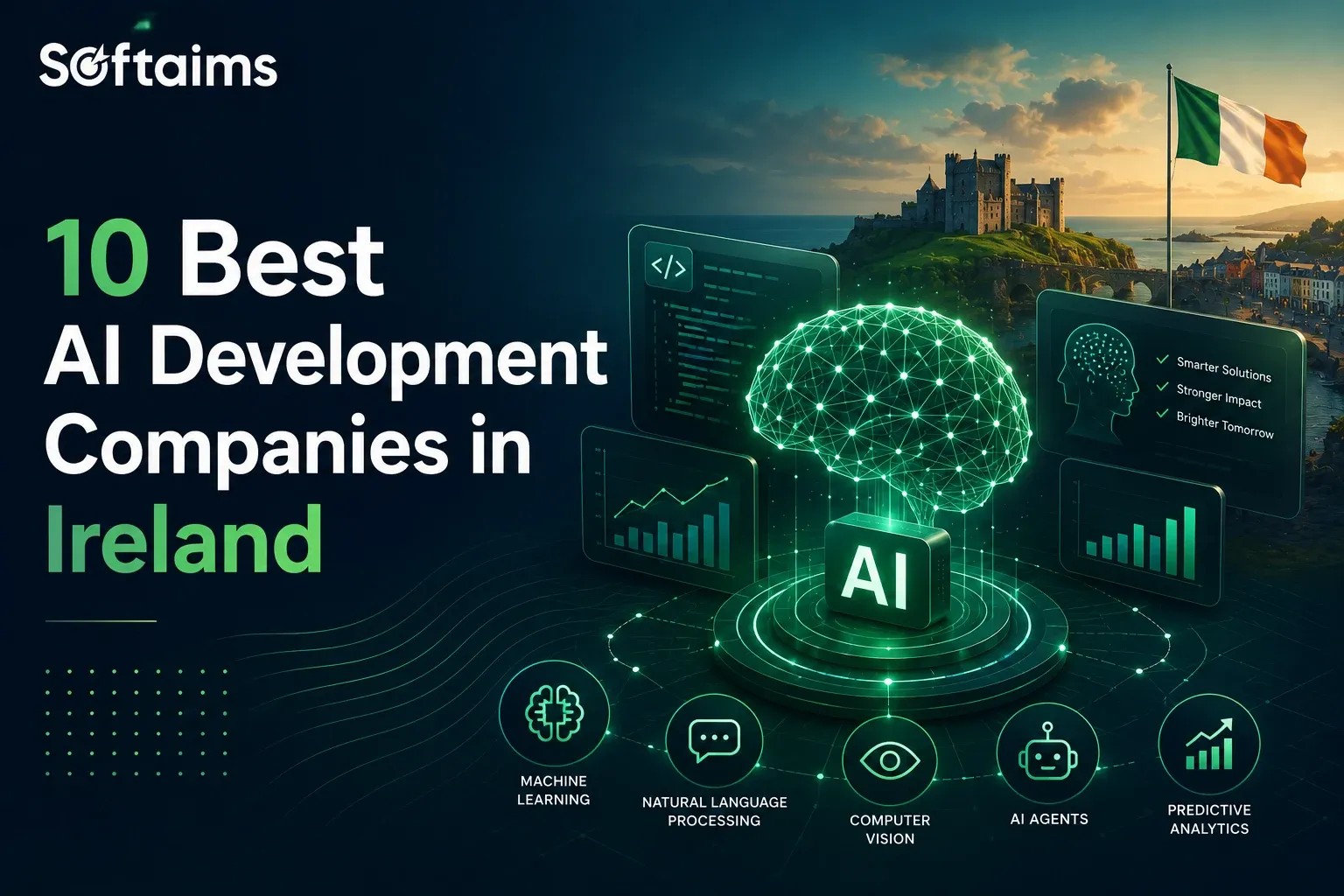
Table of contents
Key Takeaways
- Three widely listed firms no longer exist independently. Aylien went to Quantexa, Boxever to Sitecore, and Asavie to Akamai, yet lists still recommend them.
- Ireland regulates big tech for all of Europe. The Irish Data Protection Commission is lead GDPR supervisor for most major platforms, which builds real compliance fluency.
- It is the EU's only English-speaking member. That combination of language, EU membership, and data adequacy is genuinely difficult to replicate elsewhere.
- AI development companies here are specialists, not generalists. The country excels at narrow AI products in medtech and security, with fewer general-purpose development partners.
- The EU AI Act changes your build sequence. Compliance must be designed in from the start, because retrofitting documentation and oversight costs far more.
- 95% of AI pilots return nothing. MIT reviewed 300 deployments, and the causes repeat predictably enough to plan around.
- Costs run €15,000 to €1 million plus. Data quality and compliance obligations drive most of the variation between quotes.
AI development companies in Ireland occupy an unusual position within Europe. It is the only English-speaking country left in the EU, it hosts the European headquarters of Google, Meta, Microsoft, and Apple, and its Data Protection Commission acts as lead regulator for most of big tech across Europe.
That last point matters more than most buyers realise. If your AI system touches European personal data, working with a partner who lives inside that regulatory environment daily is a genuine advantage rather than a nice-to-have.
The talent picture reflects it too. Trinity College Dublin and University College Dublin feed a steady stream of AI researchers into the market, while the concentration of global tech firms has built an ecosystem where senior machine learning engineers actually want to stay.
In this guide you will find the ten AI development companies in Ireland worth shortlisting, along with honest cost benchmarks, EU AI Act guidance, and a warning about several firms that other lists still recommend despite having been acquired years ago.
Why Ireland Leads in AI Development
Ireland's population is smaller than Greater Manchester, yet its AI development companies consistently achieve global reach. A few structural advantages explain why.
It is the EU's regulatory front line. The Irish Data Protection Commission supervises GDPR compliance for most major technology companies operating in Europe. Irish AI firms have therefore spent years building systems that survive genuine regulatory scrutiny, which becomes valuable as the EU AI Act takes effect.
English-speaking and inside the EU. After Brexit, Ireland became the only English-speaking member state. For US companies wanting European operations without a language barrier or a data transfer problem, that combination is rare.
Global tech has built the talent pool. Google, Meta, Microsoft, Apple, and Amazon all run substantial Dublin operations. Two decades of that presence has created a deep bench of engineers who have worked at genuine scale.
The time zone bridges two continents. Dublin teams can hold a morning call with London and an afternoon call with New York on the same working day. For AI projects that need constant iteration, that overlap is worth real money.
University research feeds industry directly. Trinity College Dublin, UCD, and research centres like Insight and CeADAR maintain close industry ties, so commercial teams stay near the research frontier.
Specialisation runs deep in specific sectors. Irish AI firms have built unusual strength in medtech, financial services, and industrial applications, reflecting where the country's wider economy already competes.
How We Ranked These AI Development Companies in Ireland
We judged these AI development companies in Ireland on production evidence rather than marketing claims, and each criterion includes the question we used to test it.
Genuine Irish operations. Several lists include AI development companies that simply serve Irish clients from elsewhere, or companies acquired years ago. We verified current independent status and real Irish presence.
Production track record. Live systems beat demos, because the difficult problems only appear once real users arrive. Ask for a system running twelve months or longer, and how they monitor it.
Domain depth. Irish AI strength concentrates in specific sectors, so a medtech specialist will outperform a generalist on a medtech problem. Ask for a case study in your exact industry.
GDPR and EU AI Act readiness. Compliance is not optional here, so ask how they handle data protection impact assessments and algorithmic transparency requirements.
Integration capability. AI that cannot connect to your existing systems delivers nothing. Ask about the messiest legacy integration they have completed and what broke.
Transparent commercial terms. Ask for a proposal that breaks down cost by phase, and treat vague estimates as a warning sign.
We weighted production evidence and verified Irish operations most heavily, because both separate this list from the recycled ones.
Best AI Development Companies in Ireland: Comparison Table
# | Company | Location | Specialisation | Best for |
| 1 | Softaims | Global (vetted) | Custom AI, agents, chatbots | Companies wanting to own their AI |
| 2 | Devaims | Global (vetted) | AI inside web and mobile products | End-to-end AI product delivery |
| 3 | Tines | Dublin | AI security and workflow automation | Security and operations teams |
| 4 | Keelvar | Cork | Sourcing and procurement AI | Enterprise procurement teams |
| 5 | Deciphex | Dublin | Digital pathology AI | Medtech, pharma, diagnostics |
| 6 | Provizio | Limerick | Perception AI for autonomy | Automotive and robotics |
| 7 | Sonalake | Dublin | Telecom and IoT data platforms | Custom software with AI built in |
| 8 | Nuritas | Dublin | AI peptide and molecule discovery | Life sciences and nutrition |
| 9 | Accenture Ireland | Dublin | Enterprise AI transformation | Large-scale multi-year programs |
| 10 | IBM Ireland | Dublin | Watson, governed enterprise AI | Regulated industries needing audit trails |
Details reflect public company information as of early 2026 and can change, so verify before publishing. Softaims and Devaims are our two top picks.
One distinction shapes this list more than price does. Ireland has produced a cluster of specialist AI product companies like Tines, Keelvar, Deciphex, and Nuritas, which build deep technology for a narrow problem. If your need matches theirs, you get world-class capability immediately.
What Ireland has fewer of is general-purpose AI development companies who will build a custom system around your specific problem. Sonalake is a genuine local option, and the global consultancies serve the enterprise end. For everything in between, most Irish buyers work with vetted international partners like Softaims, provided those partners understand GDPR properly.
The 10 Best AI Development Companies in Ireland
1. Softaims
Best for: Companies that want custom AI built on their own data and owned outright.
Most AI projects fail on the work surrounding the model rather than the model itself. Data sits scattered across systems, nobody checks whether the output is genuinely accurate, and guardrails never quite get built. Then the pilot quietly dies once the early enthusiasm fades.
Softaims is built specifically for that gap, with one team handling the data, the model, the guardrails, and the product your users actually open.
What you get: The same team covers the full stack from end to end, spanning custom AI model development, AI agent development, AI chatbots, and AI app development. You can hire vetted AI developers for the exact skill your project needs, browse the AI talent pool to see who would build it, and check rates by skill and seniority before committing to anything.
Why teams pick Softaims:
- One team handles the data, the model, the guardrails, and the app around them.
- Honest advice on approach, so you do not overbuild what a simple integration would solve.
- You own the model, the code, and the data outright, with no lock-in.
- Built for production from day one, rather than another pilot that stalls.
2. Devaims
Best for: Companies that want the AI feature and the product it lives inside built together.
A model on its own is not really a product. It has to sit inside a working application, connect to live data, and stay reliable once real users start hammering it. Devaims closes that gap by building the software around the intelligence, so what you get is something people can genuinely use rather than a clever demo.
What you get: Alongside the AI work, Devaims handles software development and mobile app development, which means the people shaping how the AI behaves are the same people building the interface and the integrations. Because one team owns both sides, changes after launch stay simple instead of turning into a negotiation.
Why teams pick Devaims:
- The AI feature and its surrounding product come from a single team.
- Full delivery across backend, web, and mobile in one engagement.
- Faster iteration after launch, because nothing crosses a vendor line.
- Interfaces designed around the people who use them every day.
3. Tines
Best for: Automating security and operations workflows with AI.
Tines is Ireland's most commercially successful technology company of recent years, founded in Dublin and now serving security and operations teams at major global organisations. Its platform automates complex workflows without requiring custom code, and its AI capabilities let teams build automations in natural language. Security operations centres use it to handle alert triage, investigation, and response at volumes no human team could match.
Downside: It is a platform product rather than a development partner, so you adopt their approach rather than getting something built around yours.
4. Keelvar
Best for: Sourcing and procurement automation at enterprise scale.
Keelvar is a Cork company that applies AI and optimisation to sourcing, which is a genuinely difficult computational problem. Its software runs autonomous sourcing events and handles complex supplier bids that procurement teams previously wrestled with in spreadsheets. Fortune 500 manufacturers and logistics firms use it to cut sourcing cycle times substantially.
Downside: Its focus is narrow by design, so there is nothing here unless procurement is your problem.
5. Deciphex
Best for: Digital pathology and diagnostic AI.
Deciphex is a Dublin company building AI for pathology, with software that helps pathologists review tissue samples faster and more accurately. Its products serve both preclinical drug development and clinical diagnostics, including cancer detection. This is exactly the kind of regulated medtech work where Irish firms tend to excel, since the compliance burden is heavy and the domain knowledge is hard-won.
Downside: It is a specialist medtech product company, not a partner who will build you something unrelated.
6. Provizio
Best for: Perception AI for autonomous vehicles and robotics.
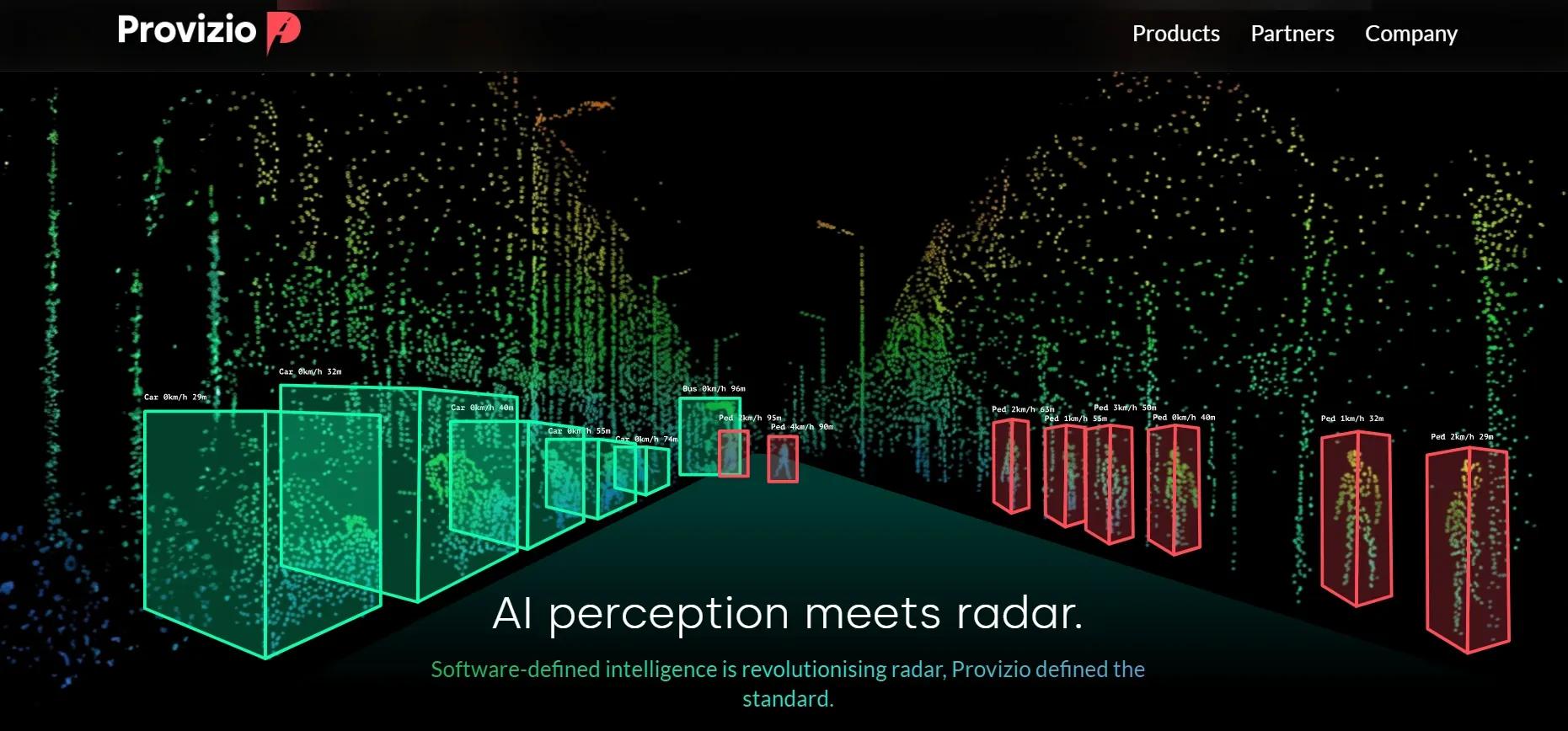
Provizio is a Limerick company developing perception software that combines radar, camera, and AI to predict and prevent collisions before they happen. Its technology targets automotive safety and autonomous systems, an area where Ireland has quietly built genuine capability. The engineering here sits at the difficult intersection of sensor physics and machine learning.
Downside: Highly specialised for automotive and robotics, so it fits a narrow set of buyers.
7. Sonalake
Best for: Custom software and data platforms with AI built in.
Sonalake is a Dublin software development company that builds data-intensive platforms, with particular depth in telecommunications and IoT. Of the Irish firms on this list, it is closest to a traditional development partner you can hire to build something specific. Its work spans network analytics, data platforms, and the AI layers that sit on top of them.
Downside: Its sector strength is telecom and IoT, so confirm relevant experience if your domain sits elsewhere.
8. Nuritas
Best for: AI-driven discovery in life sciences and nutrition.
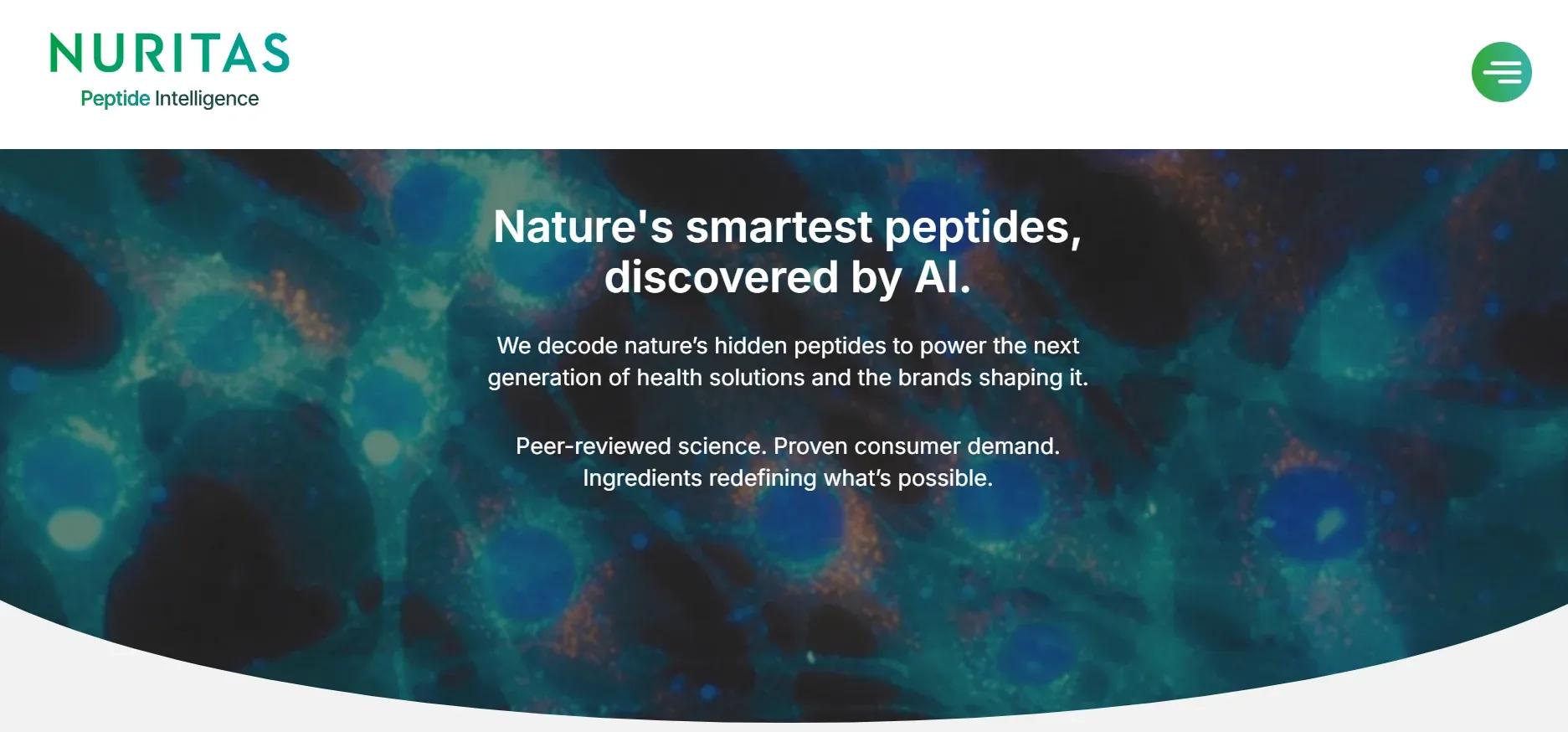
Nuritas uses AI to identify bioactive peptides with health benefits, compressing research timelines that traditionally ran for years. Its platform has produced ingredients now used in commercial health products, which is a rare example of AI discovery reaching market. The company combines genuine machine learning depth with molecular biology expertise.
Downside: This is deep-tech life sciences work, so it applies only to pharma, nutrition, and health research organisations.
9. Accenture Ireland
Best for: Large-scale enterprise AI transformation.
Accenture runs a substantial Dublin operation combining global consulting resources with local market knowledge. Its AI practice pairs strategy with implementation, which suits organisations undertaking transformation across multiple business units. Irish banks in particular have used it for conversational AI and customer service platforms.
Downside: Premium pricing and enterprise process, which is more machinery than a focused build requires.
10. IBM Ireland
Best for: Governed enterprise AI in heavily regulated industries.
IBM has operated in Ireland since 1956, and its Dublin team carries deep experience in regulated sectors. Its strength lies in explainable AI and governance frameworks, which matter enormously when a regulator may ask you to justify an automated decision. Watson remains one of the more mature enterprise AI ecosystems available.
Downside: Established rather than cutting edge, so teams wanting experimental capability may find it conservative.
Companies Other Ireland Lists Get Wrong
Several widely circulated lists still recommend AI development companies in Ireland that no longer operate independently. Publishing those names damages your credibility, so it is worth knowing which ones to avoid.
Company | Actual status |
| Aylien | Acquired by Quantexa in February 2023 |
| Boxever | Acquired by Sitecore in March 2021 |
| Asavie | Acquired by Akamai in 2020 |
The Aylien team continues excellent NLP research in Dublin under Quantexa, and Boxever technology now sits inside Sitecore's platform. Both remain worth knowing about. However, you cannot engage either as an independent Irish AI development partner, which is how several lists still present them.
The broader lesson applies to any vendor list you read. Verify current status before you build a shortlist, because these guides get copied and recycled for years after the facts change.
Why AI Projects Fail (and How to Avoid It)
Most pilots run by AI development companies deliver nothing measurable. When MIT's NANDA initiative reviewed 300 deployments, it found that 95% produced no measurable return. The causes repeat with real consistency, which is good news, because every one is avoidable.
Nobody owns the outcome. An innovation team launches a pilot, it wins applause at a demo, and then attention drifts. With no one driving adoption or defending the budget, the project quietly dies. Name a business owner and a single metric before anything starts.
The data was never ready. Demos run on ten clean files while production holds ten thousand messy ones, full of duplicates and inconsistent formats. AI grounded in that produces fluent, confident errors. Treat data preparation as the first real phase, with its own budget attached.
Compliance got bolted on at the end. This one hits Irish and European projects particularly hard. Retrofitting GDPR compliance or EU AI Act documentation into a finished system costs far more than building it in. Raise it in the first conversation, not the last.
It never reaches a real workflow. A tool that lives in a separate tab gets opened twice and forgotten, while systems that succeed appear inside the software people already use. Integrate rather than building something standalone.
Nobody measures quality. Without a test set you are guessing, and you cannot tell whether a change helped or hurt. Insist on an evaluation set built from real questions with known good answers.
Costs escalate quietly. Every query burns tokens, so a system that felt cheap with ten testers gets expensive with ten thousand users. Ask for a cost-per-user model before you build.
Understanding AI Development Costs in Ireland
AI development companies in Ireland charge toward the higher end of the European range, reflecting the cost base and the concentration of multinational employers competing for the same engineers.
Project type | Typical cost | Timeline |
| Simple AI implementation | €15,000 to €50,000 | 1 to 3 months |
| Custom AI solution | €50,000 to €200,000 | 3 to 6 months |
| Enterprise AI transformation | €200,000 to €1,000,000+ | 6 to 18 months |
Simple implementations cover integrating existing AI APIs, building a chatbot on pre-trained models, or straightforward classification work. Custom solutions involve training models on your own data and embedding them into real workflows. Enterprise transformation touches multiple departments and usually requires substantial data infrastructure work first.
What Drives Costs Up and Down
Data quality is the single largest variable. Clean, well-labelled data can cut weeks from a project, while scattered records add them straight back.
Compliance requirements carry a real premium in Ireland. GDPR obligations and EU AI Act readiness demand documentation, risk assessments, and transparency work that lighter-touch jurisdictions skip.
Legacy integration complexity matters next, since connecting one modern system is simple but wiring several older platforms multiplies testing time.
Model approach shifts the number considerably. Retrieval is cheap, fine-tuning costs more, and training from scratch costs far more, even though most projects genuinely need only the first.
What keeps costs reasonable is clear scope from the start, realistic expectations about what AI can achieve, and experienced project management that prevents scope creep.
The Costs Buyers Forget
Data preparation can consume 20% to 40% of a budget, so a quote that ignores it will grow. Inference costs continue for as long as the system runs, since every query carries a charge. And monitoring and retraining never stop, because models drift as the world changes around them.
The EU AI Act and What It Means for Your Project
This is where AI development companies in Ireland hold a genuine advantage, and it deserves its own section.
The EU AI Act introduces a risk-based framework that classifies AI systems by potential harm. High-risk applications, including many uses in recruitment, credit scoring, healthcare, and law enforcement, carry substantial obligations around documentation, human oversight, data governance, and transparency.
The practical implication is straightforward. Compliance has to be designed in rather than added later. That means keeping records of training data provenance, documenting model decisions, building human review into automated workflows, and running risk assessments before deployment rather than after.
Ask any prospective partner three questions. How do they classify risk under the Act? What documentation do they produce as standard? And how do they handle explainability when a regulator asks why a model made a particular decision? A firm that cannot answer clearly will cost you far more later.
How to Choose an AI Development Partner in Ireland
The best AI development companies welcome scrutiny, so use these questions.
Start with your problem, not the technology. Walking into meetings saying you need machine learning invites vendors to sell you their favourite tool. Describe the business outcome instead, and let them propose the approach.
Verify industry expertise specifically. Ask for a case study in your exact sector, not a general claim about having worked in healthcare or finance. Firms that know your industry will ask sharp questions about regulation and data governance before proposing anything.
Ask exactly how they measure output quality. A serious partner describes a test set, a scoring method, and a target accuracy. A weak one talks about how advanced their model is. This single question filters most of the market.
Demand transparency on pricing and timelines. Get a proposal that breaks down cost by phase, resource allocation, and deliverables. Vague estimates and one-size-fits-all quotes are reliable warning signs.
Check GDPR and AI Act readiness in the first call. In Ireland this is not a technicality. Ask where data will be processed, how they handle data protection impact assessments, and what compliance documentation they provide.
Confirm who owns the model and the code. You should own all of it, stated plainly in the contract, so you never depend on a single vendor for future changes.
Assess how they handle scope changes. AI development is inherently iterative, so ask about their communication cadence, milestone structure, and how they manage change without derailing budget.
Start small regardless. A short paid pilot on your real data reveals more than any proposal. Want a broader view? Our guides to the top custom software development companies and the top software development companies in the UK are useful companion reads.
AI Trends in Ireland for 2026
EU AI Act compliance is becoming a competitive differentiator. This is reshaping what AI development companies in Ireland build, since firms that bake compliance into development win deals from risk-averse buyers.
Generative AI has moved past the pilot stage. Irish businesses are deploying it for document automation, customer service, and code generation, but with proper guardrails and human oversight rather than blind enthusiasm.
Edge AI is growing in industrial settings. Manufacturing and medtech applications increasingly need AI that runs locally, both for latency and for data sovereignty reasons that matter under European rules.
Explainability is now a procurement requirement. Black-box models are becoming unacceptable in regulated sectors, so demand is rising for systems that can justify their decisions.
Vision and language are converging. More projects now combine both, from reading documents to inspecting products. If that matches your direction, our guide to the top computer vision development companies is worth a look.
Conclusion
AI development companies in Ireland offer something genuinely distinctive: deep regulatory fluency, English-speaking EU access, and specialist AI companies with world-class capability in medtech, security, and industrial applications. What it has less of is general-purpose development partners, which is why many Irish buyers pair local domain expertise with vetted international engineering.
Whichever route you take, weigh production evidence and compliance readiness above marketing claims, and verify that the companies on any list still exist independently. Also building a mobile product? Our mobile app development guide covers that side.
If you want an AI system built on your own data and owned entirely by you, Softaims is the best place to start. Book a free consultation and get matched with vetted AI developers within 48 hours.
Frequently Asked Questions
What do AI development companies in Ireland do?
AI development companies build machine learning models, generative AI applications, agents, chatbots, and predictive analytics systems. Irish firms tend to specialise in medtech, financial services, security, and industrial applications, and most carry strong GDPR and EU AI Act expertise.
How much does AI development cost in Ireland?
Simple implementations run €15,000 to €50,000, custom solutions land between €50,000 and €200,000, and enterprise transformation starts around €200,000 and can exceed €1 million. Data quality and compliance requirements drive most of the variation.
Why choose Ireland for AI development?
Ireland is the only English-speaking EU member state, hosts European headquarters for Google, Meta, Microsoft, and Apple, and its Data Protection Commission regulates most big tech in Europe. That creates unusual regulatory fluency alongside a deep talent pool.
How does the EU AI Act affect my project?
It classifies AI systems by risk, and high-risk uses in areas like recruitment, credit, and healthcare carry obligations around documentation, human oversight, and transparency. Compliance must be designed in from the start, since retrofitting it costs far more.
Are there many general AI development companies in Ireland?
Fewer than you might expect. Ireland has produced excellent specialist AI product companies, but relatively few general-purpose development partners. Many Irish buyers therefore combine local domain expertise with vetted international engineering teams.
Which Irish AI companies have been acquired?
Aylien was acquired by Quantexa in 2023, Boxever by Sitecore in 2021, and Asavie by Akamai in 2020. Several published lists still present them as independent firms, so verify current status before shortlisting anyone.
How long does an AI project take?
A simple implementation takes one to three months, a custom solution three to six months, and enterprise transformation six to eighteen months or longer. Poor data quality extends every one of those estimates.
Who owns the model and the training data?
You should own all of it. Confirm ownership of the model, the code, and any training data in the contract before work begins, so you are never locked into a single vendor.
Should I hire an Irish firm or an international partner?
Choose an Irish specialist when your problem matches their domain exactly, particularly in medtech or regulated finance. Choose a vetted international partner for general custom builds, provided they demonstrate genuine GDPR competence.
How do I choose between AI development companies in Ireland?
Verify they still operate independently, check what runs in production today, ask precisely how they measure output quality, and confirm GDPR and AI Act readiness. Then run a small paid pilot before committing further.


 GitHub
 Stackoverflow
John M.

 Verified Expert in Engineering
My name is John M. and I have over 4 years of experience in the tech industry. I specialize in the following technologies: Python, Golang, DevOps Engineering, C#, F#, etc.. I hold a degree in Bachelor of Arts (BA). Some of the notable projects I’ve worked on include: Multi-Cloud Self-Service Infrastructure Platform (AWS & GCP), Retrieval-Augmented Generation (RAG) AI App on AWS, Next.js Customer Portal for Data, Reports & Subscription Management, Captive Portal Data API: Scalable User Management & Analytics Platform. I am based in Bronx County, United States. I've successfully completed 4 projects while developing at Softaims.
I employ a methodical and structured approach to solution development, prioritizing deep domain understanding before execution. I excel at systems analysis, creating precise technical specifications, and ensuring that the final solution perfectly maps to the complex business logic it is meant to serve.
My tenure at Softaims has reinforced the importance of careful planning and risk mitigation. I am skilled at breaking down massive, ambiguous problems into manageable, iterative development tasks, ensuring consistent progress and predictable delivery schedules.
I strive for clarity and simplicity in both my technical outputs and my communication. I believe that the most powerful solutions are often the simplest ones, and I am committed to finding those elegant answers for our clients.

Leave a Comment
Need help building your team? Let's discuss your project requirements.
Get matched with top-tier developers within 24 hours and start your project with no pressure of long-term commitment.