
Daniel Russo
ScaleUp software
Working with Softaims allowed us to quickly onboard highly skilled engineers who integrated seamlessly with our team. The experience was smooth and the results exceeded our expectations.
Video testimonial available
See pre-vetted back-end developers with transparent hourly rates, experience, ratings, and filters to quickly shortlist the right candidates for your project.




Clients rate Softaims Back-End Developers4.9 / 5.0 on averagebased on 13,542 reviews.
Vetted Experts
Trial-to-Hire Success Rate
Fast Candidate Matching
"Working with Softaims allowed us to quickly onboard highly skilled engineers who integrated seamlessly with our team. The experience was smooth and the results exceeded our expectations."

Daniel Russo
ScaleUp software


 Trustpilot
Explore related technologies and frameworks to find the perfect developer for your project

Softaims connects you with rigorously vetted full-time and freelance software engineers across every modern tech stack. From AI specialists to Cloud Architects, access a curated network of elite remote talent designed to scale your business.
Every Back-End Developer in our talent pool has gone through our rigorous vetting process, so you can be confident that they will perform as well in reality as they do on paper.
Within 48 hours of your request, we send you a list of Back-End Developers who meet your needs and who are ready to join your team as soon as you're ready.
Access top talent from around the world at competitive rates without compromising on quality or expertise. Get the best value for your hiring budget.
Make your hiring process bulletproof with our replacement guarantee. Not happy with your Back-End Developer? We'll replace them, no charges, no questions.
Quickly find Back-End Developers that match your requirements with our advanced filtering system. Filter by skills, experience, hourly rate, location, and more.
Whether you need a full-time team member or a freelance Back-End Developer for a specific project, we have the right talent ready to join your team.
Trustpilot| Features | Softaims | Toptal | Upwork | Freelancers | In-house Resources |
|---|---|---|---|---|---|
Fully Compliant Developers are employed by U.S corporations | |||||
High-Quality Pre-vetted, highly trained, and skilled resources | |||||
Affordability Competitive rates without compromising quality | |||||
Try Before You Buy Test developers before committing | |||||
Secure Locations Developers work in secure and monitored environments | |||||
Highly Scalable Plug in and out developers based on your business needs | |||||
Diverse Tech Stack Broad expertise in diverse tech stack in your time zone |
ScaleUp software
Working with Softaims allowed us to quickly onboard highly skilled engineers who integrated seamlessly with our team. The experience was smooth and the results exceeded our expectations.
Video testimonial available

Ex-VP Engineering at Uber
Softaims made hiring remote developers effortless. The talent matched our requirements perfectly, and collaboration with the team was extremely efficient.
Video testimonial available

CT0 at EdAider
The Softaims platform gave us access to developers who immediately added value. Their expertise and professionalism made the entire process seamless.
Video testimonial available

Hello Median
Softaims helped us scale our engineering team quickly. The quality of the developers and the speed of onboarding were impressive.
Video testimonial available

CEO at Stads.io
Hiring through Softaims was straightforward and effective. We were able to collaborate with skilled engineers who understood our technical needs.
Video testimonial available

CEO at Onenine
Softaims provided us with experienced developers who contributed immediately to our projects. The process was efficient and the results were excellent.

CEO at Sparklaunch Media
Softaims provided us access to highly skilled remote engineers who contributed immediately. The process was efficient, and the quality of work exceeded our expectations.

CEO at Lovart
Hiring through Softaims was seamless. We were able to find developers who perfectly matched our technical requirements and collaborated effectively with our in-house team.
ScaleUp software
Working with Softaims allowed us to quickly onboard highly skilled engineers who integrated seamlessly with our team. The experience was smooth and the results exceeded our expectations.
Ex-VP Engineering at Uber
Softaims made hiring remote developers effortless. The talent matched our requirements perfectly, and collaboration with the team was extremely efficient.
CT0 at EdAider
The Softaims platform gave us access to developers who immediately added value. Their expertise and professionalism made the entire process seamless.
Hello Median
Softaims helped us scale our engineering team quickly. The quality of the developers and the speed of onboarding were impressive.
CEO at Stads.io
Hiring through Softaims was straightforward and effective. We were able to collaborate with skilled engineers who understood our technical needs.
CEO at Onenine
Softaims provided us with experienced developers who contributed immediately to our projects. The process was efficient and the results were excellent.
CEO at Sparklaunch Media
Softaims provided us access to highly skilled remote engineers who contributed immediately. The process was efficient, and the quality of work exceeded our expectations.
CEO at Lovart
Hiring through Softaims was seamless. We were able to find developers who perfectly matched our technical requirements and collaborated effectively with our in-house team.
Hire Softaims talent around the world
25.1K+
Softaims back-end developers in the world
849+
We'll help you find the perfect fit for your team. From AI specialists to Cloud Architects, access a curated network of elite remote talent designed to scale your business.
Hire Back-End Developer
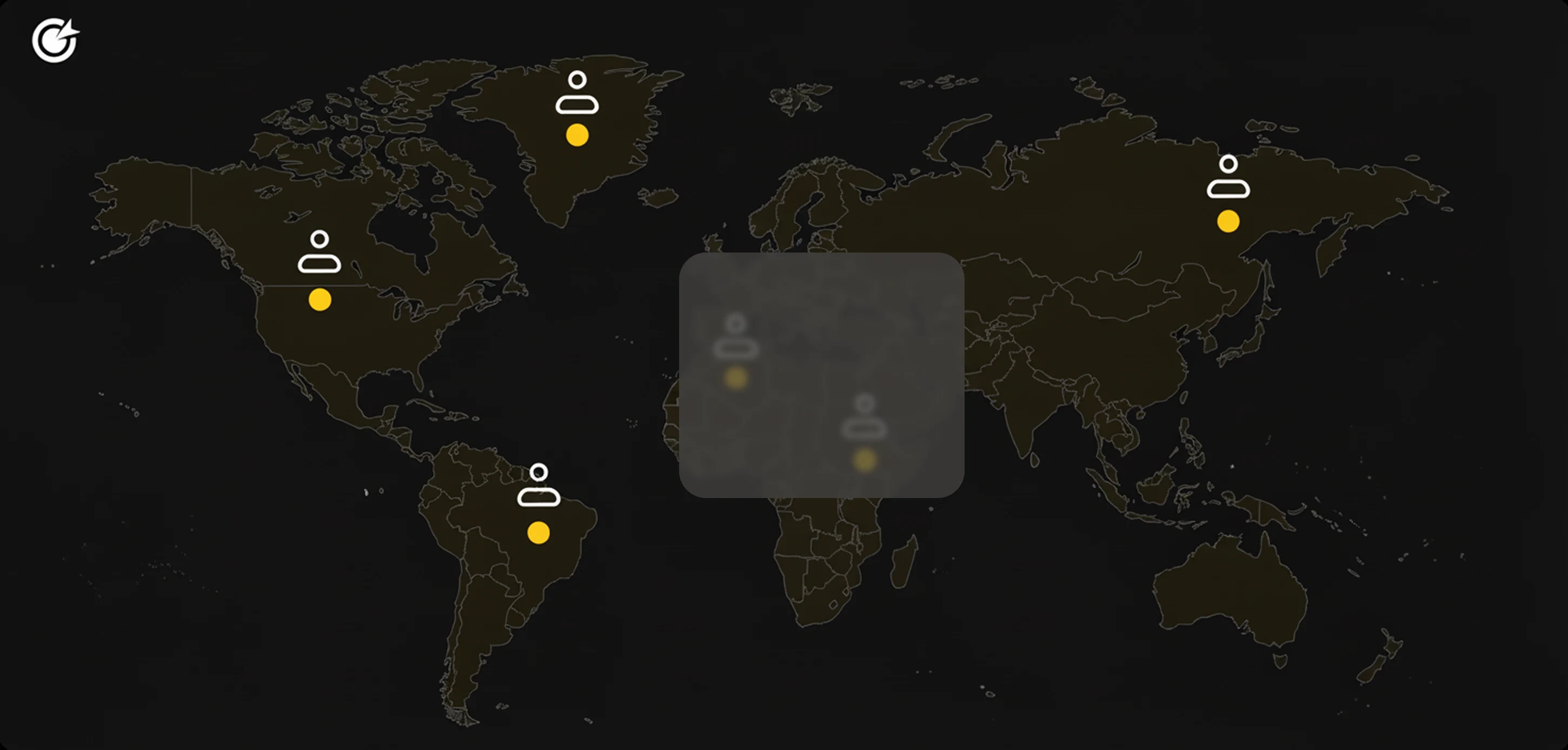
Hover over countries on the map to see the number of available developers in each location
Our dedicated back-end developers use the following technologies to build modern web applications.
PostgreSQL
MongoDB
Redis
MySQL
SQLite
Supabase
Neon
PlanetScale
Turso
Cassandra
CockroachDB
Elasticsearch
Neo4j
DynamoDB
We offer comprehensive back-end services to help you build, maintain, and scale your applications.
We design and implement resilient microservices using Golang, Java Spring Boot, and Node.js. Our architectures focus on high availability and fault tolerance, utilizing service meshes and container orchestration via Kubernetes to manage complex, global-scale traffic.
Our engineers specialize in building 'contract-first' APIs using REST, GraphQL, and gRPC. We focus on high-throughput and low-latency communication, ensuring seamless integration between your frontend, mobile apps, and third-party enterprise ecosystems.
Optimize operational costs and scalability with serverless architectures. We leverage AWS Lambda, Azure Functions, and Google Cloud Run to build event-driven backends that automatically scale with demand while maintaining zero infrastructure management overhead.
We build sophisticated real-time systems using Apache Kafka, RabbitMQ, and WebSockets. Whether it's for financial transaction processing or live collaborative tools, our backends handle asynchronous data streams with strict message consistency and high durability.
We provide the backend infrastructure required to power Generative AI. Our engineers build robust inference pipelines, integrate vector databases like Pinecone, and manage LLM orchestration via LangChain to bring advanced intelligence into your software products.
Security is at the core of our backend development. We implement advanced Identity and Access Management (IAM) using OAuth2, OpenID Connect, and Zero Trust security models, ensuring your data is protected and compliant with GDPR, HIPAA, and SOC2.
We engineer data layers optimized for performance. From distributed SQL databases like PostgreSQL and CockroachDB to high-speed NoSQL solutions like MongoDB and Redis, we ensure your data storage is scalable, redundant, and highly performant.
Transform your monolithic applications into modern, cloud-native stacks. We utilize the 'strangler pattern' to incrementally refactor legacy codebases, reducing technical debt and improving system agility without interrupting your core business operations.
Our backend teams integrate with DevOps to automate the entire software lifecycle. Using Terraform, Pulumi, and GitHub Actions, we provision immutable infrastructure and build CI/CD pipelines that ensure safe, rapid, and frequent deployments.
Our industry recognition is a testament to our rigorous vetting process and the impactful digital solutions we deliver. From connecting clients with top-tier global talent to building scalable web and mobile apps, our commitment to excellence sets us apart.

Clutch Top 1000 Companies

Top Entertainment App Developers

Expertise Best Mobile App Developer

Software World Top App Development Companies

Horizon Award Gold Awards Winner

Horizon Award Silver Awards Winner

Right firms Top Mobile App Development Company

Access free Back-End Developers job description templates, expert-curated interview questions, and comprehensive Back-End Developers roadmap to streamline your hiring process and find the best remote Back-End Developers for your team.
Download ready-to-use Back-End Developers job description templates tailored for your hiring needs.
Browse comprehensive FAQs and interview questions specifically for Back-End Developers and Back-End Developer roles.
Explore step-by-step learning paths and skill roadmaps specifically designed for Back-End Developers and Back-End Developer roles.
Discover expert-curated best practices, tips, and strategies specifically for Back-End Developer roles and hiring Back-End Developers.
Find answers to frequently asked questions about Softaims, our hiring process, developer vetting, pricing models, and how we ensure quality talent for your projects.
Free Productivity Timer Tools
Boost your team's productivity with our free online timer tools. Perfect for Pomodoro sessions, meetings, standups, and focused work sessions. No signup required, works offline.


By Cesar V.
 Verified Expert in Engineering
9 years of experience
My name is Cesar V. and I have over 9 years of experience in the tech industry. I specialize in the following technologies: Website Redesign, Golang, JavaScript, PHP, Automation, etc.. I hold a degree in Associate of Science (AS). Some of the notable projects I’ve worked on include: Amazing Web Design with Subtle Animations, High Performance Mining Server, Food ordering and delivery system, Highly Optimized Website. I am based in Carson City, United States. I've successfully completed 4 projects while developing at Softaims.
I employ a methodical and structured approach to solution development, prioritizing deep domain understanding before execution. I excel at systems analysis, creating precise technical specifications, and ensuring that the final solution perfectly maps to the complex business logic it is meant to serve.
My tenure at Softaims has reinforced the importance of careful planning and risk mitigation. I am skilled at breaking down massive, ambiguous problems into manageable, iterative development tasks, ensuring consistent progress and predictable delivery schedules.
I strive for clarity and simplicity in both my technical outputs and my communication. I believe that the most powerful solutions are often the simplest ones, and I am committed to finding those elegant answers for our clients.
Hiring Back-End Developers is a critical task for any tech-driven company looking to build robust and scalable applications. These developers are responsible for server-side web application logic and integration of the work front-end developers do. In a competitive job market, finding the right candidates can be challenging, but understanding their role and the skills they bring to the table is essential.
As we look towards 2026, the demand for Back-End Developers is expected to grow significantly as more organizations continue to digitize their processes and expand their online presence. Companies must stay informed about the latest trends and best practices in hiring these professionals to remain competitive. For more information on the current trends in technology hiring, visit Bureau of Labor Statistics.

Back-End Developers play a pivotal role in developing server-side logic, database management, and ensuring application performance. They are responsible for creating and maintaining the architecture that supports front-end features, often writing APIs consumed by front-end developers. This role requires a strong understanding of server-side programming languages such as Python, Java, and Ruby. For official Python documentation, visit their homepage.
In addition to programming languages, Back-End Developers must be proficient in database management systems like MySQL, MongoDB, and PostgreSQL. These systems are crucial for storing and retrieving data efficiently. Understanding how to optimize queries and manage database schemas is a fundamental skill. Learn more about MySQL at their official site.
Security is another critical aspect of back-end development. Developers must ensure that applications are secure from threats such as SQL injection, cross-site scripting, and data breaches. Familiarity with security best practices and protocols is essential. For more on web security, the OWASP Foundation provides valuable resources.
When hiring Back-End Developers, it's crucial to assess their technical skills and experience thoroughly. Here are some key skills to consider:
Python, Java, or RubyMySQL, MongoDB, and PostgreSQLGitAWS, Azure, or Google CloudThese skills ensure that Back-End Developers can build and maintain high-performance applications that meet business needs. For more on cloud platforms, visit AWS and Google Cloud.
Evaluating candidates for Back-End Developers requires a structured approach to ensure you find the right fit for your team. Here is a step-by-step process to guide you:
By following these steps, you can ensure a comprehensive evaluation of candidates, leading to a successful hiring decision. For guidance on technical assessments, visit GitHub for open-source coding challenges.
Conducting interviews for Back-End Developers requires tailored questions that gauge both technical expertise and problem-solving capabilities. Here are some interview questions and techniques to consider:
Git.These questions help assess a candidate's depth of knowledge and ability to apply their skills in real-world scenarios. For more on API design principles, refer to the REST API Tutorial.
A well-structured hiring process is crucial for successfully recruiting Back-End Developers. Here’s an essential checklist to guide you through the process:
This process ensures that all critical aspects of hiring are covered, leading to a successful recruitment outcome. For assistance with job descriptions, consider resources from LinkedIn.
Understanding the cost implications of hiring Back-End Developers is crucial for budget planning. Salaries can vary significantly based on location, experience, and skills. Here's a table representing average salaries for Back-End Developers in 2026:
| Country | Average Salary (USD) |
|---|---|
| United States | $110,000 - $150,000 |
| United Kingdom | $80,000 - $120,000 |
| Canada | $90,000 - $130,000 |
| Australia | $95,000 - $135,000 |
| Germany | $85,000 - $125,000 |
| Switzerland | $100,000 - $140,000 |
| India | $20,000 - $40,000 |
| Singapore | $75,000 - $115,000 |
| Israel | $85,000 - $125,000 |
| Japan | $90,000 - $130,000 |
Determining whether to hire dedicated Back-End Developers or opt for freelancers depends on your project's scope and long-term goals. Dedicated developers are ideal for projects requiring consistent attention and in-depth understanding of the company’s architecture. They offer stability and are more integrated into the team, fostering better collaboration and communication. For dedicated developer options, explore Softaims.
Freelance Back-End Developers, on the other hand, offer flexibility and can be a cost-effective solution for short-term projects or specific tasks. They bring diverse experiences from various industries, which can be beneficial for innovation. However, managing freelancers requires clear communication and defined project scopes to ensure alignment with company goals.
The choice between dedicated and freelance Back-End Developers should align with your project needs, budget, and desired outcomes. Evaluate each option's pros and cons to make an informed decision. For more insights on managing freelance developers, visit Freelancer.com.
Companies hire Back-End Developers for their expertise in creating robust and scalable server-side applications. These developers ensure that an application’s functionality is smooth, secure, and reliable. They play a crucial role in managing databases, server logic, and integration with front-end technologies, which are all vital for seamless user experiences. Learn more about web development trends at W3C.
Back-End Developers also contribute to optimizing performance by writing efficient code and implementing caching strategies. Their ability to troubleshoot and solve complex technical issues quickly is invaluable for maintaining application uptime and reliability. This skill set makes them indispensable for modern businesses that rely on technology for competitive advantage.
Moreover, Back-End Developers are crucial for implementing security measures and protocols that protect data integrity and privacy. Their knowledge of encryption standards and secure coding practices helps safeguard applications against potential threats. For security best practices, visit Center for Internet Security.
When interviewing Back-End Developers, it's important to be vigilant for red flags that may indicate a candidate isn't the right fit for your organization. One such red flag is an inability to articulate past project experiences or challenges. This might suggest a lack of depth in their work or an over-reliance on team contributions. For more on assessing developer skills, visit HackerRank.
Another concern is a lack of understanding of fundamental concepts such as database normalization, API design principles, or security protocols. If a candidate struggles to explain these concepts, it may indicate insufficient technical knowledge. For database normalization concepts, see MySQL.
Finally, be wary of candidates who cannot demonstrate problem-solving skills or who seem resistant to learning new technologies. The ability to adapt and continuously improve is crucial in the fast-paced tech industry. Explore further on this topic at Dev.to.
Successfully onboarding Back-End Developers involves more than just introducing them to the team. It requires a structured plan to ensure they understand the company's development processes, tools, and codebase. Start by providing comprehensive documentation and resources that explain the architecture and coding standards. For guidance on documentation practices, visit Atlassian.
Next, assign a mentor or a buddy to help new developers acclimate to the team culture and workflows. This support system can significantly reduce the learning curve and facilitate smoother integration. Regular check-ins and feedback sessions are also vital for addressing any challenges the new developer may face. Explore mentoring strategies at Mentoring.org.
Finally, encourage open communication within the team to build trust and collaboration. Tools like Slack and Microsoft Teams can facilitate effective communication and teamwork among developers.
Back-End Developers leverage a variety of tools and technologies to build and maintain server-side applications. Popular programming languages include Python, Java, and Node.js, each offering unique benefits for different use cases. For more on Node.js, visit the official Node.js website.
Database technologies such as MySQL, MongoDB, and PostgreSQL are widely used for data storage and retrieval. Developers must choose the appropriate database technology based on the application's requirements. For more on PostgreSQL, explore their official site.
Cloud platforms like AWS, Azure, and Google Cloud are also integral to modern back-end development, providing scalable infrastructure and services. For Azure services, visit Microsoft Azure. Understanding these tools is crucial for Back-End Developers to build efficient and reliable applications.
Identifying red flags during interviews with Back-End Developers can save companies from costly hiring mistakes. One major red flag is a candidate's inability to articulate past project experiences or specific contributions. This could indicate a lack of hands-on experience or an inability to work independently on complex tasks. For effective interview strategies, refer to Interviewing.io.
Another warning sign is a lack of understanding of fundamental back-end concepts such as database normalization, RESTful API design, or security best practices. If a candidate struggles to explain these concepts, it may suggest gaps in their technical knowledge. For insights into database management, check out MongoDB.
Lastly, candidates who seem resistant to learning new technologies or adapting to changing environments can pose a risk to team dynamics and project success. The ability to stay updated with industry trends and continuously improve is essential for a Back-End Developer's growth. For more on industry trends, visit TechCrunch.
As we approach 2026, several emerging trends are shaping the future of back-end development. One significant trend is the increased adoption of serverless architecture, which allows developers to build and run applications without managing servers. This approach offers scalability and cost-efficiency, making it a popular choice for modern applications. For more on serverless architecture, visit AWS Serverless.
Another trend is the growing focus on microservices architecture, which involves breaking down applications into smaller, independently deployable services. This architecture enhances flexibility and allows teams to work on different services simultaneously. For insights into microservices, explore Microservices.io.
Additionally, the rise of artificial intelligence and machine learning is influencing back-end development, with developers integrating AI capabilities into their applications. This trend is driving demand for Back-End Developers with expertise in AI technologies. For more on AI integration, visit IBM AI.
Hiring Back-End Developers in 2026 requires a comprehensive understanding of the role and a strategic approach to finding the right talent. By focusing on key skills, evaluating candidates effectively, and staying updated with industry trends, companies can build a strong team of Back-End Developers who can drive their projects forward. It's crucial to balance technical expertise with soft skills to ensure seamless collaboration and project success. With the right approach, businesses can leverage the full potential of their Back-End Developers to achieve their development goals.


 Github