Top 10 Companies Developing Blockchain in the UK 2026
Finding the right blockchain development company takes more than comparing services. Explore 10 leading UK firms, their strengths, pricing, security expertise, and what to look for before hiring.

Table of contents
Key Takeaways
- London is the UK’s blockchain hub. The city is home to more than 138 dedicated blockchain companies, making it a major center for Web3 and blockchain development.
- The FCA plays a major role. UK blockchain businesses dealing with crypto assets must navigate registration, anti-money laundering, and compliance requirements.
- Choosing the right blockchain matters. Corda and Hyperledger work well for regulated and enterprise applications, while Ethereum is a popular choice for Web3 and decentralized applications.
- UK development costs can be high. London-based blockchain development teams can charge around £120 to £250 per hour, depending on experience and project complexity.
- Finding skilled talent is challenging. Experienced UK blockchain developers are in high demand, making hiring a costly and time-consuming process for many businesses.
- Softaims makes hiring easier. Businesses can hire vetted, UK-aligned blockchain developers quickly without spending months searching for specialized talent.
Picture this. A UK founder spends six months and £90,000 on a blockchain build. It dazzles in the demo, then breaks under real users. Or worse, the FCA asks a question nobody prepared for. This story plays out every week among UK blockchain development companies and their clients. The cause is almost always the same. It is the wrong development partner, not the wrong idea.
Choosing well has never mattered more, or been harder. The UK, and London above all, is now one of the world's leading blockchain hubs. London alone hosts more than 138 dedicated blockchain firms, backed by deep fintech expertise and serious engineering. That density sits inside a booming market. The global blockchain market is projected to reach hundreds of billions of dollars by 2030. Add Scotland's data-science talent and Manchester's digital cluster, and the depth is real. So the challenge is not finding a vendor. It is spotting the genuine blockchain development companies among the crowd.
The stakes are higher in 2026, too. The FCA's cryptoasset rules have matured, which unlocks real institutional adoption. Yet a weak partner can still ship an insecure contract or a token that breaks financial-promotion law. Meanwhile, skilled blockchain engineers stay scarce, and London rates run steep at roughly £120 to £250 an hour. So a proven, compliant, genuinely British partner is worth its weight in gold.
This guide gives you that shortlist, and the judgement to use it. It ranks the top blockchain development companies in the UK for 2027. The list spans Corda enterprise ledgers, EVM smart contracts, and tokenised assets. Along the way, you will learn what each firm does best and how much builds really cost. You will also learn which platform fits your project. Then you will get the exact questions that separate a safe partner from a costly one. Softaims and Devaims open the list, followed by eight recognised UK specialists. If you would rather skip the agency hunt entirely, there is a faster route. You can hire vetted blockchain developers in 48 hours and own every line of code.
Why the UK Is a Global Blockchain Hub
The UK has become a major blockchain and digital asset hub by combining strong finance, technology talent, and growing regulatory clarity. London sits at the center, connecting blockchain companies with banks, fintechs, investors, and enterprise customers.
The UK also has a strong fintech ecosystem beyond London, with cities like Manchester, Birmingham, and Edinburgh adding technology and engineering talent. This gives UK blockchain development companies a wider talent pool to draw from.
Regulation is another major advantage. The FCA's cryptoasset framework is creating clearer rules for businesses building digital asset products. The FCA also requires certain cryptoasset businesses to register for anti-money laundering purposes. (FCA)
Together, strong financial expertise, technology talent, and clearer regulation make the UK an attractive market for enterprise blockchain development, payments, tokenization, and Web3 products.
How We Ranked These Blockchain Development Companies
We ranked these blockchain development companies based on UK delivery, security, compliance, technical expertise, and access to skilled talent. We looked beyond a London address and focused on firms with real delivery experience and strong capabilities.
Genuine UK presence. We prioritised companies with real UK operations and a proven local presence, rather than firms that simply list a UK address.
Security and audits. Smart contract vulnerabilities can put entire treasuries at risk. We gave more weight to companies with strong security practices and independent audit experience.
FCA and compliance expertise. UK blockchain projects can involve complex financial and regulatory requirements. We valued companies that understand the FCA framework and compliance expectations.
Blockchain expertise. We looked for experience across major blockchain platforms, including Ethereum, Corda, and Hyperledger. Multi-chain experience was an added advantage.
Talent and flexibility. Skilled blockchain developers are expensive and difficult to find. We favoured companies that offer experienced teams with flexible engagement options.
Best Blockchain Development Companies in the UK: Comparison Table
The best blockchain development companies in the UK for 2027 include Softaims, Devaims, R3, Quant Network, and Applied Blockchain. Parity Technologies, Tech Alchemy, Web3 Labs, Ronins, and RedDuck complete the list. This table sets them side by side.
Company | Base | Focus | Best for |
| Softaims | UK and global | Hiring vetted blockchain developers | Owning your build with full control |
| Devaims | UK and global | Full blockchain builds, a Softaims brand | Accountable end-to-end delivery |
| R3 | London | Corda enterprise blockchain | Regulated financial ledgers |
| Quant Network | London | Overledger interoperability | Connecting chains and systems |
| Applied Blockchain | London | Multi-chain enterprise Web3 | Fast, sector-specific builds |
| Parity Technologies | London | Polkadot and Substrate | Custom chains and appchains |
| Tech Alchemy | London | Web3 product studio | Startup MVPs and Web3 apps |
| Web3 Labs | London | Ethereum tooling and dev | Ethereum and enterprise dApps |
| Ronins | London | Web3 development studio | Product-led Web3 builds |
| RedDuck | Serves the UK | Smart contracts and DApps | DApp and DLT projects |
Details reflect public profiles and Clutch data as of 2026 and can change, so verify each firm before you commit. Delivery models are noted openly.
The Top 10 Blockchain Development Companies in the UK
This section profiles the ten best blockchain development companies in the UK for 2027. The list includes Softaims and Devaims. Each entry states the base and core strengths. So you can match a partner to your project, your regulator, and your budget.
1. Softaims

Most blockchain problems are really talent problems in disguise. You have a clear idea, but you cannot find, vet, and hire senior blockchain engineers fast enough. Softaims solves exactly that. It is a vetted developer marketplace for UK blockchain and Web3 talent, and it changes the whole equation.
Here is how it works in practice. Instead of a fixed agency team, you browse a live bench of pre-screened engineers. You filter by skill, chain, seniority, location, and rate. Then you interview only people who have shipped real, audited work. Most teams have a shortlist within 48 hours. So a search that usually takes months takes days instead.
Crucially, you own everything you build. The contracts, the code, the wallets, and the IP all stay yours. There is no proprietary platform to escape later, and no lock-in waiting to bite. So you get the speed of an agency and the control of an in-house team, without the downsides of either.
Key services of Softaims
- Smart contract engineering: hire specialists for blockchain development in Solidity, Rust, and audited contract design, so ownership logic is safe from day one.
- dApp and Web3 builds: engineers deliver blockchain front-end, back-end, and on-chain logic as one team, so nothing falls between vendors.
- Security and audits: vetted engineers build with audits in mind, then pair with independent auditors before mainnet.
- Blockchain plus AI: teams fuse on-chain work with machine learning and generative AI integration for smarter, adaptive products.
- Staff augmentation: add one developer or a full pod, and scale up or down as the roadmap shifts.
Why they stand out
Softaims removes the single biggest barrier in UK blockchain, which is access to scarce, expensive talent. You can filter for UK-based or your-time-zone engineers, so collaboration stays easy and decisions happen in your working hours. You pay only for the skills and hours you actually need, which keeps budgets sane. And you keep full ownership at every step, which sidesteps the lock-in that traps so many buyers. For a whole build, its delivery arm can take the wheel, which the next entry explains. To begin, hire vetted blockchain developers, review the pricing, or talk to the team.
2. Devaims
Sometimes you do not want to manage engineers at all. You want to hand over a brief and get back a finished, secure product. That is where Devaims fits. It is a managed delivery company and a Softaims brand, and it owns the whole build for you.
The difference from a loose agency is accountability. Devaims scopes the work, designs the architecture, and commits to a delivery date in writing. Then one team carries it through smart contracts, audits, front-end, and launch. So there is no finger-pointing between a contract shop and a design studio when something breaks. One team answers for the entire outcome.
This model became far stronger in 2026. Following an August 2026 acquisition, Devaims now runs as a Softaims brand. So its managed-delivery muscle and the Softaims vetted bench sit under one roof. If a project needs an extra Solidity specialist or a security auditor mid-build, the talent is already there.
Key services of Devaims
- Full-cycle blockchain builds: it delivers smart contracts, dApps, and all the software around them, on a fixed timeline.
- Single-team accountability: one team owns the build, the audits, and the delivery date in writing.
- Compliance-aware delivery: it designs for FCA scope and UK-GDPR from the first sprint, not the final review.
- Ongoing support: the same team monitors, patches, and upgrades the system after launch.
Why they stand out
Devaims suits teams that want a finished product on a fixed date. There is no juggling several vendors, and no hiring a whole team. You get one accountable partner, backed by an on-demand bench for extra capacity. So you never have to choose between owning talent and owning the outcome. Explore the full range at Devaims or talk to the team to scope a build.
3. R3
Base: London, United Kingdom.
R3 is a British enterprise blockchain leader built for regulated markets. Its Corda platform underpins banking, payments, and digital-currency projects worldwide. Notably, it co-built a prototype for the UK Regulated Liability Network. So it suits banks and institutions building regulated financial ledgers.
Key strengths: Corda, R3 Digital Markets, and regulated-finance ledgers.
Why they stand out: unmatched Corda depth for regulated finance. Its privacy, finality, and audit features suit banks and institutions. So it fits central banks, payment networks, and large financial firms.
4. Quant Network
Base: London, United Kingdom.
Quant Network is a British firm focused on blockchain interoperability. Its Overledger platform connects chains, banks, and systems through a clean API layer. So it suits projects that must link multiple networks.
Key strengths: Overledger, API-layer interoperability, and tokenised money.
Why they stand out: genuine interoperability leadership from the UK. Its work on the Regulated Liability Network proves institutional trust. So it suits projects that must connect banks, chains, and systems.
5. Applied Blockchain
Base: London, United Kingdom.
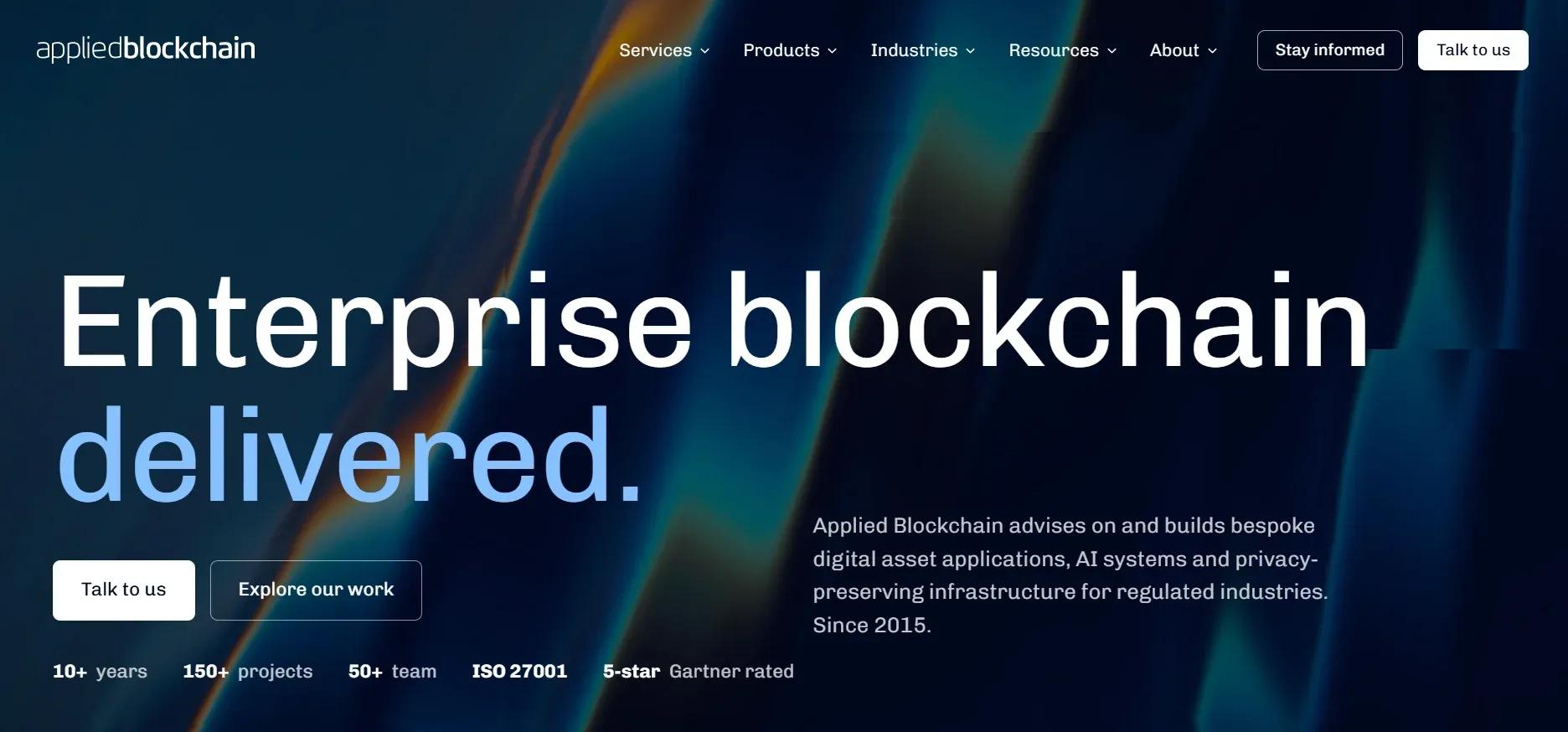
Applied Blockchain is a London firm building multi-chain enterprise Web3. It works across Polkadot, Ethereum, Canton, Hedera, and Aptos, and ships demos in two weeks. So it suits fast, sector-specific enterprise blockchain builds.
Key strengths: multi-chain enterprise Web3, Matakit, and rapid MVPs.
Why they stand out: broad multi-chain skill and rapid, two-week demo delivery. Its daily reporting and risk assessments suit enterprise clients. So it fits ambitious, sector-specific builds.
6. Parity Technologies
Base: London, United Kingdom.
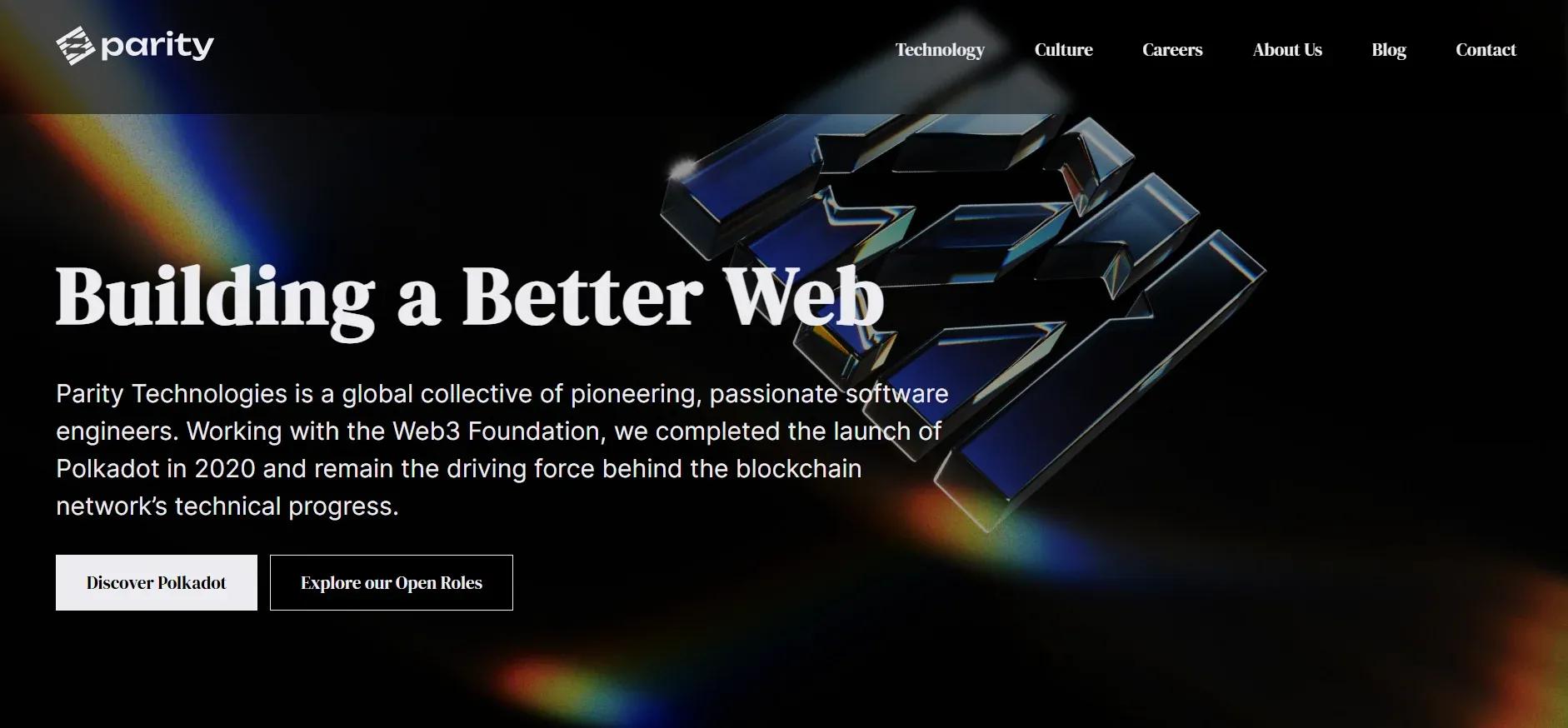
Parity Technologies is a core contributor to Polkadot and the Substrate framework. It builds the infrastructure behind custom, interoperable blockchains. So it suits teams building their own sovereign chain or appchain.
Key strengths: Polkadot, Substrate, and appchain infrastructure.
Why they stand out: deep protocol engineering and Polkadot leadership from a London base. Its Substrate framework powers many custom chains worldwide. So it fits teams building their own sovereign chain.
7. Alchemy
Base: London, United Kingdom.
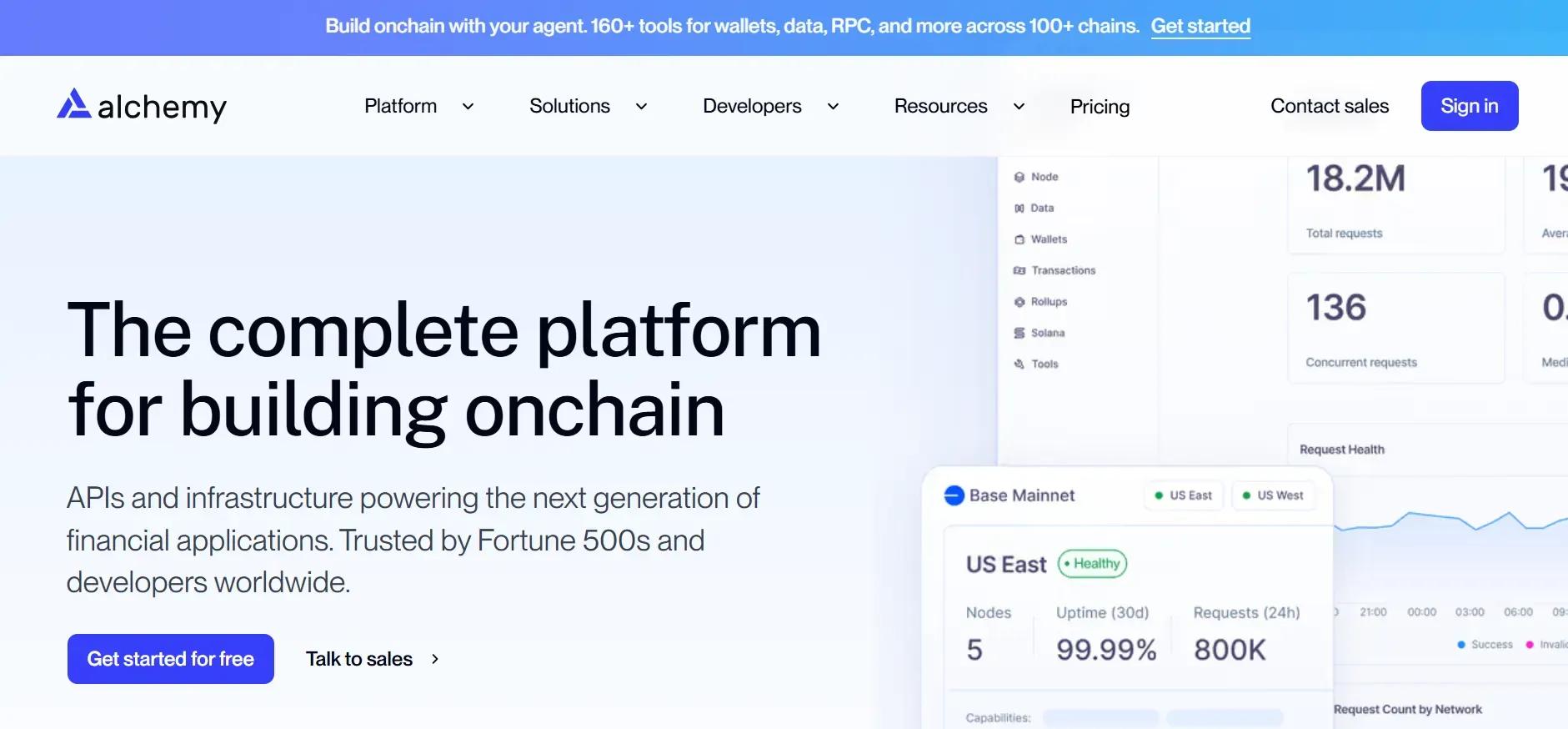
Tech Alchemy is a Shoreditch product studio spanning Web3, blockchain, and fintech. It builds startup MVPs and scalable Web3 apps with a product focus. So it suits founders launching Web3 products.
Key strengths: Web3 MVPs, blockchain products, and fintech builds.
Why they stand out: strong product thinking and a startup-friendly approach. Its Shoreditch base keeps it close to the London fintech scene. So it suits founders taking a new Web3 product to market.
8. Web3 Labs
Base: London, United Kingdom.
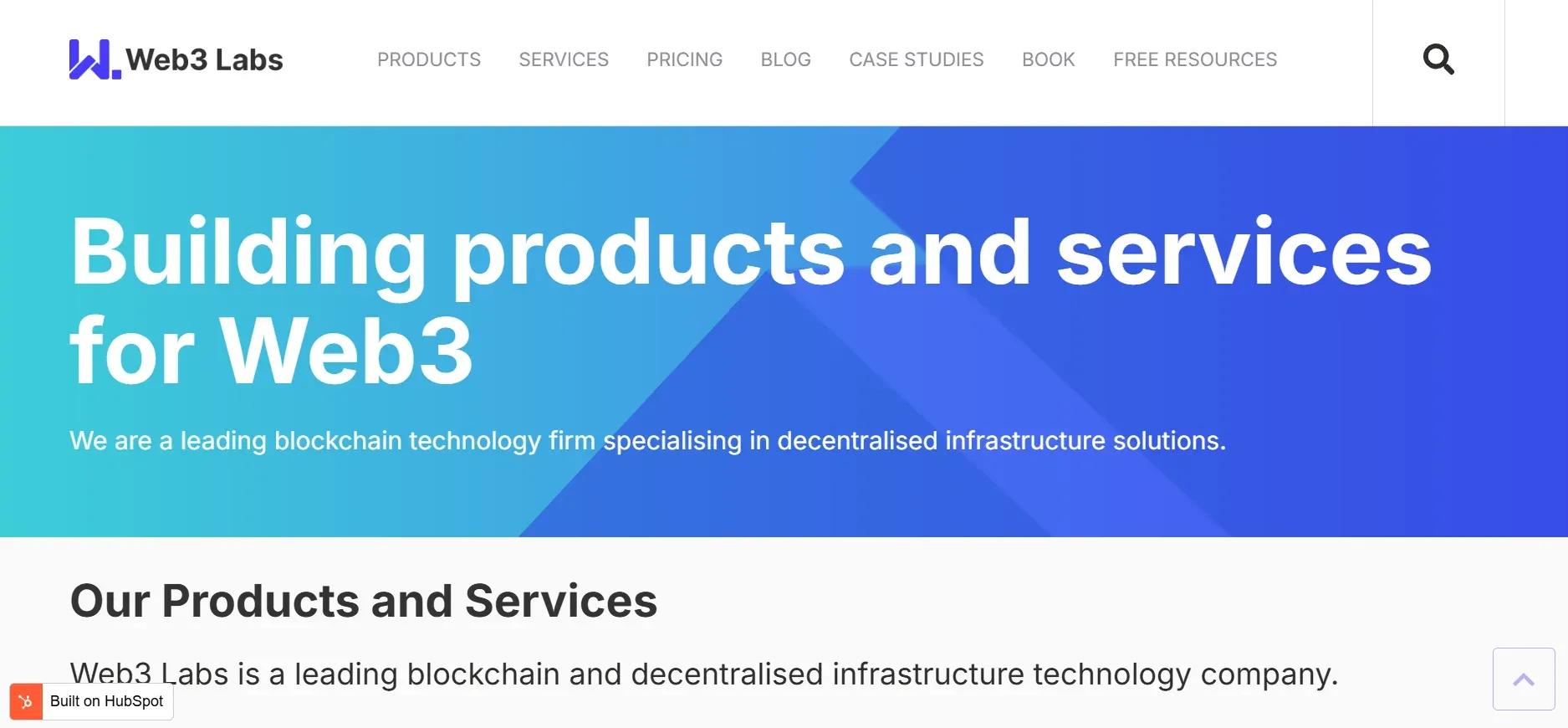
Web3 Labs is a British firm known for Ethereum tooling and enterprise dApps. It created popular open-source developer tools for Ethereum. So it suits Ethereum-first and enterprise blockchain work.
Key strengths: Ethereum tooling, Web3j, and enterprise dApps.
Why they stand out: deep Ethereum expertise and genuine open-source credibility. Its developer-tooling heritage speeds enterprise delivery. So it fits Ethereum-first and enterprise blockchain work at scale.
9. Ronins

Base: London, United Kingdom.
Ronins is a London Web3 development studio building digital products for startups and enterprises. It spans blockchain, Web3 games, design, and strategy. So it suits product-led, end-to-end Web3 builds.
Why they stand out: genuine UK delivery across product and strategy. Its full-service model suits end-to-end Web3 projects.
10. RedDuck
Base: Serves the United Kingdom.
RedDuck specialises in distributed ledger technology, smart contracts, and DApps. It holds a strong Clutch rating, with clients praising delivery and responsiveness. So it suits focused DApp and distributed-ledger projects.
Why they stand out: strong reviews and a clear blockchain focus. However, it serves the UK from abroad, so confirm the delivery model.
What Is a Blockchain Development Company
A blockchain development company is a firm that designs, builds, and secures decentralised systems and applications for its clients. It writes smart contracts, builds dApps, and integrates blockchain with existing software. So the result is a working product, not just a concept.
The work spans several disciplines. It includes protocol selection, smart-contract engineering, security audits, and integration. In addition, it covers tokenomics, wallets, and front-end design. Therefore, the output is a complete, secure system.
This is where good and great firms diverge. The best UK blockchain development companies blend on-chain work with the wider stack. They connect on-chain logic to APIs, databases, and cloud infrastructure. Increasingly, they also fold in AI, drawing on generative AI development to build smarter, adaptive products.
Core Blockchain Development Services
The best blockchain development companies share a core service set. It spans smart contracts, dApps, tokenisation, and integration. So most projects need several at once.
Smart contract development. Engineers write and audit the contracts behind ownership and logic. As a result, correctness and security lead every decision.
dApp development. Teams build the interface and on-chain logic together. Therefore, users get a real product, not a raw ledger.
Tokenisation. Developers turn assets into tradable tokens with clear rules. Meanwhile, tokenomics keeps the economy stable.
DeFi platforms. Firms build lending, trading, and staking systems. So finance moves on-chain safely.
Enterprise integration. Engineers connect blockchain to existing systems and data. Consequently, the ledger fits the business.
Security audits. Independent audits catch flaws before launch. In addition, they protect treasuries and users. Many teams pair this with strong DevOps implementation to keep releases safe.
Corda vs Hyperledger vs Ethereum: Which Fits UK Enterprises
For UK blockchain development companies, platform choice is one of the biggest early decisions. Corda, Hyperledger, and Ethereum each suit a different job. So a good partner picks the platform to fit your governance, not its own preference.
R3 Corda. A permissioned platform built for regulated finance. Therefore, it suits banks needing privacy, finality, and audit trails.
Hyperledger Fabric. A permissioned framework for private enterprise networks. Meanwhile, it suits supply chains and known participants.
Ethereum and EVM chains. Public networks with the biggest ecosystem. As a result, they suit Web3, DeFi, and composable products.
The choice should follow your rules and data-privacy needs. So a public chain fits consumer Web3, while Corda or Hyperledger fit regulated, private data. A strong partner explains this clearly, rather than pushing one stack.
Getting this wrong is costly. A public chain for private financial data can breach privacy rules. Meanwhile, a permissioned chain for a consumer product loses network effects. So the platform decision deserves real discovery time, not a default.
UK Blockchain Regulation and the FCA
For UK blockchain development companies and their clients, regulation has matured, and the FCA now shapes much of the landscape. Firms handling cryptoassets face registration, anti-money-laundering, and financial-promotion rules. So compliance belongs in the design, not the launch review.
The details matter for real products. A token that acts as an investment may fall within FCA scope, and some NFTs may count as specified investments. In addition, UK-GDPR governs any personal data on or off chain. Therefore, a good partner assesses regulatory scope before writing a line of code. You can check the current rules on the FCA cryptoasset pages.
A serious UK firm bakes this in from day one. It structures tokens carefully, adds KYC and AML where needed, and documents decisions for counsel. So it flags where a solicitor must decide, rather than guessing at the rules.
This is a genuine differentiator in the UK. An agency that can explain FCA scope, UK-GDPR duties, and audit practice has built compliance into its work. One that defers entirely to your legal team has not. So treat regulatory fluency as a core selection criterion, not an afterthought.
The Blockchain Talent Gap (and How Softaims Helps)
The biggest barrier facing UK blockchain development companies and their clients is not ideas. It is people. Skilled blockchain engineers are scarce and expensive across Britain. So even a great concept stalls without the talent to build it.
This is where a marketplace changes the equation. With Softaims, you hire vetted blockchain developers in 48 hours, not months. You choose the exact skills, from Solidity to Corda to security auditing, and you own the work. In addition, you can pair them with LLM development and AI specialists as the product grows.
So the leading firms supply full-service delivery. Softaims supplies the flexible, UK-aligned talent to build in-house or top up a team. Together, that closes the gap that stalls so many blockchain projects.
This matters most for fast-moving teams. A single blockchain engineer cannot cover contracts, front-end, and security alone. So adding vetted specialists on demand keeps the project moving without a long, costly hiring cycle. It also means you pay for the exact skills you need, when you need them.
How Much Does Blockchain Development Cost in the UK
Here is the honest truth about pricing that most agencies avoid. Across UK blockchain development companies, costs vary widely by scope, chain, and security depth. A simple token or dApp costs far less than a full DeFi platform or enterprise ledger. So treat any single figure with real caution, and always ask what drives it.
Leading London blockchain teams charge roughly £120 to £250 an hour, depending on seniority and scope. A simple token or basic dApp often starts in the low tens of thousands of pounds. Meanwhile, mid-complexity platforms run higher, and enterprise systems reach six figures or more. Security audits, integrations, and FCA compliance all add cost.
Talent is the largest and most variable line. UK blockchain engineers command premium rates, since demand outstrips supply. A vetted marketplace can cut that cost, since you hire only the exact skills and hours you need. In addition, a flexible team that scales down after launch keeps running costs sensible.
How to Choose the Right Blockchain Development Company
The best blockchain development companies make choosing easy, because they show evidence, not adjectives. To choose the right one, verify shipped work, audit practice, and FCA awareness. Remember, a polished pitch is not proof, and a confident sales team is not an engineering team. So work through these checks before you sign.
Ask for shipped systems. Request live products and audited contracts. Because demos rarely survive real users, this is the first filter.
Check audit discipline. Ask for audit reports and the auditor's name. In addition, confirm secure coding practice.
Probe FCA awareness. Ask whether your product falls within FCA scope. So you avoid a costly compliance surprise.
Confirm ownership. You should own the contracts, code, and IP. Moreover, insist there is no lock-in.
Verify delivery location. For any partner, confirm where engineers sit. Therefore, you understand time zones and support.
Why Blockchain Projects Fail
Blockchain projects rarely fail because the technology is impossible. They fail for a handful of human, avoidable reasons. Even the best blockchain development companies have seen it happen. So learn these traps now, and you can steer around every one.
Insecure contracts. Unaudited code loses funds fast. Therefore, independent audits are non-negotiable.
Poor tokenomics. A broken economy collapses under real users. So model and stress-test it early.
Compliance ignored. A UK token can trigger FCA rules. Meanwhile, a good partner plans for this from day one.
No real use case. Blockchain for its own sake fails. As a result, a clear problem-fit keeps projects alive.
Talent gaps. A team without deep skill ships bugs. Consequently, securing the right engineers matters most.
Types of Blockchain Development
Not all blockchain work is the same, and buyers often conflate very different projects. Blockchain development splits into clear types, and each needs different skills. Knowing them helps you brief the right partner and avoid paying for skills you do not need. So match the type to your goal before you shortlist.
Public blockchain apps. These run on open chains like Ethereum or Solana. Therefore, they suit Web3, DeFi, and consumer products.
Private and permissioned ledgers. These run on closed enterprise networks like Corda. Meanwhile, they suit banks and regulated data.
Smart contract development. This is the core logic behind ownership and rules. As a result, security and auditing matter most.
Token and DeFi systems. These handle value, trading, and rewards. So tokenomics and FCA compliance take centre stage.
Enterprise integration. This connects blockchain to existing software and data. Consequently, the ledger fits the business.
Security and Smart Contract Audits
In most software, a bug is annoying. In blockchain, a bug can be catastrophic and permanent. Security is the single most important part of any blockchain development company's work. One flawed smart contract can drain a treasury in a single, irreversible transaction. So reputable blockchain development companies treat audits as non-negotiable, and you should too.
A mature approach layers several defences. It combines secure coding, automated scanning, and independent third-party audits. In addition, it uses testnets and bug bounties before mainnet launch. Therefore, flaws surface before attackers find them.
Above all, insist on proof. Ask for the audit report, the auditor's name, and the fixes made. A firm that cannot show one has not earned your treasury. So make audit evidence a hard requirement, not a nice-to-have. In the UK, this matters doubly. A public breach can also trigger scrutiny from the FCA and the ICO.
The Blockchain Development Process
The blockchain development process moves through clear stages, from idea to live product. Each stage ends in a deliverable, so risk stays visible. Knowing the arc helps you plan with any partner.
Discovery and design. The team defines the use case, chain, and architecture. So the project starts with a clear target.
Smart contract build. Engineers write and test the core logic. Therefore, correctness is proven early.
Audit and testing. Independent auditors review the contracts. Meanwhile, testnets catch issues before launch.
Integration and front-end. Teams connect the chain to apps and data. As a result, users get a real product.
Launch and support. The product ships behind monitoring, with upgrades planned. Consequently, it stays secure and current.
How to Engage a Blockchain Partner in the UK
You can work with blockchain development companies in three ways: a full-service agency, an in-house team, or a vetted marketplace. Each fits a different need. So match the model to your stage and budget.
Full-service agency. A firm builds the whole product for you. However, it costs the most and can mean less control.
In-house team. Hiring gives control, yet UK blockchain talent is scarce and slow to recruit. Meanwhile, salaries run high.
Vetted marketplace. You hire pre-screened developers fast, then scale up or down. As a result, you keep control and ownership without a long search.
For many UK teams, a blend works best. Start with marketplace talent to move fast, then add a managed team for a full build. So you get speed, flexibility, and full ownership together.
Industries Using Blockchain in the UK
The UK industries served by blockchain development companies most in 2026 are finance, supply chain, real estate, and gaming. Each uses blockchain to cut fraud, add transparency, or move value. So the best blockchain development companies tailor solutions to sector needs.
Financial services. Banks use blockchain for payments, settlement, and tokenised assets. Notably, London's institutions lead here.
Supply chain. Firms track goods from source to shelf on-chain. Meanwhile, provenance and trust improve.
Real estate. UK firms tokenise property for fractional ownership. As a result, illiquid assets become tradable.
Gaming and Web3. Studios build owned assets and token economies. So players gain real stakes, as seen among blockchain game development companies.
Government and identity. Agencies pilot digital identity and records. Therefore, public services gain transparency.
Blockchain Development Trends for 2026
The UK blockchain development companies leading in 2026 build around three big trends. These are real-world asset tokenisation, Layer 2 scaling, and AI integration. So these shifts should shape your shortlist.
Real-world asset tokenisation. UK firms tokenise property, bonds, and funds. As a result, illiquid assets become tradable.
Layer 2 scaling. Rollups cut cost and speed up transactions. Meanwhile, they make dApps usable at scale.
AI and blockchain. Teams weave AI into on-chain products. So AI agents automate and personalise Web3.
Institutional adoption. UK banks move from pilots to production. Therefore, permissioned chains keep growing.
Regulation-ready builds. FCA-aligned compliance is now designed in. Consequently, KYC and audit trails ship by default.
Frequently Asked Questions
Which are the best blockchain development companies in the UK?
R3, Quant Network, and Applied Blockchain lead among British firms. Parity Technologies, Tech Alchemy, Web3 Labs, and Ronins round out strong options. Softaims and Devaims suit teams that want speed, UK alignment, and full ownership.
How much does blockchain development cost in the UK?
Leading London teams charge £120 to £250 an hour. A simple token or dApp often starts in the low tens of thousands of pounds. Enterprise systems reach six figures or more.
Do UK blockchain projects face FCA regulation?
They can. A token that acts as an investment may fall within FCA scope, and some NFTs may count as specified investments. So assess regulatory scope before you build.
What is the difference between Corda, Hyperledger, and Ethereum?
Corda and Hyperledger are permissioned, and suit regulated, private networks. Ethereum is public, and suits Web3 and DeFi. The choice should follow your governance and privacy needs.
How does Softaims help with blockchain?
Softaims lets you hire vetted, UK-aligned blockchain developers fast, then own the work. It closes the talent gap that stalls many projects. So you can build securely with skilled people.
Who owns the code and contracts?
You should own all of it. Confirm ownership of the contracts, code, and IP in writing. This avoids vendor lock-in later.
Conclusion
The UK has everything blockchain needs to thrive. It has the talent, the capital, and now a maturing regulatory framework. The blockchain development companies in this list prove it, building real systems across finance, supply chain, and Web3. But a great market does not guarantee a great build. The partner you choose still decides whether your project ships or stalls.
So make the decision on evidence, not on a polished pitch. Here is the short checklist that separates a safe partner from a costly one. Work through it before you sign anything.
- See it live. Ask for a shipped product and a real client reference. A demo is not proof.
- Demand the audit. Request the smart-contract audit report and the auditor's name. No audit means no launch.
- Test FCA awareness. Ask whether your token or NFT falls within FCA scope. A good partner answers with specifics.
- Pin down ownership. Confirm in writing that you own the contracts, code, and IP. Avoid any lock-in.
- Check the platform logic. Make sure they chose Corda, Hyperledger, or Ethereum for your needs, not their habit.
- Confirm the delivery location. Know exactly where your engineers sit, since it shapes time zones and support.
Get those six answers, and you will avoid the failures that sink most projects. Get them wrong, and no amount of talent will save the build.
There is also a faster path than the traditional agency hunt. If your real blocker is finding senior talent, a vetted marketplace solves it directly. Softaims matches you with vetted, UK-aligned blockchain developers within 48 hours, and you own everything you build. For a full, managed product, its delivery brand can take the whole thing off your plate. Either way, you keep control, speed, and ownership. To start, hire blockchain developers or get in touch to scope your project.


 GitHub
Jesse S.

 Verified Expert in Engineering
My name is Jesse S. and I have over 4 years of experience in the tech industry. I specialize in the following technologies: Ethereum, Smart Contract, Python, NFT, Solidity, etc.. I hold a degree in , , . Some of the notable projects I’ve worked on include: Dogechain Dev, YieldWolf Developer and Consultant, Blockchain Developer - Open Source Blockchain Betting Platform, Blockstack (Stacks). I am based in Orwigsburg, United States. I've successfully completed 4 projects while developing at Softaims.
Information integrity and application security are my highest priorities in development. I implement robust validation, encryption, and authorization mechanisms to protect sensitive data and ensure compliance. I am experienced in identifying and mitigating common security vulnerabilities in both new and existing applications.
My work methodology involves rigorous testing—at the unit, integration, and security levels—to guarantee the stability and trustworthiness of the solutions I build. At Softaims, this dedication to security forms the basis for client trust and platform reliability.
I consistently monitor and improve system performance, utilizing metrics to drive optimization efforts. I’m motivated by the challenge of creating ultra-reliable systems that safeguard client assets and user data.

Leave a Comment
Need help building your team? Let's discuss your project requirements.
Get matched with top-tier developers within 24 hours and start your project with no pressure of long-term commitment.