Top 10 Companies Developing Blockchain in the USA 2026
Thinking about building with blockchain in 2026? Here are 10 of the best US blockchain development companies to consider, from Softaims and Devaims to established specialists.
Table of contents
Key Takeaways
- Blockchain is now US infrastructure. Clearer SEC and CFTC rules fuel adoption.
- Verify delivery. Many "US" blockchain firms deliver from abroad, so confirm.
- Security is non-negotiable. One unaudited contract can drain a treasury.
- Talent is the real barrier. Skilled US blockchain engineers are scarce and costly.
- Own your code. Confirm ownership of contracts, code, and IP in writing.
- Softaims closes the gap. Hire vetted, US-aligned blockchain developers fast.
Blockchain has crossed from crypto hype into serious US business infrastructure. It now powers payments, tokenized assets, supply chains, and enterprise automation across the country. So the question for American leaders is no longer whether to use blockchain. It is which of the many blockchain development companies can actually build it well.
That choice carries real weight in 2026. Clearer US rules from the SEC and CFTC have unlocked enterprise adoption. Yet a weak vendor can still ship an insecure contract that drains a treasury. Meanwhile, skilled blockchain engineers stay scarce, with the US facing a shortage of over one million software professionals. So picking a proven, verified builder matters more than ever.
This guide ranks the top blockchain development companies in the USA for 2026. It draws on verified client reviews and covers firms building real blockchain systems, from smart contracts to Web3 platforms. Softaims and Devaims open the list, followed by eight recognized US-based specialists. If you want to build now, you can hire vetted blockchain developers and own every line of code.
How We Ranked These Blockchain Development Companies
We ranked these blockchain development companies on verified reviews, security discipline, and genuine US delivery. A firm had to show shipped systems and real client feedback, not just claims. Each criterion below reflects what a US buyer should demand.
Verified track record. Independent, verified reviews beat marketing copy. Therefore, we favored firms with strong Clutch ratings.
Security and audits. One flawed contract can lose funds instantly. As a result, we weighted secure coding and audit practice.
US delivery transparency. Many "US" firms deliver from abroad. Consequently, we state where each firm actually works.
Protocol depth. Real skill spans Ethereum, Solana, and Hyperledger. Moreover, we valued multi-chain expertise.
Talent and flexibility. Blockchain engineers are scarce and costly. So we valued firms that make that skill accessible fast.
Best Blockchain Development Companies in the USA: Comparison Table
The top blockchain development companies in the USA for 2026 include Softaims, Devaims, Quest Global Technologies, and Pharos Production. SpaceDev, Aetsoft, SoluLab, Iron Forge Development, and Iterate complete the list. This table sets them side by side.
Company | Base | Delivery | Rate | Best for |
| Softaims | US and global | Vetted marketplace | Flexible | Owning your build with full control |
| Devaims | US and global | Managed delivery | Custom | Accountable end-to-end delivery |
| Quest Global Technologies | Gilbert, AZ | US and offshore | $50–99/hr | Smart contracts and DApps |
| Pharos Production | Las Vegas, NV | US and EE | $50–99/hr | Scalable blockchain systems |
| Boosty Labs | New York, NY | US and EE | $50–99/hr | Team integration and DeFi |
| SpaceDev | Miami, FL | US and nearshore | $50–99/hr | End-to-end blockchain builds |
| Aetsoft | Sheridan, WY | US and EE | $50–99/hr | Cost-effective smart contracts |
| SoluLab | New York, NY | US and India | $25–49/hr | Flexible blockchain teams |
| Iron Forge Development | Palm Beach Gardens, FL | US-based | $150–199/hr | Product-led custom builds |
| Iterate | Los Angeles, CA | US-based | $150–199/hr | Boutique, partnership builds |
Details reflect public Clutch profiles as of 2026 and can change, so verify each firm before you commit. Delivery models are noted openly.
The Top 10 Blockchain Development Companies in the USA
This section profiles ten blockchain development companies in the USA for 2026. The list includes Softaims and Devaims. Each entry states the base and core strengths. So you can match a partner to your project, your budget, and your time zone.
1. Softaims
Softaims is a vetted developer marketplace for US blockchain and Web3 talent. Rather than a fixed vendor, it gives you a live bench of pre-screened engineers. You filter by skill, chain, seniority, and rate, then hire in 48 hours. So you build with people who have shipped audited contracts and real dApps, and you own every result.
Key services of Softaims
- Smart contract engineering: hire specialists for blockchain development in Solidity, Rust, and audited contract design.
- dApp and Web3 builds: engineers deliver blockchain front-end, back-end, and on-chain logic together.
- Blockchain plus AI: teams pair on-chain work with machine learning and generative AI integration for smarter products.
- Staff augmentation: add one developer or a full pod, and scale as the roadmap grows.
Why they stand out
Softaims closes the real bottleneck in US blockchain: scarce, expensive talent. So instead of a long hire, you hire vetted blockchain developers fast and keep full ownership. Every engagement runs with US time-zone overlap, so decisions happen in your own working hours. Review the pricing or talk to the team to plan a build.
2. Devaims
Devaims is a US-based managed delivery company and a Softaims brand. It builds full blockchain products end to end, from architecture to launch. So a team without in-house Web3 skill still ships a finished, secure product. It became part of Softaims after an August 2026 acquisition.
Key services of Devaims
- Full-cycle blockchain builds: it delivers smart contracts, dApps, and the software around them.
- Single-team accountability: one team owns the build, the audits, and the delivery date.
- Ongoing support: the same team maintains and upgrades the system after launch.
Why they stand out
Devaims pairs accountable US delivery with the Softaims vetted bench. So you get managed builds and on-demand blockchain talent together. This suits teams that want a finished product on a fixed date, without juggling several vendors.
3. Quest Global Technologies
Base: Gilbert, Arizona.
Quest Global Technologies is a well-regarded blockchain firm with a 5.0 Clutch rating across dozens of reviews. It focuses on smart contracts, DApps, and distributed ledger technology. Notably, clients praise its technical expertise and timely delivery. So it suits smart-contract and DApp projects that need proven delivery.
Why they stand out: strong reviews and a clear blockchain focus across smart contracts and DApps. However, delivery spans offshore teams, so confirm where your engineers sit.
4. Pharos Production
Base: Las Vegas, Nevada.
Pharos Production holds a 5.0 Clutch rating across more than a hundred reviews. It specializes in smart contracts, dApps, and scalable blockchain systems. So it suits projects that need proven scale and delivery.
Why they stand out: a deep review record and strong project management on scalable systems. However, delivery runs partly from Eastern Europe, so confirm the working model.
5. Boosty Labs
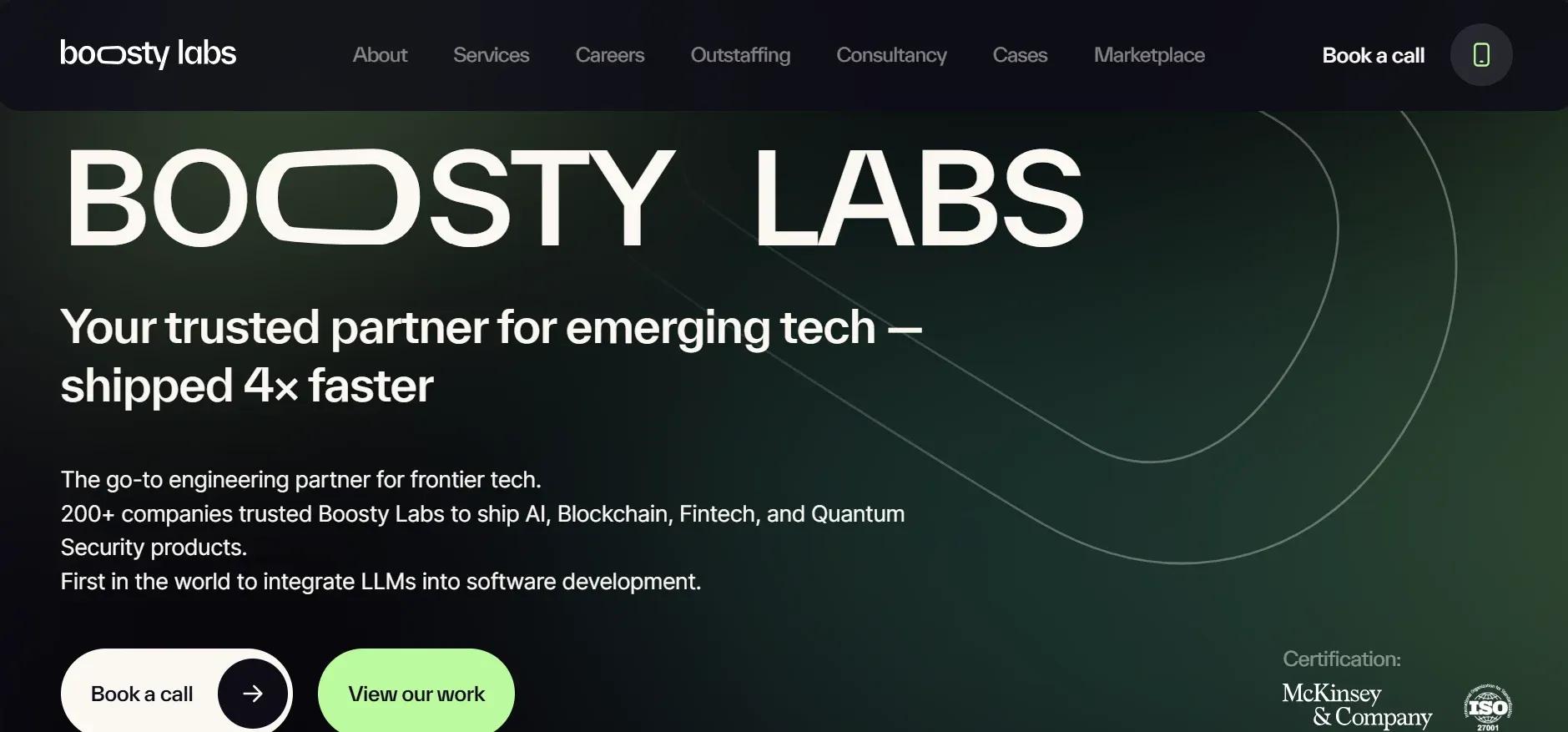
Base: New York, New York.
Boosty Labs offers blockchain, smart contract, and DApp development with strong team integration. Reviews highlight its deep expertise and seamless collaboration. So it suits teams wanting embedded blockchain talent.
Why they stand out: excellent team integration and DeFi depth. However, its roots are in Eastern Europe, so confirm delivery.
6. SpaceDev
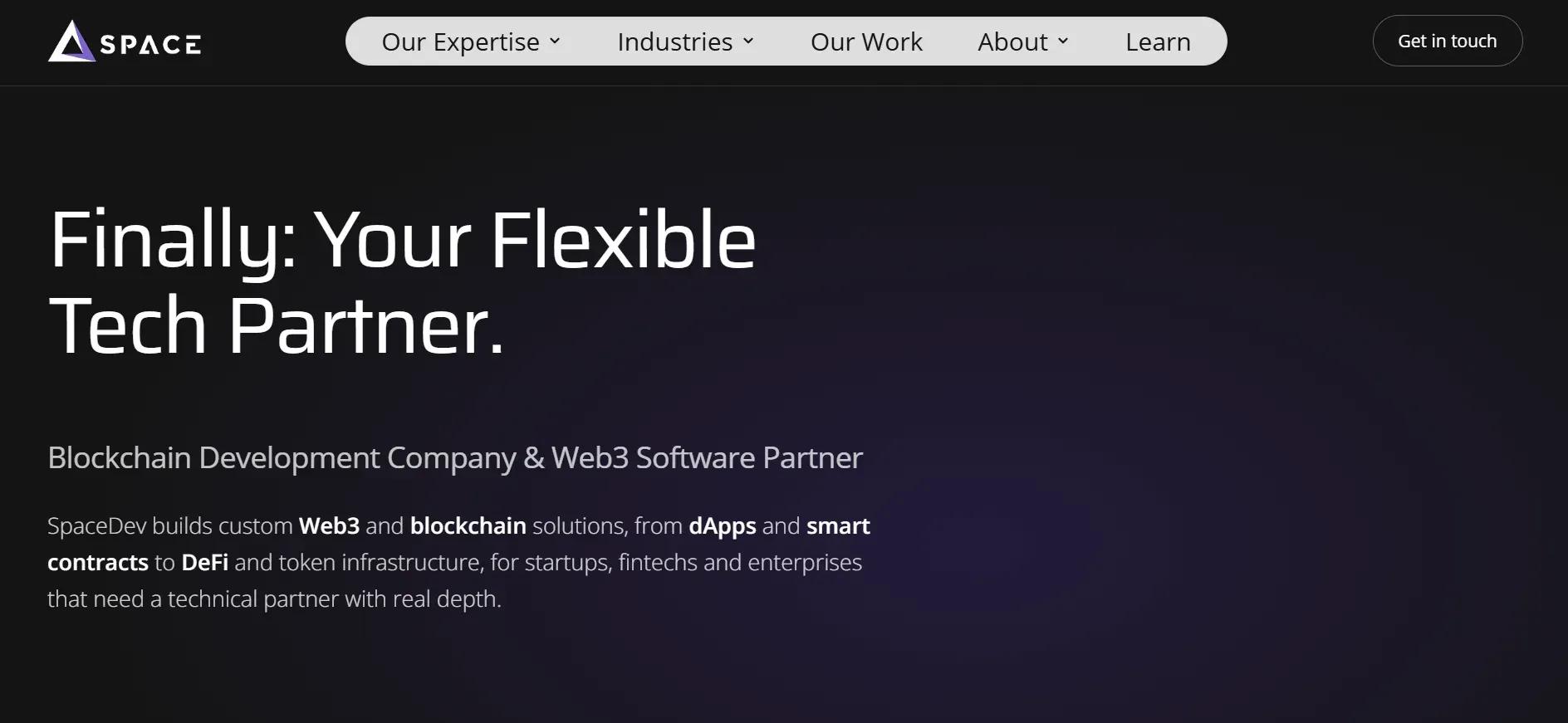
Base: Miami, Florida.
SpaceDev delivers comprehensive blockchain solutions with a 5.0 Clutch rating across many reviews. It covers smart contracts, dApps, and end-to-end builds. So it suits full, end-to-end blockchain projects that value culture fit.
Why they stand out: strong delivery and cultural alignment. However, delivery is nearshore from Latin America, so confirm it.
7. Aetsoft
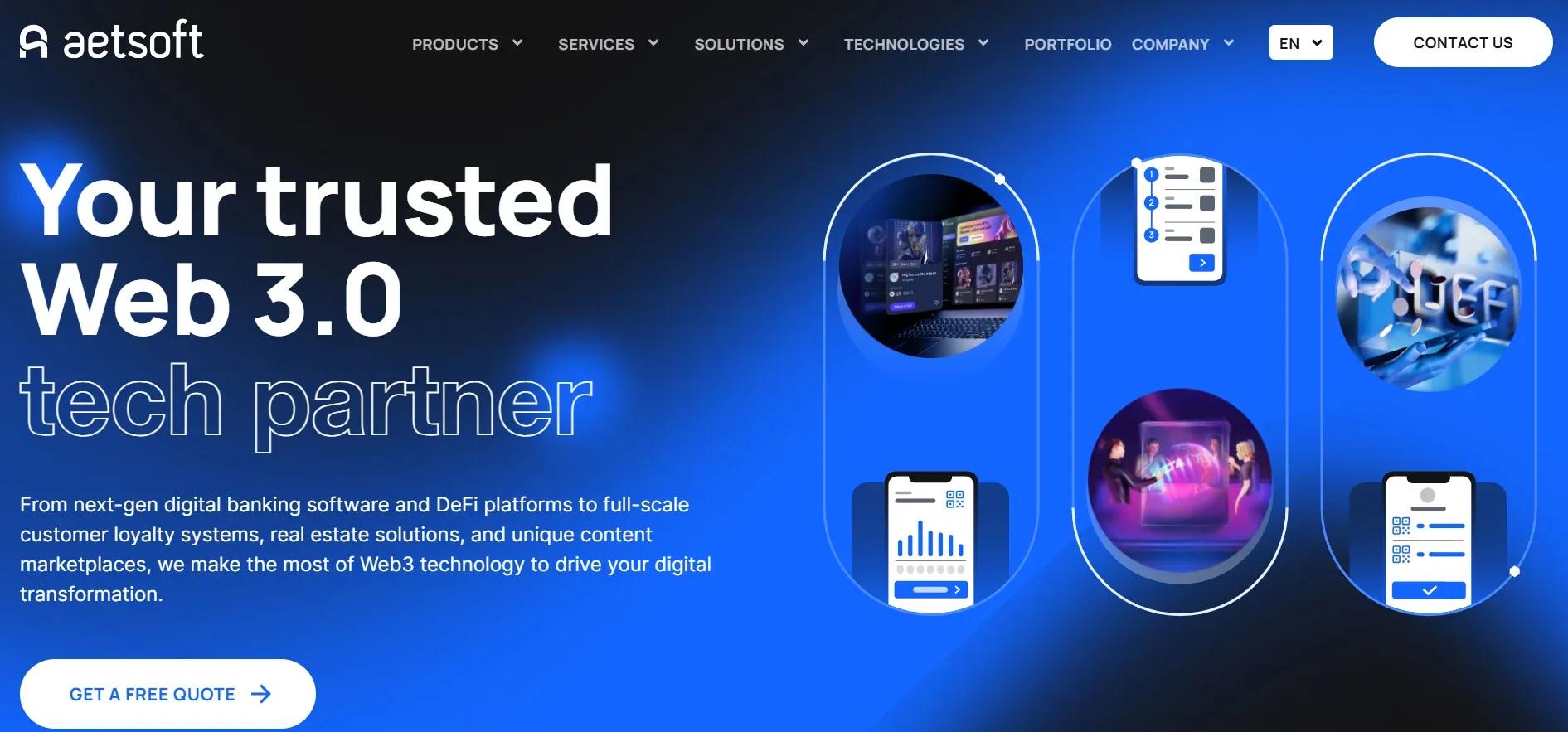
Base: Sheridan, Wyoming.
Aetsoft specializes in blockchain technology and smart contract development. Over 90% of reviewers praise its expertise and cost-effective solutions. So it suits budget-aware smart-contract work at scale.
Why they stand out: strong reviews and competitive pricing. However, core delivery sits in Eastern Europe, so confirm it.
8. SoluLab
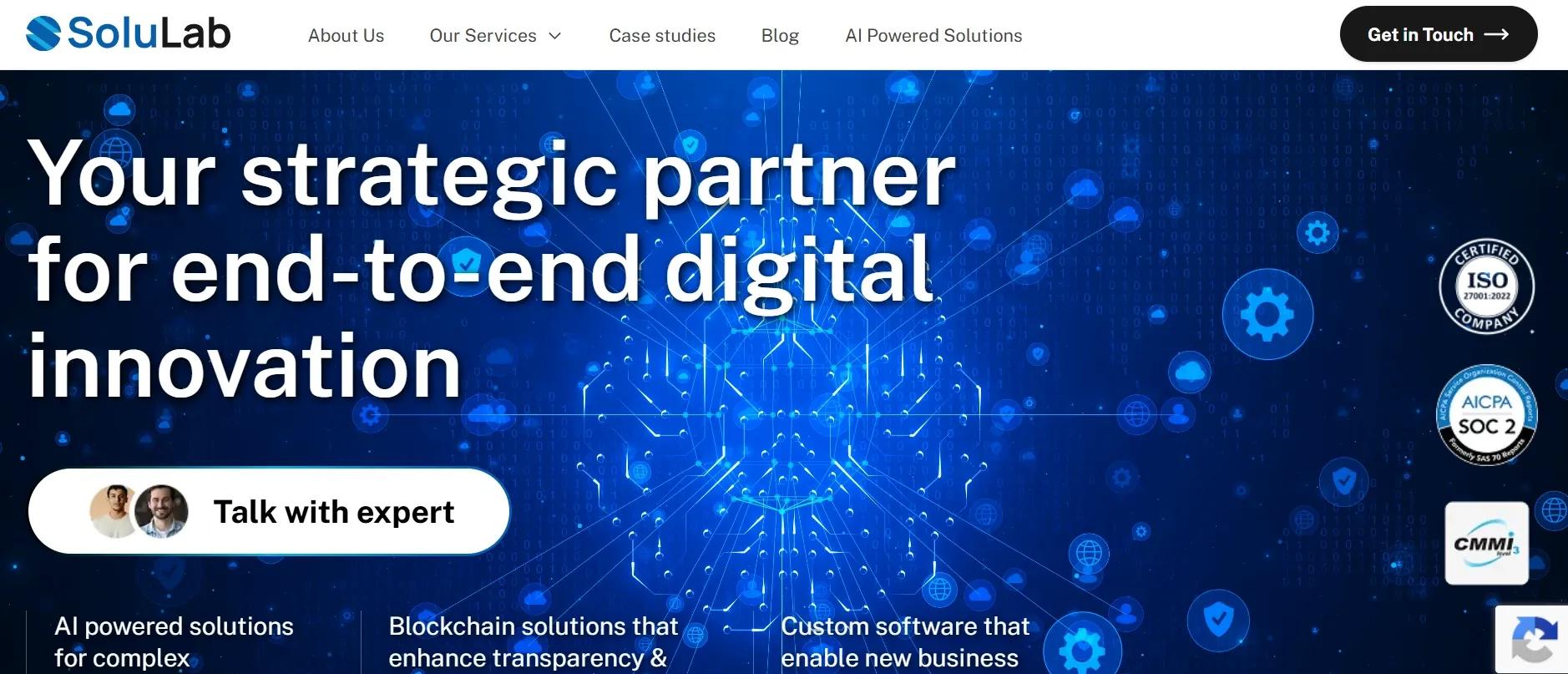
Base: New York, New York.
SoluLab is a well-known blockchain firm with strong smart-contract and dApp expertise. It offers flexible, dedicated teams across Web3 and AI. So it suits businesses wanting adaptable blockchain teams.
Why they stand out: flexible engagement and broad Web3 coverage. However, delivery spans the US and India, so confirm it.
9. Iron Forge Development
Base: Palm Beach Gardens, Florida.
Iron Forge Development is a US software firm spanning custom software, blockchain, and AI. Clients praise its flexibility, reliability, and thought-partnership. So it suits product-led builds that need a strategic partner.
Why they stand out: genuine US delivery and strong product thinking, acting as a real thought partner. Its higher rate reflects senior, onshore engineering that stays in your time zone.
10. Iterate
Base: Los Angeles, California.
Iterate is a boutique US firm focused on custom software and blockchain. Every reviewer praises its technical skill and partnership approach. So it suits teams wanting a close, senior collaborator.
Why they stand out: a genuine US team and a close partnership mindset. Its boutique size suits focused, high-touch projects where senior attention matters most.
What Is a Blockchain Development Company
A blockchain development company helps businesses design, build, and secure blockchain-based products. These companies develop smart contracts, decentralized applications (dApps), digital wallets, and other Web3 solutions. They also connect blockchain systems with existing business software, APIs, and databases.
The best blockchain development companies do more than write code. They help you choose the right blockchain network, design the system architecture, test smart contracts, and prepare the product for launch. Their work can also include token development, security audits, wallet integration, and blockchain consulting.
For US businesses, choosing an experienced blockchain development company in the USA can make the process easier. A strong team understands both blockchain technology and the wider software stack. It can connect on-chain logic with cloud platforms, APIs, databases, and existing applications.
Many blockchain development companies are also combining blockchain with AI. For example, businesses can use generative AI development to create smarter Web3 applications, automate workflows, and build more adaptive products.
In short, a good blockchain development company turns a blockchain idea into a secure, working product that people can actually use.
Core Blockchain Development Services
The best blockchain development companies offer more than basic blockchain coding. Their services cover everything from smart contract development and dApp development to tokenization, DeFi, enterprise integration, and security audits.
Most blockchain projects need several of these services working together. Here are the core blockchain development services businesses commonly need:
Smart contract development. Blockchain developers write, test, and audit smart contracts that control transactions, ownership, and business logic. Secure contract development helps prevent costly bugs and vulnerabilities before the product goes live.
dApp development. Developers build decentralized applications that combine user-friendly interfaces with blockchain-based logic. A strong dApp development team connects the front end, back end, wallets, APIs, and smart contracts into one working product.
Token development and tokenization. Blockchain developers can turn digital or real-world assets into tokens with defined ownership and transaction rules. They also design tokenomics to support how the asset is created, distributed, and used.
DeFi development. Decentralized finance platforms support services such as lending, trading, staking, and asset management without relying on traditional intermediaries. DeFi development requires strong smart contracts, security testing, and a clear understanding of blockchain protocols.
Enterprise blockchain development. Businesses can use blockchain to improve data sharing, traceability, payments, and transaction records. Enterprise blockchain development connects blockchain networks with existing databases, APIs, cloud systems, and business applications.
Blockchain security and audits. Security should be part of blockchain development from the beginning. Independent smart contract audits, automated testing, code reviews, and penetration testing can help identify vulnerabilities before attackers find them. Many teams also combine blockchain security with reliable DevOps implementation to make deployments safer.
Blockchain integration. Blockchain applications rarely work alone. Development teams connect wallets, payment systems, APIs, databases, cloud platforms, and existing business software so the blockchain solution fits naturally into the company's technology stack.
When choosing a blockchain development company, look for a team that can handle these services from planning through launch. The right partner should understand your business goal first, then recommend the blockchain technology and services that actually support it.
US Blockchain Regulation in 2026
For US blockchain development companies, regulation grew clearer in 2026, and that clarity fuels adoption. Federal agencies now give firmer guidance on tokens, exchanges, and stablecoins. So enterprises can build with more confidence than before.
Several bodies shape the rules. The SEC oversees securities questions, while the CFTC handles many digital commodities. In addition, FinCEN enforces anti-money-laundering rules, and states run money-transmitter licensing. Therefore, a good partner designs compliance in from day one.
This matters most for token and finance projects. A token that acts as a security triggers SEC obligations, and exchanges need KYC and AML controls. So the strongest blockchain development companies build audit-ready systems, not afterthoughts.
The 2025 stablecoin rules changed the game, too. Clearer federal guidance made regulated stablecoins viable for real payments. Therefore, US banks and fintechs are now building on-chain payment rails in earnest. So a partner fluent in both code and compliance is worth far more than a pure coder.
Why Verified Reviews Matter When Choosing
Verified reviews matter because the market for blockchain development companies is full of bold claims. A platform like Clutch confirms that a reviewer actually worked with a firm. So verified feedback is far more reliable than a testimonial on a homepage.
Look past the star rating to the substance. Read what clients say about deadlines, communication, and security. Meanwhile, check the number of reviews, since a handful tells you little. Therefore, weight depth and consistency, not just a perfect score.
Verification also protects against the offshore-in-disguise problem. Many firms list a US address but deliver from abroad. So confirm where engineers actually sit before you sign.
This is not about penalizing offshore talent, which can be excellent. It is about knowing what you are buying. Time-zone overlap, contract law, and data residency all depend on where work happens. So transparency, not just a rating, should guide your choice.
The Blockchain Talent Gap (and How Softaims Helps)
The biggest barrier in US blockchain is not ideas. It is people. Skilled blockchain engineers are scarce and expensive nationwide. So even a great concept stalls without the skilled talent to build it well.
This is where a marketplace changes the equation. With Softaims, you hire vetted blockchain developers in 48 hours, not months. You choose the exact skills, from Solidity to Rust to security auditing, and you own the work. In addition, you can pair them with LLM development and AI specialists as the product grows.
So the leading firms supply full-service delivery. Softaims supplies the flexible, US-aligned talent to build in-house or top up a team. Together, that closes the gap that stalls so many blockchain projects.
This matters most for fast-moving teams. A single blockchain engineer cannot cover contracts, front-end, and security alone. So adding vetted specialists on demand keeps the project moving without a long, costly hiring cycle. It also means you pay for the exact skills you need, when you need them.
How to Engage a Blockchain Development Company
You can access blockchain development three ways: a full-service agency, an in-house team, or a vetted marketplace. Each fits a different need. So match the model to your stage and budget.
Full-service agency. A firm builds the whole product for you. However, it costs the most and can mean less control.
In-house team. Hiring gives control, yet US blockchain talent is scarce and slow to recruit. Meanwhile, salaries run high.
Vetted marketplace. You hire pre-screened developers fast, then scale up or down. As a result, you keep control and ownership without a long search.
For many US teams, a blend works best. Start with marketplace talent to move fast, then add a managed team for a full build. So you get speed, flexibility, and full ownership together. Among US blockchain development companies, that hybrid model is increasingly the norm.
How to Choose the Right Blockchain Development Company
To choose the right blockchain development company, verify shipped work, audit practice, and ownership. A polished pitch is not proof. So work through these checks before you sign.
Ask for shipped systems. Request live products and audited contracts. Because demos rarely survive real users, this is the first filter.
Check audit discipline. Ask for audit reports and the auditor's name. In addition, confirm secure coding practice.
Verify delivery location. Confirm where engineers actually sit. So you understand time zones and support.
Confirm ownership. You should own the contracts, code, and IP. Moreover, insist there is no lock-in.
Read verified reviews. Weigh Clutch feedback on delivery and security. Therefore, you buy on evidence, not adjectives.
How Much Does Blockchain Development Cost in the USA
The cost of blockchain development in the USA depends on what you are building, which blockchain you choose, and how much security your project needs. A simple token or basic dApp can cost far less than a complex DeFi platform, NFT marketplace, or enterprise blockchain system.
For a basic blockchain project, development can start in the low tens of thousands of dollars. More complex DeFi, NFT, and Web3 applications can cost significantly more. Large enterprise blockchain projects can easily reach six figures, especially when they require custom architecture, integrations, compliance, and extensive security testing.
Developer rates also have a major impact on your budget. US blockchain developers can charge anywhere from $25 to $199+ per hour, depending on their experience, location, and technical specialization.
How Much Does It Cost to Hire a Blockchain Developer
Hiring a blockchain developer can be expensive because blockchain is a specialized field. Smart contract development, DeFi, protocol engineering, and blockchain security all require skills that are still relatively difficult to find.
The cost of hiring a blockchain developer depends on several factors, including:
- Location: Developers in the US and Western Europe generally command higher rates.
- Experience: Senior blockchain developers cost more than junior developers.
- Specialization: DeFi, smart contract security, and protocol development often require premium expertise.
- Project complexity: A simple dApp needs fewer skills than a complete blockchain platform.
- Engagement model: Full-time hiring, freelance development, and vetted developer marketplaces have different cost structures.
For example, a mid-level blockchain developer can have a significantly different salary depending on where they are based.
Country | Average Annual Salary |
| United States | $165,000 |
| Switzerland | $150,000 |
| Canada | $125,000 |
| Singapore | $115,000 |
| United Kingdom | $110,000 |
| Germany | $105,000 |
| Portugal | $85,000 |
| Poland | $80,000 |
| Ukraine | $75,000 |
| India | $60,000 |
Salary figures are estimates and can vary based on experience, specialization, company, and market conditions.
What Makes Blockchain Development More Expensive
Security is one of the biggest cost factors. A smart contract vulnerability can put user funds and company assets at risk. Because of this, serious blockchain projects need extensive testing, code reviews, and often independent security audits.
The blockchain network also affects development costs. Ethereum, Solana, Layer 2 networks, and enterprise platforms have different development requirements. Your project may also need wallet integration, APIs, databases, cloud infrastructure, compliance features, and third-party services.
Talent is another major expense. Experienced blockchain developers in the USA are in high demand, particularly for smart contracts, DeFi, Web3, and protocol-level development.
How to Reduce Blockchain Development Costs
You do not always need a large permanent blockchain development team. A vetted blockchain developer marketplace can let you hire specialists based on the exact skills your project needs.
For example, you might hire a Solidity developer for smart contract development, then bring in a blockchain security specialist for an audit. You can also scale the team down once the main development work is finished.
This approach can reduce long-term hiring costs while still giving you access to experienced blockchain developers. It also gives you more flexibility than hiring a large full-time team from the beginning.
Ultimately, the right budget depends on your product, timeline, security requirements, and development model. Before choosing a blockchain development company, get a detailed estimate that covers development, testing, audits, integrations, launch, and ongoing maintenance.
Blockchain vs Traditional Databases: When to Use Each
Blockchain is not always the right tool, and honest blockchain development companies say so. A traditional database is faster and cheaper for most everyday tasks. So the real question is when decentralization actually adds value.
Blockchain wins when trust, transparency, and shared ownership matter. It suits cases where many parties must agree on a single shared record without a middleman. In addition, it shines for digital assets, provenance, and tamper-proof audit trails. Therefore, finance, supply chain, and Web3 are natural fits.
However, a normal database still wins for private, high-speed, single-owner data. So a good partner recommends blockchain only where it earns its place. That honesty is itself a sign of a mature firm.
Blockchain Platforms US Firms Build On
US blockchain development companies build on several platforms, and each suits a different job. Choosing the right chain shapes cost, speed, and security. So a good partner picks the platform to fit the project, not the hype.
Ethereum. The most established smart-contract platform, with the biggest ecosystem. Therefore, it suits most Web3 and DeFi products.
Solana. A high-speed chain for low-cost, high-volume apps. Meanwhile, it suits payments and consumer dApps.
Hyperledger Fabric. A permissioned framework for private, enterprise ledgers. As a result, it suits compliance-heavy business use.
Polygon and Layer 2s. Scaling networks that cut Ethereum's cost and speed. So they make dApps usable at scale.
Base and Coinbase's stack. A fast-growing US-friendly Layer 2 ecosystem. Consequently, it suits consumer and payments apps.
A strong partner is fluent across several of these. In contrast, a firm tied to one chain may force a poor fit. So multi-chain depth is a real quality signal.
Types of Blockchain Development
Blockchain development splits into clear types, and each needs different skills. Knowing them helps you scope the right partner. So match the type to your goal.
Public blockchain apps. These run on open chains like Ethereum or Solana. Therefore, they suit Web3, DeFi, and consumer products.
Private and permissioned ledgers. These run on closed enterprise networks. Meanwhile, they suit banks, supply chains, and regulated data.
Smart contract development. This is the core logic behind ownership and rules. As a result, security and auditing matter most.
Token and DeFi systems. These handle value, trading, and rewards. So tokenomics and US compliance take center stage.
Enterprise integration. This connects blockchain to existing software and data. Consequently, the ledger fits the business.
Security and Smart Contract Audits
Security is the single most important part of blockchain development. One flawed smart contract can drain a treasury in a single transaction. So reputable blockchain development companies treat audits as non-negotiable.
A mature approach layers several defenses. It combines secure coding, automated scanning, and independent third-party audits. In addition, it uses testnets and bug bounties before mainnet launch. Therefore, flaws surface before attackers find them.
Above all, insist on proof. Ask for the audit report, the auditor's name, and the fixes made. A firm that cannot show one has not earned your treasury. So make audit evidence a hard requirement, not a nice-to-have.
The Blockchain Development Process
The blockchain development process moves through clear stages, from idea to live product. Each stage ends in a deliverable, so risk stays visible. Knowing the arc helps you plan with any partner.
Discovery and design. The team defines the use case, chain, and architecture. So the project starts with a clear target.
Smart contract build. Engineers write and test the core logic. Therefore, correctness is proven early.
Audit and testing. Independent auditors review the contracts. Meanwhile, testnets catch issues before launch.
Integration and front-end. Teams connect the chain to apps and data. As a result, users get a real product.
Launch and support. The product ships behind monitoring, with upgrades planned. Consequently, it stays secure and current.
Industries Using Blockchain in the USA
The US industries using blockchain most in 2026 are finance, supply chain, healthcare, and gaming. Each uses blockchain to cut fraud, add transparency, or move value. So the best blockchain development companies tailor solutions to sector needs.
Financial services. Banks and fintechs use blockchain for payments and tokenized assets. Notably, it cuts cost and settlement time.
Supply chain. Firms track goods from source to shelf on-chain. Meanwhile, provenance and trust improve.
Healthcare. Providers secure records and consent with blockchain. As a result, data sharing gets safer.
Gaming and Web3. Studios build owned assets and token economies. So players gain real stakes, as seen among blockchain game development companies.
Real estate. Firms tokenize property for fractional ownership. Therefore, illiquid assets become tradable.
Why Blockchain Projects Fail
Even the best blockchain development companies see projects fail for a few repeatable reasons. Each one is avoidable. So learn them before you commit.
Insecure contracts. Unaudited code loses funds fast. Therefore, independent audits are non-negotiable.
Poor tokenomics. A broken economy collapses under real users. So model and stress-test it early.
No real use case. Blockchain for its own sake fails. Meanwhile, a clear problem-fit keeps projects alive.
Compliance ignored. A US token can trigger SEC rules. As a result, plan compliance from day one.
Talent gaps. A team without deep skill ships bugs. Consequently, securing the right engineers matters most.
Blockchain Development Trends for 2026
The blockchain development companies leading in 2026 build around three trends: real-world asset tokenization, Layer 2 scaling, and AI integration. So these shifts should shape your shortlist.
Real-world asset tokenization. Firms tokenize property, bonds, and funds. As a result, illiquid assets become tradable.
Layer 2 scaling. Rollups cut cost and speed up transactions. Meanwhile, they make dApps usable at scale.
AI and blockchain. Teams weave AI into on-chain products. So AI agents automate and personalize Web3.
Stablecoins and payments. Clearer US rules boost stablecoin use. Therefore, on-chain payments keep growing.
Regulation-ready builds. Compliance is now designed in, not added later. Consequently, KYC and audit trails ship by default.
Frequently Asked Questions
Which are the best blockchain development companies in the USA?
Quest Global Technologies, Pharos Production, and Boosty Labs lead among reviewed firms. SpaceDev, Aetsoft, SoluLab, Iron Forge Development, and Iterate round out strong options. Softaims and Devaims suit teams that want speed, US alignment, and full ownership.
How much does blockchain development cost in the USA?
A simple token or dApp often starts in the low tens of thousands. Mid-complexity platforms run higher, and enterprise systems reach six figures or more. US rates commonly run $25 to $199 an hour.
Are these companies genuinely US-based?
Some are, and some deliver from abroad behind a US address. So we flag each firm's delivery model. Always confirm where your engineers actually sit.
How do I keep my blockchain project secure?
Insist on independent smart-contract audits before launch. Ask for the report and the auditor's name. Reputable firms treat security as core engineering.
How does Softaims help with blockchain?
Softaims lets you hire vetted, US-aligned blockchain developers fast, then own the work. It closes the talent gap that stalls many projects. So you can build securely with skilled people.
Who owns the code and contracts?
You should own all of it. Confirm ownership of the contracts, code, and IP in writing. This avoids vendor lock-in later.
Conclusion
Blockchain is now proven US business infrastructure, backed by clearer rules. The firms in this list design, build, and secure real systems across finance, supply chain, and Web3. However, the right partner does more than write code. It ships securely, delivers where it says it does, and hands you full ownership.
Before you commit, verify shipped work, demand audits, and confirm you own the result. A verified, honest shortlist protects your budget, your users, and your treasury. Would you rather build without the hiring wait? Then Softaims matches you with vetted, US-aligned blockchain developers within 48 hours. To start, hire blockchain developers or get in touch.


 GitHub
 Stackoverflow
Gary S.

 Verified Expert in Engineering
My name is Gary S. and I have over 4 years of experience in the tech industry. I specialize in the following technologies: Blockchain, Smart Contract, NFT, Solana, Solidity, etc.. I hold a degree in Bachelor of Technology (BTech). Some of the notable projects I've worked on include: Soul Sniper ( Telegram Automated Crypto bot), Tenchi- NFT Creation and Trading Platform, Bitcoin Marketplace (Fund 3.0), Yeti Town (Blockchain), Mesha (Finance Management System), etc.. I am based in Mohali, India. I've successfully completed 10 projects while developing at Softaims.
My passion is building solutions that are not only technically sound but also deliver an exceptional user experience (UX). I constantly advocate for user-centered design principles, ensuring that the final product is intuitive, accessible, and solves real user problems effectively. I bridge the gap between technical possibilities and the overall product vision.
Working within the Softaims team, I contribute by bringing a perspective that integrates business goals with technical constraints, resulting in solutions that are both practical and innovative. I have a strong track record of rapidly prototyping and iterating based on feedback to drive optimal solution fit.
I'm committed to contributing to a positive and collaborative team environment, sharing knowledge, and helping colleagues grow their skills, all while pushing the boundaries of what's possible in solution development.

Leave a Comment
Need help building your team? Let's discuss your project requirements.
Get matched with top-tier developers within 24 hours and start your project with no pressure of long-term commitment.