Top 10 MVP Development Companies For Startups In 2027
Choosing the right MVP development partner is critical for early-stage founders to test core assumptions. This guide shortlists 2027’s top MVP development companies—evaluating firms on scope discipline and vetted talent.
Technically reviewed by:
Alexander Y.|Denys C.
Table of contents
Key Takeaways
- The best MVP partners actively challenge your feature list to ensure the first release tests only what matters most, protecting your budget from unproven assumptions.
- Published MVP pricing ranges from $5,000 for basic builds to $300,000 for complex SaaS platforms, with typical production timelines running 8 to 12 weeks.
- Prototypes validate UI/UX concepts visually without real data, whereas production MVPs run live with real users to rigorously test market demand and monetization.
- Sourcing pre-vetted, senior full-stack and mobile developers on demand (e.g., via Softaims within 48 hours) enables startups to scale engineering velocity without rigid agency lock-ins.
Building an MVP is one of the first major investments a startup makes. The right development partner can help you test your idea, launch faster, and avoid spending money on features your users don't need.
But choosing an MVP development company isn't easy. Some specialize in SaaS platforms, while others focus on mobile apps, fintech, product design, or dedicated engineering teams. Their pricing, development processes, and technical expertise also vary.
To help you compare your options, we've shortlisted 10 MVP development companies for startups in 2027. This guide explores their services, strengths, pricing information, and suitability for different startup needs.
You'll also learn how to evaluate potential partners, estimate your MVP development budget, and choose a team that fits your product goals.
Top 10 MVP Development Companies for Startups at a Glance
The best MVP development company depends on what you're building, how much you can spend, and how quickly you need to launch.
Here's a quick comparison of 10 companies worth considering.
| # | Company | Best For | Main Expertise |
|---|---|---|---|
| 1 | Softaims | Startups needing flexible development teams | Dedicated developers, web and mobile MVPs |
| 2 | Devaims | End-to-end MVP development and scaling | Custom software, SaaS, product development |
| 3 | DBB Software | Startups seeking structured project scoping | MVP engineering, discovery, cloud development |
| 4 | Emerline | Startups comparing defined MVP budgets | Product engineering, SaaS, custom software |
| 5 | Relevant Software | Fintech and complex SaaS startups | Product development, cloud, dedicated teams |
| 6 | ScienceSoft | Healthcare and regulated industries | Software consulting, MVPs, enterprise systems |
| 7 | Netguru | Design-focused digital products | UX/UI, mobile apps, product engineering |
| 8 | SolveIt | Mobile-first startups | Flutter, React Native, web applications |
| 9 | Altar.io | Early-stage founders needing product discovery | Product strategy, UX/UI, MVP development |
| 10 | Cheesecake Labs | US startups seeking nearshore teams | Mobile development, fintech, product engineering |
Each company offers a different approach. Some provide complete product development services, while others allow founders to build their own engineering teams.
The detailed profiles below explain where each company fits best.
How to Evaluate MVP Development Companies
Before choosing a development partner, look beyond hourly rates and company size. A strong MVP team should understand what you're trying to validate, not just which features you want to build.
The following five criteria provide a useful starting point for comparing vendors.
1. Experience Building MVPs
Look for companies that have delivered early-stage products, not just large enterprise applications.
Relevant case studies should explain what the team built, the problems it solved, and how the product performed after launch.
2. Product Discovery and Planning
A good development partner should help you identify the features needed for your first release.
Ask whether the company provides product discovery, user research, wireframes, technical planning, and feature prioritization.
3. Technical Expertise
Your technology requirements will depend on the product.
For example, a mobile marketplace may need React Native or Flutter developers, while a SaaS platform may require full-stack engineers with cloud and database experience.
Choose a company with experience in the technologies and integrations your product actually needs.
4. Pricing and Engagement Models
Some companies offer fixed-price projects. Others charge hourly or provide dedicated developers on a monthly basis.
Compare the total estimated cost, payment milestones, scope-change terms, and ongoing maintenance expenses.
5. Post-Launch Support
An MVP is the beginning of product development, not the end.
Find out whether the company can help with bug fixes, analytics, feature improvements, infrastructure, and scaling once users start testing your product.
Editorial note: This is a practical vendor-comparison framework, not a claim that every company received an independently audited score. Softaims publishes this article, and Devaims is affiliated with Softaims. Readers should consider these relationships when evaluating the recommendations.
Top 10 MVP Development Companies for Startups in 2027
Below is a closer look at each company, including its services, strengths, and the types of startups it may suit.
1. Softaims
Softaims helps startups and businesses hire vetted software developers for web, mobile, and custom software projects. Its flexible hiring model allows founders to assemble development teams based on their technical requirements and project scope.
For startups building an MVP, this approach can be useful when they need engineering expertise but aren't ready to hire a full in-house team.
Best for: Startups that want dedicated developers and flexibility over team size.
Why Consider Softaims?
Many early-stage founders face the same problem: they need experienced developers but don't have the time or budget for a lengthy recruitment process.
Softaims addresses this challenge by connecting companies with pre-vetted engineering talent. According to its service offering, suitable developers can typically be introduced within 48 hours.
Instead of hiring a permanent team before validating an idea, founders can start with the skills required for the first version of their product.
For example, a SaaS startup might begin with a full-stack developer and add a designer or backend specialist as the project grows.
This model can also suit startups that already have a product manager or technical founder and need additional engineering capacity.
MVP Development Services
Softaims offers access to developers for:
- Web and SaaS MVP development
- Mobile application development
- Frontend and backend engineering
- API development and third-party integrations
- Product improvements and ongoing development
- Dedicated engineering teams and staff augmentation
Startups can hire full-stack developers, backend developers, mobile developers, and React Native developers, depending on their requirements.
What Makes Softaims Different?
Its main differentiator is the flexibility to build a development team around the project rather than committing to a fixed agency structure.
This can be valuable for startups whose requirements may change after user testing.
However, founders should confirm who will manage product discovery, project delivery, quality assurance, and technical decisions. Access to skilled developers doesn't automatically replace the need for strong product management.
Pricing: Flexible engagement model; request a quote based on team composition and scope.
Consideration: Best suited to founders who want flexibility and can establish clear project ownership and delivery responsibilities.
Why choose Softaims? Consider Softaims if you need to assemble an MVP engineering team quickly and want the option to adjust your development capacity as the product evolves.
2. Devaims
Devaims provides custom software development services for startups and businesses. Its offering covers product planning, design, development, and ongoing support.
The company focuses on helping businesses turn product ideas into functional applications and continue improving them after launch.
Best for: Startups seeking an end-to-end development partner.
Why Consider Devaims?
Building an MVP involves more than writing code. Founders may need help defining requirements, designing user journeys, selecting technologies, testing the application, and preparing for launch.
Devaims offers a broader product development approach that can suit startups looking for one team to handle these stages.
Its services cover web applications, mobile products, SaaS platforms, and custom business software.
For a nontechnical founder, working with a coordinated development team may be easier than hiring and managing several independent specialists.
Devaims may also suit startups planning to extend their MVP into a larger product after validating demand.
MVP Development Services
- Product discovery and planning
- UI/UX design and prototyping
- Custom web application development
- Mobile application development
- SaaS product engineering
- Dedicated development teams
- Post-launch maintenance and improvements
What Makes Devaims Different?
Devaims combines initial product development with ongoing engineering support.
This may appeal to founders who want continuity between their first release and future product development.
Pricing: Custom quotes based on requirements and engagement model.
Consideration: Devaims became part of Softaims in August 2026, according to the publisher's company information. Both companies are included because their stated service models emphasize different aspects of development, but they should not be treated as independent providers.
Why choose Devaims? Consider Devaims if you want support across product planning, design, development, and future improvements.
3. DBB Software
DBB Software is a software development company offering MVP development, product engineering, and cloud solutions.
It is particularly relevant for startups that want a structured discovery process before committing to a larger development project.
Best for: Founders who want a clearly defined scope before development.
Why Consider DBB Software?
One of the biggest challenges in MVP development is estimating the cost of a product before its requirements are clear.
DBB Software emphasizes project scoping and technical planning before the main development phase.
This approach can help founders understand what their MVP should include, which integrations are necessary, and where technical risks may arise.
A structured discovery process also makes it easier to compare estimates and identify unnecessary features.
MVP Development Services
- MVP discovery and technical planning
- Custom software development
- Web application engineering
- Cloud development and integrations
- Product modernization
- Ongoing engineering support
What Makes DBB Software Different?
Its emphasis on defining requirements before development can be useful for startups that need a clearer budget and delivery plan.
The company's published materials describe a paid scoping process followed by project estimation.
Pricing: The source article reports a scoping option starting around $1,777 and development rates of $25–$49 per hour. Confirm current pricing and what each quote includes directly with the company.
Consideration: A paid discovery phase adds an upfront cost, although it may reduce uncertainty during development.
Why choose DBB Software? Consider it if you want to establish your MVP scope and technical requirements before agreeing to a full build.
4. Emerline
Emerline provides custom software development and product engineering services, including MVP development for startups.
Its services cover product discovery, design, application development, and ongoing improvements.
Best for: Startups that want to compare MVP development options against an initial budget.
Why Consider Emerline?
Early-stage founders often struggle to understand how much an MVP should cost.
Emerline has published MVP pricing examples that distinguish between simpler applications and products with more complex functionality.
This gives founders a starting point for understanding how scope affects development budgets.
The company also works across SaaS, enterprise software, and custom application development.
MVP Development Services
- MVP consulting and discovery
- UI/UX design
- Web and mobile development
- SaaS application development
- Software testing
- Product maintenance and enhancement
What Makes Emerline Different?
Its published pricing guidance can help founders prepare for initial conversations with development partners.
However, a published price range isn't a guaranteed quote. Features, integrations, security requirements, and team composition can change the final cost significantly.
Pricing: The source article reports approximate MVP ranges of $5,000–$15,000 for basic projects, $20,000–$50,000 for medium projects, and $50,000–$150,000 for complex projects. Verify current packages and scope.
Consideration: Make sure the quoted budget includes design, testing, deployment, and post-launch support where needed.
Why choose Emerline? Consider Emerline if you want a development partner that provides public guidance on MVP budgets and project complexity.
5. Relevant Software
Relevant Software is a custom software development company working with startups and established businesses.
Its experience spans SaaS, fintech, healthcare, and other software-intensive industries.
Best for: Startups building complex SaaS or fintech products.
Why Consider Relevant Software?
Some MVPs require more technical planning than others.
A simple booking application may need only a few core features, while a fintech platform may involve payment integrations, identity verification, security controls, and third-party services.
Relevant Software works on products where these technical requirements play an important role.
Its service model includes product discovery, development, and dedicated engineering teams.
MVP Development Services
- SaaS development
- Fintech software development
- Product discovery
- Web and mobile applications
- Cloud engineering
- Dedicated development teams
What Makes Relevant Software Different?
Its industry experience makes it worth evaluating for startups with complex integrations or more demanding technical requirements.
Founders should ask for case studies involving products similar to their own, including details about scope, timeline, and the team's responsibilities.
Pricing: The source article reports $50–$99 per hour and a $50,000 project minimum. Confirm current commercial terms directly.
Consideration: Larger minimum engagements may be difficult for founders with limited pre-seed budgets.
Why choose Relevant Software? Consider it if you're building a SaaS or fintech MVP that requires experienced engineers and careful technical planning.
6. ScienceSoft
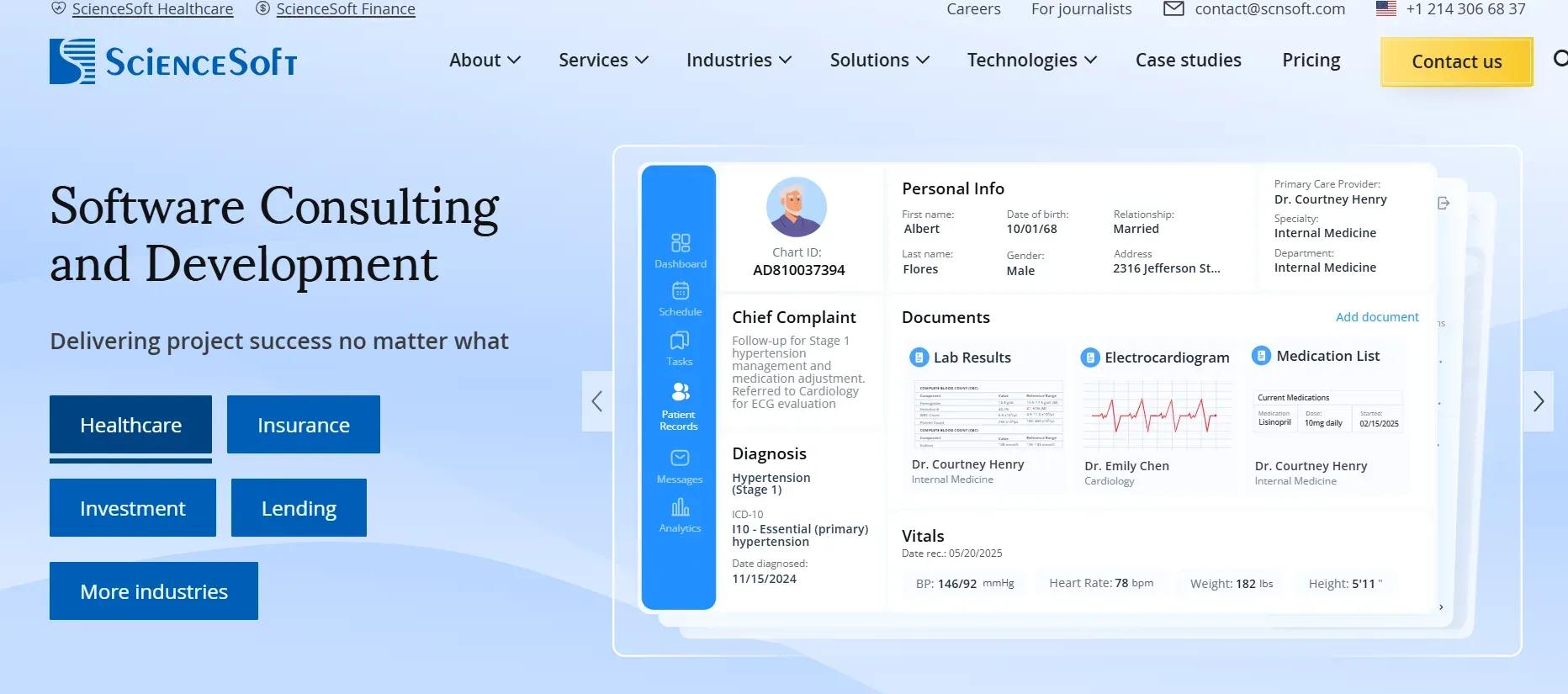
ScienceSoft is an established IT consulting and software development company with experience across healthcare, finance, retail, and enterprise applications.
It offers MVP development alongside broader software engineering and consulting services.
Best for: Startups developing products with complex security, compliance, or integration requirements.
Why Consider ScienceSoft?
Not every MVP can be built using the same lightweight approach.
A healthcare application handling patient information, for example, may need stronger security and privacy controls than a basic consumer app.
ScienceSoft's broader consulting and engineering background may be relevant to founders working in these environments.
Its services include requirements analysis, application development, testing, and ongoing support.
MVP Development Services
- MVP consulting and planning
- Web and mobile application development
- Healthcare software engineering
- Cloud development
- Software testing
- Security and integration support
What Makes ScienceSoft Different?
Its experience with enterprise systems and regulated industries may help startups identify technical and operational requirements early.
However, founders should verify the specific team's experience with early-stage products rather than assuming enterprise expertise automatically translates into lean MVP delivery.
Pricing: The source article cites published MVP estimates ranging from $40,000 for some mobile projects to $300,000 for more complex SaaS applications. Actual costs depend on scope.
Consideration: Its consulting and engineering approach may be more extensive than a simple MVP requires.
Why choose ScienceSoft? Consider it when your MVP involves sensitive data, complex integrations, or industry-specific requirements.
7. Netguru
Netguru is a digital product development company known for combining product design with software engineering.
It works on web applications, mobile products, and digital platforms across multiple industries.
Best for: Startups where user experience and product design are central to the MVP.
Why Consider Netguru?
An MVP doesn't need every feature, but the core user experience still needs to work.
For consumer applications, marketplaces, and fintech products, confusing navigation or a complicated onboarding process can make it harder to learn whether users actually want the product.
Netguru offers product design and engineering services that can help founders develop and test these experiences.
Its capabilities cover discovery, interface design, application development, and product improvements.
MVP Development Services
- Product discovery
- UX research and UI design
- Web application development
- Mobile application development
- Digital product engineering
- Product optimization
What Makes Netguru Different?
Its combination of design and engineering makes it relevant for products where usability is an important part of the value proposition.
Founders should still define which design activities are necessary for the first release to avoid extending discovery or adding unnecessary polish.
Pricing: Custom project estimates; the source article reports rates of $50–$99 per hour and a $50,000 minimum. Verify current terms.
Consideration: A comprehensive design-led process may not be necessary for every early-stage product.
Why choose Netguru? Consider Netguru if you're developing a consumer app, marketplace, or digital product where user experience plays a major role.
8. SolveIt
SolveIt develops web and mobile applications, with experience in cross-platform mobile technologies.
Its services cover product discovery, design, engineering, testing, and ongoing development.
Best for: Startups building mobile-first MVPs.
Why Consider SolveIt?
Mobile startups often face an early decision: build separate iOS and Android applications or use a cross-platform framework.
SolveIt works with technologies such as Flutter and React Native, which can help teams share code across platforms where appropriate.
This may be useful for founders who want to test their application with both Android and iOS users without immediately maintaining two separate native codebases.
The right choice still depends on performance requirements, device features, and long-term product plans.
MVP Development Services
- Flutter application development
- React Native development
- Web application development
- Product discovery
- UI/UX design
- Application testing and maintenance
What Makes SolveIt Different?
Its mobile development focus makes it worth considering for startups where the primary product is a smartphone application.
Founders should ask how the team handles app store submissions, device testing, analytics, and post-launch updates.
Pricing: The source article reports MVP projects starting around $35,000. Confirm current estimates and project scope.
Consideration: Cross-platform development isn't always the best choice for applications requiring specialized native functionality.
Why choose SolveIt? Consider it if you're building a mobile-first product and want to evaluate Flutter or React Native development.
9. Altar.io
Altar.io is a product development studio focused on helping founders turn early-stage ideas into digital products.
Its approach emphasizes product discovery, feature prioritization, design, and development.
Best for: First-time founders who need help defining their MVP.
Why Consider Altar.io?
One of the hardest parts of building an MVP is deciding what not to build.
Founders often begin with a long feature list because they imagine the finished product rather than the smallest version needed to test demand.
Altar.io emphasizes product scoping before development.
This can help founders clarify the target audience, identify the core user journey, and decide which features belong in the first release.
MVP Development Services
- Product strategy and discovery
- MVP scoping
- UI/UX design
- Web and mobile development
- Custom product engineering
- Product improvements
What Makes Altar.io Different?
Its product discovery approach may appeal to nontechnical founders who need help translating an idea into a realistic development plan.
The company has also published examples of project costs and timelines, which can provide useful context when planning a budget.
Pricing: Project-based estimates. The source article cites a historical marketplace project costing €18,000, but this should not be treated as the company's current starting price.
Consideration: Founders should confirm the deliverables, ownership, and costs of the discovery phase before committing to development.
Why choose Altar.io? Consider it if you have a startup idea but need structured help deciding what the first version should include.
10. Cheesecake Labs
Cheesecake Labs is a software development company offering product engineering, mobile development, and custom software services.
With engineering operations in Brazil and a presence in the United States, it is relevant to businesses looking for nearshore development support.
Best for: US startups seeking engineering teams with overlapping working hours.
Why Consider Cheesecake Labs?
Communication can become difficult when a startup and its development team work in very different time zones.
For US founders, nearshore development teams may offer more opportunities for real-time collaboration, product reviews, and problem-solving.
Cheesecake Labs combines product development services with a delivery model that can support collaboration during US business hours.
Its experience includes mobile applications, fintech products, and other digital platforms.
MVP Development Services
- Mobile application development
- Web application development
- Product engineering
- UI/UX design
- Fintech development
- Software testing and maintenance
What Makes Cheesecake Labs Different?
Its nearshore delivery model can be useful for founders who want frequent communication without building an entirely in-house team.
The company also has experience with technically demanding digital products, including financial technology applications.
Pricing: Custom quotes; the source article reports rates of $50–$99 per hour and a $50,000 minimum. Confirm current terms.
Consideration: Its engagement size may be more suitable for funded startups than very small prototype projects.
Why choose Cheesecake Labs? Consider it if your team is based in the US and you want an experienced nearshore engineering partner.
How Much Does MVP Development Cost in 2027?
MVP development costs vary depending on the product's complexity, technical requirements, and development team.
A simple application with a few core features will usually cost less than a SaaS platform with multiple user roles, complex integrations, and advanced security requirements.
The following ranges are illustrative planning scenarios, not verified market averages or fixed agency quotes.
| MVP Type | Illustrative Budget | Example |
|---|---|---|
| Simple MVP | $5,000–$20,000 | Basic booking app or simple web product |
| Medium-complexity MVP | $20,000–$60,000 | SaaS dashboard or mobile marketplace |
| Complex MVP | $60,000–$150,000+ | Fintech platform or integration-heavy SaaS |
| Highly specialized MVP | Custom estimate | Regulated healthcare or advanced AI product |
These ranges can overlap. A seemingly simple application may cost more if it requires difficult integrations, security reviews, or extensive testing.
What Affects MVP Development Cost?
1. Number of features
Every additional feature requires development, testing, and maintenance. Start with the features needed to validate your main assumption.
2. Platform selection
Building a web MVP may have different costs from developing separate native iOS and Android applications.
Cross-platform development can reduce duplicated work in some projects.
3. Design requirements
Custom interactions, extensive research, and detailed design systems can increase costs.
For an early MVP, focus on usability rather than unnecessary visual complexity.
4. Third-party integrations
Payment gateways, identity verification, external APIs, and other integrations can add development and testing work.
5. Security and compliance
Products handling sensitive financial, health, or personal data may require additional controls and specialist expertise.
6. Development team
Costs also depend on the experience, location, and composition of your engineering team.
Example: Estimating a SaaS MVP Budget
Imagine you're building a basic SaaS product with user accounts, a dashboard, subscriptions, and an administrative interface.
Your development plan might include:
| Workstream | Example Estimated Hours |
|---|---|
| Discovery and planning | 40 |
| UI/UX design | 80 |
| Frontend development | 180 |
| Backend and database | 200 |
| Integrations | 60 |
| Testing and deployment | 80 |
| Total | 640 |
At a hypothetical blended rate of $50 per hour, this would equal $32,000 before contingency, ongoing hosting, and maintenance.
This is an example calculation, not a quote or benchmark for every SaaS MVP.
The important lesson is to estimate the work by deliverable rather than relying on a single advertised starting price.
How Long Does It Take to Build an MVP?
Many relatively straightforward MVP projects can be planned over several weeks to a few months, but there is no universal timeline.
The duration depends on how clearly the product is defined, the number of features, and the technical challenges involved.
A sample 12-week development plan could look like this:
| Phase | Timeline | Main Activities |
|---|---|---|
| Discovery | Weeks 1–2 | Requirements, user journeys, feature prioritization |
| Design | Weeks 3–4 | Wireframes, interface design, technical planning |
| Development | Weeks 5–9 | Core features, database, APIs, integrations |
| Testing | Weeks 10–11 | QA, bug fixes, usability checks |
| Launch | Week 12 | Deployment, monitoring, initial feedback |
Some phases can overlap, and complex projects may take considerably longer.
A good development partner should explain which assumptions could change the timeline before the project starts.
How to Choose the Right MVP Development Company
Choosing a company isn't simply about finding the lowest price or the fastest promised launch.
The goal is to find a team that understands your product and can help you test it without unnecessary development work.
Start With Your Product Requirements
Before contacting development companies, write down:
- The problem your product solves
- Your target users
- The main action users should complete
- The features required for that action
- Your budget and preferred launch window
- What success will look like after launch
You don't need a complete technical specification. But you should be able to explain what you're trying to learn from your MVP.
Shortlist Companies With Relevant Experience
A company that builds excellent mobile applications may not be the right choice for a complex enterprise SaaS product.
Look for examples involving similar users, technologies, integrations, or industries.
Compare More Than Hourly Rates
A lower hourly rate doesn't always mean a lower total project cost.
Compare the proposed scope, estimated hours, team composition, delivery milestones, and responsibilities.
Ask what is excluded from the quote.
Confirm Code and Account Ownership
Before signing a contract, clarify who owns the source code, designs, documentation, repositories, and cloud accounts.
You should also understand how the company will transfer access and documentation if the engagement ends.
Plan for Life After Launch
Your first release will probably need changes once users begin testing it.
Ask whether the development company can support bug fixes, performance improvements, analytics, and additional features.
7 Questions to Ask Before Hiring an MVP Development Company
These questions can help you evaluate whether a development partner understands early-stage product development.
1. Have you built an MVP similar to ours?
Ask for a relevant example and what the company was responsible for delivering.
2. How do you decide which features belong in the first release?
Look for a clear process for prioritizing features based on user needs and business assumptions.
3. What will we receive after discovery?
Useful deliverables may include wireframes, technical recommendations, a feature backlog, and an estimated development plan.
4. Who will work on our project?
Ask about the developers, designers, QA specialists, and project managers involved.
5. How will you handle changes in scope?
A good contract should explain how new requirements affect the budget and timeline.
6. Who owns the source code and infrastructure?
Make sure ownership and access rights are clearly documented.
7. What happens after launch?
Ask about bug-fix coverage, support response times, maintenance costs, and handover documentation.
The answers should help you compare companies more effectively than marketing claims alone.
MVP Development Company vs. Freelancer vs. In-House Team
Startups have several options for building an MVP. Each has advantages and trade-offs.
| Option | Best For | Main Advantage | Main Challenge |
|---|---|---|---|
| MVP development company | Founders needing coordinated delivery | Access to multiple skills and a delivery process | Higher overall engagement cost in some cases |
| Freelancer | Small, clearly defined projects | Flexible hiring and potentially lower initial cost | Limited capacity and continuity |
| In-house team | Startups with long-term engineering needs | Direct control and accumulated product knowledge | Recruitment time and ongoing employment costs |
| Dedicated remote developers | Startups needing flexible engineering capacity | Ability to add specific technical skills | Requires clear management responsibilities |
When Should You Hire an MVP Development Company?
An MVP development company may be the better option if you need design, development, testing, and project coordination but don't have those capabilities internally.
When Should You Hire a Freelancer?
A freelancer can be a practical choice for a small prototype, a limited technical task, or a product with a well-defined scope.
When Should You Build an In-House Team?
An in-house team may make sense when software development is central to your business and you have the funding and time to recruit engineers.
When Do Dedicated Developers Make Sense?
Dedicated developers can work well when you already have a founder, CTO, or product manager who can guide development.
This is where flexible engineering providers such as Softaims may be worth evaluating.
MVP vs. Prototype vs. Proof of Concept
These terms are often used interchangeably, but they serve different purposes.
| Prototype | Proof of Concept (PoC) | MVP | |
|---|---|---|---|
| Main purpose | Test a concept or user experience | Test technical feasibility | Test a product with real users |
| Typical form | Wireframes or clickable screens | Limited technical demonstration | Functional product |
| Production-ready | Usually no | Usually no | Functional enough for its intended test |
| Best for | Early design feedback | Uncertain technology | Learning from actual usage |
For example, a startup planning an AI-powered accounting application might first build a proof of concept to check whether its document-processing approach works.
It could then create a prototype to test the user interface.
Finally, it could release an MVP that allows a small group of customers to upload documents and review extracted information.
Each stage answers a different question and can prevent unnecessary development.
Common Mistakes to Avoid When Hiring an MVP Development Company
1. Building Too Many Features
Founders often want the first release to include everything they imagine for the finished product.
This increases development costs and delays feedback.
Focus on the smallest set of features that can test your core assumption.
2. Choosing Only on Price
A low quote may exclude testing, design, integrations, or post-launch support.
Compare the complete scope before making a decision.
3. Skipping Product Discovery
Starting development without clear requirements can lead to rework and budget overruns.
Even a short discovery phase can help identify important decisions early.
4. Ignoring Client Evidence
Don't rely only on company descriptions or impressive logos.
Ask for relevant case studies, references, and examples of completed work.
5. Forgetting About Post-Launch Costs
An MVP needs monitoring, maintenance, and improvements after release.
Include these expenses in your initial budget.
6. Measuring Success Only by Launch Date
Launching on time is useful, but it doesn't prove that users want the product.
Define success metrics such as activation, retention, task completion, or paid conversions before development begins.
Frequently Asked Questions
What do MVP development companies do?
MVP development companies help startups turn product ideas into functional first versions. Their services may include discovery, product design, engineering, testing, deployment, and ongoing support.
Which company is best for MVP development?
There is no single best company for every startup. Softaims may suit founders seeking flexible developers, Netguru may appeal to design-focused teams, SolveIt is worth considering for mobile applications, and ScienceSoft may fit products with complex industry requirements. Compare relevant experience, delivery processes, and pricing before choosing.
How much does it cost to build an MVP?
Costs depend on product scope, integrations, technology, and team composition. A relatively simple product may require a modest budget, while complex SaaS, fintech, or regulated applications can cost substantially more. Get a scope-based estimate rather than relying on a generic average.
How long does MVP development take?
Some relatively simple MVPs can be delivered in a few weeks, while more involved products may require several months. The timeline depends on requirements, technical complexity, and team capacity.
What is the difference between an MVP and a prototype?
A prototype demonstrates a concept or user experience, while an MVP is a functional product used to test assumptions with real users. A proof of concept focuses on whether a technical approach is feasible.
Should I hire an MVP development company or a freelancer?
A freelancer may suit a small, clearly defined project. An MVP development company may be more appropriate when you need multiple specialists, coordinated delivery, and ongoing support.
Can I build an MVP without a technical co-founder?
Yes. Nontechnical founders can work with development companies or dedicated engineering teams. However, they still need to define product goals, make business decisions, and establish clear ownership of delivery and technical decisions.
What should I prepare before contacting an MVP development company?
Prepare a short product description, target audience, core features, approximate budget, preferred timeline, and the main assumption you want to test. These details help potential partners provide more useful estimates.
What happens after an MVP launches?
After launch, startups should collect user feedback, monitor product performance, measure key metrics, and prioritize improvements. The next development phase should be based on what users actually do, not only the original product plan.
Final Thoughts
The right MVP development company can help your startup move from an idea to a working product without committing to unnecessary features or a large permanent team.
But the best choice depends on your needs.
If you're building a design-heavy consumer product, look for a partner with strong UX expertise. If you're developing a fintech or healthcare application, prioritize relevant technical experience and security requirements. If you already have a clear product plan and need developers, a flexible engineering team may be more suitable.
Before making a decision, compare case studies, discovery processes, pricing, communication, and post-launch support.
Looking for developers to build your MVP?
Softaims helps startups find vetted software engineers for web, mobile, and SaaS development. You can explore available developer roles and discuss the skills your project needs.
Start with the smallest product that can answer your biggest business question. Then use real customer feedback to decide what to build next.


 Stackoverflow
Elvis T.

 Verified Expert in Engineering
My name is Elvis T. and I have over 14 years of experience in the tech industry. I specialize in the following technologies: WooCommerce, WordPress, Website Optimization, Magento, PHP, etc.. I hold a degree in Bachelors. Some of the notable projects I've worked on include: Magento Web Development, Molly & Stitch ( Magento2 ), Axelnoah ( Magento 1.9 ), nextMedia.Hamburg ( TYPO3 6.2 ), Office Fitness ( Magento 1.9 ). I am based in Shkoder, Albania. I've successfully completed 5 projects while developing at Softaims.
Information integrity and application security are my highest priorities in development. I implement robust validation, encryption, and authorization mechanisms to protect sensitive data and ensure compliance. I am experienced in identifying and mitigating common security vulnerabilities in both new and existing applications.
My work methodology involves rigorous testing—at the unit, integration, and security levels—to guarantee the stability and trustworthiness of the solutions I build. At Softaims, this dedication to security forms the basis for client trust and platform reliability.
I consistently monitor and improve system performance, utilizing metrics to drive optimization efforts. I'm motivated by the challenge of creating ultra-reliable systems that safeguard client assets and user data.

Leave a Comment
Need help building your team? Let's discuss your project requirements.
Get matched with top-tier developers within 24 hours and start your project with no pressure of long-term commitment.