Top 9 Platforms to Hire Web App Developers in the World (2027 Guide)
Finding the right web app developer requires balancing technical expertise, hiring speed, and budget. This guide breaks down the top platforms worldwide for sourcing vetted talent, specialized agencies, and remote freelancers.
Technically reviewed by:
Vladimir M.|Luis Carlos O.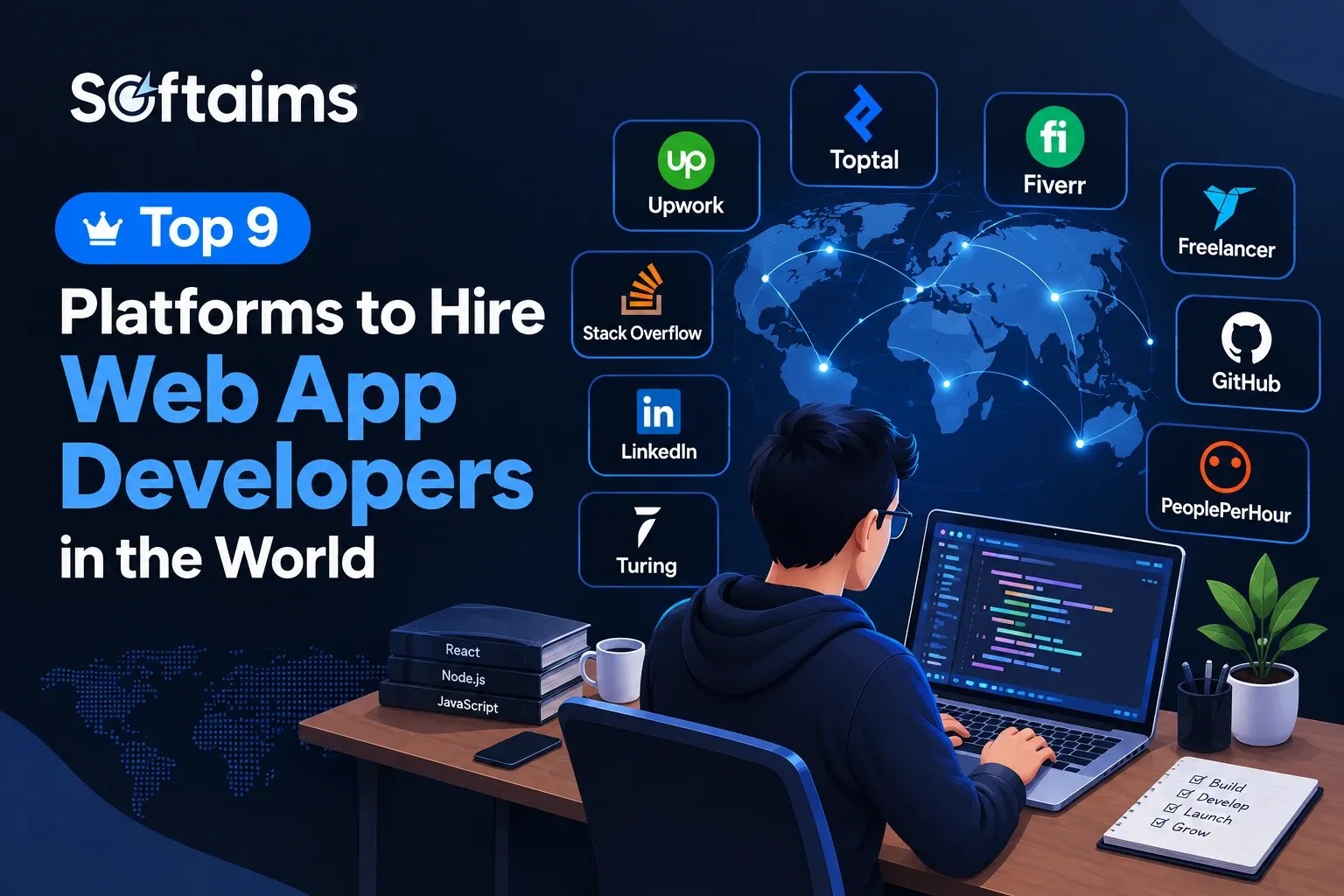
Table of contents
Key Takeaways
- Choose a platform based on your project requirements; use pre-vetted networks for rapid senior talent acquisition, traditional job boards for permanent direct hires, or freelance marketplaces for scoped, budget-flexible tasks.
- Web app development demands complex architecture, API integrations, and database design beyond standard website development skills.
- Select between freelancers for short-term fixes, dedicated teams for evolving SaaS products, or full-service agencies for end-to-end delivery from concept to launch.
- Developer rates vary significantly by region; nearshore and offshore talent can provide senior-level execution at lower hourly costs while maintaining overlap.
To hire web app developers well, you need more than a generalist coder. Building a SaaS product, CRM, dashboard, or internal tool is a specialist job. Get the hire wrong, and you inherit shaky architecture, slipping deadlines, and rewrites that drain the budget. So the platform you hire through can make or break the project.
Luckily, you have real options across the globe. A few networks deliver pre-vetted senior talent within days. Others open the door to millions of applicants, or let freelancers bid for a fixed scope. Each one weighs speed, price, and control in its own way, though. So the best choice tracks your project, timeline, and budget. For a broader survey, our guide to the best freelancing websites to hire developers is a useful companion piece.
This guide ranks the top 10 platforms to hire web app developers in the world for 2026. You'll get a fast comparison, then a closer read on each. After that, we walk through skills, interview questions, global costs, and the traps to sidestep. Read it once, and you'll be ready to hire.
Quick Comparison of the Top 9 Platforms
Skim this table to build a shortlist. It captures how each option lets you hire web app developers. Then dive into the detailed reviews that follow.
Platform | Type | Best For | Pricing |
| Softaims | Vetted talent platform | Pre-vetted senior web app developers, fast | Dedicated / part-time / project |
| Devaims | Development studio | End-to-end custom web app builds | Project / dedicated team |
| Professional network | Sourcing permanent hires | Free / promoted / recruiter | |
| Toptal | Vetted marketplace | Senior pre-vetted experts | Hourly / part-time / full-time |
| Upwork | Freelance marketplace | Flexible hiring across budgets | Hourly / fixed + fees |
| Indeed | Job board | Wide-reach job postings | Free / sponsored |
| Wellfound | Startup hiring | Startups hiring developers | Free / subscription / fee |
| Freelancer | Freelance marketplace | Bidding on scoped projects | Fixed / hourly + fees |
| Fiverr Pro | Vetted freelance | Vetted freelancers for defined work | Per project / hourly |
Why Use a Platform to Hire Web App Developers
Running a search yourself is slow, and the risks stack up. You draft the advert, sift applicants, test skills, hold interviews, and negotiate contracts. For a stretched team, that easily swallows weeks. A capable platform shoulders most of that work instead.
The benefits land in a few clear places. Each one buys back time, money, or peace of mind.
- Speed. Relevant, ready candidates appear in days rather than months.
- Upfront vetting. Many platforms screen skills first, so weak profiles never reach your inbox.
- Choice of model. You can add a single freelancer, a small pod, or a full team.
- Safer payments. Escrow and milestones protect your money until work is approved.
- Global reach. You draw on talent worldwide, across many time zones and rates.
- Lighter admin. Contracts, invoicing, and compliance often live inside the platform.
So platforms to hire web app developers strip out much of the uncertainty. They also blunt the costliest risk of all: a bad hire.
Even so, a platform isn't always right, however. If you already have a trusted developer or a solid referral, going direct may cost less. So set the platform fee against the time and risk it removes.
1. Softaims
Softaims leads our list of platforms to hire web app developers with a fast, vetted approach. Instead of wading through profiles, you get matched with the top 3% of pre-screened engineers inside 48 hours. So senior talent reaches you quickly, and for far less than a local hire.
Its real edge is hiring by skill. On the client side, you can hire front-end engineers or full-stack developers to build polished interfaces. On the server side, you can hire back-end engineers, plus React developers, cloud engineers, DevOps specialists, and QA automation testers. Each engineer is vetted for genuine web application skill, not just a tidy CV.
You can plug in one specialist through staff augmentation, or launch a dedicated team. The engineers slot into your workflow and align with your working hours. So they operate like an in-house team, wherever you're based. You can browse available developers or see transparent rates before committing.
Key benefits:
- Top 3% vetted web app developers, matched within 48 hours
- Hire by skill: front-end, back-end, and full-stack
- Staff augmentation or dedicated teams
- Time-zone-aligned work and no heavy minimums
Why choose them: Softaims suits firms that need senior, vetted web app developers fast, without a drawn-out search or a giant-firm contract.
2. Devaims
Devaims is a development studio that delivers custom web and mobile apps from start to finish. Its engineers run discovery, design, build, and testing, so you receive a finished product rather than loose hands. Clean architecture and dependable delivery sit at the core.
In August 2026, Softaims acquired Devaims. So Devaims clients now reach the same vetted network and 48-hour matching. A single partner can handle software development and mobile app development, from concept through launch.
Key benefits:
- Full-cycle web and mobile app builds
- Discovery, design, development, and QA together
- Backed by Softaims' vetted talent since 2026
- Strong fit for custom SaaS and internal tools
Why choose them: Devaims suits firms that want a studio to own the entire build, not just supply people.
3. LinkedIn
LinkedIn is the largest professional network anywhere, and a dependable tool for permanent hiring. You can post roles, define required skills, add screening questions, and reach out to candidates directly. So it fits teams building a lasting, in-house group.
The platform filters out applicants who miss must-have skills. Its recruiter tools let you organize, message, and screen in one place. LinkedIn works best when you run your own sourcing. So it suits firms hiring permanent web app developers over short-term freelancers.
Key benefits:
- Vast pool for direct sourcing
- Skill filters and screening questions
- Recruiter and job-posting tools
- Strong for permanent hires
Why choose them: LinkedIn suits firms that want to source and recruit permanent developers together.
4. Toptal
Toptal is a vetted marketplace famous for hard screening. Only a small slice of applicants get in, so the network runs senior. You outline your stack and role, then a Toptal contact matches a specialist.
It suits teams that want proven skill without reviewing crowds of candidates. Matches usually land within days, which saves real time. Toptal offers hourly, part-time, and full-time terms. So it fits firms needing senior web app developers fast, at a premium price.
Key benefits:
- Strict vetting, senior-heavy network
- Quick matching to your stack and role
- Hourly, part-time, or full-time options
- Minimal screening on your side
Why choose them: Toptal suits firms that want vetted senior talent fast and can pay a premium.
5. Upwork
Upwork is a huge freelance marketplace covering every budget and skill level. You post a job, weigh proposals, message people, and run video interviews. So you keep firm control over screening.
The platform stays flexible, with hourly and fixed-price contracts plus fees. It suits firms comparing candidates across rates and technologies. Upwork handles anything from a quick fix to a long engagement. So it fits teams weighing many freelance web app developers before choosing. If it isn't the right match, our roundup of Upwork alternatives covers other routes.
Key benefits:
- Wide span of budgets and skills
- Full control over screening and interviews
- Hourly and fixed-price contracts
- Great for comparing candidates
Why choose them: Upwork suits firms that want choice and control across a broad freelance pool.
6. Indeed
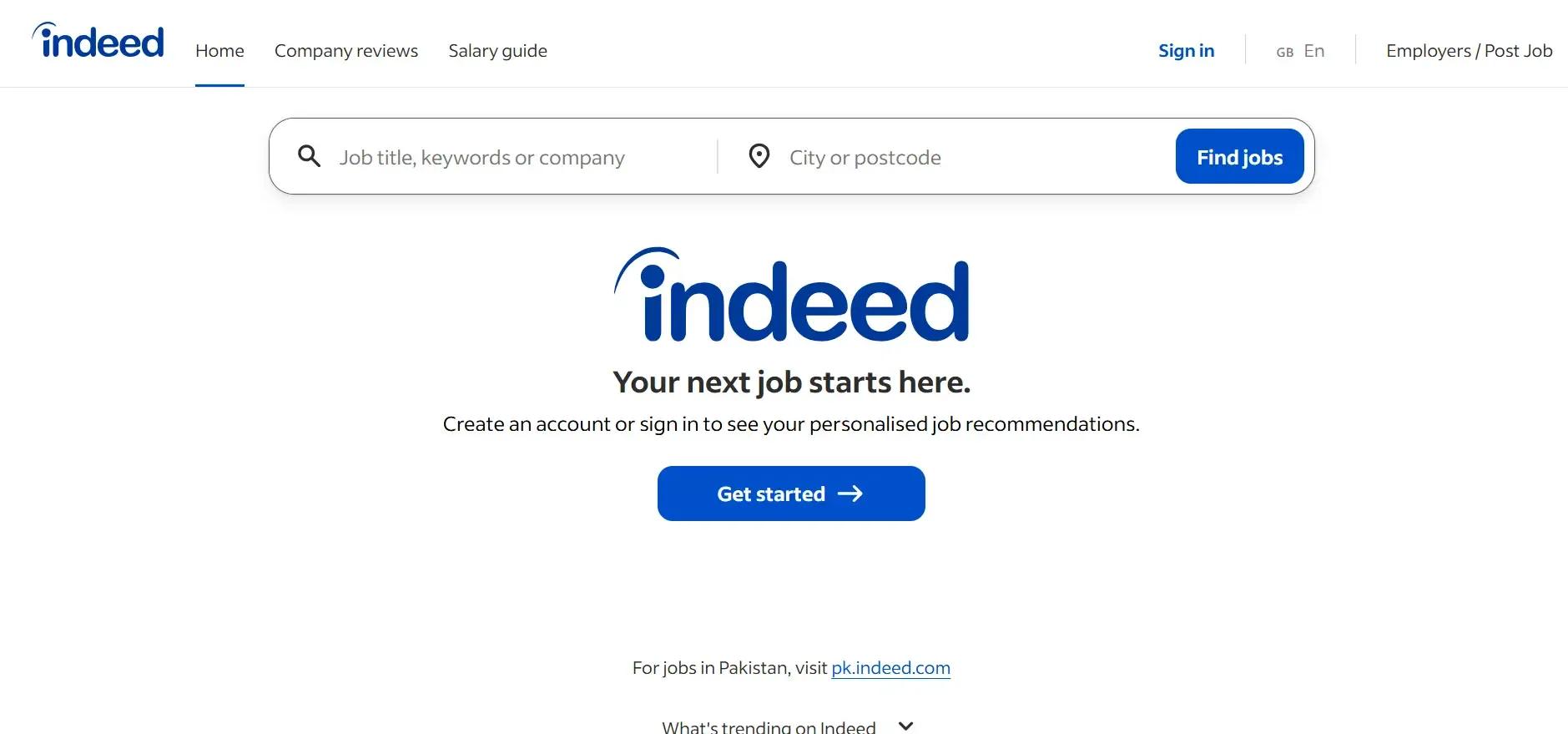
Indeed is one of the biggest job boards, folding posting, matching, and screening into a single flow. You can post free or sponsor a role, then set deal-breakers and message candidates. So it spreads a wide net quickly.
The platform matches your role against a vast pool of CVs. It also connects to your ATS where you have one. Indeed suits firms chasing maximum visibility for a job post. So it fits companies hiring permanent, contract, or remote web app developers at scale.
Key benefits:
- Enormous reach for job posts
- Free and sponsored options
- Screening and deal-breaker filters
- ATS integration
Why choose them: Indeed suits firms that want broad reach and built-in filtering for a job post.
7. Wellfound
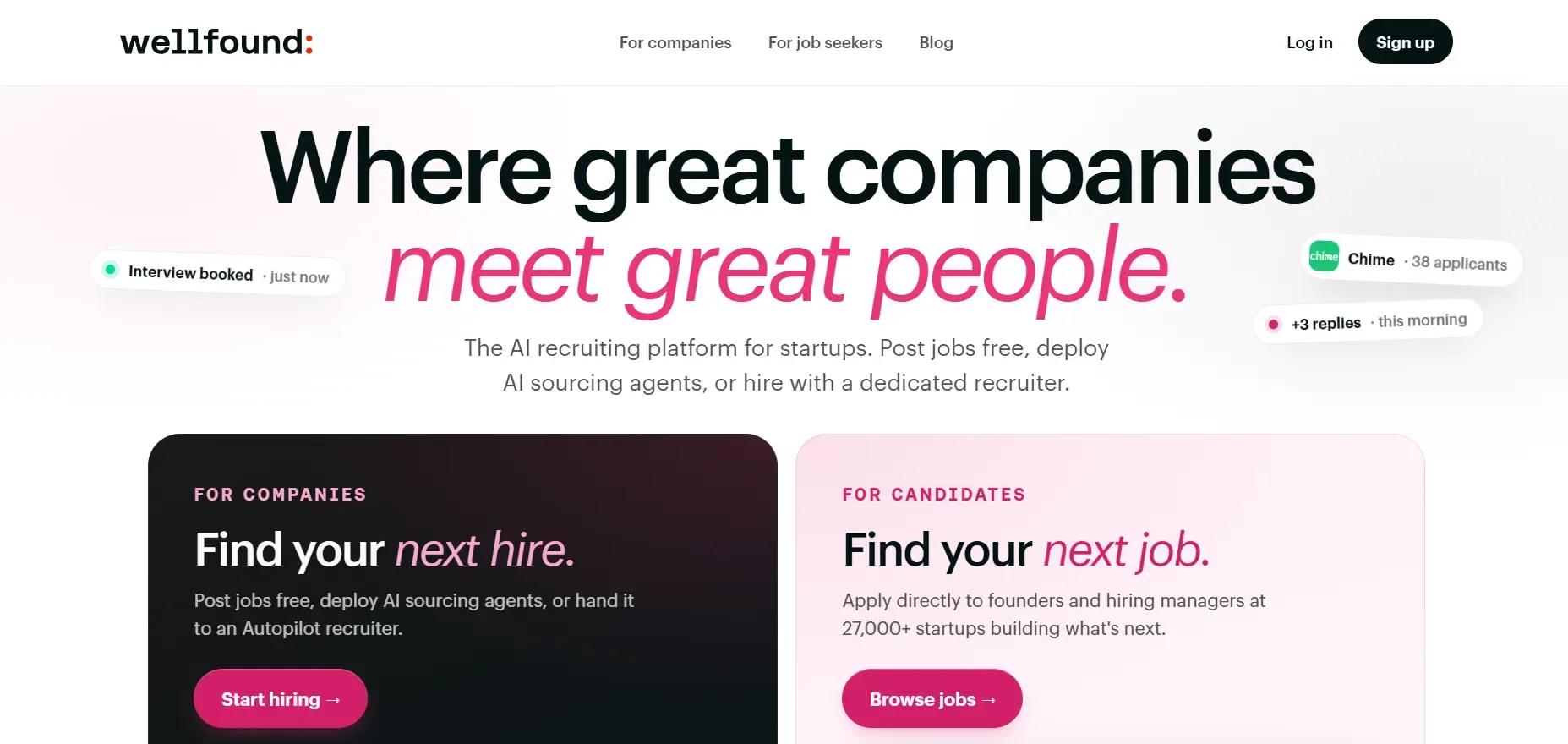
Wellfound is a startup-focused hiring platform, once known as AngelList Talent. It links companies with engineers eager to work at startups. So it fits when startup experience counts as much as raw skill.
You can post roles, use its built-in ATS, and reach candidates already drawn to startups. It layers on AI-assisted sourcing and recruiter support. Wellfound suits early-stage firms hiring developers and product staff. So it fits startups seeking web app developers who thrive in fast-moving teams.
Key benefits:
- Startup-focused candidate pool
- Built-in ATS and sourcing tools
- AI-assisted candidate matching
- Good for permanent startup hires
Why choose them: Wellfound suits startups that prize startup experience alongside technical skill.
8. Freelancer
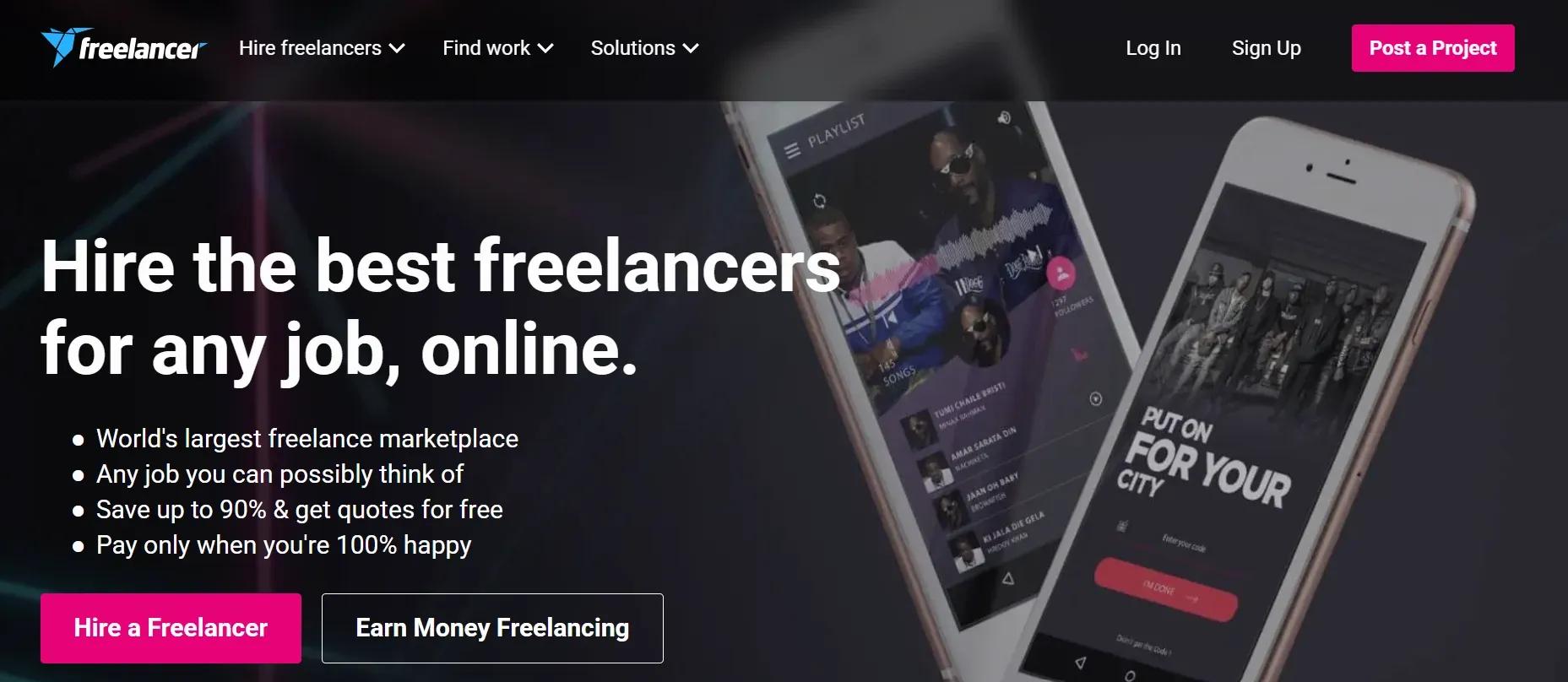
Freelancer is a worldwide marketplace built on competitive bidding. You post a project, then collect proposals from freelancers across many technologies. So it works when you want suppliers to compete on price and terms.
The platform runs fixed-price and hourly deals. Its milestone payments hold funds until you sign off, which adds cover. Freelancer suits well-defined projects with a clear budget. So it fits firms comparing bids before awarding web app work.
Key benefits:
- Competitive bidding from a global pool
- Fixed-price and hourly options
- Milestone payments for protection
- Good for clearly scoped projects
Why choose them: Freelancer suits firms that want suppliers to compete on well-defined terms.
9. Fiverr Pro
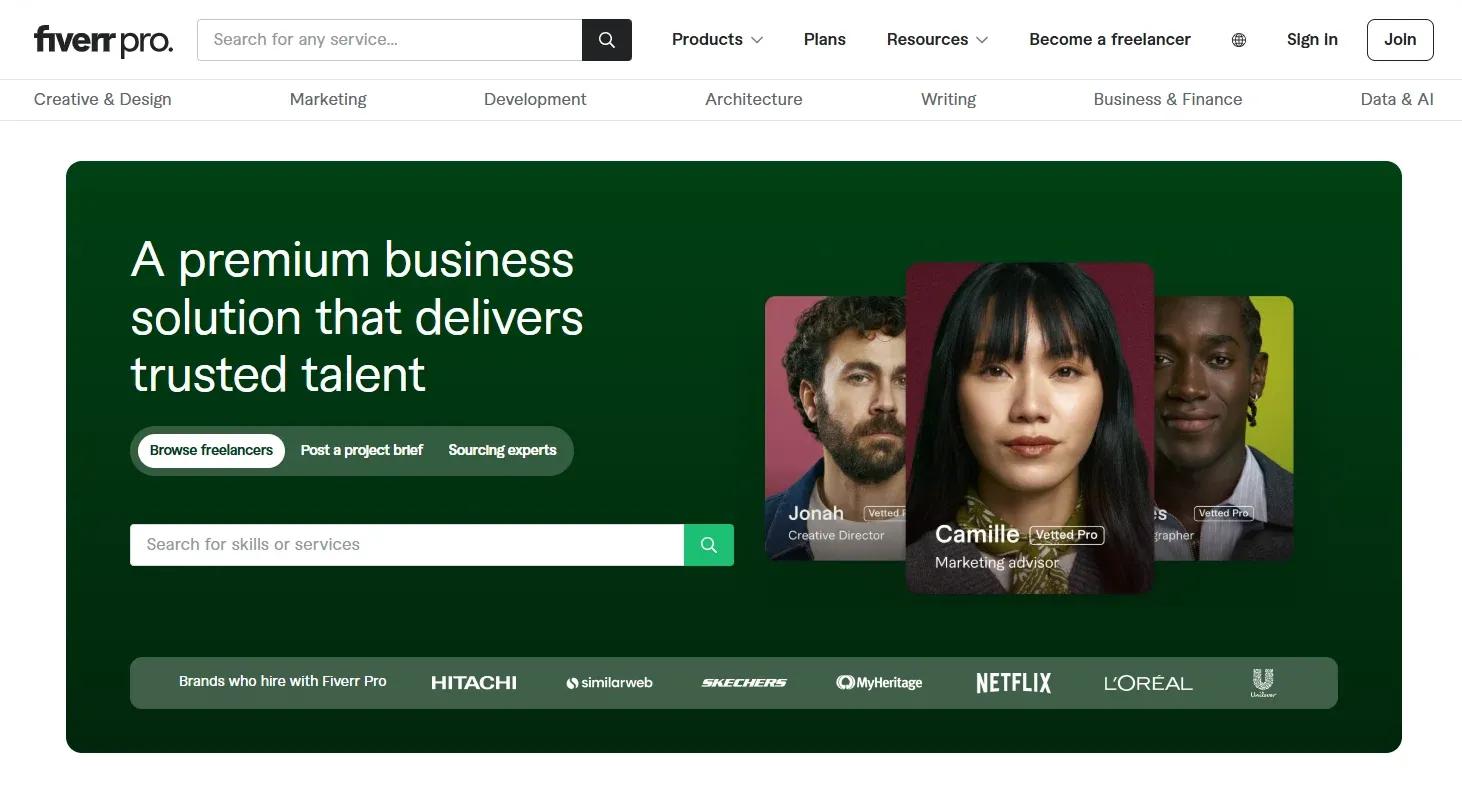
Fiverr Pro is the vetted tier of the Fiverr marketplace. It offers experienced, screened freelancers for defined or ongoing work. So it mixes marketplace ease with a quality filter.
You can browse a curated list, post a brief, or ask for a shortlist. Fiverr Pro can even source and screen candidates on your behalf. Its pricing runs per project or hourly. So it fits firms wanting vetted freelance web app developers with a flexible hand in hiring. For other vetted options, see our guide to Fiverr alternatives.
Key benefits:
- Curated, vetted freelancers
- Browse, brief, or request a shortlist
- Per-project or hourly pricing
- Flexible level of hands-on control
Why choose them: Fiverr Pro suits firms that want vetted freelancers with a light, flexible process.
When Should You Hire a Web App Developer
Some moments make the call obvious. If any of these fit, it's time to hire web app developers. So weigh them before the pressure builds.
- You're building a real application. A SaaS product, CRM, dashboard, or portal needs app-level skills, not just design.
- Your team lacks the depth. Your developers handle websites, but not authentication, APIs, or data at scale.
- A deadline is looming. A launch or client promise needs more hands, soon.
- An existing app is straining. It needs features, a rebuild, or better speed under load.
- You need a niche skill briefly. A short burst of React, cloud, or security work doesn't warrant a full-time hire.
If two or more apply, the case to hire web app developers is strong. Timing counts, too, however. Skilled developers get booked, and vetting takes time. So begin your search early, before a deadline forces a rushed pick.
There are also times to wait. If the task is a one-off tweak, or the scope is fuzzy, hold off. A clear brief first saves money later.
What Is a Web App Developer
A web app developer builds interactive, data-driven applications that run in a browser. They sit closer to software than to websites. Think SaaS tools, CRMs, dashboards, portals, and progressive web apps with logins and APIs.
This differs from a regular web developer, and the gap matters at hiring time. A web developer often centers on websites, content, and CMS builds. A web app developer, by contrast, owns application architecture, databases, back-end logic, security, and integrations.
Criteria | Web Developer | Web App Developer |
| Focus | Websites, landing pages, CMS builds | Interactive apps, business logic, workflows |
| Technologies | HTML, CSS, JS, CMS, front-end frameworks | React, Angular, Node.js, Python, cloud |
| Output | Corporate sites, blogs, eCommerce | SaaS, CRM, dashboards, portals, PWAs |
| Complexity | Low to medium | Medium to high |
So define the role sharply before posting it. A CMS specialist may stumble on a data-heavy SaaS build, however strong their portfolio looks.
Types of Web App Developers
Not all web app developers are alike. Front-end, back-end, and full-stack developers carry different roles. Your workload should steer the choice. A simple MVP might need one person, while a data-heavy SaaS app may need several.
A front-end developer builds the interface users touch. They work in React, Angular, Vue, or Next.js to shape dashboards, forms, and live views. Bring one on when the back end is solid, but the product needs smoother, faster, cleaner flows.
A back-end developer builds the logic, APIs, databases, and integrations. They lean on Node.js, Python, Go, or .NET, handling payments, auth, and complex rules. You can hire back-end engineers when reliability under load and clean data flow matter most.
A full-stack developer covers both ends, which suits startups, prototypes, and MVPs. One person can move quickly and hold costs down. For large or high-traffic apps, though, dedicated specialists usually deliver more. So full-stack developers shine in the early stages.
Freelancer vs Dedicated Team vs Agency
Beyond raw skills, the engagement model shapes the result. Each fits a different kind of project. Here's the comparison.
Model | Best For | Main Benefit | Main Limitation |
| Freelancer | Small tasks, isolated features | Low cost, quick access | You manage delivery and continuity |
| Agency | Enterprise, full-cycle work | Covers discovery to launch | Highest overall cost |
| Dedicated team | SaaS and long-term products | Stable team, easy scaling | Needs ongoing client involvement |
A freelancer is the cheapest entry, and fastest for a small job. One specialist can squash a bug or add a feature quickly. You hold the risk, though, since you manage the work and cover any gap if they leave.
An agency lifts the whole project off your plate. It gathers designers, developers, testers, and managers under one roof, from discovery to launch. The trade-off is cost, however, since agencies charge the most. For that route, our lists of the top IT services outsourcing companies and their US counterparts are worth a look.
A dedicated team sits in between, and it fits products that keep evolving. You get a stable group that learns your codebase and scales with you. It needs steady input, though, so it works best when you stay involved.
So when you hire web app developers, match the model to the project's size and lifespan. A quick fix points to a freelancer, a one-off build to an agency, and a growing SaaS product to a dedicated team. Many firms blend them, too, keeping a core team plus freelancers for busy stretches.
Onshore, Nearshore, or Offshore
Where your developer sits shapes cost, communication, and speed. Firms weigh three broad options when they hire web app developers. Each trades price against proximity.
Option | Location | Trade-off |
| Onshore | Your own country | Easiest to work with, highest cost |
| Nearshore | A nearby region, close time zone | Good overlap, moderate cost |
| Offshore | A distant, lower-cost region | Biggest savings, wider time gap |
Onshore means a developer in your own country. Communication is easy, hours align, and cultural gaps are small. It's the priciest route, though, so it suits complex or sensitive work that needs close contact.
Nearshore means a nearby region with a similar time zone. You get strong talent, healthy overlap, and lower rates. That balance has made nearshore a favorite middle ground. So it fits ongoing, back-end-heavy work that still needs daily contact.
Offshore reaches farther, lower-cost regions. The savings run deepest here, which suits well-scoped work. The wider time gap needs planning, however, with clear briefs and async updates.
Data protection matters across all three, too. Wherever your partner sits, they must handle personal data properly under rules like GDPR. So check their security practices before you sign, not after.
How to Choose the Right Platform
When you hire web app developers, the platform comes before candidate screening. Each offers a different level of vetting, price control, and support. So a startup MVP and a legacy CRM rebuild will weigh platforms differently.
Begin with your product and stack. Note the MVP features, integrations, expected load, and security needs. Then examine how each platform vets talent. Vetted networks like Toptal, Arc.dev, and Softaims screen upfront, while open marketplaces leave more checking to you.
Next, read reviews for similar work, not just web projects. A firm strong on marketing sites may lack real SaaS depth. Finally, compare the full pricing structure, not the headline rate alone. So you dodge surprises once work begins.
Core Skills to Look For
When you hire web app developers, technical gaps eventually turn into business costs. Sluggish interfaces hurt usability, fragile APIs break processes, and poor database design caps growth. So look for real, hands-on experience across these areas.
Skill Area | Technologies | Why It Matters |
| Front-end | React, Angular, Vue, Next.js | Fast, smooth, usable interfaces |
| Back-end and API | Node.js, Python, Go, REST, GraphQL | Reliable logic and integrations |
| Database and caching | PostgreSQL, MongoDB, Redis | Fast, structured data at scale |
| Cloud and DevOps | AWS, Azure, Docker, CI/CD | Consistent, low-risk releases |
| Testing | Jest, Cypress, Playwright | Fewer bugs and regressions |
| Security | OAuth, JWT, access control, encryption | Safe auth and protected data |
There's no fixed toolset, though. What counts is proven experience across the full path, from the browser to the database and deployment.
Soft Skills That Protect Your Budget
Technical skill is only half the picture. When you hire web app developers, communication matters as much as code, since it stops small issues from ballooning. So weigh these traits alongside the code.
Look for someone who raises unclear requirements early. They should flag risks, estimate against clear assumptions, and warn when a change adds cost. Strong engineers also put technical choices in plain language. So they even suggest simpler options when a feature adds complexity but little value.
How Much Does It Cost to Hire a Web App Developer
Rates swing widely by region, seniority, and engagement model. Onshore seniors sit at the top, while nearshore and offshore options cost less. The table below shows typical global ranges.
Region | Senior Developer Rate (2026) |
| North America | $100–$180/hr |
| Western Europe | $80–$120/hr |
| Latin America | $50–$85/hr |
| Eastern Europe | $45–$85/hr |
| South & Southeast Asia | $25–$60/hr |
| Africa | $20–$60/hr |
Experience moves the rate too, since seniority drives speed and responsibility. Juniors do best on defined tasks, while seniors handle architecture and thorny production issues. For a deeper breakdown, see our guide on how much it costs to hire a developer in 2026.
A junior rate looks cheaper, however. For a complex app, it rarely is, since supervision and rework pile up. So a vetted senior can cost less across a project's life. Teams that hire web app developers through Softaims reach vetted talent below onshore rates, matched in 48 hours.
Interview Questions to Ask
Before you hire web app developers, run interviews that show how a candidate thinks, not what they can recite. Center them on architecture, security, performance, and change. These decide whether an app holds up in real use. Here are six worth asking.
- How would you design a web app's architecture from scratch? Look for a clear structure across front end, back end, databases, APIs, and deployment, shaped by traffic and complexity.
- How do you secure authentication and access? Strong answers reach past passwords to tokens, role-based access, MFA, rate-limiting, and HTTPS.
- How do you fix performance under load? Listen for measurement first, then indexing, caching, and load testing, not just "add more servers."
- What's your experience with real-time features? Ask for a concrete example, plus connection handling and when simpler methods suffice.
- How do you approach API design and versioning? Look for consistency, validation, documentation, and backward compatibility.
- What do you do when requirements change mid-build? The best answers weigh technical impact dependencies, testing, migrations before touching code.
Common Mistakes When You Hire Web App Developers
Hiring mistakes rarely appear in the interview. They surface later as missed deadlines, brittle code, or costly rework. So watch for these traps before you commit.
First, don't hire a web developer for a web app job. A portfolio of websites doesn't prove SaaS skill, which needs auth, permissions, background jobs, and complex deployment. Ask candidates to walk through a production app they built themselves.
Second, don't grab the cheapest option without vetting. A strong CV doesn't guarantee strong delivery, and constant supervision erases any saving. Third, don't defer architecture and scalability, since some choices are costly to reverse. Finally, don't overlook post-launch support, however, because apps need steady fixes, updates, and maintenance.
Red Flags to Watch For
Some warning signs show up before you hire web app developers. Catching them early saves money. Watch for these.
One red flag is vague talk about past projects. If a candidate can't explain their exact role, the experience may be thin. Another is a portfolio of only websites when you need a web app.
Poor communication is a bigger worry, however. If someone can't explain technical choices simply while you're hiring, it rarely improves later. For pointers on clear communication, MindTools helps. And to gauge how current a developer is, ask what they've followed lately on sites like TechCrunch.
How to Reduce Hiring Risks
A few habits protect your budget and timeline when you hire web app developers. They apply on any platform. Bake them into your process from the outset.
First, write a clear brief. Capture your product, stack, features, integrations, and security needs. A vague brief invites vague proposals, and mismatched expectations later.
Second, run a short, practical test. Tie it to your own product, not a generic puzzle. A small, real task exposes judgment far better than trivia.
Third, check references for similar work. A developer strong on marketing sites may never have shipped a SaaS app. So ask to speak with past clients on comparable projects.
Fourth, start with a small trial. A paid two-week task or milestone lets you judge quality before committing further. It's cheap insurance against a poor fit.
Finally, lock down contracts and IP. Settle NDAs, code ownership, and support terms up front. So you keep control of your product, and you're not stranded after launch.
How to Onboard Your New Developer
When you hire web app developers, the hiring is only half the job. A smooth onboarding decides how fast they deliver. A little structure early pays off for months.
Start with access and tools on day one. Set up their repo, environment, project board, and chat before they begin. Nothing kills momentum like waiting a week for a login.
Next, share clear documentation and goals. Explain the product, the architecture, and what success looks like in the first month. So they act with context, not guesswork.
Then pair them with someone who knows the codebase. A short daily check-in in week one helps them settle and ask questions. Hand them a small, real task early, too, so they ship something quickly and build confidence.
Set a clear communication rhythm after that. Agree standups, updates, and review points, so nothing drifts. Also welcome feedback both ways, since fresh eyes often spot easy wins.
Finally, treat them as part of the team, not an outsider. Trust and inclusion drive better work, whether they're onshore or remote. So the more you invest in onboarding, the faster and better they deliver.
Frequently Asked Questions
What's the best platform to hire web app developers?
It depends on your goal. For fast, pre-vetted senior talent, a platform like Softaims, Toptal, or Arc.dev fits well. For permanent hires, LinkedIn and Indeed cast a wide net. For budget-flexible freelance work, Upwork, Fiverr Pro, and Freelancer all deliver. So match the platform to your project and timeline.
How much does it cost to hire a web app developer?
Rates vary by region and seniority. Senior developers in North America often charge $100 to $180-plus an hour. Nearshore and offshore options can drop that by half, at comparable quality. Still, management overhead and rework shape the real cost, so plan a buffer.
Should I hire a freelancer, a dedicated team, or an agency?
A freelancer suits small, isolated tasks. An agency suits full-cycle delivery, from discovery to launch. A dedicated team suits a long-term SaaS product that keeps evolving. Many firms blend these, using a vetted team for core work and freelancers for short bursts.
What's the difference between a web developer and a web app developer?
A web developer usually builds websites, content sites, and CMS-based projects. A web app developer builds interactive, data-driven applications like SaaS tools, CRMs, and dashboards. The second role needs deeper skills in architecture, databases, security, and integrations.
Conclusion
The right platform makes it faster, safer, and cheaper to hire web app developers. The ten options above span vetted talent networks, open marketplaces, and job boards. Each suits a different need.
Match your choice to three things, though: project size, budget, and how much screening you want to run. If you want pre-vetted senior developers without a long search, Softaims can match you within 48 hours. You can also browse the talent pool to see who fits.
Ready to start? Define your product and stack, then choose the platform that fits your goals. Start small, prove the fit on one project, then scale from there. Have a question about your build? Reach out, and let's talk it through.


 GitHub
George Z.

 Verified Expert in Engineering
My name is George Z. and I have over 10 years of experience in the tech industry. I specialize in the following technologies: Full-Stack Development, Web Development, Front-End Development, CMS Development, Theme Development, etc.. I hold a degree in . Some of the notable projects I’ve worked on include: Business Consulting Website with Left Navigation & One-Page Design, Custom Stripe Payment & Checkout System for WordPress, Fruit E‑Commerce: Custom PrestaShop Theme, Fully Customizable Weblayer for Bloomreach with Jinja Admin Panel, Customizable Newsletter Signup Weblayer for Bloomreach, etc.. I am based in Bucharest, Romania. I've successfully completed 14 projects while developing at Softaims.
My expertise lies in deeply understanding and optimizing solution performance. I have a proven ability to profile systems, analyze data access methods, and implement caching strategies that dramatically reduce latency and improve responsiveness under load. I turn slow systems into high-speed performers.
I focus on writing highly efficient, clean, and well-documented code that minimizes resource consumption without sacrificing functionality. This dedication to efficiency is how I contribute measurable value to Softaims’ clients by reducing infrastructure costs and improving user satisfaction.
I approach every project with a critical eye for potential bottlenecks, proactively designing systems that are efficient from the ground up. I am committed to delivering software that sets the standard for speed and reliability.

Leave a Comment
Need help building your team? Let's discuss your project requirements.
Get matched with top-tier developers within 24 hours and start your project with no pressure of long-term commitment.