Top 12 Ruby on Rails Development Companies in the World (2026)
Compare the best Ruby on Rails development companies, hiring costs, pricing models, and expert insights to choose the right Rails development partner for your project.
Table of contents
Key Takeaways
- GitHub, Shopify, and Airbnb continue to prove Ruby on Rails can scale to millions of users.
- Softaims and Devaims are the top Ruby on Rails development company picks for 2026.
- Rails paired with Hotwire or React remains a leading choice for modern web applications.
- Following Rails conventions and automated testing prevents costly vendor lock-in.
- Nearshore Rails teams can deliver high-quality development at significantly lower rates than US consultancies.
- Hotwire is making full-stack Rails development faster by reducing the need for complex JavaScript.
- The best Rails partners combine clean architecture, CI/CD, cloud infrastructure, and DevOps instead of relying on Rails alone.
Choosing between Ruby on Rails development companies is harder than it looks. Rails is not new, and that is exactly why it works. For over a decade, companies like GitHub, Shopify, and Airbnb have used Rails to build products that scale.
In 2026, the best Ruby on Rails development companies still build on one of the most trusted frameworks for web development. Ruby and Rails remain in steady use, with about 5.9% of developers reporting Ruby in the Stack Overflow 2025 survey. It is quick to launch, easy to maintain, and battle-tested at scale. So the challenge is not whether to use Rails, it is finding the right team to build with it.
In this guide, you will find the top 12 Ruby on Rails development companies in the world for 2026. You also get the ranking method, the real costs, the risks to watch for, and the questions that separate a strong partner from a weak one.
How We Ranked These Ruby Development Companies
We did not want another copy-paste directory list of Ruby on Rails development companies. To decide who earned a spot, we asked a few straightforward questions.
- Do they have a solid track record? Firms with real, shipped products for startups or big brands scored higher than those with vague portfolios.
- What do clients actually say? We looked at review themes across Clutch, G2, and Glassdoor, not just star ratings, to see whether clients trust them long term.
- Is Rails really their thing? Some firms list every language going. We prioritized teams clearly strong in Rails that contribute to its ecosystem.
- Can they scale? A good Rails shop can plug in one senior engineer or ramp up a whole team, depending on the need.
- Are they still relevant in 2026? We checked whether they pair Rails with modern stacks like React, Hotwire, cloud, and DevOps.
Quick Comparison: Top 12 Ruby Development Companies
# | Company | Location | Best for | Rate |
| 1 | Softaims | Global (vetted) | Custom Rails + vetted talent | Custom |
| 2 | Devaims | Global | Rails apps, web and mobile | Custom |
| 3 | Thoughtbot | USA / UK | Product-driven Rails | $100–$150/hr |
| 4 | Railsware | Poland / Ukraine | Product studio, SaaS | $60–$100/hr |
| 5 | Monterail | Poland | Fintech and proptech | $50–$80/hr |
| 6 | Netguru | Poland | Enterprise-scale Rails | $75–$120/hr |
| 7 | Hashrocket | USA | Boutique, test-driven | $150–$200/hr |
| 8 | DockYard | USA | Design-led, enterprise | $120–$180/hr |
| 9 | Devico | USA / Eastern Europe | Scalable web apps | $25–$50/hr |
| 10 | MagmaLabs | Mexico | Nearshore e-commerce | $40–$70/hr |
| 11 | 10Clouds | Poland | Fintech and blockchain Rails | $70–$100/hr |
| 12 | JetRockets | USA | Founder-focused Rails and MVPs | $75–$125/hr |
Ratings, rates, and locations reflect public Clutch, G2, and Glassdoor profiles as of early 2026, and can change, so verify before publishing. Softaims and Devaims are our two top picks for 2026.
Top 12 Ruby Development Companies
1. Softaims
Best for: Companies that want a scalable Rails application built by vetted engineers, and fully owned by them.
Rails projects rarely fail on the framework. They fail on execution: messy code that ignores Rails conventions, weak testing, and a build nobody else can maintain. Softaims matches you with senior Rails engineers for your exact needs, so the application is built properly the first time, with clean, conventional, well-tested code.
What you get: You can hire vetted Ruby on Rails developers skilled in the Ruby language and the full Ruby on Rails stack, plus modern tools like React and Hotwire, along with backend and full-stack engineers for a complete team, chosen for your project rather than pulled from a bench. Pricing is clear, so you can check rates by skill and seniority before you commit, and browse the talent pool to see exactly who would build it. You keep the code, the repository, and the IP from day one.
Why teams pick Softaims:
- Senior Rails engineers matched to your exact stack and domain.
- Clean, conventional, well-tested code any Rails engineer could pick up.
- You own the code and the IP, with no lock-in.
- Transparent rates agreed before the work starts.
2. Devaims
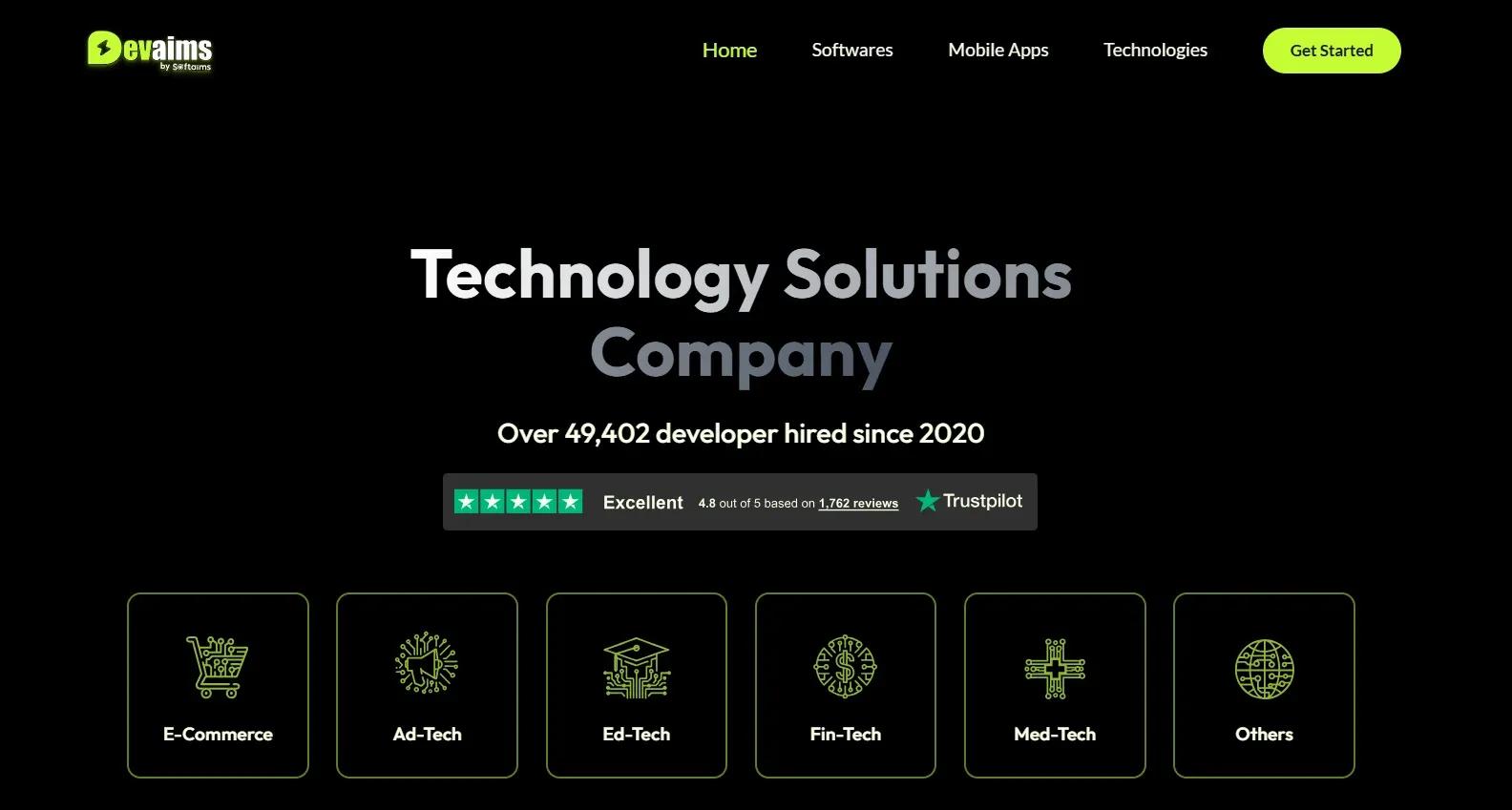
Best for: Companies that want their Rails application delivered end to end, across web and mobile.
A backend is only half a product. It needs a front end, clean APIs, and a design people can use. Devaims delivers the whole product, so your Rails build ships as a finished application rather than an isolated backend.
What you get: Devaims handles software development and mobile app development, covering the full cycle from the Rails backend through the front end and launch. Because one team owns the whole build, the parts fit together and post-launch changes stay simple.
Why teams pick Devaims:
- Full-cycle delivery across web and mobile.
- One team for the backend, the front end, and the design.
- Faster iteration after launch, with no vendor handoffs.
- Products built for the people who actually use them.
3. Thoughtbot
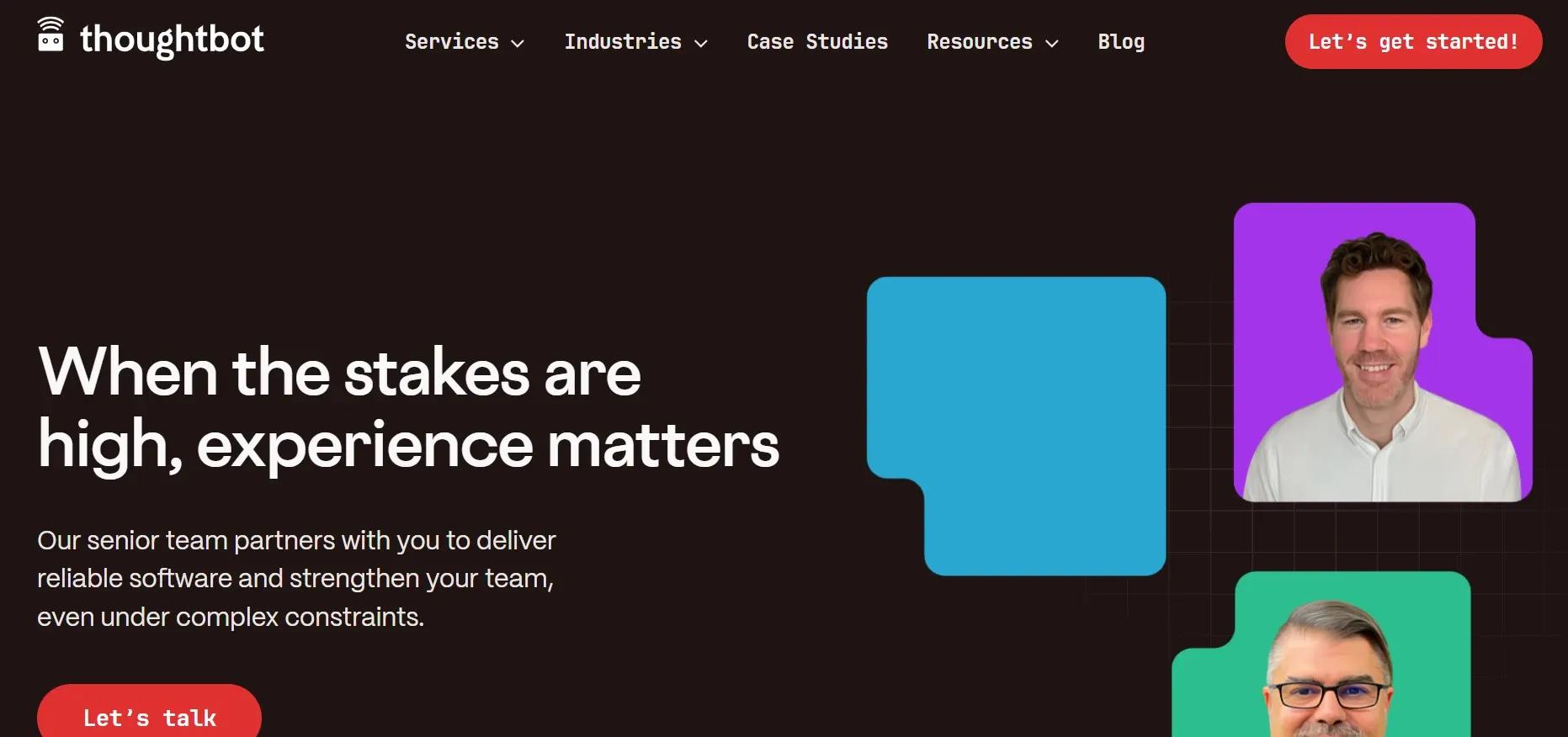
Best for: Product-driven Rails development from a community pioneer.
Thoughtbot is widely regarded as a Rails pioneer, founded in 2003, with 200-plus designers and developers and studios across the US and London. It is a core contributor to the Rails ecosystem and maintains popular gems. Its developers act as product advisors, not just coders, and it has worked with Postmates, Iora Health, and Formlabs.
Downside: Its premium tier ($100 to $150 an hour) is more than a small MVP budget needs.
4. Railsware
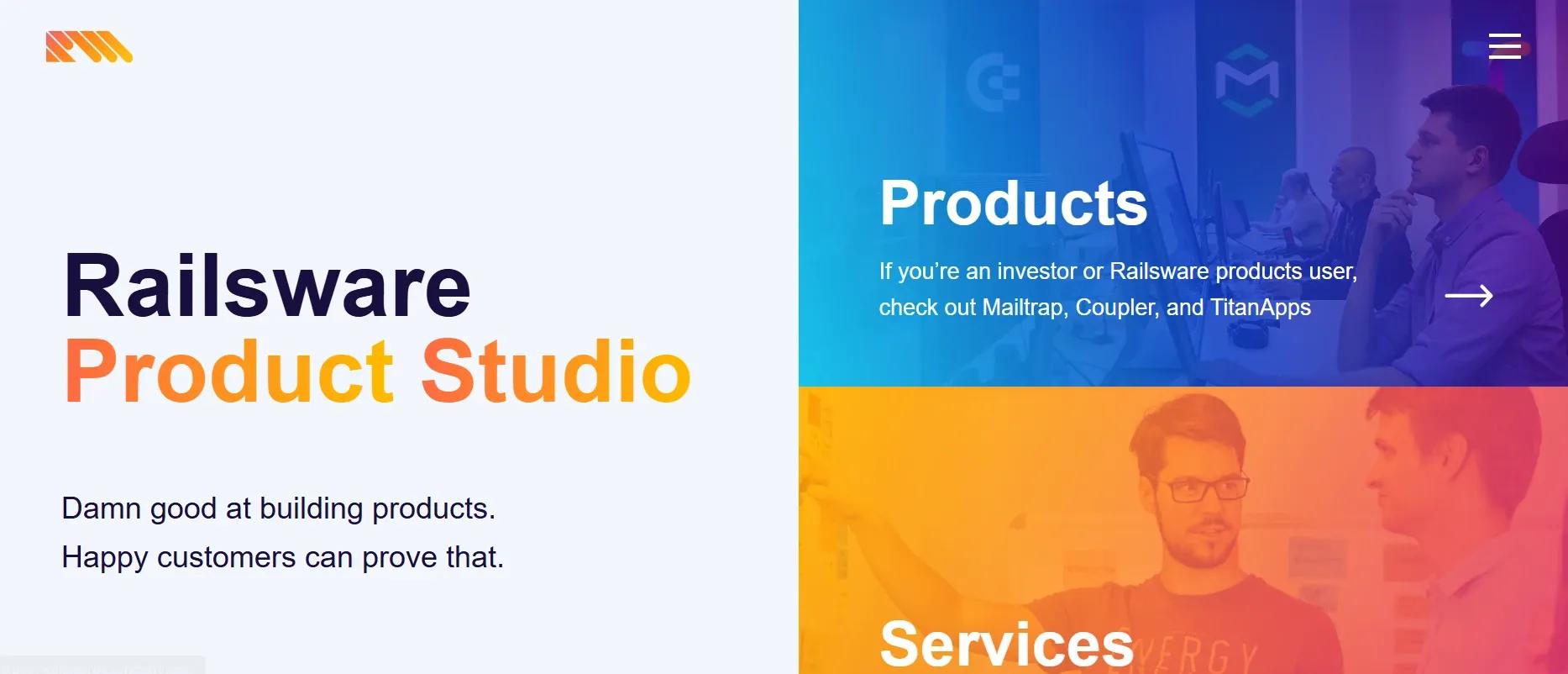
Best for: SaaS products from a team with real product DNA.
Railsware is a Rails-first company founded in 2007 that builds and runs its own successful products, including Mailtrap and Coupler.io. That gives it an operator's perspective on growth, not just coding. It has worked with Google, Calendly, and SendGrid, and it favors long-term partnerships.
Downside: Its product-studio model suits ongoing partnerships more than a quick one-off task.
5. Monterail
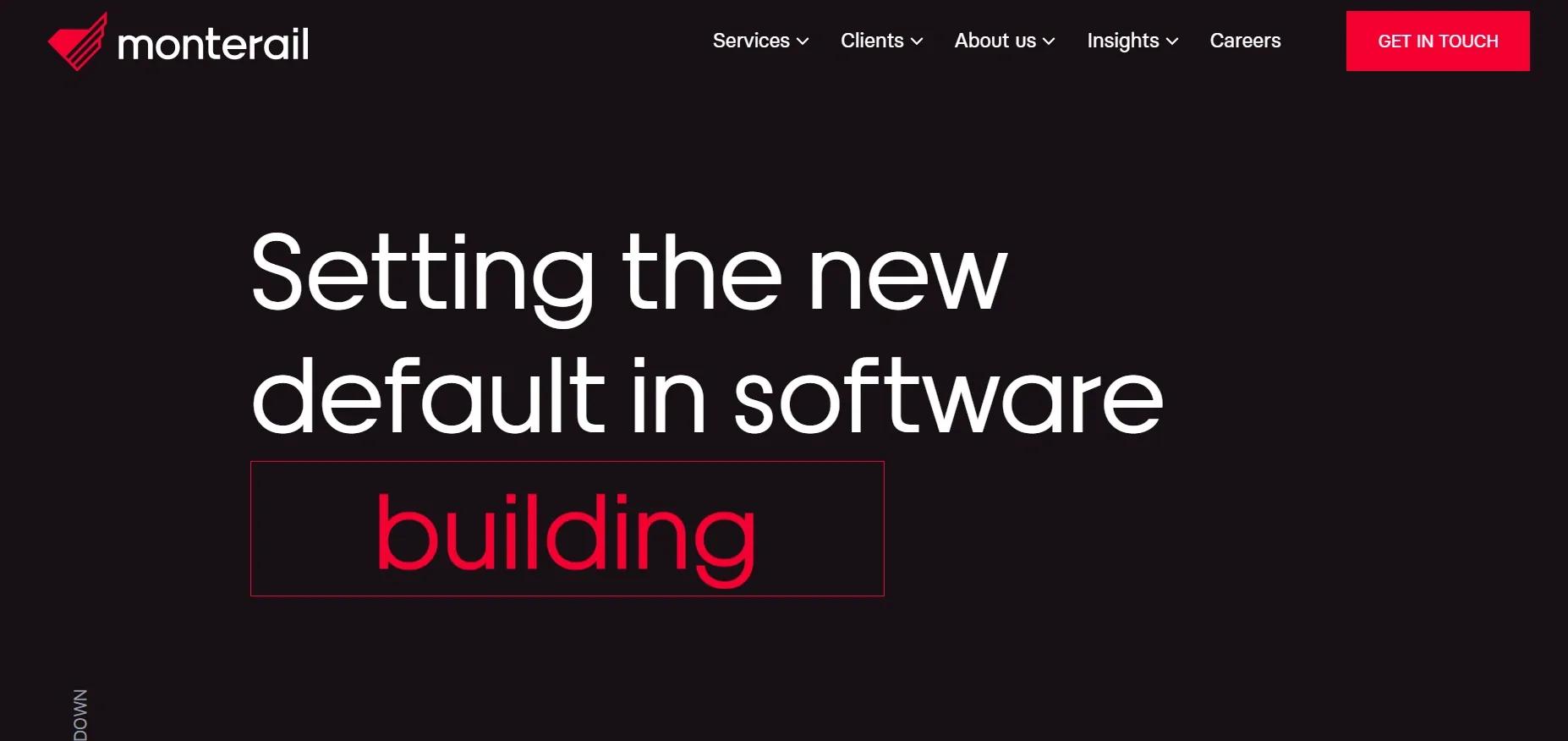
Best for: Fintech and proptech platforms with strong design.
Monterail has built Rails products for over a decade from Wrocław, Poland, pairing Rails with Vue, React, and strong UI/UX design. It is especially strong in fintech and proptech, with clients like Merck and the University of Zurich, and it offers a European nearshore cost advantage.
Downside: As a nearshore firm, confirm time-zone overlap for US-based teams.
6. Netguru
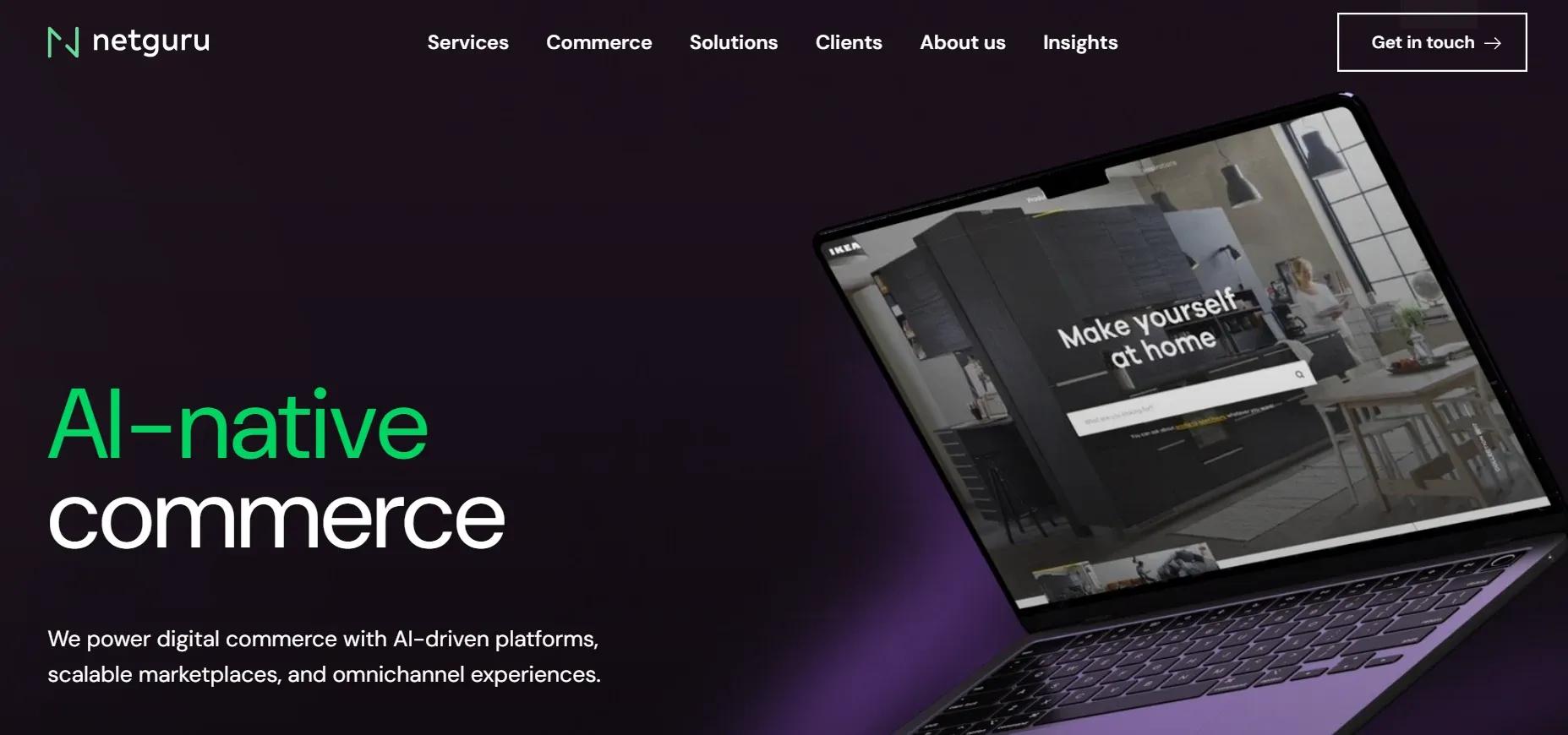
Best for: Enterprise-scale Rails with mature delivery processes.
Netguru is one of the largest Eastern European firms, founded in 2008 with 1,000-plus specialists. Rails remains a core strength for scalable SaaS and enterprise web apps, and it has worked with Volkswagen, IKEA, and UBS. It can deploy large Rails teams quickly, backed by enterprise delivery processes.
Downside: Enterprise scale and process ($75 to $120 an hour) can be heavy for a small project.
7. Hashrocket
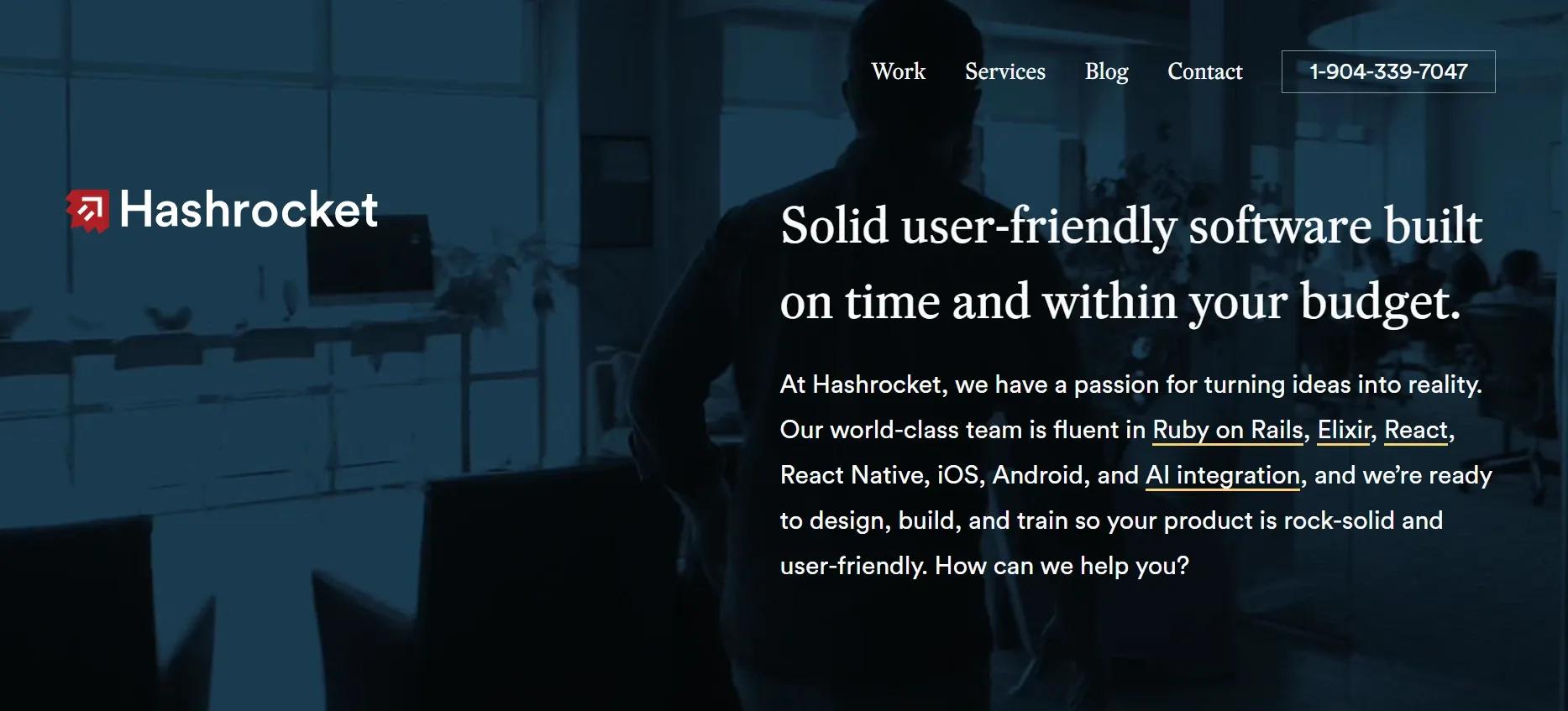
Best for: Boutique, test-driven Rails craftsmanship.
Hashrocket is a US boutique consultancy that has specialized in Rails since 2008, with 200-plus Rails apps built. Its senior-heavy team favors test driven development and pair programming, so the code is clean and maintainable. It suits product-driven teams that value precision over large offshore teams.
Downside: Premium boutique pricing ($150 to $200 an hour) is the highest on this list.
8. DockYard
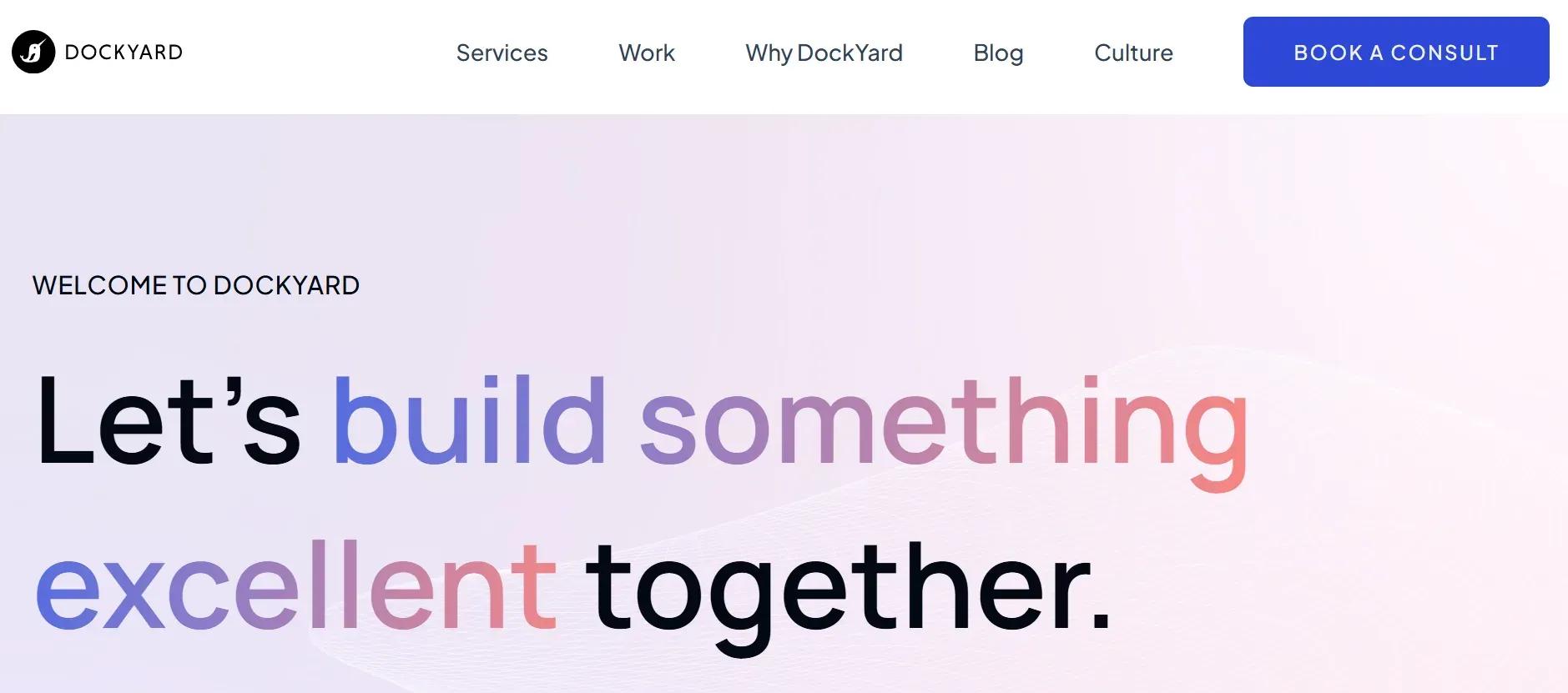
Best for: Design-led Rails with enterprise-grade delivery.
DockYard started as a Rails consultancy and grew into a full-stack product partner, pairing Rails engineering with UX design and accessibility. It has collaborated with Netflix, Nasdaq, and Fidelity, and it often combines Rails with Elixir for real-time systems.
Downside: Its premium, design-led model ($120 to $180 an hour) is aimed at larger budgets.
9. Devico
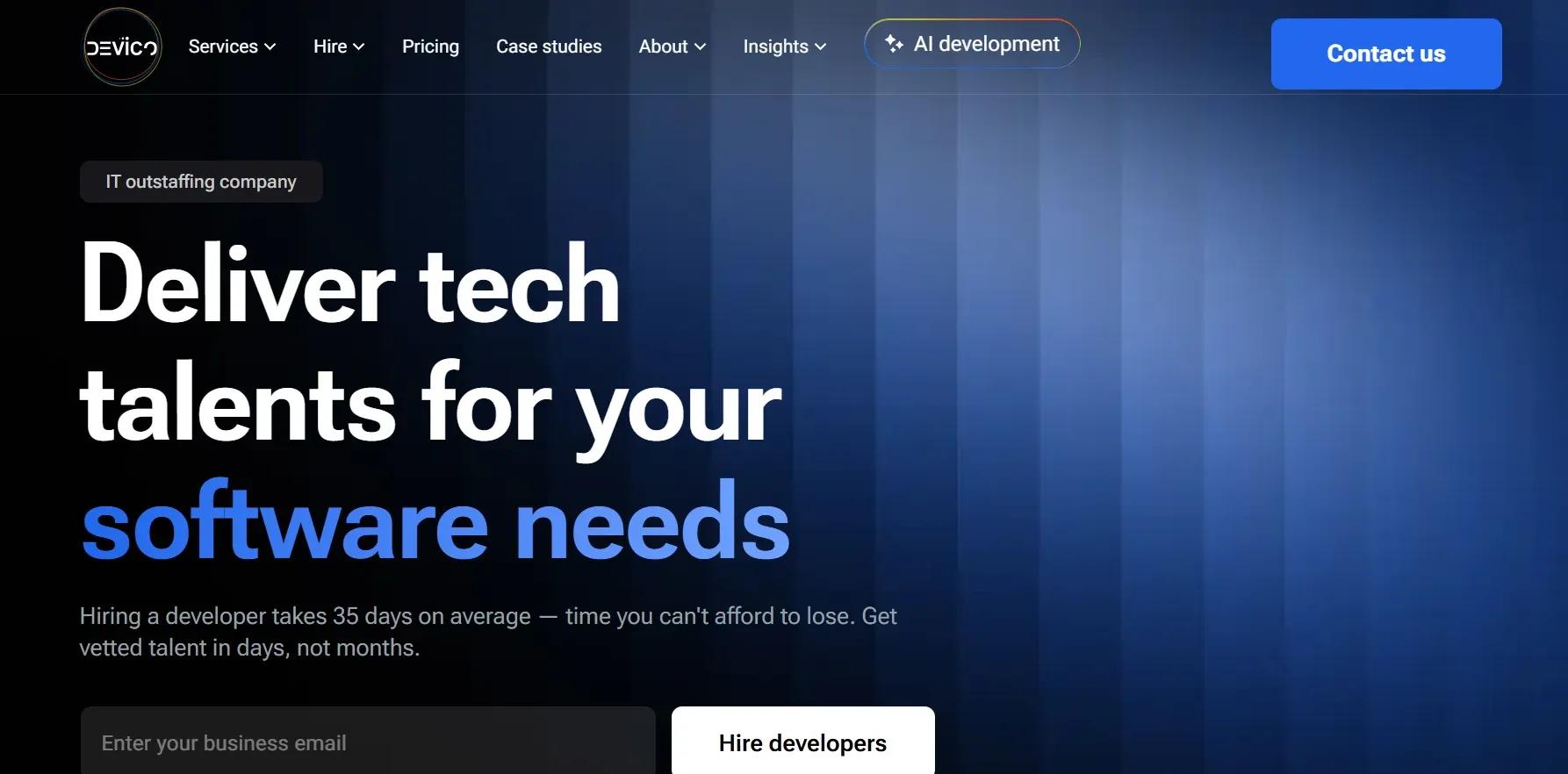
Best for: Scalable Rails web apps at a competitive rate.
Devico is a US-headquartered firm with delivery centers in Eastern Europe, founded in 2010 with 250-plus engineers. It pairs Rails with React, TypeScript, and modern DevOps, and it has built HIPAA-compliant telehealth and high-traffic e-commerce platforms. Its hybrid nearshore model and mature QA automation keep quality high and rates competitive.
Downside: Its broad industry range means you should confirm the Rails specialists on your team.
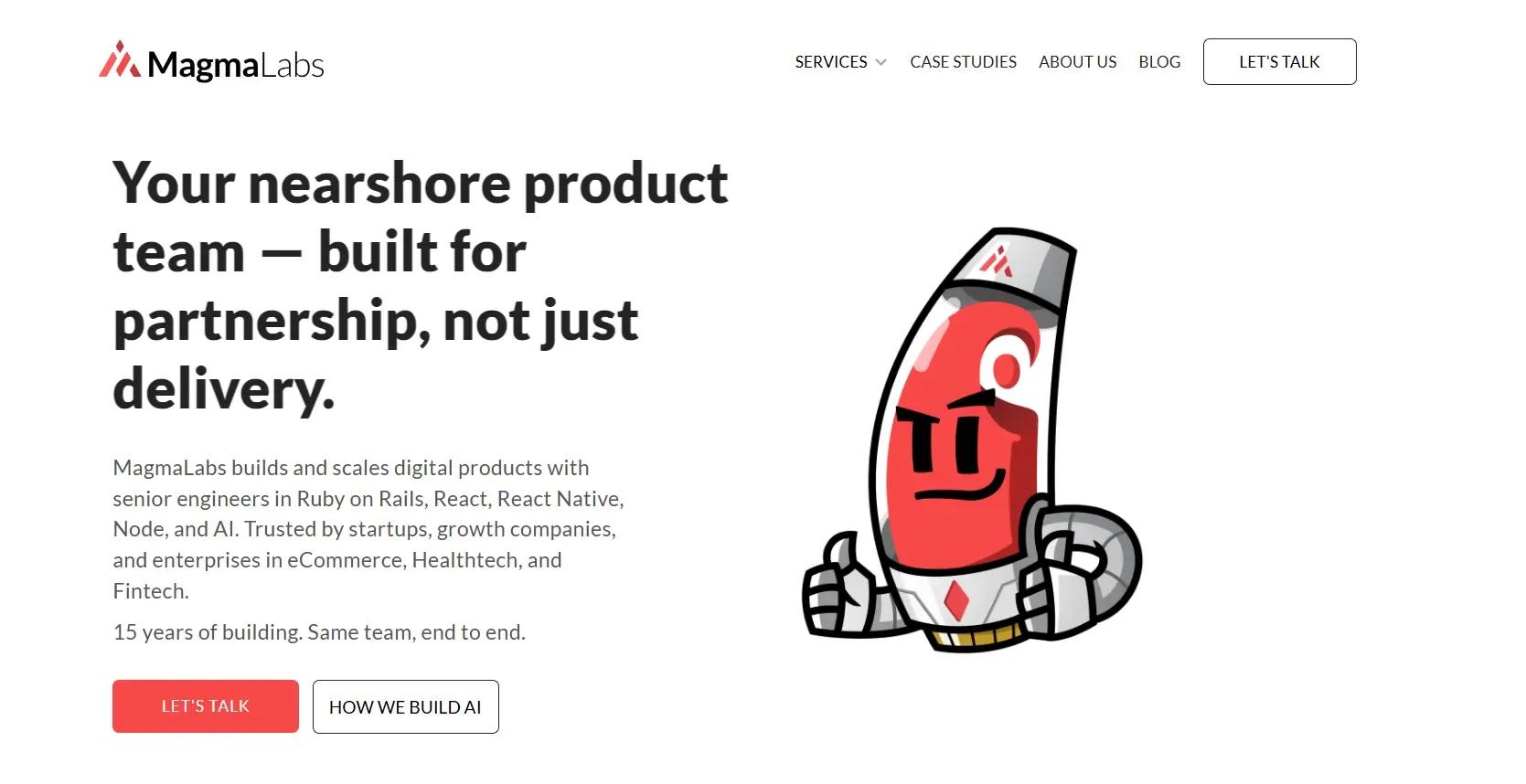
10. MagmaLabs
Best for: Nearshore Rails e-commerce for US clients.
MagmaLabs is a Mexico-based Rails firm founded in 2014, strong in e-commerce with Spree and Solidus, custom SaaS, and fintech. Its nearshore model suits US clients who want Rails expertise in similar time zones, and it contributes actively to Solidus and Rails open source.
Downside: Its e-commerce focus may be more than a simple web app requires.
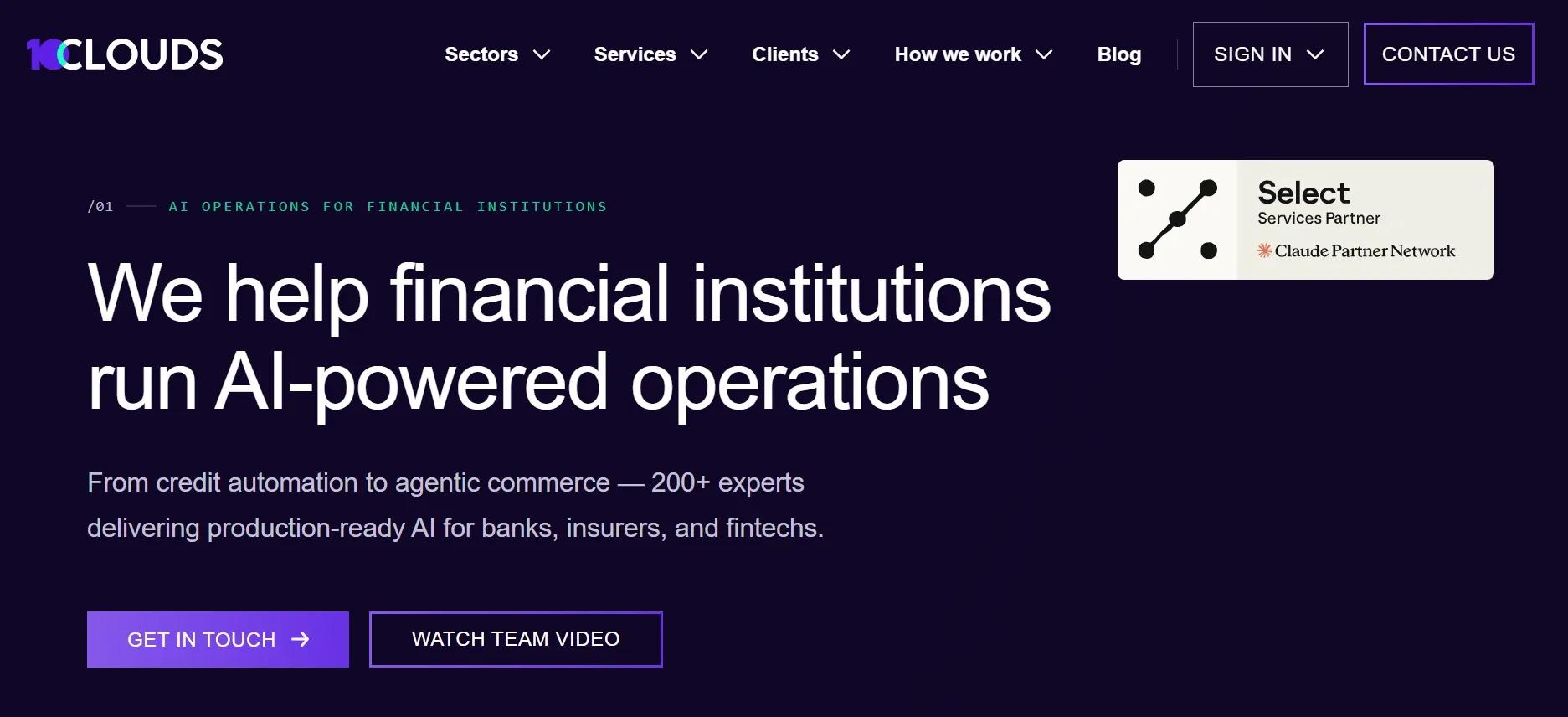
11. 10Clouds
Best for: Fintech and blockchain platforms on Rails.
10Clouds is a Warsaw-based full-service consultancy founded in 2009, with 200-plus engineers, designers, and product managers. It uses Rails as the backbone for backend systems, paired with React, Python, and blockchain expertise, and it is especially known for fintech and blockchain platforms in regulated industries. It pairs product design excellence with engineering execution.
Downside: Its fintech and blockchain focus may be more specialized than a simple web app needs.
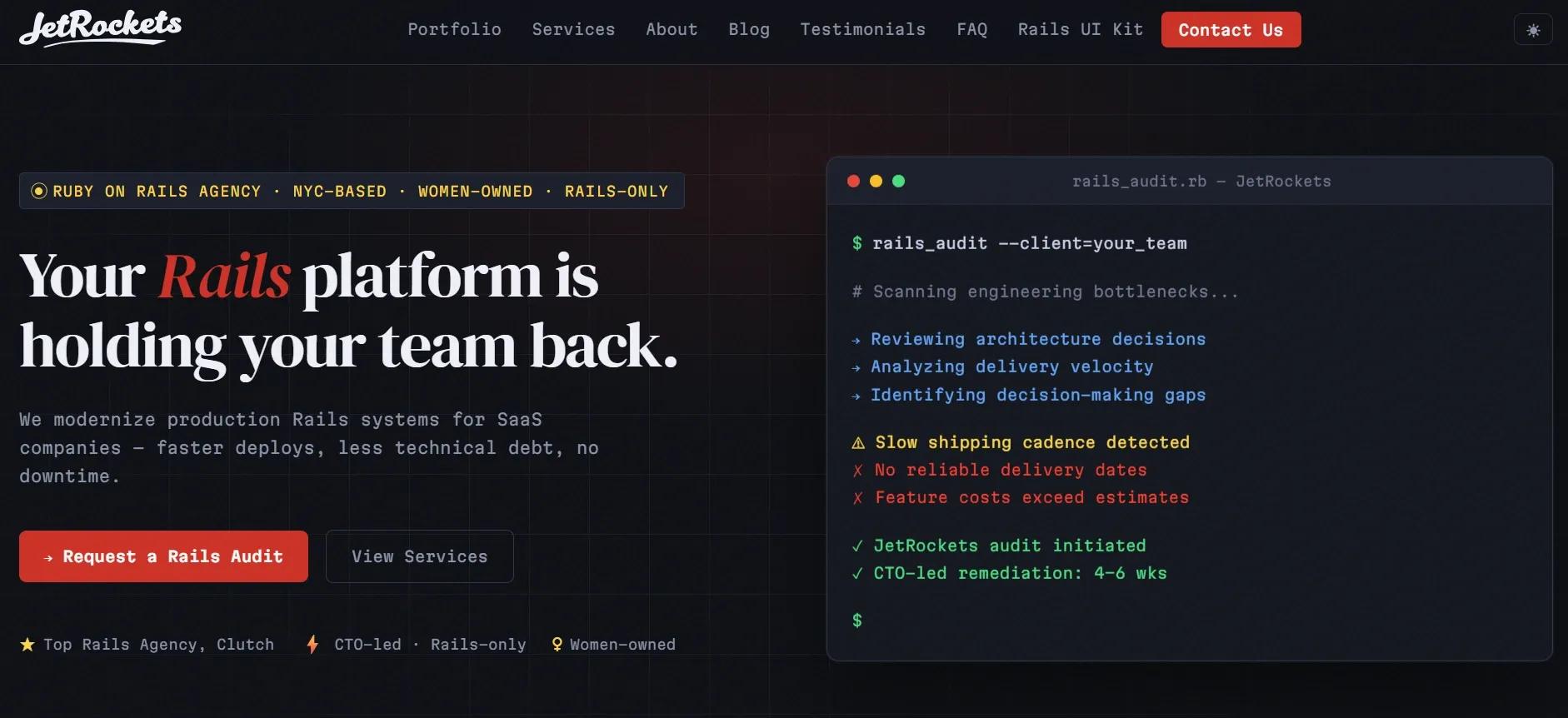
12. JetRockets
Best for: Founder-focused Rails development and MVPs.
JetRockets is a women-owned, New York-based Rails agency with 15-plus years of experience and a 75-plus team. Its core stack is Rails with React, Svelte, Hotwire, and Turbo, plus React Native and Flutter for mobile. It specializes in supporting non-technical founders, from MVP development and product design through Fractional CTO services and project rescue.
Downside: Its founder-and-MVP focus suits growing products more than a very large enterprise rollout.
Why Ruby on Rails Projects Go Wrong
Hiring one of the many Ruby on Rails development companies is not just about comparing hourly rates. The choice shapes how fast your product moves, how stable it feels, and how easy it is to maintain years later. A few pitfalls come up again and again.
Price versus value. Cheap offshore talent can lead to messy code and higher long-term costs, while premium consultancies can burn a budget fast. The trick is the right balance for your stage.
Knowledge traps. A Rails app built without proper conventions or documentation can lock you to one vendor forever. Good partners write code any Rails engineer could pick up.
A mismatch in ways of working. Rails alone does not guarantee smooth delivery. If a team is not aligned on Agile, automated testing, and CI/CD, you will feel it in delayed releases.
Weak communication. Great code means little if collaboration breaks down. Time zones, language, and culture all shape the daily rhythm of a project.
Future relevance. Rails is mature and reliable, but your product needs more. Teams that pair it with React, Hotwire, cloud, and DevOps keep you ahead.
How Much Does Ruby on Rails Development Cost
Ruby on Rails development companies charge rates that vary widely by region and seniority. The table below shows the rough ranges across the firms on this list.
Tier | Typical rate | Who fits here |
| Nearshore and offshore | $25–$70/hr | Devico, MagmaLabs, Eastern Europe |
| Mid-tier European | $50–$120/hr | Monterail, Railsware, Netguru |
| US and UK premium | $100–$200/hr | Thoughtbot, DockYard, Hashrocket |
Two things drive the number. First, location, since US and UK consultancies cost far more than nearshore teams. Second, seniority and scope, since a boutique of senior engineers charges more per hour but can need fewer of them. As always, the cheapest quote often costs the most once you count rework and maintenance. Teams that hire vetted Rails developers through Softaims get senior talent at rates well below the US average, matched within 48 hours.
How Much Does It Cost to Hire Ruby on Rails Developers in 2026
Before comparing Ruby on Rails development companies, understanding what a Rails developer costs is essential for budgeting. Salaries vary by location, experience, and demand. The table below shows average annual salaries across several countries.
Country | Average salary (USD) |
| United States | $110,000 - $150,000 |
| Switzerland | $120,000 - $160,000 |
| Israel | $100,000 - $150,000 |
| Australia | $100,000 - $140,000 |
| Canada | $90,000 - $130,000 |
| Singapore | $90,000 - $130,000 |
| Germany | $85,000 - $125,000 |
| Japan | $85,000 - $120,000 |
| United Kingdom | $80,000 - $120,000 |
| India | $20,000 - $40,000 |
Source: PayScale (2024). These ranges reflect current demand for Rails talent, so it pays to stay current, since the market shifts. Platforms like Glassdoor and Salary.com offer more compensation data.
Dedicated vs. Freelance Ruby Developers
Many Ruby on Rails development companies offer both models, so the choice between dedicated and freelance Rails developers comes down to your project and long-term goals. Dedicated developers suit ongoing work that needs continuous development and maintenance. They offer stability and integrate deeply into your team and culture, which helps if you are building lasting in-house expertise.
Freelance Rails developers, by contrast, offer flexibility and cost savings for short-term projects or fast scaling. They are often hired for specific tasks or fixed timeframes, and they are useful when you need a skill your team lacks. The trade-off is that managing freelancers takes clear communication and project management to keep everyone aligned.
Softaims offers both models, so you can build a permanent team or bring in temporary expertise as each project demands. Ultimately, base the decision on your project's complexity, timeline, and budget. For more perspective, resources like Forbes and Entrepreneur are worth a look.
How to Choose the Right Ruby Partner
When you compare Ruby on Rails development companies, these questions expose a weak vendor fastest. The goal is to look past the pitch and test how a team actually works.
- Ask about conventions. Rails rewards teams that follow its conventions, the "Rails way." Ask how they structure an app and document it, so any Rails engineer could pick it up later rather than only the vendor who wrote it.
- Ask about testing. Rails has a strong testing culture for a reason. Automated tests and CI/CD should be standard, so releases stay safe as the app grows. A team that treats testing as optional will cost you later.
- Ask about the modern stack. A 2026-ready partner pairs Rails with Hotwire or React on the front end, plus cloud and DevOps. If they only know classic Rails, your product may age quickly.
- Ask about scaling. A good shop can plug in one senior engineer or spin up a whole team as you grow. Ask how they handle ramp-up, and whether senior people stay on your project or rotate off after kickoff.
- Ask for a real reference. Reviews on Clutch and G2 are a start, but a direct conversation with a past client tells you far more about communication and reliability.
- Ask who owns the code. You should own the repository, the code, and the IP, in writing, with no dependency on the vendor for future changes.
A simple final test cuts through everything: would you be happy for this team to sit next to your own developers? If the answer is no, keep looking. Start with a small paid project before a long contract, so you see how they really work while the stakes are low.
For a broader view of vendors that also handle these builds, our guides to the top software development companies in the USA and the top custom software development companies are useful companion reads.
Ruby Trends to Watch in 2026
The best Ruby on Rails development companies keep pace as the framework evolves, so it helps to build with the near future in mind. Four shifts are shaping Rails work in 2026.
Hotwire is reviving full-stack Rails. This is reshaping what Ruby on Rails development companies build. Turbo and Stimulus let teams build fast, interactive interfaces with far less JavaScript, so a small Rails team can ship rich UIs without a separate front-end stack. For many products, that means lower cost and faster delivery, which is exactly why Rails feels fresh again.
Rails plus React is still common for complex UIs. Many Ruby on Rails development companies now offer both approaches. When an interface is genuinely complex, many teams still pair a Rails API backend with a React front end. A good partner helps you choose honestly between Hotwire and React, rather than defaulting to whichever they prefer.
AI is entering both the product and the process. More Rails apps now embed AI features like search, recommendations, and chat. At the same time, teams increasingly use AI-assisted coding and testing tools to cut technical debt and ship faster. Ask a partner how they use AI in delivery, since it affects both speed and quality.
Rails remains a startup favorite, and a scale-up workhorse. Its speed to launch keeps it a top pick for founders building an MVP, while proven scaling patterns, around databases, caching, and background jobs, keep it viable well past product-market fit. If your product also needs a mobile app, our guide to the top mobile app development companies is a useful companion read.
Conclusion
There are many Ruby on Rails development companies out there, but only a few consistently deliver products that last. The Ruby on Rails development companies here combine strong engineering with proven reliability, so you get partners you can trust. If you are a startup founder, Rails helps you launch fast. If you are an enterprise, it helps you scale without headaches. Either way, the partner you choose makes the difference between shipping smoothly and struggling through delays. If your delivery might reach Europe too, our guide to the top software development companies in the UK is worth a look.
If you want a Rails application built by vetted senior engineers and owned entirely by you, Softaims is the best place to start. Book a free consultation and get matched with vetted developers within 48 hours.
Frequently Asked Questions
What do Ruby on Rails development companies do?
Ruby on Rails development companies build web applications and SaaS platforms using the Rails framework. Good ones handle architecture, testing, and long-term maintenance, and pair Rails with modern tools like Hotwire, React, cloud, and DevOps.
How much does Ruby on Rails development cost?
Rates range from about $25 an hour for nearshore and offshore teams to $200 an hour for US and UK premium boutiques. Location, seniority, and scope drive the number, so the cheapest option is not always the best value.
Is Ruby on Rails still worth using in 2026?
Yes. Rails is quick to launch, easy to maintain, and proven at scale by GitHub, Shopify, and Airbnb. With Hotwire and modern tooling, it remains one of the most productive frameworks for web apps.
Should I hire a boutique or a large Rails firm?
Boutiques offer senior, craftsmanship-led teams at premium rates, ideal for quality-critical work. Larger firms can scale teams quickly for enterprise programs. The right choice depends on your project's size and stage.
How do I avoid getting locked into one Rails vendor?
Insist on Rails conventions, documentation, and tests, so any Rails engineer can pick up the code. Confirm in the contract that you own the repository and the IP.
Should I hire onshore or nearshore Rails developers?
Onshore teams offer the closest collaboration at the highest cost. Nearshore teams in Eastern Europe or Latin America offer strong quality at lower rates, with reasonable time-zone overlap.
How long does a Rails project take?
A small app or MVP takes a few weeks to a couple of months. A custom application takes three to six months. A large platform takes six to twelve months or more, depending on scope.
Do I own the code after the project?
You should. Confirm in the contract that you own the repository, the code, and the IP, so you are never dependent on one vendor for future changes.
How do I choose between Ruby development companies?
Weigh track record, client reviews, Rails focus, modern-stack use, and who owns the code. Then start with a small paid project to see how the team works before you commit to a large build.


 GitHub
Kevin Mark M.

 Verified Expert in Engineering
My name is Kevin Mark M. and I have over 14 years of experience in the tech industry. I specialize in the following technologies: React, React Native, TypeScript, Jest, Ruby on Rails, etc.. I hold a degree in Bachelors. Some of the notable projects I’ve worked on include: KarPage - Social Media app for Car Enthusiasts, Barangay Nutrition Scholar App (Survey And Tracking), Food Ordering App, OCR Camera app with Open AI API integration. I am based in Canaman, Philippines. I've successfully completed 4 projects while developing at Softaims.
I am a dedicated innovator who constantly explores and integrates emerging technologies to give projects a competitive edge. I possess a forward-thinking mindset, always evaluating new tools and methodologies to optimize development workflows and enhance application capabilities. Staying ahead of the curve is my default setting.
At Softaims, I apply this innovative spirit to solve legacy system challenges and build greenfield solutions that define new industry standards. My commitment is to deliver cutting-edge solutions that are both reliable and groundbreaking.
My professional drive is fueled by a desire to automate, optimize, and create highly efficient processes. I thrive in dynamic environments where my ability to quickly master and deploy new skills directly impacts project delivery and client satisfaction.

Leave a Comment
Need help building your team? Let's discuss your project requirements.
Get matched with top-tier developers within 24 hours and start your project with no pressure of long-term commitment.