Best Large Language Model Optimization Agencies in the USA (2027)
Compare the top large language model optimization agencies in the USA for 2027. Discover US pricing, timelines, and how to choose the right partner for RAG, fine-tuning, inference, and evaluation.
Technically reviewed by:
Alexei S.|Antonio P.
Table of contents
Key Takeaways
- True LLM optimization spans sharper prompting, data retrieval (RAG), fine-tuning, inference cost and latency reduction, and rigorous evaluation sets with safety guardrails.
- Prompt work and retrieval (RAG) handle the majority of business requirements, whereas fine-tuning should only be utilized after prompting and RAG have reached their limits.
- Discovery audits typically range from $3,000 to $10,000 (1–2 weeks), retrieval pilots run $15,000 to $50,000 (4–8 weeks), and production systems span $40,000 to $150,000+ (2–6 months).
- Reliable optimization partners build representative test sets to measure accuracy, cost, and speed rather than relying on anecdotal demo responses.
- Clients must ensure their contracts guarantee complete post-launch ownership of all models, prompts, test sets, and pipelines to avoid platform lock-in.
Getting a model to answer well in a demo is simple. Keeping it accurate, quick, affordable, and safe once real users arrive is the hard part, and it is the job of the best large language model optimization agencies in the USA. The work runs from sharpening prompts and grounding answers in your own data with retrieval, through fine-tuning where it truly earns its cost, down to trimming inference spend and latency and building the tests and guardrails that hold quality steady under load. This guide weighs up the US firms worth knowing in 2027 on real engineering depth, straight advice, pricing, and whether you walk away owning the result.
To be clear on scope, this ranking is about the engineering side of large language model optimization, meaning how a model performs inside your product, rather than getting a brand mentioned in AI answers. For every firm you will find what it does best, where its strength lies, a frank trade-off, and roughly what it charges. The guide also explains, in plain language, what this work actually involves, how to choose between retrieval, prompting, and fine-tuning, what it costs in the US, and the questions that quickly reveal whether a partner knows their craft.
Why LLM Optimization Has Become Its Own Discipline
Before sizing up any firm, it is worth understanding why this is now specialist work. To begin with, a bare model call tends to invent facts, overlook your data, and grow slow and pricey as volume rises. Beyond that, the distance between a flashy prototype and a system that survives real traffic is large, and bridging it calls for measurement, retrieval, and disciplined cost control rather than a longer prompt. Consequently, US businesses are turning to large language model optimization agencies in the USA in growing numbers, because a tuned system answers more reliably, spends less per request, and breaks in ways you can predict instead of in front of a customer.
Best Large Language Model Optimization Agencies in the USA at a Glance
Here is a quick view of the ten large language model optimization agencies in the USA we compared. At a glance, you can see where each sits, what it concentrates on, and roughly where its pricing lands. Underneath the table, the full profiles lay out the reasoning for each ranking.
Rank | Company | Best for | Focus | Location | Pricing |
| 1 | Softaims | Flexible, vetted teams you embed | Full-stack LLM optimization | US-aligned, global | Flexible, pay for hours |
| 2 | Devaims | End-to-end LLM builds | Full product delivery | US-aligned | Flexible, project or team |
| 3 | NineTwoThree | RAG apps and product builds | Applied LLM products | Boston, MA | Custom quote |
| 4 | RTS Labs | Applied AI engineering | LLM and automation builds | Richmond, VA | Custom quote |
| 5 | Markovate | Generative AI product development | Custom LLM apps | San Francisco, CA | Custom quote |
| 6 | Arize AI | Evaluation and observability | LLM testing and monitoring | Berkeley, CA | Platform and services |
| 7 | Baseten | Model deployment and inference | Inference optimization | San Francisco, CA | Usage and services |
| 8 | Together AI | Inference and fine-tuning | Open-model infrastructure | San Francisco, CA | Usage-based |
| 9 | Predibase | Fine-tuning and serving | Efficient fine-tuning | San Francisco, CA | Platform and services |
Which one should you shortlist? Want flexible engineers you embed, with full ownership of the models and code? Look at Softaims. Need a RAG app or applied build shipped? NineTwoThree, RTS Labs, and Markovate deliver there. Fighting shaky quality or no way to measure it? Arize AI centres on evaluation. Battling inference cost or latency? Baseten and Together AI focus on that layer, while Predibase and Lamini specialise in fine-tuning. The rest of this guide shows the evidence behind each of these large language model optimization agencies in the USA.
How We Chose the Best Large Language Model Optimization Agencies in the USA
We ignored directory rankings and ad budgets, since money buys both. Rather, to rank these large language model optimization agencies in the USA, we leaned on evidence that is tough to fake: shipped production systems, range across the optimization stack, candour about when fine-tuning is overkill, measurement discipline, and whether you keep ownership at the finish. Naturally, we checked all of this in November 2026, and because the field shifts quickly, confirm the latest before you commit. Four factors weighed heaviest.
Range across the stack
Real optimization touches prompting, retrieval, fine-tuning, inference, and testing. So we preferred teams comfortable across the whole chain over ones selling a single trick as the cure for everything.
Measurement discipline
A model that dazzles in a demo can still stumble on live inputs. For that reason, we rewarded firms that build genuine test sets and track accuracy, cost, and speed instead of eyeballing a handful of replies.
Straight technique advice
Fine-tuning is costly and often skippable. Accordingly, the clearest mark of a reliable partner is one that points you to retrieval or prompt work when that suits better, rather than reaching for the priciest route by habit.
Cost control and ownership
A system you cannot afford to run has not been optimized. Therefore, we favoured partners that drive down inference cost and latency and leave you holding the models, prompts, and pipelines, free of their platform.
On our own involvement. Softaims publishes this guide and appears in it, and Devaims is a sister Softaims brand. The two do different jobs: Softaims supplies vetted engineers you embed in your own team, while Devaims runs full project builds. We have held both to the same test as every other name here, and we point you to the others' own sites so you can check them for yourself.
The 10 Best Large Language Model Optimization Agencies in the USA for 2027, Reviewed
For easy comparison, each profile below follows the same shape so you can weigh these large language model optimization agencies in the USA fairly: what the firm is best for, a short overview, its strengths, the key facts, who it suits, and an honest trade-off.
1. Softaims
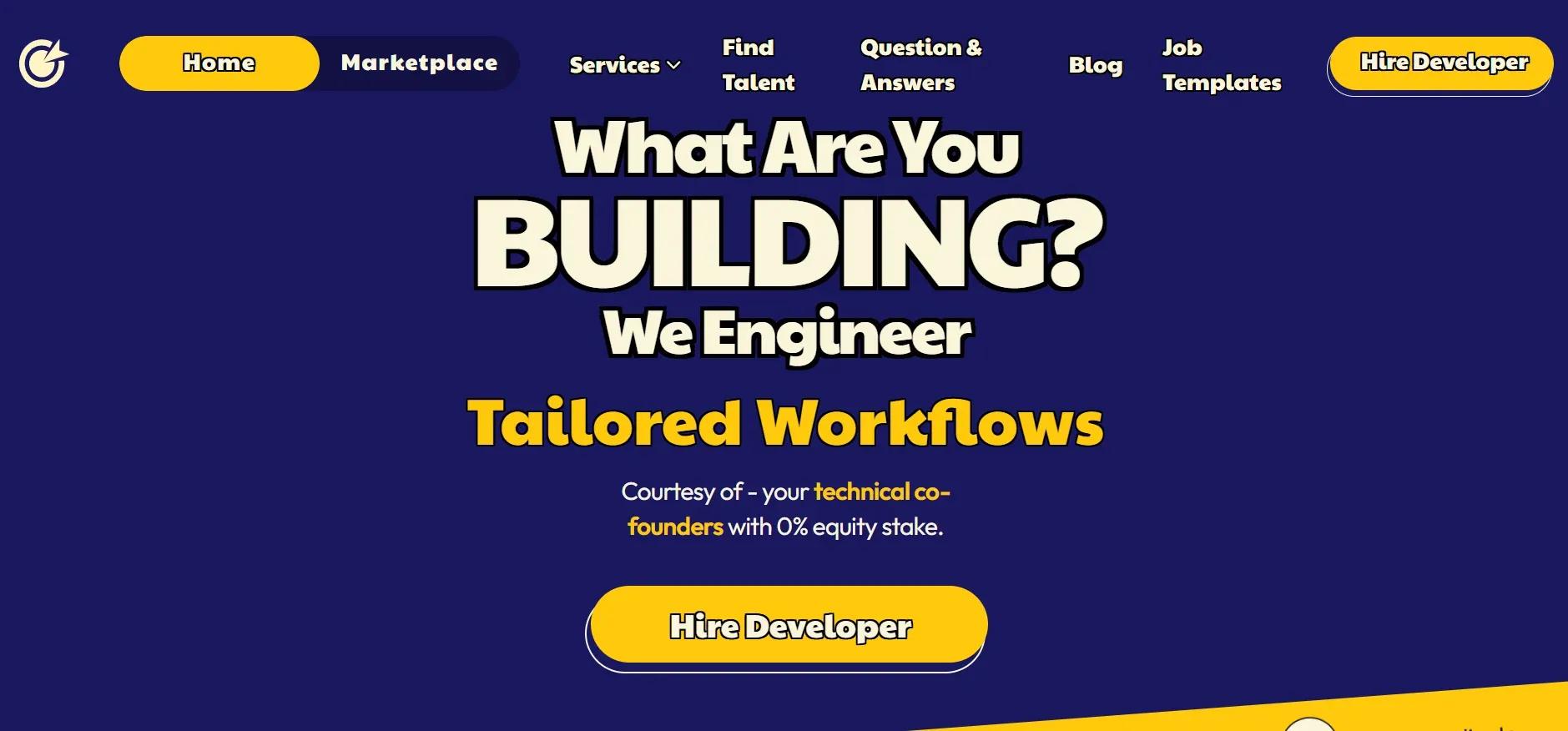
Best for: Teams who want flexible, vetted engineers to optimize their LLM systems and keep full control.
Softaims hands you a ready pool of pre-vetted AI, ML, and backend engineers you bring onto your own team, usually within a couple of days. Rather than passing your model work to a fixed-scope consultancy, you get people who sharpen your prompts, build retrieval over your data, fine-tune only when it genuinely pays off, cut inference cost and latency, and stand up evaluation and guardrails inside your own sprints, leaving you holding the models, prompts, and pipelines. Moreover, they are provider-agnostic, so they help you get the most from OpenAI, Anthropic, or open-weight models rather than steering you to one stack.
Strengths:
- Prompt optimization and retrieval over your own data
- Fine-tuning when it genuinely beats retrieval
- Inference cost and latency reduction
- Evaluation sets, monitoring, and guardrails
- AI and ML services and AI engineers to hire
Key facts: US-aligned delivery backed by a global engineering network. Flexible pricing, you pay for hours used. A team can be reviewing your setup in roughly 48 hours.
Why choose Softaims? If you want to move quickly, keep full control, and dodge vendor lock-in, it is the most flexible of all the large language model optimization agencies in the USA on this list. You can hire AI and LLM engineers and size the team to the task in front of you.
Considerations: It is a talent and engineering partner, not a packaged product, so if you want an off-the-shelf tool rather than a team, a platform vendor may suit better.
2. Devaims
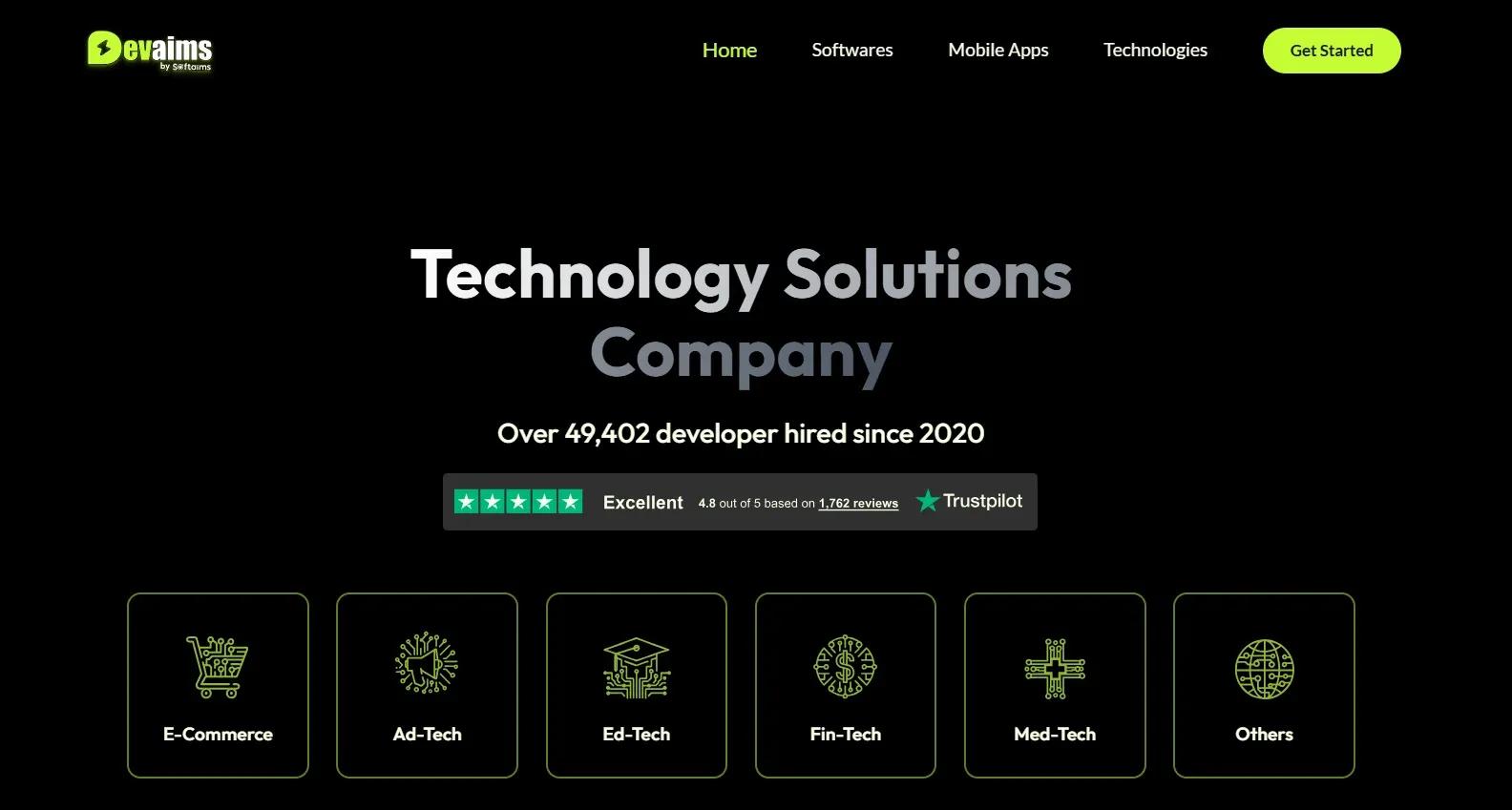
Best for: Teams who want a full LLM system built and tuned from end to end.
Devaims, a Softaims brand, carries an LLM feature from idea to a working, optimized system, owning the entire delivery rather than simply supplying engineers. In practice, you get retrieval, any fine-tuning that is warranted, inference tuning, evaluation, and deployment from one team that stays on the project. It fits organisations that would sooner hand over a clear brief and receive a production-ready, well-measured LLM system in return.
Strengths:
- End-to-end LLM system design and build
- Retrieval, fine-tuning, and inference tuning
- Evaluation, monitoring, and guardrails
- Cloud deployment and MLOps
- Ongoing support and scaling
Key facts: US-aligned delivery with a distributed team. Flexible pricing by project or team. A sister brand of Softaims.
Why choose Devaims? If you want a single team to own the whole build and stay with it as usage climbs, rather than managing people yourself, Devaims fits.
Considerations: It works best from a reasonably clear brief, so a very raw idea may need a discovery phase first.
3. NineTwoThree
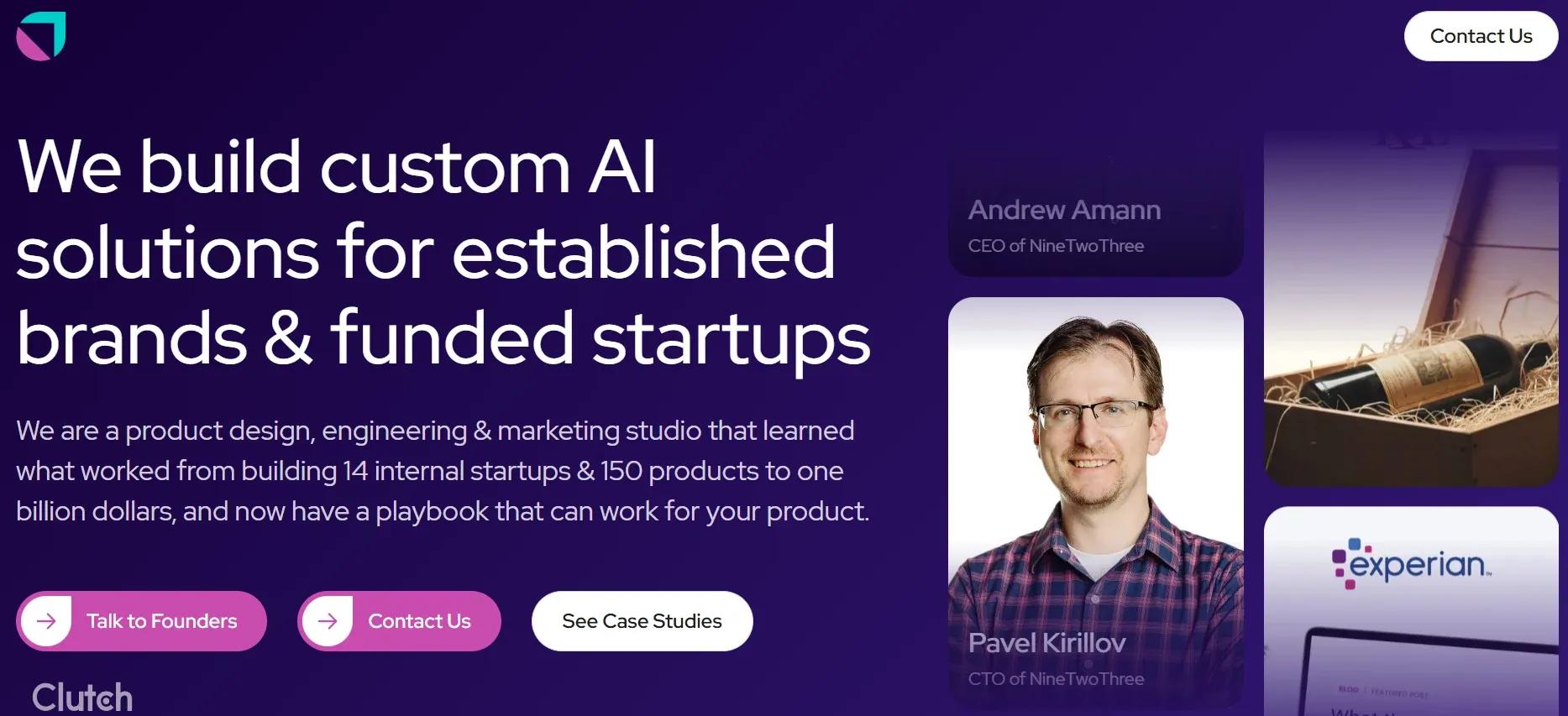
Best for: RAG apps and applied LLM product builds.
NineTwoThree is a Boston AI product studio that ships applied LLM systems, with real strength in retrieval apps, workflow automation, and getting features in front of users rather than stopping at a prototype. Naturally, it suits teams that want a build partner who treats an LLM feature as a product, not an experiment. For a RAG-based application that has to work day one, its delivery focus is the draw.
Strengths:
- Retrieval (RAG) applications
- Applied LLM product delivery
- Workflow automation
- Product and engineering under one roof
Key facts: Boston, Massachusetts. Custom pricing. Strong applied-product track record.
Why choose NineTwoThree? If you want a working LLM product rather than a proof of concept, it is one of the more delivery-focused large language model optimization agencies in the USA.
Considerations: As a product studio, confirm its depth on heavy fine-tuning or inference work if that is your main need.
4. RTS Labs
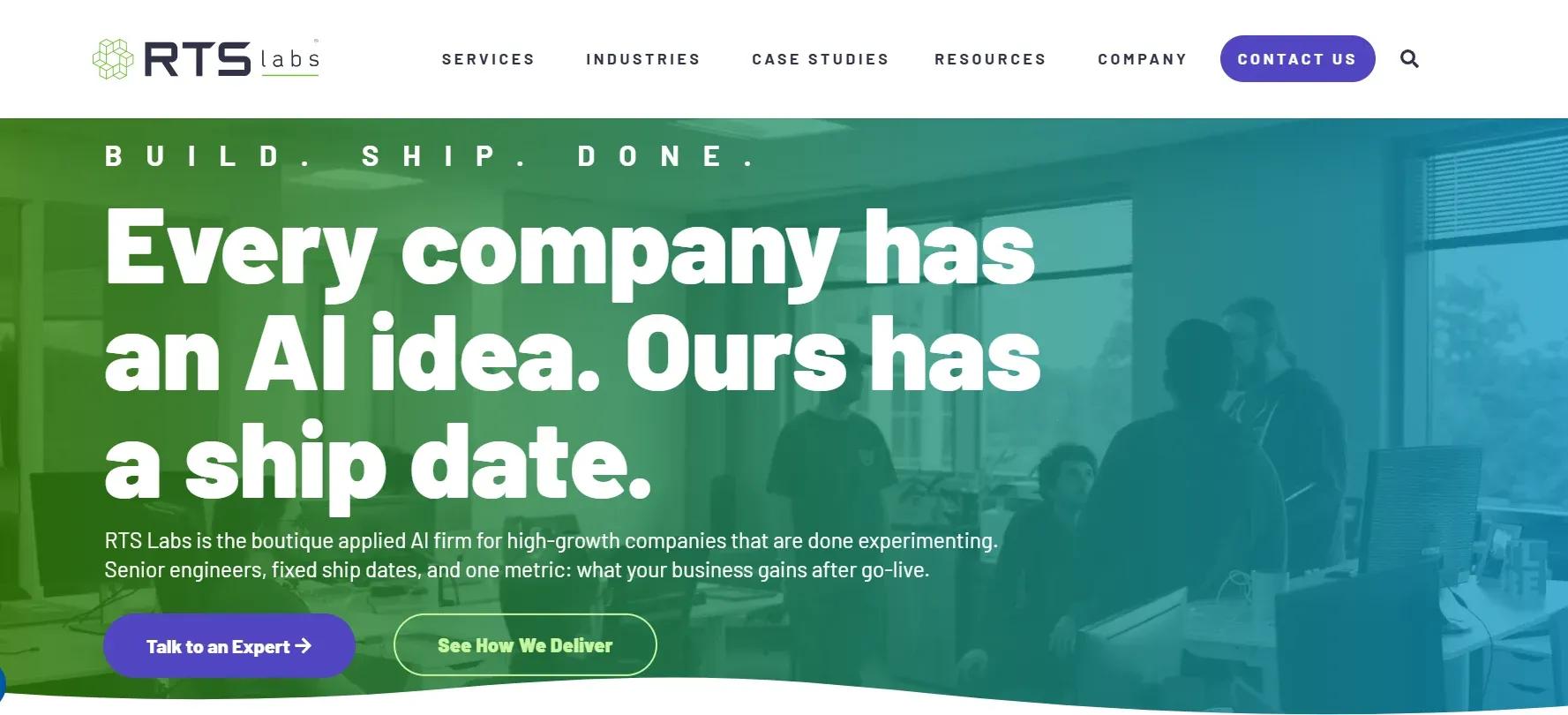
Best for: Applied AI engineering across the business.
RTS Labs is a Virginia firm that pairs AI engineering with data and automation, which suits organisations that need an LLM system wired into real operations rather than sitting on its own. Moreover, it brings a practical, delivery-minded approach and experience connecting models to the systems a business already runs. For an applied build that has to fit an existing stack, its breadth is useful.
Strengths:
- Applied AI and LLM engineering
- Data engineering and automation
- Integration with business systems
- Delivery-focused consulting
Key facts: Richmond, Virginia. Custom pricing. Strong on applied, integrated builds.
Why choose RTS Labs? If your LLM system has to plug into real operations, its engineering breadth fits.
Considerations: Its breadth spans AI and data, so confirm the specific optimization depth you need up front.
5. Markovate
Best for: Generative AI product development.
Markovate is a San Francisco agency focused on generative AI and custom LLM products, covering retrieval, agents, and the application layer around them. Generally, it suits teams that want a partner to design and build a generative feature end to end, with product thinking alongside the engineering. For a custom LLM app with a clear business goal, its focus is a fit.
Strengths:
- Generative AI and custom LLM apps
- Retrieval and agent workflows
- Product design and strategy
- Full-stack application delivery
Key facts: San Francisco, California. Custom pricing. Strong generative-AI product focus.
Why choose Markovate? If you want a generative AI product shaped and built in one place, its approach fits.
Considerations: Confirm its depth on specialised fine-tuning or large-scale inference if those are central.
6. Arize AI
Best for: Evaluation and observability.
Arize AI is a Berkeley company built around measuring and monitoring AI systems, with strong tooling for LLM evaluation, tracing, and catching quality problems in production. Typically, it suits teams that cannot yet tell whether a change actually helped, which is the single most common gap in LLM work. For putting real measurement behind your optimization, its focus is exactly on target.
Strengths:
- LLM evaluation and tracing
- Production monitoring and observability
- Quality and drift detection
- Measurement tooling and guidance
Key facts: Berkeley, California. Platform plus services pricing. Strong evaluation and observability focus.
Why choose Arize AI? If you need to measure quality properly rather than guess, its evaluation tooling is the draw.
Considerations: It centres on measurement, so you will still need a team to make the changes it surfaces.
7. Baseten
Best for: Model deployment and inference optimization.
Baseten is a San Francisco company focused on deploying and serving models efficiently, with real depth in making inference fast and cost-effective at scale. In practice, it suits teams whose model works but is too slow or too expensive to run, a problem that only grows with traffic. For the serving and inference layer specifically, its specialism is a strong fit.
Strengths:
- Model deployment and serving
- Inference speed and cost optimization
- Autoscaling and infrastructure
- Production reliability
Key facts: San Francisco, California. Usage and services pricing. Strong inference and deployment focus.
Why choose Baseten? If serving cost or latency is your bottleneck, its focus targets exactly that.
Considerations: Its strength is the serving layer, so pair it with help on retrieval, evaluation, and the application.
8. Together AI
Best for: Inference and fine-tuning on open models.
Together AI is a San Francisco firm providing fast, cost-effective infrastructure for running and fine-tuning open-weight models. Accordingly, it suits teams that want to move off closed APIs to control cost and data, or that need efficient fine-tuning and serving at scale. For an open-model strategy where cost and control matter, its platform and expertise fit well.
Strengths:
- Fast, low-cost inference for open models
- Fine-tuning at scale
- Open-weight model expertise
- Cost and data control
Key facts: San Francisco, California. Usage-based pricing. Strong open-model infrastructure.
Why choose Together AI? If you want to run and tune open models efficiently, its infrastructure is the draw.
Considerations: It leans toward infrastructure, so confirm support for the application and evaluation layers you need.
9. Predibase
Best for: Efficient fine-tuning and serving.
Predibase is a San Francisco company focused on making fine-tuning practical and affordable, with techniques that let smaller tuned models match larger ones on specific tasks. Specifically, it suits teams that have decided fine-tuning is the right call and want it done efficiently rather than expensively. For a focused, cost-aware fine-tuning effort, its specialism is a fit.
Strengths:
- Efficient fine-tuning of open models
- Small, task-specific tuned models
- Serving and deployment
- Cost-aware model optimization
Key facts: San Francisco, California. Platform plus services pricing. Strong fine-tuning focus.
Why choose Predibase? If fine-tuning is genuinely your path and cost matters, its efficient approach fits.
Considerations: Fine-tuning is its centre of gravity, so confirm it covers the retrieval and evaluation work around it.
10. Lamini
Best for: Accuracy-focused enterprise fine-tuning.
Lamini is a Palo Alto company specialising in enterprise fine-tuning aimed at high accuracy for specific tasks, including work to reduce hallucinations on factual answers. Typically, it suits larger organisations with a narrow, high-stakes task where accuracy is non-negotiable. For a demanding, accuracy-first fine-tuning programme, its focus stands out.
Strengths:
- Enterprise LLM fine-tuning
- Accuracy and hallucination reduction
- Task-specific model tuning
- On-prem and private deployment options
Key facts: Palo Alto, California. Enterprise pricing. Strong accuracy-focused fine-tuning.
Why choose Lamini? If a high-stakes task demands top accuracy from a tuned model, its specialism fits.
Considerations: Its enterprise, fine-tuning-first focus suits larger, accuracy-critical work more than a lean first build.
What Large Language Model Optimization Really Involves
Optimization bundles together several quite different techniques, and telling them apart is where the savings start. Put simply, the aim is a system that is accurate, quick, cheap per query, and safe. These are the levers the strongest large language model optimization agencies in the USA reach for.
Sharper prompting
This is the least expensive lever, and the one teams skip too soon. Indeed, clear instructions, structured outputs, and good examples can raise quality a surprising amount before a dollar goes on anything heavier.
Retrieval, or RAG
Rather than trusting the model to know your facts, retrieval hands it the right documents as each question comes in. For the majority of business problems this is the first real move, since it anchors answers in your own data and curbs invented ones.
Fine-tuning
Fine-tuning reshapes the model itself on your examples. Certainly, it shines for a fixed style, a strict format, or a narrow task, yet it is pricey and demands clean data, so it pays off only once prompting and retrieval have run out of road.
Inference efficiency
Once the thing works, this is how you make it cheap and fast, through smaller models, quantisation, caching, and routing easy questions to cheaper engines. On a busy product, this layer decides your monthly bill.
Testing and guardrails
Lastly, evaluation tells you whether a change truly helped, using representative test sets rather than a lucky few examples, while guardrails keep behaviour safe. Skip these and you are tuning with the lights off.
Fine-Tuning, RAG, or Prompting: Which Does Your Project Need?
This single choice shapes the budget more than any other, and a good partner talks you through it instead of grabbing the dearest option. As a rule, open with prompt work, since it is quick and cheap. After that, layer in retrieval once the model has to answer from your own material, which handles the bulk of business cases. Reserve fine-tuning for later, mainly when you need a consistent voice or format, a narrow specialised skill, or faster responses from a smaller tuned model. In reality, many of the best systems blend retrieval with light fine-tuning, and the leading large language model optimization agencies in the USA help you strike that balance rather than selling one route as the whole fix.
Technique | Best for | Relative cost | When to reach for it |
| Prompt work | Fast, cheap quality gains | Low | First, on nearly every project |
| Retrieval (RAG) | Grounding answers in your data | Medium | Most business use cases |
| Fine-tuning | Fixed style or narrow tasks | High | After prompting and RAG fall short |
What Does LLM Optimization Cost in the USA?
Pricing across large language model optimization agencies in the USA ranges widely, since polishing a prompt and training a model are worlds apart. The figures below rest on recent 2027 industry data and are planning ranges, not quotes, and bear in mind that ongoing inference and hosting costs sit on top of any build.
Audit or discovery
To begin with, a short engagement to review your system and pinpoint the biggest wins usually runs about $3,000 to $10,000. It is a low-risk way to start.
Retrieval pilot
A working retrieval system over your data commonly runs about $15,000 to $40,000, with many pilots landing between $10,000 and $50,000 across four to eight weeks.
Production system
At the top end, a production-grade system with evaluation, monitoring, and agent orchestration generally runs $40,000 to $150,000, while fine-tuning a model often adds $20,000 to $80,000 before ongoing inference.
What moves the price
The main drivers are how much data needs preparing, whether you fine-tune or lean on retrieval, the traffic the system must carry, and how strict your testing and safety bars are. Fine-tuning and heavy data work are the biggest line items. So a partner who nudges you toward retrieval when it fits can save you a great deal. Most large language model optimization agencies in the USA will give you a firmer number once your use case and data are clear.
Engagement type | Illustrative US cost (2027) | Typical timeline |
| Audit or discovery | $3,000 to $10,000 | 1 to 2 weeks |
| Retrieval pilot | $15,000 to $50,000 | 4 to 8 weeks |
| Production system | $40,000 to $150,000+ | 2 to 6 months |
How Long Does LLM Optimization Take?
Timelines vary between large language model optimization agencies in the USA, but a focused pilot generally takes four to eight weeks, while a production system runs two to six months depending on data work and testing. Prompt and retrieval gains can arrive within weeks, whereas fine-tuning and heavy data preparation stretch things out. In the end, unclear goals and untidy data are what blow out a schedule, so a partner that scopes both early can give you a date you can rely on.
How to Choose the Right US LLM Optimization Partner
When you shortlist large language model optimization agencies in the USA, five checks sort the solid from the shaky. Helpfully, you can put every one to a firm in a single first call.
Ask how they will measure success
Everything hangs on evaluation. So ask a partner how they would build a test set for your problem and track accuracy, cost, and latency, not just run a slick demo.
Check that they push back on fine-tuning
Next, ask when they would avoid fine-tuning. A trustworthy team reaches for prompting and retrieval first, and a rush to fine-tune on every job is a warning sign.
Weigh their inference-cost experience
A system you cannot afford to run is useless. For that reason, ask how they would cut cost and latency at your expected traffic, and for cases where they have done it.
Confirm data handling and safety
Your prompts and data are sensitive, so ask how they protect privacy, and how they build guardrails against wrong or unsafe answers.
Pin down ownership
Finally, you should own the models, prompts, pipelines, and test sets in writing, rather than being tied to a partner's platform.
Questions to Ask Before You Hire
- How would you build an evaluation set for my use case, and what exactly would you track?
- When would you steer me toward retrieval or prompting instead of fine-tuning?
- How would you lower inference cost and latency at my expected traffic?
- How do you safeguard the privacy of my prompts and data?
- What safeguards stop the system from giving wrong or unsafe answers?
- Can you walk me through a live system you improved, with the numbers before and after?
- When we finish, do the models, prompts, and pipelines belong to us outright?
Clear answers backed by numbers reassure you. Woolly replies, or a quick leap to fine-tuning before your problem is even understood, tell you most of what you need to know about the large language model optimization agencies in the USA on your shortlist.
Common Mistakes to Avoid
A handful of the same traps catch most teams. First, fine-tuning too soon burns money before cheaper prompting and retrieval have had a go. Second, skipping evaluation leaves you unable to tell whether a change helped, so you tune blind. Likewise, ignoring inference cost hands you a system that shines in a demo but is ruinous at scale. In the same way, pushing messy data through retrieval yields messy answers, since rubbish in means rubbish out. Last, no guardrails exposes you to wrong or unsafe output in front of users. The better large language model optimization agencies in the USA steer you clear of all five, because their reputation rides on the system running reliably once it is live.
Frequently Asked Questions
What is the best LLM optimization agency in the USA?
No single name wins for everyone among the large language model optimization agencies in the USA; it comes down to your problem. If you want flexible engineers you embed and steer, Softaims fits. For applied RAG builds, NineTwoThree and Markovate deliver. For inference cost, Baseten and Together AI focus there. In short, match the partner to your bottleneck, not a ranking.
How much does LLM optimization cost in the USA?
Broadly, an audit runs $3,000 to $10,000, a retrieval pilot $15,000 to $50,000, and a production system $40,000 to $150,000 or more. Fine-tuning often adds $20,000 to $80,000, and inference and hosting are ongoing on top.
Should I fine-tune or use RAG?
Begin with prompting, then layer in retrieval, and that pairing handles most business cases by grounding answers in your own data. Keep fine-tuning in reserve for a fixed style, a narrow task, or faster responses, and only once prompting and retrieval have run out of road.
How do I cut LLM inference costs?
Common moves include a smaller or distilled model, quantisation, caching frequent answers, and routing simple queries to cheaper engines. Still, a good partner measures each change rather than guessing, since the right blend depends on your traffic.
How long will an LLM optimization project run?
Expect a focused pilot in roughly four to eight weeks and a production system in two to six months. Prompt and retrieval gains often arrive sooner, whereas fine-tuning and large data jobs push the date out.
How do you prove the optimization worked?
With a proper evaluation set built from real examples and scored on accuracy, cost, and latency. Judging on a few favourable cases is how teams fool themselves, so insist on a representative test set.
Who owns the models and prompts afterward?
You should, in full, with the contract covering the models, prompts, pipelines, and test sets. Keeping these leaves you free to switch partners or providers later.
Can a US agency work with both open and closed models?
The strong ones are provider-agnostic and help you get the most from OpenAI, Anthropic, or open-weight models, choosing on your needs rather than a house preference.
Related Reading
If you are building a wider AI capability around your LLM work, these related guides on the Softaims blog may help:
- Top LLM Development Companies in the USA
- Full-Stack Web Development Companies in the USA
- Top Full-Stack Web Development Agencies
Final Thoughts
The right partner here depends on your bottleneck, not on whose logo is biggest. Short on a shipped RAG app? NineTwoThree, RTS Labs, and Markovate build them. Need real measurement behind your work? Arize AI centres on it. Fighting inference cost or latency? Baseten and Together AI target that layer, while Predibase and Lamini go deep on fine-tuning.
For teams who want to move quickly, keep full control, and avoid vendor lock-in, Softaims is our own pick among the large language model optimization agencies in the USA: vetted engineers on your team who sharpen prompts, build retrieval, fine-tune only when it helps, cut inference cost, and measure everything, with the models and code yours from day one, and Devaims if you would rather hand the whole build over. Whichever way you lean, pin down your goals and your data, then talk to Softaims about your LLM project to see who fits.


 Stackoverflow
pedro c.
 Verified Expert in Engineering
My name is pedro c. and I have over 15 years of experience in the tech industry. I specialize in the following technologies: Custom PHP, jQuery, Joomla, CSS 3, MySQL, etc.. I hold a degree in Diploma, Other, Other, Bachelors. Some of the notable projects I’ve worked on include: Canonbury Antiques, Import Dental, Allinea Dental, Enjoy Hapiom, Table Pi, etc.. I am based in Panama, Panama. I've successfully completed 21 projects while developing at Softaims.
My expertise lies in deeply understanding and optimizing solution performance. I have a proven ability to profile systems, analyze data access methods, and implement caching strategies that dramatically reduce latency and improve responsiveness under load. I turn slow systems into high-speed performers.
I focus on writing highly efficient, clean, and well-documented code that minimizes resource consumption without sacrificing functionality. This dedication to efficiency is how I contribute measurable value to Softaims’ clients by reducing infrastructure costs and improving user satisfaction.
I approach every project with a critical eye for potential bottlenecks, proactively designing systems that are efficient from the ground up. I am committed to delivering software that sets the standard for speed and reliability.

Leave a Comment
Need help building your team? Let's discuss your project requirements.
Get matched with top-tier developers within 24 hours and start your project with no pressure of long-term commitment.