Top 10 Large Language Model Optimization Agencies (2027)
Optimizing LLMs requires rigorous prompt engineering, RAG, fine-tuning, and inference cost reduction. This guide shortlists 2027’s top LLM optimization agencies based on technical depth and talent.
Table of contents
Key Takeaways
- Effective LLM engineering balances cost, latency, and accuracy through prompt tightening, grounded data retrieval (RAG), and selective fine-tuning only when standard context falls short.
- Moving beyond simple demos demands systematic test sets and automated evaluations to ensure output quality, minimize hallucinations, and guarantee safety under production traffic.
- Advisory audits typically run $3,000–$10,000, retrieval pilots range from $15,000–$50,000, and full production-grade LLM optimization systems span $40,000–$150,000+.
- Sourcing pre-vetted AI and ML engineers on demand (e.g., via Softaims within 48 hours) enables engineering teams to maintain full code and model ownership while controlling inference expenses.
Shipping a feature that calls GPT or Claude is the easy part. Making it accurate, fast, cheap, and safe enough to trust in production is where most teams get stuck, and that is the work the best large language model optimization agencies do. It covers tightening prompts, adding retrieval so the model answers from your own data, fine-tuning when that is genuinely needed, cutting inference cost and latency, and building the evaluation and guardrails that keep quality steady as traffic grows. This guide compares the firms worth knowing in 2027 on real technical depth, honest advice, pricing, and whether they leave you owning the result, so you can shortlist the right partner rather than the loudest one.
To be clear about scope, this list is about the engineering side of large language model optimization, meaning how well a model performs inside your product, not marketing-style visibility in AI answers. For each firm you will find what it is best for, where its strength sits, a candid trade-off, and roughly where its pricing lands. Alongside the rankings, the guide explains in plain terms what LLM optimization involves, how to choose between fine-tuning, retrieval, and prompt work, what it tends to cost, and the questions that quickly tell a serious partner from a hopeful one.
Why LLM Optimization Matters in 2027
Before weighing any firm, it helps to see why this work has become its own discipline. For one thing, a raw model call is rarely good enough on its own: it hallucinates, it ignores your data, and it can get slow and expensive at scale. For another, the gap between a demo that impresses and a system that holds up under real traffic is wide, and closing it takes evaluation, retrieval, and careful cost control rather than a bigger prompt. As a result, demand for capable large language model optimization agencies has climbed sharply, because a well-optimized system answers more accurately, costs less per query, and fails in predictable ways instead of surprising you in front of customers. Consequently, choosing the right one of these large language model optimization agencies is now a decision worth real care.
Top 10 Large Language Model Optimization Agencies at a Glance
Here is a quick view of the ten large language model optimization agencies we compared. At a glance, you can see where each one is strongest, what it focuses on, and roughly where its pricing lands. Below the table, the full write-ups add the detail behind each pick.
Rank | Company | Best for | Focus | Location | Pricing |
| 1 | Softaims | Flexible, vetted teams you embed | Full-stack LLM optimization | US-aligned, global | Flexible, pay for hours |
| 2 | Devaims | End-to-end LLM builds | Full product delivery | US-aligned | Flexible, project or team |
| 3 | Scale AI | Data, fine-tuning, and RLHF | Training data and evaluation | San Francisco, US | Enterprise |
| 4 | Neural Magic | Inference speed and cost | Inference optimization | Somerville, US | Enterprise |
| 5 | Snorkel AI | Data-centric optimization | Programmatic data and tuning | Redwood City, US | Enterprise |
| 6 | Turing | Model training and evaluation | LLM training and evals | Palo Alto, US | Enterprise |
| 7 | Width.ai | Focused LLM and GPT builds | Custom LLM systems | Austin, US | Custom quote |
| 8 | Winder.AI | AI strategy and MLOps | LLM consulting and MLOps | Harrogate, UK | Day-rate |
| 9 | LeewayHertz | Broad enterprise AI roadmaps | End-to-end LLM development | US and global | Custom quote |
| 10 | InData Labs | Data quality before model choice | Data-first LLM work | Vilnius and global | Custom quote |
Which one should you shortlist? Want flexible engineers you embed, with full ownership of the models and code? Look at Softaims. Need training data, fine-tuning, or RLHF at scale? Scale AI, Snorkel AI, and Turing lead there. Chasing lower inference cost and latency? Neural Magic specialises in exactly that. After a focused custom build or senior strategy? Width.ai and Winder.AI fit, while LeewayHertz and InData Labs suit broader roadmaps. The rest of this guide shows the evidence behind each of these large language model optimization agencies.
How We Picked the Best Large Language Model Optimization Agencies
We did not rank by directory badges or marketing spend, since both can be bought. Instead, to compare these large language model optimization agencies properly, we weighed signals that are harder to fake: real production systems, depth across the optimization stack, honest advice on when not to fine-tune, evaluation rigour, and whether you keep ownership at the end. Of course, we checked this in November 2026, and because the field moves fast, confirm the current details before you commit. Four things carried the most weight.
Depth across the optimization stack
Good optimization spans prompting, retrieval, fine-tuning, inference, and evaluation. Therefore, we favoured teams that work across the whole stack rather than selling one technique as the answer to everything.
Evaluation rigour
A model that looks good in a demo can still fail on real inputs. For that reason, we valued firms that build proper evaluation sets and measure quality, cost, and latency rather than eyeballing a few examples.
Honest technique advice
Fine-tuning is expensive and often unnecessary. Accordingly, the strongest sign of a trustworthy partner is one that recommends retrieval or prompt work when that is the better fit, rather than defaulting to the costliest option.
Ownership and cost control
An optimized system you cannot run affordably is not optimized. So we leaned toward partners that cut inference cost and latency and leave you owning the models, prompts, and pipelines, not locked into their platform.
On our own involvement. Softaims publishes this guide and appears in it, and Devaims is a sister Softaims brand. The two do different jobs: Softaims supplies vetted engineers you embed in your own team, while Devaims runs full project builds. We have held both to the same test as every other name here, and we point you to the others' own sites so you can check them for yourself.
The 10 Best Large Language Model Optimization Agencies for 2027, Reviewed
For easy comparison, each profile below follows the same shape so you can weigh these large language model optimization agencies fairly: what the firm is best for, a short overview, its strengths, the key facts, who it suits, and an honest trade-off.
1. Softaims
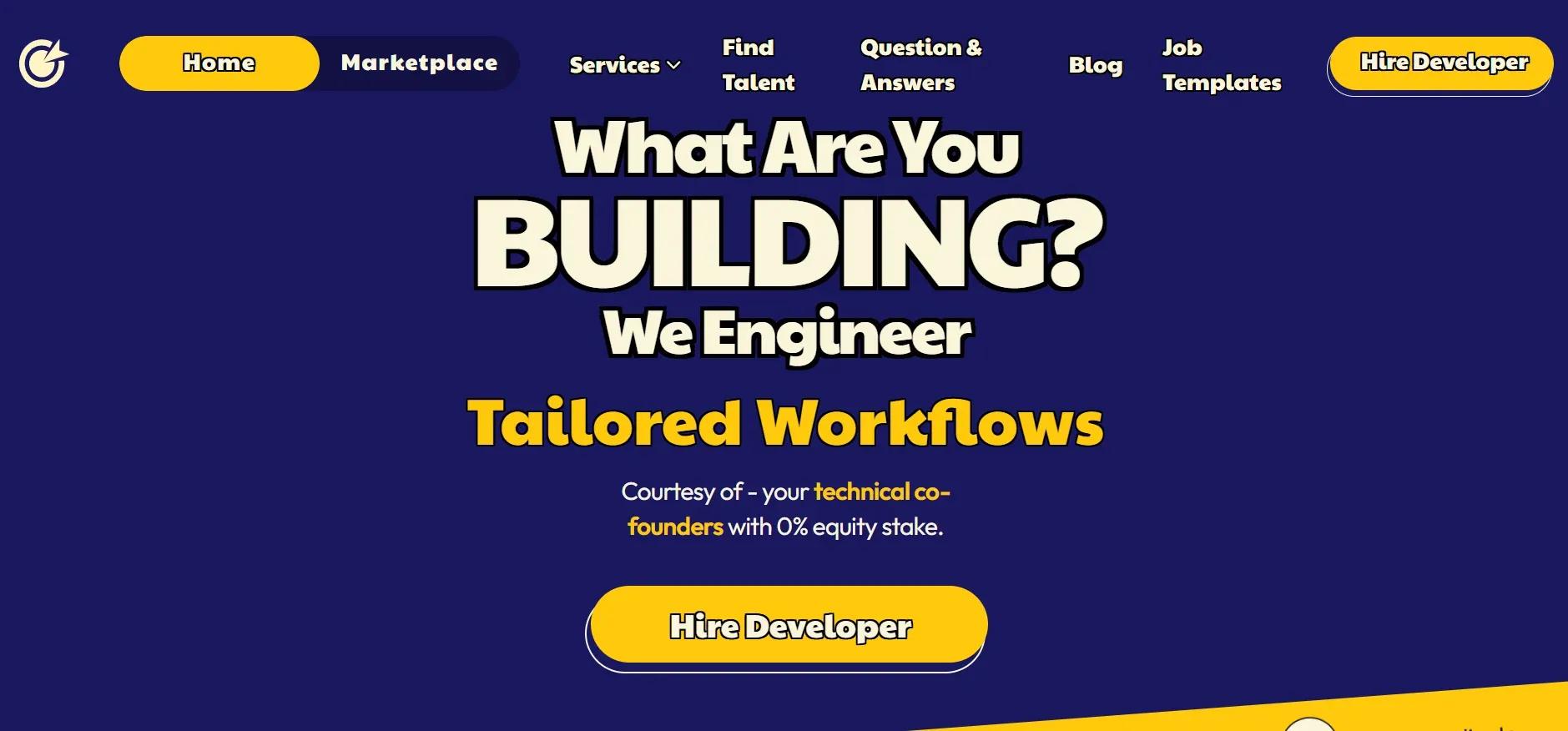
Best for: Teams who want flexible, vetted engineers to optimize their LLM systems and keep full control.
Softaims hands you a ready pool of pre-vetted AI, ML, and backend engineers you bring onto your own team, usually within a couple of days. Rather than handing your model work to a fixed-scope consultancy, you get people who tighten your prompts, build retrieval over your data, fine-tune only when it genuinely helps, cut inference cost and latency, and stand up evaluation and guardrails inside your own sprints, leaving you owning the models, prompts, and pipelines. Moreover, they are provider-agnostic, so they help you get the most from OpenAI, Anthropic, or open-weight models rather than pushing one stack.
Strengths:
- Prompt optimization and retrieval (RAG) over your data
- Fine-tuning when it genuinely beats retrieval
- Inference cost and latency reduction
- Evaluation sets, monitoring, and guardrails
- AI and ML services and AI engineers to hire
Key facts: US-aligned delivery backed by a global engineering network. Flexible pricing, you pay for hours used. A team can be reviewing your setup in roughly 48 hours.
Why choose Softaims? If you want to move quickly, keep full control, and avoid vendor lock-in, it is the most flexible of all the large language model optimization agencies on this list. You can hire AI and LLM engineers and size the team to the work in front of you.
Considerations: It is a talent and engineering partner, not a packaged platform, so if you want an off-the-shelf tool rather than a team, a product vendor may suit that better.
2. Devaims
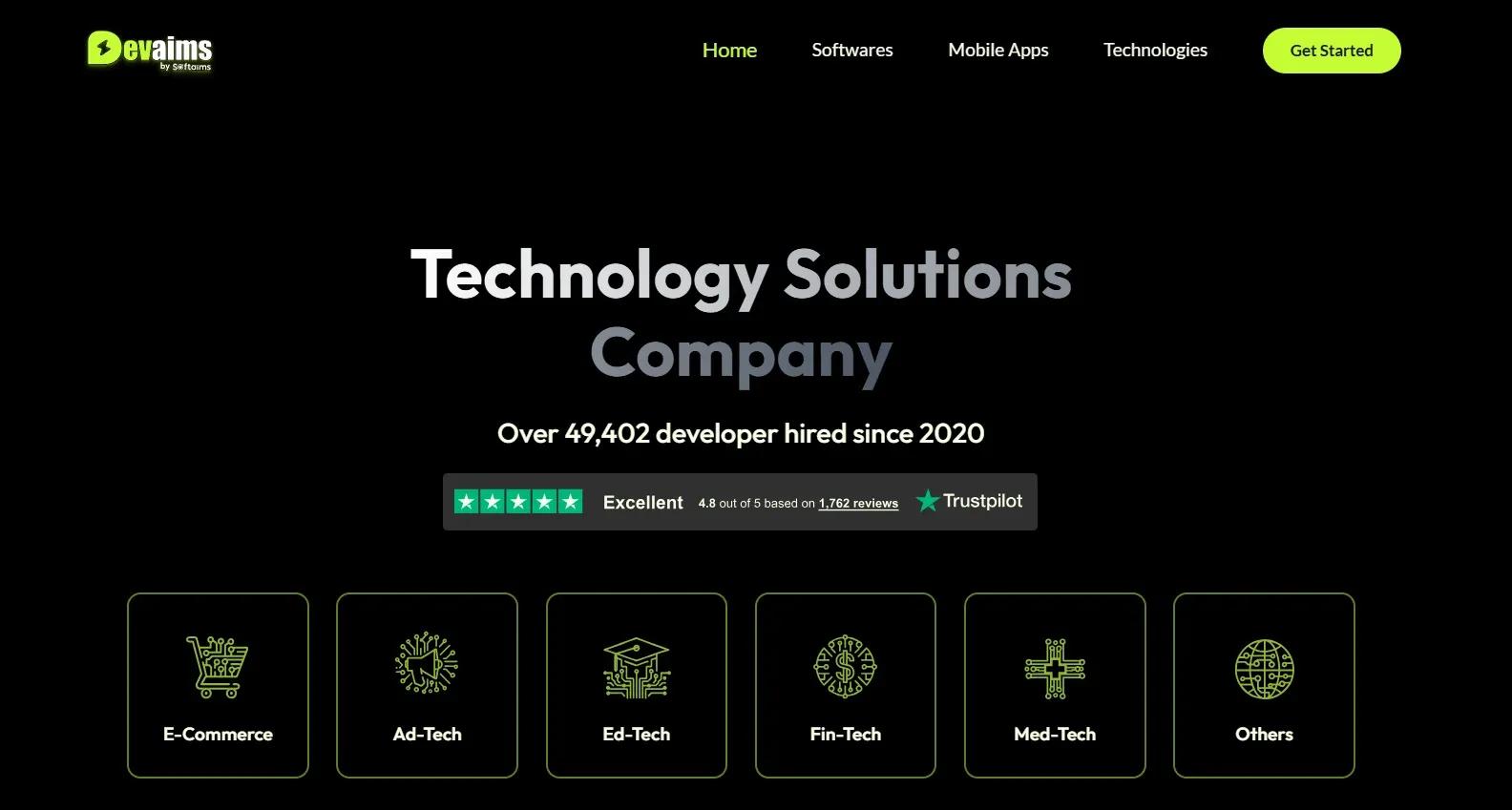
Best for: Teams who want a full LLM system built and optimized end to end.
Devaims, a Softaims brand, takes an LLM feature from idea through a working, optimized system, owning the whole delivery rather than just adding engineers. In practice, you get retrieval, any needed fine-tuning, inference tuning, evaluation, and deployment from one team that stays with the project. It suits organisations that would rather hand over a clear brief and get a production-ready, well-measured LLM system back.
Strengths:
- End-to-end LLM system design and build
- Retrieval, fine-tuning, and inference tuning
- Evaluation, monitoring, and guardrails
- Cloud deployment and MLOps
- Ongoing support and scaling
Key facts: US-aligned delivery with a distributed team. Flexible pricing by project or team. A sister brand of Softaims.
Why choose Devaims? If you want a single team to own the whole build and stay with it as usage grows, rather than managing people yourself, Devaims fits.
Considerations: It works best with a reasonably clear brief, so a very early, undefined idea may want a discovery phase first.
3. Scale AI

Best for: Training data, fine-tuning, and RLHF at scale.
Scale AI is one of the best-known names in the data behind modern models, with a data engine covering labelling, reinforcement learning from human feedback, and red-teaming. Naturally, it suits organisations that need high-quality training and evaluation data at volume, the raw material behind serious fine-tuning. For a large, data-heavy optimization effort, its scale and process are hard to match.
Strengths:
- Large-scale data labelling and curation
- RLHF and preference data
- Model evaluation and red-teaming
- Enterprise data operations
Key facts: San Francisco-based. Enterprise pricing. Strong on training and evaluation data at scale.
Why choose Scale AI? If your optimization depends on high-quality data and fine-tuning at volume, its data engine is the draw.
Considerations: It focuses on data and model layers rather than building your application, so pair it with a team that ships the product.
4. Neural Magic
Best for: Cutting inference cost and latency.
Neural Magic specialises in making open-weight models run faster and cheaper, with deep expertise in techniques like sparsity and quantisation across CPU and mixed infrastructure. Typically, it suits teams whose model works but costs too much or runs too slowly at scale, which is a common and expensive problem. For inference optimization specifically, it is one of the most focused names here.
Strengths:
- Inference optimization for open-weight models
- Sparsity, quantisation, and compression
- CPU and mixed-infrastructure deployment
- Cost and latency reduction
Key facts: Somerville, US. Enterprise pricing. Deep inference-optimization focus.
Why choose Neural Magic? If inference cost or latency is your bottleneck, it is one of the most focused large language model optimization agencies for that layer.
Considerations: Its focus is the inference layer, so you will still need help with retrieval, evaluation, and the application around it.
5. Snorkel AI
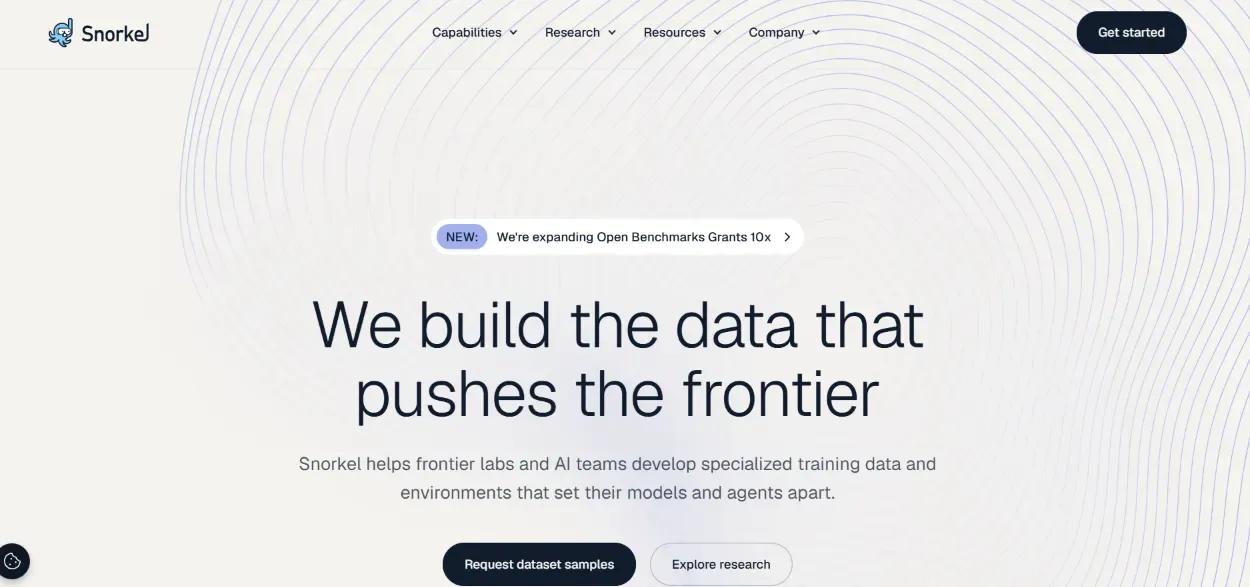
Best for: Data-centric optimization.
Snorkel AI grew out of research into programmatic data labelling, and it brings a data-centric approach to improving model quality, shaping training and evaluation data rather than only tweaking the model. In practice, it suits teams that have realised their results depend more on data quality than on model choice. For a structured, data-first optimization programme, its approach stands out.
Strengths:
- Programmatic data labelling
- Data-centric model improvement
- Fine-tuning and evaluation data
- Enterprise AI development
Key facts: Redwood City, US. Enterprise pricing. Strong data-centric methodology.
Why choose Snorkel AI? If better data is the key to better results for you, its data-first method fits well.
Considerations: Its strength is the data and model layer, so confirm how it works alongside your application team.
6. Turing
Best for: Model training and evaluation.
Turing works with leading labs on model training, reinforcement learning, and evaluation, including specialised coding and reasoning data. Generally, it suits organisations that need serious training and evaluation capability, often at the frontier end of the market. For large training and evaluation programmes, its access to vetted expertise at scale is the draw.
Strengths:
- LLM training and RLHF
- Coding and reasoning evaluation
- Vetted expert networks
- Large-scale delivery
Key facts: Palo Alto, US. Enterprise pricing. Strong on training and evaluation.
Why choose Turing? If you need training and evaluation muscle at scale, its reach and expertise fit.
Considerations: Its focus leans toward training and data for larger players, so a small team may find it more than it needs.
7. Width.ai
Best for: Focused custom LLM and GPT builds.
Width.ai is a focused consultancy that builds custom LLM and GPT systems, with real depth in retrieval, document processing, and production optimization for specific business problems. As a result, it suits teams that want a specialist to design and tune a particular system rather than a broad platform. For a well-defined, custom LLM build, its focus is a genuine advantage.
Strengths:
- Custom LLM and GPT systems
- Retrieval and document processing
- Production optimization
- Problem-specific builds
Key facts: Austin, US. Custom pricing. Focused LLM build specialism.
Why choose Width.ai? If you have a specific, well-defined LLM problem, its focused approach fits.
Considerations: As a focused consultancy, confirm its capacity matches your timeline for a larger programme.
8. Winder.AI
Best for: AI strategy, LLM consulting, and MLOps.
Winder.AI is a UK consultancy strong in AI strategy, LLM and agent development, reinforcement learning, and MLOps, which suits teams that want senior guidance alongside the build. Moreover, it brings a thoughtful, engineering-led approach and real depth in getting models into reliable production. For teams that value strategy and MLOps discipline, it stands out among European firms.
Strengths:
- AI strategy and LLM consulting
- Agent development and reinforcement learning
- MLOps and production reliability
- Engineering-led delivery
Key facts: Harrogate, UK. Day-rate pricing. Strong strategy and MLOps focus.
Why choose Winder.AI? If you want senior strategy and solid MLOps alongside the engineering, its blend fits.
Considerations: As a consultancy, confirm the delivery model and team size for a larger build.
9. LeewayHertz
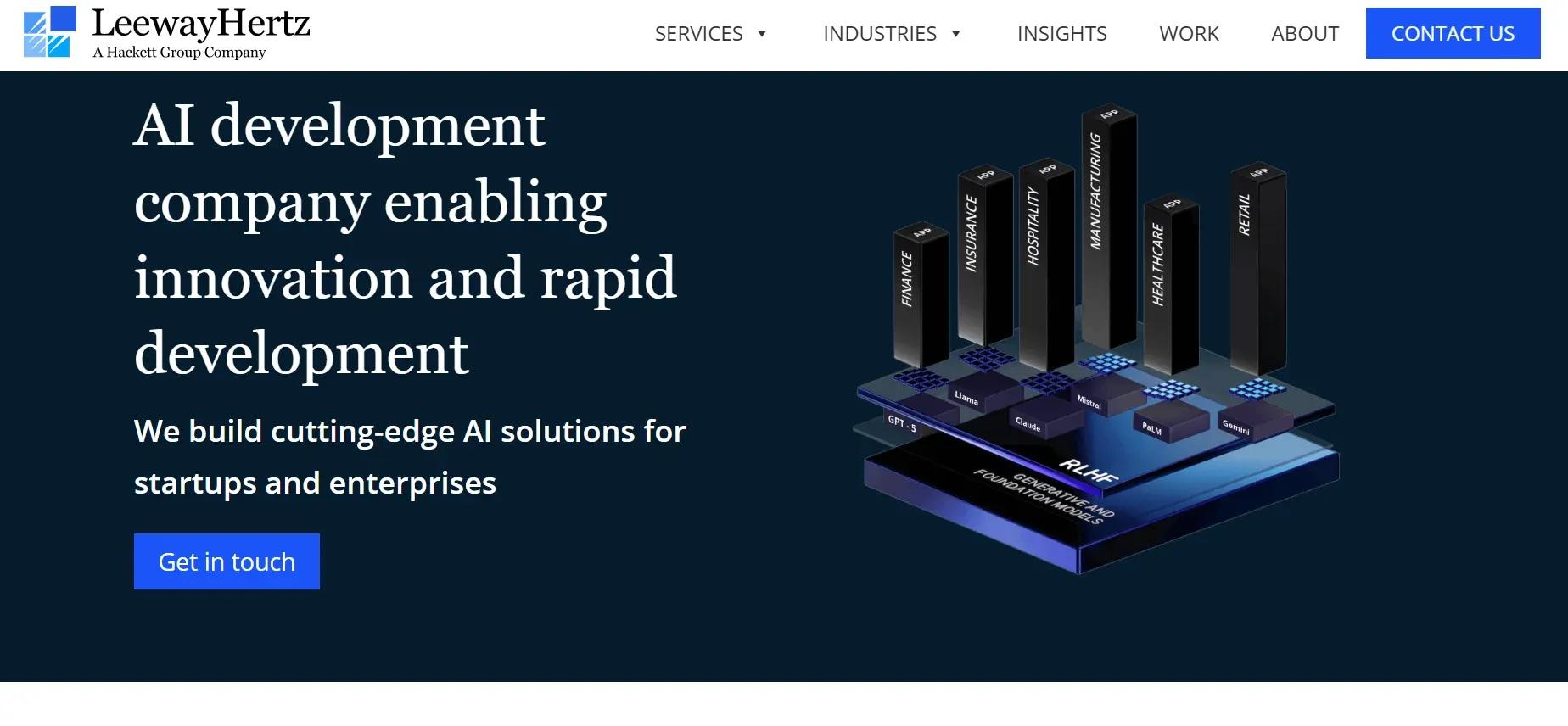
Best for: Broad enterprise AI roadmaps.
LeewayHertz is a large AI development firm that can cover a company's whole AI roadmap, from LLM systems to agents and surrounding platforms. Typically, it suits enterprises that want one partner across a broad programme rather than a narrow specialist. For a wide-ranging build, its breadth is the draw, though that breadth comes at a higher price point.
Strengths:
- End-to-end LLM and AI development
- Agents and surrounding platforms
- Enterprise roadmaps
- Broad technology coverage
Key facts: US and global delivery. Custom pricing, often premium. Strong breadth.
Why choose LeewayHertz? If you want one partner across a broad AI programme, its range fits.
Considerations: Its breadth suits larger budgets more than a single focused optimization task.
10. InData Labs
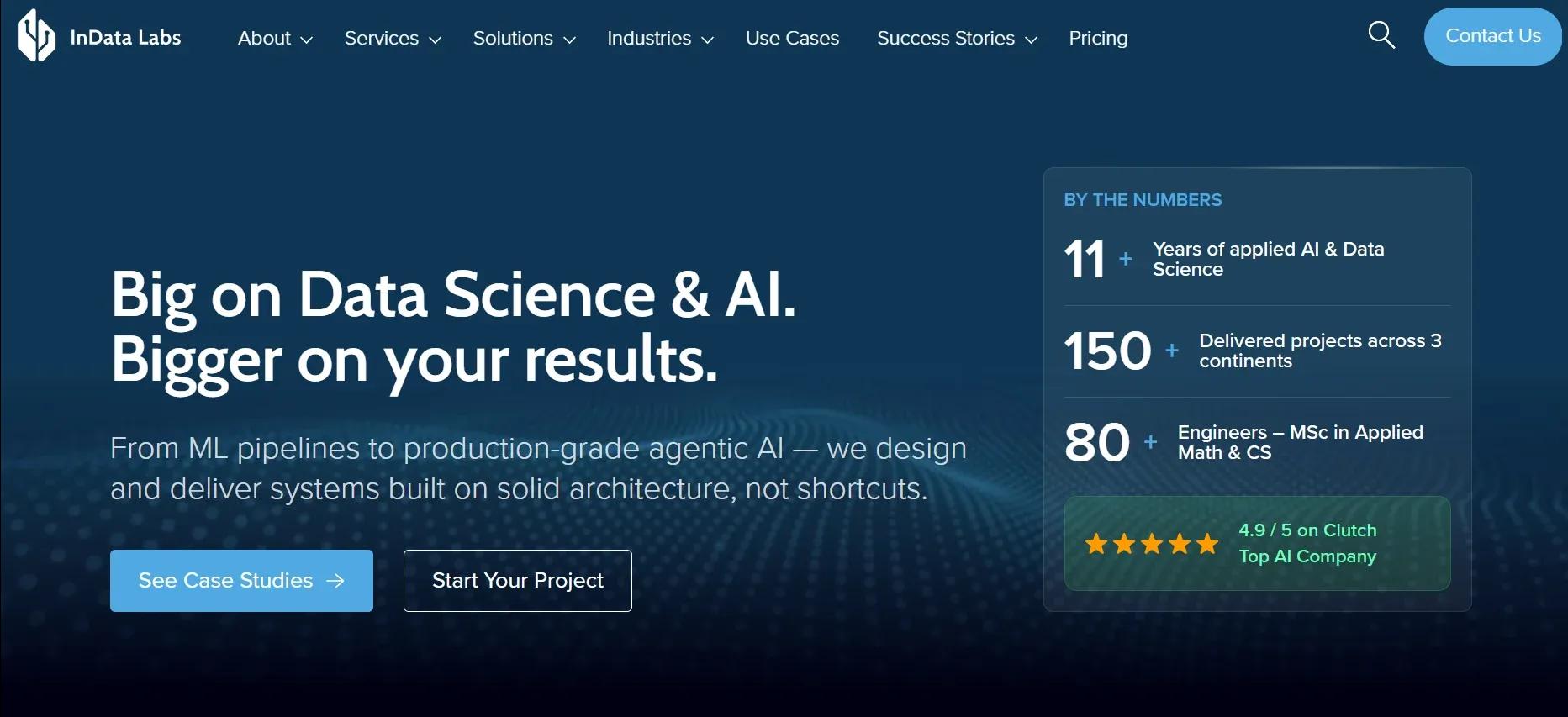
Best for: Data quality before model choice.
InData Labs is a data-science-first firm that puts data quality, chunking, and embeddings ahead of model selection, which is often exactly the right order. It suits teams whose results are held back by messy data rather than the model itself. For a data-first optimization effort, its methodology is sound and practical.
Strengths:
- Data quality and preparation
- Chunking and embeddings for retrieval
- Data-science-led optimization
- Custom AI development
Key facts: Vilnius and global delivery. Custom pricing. Strong data-science foundation.
Why choose InData Labs? If messy data is holding back your results, its data-first approach targets the real cause.
Considerations: Confirm its depth on the inference and application layers alongside its data strength.
What Large Language Model Optimization Actually Covers
Optimization is a catch-all for several very different techniques, and knowing which is which saves a lot of money. In short, the goal is a system that answers accurately, runs quickly, costs little per query, and behaves safely. Here are the main levers the best large language model optimization agencies pull.
Prompt optimization
The cheapest lever, and often the most underrated. Careful prompting, structured outputs, and good examples can lift quality a long way before you spend on anything heavier.
Retrieval, or RAG
Instead of hoping the model knows your facts, retrieval feeds it the right documents at query time. For most business problems, this is the first serious step, since it grounds answers in your own data and cuts hallucinations. As a result, it is where many projects get the biggest gain for the money.
Fine-tuning
Fine-tuning adjusts the model itself on your examples. It is powerful for consistent style, format, or a narrow task, but it is costly and needs good data, so it is worth it only when prompting and retrieval fall short.
Inference optimization
Once the system works, this is how you make it affordable and fast, through techniques like quantisation, caching, smaller models, and smart routing. For high-traffic products, it is where the running cost is won or lost.
Evaluation and guardrails
Finally, evaluation measures whether changes actually help, using real test sets rather than a few hand-picked examples, while guardrails keep the system safe. Without these, you are optimizing blind.
Fine-Tuning vs RAG vs Prompt Optimization: Which Do You Need?
This is the decision that most shapes cost, and a good partner walks you through it rather than reaching for the expensive option. Generally, start with prompt optimization, since it is cheap and fast. Next, add retrieval when the model needs to answer from your own data, which covers most business cases. Only then consider fine-tuning, and mainly when you need a consistent style or format, a narrow specialised task, or lower latency from a smaller tuned model. In practice, many strong systems combine retrieval with light fine-tuning, and the best large language model optimization agencies help you find that balance instead of selling one approach as the whole answer.
Technique | Best for | Relative cost | Typical use |
| Prompt optimization | Quick quality gains | Low | Almost every project, first |
| Retrieval (RAG) | Answering from your data | Medium | Most business use cases |
| Fine-tuning | Consistent style or narrow tasks | High | When prompting and RAG fall short |
What Does LLM Optimization Cost?
Pricing across large language model optimization agencies varies widely, since tightening a prompt and training a model are very different jobs. The figures below draw on recent 2027 industry data and are planning ranges, not quotes, and remember that ongoing inference and hosting costs sit on top of any build.
Discovery or audit
To begin with, a short engagement to review your system and find the biggest wins commonly runs about $3,000 to $10,000. It is a sensible, low-risk first step.
Retrieval build or pilot
A working retrieval system over your data typically runs about $15,000 to $40,000, with many pilots landing in the $10,000 to $50,000 range over four to eight weeks.
Production system
At the top end, a production-grade system with evaluation, monitoring, and agent orchestration generally runs $40,000 to $150,000, while fine-tuning a model often adds $20,000 to $80,000 plus ongoing inference.
What drives the price
The big levers are how much data has to be prepared, whether you fine-tune or rely on retrieval, the traffic the system must handle, and how strict your evaluation and safety needs are. Fine-tuning and heavy data work are the main cost drivers. So a partner that steers you to retrieval when it fits can save you a great deal. Most large language model optimization agencies will give you a firmer figure once your use case and data are clear.
Engagement type | Illustrative cost (2027) | Typical timeline |
| Discovery or audit | $3,000 to $10,000 | 1 to 2 weeks |
| Retrieval build or pilot | $15,000 to $50,000 | 4 to 8 weeks |
| Production system | $40,000 to $150,000+ | 2 to 6 months |
How Long Does LLM Optimization Take?
Timelines vary across large language model optimization agencies, but a focused pilot usually takes four to eight weeks, while a production system runs two to six months depending on data work and evaluation. Prompt and retrieval improvements can land quickly, sometimes within weeks, whereas fine-tuning and heavy data preparation add time. Ultimately, unclear goals and messy data are what stretch a timeline, so a partner that scopes both up front can give you a date you can trust.
How to Choose the Right LLM Optimization Partner
When you shortlist large language model optimization agencies, five checks separate a safe pick from a risky one. Fortunately, each is easy to run in a first call before you commit any budget.
Ask how they measure success
Everything rests on evaluation. So ask a partner how they would build a test set for your problem and measure quality, cost, and latency, not just show a nice demo.
Check they advise against fine-tuning
Next, ask when they would not fine-tune. A good partner reaches for prompting and retrieval first, and a rush to fine-tune on every project is a warning sign.
Weigh inference cost experience
A system you cannot afford to run is no good. For that reason, ask how they would cut cost and latency at your expected traffic, and for examples where they have done it.
Confirm data handling and safety
Your prompts and data are sensitive, so ask how they handle privacy, and how they build guardrails against unsafe or wrong outputs.
Pin down ownership
Finally, you should own the models, prompts, pipelines, and evaluation sets, in writing, rather than being locked into a partner's platform.
Questions to Ask Before You Hire
- How would you build an evaluation set for my use case, and what would you measure?
- When would you recommend retrieval or prompt work over fine-tuning?
- How would you cut inference cost and latency at my expected traffic?
- How do you handle the privacy of my prompts and data?
- What guardrails do you put in place against wrong or unsafe answers?
- Can you show a production system you optimized, with before-and-after numbers?
- At the end, do I own the models, prompts, and pipelines outright?
Concrete answers with real numbers reassure you. By contrast, vague replies, or a quick jump to fine-tuning before understanding your problem, tell you most of what you need to know.
Common Mistakes to Avoid
A few mistakes catch most teams. First, fine-tuning too early spends money before cheaper prompting and retrieval have been tried. Second, skipping evaluation means you cannot tell whether a change actually helped, so you optimize blind. Similarly, ignoring inference cost leaves you with a system that works in a demo but is too expensive at scale. In the same way, feeding the model messy data through retrieval produces messy answers, since quality in equals quality out. Finally, no guardrails leaves you exposed to wrong or unsafe outputs in front of users. The better large language model optimization agencies steer you clear of these, because their reputation rides on the system working reliably once it is live.
Frequently Asked Questions
What is the best large language model optimization agency?
There is no single best one among the large language model optimization agencies here; instead, it depends on your problem. For flexible engineers you embed and control, Softaims fits. For data and fine-tuning at scale, Scale AI, Snorkel AI, and Turing lead. For inference cost and latency, Neural Magic specialises there. In short, match the partner to your bottleneck rather than a ranking.
What does LLM optimization cost?
Broadly, a discovery audit runs $3,000 to $10,000, a retrieval pilot $15,000 to $50,000, and a production system $40,000 to $150,000 or more. Fine-tuning often adds $20,000 to $80,000, and inference and hosting costs are ongoing on top.
Should I fine-tune or use RAG?
Start with prompting, then add retrieval, which covers most business cases by grounding answers in your own data. Fine-tune only when you need a consistent style or format, a narrow task, or lower latency, and when prompting and retrieval have fallen short.
How do I reduce LLM inference costs?
Common levers include using a smaller or distilled model, quantisation, caching frequent answers, and routing simple queries to cheaper models. A good partner measures the impact of each rather than guessing, since the right mix depends on your traffic.
How long does an LLM optimization project take?
A focused pilot usually takes four to eight weeks, and a production system two to six months. Prompt and retrieval work can land quickly, while fine-tuning and heavy data preparation add time.
How do you measure whether optimization worked?
Ideally, with a proper evaluation set built from real examples, scored on quality, cost, and latency. Measuring on a few hand-picked cases is how teams fool themselves, so insist on a representative test set.
Who owns the models and prompts after the work?
You should, in full, and it must be in the contract, covering the models, prompts, pipelines, and evaluation sets. Owning these keeps you free to change partners or providers later.
Can an agency work with open-weight and closed models?
The strong ones are provider-agnostic and help you get the most from OpenAI, Anthropic, or open-weight models, choosing based on your needs rather than a preferred stack.
Related Reading
If you are building out a wider AI capability around your LLM work, these related guides on the Softaims blog may help:
- Top Full-Stack Web Development Agencies
- Full-Stack Web Development Companies in the USA
- Hiring Full-Stack Web Development Companies in the UK
Final Thoughts
The right partner here depends on your bottleneck, not on who has the biggest name. Short on training data or fine-tuning capacity? Scale AI, Snorkel AI, and Turing bring that muscle. Fighting inference cost or latency? Neural Magic targets exactly that. Want a focused custom build or senior strategy? Width.ai and Winder.AI fit, while LeewayHertz and InData Labs suit broader roadmaps.
For teams who want to move quickly, keep full control, and avoid vendor lock-in, Softaims is our own pick among the large language model optimization agencies here: vetted engineers on your team who tune your prompts, build retrieval, fine-tune only when it helps, cut inference cost, and measure everything, with the models and code yours from day one, and Devaims if you would rather hand the whole build over. Whichever way you lean, pin down your goals and your data, then talk to Softaims about your LLM project to see who fits.


 Stackoverflow
Gabriel M.

 Verified Expert in Engineering
My name is Gabriel M. and I have over 8 years of experience in the tech industry. I specialize in the following technologies: Python, GPT-4, ChatGPT, Generative AI, Django, etc.. I hold a degree in . Some of the notable projects I've worked on include: OpenAI Experience: Stop outsourcing your genius. Your IP is gold., OpenAI Experience - High Quality Children's Books within minutes, OpenAI Experience: AI Developer and Business Consultant, Stable Difussion Models Research and Planning: Stop wasting money🧠, OpenAI Experience: Chatbots for Automation and Customer Service, etc.. I am based in Lier, Belgium. I've successfully completed 33 projects while developing at Softaims.
I am a business-driven professional; my technical decisions are consistently guided by the principle of maximizing business value and achieving measurable ROI for the client. I view technical expertise as a tool for creating competitive advantages and solving commercial problems, not just as a technical exercise.
I actively participate in defining key performance indicators (KPIs) and ensuring that the features I build directly contribute to improving those metrics. My commitment to Softaims is to deliver solutions that are not only technically excellent but also strategically impactful.
I maintain a strong focus on the end-goal: delivering a product that solves a genuine market need. I am committed to a development cycle that is fast, focused, and aligned with the ultimate success of the client's business.

Leave a Comment
Need help building your team? Let's discuss your project requirements.
Get matched with top-tier developers within 24 hours and start your project with no pressure of long-term commitment.