Top 10 Low Code No Code Development Companies In The USA (2027)
American companies spend over $9,000 per employee annually on software, leaving a third of licences unused. Low-code development offers an affordable escape from renting tools, letting you build custom apps in weeks instead of months.
Table of contents
Key Takeaways
- US companies spend over $9,000 per employee annually on software while leaving nearly a third of licenses unused, driving demand for tailored, cost-effective low-code/no-code builds.
- Low-code excels at rapid prototyping, internal dashboards, and MVPs, but complex logic, scalability, and core business infrastructure ultimately require custom code to avoid dead ends.
- Proprietary platforms can create restrictive vendor dependencies; top consulting partners ensure data portability, clear integration mapping, and clean exit strategies or direct custom code migration.
- Successful low-code development requires expert wiring into existing enterprise CRMs, databases, and financial systems to prevent operational silos.
- Leading providers like Softaims (ranked #1 for top 3% vetted, US-aligned engineers, rapid ~48-hour matching, and seamless transition from low-code to custom code with full ownership) and Devaims deliver development speed without structural traps.
Here is a number that stops most US finance leaders in their tracks: the median American company now spends over 9,000 dollars per employee on software, and leaves roughly a third of those licences unused. You are paying for seats nobody logs into and features nobody wanted. More and more US businesses are reaching the same conclusion, that for the tools your team actually uses every day, building a tailored app can beat renting one, and low-code and no-code development is what makes building affordable. Snap together visual blocks instead of hand-coding, and an app that once took months and a big budget can land in weeks.
This guide ranks the top 10 low code no code development companies in the USA for 2027. We judged each firm on the depth of its platform skills, how well it works with American teams and hours, how straight it is about where these tools stop being the right answer, and what it actually costs to get a working result. Leading the list is Softaims, which supplies vetted, US-aligned engineers who move fast on low-code when it suits the job and shift to custom code when it does not, leaving you with full ownership and no platform handcuffs. Prefer to dive in? You can hire low-code developers with Softaims and start reviewing candidates within days.
Skim the table below for the shortlist, then read on to match a partner to your project, your budget, and your plans for growth.
Build Instead Of Rent: Why US Firms Are Turning To Low-Code
The pitch for low-code is simple once you have felt the pain of software that is both slow to get and expensive to keep. Rather than wait on a crowded development queue, or pay forever for a SaaS tool your team half-uses, you build the exact workflow you need with visual tools and ready-made parts. For routine jobs, think internal dashboards, approval chains, customer portals, early MVPs, that approach trims delivery from a season to a sprint, and it hands you an app with no per-seat fee attached.
A development partner earns its keep because the platform is only half the equation. Someone has to choose the right tool for the job, hook it into the systems you already run, and make sure the thing still stands up when a hundred users become a thousand. Just as important, someone has to recognise the moment a project has quietly outgrown low-code. That judgement is what separates the low code no code development companies in the USA that leave you better off from the ones that leave you stranded on an app that cannot scale or an integration that never clicks.
And there is the lock-in question, which bites later rather than sooner. Build on a platform's proprietary pieces and you may find that leaving means rebuilding, which gives the vendor the whip hand over your renewal price. The partners worth trusting flag this on day one and keep your data and your options free, rather than quietly fitting the handcuffs. It is one of the clearest ways to tell the serious low code no code development companies in the USA from the rest.
How We Ranked The Low Code No Code Development Companies In The USA
Marketing claims went in the bin. What we weighed instead is what tends to decide how a project actually turns out:
- Hands-on platform skill. Genuine delivery track record on the big tools, Power Apps, OutSystems, Mendix, Bubble, Retool, rather than a line on a capabilities deck.
- Integration muscle. Can they wire an app into your CRM, finance systems, and databases so it all behaves as one? This is where projects stall.
- Straight talk about limits. Do they tell you when custom code is the wiser route, or do they sell low-code as the fix for everything?
- American working fit. Time-zone overlap, plain communication, on-time delivery, and support that outlasts the launch.
- Pricing you can trust. A rate that suits the job and does not spring a trap on you down the line.
That balance is what the ranking rewards across these low code no code development companies in the USA, whether you are a two-person startup or a Fortune 1000 division. Shuffle it to taste depending on whether you want a quick MVP, a modernisation programme, or a specific platform. With that said, here is the 2027 shortlist.
The Top Low Code No Code Development Companies In The USA At A Glance
Finding the right low-code no-code development company in the USA can be challenging, especially when different providers offer different tools, services, and pricing. Some companies focus on building MVPs and custom applications, while others specialize in workflow automation, enterprise solutions, and integrating low-code platforms with existing business systems.
To make your search easier, we've compared 10 leading low-code no-code development companies in the USA based on their expertise, hourly rates, locations, and the types of projects they're best suited for. The table below gives you a quick overview of what each company offers so you can find one that matches your business needs and budget.
# | Company | Best for | Hourly rate | Base |
| 1 | Softaims | Low-code that scales, with no lock-in | Flexible | United States |
| 2 | Devaims | Turning low-code ideas into finished products | Flexible | United States |
| 3 | eSparkBiz | Low-code automation and MVPs on a budget | Under $25 | Delaware, US |
| 4 | Capicua | Rapid product development | $50 to $99 | New York, NY |
| 5 | Spiral Scout | Internal tools and system integration | $50 to $99 | San Francisco, CA |
| 6 | Fingent | Enterprise low-code and custom builds | Custom | Irvington, NJ |
| 7 | Softura | Microsoft Power Platform solutions | Custom | Farmington Hills, MI |
| 8 | Tekglide | E-commerce and workflow automation | $25 to $49 | Illinois, US |
| 9 | Saritasa | Custom apps with low-code speed | Custom | Irvine, CA |
| 10 | Rapidops | Data-driven apps and SaaS products | Custom | Atlanta, GA |
Top 10 Low Code No Code Development Companies In The USA
Now that you've seen how these companies compare, let's take a closer look at each one. We'll cover their core services, technical expertise, key strengths, and the types of businesses they're best suited for. Whether you want to build an MVP, automate repetitive tasks, develop an internal business tool, or create a scalable application, this breakdown will help you choose the right development partner for your project.
1. Softaims
Softaims sits first among the low code no code development companies in the USA because it refuses to treat a platform as a destination. Many firms will settle you onto one tool and keep you paying rent there. Softaims instead hands you vetted, US-aligned engineers who sprint on low-code while it genuinely fits, then carry you into custom code the moment the job demands it, so the early speed never becomes a later cage. Everything they produce is yours to keep, which quietly removes the lock-in problem before it can start.
In practice, you tap a standing bench of pre-screened engineers and have them working alongside your team within a day or two, chosen by skill, platform know-how, and budget. They will steer you to the platform that actually fits, join the app to the systems you already run, and engineer it to survive real growth, whether that calls for quick low-code and RAD development or threading in AI and machine learning where it pulls its weight. Standard workflows ship fast; anything that becomes central to the business gets built properly in code. You flex the team larger for a push and smaller afterwards, and the meter only runs on hours you actually use.
That willingness to name the point where low-code runs out is the quiet advantage. The grief most US firms eventually feel with these platforms arrives late, when an app will not scale or will not budge. Softaims heads it off at the start, which is what makes it the safest first call for anything you expect to grow.
Best for: US businesses that want low-code speed now and the freedom to scale into custom later, with full ownership and no lock-in.
Location: United States, with engineers spread across the globe.
What you can bring onto your team:
- Hire low-code and no-code developers
- Low-code and RAD software development
- Vibe coding developers
- AI and ML services
- Hire AI developers
- Full-stack development
- Platform selection, integration, and workflow automation
Why pick Softaims: A standing bench of vetted engineers, people embedded within about 48 hours, low-code speed with a clean road to custom, and total ownership of the result. For most US buyers sizing up the low code no code development companies in the USA, it carries the least risk.
2. Devaims
Devaims takes the second spot because a low-code prototype rarely stays a prototype, and someone has to grow it into the real thing. Proving an idea quickly is one skill; hardening it into software your customers lean on is another, and that second step is Devaims territory, turning a rough low-code start into a polished, dependable product.
As a Softaims brand, Devaims pulls from the same vetted, US-aligned bench, but it owns the whole build: the interface, the logic beneath, the wiring to everything else you run. Whoever opens a project usually closes it, so the know-how stays in one pair of hands rather than scattering across a revolving cast. Once an idea has earned its keep on low-code and you want it built out for real, that continuity is the appeal.
With the full stack covered, you might slot in one specialist to patch a gap or a small crew to deliver an entire product, and clear, on-your-hours communication comes as part of the package.
Best for: US teams that want a low-code idea turned into a finished, scalable product.
Location: United States, with a distributed team.
What you can bring onto your team:
- Hire product developers
- Full-cycle application builds
- Low-code to custom migration
- Backend and API work
- Front-end and UI development
- Cloud and DevOps help
- Testing and quality review
Why pick Devaims: Builders who carry a low-code idea through to shipped software, continuity from start to finish, and coverage across the whole stack put Devaims firmly among the stronger low code no code development companies in the USA.
3. eSparkBiz
eSparkBiz brings together low-code and no-code work, AI, and product engineering at a rate few American firms can touch. With a US base in Delaware, fifteen-plus years of history, and a sizeable team, it turns out workflow automation, internal tools, and MVPs for companies that want to move quickly without a large cheque.
It is a natural fit for US businesses chasing low-code automation or a fast product while keeping a close eye on value, and its client-retention record backs that up. The headline draws are a very low rate and broad platform coverage, spanning Power Apps, OutSystems, and Bubble.
Key facts: Strongest for budget-conscious low-code automation and MVPs. Core work covers custom low-code builds, AI, automation, and modernisation. Clutch rating 4.9, founded 2010, rate under $25 an hour. Delaware, US.
4. Capicua
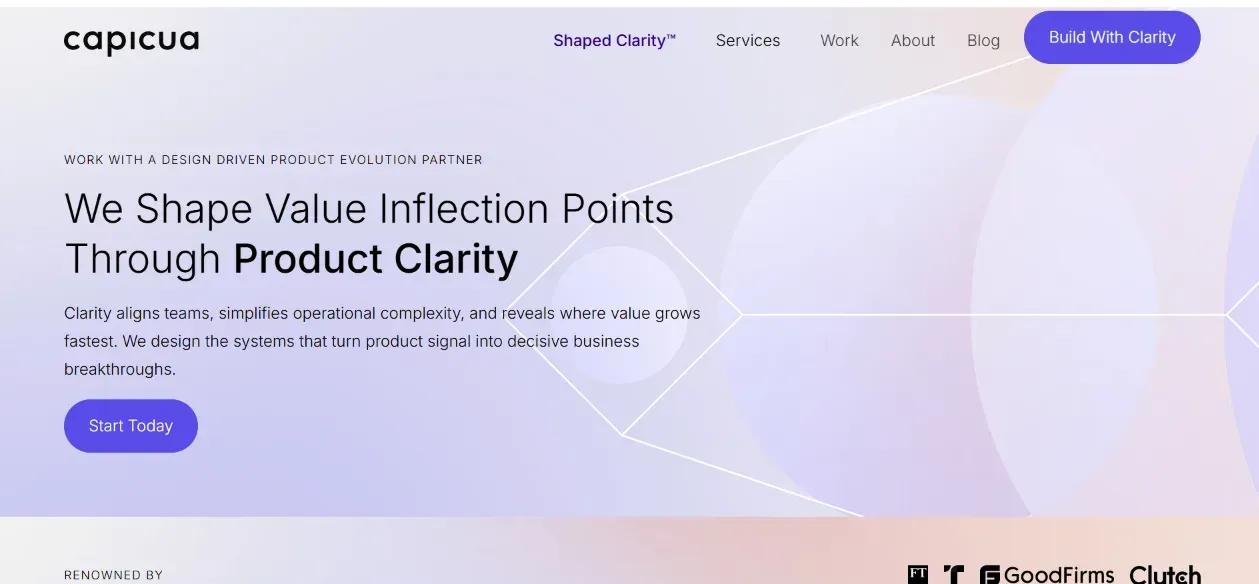
Capicua, based in New York, is a product shop at heart, using low-code to keep momentum high while pulling stakeholders into the process rather than shutting them out. US product teams that have suffered through slow, black-box builds tend to warm to that open, iterative style.
It fits companies shipping SaaS products and digital platforms that want to iterate fast without losing the thread of where the product is headed. Its product-engineering roots and collaborative habit are the selling points.
Key facts: Strongest for fast-moving product development. Core work covers product engineering, custom software, and low-code delivery. Clutch rating 4.9, founded 2010, rate $50 to $99 an hour. New York, NY.
5. Spiral Scout
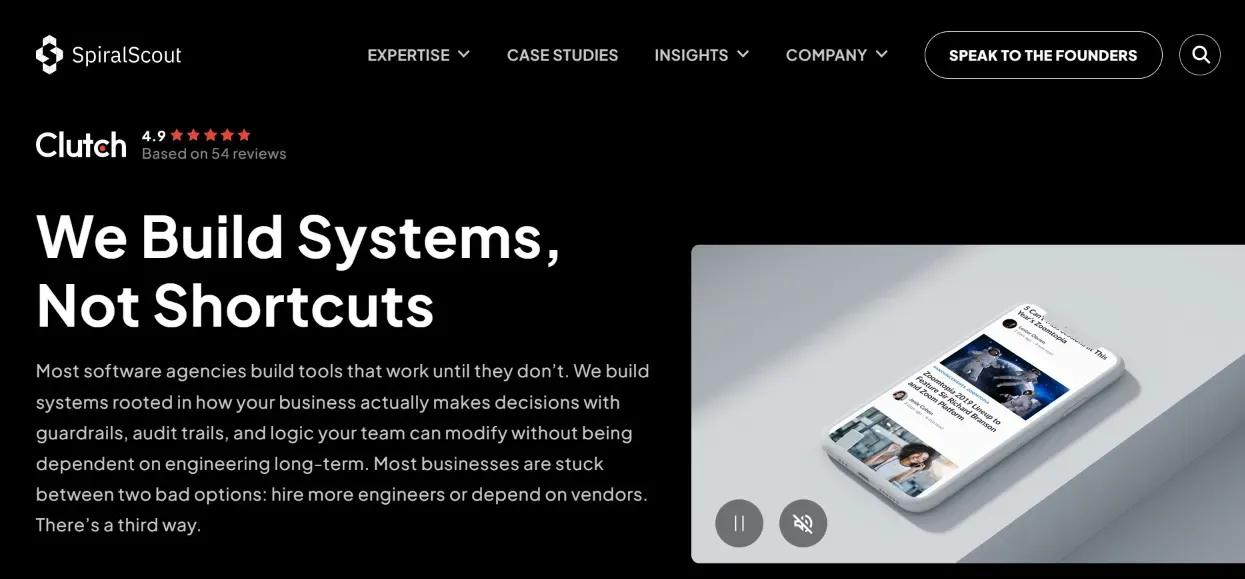
Spiral Scout, out of San Francisco, specialises in low-code apps that stitch together the business systems most companies let drift apart, and automates the handoffs between them. For a US firm whose tools stubbornly refuse to talk, that integration-first bent is a relief.
It suits businesses after internal tools, cross-system integrations, and automation built on the likes of Bubble, Retool, and Airtable. Its knack for connecting systems and keeping data in sync is what stands out.
Key facts: Strongest for internal tools and system integration. Core work covers custom software, AI development, and low-code builds. Clutch rating 4.9, founded 2010, rate $50 to $99 an hour. San Francisco, CA.
6. Fingent
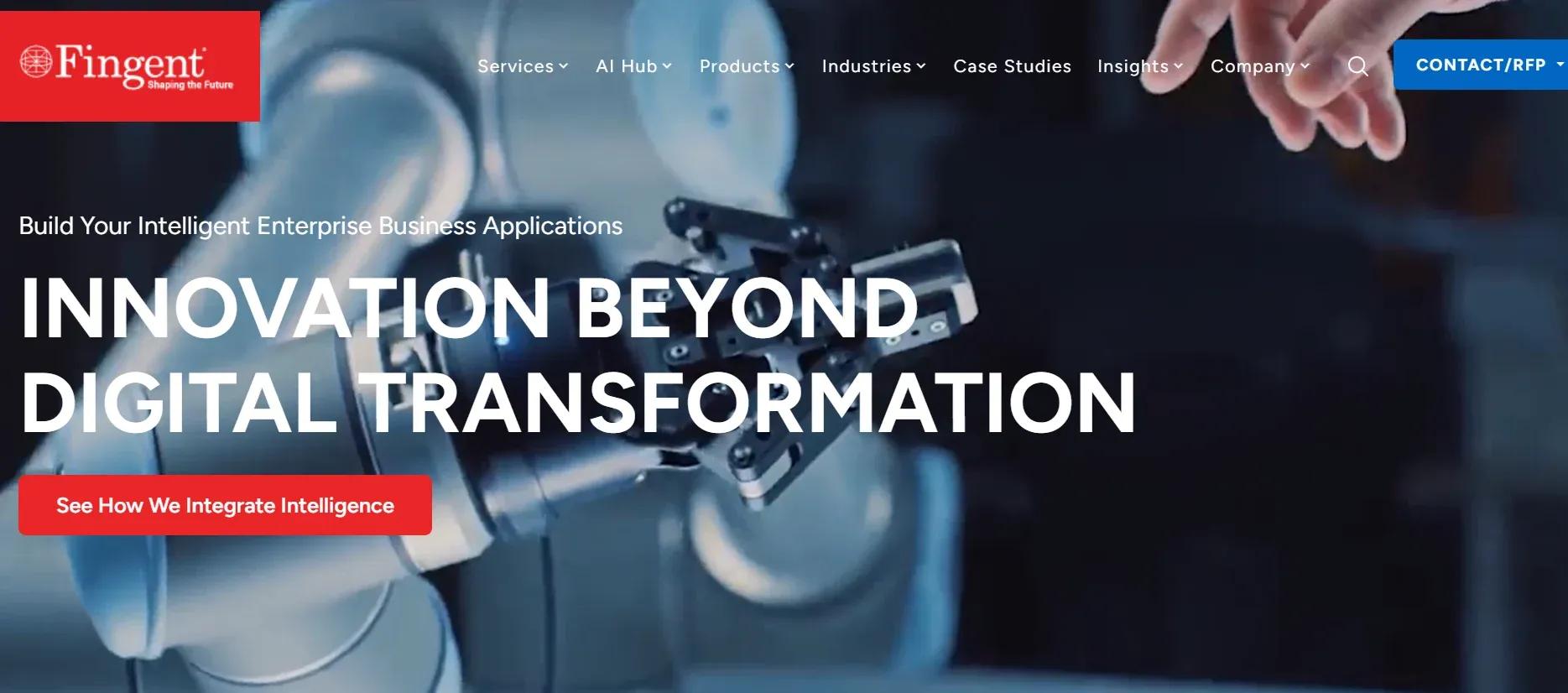
Fingent is a US software firm that runs low-code and full custom engineering side by side, which gives it a reach most low-code-only shops cannot match. Enterprises that need speed on the routine work but real control on the parts that matter get both from one partner.
It fits US enterprises and mid-market companies that want a single team for quick low-code apps and the heavier custom systems underneath them. Its span across low-code and bespoke development is the draw.
Key facts: Strongest for enterprise low-code paired with custom builds. Core work covers low-code development, custom software, and enterprise applications. A US firm headquartered in Irvington, New Jersey, with custom pricing.
7. Softura
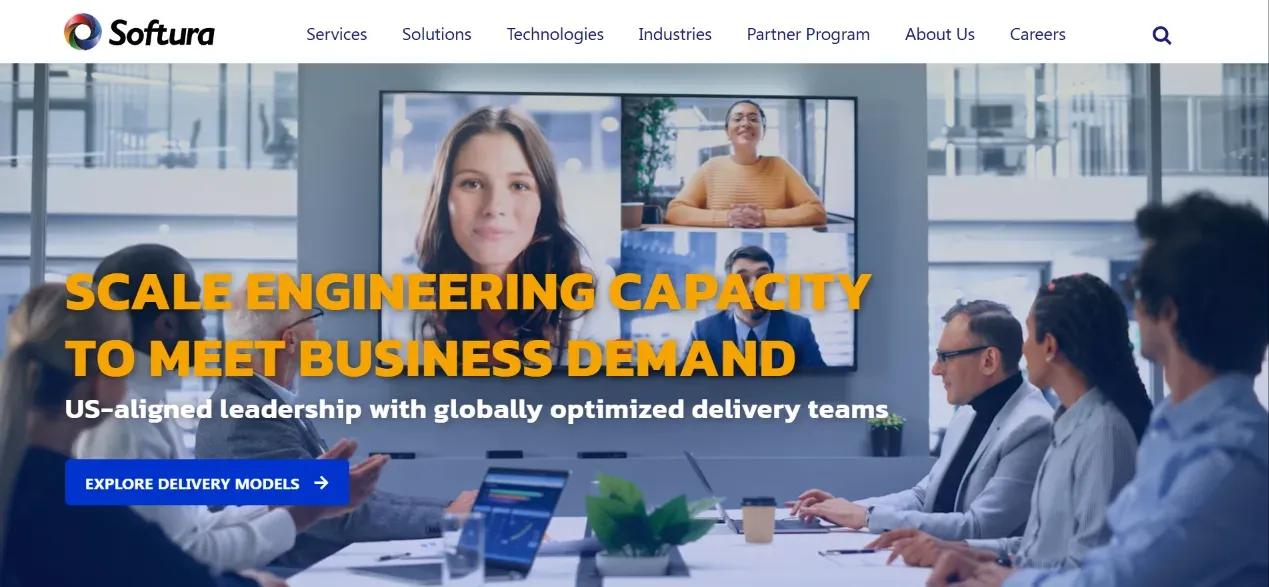
Softura, based in Michigan, is a long-standing Microsoft partner with real Power Platform depth, which makes it an easy pick for the many US companies already living inside Microsoft. It builds Power Apps, automations, and integrations that settle neatly beside Microsoft 365 and Azure.
It suits US businesses standardised on Microsoft that want low-code apps built where their data and logins already sit. Its Power Platform expertise and Microsoft partnership are the standout.
Key facts: Strongest for Microsoft Power Platform solutions. Core work covers Power Apps, automation, and Microsoft integration. A US firm headquartered in Farmington Hills, Michigan, with custom pricing.
8. Tekglide

Tekglide, based in Illinois, points its low-code work at commerce, linking storefront platforms, automating the workflows behind orders, and smoothing the integrations that trip up online sellers. For US retailers and e-commerce brands, that focus lands close to the money.
It fits US retail and e-commerce businesses wanting automation and integrations around Shopify, Magento, and the Power Platform, at a wallet-friendly rate. The commerce focus and low cost are the appeal.
Key facts: Strongest for e-commerce and workflow automation. Core work covers e-commerce development, low-code builds, and API integration. Clutch rating 4.8, founded 2008, rate $25 to $49 an hour. Illinois, US.
9. Saritasa
Saritasa, in Irvine, California, marries custom development with low-code pace, turning out web, mobile, and enterprise apps for US companies that want a quick result without a drop in quality. Its spread across technologies lets it fit the method to the problem rather than the other way round.
It suits US businesses that want fast delivery resting on solid engineering, especially custom apps that still need to move. Its blend of bespoke and rapid work is the standout.
Key facts: Strongest for custom apps delivered at low-code speed. Core work covers custom software, web and mobile apps, and rapid development. A US firm headquartered in Irvine, California, with custom pricing.
10. Rapidops
Rapidops, based in Atlanta, builds data-driven applications and SaaS products, combining low-code with modern engineering to get US companies to a working product fast. Because its focus is data and product, the apps it ships tend to be built with growth in mind.
It suits US businesses creating SaaS or data-heavy applications that want speed without surrendering a path to scale. Its product-and-data orientation is the draw.
Key facts: Strongest for data-driven apps and SaaS products. Core work covers SaaS development, data applications, and product engineering. A US firm headquartered in Atlanta, Georgia, with custom pricing.
Low-Code Or Custom Code? Decide Before You Hire
The sharpest question to settle up front is what you are really building, because low-code and custom code answer different needs, and the better low code no code development companies in the USA will point you to the right one instead of the one they would rather bill for.
Reach for low-code when the work is routine and the clock matters: dashboards, approvals, internal tools, an MVP to test a hunch. Expect roughly 10,000 to 20,000 dollars and a few weeks. Reach for custom code when you need tight control, intricate logic, serious integrations, or the freedom to walk away from any single platform. That runs higher, frequently 20,000 to 75,000 dollars and up, over a longer stretch, but every piece of it belongs to you.
For plenty of US mid-sized firms the clever play is to open on low-code for speed, then recode the pieces that turn into the heart of the business once they have proven themselves. The trap is insisting on one lane for everything. A partner fluent in both, who says plainly when it is time to switch, spares you both the over-engineered slow start and the throwaway bargain app.
Watch The Lock-In
Getting stuck is low-code's stealth cost. Build on a vendor's proprietary innards and relocating the app later can mean rebuilding it from the ground up, which quietly puts the vendor in charge of your future invoices. Guard against it early.
A handful of habits keep the exits open. Confirm your business data pours out in a usable format rather than sitting hostage inside the tool. Run the numbers on what the licence costs as users and apps multiply, because the tempting entry price is seldom the price you settle into. Ask whether the custom logic you pay for can live anywhere else, keep integrations and data mappings written down, and settle an exit plan before signing, not after. The strongest low code no code development companies in the USA raise these points unprompted, because a partner whose profit depends on your being trapped is not really working for you.
What The Low Code No Code Development Companies In The USA Deliver
Strip away the branding and the job is a short, practical list:
- Choosing the tool. Fitting the platform to your need, not bending your need to their favourite platform.
- Building the app. Assembling the workflow, tool, or product cleanly and at pace.
- Joining it up. Linking it to your CRM, finance systems, and databases so nothing stands alone.
- Engineering for growth. Making sure it holds together as usage climbs instead of folding under success.
- Calling the switch. Spotting when a build has outgrown low-code and moving it to custom before trouble starts.
- Sticking around. Maintaining and improving the app after launch rather than disappearing at handover.
A shop that knows one platform and prescribes it for everything is selling, not developing. The low code no code development companies in the USA worth hiring cover all six, and that is what turns a fast win into something that still works next year.
The Platforms Behind The Work
You need not become an expert, but a rough map helps you read a partner's pitch. OutSystems and Mendix are made for weighty business applications and modernisation, the kind large US enterprises run their operations on. Microsoft Power Apps is the obvious home for companies already inside Microsoft, which is why a Power Platform specialist matters so much for US firms on Microsoft 365. Bubble is a darling for no-code web apps and MVPs, Retool rules internal tools and dashboards, and Airtable handles lighter, database-shaped jobs. Webflow leans toward websites and visual front-ends more than deep application logic. Which one fits comes down to your workflows, your integrations, and how far the app has to stretch, and reading that correctly is exactly the kind of help a seasoned partner provides.
What It Costs In The US
Pricing here runs by the hour or by the project, and American rates swing with region and seniority. Read the table as rough 2027 planning figures rather than firm numbers.
Option | Rough cost | What you get |
| Simple low-code build | $10,000 to $20,000 | Internal tool, workflow, or MVP |
| Larger business application | $25,000 to $75,000+ | Broader features and integrations |
| US onshore hourly | $50 to $120+ | Closest working hours, top rate |
| Budget or offshore hourly | Under $25 to $49 | Lowest rate, wider time gap |
Set those figures against what you already spend on software. If a tool costs tens of thousands a year in licences your team barely touches, a one-off build that replaces it can pay for itself inside a year and keep paying afterwards, with no per-seat fee and the code in your hands. That is the build-versus-rent maths more US finance teams are running in 2027.
The point worth repeating is that the hourly figure is not the real bill. A cut-price build that cannot grow, or that chains you to a platform, often costs more to unpick later than it ever saved. For anything you expect to scale, engineers hired through a partner like Softaims, who can carry the work from low-code into custom and hand you the result outright, tend to beat the cheapest sticker price on value.
How To Choose Among The Low Code No Code Development Companies In The USA
Begin with the build itself, and be candid about how routine it really is, since that decides whether low-code alone will carry it or whether custom code is coming. Make sure the partner has shipped real work on the platform that fits your need, and ask for comparable projects rather than a tidy showreel. Lean hard on integration, because tying into your current systems is the quiet graveyard of low-code projects.
What usually decides it is this. For a quick, standard job, nearly any capable firm here will do fine. For anything destined to become central to the business, you want a partner who can sprint on low-code today and carry you into custom tomorrow without a wrenching rebuild, and that is where Softaims and Devaims stand out among the low code no code development companies in the USA. Softaims embeds vetted, US-aligned engineers within about 48 hours to build on the right platform and keep your exits open, and Devaims grows a proven idea into finished, scalable software. Speed without the trap, which is the entire aim.
Frequently Asked Questions
What is a low-code no-code development company?
It is a firm that builds applications on low-code or no-code platforms, from choosing the tool through building, connecting, and supporting the app. The strongest low code no code development companies in the USA also recognise when a job has outgrown low-code and can carry it into custom code without starting from zero.
Is low-code genuinely cheaper than custom development?
At the outset, usually. A low-code build often sits in the 10,000 to 20,000 dollar range and lands faster, while custom work costs more and runs longer. The twist is that low-code can cost more over time if the app will not scale or you get boxed into a platform, so the cheapest beginning is not always the cheapest end.
Could I get locked into a platform?
It is a real risk, which is the whole reason to plan around it. Apps built on proprietary parts can be stubborn to move. Dependable low code no code development companies in the USA keep your data portable, document the integrations, and set an exit plan in advance. Partners like Softaims hand you full ownership of the code, sidestepping the trap altogether.
When is custom code the better call?
When you need real control, complex logic, heavy integrations, or freedom from any single platform. A sound rule of thumb is to start on low-code for speed, then rebuild whatever becomes core to the business in custom code once it has earned the investment.
How fast can a project ship?
Simple builds can be live in a few weeks; larger ones take longer. Among the low code no code development companies in the USA, the fastest can have vetted engineers looking at your project inside roughly 48 hours, as Softaims does, which trims the run-up to a working result.
Final Thoughts
Picking from the top low code no code development companies in the USA is a question of fit rather than fame, and the right answer moves with the job. On a tight budget, eSparkBiz is tough to beat. Deep in the Microsoft world, Softura slots in. For fast product cycles, Capicua keeps pace, and for untangling systems that will not cooperate, Spiral Scout earns its spot.
For most US businesses, though, the lesson underneath all of it is that low-code is a superb on-ramp and a lousy prison. The partners worth paying know how to use it for speed and when to walk away from it, and that is the ground Softaims and Devaims hold for 2027. Softaims drops a vetted, US-aligned team onto your project inside about 48 hours, builds quickly on the platform that fits, and leaves you free to grow into custom code owning every line. Devaims lifts a proven low-code idea into finished, scalable software. You get low-code's pace with none of its traps, the grip of an in-house team moving at the speed of a flexible one. When you are set to build something that lasts, you can hire low-code developers with Softaims and start meeting candidates this week.


 GitHub
Ali K.

 Verified Expert in Engineering
My name is Ali K. and I have over 5 years of experience in the tech industry. I specialize in the following technologies: Shopify, React, iOS Development, Android App Development, MERN Stack, etc.. I hold a degree in , , Master of Technology (MTech). Some of the notable projects I've worked on include: E-commerce App, React Native App, React Interactive Interior Website, Analytics Admin Dashboard React Js & Laravel, Analytics Admin Dashboard- Node.Js & Next.Js, etc.. I am based in Melbourne, Australia. I've successfully completed 64 projects while developing at Softaims.
My passion is building solutions that are not only technically sound but also deliver an exceptional user experience (UX). I constantly advocate for user-centered design principles, ensuring that the final product is intuitive, accessible, and solves real user problems effectively. I bridge the gap between technical possibilities and the overall product vision.
Working within the Softaims team, I contribute by bringing a perspective that integrates business goals with technical constraints, resulting in solutions that are both practical and innovative. I have a strong track record of rapidly prototyping and iterating based on feedback to drive optimal solution fit.
I'm committed to contributing to a positive and collaborative team environment, sharing knowledge, and helping colleagues grow their skills, all while pushing the boundaries of what's possible in solution development.

Leave a Comment
Need help building your team? Let's discuss your project requirements.
Get matched with top-tier developers within 24 hours and start your project with no pressure of long-term commitment.