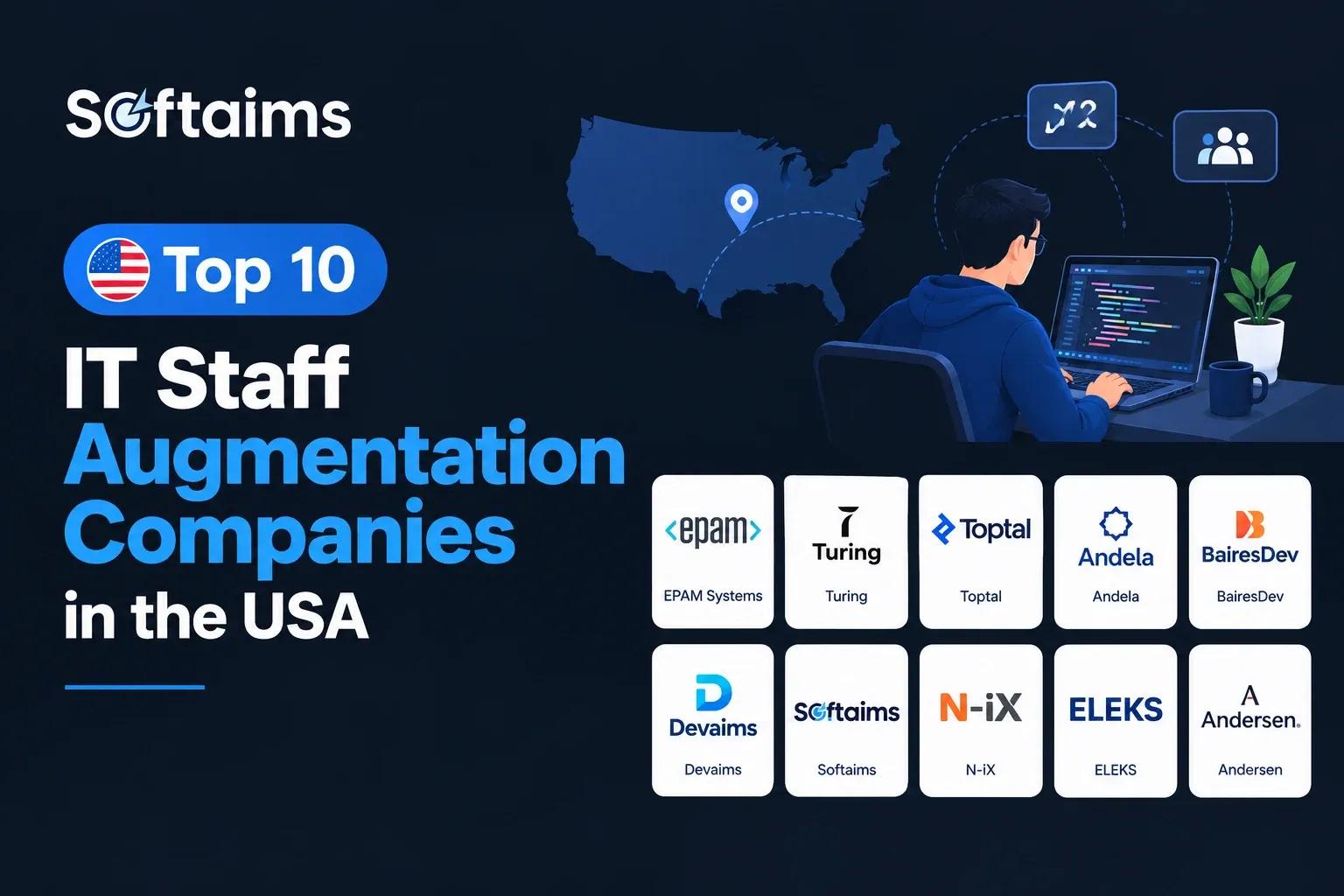
Top 10 IT Staff Augmentation Companies In The World (2027 Guide)
Traditional tech hiring can take weeks you don't have. This guide breaks down the world's leading IT staff augmentation companies for 2027, helping you quickly bridge skill gaps with pre-vetted engineers while maintaining complete project control.
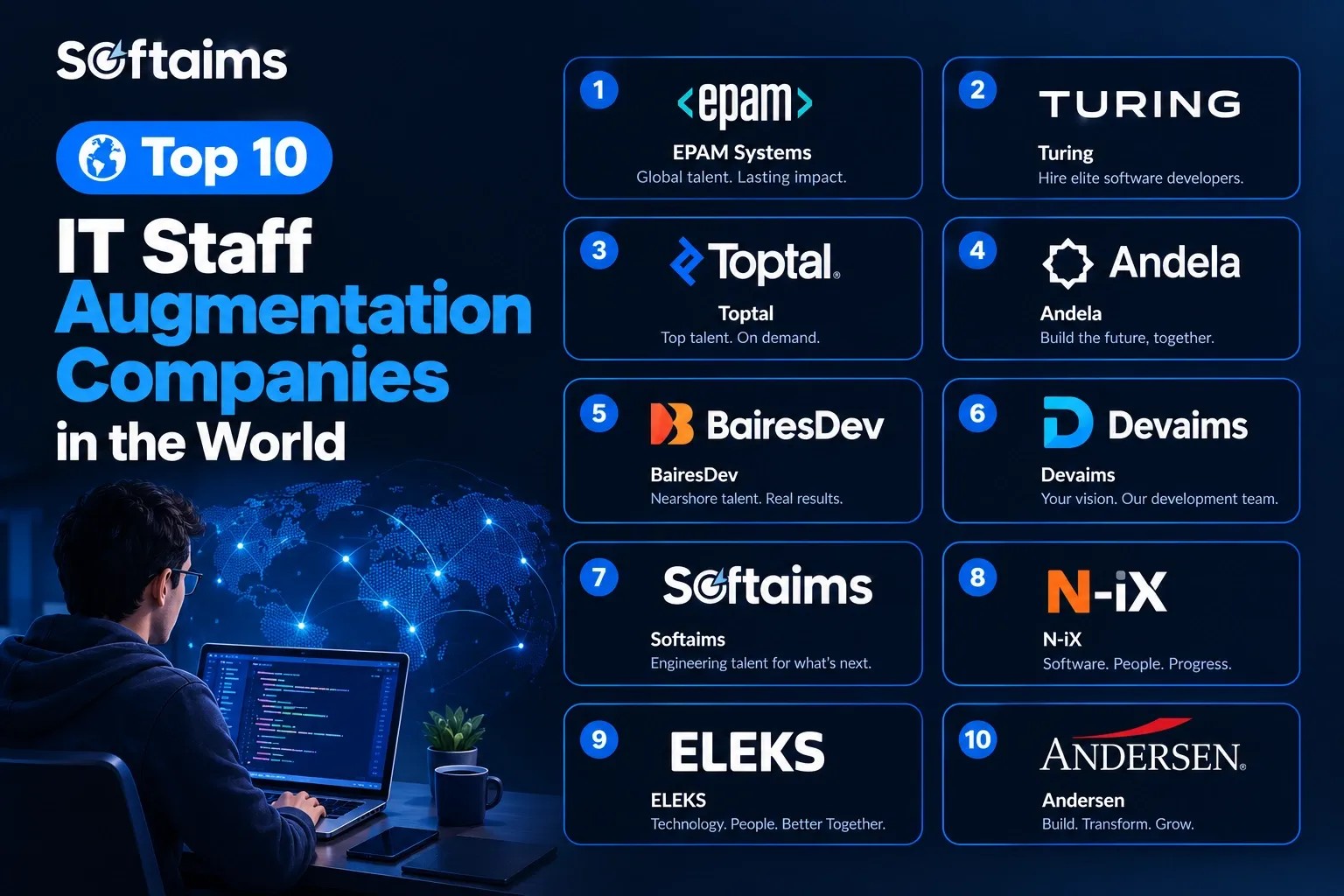
Table of contents
Key Takeaways
- IT staff augmentation reduces time-to-hire from the traditional 6–8 weeks down to 1–2 weeks, allowing engineering teams to meet tight launch deadlines without permanent headcount overhead.
- Unlike traditional project outsourcing, augmented developers embed directly into your existing workflow, tools, and daily standups, operating as an extension of your internal team under your direct management.
- Engagement models range from single specialist additions to full distributed squads, leveraging onshore, nearshore, and offshore networks to balance budget, time-zone overlap, and technical expertise.
- Augmentation provides rapid, cost-effective access to highly sought-after skill sets such as AI/ML, cloud architecture, and specialized back-end engineering; without long-term salary and benefit commitments.
Hiring senior engineers the traditional way is slow. A single role can sit open for six to eight weeks, and the best talent is scarce and costly. So more companies plug the gap with staff augmentation. It lets you embed vetted, external engineers straight into your own team, fast, without the weight of permanent hiring.
The model is booming, too. The global IT staff augmentation market sits near $439 billion in 2026 and keeps climbing. Time-to-hire through augmentation runs about one to two weeks, versus six to eight for a standard in-house search. So the real question is who to trust with it.
This guide ranks the top 10 IT staff augmentation companies in the world for 2026. You'll see what each firm does and who it fits. After the list, we cover how augmentation works, costs, benefits, red flags, and how to choose. Read it once, and you'll have a clear path forward.
What Is IT Staff Augmentation
IT staff augmentation is a hiring model that adds skilled external engineers to your existing team. They work under your direction, on your tools, and to your process. You keep control, and you scale up or down as needs change.
It's not the same as handing off a project, though. With augmentation, the engineers become part of your team. You manage the work day to day, just as you would with a direct hire.
The appeal is speed and flexibility. You fill a skill gap in days, not months. So it suits firms that need extra capacity or niche skills without a permanent commitment.
How IT Staff Augmentation Works
Most staff augmentation companies follow a similar path. Knowing the stages helps you plan. Here's how it usually runs.
- Identify the gap. You define the skills, seniority, and time frame you need.
- Match candidates. The provider screens and proposes vetted engineers.
- Interview and select. You review shortlisted candidates and pick your fit.
- Onboard. The engineer joins your team, tools, and standups.
- Deliver. They work under your direction, like an in-house team member.
- Scale. You extend, add, or wind down the engagement as needs shift.
Each step builds on the last. So a clear gap definition at the start shapes the whole engagement.
Staff Augmentation vs Managed Services vs Outsourcing
These models often get confused, but they're distinct. The key difference is who manages the work. The table below breaks it down.
Model | Who Manages | Best For |
| Staff augmentation | You, engineers join your team | Skill gaps, scaling, control |
| Managed services | The vendor runs a function | Offloading ongoing operations |
| Project outsourcing | The vendor delivers a project | Defined, end-to-end builds |
There's no single best model, though. Augmentation keeps you in control, while outsourcing hands off the whole job. So match the model to how much you want to manage.
Benefits of IT Staff Augmentation
IT staff augmentation companies deliver value in several clear ways. Each benefit ties back to speed, cost, or skill.
- Fast scaling. You add senior engineers in days, not months.
- Access to niche skills. You reach AI, cloud, or security talent that's hard to hire locally.
- Full control. The engineers work under your direction, in your workflow.
- Lower cost. Rates in many regions run well below a local hire, with no benefits overhead.
- Flexibility. You scale up for a sprint, then scale back down.
The gains are real, too. Many firms cut their time-to-hire from weeks to days, without a permanent headcount commitment.
When Should You Use Staff Augmentation
Some moments make augmentation the smart call, and IT staff augmentation companies exist for exactly these. If any of these apply, it's worth exploring. Waiting can stall your roadmap.
- A role won't fill. Key positions stay open for months.
- You need a niche skill. The work needs expertise you lack in-house.
- A deadline is closing in. A launch needs more hands, and soon.
- Demand is spiking. A project surge outpaces your current team.
- You want to test before committing. You need senior skill without a permanent hire.
If two or more ring true, augmentation likely fits. So weigh it against the cost of a stalled project.
Types of Staff Augmentation
Staff augmentation isn't one size fits all. Providers usually offer a few tiers, based on skill and duration. Knowing them helps you match the need.
- Commodity augmentation. Extra hands for straightforward tasks, where deep skill isn't critical.
- Skill-based augmentation. Engineers with a specific competency, like a framework or tool.
- Highly skilled augmentation. Senior specialists for complex architecture, security, or AI work.
Duration matters, too. Short-term augmentation covers a sprint or a gap, while long-term augmentation supports an evolving product. So the best IT staff augmentation companies flex across both.
In-House Hiring vs Staff Augmentation
Should you hire permanently or augment? Both work, and the right call depends on the need. Each has clear trade-offs.
An in-house hire suits steady, long-term work and deep product knowledge. It offers full alignment, but the search runs six to eight weeks, plus ramp time. Benefits and overhead add cost, too.
Augmentation suits gaps, spikes, and niche skills. It compresses hiring to days and avoids permanent headcount. You give up some long-term alignment, however. So many teams blend both, using staff augmentation companies for flexibility and in-house hires for the core.
Industries That Use Staff Augmentation Most
Some sectors lean on augmentation more than others. Each has its own reasons. The table shows the most active.
Industry | Why They Augment | Common Roles |
| Fintech | Speed and niche skills | Back-end, security, data |
| Healthcare | Compliance and scale | Full-stack, cloud |
| Retail & e-commerce | Seasonal demand swings | Front-end, mobile |
| Startups & SaaS | Fast scaling on a budget | Full-stack, DevOps |
| Enterprise | Legacy modernisation | Cloud, data, AI |
Across all of them, one pattern holds. When skills are scarce or time is short, staff augmentation companies fill the gap.
How We Selected These Companies
This list isn't random. The IT staff augmentation companies here each met a clear standard. That keeps the ranking useful rather than promotional. It's a subjective list, however, so treat it as a starting point.
Here's what we weighed:
- Real augmentation focus. Every firm embeds vetted engineers into client teams.
- Talent quality. Strong vetting and senior benches counted most.
- Onboarding speed. Fast matching and integration added weight.
- Track record. Client history, reviews, and years in business all mattered.
- Flexible engagement. Options across regions, skills, and models helped.
No firm leads on every measure, though. So each entry ends with a "Best for" note to match it to your needs.
At a Glance: The Top Staff Augmentation Companies Compared
Navigating the IT staff augmentation ecosystem requires balancing talent quality, speed-to-hire, time-zone overlap, and total execution cost. Modern delivery models have evolved beyond mere headcount fulfillment into targeted capability sourcing; helping engineering leaders bridge specialized skill gaps in AI, cloud architecture, and modern back-end engineering while retaining full management control over their product roadmaps.
The comparative matrix below outlines the world's premier staff augmentation partners. Each provider brings a distinct operational strength to the table, ranging from rapid 48-hour matching networks for startup velocity to high-capacity global enterprises built for complex digital transformations.
# | Company | Base | Model Strength | Best For |
| 1 | Softaims | Global / offshore talent | Vetted talent, 48-hour matching | Fast, affordable senior engineers |
| 2 | Devaims | Softaims-owned | Team extension plus builds | Product-focused augmentation |
| 3 | BairesDev | San Francisco, US | Nearshore talent | US time-zone-aligned teams |
| 4 | Andela | New York, US | Global marketplace | Distributed, compliant hiring |
| 5 | Toptal | Global network | Vetted senior specialists | Senior talent, fast |
| 6 | Turing | Palo Alto, US | AI-driven matching | AI and remote engineering |
| 7 | EPAM Systems | Newtown, US | Engineering at scale | Complex product work |
| 8 | N-iX | Global / Europe | Cloud and AI depth | Enterprise cloud and AI |
| 9 | ELEKS | Tallinn / global | Full-cycle engineering | Industry-deep augmentation |
| 10 | Andersen | Global / Europe | Enterprise delivery | European engineering depth |
The Top 10 Staff Augmentation Companies in the World
Modern IT staff augmentation enables engineering leaders to bypass lengthy recruitment pipelines, instantly plug skill gaps, and scale capacity as product roadmaps evolve. The following ten top-tier providers represent the global benchmark for talent depth, operational efficiency, and direct project control.
1. Softaims
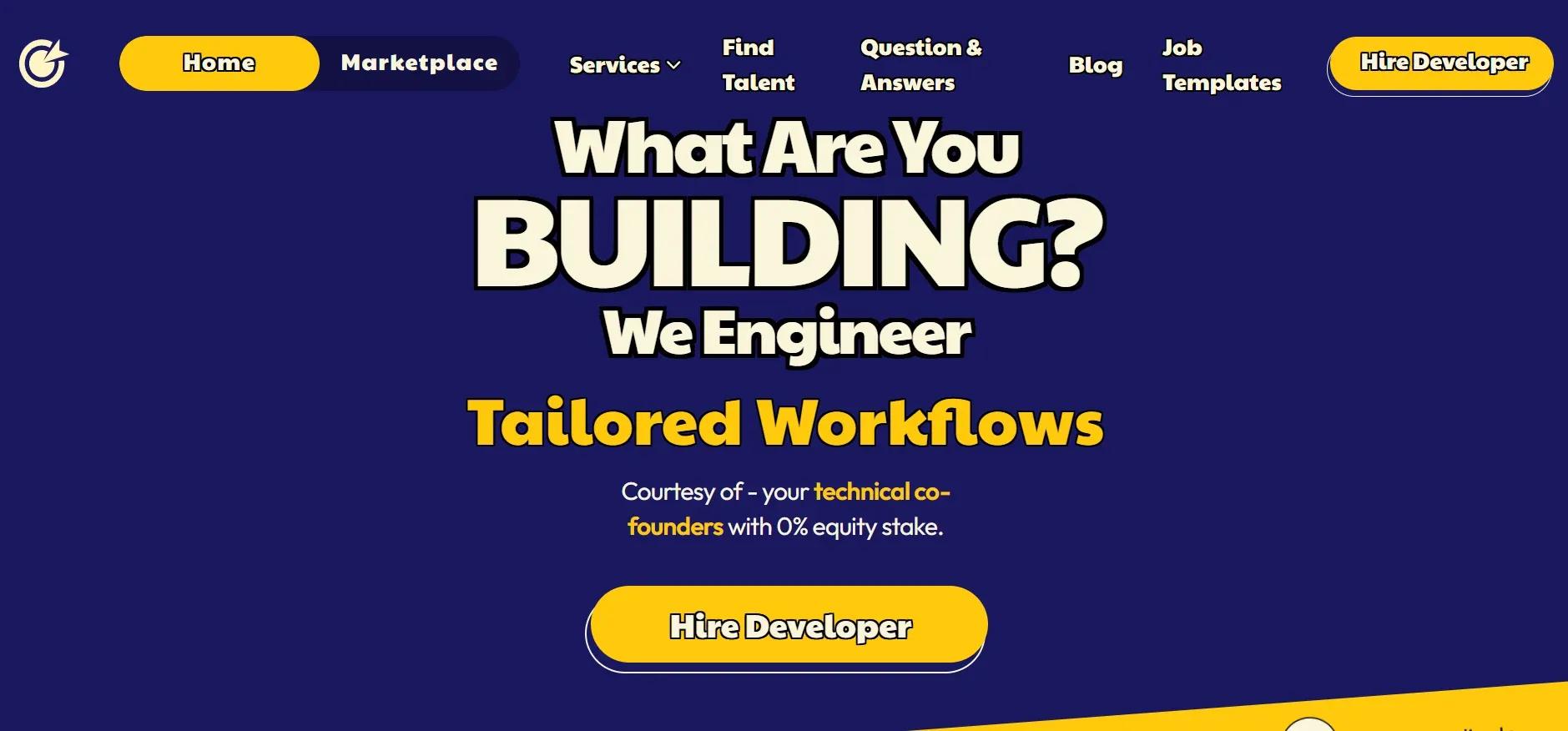
Softaims tops our list of IT staff augmentation companies with a fast, vetted model. Instead of a long search, you get matched with the top 3% of pre-screened engineers within 48 hours. So you embed senior talent into your team quickly, and at a fraction of a local hire's cost.
Its real strength is hiring by skill. You can hire React developers, front-end engineers, and full-stack developers, or reach back-end engineers, cloud specialists, and DevOps engineers. The pool also spans AI engineers, machine learning specialists, and QA automation testers. Every engineer is vetted for real skill, not just a polished CV.
The model flexes to your needs. You can add one specialist or a whole squad, and they slot into your workflow and hours. So they work like your own team, wherever you're based. You can browse available developers or check transparent rates before you commit.
Key highlights:
- Top 3% vetted engineers, matched within 48 hours
- Hire by skill across web, cloud, AI, and more
- Engineers embed into your team and hours
- Flexible scaling with no heavy minimums
Best for: Firms that want senior, vetted engineers embedded fast, without a long search or heavy contract.
2. Devaims
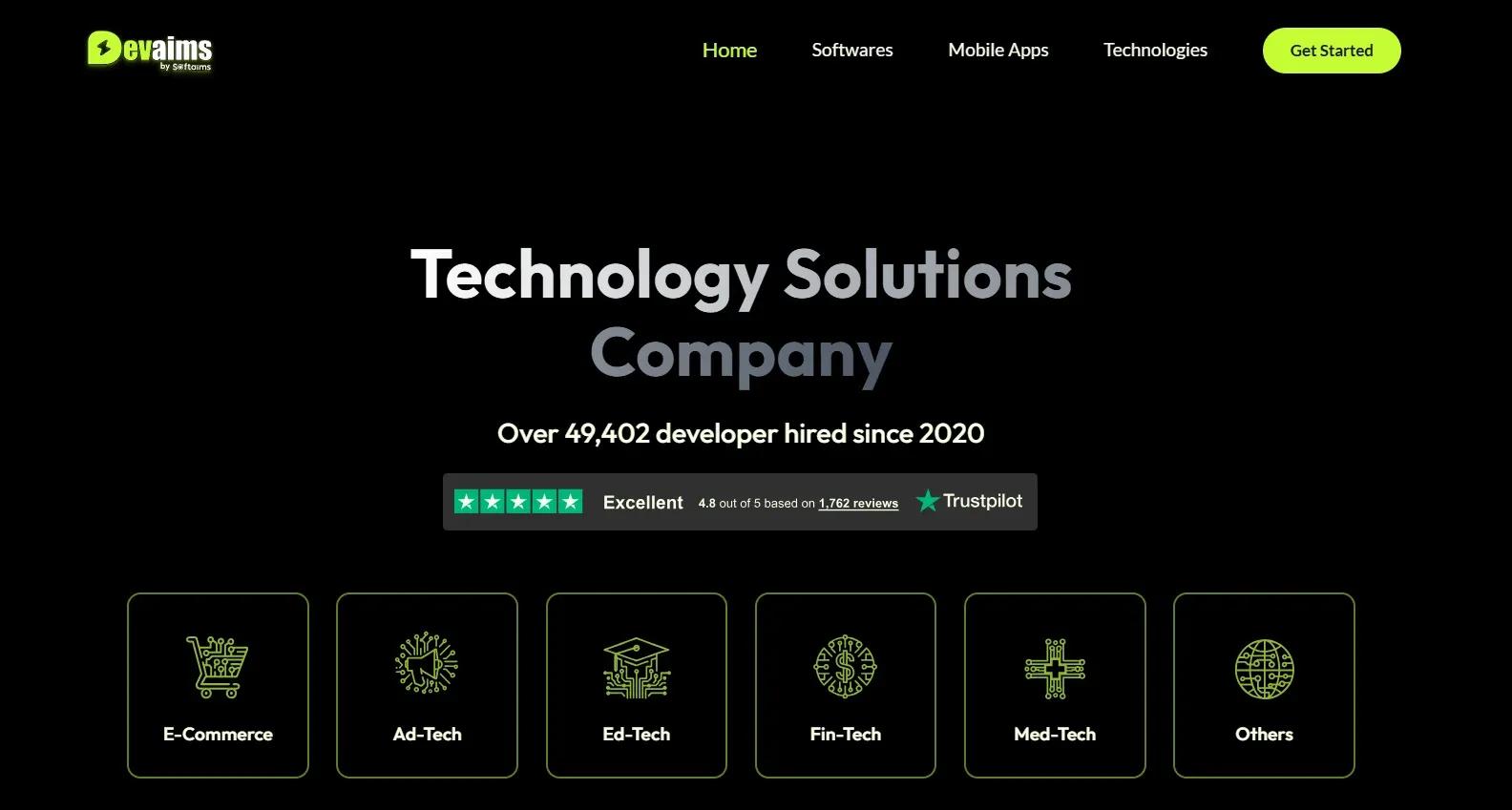
Devaims is a development studio known for custom software and mobile builds. Beyond full projects, its engineers can also join your team to extend capacity. So it blends studio delivery with flexible augmentation.
In August 2026, Softaims acquired Devaims. So Devaims clients now tap the same vetted network and 48-hour matching. One partner can cover software development and mobile app development, as a full build or as embedded talent.
Key highlights:
- Custom software and mobile expertise
- Team extension plus full-cycle delivery
- Backed by Softaims' vetted talent since 2026
- Web, mobile, and back-end under one roof
Best for: Teams that want product-focused engineers who can embed or build end to end.
3. BairesDev
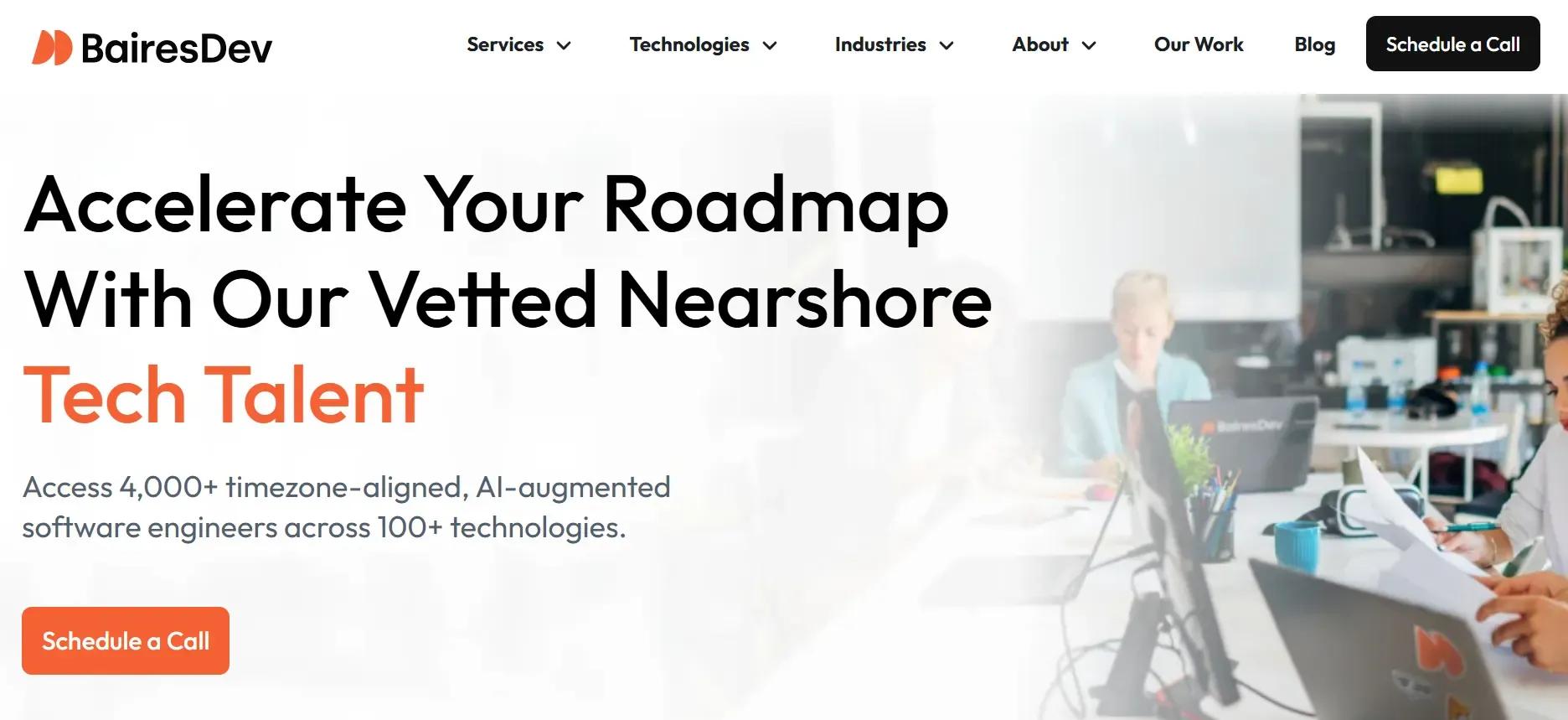
BairesDev is a nearshore firm founded in 2009 and based in San Francisco. It draws on the top 1% of Latin American talent, with more than 4,000 engineers. So it blends quality with strong US time-zone overlap.
The firm embeds engineers into client teams through staff augmentation and dedicated teams. Its bilingual staff work US hours, which eases collaboration. BairesDev has served clients from startups to the Fortune 500. So it suits firms wanting time-zone-aligned nearshore augmentation.
Key highlights:
- Top 1% Latin American talent
- 4,000-plus engineers, US time zones
- Staff augmentation and dedicated teams
- Clients from startups to Fortune 500
Best for: Firms wanting time-zone-aligned nearshore augmentation.
4. Andela
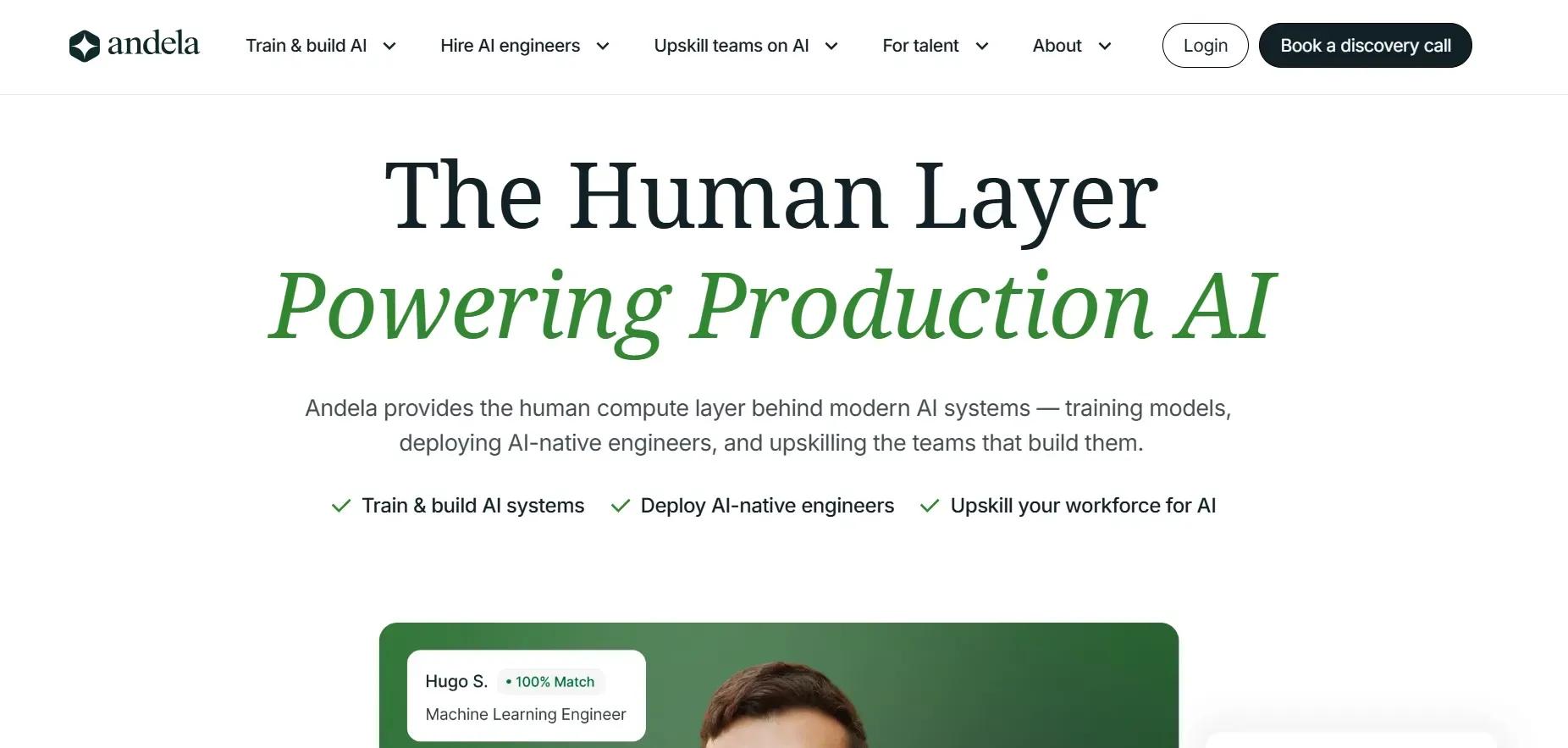
Andela is a global talent marketplace headquartered in New York and founded in 2014. It connects companies with vetted engineers across more than 135 countries. So it offers huge reach and follow-the-sun coverage.
The firm uses an AI-driven matching engine to screen and place talent fast. It also handles employment compliance on your behalf, which cuts admin. Andela has served names like Goldman Sachs and Mastercard. So it suits firms wanting global reach and flexible, compliant hiring.
Key highlights:
- Vetted engineers across 135-plus countries
- AI-driven talent matching
- Employment compliance handled for you
- Strong for distributed, global teams
Best for: Firms wanting global reach and compliant, flexible augmentation.
5. Toptal
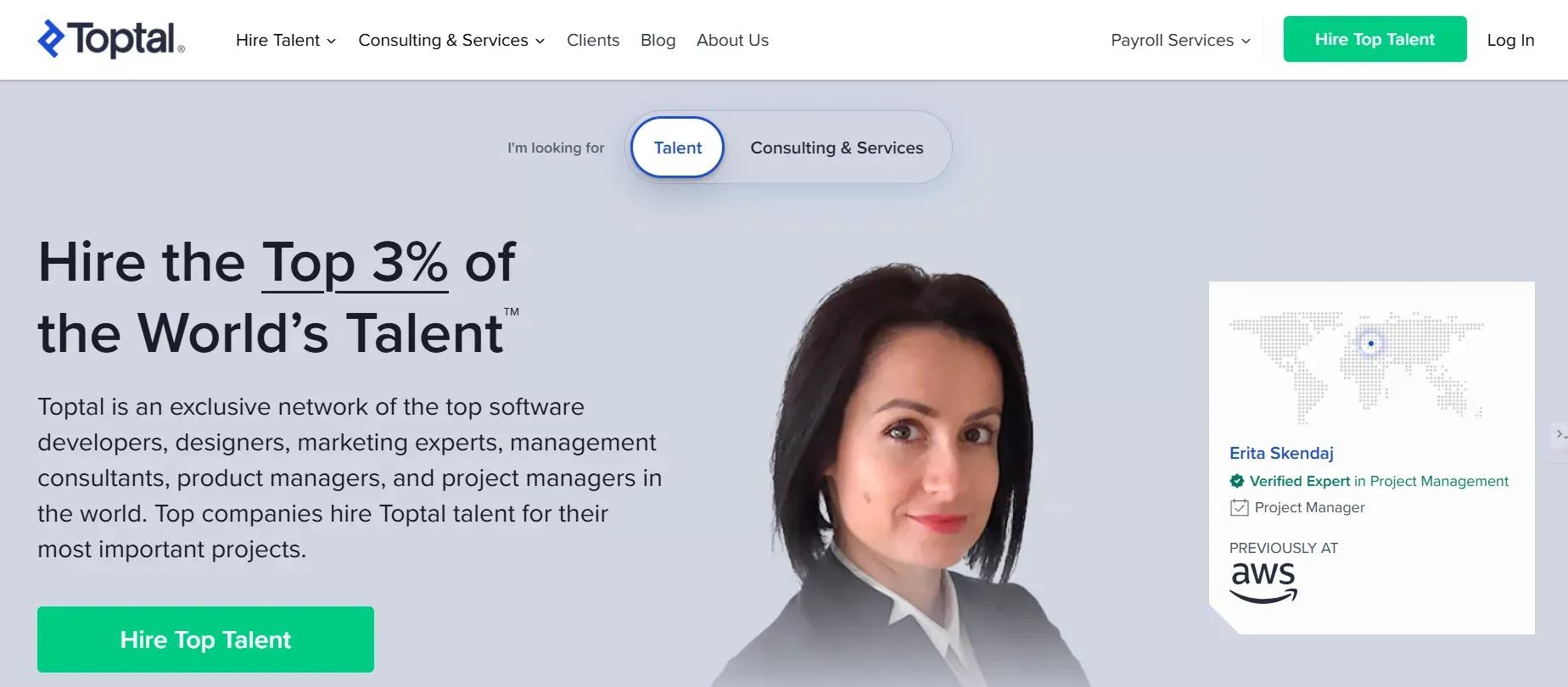
Toptal is a vetted talent network known for tough screening. It accepts only a small share of applicants, so its bench skews senior. You describe your role, then a Toptal contact matches a specialist.
The network suits firms that want proven skill without reviewing crowds of candidates. Matches often land within days, which saves time. Toptal covers hourly, part-time, and full-time terms. So it suits firms needing senior specialists fast, at a premium rate.
Key highlights:
- Rigorous vetting, senior-heavy network
- Fast matching to your role
- Hourly, part-time, or full-time options
- Little screening on your side
Best for: Firms wanting vetted senior specialists fast, at a premium.
6. Turing
Turing is an AI-driven platform based in Palo Alto that places pre-vetted remote engineers. It draws talent from more than 150 countries, matched by technical and project fit. So it suits remote-native teams that want speed.
The firm has leaned heavily into AI, ML, and LLM work, so its AI bench runs deep. Its rates are often competitive for global remote talent. Turing fits teams comfortable managing distributed individuals. So it suits firms scaling AI or remote engineering capacity.
Key highlights:
- AI-driven matching across 150-plus countries
- Strong AI, ML, and LLM bench
- Competitive global remote rates
- Fast, remote-first hiring
Best for: Firms scaling AI or remote engineering talent quickly.
7. EPAM Systems
EPAM Systems is a software engineering firm headquartered in Newtown, Pennsylvania. Founded in 1993, it employs over 60,000 people across a global network. So it pairs deep engineering with enterprise scale.
The firm offers both team augmentation and full product engineering. It's known for strong technical depth on complex, custom work. EPAM suits enterprises that want engineering-led augmentation, not just staffing. So it fits firms building sophisticated products at scale.
Key highlights:
- Engineering-led augmentation
- Deep technical depth
- Global delivery network
- Enterprise-grade experience
Best for: Enterprises wanting engineering-heavy augmentation at scale.
8. N-iX
N-iX is a global software engineering firm with more than 2,000 tech experts. It provides staff augmentation and dedicated teams to enterprise clients. So it suits firms scaling serious engineering capacity.
The firm partners with AWS, Microsoft, and Google Cloud, and it's strong in cloud and AI. It also brings solid delivery process and transparency. N-iX suits enterprises modernising systems or scaling cloud and AI work. So it fits firms wanting enterprise-grade augmentation with delivery rigour.
Key highlights:
- 2,000-plus tech experts
- Staff augmentation and dedicated teams
- Strong in cloud and AI
- AWS, Microsoft, and GCP partnerships
Best for: Enterprises scaling cloud and AI engineering capacity.
9. ELEKS
ELEKS is an international software engineering firm founded in 1991, with a head office in Tallinn and roots in Ukraine. With more than 2,000 experts across some 17 offices, it serves clients worldwide. So it offers deep skill with a global footprint.
The firm provides custom software, product design, QA, and team augmentation. It works across finance, healthcare, retail, and more. ELEKS is known for sharing project risk with clients, too. So it suits enterprises and SMEs wanting experienced, full-cycle augmentation.
Key highlights:
- Custom software and team augmentation
- 2,000-plus experts across 17 offices
- Broad industry experience
- Offices across Europe, the US, and beyond
Best for: Enterprises and SMEs wanting experienced, industry-deep augmentation.
10. Andersen
Andersen is a global software development company founded in 2007. It has deep engineering roots in Europe and a worldwide presence, with several thousand engineers. So it delivers enterprise-grade augmentation.
The firm offers team augmentation, dedicated teams, and full product builds. It's known for strong work in fintech, healthcare, and logistics. Andersen suits enterprises that value European engineering depth. So it fits firms wanting a mature partner for complex augmentation.
Key highlights:
- Team augmentation and dedicated teams
- Strong European engineering base
- Focus on fintech and healthcare
- Enterprise-grade delivery
Best for: Enterprises wanting European engineering depth for complex work.
What to Look For in a Staff Augmentation Partner
IT staff augmentation companies vary widely in depth and style, however. The strongest share a few core traits. Keep this checklist close when you compare firms.
- Strong vetting. Ask how they screen engineers, not just how many they have.
- Onboarding speed. A good partner embeds talent in days, not weeks.
- Time-zone fit. Overlap with your hours eases daily collaboration.
- Replacement guarantees. The best offer a fast swap if a fit doesn't work.
- Security and compliance. ISO 27001, GDPR, and NDAs protect your data.
A partner strong on these points saves you rework later. So weigh them before you sign.
How Much Does IT Staff Augmentation Cost
Cost depends heavily on region and seniority. IT staff augmentation companies price their work around these rates, which swing widely across the globe. The table below shows typical staff augmentation rates in 2026.
Region | Typical Rate (2026) |
| North America | $100–$150+/hr |
| Western Europe | $70–$120/hr |
| Latin America (nearshore) | $50–$100/hr |
| Eastern Europe | $45–$85/hr |
| Asia | $25–$60/hr |
Source: 2026 industry rate guides
The spread is wide. A senior engineer at $120 an hour onshore might cost half that through a strong nearshore or offshore partner, at similar quality. Some Central and Eastern European providers bill monthly, too, often $4,000 to $11,000 per engineer. Still, the rate isn't the whole story, since onboarding and rework shape the real cost.
This is where a vetted-talent model helps. Teams that hire engineers through Softaims reach senior talent below onshore rates, with matching in 48 hours. So you save on both cost and time, without cutting corners on quality.
Onshore vs Nearshore vs Offshore
Where your engineers sit shapes cost and collaboration. IT staff augmentation companies offer all three options, and each trades price against proximity. Here's how they compare.
Option | Location | Trade-off |
| Onshore | Your own country | Easiest to work with, highest cost |
| Nearshore | A nearby region, close time zone | Good overlap, moderate cost |
| Offshore | A distant, lower-cost region | Biggest savings, wider time gap |
Nearshore has grown fast, especially Latin America for US firms and Eastern Europe for European ones. It blends solid savings with strong overlap. Offshore, meanwhile, offers the deepest savings for well-defined work. So weigh how much daily contact your project needs.
Red Flags to Watch For
When you compare staff augmentation companies, spotting warning signs early saves money. One clear red flag is weak vetting. If a provider can't explain how it screens engineers, quality may vary.
Watch, too, for slow onboarding. Augmentation should add capacity in days, so long delays defeat the point. A partner that drags its feet in the sales stage often does the same later.
Poor communication is another concern, however. If a provider can't keep you updated clearly, collaboration suffers. For tips on clear communication, MindTools is useful. And to gauge how current a team is, ask what they've followed lately on sites like TechCrunch.
How to Choose the Right Partner Step by Step
Choosing a partner is a structured decision, not a guess. Run through these steps to narrow the field.
- Define the gap. Fix the skills, seniority, and time frame you need.
- Check vetting. Ask how the provider screens and tests engineers.
- Confirm speed. Verify how fast they can match and onboard talent.
- Test communication. Judge clarity, speed, and time-zone fit early.
- Run a pilot. Start with two or three engineers on a defined scope.
- Compare total cost. Weigh rates against onboarding, overhead, and quality.
Work through these in order, and the right fit stands out. In practice, the best IT staff augmentation companies welcome these questions rather than dodge them.
Common Mistakes to Avoid
Even careful teams slip up. A few mistakes come up again and again. Avoiding them makes any engagement smoother.
First, don't chase the lowest rate alone. The cheapest option often costs more once rework is counted. Second, don't skip a pilot. A small trial reveals fit before you scale.
Third, don't neglect onboarding. Engineers need access, context, and goals to deliver fast. Finally, don't ignore security, since your data and IP are at stake. So treat augmentation as a partnership, not just a transaction.
How to Manage an Augmented Team
Hiring is only half the job. Managing augmented engineers well decides the outcome. A few habits make a big difference, however.
Start with clear goals and access on day one. Then set regular standups and a single point of contact. Also use shared tools for code, tracking, and chat, so everyone stays aligned. Finally, treat augmented engineers as part of the team, not outsiders, since inclusion drives better work. So the more you invest, the more you get back.
Signs of a Reliable Staff Augmentation Partner
Not every provider lives up to its pitch. A few signs point to one you can trust. Look for these before you commit.
- Transparent pricing. Rates and models are explained clearly, with no vague quotes.
- Real references. The firm shares case studies and client contacts.
- Strong vetting. It can explain exactly how it screens engineers.
- Fast replacement. A quick swap is offered if a fit doesn't work.
- Solid security. ISO 27001, NDAs, and GDPR practices are in place.
The best IT staff augmentation companies tick all five without hesitation. So treat any gap here as a reason to keep looking.
Trends Shaping Staff Augmentation in 2026
The field keeps moving, so it pays to watch what's next. These trends are reshaping how staff augmentation companies work. Three shifts stand out this year.
AI-enabled staffing is rising fast. Top providers now deploy AI-vetted engineers with coding co-pilots and automated QA. So onboarding gets faster, and sprint velocity climbs.
Nearshore and cross-border delivery is also growing. Firms pair Latin American and Eastern European talent with offshore hubs for round-the-clock work. Meanwhile, demand for AI and cloud skills keeps surging. Together, these trends make flexible augmentation a core workforce strategy, not a stopgap.
Staff Augmentation for Startups and Enterprises
Augmentation serves both ends of the market, though the reasons differ. Startups and enterprises get different value from it.
For a startup, speed and cost are everything. Augmentation lets a small team ship an MVP or scale fast without heavy hiring. So a founder can add a senior engineer for a sprint, then scale back. For an enterprise, the draw is niche skills and flexibility across large programmes. So the best staff augmentation companies serve both, from a single hire to a full distributed team.
Frequently Asked Questions
What do IT staff augmentation companies do?
They add vetted external engineers to your existing team. The engineers work under your direction, on your tools and process. Many providers also handle vetting, onboarding, and compliance. In short, they give you extra skilled capacity fast, without permanent hiring.
How is staff augmentation different from outsourcing?
With staff augmentation, the engineers join your team and you manage the work. With outsourcing, the vendor takes the whole project and manages it for you. So augmentation gives you more control, while outsourcing offloads more. Many firms use both, depending on the task.
How much does IT staff augmentation cost?
It depends on region and seniority. Onshore rates in North America often run $100 to $150-plus an hour. Nearshore options in Latin America sit nearer $50 to $100, with strong overlap. Offshore rates drop further, though quality and communication still matter.
How fast can I onboard an augmented engineer?
Often within days. Vetted platforms like Softaims can match talent in as little as 48 hours. Onboarding speed then depends on your own access and setup. So the faster you prepare tools and context, the faster they deliver.
Conclusion
IT staff augmentation gives you skilled capacity, speed, and savings without permanent hiring. The IT staff augmentation companies above range from global marketplaces to focused nearshore and enterprise partners. Each fits a different need.
Match your choice to three things, though: the skills you need, your budget, and your time-zone needs. If you want senior engineers embedded fast and without giant-firm overhead, Softaims can match you within 48 hours. You can also browse the talent pool to see who fits.
Ready to start? Define your skill gap, then pick the partner that fits your goals. Run a small pilot first, prove the fit, then scale from there. Have a question about your team? Reach out, and let's talk it through.


 GitHub
Martin P.

 Verified Expert in Engineering
My name is Martin P. and I have over 9 years of experience in the tech industry. I specialize in the following technologies: iOS Development, Web Application Development, Full-Stack Development, AI Instruction, Machine Learning, etc.. I hold a degree in Bachelor of Computer Science (BCompSc). Some of the notable projects I've worked on include: Formula Drift, Catalog, Crush, Swift Display, Wander Stream, etc.. I am based in Las Vegas, United States. I've successfully completed 17 projects while developing at Softaims.
I approach every technical challenge with a mindset geared toward engineering excellence and robust solution architecture. I thrive on translating complex business requirements into elegant, efficient, and maintainable outputs. My expertise lies in diagnosing and optimizing system performance, ensuring that the deliverables are fast, reliable, and future-proof.
The core of my work involves adopting best practices and a disciplined methodology, focusing on meticulous planning and thorough verification. I believe that sustainable solution development requires discipline and a deep commitment to quality from inception to deployment. At Softaims, I leverage these skills daily to build resilient systems that stand the test of time.
I am dedicated to making a tangible difference in client success. I prioritize clear communication and transparency throughout the development lifecycle to ensure every deliverable exceeds expectations.

Leave a Comment
Need help building your team? Let's discuss your project requirements.
Get matched with top-tier developers within 24 hours and start your project with no pressure of long-term commitment.