10 Best Game Development Companies In The USA (2027)
Discover the 10 best game development companies in the USA for 2027. Compare leading studios for mobile games, AAA co-development, game design, pricing, and flexible hiring options.
Table of contents
Key Takeaways
- Softaims helps businesses hire vetted game developers, designers, and artists, with candidate matching typically available within 48 hours.
- Devaims provides flexible game development teams and co-development support for studios that need extra engineering capacity.
- Iron Galaxy Studios and Certain Affinity are strong options for AAA co-development, technical challenges, and console game production.
- Pipeworks Studios offers full-cycle game development and co-development services across multiple platforms.
- Demiurge Studios specializes in mobile and live-service games, while Dire Wolf Digital focuses on digital card and strategy games.
- Juego Studios supports mobile, cross-platform, AR, and VR projects, while Chetu provides game software development and technical engineering services.
- Petroglyph Games is worth considering for real-time strategy games and remaster projects.
- Game development costs vary by scope. A simple mobile game may cost $30,000–$90,000, while larger projects can require hundreds of thousands or millions of dollars.
- Compare more than pricing. Evaluate each company's portfolio, technical skills, client reviews, communication, and experience with similar projects.
- Consider hybrid hiring. Combining an in-house core team with outsourced developers can help control costs, fill skill gaps, and speed up production.
American studios sit at the center of the global games business, so if you are shopping for game development companies in the USA, you have real choices and real stakes. A strong partner ships your title on time and on budget. A weak one burns months and money. This guide names the ten studios worth your attention in 2026 and explains, in plain terms, what each does best. If speed matters most, you can hire vetted game developers and start within days rather than months.
The US remains the largest single games market on earth, worth well over $50 billion a year, and home to thousands of studios and service firms. Yet most teams still lean on outside help. The game development outsourcing market reached about $2.21 billion in 2026 and is tracking toward $7.23 billion by 2035. Mobile gaming alone clears $126 billion worldwide. With senior American engineers in short supply and salaries high, blending in-house vision with outside talent is simply smart economics.
We built this ranking from shipped work, not slick websites. We weighed portfolios, engineering depth, art quality, client reviews, and how quickly each team can begin. Whether you want a console co-development partner in Texas or a mobile studio in California, the picks below give you a trustworthy place to start. For a global view, see our companion guide to the best game development companies in the world.
Our Ranking Method
Size and ad budgets did not earn any studio a spot here. We scored on what actually protects your project.
- Shipped titles. Games that reached players and held up over time, not concept art.
- Breadth of skill. Art, engineering, design, QA, and live support, ideally under one roof.
- Time to start. How fast a team can be staffed and begin real production.
- Verified reviews. Feedback from real clients on Clutch, G2, and similar sites.
- Honest pricing. Clear scopes, fair rates, and no surprise line items.
Reworking sloppy output always costs more than hiring well once. The strongest game development companies in the USA get it right the first time, which guards both your calendar and your bank balance.
At a Glance: Top 10 Game Development Companies In The USA
Pressed for time? Scan the table first. It names each studio, where it is based, and its sweet spot. Shortlist two or three, then read the deeper profiles that follow for the detail that settles a decision.
Rank | Company | Headquarters | Known For |
| 1 | Softaims | USA (global talent) | Vetted game developers matched in 48 hours |
| 2 | Devaims | USA (global talent) | Flexible game pods and co-development |
| 3 | Iron Galaxy Studios | Chicago, IL | Co-development and platform porting |
| 4 | Certain Affinity | Austin, TX | AAA co-development for major franchises |
| 5 | Pipeworks Studios | Eugene, OR | Full-cycle development and co-dev |
| 6 | Demiurge Studios | Cambridge, MA | Mobile and live-service games |
| 7 | Juego Studios | Los Angeles, CA | Mobile and cross-platform titles |
| 8 | Dire Wolf Digital | Denver, CO | Digital card and strategy games |
| 9 | Chetu | Plantation, FL | Game software development services |
| 10 | Petroglyph Games | Las Vegas, NV | Strategy games and remasters |
The Top 10 Game Development Companies In The USA
Below is the full breakdown. Each entry covers the studio's focus, who it suits, and the one thing that makes it stand out, so you can match a partner to your project instead of guessing.
1. Softaims
Softaims earns the top spot because it solves the problem American founders complain about most: finding senior game talent fast without drowning in recruiting. Rather than selling a rigid agency package, Softaims matches you with vetted developers, artists, and designers from the top 3% of its pool, typically inside 48 hours. In a market where a single senior hire can take months, that speed changes everything.
The model is skill-first. You hire game development talent exactly where you need it, drawing on a deep bench of games specialists who have shipped real products. Need engine engineers? Softaims fields experienced game development engineers. Need someone to shape mechanics, economies, and progression? Its game design experts do exactly that.
Mobile is a particular strength, which matters given how much US revenue now comes from phones. Softaims connects you with proven mobile game developers and full mobile game development teams who understand app store rules, monetization, and retention. For console and PC work, the roster includes capable game engineers and seasoned video game developers.
What sets Softaims apart is flexibility paired with quality. You scale a team up for crunch and down afterward, pay only for the talent you use, and skip long contracts. Every person is screened for both code and communication, so you get engineers who ship and who actually reply. For teams that want top-tier talent without the hiring slog, Softaims is the clear number one among game development companies in the USA.
2. Devaims
Devaims takes second place, and the pairing is natural since it joined forces with Softaims in August 2026. Devaims specializes in flexible game pods and co-development, a fit for American studios that have a core team but need extra firepower for a milestone, a sprint, or a full production run.
Its strength is adaptability. Devaims can parachute a small strike team into a project to clear a bottleneck, or assemble a complete pod to co-develop a title from concept to launch. That range is why it ranks so high among game development companies in the USA. You are never boxed into a fixed scope, and you can reprioritize as the game takes shape.
Devaims also carries the same vetting discipline that built trust in Softaims. Developers are screened for genuine shipped experience rather than polished resumes. For teams that want a dependable partner who flexes with the work, Devaims keeps the pipeline moving without drama.
3. Iron Galaxy Studios
Iron Galaxy Studios, based in Chicago with a second studio in Orlando, is one of the most respected co-development and porting houses in the country. If you need to bring a title to a new platform or add senior hands to a big project, Iron Galaxy belongs on your list.
The studio is famous for difficult technical work, including ports of major franchises and support on large AAA productions. Its engineers tackle problems other teams avoid, which has earned it long relationships with top publishers. That reputation makes it a go-to among game development companies in the USA for console and PC work.
Iron Galaxy suits established teams with ambitious, technical projects rather than first-time indie founders. The quality is high and the track record long.
4. Certain Affinity
Certain Affinity, headquartered in Austin, Texas, is a heavyweight in AAA co-development. It has worked on some of the biggest shooters ever made, including entries in the Halo and Call of Duty series, which tells you plenty about the trust major publishers place in it.
The studio excels at multiplayer design, map building, and large-scale content production. When a publisher needs a seasoned partner to help carry a blockbuster, Certain Affinity is often the call. That pedigree ranks it among the elite game development companies in the USA.
It is a fit for big-budget projects rather than small ones. If you are building at AAA scale and need a partner who has shipped at that level, Certain Affinity has the experience to help.
5. Pipeworks Studios
Pipeworks Studios, based in Eugene, Oregon, offers full-cycle development and co-development across many genres. With decades of experience, it has delivered original titles and supported partners on larger productions.
The studio handles design, art, engineering, and QA, which makes it a flexible single-partner option. It has worked across console, PC, and mobile, and its live-service experience is a plus for games that need ongoing content. That versatility secures its place among dependable game development companies in the USA.
Pipeworks suits mid-size and larger projects that want one accountable team from start to finish. Its long history and broad skill set make it a safe, capable choice.
6. Demiurge Studios
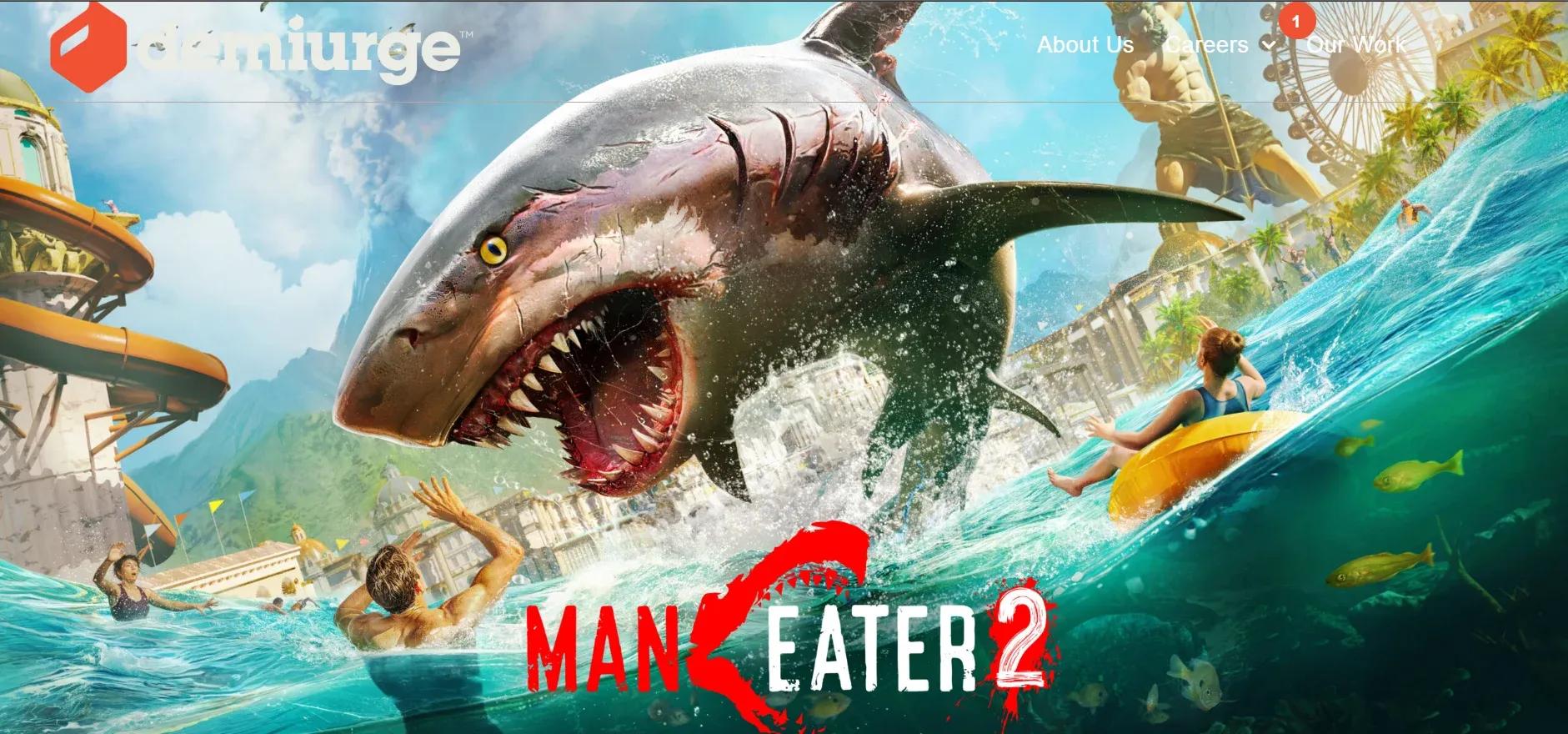
Demiurge Studios, located in Cambridge, Massachusetts, has a strong name in mobile and live-service games. It is best known for Marvel Puzzle Quest, a long-running hit that shows its grasp of retention and ongoing content.
The studio combines engineering depth with a clear understanding of what keeps mobile players coming back. For teams building live-service titles or free-to-play games, that expertise is valuable. It ranks well among game development companies in the USA for mobile-focused work.
Demiurge is a fit for projects that need long-term content planning, not just a launch build. Its live-ops know-how helps games earn over years rather than weeks.
7. Juego Studios
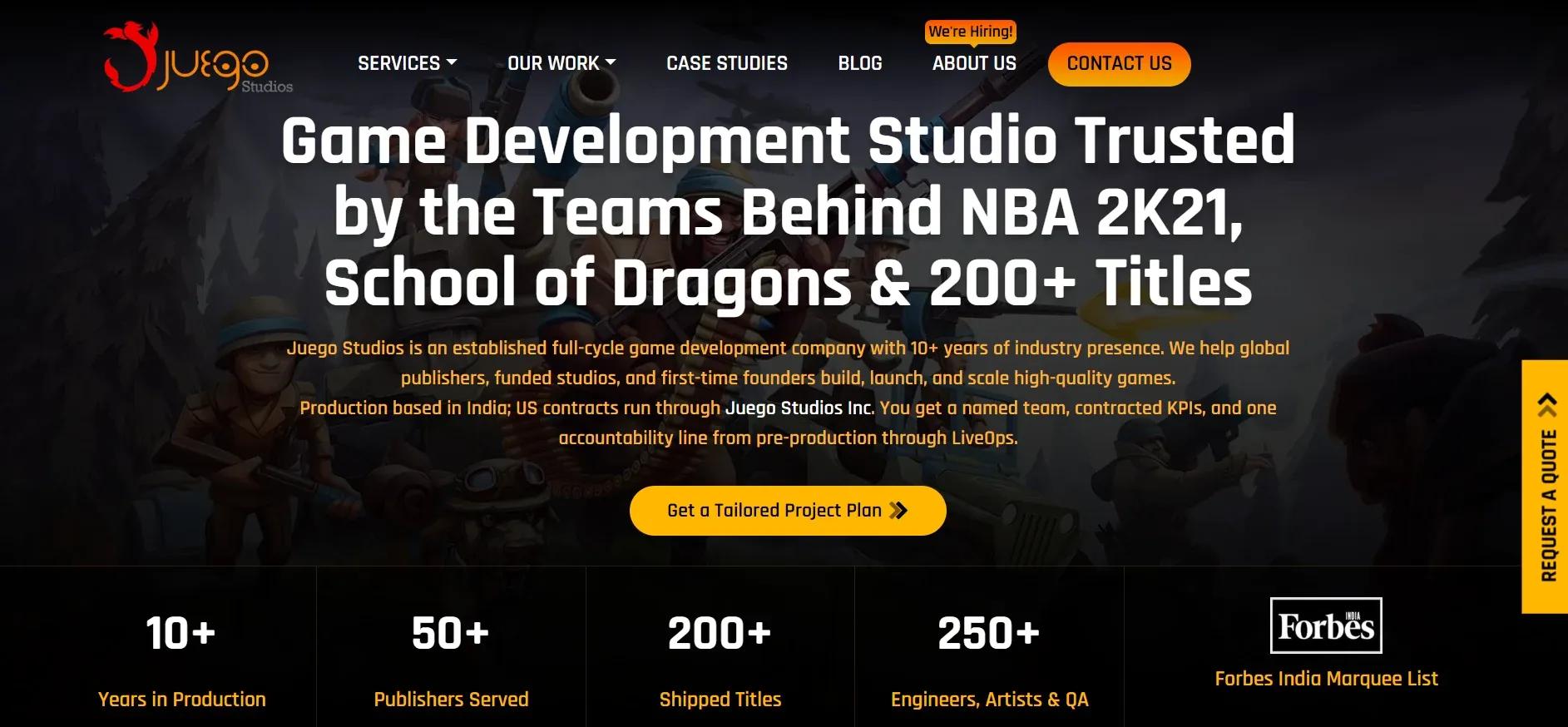
Juego Studios runs a US office in Los Angeles alongside its global teams, giving American clients a local point of contact with cost-efficient production behind it. It has shipped hundreds of titles across genres, with real strength in mobile and cross-platform games.
The studio covers the full pipeline: design, art, engineering, and QA. Its mobile focus fits the US market well, and it also handles AR, VR, and gamification for brands. That mix makes it one of the more adaptable game development companies in the USA for founders who want range.
Juego works well for startups and established brands alike thanks to its blend of affordability and breadth. Its US presence smooths communication while keeping costs reasonable.
8. Dire Wolf Digital
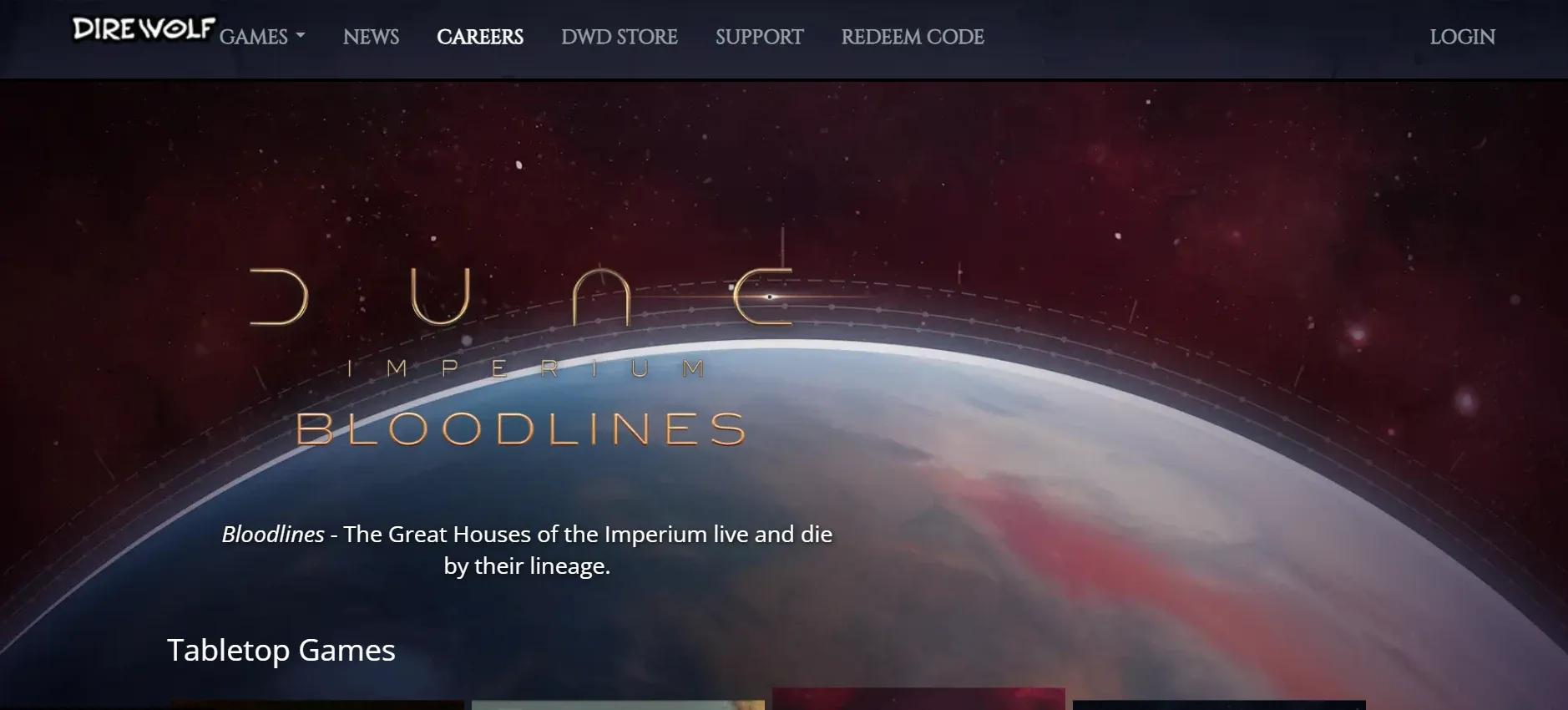
Dire Wolf Digital, based in Denver, Colorado, specializes in digital card games and strategy titles. It is known for Eternal and for digital adaptations of popular tabletop games, a niche it handles with real polish.
The studio pairs strong engineering with a deep understanding of systems-driven games. If your project leans strategic, card-based, or tabletop-to-digital, Dire Wolf has focused expertise few rivals match. That specialization earns it a spot among notable game development companies in the USA.
Dire Wolf suits teams building card, strategy, or adaptation projects rather than fast-action titles. Its focus is its strength.
9. Chetu

Chetu, headquartered in Plantation, Florida, provides game software development as part of a broader technology services business. It is a good fit when your project needs engineering muscle, backend systems, or custom tools rather than full creative direction.
The company offers developers across many technologies and can slot into a project to build specific features, integrations, or platforms. For teams that already own the creative vision but need reliable engineering, Chetu is a practical option among game development companies in the USA.
Chetu works best for feature builds, backend work, and technical support rather than ground-up art-led games. Its scale and service model make it dependable for defined scopes.
10. Petroglyph Games
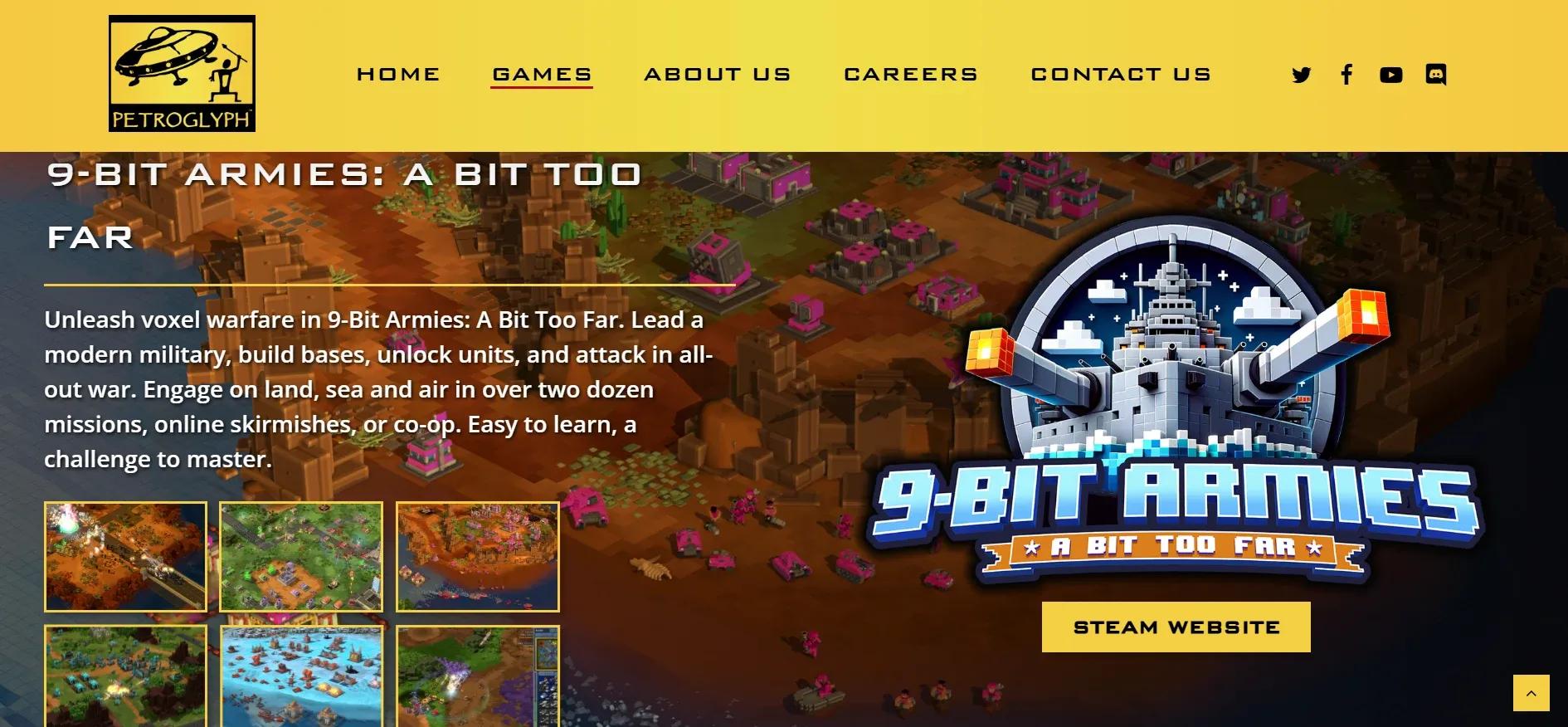
Petroglyph Games, based in Las Vegas, Nevada, rounds out the list. Founded by veterans of the classic Command & Conquer team, it specializes in strategy games and high-quality remasters.
The studio is best known for real-time strategy titles and for remastering beloved classics, work that demands both technical care and respect for the original. For strategy projects or remaster efforts, Petroglyph brings rare, focused experience. That heritage places it among the respected game development companies in the USA.
Petroglyph is a fit for strategy titles and remaster work rather than mobile casual games. Its specialist roots run deep.
How Much Do Game Development Companies In The USA Cost In 2027
American rates sit above offshore ones, so plan your budget with care. What you pay turns on the size of the build, the platforms you target, and the level of polish you expect. The ranges below reflect what US-based and US-serving studios typically charge.
Project Type | Typical Cost | Timeline |
| Simple mobile game | $30,000 to $90,000 | 2 to 4 months |
| Mid-level game | $90,000 to $400,000 | 4 to 9 months |
| AAA or complex title | $500,000 to $5,000,000+ | 12 months or more |
| Hourly developer rate | $50 to $150 per hour | Flexible |
US onshore talent sits at the premium end, prized for time-zone overlap and easy communication. Platforms like Softaims help you balance the budget by matching vetted talent at fair rates, so you get senior quality without full agency overhead.
Do not let a tempting quote fool you. A budget partner who delivers work you have to redo ends up pricier than a solid team that nails it the first time. Factor in dependability, response times, and craft when you line up game development companies in the USA side by side.
What To Check Before You Hire
Signing with a studio is a long commitment, so do your homework. The markers below tell apart the partners who deliver from the ones who stall.
- Games you can actually play. Insist on released titles, not a sizzle reel of unfinished concepts.
- Replies that come fast. A studio that answers promptly during sales will answer promptly during the build.
- A genre match. Favor teams whose past work lines up with your platform and project stage.
- Pricing you can read. Every number should be spelled out, with no vague line items hiding later costs.
- References you can reach. Dig into Clutch and G2 scores, then phone a former client or two.
Top game development companies in the USA clear all five hurdles without flinching. When a studio gets evasive about its history or its rates, read that as your cue to walk.
Red Flags To Watch For
Trust is earned, not assumed. These warning signs should give you pause before any contract is signed.
- Nothing shipped. If a studio can only show concepts and no launched games, the risk is yours to carry.
- Dragging responses. Communication that is already slow before money changes hands rarely speeds up under a deadline.
- A quote that seems too cheap. Bargain pricing usually masks an understaffed team or billable rework down the line.
- A fuzzy workflow. A partner who struggles to describe its production pipeline probably lacks a real one.
- Loose ownership language. Get it in writing that the code and art you fund belong to you.
Dodging these pitfalls spares you both cash and headaches. The studios worth hiring are candid about their methods and eager to show receipts.
Onshore, Hybrid, Or Offshore
American teams face a core choice: hire onshore, go fully offshore, or blend the two. Each path has trade-offs worth weighing against your goals.
Onshore studios offer the easiest communication, full time-zone overlap, and deep senior talent, but they cost the most. Offshore partners cut costs sharply and expand your talent pool, though they ask for more planning around time zones and coordination. A hybrid model, keeping vision onshore while outsourcing production or specialist work, often delivers the best of both.
This is where a platform like Softaims stands out. It draws from a global pool but vets every candidate and matches them to your needs, so you capture offshore value with onshore-level quality control. For many US founders, that blend is the sweet spot among game development companies in the USA.
In-House Team Vs Outsourcing
Spinning up a complete American studio is a heavy lift. Payroll has to cover artists, coders, designers, testers, and live-ops people, plus the leads who coordinate them, every one at US market rates. For an early-stage founder, that burden arrives long before the revenue does.
Hiring proven game development companies in the USA rewrites that equation. Senior talent arrives in days, you grow the team for a push and shrink it afterward, and the recruiting and real-estate bills vanish. Communication is the one soft spot, which is precisely why careful vetting and a documented workflow carry so much weight.
The winning play for most teams is a mix. Hold a small, permanent core in-house to own vision and culture, and bring in outside hands for specialist jobs and surge capacity. That arrangement controls spend while handing you enough muscle to hit your launch date.
Common Services These Studios Offer
The phrase "game development" hides a lot of distinct crafts. In conversations with American studios, these are the services that come up again and again, and here is what each actually involves.
- Game design. Shaping the mechanics, systems, pacing, and progression that make play rewarding.
- Art and animation. Producing the characters, worlds, interface, and cinematics players notice first.
- Engineering. Writing the code that fuses design and art into something you can actually play.
- QA and testing. Hunting bugs before launch so reviews and retention stay healthy.
- Porting. Carrying a finished game onto fresh platforms without introducing breakage.
- Live-ops. Running the patches, events, and content drops that keep a community active post-launch.
Most capable game development companies in the USA deliver all or nearly all of these. Define your scope precisely so bids match up and nothing falls between the cracks.
Which Engine Fits Your Project
Your engine decision ripples through budget, hiring, and performance, so get a feel for the options before the first studio call.
For mobile and mid-tier games, Unity is the workhorse: adaptable, thoroughly documented, and supported by a vast American talent pool that keeps rates sensible. Unreal Engine owns the high-fidelity and AAA space, delivering stunning visuals at the price of a harder learning curve and scarcer, costlier specialists. For smaller indie efforts, a lean option such as Godot can be plenty.
The right studio steers you toward the engine your genre, platform, and budget actually call for, not its personal favorite. Nine times out of ten the answer is Unity or Unreal, and a good partner will walk you through the reasoning.
How Long Does A Game Take To Build
Schedules catch newcomers off guard, so align on them up front. Duration tracks with ambition, and these windows reflect what dependable American studios tend to hit.
A straightforward mobile build or prototype often wraps in two to four months. Something mid-tier, with meaningful content and polish, usually needs four to nine. Anything large or AAA stretches past a year, occasionally into several, especially once multiplayer or dense art enters the picture.
How quickly you can assemble the team matters just as much. That is a quiet edge of platforms like Softaims, which line up vetted developers in about 48 hours. Every day you shave off hiring is a day closer to launch, and every day you lose to it drags the whole schedule backward.
Why American Founders Outsource
Standing up a full in-house team at US rates is costly and slow. Outsourcing to proven partners gives you senior talent on demand, without the long recruiting cycle or the overhead of a permanent staff.
Handled right, it also imports experience you could not buy quickly otherwise. Established game development companies in the USA, and the global teams behind them, have shipped through the same obstacles you are about to hit, so they arrive with proven workflows, tooling, and instincts a young in-house crew simply has not accumulated yet. The payoff is a calmer production with far fewer unpleasant surprises, and in a field this crowded, that calm translates directly into dollars saved.
Outsourcing also frees your core team to focus on what only they can do: the creative vision, the brand, and the big strategic calls. Instead of spending months interviewing engineers, your founders stay on the parts of the game that set it apart. For lean American studios, that focus is often the quiet reason a title ships strong and on time.
Mobile, Console, Or PC: Where US Studios Focus
American studios do not all chase the same platforms, and matching your target to a studio's strength saves time and money. Here is how the landscape breaks down in 2027.
Mobile is the biggest slice of US revenue, so many studios build phone-first. If you are targeting iOS and Android, look for teams with deep free-to-play and live-service experience, since retention and monetization decide whether a mobile game earns. Studios like Juego and Demiurge sit squarely in this lane.
Console and PC work rewards engineering depth and platform know-how. Porting between PlayStation, Xbox, Switch, and PC is harder than it sounds, which is why co-development specialists like Iron Galaxy and Certain Affinity command respect. If your title is console-bound or needs AAA polish, these are the game development companies in the USA to court.
Then there are niche platforms and genres: VR, AR, strategy, and card games. Dire Wolf and Petroglyph show that focused expertise beats generalist breadth for the right project. Pick a studio whose portfolio already lives where your game wants to go, rather than one learning on your budget.
Questions To Ask On Your First Call
A good discovery call tells you most of what you need to know. Bring these questions and listen closely to the answers.
- What shipped titles can I play? Real, released games beat promises every time.
- Who exactly will work on my project? Confirm you get senior talent, not a bait-and-switch.
- How do you handle milestones and feedback? A clear process signals a studio that delivers.
- Who owns the code and assets? Lock down IP before any work begins.
- What happens if we run over scope? Honest answers now prevent painful surprises later.
The best game development companies in the USA welcome these questions. A studio that gets cagey about its team, process, or ownership terms is telling you something important.
How To Keep A Remote Project On Track
Landing a great studio is step one. Running the collaboration well is step two, and these habits keep American and overseas teams pulling in the same direction.
Break the work into dated milestones with concrete deliverables, so nobody has to guess where things stand. Hold a brief, standing check-in each week, because catching a wobble early beats untangling a mess later. Keep everyone in one shared tracker, whether that is Jira, Trello, or something similar. When you review work, respond quickly and point to specifics, since vague or late notes breed rework. And settle intellectual property ownership on paper before anyone writes code.
The better studios arrive with a process already in place, which lightens your load. Even so, your habits shape the outcome. Decisive direction and fast replies make any partnership tighter and bring launch day closer.
Frequently Asked Questions
What are the best game development companies in the USA in 2027?
Softaims and Devaims top the field thanks to fast matching and flexible, pre-vetted talent. For AAA co-development, Iron Galaxy and Certain Affinity are the standouts, while Demiurge and Dire Wolf shine on mobile and strategy titles respectively.
How much does it cost to build a game with a US studio?
A simple mobile game runs $30,000 to $90,000, mid-level titles $90,000 to $400,000, and AAA projects $500,000 or more. US hourly rates typically land between $50 and $150.
Should I hire onshore or outsource overseas?
Many teams blend the two: onshore vision plus outsourced production. Platforms like Softaims give you global talent with onshore-level vetting, capturing value without sacrificing quality.
How fast can I hire game developers in the USA?
Softaims matches vetted game developers, artists, and designers in about 48 hours, far quicker than traditional recruiting.
Trends Shaping US Game Development In 2027
The American games scene keeps shifting, and the studios that adapt win. A few trends are worth watching as you plan your project.
Live-service remains dominant. Publishers want games that earn for years, not weeks, so studios with strong live-ops and content pipelines are in demand. AI tooling is also reshaping production, speeding up art, testing, and prototyping, though human craft still decides quality. Cross-platform launches are now the default rather than the exception, which raises the value of porting and multi-platform expertise.
Talent remains the tightest constraint. Senior American engineers are scarce and expensive, which is why flexible staffing and vetted global pools have become so important. The game development companies in the USA that thrive are the ones that can assemble the right team quickly, whether in-house, outsourced, or blended. Platforms like Softaims exist precisely because that speed and quality are so hard to find on your own.
For founders, the takeaway is simple. Pick a partner who already works the way the market is moving, with live-ops muscle, cross-platform skill, and a fast, reliable path to senior talent. That alignment is often the difference between a game that grows and one that stalls.
Final Thoughts
A capable studio takes a half-formed concept and ships something players genuinely enjoy. A poor one swallows your money and your months with little to show. That gap is exactly why this ranking weighs shipped quality, staffing speed, and real value instead of headcount or marketing spend.
Among the game development companies in the USA reviewed here, Softaims stands out for how quickly it connects you with vetted, shipped talent, usually within 48 hours. You can hire game developers by skill, whether you need game design specialists, video game developers for console and PC, or a mobile game development team for your next app store launch. Devaims follows closely with flexible pods and co-development, and the eight American studios each bring real strengths, from Iron Galaxy and Certain Affinity at the AAA end to Dire Wolf and Petroglyph for strategy and remasters.
Line your project up against the studios that suit it, lean on the comparison table to narrow the field, and interview a couple of finalists before you sign anything. Once you are set to start, you can bring on a game engineer within days instead of waiting out a months-long search, and hand your title a genuine chance to break through a crowded field.


 GitHub
Leo C.

 Verified Expert in Engineering
My name is Leo C. and I have over 15 years of experience in the tech industry. I specialize in the following technologies: iOS, C#, Unity, Mobile Game, In-App Purchases, etc.. I hold a degree in Master of Science (MS). Some of the notable projects I’ve worked on include: Wheel of Fortune WebGL Demo, Unity Tiny Mode Multiplayer Game, Album Game, Cuuube, Radar Chart, etc.. I am based in Taipei, Taiwan. I've successfully completed 14 projects while developing at Softaims.
I approach every technical challenge with a mindset geared toward engineering excellence and robust solution architecture. I thrive on translating complex business requirements into elegant, efficient, and maintainable outputs. My expertise lies in diagnosing and optimizing system performance, ensuring that the deliverables are fast, reliable, and future-proof.
The core of my work involves adopting best practices and a disciplined methodology, focusing on meticulous planning and thorough verification. I believe that sustainable solution development requires discipline and a deep commitment to quality from inception to deployment. At Softaims, I leverage these skills daily to build resilient systems that stand the test of time.
I am dedicated to making a tangible difference in client success. I prioritize clear communication and transparency throughout the development lifecycle to ensure every deliverable exceeds expectations.

Leave a Comment
Need help building your team? Let's discuss your project requirements.
Get matched with top-tier developers within 24 hours and start your project with no pressure of long-term commitment.