Top 10 Platforms to Hire Web App Developers in the USA (2027)
Finding qualified US web app developers remains slow and expensive. This 2027 guide ranks the top 10 platforms to hire web app talent in the USA, comparing vetting standards, rates, and engagement models.
Table of contents
Key Takeaways
- Web applications demand complex application architecture, state management, security, and API integrations, going far beyond standard marketing site or CMS builds.
- Fast-growing firms leverage pre-vetted networks (like Softaims, Toptal, and Arc.dev) for speed, freelance marketplaces (Upwork, Freelancer) for flexible budgets, or job platforms (LinkedIn, Indeed, Wellfound) for direct, long-term hiring.
- Align your operational needs by selecting freelancers for quick tasks, agencies for complete turnkey builds, or dedicated teams for continuous SaaS product iteration.
- Balance budget and collaboration dynamics across high-cost onshore US engineers, cost-effective nearshore teams in Latin America with full time-zone overlap, or maximum savings in offshore Asian hubs.
- Shield your runway by setting clear product briefs, running practical application-focused technical evaluations, starting with small paid trials, and enforcing robust IP and NDA contracts.
US firms building SaaS products, CRMs, dashboards, or internal tools can burn real time and money on the wrong hire. Weak architecture, thin experience, and loose screening lead to rewrites, blown deadlines, and expensive rework. So where you hire matters as much as who you hire.
The upside is choice. There are many ways to hire web app developers, and each has its place. Some platforms hand you pre-vetted senior talent in days. Others let you post to millions, or bid a fixed project. Each balances speed, cost, and control differently, though. So the best pick depends on your project and budget.
This guide ranks the top 10 platforms to hire web app developers in the USA for 2026. You'll get a quick comparison, then a closer look at each. After that, we cover skills to check, interview questions, US costs, and the mistakes to avoid. Read it once, and you'll hire with confidence.
Quick Comparison of the Top 10 Platforms
Use this table to shortlist fast. It sums up the main ways US firms hire web app developers at a glance. Then read the detailed reviews below for the ones that fit.
Platform | Type | Best For | Pricing |
| Softaims | Vetted talent platform | Pre-vetted senior web app developers, fast | Dedicated / part-time / project |
| Devaims | Development studio | End-to-end custom web app builds | Project / dedicated team |
| Professional network | Sourcing permanent hires | Free / promoted / recruiter | |
| Toptal | Vetted marketplace | Senior pre-vetted experts | Hourly / part-time / full-time |
| Upwork | Freelance marketplace | Flexible hiring across budgets | Hourly / fixed + fees |
| Indeed | Job board | Wide-reach job postings | Free / sponsored |
| Wellfound | Startup hiring | Startups hiring developers | Free / subscription / fee |
| Freelancer | Freelance marketplace | Bidding on scoped projects | Fixed / hourly + fees |
| Fiverr Pro | Vetted freelance | Vetted freelancers for defined work | Per project / hourly |
Why Use a Platform to Hire Web App Developers
Hiring web app developers on your own is slow, and the risks pile up. You write the job post, chase applicants, screen skills, run interviews, and sort out contracts. For a busy US team, that can eat weeks you can't spare. A good platform lifts most of that off your plate.
The payoff shows up in a few clear ways. Each one saves you time, money, or stress.
- Faster access. You reach ready, relevant candidates in days rather than months.
- Built-in vetting. Many platforms test skills upfront, so weak profiles never reach you.
- Flexible models. You can hire one freelancer, a small squad, or a full team.
- Payment protection. Escrow and milestone releases guard your budget against poor work.
- Wider reach. You tap talent well beyond your city, including nearshore and offshore.
- Less admin. Contracts, invoicing, and compliance often sit inside the platform.
So platforms to hire web app developers remove much of the guesswork. They also cut the biggest risk of all: a costly mis-hire.
That said, a platform isn't always the answer, however. If you already have a trusted developer or a strong internal pipeline, a direct hire may cost less. So weigh the platform fee against the time and risk it saves you.
The Top 10 Platforms to Hire Web App Developers in the USA
Selecting the optimal platform to hire web app developers in the US requires balancing candidate vetting standards, hiring speed, and total cost of ownership. The market offers several distinct avenues depending on your immediate resource needs and internal recruiting capacity ranging from pre-vetted developer networks built for rapid staffing to broad freelance marketplaces and direct-hire job boards. Choosing the right channel ultimately depends on whether your engineering roadmap calls for a quick fractional contractor, a dedicated external development team, or a permanent in-house engineer.
1. Softaims
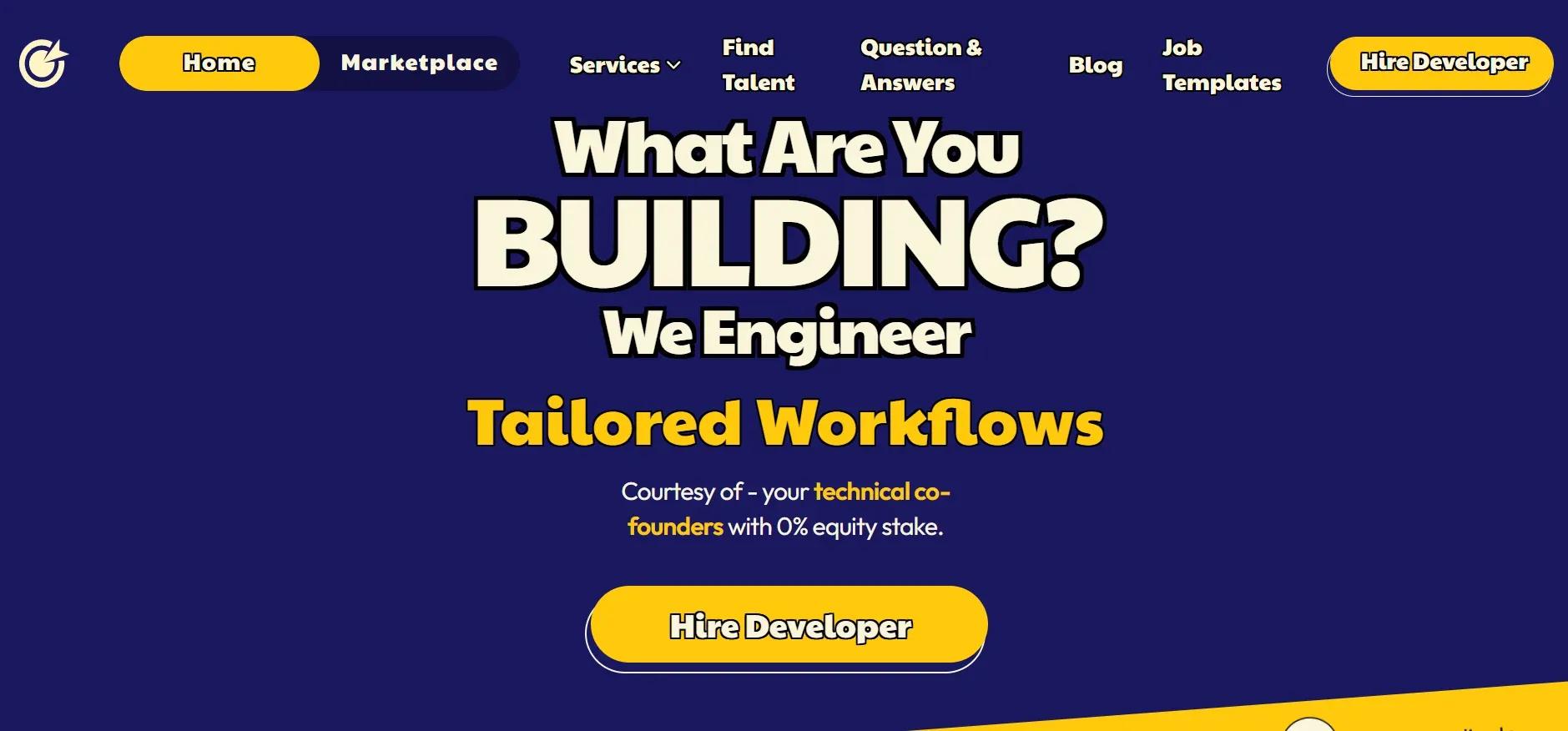
Softaims tops our list of platforms to hire web app developers with a fast, vetted model. Rather than sifting through dozens of profiles, you get the top 3% of pre-screened engineers, matched within 48 hours. So you reach senior talent quickly, and at a fraction of a US hire's cost.
The real strength is hiring by skill. For the front end, you can hire React developers, front-end engineers, or full-stack developers. For the server side, you can hire back-end engineers, plus cloud engineers, DevOps specialists, and QA automation testers. Every engineer is vetted for real web application skill, not just a polished résumé.
You can add one specialist through staff augmentation, or stand up a dedicated team. The engineers overlap with US hours and join your standups. So they work like part of your own team. You can browse available developers or check transparent rates before you commit.
Key benefits:
- Top 3% vetted web app developers, matched within 48 hours
- Hire by skill: React, front-end, back-end, and full-stack
- Staff augmentation or dedicated teams
- US-hours overlap and no heavy minimums
Why choose them: Softaims suits US firms that need senior, vetted web app developers fast, without a long search or a giant-firm contract.
2. Devaims
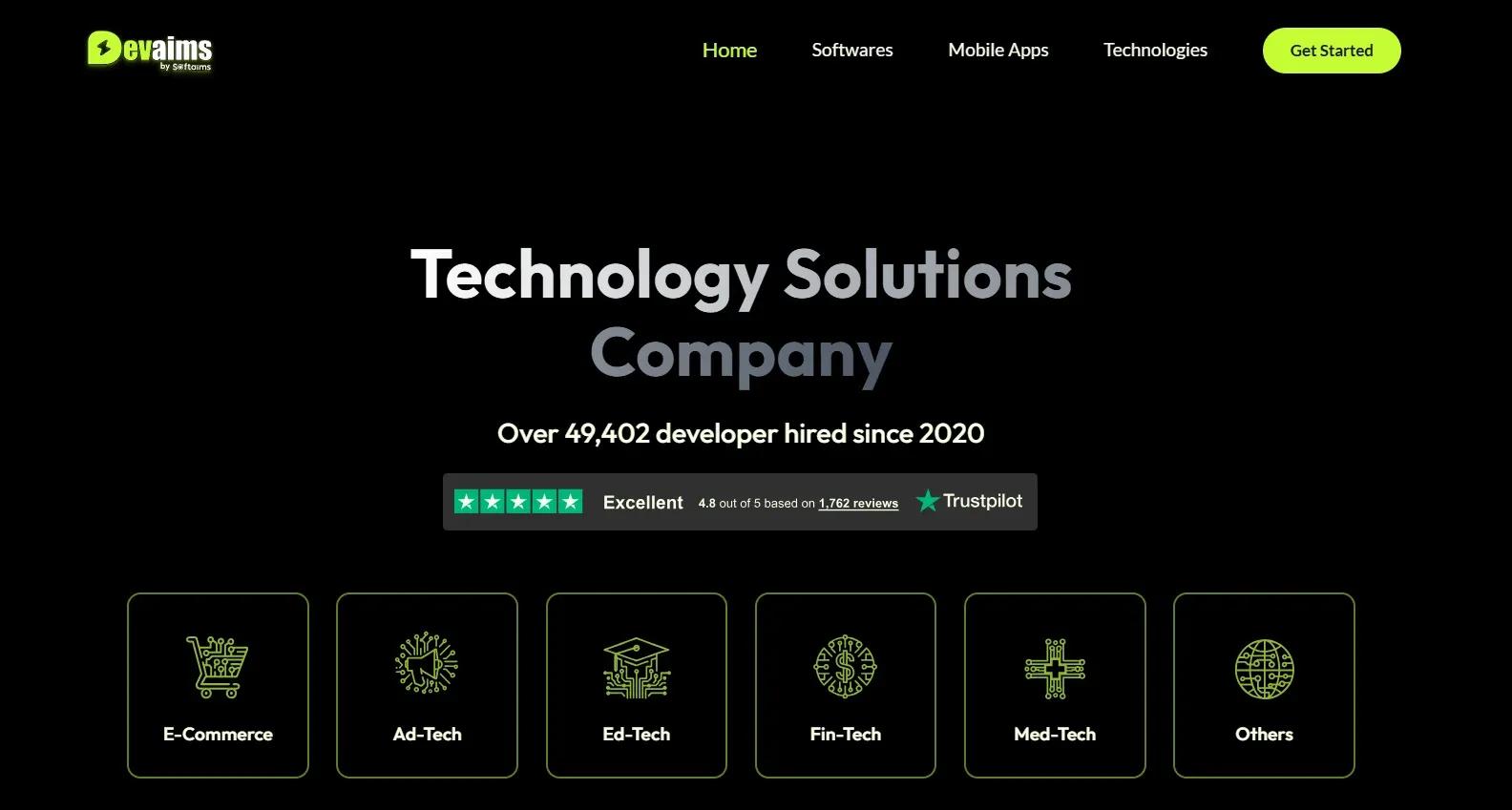
Devaims is a development studio that builds custom web and mobile apps end to end. Its engineers own discovery, design, build, and testing, so you get a finished product, not just extra hands. The focus stays on clean architecture and dependable delivery.
In August 2026, Softaims acquired Devaims. So Devaims clients now draw on the same vetted talent network and 48-hour matching. One partner can cover software development and mobile app development, from first sketch to launch.
Key benefits:
- Full-cycle web and mobile app builds
- Discovery, design, development, and QA in one place
- Backed by Softaims' vetted talent since 2026
- Strong fit for custom SaaS and internal tools
Why choose them: Devaims suits firms that want a studio to own the whole build, not just supply developers.
3. LinkedIn
LinkedIn is the world's largest professional network, and a strong tool for permanent hiring. You can post roles, set required skills, add screening questions, and source candidates directly. So it works well when you want to build a long-term, in-house team.
The platform lets you filter out applicants who lack must-have skills. Its recruiter tools help you organize, message, and screen without extra software. LinkedIn suits US firms running their own sourcing. So it fits companies hiring permanent web app developers rather than short-term freelancers.
Key benefits:
- Huge pool for direct sourcing
- Skill filters and screening questions
- Recruiter and job-posting tools
- Strong for permanent hires
Why choose them: LinkedIn suits firms that want to source and recruit permanent developers in one place.
4. Toptal
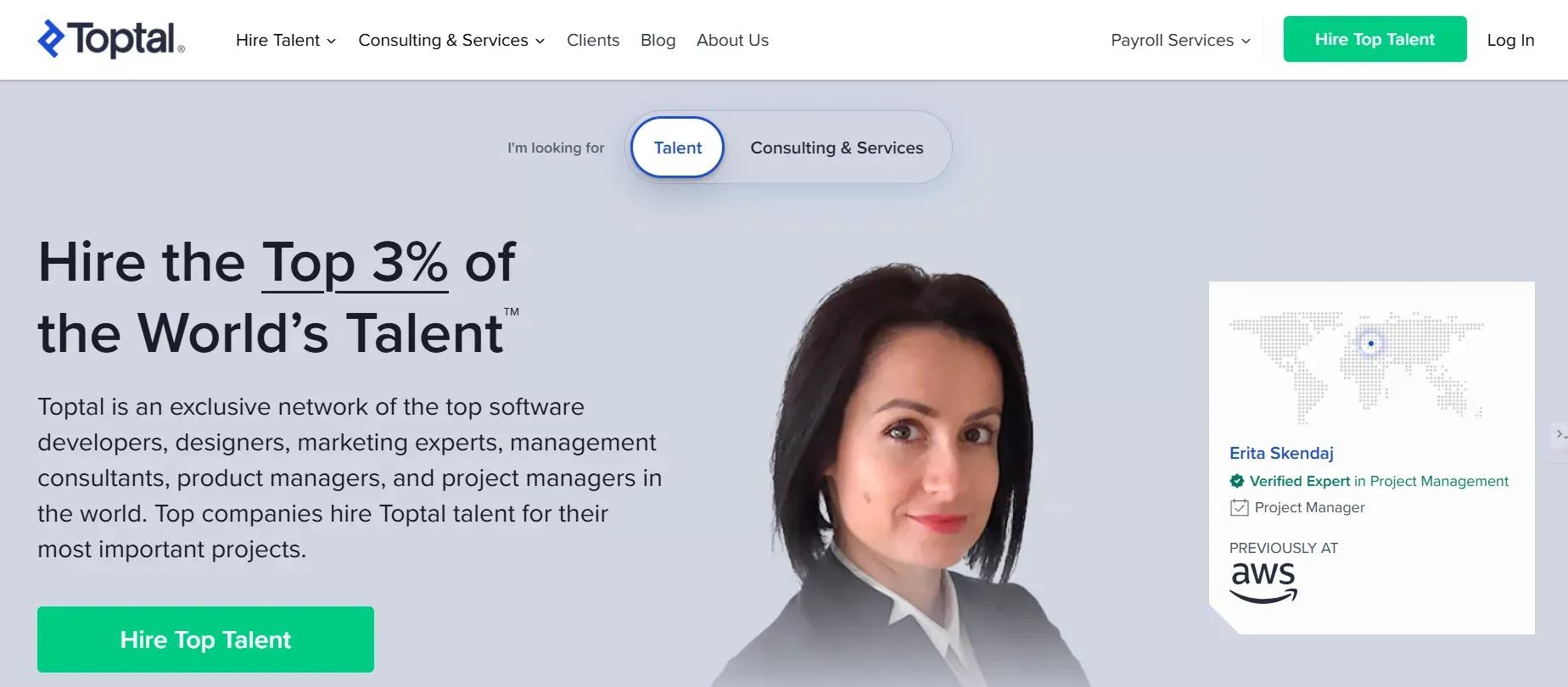
Toptal is a vetted talent marketplace known for tough screening. It accepts only a small share of applicants, so its network skews senior. You describe your stack and role, then work with a Toptal contact to match a specialist.
The platform suits firms that want pre-vetted skill without reviewing many candidates. Matches often arrive within days, which saves time. Toptal works on hourly, part-time, or full-time terms. So it fits US companies needing senior web app developers quickly, at a premium rate.
Key benefits:
- Rigorous vetting, senior-heavy network
- Fast matching to your stack and role
- Hourly, part-time, or full-time options
- Little screening effort on your side
Why choose them: Toptal suits firms that want vetted senior talent fast and will pay a premium for it.
5. Upwork
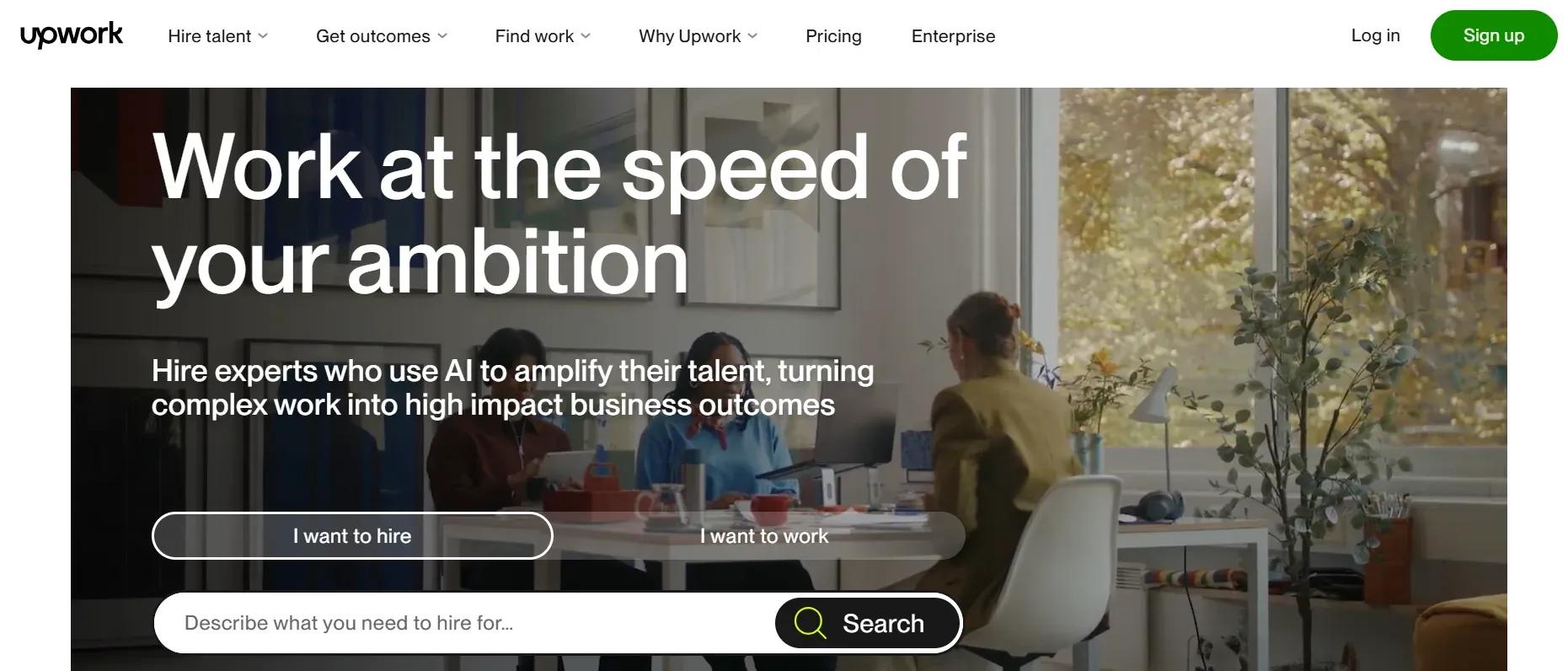
Upwork is a large freelance marketplace that spans every budget and skill level. You post a job, review proposals, message candidates, and run video interviews. So it gives you strong control over screening.
The platform is flexible, with hourly and fixed-price contracts plus platform fees. It suits firms that want to compare candidates across rates and technologies. Upwork works for anything from a small fix to a longer engagement. So it fits companies weighing many freelance web app developers before deciding.
Key benefits:
- Wide range of budgets and skills
- Full control over screening and interviews
- Hourly and fixed-price contracts
- Good for comparing candidates
Why choose them: Upwork suits firms that want choice and control across a broad freelance pool.
6. Indeed
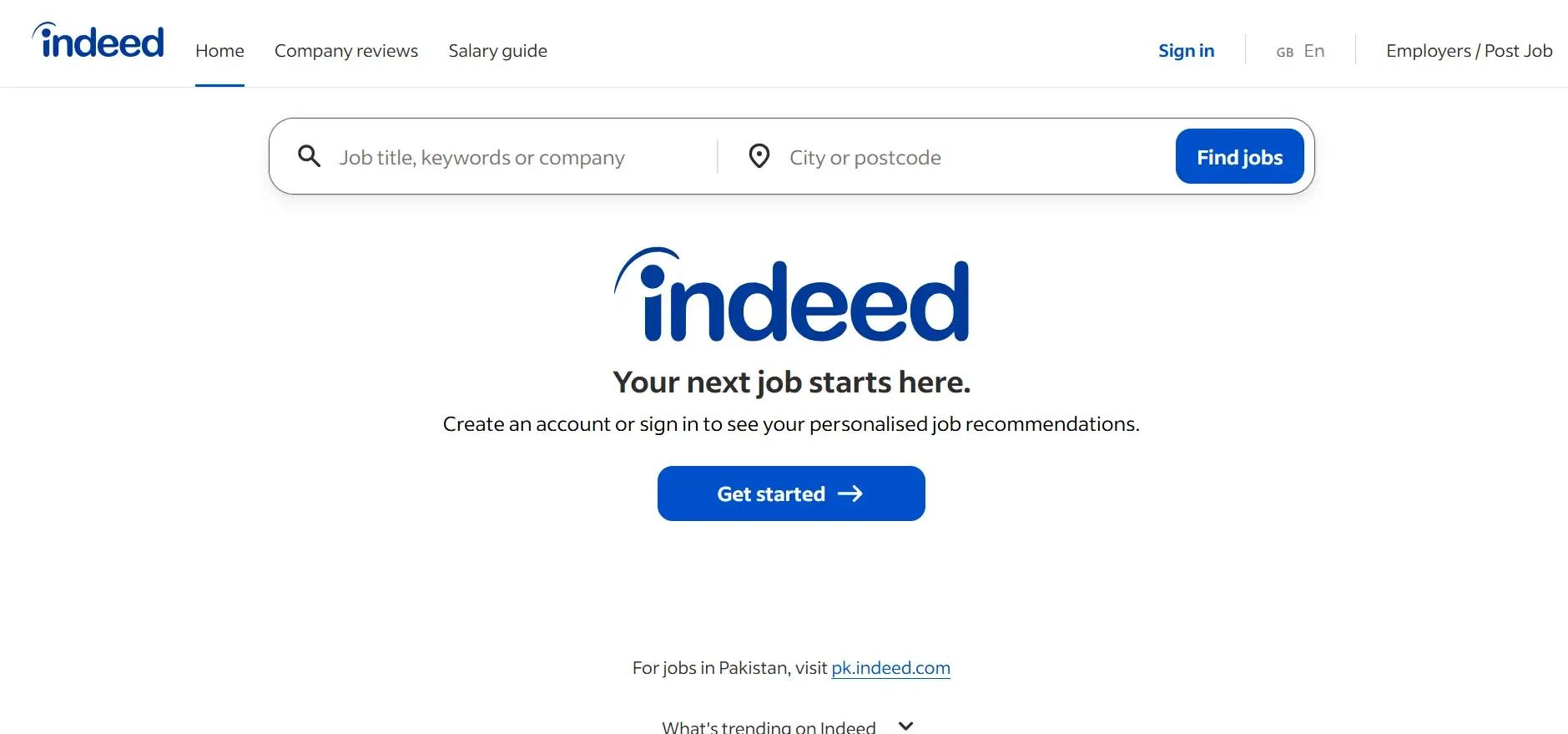
Indeed is one of the largest job boards, and it folds posting, matching, and screening into one flow. You can post for free or sponsor a role, then set deal-breakers and message candidates. So it casts a wide net quickly.
The platform matches your role against a huge pool of résumés. It also links to your ATS if you have one. Indeed suits firms that want maximum visibility for a job post. So it fits companies hiring permanent, contract, or remote web app developers at scale.
Key benefits:
- Massive reach for job posts
- Free and sponsored options
- Screening and deal-breaker filters
- ATS integration
Why choose them: Indeed suits firms that want broad reach and built-in filtering for a job post.
7. Wellfound
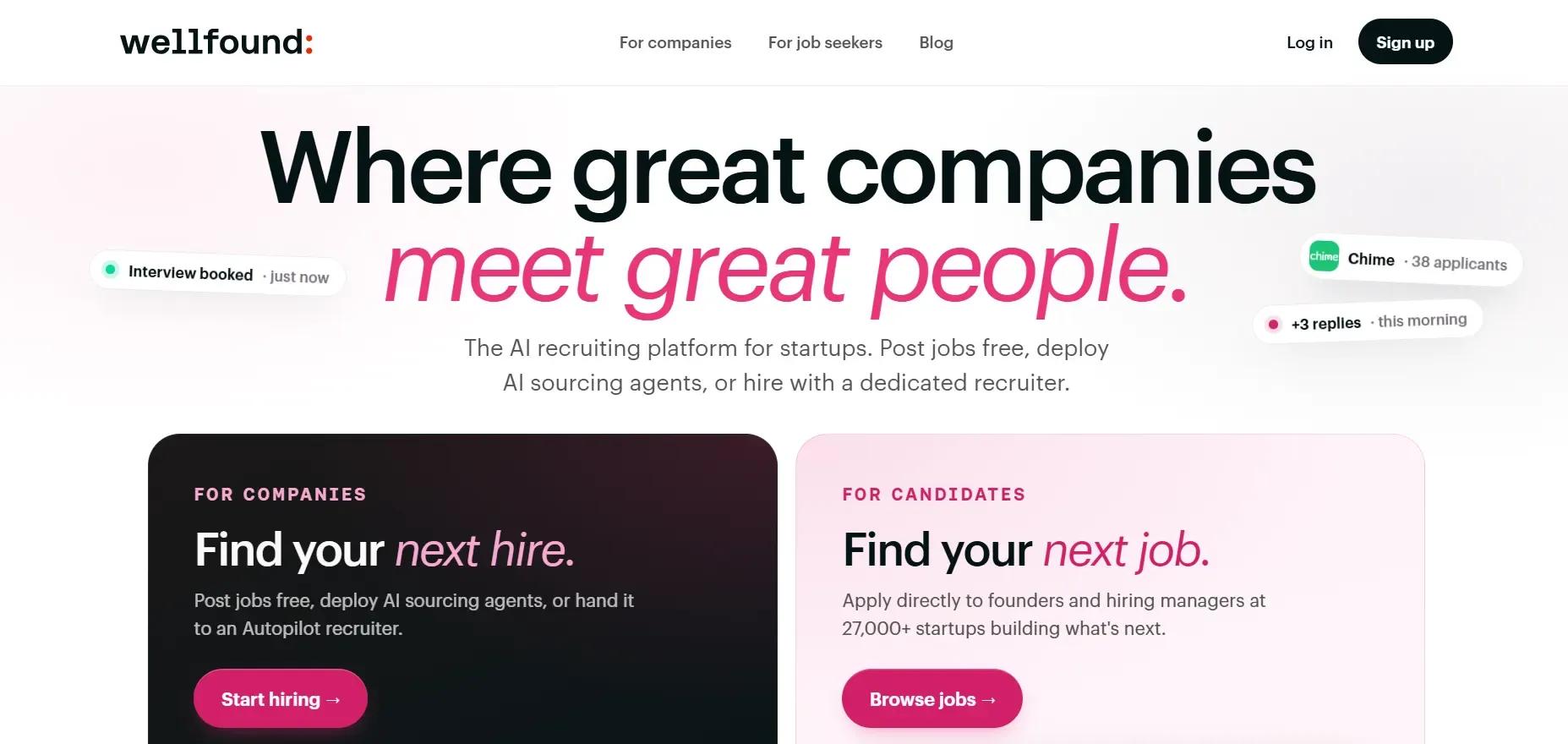
Wellfound is a startup-focused hiring platform, formerly known as AngelList Talent. It connects companies with engineers who want to work at startups. So it's a strong fit when startup experience matters as much as raw skill.
The platform lets you post roles, use its built-in ATS, and reach candidates keen on startups. It also offers AI-assisted sourcing and recruiter support. Wellfound suits early-stage US firms hiring developers and product staff. So it fits startups seeking web app developers who thrive in fast-moving teams.
Key benefits:
- Startup-focused candidate pool
- Built-in ATS and sourcing tools
- AI-assisted candidate matching
- Good for permanent startup hires
Why choose them: Wellfound suits startups that value startup experience alongside technical skill.
8. Freelancer
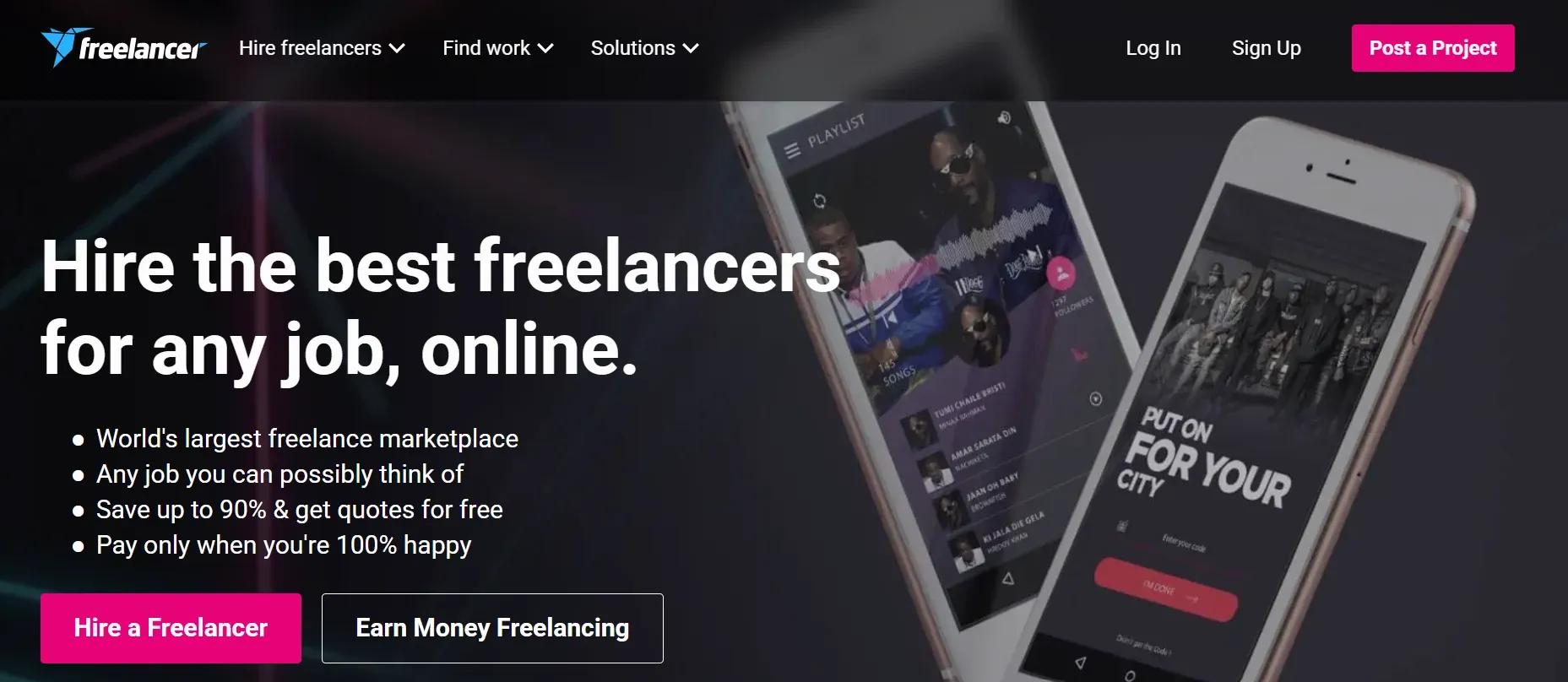
Freelancer is a global marketplace built around competitive bidding. You post a project, then receive proposals from freelancers worldwide across many technologies. So it works well when you want suppliers to compete on price and terms.
The platform offers fixed-price and hourly agreements. Its milestone payments hold funds until you approve the work, which adds protection. Freelancer suits well-defined projects with a clear budget. So it fits firms that want to compare bids before awarding web app work.
Key benefits:
- Competitive bidding from a global pool
- Fixed-price and hourly options
- Milestone payments for protection
- Good for clearly scoped projects
Why choose them: Freelancer suits firms that want suppliers to compete on well-defined terms.
9. Fiverr Pro
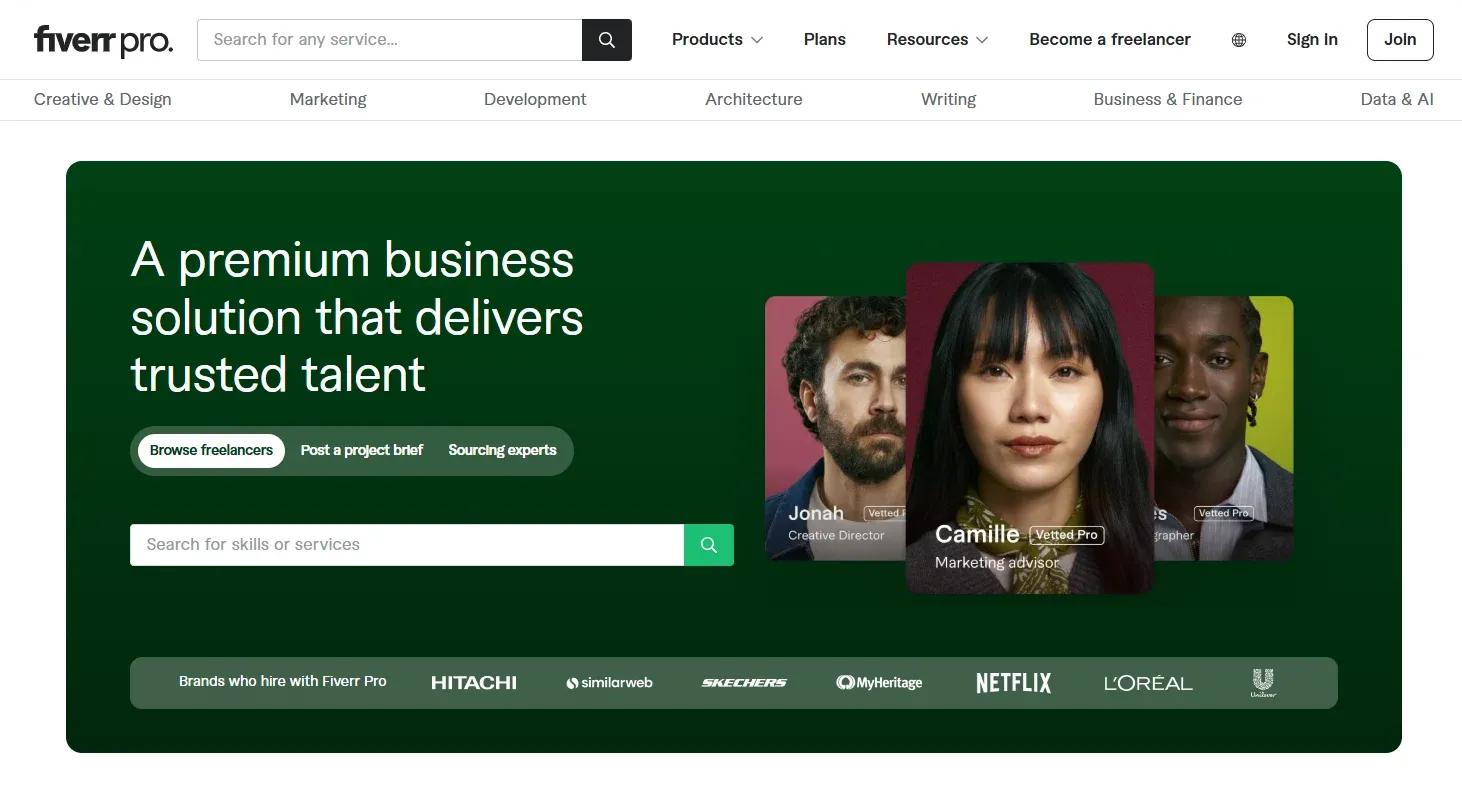
Fiverr Pro is the vetted tier of the Fiverr marketplace. It offers experienced, screened freelancers for defined or ongoing work. So it blends marketplace convenience with a quality filter.
You can browse a curated list, post a brief, or request a shortlist. Fiverr Pro can even source and screen candidates for you. Its pricing runs per project or hourly. So it fits firms that want vetted freelance web app developers with flexible involvement in the hiring process.
Key benefits:
- Curated, vetted freelancers
- Browse, brief, or request a shortlist
- Per-project or hourly pricing
- Flexible level of hands-on control
Why choose them: Fiverr Pro suits firms that want vetted freelancers with a light, flexible hiring process.
When Should You Hire a Web App Developer
Some moments make the decision clear. If any of these apply, it's time to hire web app developers. So weigh them before the pressure builds.
- You're building a real application. A SaaS product, CRM, dashboard, or portal needs app-level skills, not just web design.
- Your team lacks the experience. Your current developers handle websites, but not authentication, APIs, or data at scale.
- A deadline is closing in. A launch or client commitment needs more hands, and soon.
- An existing app is straining. It needs new features, a rebuild, or better speed under load.
- You need a niche skill briefly. A short burst of React, cloud, or security work doesn't justify a full-time hire.
If two or more fit, the case to hire web app developers is strong. Timing matters, too, however. Good developers get booked, and vetting takes time. So start your platform search early, before a deadline forces a rushed choice.
There are times to wait, though. If the work is a one-off tweak, or the scope is still unclear, hold off. A clear brief first will save you money later.
What Is a Web App Developer
A web app developer builds interactive, data-driven applications that run in a browser. These sit closer to software than to websites. Think SaaS tools, CRMs, dashboards, portals, and progressive web apps with logins and APIs.
This differs from a standard web developer, and the gap matters when you hire. A web developer often focuses on websites, content, and CMS builds. A web app developer, by contrast, handles application architecture, databases, back-end logic, security, and integrations.
Criteria | Web Developer | Web App Developer |
| Focus | Websites, landing pages, CMS builds | Interactive apps, business logic, workflows |
| Technologies | HTML, CSS, JS, CMS, front-end frameworks | React, Angular, Node.js, Python, cloud |
| Output | Corporate sites, blogs, eCommerce | SaaS, CRM, dashboards, portals, PWAs |
| Complexity | Low to medium | Medium to high |
So define the role clearly before you post it. A CMS specialist may struggle with a data-heavy SaaS build, however strong their portfolio looks.
Types of Web App Developers
Not all web app developers are the same. Front-end, back-end, and full-stack developers play different roles. Your workload should guide which you hire. A simple MVP may need one person, while a data-heavy SaaS app may need several.
A front-end developer builds the interface users interact with. They work in React, Angular, Vue, or Next.js to craft dashboards, forms, and real-time views. Hire one when the back end works, but the product needs smoother, faster, more polished flows.
A back-end developer builds the logic, APIs, databases, and integrations. They use Node.js, Python, Go, or .NET, and they handle payments, auth, and complex rules. You can hire back-end engineers when reliability under load and clean data flow matter most.
A full-stack developer covers both ends, which suits startups, prototypes, and MVPs. One person can move fast and keep costs down. For large or high-traffic apps, though, separate specialists usually deliver better results. So full-stack developers fit best in the early stages.
Freelancer vs Dedicated Team vs Agency
Beyond individual skills, the engagement model shapes your outcome. Each suits a different kind of project. Here's how they compare.
Model | Best For | Main Benefit | Main Limitation |
| Freelancer | Small tasks, isolated features | Low cost, quick access | You manage delivery and continuity |
| Agency | Enterprise, full-cycle work | Covers discovery to launch | Highest overall cost |
| Dedicated team | SaaS and long-term products | Stable team, easy scaling | Needs ongoing client involvement |
A freelancer is the cheapest way in, and the fastest for a small job. One specialist can fix a bug or add a feature quickly. You carry the risk, though, since you manage the work and cover any gap if they leave.
An agency takes the whole project off your plate. It brings designers, developers, testers, and project managers under one roof. That suits a full build, from discovery to launch. The trade-off is cost, however, since agencies charge the most.
A dedicated team sits in between, and it fits products that keep evolving. You get a stable group that learns your codebase and scales with you. It needs your ongoing input, though, so it works best when you can stay involved.
So when you hire web app developers, match the model to the project's size and lifespan. A quick fix points to a freelancer, a one-off build to an agency, and a growing SaaS product to a dedicated team. Many firms blend them, too, using a core team plus freelancers for busy periods.
Onshore, Nearshore, or Offshore
Where your developer sits shapes cost, communication, and speed. US firms have three broad options when they hire web app developers. Each trades price against proximity.
Option | Location | Trade-off |
| Onshore | US-based | Easiest to work with, highest cost |
| Nearshore | Latin America | Strong overlap, moderate cost |
| Offshore | Distant regions | Biggest savings, wider time gap |
Onshore means a US-based developer or team. Communication is easy, time zones match, and there are no cultural gaps. It's the priciest option, though, so it suits complex or sensitive work where close contact matters.
Nearshore usually means Latin America for US firms. You get strong senior talent, near-identical hours, and lower rates. That balance has made nearshore a popular middle ground. So it fits ongoing, back-end-heavy work that still needs daily overlap.
Offshore reaches regions like South and Southeast Asia. The savings run deepest here, which suits well-defined, scoped work. The wider time gap needs planning, however, with clear briefs and async updates.
Worker classification matters across all three, too. In the US, treating a contractor like an employee can trigger penalties. So a platform or agency that handles the contractor relationship reduces that risk.
How to Choose the Right Platform
When you hire web app developers, platform choice comes before candidate screening. Each one offers a different level of vetting, price control, and support. So a startup MVP and a legacy CRM rebuild will weigh platforms differently.
Start by defining your product and stack. Note the MVP features, integrations, expected load, and security needs. Then check how each platform vets talent. Vetted networks like Toptal, Arc.dev, and Softaims screen upfront, while open marketplaces leave more checking to you.
Next, read reviews for similar work, not just web projects. A firm strong on marketing sites may lack real SaaS experience. Finally, compare the full pricing structure, not just the headline rate. So you avoid surprises once the work begins.
Core Skills to Look For
When you hire web app developers, technical gaps eventually become business costs. Slow interfaces hurt usability, shaky APIs break processes, and weak database design limits growth. So check for real, hands-on experience across these areas.
Skill Area | Technologies | Why It Matters |
| Front-end | React, Angular, Vue, Next.js | Fast, smooth, usable interfaces |
| Back-end and API | Node.js, Python, Go, REST, GraphQL | Reliable logic and integrations |
| Database and caching | PostgreSQL, MongoDB, Redis | Fast, structured data at scale |
| Cloud and DevOps | AWS, Azure, Docker, CI/CD | Consistent, low-risk releases |
| Testing | Jest, Cypress, Playwright | Fewer bugs and regressions |
| Security | OAuth, JWT, access control, encryption | Safe auth and protected data |
There's no single required toolset, though. What matters is proven experience across the full path, from the browser to the database and deployment.
Soft Skills That Protect Your Budget
Technical skill isn't the whole story. When you hire web app developers, communication matters as much as code, since it keeps small issues from becoming big ones. So weigh these traits alongside the code.
Look for someone who flags unclear requirements early. They should explain risks, estimate work against clear assumptions, and warn when a change adds cost. Strong engineers also translate technical choices into plain language. So they even suggest simpler options when a feature adds complexity but little value.
How Much Does It Cost to Hire a Web App Developer
US rates vary by location, experience, and engagement model. Onshore senior contractors sit at the high end, while nearshore and offshore options cost less. The table below shows typical ranges.
Location | Typical Hourly Rate | Best For |
| US (major cities) | $100–$160+ | Complex SaaS, fintech, senior specialists |
| US (other regions) | $75–$120 | US-based delivery, mid-size apps |
| Latin America (nearshore) | $50–$85 | Time-zone-aligned, back-end-heavy work |
| Eastern Europe | $45–$80 | Senior talent, longer engagements |
| Asia | $25–$55 | Budget builds, clearly scoped modules |
Experience shifts the rate too, since seniority affects speed and responsibility. Junior developers work best on defined tasks, while seniors handle architecture and hard production issues.
Experience Level | US Contractor Rate | Suitable Work |
| Junior | $40–$65/hr | Defined front-end tasks, bug fixes, basic CRUD |
| Mid-level | $65–$100/hr | Full features, API integration, database work |
| Senior | $100–$160+/hr | Architecture, security, scalability, leadership |
A junior rate looks cheaper, however. It rarely is for a complex app, since supervision and rework add up. So a vetted senior can cost less over the life of a project. Teams that hire web app developers through Softaims reach vetted talent below standard US rates, matched in 48 hours.
Interview Questions to Ask
Before you hire web app developers, run interviews that reveal how a candidate thinks, not what they can recite. Focus on architecture, security, performance, and change. These shape whether an app actually works under real use. Here are six questions worth asking.
- How would you design a web app's architecture from scratch? Look for a clear structure across front end, back end, databases, APIs, and deployment, shaped by traffic and complexity.
- How do you secure authentication and access? Strong answers go beyond passwords to tokens, role-based access, MFA, rate-limiting, and HTTPS.
- How do you fix performance under load? Listen for profiling and measurement first, then indexing, caching, and load testing, not just "add more servers."
- What's your experience with real-time features? Ask for a concrete example, plus connection handling and when simpler methods suffice.
- How do you approach API design and versioning? Look for consistency, validation, documentation, and backward compatibility.
- What do you do when requirements change mid-build? The best answers assess technical impact dependencies, testing, migrations before touching code.
Common Mistakes When You Hire Web App Developers
Hiring mistakes rarely show up in the interview. They surface later as missed deadlines, fragile code, or costly rework. So watch for these traps before you commit.
First, don't hire a web developer for a web app job. A portfolio of websites doesn't prove SaaS skill, which needs auth, permissions, background jobs, and complex deployment. Ask candidates to walk through a production app they built personally.
Second, don't pick the cheapest option without vetting. A strong résumé doesn't guarantee strong delivery, and constant supervision erases any saving. Third, don't ignore architecture and scalability early, since some choices are expensive to reverse. Finally, don't overlook post-launch support, however, because apps need ongoing fixes, updates, and maintenance.
Red Flags to Watch For
Some warning signs appear before you hire web app developers. Catching them early saves money. Watch for these.
One red flag is vague answers about past projects. If a candidate can't explain their exact role, the experience may be thin. Another is a portfolio of only websites when you need a web app.
Poor communication is a bigger worry, however. If someone can't explain technical choices simply during hiring, it rarely improves later. For tips on clear communication, MindTools is useful. And to gauge how current a developer is, ask what they've followed lately on sites like TechCrunch.
How to Reduce Hiring Risks
A few habits protect your budget and timeline when you hire web app developers. They apply whichever platform you use. Build them into your process from the start.
First, write a clear brief. Note your product, stack, features, integrations, and security needs. A vague brief invites vague proposals, and mismatched expectations later.
Second, run a short, practical test. Tie it to your own product rather than a generic puzzle. A small, real task reveals judgment far better than trivia.
Third, check references for similar work. A developer strong on marketing sites may never have shipped a SaaS app. So ask to speak to past clients with comparable projects.
Fourth, start with a small trial. A paid two-week task or milestone lets you judge quality before you commit further. It's cheap insurance against a bad fit.
Finally, lock down contracts and IP. Agree NDAs, code ownership, and support terms up front. So you keep control of your product, and you're not stranded after launch.
How to Onboard Your New Developer
When you hire web app developers, the hiring is only half the job. A smooth onboarding decides how fast they deliver. A little structure early pays off for months.
Start with access and tools on day one. Set up their repo, environment, project board, and chat before they begin. Nothing kills momentum like waiting a week for a login.
Next, share clear documentation and goals. Explain the product, the architecture, and what success looks like in the first month. So they can act with context, not guesswork.
Then pair them with someone who knows the codebase. A short daily check-in in week one helps them settle and ask questions. Give them a small, real task early, too, so they ship something quickly and build confidence.
Set a clear communication rhythm after that. Agree standups, updates, and review points, so nothing drifts. Also invite feedback both ways, since fresh eyes often spot easy wins.
Finally, treat them as part of the team, not an outsider. Trust and inclusion drive better work, whether they're onshore or remote. So the more you invest in onboarding, the faster and better they deliver.
Frequently Asked Questions
What's the best platform to hire web app developers in the USA?
It depends on your goal. For fast, pre-vetted senior talent, a platform like Softaims, Toptal, or Arc.dev fits well. For permanent hires, LinkedIn and Indeed cast a wide net. For budget-flexible freelance work, Upwork, Fiverr Pro, and Freelancer all work. So match the platform to your project and timeline.
Should I hire a W-2 employee or a 1099 contractor?
It depends on the role and how closely you'll direct it. A W-2 employee suits long-term, closely managed work, but adds payroll, benefits, and tax duties. A 1099 contractor suits defined, independent projects with less overhead. Misclassifying a worker can bring penalties, however, so a platform or agency that handles the contractor relationship reduces that risk.
How much does it cost to hire a web app developer in the US?
Rates vary by location and seniority. In major US cities, senior contractors often charge $100 to $160-plus an hour. Nearshore options in Latin America can run $50 to $85, with strong time-zone overlap. Offshore rates drop further, though communication and quality still matter.
What's the difference between a web developer and a web app developer?
A web developer usually builds websites, content sites, and CMS-based projects. A web app developer builds interactive, data-driven applications like SaaS tools, CRMs, and dashboards. The second role needs deeper skills in architecture, databases, security, and integrations.
Conclusion
The right platform makes it faster, safer, and cheaper to hire web app developers. The ten options above range from vetted talent networks to open marketplaces and job boards. Each suits a different need.
Match your choice to three things, though: project size, budget, and how much screening you want to handle. If you want pre-vetted senior developers without a long search, Softaims can match you within 48 hours. You can also browse the talent pool to see who fits.
Ready to start? Define your product and stack, then pick the platform that fits your goals. Start small, prove the fit on one project, then scale from there. Have a question about your build? Reach out, and let's talk it through.


 GitHub
Artem C.

 Verified Expert in Engineering
My name is Artem C. and I have over 13 years of experience in the tech industry. I specialize in the following technologies: HTML, React, Next.js, SCSS, CSS, etc.. I hold a degree in Bachelor of Computer Science (BCompSc). Some of the notable projects I’ve worked on include: Zoo Interactive Game, Web MMORTS, Scheduling Software, Browser Extension, Browser Extension, etc.. I am based in Batumi, Georgia. I've successfully completed 19 projects while developing at Softaims.
I am a business-driven professional; my technical decisions are consistently guided by the principle of maximizing business value and achieving measurable ROI for the client. I view technical expertise as a tool for creating competitive advantages and solving commercial problems, not just as a technical exercise.
I actively participate in defining key performance indicators (KPIs) and ensuring that the features I build directly contribute to improving those metrics. My commitment to Softaims is to deliver solutions that are not only technically excellent but also strategically impactful.
I maintain a strong focus on the end-goal: delivering a product that solves a genuine market need. I am committed to a development cycle that is fast, focused, and aligned with the ultimate success of the client's business.

Leave a Comment
Need help building your team? Let's discuss your project requirements.
Get matched with top-tier developers within 24 hours and start your project with no pressure of long-term commitment.