
Daniel Russo
ScaleUp software
Working with Softaims allowed us to quickly onboard highly skilled engineers who integrated seamlessly with our team. The experience was smooth and the results exceeded our expectations.
Video testimonial available
See pre-vetted dedicated backend developers with transparent hourly rates, experience, ratings, and filters to quickly shortlist the right candidates for your project.




Clients rate Softaims Dedicated Backend Developers4.9 / 5.0 on averagebased on 13,542 reviews.
Vetted Experts
Trial-to-Hire Success Rate
Fast Candidate Matching
"Working with Softaims allowed us to quickly onboard highly skilled engineers who integrated seamlessly with our team. The experience was smooth and the results exceeded our expectations."

Daniel Russo
ScaleUp software


 Trustpilot
Explore related technologies and frameworks to find the perfect developer for your project

Softaims connects you with rigorously vetted full-time and freelance software engineers across every modern tech stack. From AI specialists to Cloud Architects, access a curated network of elite remote talent designed to scale your business.
Every Dedicated Backend Developer in our talent pool has gone through our rigorous vetting process, so you can be confident that they will perform as well in reality as they do on paper.
Within 48 hours of your request, we send you a list of Dedicated Backend Developers who meet your needs and who are ready to join your team as soon as you're ready.
Access top talent from around the world at competitive rates without compromising on quality or expertise. Get the best value for your hiring budget.
Make your hiring process bulletproof with our replacement guarantee. Not happy with your Dedicated Backend Developer? We'll replace them, no charges, no questions.
Quickly find Dedicated Backend Developers that match your requirements with our advanced filtering system. Filter by skills, experience, hourly rate, location, and more.
Whether you need a full-time team member or a freelance Dedicated Backend Developer for a specific project, we have the right talent ready to join your team.
Trustpilot| Features | Softaims | Toptal | Upwork | Freelancers | In-house Resources |
|---|---|---|---|---|---|
Fully Compliant Developers are employed by U.S corporations | |||||
High-Quality Pre-vetted, highly trained, and skilled resources | |||||
Affordability Competitive rates without compromising quality | |||||
Try Before You Buy Test developers before committing | |||||
Secure Locations Developers work in secure and monitored environments | |||||
Highly Scalable Plug in and out developers based on your business needs | |||||
Diverse Tech Stack Broad expertise in diverse tech stack in your time zone |
ScaleUp software
Working with Softaims allowed us to quickly onboard highly skilled engineers who integrated seamlessly with our team. The experience was smooth and the results exceeded our expectations.
Video testimonial available

Ex-VP Engineering at Uber
Softaims made hiring remote developers effortless. The talent matched our requirements perfectly, and collaboration with the team was extremely efficient.
Video testimonial available

CT0 at EdAider
The Softaims platform gave us access to developers who immediately added value. Their expertise and professionalism made the entire process seamless.
Video testimonial available

Hello Median
Softaims helped us scale our engineering team quickly. The quality of the developers and the speed of onboarding were impressive.
Video testimonial available

CEO at Stads.io
Hiring through Softaims was straightforward and effective. We were able to collaborate with skilled engineers who understood our technical needs.
Video testimonial available

CEO at Onenine
Softaims provided us with experienced developers who contributed immediately to our projects. The process was efficient and the results were excellent.

CEO at Sparklaunch Media
Softaims provided us access to highly skilled remote engineers who contributed immediately. The process was efficient, and the quality of work exceeded our expectations.

CEO at Lovart
Hiring through Softaims was seamless. We were able to find developers who perfectly matched our technical requirements and collaborated effectively with our in-house team.
ScaleUp software
Working with Softaims allowed us to quickly onboard highly skilled engineers who integrated seamlessly with our team. The experience was smooth and the results exceeded our expectations.
Ex-VP Engineering at Uber
Softaims made hiring remote developers effortless. The talent matched our requirements perfectly, and collaboration with the team was extremely efficient.
CT0 at EdAider
The Softaims platform gave us access to developers who immediately added value. Their expertise and professionalism made the entire process seamless.
Hello Median
Softaims helped us scale our engineering team quickly. The quality of the developers and the speed of onboarding were impressive.
CEO at Stads.io
Hiring through Softaims was straightforward and effective. We were able to collaborate with skilled engineers who understood our technical needs.
CEO at Onenine
Softaims provided us with experienced developers who contributed immediately to our projects. The process was efficient and the results were excellent.
CEO at Sparklaunch Media
Softaims provided us access to highly skilled remote engineers who contributed immediately. The process was efficient, and the quality of work exceeded our expectations.
CEO at Lovart
Hiring through Softaims was seamless. We were able to find developers who perfectly matched our technical requirements and collaborated effectively with our in-house team.
Hire Softaims talent around the world
25.1K+
Softaims dedicated backend developers in the world
849+
We'll help you find the perfect fit for your team. From AI specialists to Cloud Architects, access a curated network of elite remote talent designed to scale your business.
Hire Dedicated Backend Developer
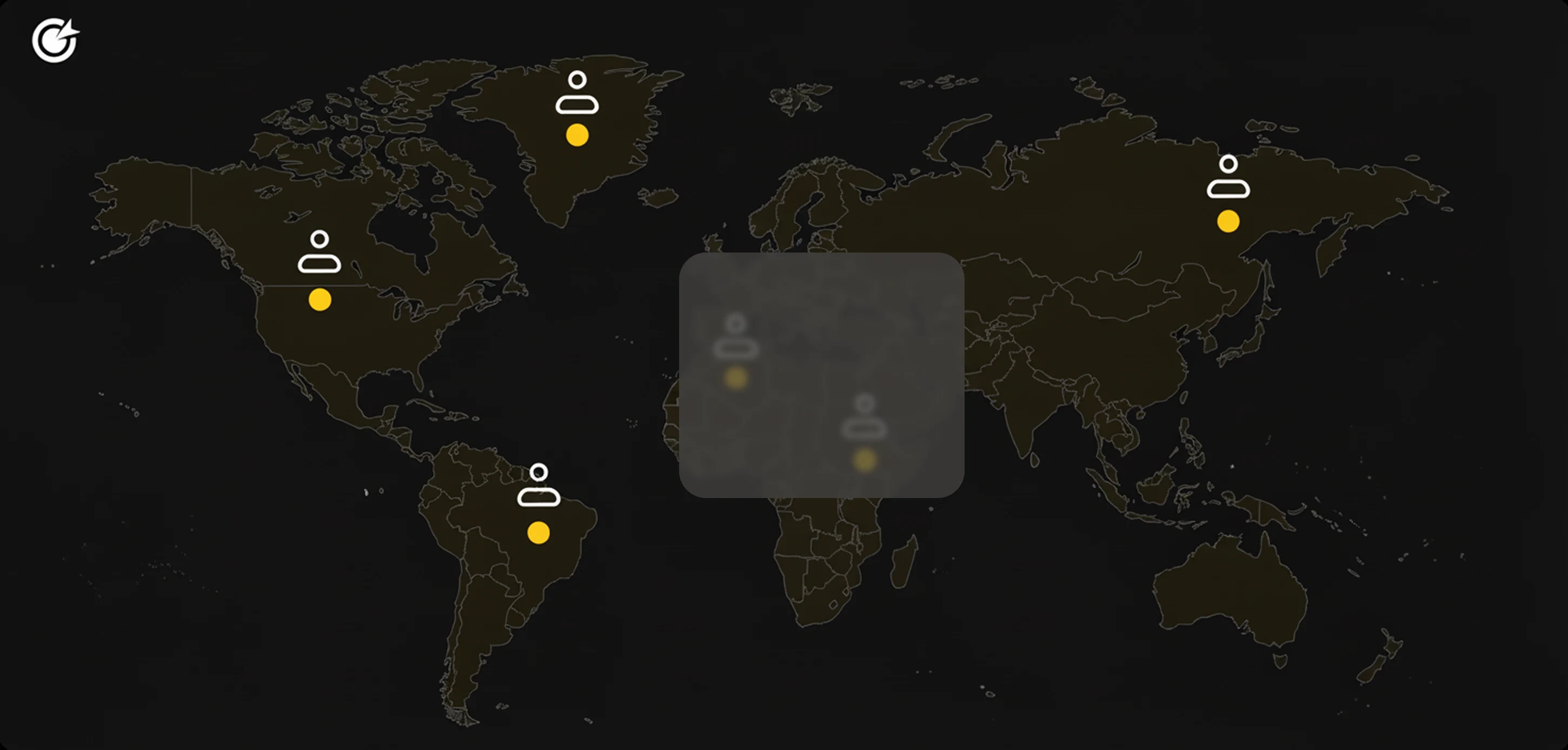
Hover over countries on the map to see the number of available developers in each location
Our dedicated dedicated backend developers use the following technologies to build modern web applications.
Docker
Kubernetes
OpenShift
Rancher
Amazon ECS
Google Kubernetes Engine
Podman
LXC
HashiCorp Nomad
Azure Kubernetes Service
Mesosphere
We offer comprehensive dedicated backend services to help you build, maintain, and scale your applications.
Our dedicated backend developers build high-throughput, event-driven APIs using Node.js and Express.js, engineered to handle tens of thousands of concurrent requests without performance degradation. Whether you need RESTful APIs, WebSocket servers, or real-time data pipelines, our engineers design systems that scale with your user growth — reducing latency by up to 60% compared to unoptimized implementations.
Python remains the top choice for data-intensive, AI-integrated, and rapid-iteration backend systems in 2026. Our backend engineers build production-grade applications using Django for full-featured platforms and FastAPI for high-performance async APIs. If your product depends on ML pipelines, data processing, or scientific computation, our Python specialists deliver backends that are both powerful and maintainable.
Slow queries kill user experience and conversion rates. Our backend engineers optimize database performance across PostgreSQL, MongoDB, MySQL, and Redis — restructuring schemas, adding strategic indexes, rewriting N+1 queries, and implementing read replicas where appropriate. Clients typically see 40–70% reductions in average query time after an optimization engagement, translating directly into faster page loads and higher uptime.
We design and implement microservices architectures that break monolithic systems into independently deployable, fault-tolerant services — using Docker for containerization, Kubernetes for orchestration, and Apache Kafka or RabbitMQ for inter-service communication. The result is a backend that scales specific bottlenecks independently, reduces deployment risk, and enables your engineering teams to ship features in parallel without stepping on each other.
Security failures are among the most expensive backend mistakes a company can make. Our dedicated backend developers implement enterprise-grade authentication systems using OAuth 2.0, JSON Web Tokens, OpenID Connect, and SSO integrations with Okta, Auth0, and Keycloak. Every implementation follows OWASP security standards, protecting your user data and ensuring compliance with SOC 2, HIPAA, and PCI-DSS requirements.
GraphQL eliminates over-fetching and under-fetching — two of the most common causes of slow mobile and web application performance. Our backend engineers design GraphQL schemas, build resolvers, implement DataLoader for batching, and set up Apollo Federation for multi-service graph architectures. Teams that migrate to GraphQL consistently report faster frontend development cycles and measurably improved API response times.
When your backend struggles under load, the problem is rarely hardware — it is architecture. Our engineers use Redis to implement multi-layer caching strategies that absorb database load and reduce response times by 80–90% for read-heavy workloads. We also profile CPU and memory bottlenecks, optimize connection pooling, and implement rate limiting to ensure your backend handles traffic spikes without becoming a single point of failure.
Aging PHP, monolithic Java, or legacy .NET systems accumulate technical debt that slows every new feature release. Our backend engineers execute phased migrations to modern frameworks — Node.js, FastAPI, Spring Boot, or NestJS — using strangler fig patterns that keep your production system live throughout the transition. We have successfully migrated systems handling millions of daily requests with zero planned downtime.
Untested backends are ticking time bombs. Our developers implement comprehensive automated test suites covering unit tests, integration tests, and end-to-end API tests using frameworks like Jest, Pytest, Mocha, and Chai. Combined with CI/CD pipeline integration via GitHub Actions or GitLab CI, every code change is validated automatically before deployment — reducing production bugs by up to 75% and eliminating manual QA bottlenecks.
Payment gateways, messaging platforms, CRMs, analytics tools — modern backends are integration hubs. Our dedicated backend engineers have hands-on experience integrating Stripe, Twilio, SendGrid, Salesforce, HubSpot, Plaid, and 100+ other third-party services, handling webhook reliability, retry logic, rate limit management, and error handling so your integrations never become a production liability.
Serverless backends eliminate infrastructure management overhead and scale automatically to zero or to millions of invocations — paying only for what you use. Our engineers architect event-driven serverless systems using AWS Lambda, Azure Functions, and Google Cloud Run, integrating with API Gateway, SQS, EventBridge, and DynamoDB to build cost-efficient backends that handle unpredictable traffic patterns without over-provisioning.
Need it built, not staffed?
Hiring a Back-End developer gives you a person on your team. Our software development service gives you the finished work, scoped and shipped by the same vetted engineers, with the code and the IP yours at the end.
Our industry recognition is a testament to our rigorous vetting process and the impactful digital solutions we deliver. From connecting clients with top-tier global talent to building scalable web and mobile apps, our commitment to excellence sets us apart.

Clutch Top 1000 Companies

Top Entertainment App Developers

Expertise Best Mobile App Developer

Software World Top App Development Companies

Horizon Award Gold Awards Winner

Horizon Award Silver Awards Winner

Right firms Top Mobile App Development Company

Access free Dedicated Backend Developers job description templates, expert-curated interview questions, and comprehensive Dedicated Backend Developers roadmap to streamline your hiring process and find the best remote Dedicated Backend Developers for your team.
Download ready-to-use Dedicated Backend Developers job description templates tailored for your hiring needs.
Browse comprehensive FAQs and interview questions specifically for Dedicated Backend Developers and Dedicated Backend Developer roles.
Explore step-by-step learning paths and skill roadmaps specifically designed for Dedicated Backend Developers and Dedicated Backend Developer roles.
Discover expert-curated best practices, tips, and strategies specifically for Dedicated Backend Developer roles and hiring Dedicated Backend Developers.
Find answers to frequently asked questions about Softaims, our hiring process, developer vetting, pricing models, and how we ensure quality talent for your projects.
Free Productivity Timer Tools
Boost your team's productivity with our free online timer tools. Perfect for Pomodoro sessions, meetings, standups, and focused work sessions. No signup required, works offline.


By Andrew K.
 Verified Expert in Engineering
11 years of experience
My name is Andrew K. and I have over 11 years of experience in the tech industry. I specialize in the following technologies: Web Application, React, node.js, iOS, Android, etc.. I hold a degree in Bachelor's degree. Some of the notable projects I’ve worked on include: Founding Engineer at SaaS platform, Сomplex animation with React Native, Sweetgreen App (React Native), Education First Dashboard (React.js, GraphQL, Apollo), Acquired IO - Startup project (React.js), etc.. I am based in Dubai, United Arab Emirates. I've successfully completed 8 projects while developing at Softaims.
I am a dedicated innovator who constantly explores and integrates emerging technologies to give projects a competitive edge. I possess a forward-thinking mindset, always evaluating new tools and methodologies to optimize development workflows and enhance application capabilities. Staying ahead of the curve is my default setting.
At Softaims, I apply this innovative spirit to solve legacy system challenges and build greenfield solutions that define new industry standards. My commitment is to deliver cutting-edge solutions that are both reliable and groundbreaking.
My professional drive is fueled by a desire to automate, optimize, and create highly efficient processes. I thrive in dynamic environments where my ability to quickly master and deploy new skills directly impacts project delivery and client satisfaction.
A dedicated backend developer is a software engineer who works exclusively on server-side logic — the code your users never see but rely on for every interaction with your application. When a customer logs in, places an order, streams content, or submits a form, backend code handles authentication, enforces business rules, writes to databases, and returns the correct response. In 2026, as applications process more data and user expectations around speed and reliability continue to rise, the quality of that backend infrastructure has become one of the clearest competitive differentiators in software.
Unlike full-stack generalists who divide attention across the frontend and backend, a dedicated backend developer goes deep into server-side systems. They own your API architecture, optimize database queries for scale, implement caching strategies that absorb traffic spikes, and build the infrastructure that allows your application to grow from 100 to 100,000 concurrent users without degradation. When companies choose to hire dedicated backend developers, they are investing in engineers whose entire professional focus is making their server-side systems faster, more secure, and more reliable.
The modern backend stack is broad. In 2026, the engineers companies seek when they hire dedicated backend developers typically work across server-side languages (Python, Node.js, Java, Go, PHP, Ruby, C#, Rust), database layers (PostgreSQL, MongoDB, Redis, Cassandra, DynamoDB), API paradigms (REST, GraphQL, gRPC), and cloud infrastructure (AWS, Azure, GCP) with containerization via Docker and Kubernetes. That breadth is exactly why dedicated specialization produces better outcomes than generalism for any application with serious scale, security, or compliance requirements.
The business case for dedicated backend hiring is rooted in the cost of backend failure. E-commerce companies lose an average of $5,600 per minute of downtime, according to Gartner research. Data breaches carry an average cost of $4.88 million for US organizations, according to IBM's 2024 Cost of a Data Breach Report. Slow API response times — a direct symptom of unoptimized backend code — increase cart abandonment rates by up to 20%, per Google's page experience research. Every one of these outcomes connects directly to backend quality.
Companies across the following scenarios consistently find the strongest ROI when they hire dedicated backend developers:
One pattern observed consistently across 500+ Softaims client engagements: the fastest-scaling US companies almost always have a clear backend ownership model — one or more dedicated backend engineers who know the system architecture deeply enough to make design decisions quickly. Companies relying on shared or generalist resources report longer debugging cycles, more frequent production regressions, and slower feature delivery as their systems grow in complexity.
Deciding whether to hire a dedicated backend developer or engage a freelancer is one of the most consequential decisions in technical hiring. The right answer depends on project scope, timeline, and the long-term complexity of your backend systems. Here is a clear comparison to guide the decision:
| Factor | Dedicated Backend Developer | Freelance Backend Developer |
|---|---|---|
| Availability | Full commitment to your project | Split across multiple clients |
| System Knowledge | Deep and grows over time | Surface-level, context switches frequently |
| Onboarding Cost | One-time investment | Repeated with each new hire |
| Code Consistency | High — single coding style and standards | Variable — each developer brings their own patterns |
| Best For | Long-term, evolving, complex backend systems | Well-scoped, short-term, defined deliverables |
| Incident Response | Immediate — knows the system inside out | Slow — requires full context re-establishment |
| Accountability | High — part of your team's success metrics | Limited to contracted deliverable |
| Cost Model | Monthly or hourly fixed rate | Per-project or hourly, often at premium rates |
Freelancers work well for a specific API endpoint, a one-time database migration, or a security audit with a defined scope and delivery date. But for ongoing product development — building new features, maintaining performance as user traffic grows, responding to production incidents — dedicated hires consistently outperform on every metric that matters. Teams that rely on freelancers for their core backend infrastructure consistently report slower sprint velocity, more regression bugs, and higher total cost of ownership over 12-month periods compared to teams with dedicated engineers.
The backend development landscape shifts with every major platform release and cloud infrastructure update. In 2026, companies that hire dedicated backend developers should prioritize the following technical competencies — weighted by the demands of modern, AI-adjacent, cloud-native application development:
Not all backend developers are the same — and hiring the wrong specialization for your project type is a common mistake. When you hire dedicated backend developers, matching the role to the actual system challenge saves both time and money. Here are the six primary backend specializations and when each is the right fit:
Backend developer compensation in 2026 reflects both the high demand for server-side expertise and the growing premium on specialized skills. According to Glassdoor and Levels.fyi data, the average base salary for a backend developer in the United States is $119,645 per year — with significant variation by experience level, technology specialization, and geographic market.
| Country | Junior (Per Hour) | Junior (Per Year) | Mid-Level (Per Hour) | Mid-Level (Per Year) | Senior (Per Hour) | Senior (Per Year) |
|---|---|---|---|---|---|---|
| United States | $40–$55 | $75,000–$95,000 | $55–$80 | $105,000–$135,000 | $80–$130 | $150,000–$185,000 |
| United Kingdom | $32–$48 | $62,000–$82,000 | $45–$65 | $85,000–$115,000 | $65–$105 | $125,000–$158,000 |
| Canada | $32–$45 | $62,000–$78,000 | $42–$58 | $82,000–$105,000 | $58–$90 | $115,000–$145,000 |
| Germany | $36–$48 | $68,000–$88,000 | $48–$68 | $92,000–$125,000 | $68–$105 | $135,000–$165,000 |
| India | $10–$20 | $20,000–$40,000 | $15–$28 | $30,000–$55,000 | $25–$45 | $50,000–$85,000 |
| Poland | $22–$32 | $42,000–$62,000 | $32–$48 | $62,000–$95,000 | $48–$75 | $95,000–$125,000 |
| Ukraine | $15–$28 | $30,000–$52,000 | $25–$38 | $50,000–$75,000 | $38–$58 | $75,000–$95,000 |
| Brazil | $18–$28 | $38,000–$58,000 | $28–$42 | $58,000–$82,000 | $42–$65 | $82,000–$108,000 |
Teams that hire dedicated backend developers through Softaims access pre-vetted senior talent at rates 40–60% below US market averages — with candidate matching completed within 48 hours rather than the 4–8 weeks typical of direct US hiring.
Hiring offshore dedicated backend developers has moved from a cost-cutting measure to a strategic talent decision for US companies in 2026. The quality gap between offshore and onshore senior backend talent has essentially closed — while the cost gap remains substantial. Global communication tooling, asynchronous collaboration practices, and English-fluency vetting processes have made offshore backend teams indistinguishable from local ones in terms of daily work output.
| Factor | Local US Hire (Direct) | Offshore Dedicated Backend Developer via Softaims |
|---|---|---|
| Junior Annual Salary | $75,000–$95,000 | $20,000–$42,000 |
| Senior Annual Salary | $150,000–$185,000 | $50,000–$85,000 |
| Mid-Level Hourly Rate | $55–$80/hr | $25–$38/hr |
| Benefits and Overhead | +25–35% on top of salary | None |
| Average Time to Hire | 4–8 weeks | 24–48 hours |
| Contract Flexibility | Full-time preferred | Full-time / Part-time / Project-based |
| Talent Pool Access | Regional | Global — 25,000+ vetted engineers |
| Vetting Standard | Self-managed (resumes, interviews) | Pre-vetted: skills test, technical interview, experience verification |
According to Forbes, US companies that embrace offshore backend hiring gain a dual advantage: access to a broader talent pool and the operational flexibility of engagement models that scale up or down without the legal and HR complexity of full-time employment. Time zone overlap strategies — choosing candidates in Eastern Europe, Latin America, or Southeast Asia with defined overlap hours — have resolved the coordination concerns that once discouraged offshore hiring.
A structured hiring process is the difference between finding a developer who writes code and finding one who solves your specific backend problems. Here is the step-by-step process used by US companies that consistently make strong backend hires:
Standard interview questions reveal rehearsed answers. The questions below are designed to surface how a backend developer actually thinks when building and debugging server-side systems — revealing the difference between candidates with real production experience and those with theoretical knowledge:
Behavioral assessments are equally important when hiring dedicated backend developers. Engineers who articulate their decision-making process, acknowledge past mistakes, and demonstrate collaborative instincts are consistently better long-term hires than those who only demonstrate technical knowledge. Candidates who resist behavioral questions or deflect with generalities are showing you exactly who they will be when production is on fire and the team needs to communicate clearly.
Knowing what disqualifies a candidate is as important as knowing what to look for. The following are consistent red flags encountered in backend developer interviews — patterns that predict poor outcomes in production environments:
A consistent, structured evaluation process is what separates companies that reliably hire excellent backend engineers from those that rely on gut feel. Applying the same evaluation steps to every candidate eliminates subjective bias and builds a comparable dataset across your candidate pool.
Companies that apply this framework consistently report higher satisfaction with their hires and measurably lower turnover rates at the 12-month mark. Structured processes remove the variance that causes expensive hiring mistakes.
Hiring the right backend developer is only half the equation — how you onboard them determines how quickly they generate value. The most common onboarding failure is under-investment: providing a laptop, Slack access, and a vague instruction to "dig into the codebase." This approach wastes two to four weeks of productive development time and creates early disengagement. The following best practices consistently produce faster time-to-contribution for dedicated backend developers:
Provide architecture documentation on day one. A written document explaining the system's services, their responsibilities, how they communicate, what databases they use, and where the most complex business logic lives saves weeks of reverse-engineering. Even a rough diagram with explanations is dramatically better than none.
Set up development environments before the developer arrives. Every hour a new developer spends debugging environment configuration is an hour they are not writing code. Prepare a setup script, a working local development environment, and access credentials — tested and ready — before their first day.
Assign a defined first project with a clear scope. Give the developer a meaningful but bounded first task — adding a new API endpoint, optimizing a specific query, fixing a defined bug — rather than an open-ended system exploration. Completing a real contribution builds confidence and context simultaneously.
Pair new developers with an experienced team member for the first two weeks. Pairing accelerates knowledge transfer more effectively than documentation alone. Pair programming sessions reveal coding standards, team conventions, and unwritten context about why the system is built the way it is.
Schedule explicit check-ins at day 7, day 30, and day 60. Structured feedback loops surface confusion before it becomes frustration and allow you to calibrate the developer's ramp-up pace. Developers who receive timely feedback integrate into teams faster than those left to self-manage their onboarding.
The skills that made a backend developer excellent in 2023 are necessary but no longer sufficient in 2026. These emerging shifts in backend development are redefining what companies should evaluate when they hire dedicated backend developers:
Knowing what goes wrong in backend hiring prevents costly mis-hires that take months to detect and even longer to recover from. These are the patterns most frequently seen in failed backend hiring processes:
A comprehensive checklist creates consistency and accountability across every step of the hiring process. Use this checklist whether you are hiring your first backend developer or your fiftieth:
The traditional hiring process for backend developers takes four to eight weeks of sourcing, screening, interviewing, and reference checking — with no guarantee of a qualified candidate at the end. When companies choose to hire dedicated backend developers through Softaims, that timeline compresses to 24–48 hours.
Softaims handles every step of the pre-hire process internally: technical skills verification, experience validation, system design assessment, English proficiency screening, and background verification. Every developer in the Softaims network has cleared a multi-stage vetting process designed specifically to validate backend engineering competence — not just programming language familiarity. When you receive a candidate match from Softaims, you are receiving someone who has already passed the technical evaluation that would otherwise take your team weeks to conduct.
Our engagement models give US companies the flexibility to scale backend resources to actual project needs:
To hire dedicated backend developers through Softaims, submit your requirements and receive matched candidate profiles within 48 hours. Every engagement begins with a trial period — if the match is not right, we re-match at no additional cost.
Hiring dedicated backend developers is one of the highest-leverage decisions a technical team makes. The backend is where performance is won or lost, where security is built or compromised, and where scalability is engineered or accidentally prevented. In 2026, the companies that build reliable, fast, and secure applications are those that treat backend hiring with the rigor it deserves: defined requirements, structured evaluation, real-world technical assessment, and proper onboarding investment.
For US companies looking to hire dedicated backend developers without the four-to-eight-week recruitment overhead, Softaims offers access to 25,000+ pre-vetted backend engineers across every major language and framework — matched to your requirements within 48 hours, at rates significantly below US market averages, with zero sourcing risk. Reach out to Softaims to start building your backend team today.


 Github
 Stackoverflow