Top 10 SaaS App Development Companies in the USA (2027)
Deploying a secure, multi-tenant SaaS platform is critical for capturing enterprise market share. This guide covers the top 10 US SaaS app development companies for 2027; comparing rates, stacks, and delivery models to help you pick the right partner.
Table of contents
Key Takeaways
- American buyers prioritize architecture that supports native multi-tenancy, subscription management, and strict compliance standards like SOC 2, HIPAA, and CCPA right from the initial build.
- Pairing US-based product leadership with nearshore or offshore talent platforms (such as Softaims) provides the time-zone alignment and regulatory rigor of a domestic partner at a fraction of full onshore rates.
- Building a US-focused SaaS in 2026–2027 ranges from $40,000–$100,000 for a streamlined MVP to $250,000–$600,000+ for complex enterprise platforms.
- Specialized partners with proven experience in specific industries (such as fintech, healthcare, or logistics) reduce domain risks and accelerate go-to-market execution.
America runs on SaaS. The country is home to more than 27,000 SaaS firms with a combined $582 billion in revenue, and it anchors a global SaaS market set to reach $465 billion in 2026. The US app market alone hit $52 billion in 2024, up 16% in a single year. So demand for teams that can ship reliable, scalable SaaS is enormous.
Building a strong SaaS product is hard, though. Behind the clean dashboard sit multi-tenant architecture, secure billing, usage tracking, and cloud that has to scale from ten users to ten thousand without breaking. So most founders and product teams bring in a specialist rather than go it alone. The right SaaS app development companies in the USA turn an idea into a stable, scalable platform that customers keep paying for.
The stakes are high. According to the Standish Group's CHAOS research, only about 31% of software projects succeed on the first attempt. For SaaS, the failure is almost always architectural. You ship a working app and users can log in, but the moment you try to onboard a second customer, you find nobody designed for multi-tenancy. Or you close an enterprise deal, then learn your compliance posture is a checkbox document no one has tested against real requirements. The firms on this list ship SaaS with multi-tenant architecture, subscription billing, and data isolation built in from the first sprint, not bolted on after a failed enterprise sale.
This guide ranks the top 10 SaaS app development companies in the USA for 2027, each with a note on who it suits. Below the list, we cover the SaaS tech stack, costs, challenges, and how to choose. One read should give you a shortlist.
What Is SaaS App Development
SaaS app development companies build cloud software that sells by subscription. In short, they turn an idea into a platform, not a one-off app. Rather than installing on one machine, the product lives online and serves many customers at once. So the build has to handle scale, security, and billing from the start.
It differs from a one-off app, though. A SaaS platform is usually multi-tenant, which means one codebase serves many customers while keeping their data apart. It also needs onboarding, subscriptions, analytics, and near-constant uptime. So it takes cloud and architecture skill, not just a clean interface.
The reward is a product that grows with its users. When onboarding is smooth and the platform stays fast under load, customers stay and expand. So strong SaaS work builds recurring revenue, not just software.
Types of SaaS Products
SaaS comes in several shapes, and SaaS app development companies build them all. Knowing the type sharpens your brief. The table shows the common ones.
Type | Description | Example |
| B2B SaaS | Software sold to businesses | CRM, project tools |
| B2C SaaS | Software sold to consumers | Streaming, fitness apps |
| Vertical SaaS | Built for one industry | Legal, healthcare, fintech |
| Horizontal SaaS | Broad, cross-industry | Email, analytics |
| Multi-tenant SaaS | One codebase, many customers | Most modern platforms |
Vertical SaaS has grown fast in the US, since a tool built for one industry often beats a generic one. So match your partner to your model, because a consumer app and an enterprise platform need different skills.
The SaaS Tech Stack
A SaaS build touches several layers, and the best SaaS app development companies in the USA cover all of them. Here's the typical stack.
Layer | Common Tech | Role |
| Front-end | React, Angular, Vue | User interface and dashboards |
| Back-end | Node.js, Python, Ruby, Java | Business logic and APIs |
| Database | PostgreSQL, MySQL, MongoDB | Data storage |
| Cloud | AWS, Azure, Google Cloud | Hosting and scale |
| Platform layer | OAuth, RBAC, tenant isolation | Secure, shared, multi-tenant access |
No single stack fits every project, though. A data-heavy SaaS leans on cloud and databases, while a slick B2C app leans on front-end craft. So check that a partner's strength matches your biggest risk.
Why Work With a US SaaS Company
Plenty of SaaS work can be done anywhere, so why favour a US partner? A few reasons stand out for American buyers.
Proximity is the first. A US firm shares your hours, culture, and business norms, which smooths the daily back-and-forth. Compliance is the second, since US teams know SOC 2, HIPAA for health data, and state privacy laws like CCPA. Investor and enterprise buyers often expect that rigour, too.
That said, cost is the trade-off. Onshore rates run higher than offshore, however. So many US buyers pair a domestic lead with nearshore or offshore delivery to balance both.
Benefits of Outsourcing SaaS Development
SaaS app development companies deliver value in a few clear ways. Each ties back to skill, speed, or cost.
- Full-stack skill. You reach front-end, back-end, and cloud talent in one place.
- Faster launch. A ready team ships an MVP far quicker than hiring from scratch.
- Proven patterns. Experienced firms reuse multi-tenancy, billing, and security patterns.
- Lower cost. Nearshore and offshore rates run well below a full in-house team.
- Room to scale. A good partner builds for growth, not just the first release.
The gains are real, too. A specialist avoids the classic traps, from shaky multi-tenancy to platforms that stall as users grow.
In-House vs Outsourced SaaS Development
Build the team yourself, or bring in a partner? Both work, and scope decides. Each has trade-offs.
An in-house team gives full control and deep product ownership. It suits firms with a long SaaS roadmap and money to hire. The catch is time and cost, though, since cloud and architecture talent is scarce and pricey in the US.
Outsourcing suits most first builds and fast launches. SaaS app development companies in the USA and beyond bring product, cloud, and security skill from day one. You trade a little control, however. So many founders outsource the MVP, then hire around it once the product proves out.
What to Look For in a SaaS Development Partner
SaaS app development companies vary widely in depth and style, however. The strongest share a few traits. Keep this checklist close when you compare firms.
- Cloud and architecture depth. Multi-tenancy and scale should be proven, not claimed.
- Product mindset. They should think about users and retention, not just code.
- Security by design. Data isolation, encryption, and SOC 2 readiness come built in.
- Clear pricing. Rates, minimums, and models should be transparent.
- Real case studies. Ask for shipped SaaS platforms in your space.
A partner strong on these points saves you costly rework. So weigh them before you sign.
How We Selected These Companies
This ranking isn't guesswork. Each of these SaaS app development companies in the USA had to clear a bar, which keeps the list useful rather than salesy. It reflects our judgment, however, so treat it as a starting point.
The criteria we weighed:
- Real SaaS delivery. Every firm has shipped genuine, scalable SaaS platforms.
- US presence. We focused on firms based in or heavily serving the US market.
- Cloud and product depth. Architecture, cloud, and product skill all counted.
- Client feedback. Reviews, ratings, and track record mattered.
- Value for cost. Rate against quality and delivery factored in.
No firm tops every line, though. So each entry ends with a "Best for" tag to steer you.
At a Glance: The Top SaaS App Development Companies Compared
Short on time? This side-by-side view captures all ten at once. It lines up each firm against its base, its focus, and the job it suits best, so you can weigh them without scrolling. Shortlist two or three that fit, then read their full profiles below for the detail.
# | Company | Base | Core Strength | Best For |
| 1 | Softaims | US / offshore talent | Vetted SaaS engineers | Building a flexible SaaS team |
| 2 | Devaims | Softaims-owned | Full-cycle software | SaaS and mobile builds |
| 3 | Simform | Orlando, FL | Cloud and data engineering | Cloud-heavy SaaS |
| 4 | Fingent | White Plains, NY | Long track record | Mid-market and enterprise |
| 5 | WillowTree | Charlottesville, VA | Digital product design | Consumer-grade SaaS |
| 6 | Praxent | Austin, TX | Fintech product | Financial services SaaS |
| 7 | Chetu | Sunrise, FL | Industry verticals | Domain-specific SaaS |
| 8 | ScienceSoft | McKinney, TX | Full-service delivery | Established partner |
| 9 | Closeloop | Mountain View, CA | Senior big-tech team | US-led engineering |
| 10 | Iflexion | Denver, CO | Enterprise software | Large, complex platforms |
The Top 10 SaaS App Development Companies in the USA
With the basics covered, here are the picks. The ten SaaS app development companies in the USA below run from a flexible talent platform and full-cycle studios to specialist product firms. Each earned its place on genuine delivery, cloud depth, and real product fit, however. The "Best for" line under each entry points you to the closest match.
1. Softaims
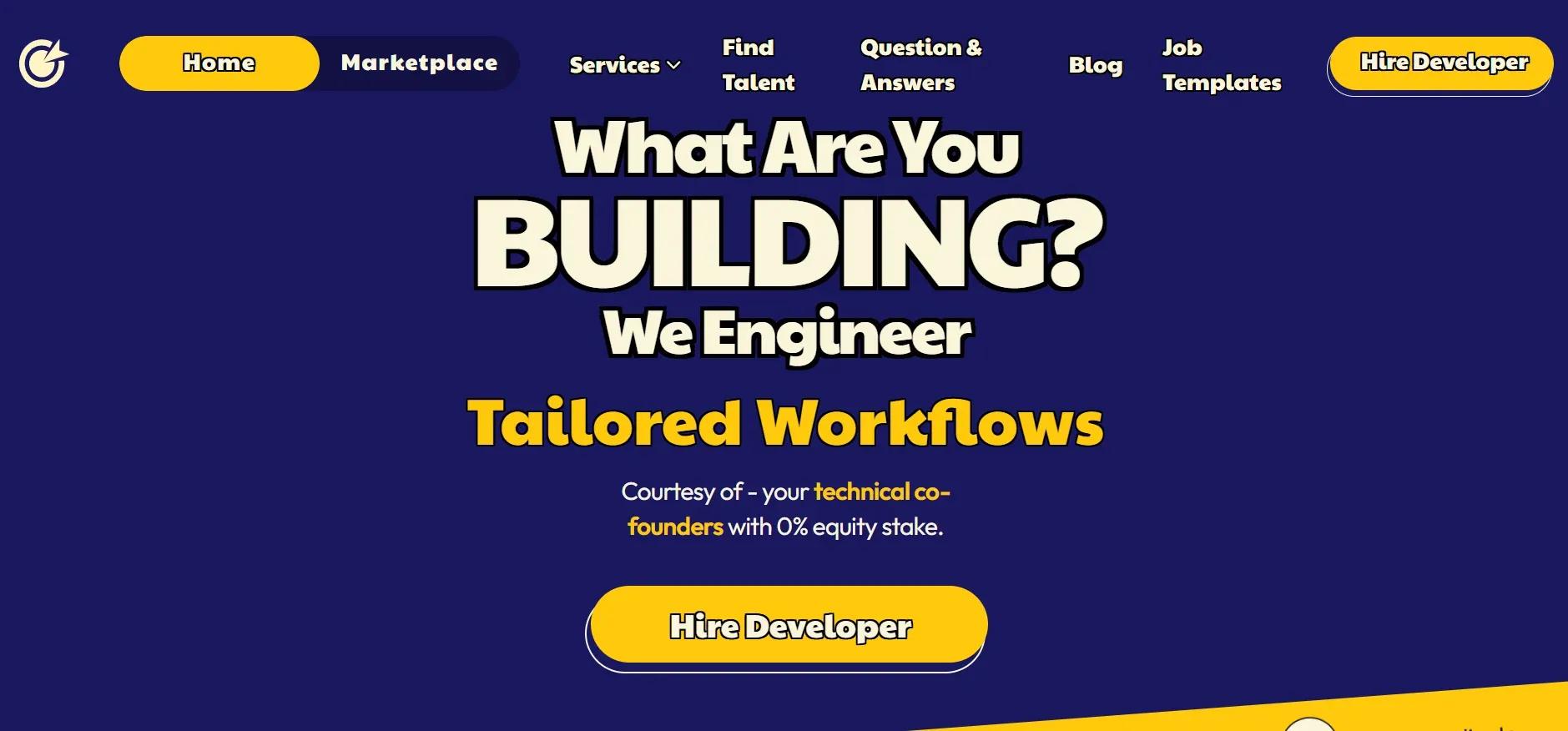
Softaims leads our list with a model built for fast SaaS builds. Rather than a fixed agency contract, you get matched with the top 3% of vetted engineers inside 48 hours. So you can build or extend your own SaaS team quickly, and for a fraction of a US hire's cost.
That flexibility suits SaaS work well. You can hire vetted engineers for app development, mobile app development, and AI app development. For platform-specific work, reach iOS, Android, native, and hybrid app developers, plus mobile app design. You can also browse available app developers and mobile app talent directly.
The engagement bends to your needs. Add one specialist or a full pod, and they work your hours and process. So they run like your own team, without a multi-year lock-in. You can browse the talent pool or see transparent rates before committing. For app-specific hiring, our guides to the top mobile app development companies and fintech app development companies in the USA are useful companions.
Key highlights:
- Top 3% vetted engineers, matched within 48 hours
- Full-stack, cloud, mobile, and AI talent for SaaS
- Flexible staff augmentation and dedicated teams
- Your hours, your process, no heavy minimums
Best for: US teams that want to build a flexible SaaS team fast, without a rigid agency contract.
2. Devaims
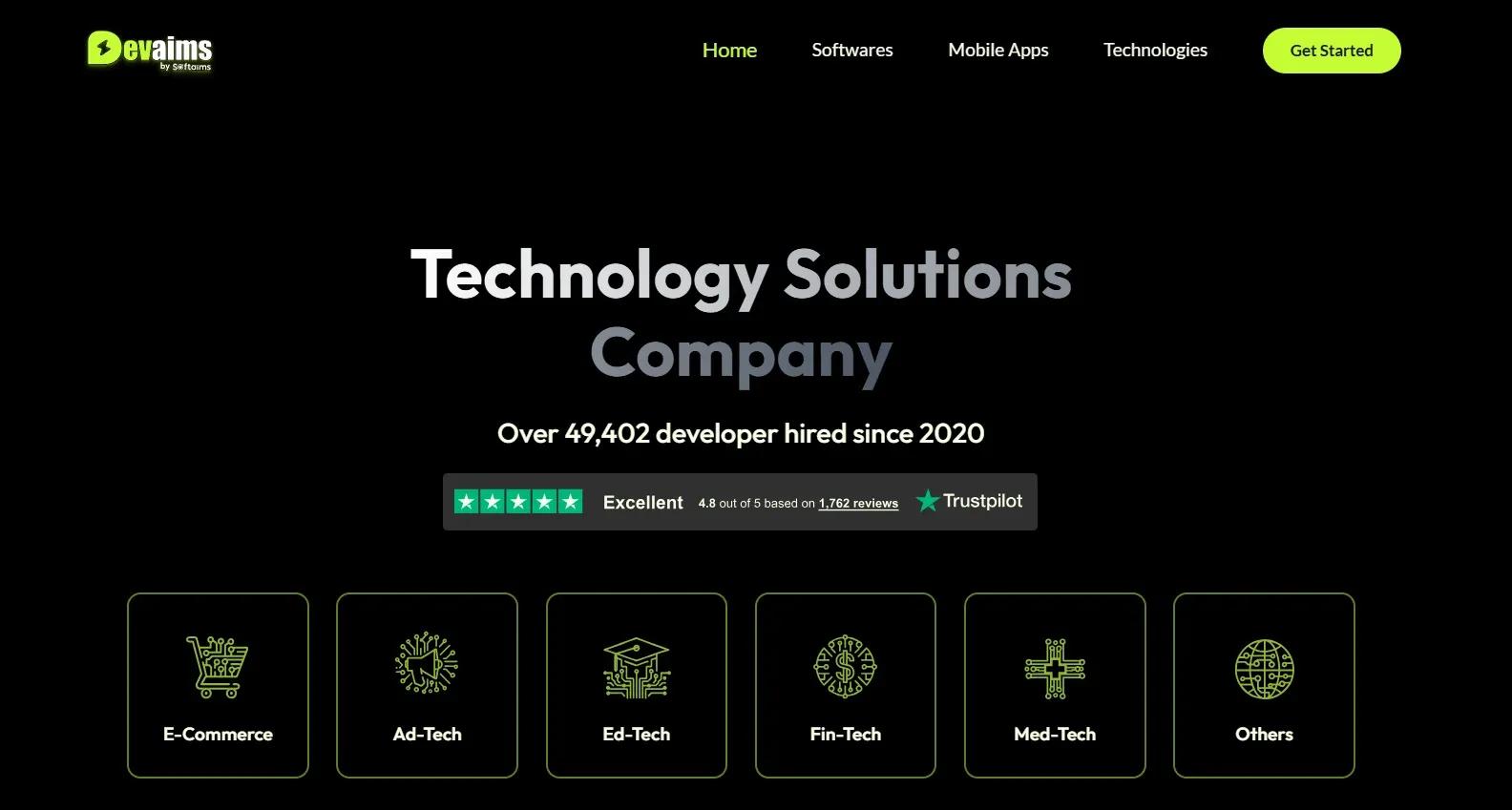
Devaims is a development studio that builds and maintains custom software end to end. For SaaS, that means the web and mobile apps, the backend, and the ongoing support that keeps a platform stable. So it fits firms that want a partner to own the whole build.
The August 2026 acquisition by Softaims joined the two. Devaims clients now reach the same vetted network and 48-hour matching. One partner can carry software development, mobile app development, and even managed IT services once the product is live.
Key highlights:
- Full-cycle SaaS and mobile builds
- Web, mobile, and back-end under one roof
- Backed by Softaims' vetted talent since 2026
- Ongoing support and managed services
Best for: Teams that want a studio to own the whole SaaS build and keep it running.
3. Simform
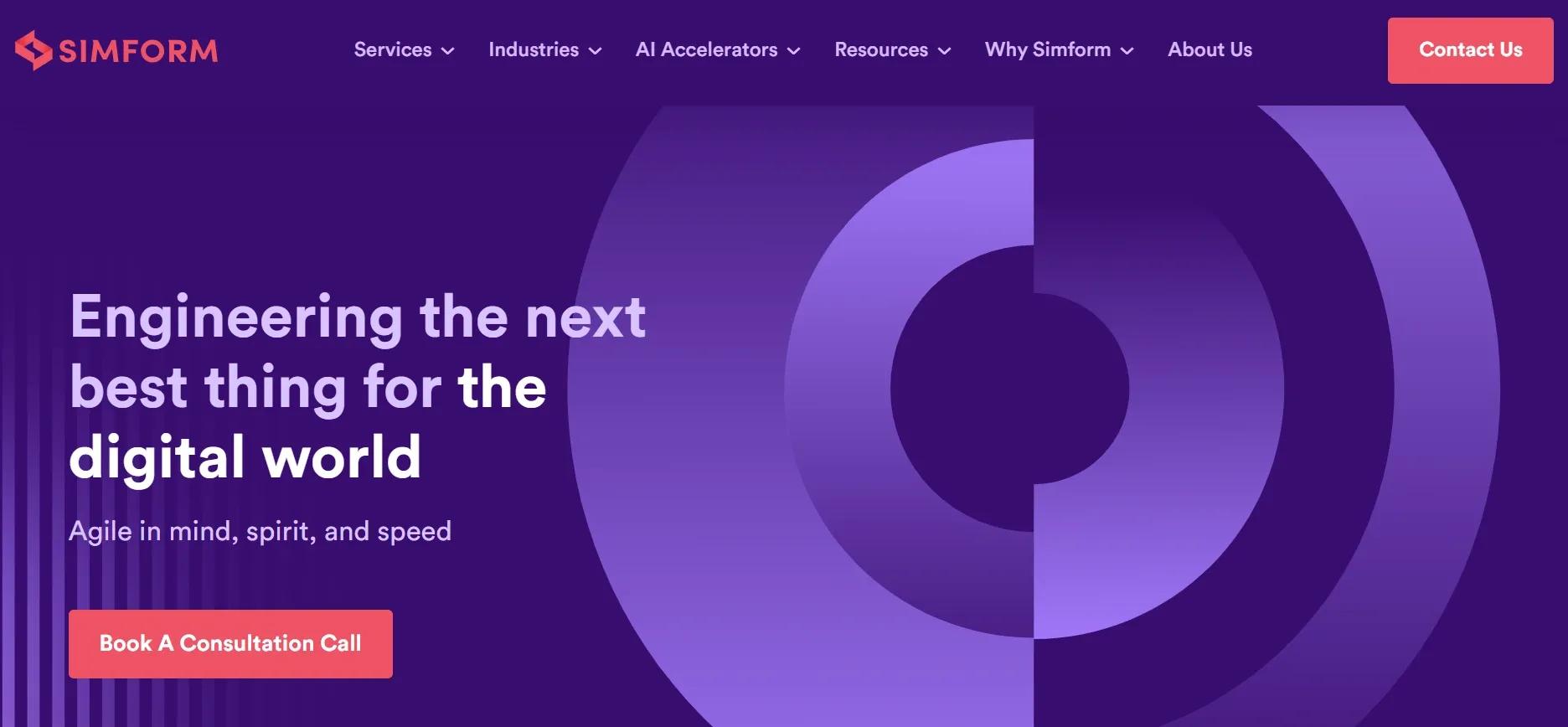
Simform, founded in 2010 and based in Orlando, Florida, is a digital engineering firm with a strong cloud and data practice. It works across product engineering, agentic AI, and enterprise modernisation for SaaS clients at scale. Clients rate it 4.8 on Clutch, at roughly $25 to $49 an hour with a $25,000 minimum.
The firm's real edge is its cloud and data engineering bench. It handles enterprise-scale delivery across AI, cloud, and product work. Simform suits SaaS platforms that need heavy cloud or data engineering beside the core build. So it fits data-intensive US SaaS at scale.
Key highlights:
- Deep cloud and data engineering
- Enterprise-scale delivery
- AI, cloud, and product engineering
- Clutch rating of 4.8
Best for: US SaaS platforms needing heavy cloud or data work alongside the product.
4. Fingent
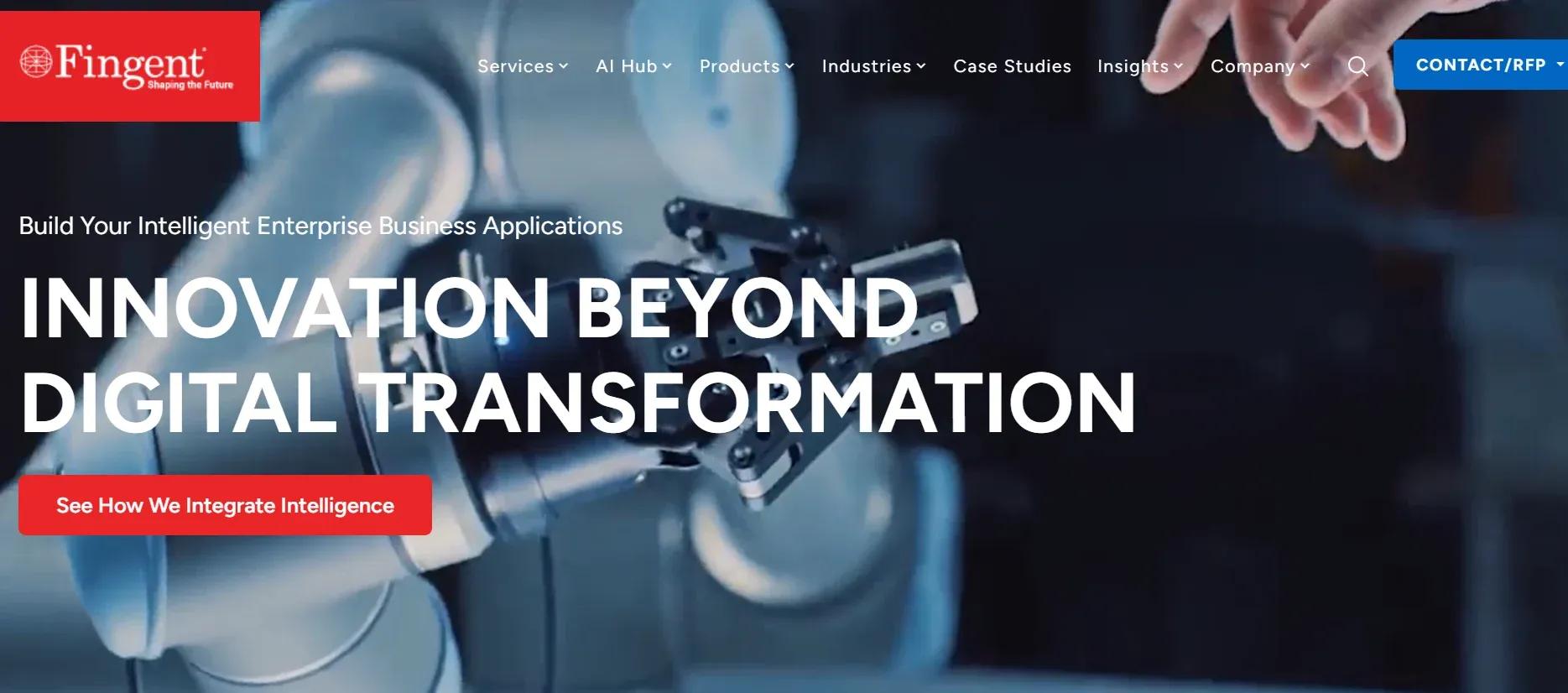
Fingent, founded in 2003 and headquartered in White Plains, New York, is a custom software firm with more than 20 years in the market. It runs 450-plus professionals across four countries, serving mid-market and enterprise SaaS clients. Clients rate it 4.9 on Clutch, at $25 to $49 an hour with a $25,000 minimum.
The firm's strength is a long, steady delivery record and a multi-country footprint. It earns strong value-for-cost feedback on larger projects. Fingent suits buyers who want an established firm over a newer studio. So it fits US mid-market and enterprise SaaS builds that value a proven track record.
Key highlights:
- Two decades of continuous delivery
- 450-plus staff across four countries
- Strong value on larger projects
- Clutch rating of 4.9
Best for: US firms wanting an established partner with a long track record.
5. WillowTree
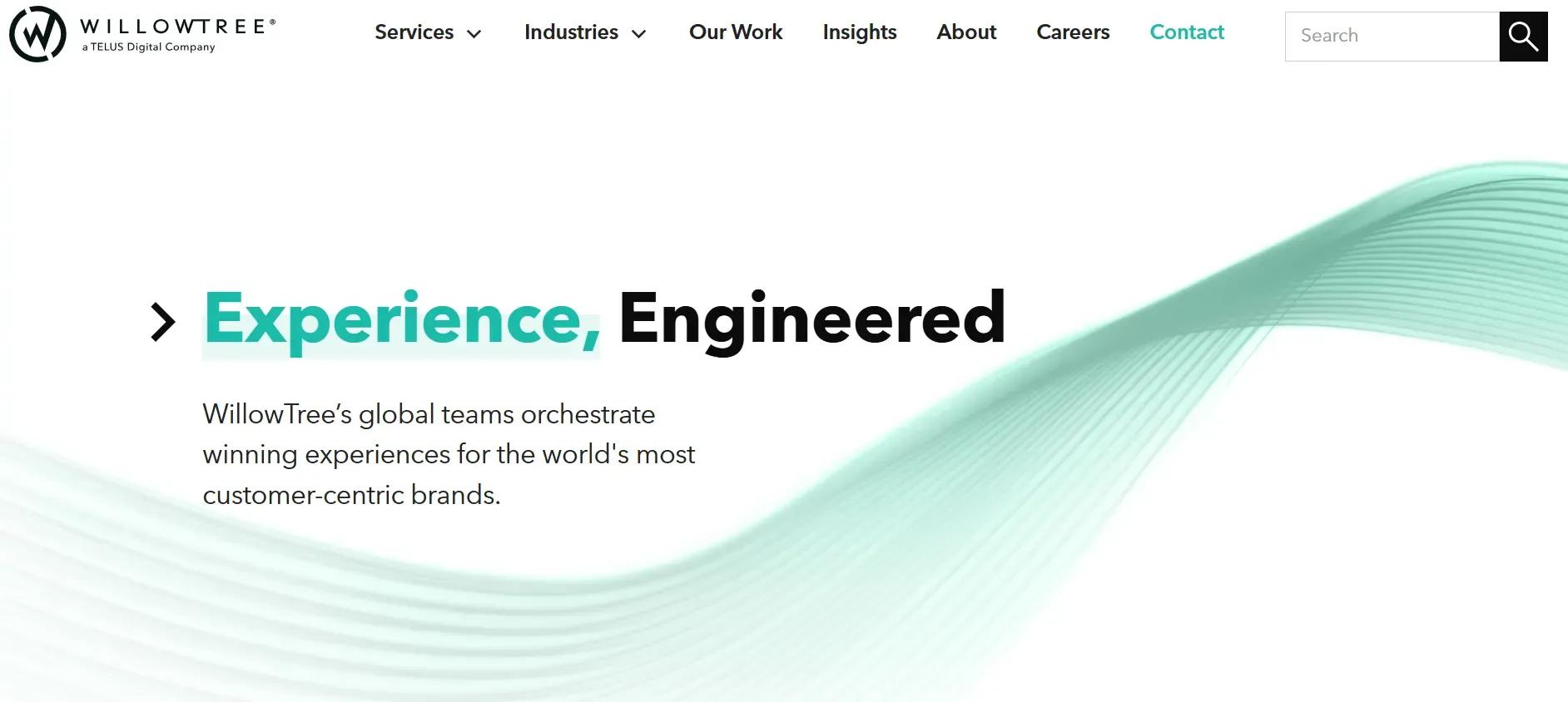
WillowTree, based in Charlottesville, Virginia, is one of the best-known US digital product firms. Now a TELUS Digital company, it has grown past 1,000 team members while keeping its US delivery footprint. So it pairs design polish with real scale.
The firm is known for consumer-grade product design and engineering, across mobile and web SaaS. It serves major brands with high user-experience standards. WillowTree suits SaaS products where design and usability drive adoption. So it fits US firms building polished, consumer-facing platforms.
Key highlights:
- Design-led digital product work
- Mobile and web SaaS
- 1,000-plus team, TELUS Digital
- Enterprise and consumer brands
Best for: US firms building polished, consumer-grade SaaS.
6. Chetu
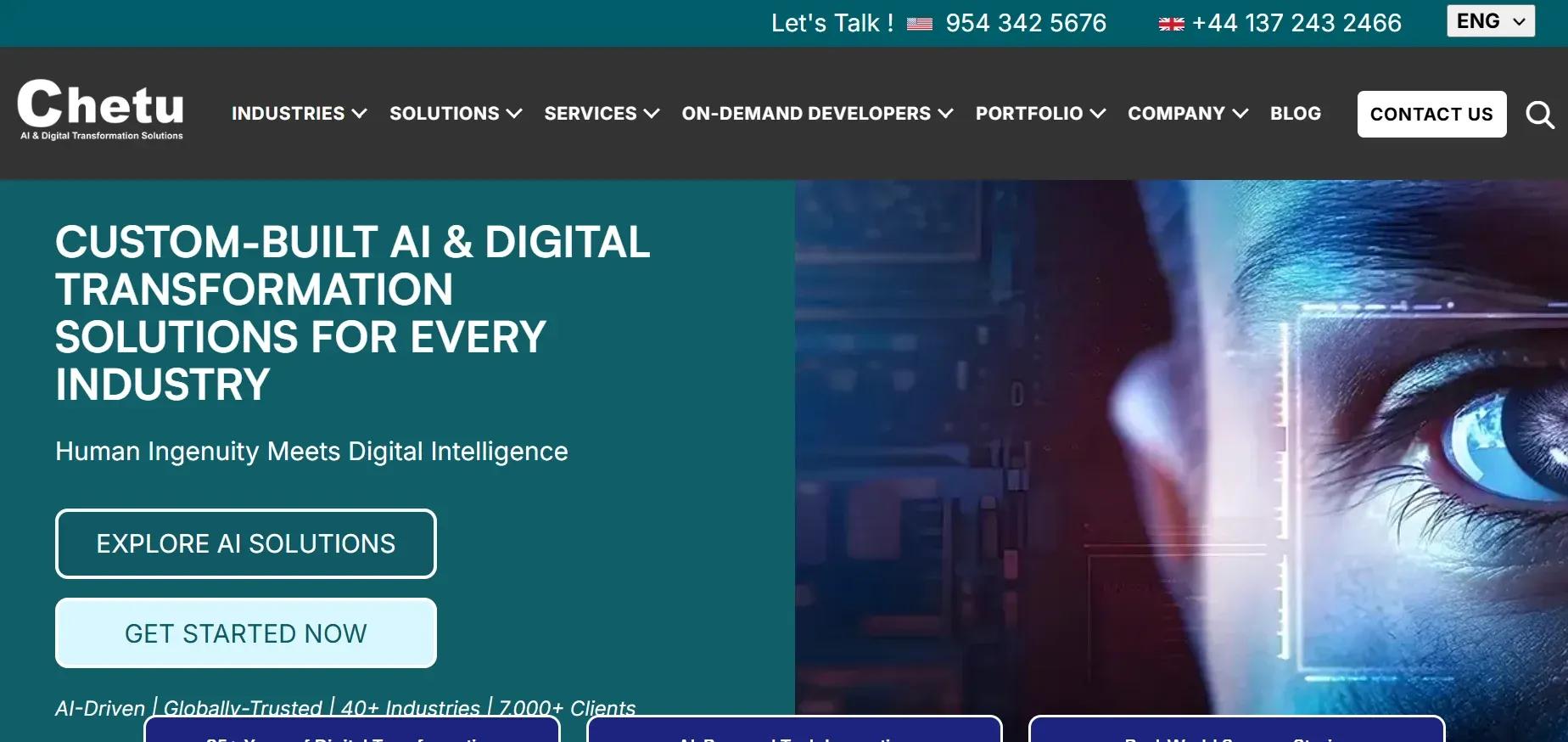
Chetu, based in Sunrise, Florida, is a large custom software firm with a deep catalogue of industry-specific work. It builds SaaS and enterprise applications across dozens of verticals, from hospitality and gaming to logistics and finance. So it suits domain-heavy products that need specialist knowledge.
The firm brings a big engineering bench and full-cycle delivery, including maintenance. Its vertical range is unusually broad. Chetu suits companies that want deep, domain-specific development capacity. So it fits US firms building industry-specific SaaS.
Key highlights:
- Custom SaaS across many verticals
- Large engineering bench
- Web, mobile, and integrations
- Long-established US firm
Best for: US firms building domain-specific, industry SaaS.
7. ScienceSoft
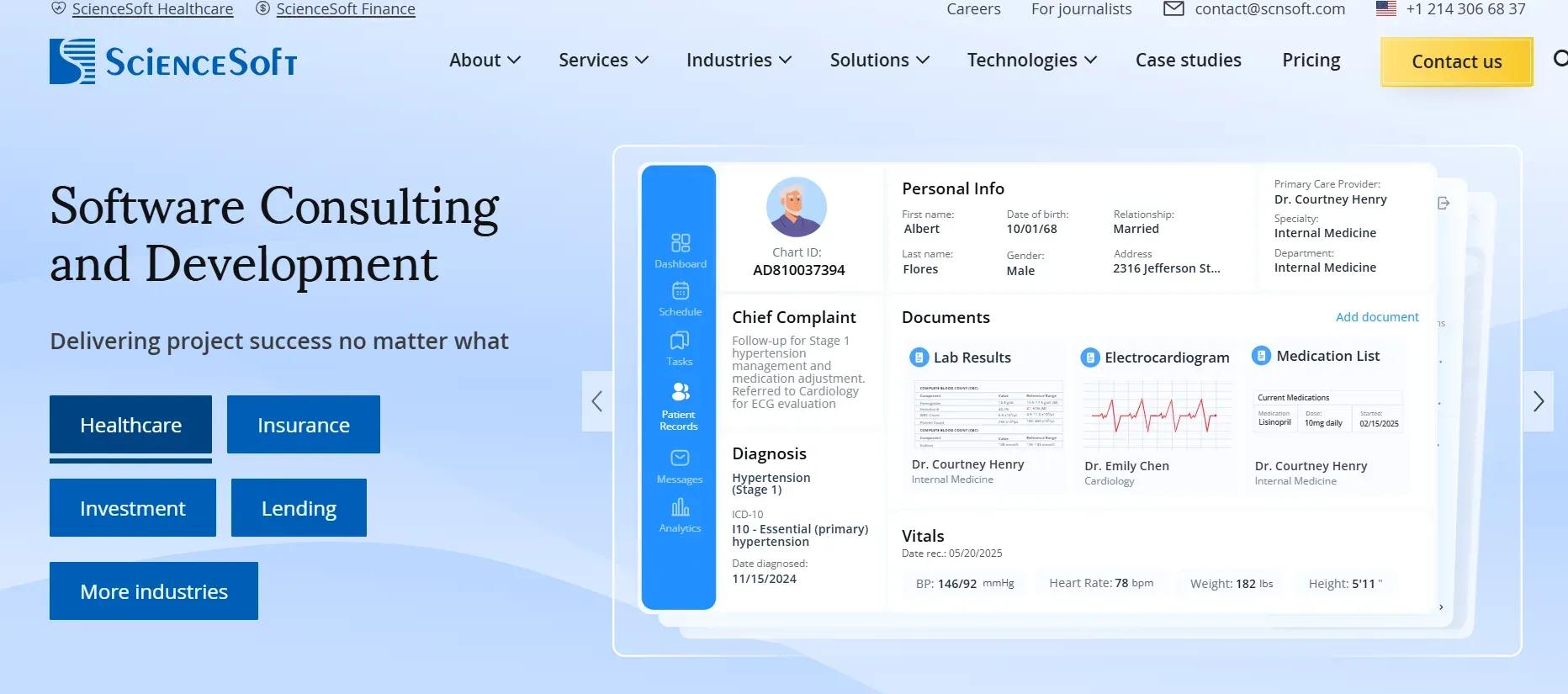
ScienceSoft, based in McKinney, Texas, is an IT and software firm with a long delivery history. Founded in 1989, it builds SaaS products, cloud platforms, and enterprise systems. So it brings broad experience and a structured process.
The firm covers SaaS consulting, development, and cloud migration across many sectors. It's known for reliable, quality-focused delivery. ScienceSoft suits firms that want a mature, full-service partner over a newer studio. So it fits US companies after dependable, end-to-end SaaS work.
Key highlights:
- Full-service SaaS development
- Cloud platforms and migration
- Structured delivery process
- Decades of experience
Best for: US firms wanting an established, full-service SaaS partner.
8. Closeloop Technologies
Closeloop Technologies, founded in 2011 and based in Mountain View, California, is an engineering firm led by former Oracle, Apple, Google, and VMware technologists. It has earned a place on the Inc. 5000 for its growth. Its rates sit at $25 to $49 an hour with a $25,000 minimum.
The firm pairs a US-based leadership team with big-tech engineering backgrounds. Its cost is competitive for a US-headquartered firm. Closeloop suits buyers who want senior technologists who have shipped at large-scale tech companies. So it fits US firms wanting a domestic, senior engineering team.
Key highlights:
- US-based, big-tech leadership
- Inc. 5000-recognised growth
- Cost-competitive for a US firm
- Senior engineering backgrounds
Best for: US firms wanting a domestic team with senior big-tech technologists.
9. Iflexion
Iflexion, based in Denver, Colorado, is a custom software firm with two decades of enterprise experience. It builds web, mobile, and analytics-heavy SaaS platforms for larger clients. So it suits complex, data-rich products.
The firm covers full-cycle development, from architecture through delivery and support. Its enterprise focus shows in its handling of scale and integration. Iflexion suits firms building large, complex SaaS platforms. So it fits US companies with demanding, enterprise-grade needs.
Key highlights:
- Enterprise web and mobile SaaS
- Analytics-heavy platforms
- Full-cycle delivery
- Two decades of experience
Best for: US firms building large, complex SaaS platforms.
How Much Does SaaS Development Cost in the US?
SaaS app development companies in the USA price by scope, complexity, and team location. A lean MVP costs far less than a full enterprise platform. The table shows typical 2026 ranges.
Project Type | Typical Range (2026) |
| SaaS MVP | 40,000–100,000 |
| Mid-complexity SaaS | 100,000–250,000 |
| Enterprise SaaS platform | 250,000–600,000+ |
| Developer hourly rate | 25–150/hr |
Source: 2026 industry estimates
The spread is wide. Multi-tenancy, billing, and security push costs up, and enterprise scale pushes them higher still. Location matters too, since offshore and nearshore rates run well below US onshore. Still, the cheapest quote isn't always the cheapest build, since rework on a live platform is expensive.
This is where a flexible talent model helps. Teams that hire SaaS engineers through Softaims reach vetted talent below US rates, matched in 48 hours. So you can staff a SaaS build your way, without a rigid agency contract.
Onshore vs Nearshore vs Offshore
Where your team sits shapes cost and collaboration. SaaS app development companies deliver from all three, and each trades price against proximity. Here's how they compare.
Option | Location | Trade-off |
| Onshore | US-based | Easiest fit, highest cost |
| Nearshore | Latin America | Strong overlap, moderate cost |
| Offshore | Distant regions | Biggest savings, wider time gap |
Nearshore has grown fast for US SaaS, since Latin American teams pair strong engineering with matching hours. Offshore, meanwhile, offers the deepest savings for well-scoped builds. So weigh how much daily contact your project needs.
The SaaS Development Process
Most SaaS app development companies run builds through the same stages. Knowing them helps you plan time and budget. Here's the usual path.
- Discovery. The team maps users, features, and the business model.
- MVP scope. You agree the smallest build that proves the idea.
- Architecture. Architects design for multi-tenancy, security, and scale.
- Development. Engineers build the front-end, backend, and integrations.
- Testing. The team checks performance, security, and billing.
- Launch and iterate. The product ships, then grows on real feedback.
Each stage rests on the last. So a tight MVP scope early keeps the first release fast and focused.
Common SaaS Development Challenges
SaaS brings problems a simple app never sees, so the best SaaS app development companies plan for them early. Knowing them helps you plan. Here are the big ones.
Multi-tenancy is the first. One codebase must serve many customers while keeping their data fully apart. Scaling is the second, since a platform that runs fine for fifty users can crawl at fifty thousand.
Security is a bigger worry, however. A SaaS platform holds many customers' data, so isolation, encryption, and SOC 2 controls are non-negotiable. Churn is a business trap too, since a clunky product loses subscribers fast. So build for scale, security, and retention from day one.
Trends Shaping US SaaS in 2027
The field keeps moving, and it's changing how SaaS app development companies work. Three shifts stand out this year.
AI is now built into SaaS by default. Agentic features and copilots handle tasks inside the product, which raises user expectations. Vertical SaaS keeps growing, too, as industry-specific tools outperform generic ones.
Usage-based and hybrid pricing are also spreading, which shifts how platforms track and bill. Meanwhile, security and compliance keep climbing the agenda. Together, these trends push US SaaS toward smarter, more specialised, more accountable products.
Red Flags to Watch For
When you compare SaaS app development companies in the USA, catching trouble early saves money. One clear red flag is thin cloud experience. A firm that has only built simple apps may struggle with multi-tenancy and scale.
Watch, too, for a code-only mindset. A partner that ignores users and retention builds software, not a product. Vague talk about security is another warning, since a SaaS breach is costly and public.
Poor communication is a deeper worry, however. If updates are slow or unclear during sales, they rarely improve later. For pointers on clear communication, MindTools is useful. And to gauge how current a firm is, ask which SaaS trends they've followed lately on sites like TechCrunch.
How to Choose the Right Partner Step by Step
Picking a SaaS partner is a process, not a hunch. These steps narrow the field.
- Define the product. Fix the users, model, and MVP scope up front.
- Map the risk. Decide whether cloud, product, or design is your biggest risk.
- Check real proof. Ask for shipped SaaS platforms in your space.
- Confirm security and scale. Verify multi-tenancy, isolation, and scaling plans.
- Weigh the model. Choose a full agency, a talent platform, or a blend.
- Pilot first. Build a small MVP before you commit to the full platform.
Run them in order, and the fit becomes clear. In practice, the best SaaS app development companies welcome these questions rather than dodge them.
Signs of a Reliable SaaS Partner
Not every firm lives up to its pitch. A few markers point to one you can trust. Look for these before you commit.
- Shipped SaaS. They show live, scaled platforms, not just app screenshots.
- Cloud fluency. They explain multi-tenancy, scaling, and security clearly.
- Product thinking. They care about onboarding, retention, and metrics.
- Transparent pricing. Rates, minimums, and models are spelled out.
- Real references. They share case studies and let you speak to clients.
The best SaaS app development companies in the USA clear all five without hesitation. So treat any gap here as a reason to keep looking.
Frequently Asked Questions
What do SaaS app development companies in the USA do?
They build cloud software that sells by subscription. That spans the web and mobile apps, the backend, the database, and the cloud that runs it. Many also handle multi-tenancy, billing, security, and ongoing support. In short, they turn a SaaS idea into a scalable, revenue-earning platform.
How much does it cost to build a SaaS app in the US?
It depends on scope and complexity. A lean MVP often runs $40,000 to $100,000, while an enterprise platform can top $600,000. Developer rates range from $25 to $150 an hour by region. Still, rework on a live platform is costly, so quality shapes the real cost.
Why choose a US SaaS company over an offshore one?
A US partner shares your hours, culture, and compliance context, which helps on SOC 2, HIPAA, and enterprise sales. The trade-off is higher rates, however. So many buyers pair a US lead with nearshore or offshore delivery to balance cost and control.
Should I hire an agency or build my own SaaS team?
It depends on scope and control. An agency suits a full platform delivered end to end. A flexible talent model suits firms that want to build their own team and keep control. Many blend both, using a talent platform for the core team and a studio for specialist work.
Conclusion
The US leads the SaaS world, but building a platform still demands skill across product, cloud, and security. The SaaS app development companies in the USA above range from a flexible talent platform to full-cycle studios and specialist firms. Each fits a different need.
Match your choice to three things, though: your product's biggest risk, your budget, and how much you want to control. If you'd rather build a flexible SaaS team than sign a fixed agency deal, Softaims can match you within 48 hours. You can also browse the talent pool to see who fits. For more app-specific hiring, see our guide to the top Android app development companies in the USA.
Ready to start? Scope your users, model, and MVP, then pick the partner that suits your goals. Build a small MVP first, prove it, then scale from there. Have a question about your product? Reach out, and let's talk it through.


 GitHub
Artem C.

 Verified Expert in Engineering
My name is Artem C. and I have over 13 years of experience in the tech industry. I specialize in the following technologies: HTML, React, Next.js, SCSS, CSS, etc.. I hold a degree in Bachelor of Computer Science (BCompSc). Some of the notable projects I’ve worked on include: Zoo Interactive Game, Web MMORTS, Scheduling Software, Browser Extension, Browser Extension, etc.. I am based in Batumi, Georgia. I've successfully completed 19 projects while developing at Softaims.
I am a business-driven professional; my technical decisions are consistently guided by the principle of maximizing business value and achieving measurable ROI for the client. I view technical expertise as a tool for creating competitive advantages and solving commercial problems, not just as a technical exercise.
I actively participate in defining key performance indicators (KPIs) and ensuring that the features I build directly contribute to improving those metrics. My commitment to Softaims is to deliver solutions that are not only technically excellent but also strategically impactful.
I maintain a strong focus on the end-goal: delivering a product that solves a genuine market need. I am committed to a development cycle that is fast, focused, and aligned with the ultimate success of the client's business.

Leave a Comment
Need help building your team? Let's discuss your project requirements.
Get matched with top-tier developers within 24 hours and start your project with no pressure of long-term commitment.