Top 12 iOS App Development Companies in the USA for 2026
The US iOS app market continues to grow as businesses invest in premium, secure, and high-performing mobile experiences. In this guide, we’ve listed 12 leading iOS app development companies in the USA for 2026.
Table of contents
Key Takeaways
- Apple's ecosystem rewards specialists. iOS needs Swift, SwiftUI, and strict Human Interface Guidelines discipline.
- Beware offshore firms in disguise. Many "US" lists feature India- or Eastern-Europe-based teams, so verify.
- Match the firm to the brief. Boutiques suit MVPs, while larger studios handle enterprise builds.
- Costs vary widely. A simple app starts near $25,000, while enterprise builds pass $200,000.
- Plan for launch-plus. Apple ships a major iOS version every year, so budget for updates.
- Own your code. Confirm source-code and IP ownership in the contract before work begins.
Success on the App Store rests on three things: fast, clean deployment, sharp execution, and real engagement from day one. So the right iOS app development company does more than write Swift. It helps you dodge the costly traps of slipped launches and rejected builds. It also spares you spiraling support bills and features that need rebuilding later.
Choosing well is genuinely hard, because US firms differ so much. Some offer full-scale iOS delivery, while others focus only on design or a single build. In addition, many "US" listings are padded with offshore teams that keep a US address but deliver from abroad. Therefore, a verified, honest shortlist matters.
We checked every firm here against its website, recent case studies, service range, and market presence. This list is current as of 2026 and features genuine US iOS studios, with Softaims and Devaims leading. Would you rather skip the agency hunt? Then you can also hire vetted iOS developers and own the result outright.
iOS App Development Companies in the USA: Comparison Table
Before you open a dozen profiles, use this table to filter fast. It compares each firm on location, core expertise, and typical rate. So you can build a targeted shortlist in minutes, then read the full reviews below.
Company | Location | Core expertise | Avg. rate |
| Softaims | US and global | Hiring vetted iOS and Swift developers | From ~$30/hr |
| Devaims | US and global | iOS apps plus backend and product build | Custom |
| WillowTree | Charlottesville, VA | Enterprise iOS, product strategy | $150–$200 |
| Fueled | New York, NY | Design-led native iOS | $100–$199 |
| ArcTouch | San Francisco, CA | Native iOS, connected devices | $100–$199 |
| NineTwoThree | Boston, MA | Native iOS, AI and ML | $100–$199 |
| Dogtown Media | Los Angeles, CA | iOS for health, AI, and IoT | $100–$149 |
| BlueLabel | New York, NY | AI-forward iOS, product design | $100–$149 |
| Lickability | New York, NY | Boutique native iOS, Swift | $100–$149 |
| Atomic Object | Grand Rapids, MI | Mission-critical onshore iOS | $150–$249 |
| Dom & Tom | New York and Chicago | Native iOS, UX design | $100–$149 |
| Chop Dawg | Philadelphia, PA | Startup-to-scale iOS apps | $50–$99 |
Details reflect public profiles and Clutch data as of 2026 and can change, so verify each firm before you commit. Softaims and Devaims lead the ranking, followed by ten established US studios, with ownership noted where relevant.
The 12 Best iOS App Development Companies in the USA
Our ranking of the iOS app development companies in the USA covers twelve firms worth a serious look. Softaims and Devaims lead the list, followed by ten established US studios, each with named work and an honest note.
1. Softaims
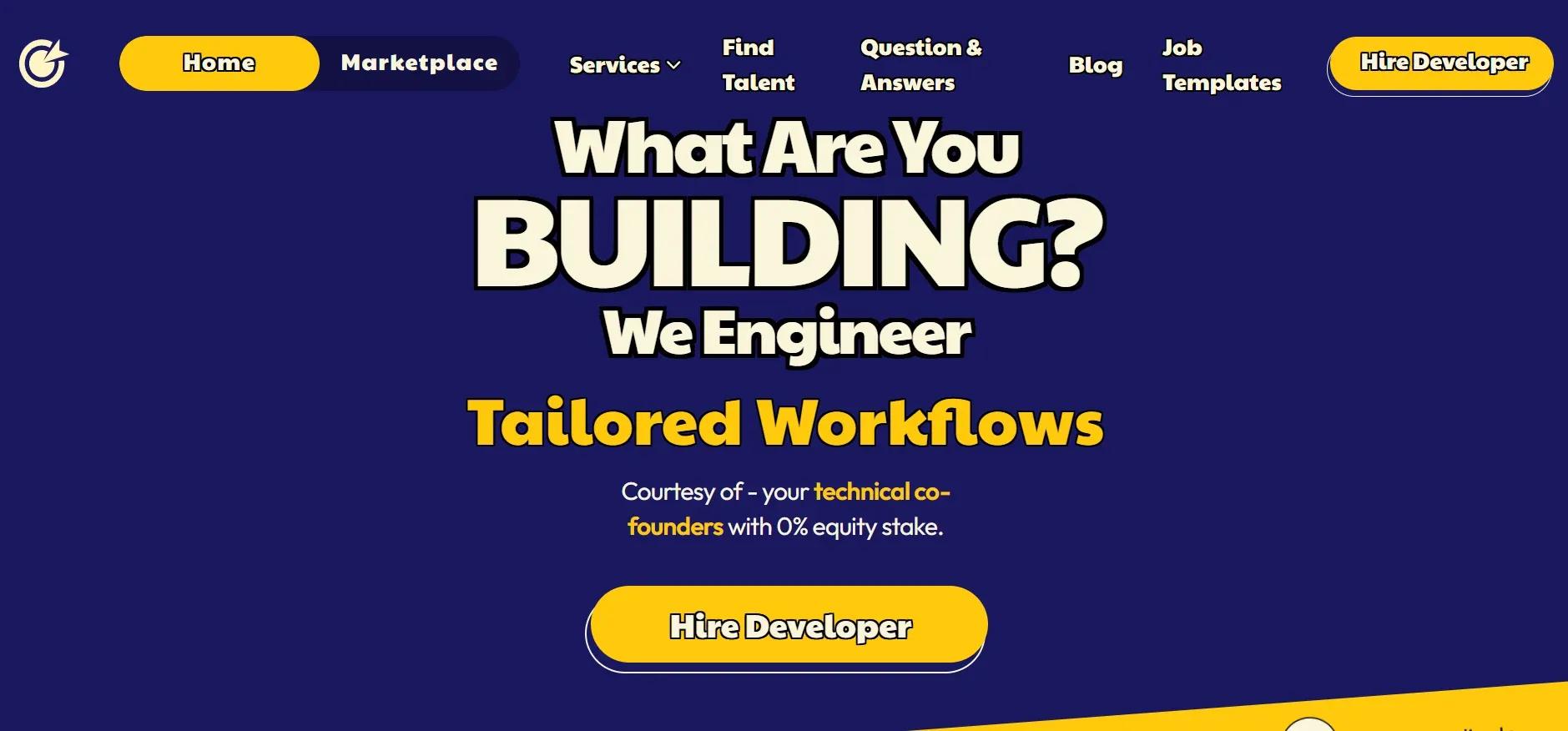
Best for: Hiring vetted iOS engineers directly, without the US agency premium.
Apple's closed ecosystem rewards specialists, not generalists. A strong iOS engineer has to master Swift and SwiftUI. They must also follow the Human Interface Guidelines and pass App Store review first time. So senior iOS talent is scarce, and US salaries and agency rates run high. Softaims turns a months-long hunt into a same-week decision.
It works as a curated marketplace, not a fixed agency. You describe the build, then filter candidates by skill, seniority, location, and budget. Within 48 hours, you meet pre-vetted developers who have shipped App Store apps, AI features, and chatbots in production. In short, you interview only people who can do the work.
The difference is what you keep. Every engagement leaves you owning the code, the design, and the App Store assets outright. There is no lock-in, no visa queue, and no premium for a brand name. Moreover, you can scale a team up for a launch and down for maintenance. You can browse the talent pool, review transparent pricing, explore custom development, or talk to the team to begin.
2. Devaims
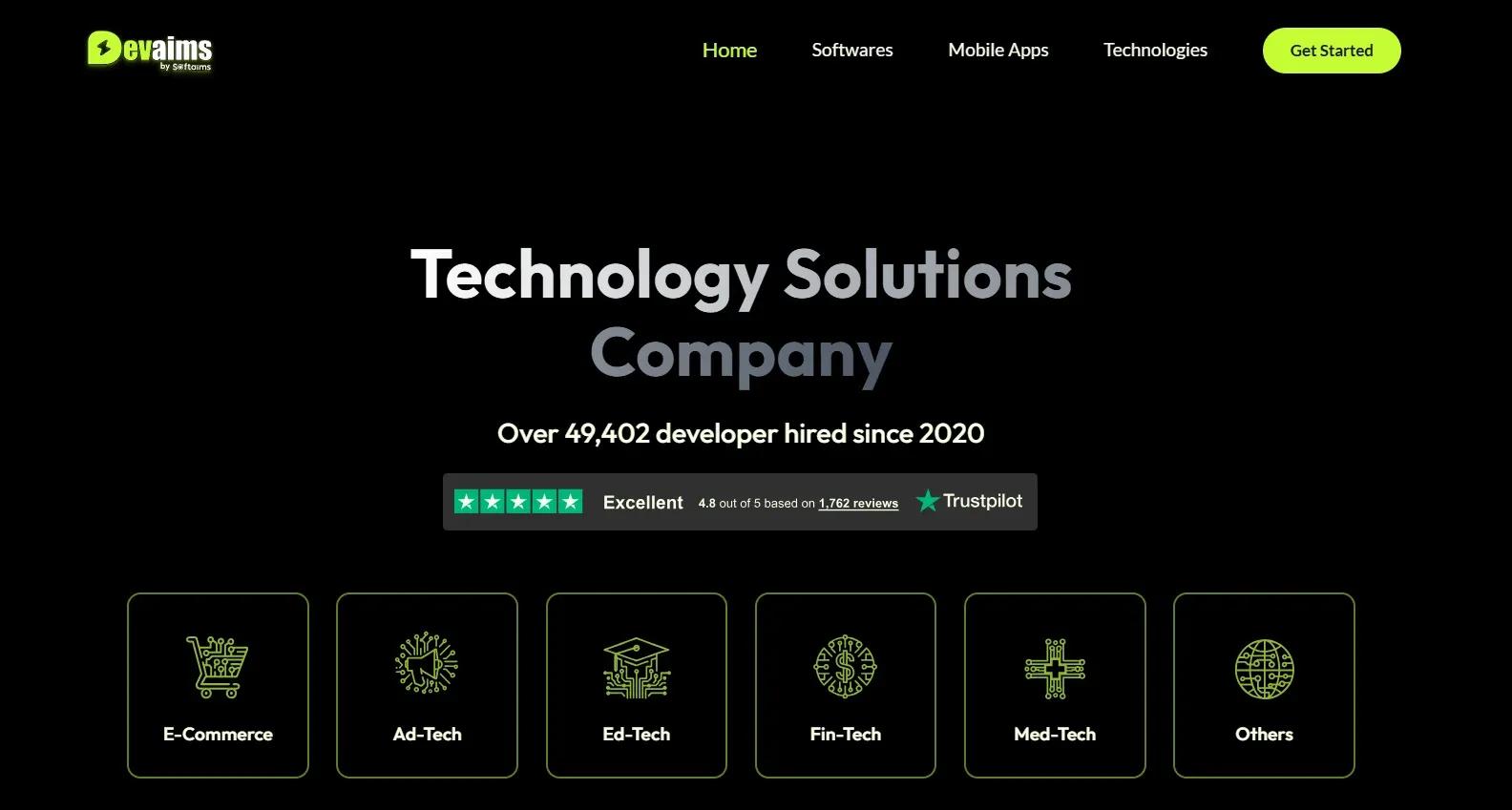
Best for: Building the whole iOS product, not just the front end.
A beautiful iOS screen is the easy part. The real work sits underneath, in the backend, the APIs, the data, and the App Store submission. Devaims builds that entire surface, so you get a product users can rely on, not a demo. As a result, nothing falls through the cracks between a design shop and a separate dev team.
The advantage is structural. One team owns the app, the backend, and the OpenAI-powered features inside it. So iteration stays fast, accountability stays clear, and the launch hits its date. Devaims delivers across custom software and mobile app development for iOS and Android.
This suits teams launching a first serious iOS product. Instead of coordinating three vendors, you get one partner from idea to App Store listing and beyond. Furthermore, the same team supports the app after launch, through iOS updates and new features. Explore the full range at Devaims.
3. WillowTree
Headquarters: Charlottesville, Virginia.
WillowTree sits at the premium end of the US market. It builds enterprise iOS apps for brands like T-Mobile, Marriott, PepsiCo, and FOX Sports. Notably, one National Geographic app it built lifted video watch time by 600%. So it suits large organizations where the app drives loyalty and revenue.
Key services: enterprise iOS, product strategy, and UX research.
Industries: media, retail, hospitality, and finance.
Why choose them: an industry-leading Net Promoter Score and deep enterprise credibility. However, WillowTree is now part of TELUS Digital, so confirm the team.
4. Fueled
Headquarters: New York, New York.
Fueled is a design-led studio known for award-winning iOS apps. It builds highly intuitive, visually polished products for startups and enterprises. Furthermore, it holds a 4.9 Clutch rating across dozens of reviews. So it suits brands that treat design as a core differentiator.
Key services: native iOS, product strategy, and UX design.
Industries: consumer, retail, media, and finance.
Why choose them: award-winning design and a strong product process. Its work spans startups and Fortune 500 brands.
5. ArcTouch

Headquarters: San Francisco, California.
ArcTouch was founded by former Apple engineers and has deep Apple roots. It runs design and development as one unified process. In particular, it builds native iOS plus connected-device experiences for Audi, Hawaiian Airlines, and 3M. So it suits brands building across iPhone, iPad, and beyond.
Key services: native iOS, connected devices, and product strategy.
Industries: automotive, travel, healthcare, and enterprise.
Why choose them: genuine Apple-ecosystem depth and Fortune 500 clients. However, ArcTouch operates within the WPP network, so confirm the team.
6. NineTwoThree Studio
Headquarters: Boston, Massachusetts.
NineTwoThree pairs native iOS work with serious AI and ML depth. It has delivered over 150 projects for clients like Consumer Reports and FanDuel. Notably, it staffs senior machine learning engineers directly on builds. So it suits teams that want intelligence built into a polished iOS app.
Key services: native iOS, AI and ML, and product strategy.
Industries: finance, media, consumer, and healthcare.
Why choose them: senior talent on every build, not junior hand-offs. Its AI depth sets it apart from a standard app shop.
7. Dogtown Media
Headquarters: Los Angeles, California.
Dogtown Media builds data-driven iOS apps for regulated and emerging sectors. In particular, it focuses on healthcare, AI, and IoT. It understands the full stack, from firmware to HIPAA compliance. So it suits products that handle sensitive data responsibly.
Key services: native iOS, healthcare apps, and IoT integration.
Industries: mHealth, fintech, and IoT.
Why choose them: genuine regulated-sector depth and strong analytics. Its clients include Google and Harvard Medical School.
8. BlueLabel
Headquarters: New York, New York.
BlueLabel is a product agency that turns ideas into production-ready iOS apps. It emphasizes early validation, lean strategy, and phased roadmaps. In addition, it holds a 4.7 Clutch rating across 69 reviews. So it suits founders who want a clear, validated path to launch.
Key services: iOS development, AI features, and product design.
Industries: consumer, enterprise, and startups.
Why choose them: a strong validation process and AI-forward builds. It pairs design polish with solid engineering.
9. Lickability
Headquarters: New York, New York.
Lickability is a boutique studio devoted to native iOS and Swift. It builds carefully crafted, Apple-featured apps with tight founder involvement. Moreover, its small size means senior engineers work on your product directly. So it suits founders who value craft over sheer scale.
Key services: native iOS, Swift, and product design.
Industries: consumer, media, and startups.
Why choose them: deep Swift craft and a strong reputation for quality. Its focus is native iOS, not a broad generalist menu.
10. Atomic Object
Headquarters: Grand Rapids, Michigan.
Atomic Object was founded in 2001 and is fully employee-owned. It splits its practice between custom software and mobile, with a mission-critical, onshore focus. Impressively, it holds a 4.9 Clutch rating across 50 reviews. So it suits high-stakes iOS builds that cannot fail.
Key services: native iOS, custom software, and product design.
Industries: healthcare, manufacturing, and enterprise.
Why choose them: disciplined, onshore engineering and strong reviews. Its employee-owned model rewards long-term quality.
11. Dom & Tom
Headquarters: New York and Chicago.
Dom & Tom is a digital product agency that has shipped over 120 native mobile apps. It pairs strong UX design with native iOS engineering. In addition, it serves both startups and enterprises. So it suits teams that want design-forward iOS builds.
Key services: native iOS, UX design, and product strategy.
Industries: media, retail, and enterprise.
Why choose them: a design-forward process and enterprise track record. Its clients include Samsung and General Electric.
12. Chop Dawg
Headquarters: Philadelphia, Pennsylvania.
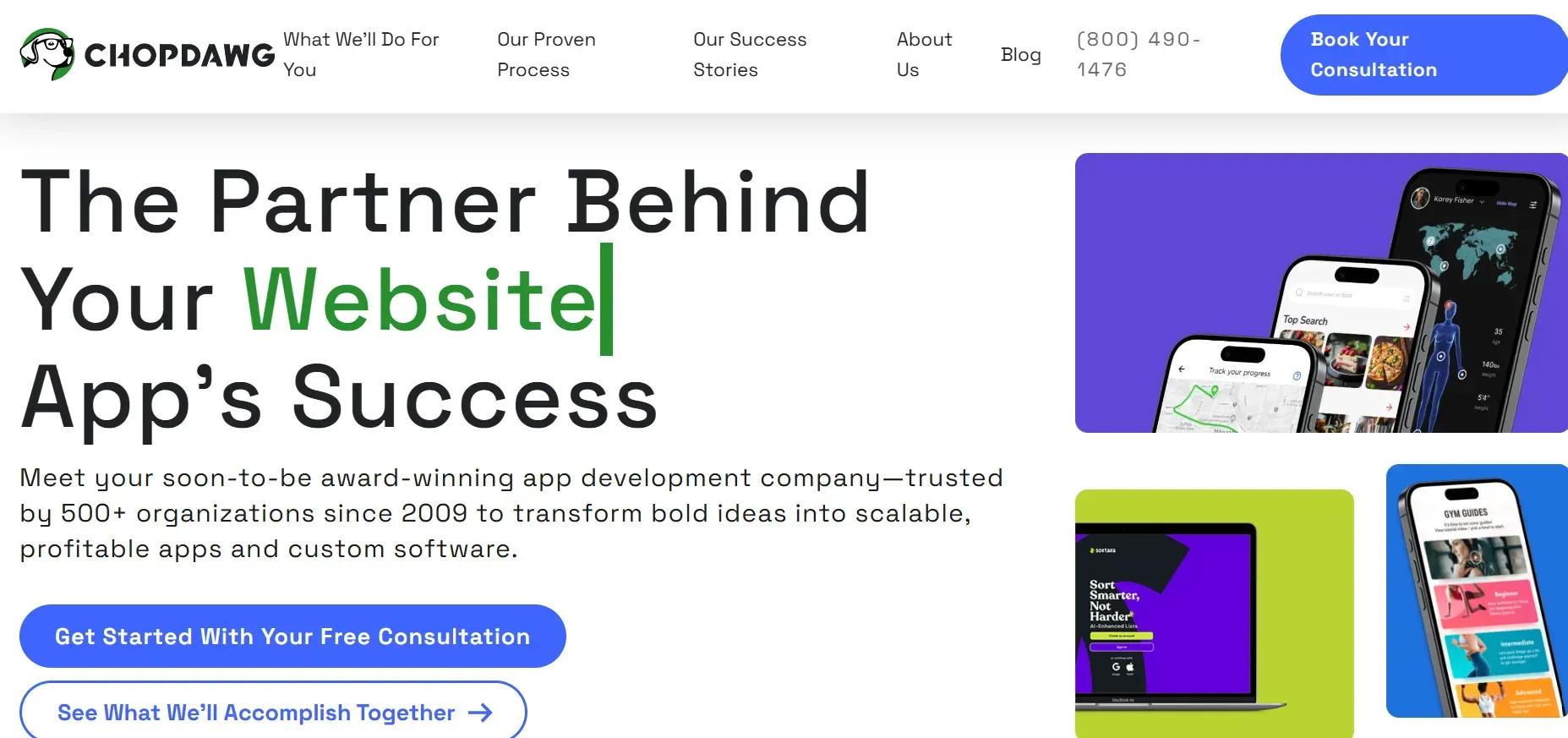
Chop Dawg has launched over 500 products since 2009. It works closely with startups and small enterprises, from MVP to scale. Notably, it uses fixed monthly budgets, so you know your cost upfront. So it suits founders who want predictable pricing.
Key services: native iOS, full-stack builds, and product strategy.
Industries: startups, retail, and services.
Why choose them: a strong startup track record and predictable budgets. Its generalist strength fits broad builds.
What Is an iOS App Development Company?
An iOS app development company builds software for Apple's devices, from iPhone and iPad to Apple Watch and Apple TV. The work of iOS app development companies runs far beyond coding. It covers product strategy, UX design, backend integration, testing, App Store compliance, and long-term maintenance.
Apple's closed ecosystem raises the bar. Developers must show real technical skill and deep platform knowledge from day one. In addition, user expectations sit high, since Apple users expect stable performance and consistent design. So teams must follow the Human Interface Guidelines closely and keep pace with each yearly iOS release.
A strong partner owns the full lifecycle, from discovery and prototyping to post-launch optimization. Because Apple ships a major iOS version every year, apps need ongoing updates and compatibility checks. Therefore, maintenance is not optional if you want to keep App Store visibility.
Common iOS App Development Services
The best iOS app development companies cover every phase of the product lifecycle. Depending on complexity, most offer at least the following. Each phase reduces a specific risk.
Consulting and strategy. The team defines goals, users, and delivery scope. Therefore, everyone agrees on the plan before code begins.
UX and UI design. Designers build wireframes, prototypes, and interfaces that follow Apple's guidelines. In addition, they ensure accessibility and consistency.
Native iOS development. Engineers code in Swift and SwiftUI, using the iOS SDK and sound architecture. As a result, the app stays fast and scalable.
Backend and API integration. The team connects the app to databases, logins, payments, and third-party APIs. So the product works as a whole.
Testing and QA. Engineers test performance, security, and stability across devices and iOS versions. Consequently, bugs surface before users hit them.
App Store submission. The team prepares assets, metadata, and review compliance to avoid rejection. Meanwhile, it manages the release.
Maintenance and support. After launch, the team handles updates, security patches, and new iOS compatibility. Therefore, the app stays healthy over time.
How to Choose the Right iOS App Development Company
Picking among iOS app development companies takes more than a polished website or portfolio. For a decision-maker, the real analysis starts with technical depth, process, testing, and communication. So look past the pitch and probe how the team actually works.
Evaluate Technical Skills and iOS Expertise
Start with platform depth. A strong team codes in Swift, knows Apple's APIs, and treats the Human Interface Guidelines as a standard. In addition, skill in Core Data, Combine, ARKit, HealthKit, and Apple Pay signals real-world capability. So ask for concrete examples of each.
The team should also explain how it handles iOS version updates, backward compatibility, and App Store policy changes. Because Apple ships a major release every year, a firm without an update strategy will watch performance decay. Therefore, probe this early.
Check Portfolios and Client Testimonials
A portfolio should show range, not just volume. Look for live App Store apps, prototypes, and evidence of real delivery. Because a dormant app raises doubts, favor firms with active, maintained products. Notably, most apps struggle for downloads, so proof of traction matters.
Client testimonials reveal how a firm performs under pressure. The most useful reviews discuss timelines, communication, and post-launch support. So weigh those over simple praise for the design.
Assess Communication
Communication problems usually appear before technical ones. A strong team explains trade-offs, risks, and assumptions in early talks. Moreover, it asks about your business goals and users, rather than jumping straight to features. So treat clear, curious communication as a core signal.
Understand the Development Methodology
A reliable firm uses a transparent, Agile-based process. It can explain how it plans sprints, tracks progress, and folds in feedback. In addition, it should define who owns testing, App Store submission, and release management. Because ownership gaps cause delays and rework, clarify them upfront.
iOS-Specific Questions to Ask Before You Hire
An iOS project succeeds or fails on the platform decisions made early. So these Apple-specific questions separate real depth from a generic pitch.
- How do you prepare apps for major iOS updates and Apple policy changes?
- What is your experience with Swift, SwiftUI, and the newest iOS frameworks?
- How do you handle backward compatibility across iOS versions and devices?
- What is your approach to App Store review guidelines and rejection prevention?
- How do you optimize performance, battery use, and memory on iOS?
- How is source code structured and documented for future scalability?
- What post-launch support do you offer for iOS updates and security patches?
Clear, specific answers here prove real technical knowledge and strategic planning.
Comparing US iOS Companies: Evidence, Team Size, and Cost
Once you have a shortlist of iOS app development companies, compare them on the same metrics. A clear matrix lets you weigh cost, staffing, and domain fit without relying on gut feel. The tables below turn three common comparison points into quick grids.
Where Each Firm's Proof Is Strongest
Some firms show broad public and domain evidence, while others show specific, named app case studies. Both are valid, so match the evidence to what you need.
Stronger public and domain evidence | Specific mobile app case evidence |
| WillowTree, Fueled, ArcTouch, Dom & Tom, Dogtown Media | Softaims, Devaims, NineTwoThree, BlueLabel, Lickability, Atomic Object, Chop Dawg |
Softaims and Devaims sit in the case-evidence column for a reason. They deliver named, own-the-result app builds directly, with vetted developers and full code ownership.
Team Composition
Team size affects speed, redundancy, and capacity for complex builds. So match the firm's size to your project's scale.
Under 50 (boutique) | 50–250 (mid-sized) | 250+ (larger) |
| Lickability, Chop Dawg, BlueLabel, Dom & Tom | NineTwoThree, Dogtown Media, Atomic Object | Softaims, Devaims, WillowTree, Fueled, ArcTouch |
Boutique teams suit simple MVPs with direct access to senior people. Meanwhile, mid-sized firms balance agility with capacity for growth-stage apps. Larger teams handle enterprise builds with specialized roles. Softaims scales either way, since you can hire one senior developer or a full team.
Hourly Rate Bands
Rates vary with experience and location, and transparent, itemized quotes signal a mature process. So read a rate against the scope behind it.
$50–$150 per hour | $150–$250 per hour |
| Softaims, Devaims, Chop Dawg, BlueLabel, NineTwoThree, Dogtown Media, Lickability, Dom & Tom | WillowTree, Fueled, ArcTouch, Atomic Object |
Firms in the lower band still build cost-effective, high-quality apps. Meanwhile, top-tier firms charge a premium for deep expertise. Softaims sits at the value end, with vetted developers from roughly $30 an hour.
iOS App Development Cost in the USA (2026)
Cost is where most guides on iOS app development companies go quiet, so here is the detail. US iOS pricing depends on complexity, team seniority, and scope. A simple app can start in the low five figures, while a complex enterprise build passes seven figures. So it helps to see the ranges before you brief a firm.
Cost by App Complexity
App type | Typical features | Estimated cost | Timeline |
| Simple app or MVP | Core features, standard UI | $25,000 – $75,000 | 3 to 5 months |
| Mid-complexity app | Custom UI, auth, API integrations | $75,000 – $200,000 | 5 to 8 months |
| Complex or enterprise app | Core ML, ARKit, HealthKit, HIPAA | $200,000 – $1,000,000+ | 9 to 12+ months |
Hourly Rate Tiers
Tier | Typical rate | Best for |
| Value | $50 – $100 per hour | MVPs and smaller builds |
| Experienced | $100 – $200 per hour | Scalable, complex apps |
| Senior or enterprise | $200 – $300+ per hour | Regulated, high-scale builds |
The lowest rate rarely means the lowest total cost. A cheap quote often hides a junior-heavy team or light QA. So the savings vanish once rework and delays are counted. Therefore, read a price against scope and a verified delivery record.
What Drives the Number
Several factors move an iOS quote most. First, native complexity, custom design, and Apple-ecosystem integrations like HealthKit or Apple Watch add real effort. In addition, compliance work, such as HIPAA or SOC 2, takes time. Cross-platform builds with Flutter or React Native can cut costs by 30% to 40% when one codebase serves both platforms.
There are recurring costs as well. Maintenance typically runs 15% to 20% of the build cost each year. Meanwhile, the Apple Developer Program costs $99 a year, and backend hosting recurs monthly. So plan for a total cost of ownership, not just the build.
The US Talent Angle
Hiring in-house is the other route, and it carries its own cost. A senior US iOS engineer commands a six-figure salary, and benefits and payroll taxes add 25% to 40% on top. So a permanent team is expensive for stop-start work. That is why many businesses hire an agency or a vetted marketplace instead.
Industry Experience: Why Sector Fit Matters
Beyond raw technical skill, domain experience shapes results. The best iOS app development companies understand a sector's workflows, rules, and user expectations. So a health app built by a health-experienced team ships faster and safer.
Regulated sectors need proof. In health or finance, ask about HIPAA, SOC 2, and secure authentication. Because compliance is unforgiving, favor firms with relevant case studies.
Sector fit lowers risk. A team that knows your industry asks sharper questions and avoids known traps. As a result, you spend less time explaining the basics.
Track record signals reliability. Firms that serve one sector repeatedly tend to deliver measurable, repeatable outcomes. So weigh depth over a broad but shallow portfolio.
Why iOS Projects Fail (and How to Avoid It)
Many iOS builds slip on budget, timeline, or traction, and the causes repeat. So each one is avoidable with a little planning.
The app never found users. Most apps struggle for downloads, and many never recoup costs. Therefore, plan marketing and retention from the start, not after launch.
Requirements kept changing. Vague or shifting requirements are a leading cause of software failure. So define scope clearly and document every change.
Testing was an afterthought. Without device and iOS testing, bugs reach real users. As a result, ratings drop and rework climbs.
Nobody owned App Store review. Rejections cause delays when no one owns compliance. So confirm who manages submission and review.
Nobody planned for launch-plus. Apple ships a major iOS release every year. Meanwhile, apps without an update plan decay fast.
Frequently Asked Questions
How much does iOS app development cost in the USA?
A simple app or MVP runs $25,000 to $75,000, and a mid-complexity app $75,000 to $200,000. Complex enterprise builds can exceed $200,000. US hourly rates run roughly $100 to $300.
Which are the best iOS app development companies in the USA?
WillowTree, Fueled, ArcTouch, and Dogtown Media lead among established studios. NineTwoThree, BlueLabel, Lickability, Atomic Object, Dom & Tom, and Chop Dawg round out strong options. Softaims and Devaims lead for teams that want to build fast and own the result.
How long does it take to build an iOS app?
A simple app takes three to five months, and a mid-complexity app five to eight months. Complex builds take nine to twelve months or more. Clear scope and quick feedback speed things up.
What language are iOS apps built in?
Modern iOS apps are built in Swift, often with SwiftUI for the interface. Some older apps still use Objective-C. A good team explains its stack and why it chose it.
Who owns the source code after the project?
You should own all of it. Confirm that code, documentation, and IP transfer to you on payment. This avoids vendor lock-in later.
How do I avoid App Store rejection?
Follow Apple's review guidelines and Human Interface Guidelines from the start. A good partner owns compliance and tests against the rules. This prevents most avoidable rejections.
Should I build native iOS or cross-platform?
Native Swift suits performance-heavy, Apple-specific apps. Cross-platform suits budgets that need one codebase for iOS and Android. Your performance needs and budget decide the fit.
Conclusion
This guide helps you choose an iOS app development company that fits your product. It is not just a name off a list. It separates firms built for consumer apps, enterprise tools, and regulated builds. So you can match the partner to the brief.
Because this 2026 edition draws on freshly checked information, you can judge quality with confidence. The next step is simple. Shortlist two or three firms, then compare them through proposals and a discovery call. Would you rather skip the search entirely? Then Softaims matches you with vetted iOS developers within 48 hours, in the USA or anywhere.


 GitHub
Hryhorii O.
 Verified Expert in Engineering
My name is Hryhorii O. and I have over 6 years of experience in the tech industry. I specialize in the following technologies: React, HTML, XML, node.js, JavaScript, etc.. I hold a degree in Master of Computer Applications (MCA), Bachelor of Engineering (BEng). Some of the notable projects I’ve worked on include: The BAY OF VIKINGS. The team of hotels and recreational complexes, TVOE.SHOP. Internet shop for gifts and hostile goods, MOHIO GAMING .Top revenue-making bookmakers software, Cryptocurrency Exchange, GIN Blockchain Explorer, etc.. I am based in Lviv, Ukraine. I've successfully completed 7 projects while developing at Softaims.
I possess comprehensive technical expertise across the entire solution lifecycle, from user interfaces and information management to system architecture and deployment pipelines. This end-to-end perspective allows me to build solutions that are harmonious and efficient across all functional layers.
I excel at managing technical health and ensuring that every component of the system adheres to the highest standards of performance and security. Working at Softaims, I ensure that integration is seamless and the overall architecture is sound and well-defined.
My commitment is to taking full ownership of project delivery, moving quickly and decisively to resolve issues and deliver high-quality features that meet or exceed the client's commercial objectives.

Leave a Comment
Need help building your team? Let's discuss your project requirements.
Get matched with top-tier developers within 24 hours and start your project with no pressure of long-term commitment.