Top 10 Cybersecurity Development Companies in the USA
In this guide, we listed the Top 10 Cybersecurity Development Companies in the USA and what makes each one worth considering. Compare their cybersecurity expertise, development services, and capabilities to find the right partner for your business.
Technically reviewed by:
Scott S.|Dolly Aswin H.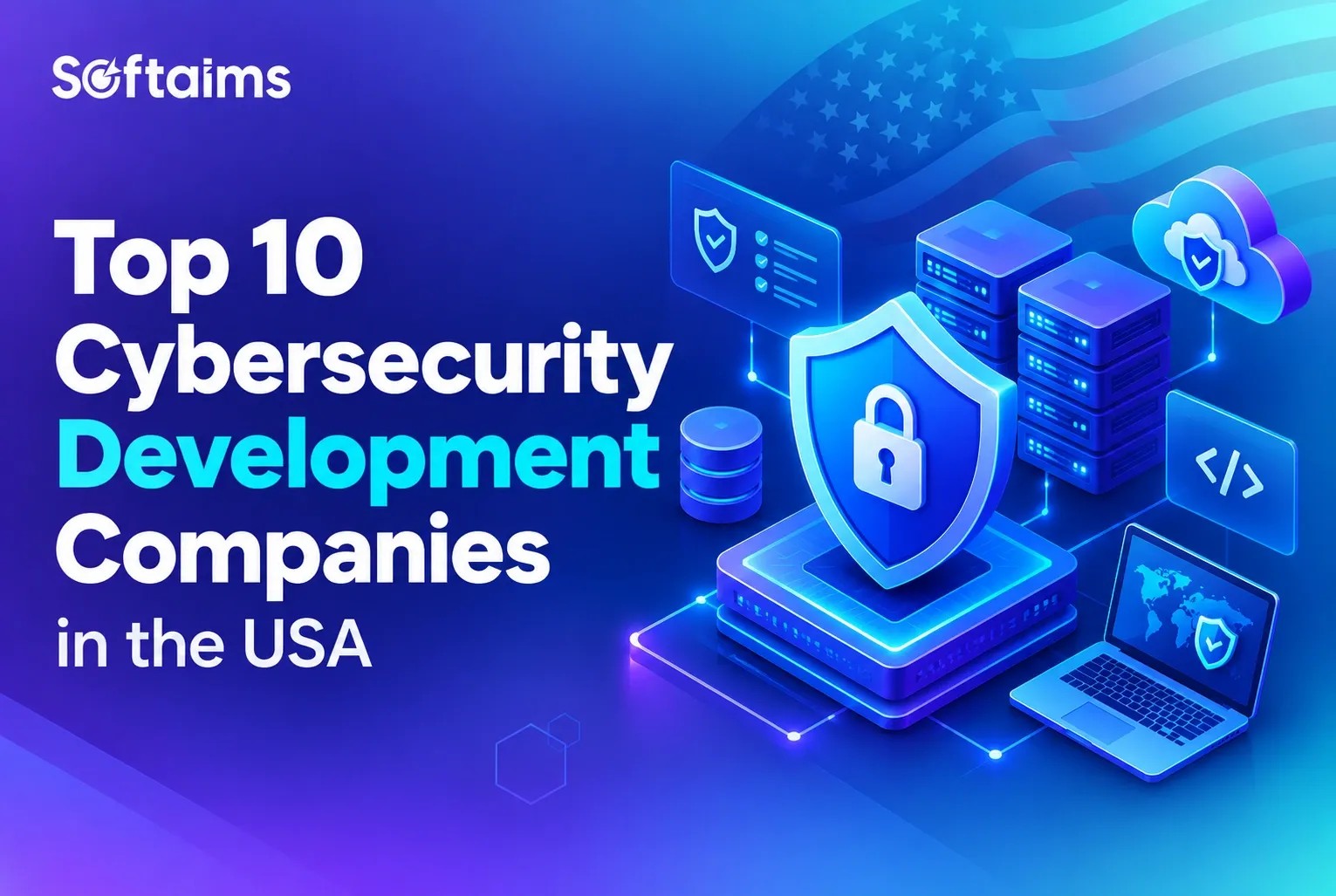
Table of contents
Key Takeaways
- The US is a prime cyber target. Data breaches now cost organizations an average of $4.4 million, making strong security a business priority.
- Compliance shapes security. Regulations and frameworks such as CMMC, HIPAA, SEC requirements, and FedRAMP influence how US organizations protect data and systems.
- Tools are only half the equation. Even the best security platform can fall short without skilled engineers to configure, monitor, and manage it.
- Cybersecurity talent remains scarce. The US continues to face a significant shortage of skilled security professionals, making experienced talent difficult to hire.
- Zero trust is becoming the standard. Organizations are moving toward continuous verification instead of automatically trusting users, devices, or network access.
- Softaims helps close the talent gap. Businesses can access vetted security and cloud engineers based on their skills, experience, availability, and project needs.
The United States is the most attacked country on earth, and 2026 has only raised the stakes. Ransomware is closing hospitals, and AI-powered phishing is fooling banks. A single breach now costs a US business $4.4 million on average, per IBM. So for American buyers of cybersecurity companies, this is no longer an IT concern. It is a survival issue that reaches the boardroom.
The pressure is coming from every direction at once. Attackers are faster, regulators are stricter, and skilled defenders are painfully scarce. New rules like CMMC 2.0, SEC disclosure requirements, and HIPAA keep raising the bar. Meanwhile, the cybersecurity market races toward $351 billion by 2030. So choosing the right cybersecurity companies has never mattered more. The talent to run them matters just as much.
This guide brings clarity to a crowded market. It ranks the top 10 cybersecurity companies in the USA for 2026. The list runs from the consultancies that harden Fortune 500 firms to the partners who build and staff real defenses. Softaims and Devaims open the list, followed by eight recognized US specialists. If your real gap is talent, you can hire vetted security engineers in 48 hours and keep full control.
How We Ranked These Cybersecurity Companies
We ranked these cybersecurity companies on genuine US delivery, proven results, and compliance depth. A firm had to show real security work, not just a marketing budget. Each criterion below reflects what a US buyer should weigh.
Genuine US operations. Time zones, contracts, and regulation favor a US base. Therefore, we prioritized firms delivering in the US.
Compliance coverage. CMMC, HIPAA, PCI DSS, and FedRAMP demand real experience. As a result, we weighted regulatory depth.
Detection and response. Speed of response decides the damage. Consequently, we valued strong incident response.
Technical depth. Offensive testing and engineering separate the best. Meanwhile, we favored hands-on skill.
People and delivery. Tools need skilled operators. So we valued firms and partners that make security talent accessible.
Top Cyber Security Companies in the USA: Comparison Table
The top cybersecurity companies in the USA for 2026 include Softaims, Devaims, Optiv, GuidePoint Security, and Coalfire. Booz Allen Hamilton, Bishop Fox, Rapid7, Palo Alto Networks, and CrowdStrike complete the list. This table gives the fast overview.
Company | Base | Focus | Best for |
| Softaims | US and global | Hiring vetted security engineers | Building and staffing defenses |
| Devaims | US and global | Secure development, a Softaims brand | Accountable, secure builds |
| Optiv | Denver, CO | Advisory and integration | Enterprise security programs |
| GuidePoint Security | Herndon, VA | Practitioner-led consulting | Hands-on advisory and delivery |
| Coalfire | Westminster, CO | Compliance and FedRAMP | Regulated and government work |
| Booz Allen Hamilton | McLean, VA | Government cyber defense | Federal and critical infrastructure |
| Bishop Fox | Tempe, AZ | Offensive security | Pen testing and attack surface |
| Rapid7 | Boston, MA | Detection and response | Managed security operations |
| Palo Alto Networks | Santa Clara, CA | AI-driven platform | Platform consolidation |
| CrowdStrike | Austin, TX | Endpoint and XDR | Cloud-native threat response |
Details reflect public profiles and market data as of 2026 and can change, so verify each firm before you commit. Categories are noted to help you compare.
The Top 10 Cyber Security Companies in the USA
This section covers the top cybersecurity companies in the USA for 2027. This comparison helps you find the right partner based on your security needs, goals, and budget.
1. Softaims

Here’s the problem many businesses run into with cybersecurity. They can buy the right tools, but still struggle to find people who know how to use them properly. Someone has to configure the systems, secure cloud environments, monitor alerts, fix vulnerabilities, and respond when something goes wrong. That skilled talent is often the harder part to find.
Softaims takes a talent-first approach to that problem. It is a vetted developer marketplace where businesses can find security and cloud engineers based on their skills, experience, specialization, availability, and rates. Instead of hiring a large team upfront, you can find the people you actually need and build your team around the project.
That flexibility is useful when your security needs change quickly. You might need a cloud security engineer today, a DevSecOps specialist next month, and additional development support later. Softaims lets you scale the team as those needs change, without having to rebuild your hiring process each time.
It also gives businesses more control over who they work with. You can interview developers before hiring and look for US-based or time-zone-aligned talent when collaboration is important. The work produced by the team, including code, configurations, and security implementations, remains under your ownership.
Key Services of Softaims
- Security engineering: Find specialists in cloud security, IAM, CSPM, and workload protection.
- Secure development: Build applications with security considered throughout the development process.
- DevSecOps: Add security testing, automated scanning, and policy controls to development pipelines with DevOps implementation expertise.
- Security and AI: Bring together cybersecurity with machine learning and generative AI integration to improve detection and automation.
- Staff augmentation: Add one specialist or expand into a larger team as your project and security requirements grow.
Why Softaims Stands Out
What makes Softaims different is the flexibility. You are not limited to a fixed security team or forced into a long-term vendor arrangement. You can choose the expertise you need, interview the people you want, and scale your team as the work evolves.
For businesses struggling to find experienced cybersecurity talent, that can make building a capable security team much easier. If you want to explore the available talent, you can hire vetted security engineers, check Softaims pricing, or contact the team.
2. Devaims
Not every business wants to hire engineers, build a team, and manage the entire development process. Sometimes, you simply have a product idea, a clear brief, and a deadline. You want one team to take the project from planning to launch and make sure security is handled along the way. That is where Devaims fits.
Devaims is a US-based managed delivery company and a Softaims brand focused on building software from the ground up. Instead of handing different parts of the project to different vendors, you work with one team that handles the architecture, development, testing, security, and launch.
That makes accountability a big part of the model. The team gets involved early, plans the architecture, and builds security into the development process rather than trying to add it at the end. You also have one team responsible for keeping the project moving, which makes communication simpler and reduces the usual back-and-forth between developers, security teams, and outside vendors.
The model became even more connected in 2026 following Softaims' acquisition of Devaims. Devaims operates as a Softaims brand, giving its managed delivery team access to a broader pool of vetted technical talent. So if a project suddenly needs an additional security engineer, DevOps specialist, or developer, extra technical capacity is available when needed.
Key Services of Devaims
- Secure software delivery: Build custom software with security and DevSecOps considered throughout the development process.
- End-to-end development: Handle architecture, development, testing, deployment, and launch through one team.
- Single-team accountability: Keep development, security, and delivery under one accountable partner.
- Managed operations: Continue monitoring, maintaining, patching, and improving the system after launch.
- Flexible technical capacity: Bring in additional vetted specialists when the project needs extra expertise.
Why Devaims Stands Out
Devaims makes sense for businesses that want to hand over a project without handing over control of the outcome. You get one team responsible for the build, while its connection to Softaims provides additional technical talent when the project grows or requirements change.
It is a good fit when you care about getting a secure product delivered without managing several developers, security vendors, and technical teams yourself. You can explore Devaims or get in touch to discuss your project.
3. Optiv
Base: Denver, Colorado.
Optiv is one of the largest cybersecurity solutions providers in North America. It pairs advisory services with a huge technology integration practice. So it suits large enterprises running broad, multi-year security transformation programs.
Why they matter: scale and end-to-end coverage across the security stack. Among US cybersecurity companies, few match its integration reach. Its advisory helps enterprises navigate complex compliance landscapes.
4. GuidePoint Security
Base: Herndon, Virginia.
GuidePoint Security positions itself as a consultancy staffed by practitioners, not career consultants. Its practitioners span GRC, IAM, incident response, threat intelligence, and security operations. So it suits buyers who want hands-on, vendor-objective advice from people who have done the job.
Why they matter: deep practitioner experience and vendor-objective tool selection. Its former CISOs and architects bring genuine operational credibility to every engagement.
5. Coalfire
Base: Westminster, Colorado.
Coalfire defined the independent cyber security compliance category. It leads among FedRAMP assessors and spans SOC 2, HIPAA, and PCI DSS. So it suits regulated industries and government-facing organizations alike.
Why they matter: unmatched depth in compliance and attestation. Among cybersecurity companies, its FedRAMP and HITRUST record stands out. Its assessors suit regulated and government-facing work.
6. Booz Allen Hamilton
Base: McLean, Virginia.
Booz Allen Hamilton is a major federal contractor providing cyber defense for US intelligence, military, and critical infrastructure. It sits at the very forefront of US government cyber security initiatives. So it suits federal agencies and critical-infrastructure operators facing the very highest stakes and threats.
Why they matter: deep government and national-security expertise built over decades. Its scale and clearances suit the most demanding federal and critical-infrastructure programs.
7. Bishop Fox
Base: Tempe, Arizona.
Bishop Fox is a premier offensive security consultancy with elite technical depth. Its team includes published researchers and tool authors, and its Cosmos platform runs continuous attack-surface management. So it suits deep penetration testing and realistic adversary simulation.
Why they matter: elite offensive-security talent and continuous attack-surface testing. Its research depth suits high-stakes, security-critical systems that cannot afford surprises.
8. Rapid7
Base: Boston, Massachusetts.
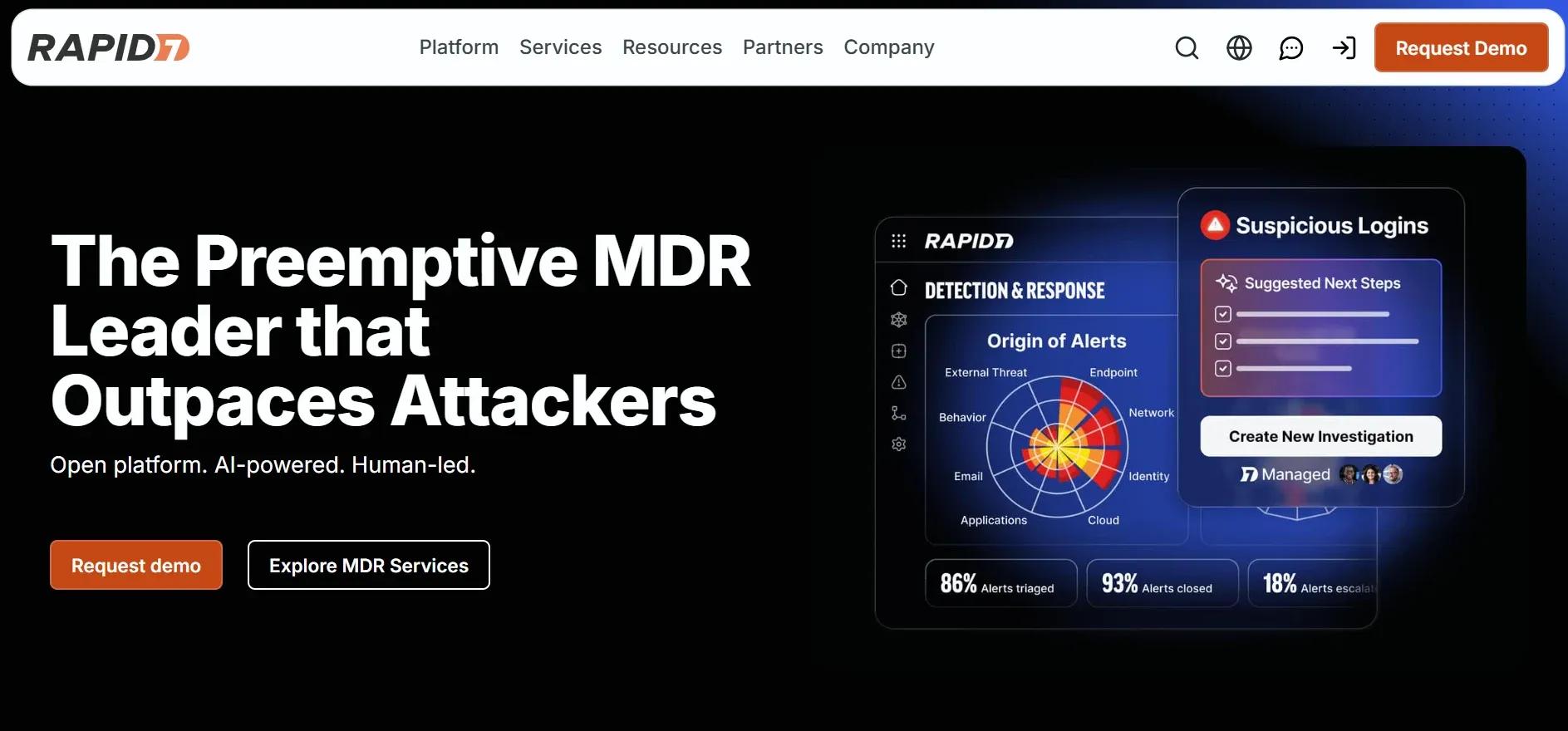
Rapid7 combines a security platform with managed detection and response. Its services cover vulnerability, cloud, and threat detection. So it suits US teams wanting security tooling plus a managed service in one place.
Why they matter: a strong blend of security tooling and managed detection and response. Its managed model suits lean US teams that need expert hands on the alerts.
9. Palo Alto Networks
Base: Santa Clara, California.
Palo Alto Networks is the largest pure-play cybersecurity company. It unifies network, cloud, and endpoint security through AI and automation. So it suits large enterprises consolidating many point tools onto one unified platform.
Why they matter: platform breadth and analyst-leading depth. Its Unit 42 threat intelligence keeps defenders ahead of attackers, and its automation eases the load on stretched teams.
10. CrowdStrike
Base: Austin, Texas.
CrowdStrike built its Falcon platform in the cloud from the start. It unifies endpoint, workload, and identity protection in real time. So it suits large enterprises wanting rapid, cloud-first endpoint and threat response.
Why they matter: machine-learning detection and fast response at cloud scale. Its incident-response services back the platform when a breach does happen.
What Is a Cybersecurity Company
A cybersecurity company is a firm that protects an organization's data, systems, and networks from digital threats. The best cybersecurity companies do this across the whole attack surface. It provides the tools, services, or talent to prevent, detect, and respond to attacks. So the goal is simple, if hard to achieve. It means fewer breaches, and much faster recovery when one happens.
The US field splits into a few clear kinds of firm. Platform vendors sell software, like firewalls and detection engines. Consultancies advise, test, and harden. Meanwhile, development partners build, integrate, and staff the systems that use them. So the strongest cybersecurity companies often combine several of these roles at once.
That combination is the key insight most buyers miss. A brilliant platform underperforms without skilled people to run it. So the best cybersecurity companies pair a strong tool with engineers who can configure, tune, and respond. Many US teams now add machine learning development skills for smarter, faster detection.
Think of it like a car and a driver. The best sports car in the world is dangerous in untrained hands. The same is true of a top security platform without a skilled operator. So when you evaluate cybersecurity companies, ask not just what the tool does, but who will run it. That question separates a working defense from an expensive dashboard nobody watches.
Core Cybersecurity Services in the USA
The best cybersecurity companies in the USA share a core service set. It spans prevention, detection, response, and recovery. So most US businesses need several of these services working together at once.
Managed detection and response. MDR teams watch and respond around the clock. As a result, threats get caught fast.
Penetration testing. Ethical hackers probe your defenses. Therefore, you learn where you are truly exposed.
Compliance consulting. Firms guide you through CMMC, HIPAA, and SOC 2. Meanwhile, audits go smoother.
Cloud security. Teams defend workloads and data in the cloud. So protection finally matches where your systems actually run.
Incident response. Specialists contain and recover from breaches. Consequently, downtime and damage shrink.
Secure development. Engineers build security into software from the start. In addition, DevSecOps keeps it there through every release.
Most US organizations need a mix of these. A healthcare firm might pair MDR with HIPAA consulting, while a defense supplier adds CMMC readiness. A SaaS startup might lean on pen testing and secure development. So map your threats and rules first, then pick the services that match. The right cybersecurity companies help you decide, rather than selling you everything.
US Compliance: CMMC, HIPAA, SEC, and FedRAMP
US compliance shapes how you build and defend, and the rules keep tightening. The right cyber security companies deliver audit-ready results, not just advice. So compliance belongs in the delivery plan from day one, not a last-minute scramble.
CMMC 2.0. Defense contractors must meet this standard to win federal work. Therefore, defense suppliers need specialist help.
HIPAA. Healthcare data demands strict controls and audit trails. Meanwhile, penalties for breaches are severe.
SEC disclosure rules. Public companies must report material cyber incidents fast. As a result, boards now own cyber risk.
FedRAMP and PCI DSS. Selling to the government needs FedRAMP, and payments need PCI DSS. So regulated and government-facing work needs proven, experienced partners.
A strong US partner bakes these into delivery, not a final review. Firms that also handle generative AI development increasingly automate compliance evidence, too.
The cost of getting this wrong is steep. A missed CMMC requirement can lose a defense contract, and a HIPAA breach can trigger heavy fines. Meanwhile, the new SEC rules mean a slow disclosure can hurt a public company's stock. So compliance is not paperwork. It is a genuine business risk that the right partner helps you manage.
The Layers of Modern US Cyber Defense
Modern cybersecurity is best understood as layers, not a single wall. Attackers probe every angle, so defense must cover every angle too. The strongest cybersecurity companies build across all of them. So knowing the layers helps you find the gaps in your own setup.
The perimeter. Firewalls and network security guard the edge. However, the edge is now everywhere, not one place.
The endpoint. Agents protect laptops, servers, and devices. As a result, the most common entry points stay covered.
Identity. Access controls decide who can reach what. Meanwhile, stolen credentials cause most US breaches.
The cloud. Cloud-native tools defend workloads and data. Therefore, they match where systems actually run.
The application. Secure code and testing stop flaws at the source. So defense starts in development, not after launch.
A single layer is never enough on its own. A firewall will not stop a phished password, and endpoint software will not fix insecure code. So the best cybersecurity companies weave the layers together, backed by people who can run them. That people layer is the one most US organizations quietly neglect.
Miss one layer, and attackers will find it. That is why breadth, not a single clever tool, is the mark of a mature defense. So when you build your stack, map every layer, then confirm you have the skill to run each one. Gaps in coverage and gaps in staffing are equally dangerous.
The Cyber Security Talent Gap (and How Softaims Helps)
Every report on US cybersecurity companies and their clients reaches the same stark conclusion. There are far more open security roles than there are people to fill them. So even a generously funded US security team can end up dangerously understaffed and stretched thin.
This is where a marketplace changes the game. With Softaims, you hire vetted security engineers in 48 hours, not months. You choose the exact skills, from cloud hardening to incident response, and you own the work. In addition, you can pair them with LLM development and AI specialists as your defense evolves.
So the consultancies and platforms in this list supply the tools and advice. Softaims supplies the US-aligned people who deploy, tune, and operate them. Together, that closes the gap that leaves so many organizations exposed.
This matters most for lean teams. A single overworked analyst cannot watch a growing, multi-cloud estate alone. So adding vetted specialists on demand keeps defense strong as the business scales. It also means you pay for the exact skills you need, when the threat demands them. There is no large permanent team to carry. For deeper cloud defense, the leading cloud security companies show what strong platforms look like.
How to Choose the Right Cybersecurity Partner
Choosing among cybersecurity companies is high-stakes, so decide on evidence, not adjectives. Match the firm to your threats, verify compliance fit, and confirm you have people to run it. So work through these checks before you commit.
Map your risk. Confirm the partner covers your real threats and assets. Therefore, you avoid blind spots.
Check compliance fit. Look for CMMC, HIPAA, SOC 2, or FedRAMP experience. As a result, audits go smoother.
Prioritize detection and response. Speed limits the damage of any breach. Meanwhile, strong MDR is now essential.
Confirm the people. A platform needs skilled operators. So secure the talent, through hiring or a marketplace.
Verify US delivery. Confirm where your engineers actually sit. Moreover, this shapes time zones and support.
How Much Does Cybersecurity Cost in the USA
Cyber security costs in the USA vary widely by size, risk, and approach. Platform licenses, managed services, and skilled engineers all add up. So plan for the full picture, not just the software.
A common benchmark is spending several percent of IT budget on security. Meanwhile, US enterprise platforms scale with users, endpoints, or data. And US security engineers command premium rates, since talent is scarce. So the people are often the largest and most overlooked line.
Compliance work adds real cost, too. A CMMC or FedRAMP program takes months of specialist effort, on top of the tools. So budget for the whole picture. That means the platform, the compliance work, the engineers, and the operations that keep it all running.
A vetted marketplace can control that cost. You hire the exact security skills you need, only when you need them. In addition, a flexible team that scales down between projects keeps spending sensible. So you get strong defense without carrying a large permanent team.
Why US Cybersecurity Programs Fail
Even the best cybersecurity companies see US programs fail for a handful of avoidable reasons. It is rarely because the tools are weak. The causes repeat across organizations of every size. So learn them, and you can steer around each one.
Tools without operators. A platform nobody tunes drifts and misses threats. Therefore, staff it properly from day one.
No response plan. Detection without response still ends in disaster. So rehearse your incident response.
Compliance treated as a checkbox. Real security is more than passing an audit. Meanwhile, the two must reinforce each other.
Security bolted on late. Adding controls after launch leaves gaps. As a result, secure development must start early.
The thread running through all of these is people. Even the best cybersecurity companies cannot help if the operator lacks skill. So securing the right talent matters as much as securing the right tools.
US Cyber Security Trends for 2026
The cybersecurity companies leading in 2026 build around three defining trends. These are AI-driven defense, zero-trust architecture, and board-level accountability. So these shifts should shape your shortlist.
AI-driven defense. AI now spots anomalies and predicts attacks. Meanwhile, AI agents automate detection and response.
Zero trust. The identity perimeter is now the primary control. Therefore, verify everything, trust nothing.
Board accountability. SEC rules put cyber risk in the boardroom. As a result, security is now a governance issue.
Cloud-first security. Most US workloads live in the cloud. So cloud-native defense is now essential for US firms, not optional.
AI-powered attacks. Attackers use AI too, at scale. Consequently, defenders must match that speed with their own.
Frequently Asked Questions
Which are the top cybersecurity companies in the USA?
Optiv, GuidePoint Security, and Coalfire lead among consultancies. Booz Allen, Bishop Fox, and Rapid7 add specialist depth, while Palo Alto Networks and CrowdStrike lead on platforms. Softaims and Devaims suit teams that want to build and staff their own defenses.
How much does cybersecurity cost in the USA?
It varies with size, risk, and approach. Platform licenses scale with usage, while US engineers command premium rates. A marketplace can cut the talent cost by staffing only when needed.
What US regulations affect cybersecurity?
Major rules include CMMC 2.0, HIPAA, PCI DSS, SEC disclosure requirements, and FedRAMP. So the right partner understands the specific compliance frameworks relevant to your industry and your data.
How does Softaims help with cybersecurity?
Softaims lets you hire vetted, US-aligned security engineers fast, then own the work. It closes the talent gap that leaves many organizations exposed. So you can deploy and run any security platform with genuinely skilled people.
What is zero trust?
Zero trust means never trusting a user or device by default. Every access request is verified, regardless of location. It is now the core model for modern US cyber security programs.
Who owns the code and configurations?
With a custom build, you should own all of it. Confirm ownership of the code, configs, and IP in writing. This simple step avoids painful vendor lock-in later on.
Conclusion
For US businesses, cybersecurity is now a core business risk, not an IT line item. The cybersecurity companies in this list give you the tools, advice, and talent to fight back. But tools and advice alone are never enough. The partner and the people you choose decide whether your defense holds when it counts.
So turn this list into a plan. Here is the short checklist to work through before you commit.
- Map your real risks. Know what you are protecting and from whom.
- Match the firm. Pick a partner that fits your threats and your industry.
- Check compliance. Confirm they know CMMC, HIPAA, SEC, or FedRAMP as needed.
- Secure the talent. Confirm you can hire or access engineers to run it.
- Rehearse response. Test your incident plan before a real attack.
Get those five right, and you turn a frightening landscape into a manageable one. Skip them, and even the best software will not save you.
If your real blocker is talent, and for most US teams it is, there is a faster path. Softaims matches you with vetted, US-aligned security engineers within 48 hours, and you own everything they build. For a full, managed secure build, its delivery brand can take the whole thing off your plate. To start, hire security engineers or get in touch.


 GitHub
 Stackoverflow
Muhammad L.

 Verified Expert in Engineering
My name is Muhammad L. and I have over 10 years of experience in the tech industry. I specialize in the following technologies: CSS, Front-End Development, PSD to WordPress, Information Security, HTML, etc.. I hold a degree in Bachelor's degree, Master of Science (MS). Some of the notable projects I've worked on include: The Glass Market, WedClic, i3PG, PestMarshals, Printedonprince, etc.. I am based in Orlando, United States. I've successfully completed 8 projects while developing at Softaims.
I employ a methodical and structured approach to solution development, prioritizing deep domain understanding before execution. I excel at systems analysis, creating precise technical specifications, and ensuring that the final solution perfectly maps to the complex business logic it is meant to serve.
My tenure at Softaims has reinforced the importance of careful planning and risk mitigation. I am skilled at breaking down massive, ambiguous problems into manageable, iterative development tasks, ensuring consistent progress and predictable delivery schedules.
I strive for clarity and simplicity in both my technical outputs and my communication. I believe that the most powerful solutions are often the simplest ones, and I am committed to finding those elegant answers for our clients.

Leave a Comment
Need help building your team? Let's discuss your project requirements.
Get matched with top-tier developers within 24 hours and start your project with no pressure of long-term commitment.