
Daniel Russo
ScaleUp software
Working with Softaims allowed us to quickly onboard highly skilled engineers who integrated seamlessly with our team. The experience was smooth and the results exceeded our expectations.
Video testimonial available
See pre-vetted augmented reality developers with transparent hourly rates, experience, ratings, and filters to quickly shortlist the right candidates for your project.




Clients rate Softaims Augmented Reality Developers4.9 / 5.0 on averagebased on 13,542 reviews.
Vetted Experts
Trial-to-Hire Success Rate
Fast Candidate Matching
"Working with Softaims allowed us to quickly onboard highly skilled engineers who integrated seamlessly with our team. The experience was smooth and the results exceeded our expectations."

Daniel Russo
ScaleUp software


 Trustpilot
Explore related technologies and frameworks to find the perfect developer for your project

Softaims connects you with rigorously vetted full-time and freelance software engineers across every modern tech stack. From AI specialists to Cloud Architects, access a curated network of elite remote talent designed to scale your business.
Every Augmented Reality Developer in our talent pool has gone through our rigorous vetting process, so you can be confident that they will perform as well in reality as they do on paper.
Within 48 hours of your request, we send you a list of Augmented Reality Developers who meet your needs and who are ready to join your team as soon as you're ready.
Access top talent from around the world at competitive rates without compromising on quality or expertise. Get the best value for your hiring budget.
Make your hiring process bulletproof with our replacement guarantee. Not happy with your Augmented Reality Developer? We'll replace them, no charges, no questions.
Quickly find Augmented Reality Developers that match your requirements with our advanced filtering system. Filter by skills, experience, hourly rate, location, and more.
Whether you need a full-time team member or a freelance Augmented Reality Developer for a specific project, we have the right talent ready to join your team.
Trustpilot| Features | Softaims | Toptal | Upwork | Freelancers | In-house Resources |
|---|---|---|---|---|---|
Fully Compliant Developers are employed by U.S corporations | |||||
High-Quality Pre-vetted, highly trained, and skilled resources | |||||
Affordability Competitive rates without compromising quality | |||||
Try Before You Buy Test developers before committing | |||||
Secure Locations Developers work in secure and monitored environments | |||||
Highly Scalable Plug in and out developers based on your business needs | |||||
Diverse Tech Stack Broad expertise in diverse tech stack in your time zone |
ScaleUp software
Working with Softaims allowed us to quickly onboard highly skilled engineers who integrated seamlessly with our team. The experience was smooth and the results exceeded our expectations.
Video testimonial available

Ex-VP Engineering at Uber
Softaims made hiring remote developers effortless. The talent matched our requirements perfectly, and collaboration with the team was extremely efficient.
Video testimonial available

CT0 at EdAider
The Softaims platform gave us access to developers who immediately added value. Their expertise and professionalism made the entire process seamless.
Video testimonial available

Hello Median
Softaims helped us scale our engineering team quickly. The quality of the developers and the speed of onboarding were impressive.
Video testimonial available

CEO at Stads.io
Hiring through Softaims was straightforward and effective. We were able to collaborate with skilled engineers who understood our technical needs.
Video testimonial available

CEO at Onenine
Softaims provided us with experienced developers who contributed immediately to our projects. The process was efficient and the results were excellent.

CEO at Sparklaunch Media
Softaims provided us access to highly skilled remote engineers who contributed immediately. The process was efficient, and the quality of work exceeded our expectations.

CEO at Lovart
Hiring through Softaims was seamless. We were able to find developers who perfectly matched our technical requirements and collaborated effectively with our in-house team.
ScaleUp software
Working with Softaims allowed us to quickly onboard highly skilled engineers who integrated seamlessly with our team. The experience was smooth and the results exceeded our expectations.
Ex-VP Engineering at Uber
Softaims made hiring remote developers effortless. The talent matched our requirements perfectly, and collaboration with the team was extremely efficient.
CT0 at EdAider
The Softaims platform gave us access to developers who immediately added value. Their expertise and professionalism made the entire process seamless.
Hello Median
Softaims helped us scale our engineering team quickly. The quality of the developers and the speed of onboarding were impressive.
CEO at Stads.io
Hiring through Softaims was straightforward and effective. We were able to collaborate with skilled engineers who understood our technical needs.
CEO at Onenine
Softaims provided us with experienced developers who contributed immediately to our projects. The process was efficient and the results were excellent.
CEO at Sparklaunch Media
Softaims provided us access to highly skilled remote engineers who contributed immediately. The process was efficient, and the quality of work exceeded our expectations.
CEO at Lovart
Hiring through Softaims was seamless. We were able to find developers who perfectly matched our technical requirements and collaborated effectively with our in-house team.
Hire Softaims talent around the world
25.1K+
Softaims augmented reality developers in the world
107+
We'll help you find the perfect fit for your team. From AI specialists to Cloud Architects, access a curated network of elite remote talent designed to scale your business.
Hire Augmented Reality Developer
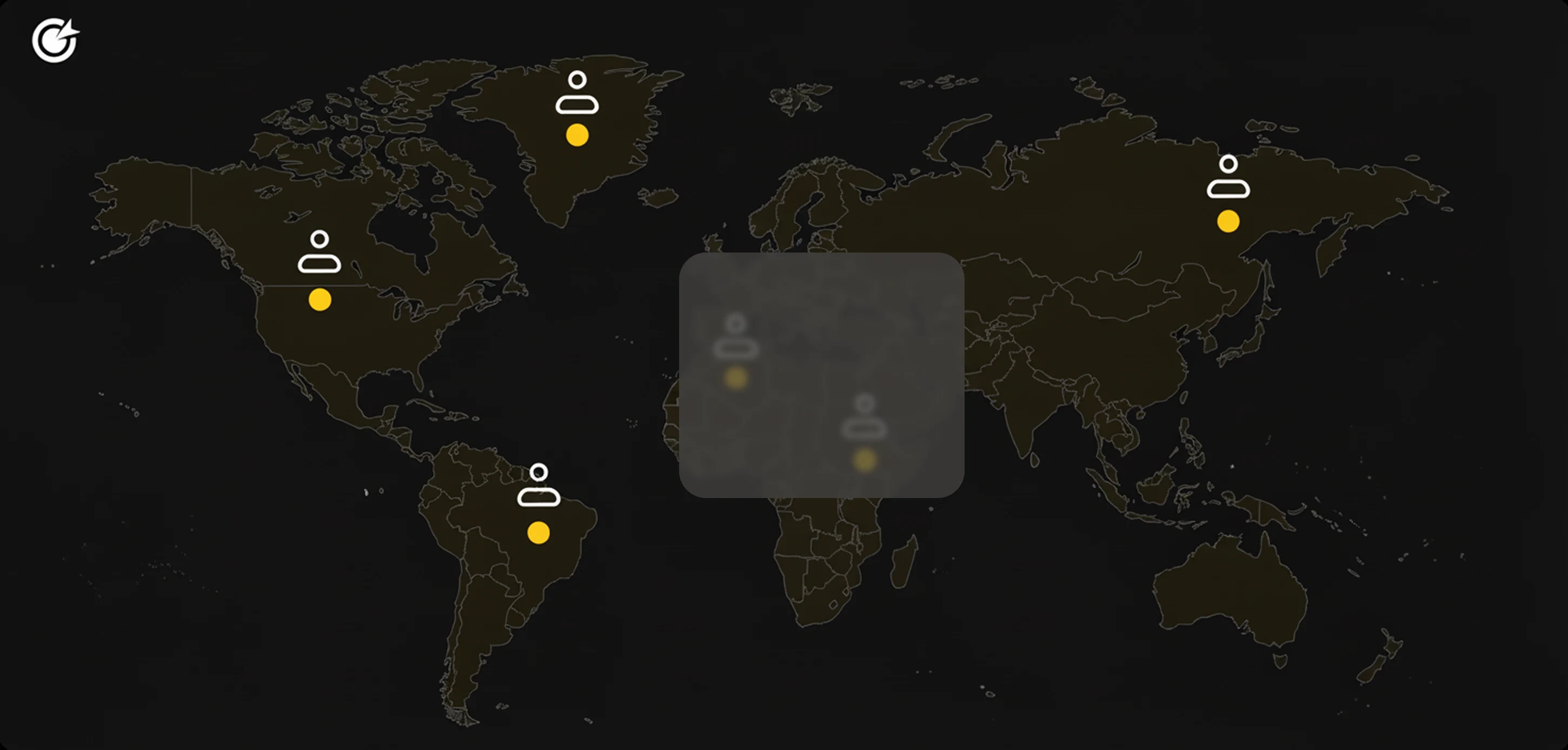
Hover over countries on the map to see the number of available developers in each location
Our industry recognition is a testament to our rigorous vetting process and the impactful digital solutions we deliver. From connecting clients with top-tier global talent to building scalable web and mobile apps, our commitment to excellence sets us apart.

Clutch Top 1000 Companies

Top Entertainment App Developers

Expertise Best Mobile App Developer

Software World Top App Development Companies

Horizon Award Gold Awards Winner
Horizon Award Silver Awards Winner

Right firms Top Mobile App Development Company

Access free Augmented Reality Developers job description templates, expert-curated interview questions, and comprehensive Augmented Reality Developers roadmap to streamline your hiring process and find the best remote Augmented Reality Developers for your team.
Download ready-to-use Augmented Reality Developers job description templates tailored for your hiring needs.
Browse comprehensive FAQs and interview questions specifically for Augmented Reality Developers and Augmented Reality Developer roles.
Explore step-by-step learning paths and skill roadmaps specifically designed for Augmented Reality Developers and Augmented Reality Developer roles.
Discover expert-curated best practices, tips, and strategies specifically for Augmented Reality Developer roles and hiring Augmented Reality Developers.
Find answers to frequently asked questions about Softaims, our hiring process, developer vetting, pricing models, and how we ensure quality talent for your projects.
Free Productivity Timer Tools
Boost your team's productivity with our free online timer tools. Perfect for Pomodoro sessions, meetings, standups, and focused work sessions. No signup required, works offline.


By Brett L.
 Verified Expert in Engineering
8 years of experience
My name is Brett L. and I have over 8 years of experience in the tech industry. I specialize in the following technologies: Figma, Adobe Illustrator, Adobe Photoshop, Wireframing, Augmented Reality, etc.. I hold a degree in Bachelor of Computer Applications. Some of the notable projects I’ve worked on include: . I am based in Naples, United States.
I am a business-driven professional; my technical decisions are consistently guided by the principle of maximizing business value and achieving measurable ROI for the client. I view technical expertise as a tool for creating competitive advantages and solving commercial problems, not just as a technical exercise.
I actively participate in defining key performance indicators (KPIs) and ensuring that the features I build directly contribute to improving those metrics. My commitment to Softaims is to deliver solutions that are not only technically excellent but also strategically impactful.
I maintain a strong focus on the end-goal: delivering a product that solves a genuine market need. I am committed to a development cycle that is fast, focused, and aligned with the ultimate success of the client's business.
The digital landscape is currently going through its most significant transformation since the invention of the smartphone. We are moving away from a world where we look at technology on flat screens and toward an era where we live inside of it. As we move through 2026, the demand for immersive experiences has turned spatial computing into a trillion dollar industry. However, building software for this new reality is not the same as building a standard mobile app or website. It requires a rare blend of skills that involves 3D physics, computer vision, and real time environmental mapping.
Many businesses attempt to enter this space only to be met with technical walls such as spatial drift, poor lighting estimation, and massive battery drain. This is exactly why you need to hire Augmented Reality developers who understand the nuances of the physical world as well as they understand code. These specialists ensure that your digital content stays locked in place and feels natural, regardless of whether the user is using a mobile phone or a high end headset like the Apple Vision Pro. This guide will provide you with a roadmap to navigate the complex hiring market and find the talent that will build your future.

Augmented Reality developers are at the forefront of software innovation, bringing creative solutions to life through their deep understanding of modern technology. They are responsible for designing, developing, and maintaining applications that meet business objectives in a three dimensional space. Companies hire Augmented Reality developers to leverage their expertise in creating seamless user experiences, which is crucial for customer retention and engagement in a market that is tired of traditional 2D interfaces.
The dynamic nature of software development requires these professionals to be proficient in a variety of tools and frameworks. This includes version control systems like Git, cloud platforms such as AWS, and modern development practices tailored for high performance graphics. These tools help developers build robust applications that can scale with business needs as more users adopt spatial hardware.
Moreover, Augmented Reality developers play a key role in integrating new features that enhance application functionality, such as virtual try-ons or interactive training manuals. This ability to innovate and adapt is why companies invest in these specialists, ensuring they remain competitive in a rapidly evolving digital landscape. In addition to technical skills, they contribute to strategic decision making processes. Their insights into user behavior in 3D environments allow companies to refine their strategies, enhancing both the user experience and business outcomes. This strategic value makes spatial computing experts indispensable in today's tech driven world.
Choosing to hire experienced spatial engineers provides significant business advantages that directly impact your bottom line and user satisfaction. When you move beyond simple 2D apps, you open up new ways to interact with your audience.
Experienced developers use a component based architecture within engines like Unity or Unreal. Instead of rewriting code for every single 3D interaction, they build reusable systems for lighting, physics, and object tracking. This significantly reduces development time and improves productivity. When you look for Augmented Reality developers for hire, you are investing in talent that knows how to use existing SDKs to speed up your time to market.
The modular structure of modern AR frameworks makes applications incredibly easy to scale. You can add new 3D assets and interactive features without breaking the existing tracking logic. This makes it the perfect choice when you need developers for scalable applications or complex enterprise grade platforms that require constant updates.
High quality spatial mapping ensures smooth rendering and high performance. Instead of a clunky interface that feels disconnected from the room, a professional developer creates responsive, interactive environments that keep users engaged. This level of immersion drastically reduces bounce rates and increases the time users spend within your application.
With tools like Unity AR Foundation, businesses can build apps that work on both iOS and Android using shared concepts. You do not always need entirely separate teams for different platforms. Skilled developers can translate your mobile AR experience into a headset compatible app with minimal extra effort, saving your business thousands in development costs.
When you invest in spatial development services, you expect a deep understanding of the modern technology stack. Knowing just the basics of coding is not enough to handle the complexities of the physical world.
| Skill Category | Core Technologies | Why It Matters For Your Business |
|---|---|---|
| Development Engines | Unity 3D, Unreal Engine 5, C# | Ensures your application is fast, stable, and visually impressive. |
| AR Frameworks | ARKit, ARCore, Vuforia, WebXR | Guarantees that your software can "see" and map the physical environment. |
| Spatial Mapping | SLAM, Lidar, Computer Vision | Prevents digital objects from floating or jumping around in the room. |
| 3D Asset Management | Blender, Maya, Shaders, Mesh Optimization | Keeps the app running smoothly without overheating the user device. |
| Cloud & DevOps | Git, Docker, Azure Spatial Anchors | Allows for multi user experiences and safe, automated software updates. |
Choosing the right experience level depends entirely on your project complexity, budget, and scalability requirements. We provide talent at every stage of the engineering spectrum to ensure your needs are met.
| Developer Level | Typical Focus Areas | Independence Level |
|---|---|---|
| Junior Developers | Simple object placement, UI changes, routine support. | Needs guidance from senior team members on spatial logic. |
| Mid-Level Developers | Full feature implementation, API integration, SLAM optimization. | Highly independent on standard development and 3D tasks. |
| Senior Developers | Architecture design, technical leadership, complex physics. | Fully autonomous and capable of guiding the entire project vision. |
Evaluating candidates for these specialized positions involves a multi step process that ensures you hire the best talent for your specific technical stack.
Conducting effective interviews is crucial for identifying the best talent. Start by asking technical questions that gauge their proficiency in relevant engines and tools. You want to see how they handle the friction between digital code and physical reality.
Identifying potential red flags early can prevent costly hiring mistakes. One major warning sign is a lack of understanding of core spatial concepts. If a candidate cannot explain how SLAM works or struggles with basic 3D math, they likely do not have the expertise for professional work.
Another red flag is poor problem solving skills. If a developer cannot articulate a clear process for addressing bugs or optimizing performance, they will struggle with the complexities of modern spatial computing. Similarly, an inability to provide examples of past work or a lack of a demo portfolio is a significant concern in a visual industry like this.
Communication skills are also vital. Candidates who struggle to explain their thought process may find it difficult to collaborate within a team, especially when working with designers. Be cautious of those who show a lack of passion for the technology, as this often leads to a lack of motivation when facing difficult technical challenges. Finally, watch for candidates who cannot accept feedback, as a growth mindset is essential in a fast paced industry that changes every few months.
Budgeting for a software project requires a clear understanding of global market rates, which have shifted significantly as spatial computing becomes a mainstream requirement. The cost to hire Augmented Reality developers varies based on their years of experience, their specific technical focus, and their physical location. While hiring in major tech hubs provides proximity, offshore and nearshore options offer a way to scale your engineering team quickly without draining your company budget.
To help you plan your financial roadmap, the following table provides a comprehensive breakdown of annual salaries and hourly contract rates across key global regions. These figures represent the total compensation packages including base salary and standard benefits for various experience levels.
| Country | Junior (Annual USD) | Mid-Level (Annual USD) | Senior (Annual USD) | Hourly Rate (USD) |
|---|---|---|---|---|
| United States | $105,000 – $135,000 | $140,000 – $175,000 | $180,000 – $220,000+ | $110 – $200 |
| United Kingdom | $85,000 – $110,000 | $115,000 – $145,000 | $150,000 – $185,000 | $90 – $160 |
| Canada | $80,000 – $115,000 | $120,000 – $150,000 | $155,000 – $190,000 | $85 – $155 |
| Australia | $90,000 – $120,000 | $125,000 – $155,000 | $160,000 – $200,000 | $90 – $170 |
| Switzerland | $120,000 – $150,000 | $155,000 – $190,000 | $200,000 – $250,000 | $130 – $220 |
| Germany | $75,000 – $105,000 | $110,000 – $140,000 | $145,000 – $180,000 | $80 – $145 |
| Poland / Ukraine | $55,000 – $85,000 | $90,000 – $125,000 | $130,000 – $160,000 | $55 – $110 |
| Singapore | $70,000 – $100,000 | $105,000 – $135,000 | $140,000 – $180,000 | $70 – $130 |
| India | $30,000 – $65,000 | $70,000 – $110,000 | $115,000 – $150,000 | $40 – $95 |
| Japan | $65,000 – $95,000 | $100,000 – $130,000 | $135,000 – $175,000 | $70 – $135 |
| Brazil / LATAM | $45,000 – $80,000 | $85,000 – $120,000 | $125,000 – $165,000 | $50 – $115 |
It is important to note that while Junior developers are excellent for handling routine maintenance and basic asset placement, Senior architects are essential when building from the ground up to avoid costly technical debt. Many businesses now opt for a hybrid model, combining a few local senior leads with a larger offshore team in regions like Poland or India to maximize their development runway while maintaining enterprise-level code quality.
Different projects require different operational structures. We provide flexible ways to integrate our talent into your daily business operations.
| Engagement Model | Best Suited For | Commitment Level |
|---|---|---|
| Dedicated Developers | Long term projects and core team expansion. | Full time |
| Part-Time Developers | Ongoing maintenance and minor feature updates. | Part time |
| Project-Based Hiring | Fixed scope applications or MVP builds. | Milestone based |
| Offshore Teams | Scaling teams rapidly while keeping costs low. | Flexible |
Staying updated with the latest trends is crucial for hiring the right talent. In 2026, the rise of artificial intelligence and machine learning is reshaping the industry. Developers are increasingly required to incorporate AI for better scene understanding and object recognition.
Another trend is the focus on WebXR. Many businesses are moving away from dedicated apps and toward browser based experiences that do not require a download. This makes the ability to code in JavaScript and Three.js just as important as Unity skills. Additionally, the continued emphasis on user privacy means developers must be experts in secure data handling and on device processing.
The rise of microservices and cloud native development is also influencing how AR apps are built, enabling faster deployment and better performance. Developers who understand how to offload heavy computations to the cloud while keeping latency low are in high demand.
Hiring through Softaims offers numerous benefits, particularly in terms of quality assurance and time savings. We provide access to the top 3% of spatial talent worldwide, ensuring you get skilled professionals who can contribute immediately. Our rigorous vetting process includes technical assessments, code reviews, and soft skills evaluations.
We offer flexible engagement models that allow you to hire on a full time, part time, or project basis. This flexibility is valuable for companies with varying needs and budgets. The platform also provides a risk free trial period, giving you the opportunity to evaluate a developer's fit before making a long term commitment. With competitive rates and transparent pricing, we handle the administrative tasks so you can focus on building your product.
Hiring Augmented Reality developers in 2026 requires a strategic approach that balances technical proficiency with cultural fit and adaptability. By understanding the key skills, interview techniques, and market trends outlined in this guide, companies can make informed decisions to attract and retain top talent. As the demand for immersive experiences continues to grow, investing in a thorough hiring process is the only way to stay competitive.
Whether you choose to hire dedicated developers or look for flexible offshore options, the focus should always be on quality and long term value. The right team will not only build an application but will also help your company navigate the complex and exciting world of spatial computing. Taking the time to find the right experts today will pay off in the high quality, immersive experiences you provide to your users tomorrow.